
SEO Title: YANGWANG U9 Xtreme Breaks 500km/h Production Car Speed Record
Meta Description: The YANGWANG U9 Xtreme hit 503.17km/h in Abu Dhabi, setting a new production car speed record. See how BYD's engineers built the electric hypercar behind it.
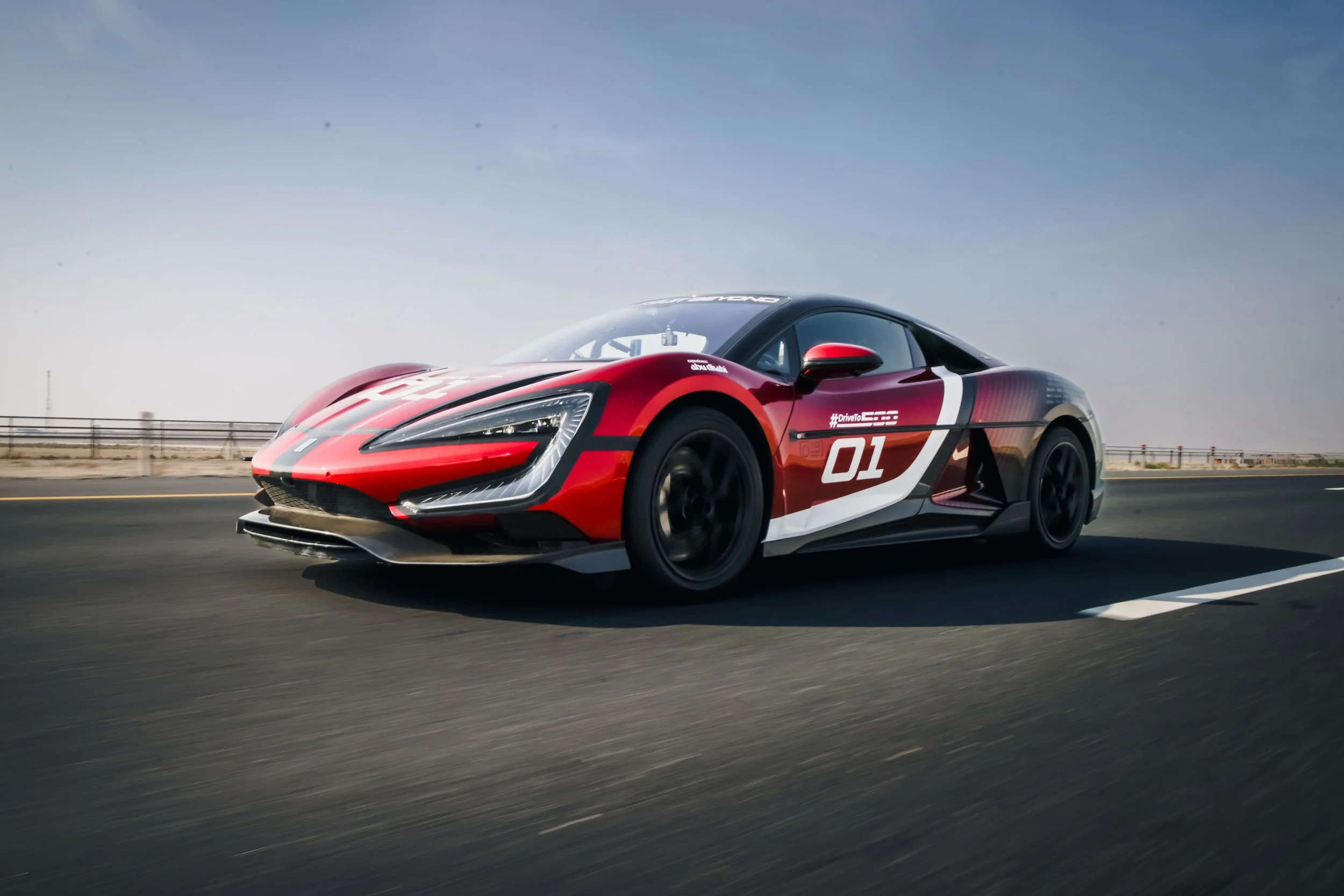
YANGWANG, the luxury brand of BYD, the world's largest manufacturer of new-energy vehicles (NEVs), has beaten its own global speed record. Its U9 Xtreme hypercar has passed 500km/h, taking automotive technology into a new realm altogether.
'The new highest speed achieved by the U9 Xtreme, 503.17km/h, surpasses last year’s benchmark of 496.22 km/h, and secures two Guinness World Records for the 3019PS vehicle: Highest Speed achieved by a Production Car in a single-direction run, and Highest Speed achieved by an Electric Production Car in a single-direction run. The speed has also been duly recognised by the FIA, the governing body of world motorsport.'
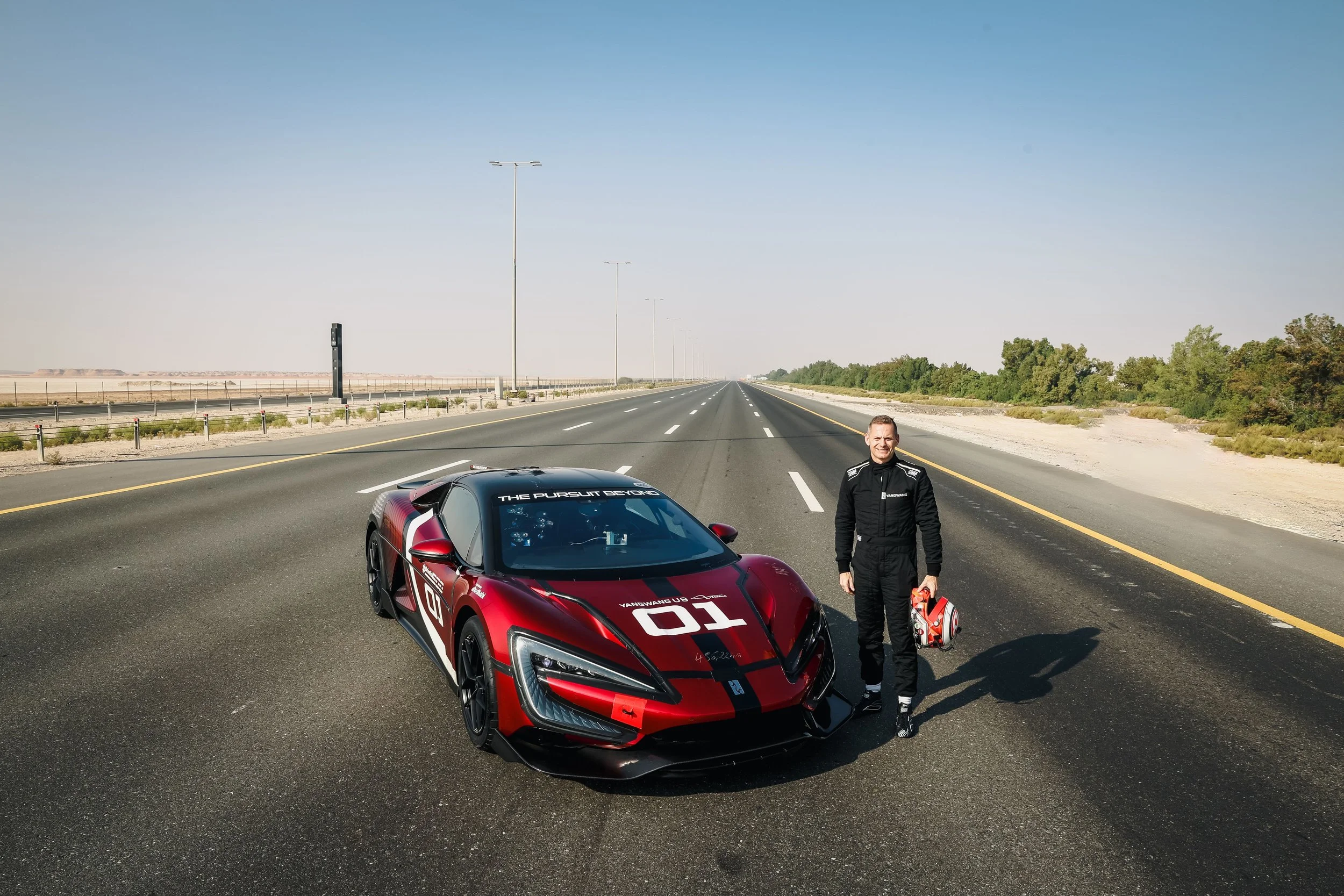
The record-breaking run took place on 1 November 2026 on Sheikh Khalifa Bin Zayed International Road (E11), in Abu Dhabi's Al Dhafra Region. Marc Basseng was once again behind the wheel. The sports-car and endurance racer guided the U9X to its previous production-car record at ATP Papenburg last September. Choosing this location highlights Abu Dhabi's capacity to host landmark automotive achievements, backed by advanced infrastructure and close coordination with local authorities.
The automotive industry has chased this threshold for a century, yet conventional combustion powertrains have never reached it. By harnessing BYD's all-electric motor and battery technologies, YANGWANG engineers have taken production cars into the '500+' era just three years after the U9 project began.
Stella Li, BYD Executive Vice-President, said: 'I always tell people that our engineers are young, bold and maybe a little crazy – but in a good way! And again, we must congratulate them and the whole YANGWANG U9X team for an incredible next step and these astonishing records. Even as the team celebrated the astonishing 496.22km/h (308.22mph) in Germany last year, they were reviewing the data and discussing how to take U9X to the next level. 503.17km/h (312.65mph) is a fantastic achievement, and it moves the benchmark for pure electric power even further ahead of where others might dream.'
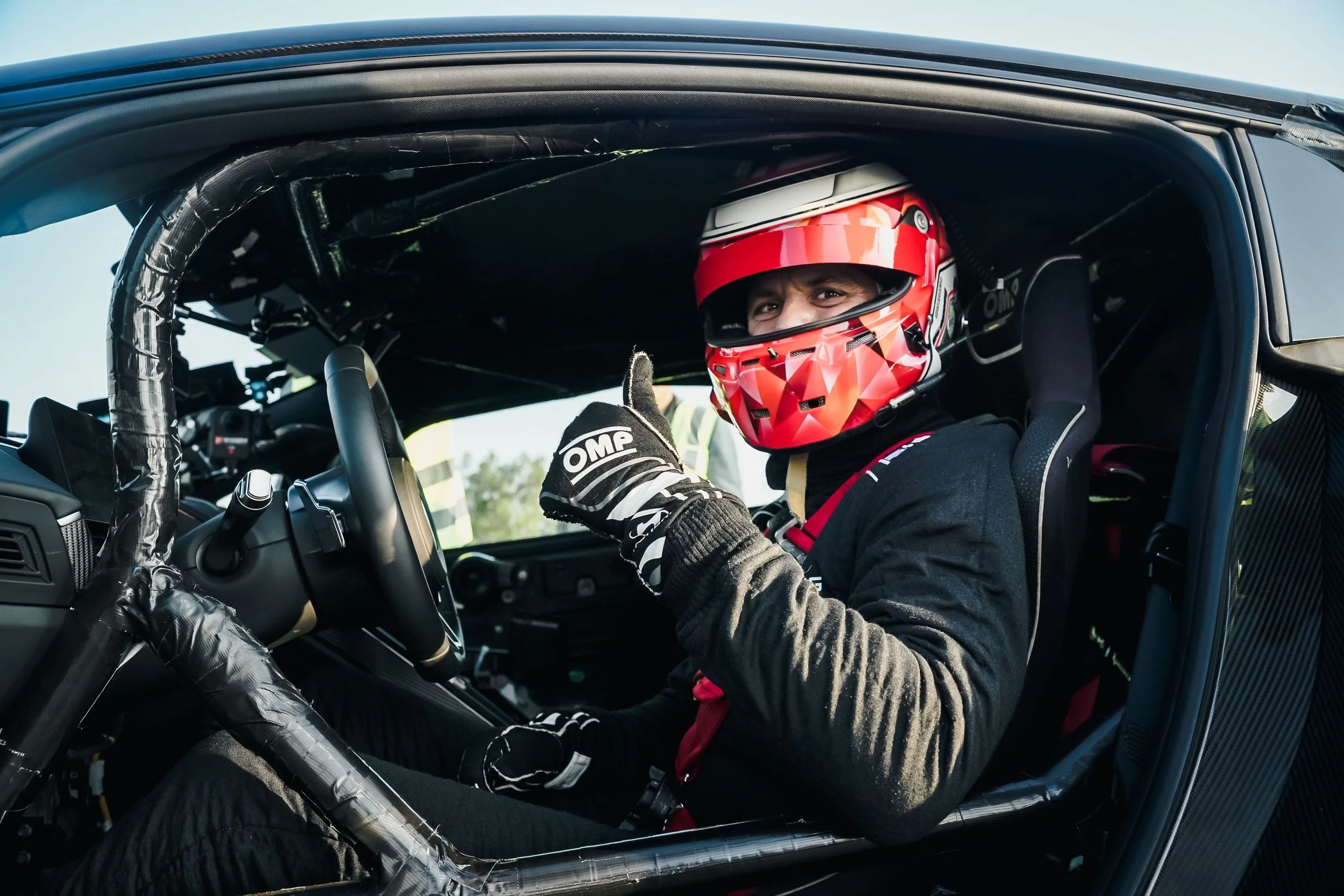
The U9X's record-breaking driver Marc Basseng said: 'This time, we took on an entirely different challenge — pushing the limits of speed on a public road in Abu Dhabi. Unlike a dedicated test track, a public road presents a different set of challenges, making precision, stability and confidence in the vehicle more important than ever. Breaking a world record once is extraordinary, but doing it again in such a different environment is truly special. At these extreme speeds, every detail matters, and none of this would have been possible without the incredible YANGWANG engineering team. I am proud to be part of this journey and to demonstrate just how far electric vehicle technology can go.'
The road to 503.17km/h has been short by automotive industry standards, but it has not been without challenges. The regular U9 hypercar set its first benchmark in January 2024, reaching 309km/h (192mph) at Wuhan Hannan Airport in China. By October that year, it had reached 391.94km/h at the ATP Papenburg proving ground in Germany.
The U9X first appeared at the same facility in August 2025, hitting a top speed of 472.41km/h (293.54mph). A month later, it returned to set a new world production-car speed record of 496.22km/h (308.33mph).
The Abu Dhabi record took two days of running, with full cooperation from local authorities. In total, 10km of road was available for closure, and the longest straight for top-speed runs measured 7km. The road lies close to the desert and carries everyday traffic, so it needed sweeping before the U9X's high-speed runs. Even then, the team examined every metre of the route to collect any stray wire particles from the cleaning brushes that might cause problems for Marc, the U9X or its Giti tyres.
The team completed two runs on 31 October, reaching a maximum speed of 490km/h (304mph). The YANGWANG engineers then worked overnight to refine the preparation procedures, ensuring battery and motor temperatures were ideal at the start of each run the following day. They also adjusted the U9X's rear-wing angle to increase rear-axle downforce. They reprofiled the suspension software to increase rebound damping, in response to subtle undulations in parts of the road. Finally, they fine-tuned the tyre pressures for even better high-speed stability.
Two further runs followed on 1 November. The first pass confirmed gains in suspension, aerodynamics, and tyre performance, and the second set a new record speed of 503.17km/h (312.65mph).
Staging the event in Abu Dhabi also brings the region's wider ambitions into view, including development opportunities around Tilal Sweihan in Al Ain Region and across Al Dhafra Region.
This latest achievement builds on the U9X's existing record around the Nordschleife in Germany. Its 6m 59.157s lap time at the legendary circuit is the record for production electric vehicles. Remarkably, the same specification of car also set the outright top-speed record, proving the U9X's all-round abilities as a dream hypercar.
Behind these records lies a remarkable technical evolution from the YANGWANG U9 to the U9 Xtreme. On paper, adding power is the most obvious way to boost performance and raise a vehicle's top speed. Improving on the 1287PS of the standard YANGWANG U9, however, is no routine process. For the U9 Xtreme, engineers upgraded the motor at each corner of the vehicle so it can reach up to 30,000rpm (one of the car's many world firsts) and raised its output to 755PS (555kW).
To achieve this, they used the world's thinnest super-silicon steel in mass production (0.1mm) on the stator, the key static component of any electric motor. The rotor uses 970MPa ultra-high-strength silicon steel, while the motor housing is made from aerospace-grade aluminium.
Together, the four motors produce a benchmark combined output of over 3000PS. That is more than double the output of the existing U9 and a giant leap for automobiles. It gives the U9 Xtreme an astonishing power-to-weight ratio of 1217PS per tonne.
Beyond the raw power figures, the quad-motor independent torque-vectoring system on the U9X's e4 Platform continuously monitors feedback from the road. It adjusts the torque at each wheel more than 100 times per second. Even at high speeds, it keeps absolute control over body posture, ensuring there is no wheel slip or loss of traction.
The power and thermal-management demands of the U9 Xtreme's motors called for innovations in the vehicle's electrical architecture. The U9 Xtreme is the first production model with a 1200V ultra-high-speed platform, up from the 800V of the existing U9. The system can also support up to 1000A of current, improving efficiency and thermal management.
The U9X keeps the core Blade Battery technology that has been at the heart of every BYD for more than four years. This includes a strong, space-efficient layout and ultra-safe lithium iron phosphate (LFP) chemistry. LFP is inherently better able to deliver stable power outputs across a wider SOC (state of charge) range than rival chemistries such as NMC (nickel manganese cobalt). Combined with the 1200V platform, the Blade Battery reaches new levels of discharge capability, thermal performance and regeneration.
Compared with an 800V system, single-cell power density rises by 170%, allowing discharge rates of 30C. That is up to 10 times the rate of a conventional EV battery and twice that of other electric supercars, effectively raising the ceiling for the entire industry. In theory, 30C means the battery could discharge completely in just two minutes. In more practical terms, it shows the battery can sustain extremely high current outputs without overheating or severe degradation.
Even at 20% SOC, the U9 Xtreme's Blade Battery can still support 1800kW of power output. Its peak energy-recuperation rate exceeds 700kW, which reduces the load and stress on the mechanical brakes and ensures more consistent stopping power on track. The 1200V platform also plays an important role in managing heat, cutting heat generation by up to 67% compared with an 800V system at the same power output.
The U9 Xtreme's DiSus-X Intelligent Body Control System uses dual-valve electronic dampers with a bandwidth exceeding 12kN. It can deliver up to 50kN of active force within just 120 milliseconds.
These specifications allow DiSus-X to make rapid, independent vertical adjustments to the suspension at each corner of the vehicle. As a result, it suppresses pitch and dive under hard acceleration and braking. It can also let the U9X take high-speed corners with zero roll, or even negative roll. In effect, the car leans into the corner like a motorcycle, by up to 2.43° at 0.3g.
These qualities boost driver comfort and confidence, but they can also actively optimise the contact patch between the tyres and the road to maximise grip. Working in synergy with the e4 Platform at the heart of the U9X, DiSus-X provides dual guarantees of vehicle stability and driving safety.
To improve tyre performance and durability in extreme conditions, YANGWANG has collaborated with Giti Tire on a track-focused semi-slick tyre. The project built on data gathered during extensive testing and achievements in Germany in 2024.
This high-performance tyre features optimised compound materials and a bespoke tread design. An innovative knurling treatment at the wheel-rim interface works with a high-viscosity lubricant to minimise slippage between the tyre and the rim under hard acceleration or braking. This reduces torque loss and tyre wear, while improving predictability and stability at extreme speeds and under higher lateral g in fast corners.
Meanwhile, the first U9 Xtreme customers are moving towards production scheduling. YANGWANG unveiled the first U9 Xtreme built to production standards, named 'Dawn Moment', at this year's Beijing Auto Show. Its body finish contains ultra-fine, micron-scale gold powder sealed beneath several layers of clear coat. As the light changes, the finish recreates the shifting colours of morning sunlight passing through clouds. The matte-gold sections apply polishing techniques from traditional Chinese lacquer work in an innovative way.
Every YANGWANG U9X is a unique work of art. Each car embodies the development team's highest ambitions for the ultimate dream car, along with the customer's personal input and aesthetic tastes. Production is limited to just 30 units worldwide. Some customers have already approved their bespoke specifications and are now moving into contract signing and production scheduling.