Bugatti Veyron: The Hypercar That Changed Everything
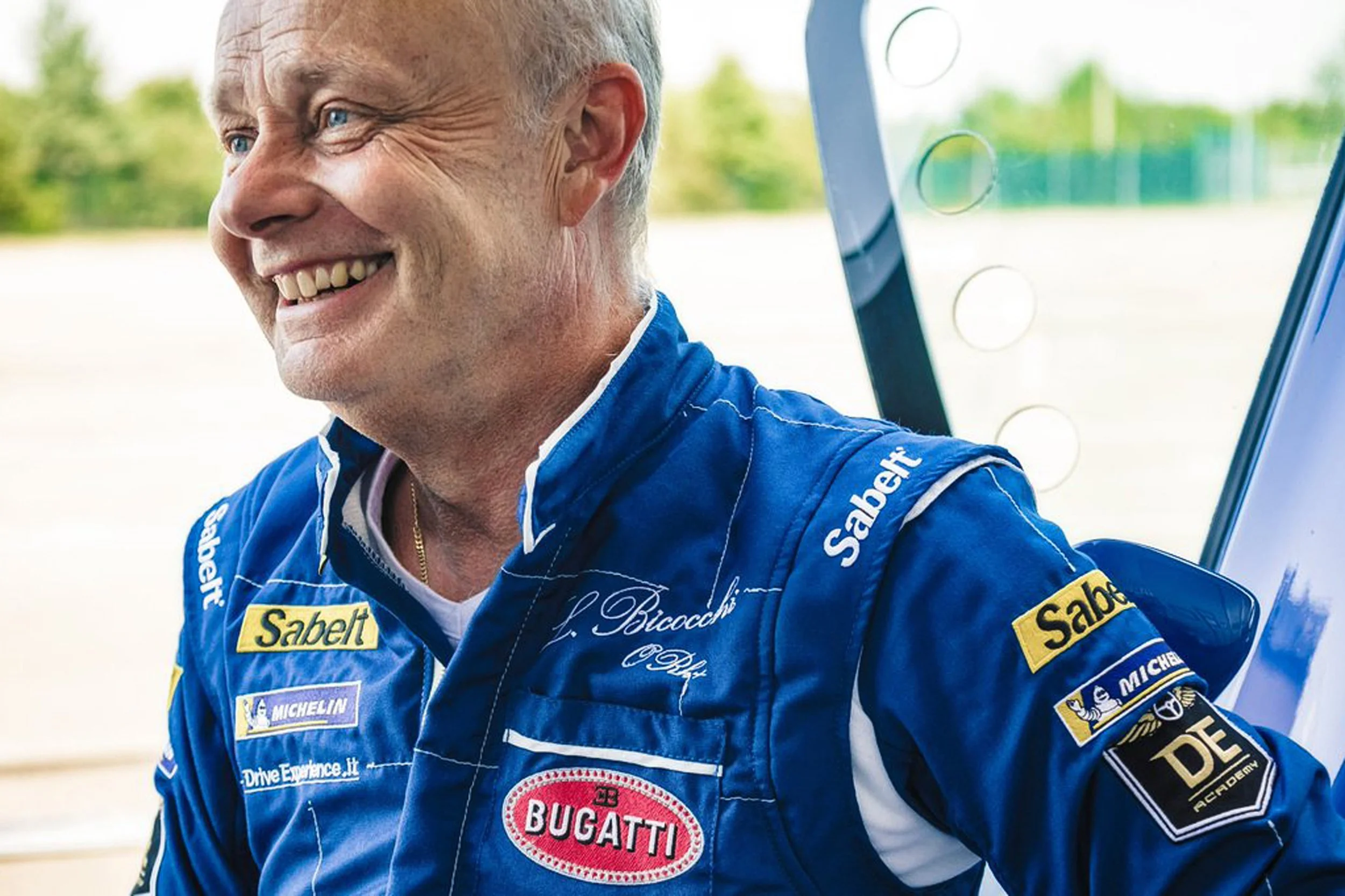
Some cars shape history through figures and performance stats. Others change an era through what they make people feel. The Bugatti Veyron did both. It created the hypercar segment and reset expectations for speed, engineering, and emotion. Loris Bicocchi, Bugatti’s high-speed testing expert at the time, took that challenge personally. He carried awe, responsibility, and a lasting sense of privilege every time he drove it.
Two decades later, the Bugatti Veyron still marks a defining moment in automotive history. Bicocchi still recalls the work with total clarity because he explored the car’s limits from the prototypes. He met something entirely new in the Veyron, and nothing from the past gave him a fair comparison.
He already knew the marque well. He joined the testing programme for the EB110 GT and EB110 SS from 1990 to 1995, and he understood what four-wheel-drive Bugatti supercars could deliver. In 2001, he received a call about a new Bugatti project, and he said yes without knowing what awaited him. Across the automotive world, rumours already fuelled excitement.
“All car enthusiasts had heard rumours about the Veyron. 1,001 horsepower, more than 400 kilometres per hour, sixteen cylinders – sixteen. Can you imagine? Even today, when I say that, I still get goosebumps.”
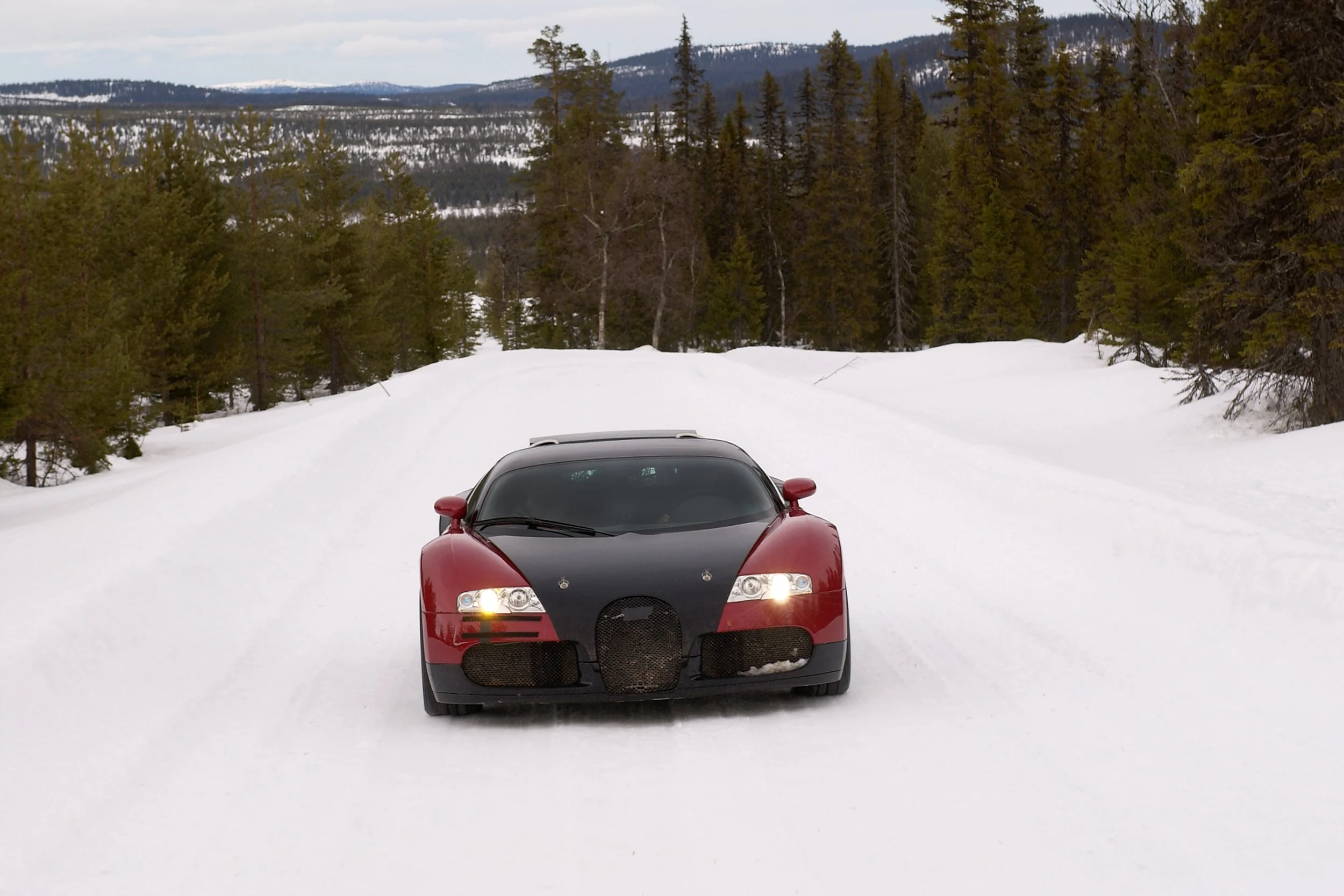
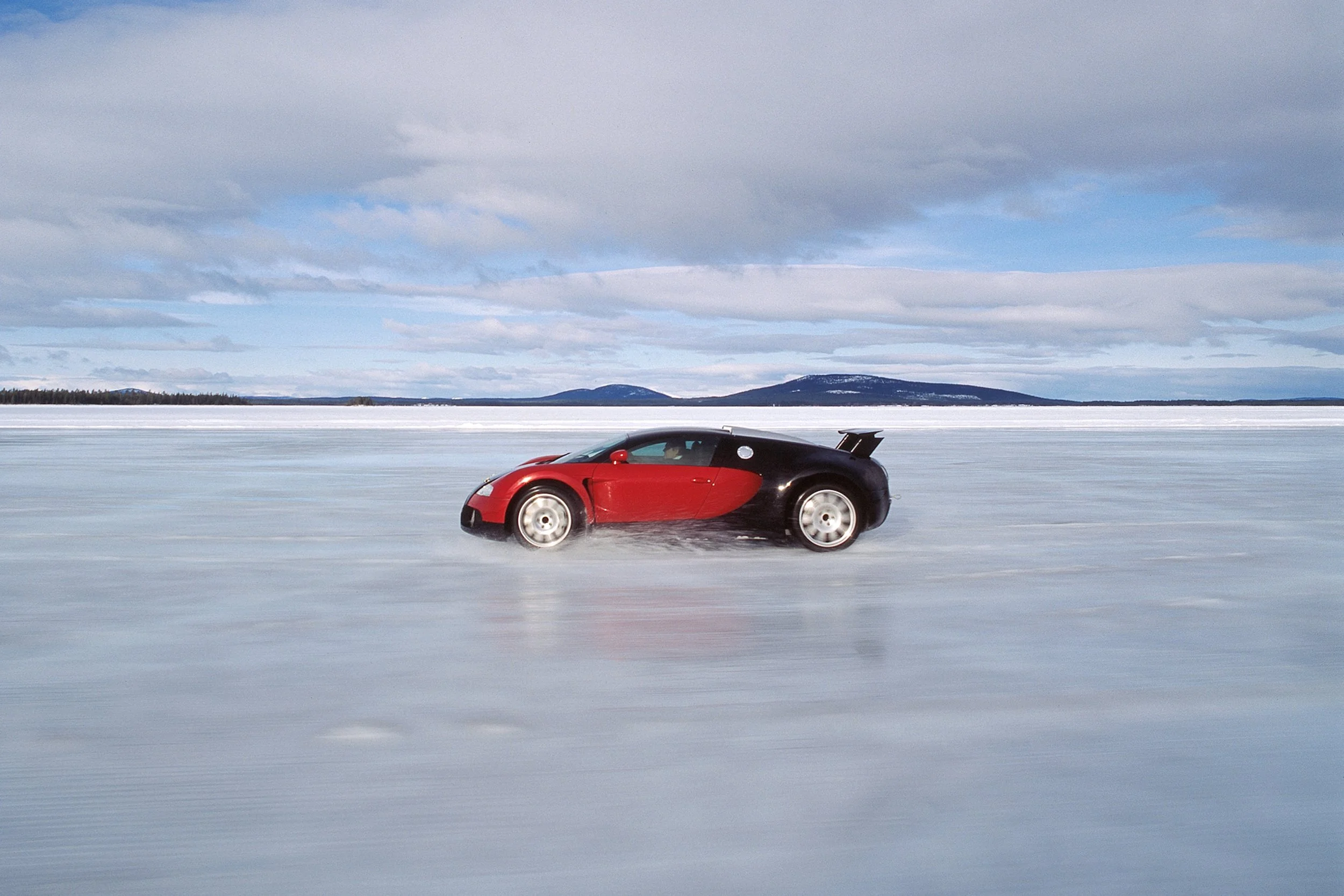
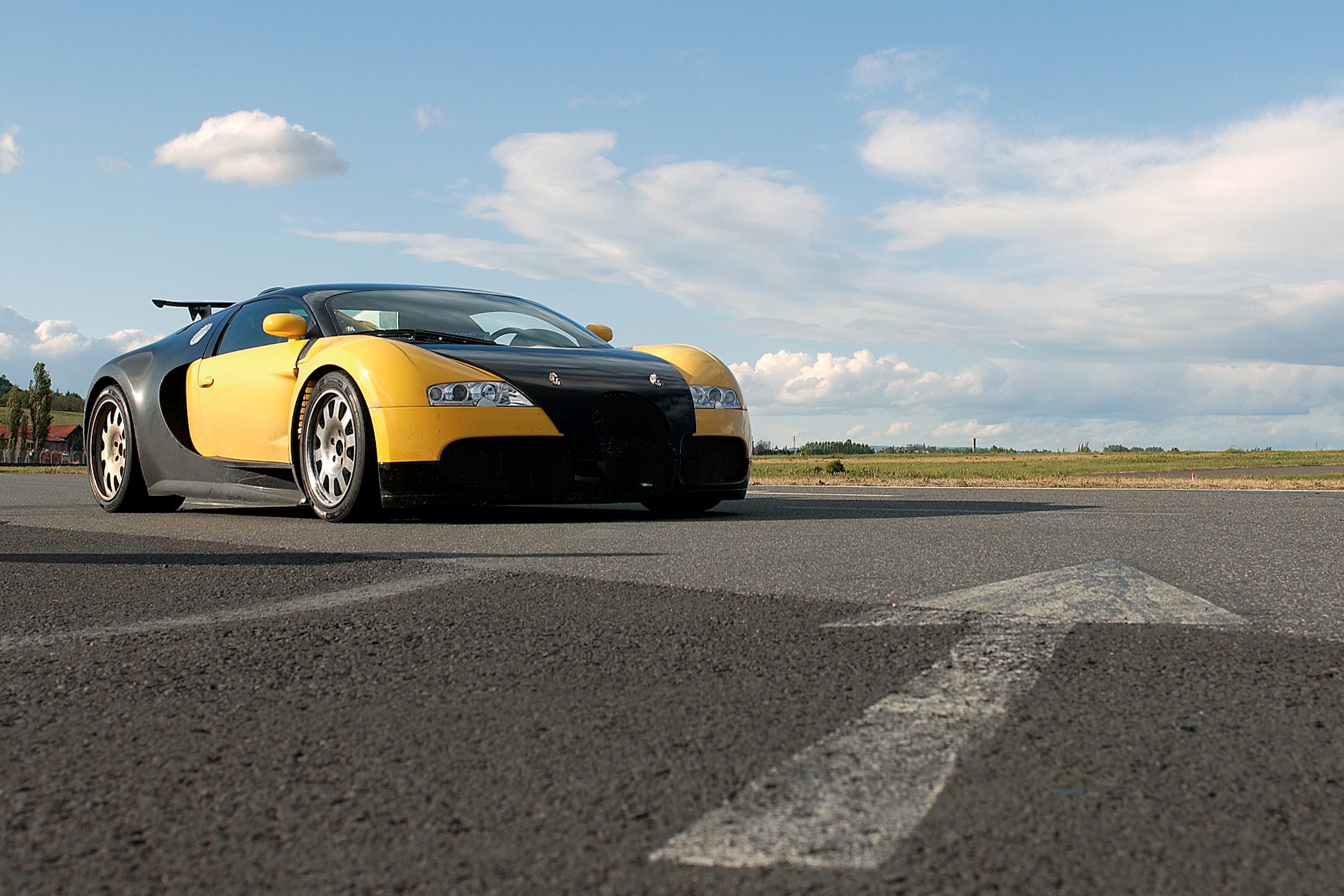
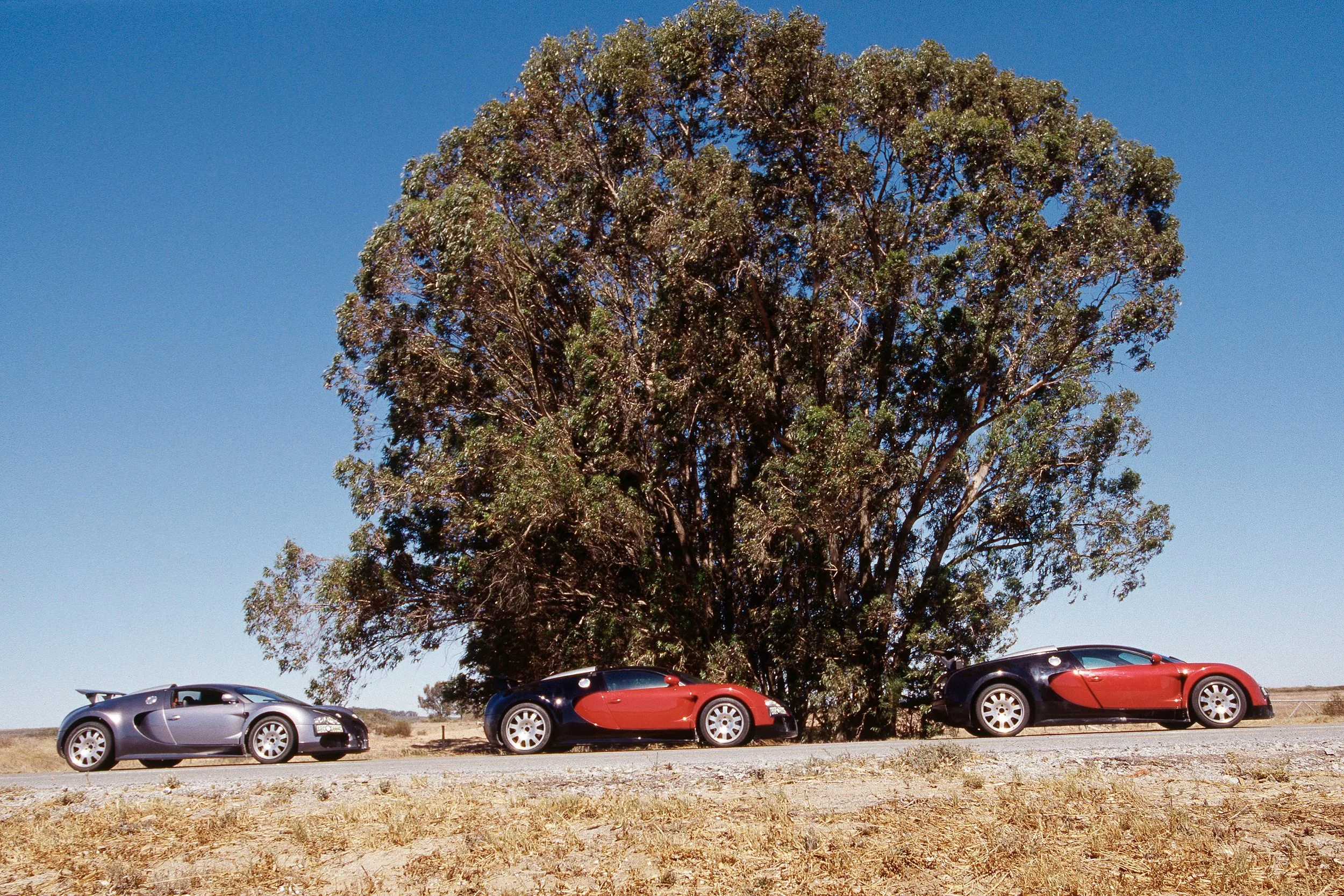
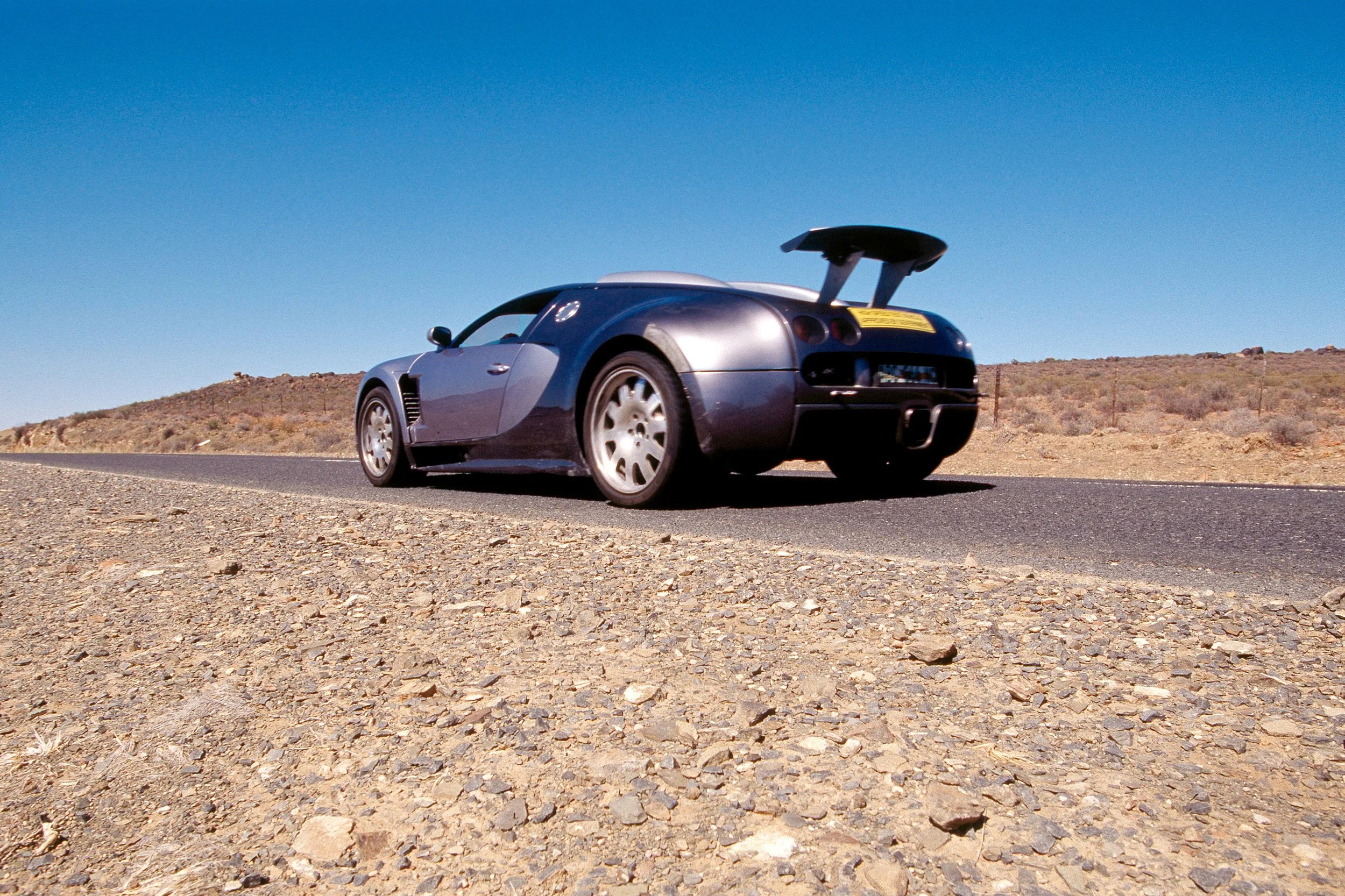
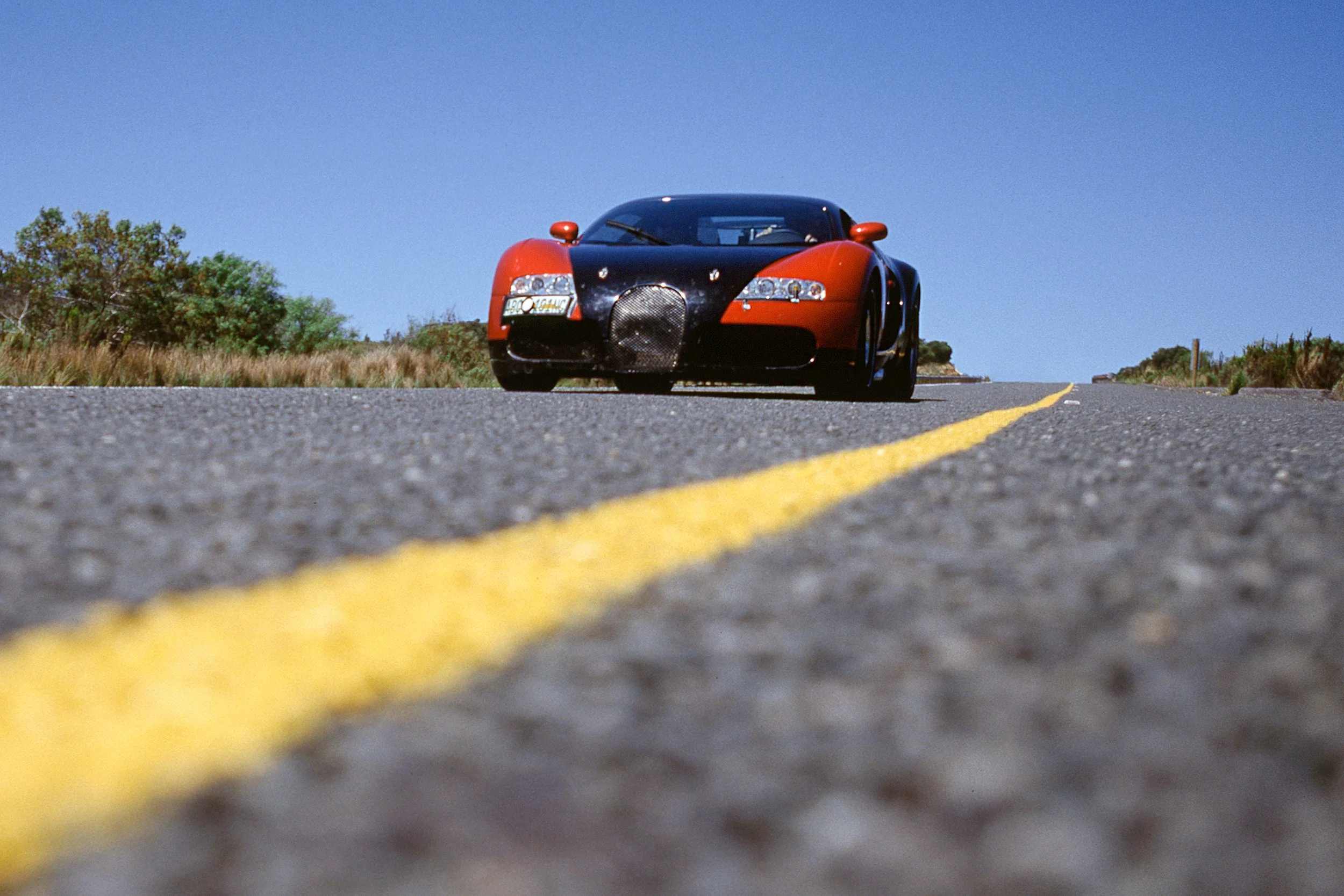
Bicocchi took his first run at the Michelin test track in Ladoux, near Clermont-Ferrand, in a red and black prototype. He felt anticipation shift into emotion almost at once. “I was so excited that I couldn’t even wait for the official tests on Monday morning,” Bicocchi remembers. “I went on Sunday when the car was delivered and sat in the car. When the engineers arrived the next day, I was laser-focused on relaying my first impressions. Simply put, we were all amazed by what the car was already showing.”
At the time, the Bugatti Veyron delivered twice the power of any other production car. Even with experience in the most advanced supercars, Bicocchi had no reference point. “I didn’t know what to expect,” Bicocchi explains. “I didn’t dare to go full throttle. It was so impressive – crazy, almost inexplicable. You immediately understood what this car stood for.”
He entered unknown territory as soon as he began high-speed testing. When the Veyron pushed beyond 400 km/h, aerodynamics, stability, and braking behaved in new ways, and every decision carried more weight.
“From 300 or 320 kilometres per hour onwards, everything changes—especially aerodynamics. Every single detail counts. I had to reset all the references I had built during my career, because the Veyron was incomparable to anything I had driven before.”
Bugatti set another goal alongside raw performance. The team wanted a hypercar that recreational drivers could use safely and confidently in any conditions. “This was a huge responsibility, both for me and the marque,” Bicocchi reflects. “We had to create an incredible car, yes, but one that could be driven by anyone, not only by professional drivers. It was real teamwork – a 360-degree strike force of experts – and we all learned together as we set about making history. That was incredible.”
Bicocchi also felt the weight of Bugatti’s heritage throughout the project. He saw the Veyron as the rebirth of a marque unlike any other. During long trips between test locations around the world, he returned to the story of Ettore Bugatti. He deepened his understanding of Ettore’s vision in 1909 and the legacy that still shapes Bugatti today.
One moment stands out above the rest for him at the Ehra-Lessien test facility. “I remember being asked to fully accelerate and then apply full braking at more than 400 kilometres per hour,” Bicocchi recalls. “It was incredibly stressful and exciting at the same time. When you achieve your goal, and the whole team comes to you, you really feel that you are part of a family – and part of history.”
More than 20 years later, he still feels that emotion. Bicocchi and the wider team still carry the thrill of taking part in a milestone that changed the automobile’s story. For him, the Veyron stays relevant because it expresses a defining Bugatti quality: timelessness. “A Bugatti car is and should remain timeless,” he concludes. “When you look at the design, the lines and the emotion they create, yourealisee they are not linked to a single era. That is what makes Bugatti so special.”
As Bugatti continues to shape the future of the hypercar, the Bugatti Veyron still stands alone. It turned the impossible into reality, and it remains incomparable in both performance and the emotion it continues to spark around the world.