Porsche Reveals One-Off Flachbau RS 911 GT2 RS Special
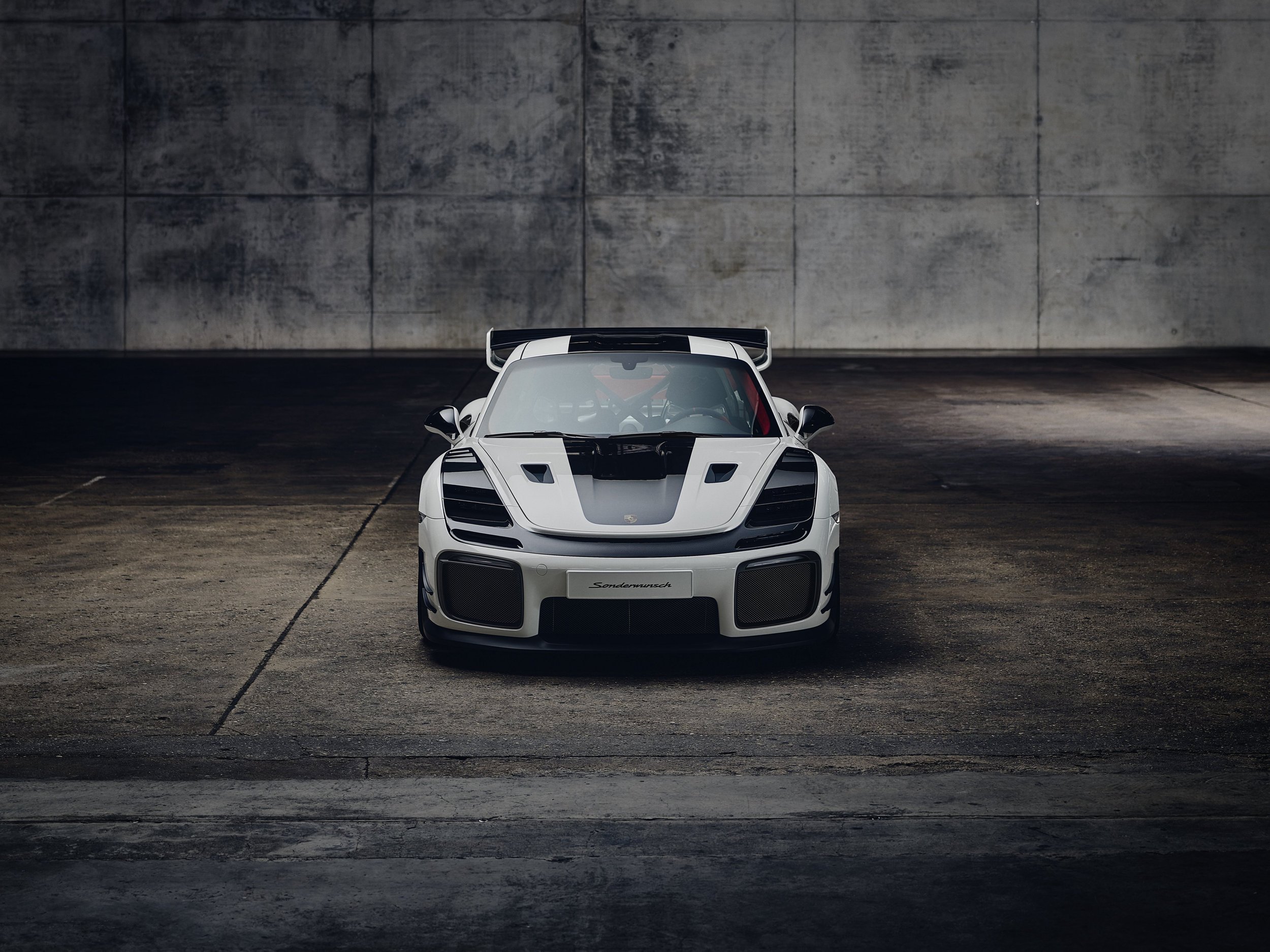
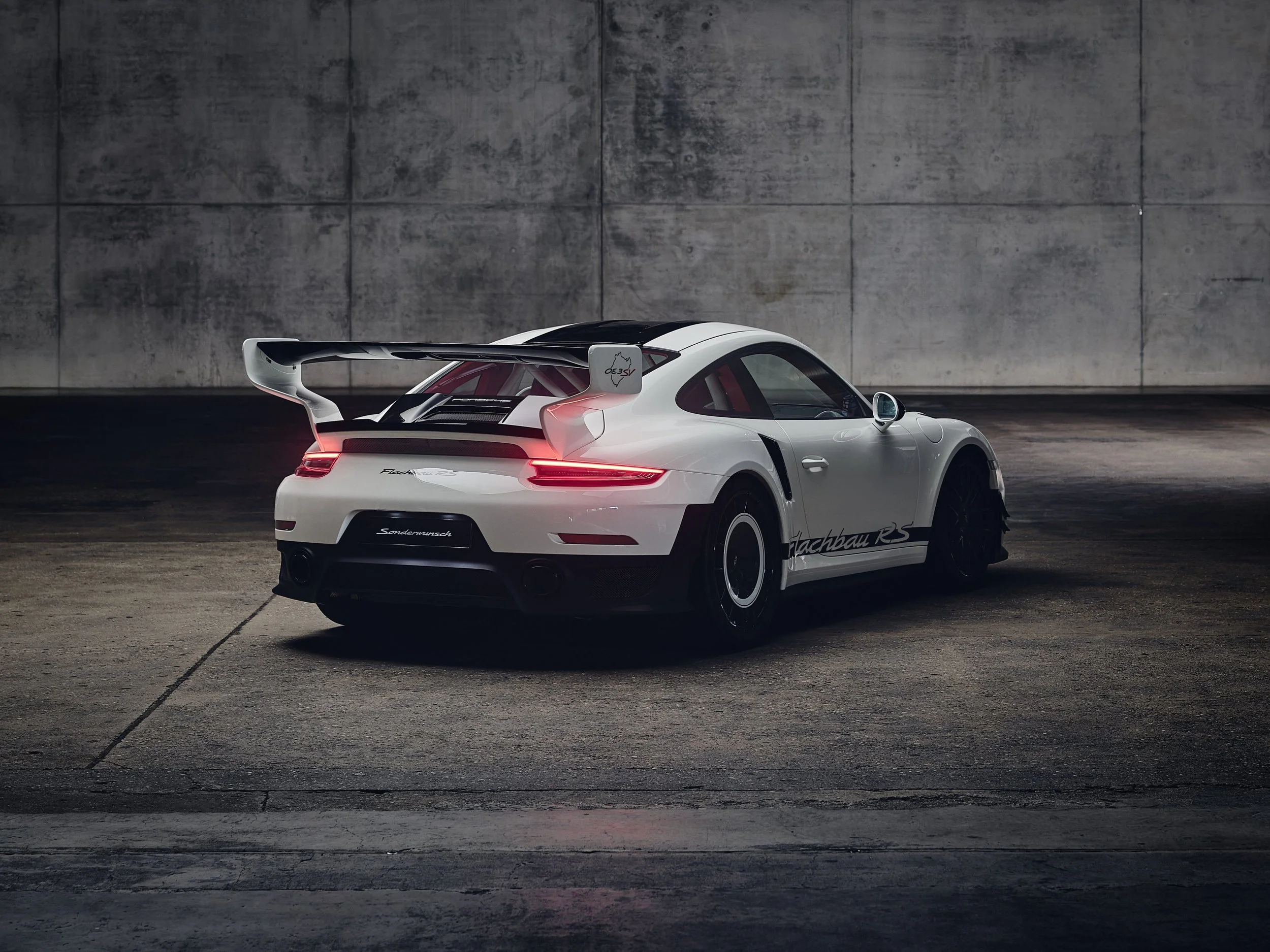
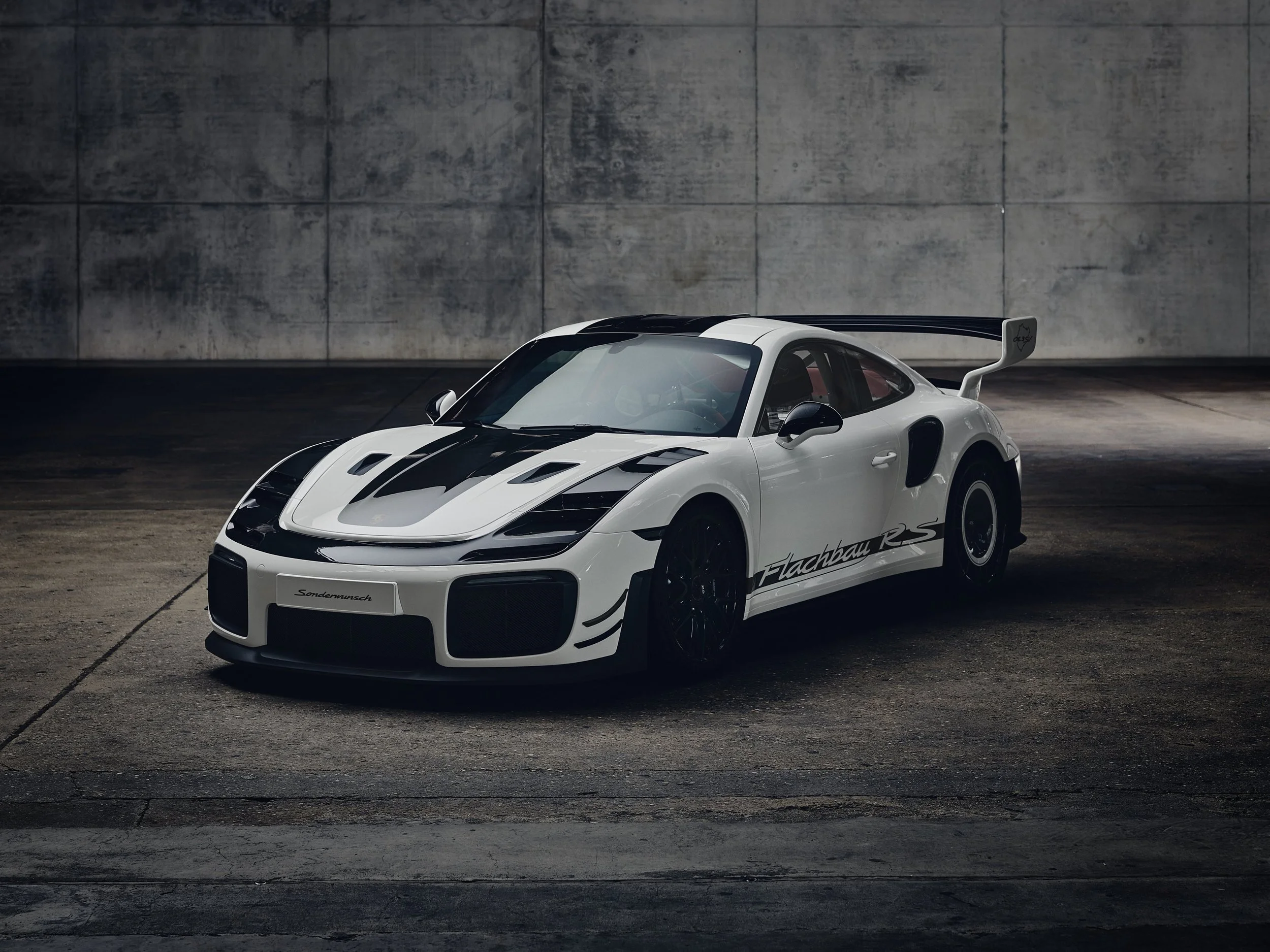
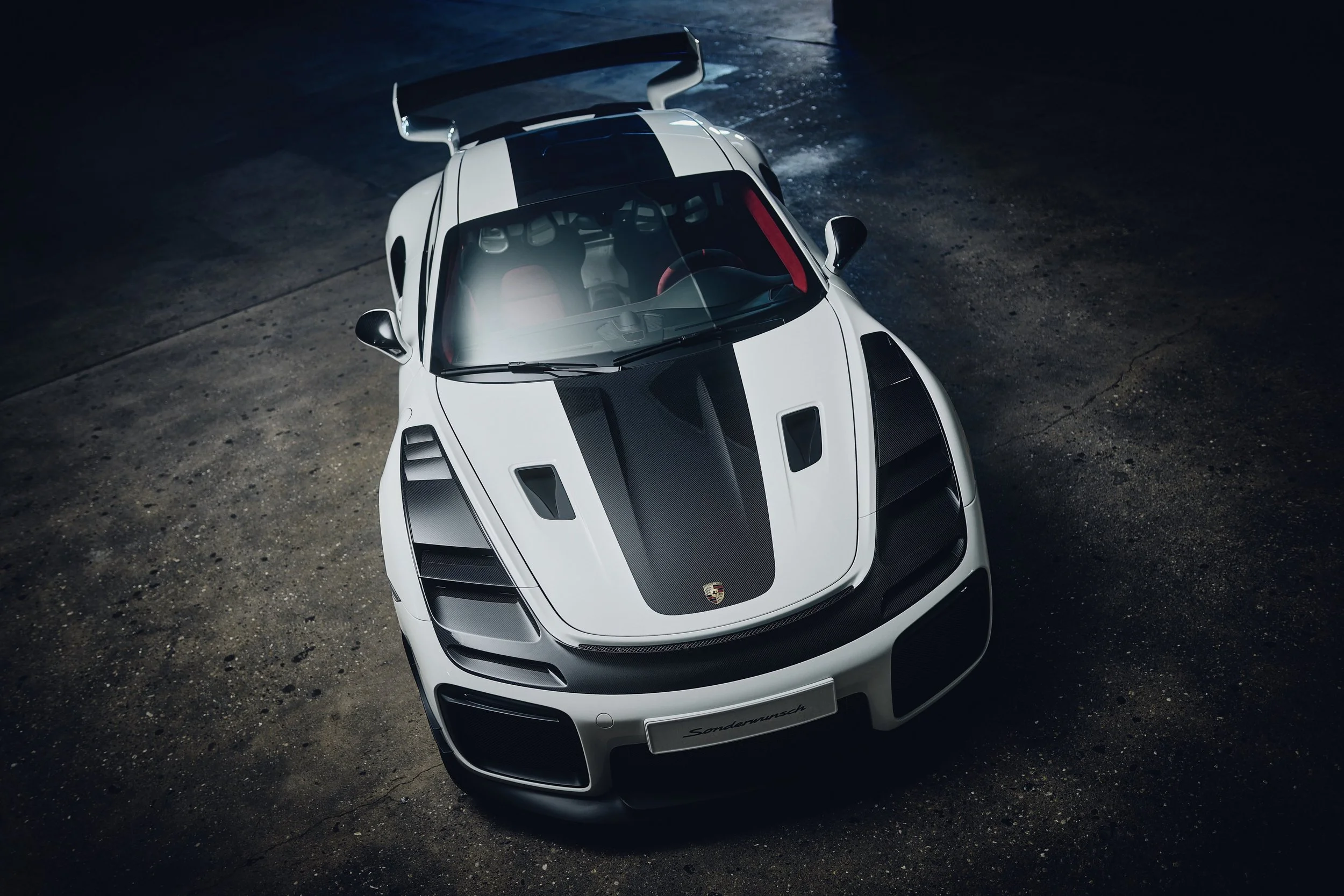
A Porsche enthusiast set the brief for the new Flachbau RS in blunt terms: "Even greater performance and a Flachbau look, combined with a rear wing à la 911 GT3 R rennsport, please." He asked the Sonderwunsch department to transform his like-new 911 GT2 RS into a factory one-off, and the department worked with Manthey to create a unique, road-legal collector's item. Porsche painted the car in Grand Prix White, fitted newly shaped wheel arches and added a striking, U-shaped contrasting graphic on the bonnet; the front end pays homage to the legendary 935/78 Le Mans racing car nicknamed 'Moby Dick'.
The Flachbau (also known as slantnose) body style and the Sonderwunsch programme have shared close ties at Porsche for decades. In the 1980s, the sports car manufacturer offered a spectacular modified version of the 911 Turbo (Type 930), featuring redesigned front wings and pop-up headlights. Porsche based the design on the legendary 935, which dominated endurance racing for many years. Between 1982 and 1989, the firm sold 948 examples of this modified version. Even counting later conversions, Flachbau models remain among the rarest 911 variants today. When it emerged that Porsche had registered the model designations 'Flachbau' and 'Flachbau RS' with the European Patent Office in May 2025, curiosity and intrigue spread through the sports car scene and media world. Now the brand reveals the secret: this elaborate transformation of a like-new 2018 911 GT2 RS (Type 991.2) with Weissach Package explains the patent filing.
A multidisciplinary team, comprising experts from the Sonderwunsch department, Style Porsche, and development engineers from Weissach, Porsche Motorsport and Manthey, worked on the project for almost three years. "The conversion to a slantnose model proved to be very challenging, even though we left the drivetrain unchanged in agreement with the customer. We aimed to reinterpret the iconic look of the 935 without compromising on safety, technology or road approval," explains Alexander Fabig, Vice President Product Offering & Individualisation at Porsche. "Thanks to comprehensive lightweight measures, this one-off car now weighs 31.6 kilograms less than before. That may sound unspectacular at first, but the 911 GT2 RS with Weissach Package is a sports car that is already uncompromisingly optimised in terms of weight reduction."
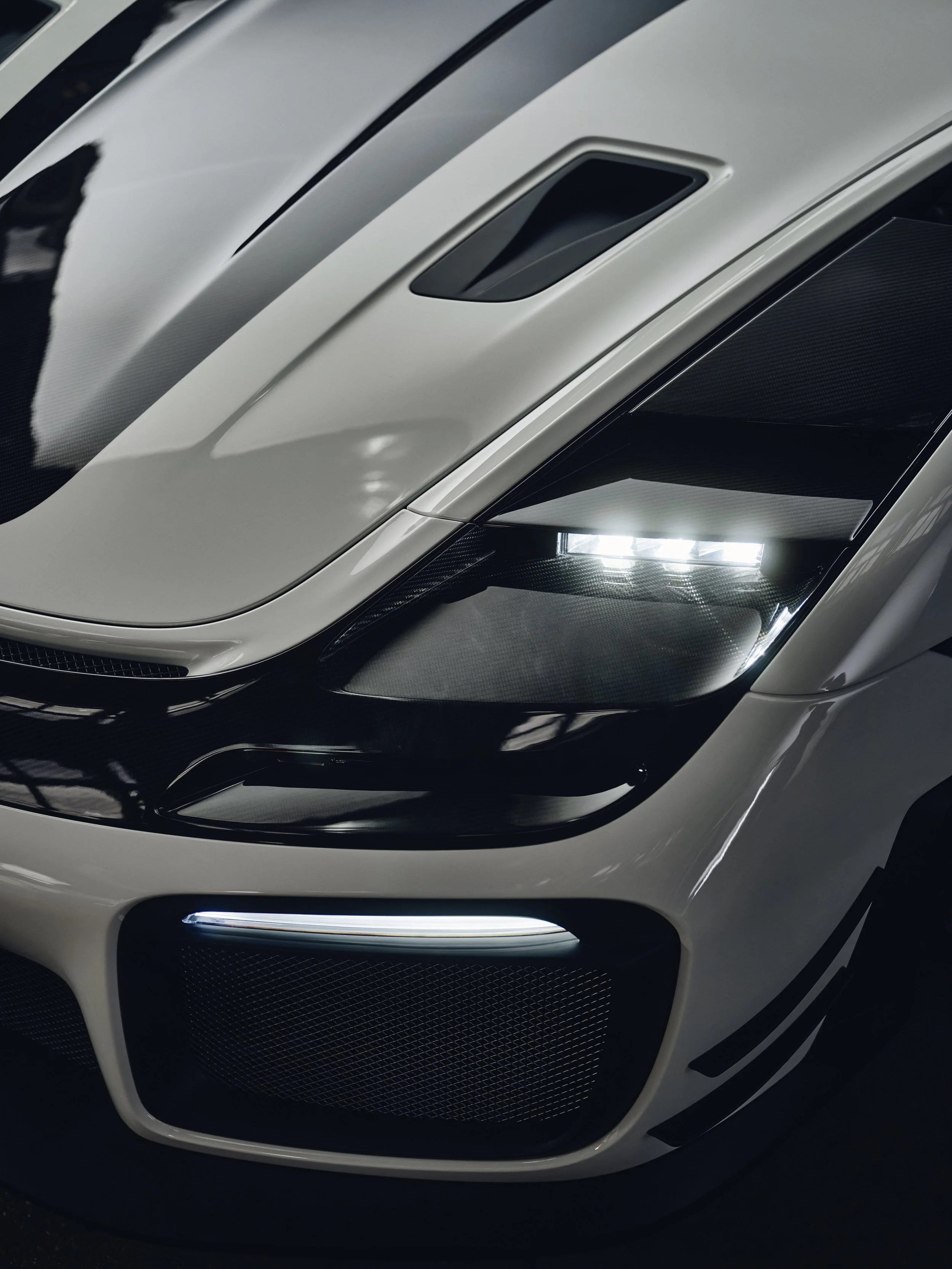
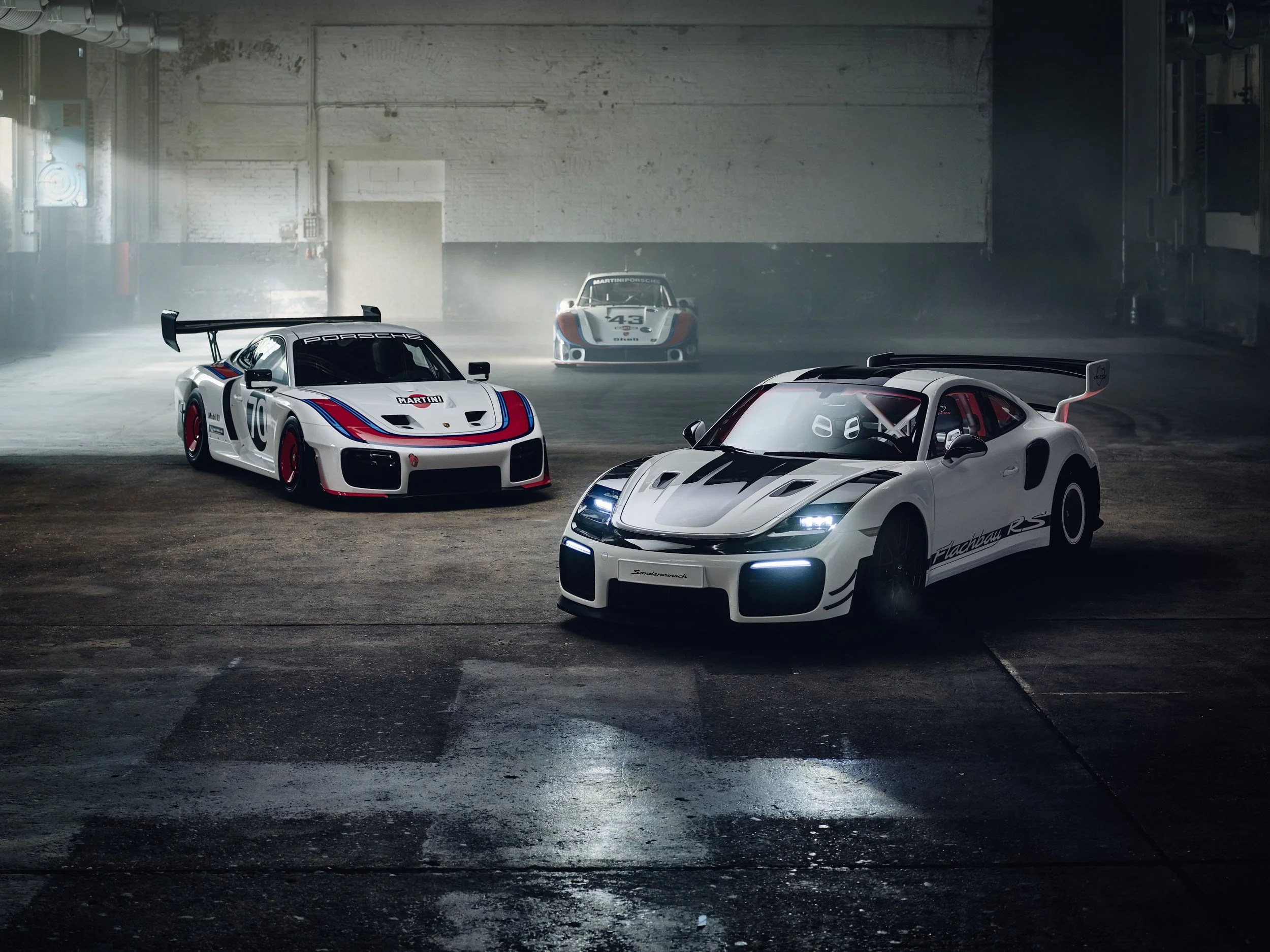
Grant Larson, who has since retired, designed this Sonderwunsch project. He also created the modern interpretation of the 935 that Porsche presented in 2018 to mark its 70th anniversary. "The new Flachbau RS is a modern, fitting reinterpretation of the iconic 935 Moby Dick design," says Larson. "In addition to the lower front wings, a key feature is the staggered headlight arrangement with very narrow LED units."
The colour scheme also plays on tradition and modern reinterpretation. "We have combined Grand Prix White with sections painted matt black and other areas with exposed carbon fibre," Larson continues. "This creates contrast, and the U-shaped contrasting element at the front picks up on a design feature of the Martini-liveried 935/78 – the famous 'Moby Dick'." Porsche developed the white tone specially for this one-off car, using a historic 911 in Grand Prix White from the Porsche AG collection as a reference.
The exterior reinterprets the 935's Flachbau shape. The front wings now sit lower and feature slatted air outlets that reduce air pressure. Because of the wings' new contour, engineers also had to modify the fuel filler cap and its underlying mechanism, as well as the front bumper. Flaps from Manthey underline the aerodynamic performance of the front end. Instead of standard round headlights, a new lighting system uses three very slim LED elements arranged in tiers for high beam, low-beam, and daytime running lights. The contrasting elements in black, exposed carbon fibre and Grand Prix White echo the motorsport reference of the 935/78. Aerodiscs on the rear wheels and black brake callipers complete the overall picture.
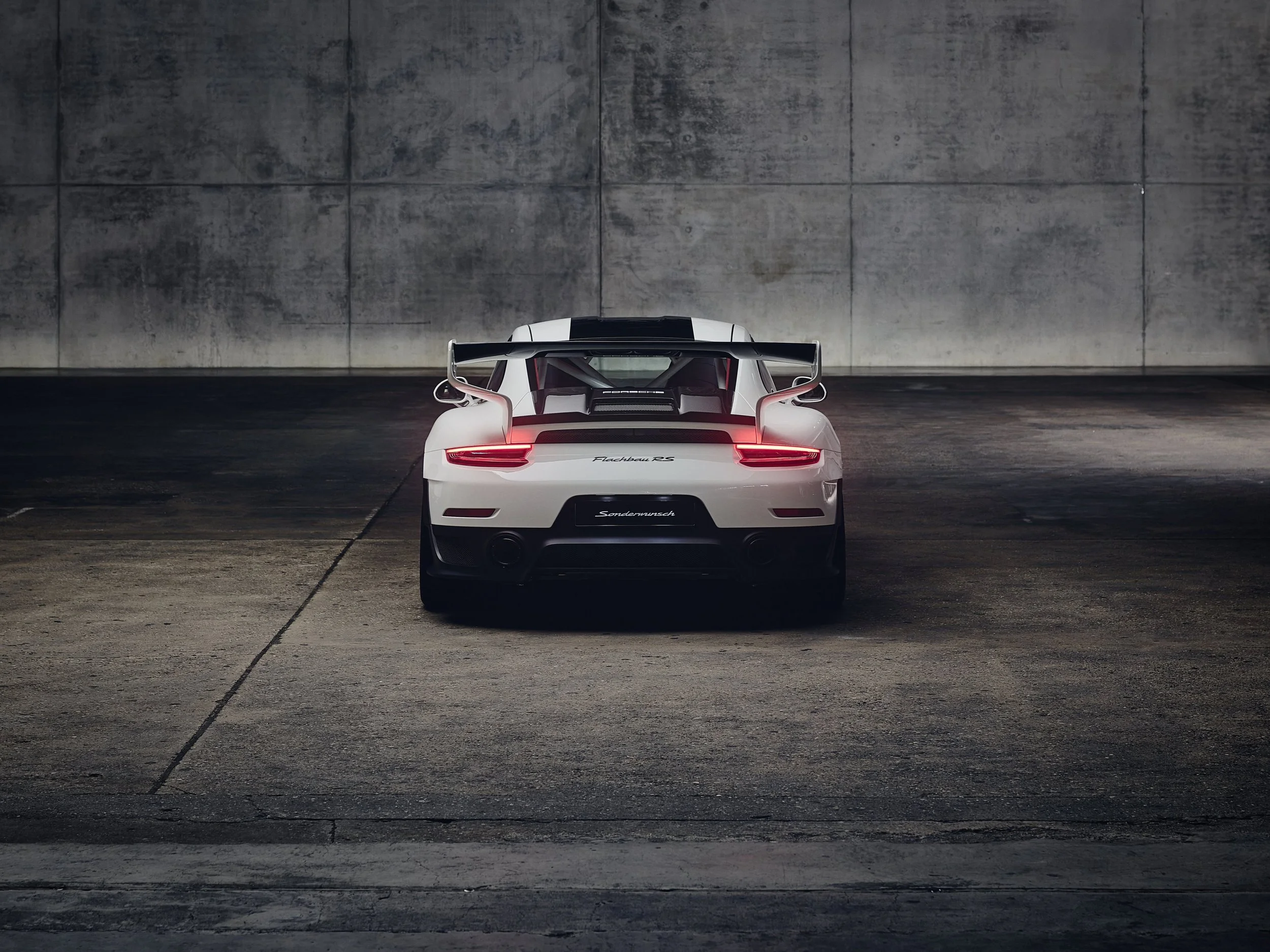
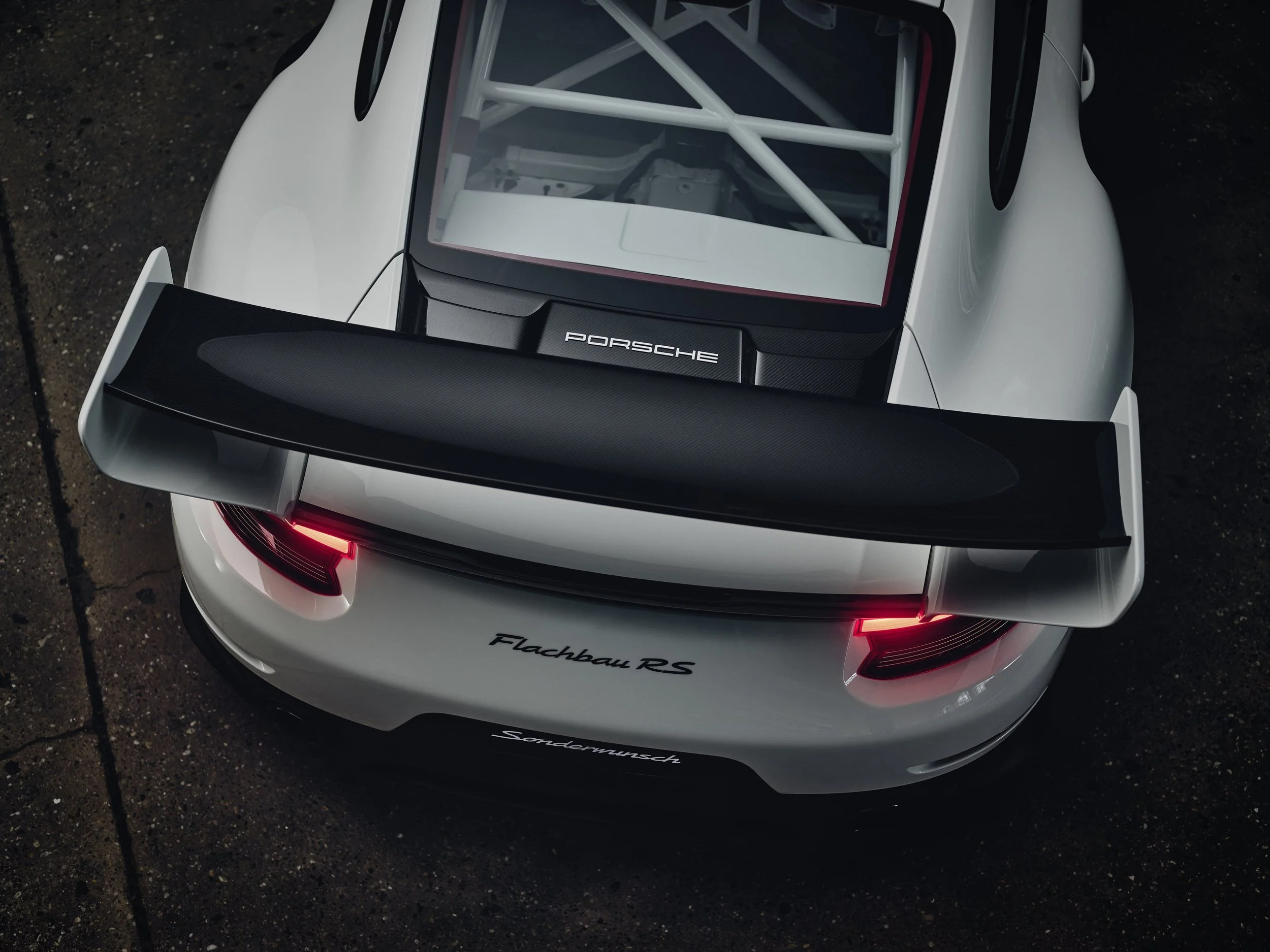
The front splitter, underbody structure, rear diffuser and carbon-fibre aerodiscs improve aerodynamics and efficiency. Porsche drew inspiration for the new rear wing and its S-shaped mounts from the 911 GT3 R Rennsport, though this wing sits about five centimetres higher and locks into three positions. At 340 km/h in the 'High Downforce' setting, the Flachbau RS produces 554 kilograms of downforce on the rear axle.
Inside, the cabin retains its sporty, high-quality feel at the front, while the rear has been thoroughly stripped back to reduce weight. Porsche removed the Porsche Communication Management (PCM) system, the audio components and much of the insulation and cladding. Exposed metal elements in Grand Prix White, carbon trim parts, and a deliberately exposed wiring harness emphasise the racing-car character. 'Flachbau RS' appears embroidered on the carbon-fibre bucket seats, behind which sits a stylised version of the Nordschleife. A gold-coloured badge with Sonderwunsch lettering and the embroidered words 'Factory One-Off 2026 | Flachbau RS' highlights its one-off status. A removable emergency box houses mandatory items such as the warning triangle and tow eye.
Before producing the new tooling to manufacture the modified components, Porsche digitally validated the design. This process included simplified crash simulations, structural analyses for the loads on the large rear wing and aerodynamic calculations using Computational Fluid Dynamics (CFD). Engineers then tested the components themselves, including on a Hydropulser test rig and with static load tests. Porsche built three test vehicles to carry out further validation tests in the lighting and wind tunnel as well as on the road. Test drives at Mendig airfield, 50 laps on the Nürburgring-Nordschleife and endurance tests at Weissach combined to simulate roughly 150,000 kilometres of customer use, most notably for the rear wing. "On the Nordschleife, it becomes immediately clear just how effectively the aerodynamic concept works," says Porsche test driver Lars Kern, who drove the sports car at the Nürburgring. "The Flachbau RS remains extremely stable and precise even at very high speeds. This is precisely the kind of feedback needed to validate such a radically modified body design."
Porsche developed the 935 from the 911 Turbo (Type 930), and the car shaped GT motorsport from 1976 onwards. Its elongated aerodynamic shape earned the 935/78 the nickname 'Moby Dick'. In 2018, Porsche presented a modern interpretation in the form of a Clubsport racing car.