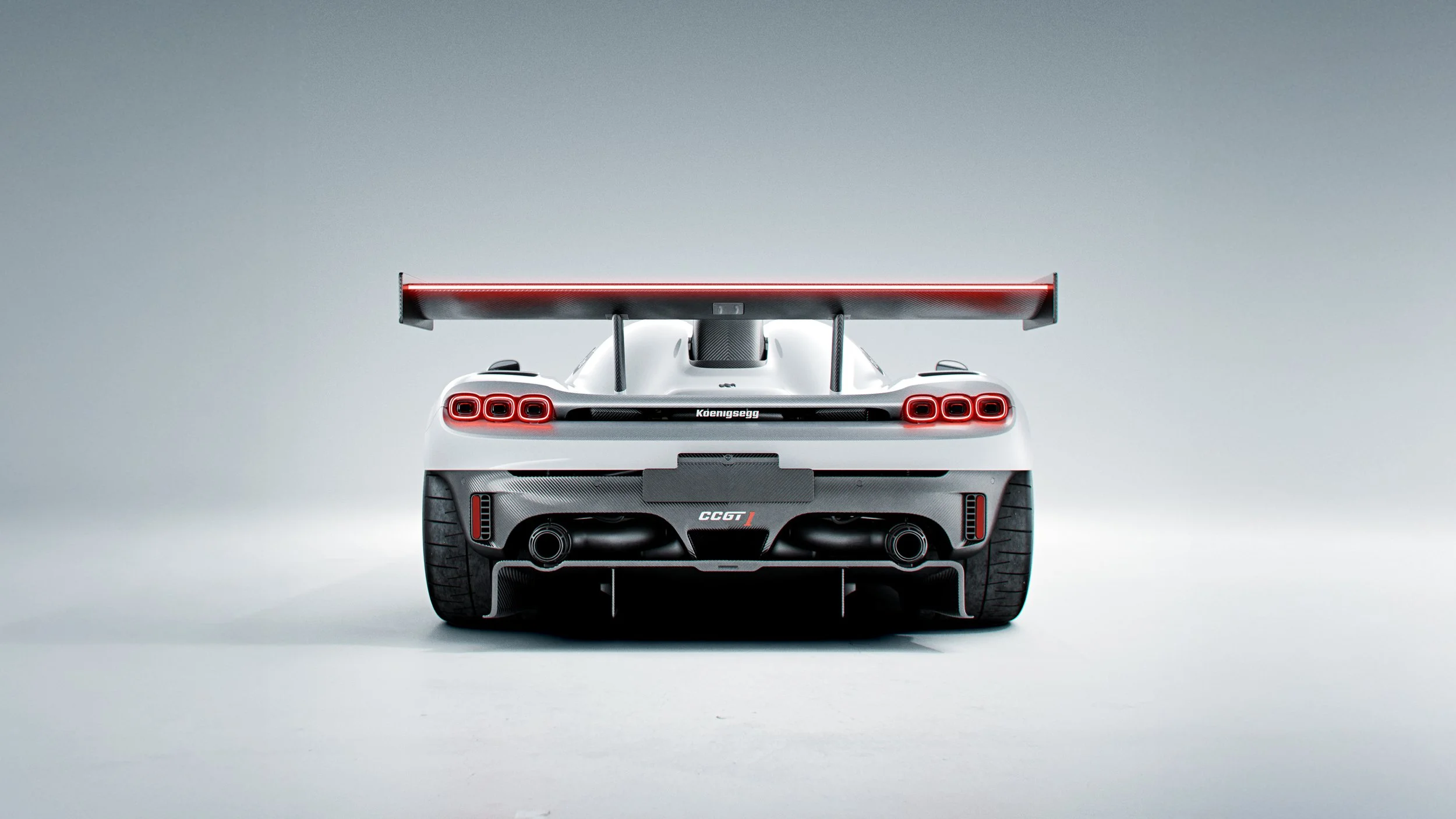
Koenigsegg CCGT1: A Tribute to the Legendary CCGT Racer
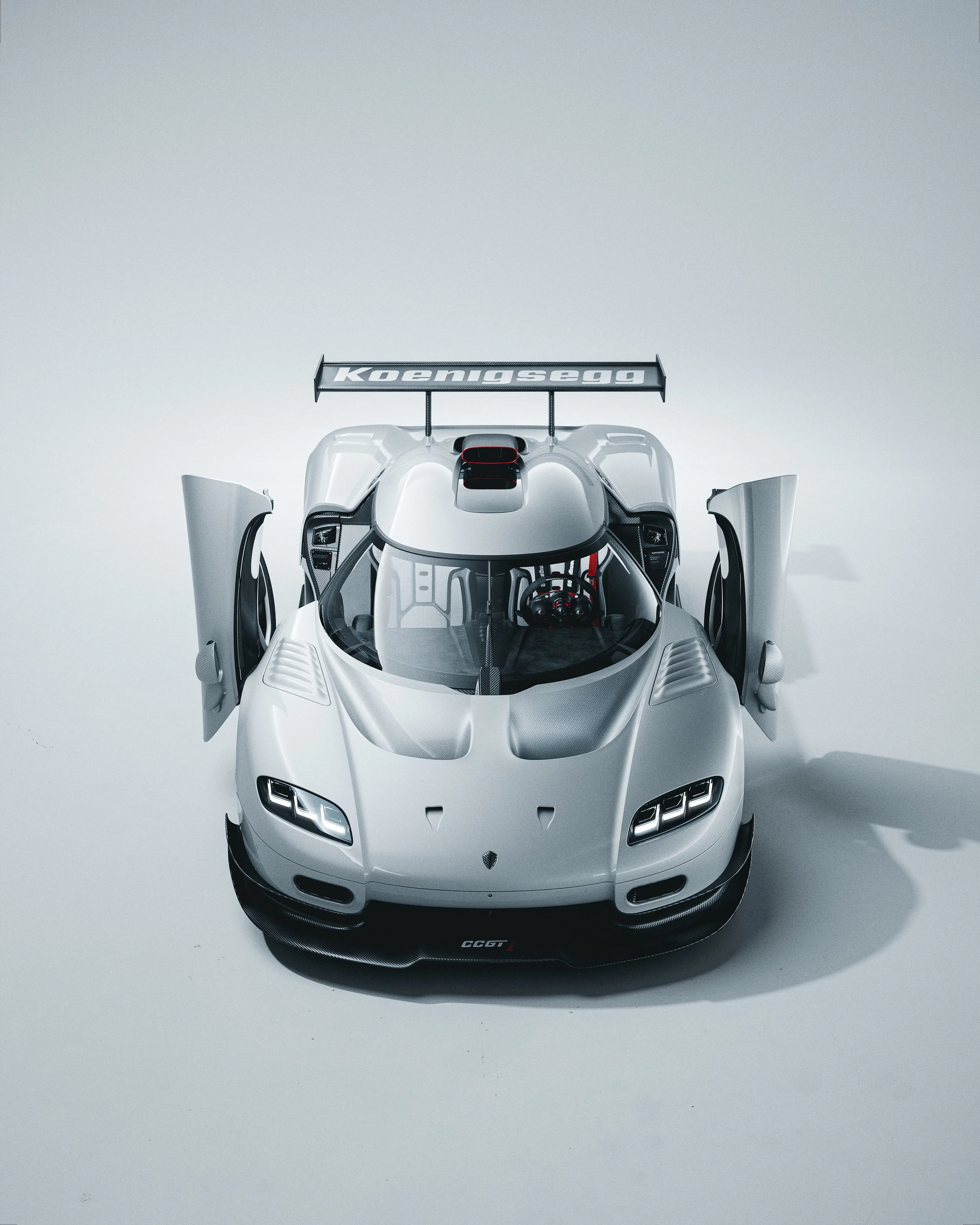
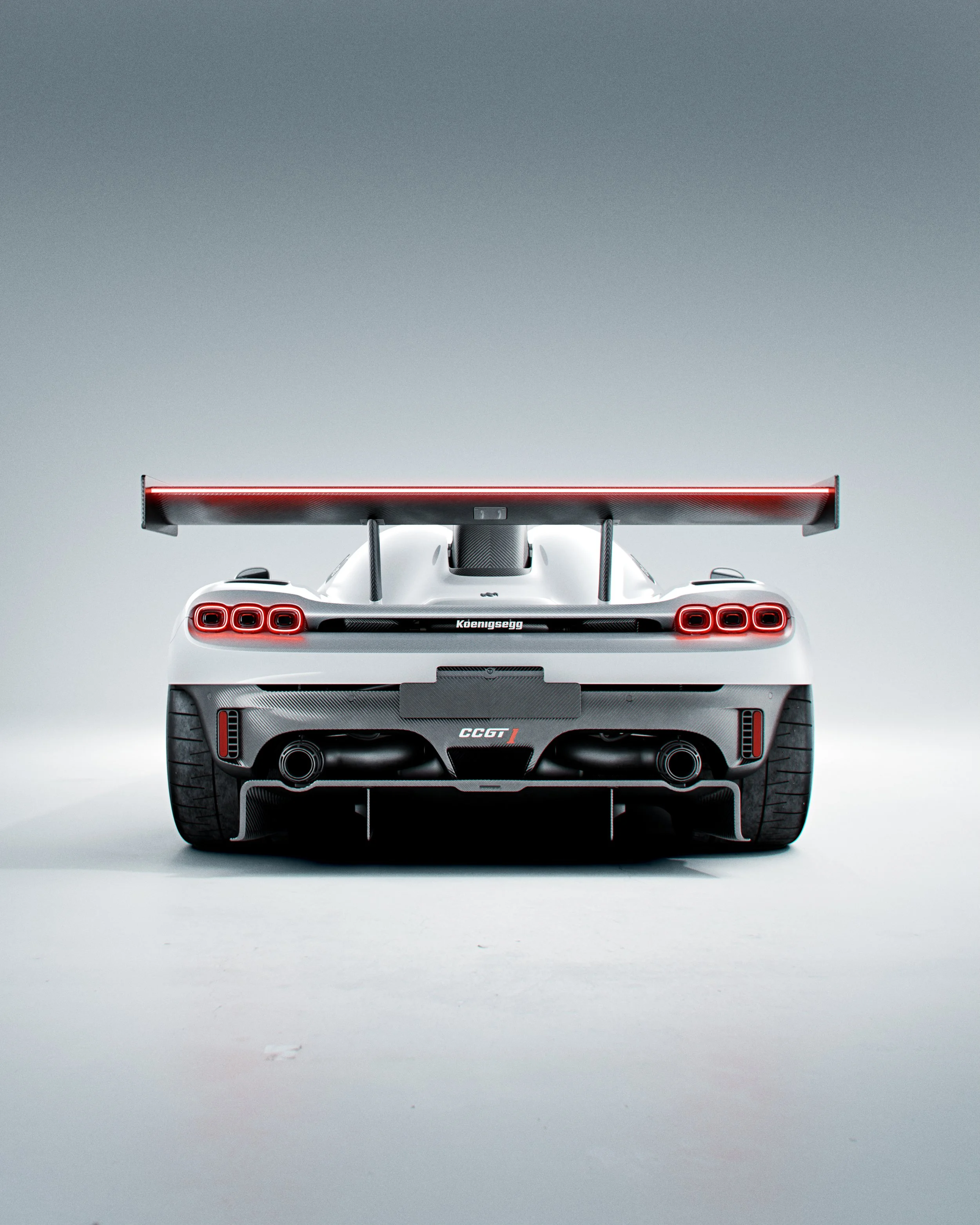
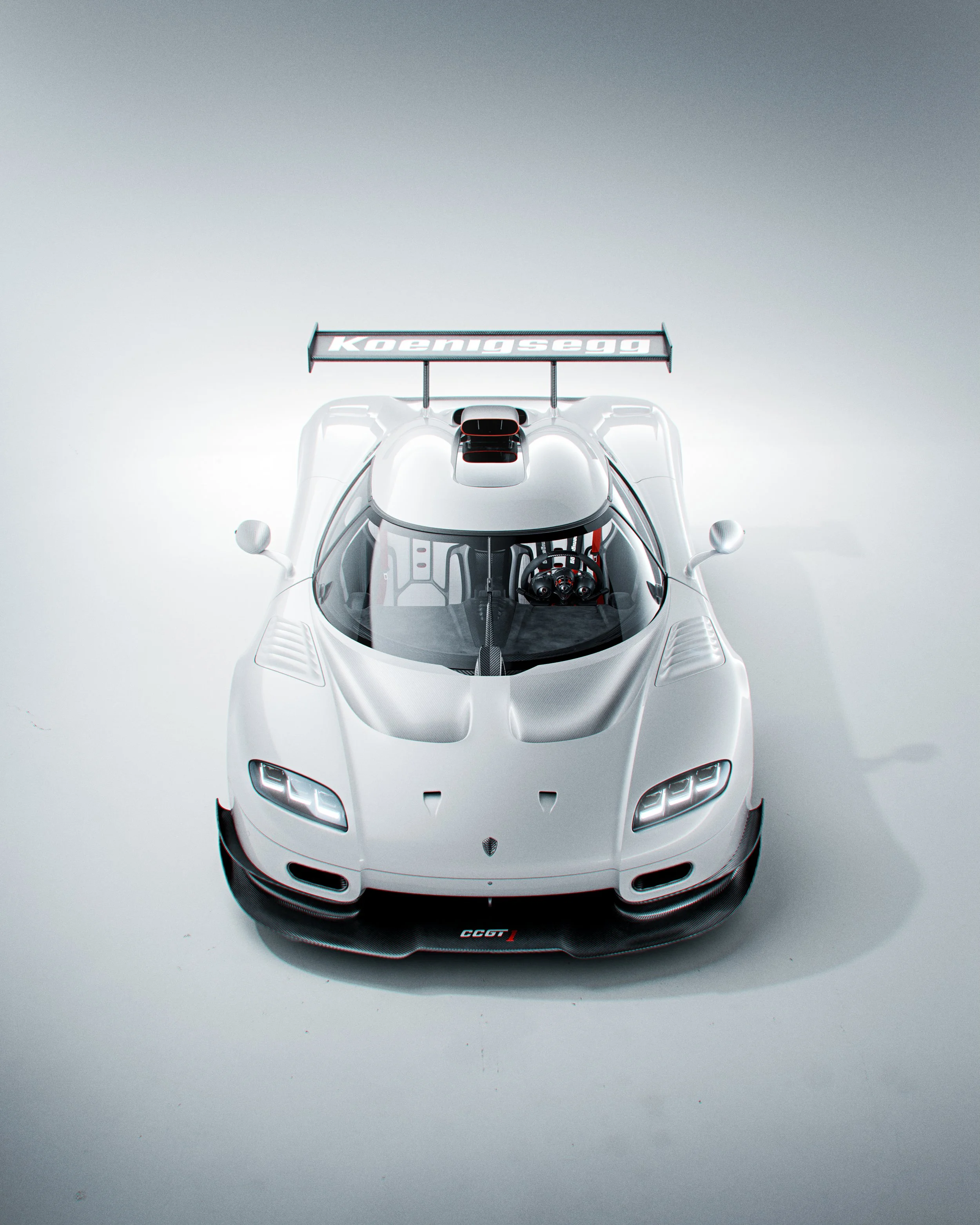
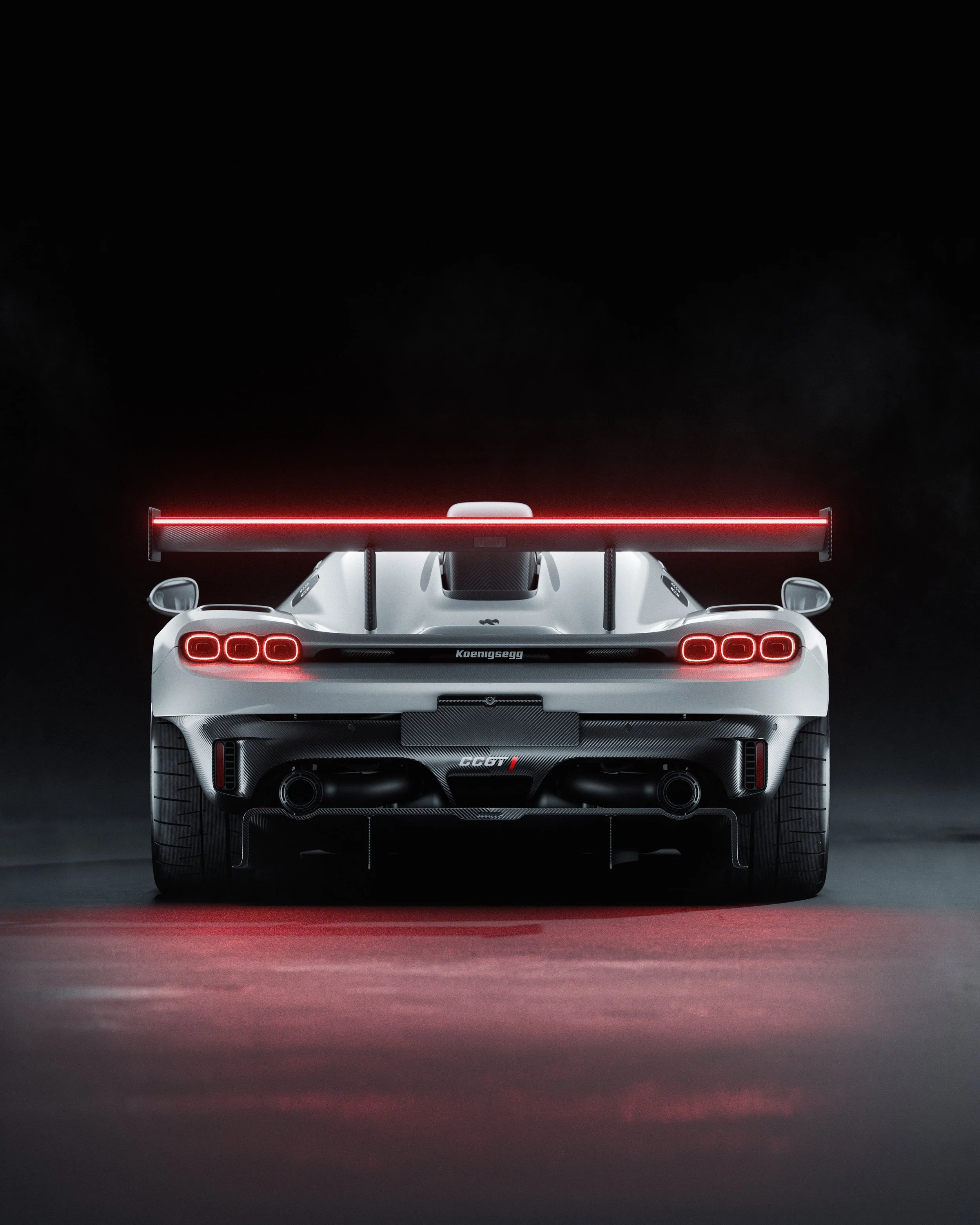
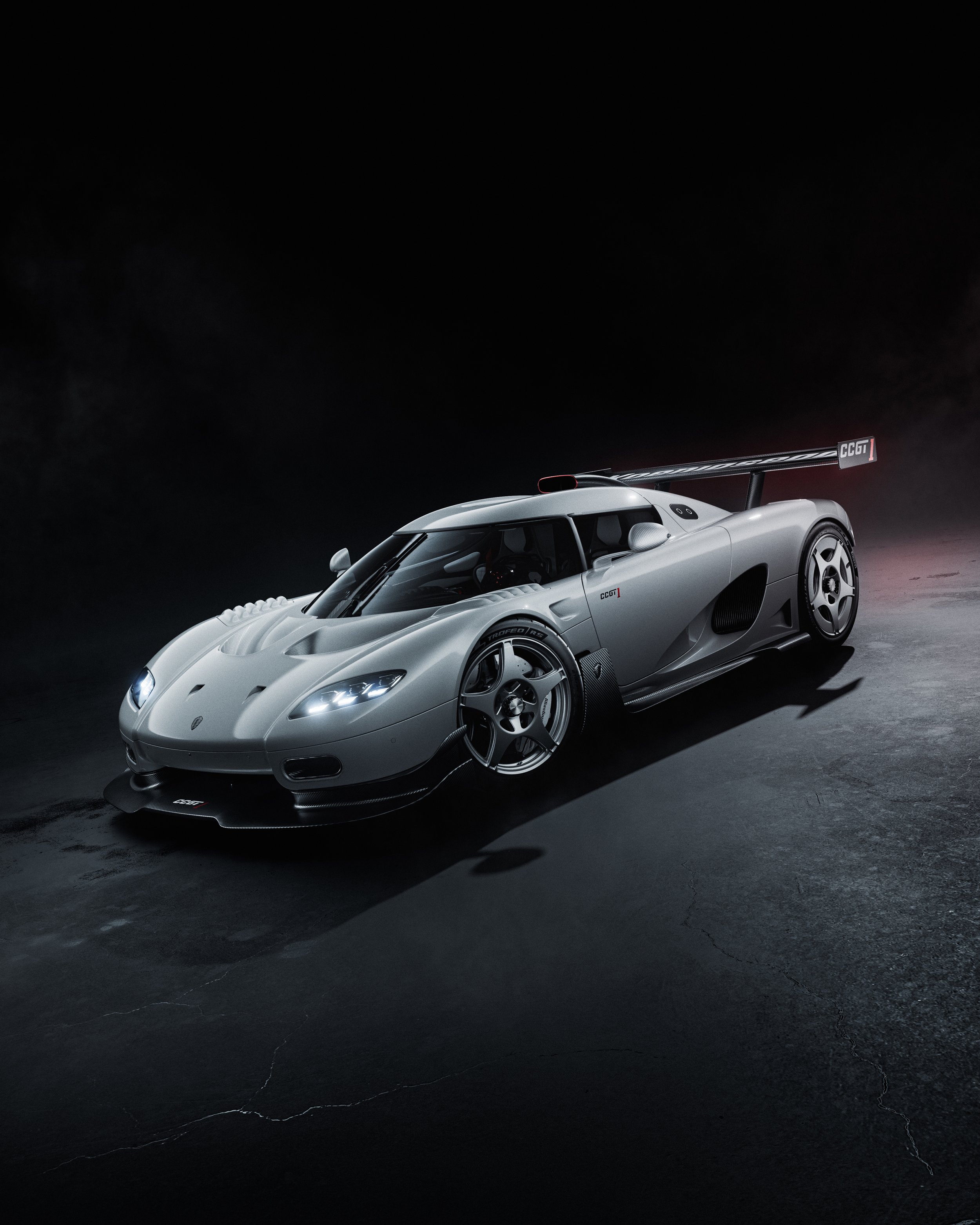
Koenigsegg proudly unveils the new Koenigsegg CCGT1, a striking tribute to the brand's legendary CCGT GT1 race project, just as the CC850 pays homage to the CC8S, Koenigsegg's first homologated production car.
Christian von Koenigsegg wanted to compete in endurance racing from the very start of his sportscar journey. While designing the first CC prototype, Christian studied the Le Mans GT1 regulations closely, even scaling the car's width and frontal area to meet GT1 requirements, avoiding the need for later changes for a racing version. These dimensions became the standard for Koenigsegg's early models, the CC8S and CCR, so the company's move to build a genuine GT1 endurance racer came as no surprise. That ambition became the CCGT.
Working alongside legendary Koenigsegg engineer and fabricator Dag Bölenius, Christian built the CCGT to sit comfortably under the 1,100kg class weight limit. At around 1,000kg, the car offered plenty of scope to place ballast exactly where needed for optimal balance. Koenigsegg equipped the CCGT with a naturally aspirated 5.0-litre V8 producing 600hp in race trim—the maximum allowed in the GT1 class—and paired it with a magnesium sequential gearbox that sent power to the rear wheels—the car's aero package generated over 600kg of downforce. Renowned test driver Loris Bicocchi set up the car, and from its first laps, the CCGT displayed genuine competitive pace.
Then fate intervened. Just two months after Koenigsegg began shakedown testing, the FIA rewrote the GT1 regulations to permit only higher-volume production cars. As manufacturers withdrew from the grid due to the low-volume nature of GT1 cars and the soaring cost of competing, the entire series eventually folded. Koenigsegg shelved its racing ambitions, and the CCGT programme ended before the car ever completed a competitive lap. The CCGT was later passed to its first owner, who kept it for 15 years before offering it for sale at the Goodwood Festival of Speed in 2024. Koenigsegg built only one CCGT. Today, under the care of a dedicated new custodian based in the US, the Koenigsegg Legend Division has fully refurbished the original CCGT, and it now awaits its competitive debut in the GT1 historic class, finally racing against the rivals it would have faced two decades ago.
The CCGT1 stands as a modern salute to what many regard as Koenigsegg's most ambitious project, the CCGT, and it celebrates the fact that the CCGT can finally race against its peers in historic competition. Built on the award-winning CC850, itself a tribute to the CC8S that started everything for Koenigsegg, the CCGT1 carries the CCGT's name and spirit into a fully homologated, road-legal Megacar. It delivers an outstanding driving experience on the road and, when fitted with Koenigsegg's first-ever factory-authorised optional track package, offers the fastest and most exhilarating track experience the brand has ever produced.
Christian von Koenigsegg explains: "This is something truly special - our first creation that's designed deliberately as a track-optimised circuit scalpel as well as an extraordinary daily driver. It has been so rewarding seeing the original CCGT come back to life over the last few years. This seems like an appropriate way to celebrate. I'm very excited to drive and explore its full capabilities, and I can't wait for the wider Koenigsegg family to do the same. To also showcase our newly developed Ghost Fibre for the first time is truly exciting and builds on the history of the Trevita project, which was launched in the same era as the CCGT."
The CCGT1 houses a remarkably responsive and sonorous, fully homologated Koenigsegg twin-turbo V8, enhanced with extra cooling to sustain peak performance on circuit. To recreate the full GT1-style experience, Koenigsegg fits the CCGT1 with a clutch pedal for take-off and a sequential shifter with ignition cut that controls lightning-fast changes through the revolutionary nine-speed Light Speed Transmission. Drivers select modes via a dial on the centre console labelled ASMR, for Auto, Sequential, Manual and Reverse. For those who favour a manual experience, Koenigsegg also offers the CC850's ESS six-speed gated shifter as an option.
Christian adds: "The CCGT1 is a creation with two clear identities. On the road, it's a sublime Megacar that's both comfortable and incredibly capable. But its origins are rooted in endurance racing, and that's where the CCGT1 reveals its full character as a true celebration of the original CCGT - with or without its roof!"
Racing-derived aerodynamics generate up to 800kg of downforce at 250 km/h, placing the CCGT1 between the Jesko Attack and Sadair's Spear for peak downforce while delivering accessible grip on slick tyres. A new active rear wing adjusts automatically across 30 degrees, transitioning between low-drag, air-brake and high-downforce modes without driver input. The twin-turbo V8 produces 1,280hp on standard pump fuel and 1,600hp on E85 biofuel. Koenigsegg's all-new Koenigsegg Sequential Shift (KSS), built on the LST platform, features a clutch for take-off and ignition cuts for clutchless changes, just like the original CCGT. Koenigsegg also offers its award-winning Engage Shift System (ESS) as an optional gated six-speed manual, with paddles and automatic shifting available on both configurations. The brand's first-ever factory-designed track package adds slick tyres, a carbon roll cage, racing seats, air jacks, data logging and more, transforming the CCGT1 into the fastest-lapping Koenigsegg yet.
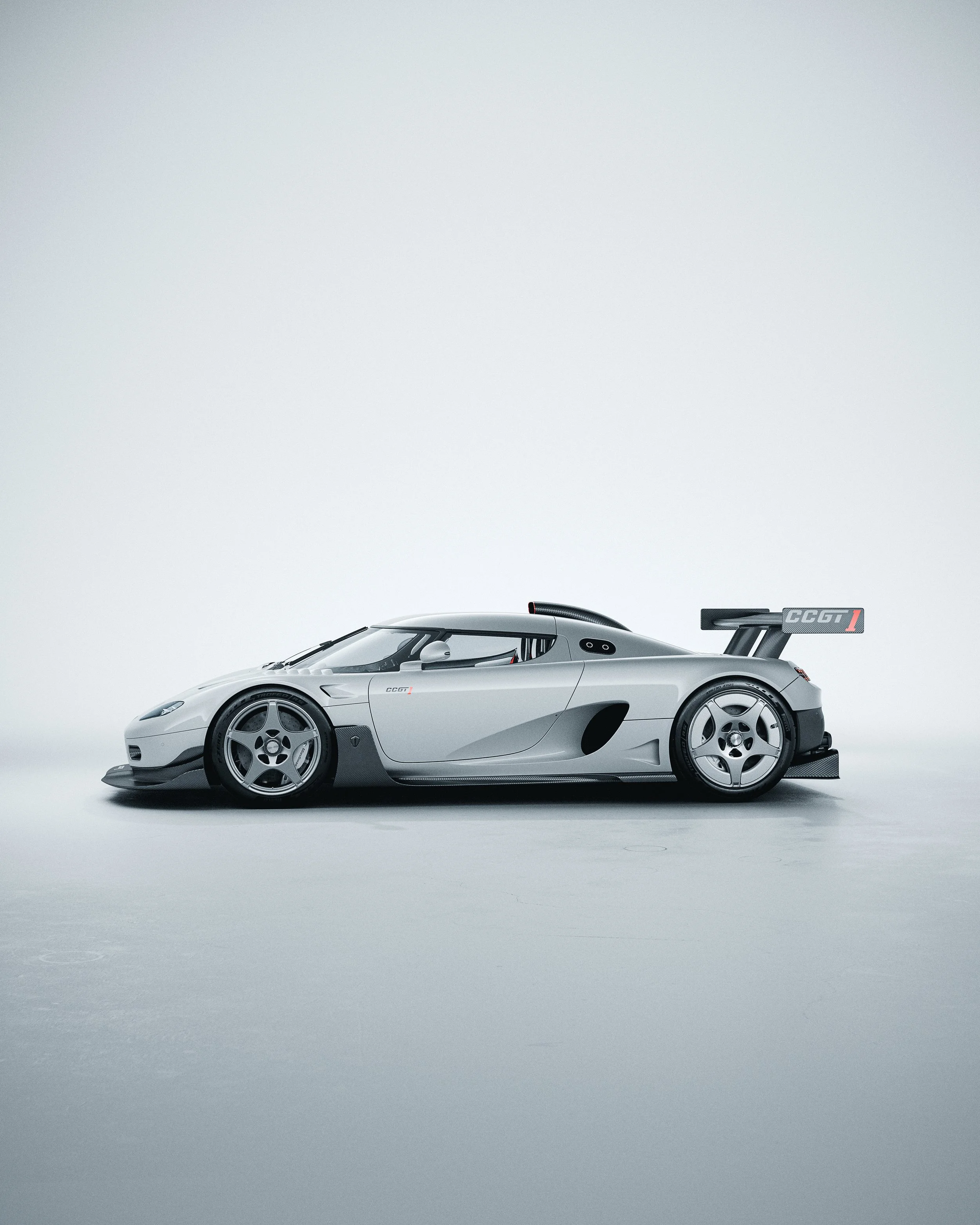
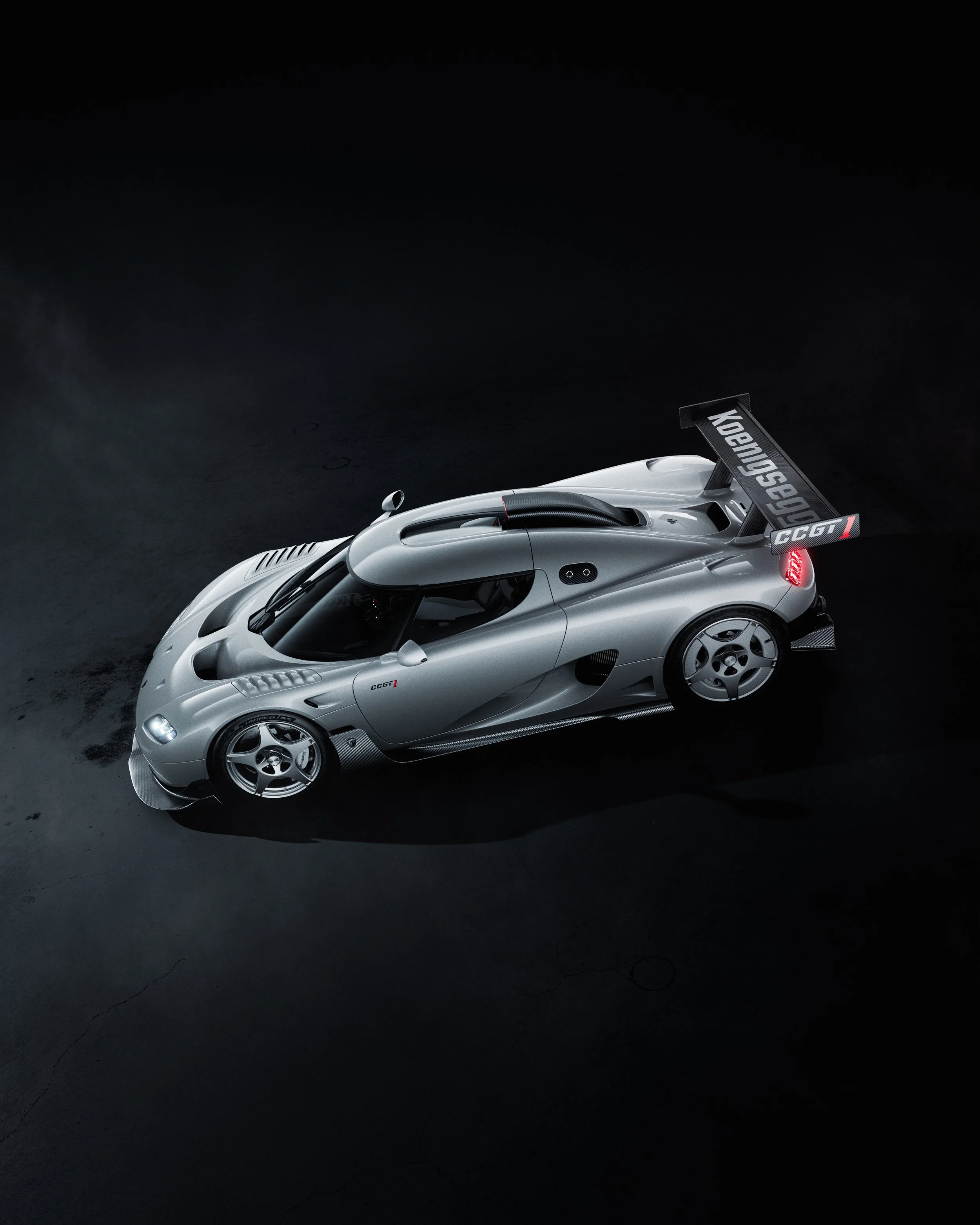
The Koenigsegg CCGT1 honours the company's iconic CCGT GT1 project, a car revered within Koenigsegg circles for both the performance it showed and the potential it never got to fulfil. Koenigsegg designed the CCGT for GT1 endurance racing and unveiled it in 2007, but halted the programme before it could complete a competitive lap after the series changed its regulations and later folded. Just as the CC850 honours the original CC8S, Koenigsegg conceived the new CCGT1 as a modern tribute to the CCGT. With the original CCGT now approved for historic racing, the CCGT1 celebrates this new chapter. The car delivers both an exhilarating road-going experience and thrilling on-track performance, aided by Koenigsegg's first-ever factory-authorised track package. New optional three-spoke Aircore carbon-fibre wheels, among the lightest Koenigsegg has ever produced, bring a striking, retro-inspired design to the CCGT1.
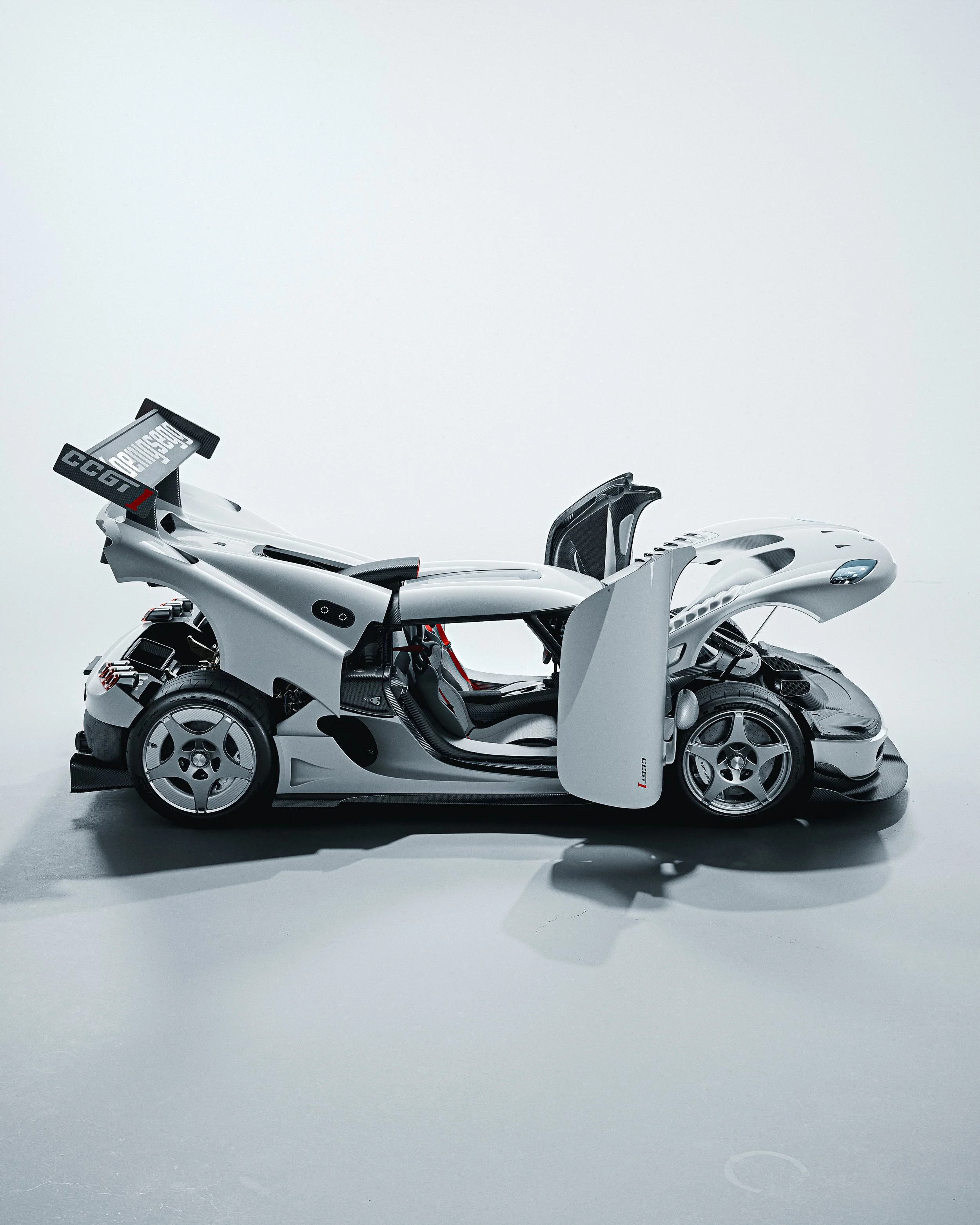
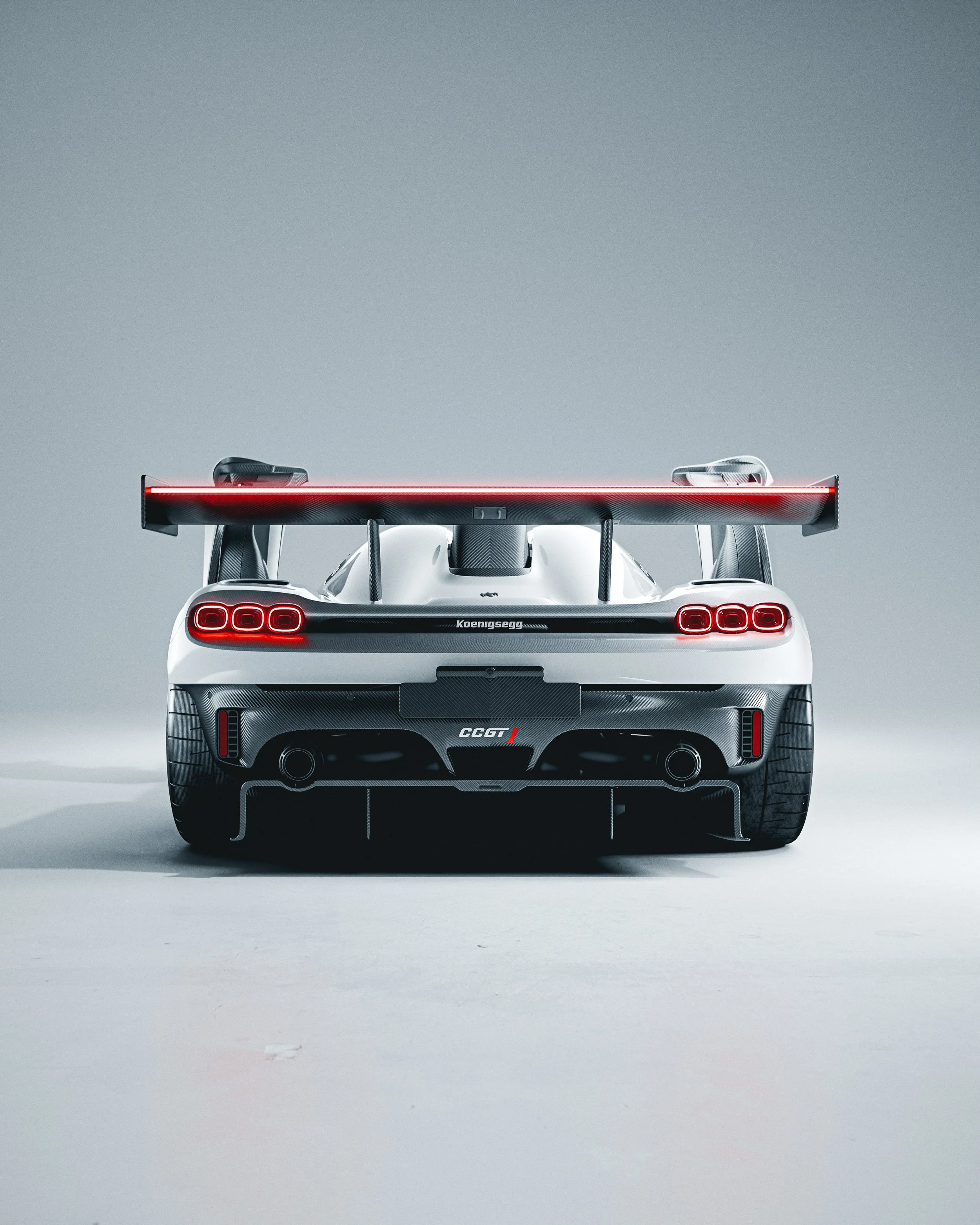
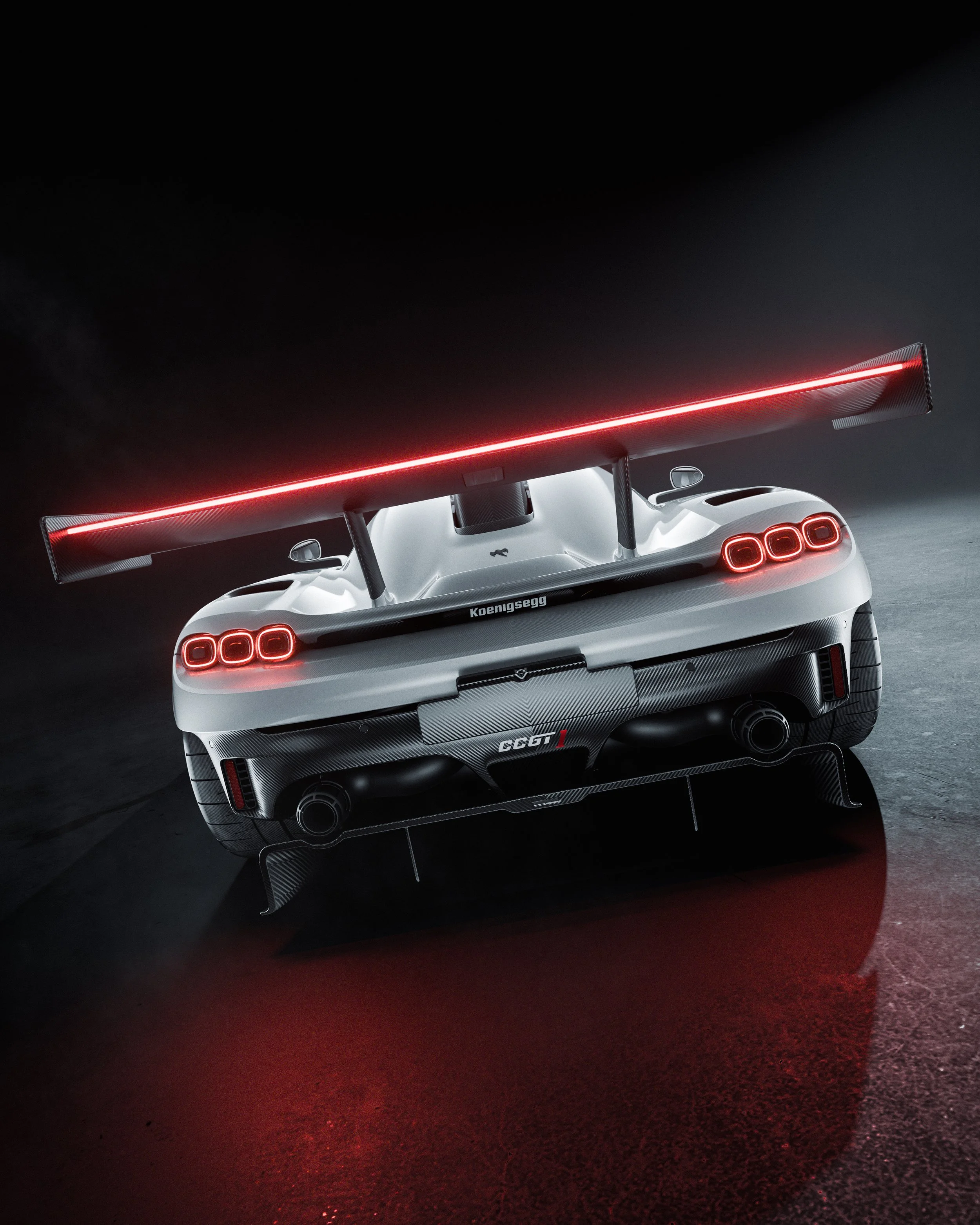
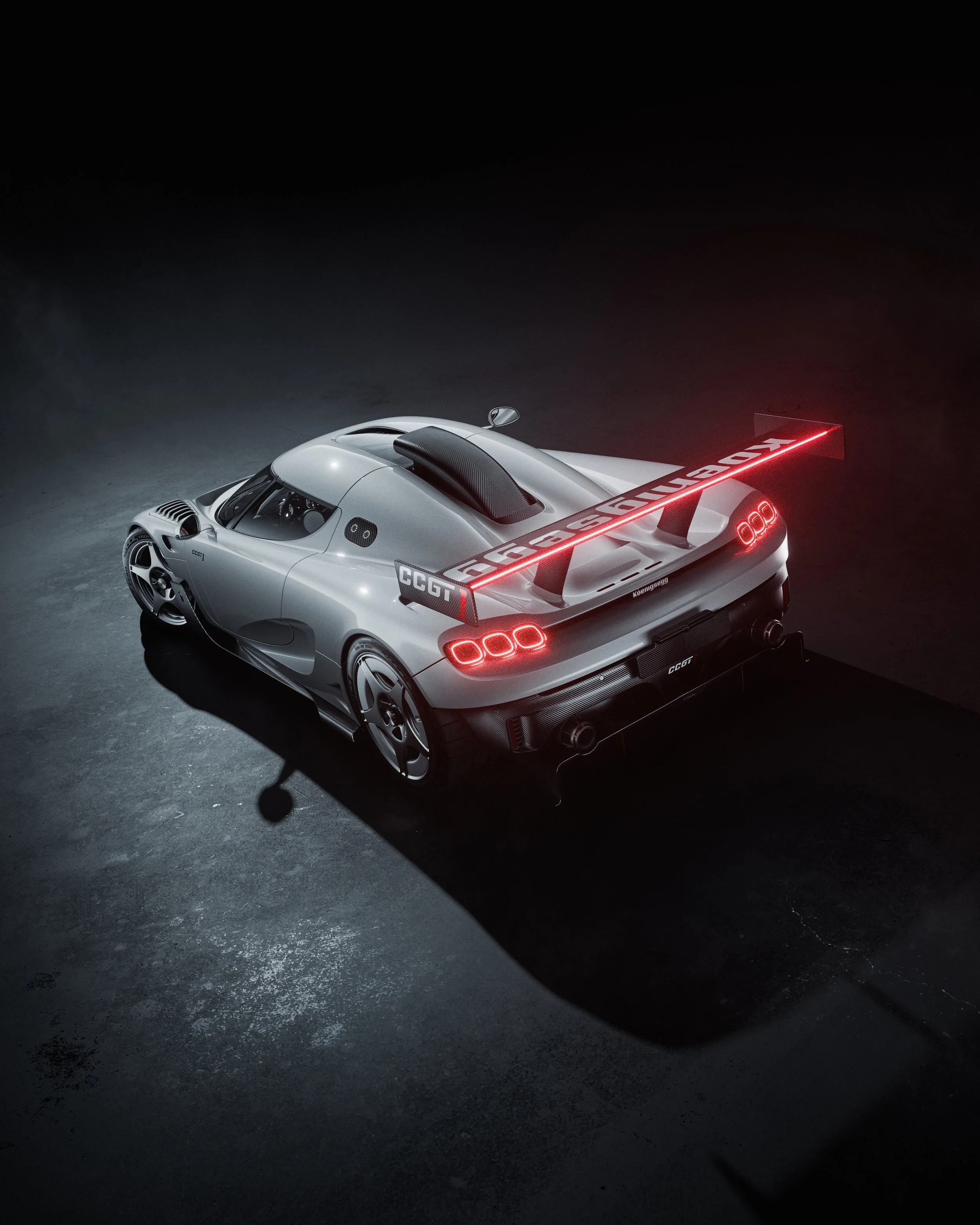
Koenigsegg redesigned nearly every body panel on the CCGT1 compared to its CC850 origins, keeping only the doors and the removable roof. The redesign pursued two goals: greater usable downforce and enough cooling to sustain full track sessions at racing speeds. The car's most visible signature is its enormous rear wing, a direct nod to the original CCGT, now reimagined. The active wing adjusts across 30 degrees, automatically shifting between a low-drag setting on the straights, an air-brake mode under heavy braking and a high-downforce setting through corners.
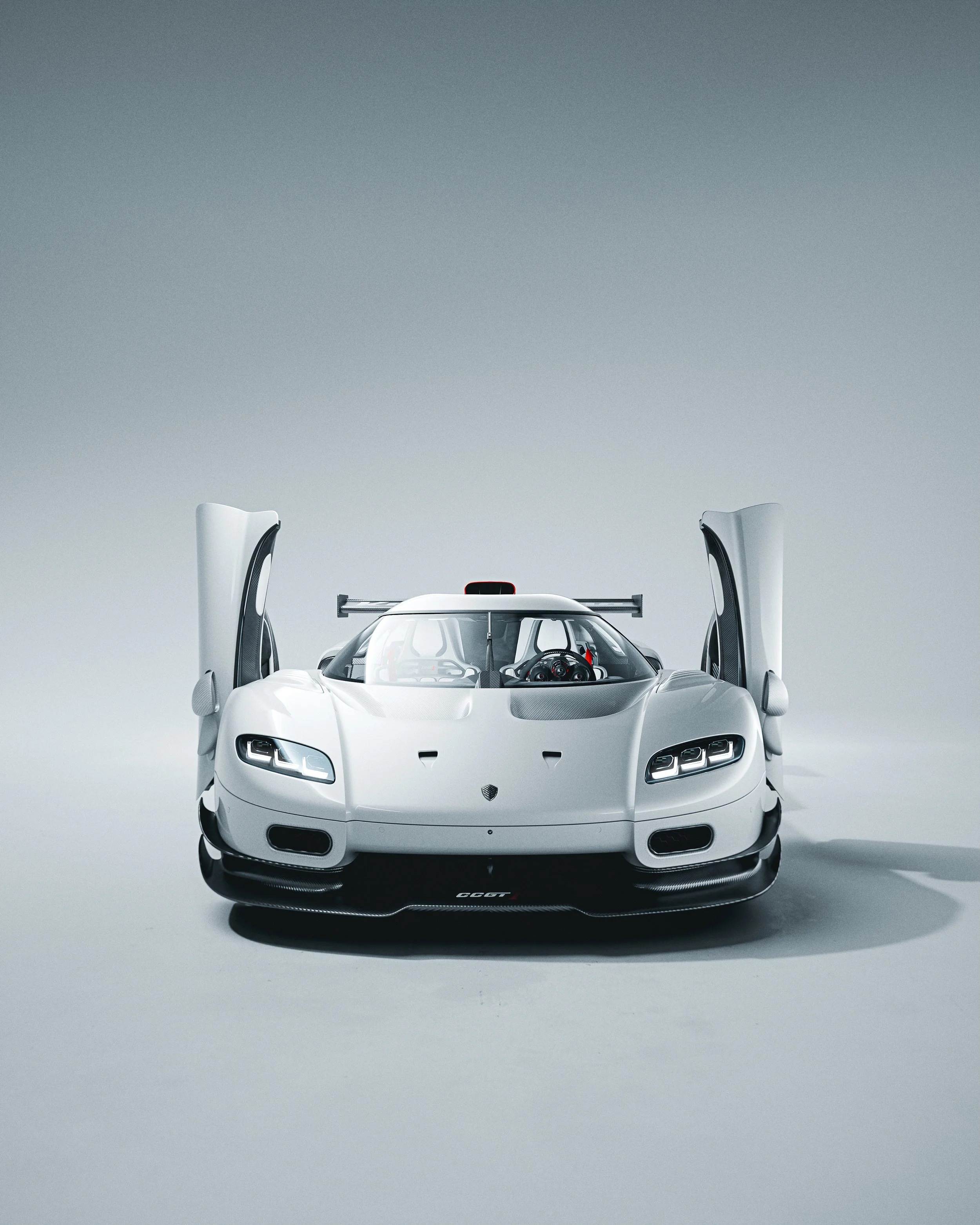
CFD engineer Andreas Tjernberg Persson led the aerodynamic programme. "Everything in aerodynamics is about balance," says Persson. "The rear wing works beautifully and is both a visual and functional nod to the original CCGT, but it would be pointless on its own. We had to address the balance at the front of the car, too." To achieve that balance, a large front splitter and active underbody flaps counter the rear wing's load. These work alongside a deliberately sculpted underfloor, complete with strakes that generate low-pressure vortices and a bespoke rear diffuser, to handle much of the aerodynamic work and draw the car towards the tarmac like an inverted wing. "The rear wing is big, yes, but it actually has a tiny surface area compared with the floor," Persson explains. "The floor is much bigger and therefore much more efficient at controlling and directing airflow."
The result is 800kg of downforce at 250 km/h, enough to keep the CCGT1 planted through high-G corners while allowing downforce to bleed away at higher speeds to protect tyre loads on the straights. "The Jesko Attack was once our highest-downforce car," says Persson. "Then came Sadair's Spear, which has 30% more downforce than the Attack. The CCGT1 sits between the two for peak downforce, but it has been specifically designed to provide accessible downforce at comparatively lower speeds, giving the driver an outstanding driving experience. That's what good aero design can do." The headline figure impresses, but it's the CCGT1's usable downforce at lower speeds that makes it such a potent car on track.
The CCGT1 uses Koenigsegg's twin-turbo V8, producing 1,280hp on standard pump fuel and 1,600hp on E85. Thanks to Koenigsegg's in-house engine management system, the car can run on any blend of the two fuels. The CCGT1 also introduces a new roof scoop that feeds an enlarged oil cooler and a dedicated cooling system for the dampers, both aimed at improving performance and consistency during sustained track sessions.
Koenigsegg fits the CCGT1 with its revolutionary Light Speed Transmission (LST), controlled through a brand-new shifting interface called Koenigsegg Sequential Shift (KSS). This bespoke sequential shifter features a clutch pedal for take-off, with ignition-cut and clutchless shifts for maximum performance, just like the original CCGT. KSS comes as standard on every CCGT1. Sequential shifters gained popularity on track for their speed and their ability to eliminate missed gears. Mounted close to the steering wheel, the shifter requires only a short, fast movement, making it more efficient than an equivalent H-pattern manual. A four-position dial labelled ASMR sits ahead of the shifter and governs its operating mode: Auto, Sequential, Manual and Reverse. Drivers who prefer a manual experience can opt for Koenigsegg's award-winning Engage Shift System (ESS), a gated six-speed manual shifter with clutch pedal first introduced on the CC850. In Manual mode, the ESS uses six of the LST's nine gears for an engaging drive, whether on track or on a favourite B-road, while D mode still delivers nine-speed automatic driving in traffic.
The CCGT1's cockpit makes its intentions clear the moment the driver sits down, with a covered ignition switch, a toggle to prime the fuel pumps and a red starter button that wakes Koenigsegg's awe-inspiring twin-turbo V8. The third-generation Chronocluster keeps everything the driver needs directly in view, with Koenigsegg's analogue G-meter, powered entirely by G-force with no electrical connection, sitting proudly at the centre of the cluster. The sequential shifter sits just inches from the steering wheel for rapid changes through the LST's nine forward gears. Standard seats use ultra-light carbon fibre and include a six-point harness for the driver, while the optional track package adds racing seats and six-point harnesses for both occupants, together with a race-grade fire-suppression system. Koenigsegg's touchscreen infotainment system completes an interior built, as ever, from the highest-grade materials and finishes, equally suited to a Sunday drive or a full day at the circuit.
Intention matters, and nowhere does intention matter more than on a racetrack. The CCGT1 arrives in standard form as a fully road-legal Megacar with serious circuit credentials, but for clients who want to push their CCGT1 further, Koenigsegg offers its first-ever factory-designed track package, which any Koenigsegg Certified Dealer can install and remove as required. The optional track package includes a full carbon roll cage, HANS-compatible racing seats, a fire-suppression system, race exhaust, air jacks, track-focused suspension and brakes, a second set of rims fitted with track-optimised tyres, enhanced aerodynamics and an invitation to exclusive CCGT1 track days with full factory support. Once fitted, the package turns the CCGT1 from a world-class dynamic daily driver into Koenigsegg's fastest-ever circuit performer. The race-tuned exhaust and track tyre package alone promise the quickest lap times of any Koenigsegg yet, while the CCGT1's enhanced cooling systems let drivers lap faster for longer. Integrated air jacks and a full communications and telemetry system complete a package designed to deliver a genuine race-weekend experience rather than simply a fun track day.
Koenigsegg also reintroduces "white carbon fibre" with the CCGT1. Back in 2009, the Trevita project showcased an industry-first white fibre finish, a technology that took years to develop and proved exceptionally challenging to execute, leading Koenigsegg to halt production. Clients loved the result and have asked for it to be returned ever since. Now a new evolution of the concept has emerged: Ghost Fibre. This entirely ground-up development combines a distinctive shimmering beauty with new functional benefits for the bodywork. Beyond their striking appearance, the fibres offer ballistic protection, add toughness to the panels, and provide a sound-deadening effect, while the construction keeps the panels lighter than those made with a traditional carbon-fibre-only lay-up. The result resembles a crystal-white aramid-carbon matrix, finished with the signature precision of a perfect Koenigsegg weave, while shedding weight.
Christian von Koenigsegg reflects: "The CCGT1 has two clear identities. On the road, it's a sublime tourer that is both comfortable and incredibly capable. But its origins are rooted in endurance racing, and that's where the CCGT1 reveals its full character as a true celebration of the original CCGT - with the roof panel on or off!" He continues: "The CCGT1 offers something compelling to the weekend racer who also wants a daily driver with genuine extended capability on track. That's what our optional track package allows. Fit it for race day through your local Koenigsegg dealer, and the character changes completely - from an exceptional weekend tourer with respectable track credentials into a true circuit weapon."
Koenigsegg will build just 70 examples of the CCGT1, and it has allocated every one before the car's public debut.