Audi RS 3 Competition Limited Celebrates Five Cylinders
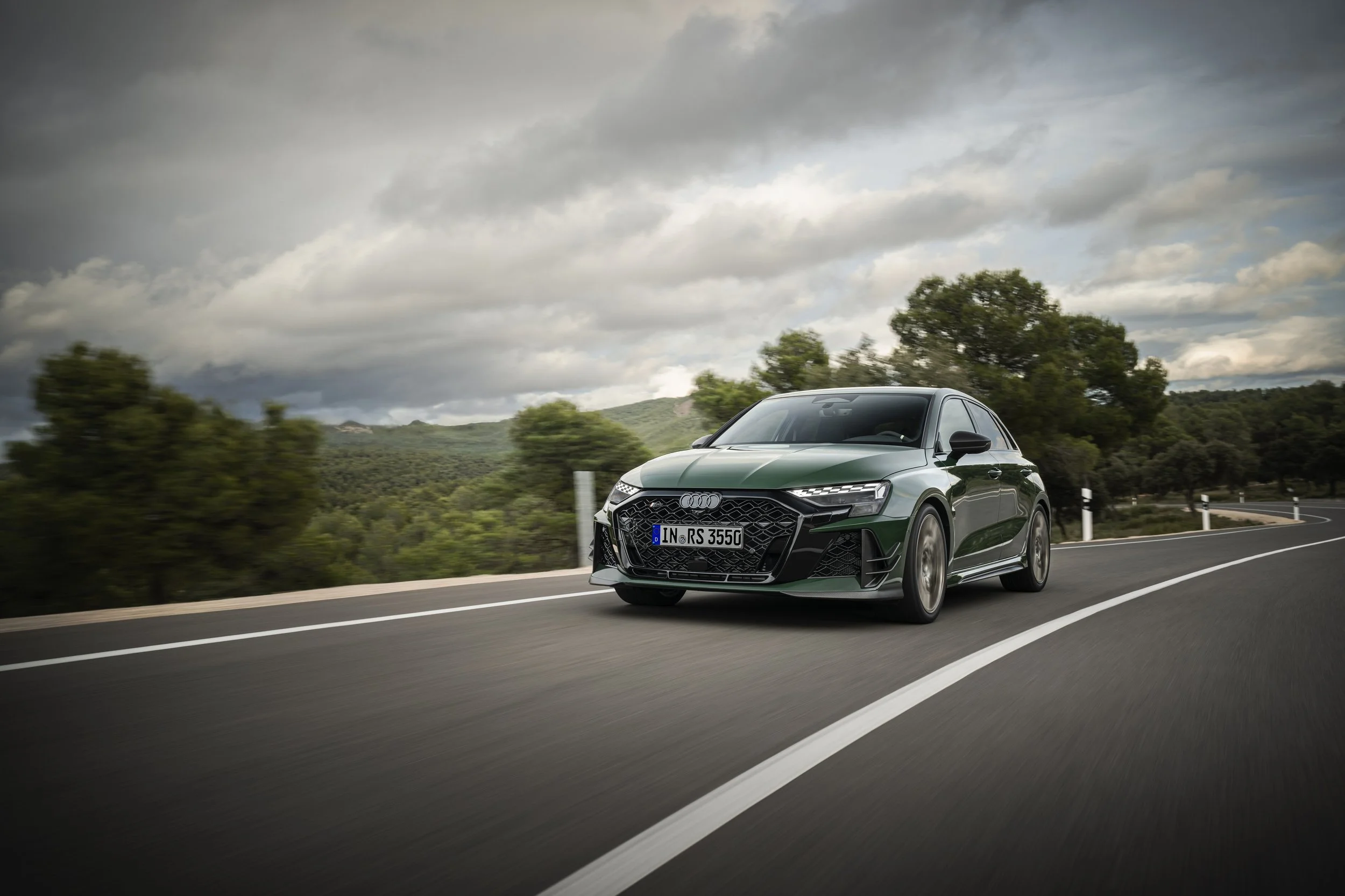
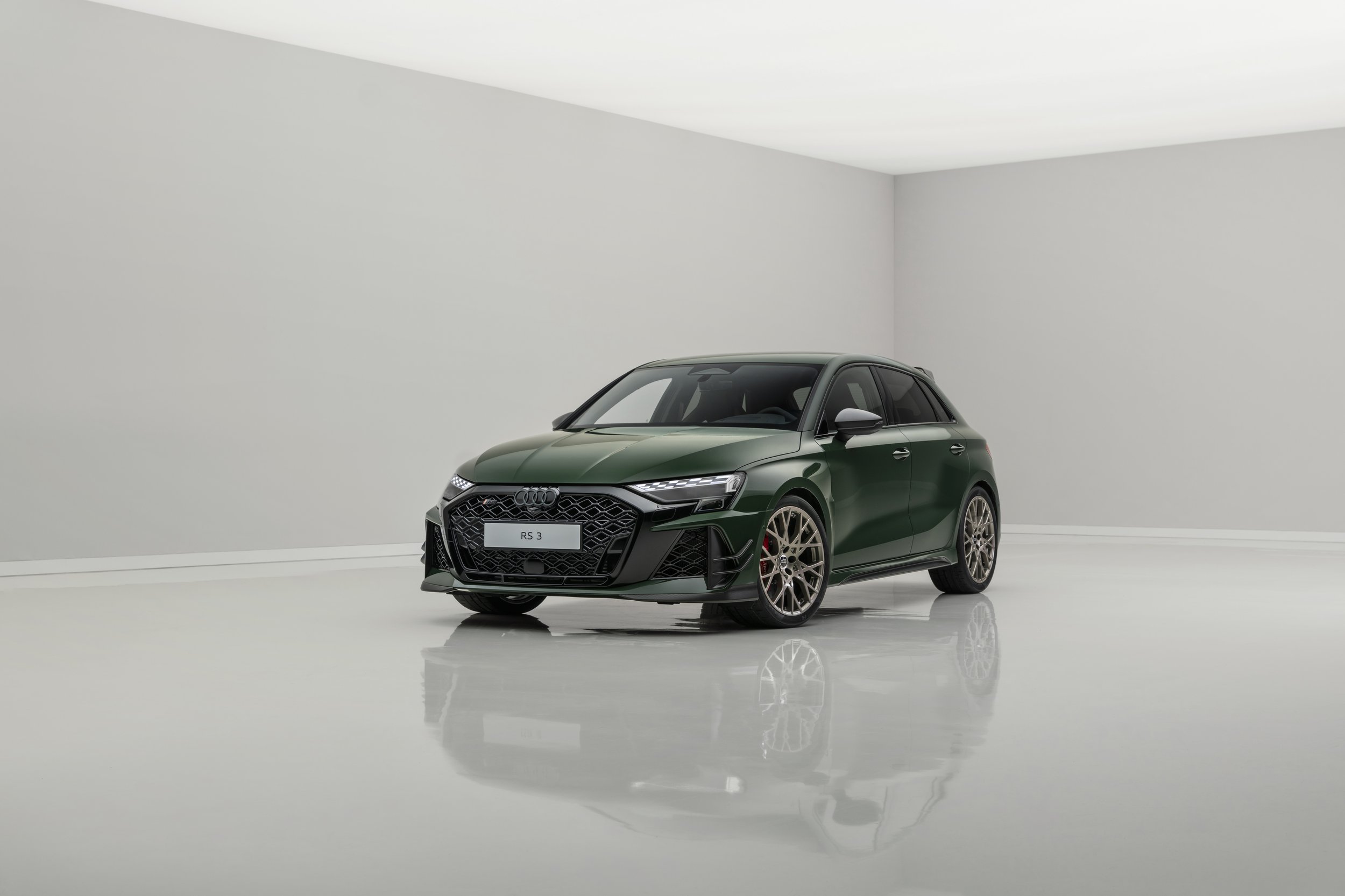
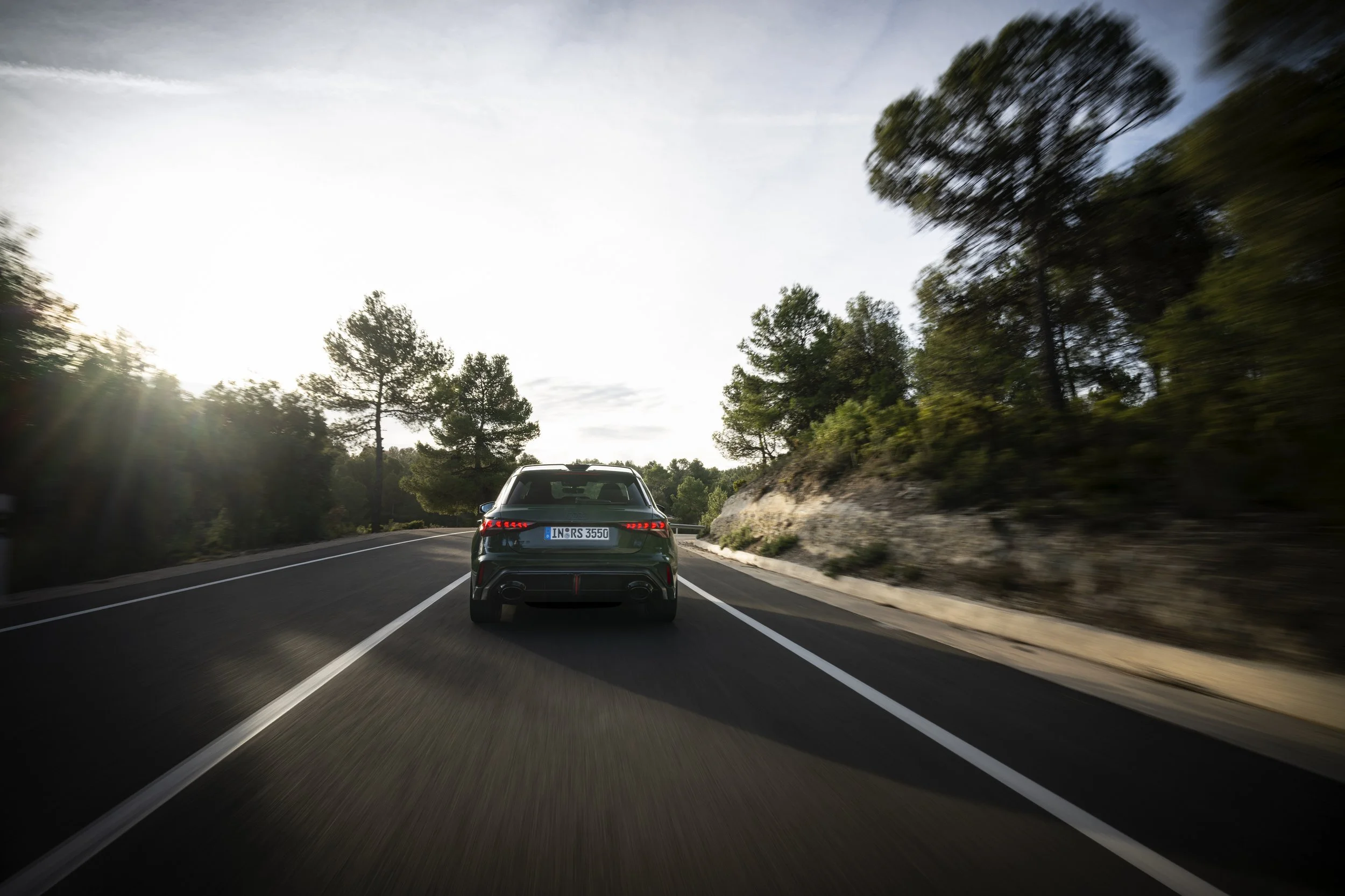
Audi Sport has unveiled the Audi RS 3 competition limited to celebrate the 50-year anniversary of its legendary five-cylinder engine. Audi will build 750 examples, with just 11 allocated to the UK. This limited edition performance car honours five decades of success for the brand with four rings. Its inline five-cylinder engine makes it unique in its class, blending serious pace with a distinctive soundtrack. On the road, the Audi RS 3 competition limited delivers on its sporting promise with coilover suspension and a stiffer rear stabiliser. Extra carbon-fibre details make its intent clear.
Audi began this story in 1976 with the second-generation Audi 100, and now the brand has taken that legacy to a new level with the Audi RS 3 competition limited. To mark “50 years of five cylinders,” Audi Sport has given the RS 3 a wide range of upgrades that should make this special edition highly desirable for collectors. Every detail reinforces its exclusivity.
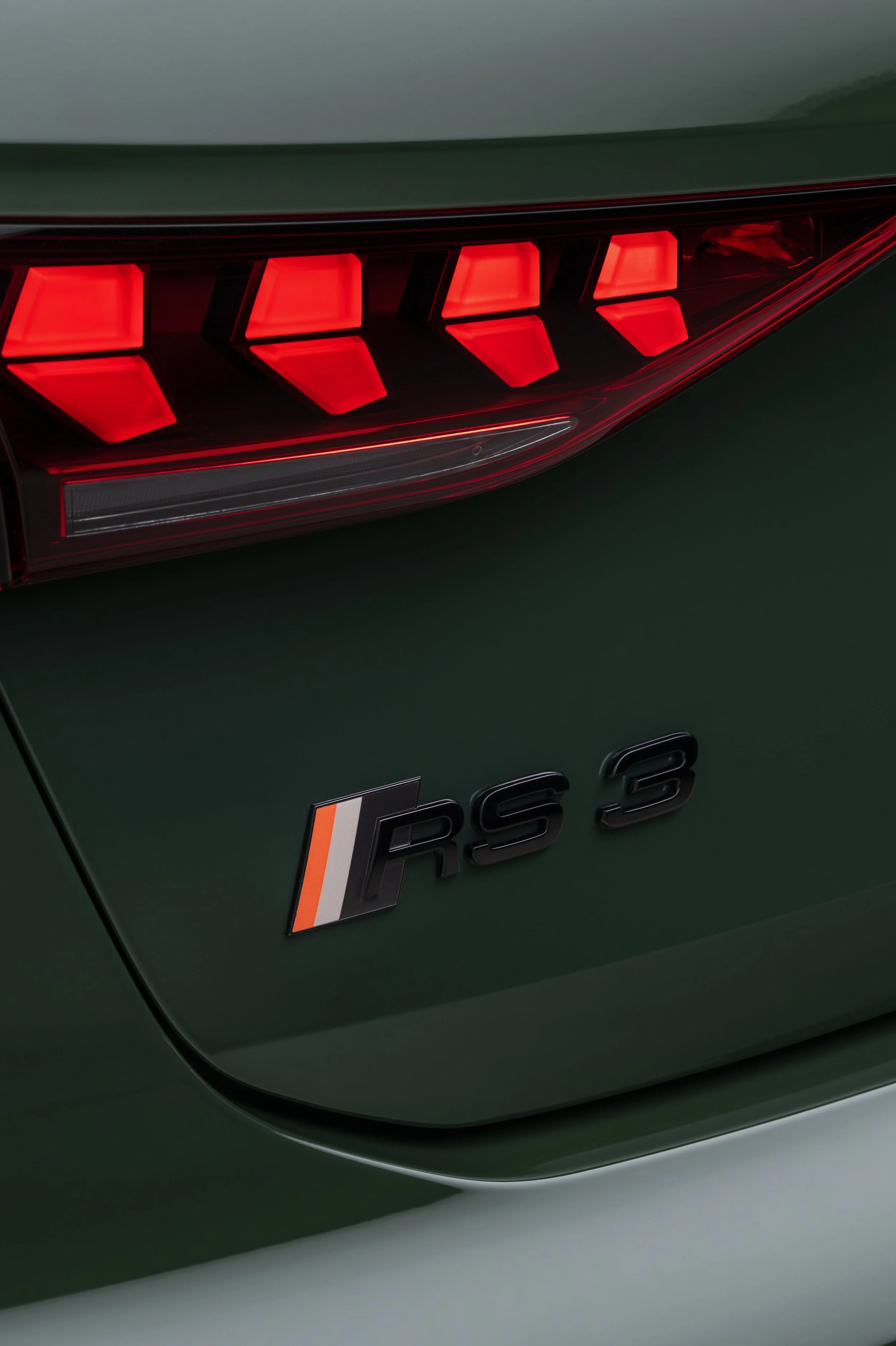
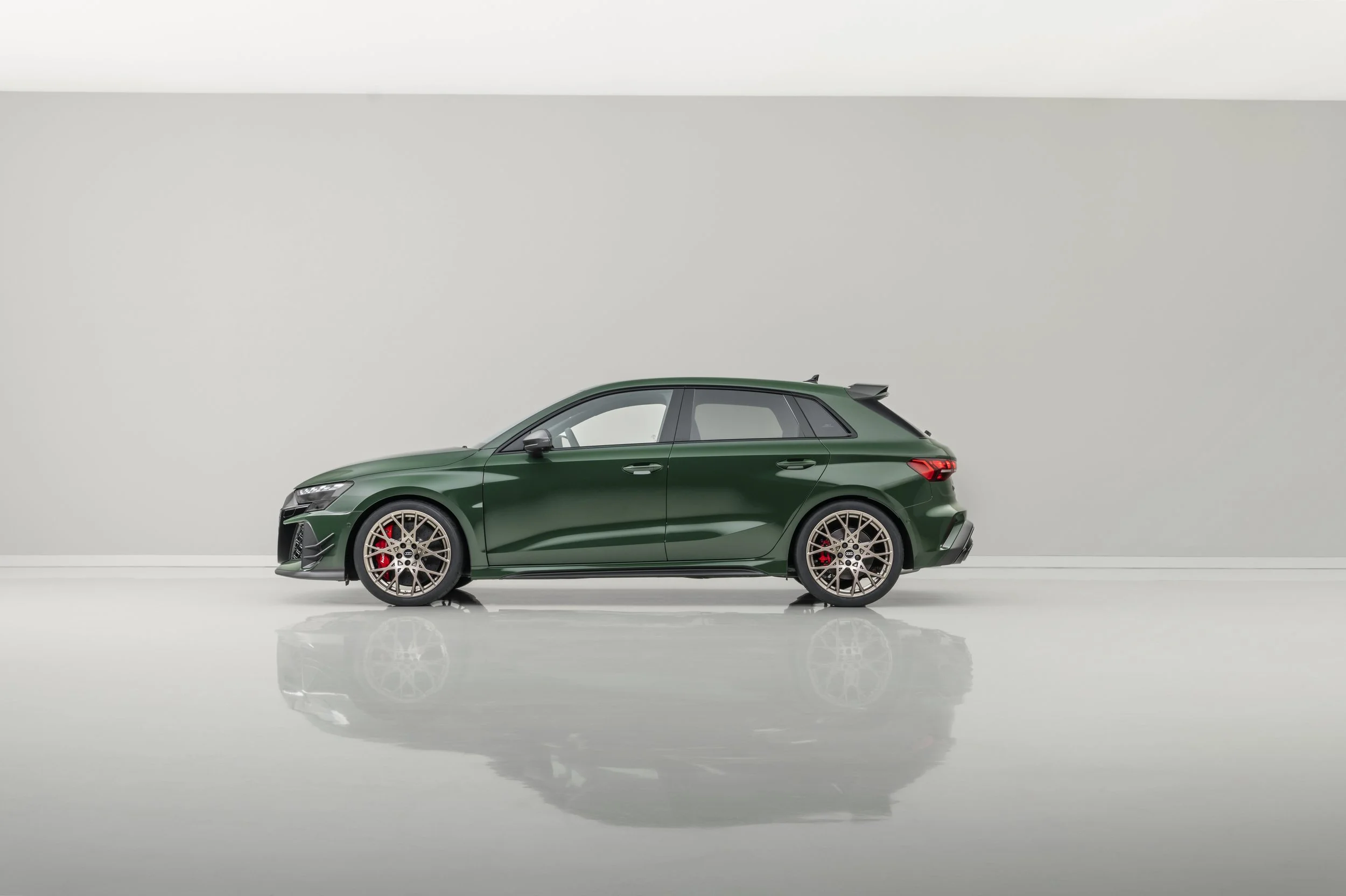
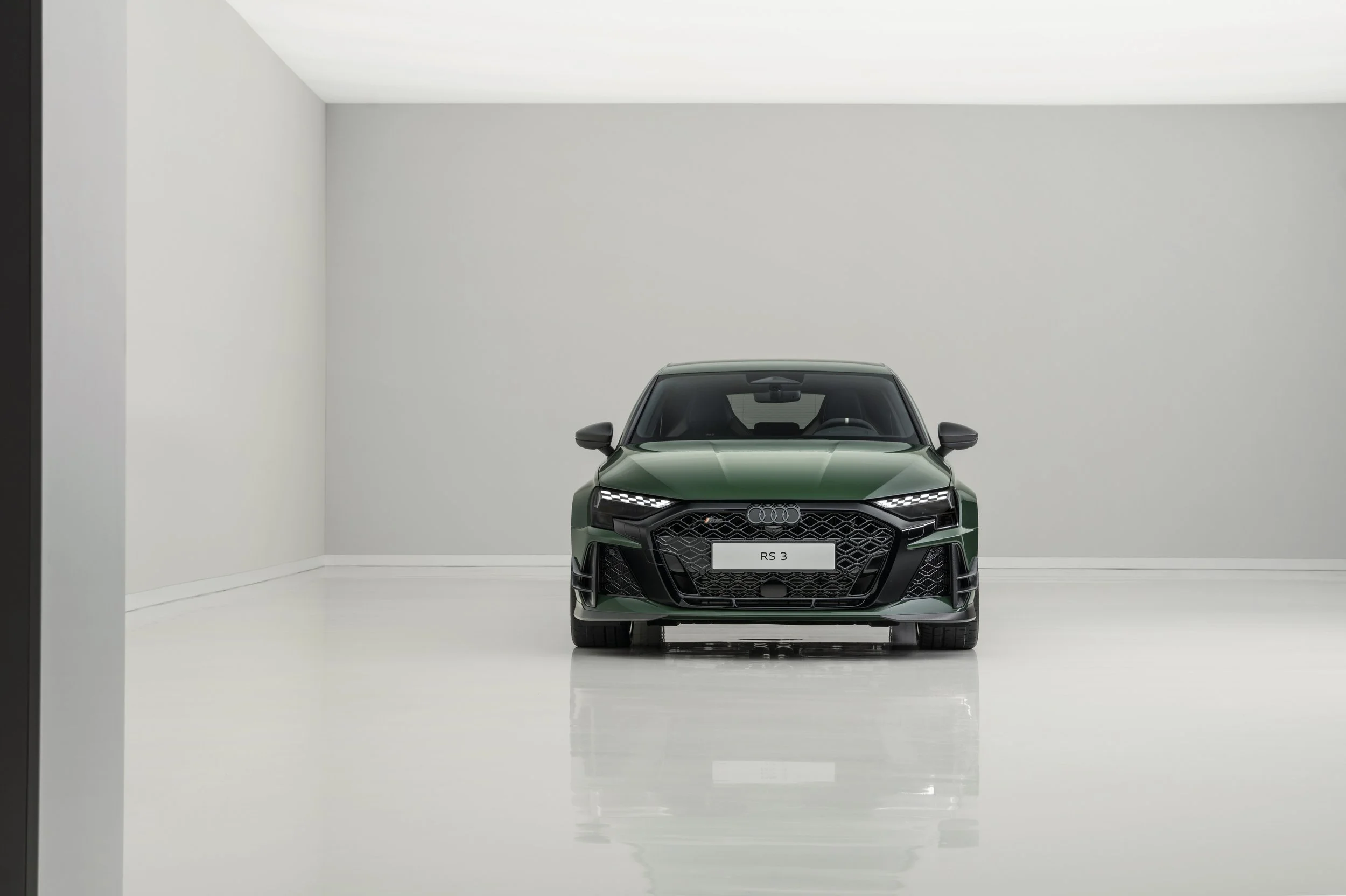
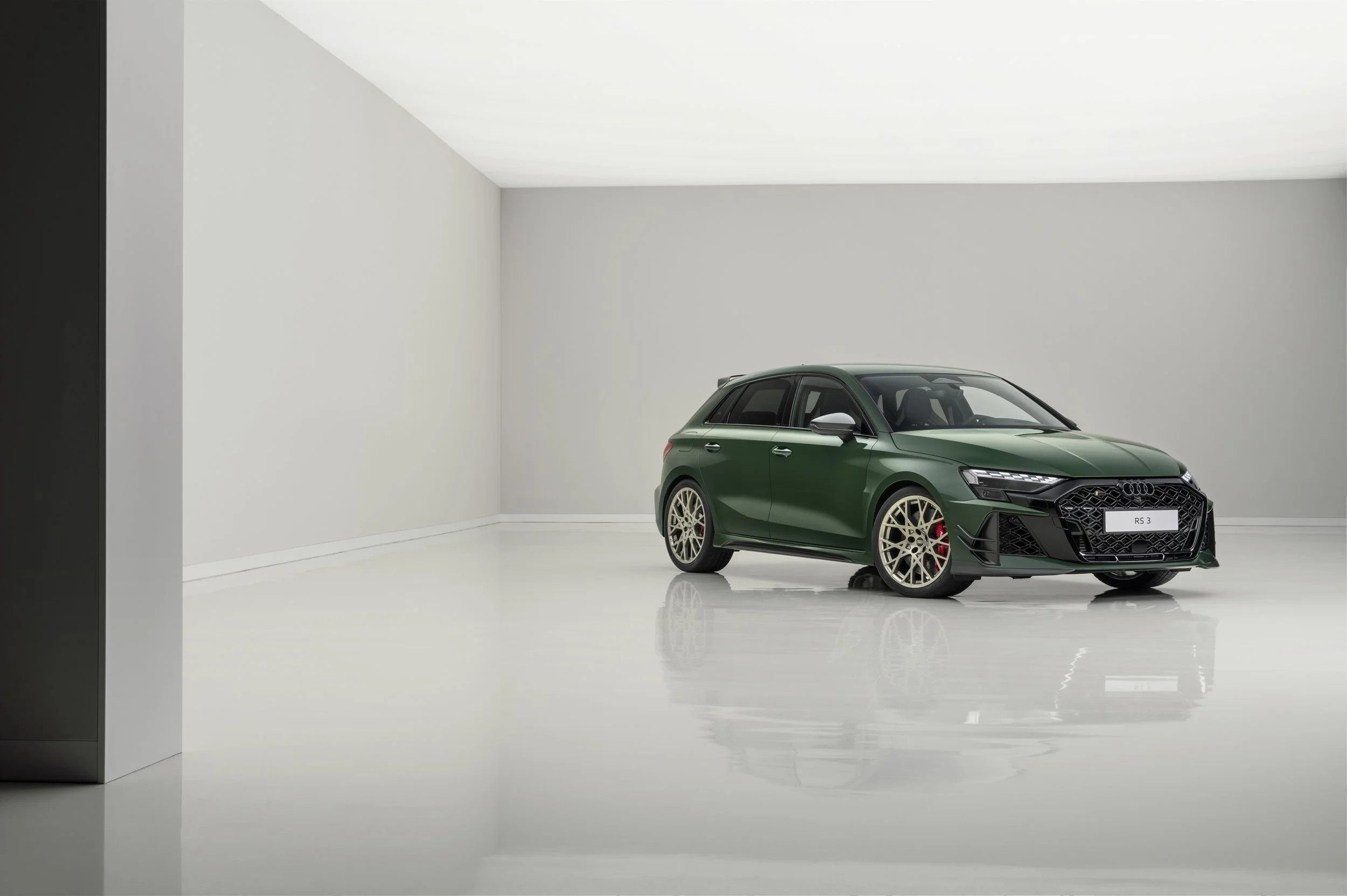
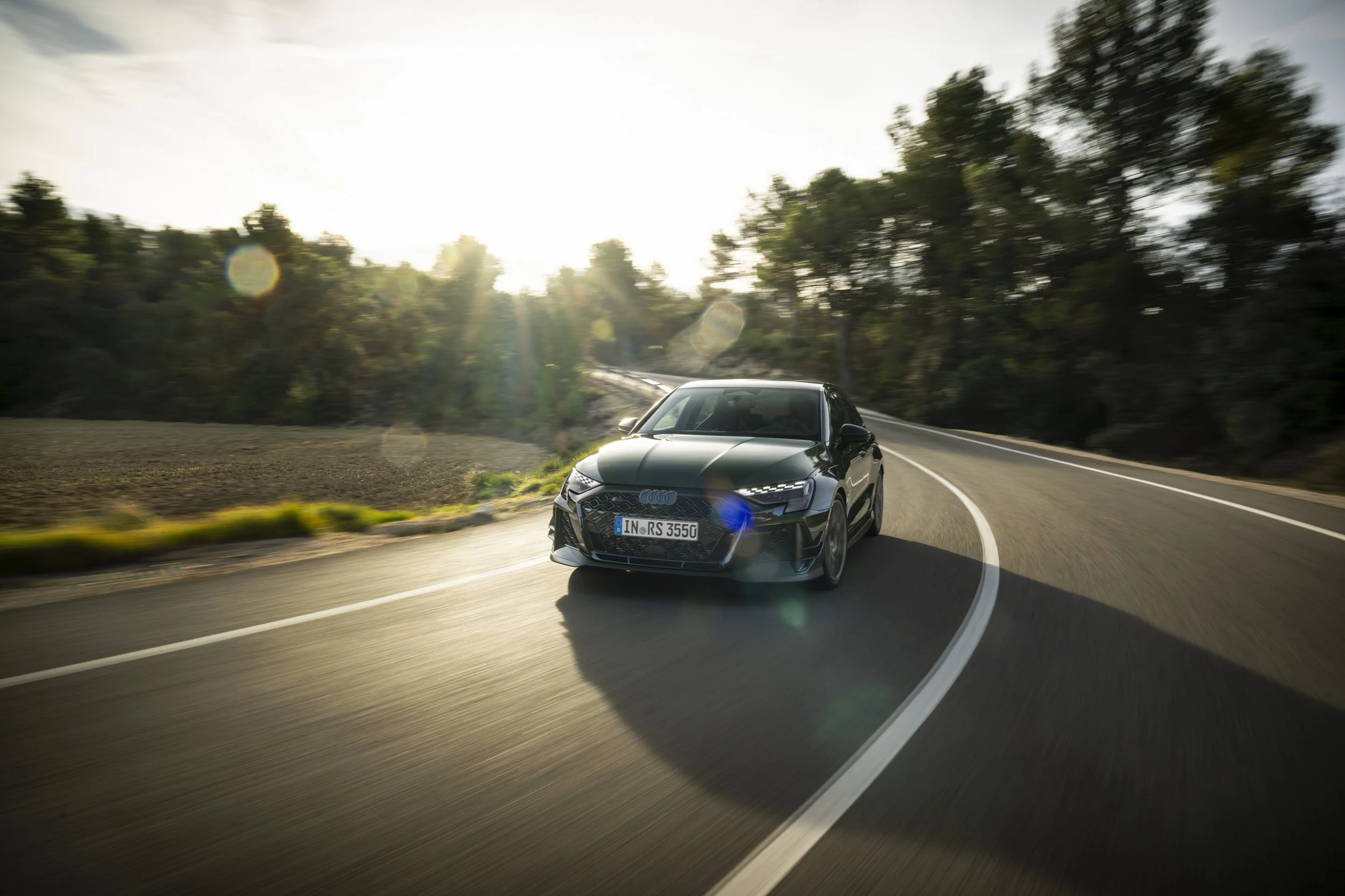
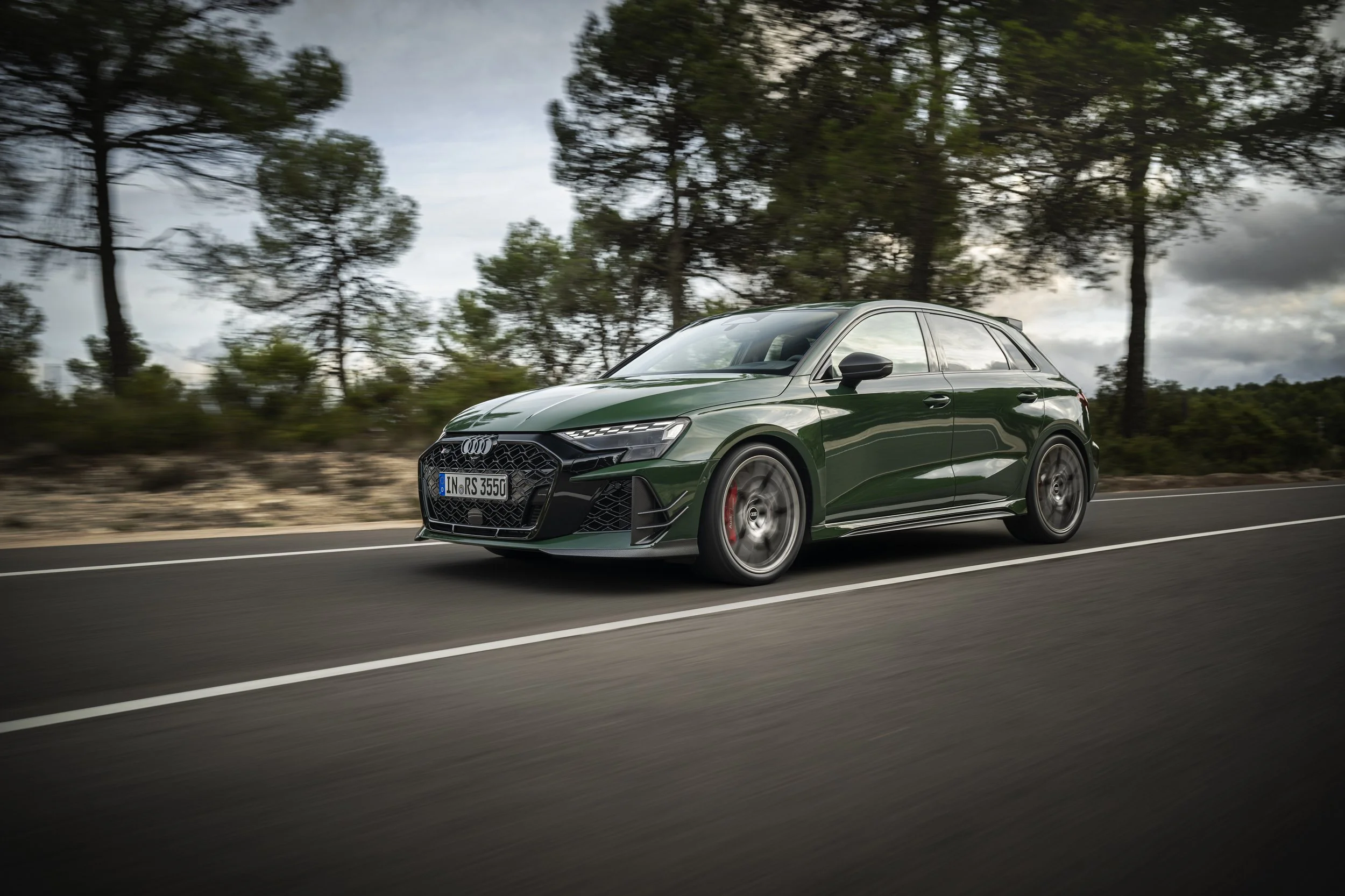
The exterior gives the RS 3 a sharper, more focused look. Audi starts with the bold Singleframe grille, the large side air intakes and the striking front lip. The Audi RS 3 competition limited pushes that design further. Heritage-colour badges at the front and rear add even more individuality.
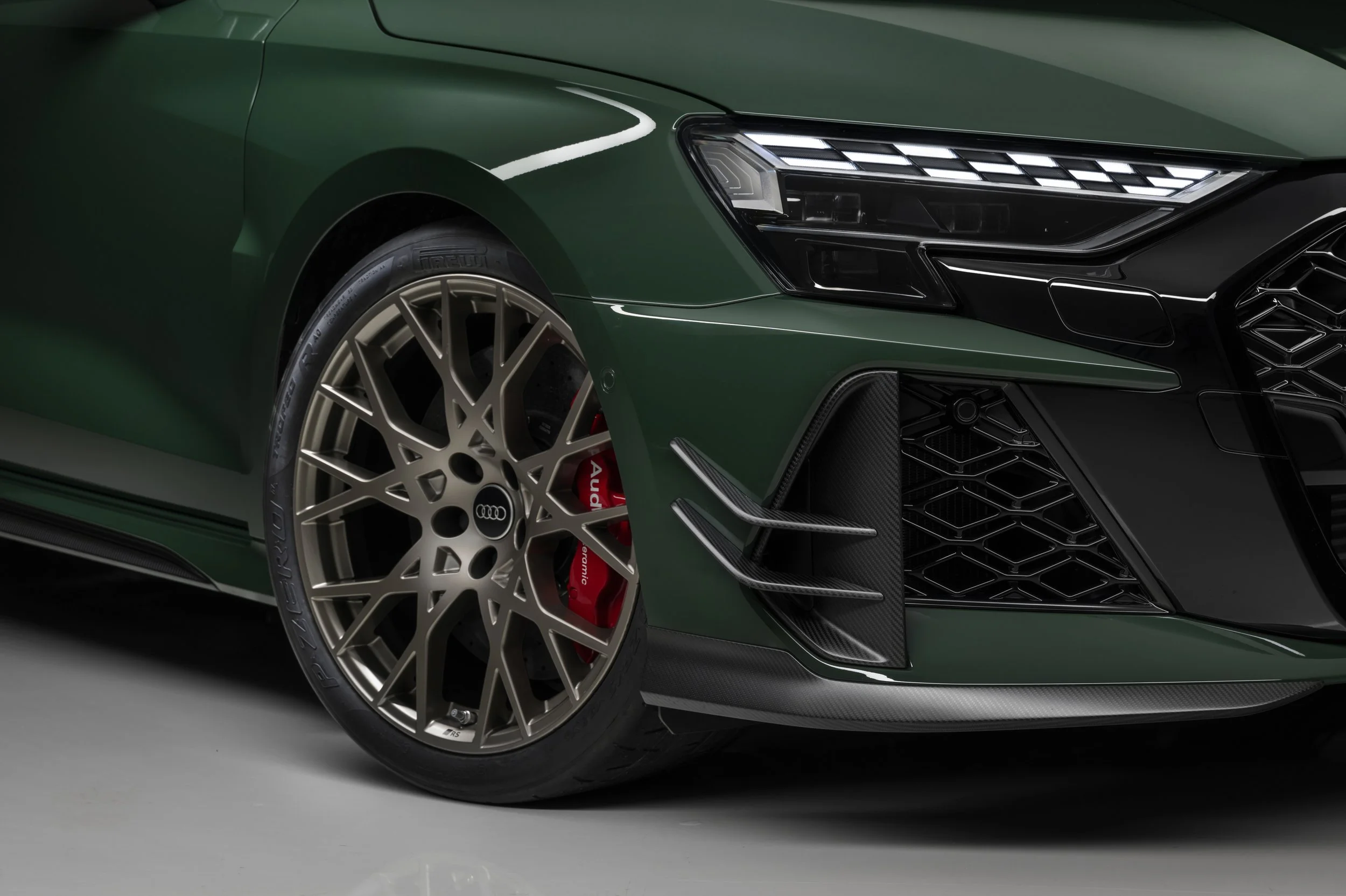
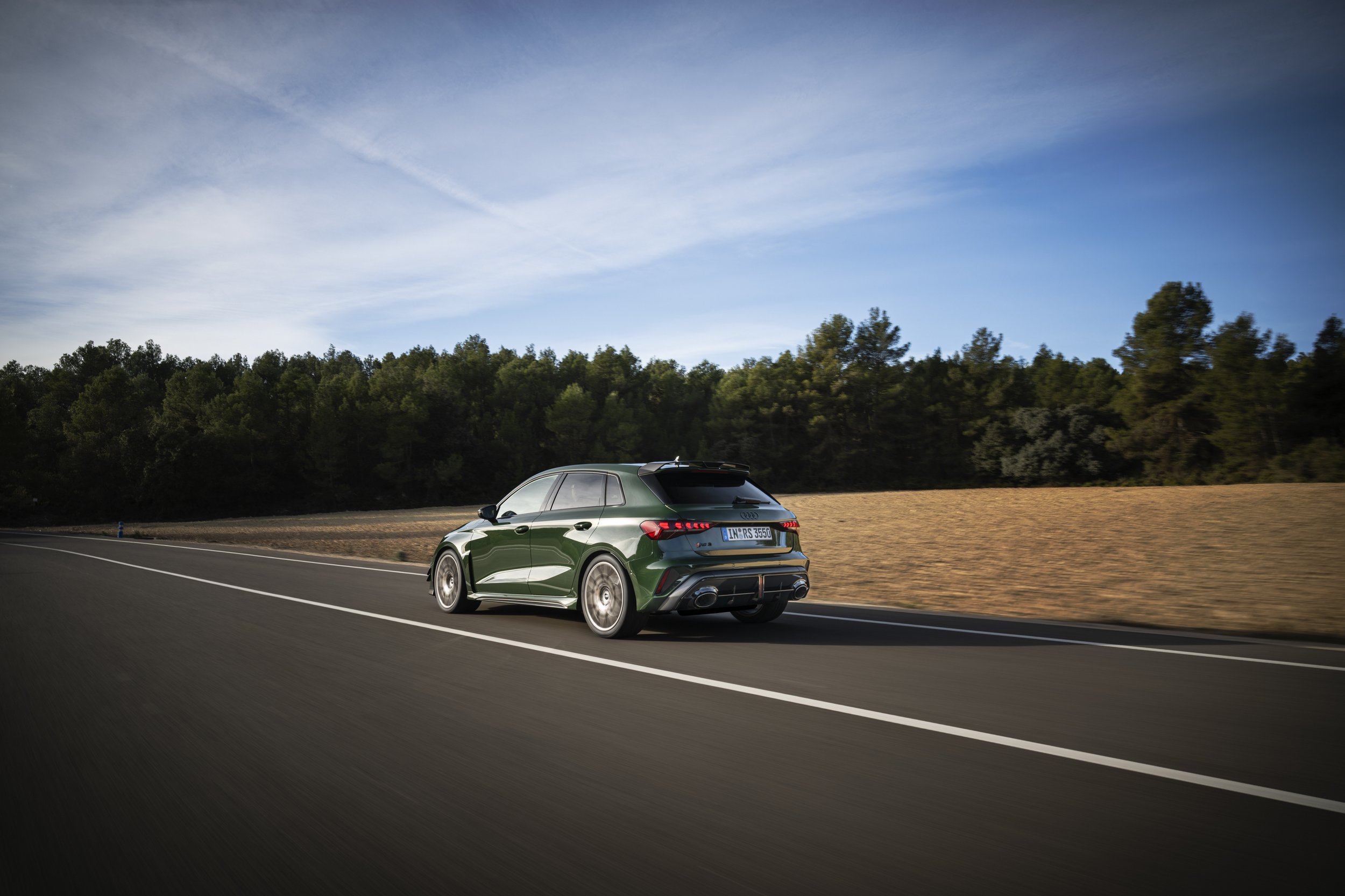
Audi combines that expressive design with matte carbon-fibre elements. Two new carbon canards sit at each front corner, one above the other, and match the vertical blades of the air curtains. A split front lip now sits below the intakes, giving the car an even wider stance.
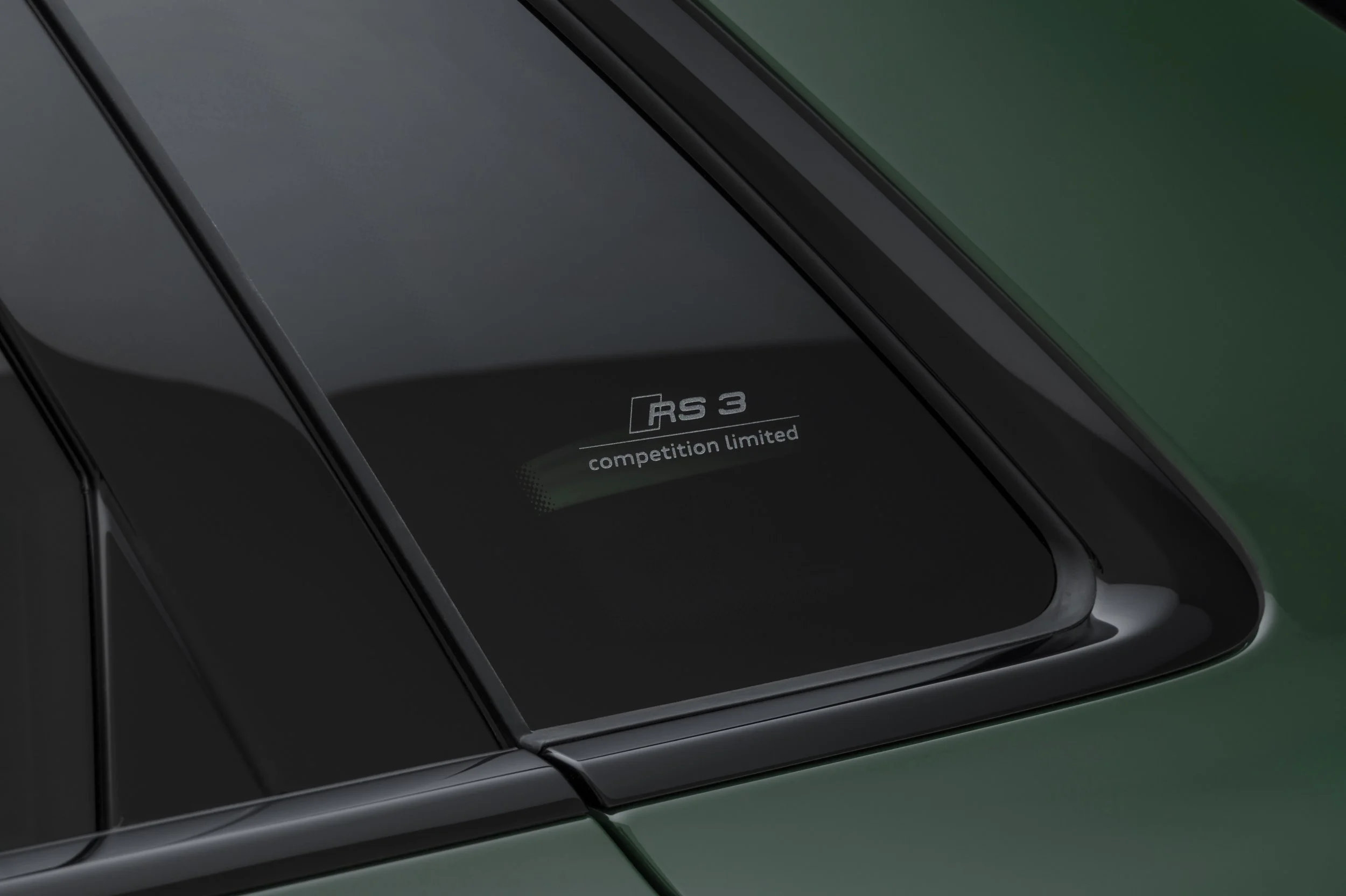
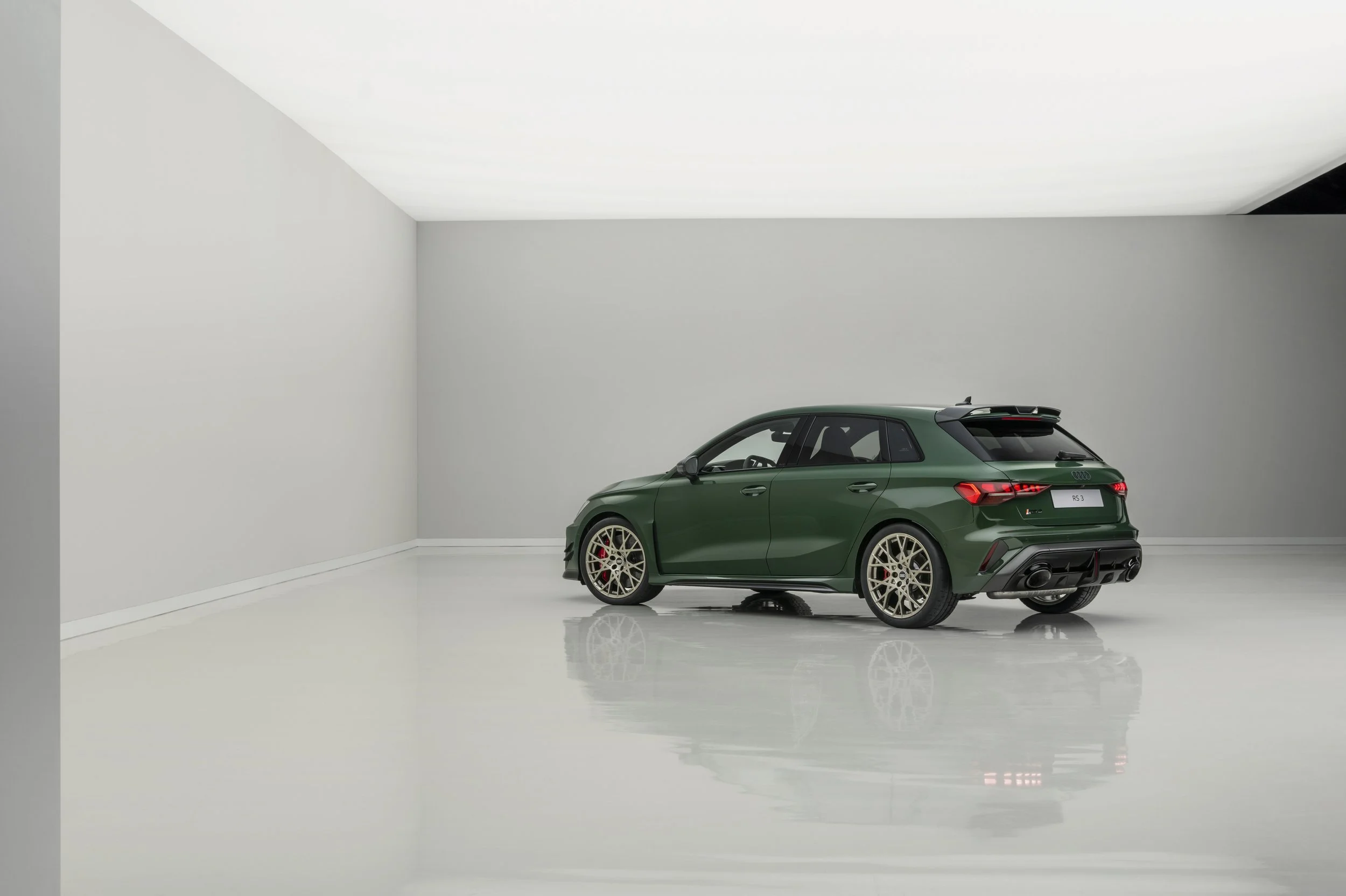
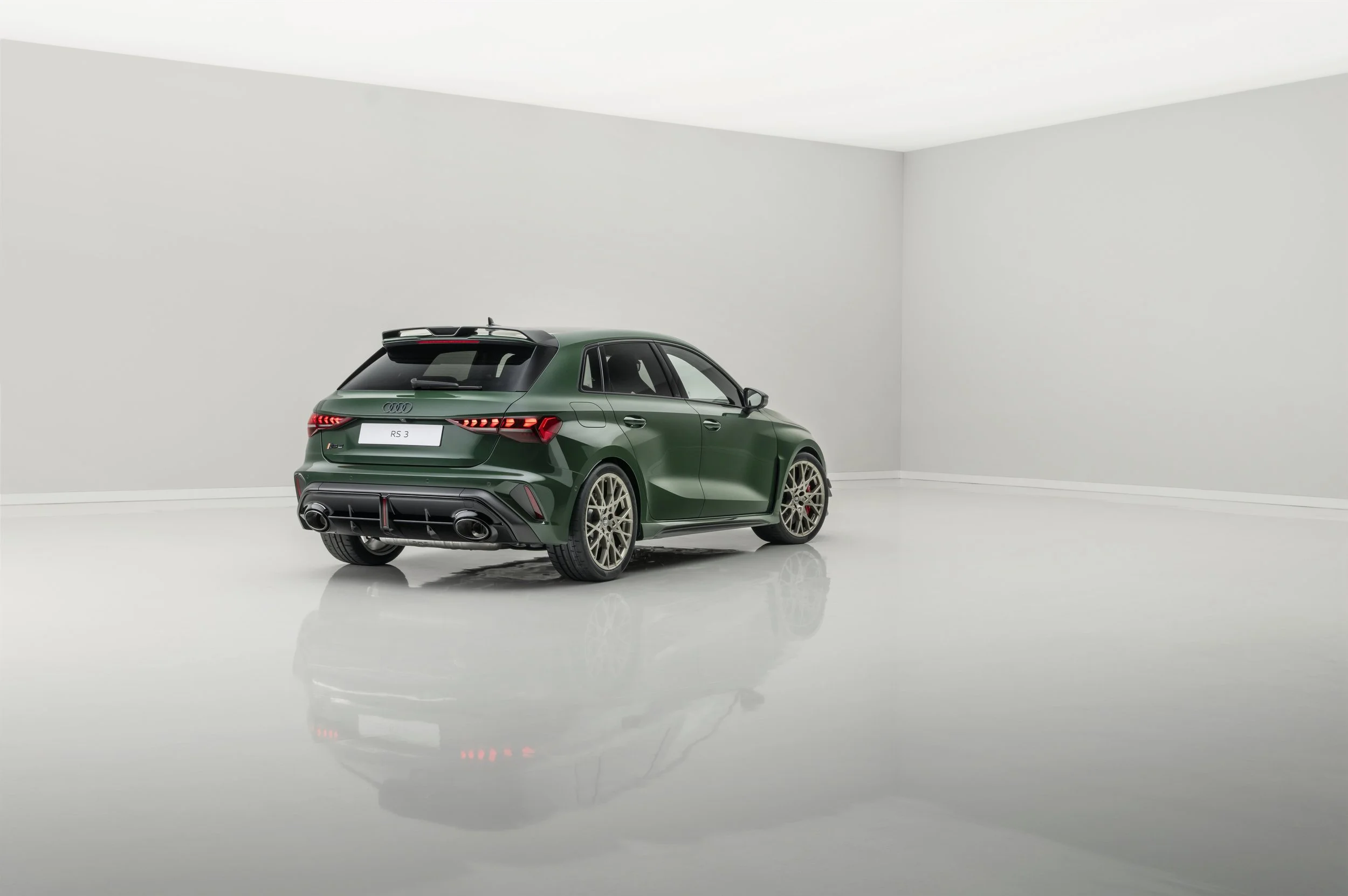
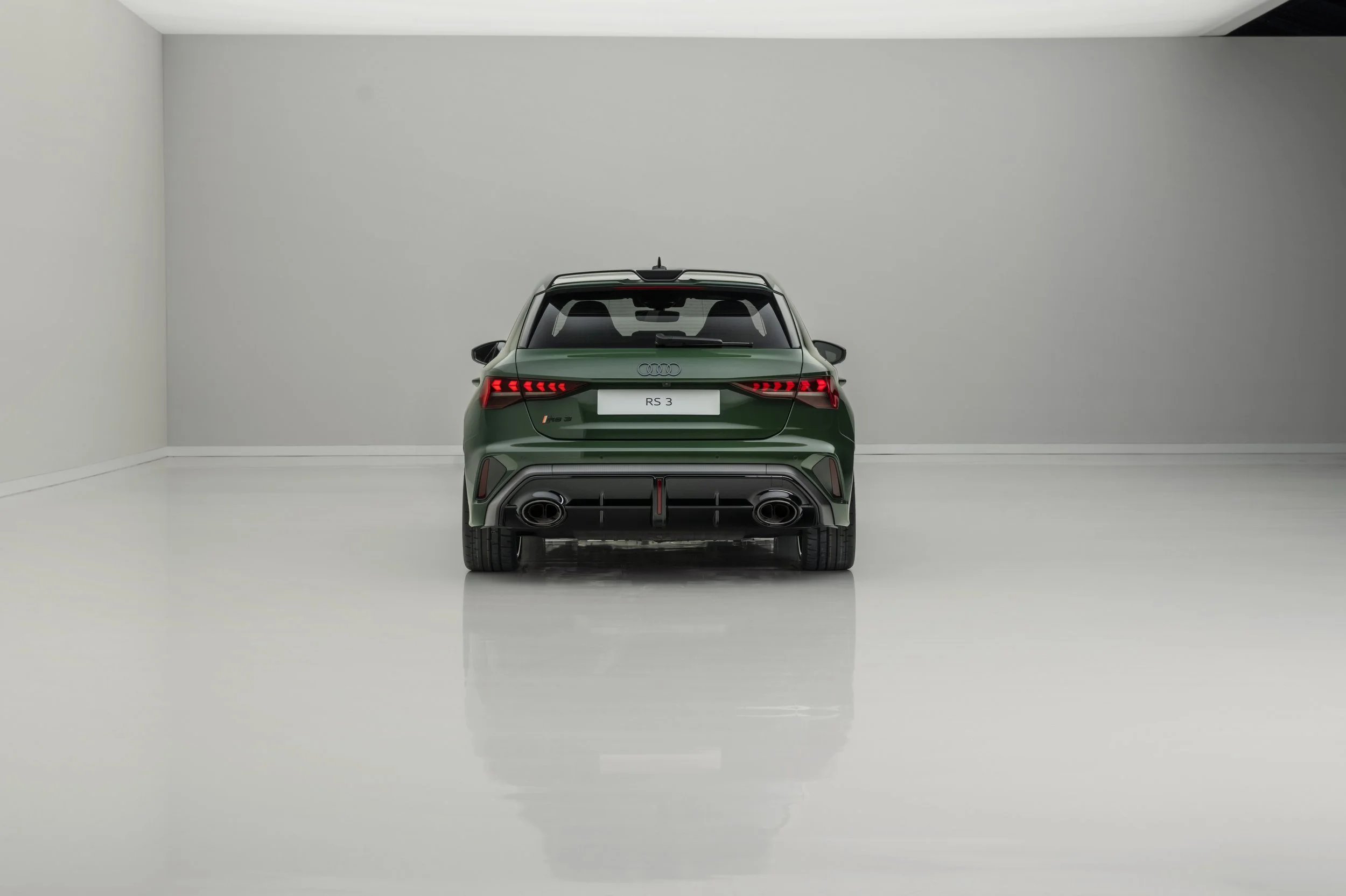
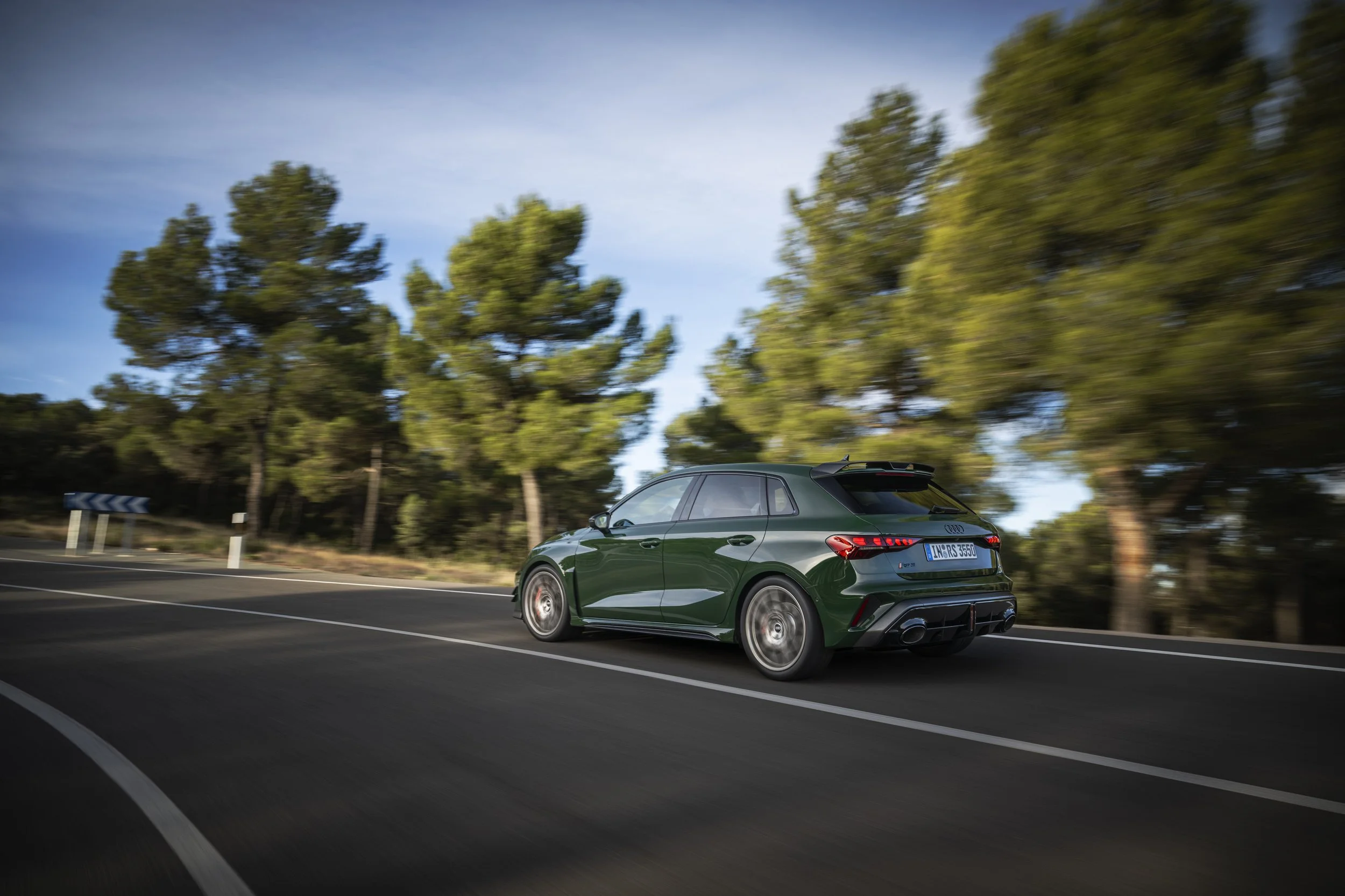
Matt Neodymium gold 19-inch alloy wheels with 10 cross spokes fill the arches. Matte carbon-fibre mirror caps, side skirts, a rear spoiler and trim above the large functional diffuser complete the technical look. Audi also adds partial matting to the rear side window to highlight the model name.
The darkened matrix LED headlights also set this edition apart. When the driver locks or unlocks the car, the light segments illuminate in a 1-2-4-5-3 pattern that references the five-cylinder engine’s firing order.
In the UK, Audi will finish all 11 cars in Malachite green. This iconic shade recalls the Audi Sport quattro that helped define a golden era of rallying with five-cylinder power.
In 1983, the Audi Sport quattro produced 225 kW (306 PS) and 350 Nm from a 2.1-litre engine. Today, the Audi RS 3 uses a 2.5-litre inline five-cylinder engine that delivers 294 kW (400 PS) and 500 Nm of torque. No rival in this segment offers the same engine layout, and that gives the Audi RS 3 competition limited both standout character and serious performance. It reaches 62mph in 3.8 seconds and tops out at 180mph. The five-cylinder turbo engine also adds real drama with its unmistakable sound. That sound comes from the 1-2-4-5-3 firing order, which creates an alternating rhythm across adjacent and more widely spaced cylinders.
The RS sports exhaust system uses fully variable flap control to broaden the exhaust note. Audi has also reduced the insulation around the firewall, so the cabin receives more engine sound. The valves open earlier in dynamic, RS Performance and RS Torque Rear modes, so the car sounds even more intense in those settings.
For the first time, Audi has fitted the RS 3 with coilover suspension and a new rear stabiliser. Together with the torque splitter and standard ceramic brakes, that setup gives the limited edition sharper handling. Audi developed and tuned this suspension specifically for the Audi RS 3 competition limited. The front twin-tube dampers are made of stainless steel, while the rear units are made of aluminium. Those materials increase stiffness, and the larger damper volumes help cool the hydraulic fluid. The front dampers also feature external reservoirs. Better cooling helps the dampers maintain consistent performance under heavy loads. At the rear, Audi uses larger damper tubes and thicker piston rods than the standard car, which improves mounting stability and rigidity.
Drivers can adjust compression damping to control how quickly the shock absorber shortens. This setting changes the oil flow inside the cylinder and alters the damping force that resists suspension movement under load. Low-speed compression affects the suspension’s response during cornering and plays a major role in tyre grip. The driver can adjust it in 12 steps with a dial. Turning the dial towards the “+” sign increases damping and stiffens the setup. That boosts lateral grip, raises cornering speed and sharpens turn-in. Turning the dial towards the “-” sign reduces damping and improves ride comfort.
High-speed compression controls how the body reacts to sudden forces applied to the chassis. These forces include bumps and rapid steering inputs. The driver can adjust this setting in 15 steps. Turning the dial towards “+” increases damping and suppresses high-frequency vertical movements more effectively, which gives the driver sharper feedback. Turning the dial towards “-” reduces damping and helps the Audi RS 3 competition limited* absorb rough surfaces more smoothly.
The adjustable rebound setting gives the driver even more control over the car’s responses and handling. It manages how directly the body connects to the road, and the driver can adjust it in 16 steps. Higher rebound damping slows the suspension’s return movement and makes the handling feel more precise and direct. Lower rebound damping lets the springs extend more quickly and improves ride comfort.
Audi has further increased rear stability with a new tubular stabiliser that uses thicker walls. At 85 Newtons/millimetre (N/mm), it offers more stiffness than the standard model.
Audi has also raised the rear spring rate to 80 N/mm to match. That change helps the Audi RS 3 competition limited combine directional stability, safety and agility when it accelerates out of a fast corner.
The aerodynamic upgrades also support the car’s handling. The specific roof spoiler on the RS 3 Sportback competition limited works in tandem with the front aerodynamic elements to enhance driving dynamics. Audi developed these parts for the limited edition in the wind tunnel, and they reduce lift at both axles. In corners, the torque splitter and brake torque vectoring help the car stay agile. As the driver turns in, the system sends more torque to the outside rear wheel while lightly braking the inside wheel. That helps position the car for a clean exit. The ceramic brakes with red callipers then control speed, offering low weight and strong resistance to thermal fade.
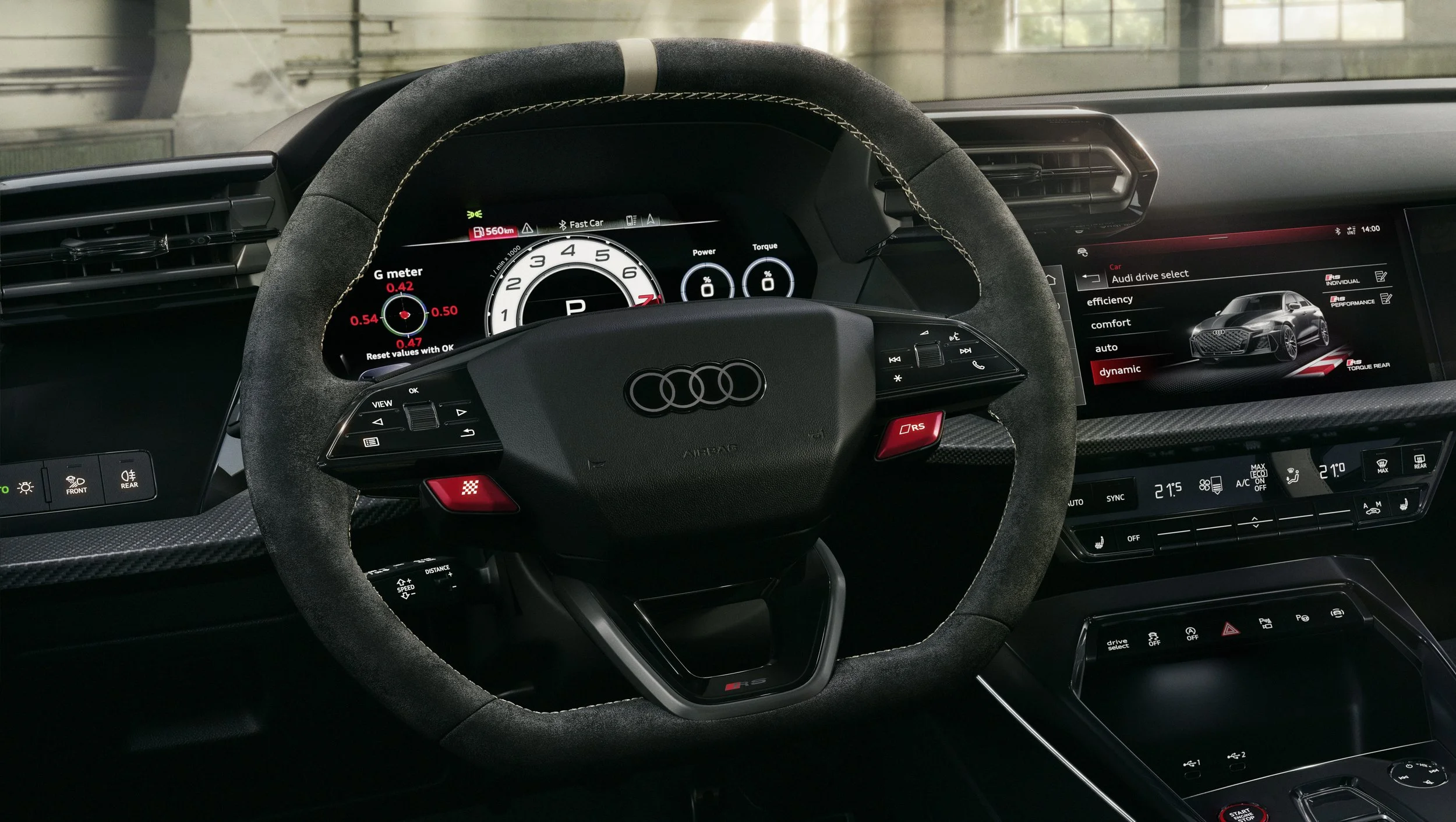
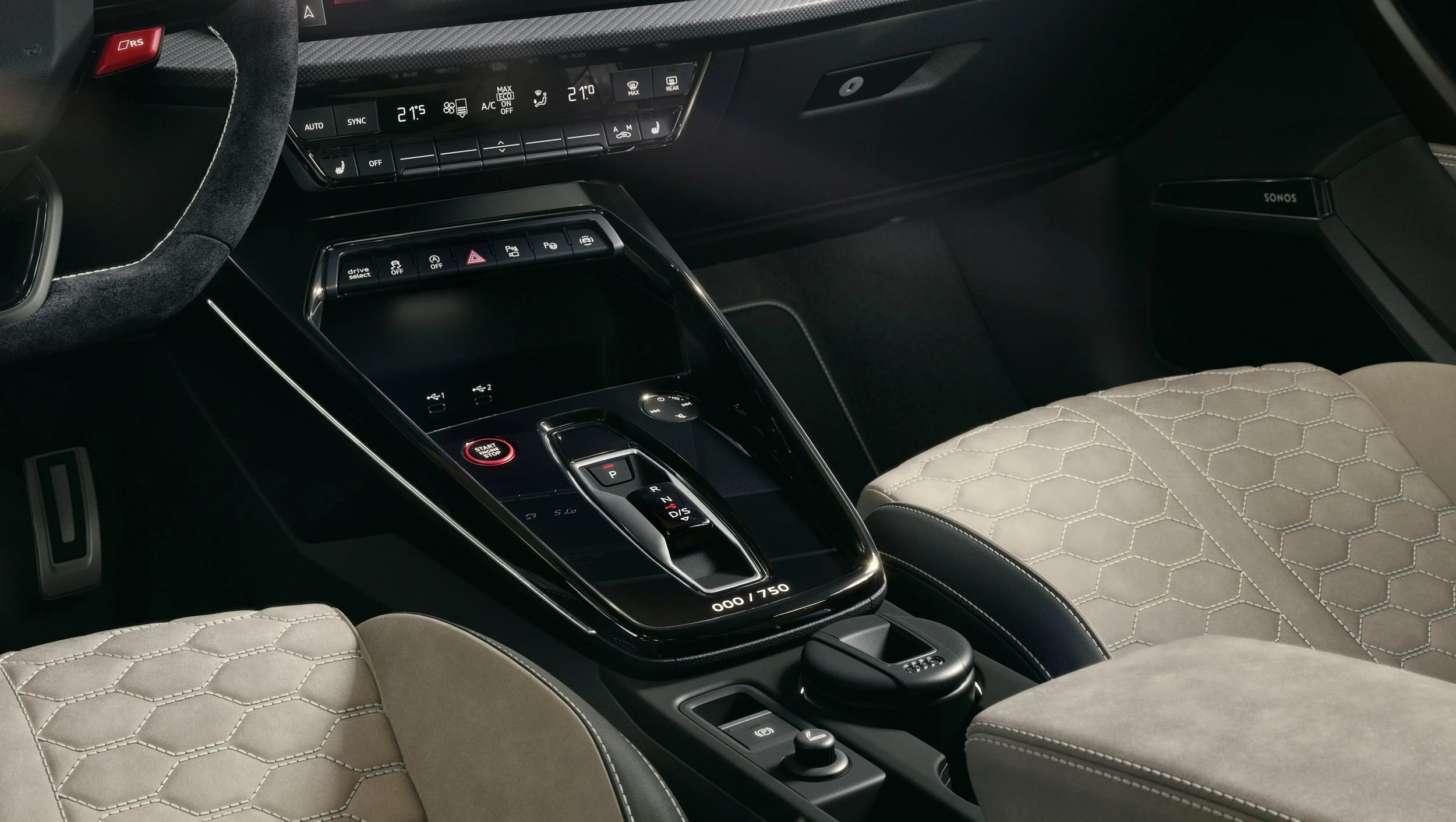
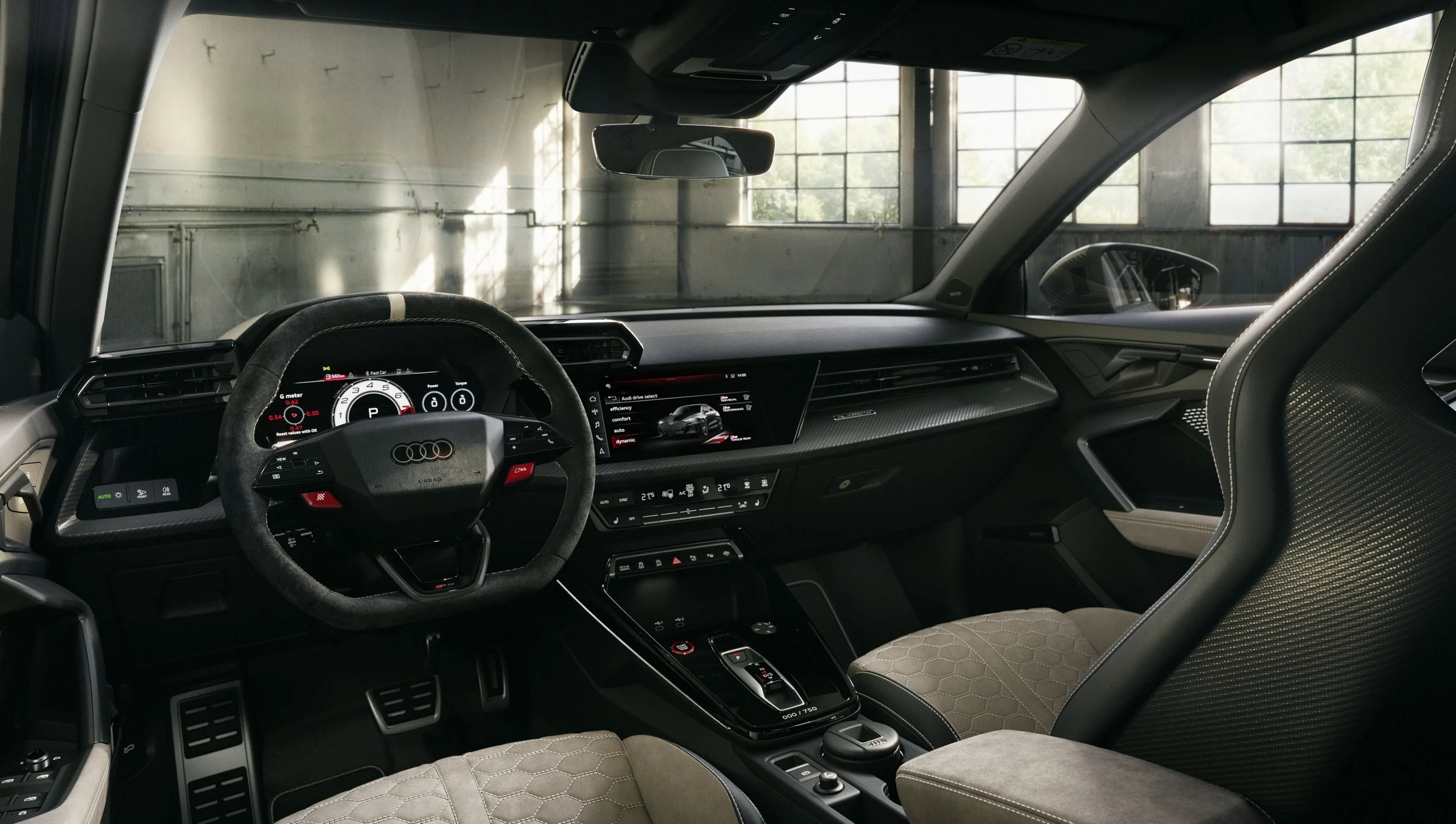
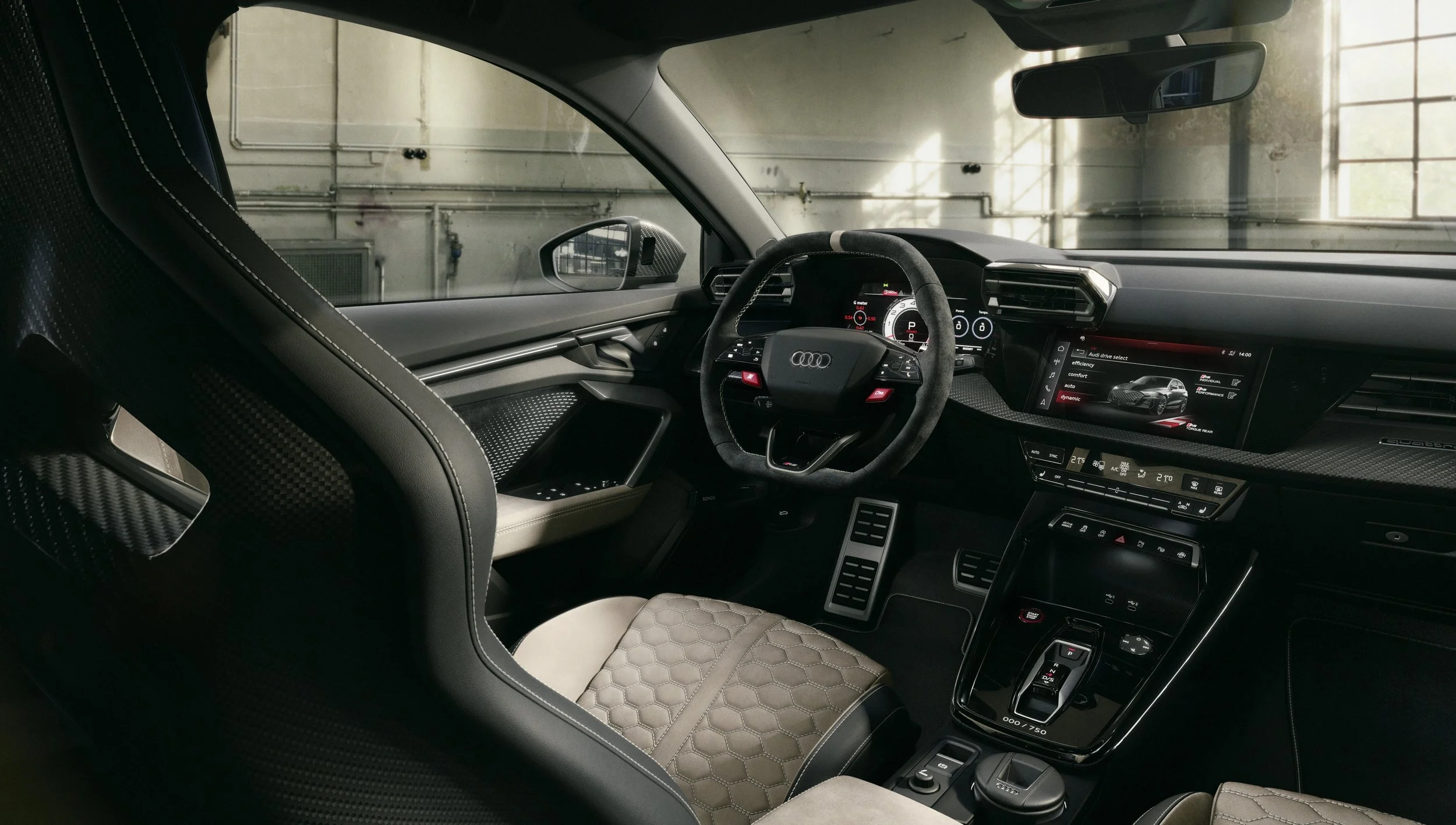
The cabin also reinforces the car’s exclusive character. Audi uses a colour palette of black, Neodymium gold and Ginger white. Door lighting projects the words “RS 3 competition limited”, and Audi repeats the same lettering on the black floor mats, the trim below the headrests and the boot carpet. A matte serial number sits in front of the gear selector on the centre console, reminding occupants of how limited this model is.
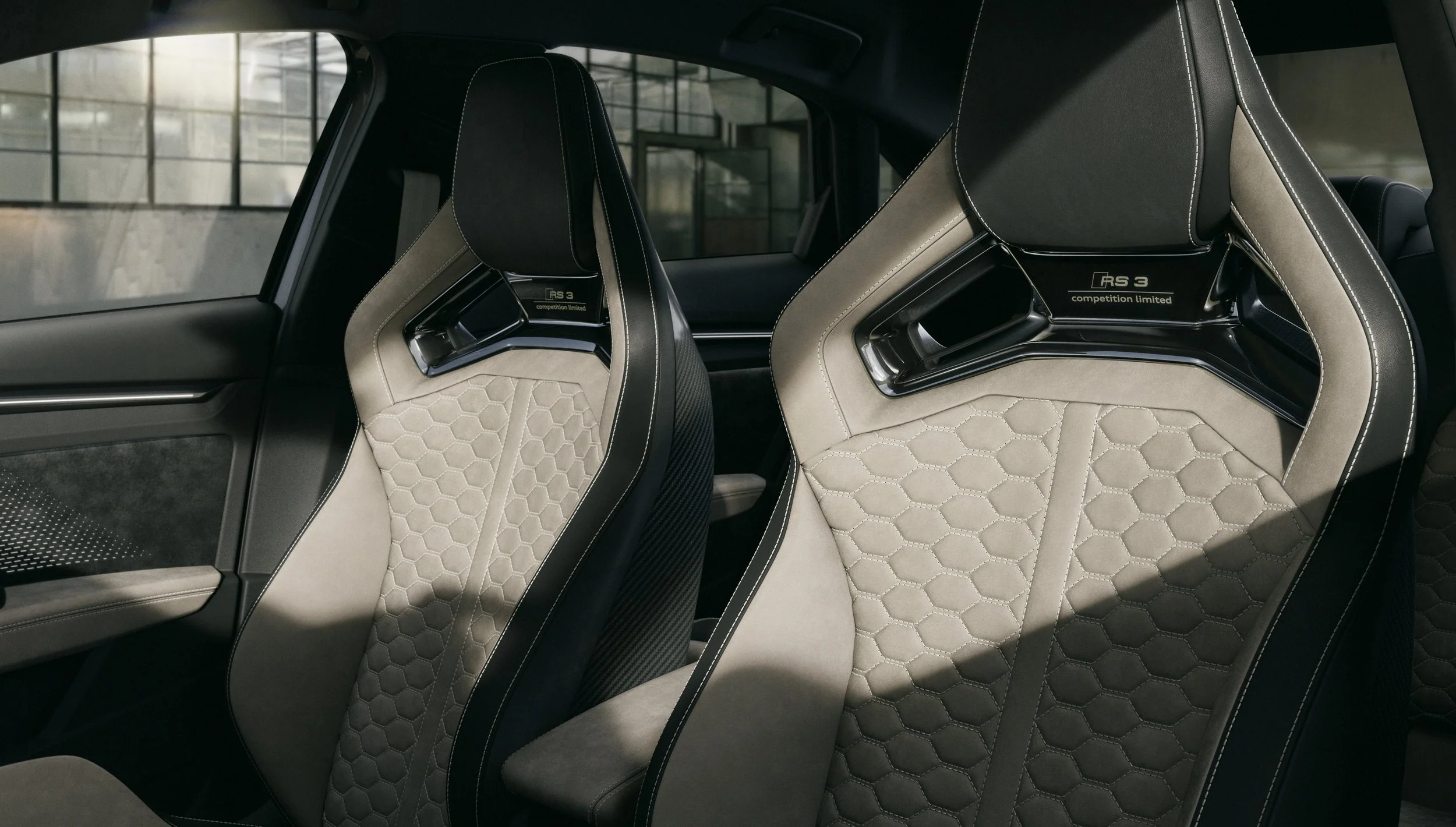
Highly contoured RS bucket seats hold the driver and front passenger firmly in place. Audi trims the side bolsters in black leather and the centre sections in Neodymium gold Dinamica microfibre. The door armrests and centre armrest also wear the same gold finish. Ginger white contrast stitching brightens the cabin and emphasises the diamond pattern on the seats.
Rear passengers also experience that same sense of exclusivity. Audi trims the seat centres and armrests in soft Neodymium gold Dinamica and adds Ginger white contrast stitching. Matte carbon-fibre seat backs on the front seats provide a strong visual reminder of the car’s sporting focus.
The driver’s seat remains the best place to enjoy everything this car offers.
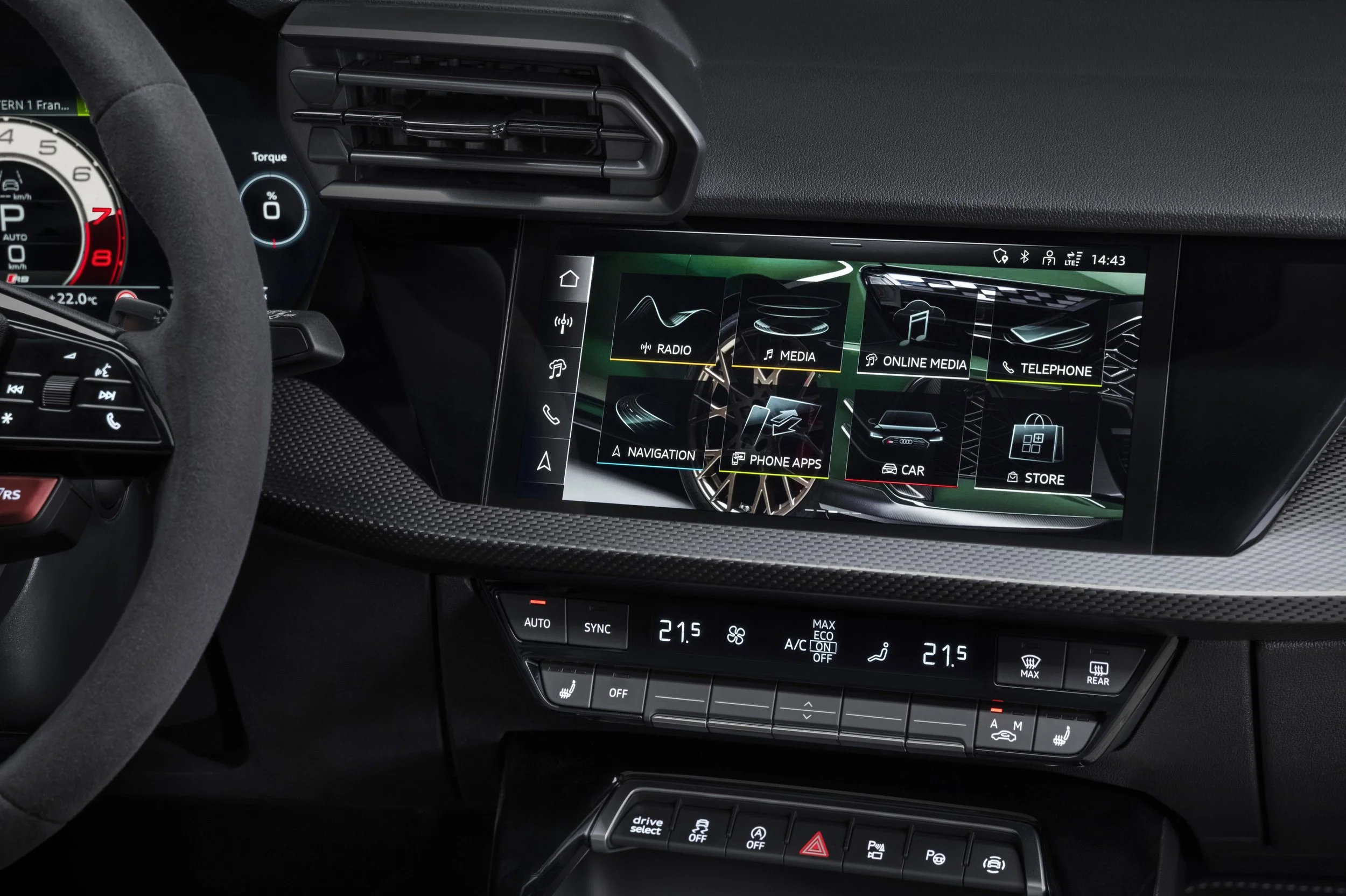
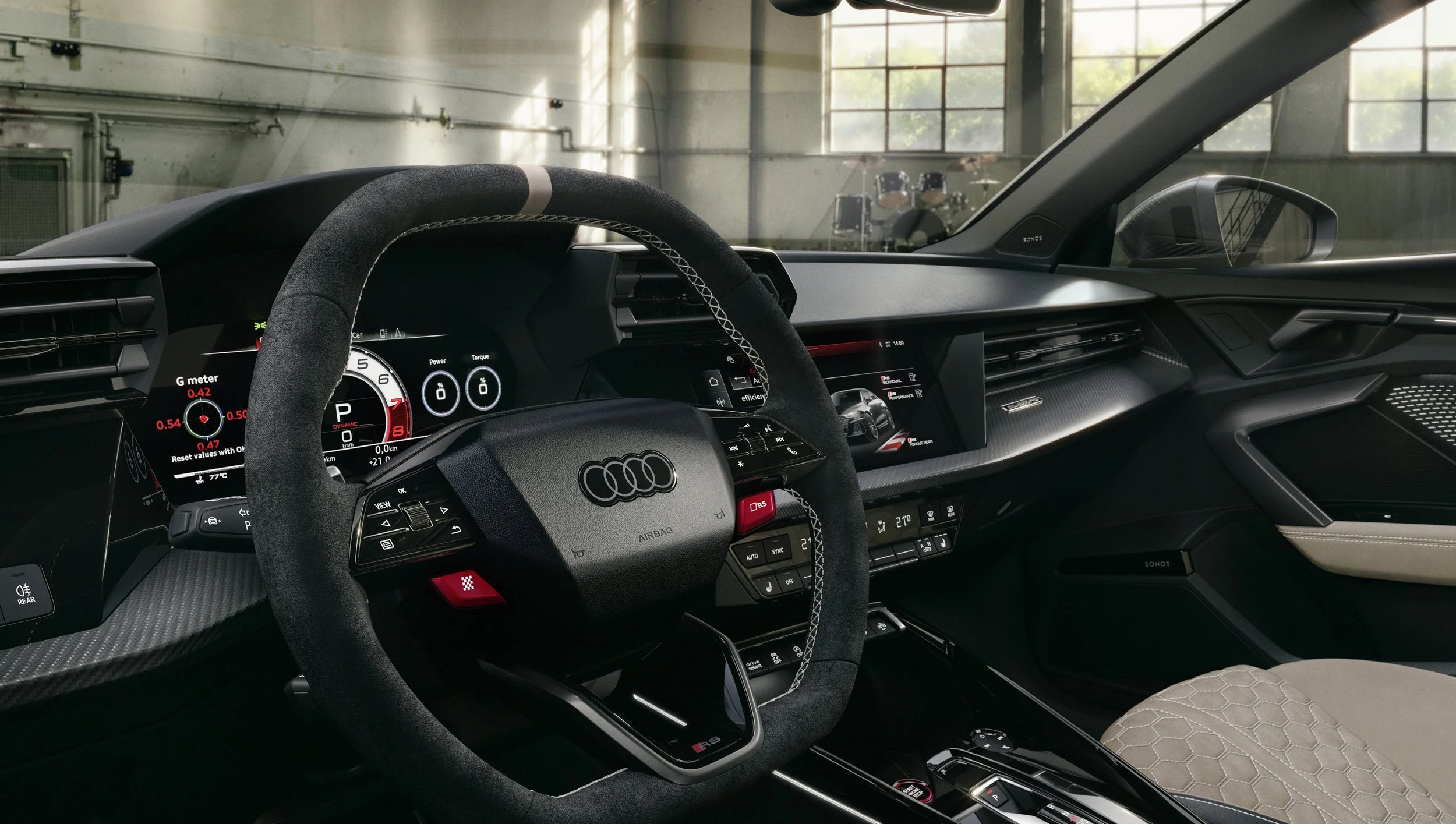
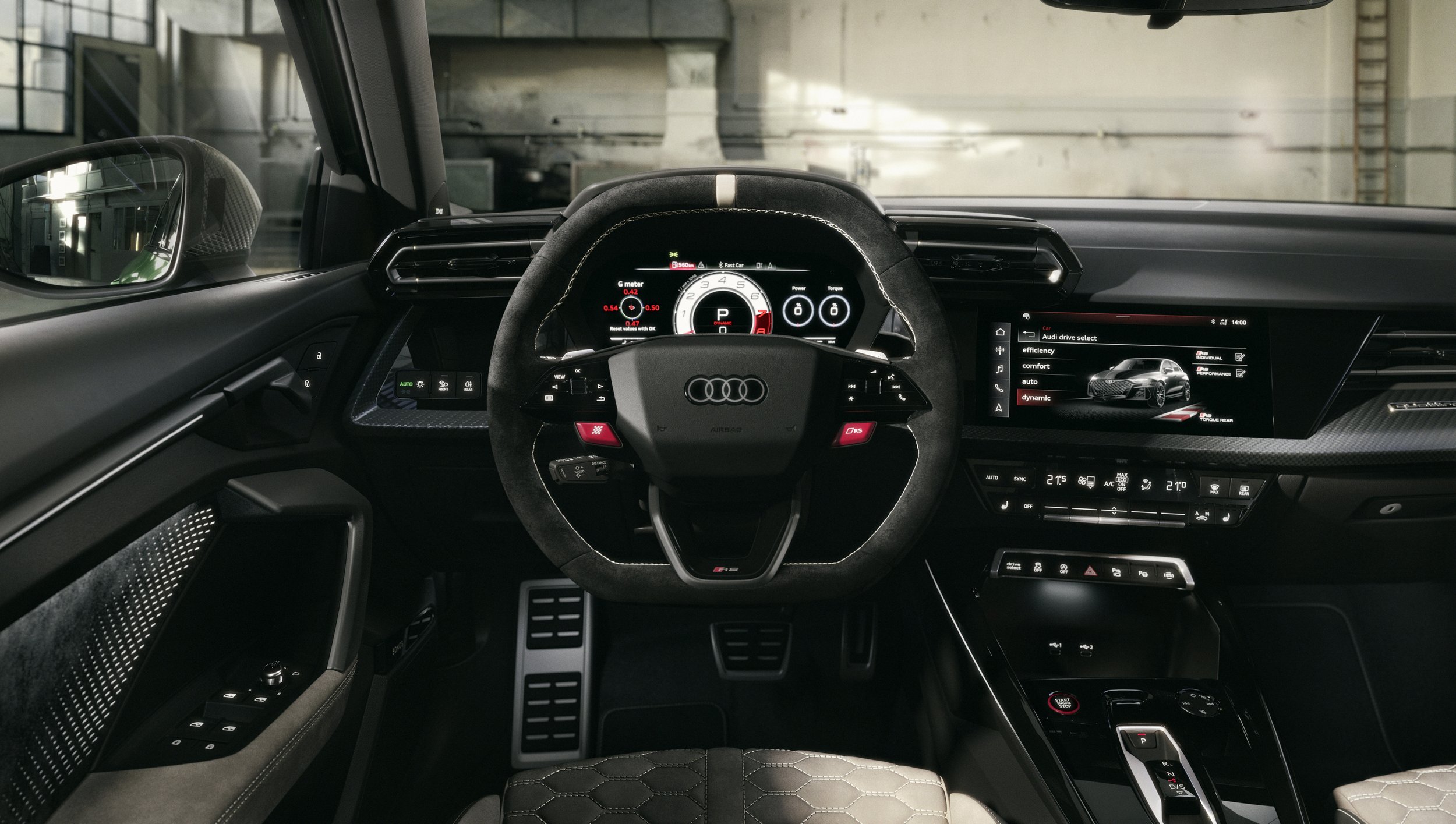
The 10.1-inch touchscreen in the dashboard displays RS-specific performance data. It shows the temperature ranges for the coolant, torque splitter, brakes, engine oil and transmission oil in colour. It also displays tyre pressure and tyre temperature.
Audi has flattened the steering wheel at the top and bottom and added a Ginger white centre marker to make the straight-ahead position easier to spot and help the driver judge even the smallest steering inputs. Ginger white contrast stitching also runs around the rim, which Audi trims in black Dinamica. The Audi virtual cockpit plus also features an exclusive display design. When the Audi RS2 Avant introduced the first RS five-cylinder engine in 1994, it used white instrument dials. Audi recalls that look here with digital instruments that also use a white background. The display also shows current power and torque output, G-forces, acceleration data and a lap timer. When the driver uses launch control to extract maximum acceleration from the turbocharged inline-five, the start lights indicate the ideal moment to launch.
In the UK, Audi prices the RS 3 Sportback competition limited from £92,855 OTR. Matte carbon-fibre exterior details, Neodymium gold wheels and an exclusive interior with matching RS bucket seats, special digital dials and consecutive numbering set it apart. Audi has also used carbon-fibre under the bonnet, where the engine cover gives the five-cylinder engine an even more technical look. The Audi RS 3 competition limited also features adjustable coilover suspension, a stiffer rear stabiliser, the RS sports exhaust system, a 180mph top speed and ceramic brakes with red callipers. Three-zone climate control, heated seats and rear privacy glass all come as standard. Audi expects UK deliveries of the RS 3 competition limited to begin in Q4 2026.