Ferrari 12Cilindri Manuale: A New Manual Driving Icon
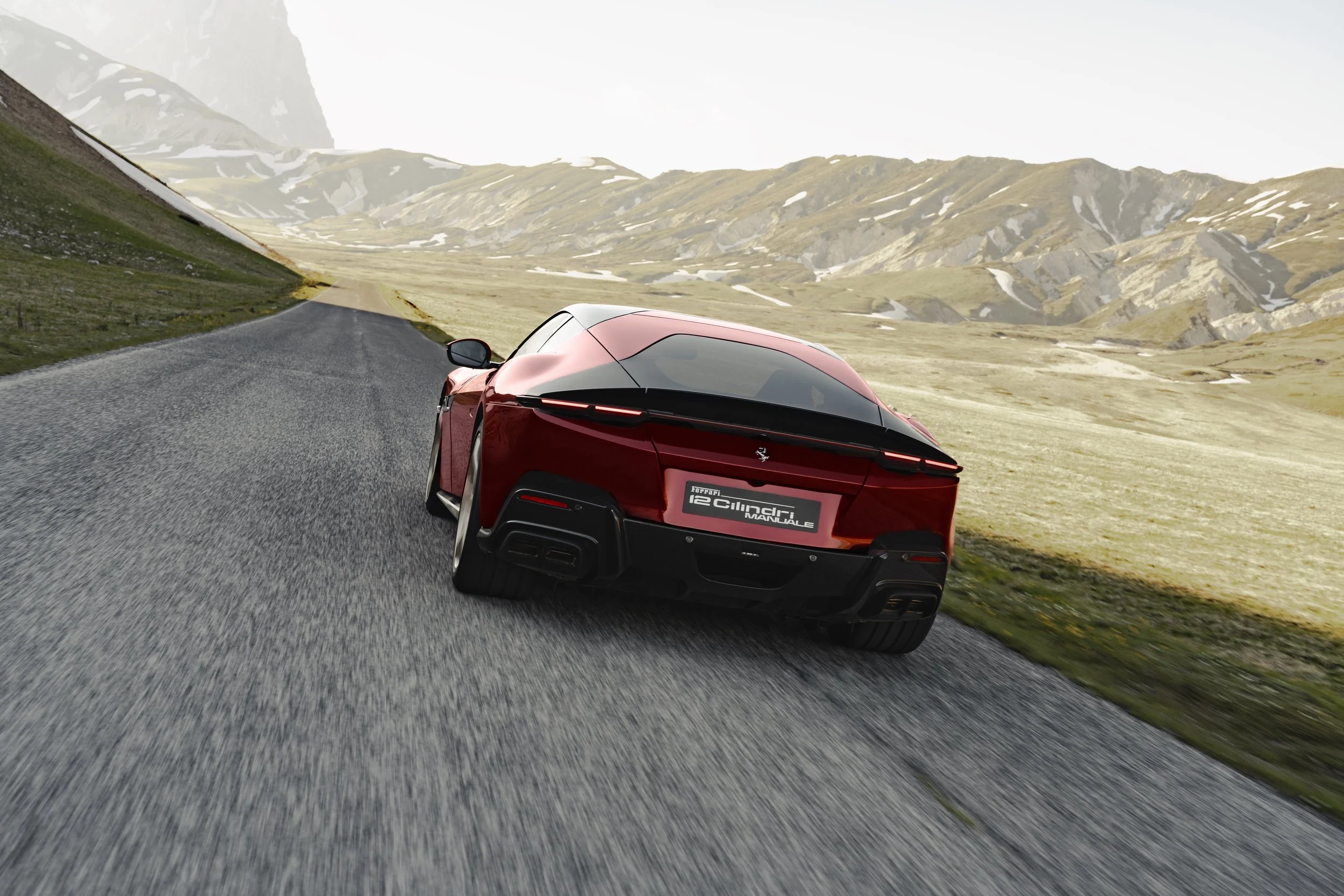
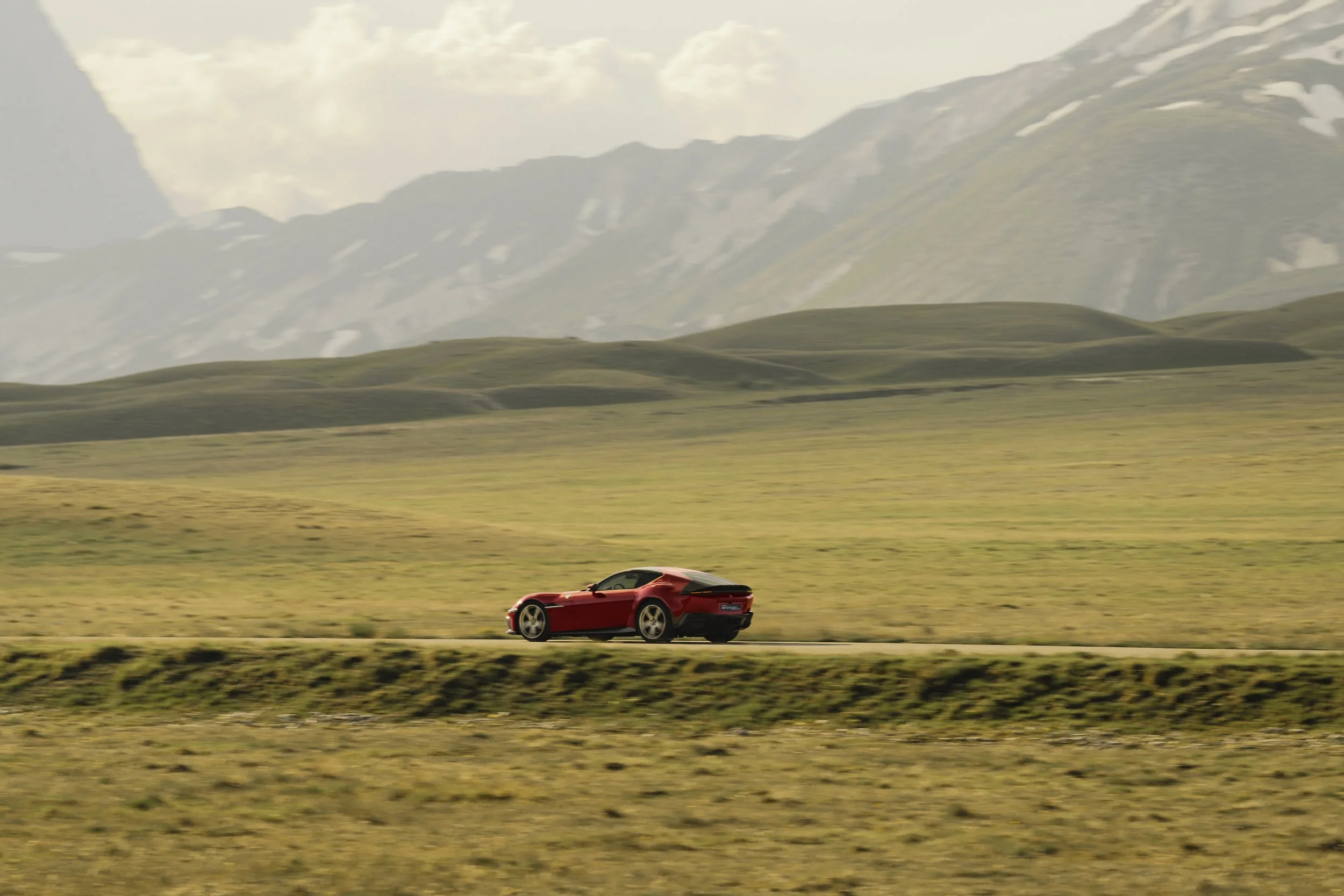
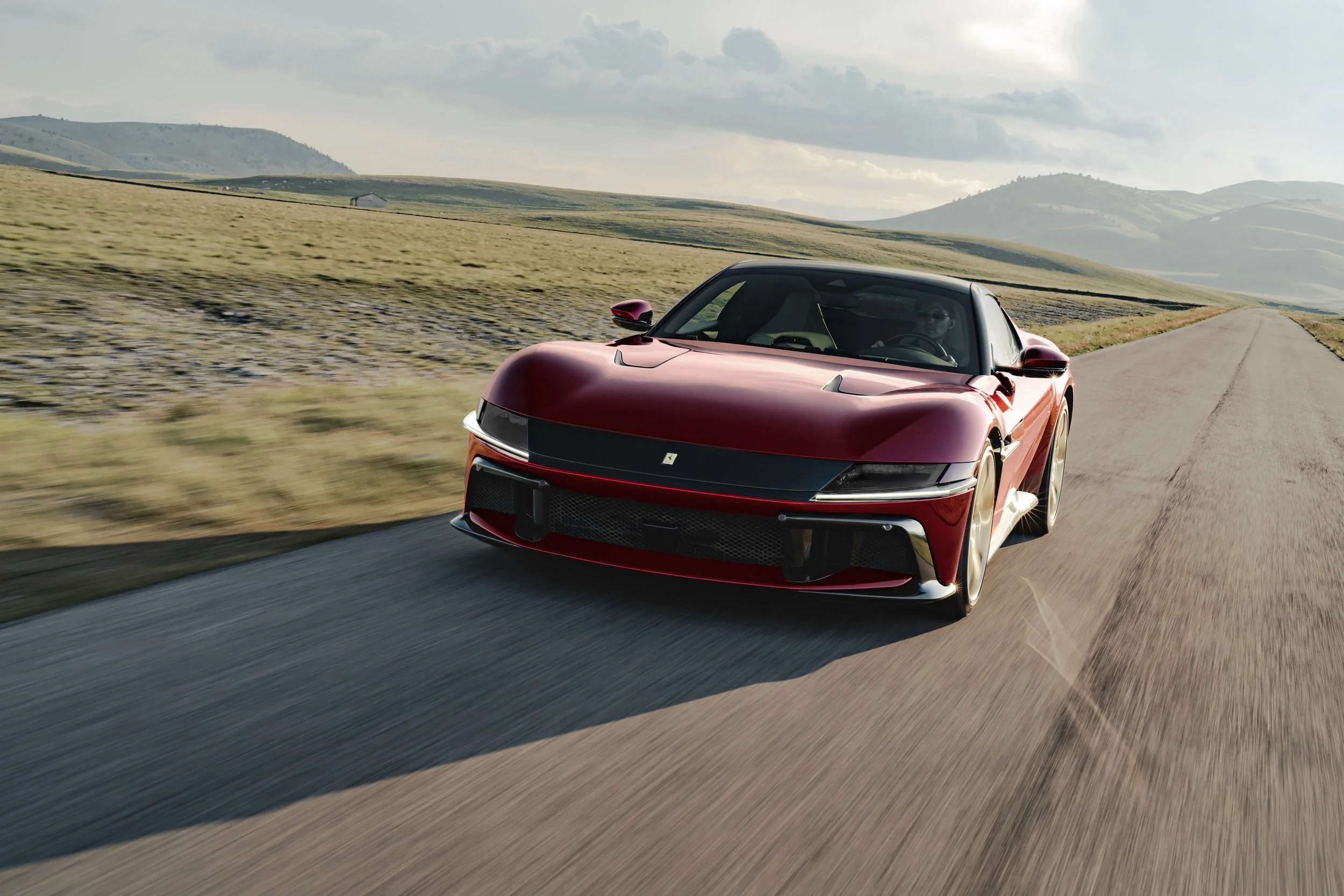
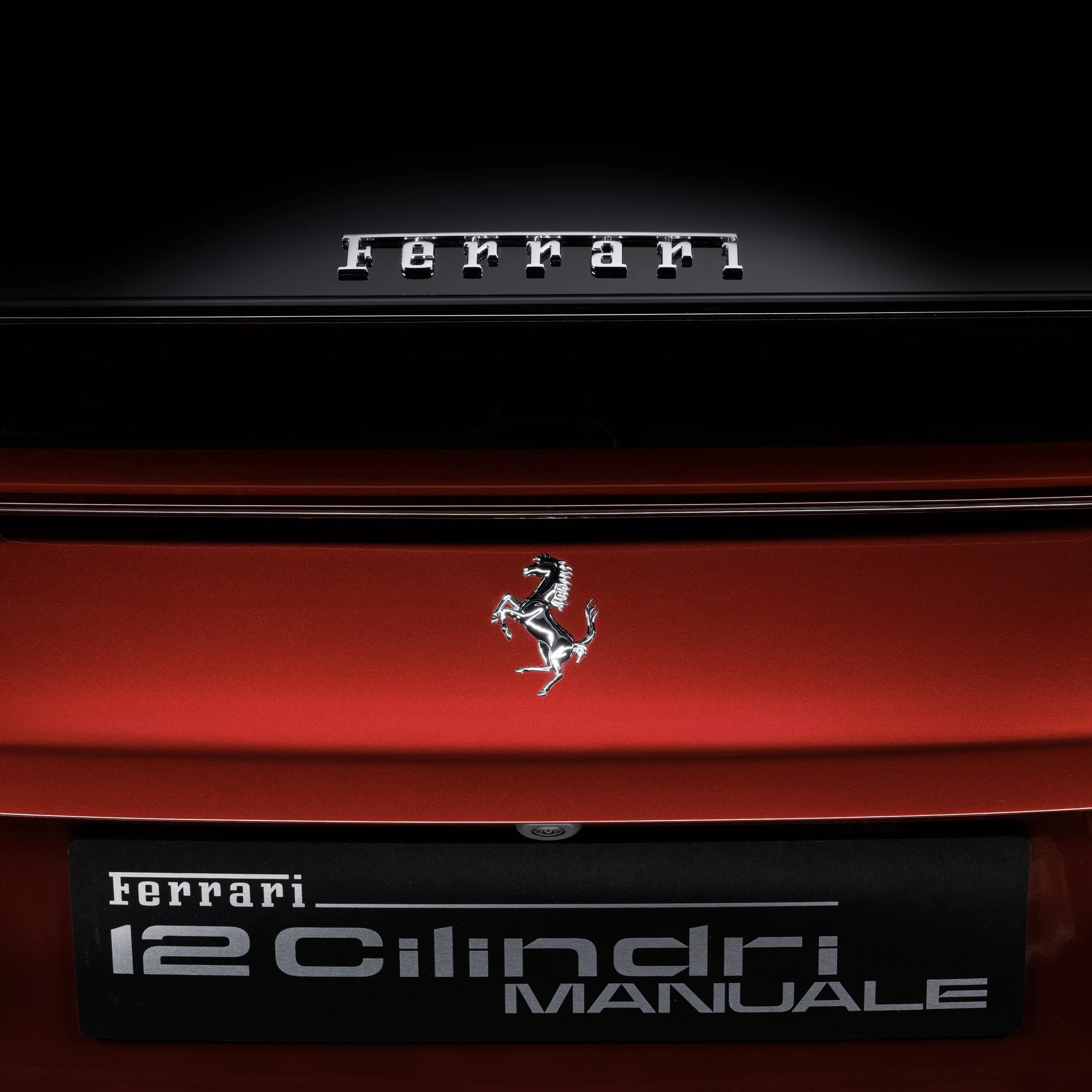
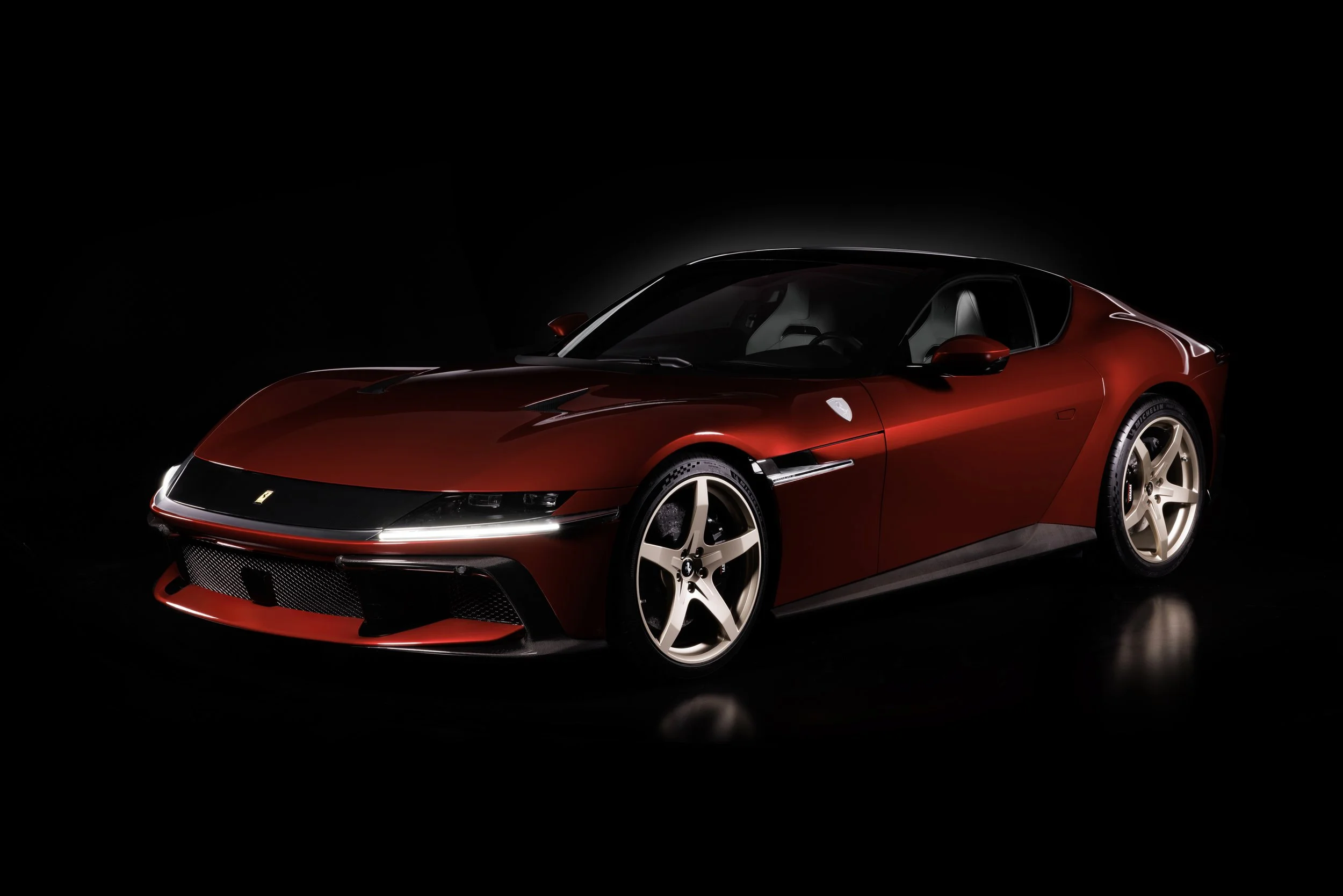
Ferrari has unveiled the 12Cilindri Manuale, a limited-edition version of the 12Cilindri that puts driver input, mechanics and control at the very heart of the driving experience. The car targets drivers who want a physical, conscious connection with their vehicle, and it doesn't sacrifice everyday usability to achieve this. Ferrari has blended the driving emotions that defined its Gran Turismo models of the 1950s, 60s and 70s with cutting-edge technology, and the result draws the driver and the car closer together than ever before.
Two major innovations define the 12Cilindri Manuale: a manual gear lever and a new clutch pedal, which together form the Manuale by-wire system. Ferrari engineered this system entirely in Maranello, and it offers a fresh take on the analogue gear-shifting experience while relying on advanced technology to deliver precision, repeatability and ease of use. Ferrari's engineers spent considerable time translating the physical feel of mechanical movement into an electronic signal, preserving its analogue character, consistency, and naturalness throughout. The company drew on cross-functional expertise to achieve this, including input from the team behind the Hypersail project, which applied the same by-wire approach to develop a technological solution for the nautical sector.
Drivers can shift the car manually through six gears and reverse, or they can switch to automatic mode, giving them full freedom to choose between engagement and comfort. The naturally aspirated V12 engine suits this dual approach perfectly: it revs up to 9,500 rpm and delivers a distinctive character at high revs that enhances every gear change.
The gear lever, clutch pedal and accelerator work together to create a driving experience that builds a deep connection between driver and car, unlocking its full potential. The new Manuale by-wire system pairs the technology from Ferrari's acclaimed 8-speed DCT gearbox with an entirely redesigned system built from new components, including a gear lever engineered to deliver a pure, engaging analogue feel. The architecture includes a lever gear selector, a control panel and a pedal assembly featuring a by-wire clutch pedal that lets drivers manage clutch engagement and disengagement themselves. Ferrari also updated the control unit, the gearbox, and the engine control software to support these new interactions. Together, this blend of mechanical and electronic technology delivers pinpoint precision and load control without compromising the driving feel, creating something genuinely unique in high-performance motoring.
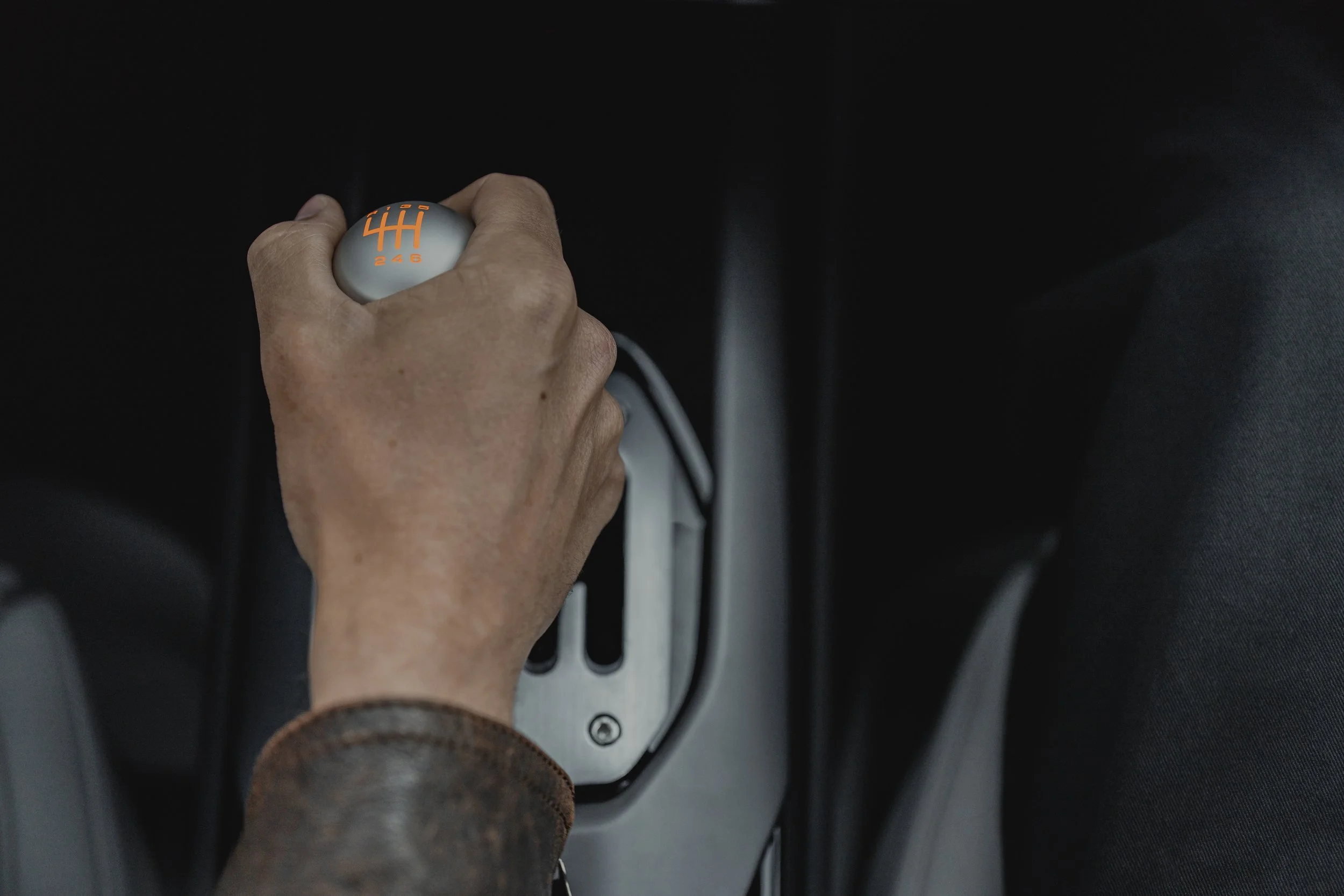
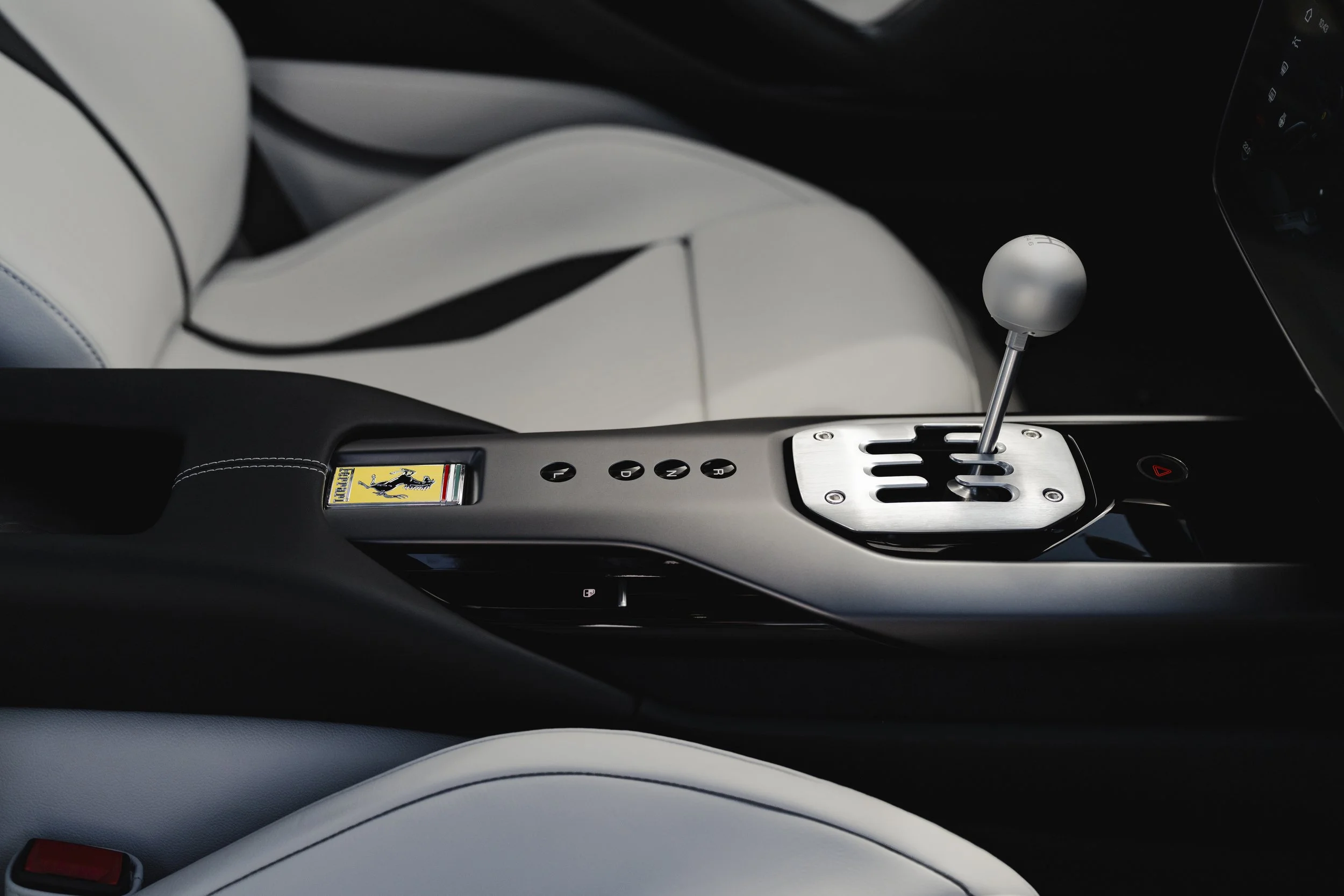
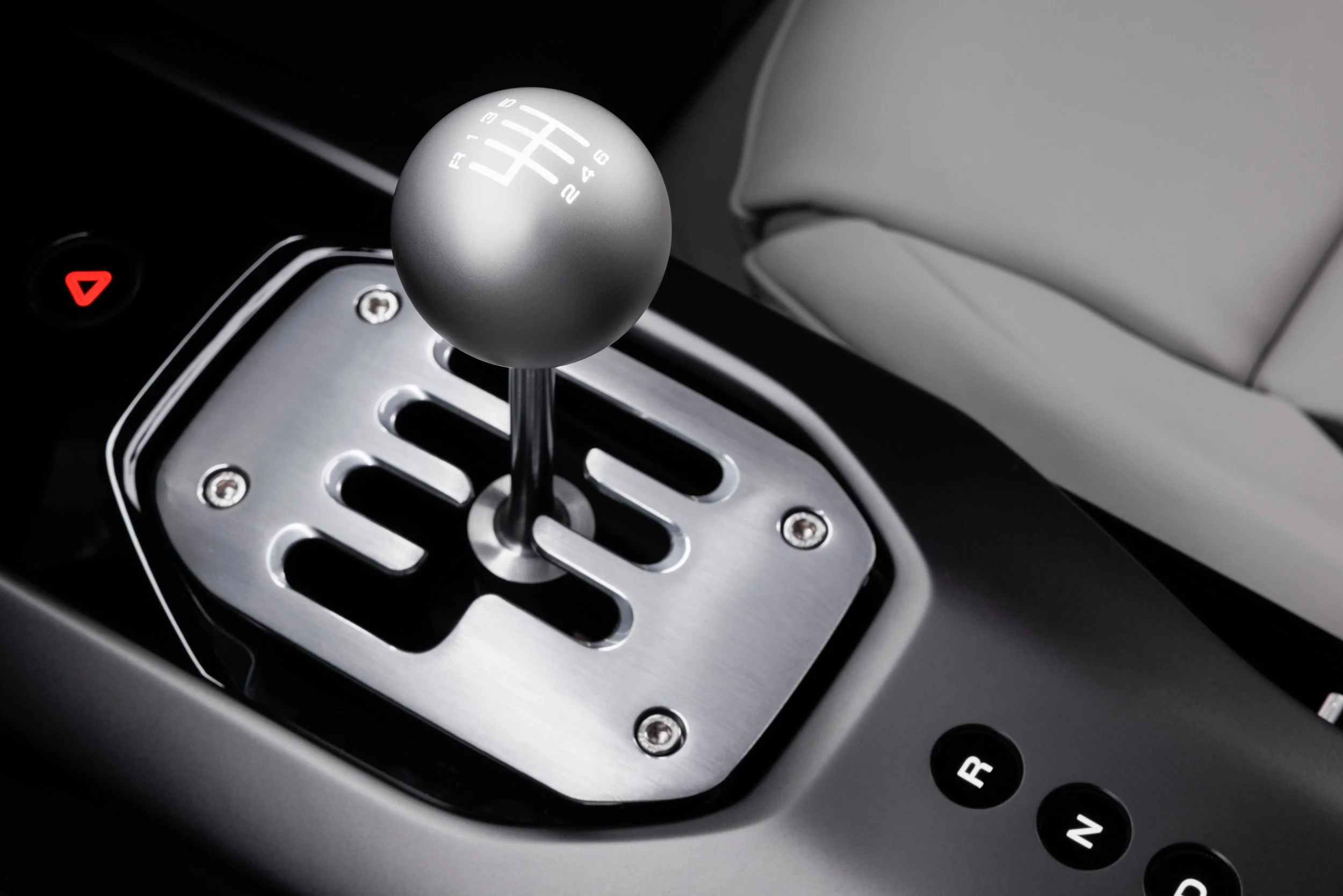
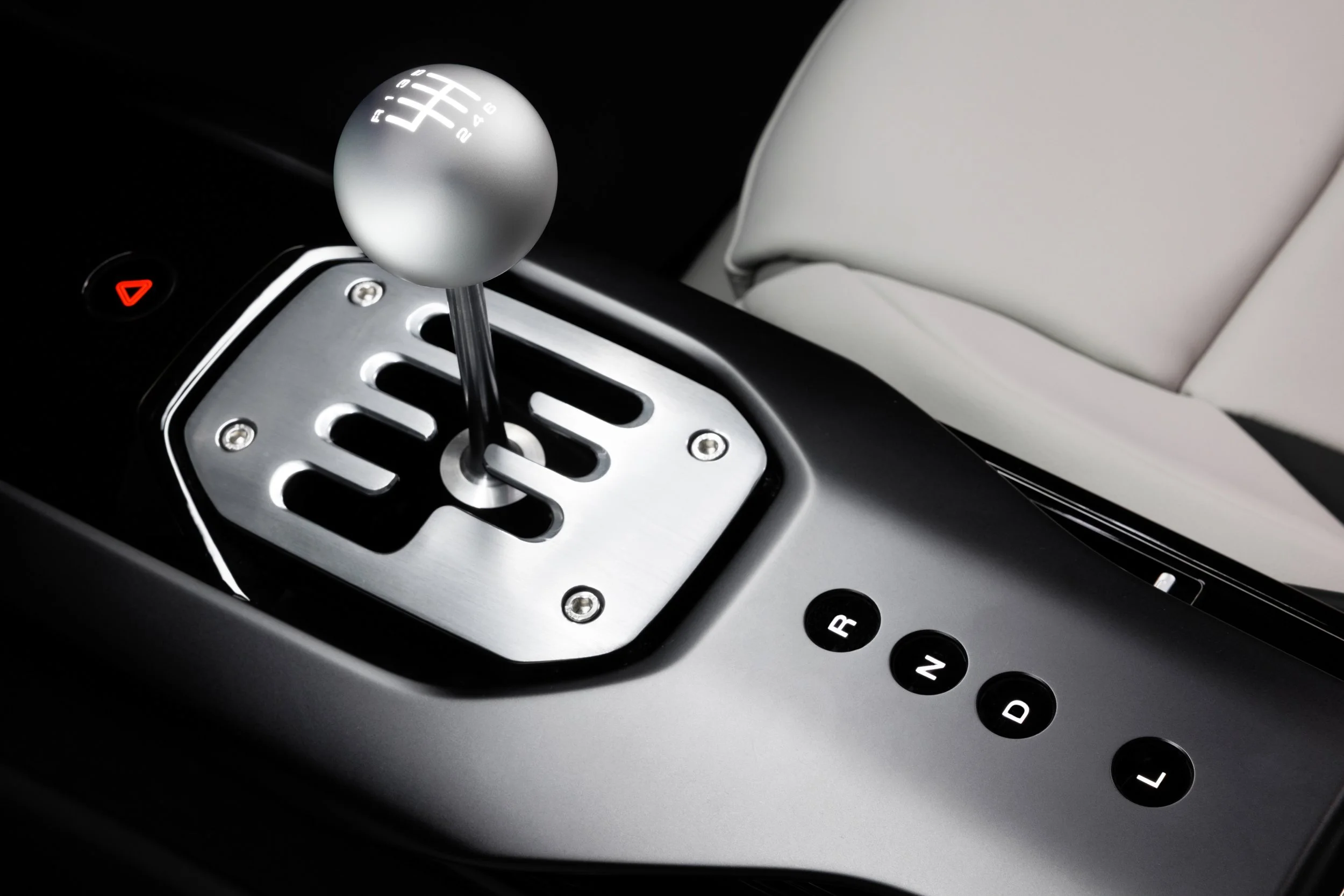
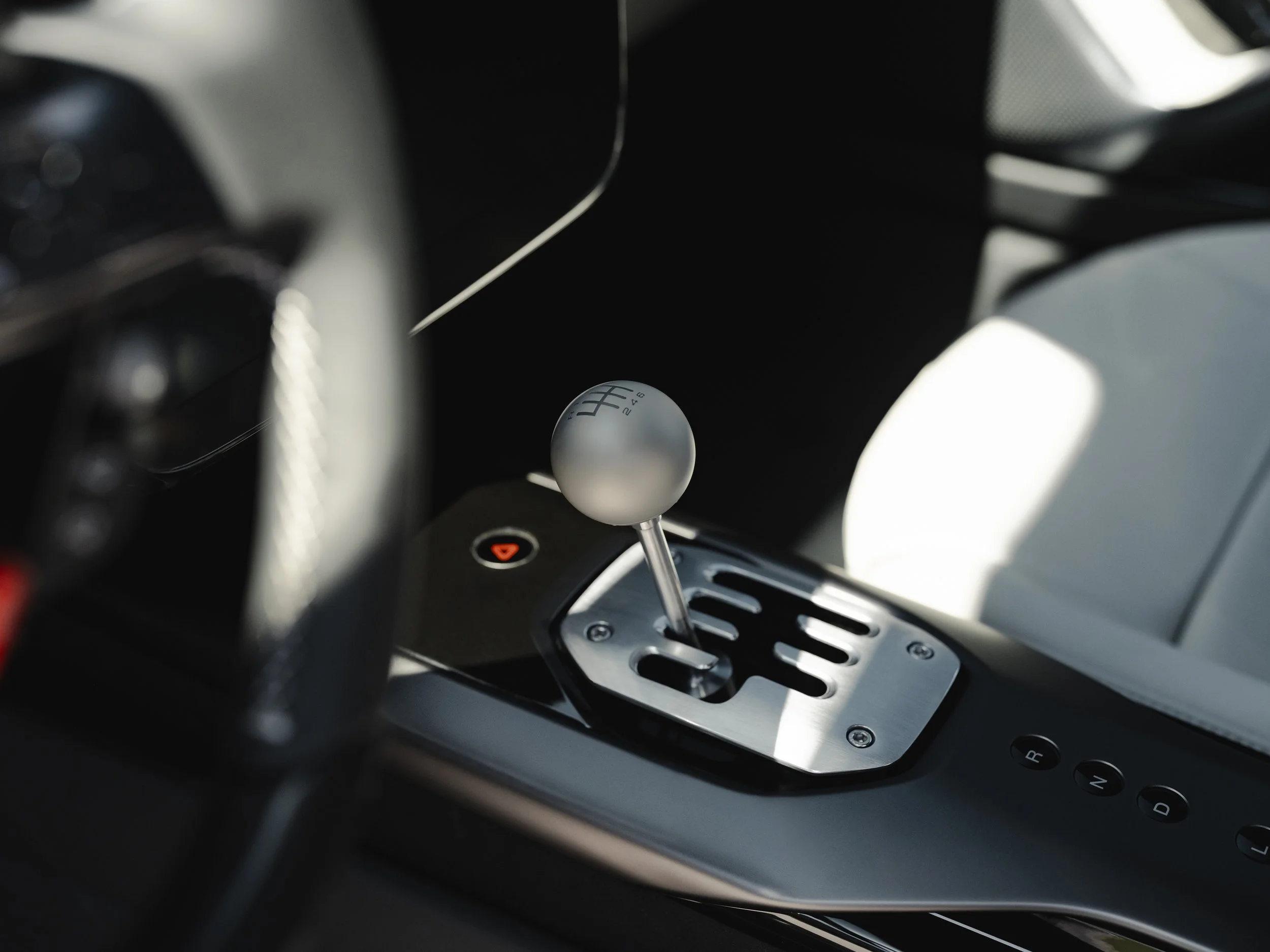
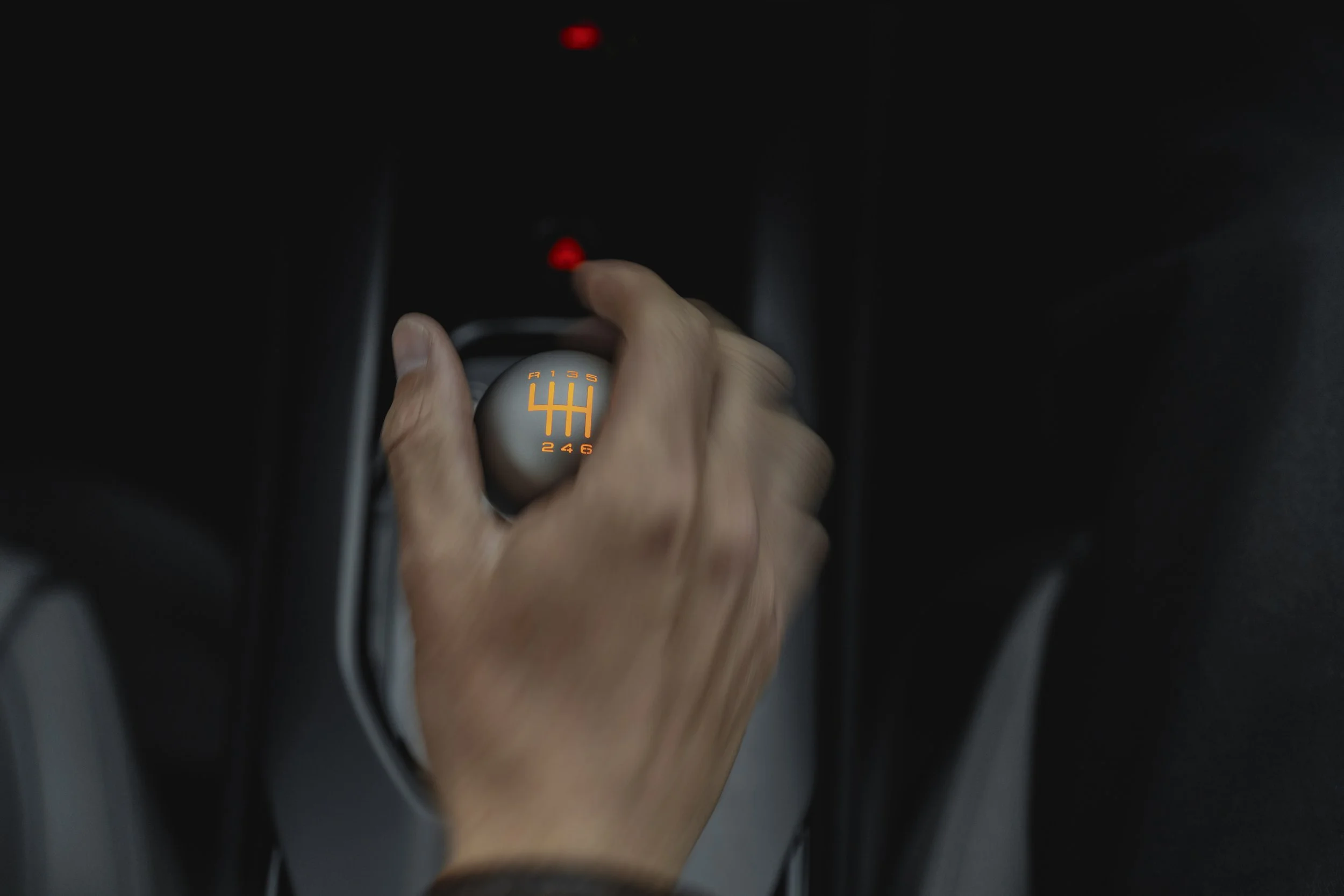
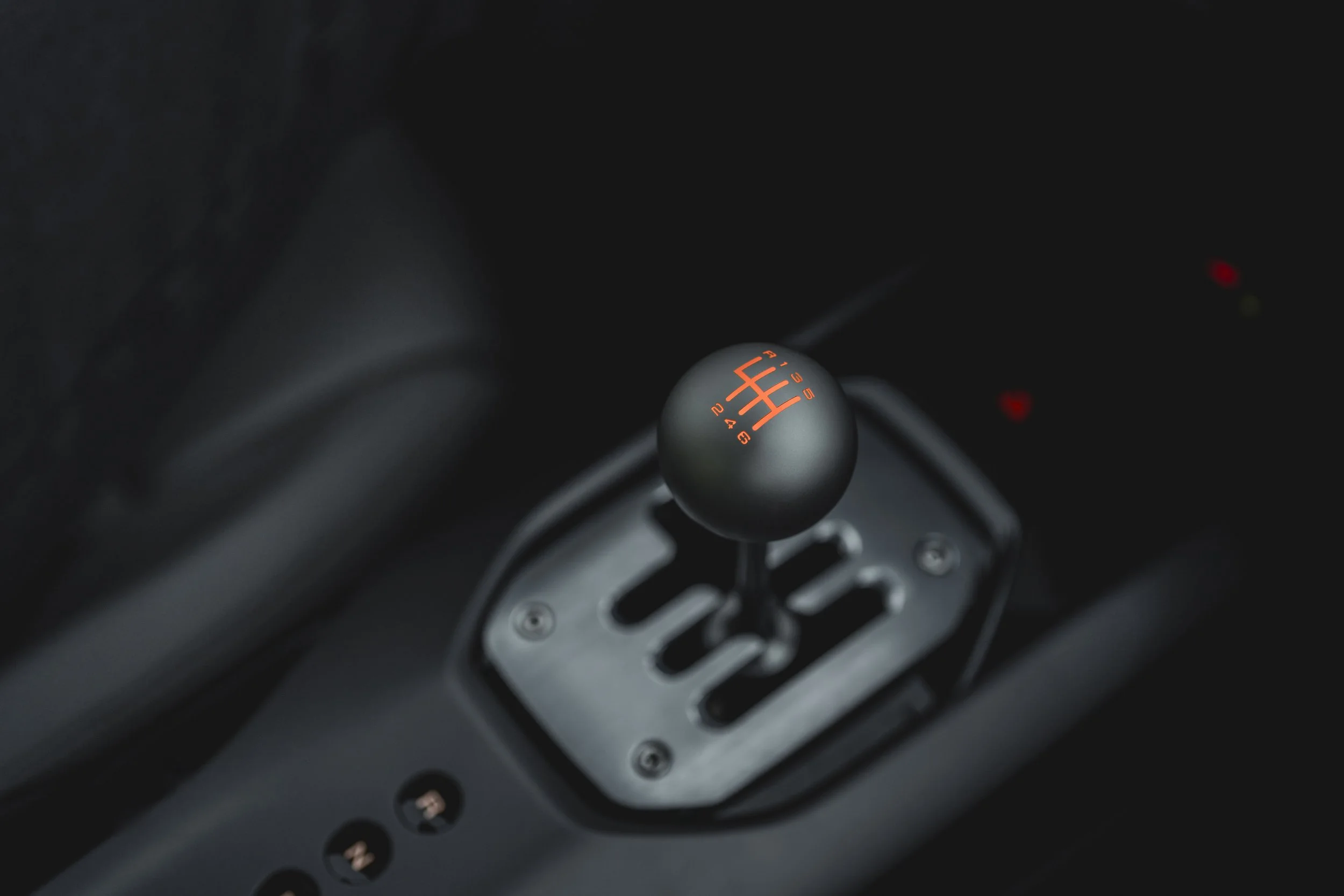
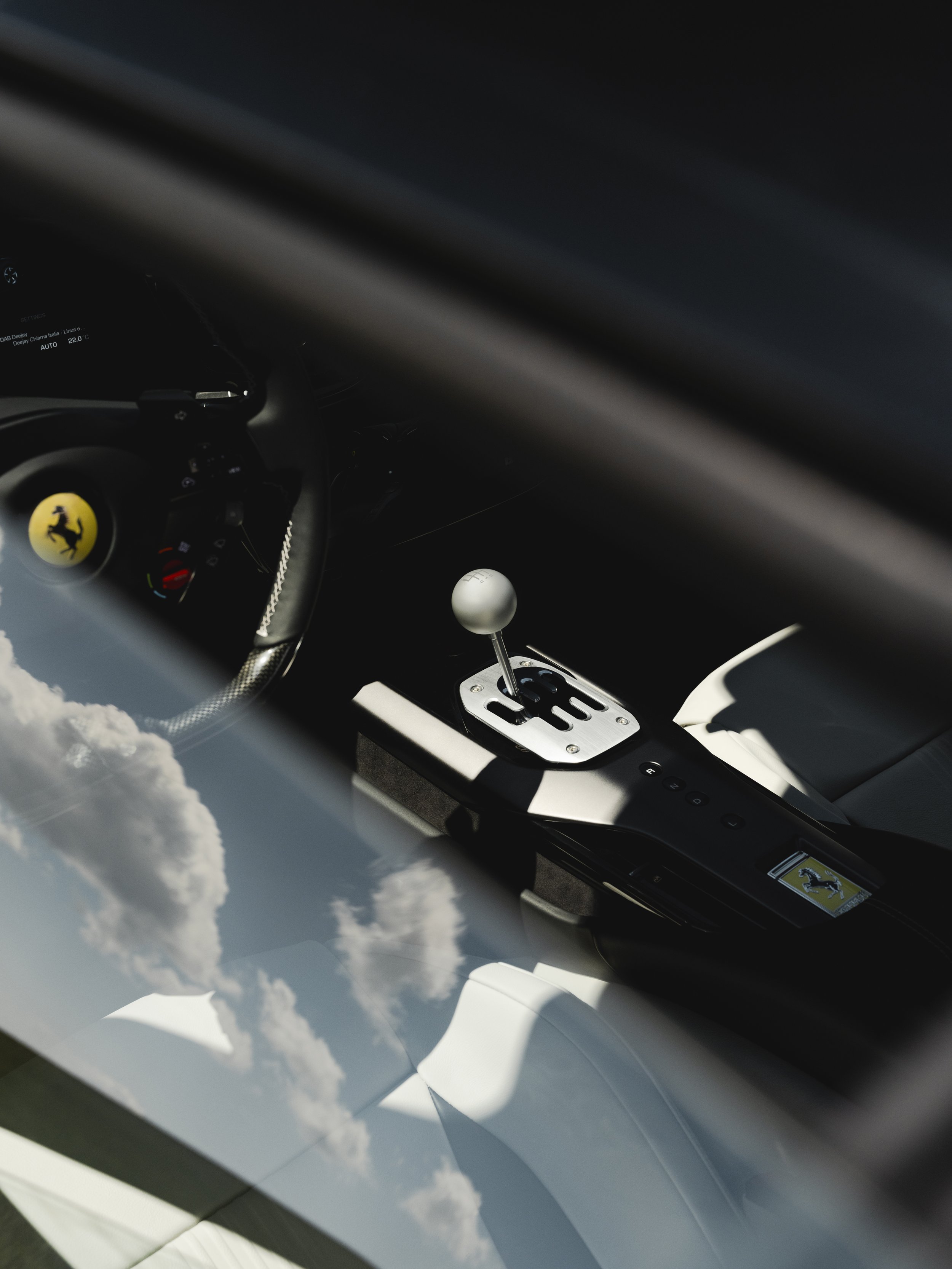
The manual control system relies on a mechanical module fitted with sensors and advanced kinematic mechanisms that replicate the loads drivers feel in Ferrari's traditional manual gearboxes during synchronisation, engagement and disengagement. This kinematic mechanism generates clicks and load variations that give drivers clear feedback on gear engagement. If a driver doesn't depress the clutch or selects an unauthorised gear, the system mechanically blocks the engagement and stops the operation from completing; when this lock isn't active, the kinematic mechanism moves freely. Two angle sensors detect lever position, while a knob and a backlit button panel complete the system and improve readability. Ferrari machined this compact, modular mechanism from solid blocks, and it weighs less than 3.5kg. The engineering team even developed the acoustic effects of its movements to sharpen drivers' perception of the mechanics beneath their hands.
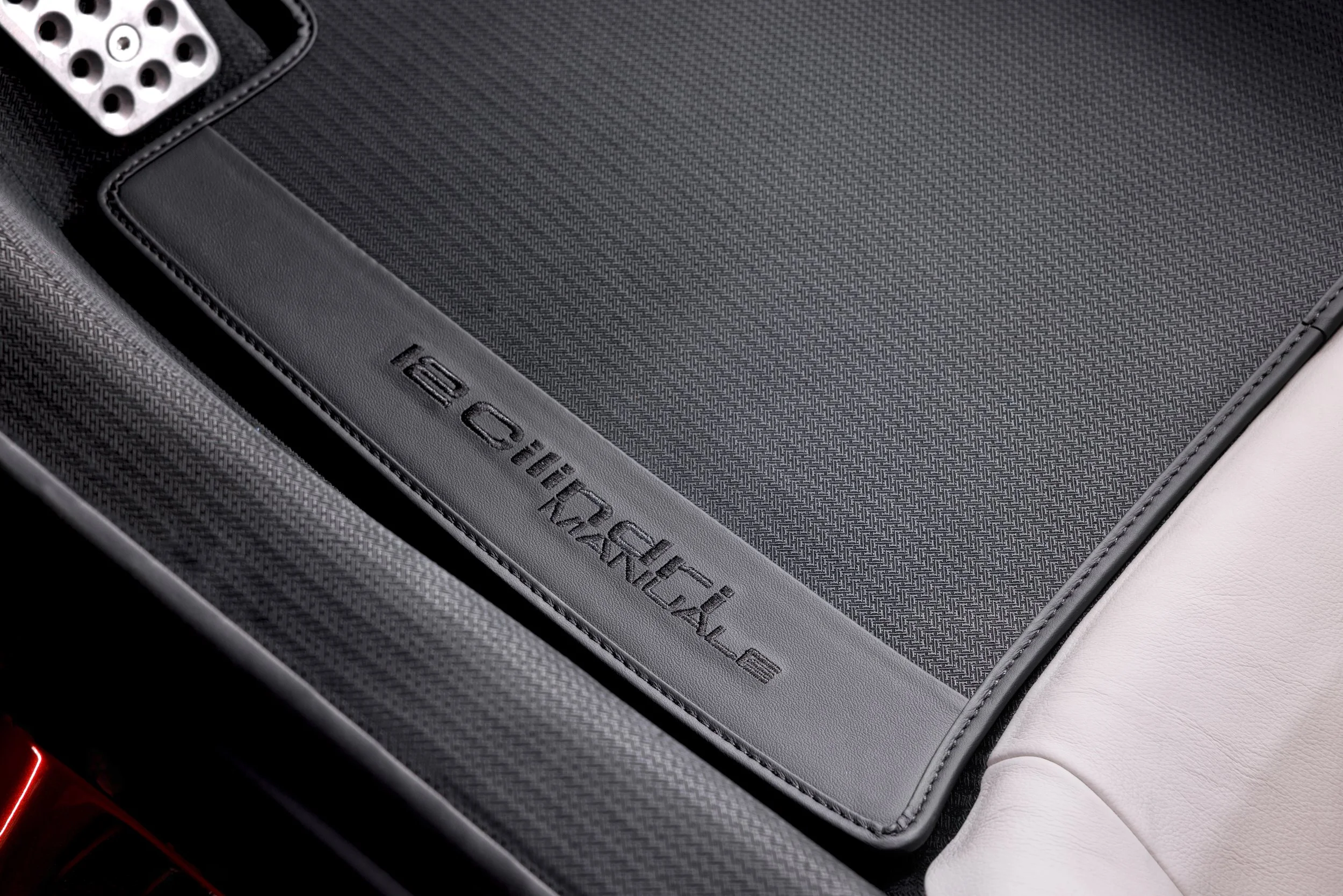
Ferrari redesigned the entire three-pedal layout to complement the manual gear-changing process. The by-wire clutch pedal acts as a high-precision link between the driver and the powertrain: a position sensor on the pedal assembly detects its position. It translates it into hydraulic actuation of the DCT clutch, coordinating the transmission and engine during every gear change. An innovative passive mechanical system recreates the load-travel curve typical of mechanically linked manual gearboxes. At the same time, an angle position sensor continuously reads the driver's intent throughout the pedal's full travel. This gives the car the same behaviour drivers expect from traditional manual gearboxes: correct synchronisation produces a smooth, precise change, while incorrect timing makes the change stiffer or triggers a jerk or stall, heightening driver involvement and delivering authentic torque feedback. The system also features dedicated transition logic between manual and automatic modes, plus coasting management that keeps deceleration smooth all the way down to idle, mirroring how a traditional clutch behaves.
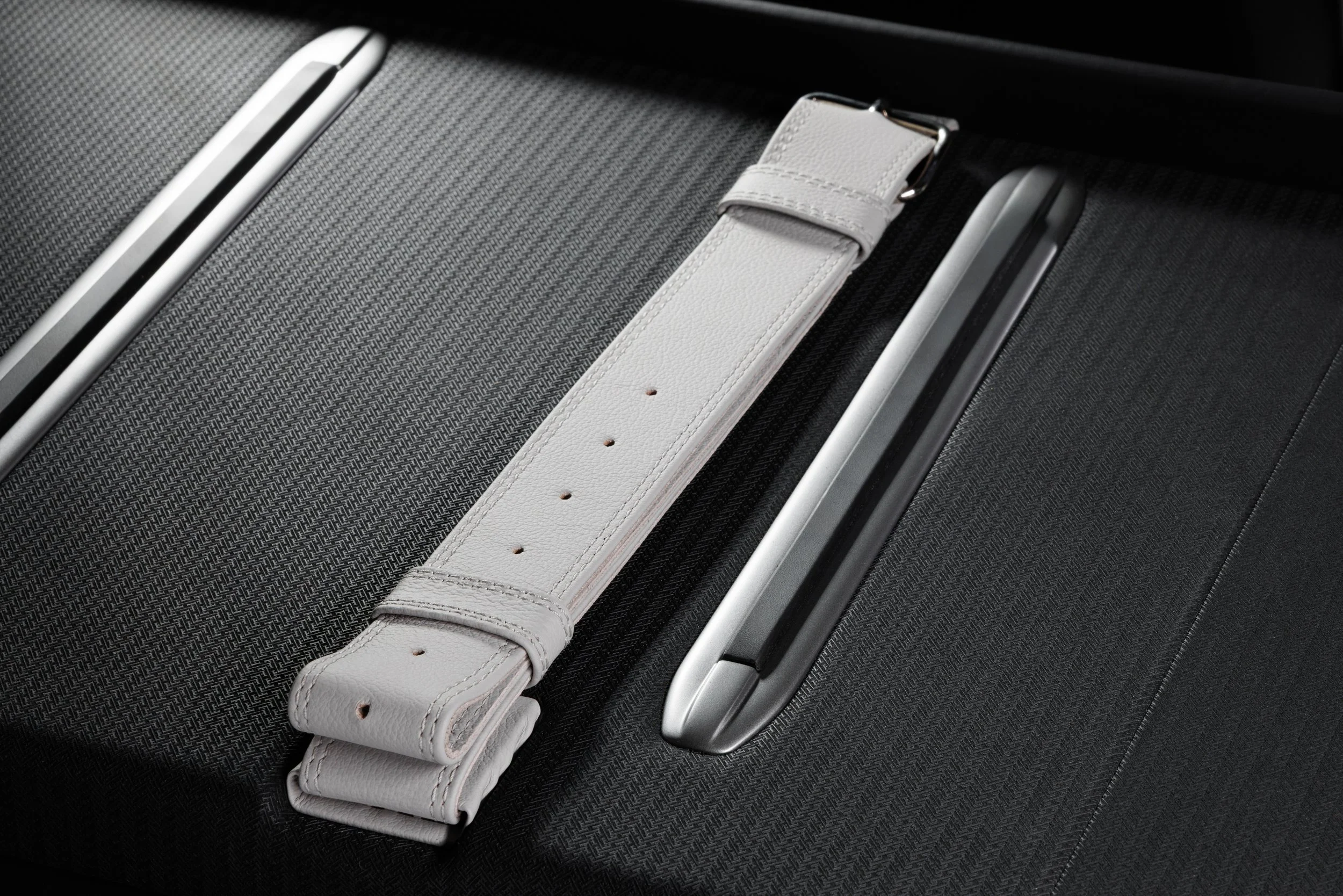
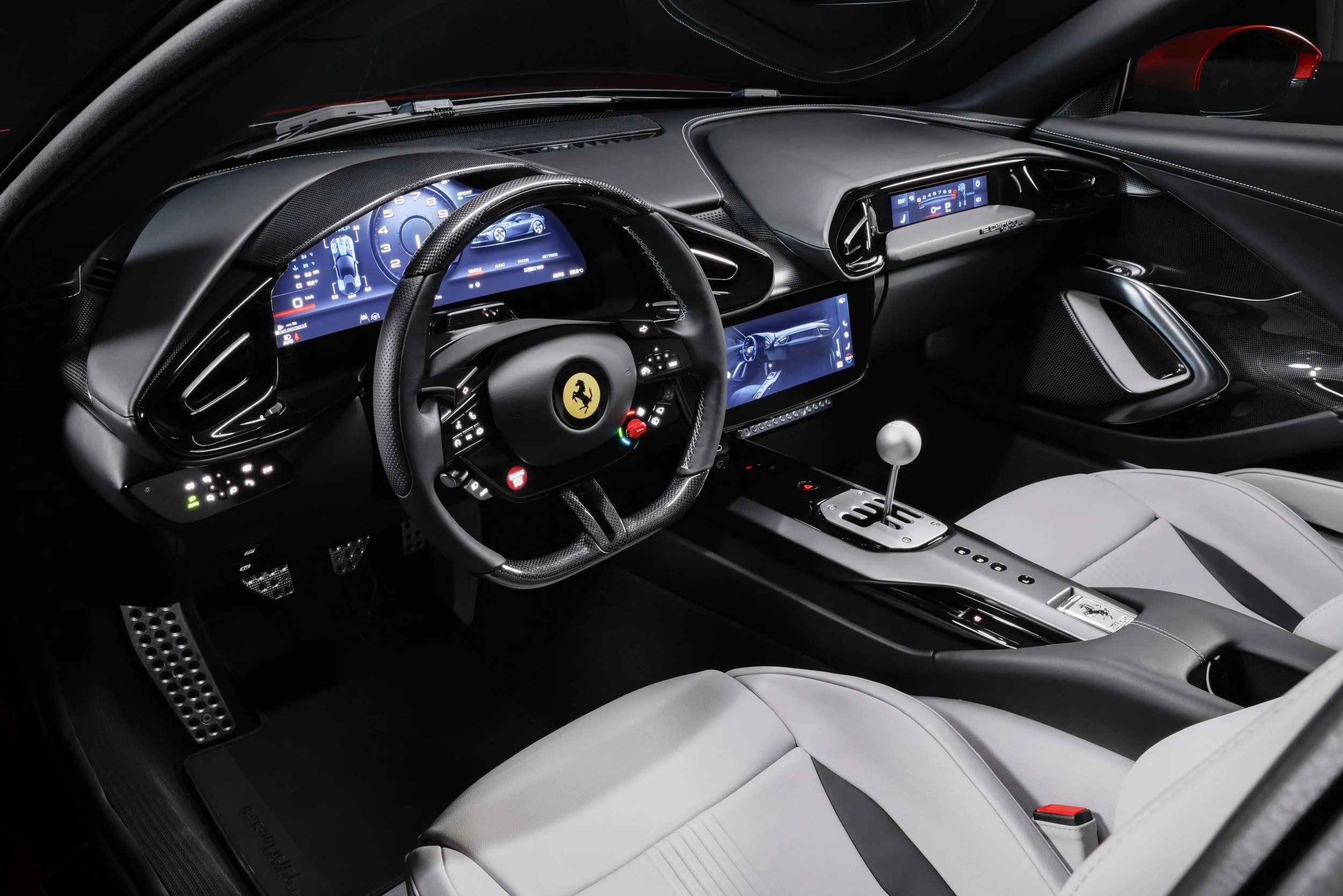
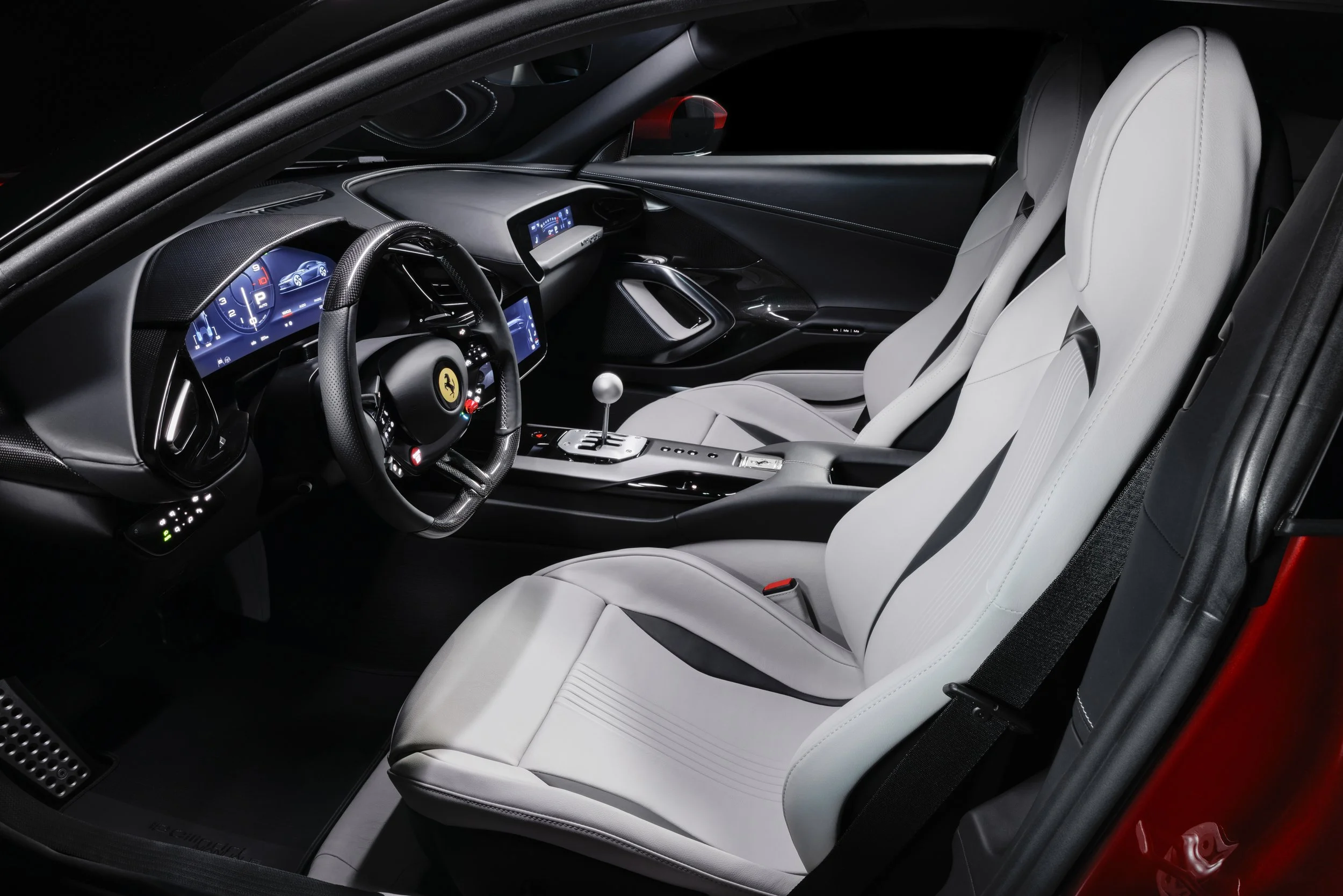
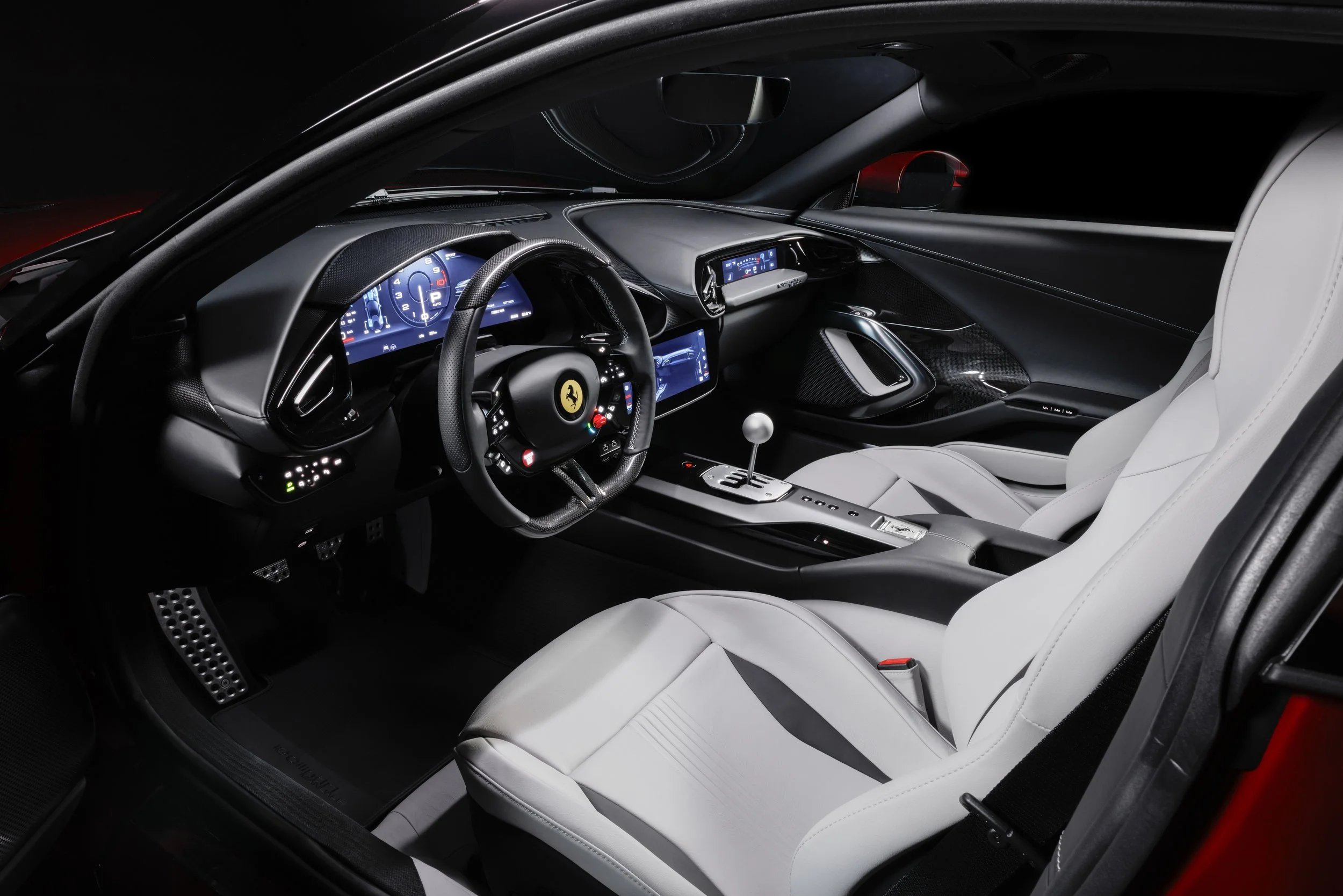
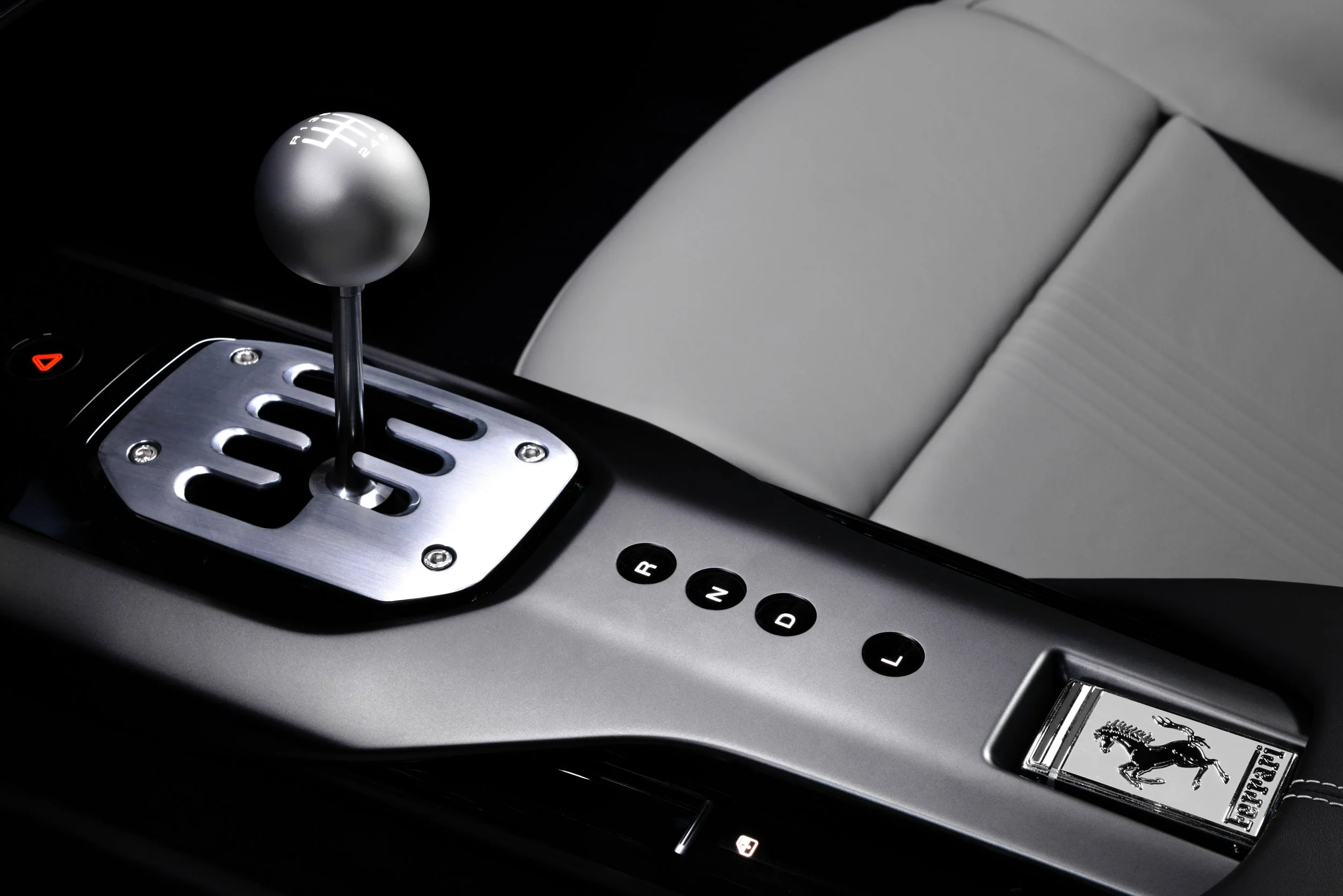
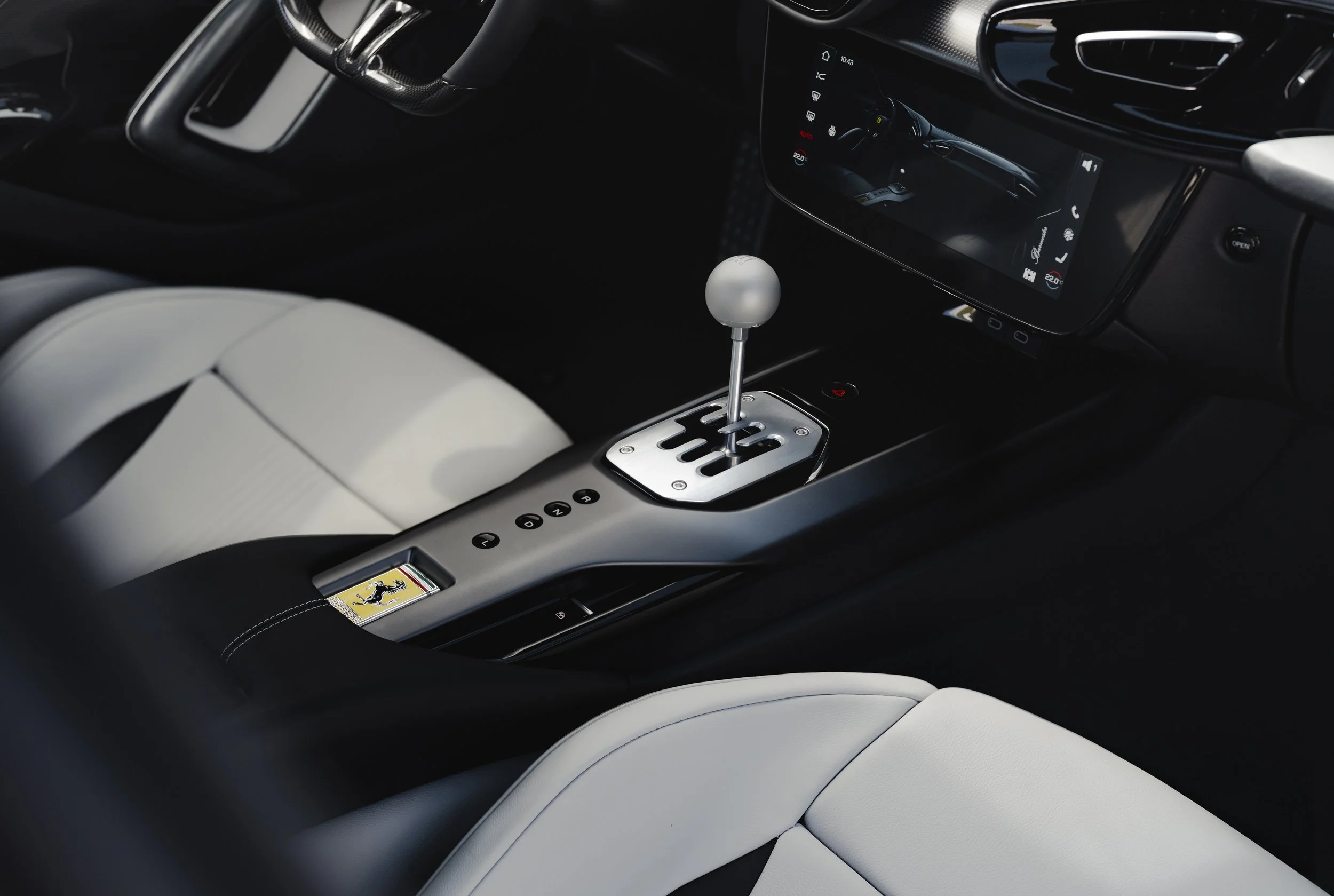
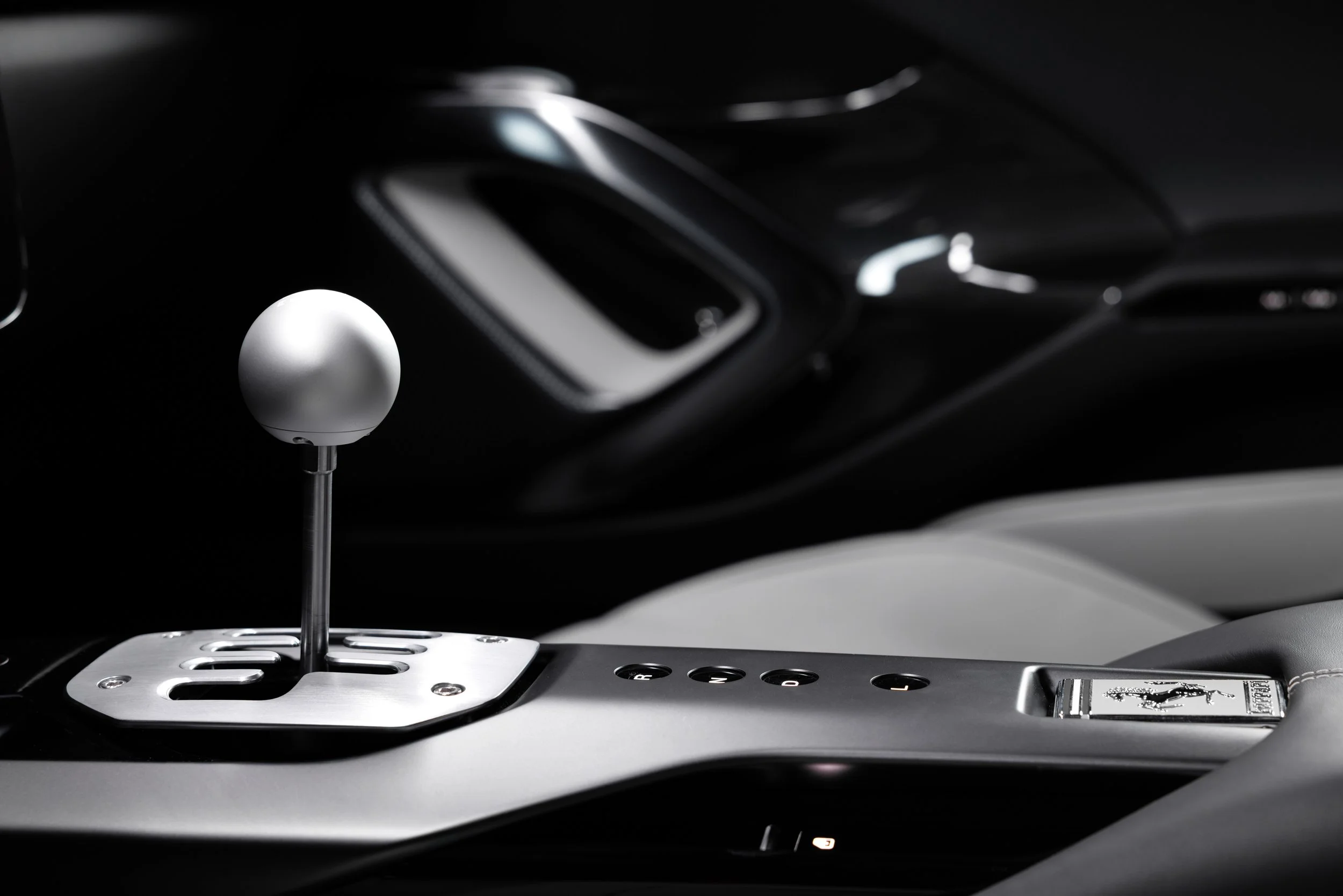
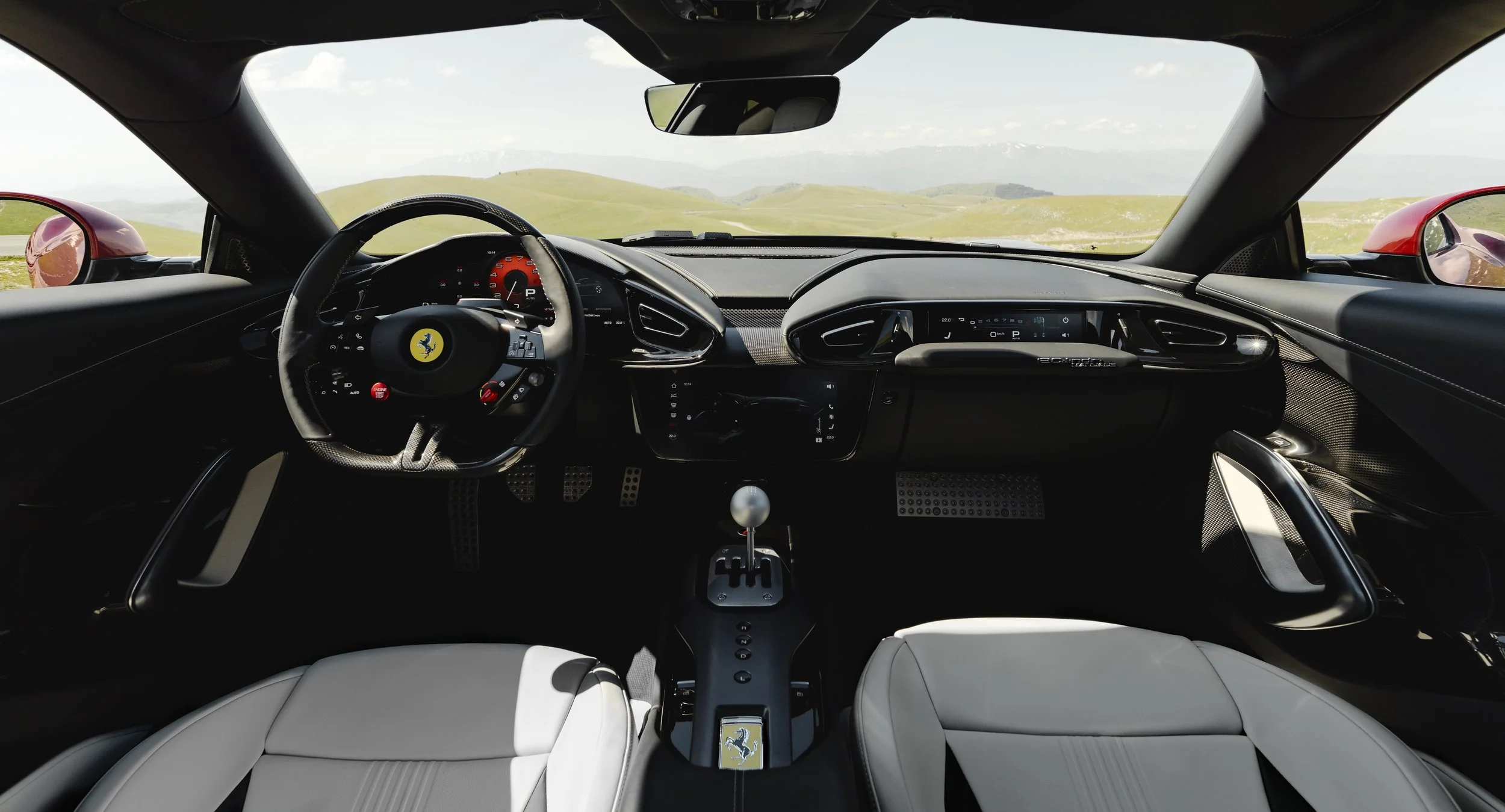
Inside the cabin, the centre tunnel console, gear lever, knob, gear shift gate, and pedals reinterpret the iconic elements of Ferrari's lever-operated manual-transmission cars for a modern audience. The gear shift gate echoes the classic six-speed pattern, with reverse positioned at the top left. In contrast, a round aluminium gear knob features a backlit screen print showing the six gears and the current driving mode, automatic or manual. Ferrari redesigned the centre tunnel console to improve ergonomics during both manual and automatic driving, and positioned the pedal assembly in a triangular layout between the steering wheel and seat for a driver-focused feel. The reinterpreted gear shift gate retains its iconic status while harmoniously integrating into the car's design language, and a steel plate features an anodised aluminium sculpture shaped like a tuning fork that houses the control panel and key.
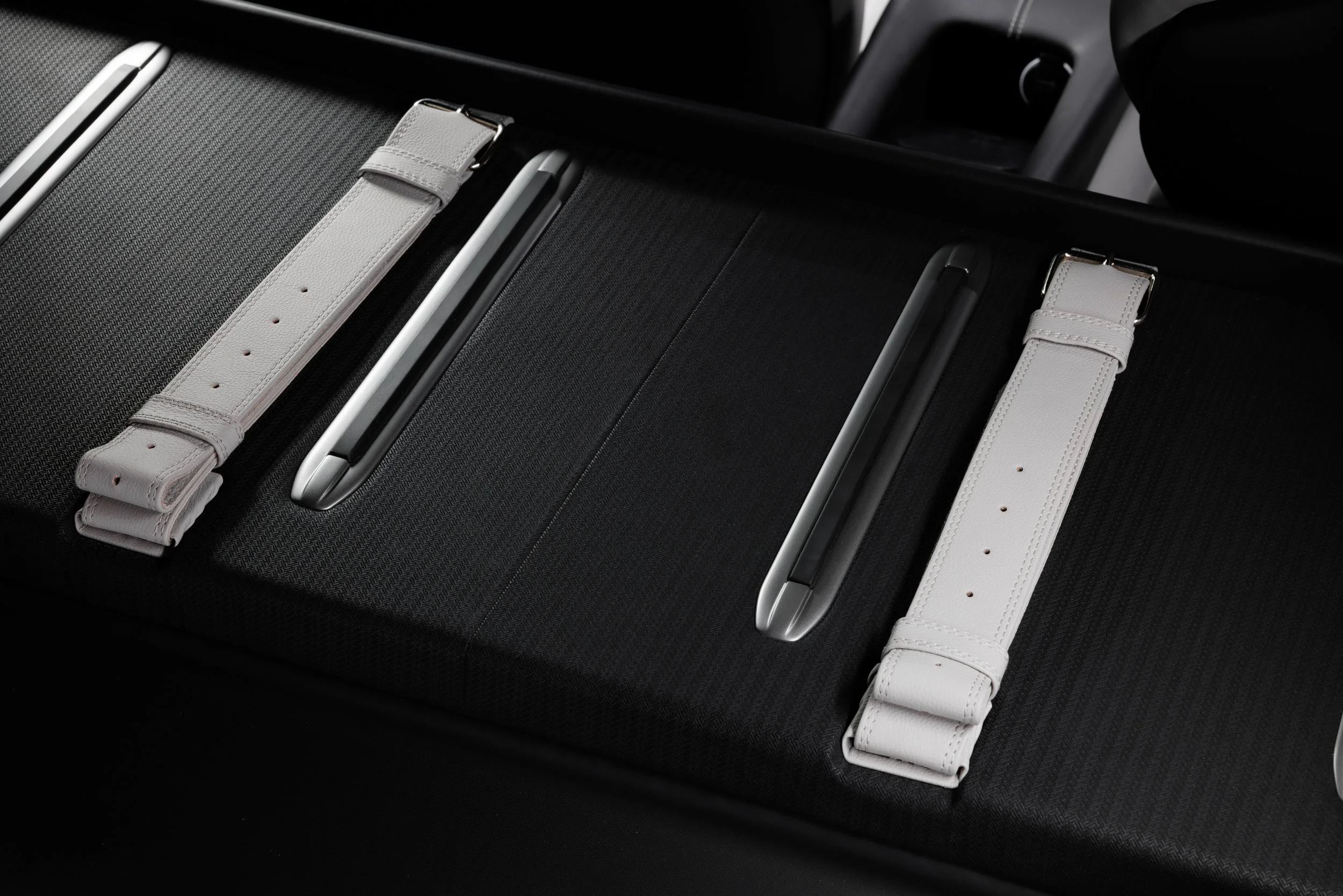
Ferrari's designers crafted every component, including the leather-upholstered console, to harmonise with the 12Cilindri's contemporary aesthetic, adding a refined touch that quietly celebrates the gear shift gate's return to its original function.
Ferrari will build just 1,499 units of the 12Cilindri Manuale, a number that recalls the displacement of the first Ferrari twelve-cylinder engine from 1947 and now forms part of the model's identity. The car targets Ferraristi loyal to front-engined V12 two-seater berlinettas who want a more physical driving experience.
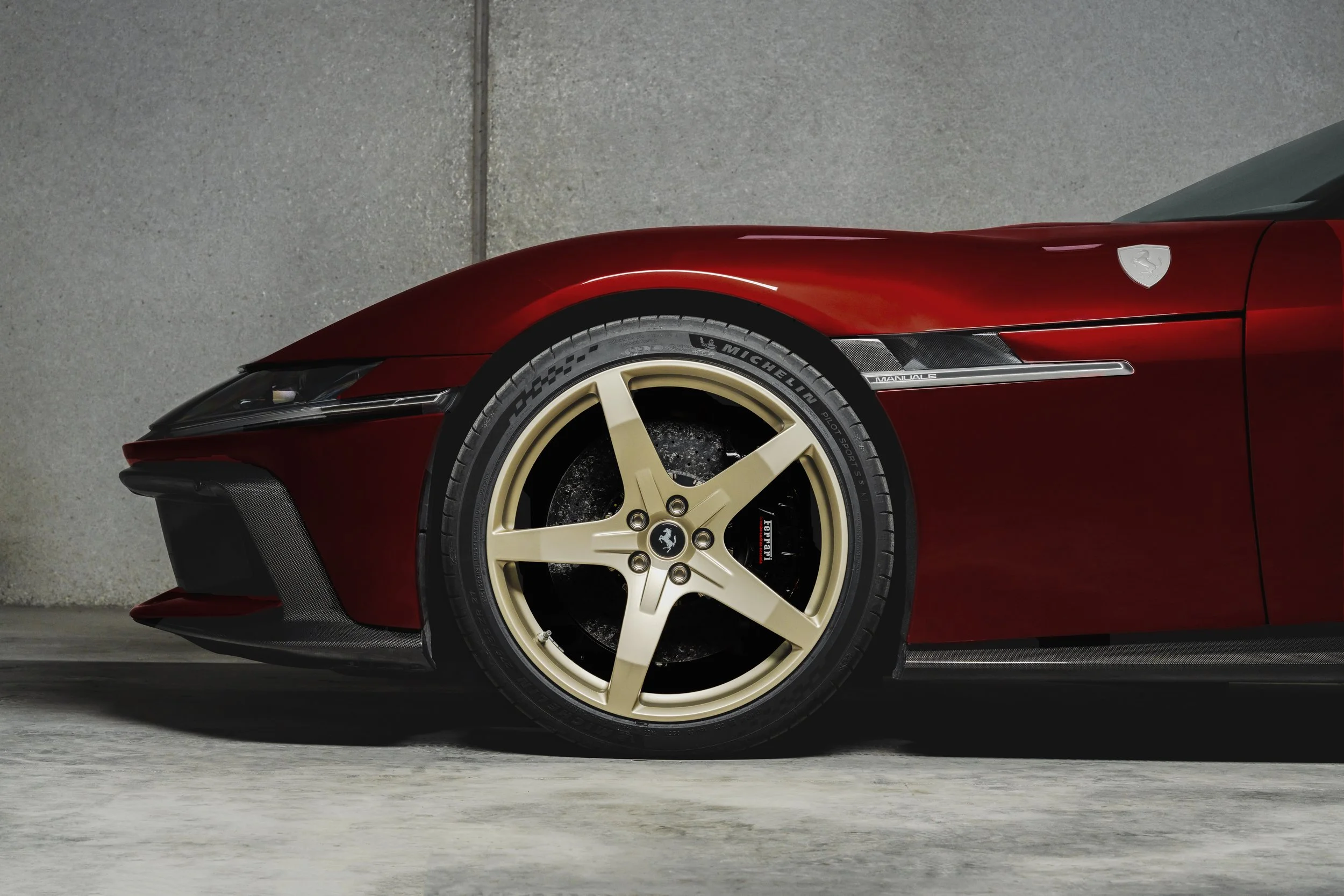
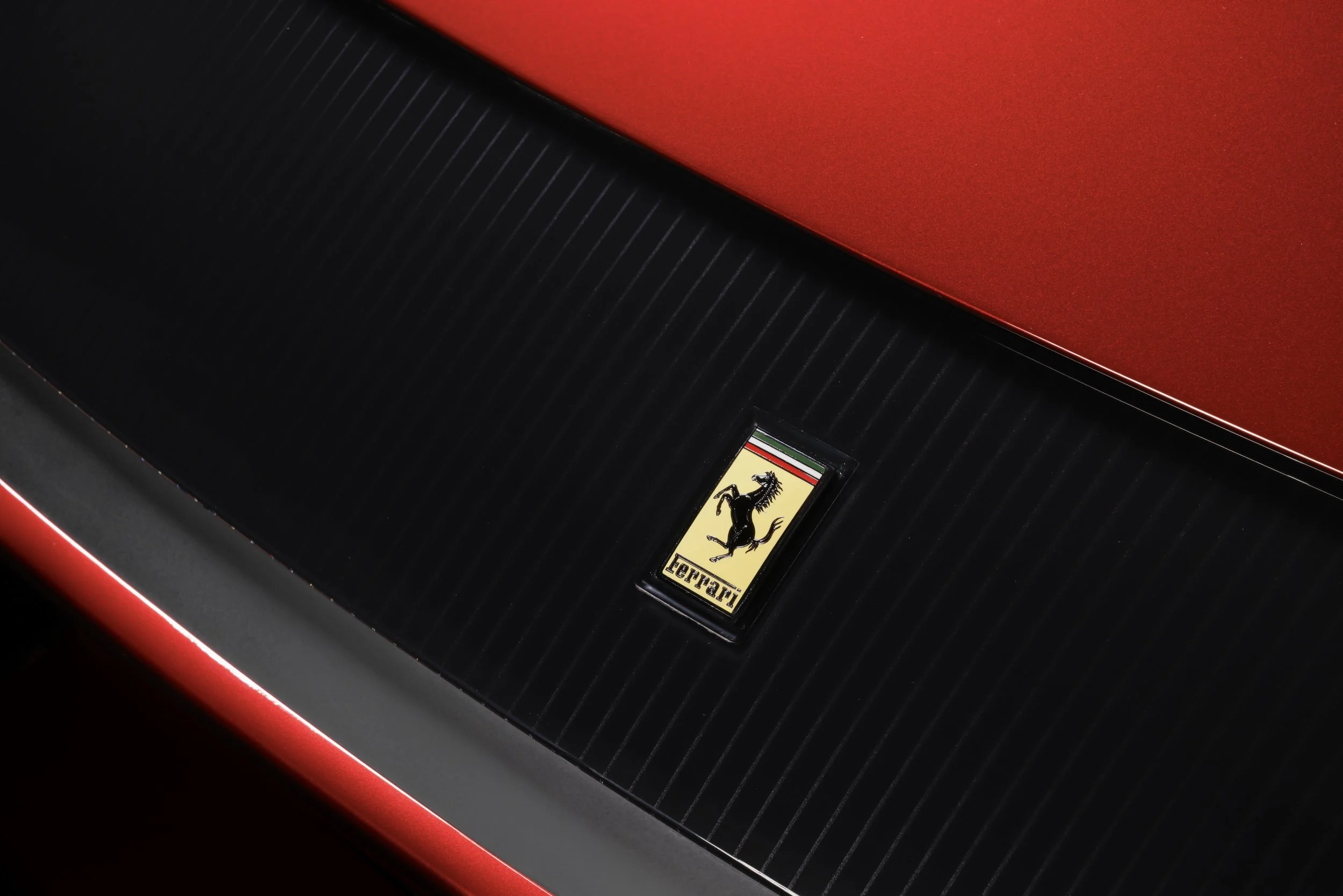
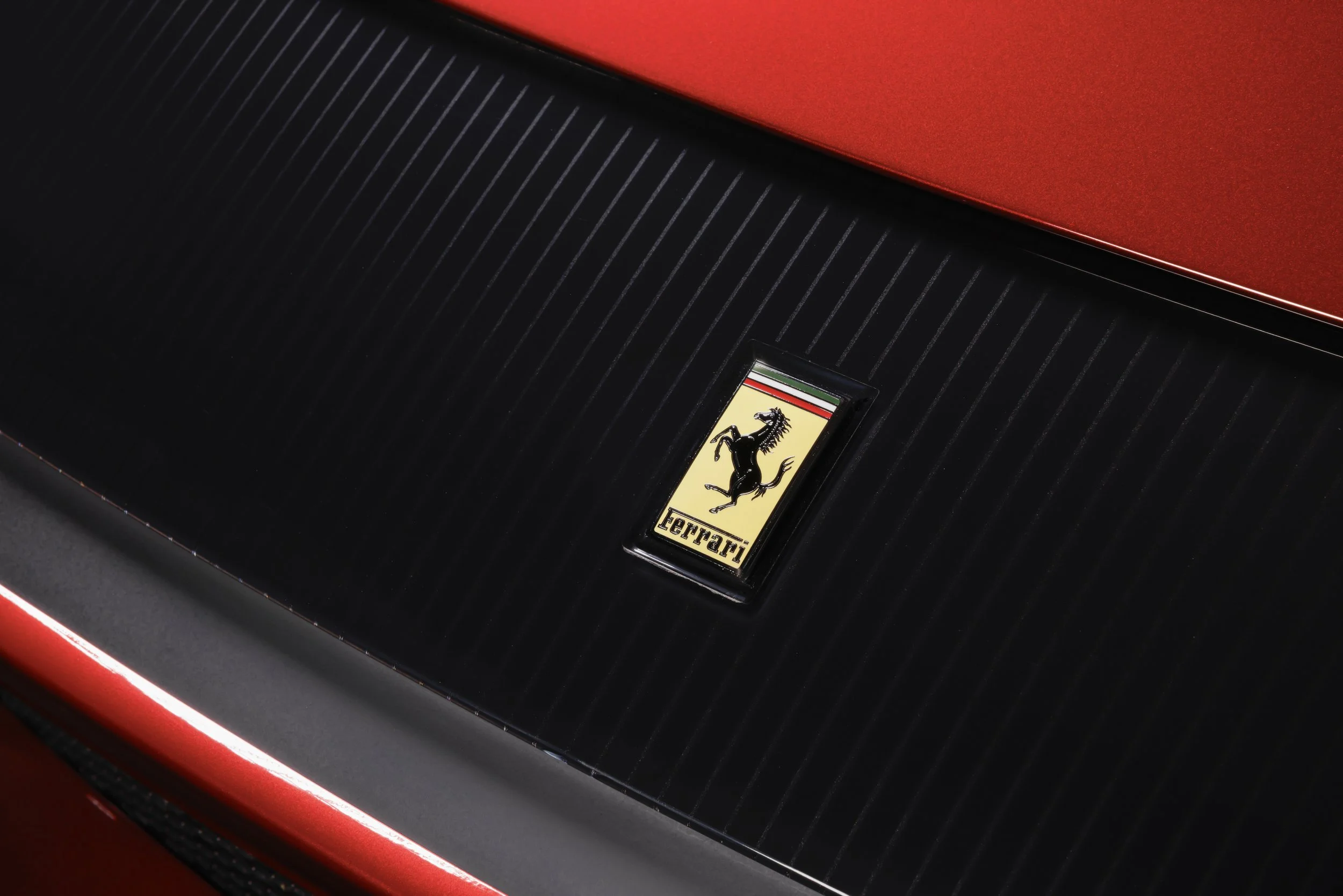
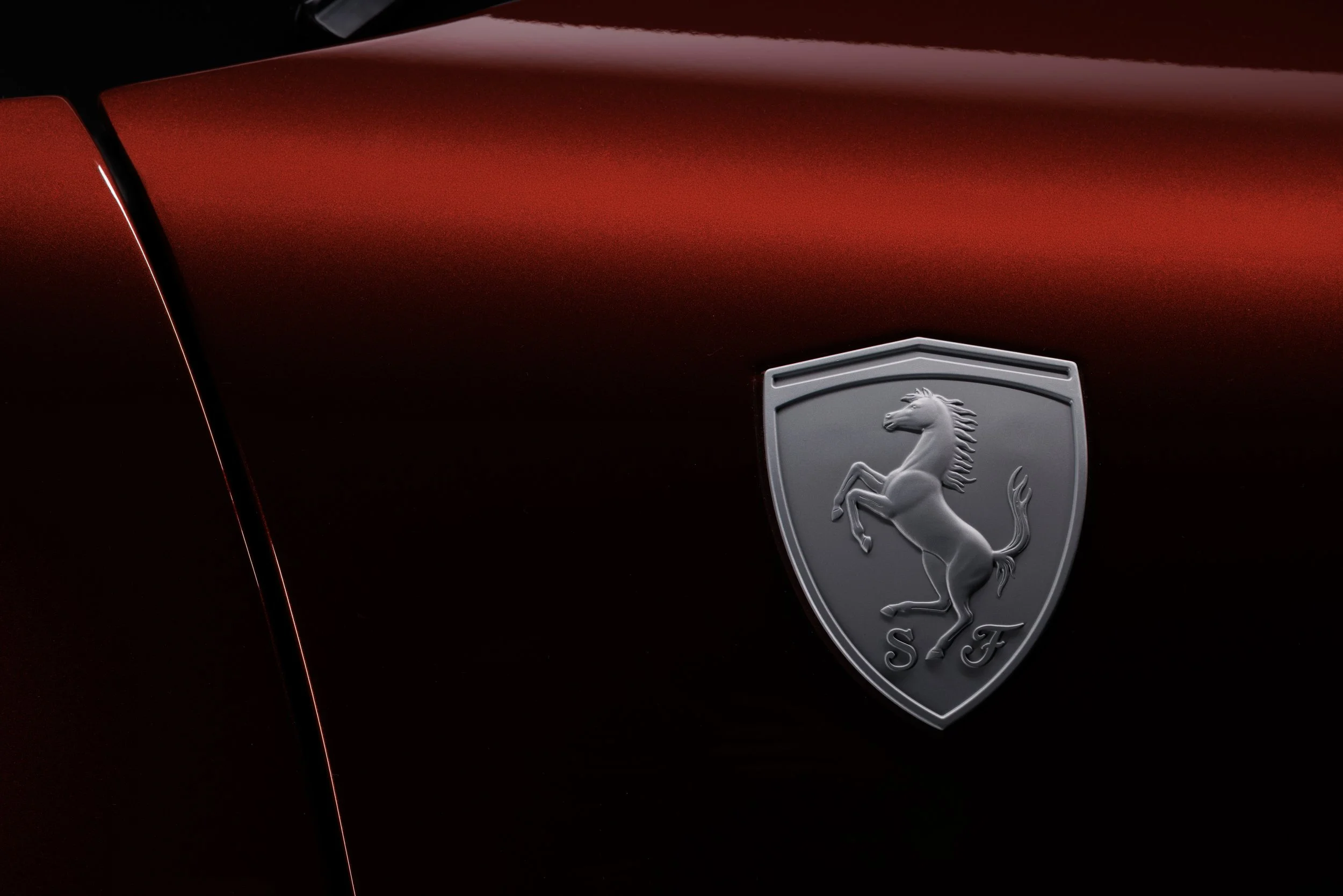
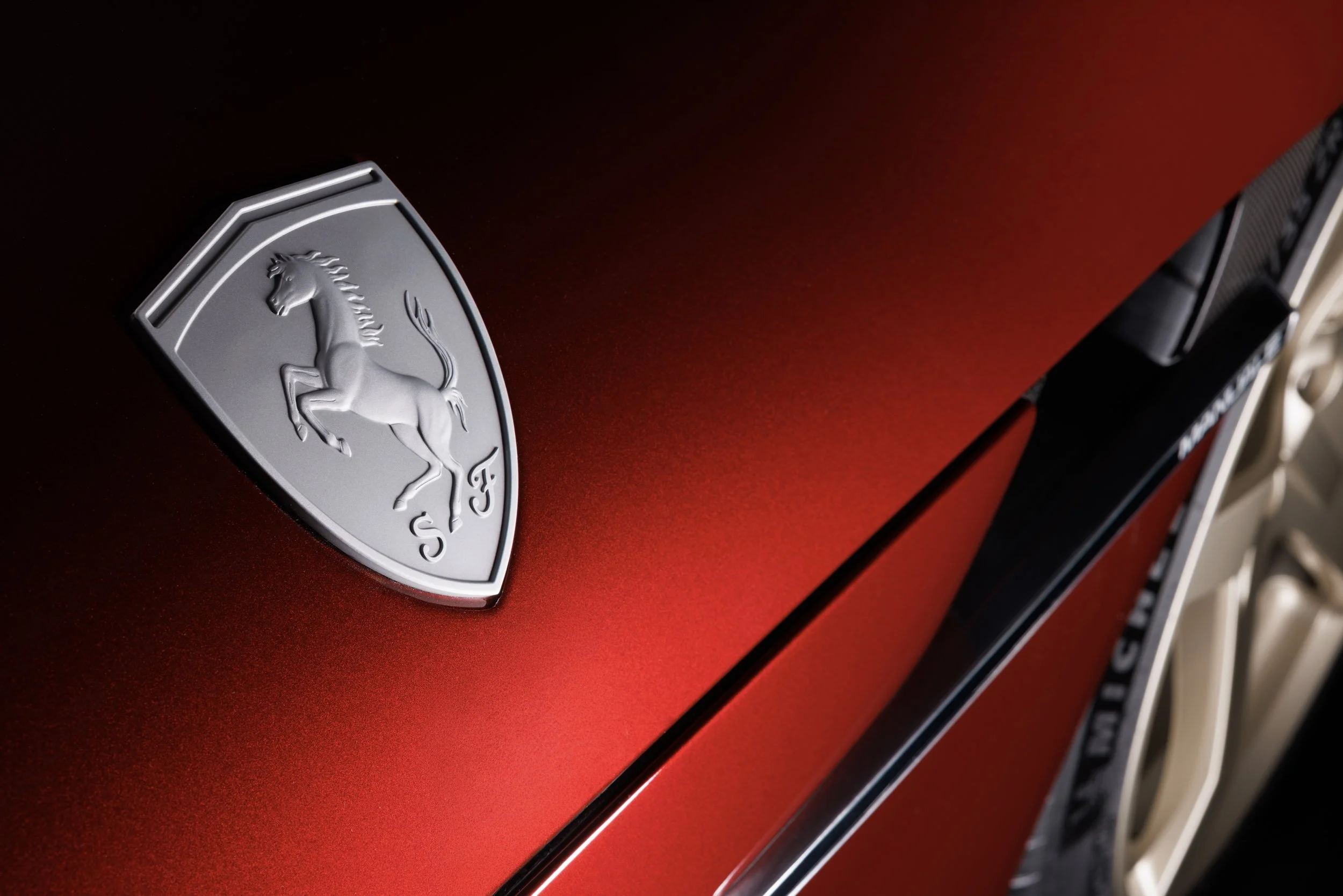
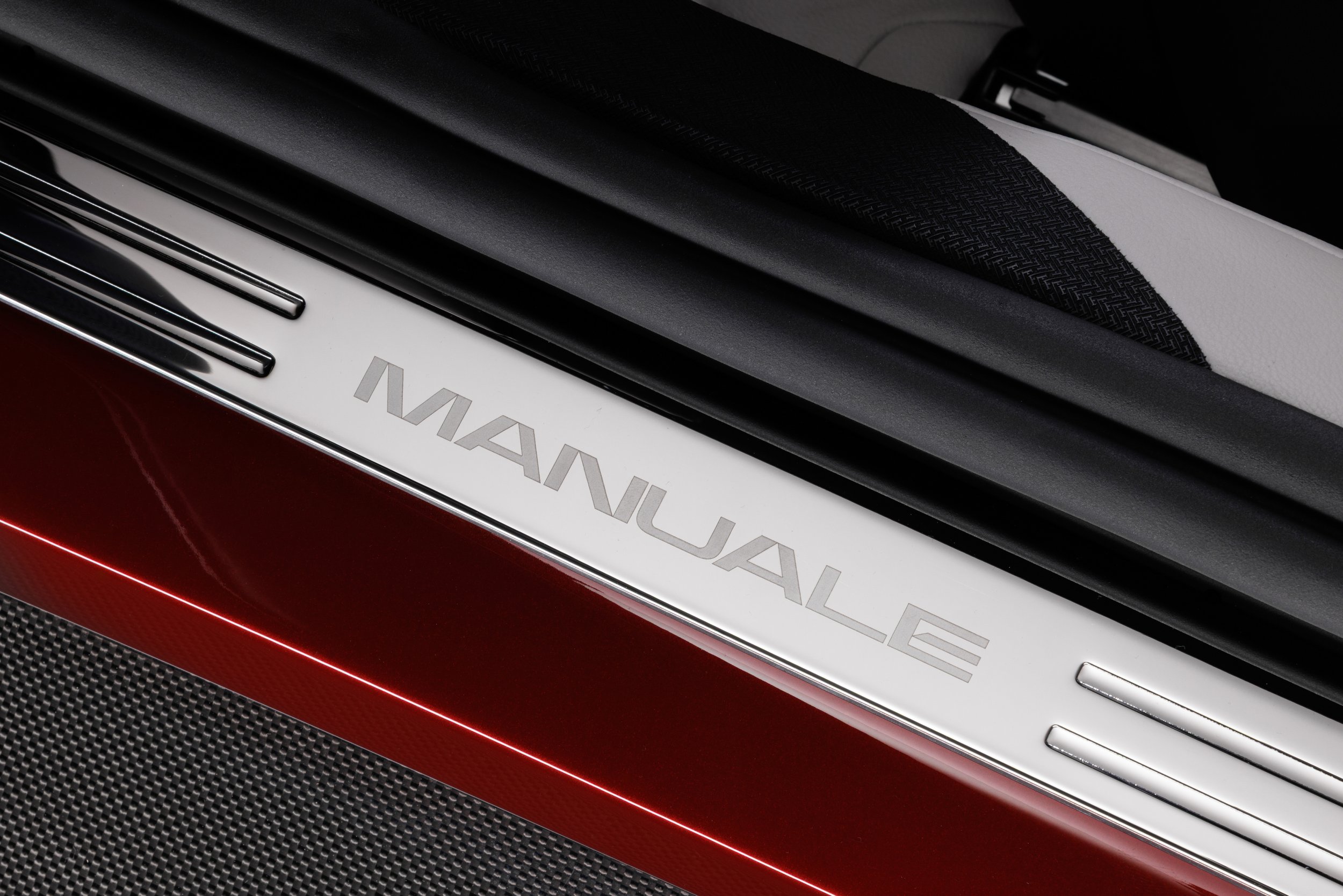
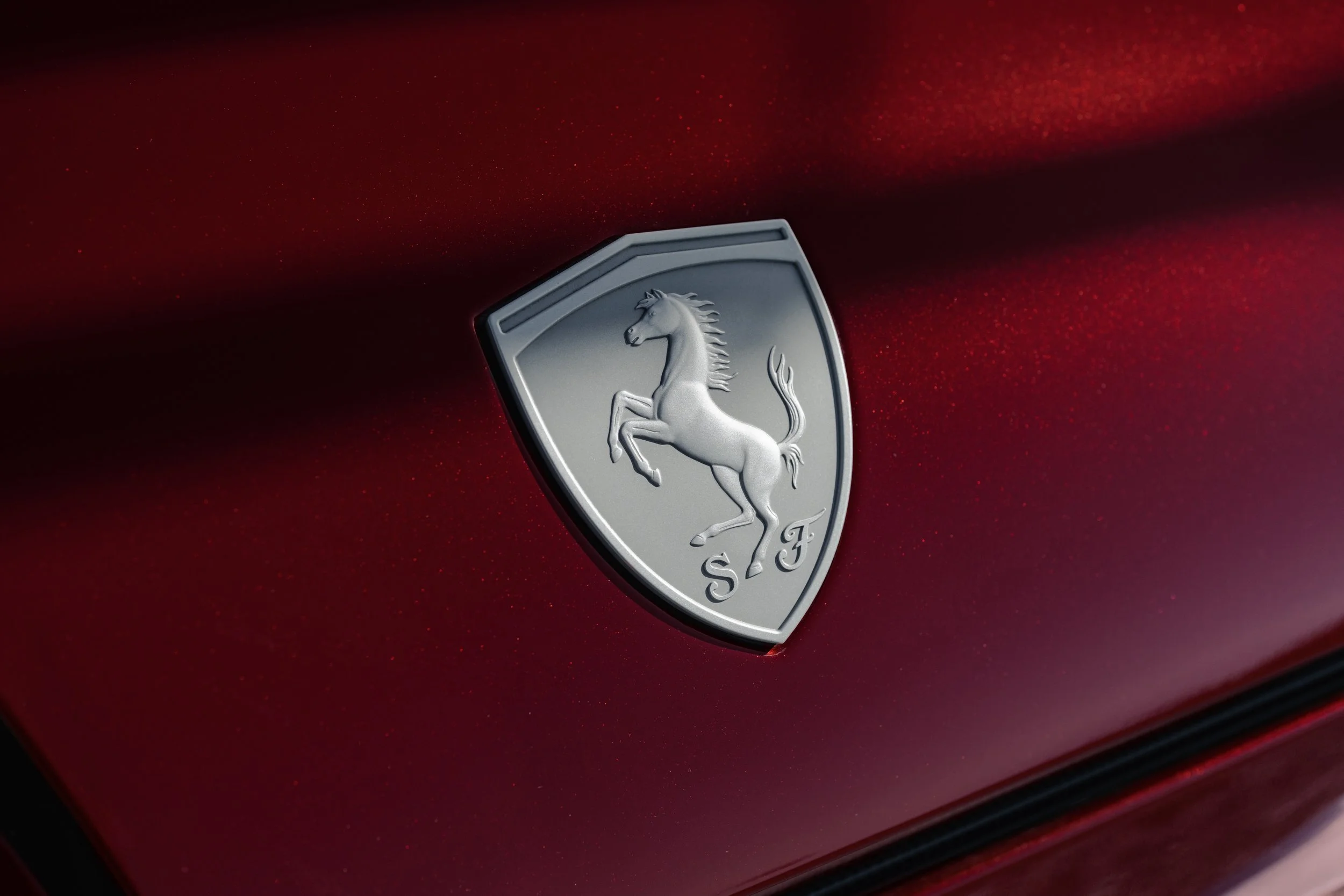
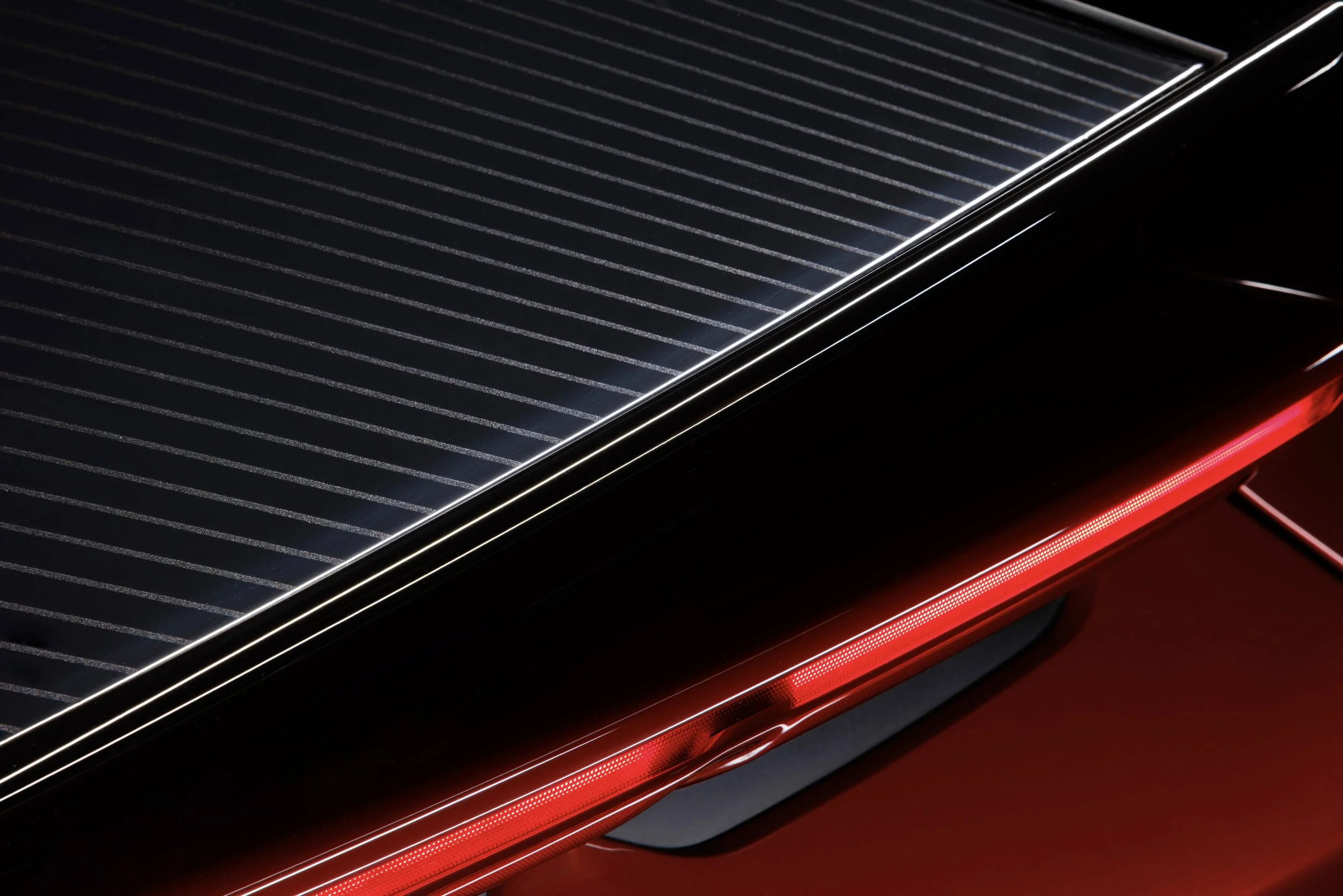
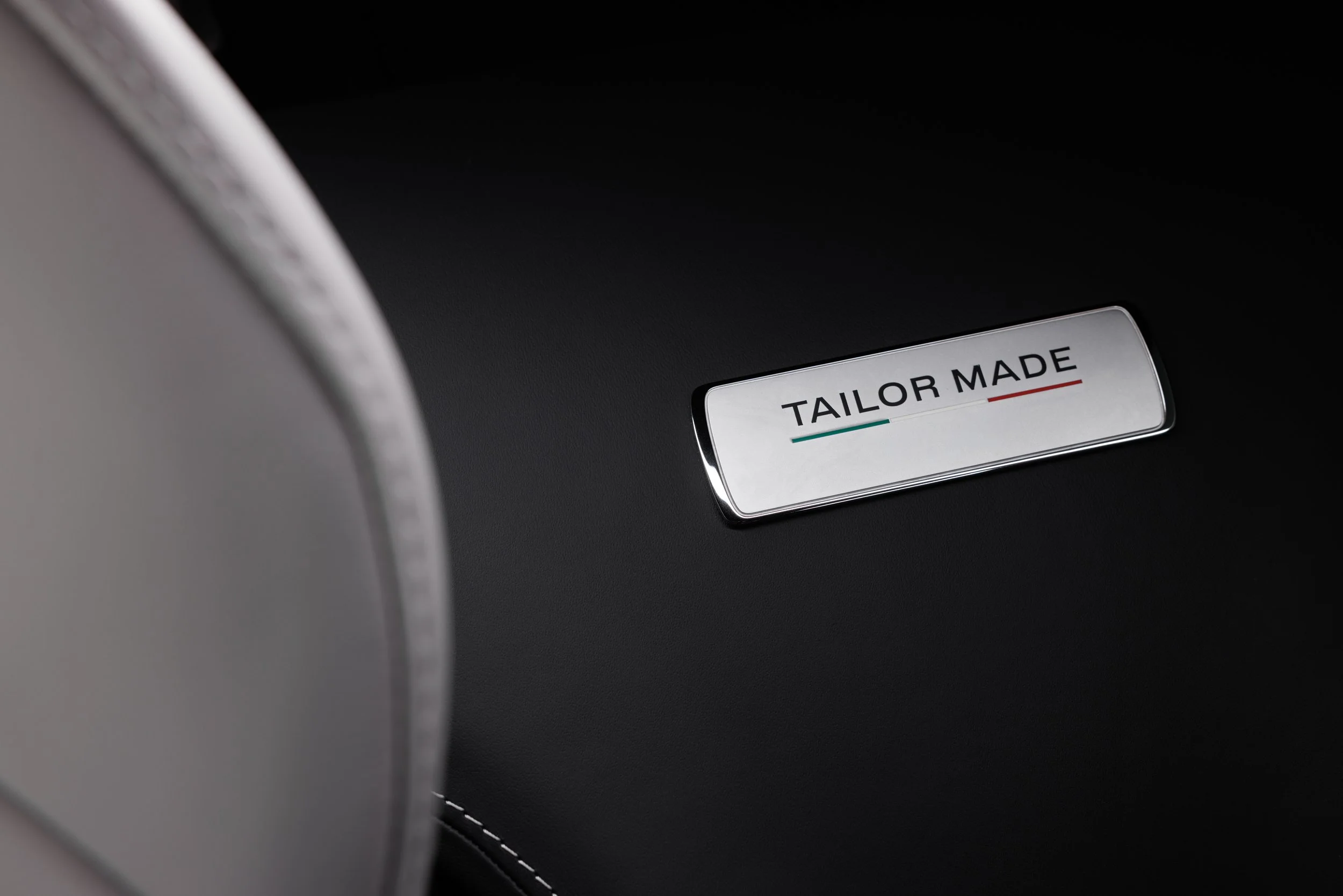
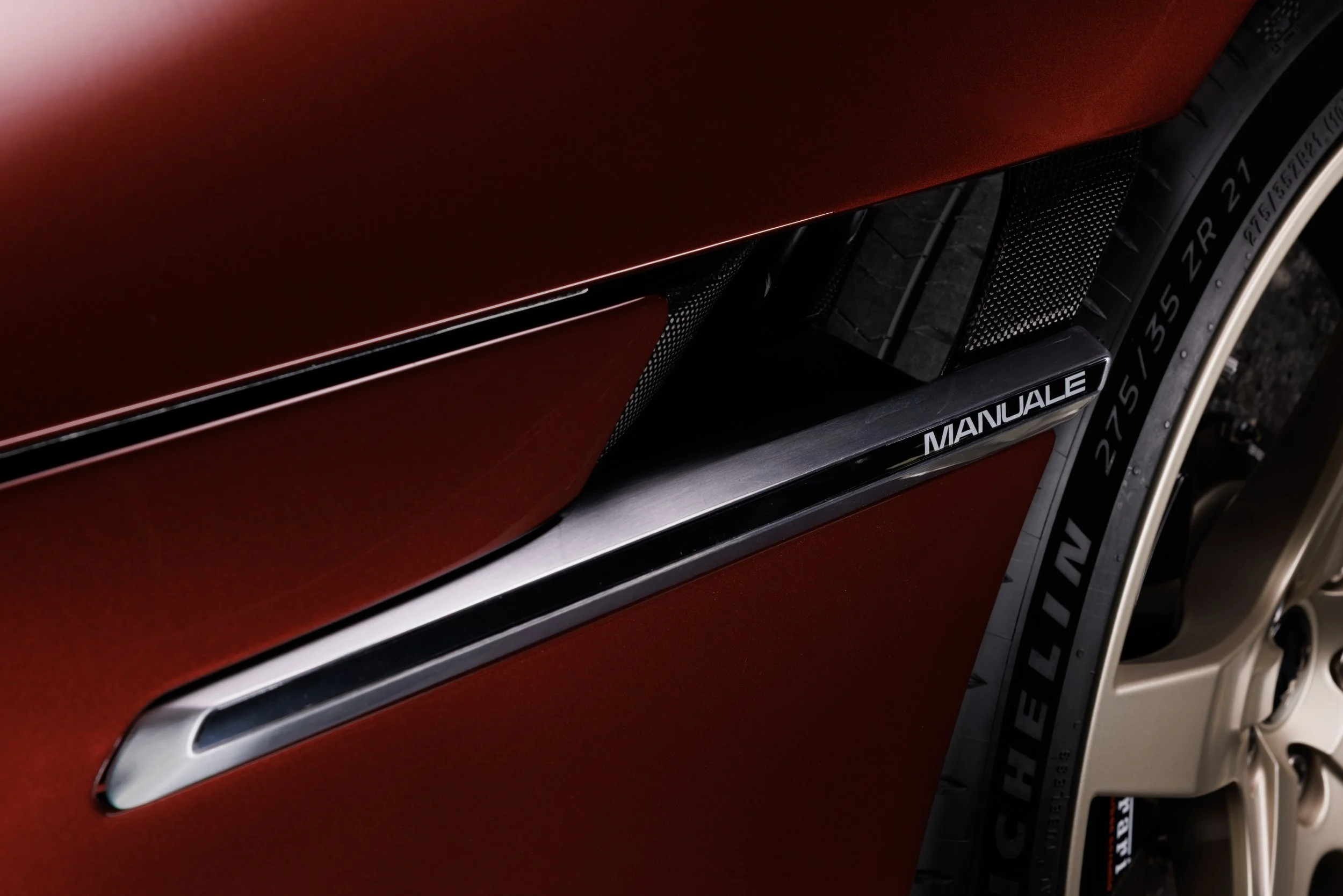
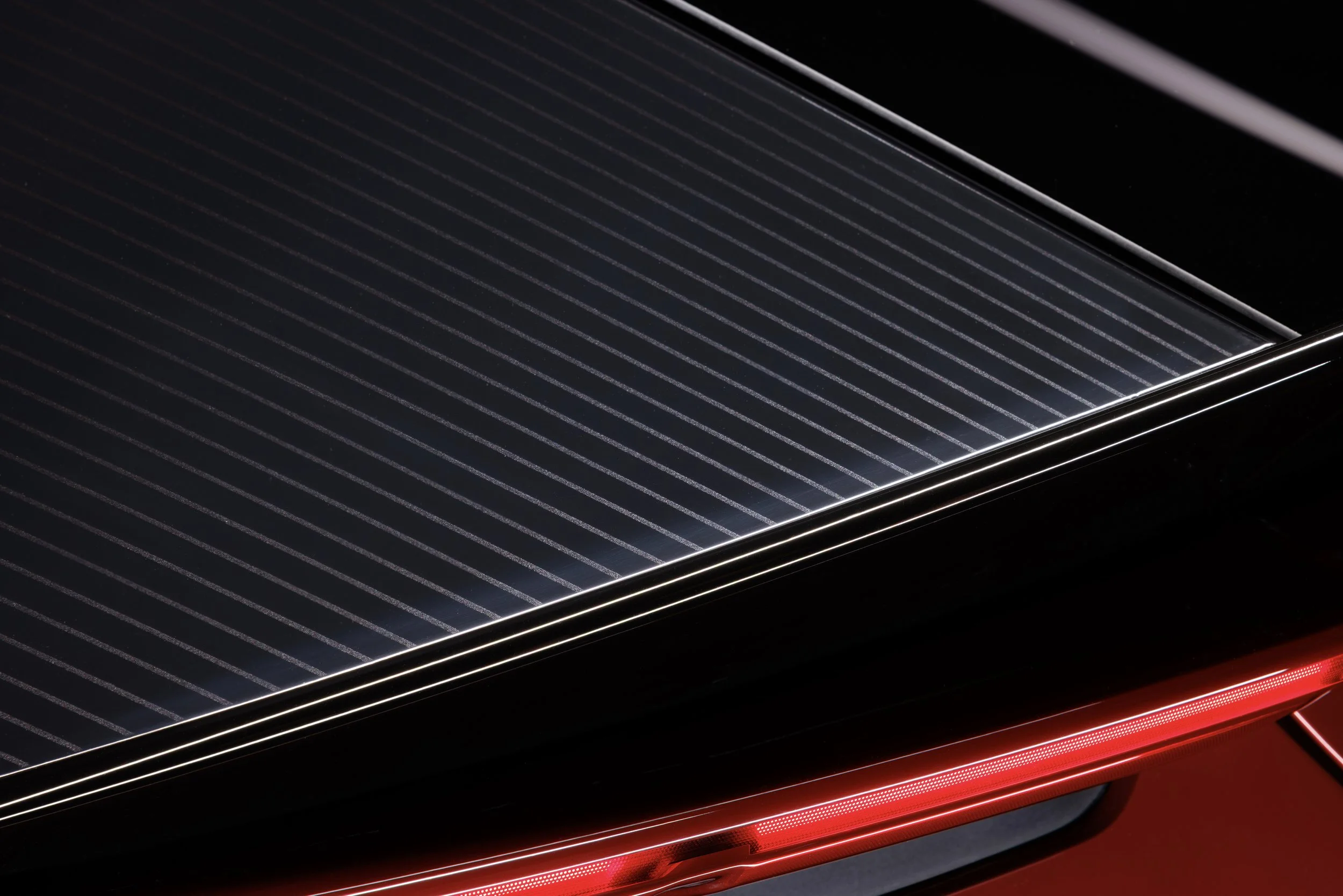
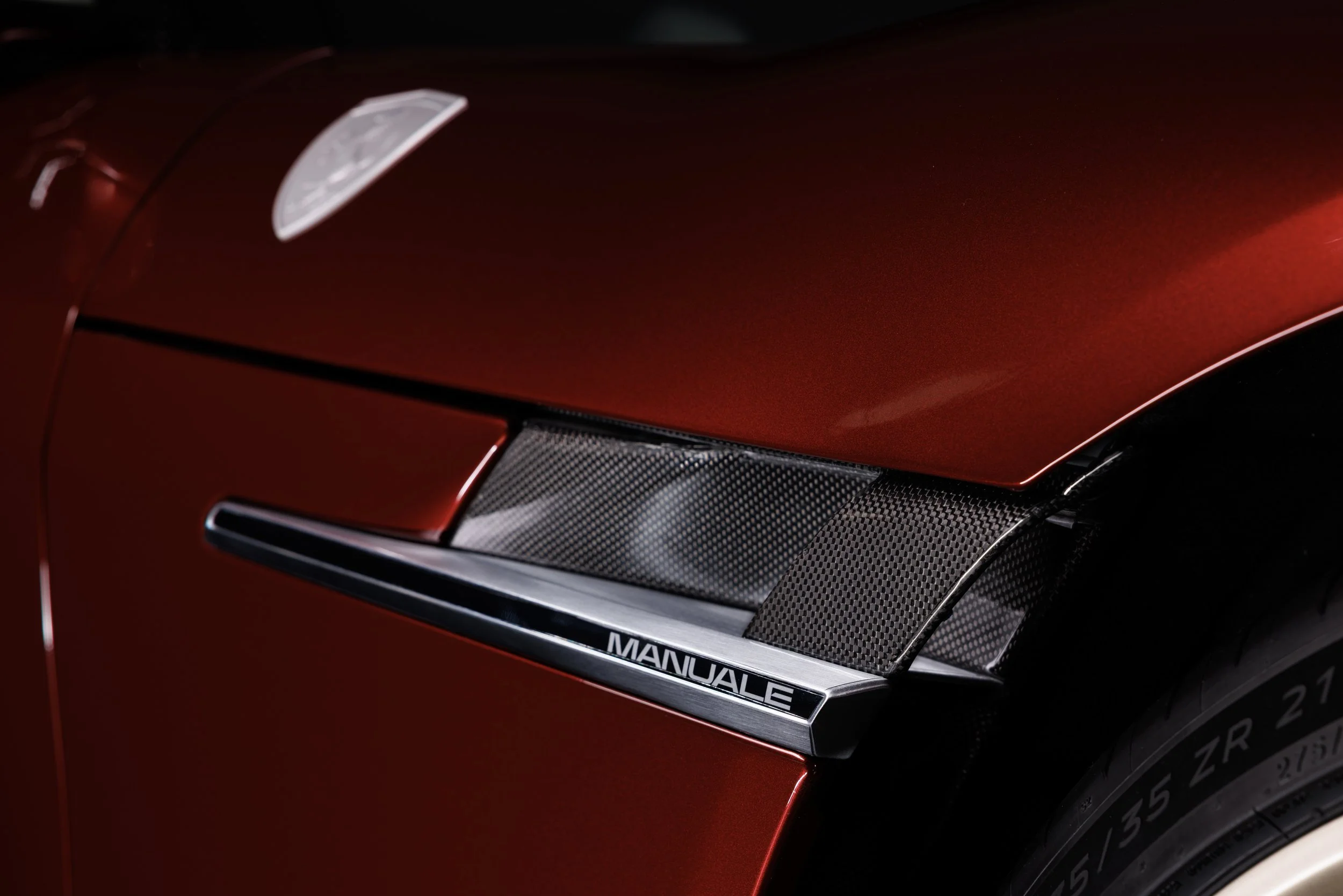
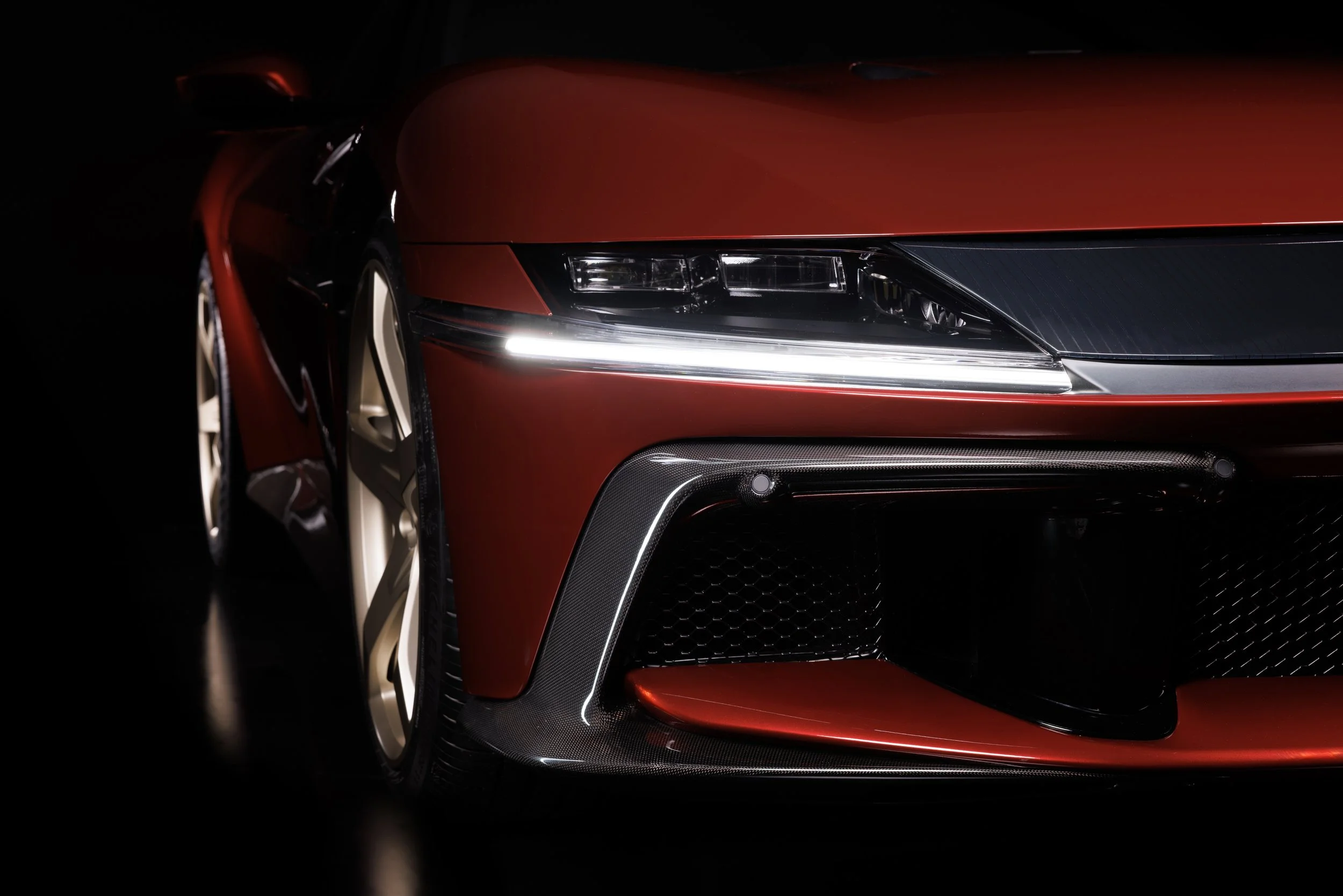
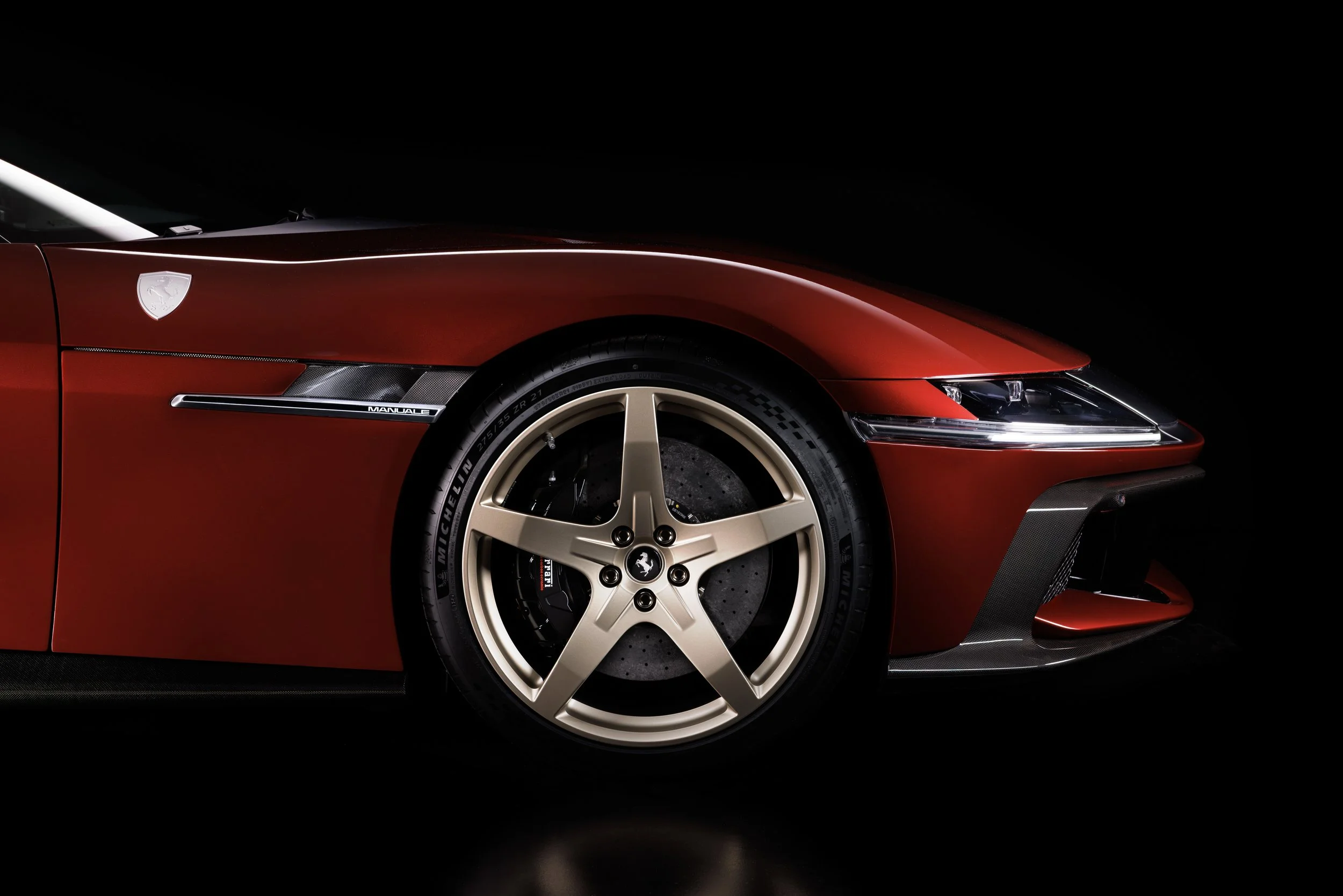
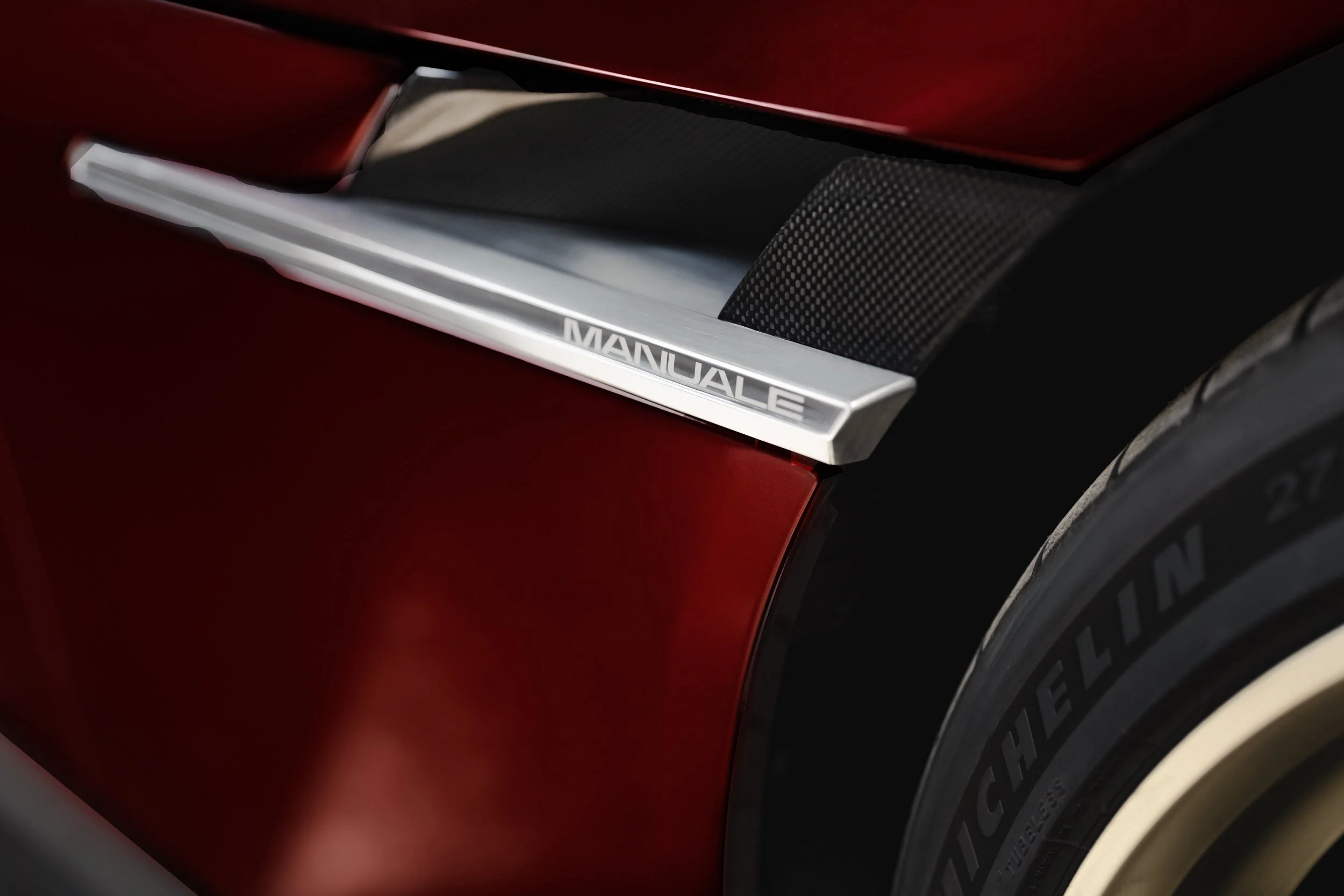
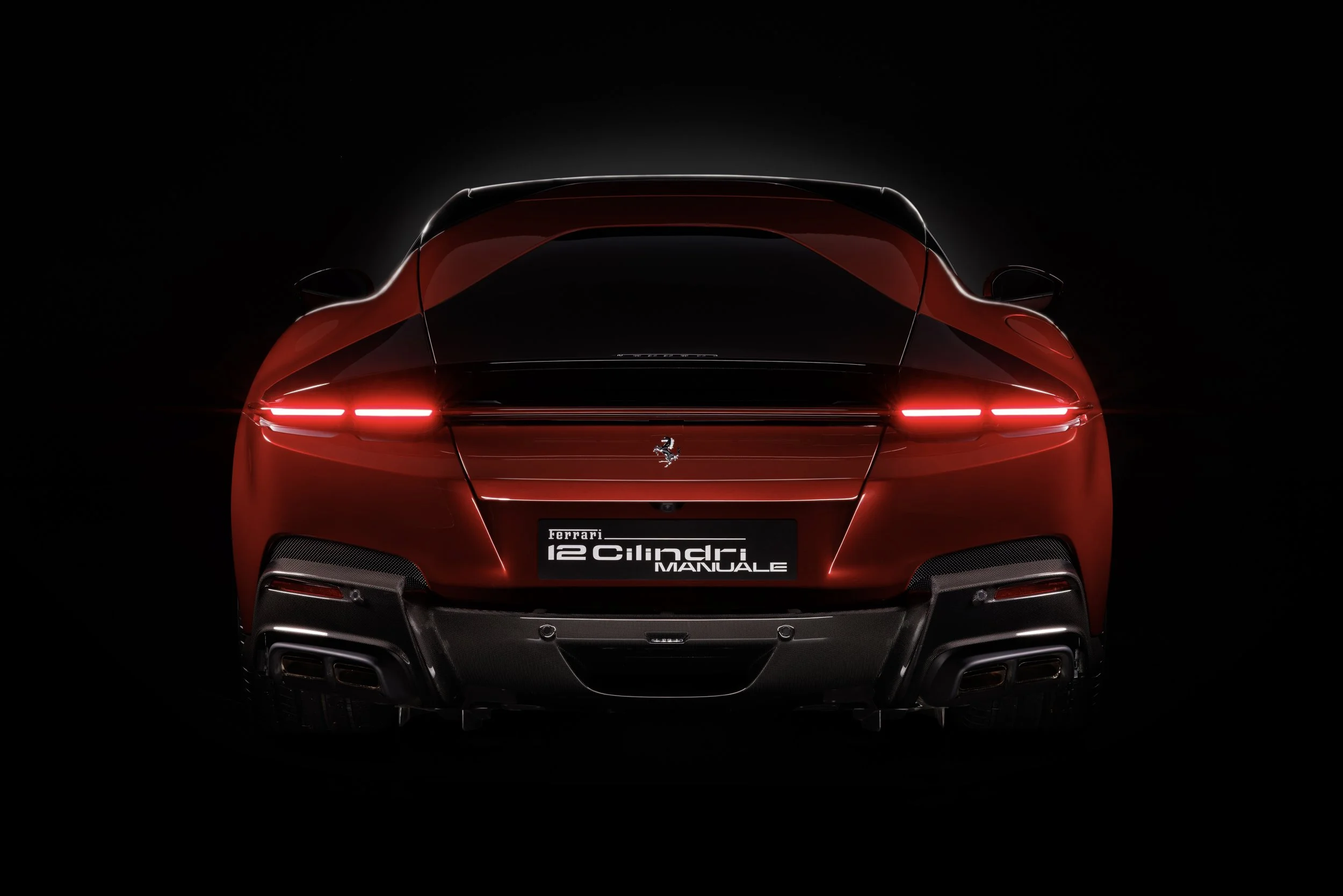
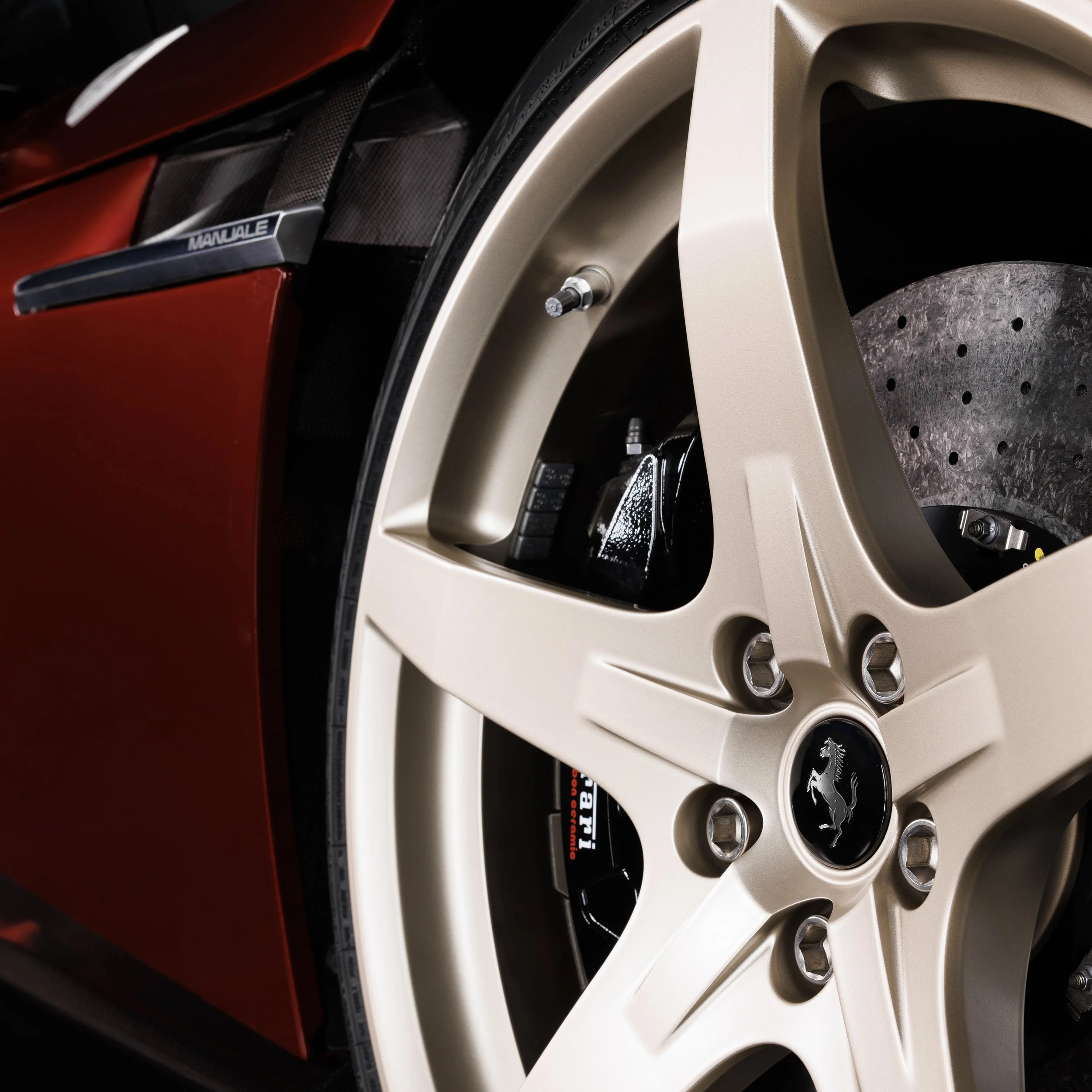
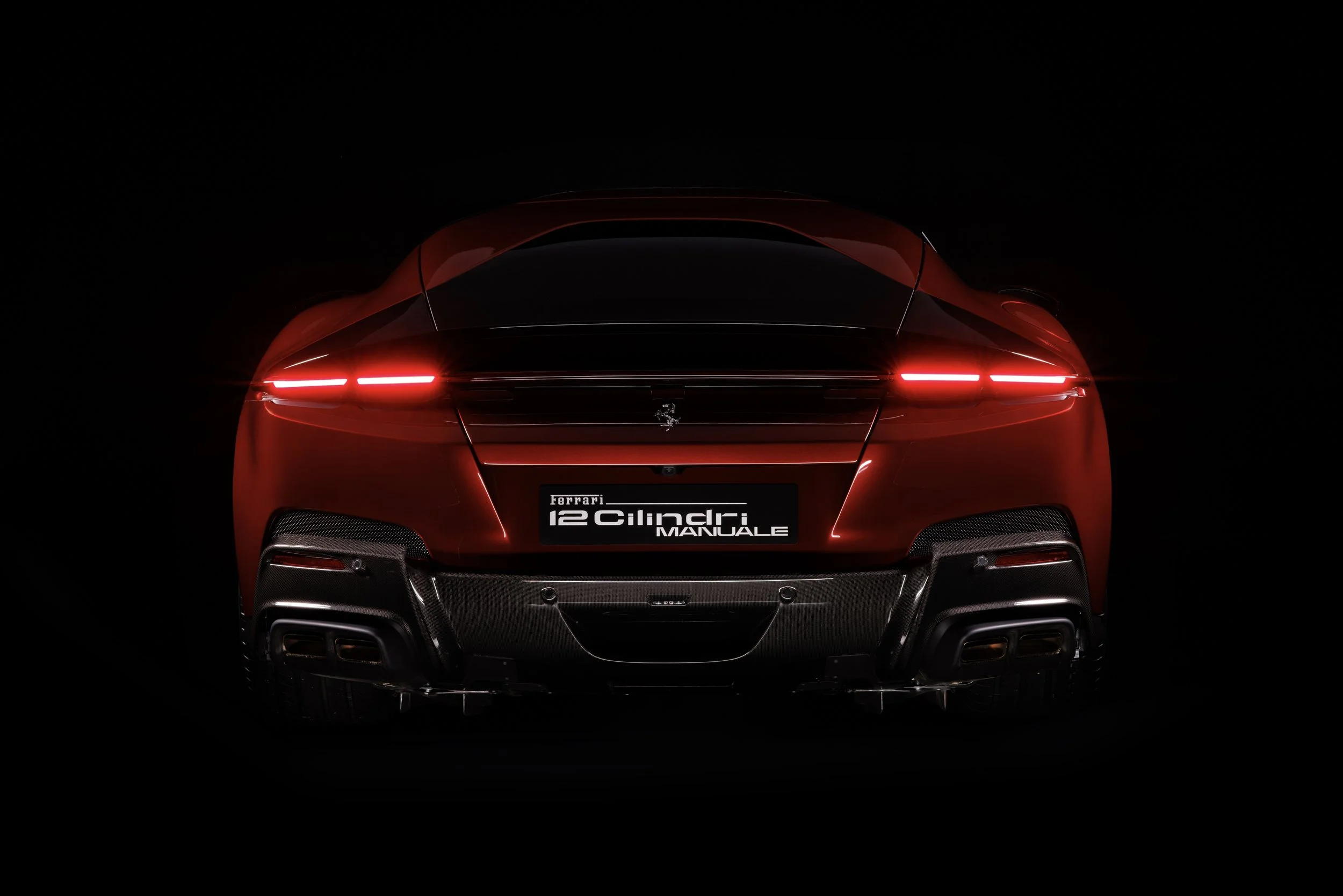
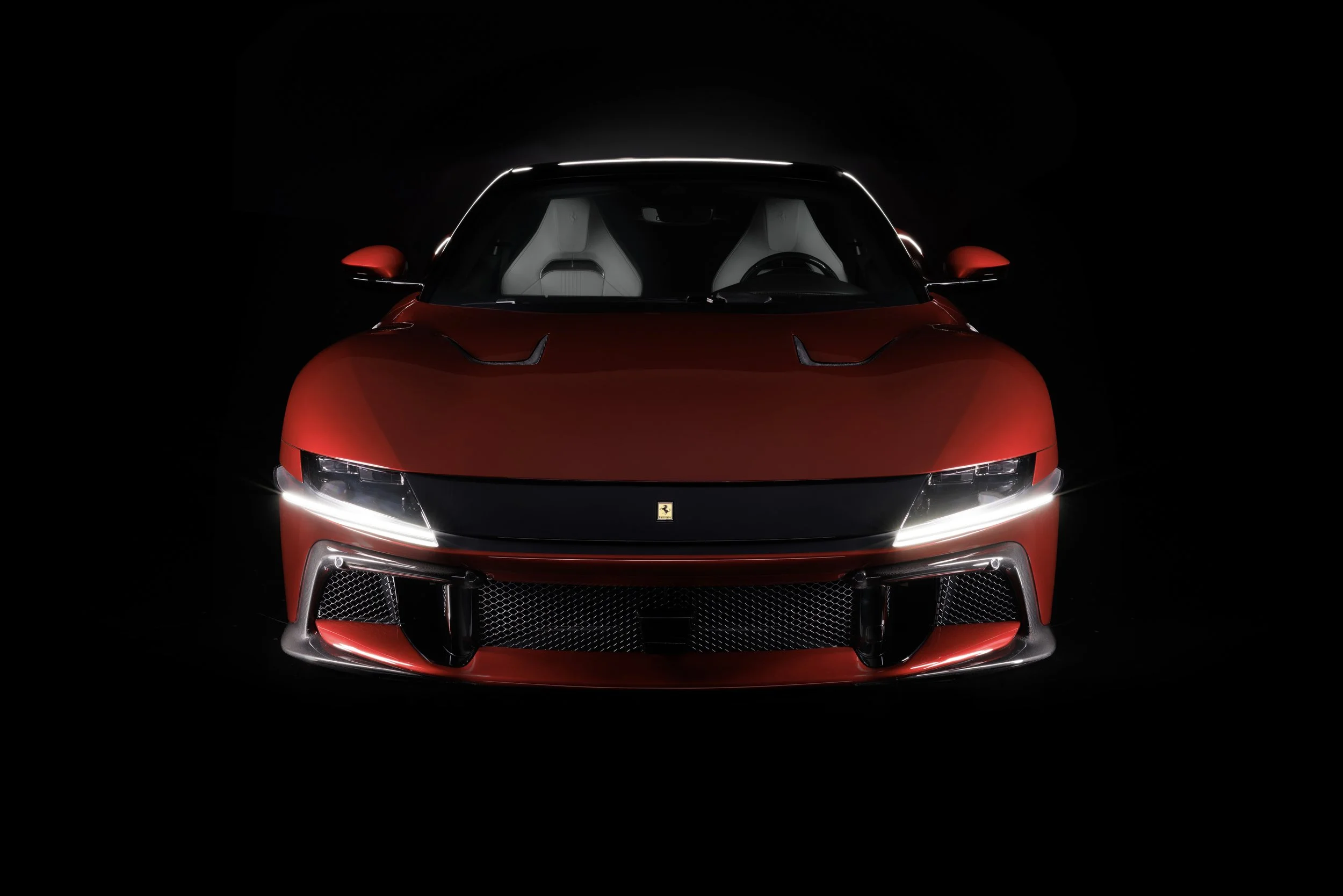
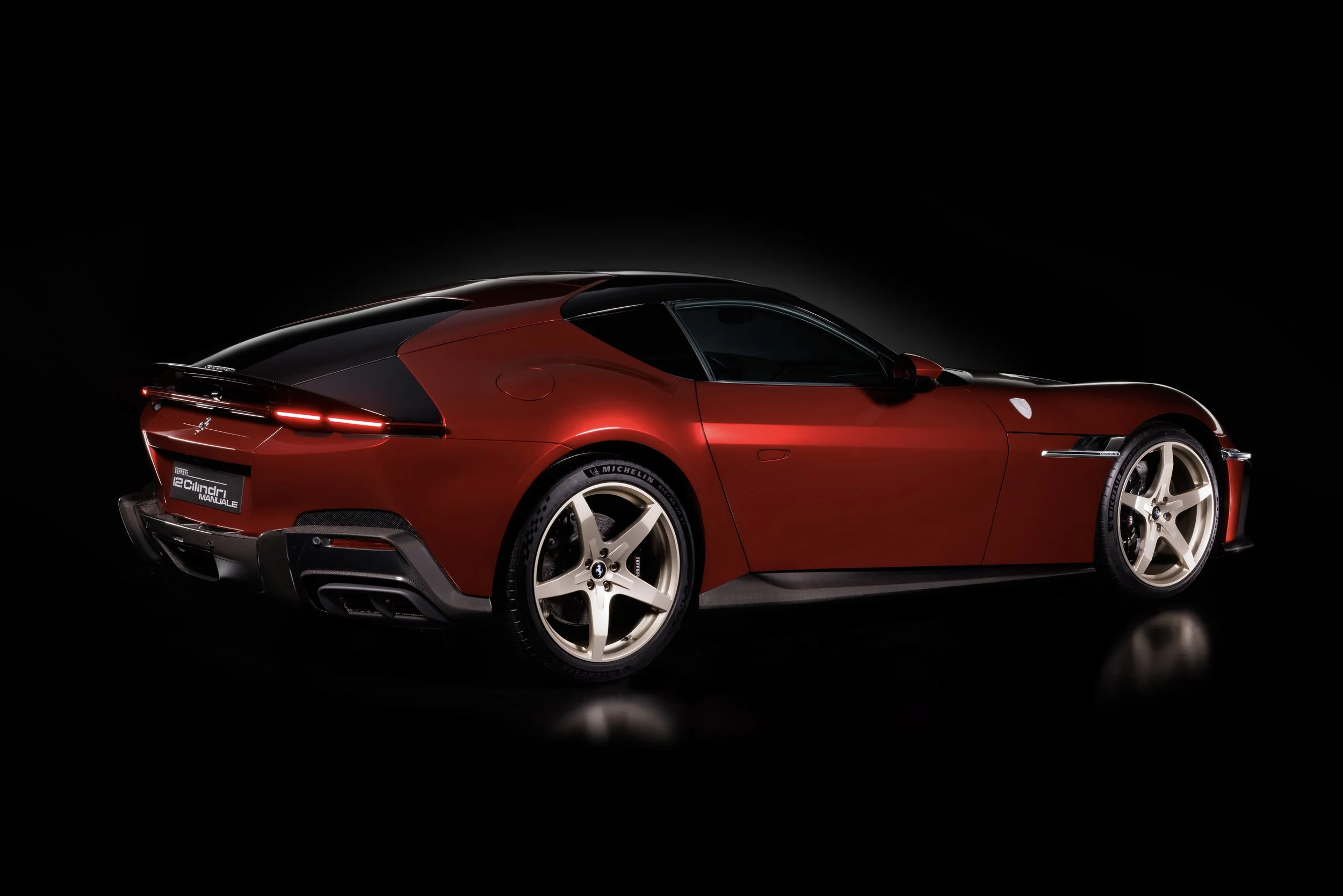
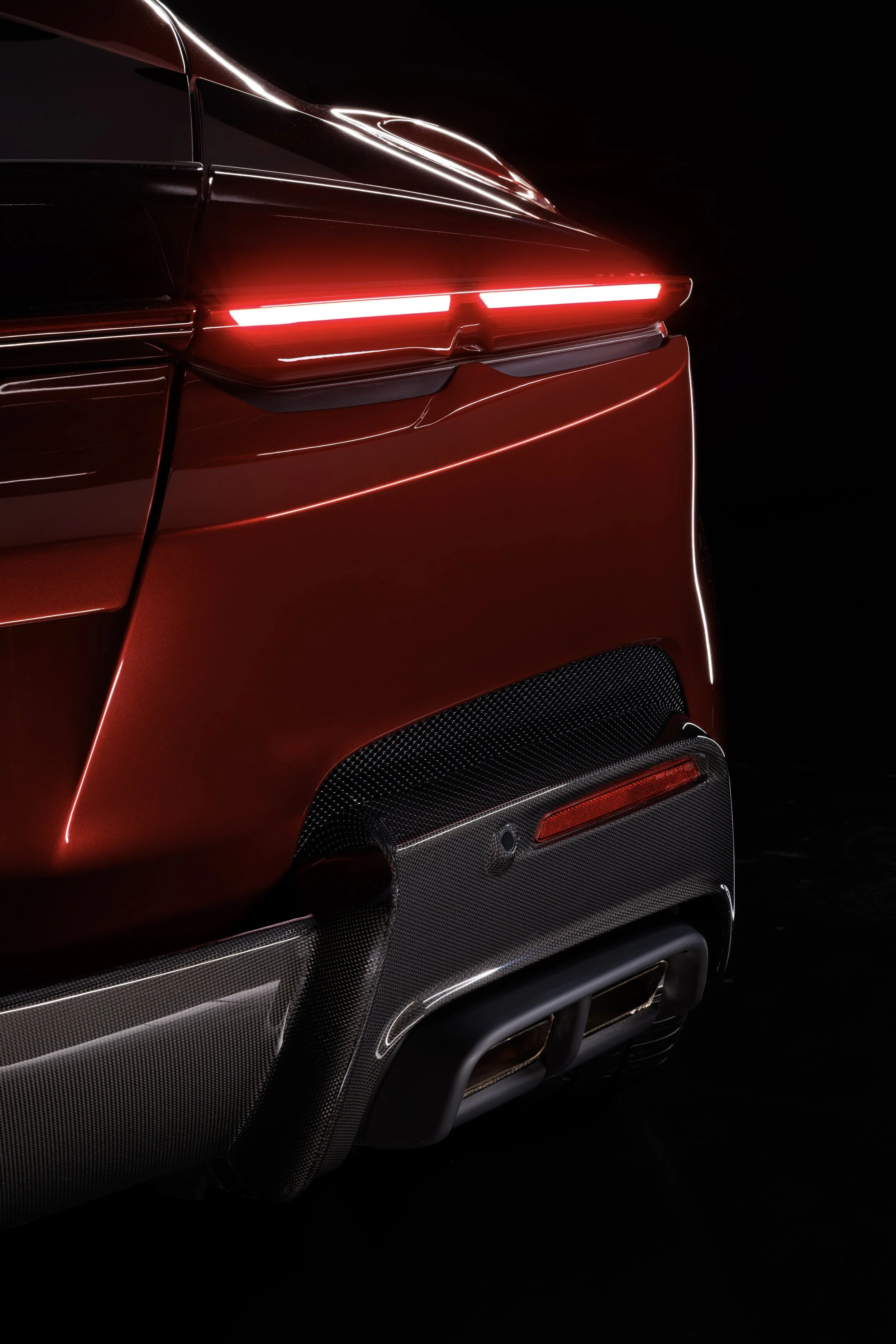
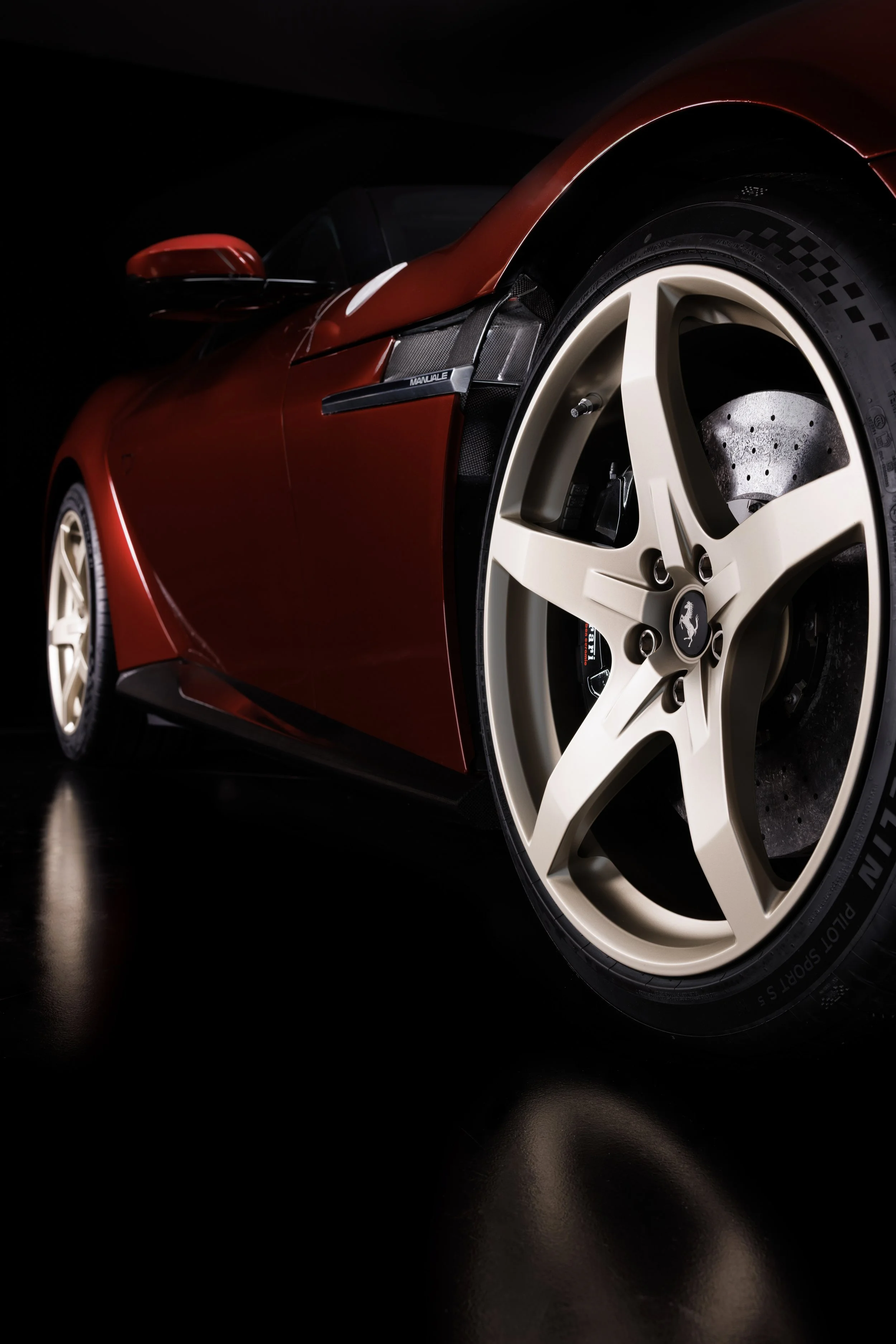
A dedicated Tailor-Made specification and a set of distinctive details reinforce the car's exclusivity, making it instantly recognisable not simply as an extension of the range but as the very language from which its design emerged. A laser-etched logo marks the side badge, while a pinstripe finish on the front splitter and rear wings pays tribute to the Ferrari 365 GTB/4. A special Scudetto finish, purpose-built five-spoke forged wheels and aluminium door sills engraved with the car's logo complete the package.
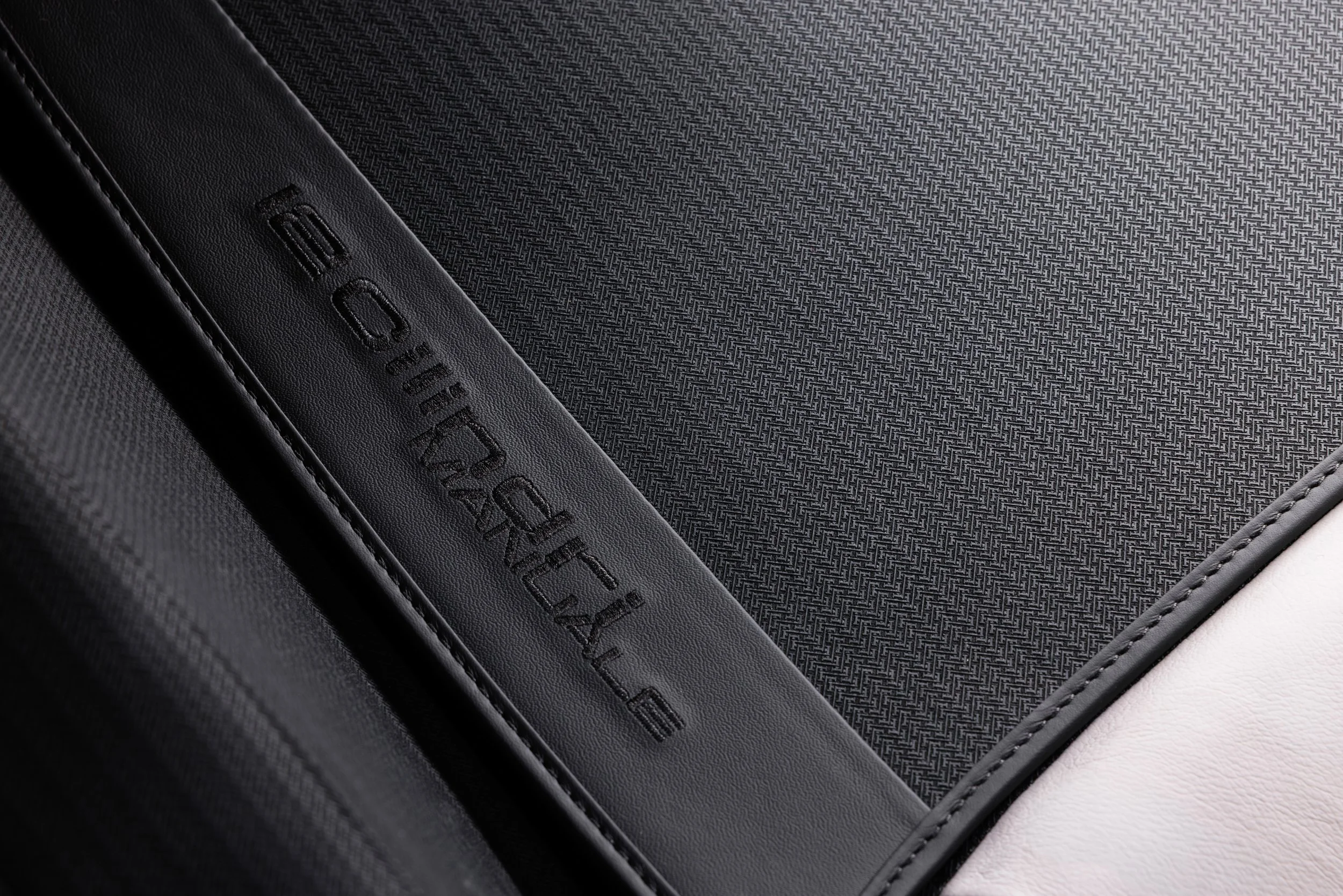
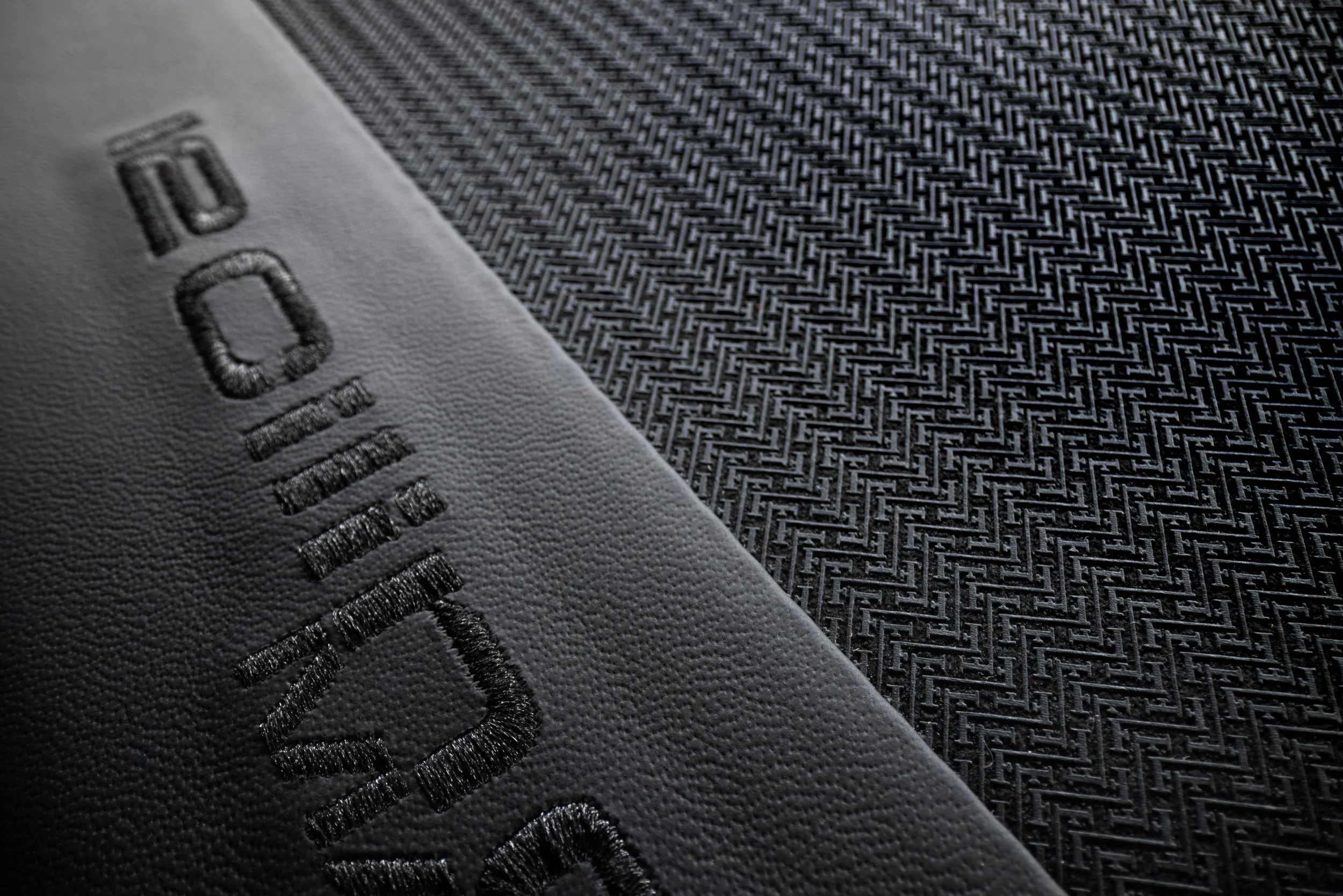
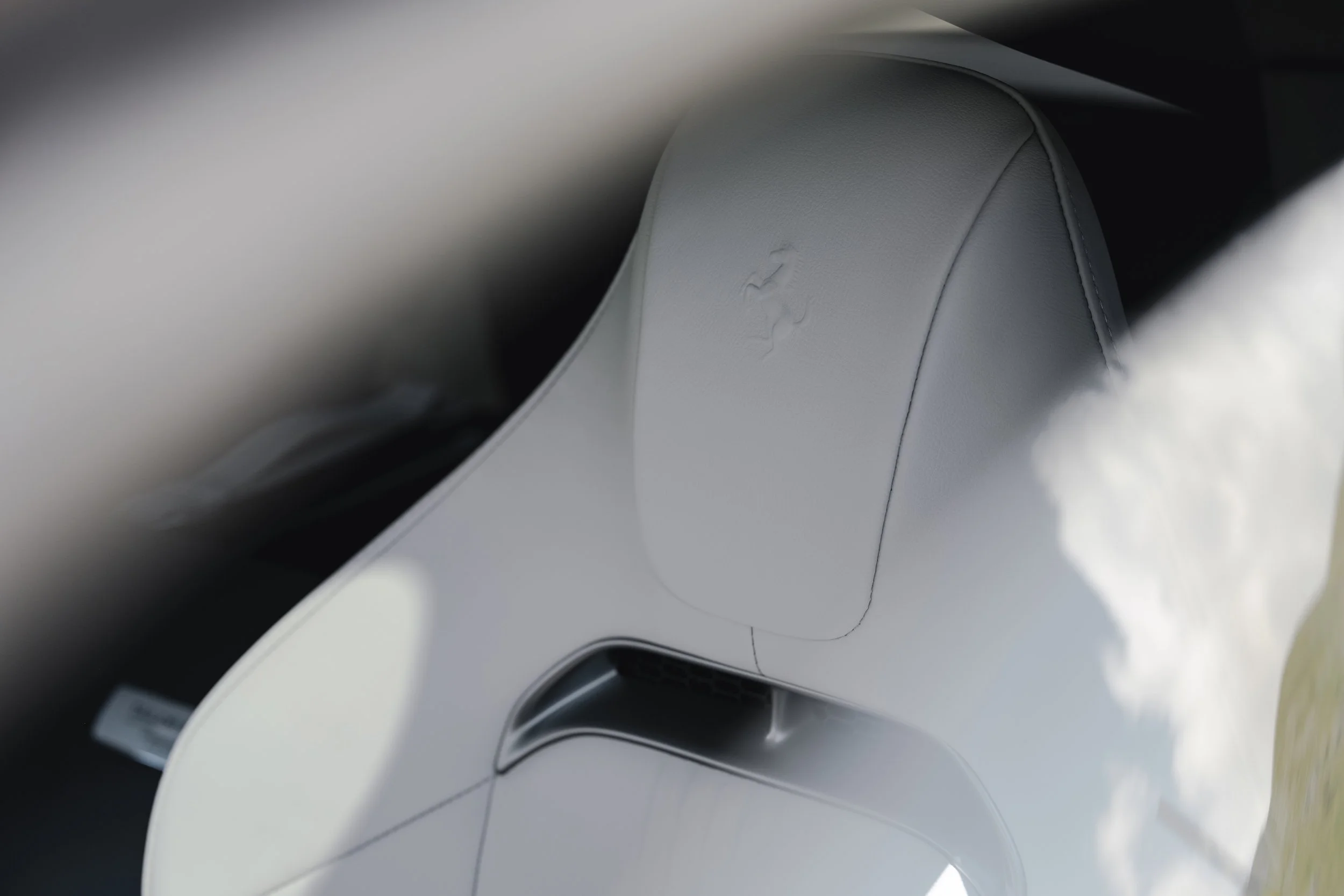
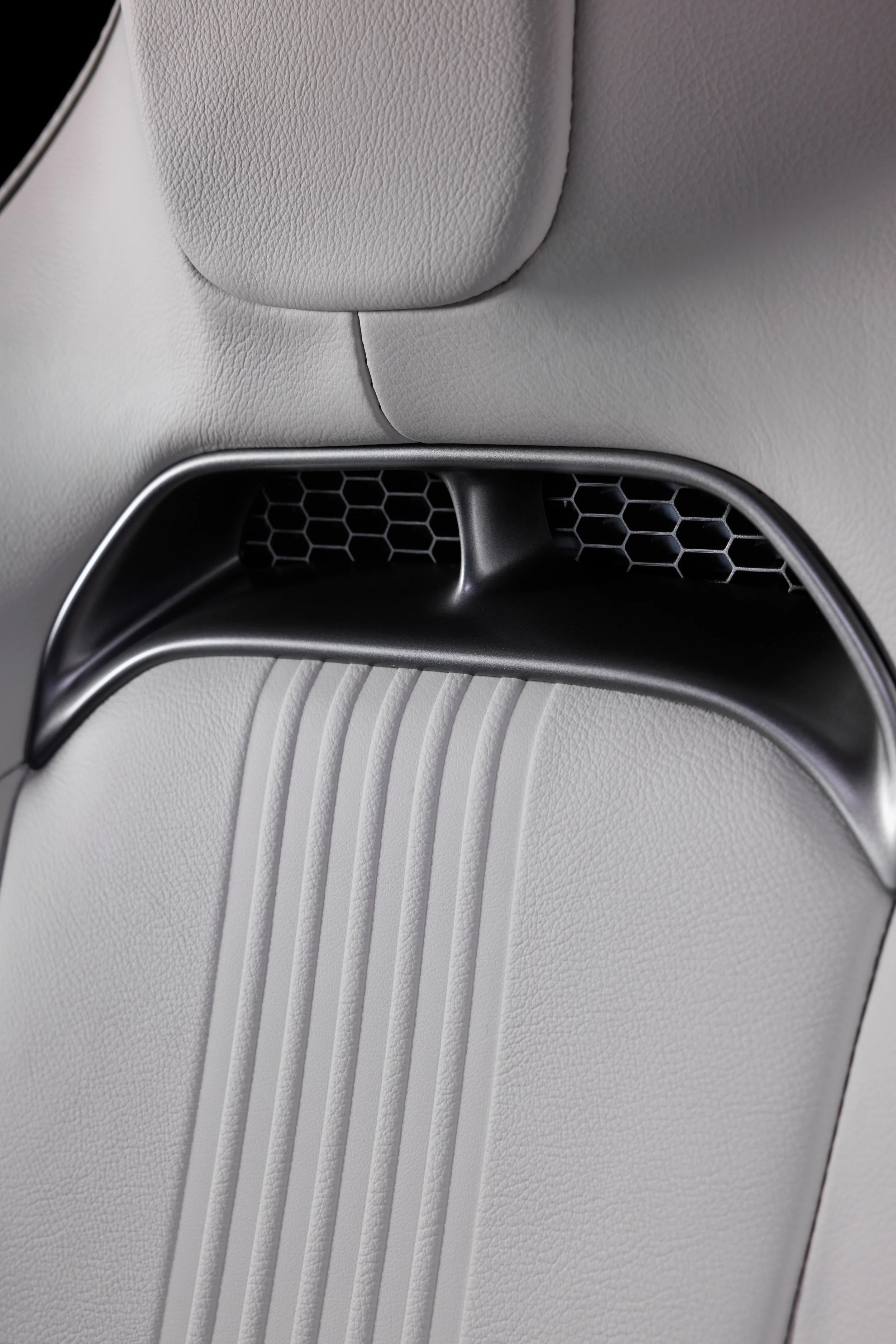
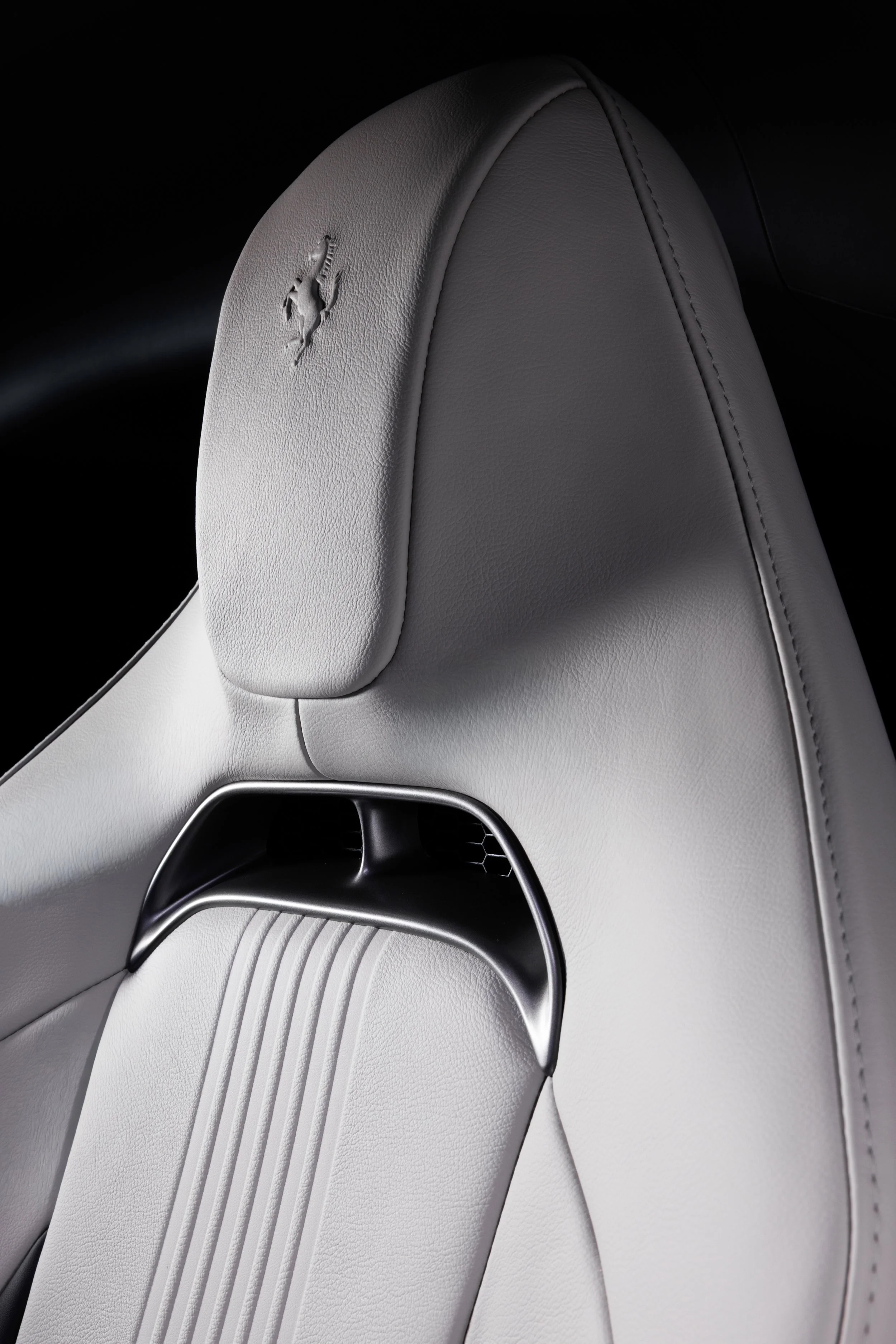
Ferrari's Design Studio, led by Flavio Manzoni, shaped every detail of the 12Cilindri Manuale to enhance its exclusivity. Customers can choose from a Tailor Made offering that includes carefully selected exterior colours and interiors finished with dedicated leather and Alcantara, plus exclusive trims and colours from Maranello's personalisation programme. Buyers can also select from four exclusive forged alloy wheel finishes. Ferrari produces the embossed Scudetto, available only on this edition, using a technique similar to coin-making, and offers an optional livery that pays homage to the six-speed gearbox across a range of colour schemes. Comfort and Racing seat options come enhanced with Tailor Made materials and a specific trim featuring six vertical grooves that echo the car's six gears.
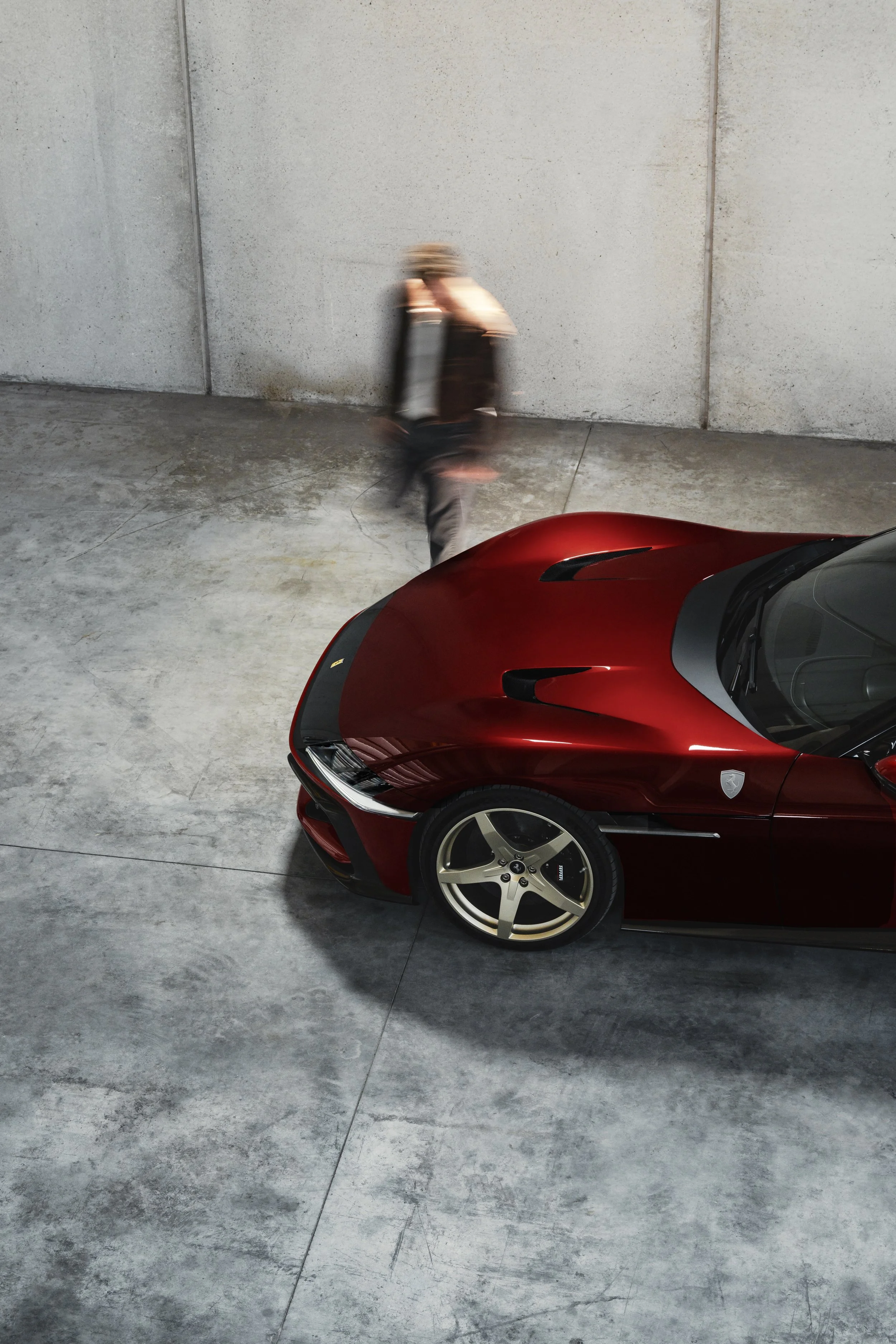
Ferrari offers the 12Cilindri Manuale in 25 iconic colours, including the launch edition's standout Rosso Rubino, alongside historic shades such as Argento Nürburgring, Nero Daytona, Rubino Micalizzato, Rosso Dino, Giallo Montecarlo, Verde Zeltweg, Azzurro La Plata, Blu Pozzi, Bianco Mille Miglia and Viola Hong Kong. A dedicated plate in silver or carbon fibre bears the Tailor Made logo. While the standard aluminium door sill has the car's logo engraved, the optional carbon-fibre sill features a painted logo instead.
Ferrari also extends its seven-year Genuine Maintenance programme to the 12Cilindri Manuale, covering all routine maintenance for the first seven years of ownership across the entire range. This programme gives customers confidence that their car's performance and safety will stay consistent over time, and it remains available even to those who buy a Ferrari that they didn't first register. Scheduled inspections take place every 20,000km or once a year with no mileage limit, and Ferrari uses genuine spare parts alongside state-of-the-art diagnostic tools operated by personnel trained at the Ferrari Training Centre in Maranello. Every Official Network dealership in every market offers this service, extending Ferrari's after-sales support and ensuring the performance and craftsmanship built into every Maranello car endure for years to come.