Ferrari Luce Interior Design Reveals a Bold Electric Future
Ferrari unveiled the interior design and revealed the name of its visionary all-electric sports car, Ferrari Luce, as it opens a new chapter in Ferrari’s history.
‘Luce’ is more than a name. It is a vision. When Ferrari speaks of Luce, it describes not a technology but a philosophy: electrification as a means, not an end. It signals a new era in which design, engineering, and imagination converge. Simple, pure and evocative, Luce stands for clarity and inspiration, expressing Ferrari’s approach to innovation through uncompromising vision, transparent design, silent energy felt in every fibre, and form shaped by function.
This naming strategy reflects how the Ferrari Luce strengthens the Prancing Horse line-up, expressing tradition and innovation as one. It pairs cutting-edge electric technology with a distinctive design and best-in-class driving thrills. It also unites Ferrari’s racing heritage, the timeless spirit of its sports cars, and the evolving reality of contemporary lifestyles. It proves Ferrari’s determination to go beyond expectations: to imagine the future, and to dare. Leading means illuminating the path ahead, and Luce embodies that mindset.
Ferrari hosted the launch in San Francisco with LoveFrom, the creative collective founded by Sir Jony Ive with fellow designer Marc Newson. LoveFrom has collaborated with Ferrari for five years on every dimension of the new car’s design. San Francisco is a global centre for technology and design and has long shaped the world’s most innovative user experience and interface design.
Ferrari chose to conceive this car with LoveFrom to express the marque’s vision for the future. The car honours Ferrari’s legendary heritage while challenging conventions and reimagining every detail, from materials and ergonomics to the interface and overall user experience. Ferrari gave LoveFrom the creative space to define the project’s design direction from the outset, translating a new, cross-disciplinary design language into an authentic Ferrari experience.
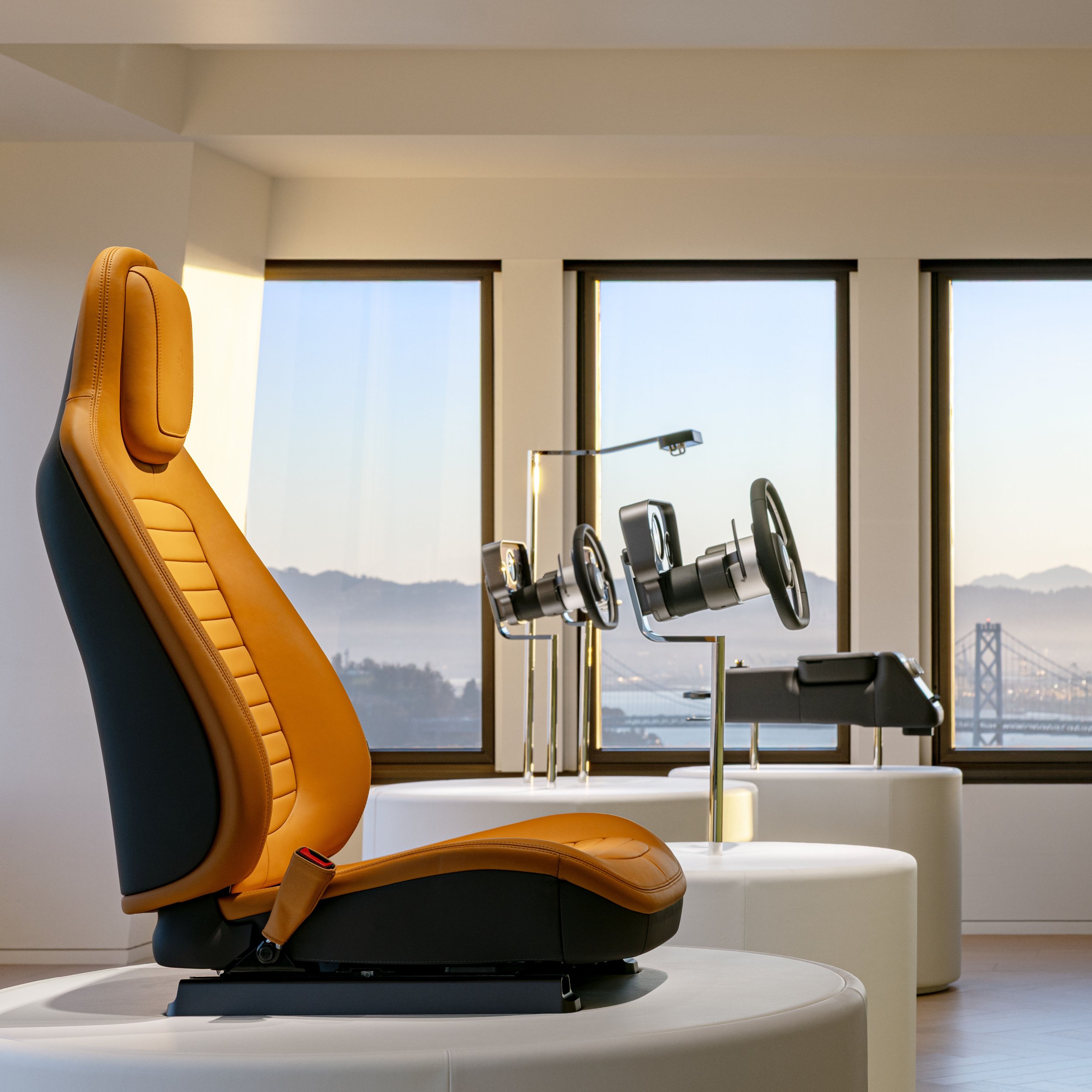
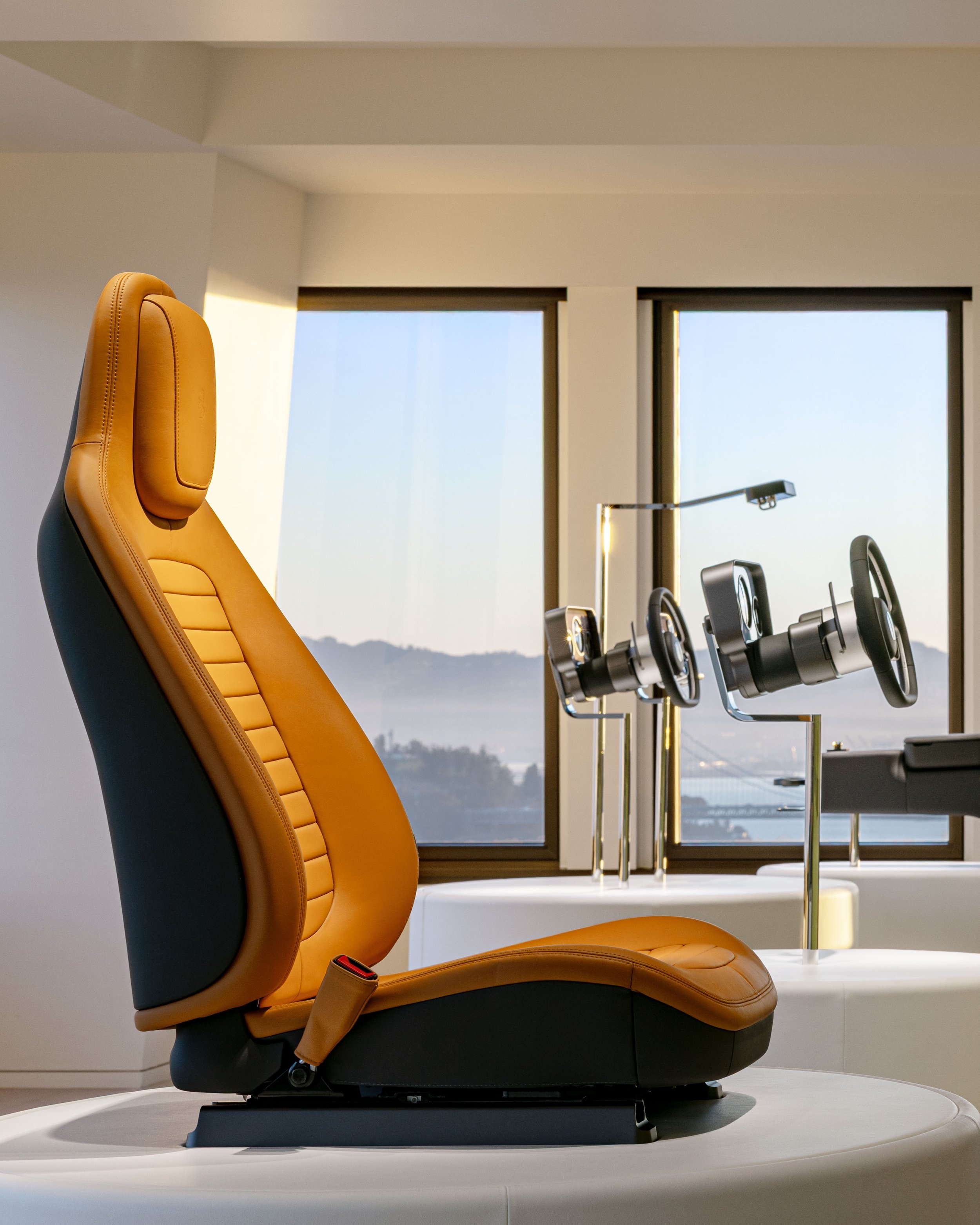
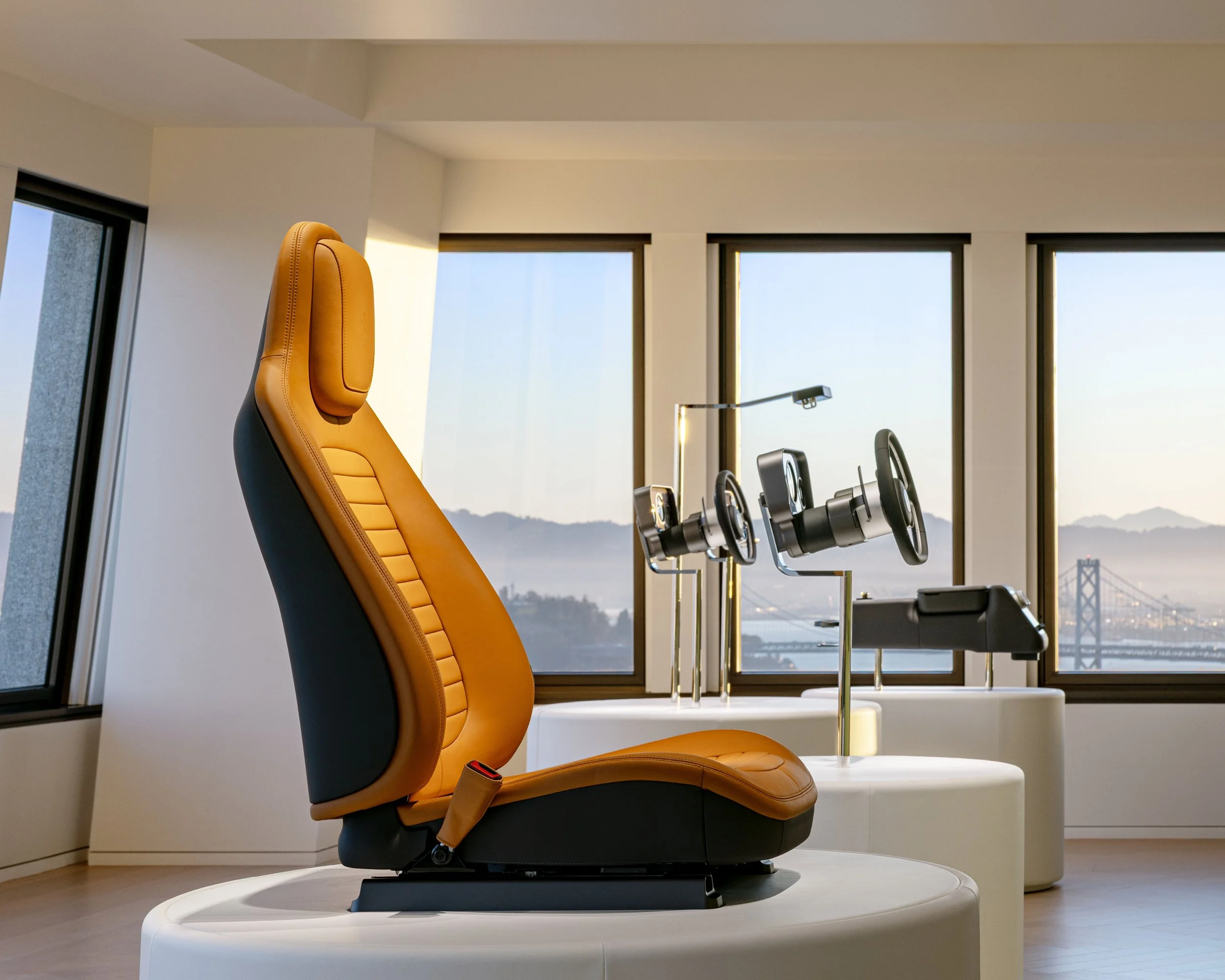
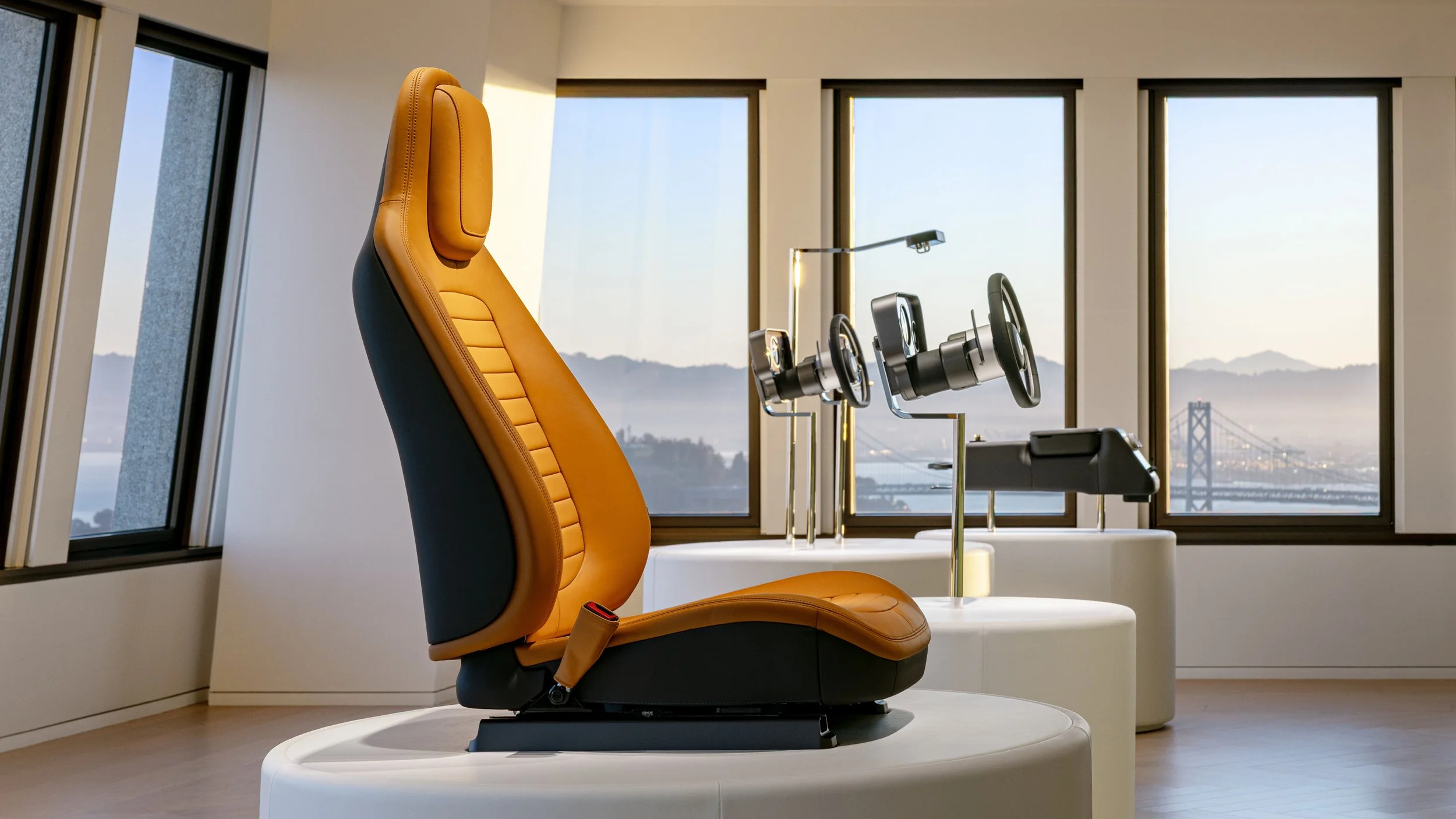
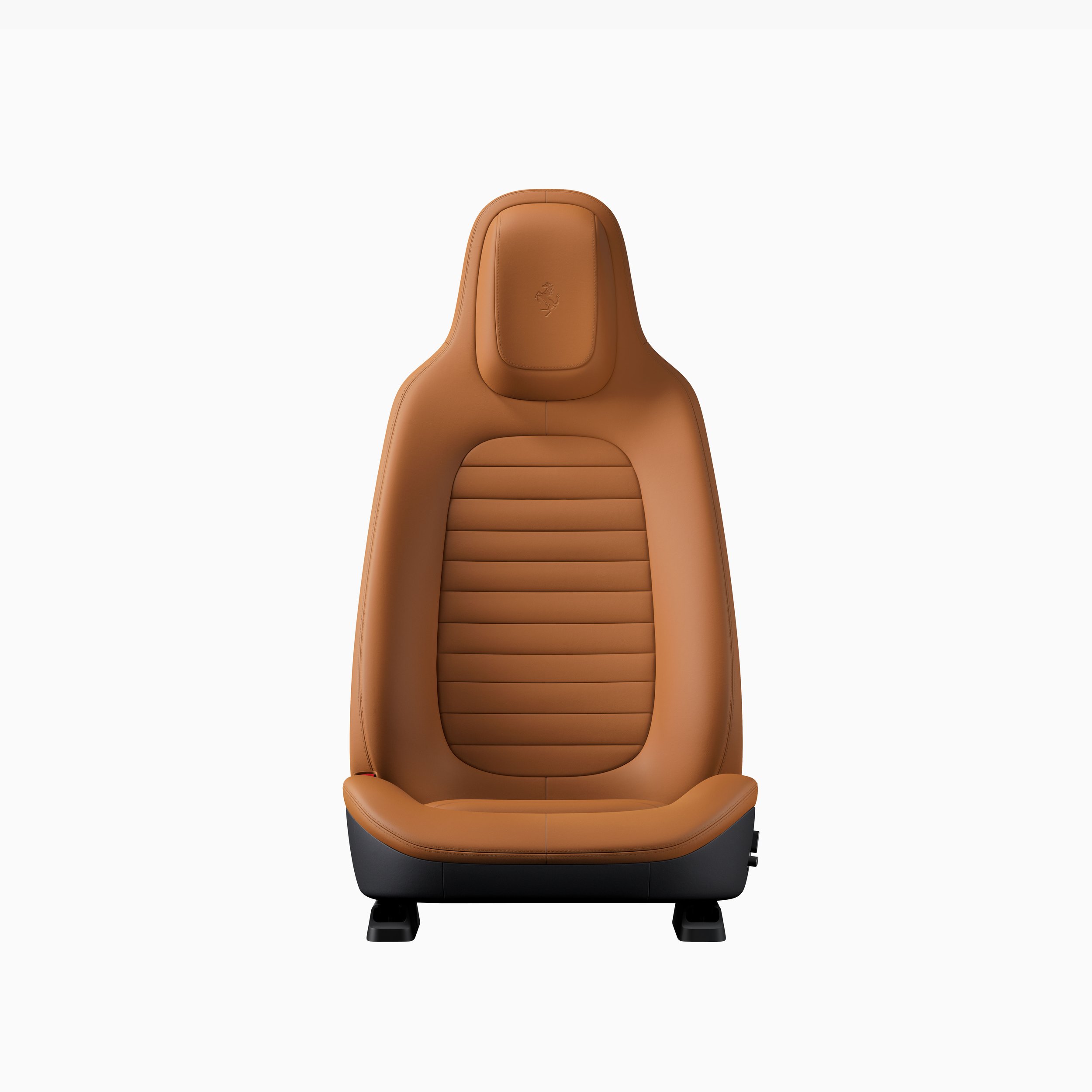
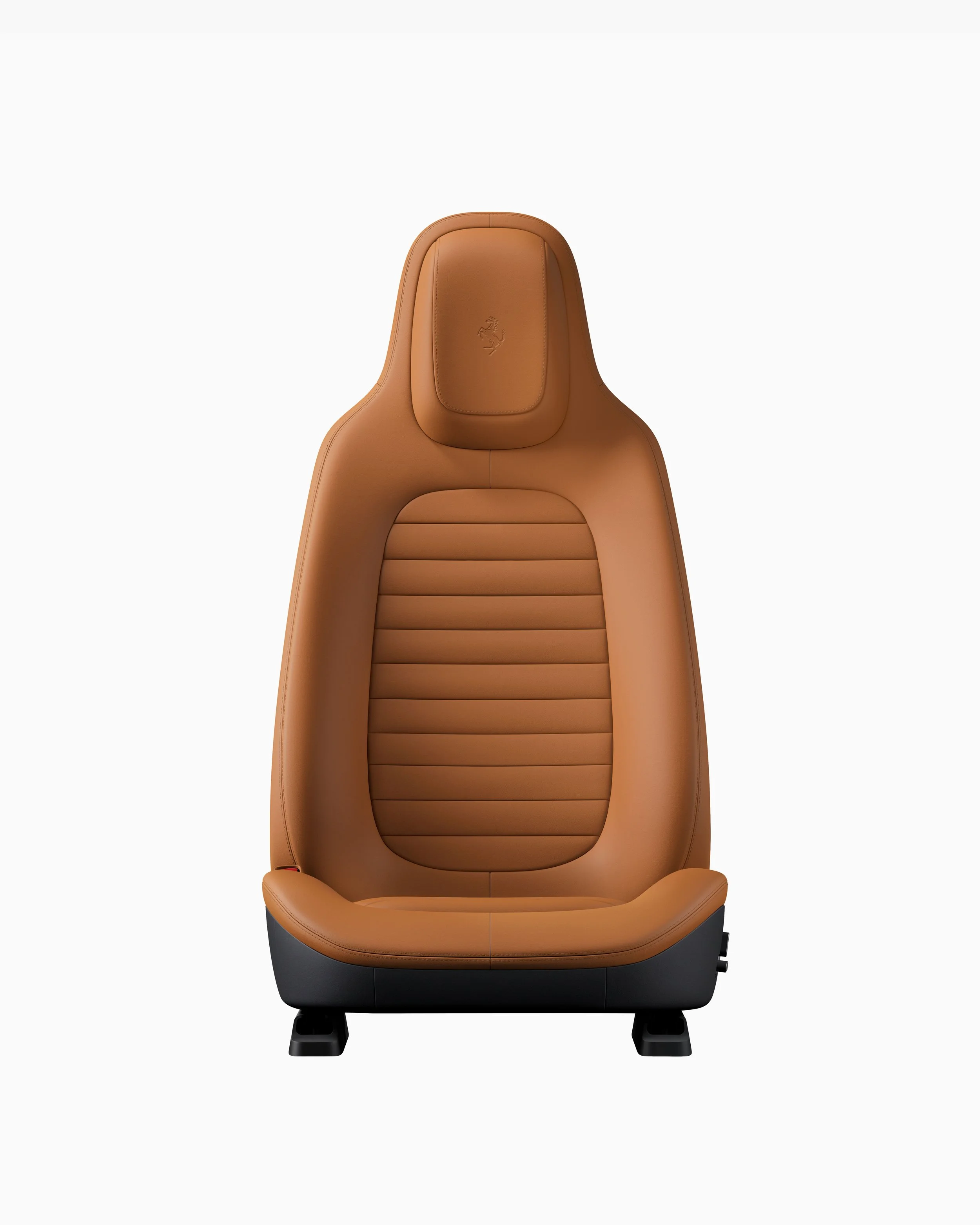
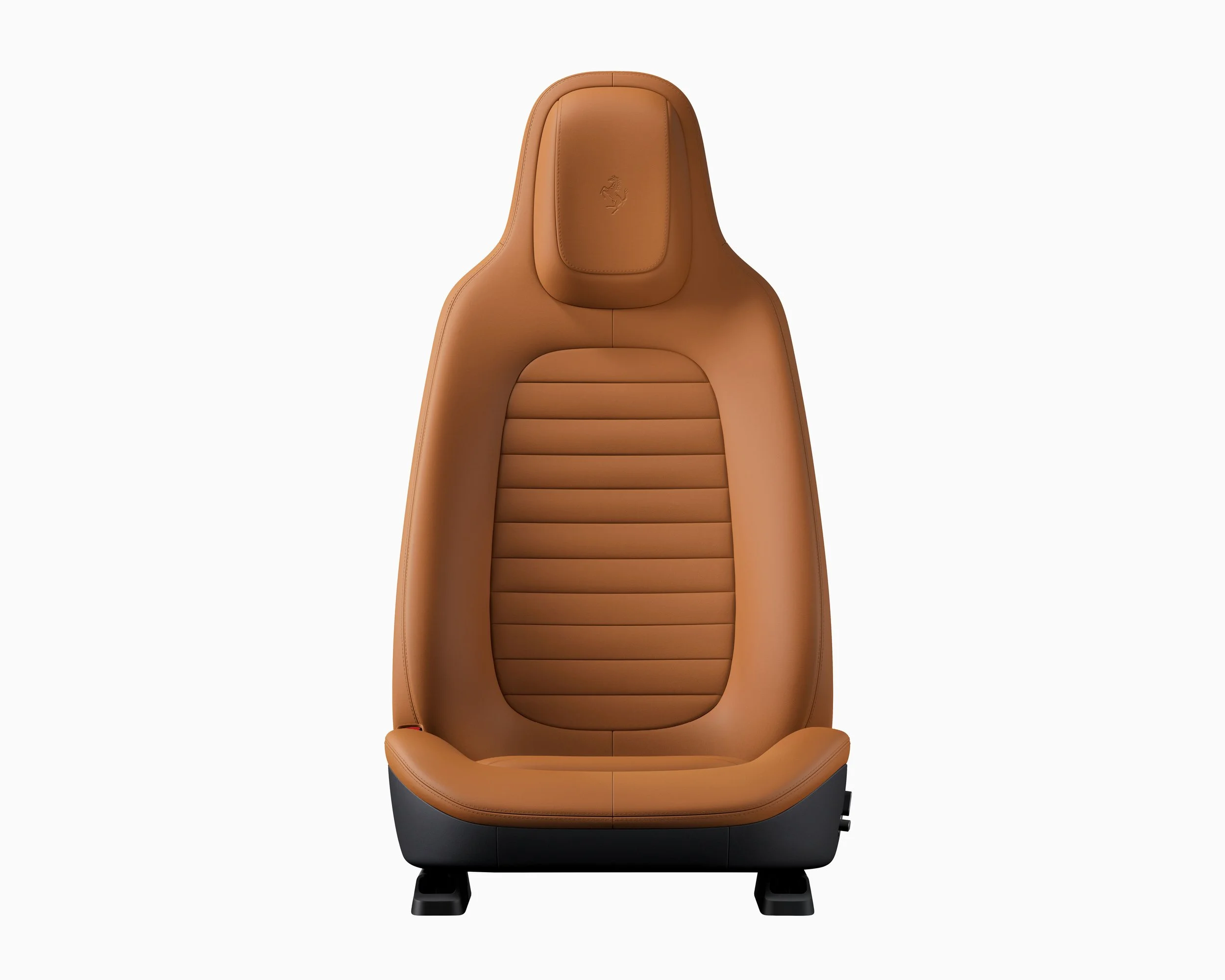
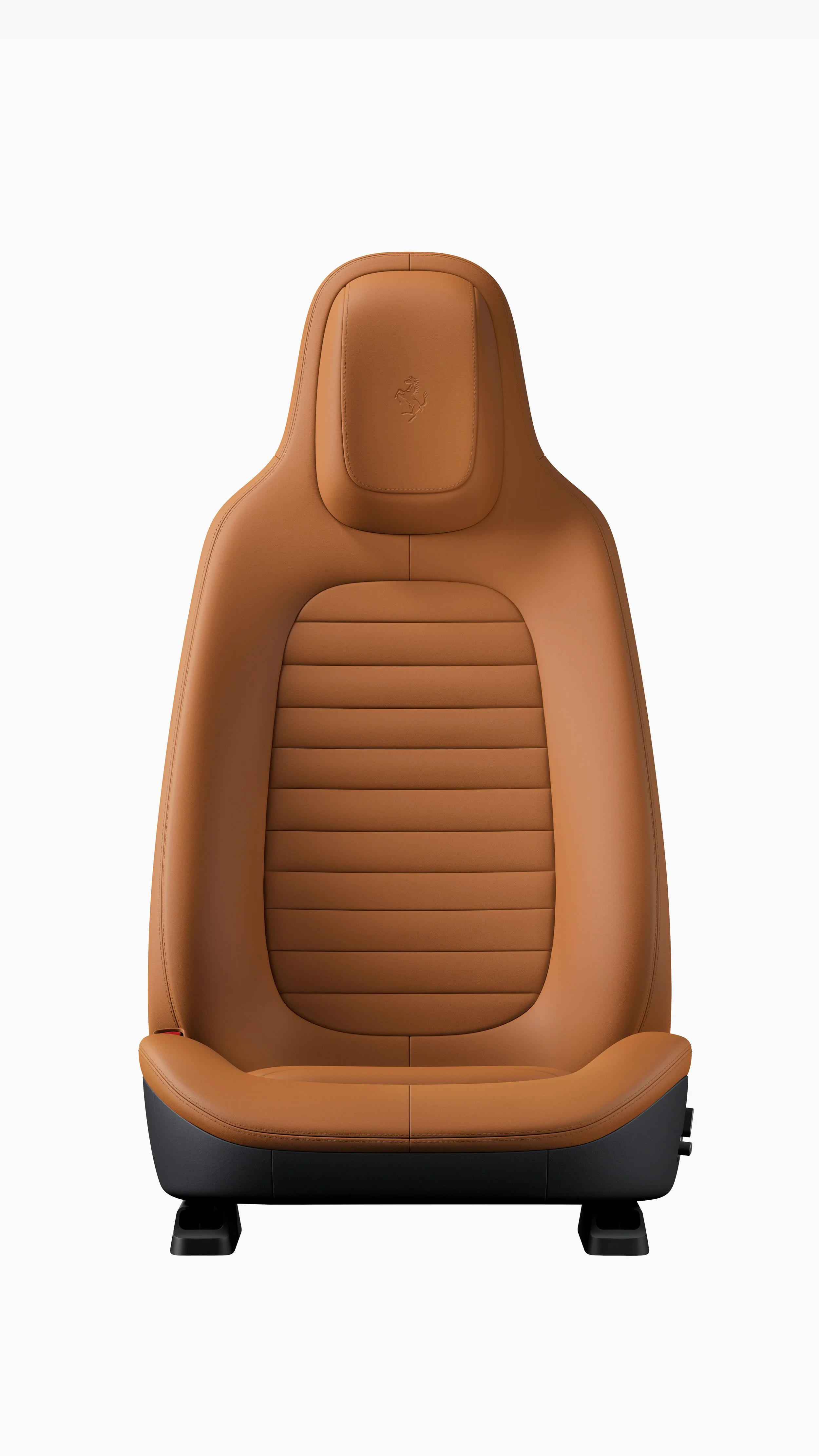
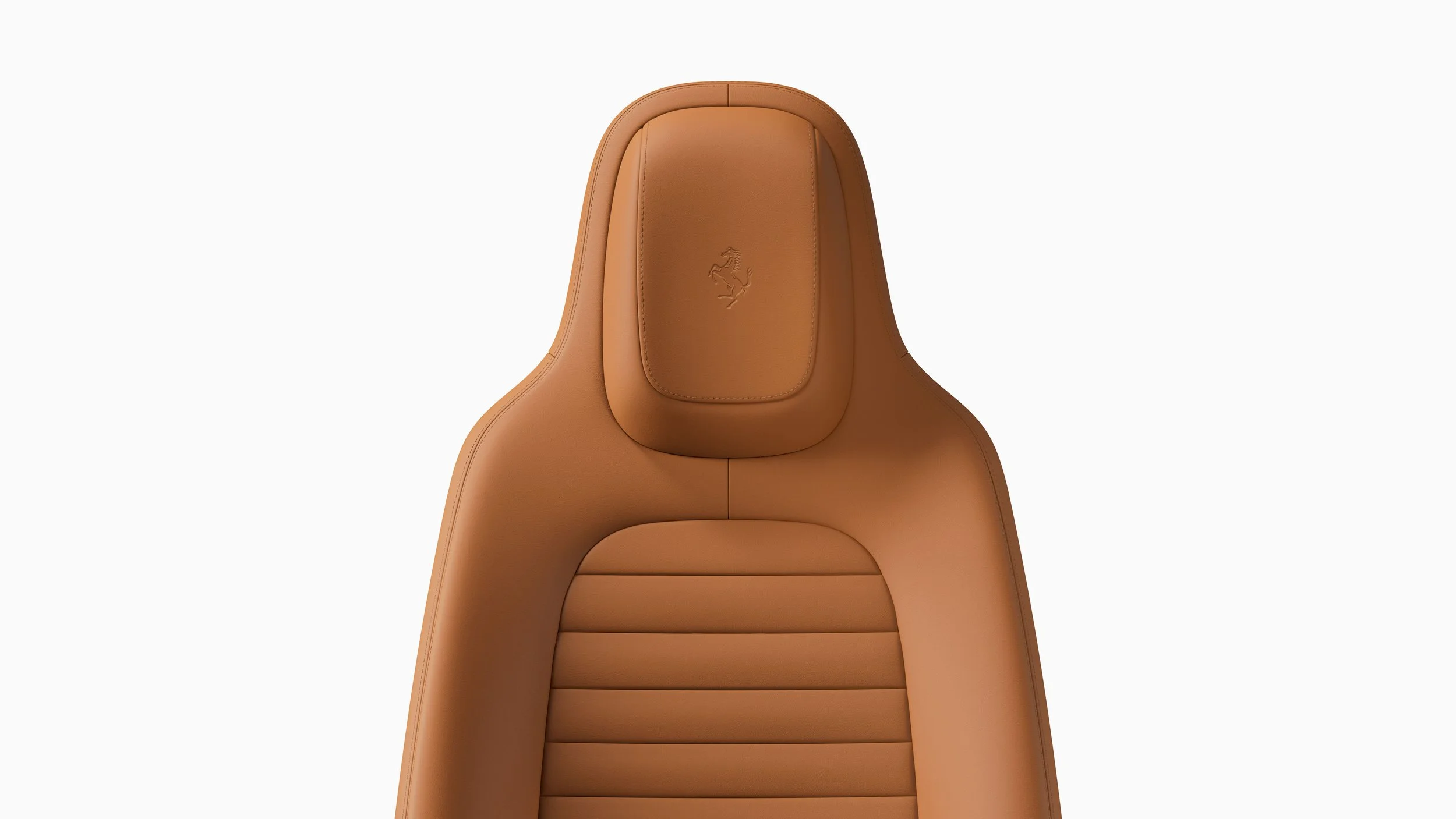
The major interior components provide an initial, tangible insight into the design philosophy behind the new Ferrari Luce, where innovation meets craftsmanship and cutting-edge design. The team refined every solution to its purest form. It aimed not to reinvent what already works, but to create a new, carefully considered expression of Ferrari for a world where interaction feels more meaningful.
During development, LoveFrom worked with the Ferrari Styling Centre, led by Flavio Manzoni. The teams evolved the concept while respecting its original intent, ensuring that every solution met Ferrari’s functional targets, packaging constraints, and homologation requirements for a production road sports car.
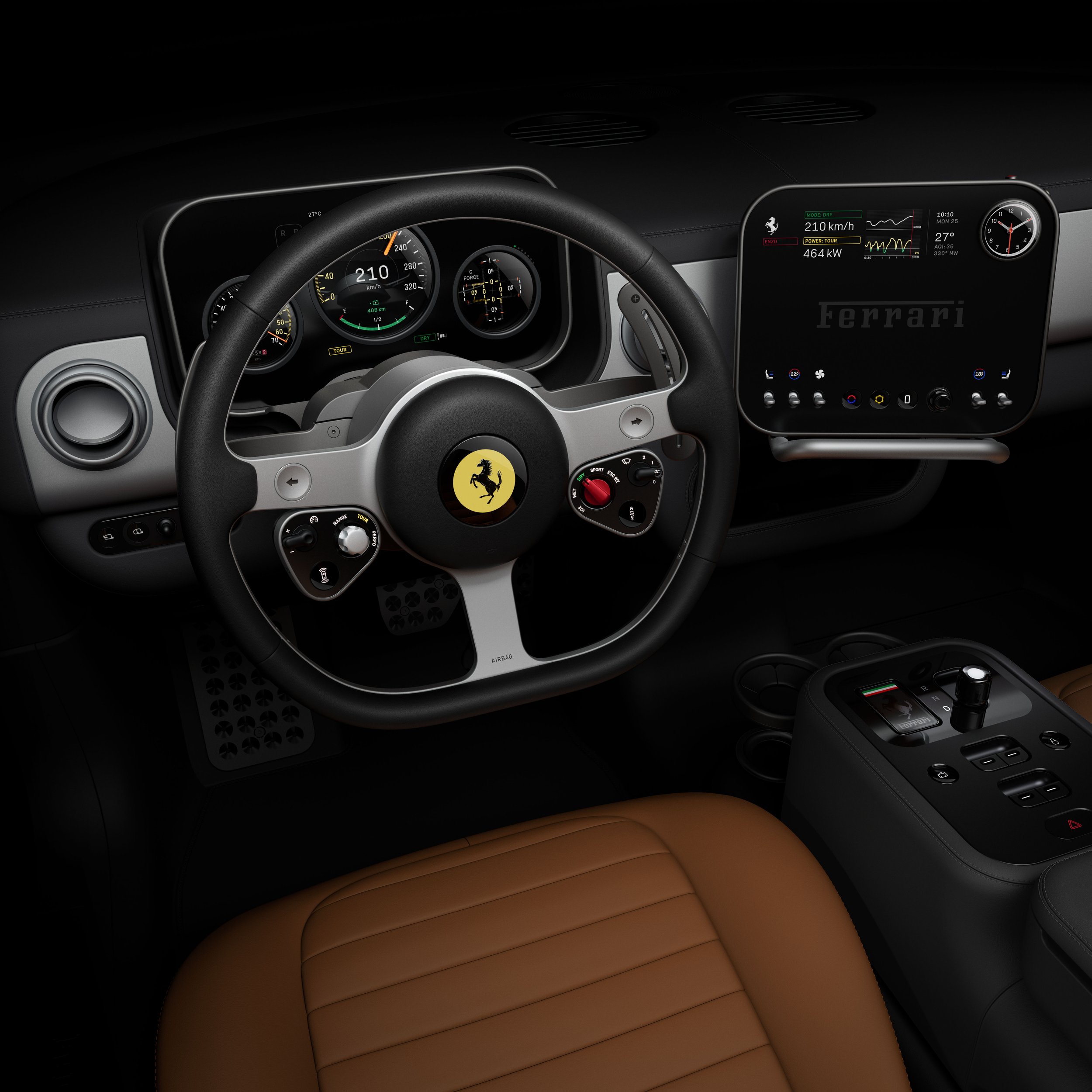
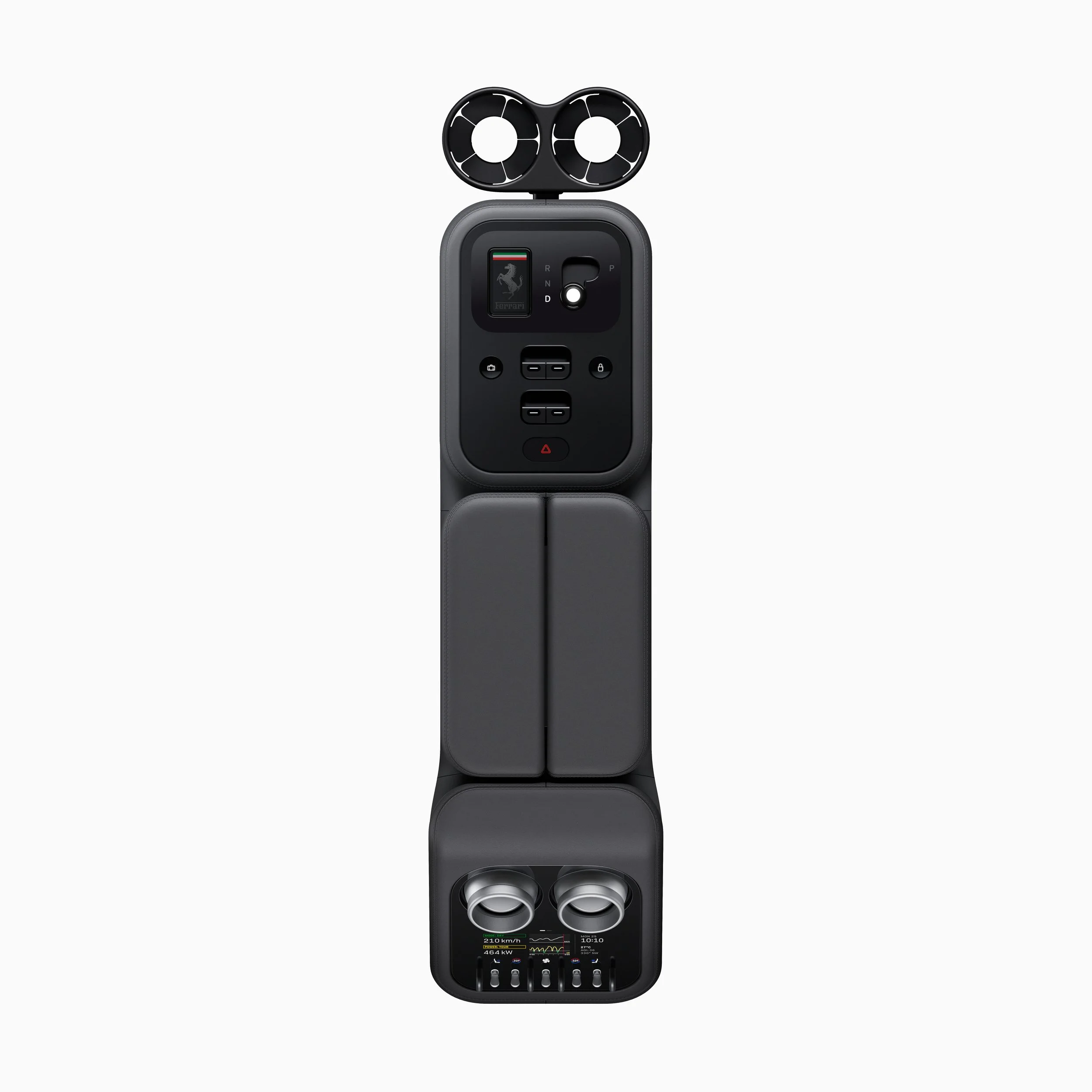
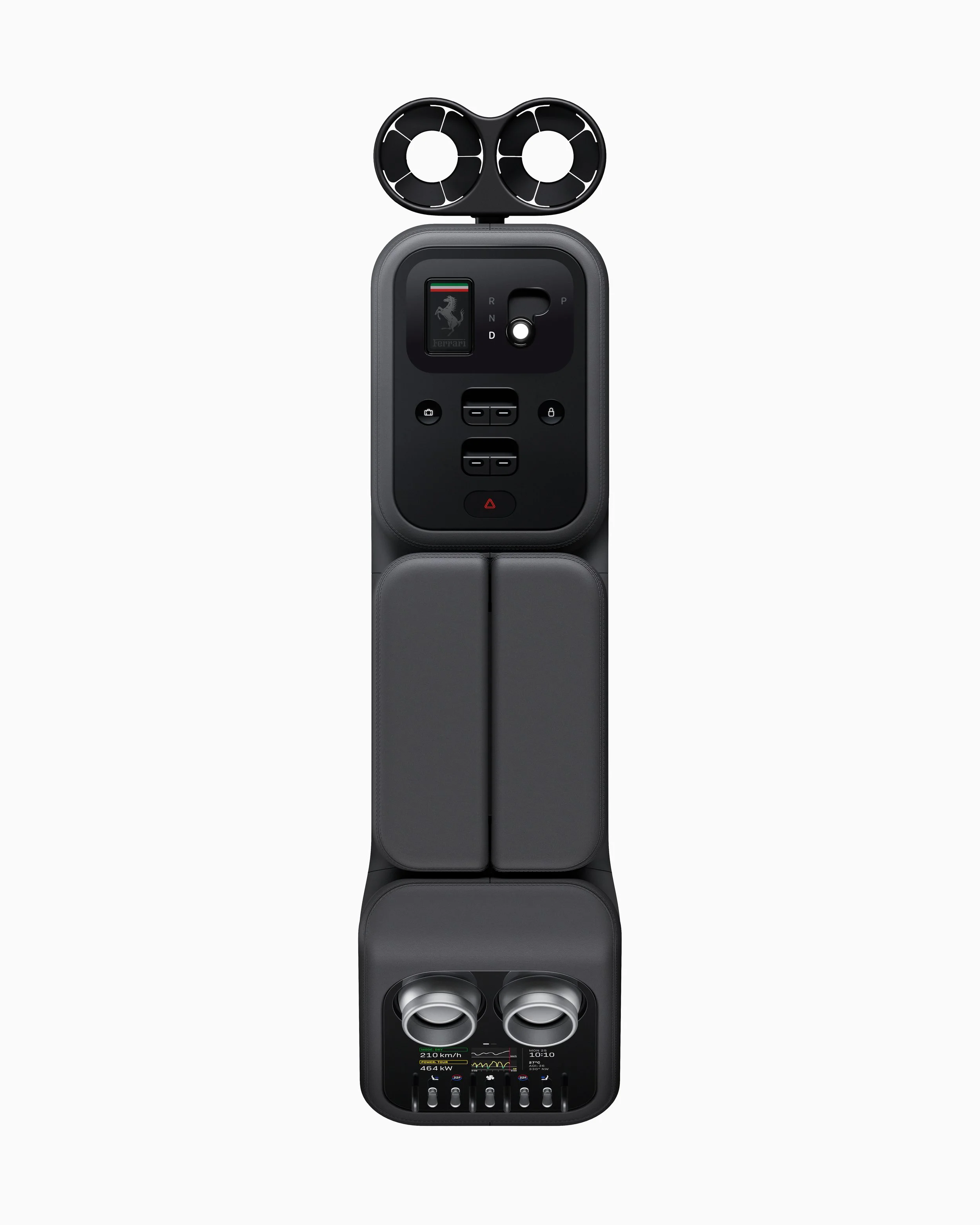
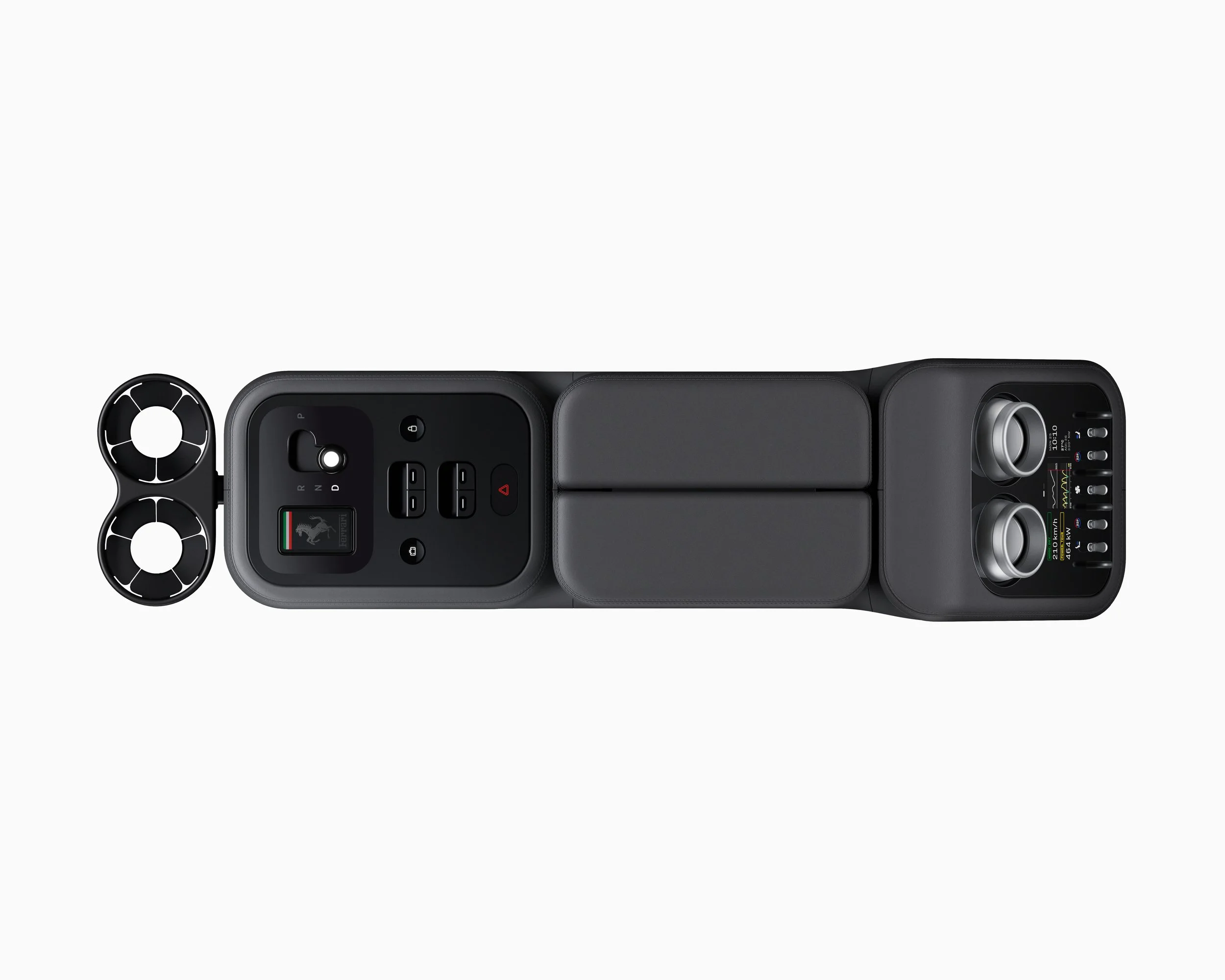
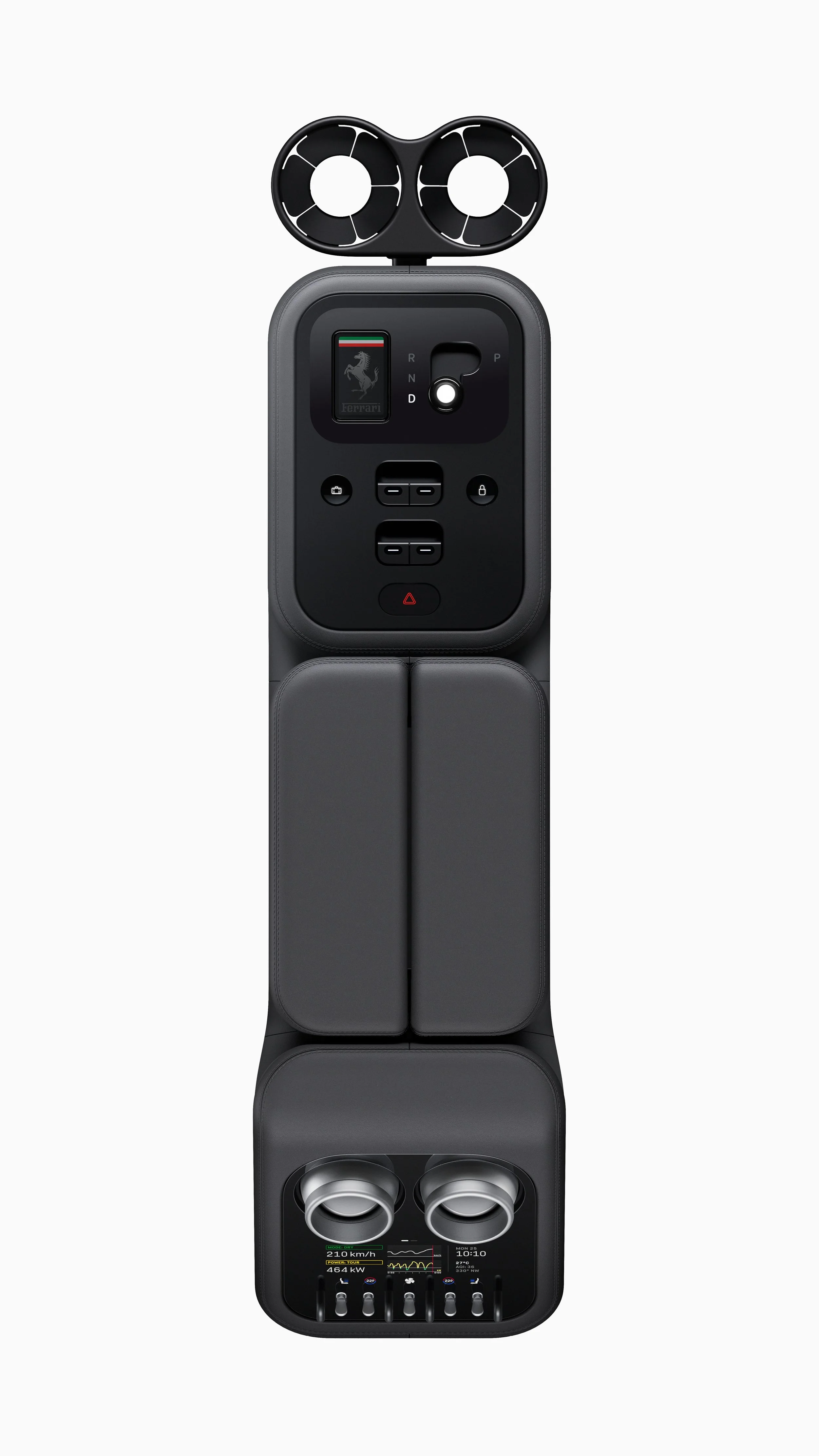
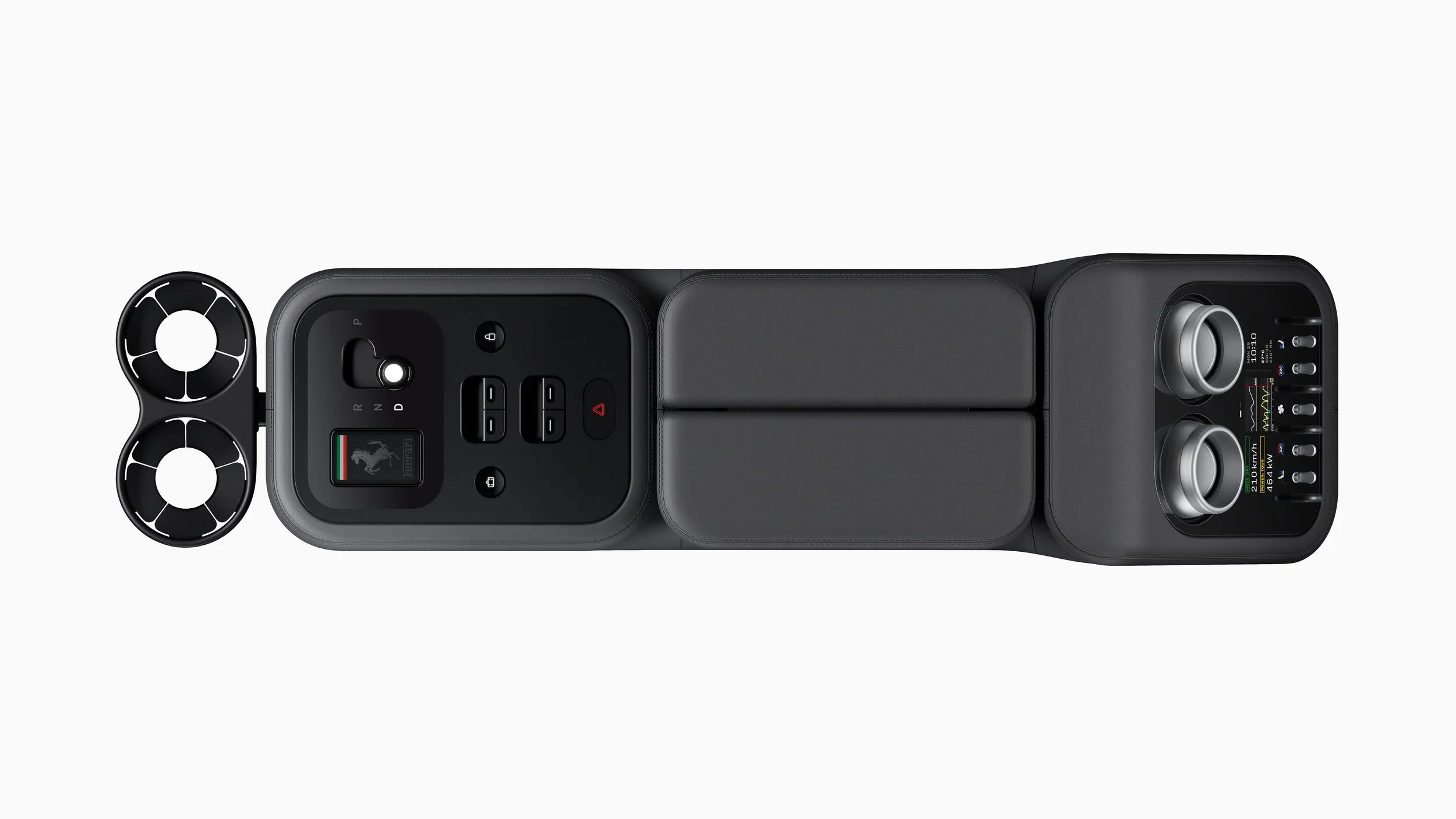
The cabin forms a single, clean volume. The team simplified and rationalised the forms to serve driving, creating an environment that feels calm, focused and spacious. The team developed hardware and software together, so the physical architecture and the interface behaviour feel harmonious. Essential elements such as the binnacle, control panel and central console remain self-contained and clearly organised around inputs (controls) and outputs (displays).
This holistic approach reflects extraordinary care and a clear purpose, shaped by some of the most influential minds in technology design. The team designed and engineered every component with the same attention and precision, keeping each element quietly and purposefully functional. Everything integrates seamlessly, forming a unified aesthetic and functional whole that preserves and intensifies the emotional thrill of driving a Ferrari.
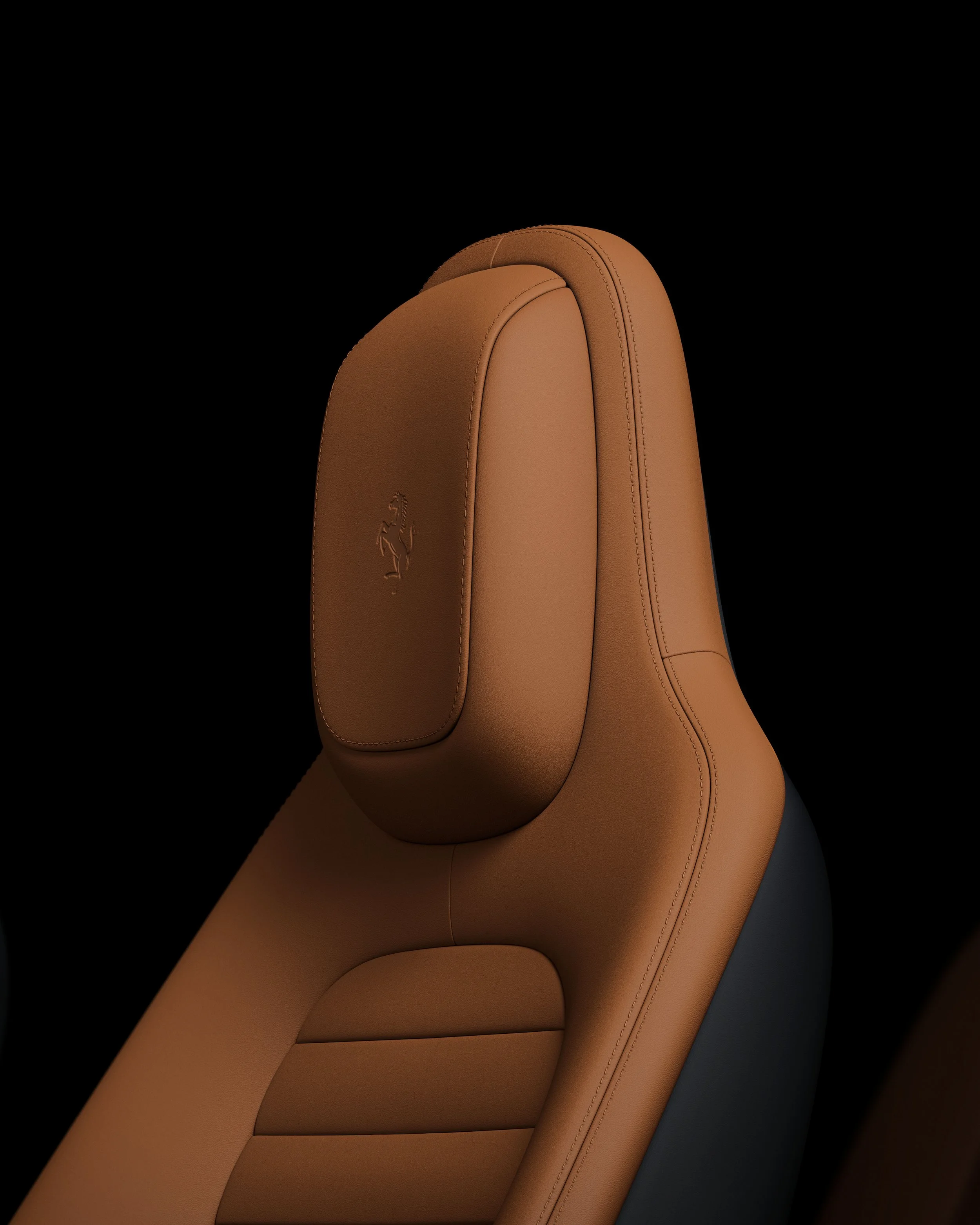
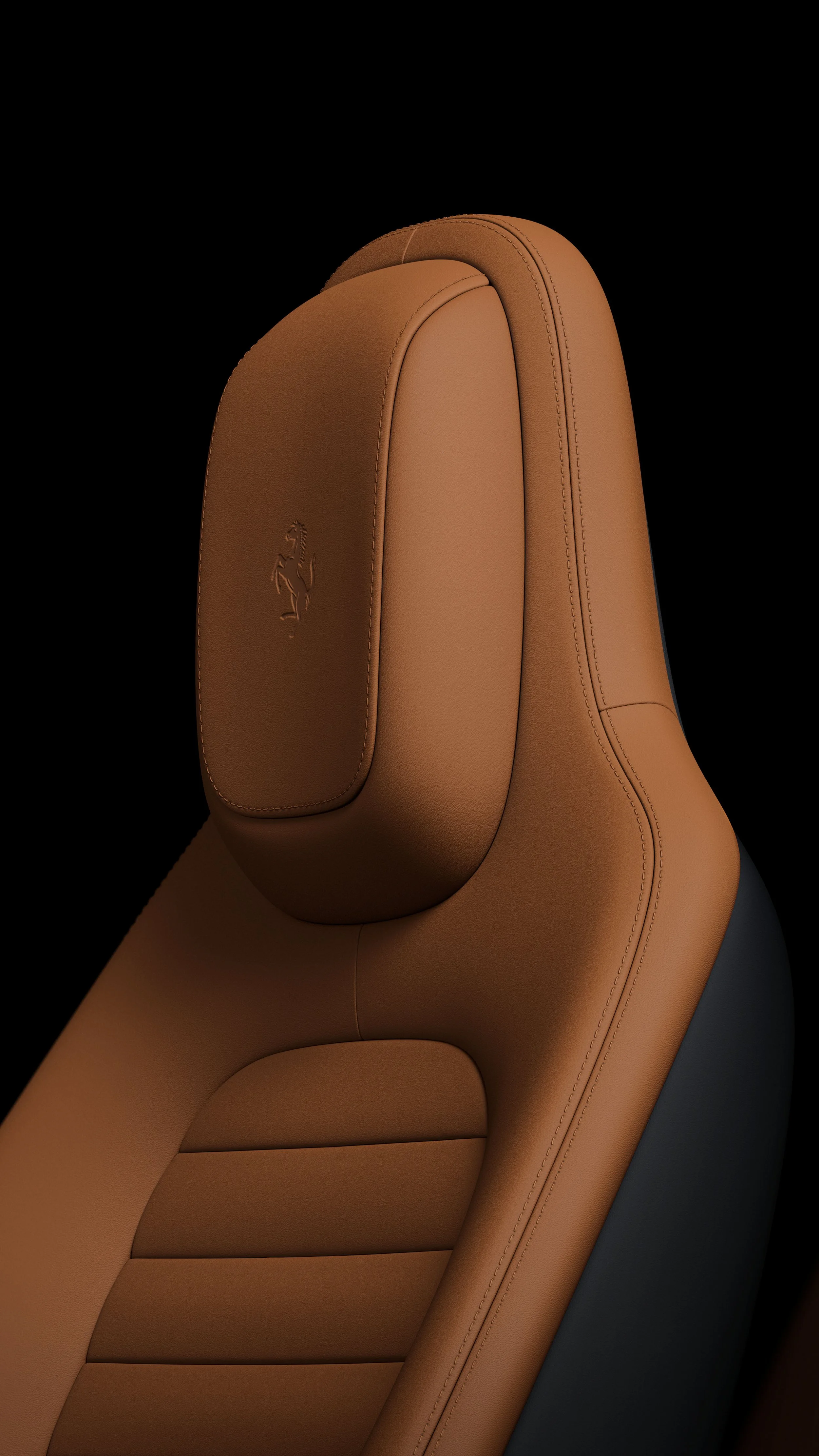
The team also considered production processes in detail. It applied sophisticated manufacturing technologies to present every material in its most noble form. This approach delivers a modern yet timeless feel. The materials feel not only luxurious, but genuinely authentic, demonstrating Ferrari’s dedication to quality, innovation and the enduring value of craftsmanship.
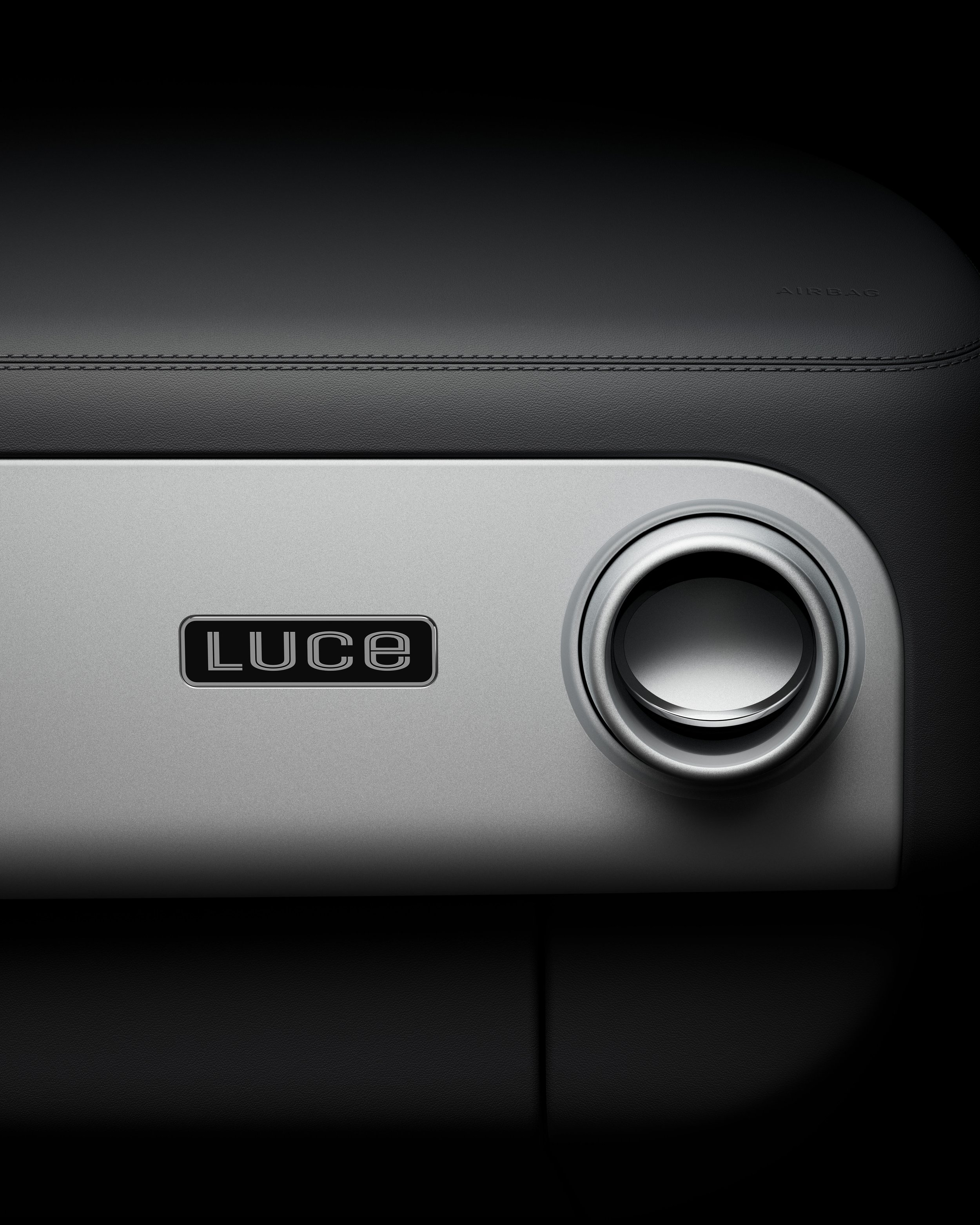
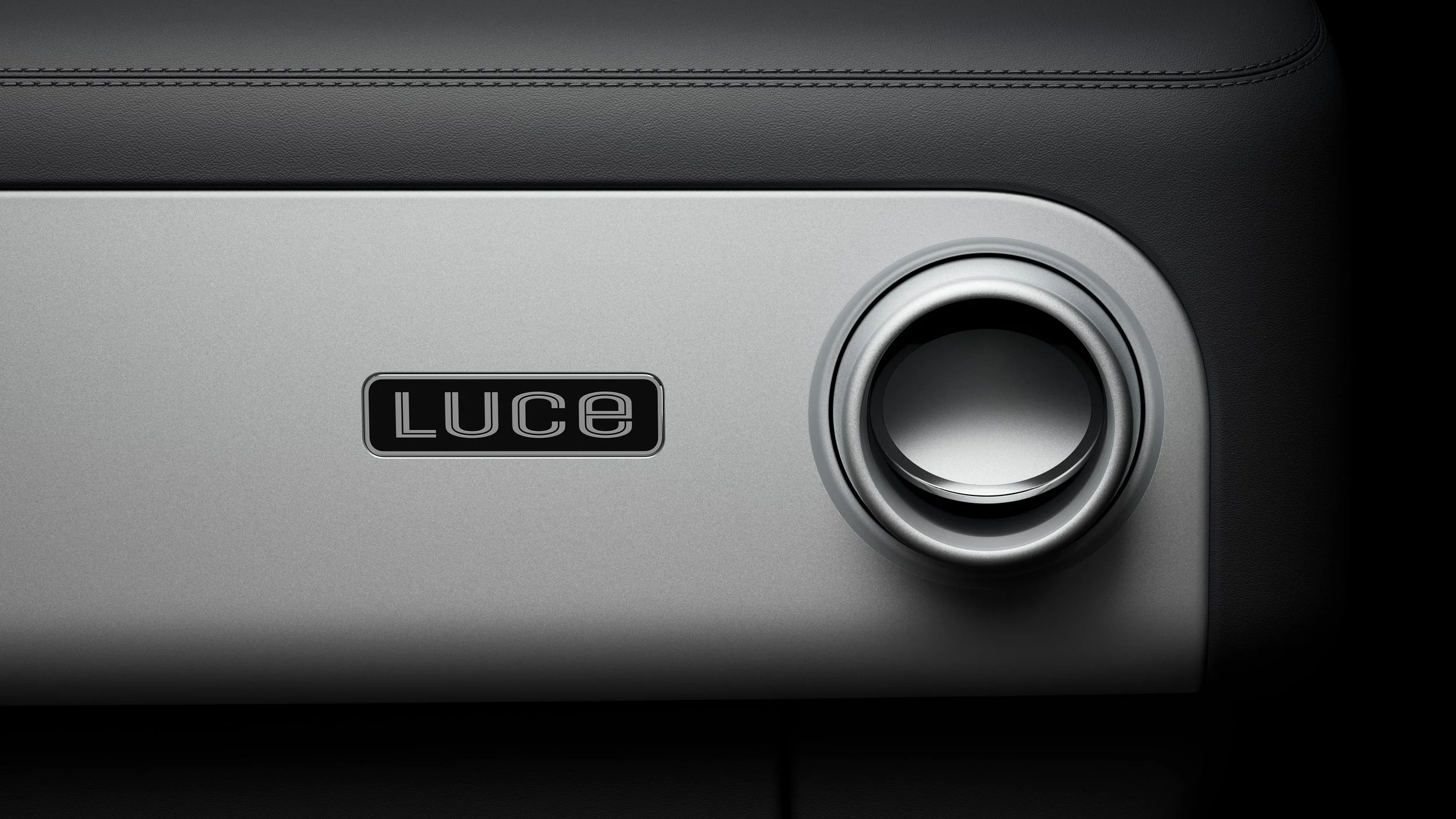
The designers selected materials for durability and integrity. They embraced aluminium for precision machining, using engineered components that celebrate the material’s quality and beauty. The aluminium is 100% recycled, alloyed, and meticulously machined from solid billets using advanced 3- or 5-axis CNC technology, then finished with a state-of-the-art anodisation process. This treatment creates an ultra-thin, hexagonal-cell microstructure on the surface, delivering exceptional resistance, hardness, and a refined micro-texture. The finish holds a deep, enduring colour that stays vibrant over time. Glass is precision-milled Corning® Fusion5® Glass, delivering durability, scratch resistance, and high visibility.
Ultimately, the Ferrari Luce interior brings together meticulous craftsmanship, respect for tradition, and thoughtful innovation in a single design. It offers Ferrari enthusiasts a new choice that honours the past while embracing the future, reinforcing the brand’s enduring commitment to quality, performance, and cultural significance.
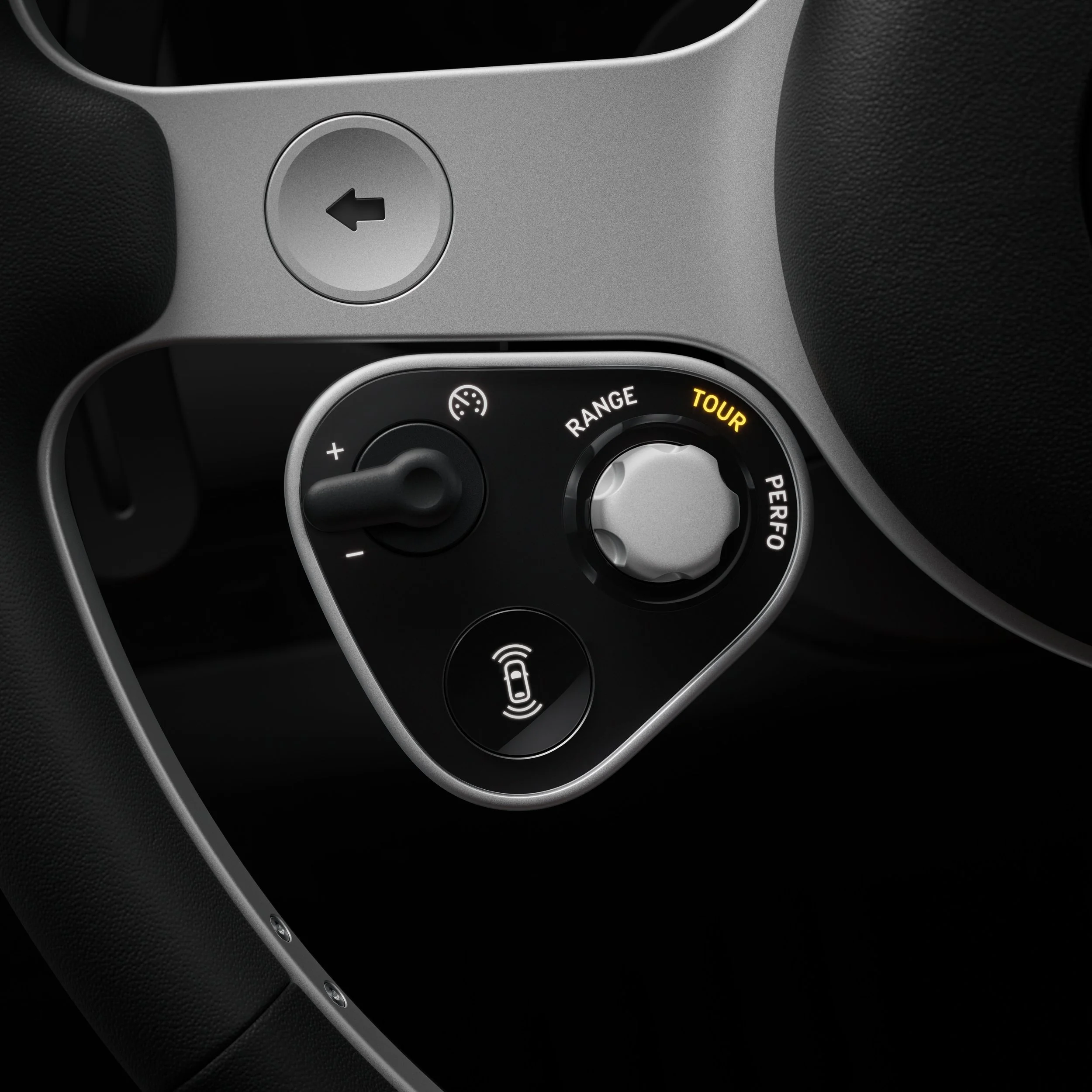
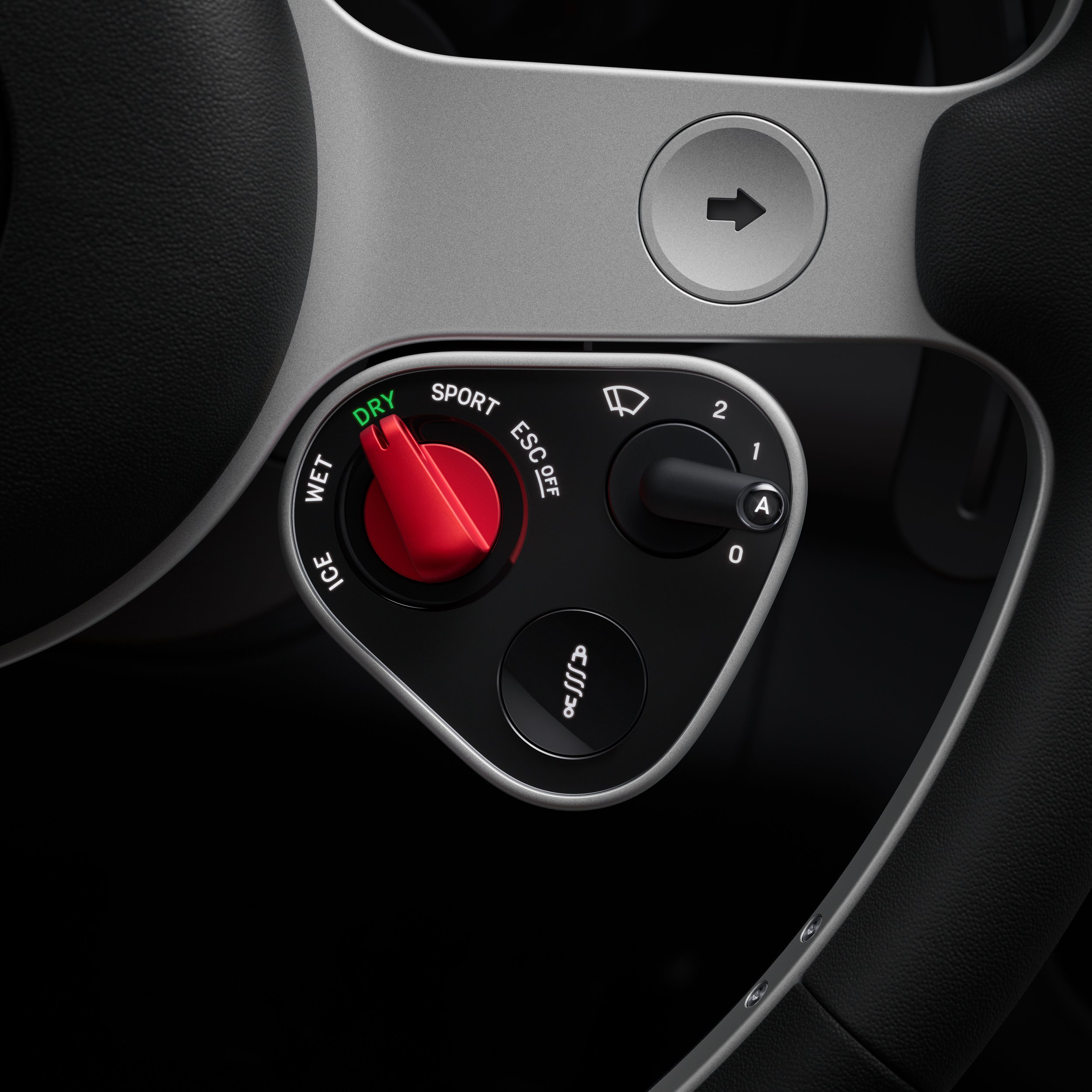
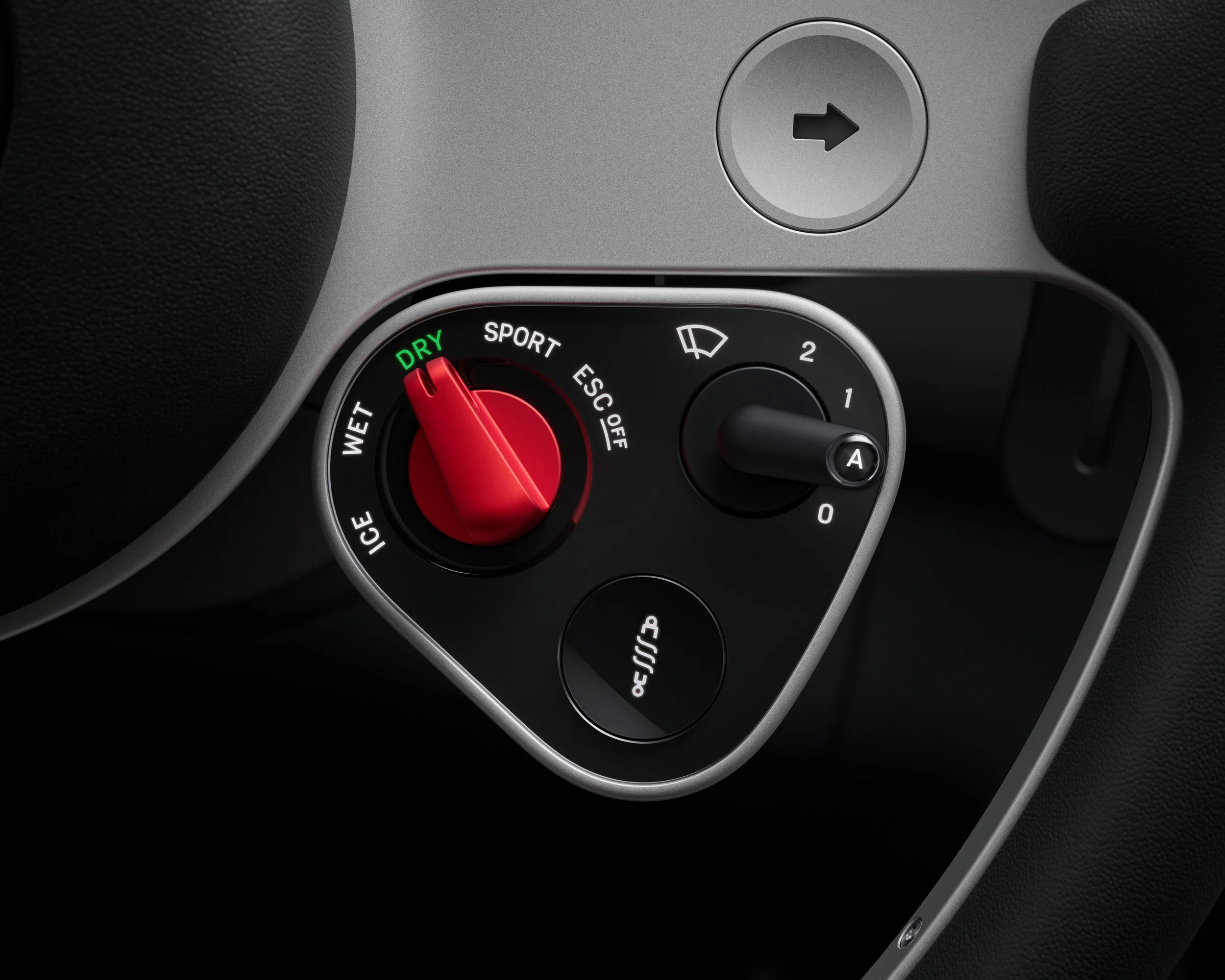
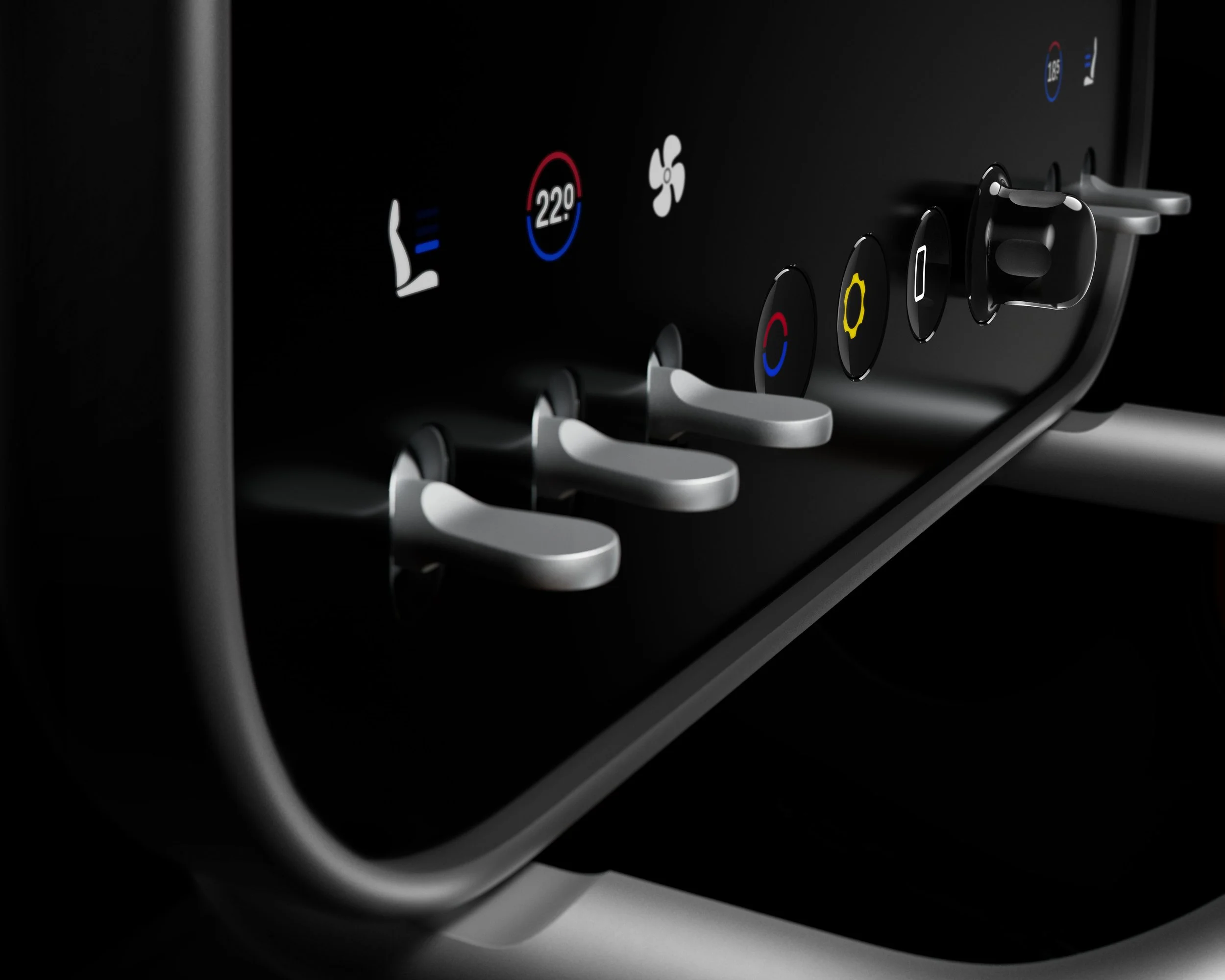
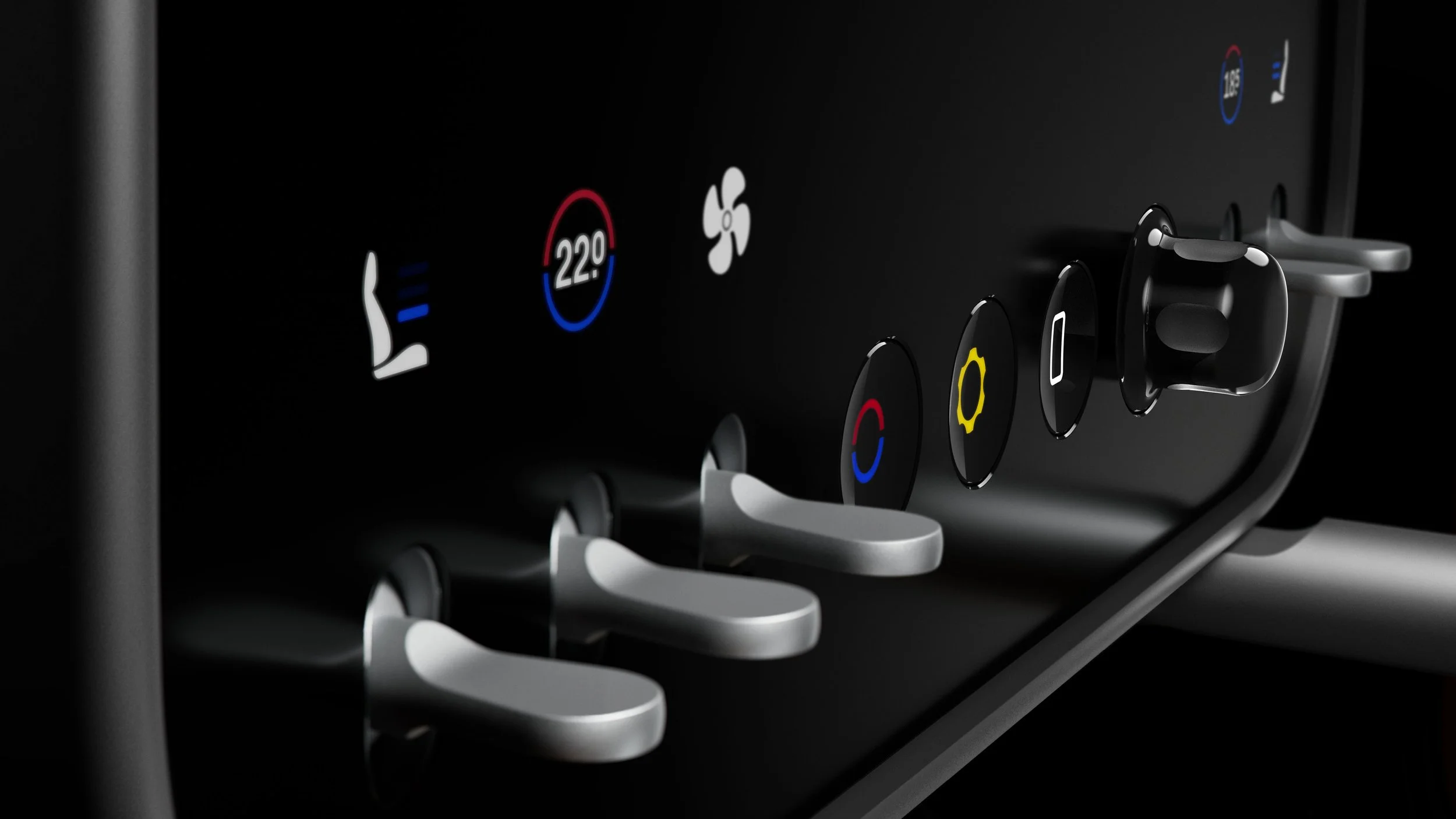
Building on LoveFrom’s industry-defining expertise, the Ferrari Luce interface centres on tactility, clarity, and intuitive interaction. The design team prioritised physical controls that invite touch and engagement, creating a stronger connection between driver and car. It challenges the convention that electric cars must rely on large touchscreens. Many Ferrari Luce controls are mechanical and precisely engineered, making every interaction simpler and more direct. Inspired by classic sports cars and Formula One single-seaters, the interface stays clearly organised and reduced to essential functions.
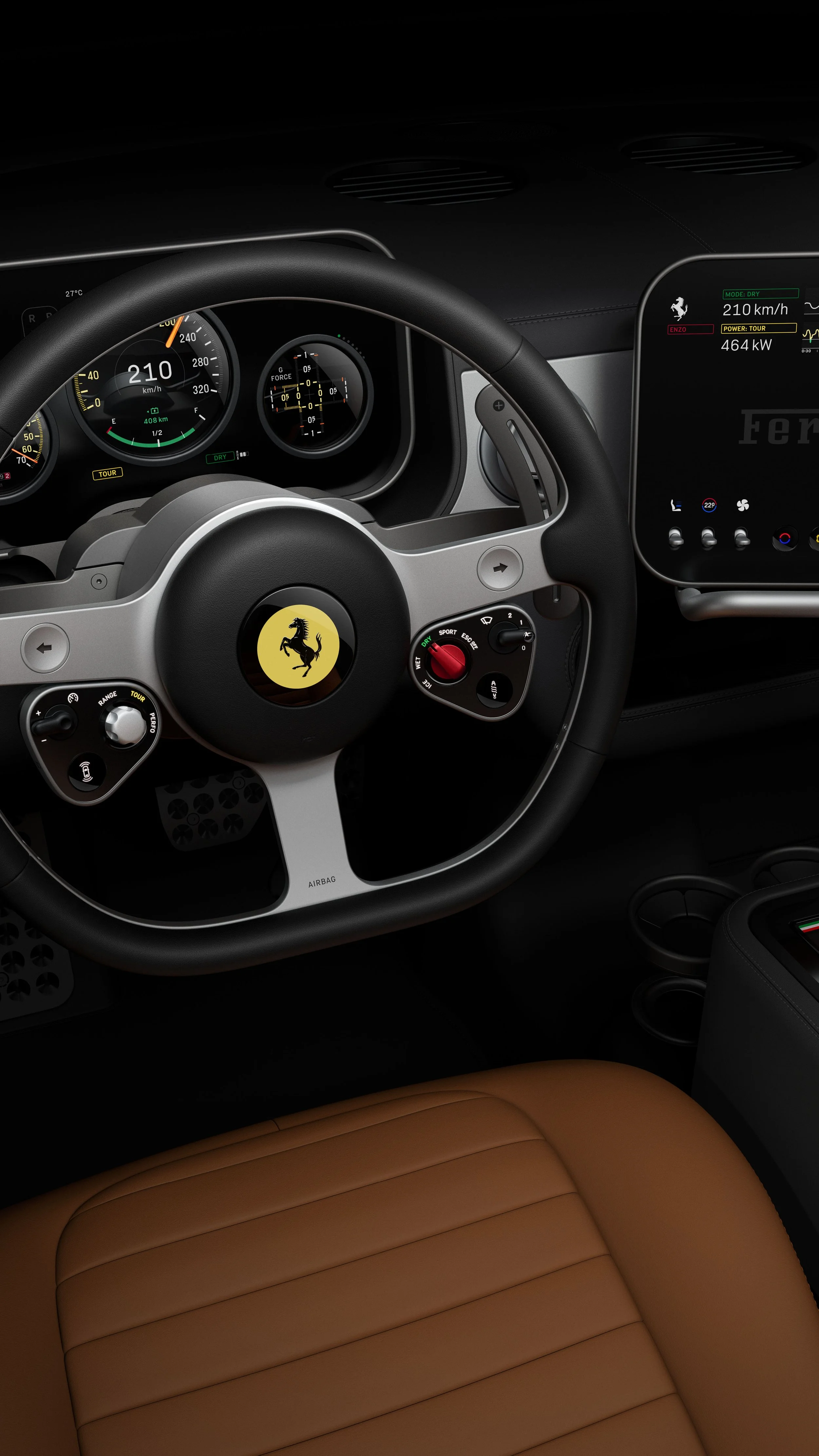
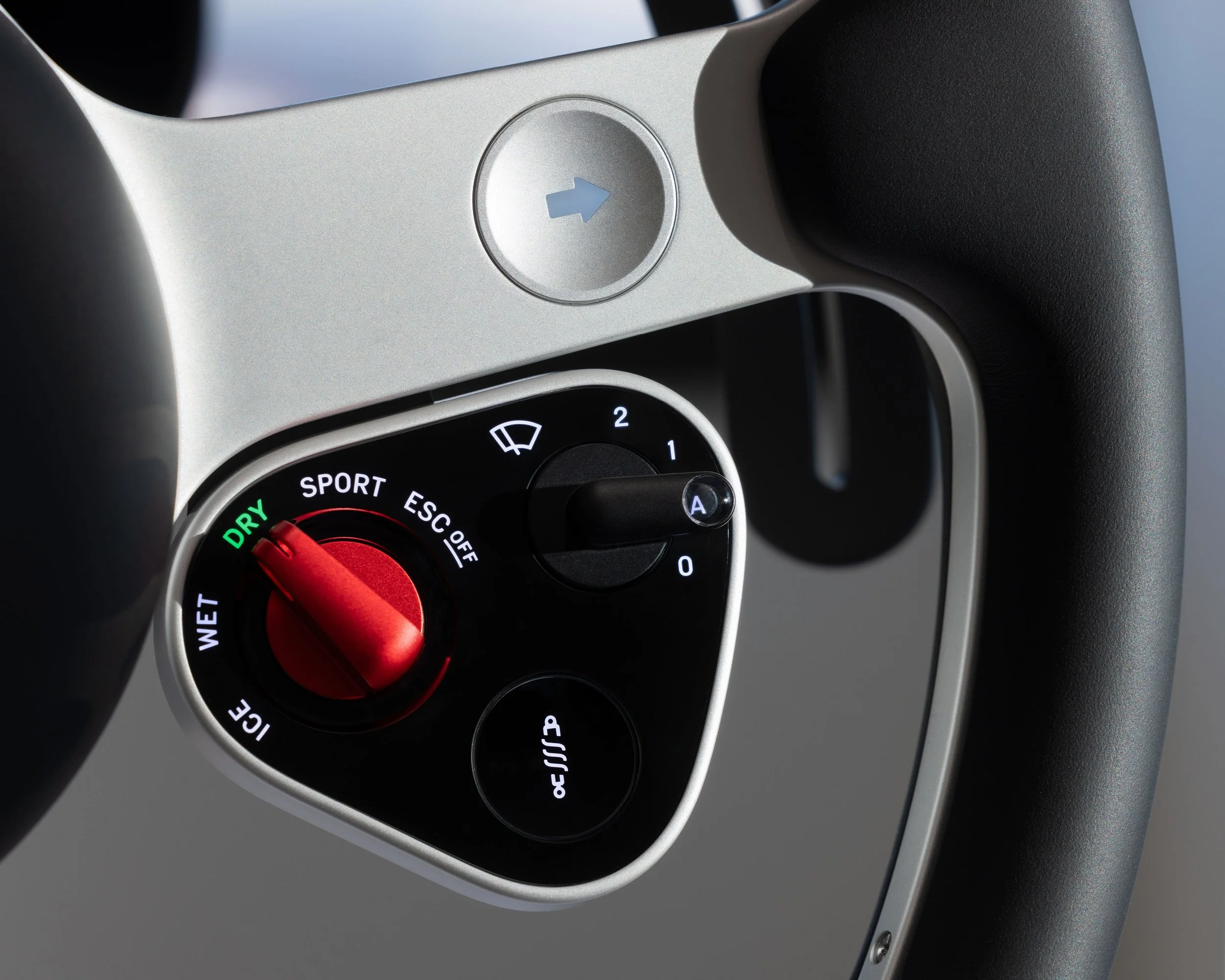
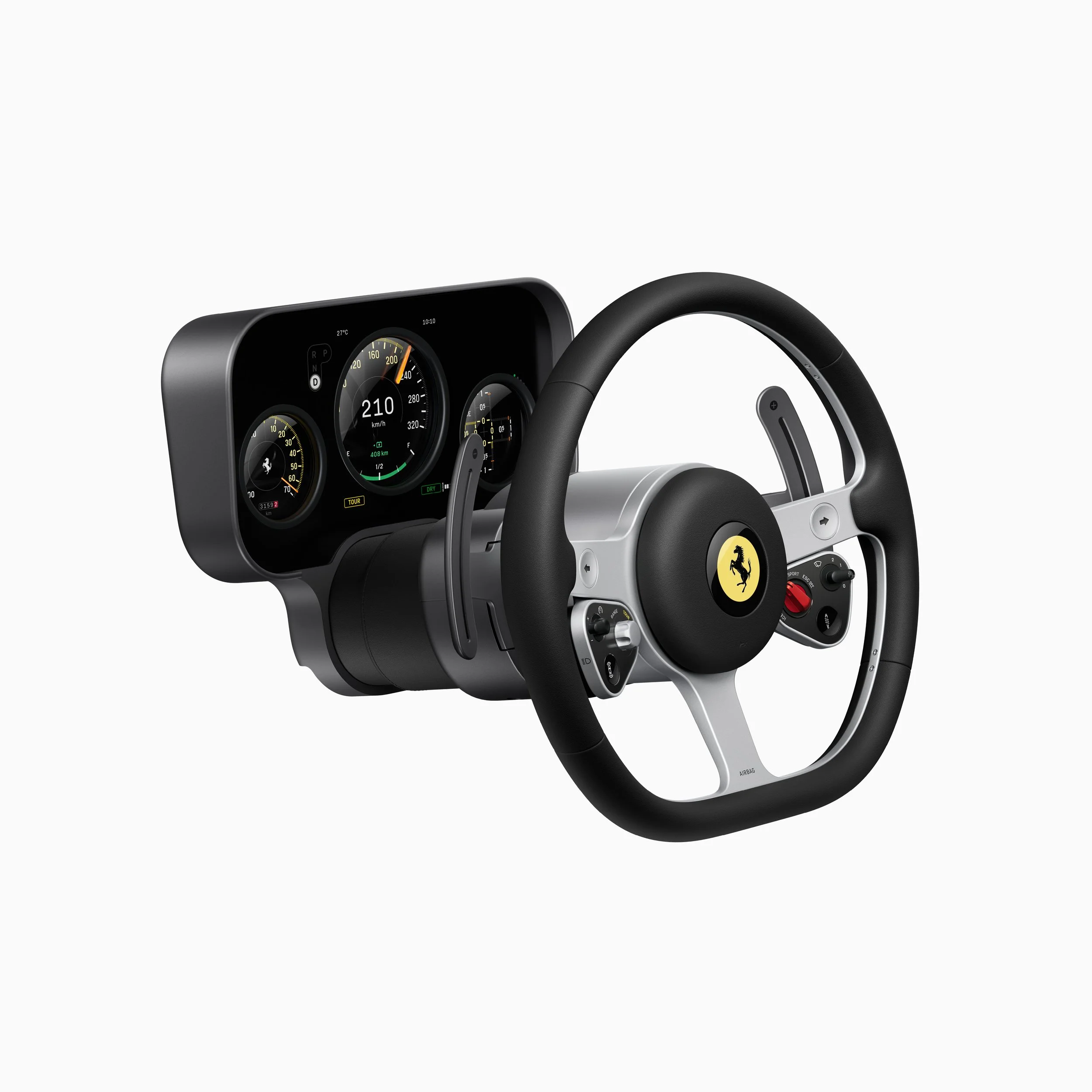
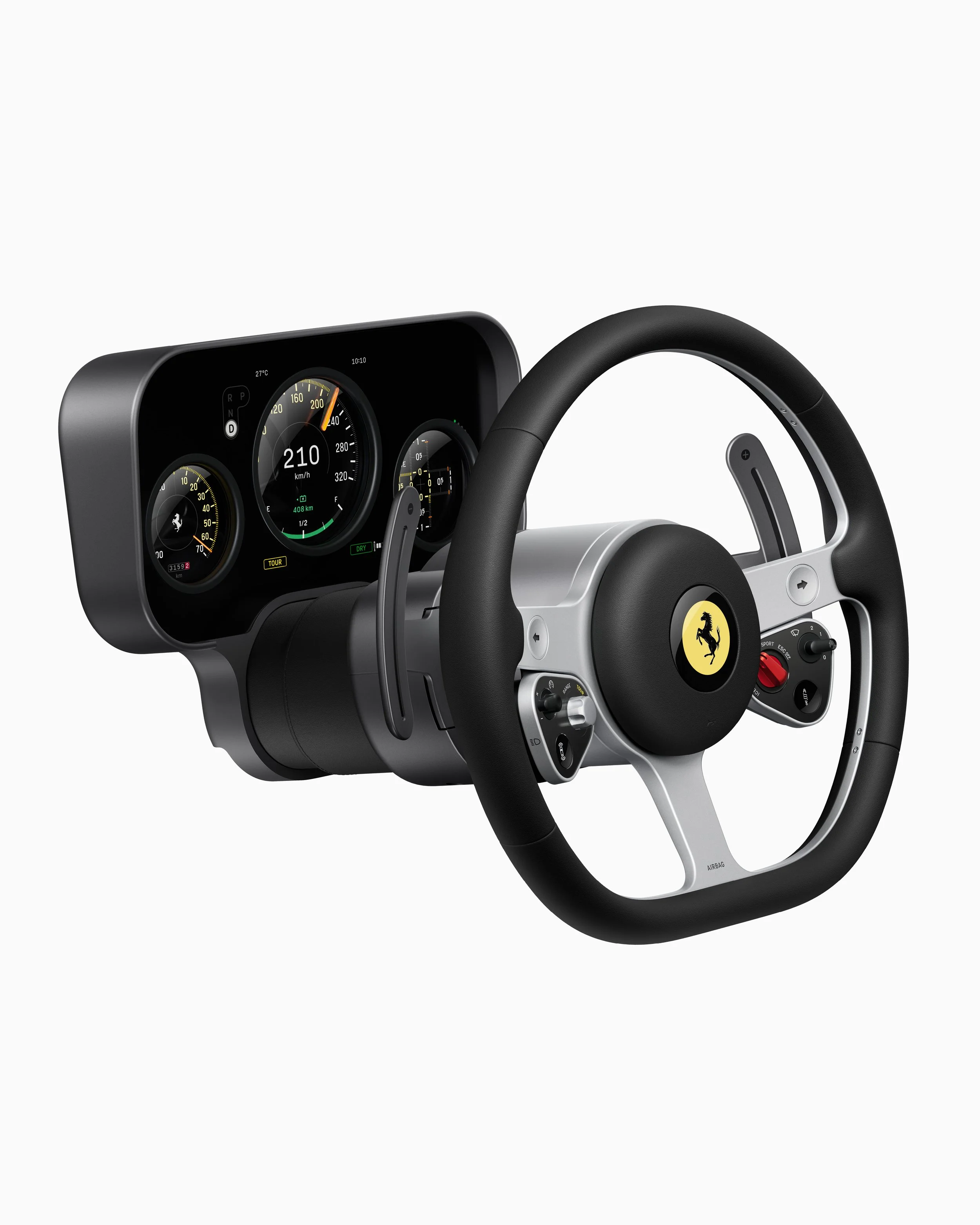
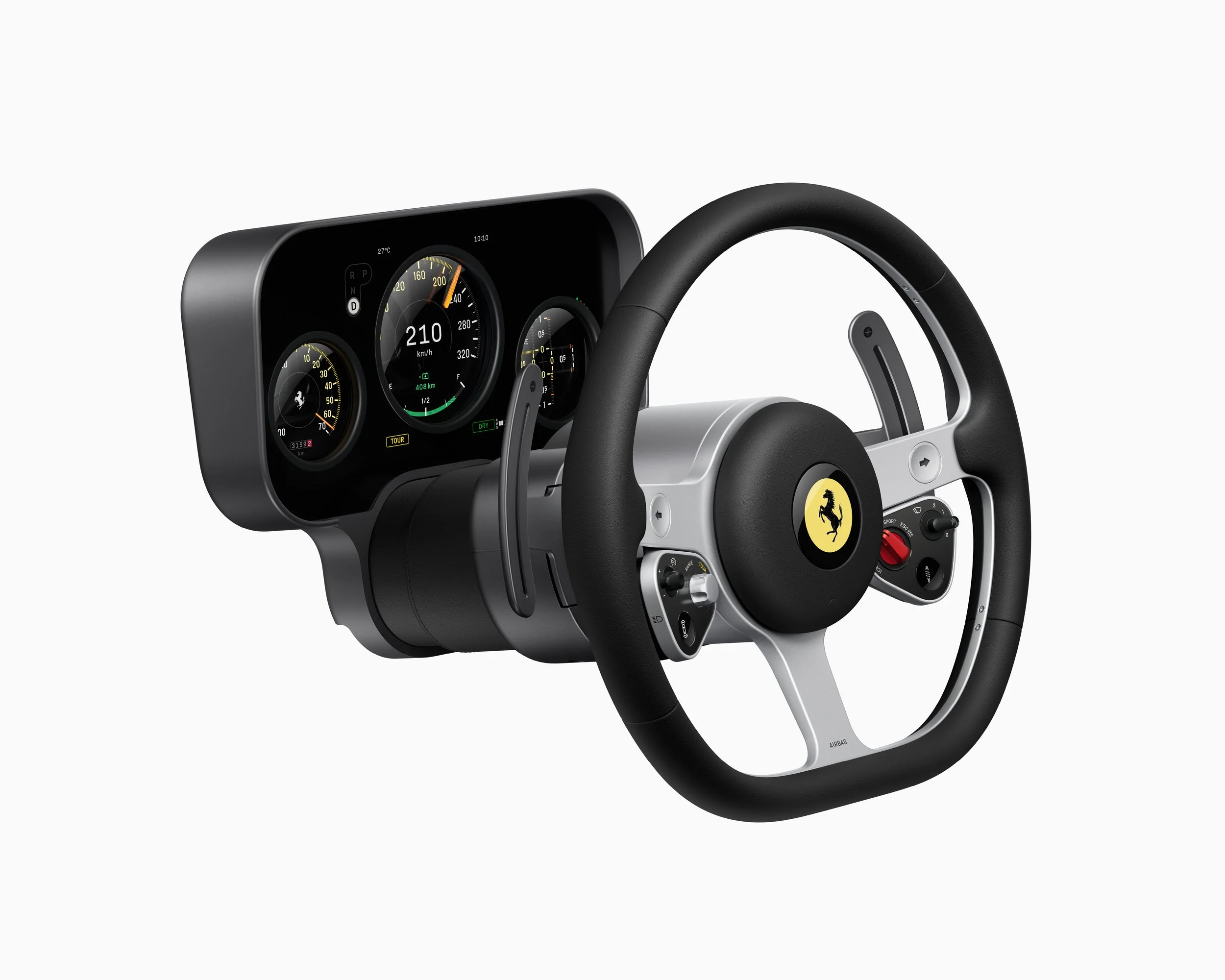
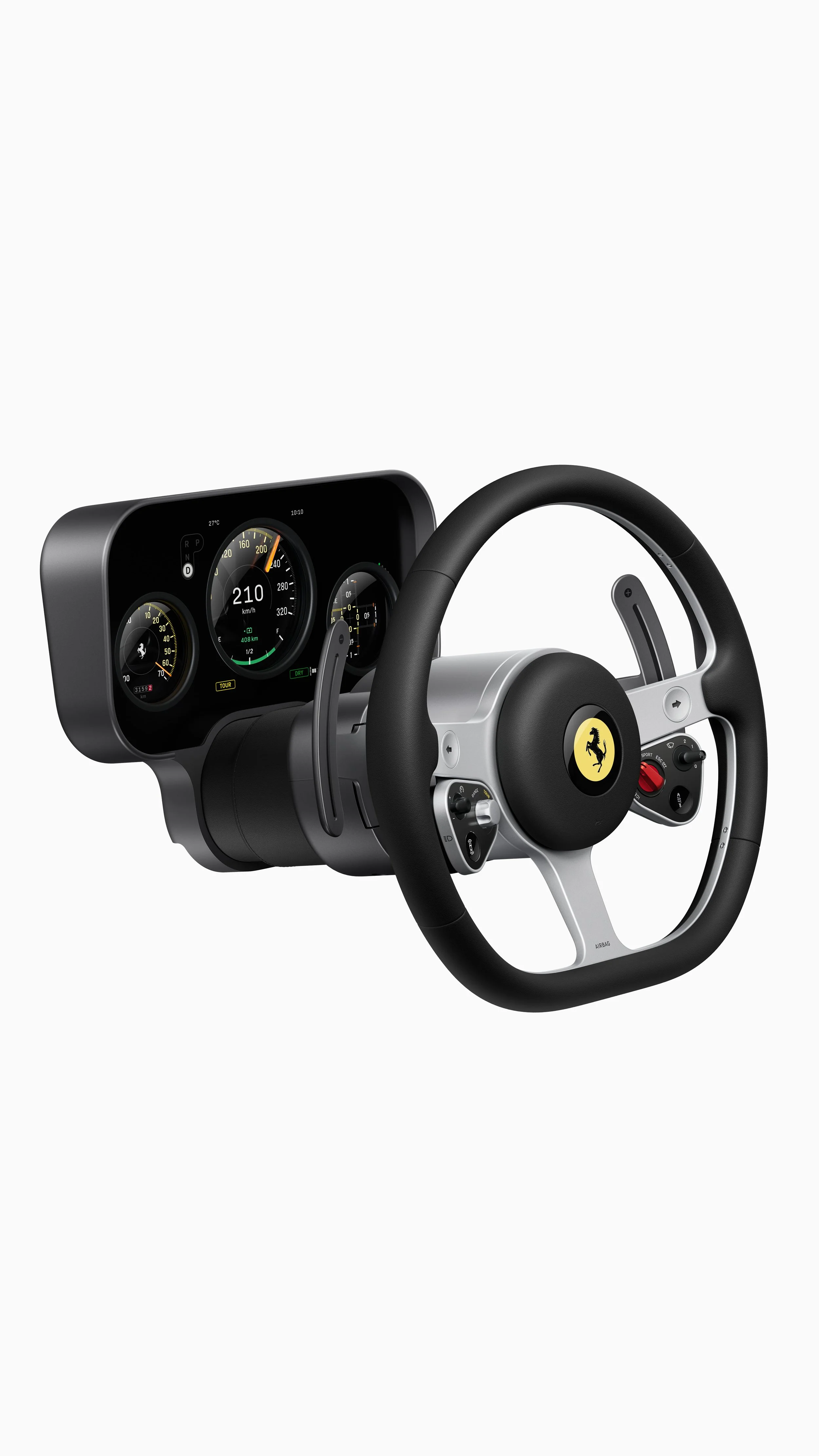
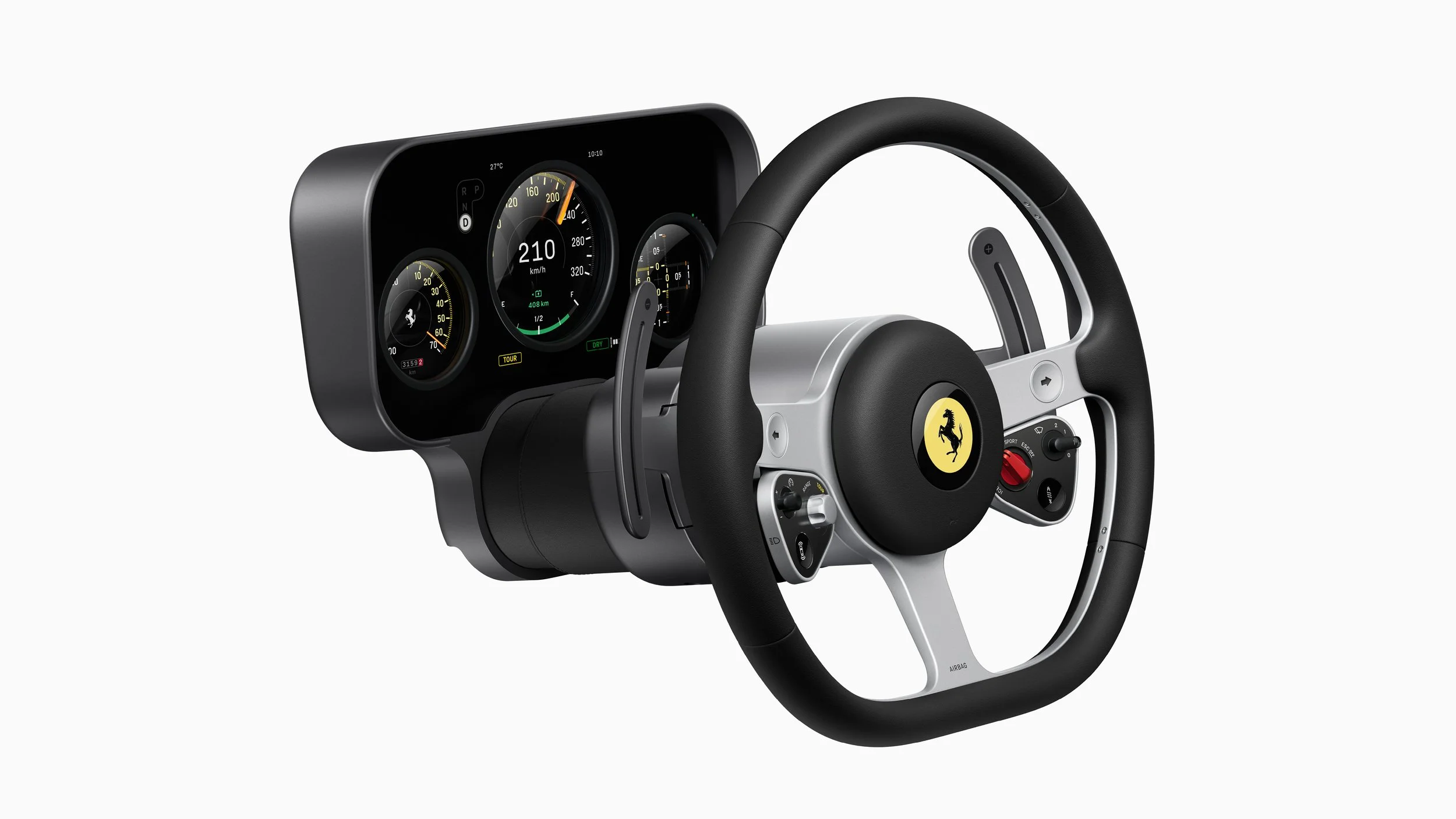
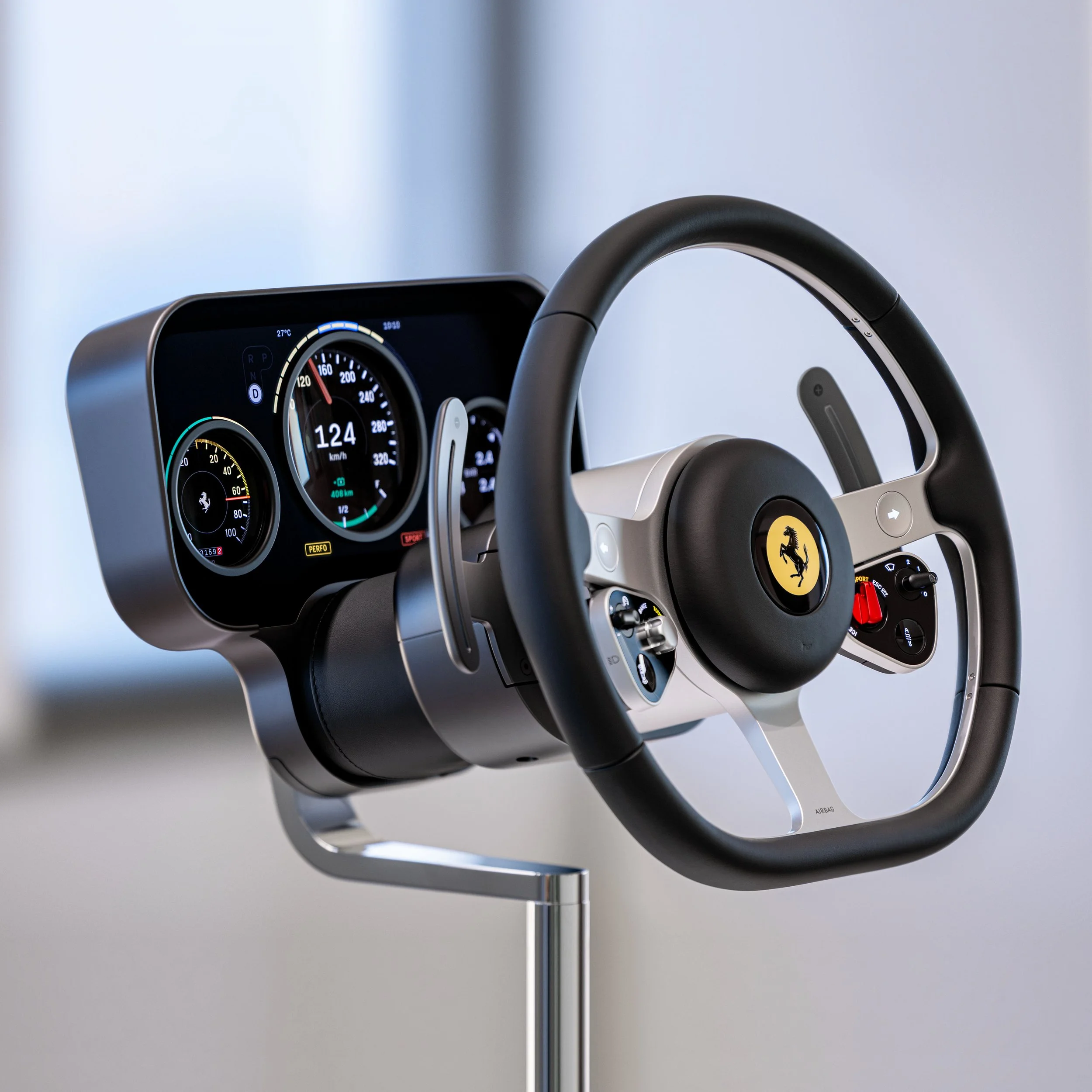
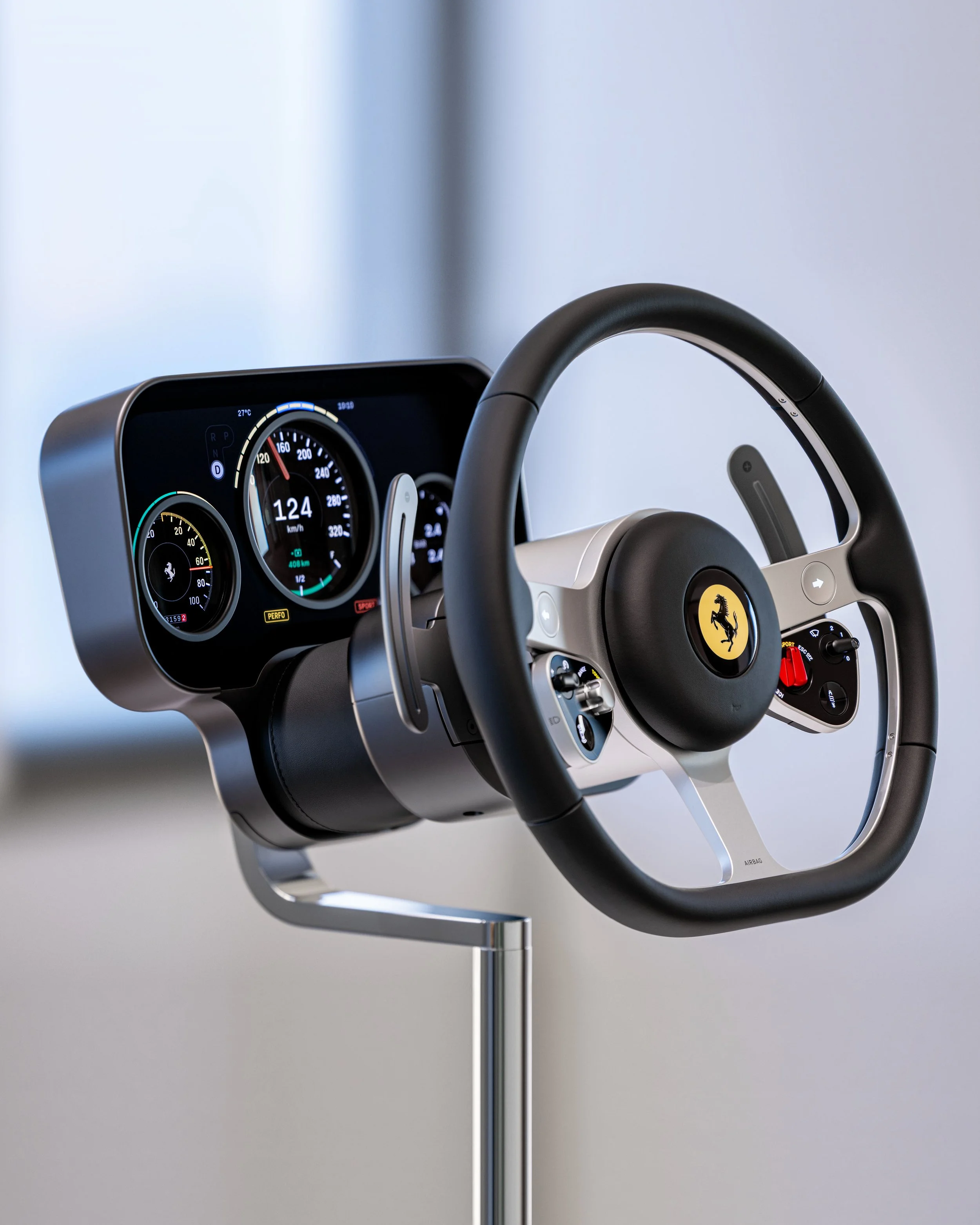
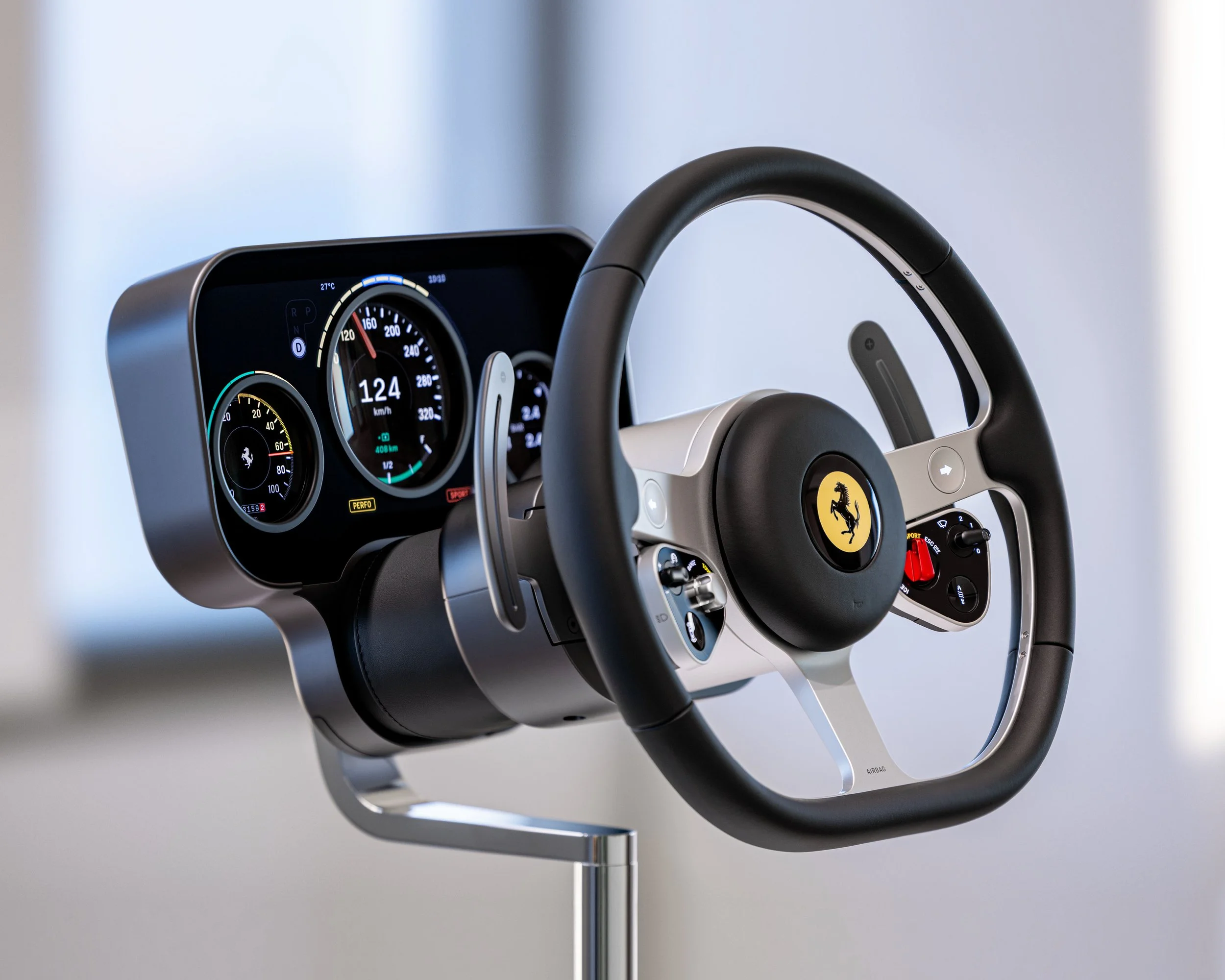
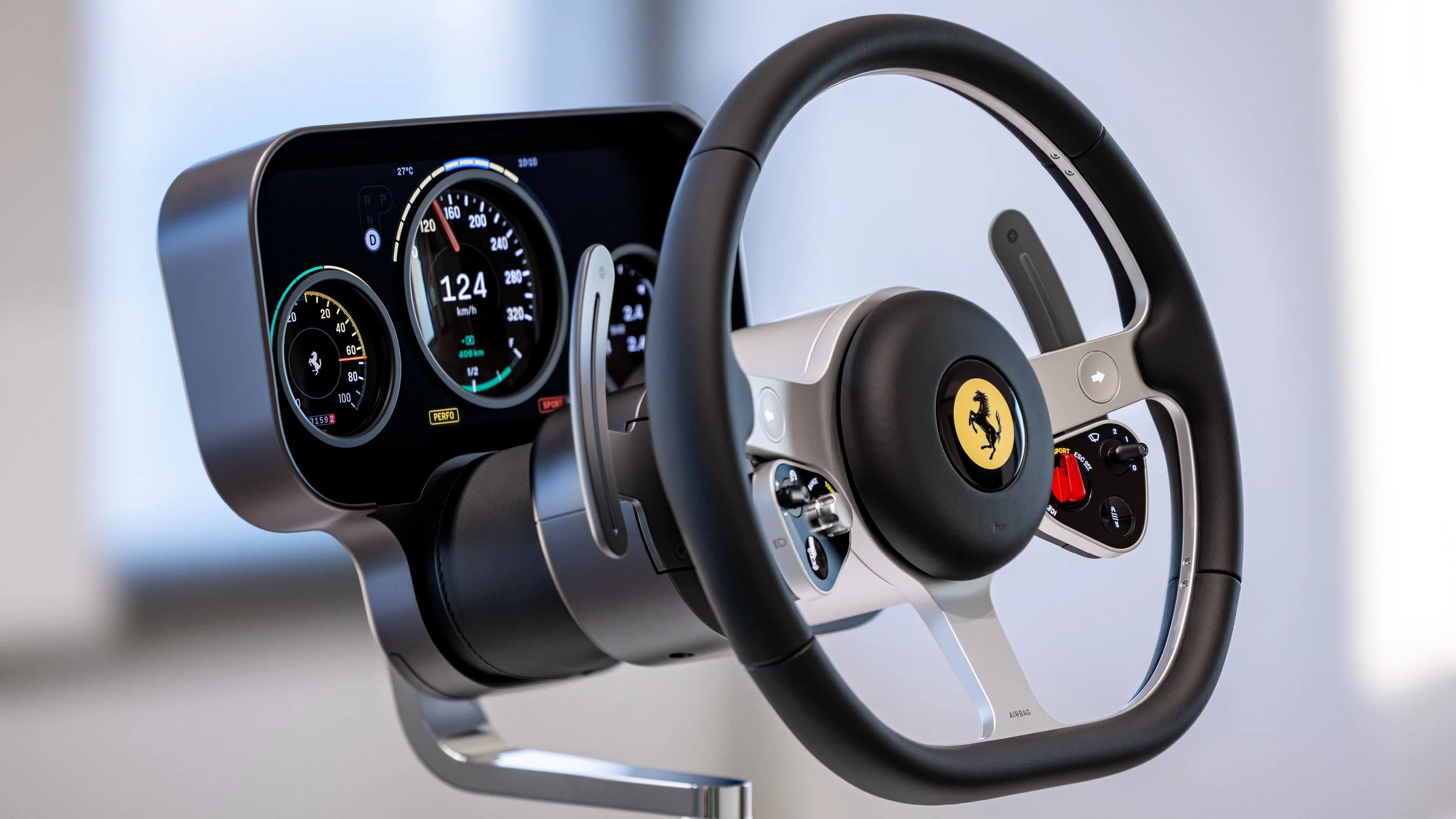
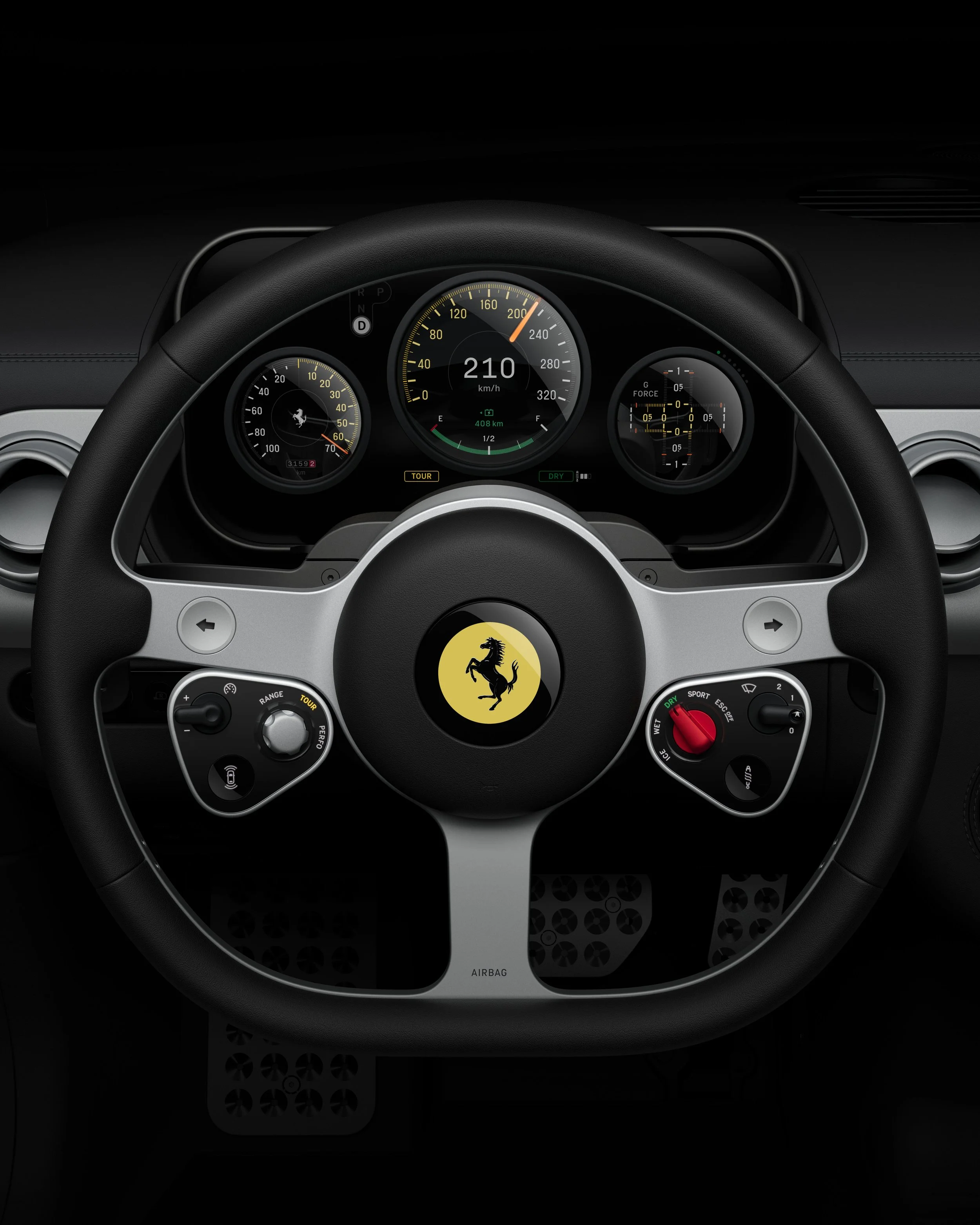
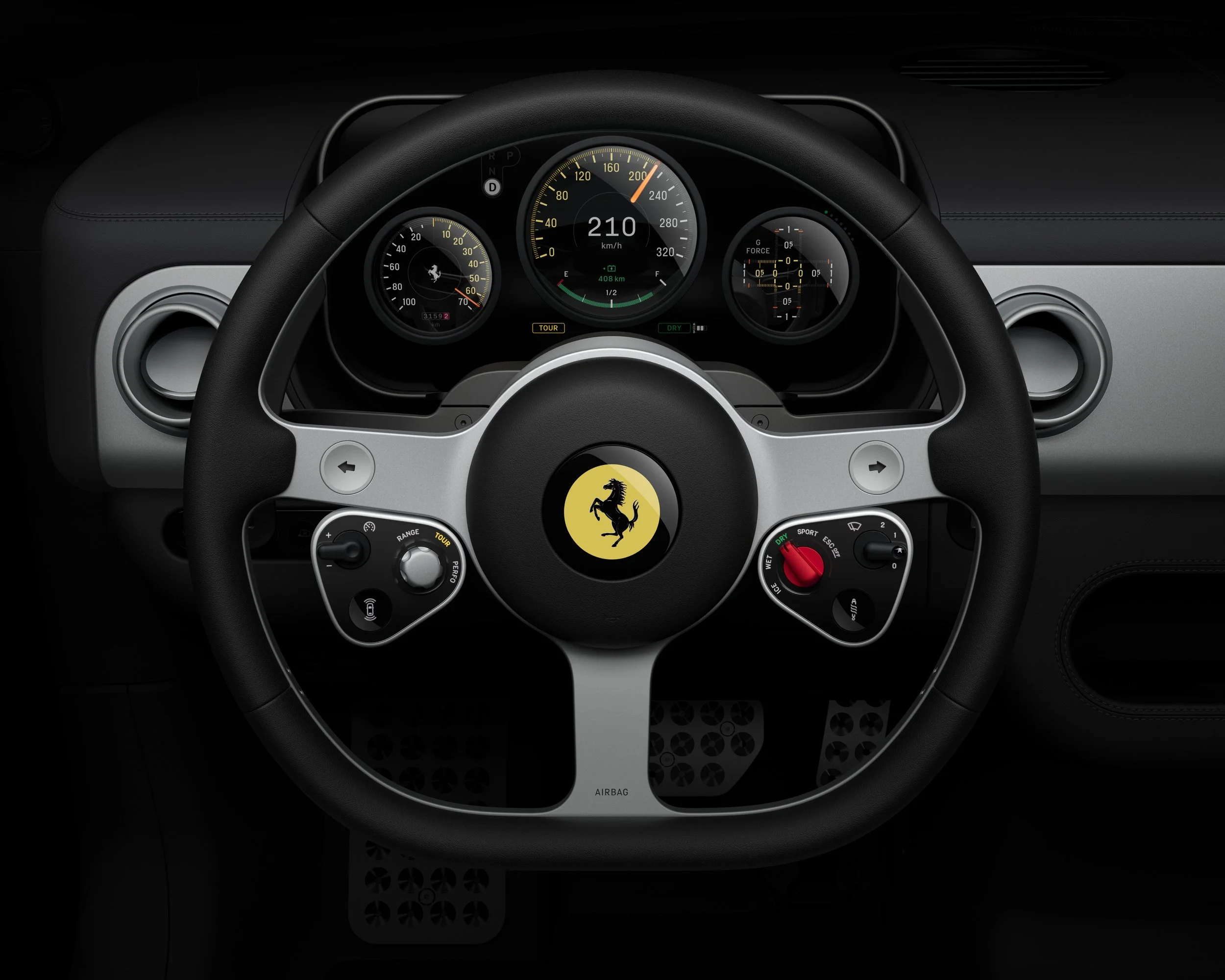
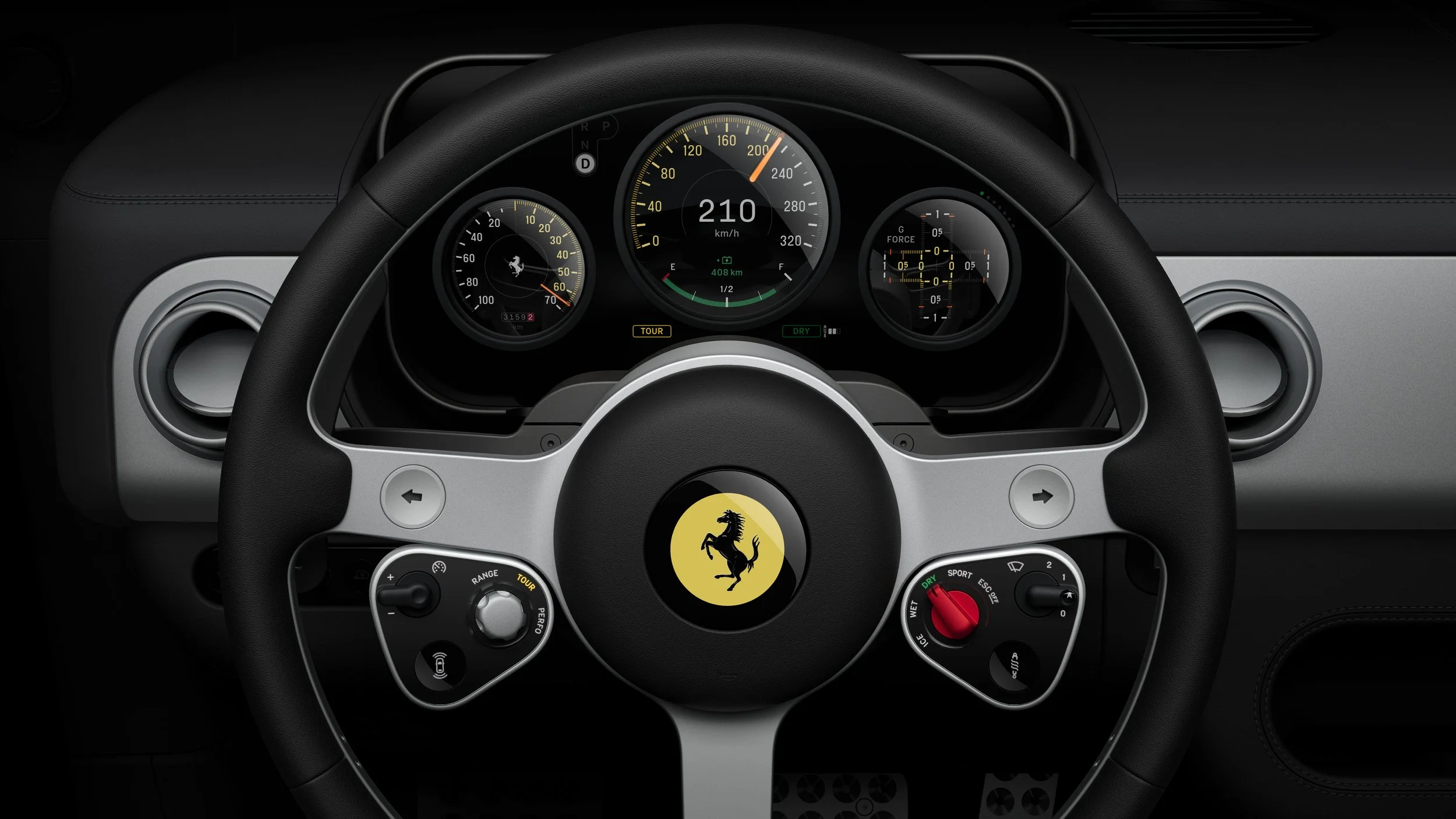
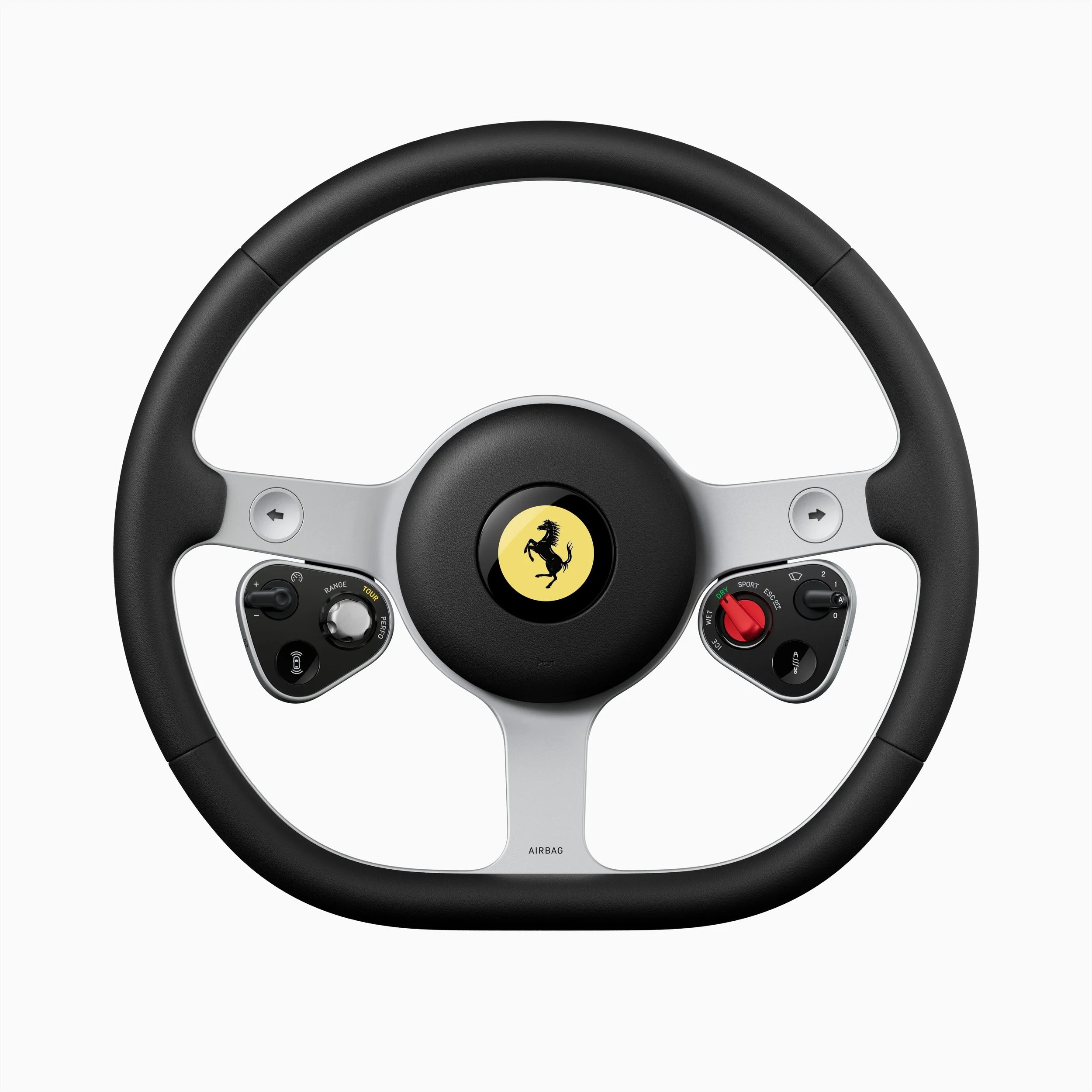
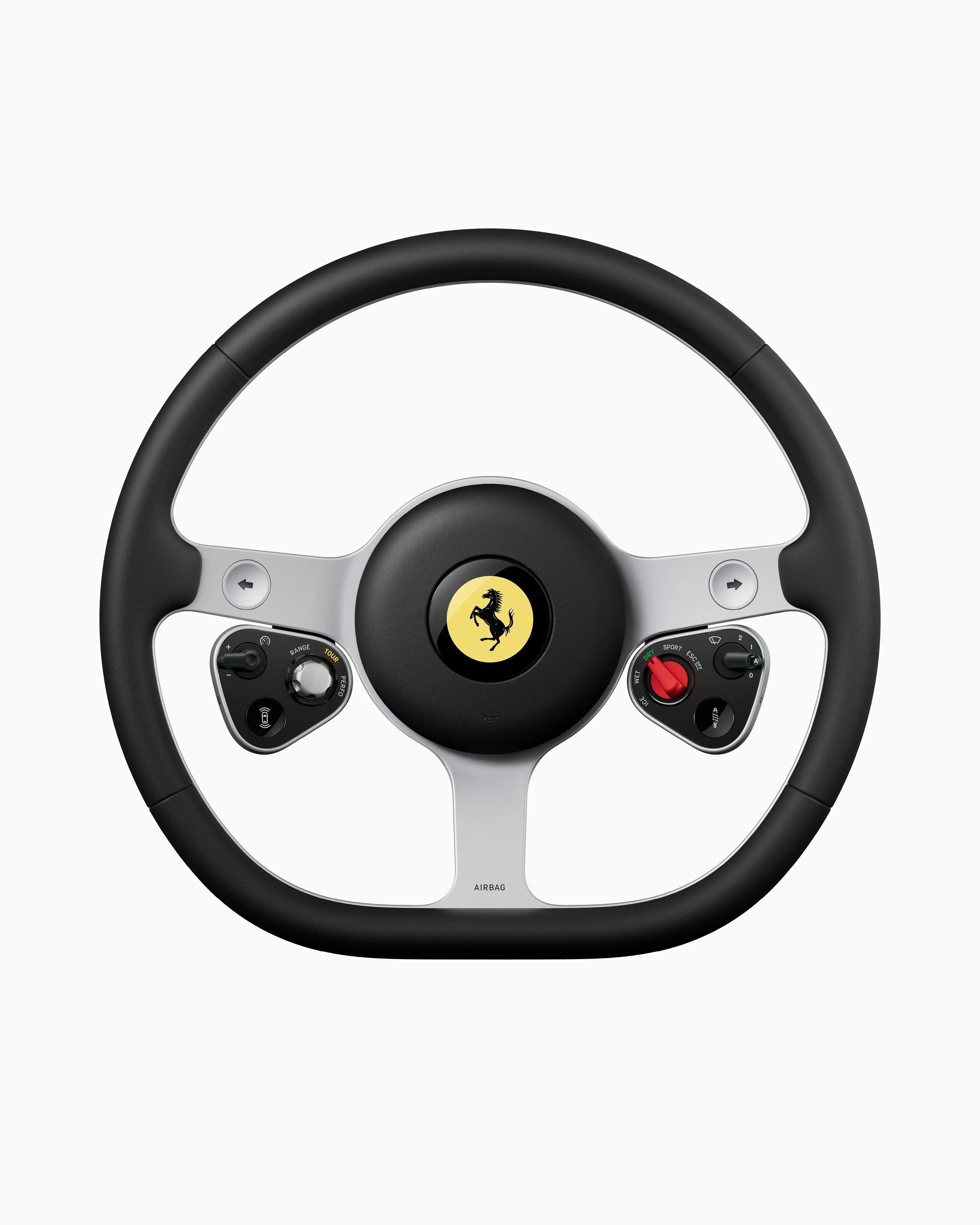
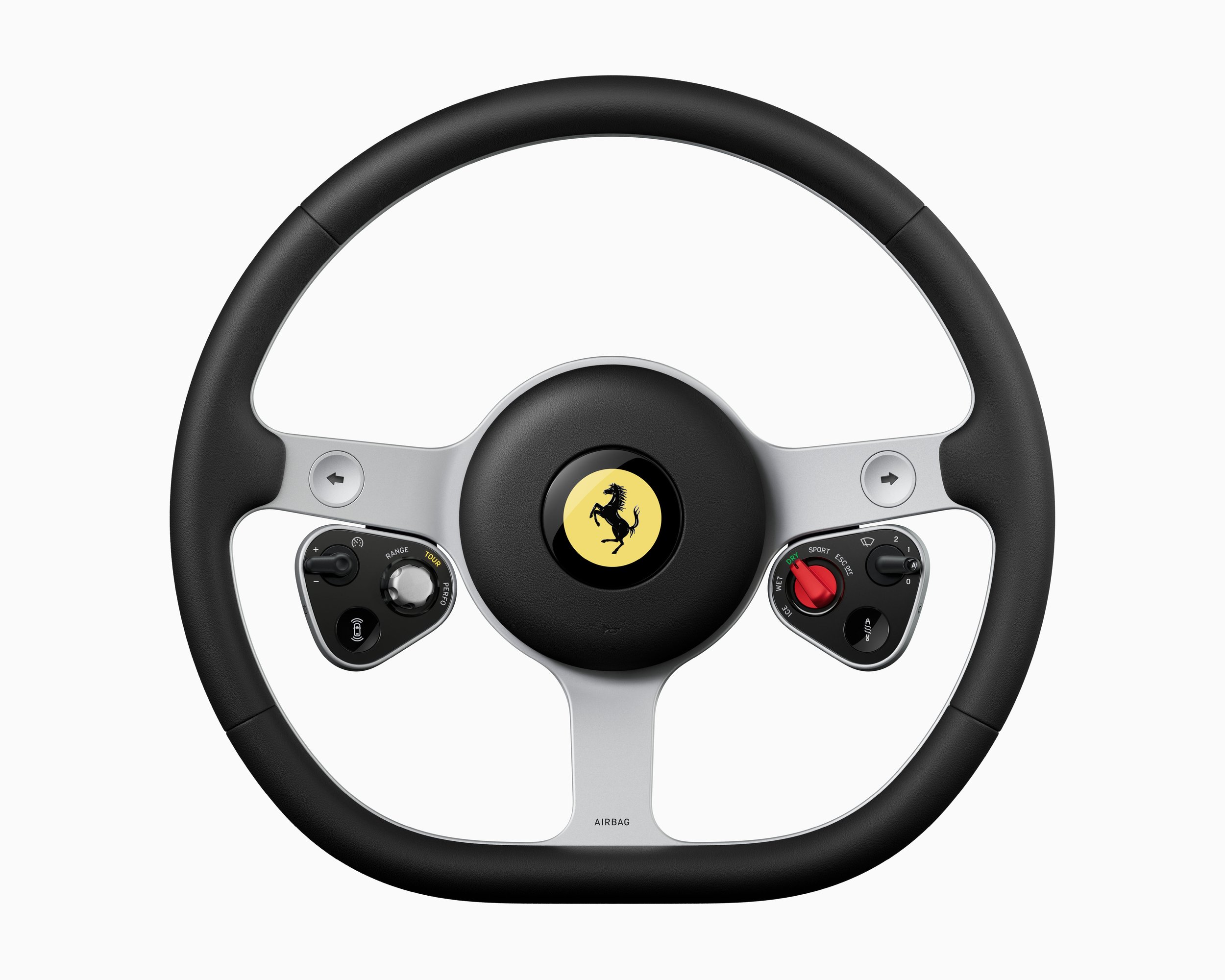
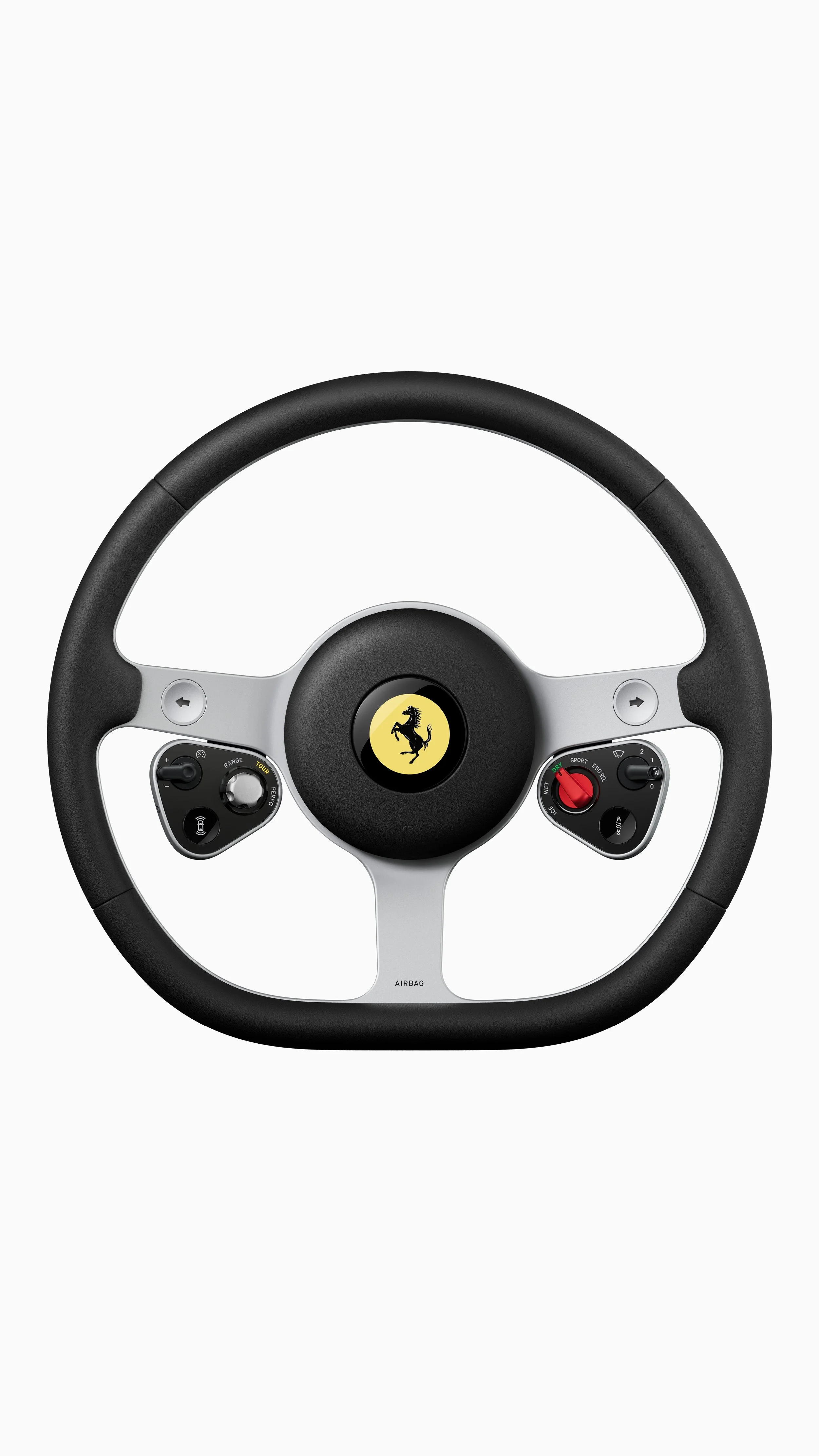
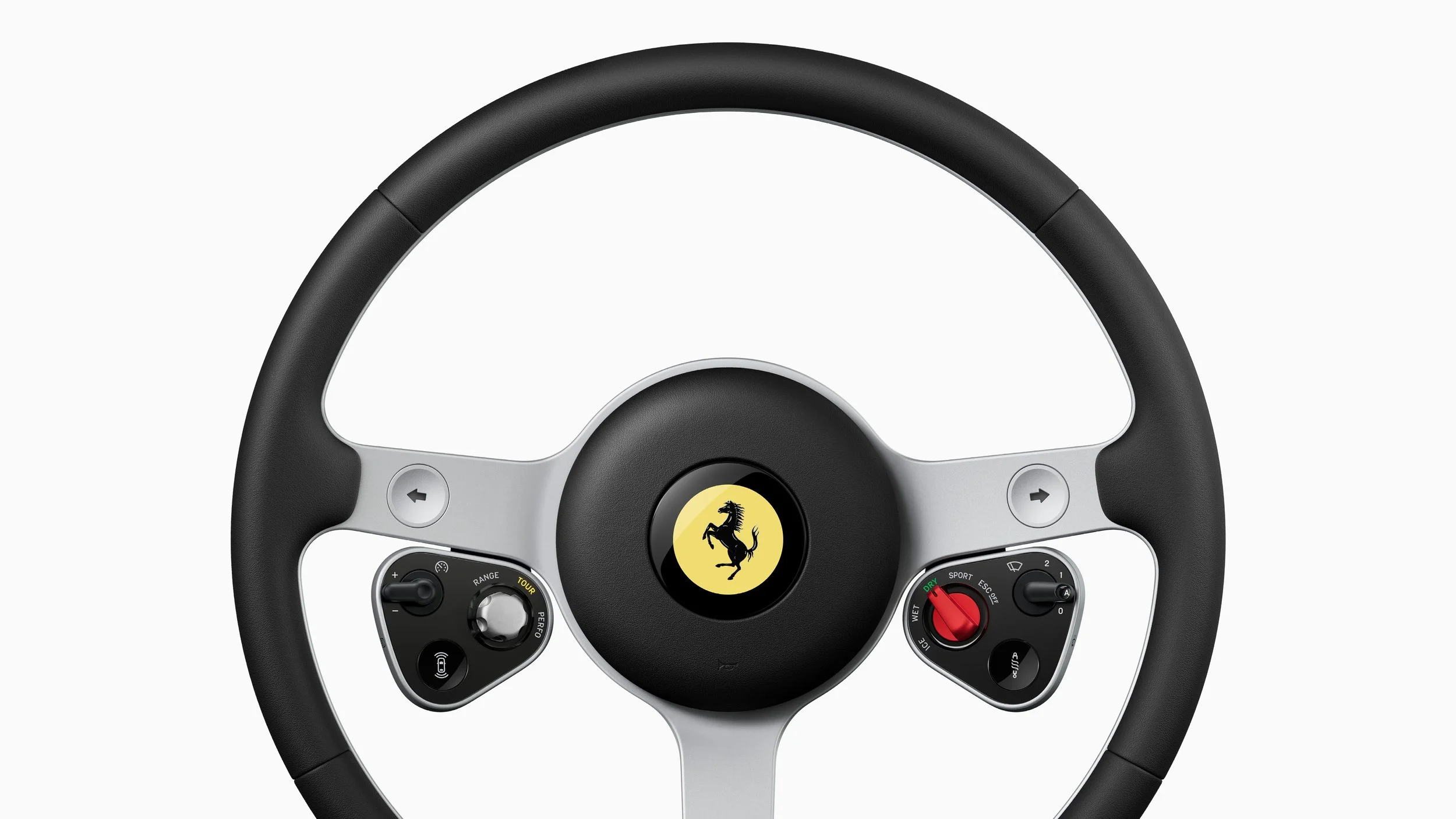
The Ferrari Luce steering wheel pays homage to Ferrari’s rich heritage while it embraces modern innovation. The design team chose a simplified three-spoke form and reinterpreted the iconic 1950s and ‘60s wooden three-spoke Nardi wheel. The spokes intentionally expose and highlight the aluminium structure, showcasing the material’s strength and finish. The team manufactured the wheel in 100% recycled aluminium. It also developed an alloy specifically for the Ferrari Luce to ensure mechanical strength and superior surface quality for anodisation. The steering wheel uses 19 CNC-machined parts and weighs 400 grams less than a standard Ferrari steering wheel.
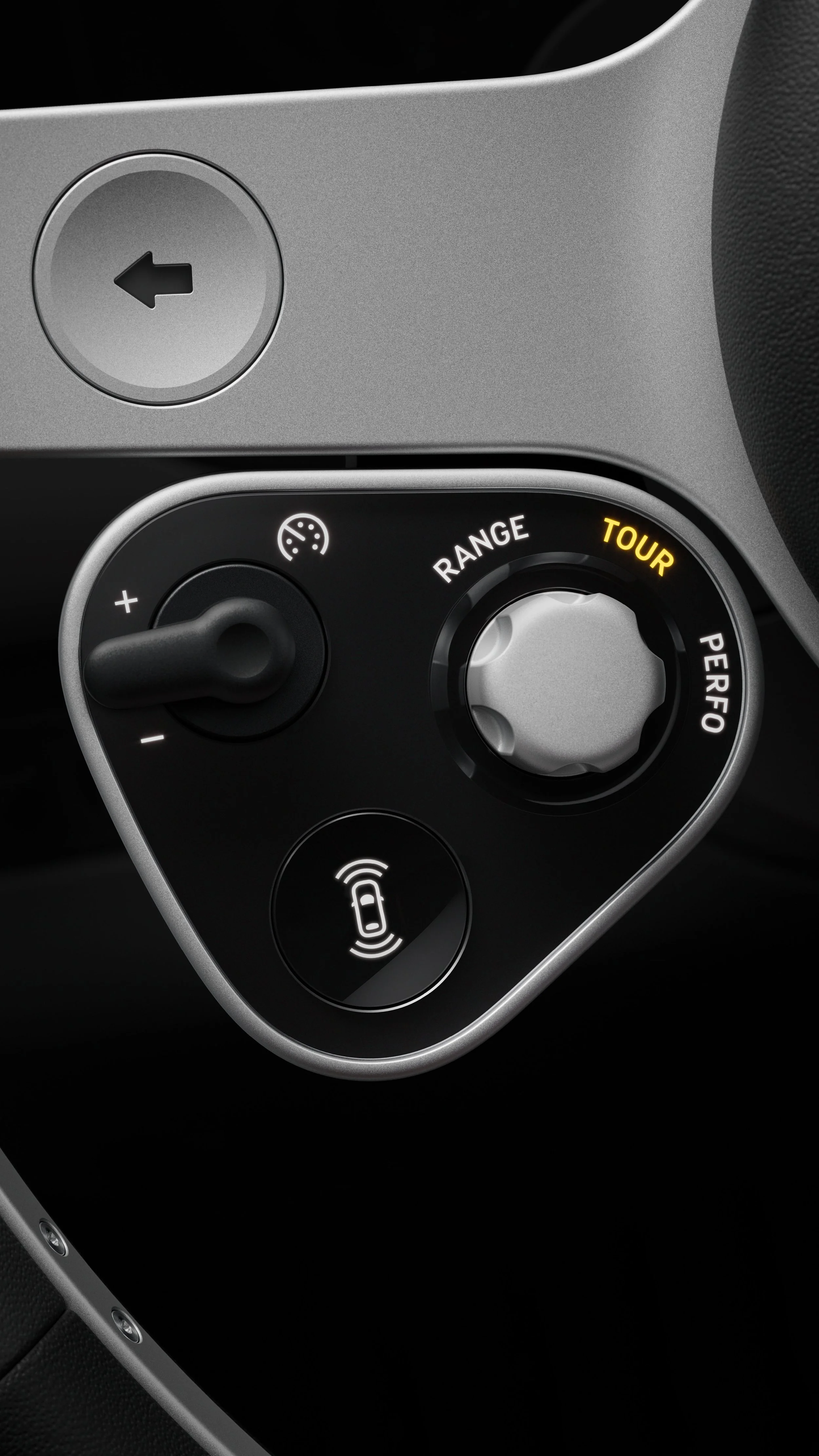
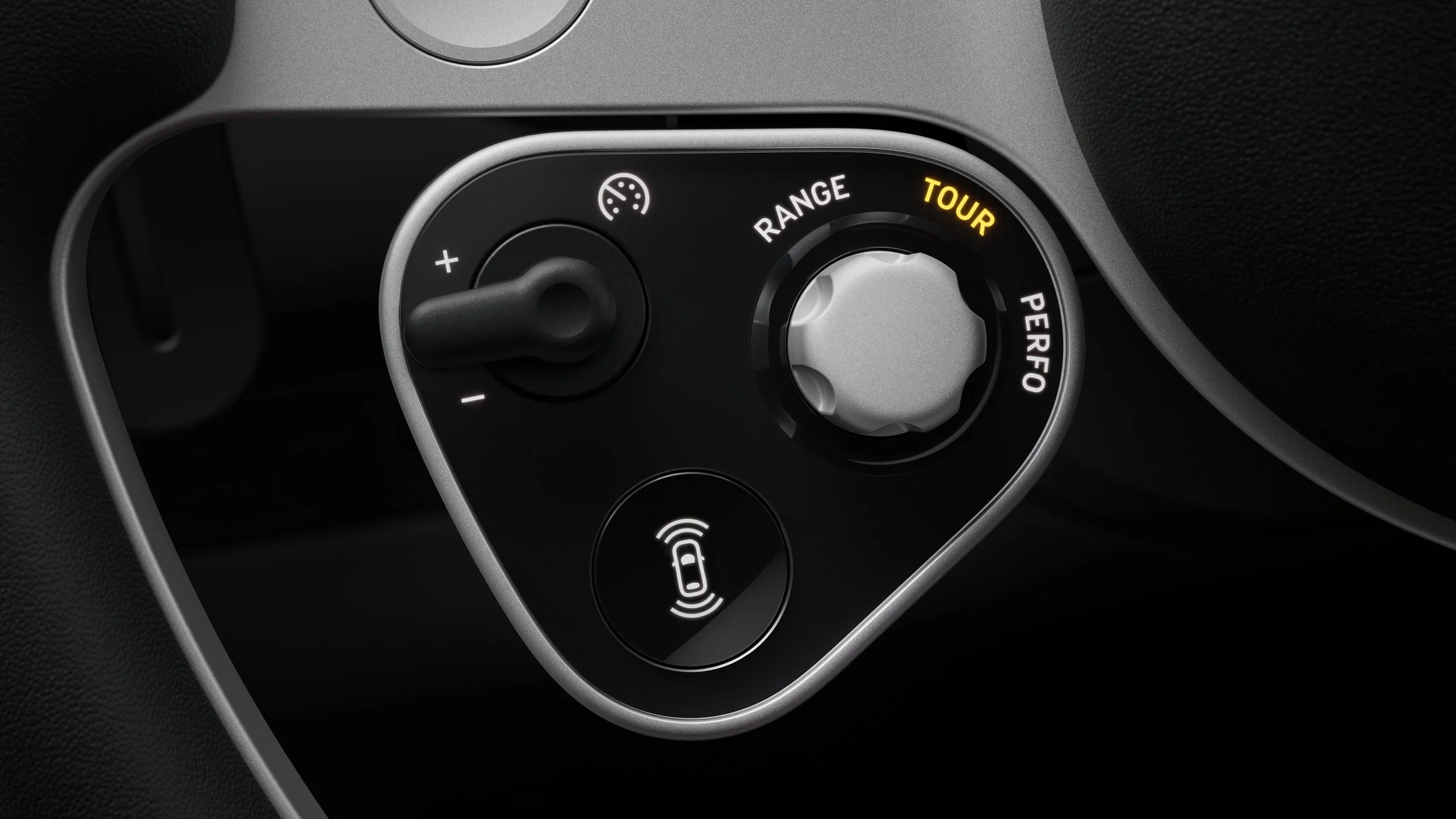
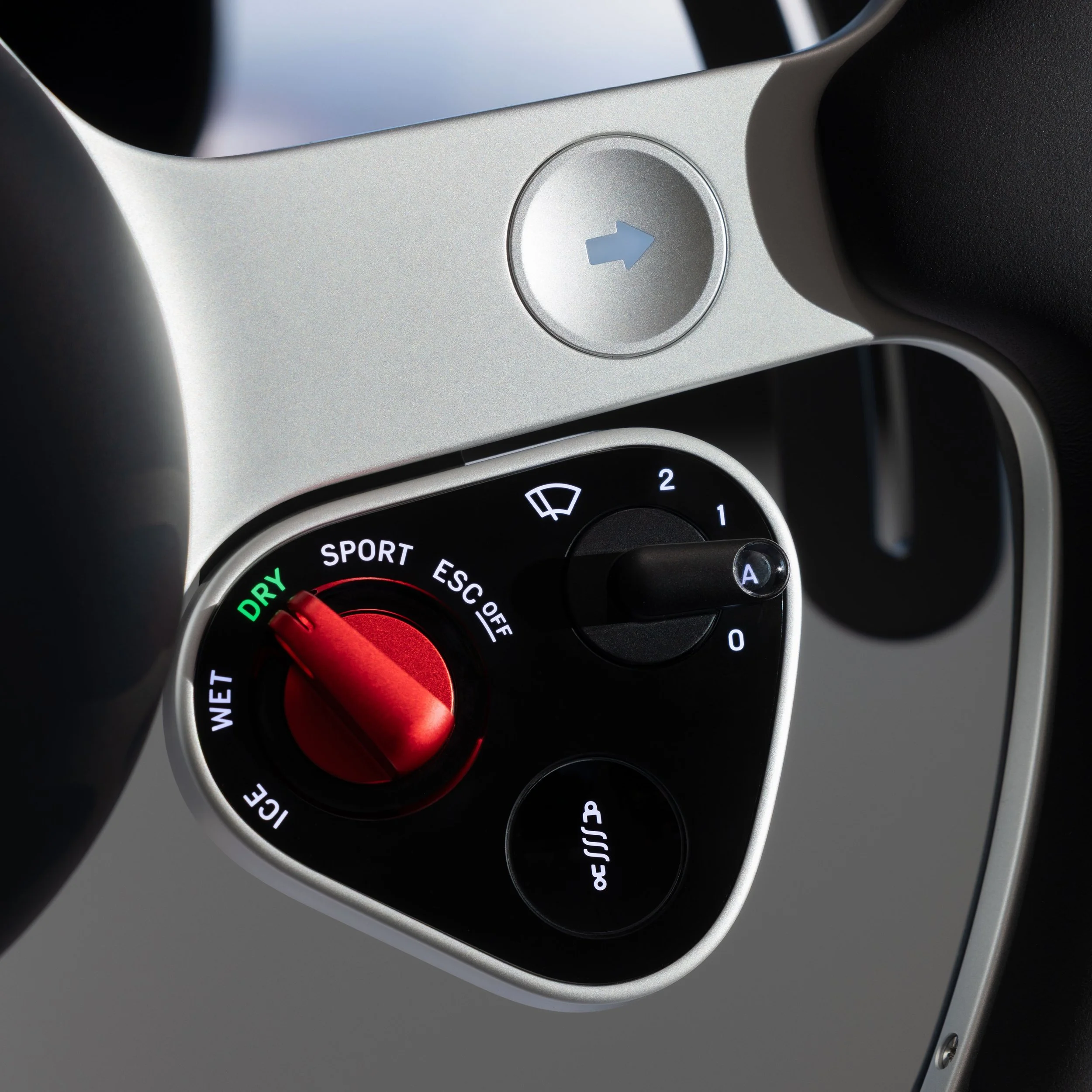
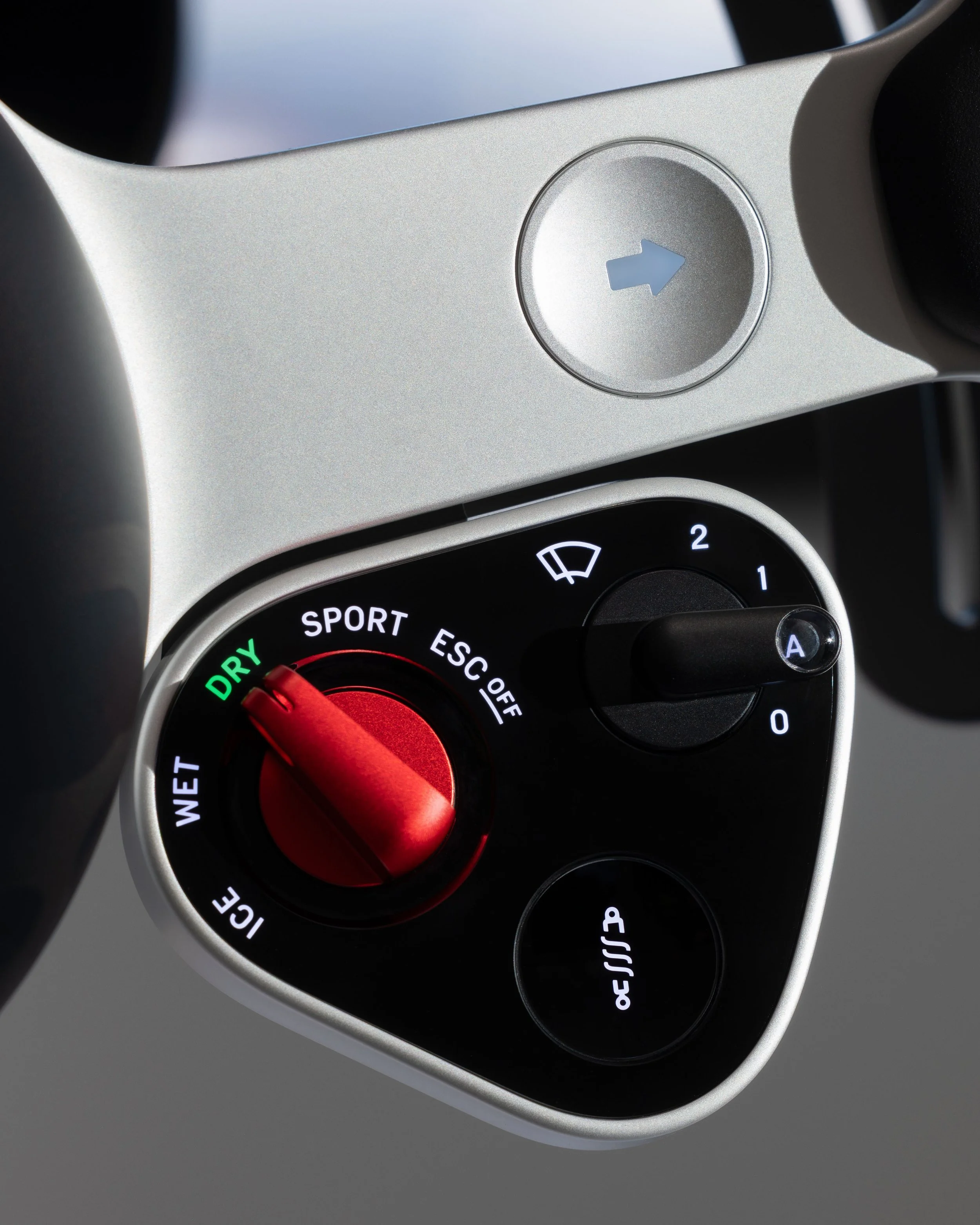
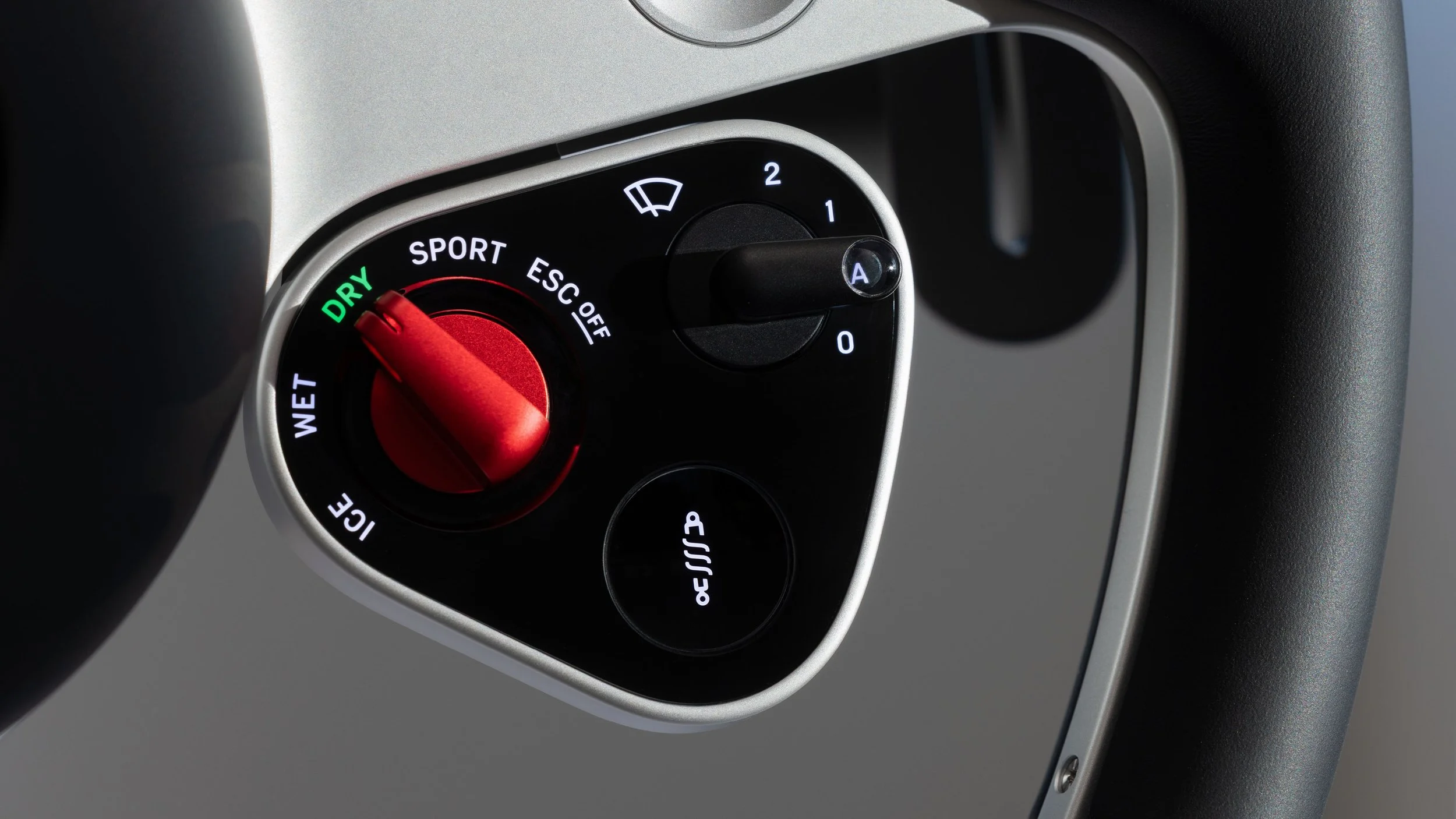
The team organised steering wheel controls into two analogue control modules to ensure functionality and clarity. This intuitive arrangement echoes the layout of Formula One single-seaters. The team developed every button to deliver the most harmonious combination of mechanical and acoustic feedback, based on more than 20 evaluation tests with Ferrari test drivers.
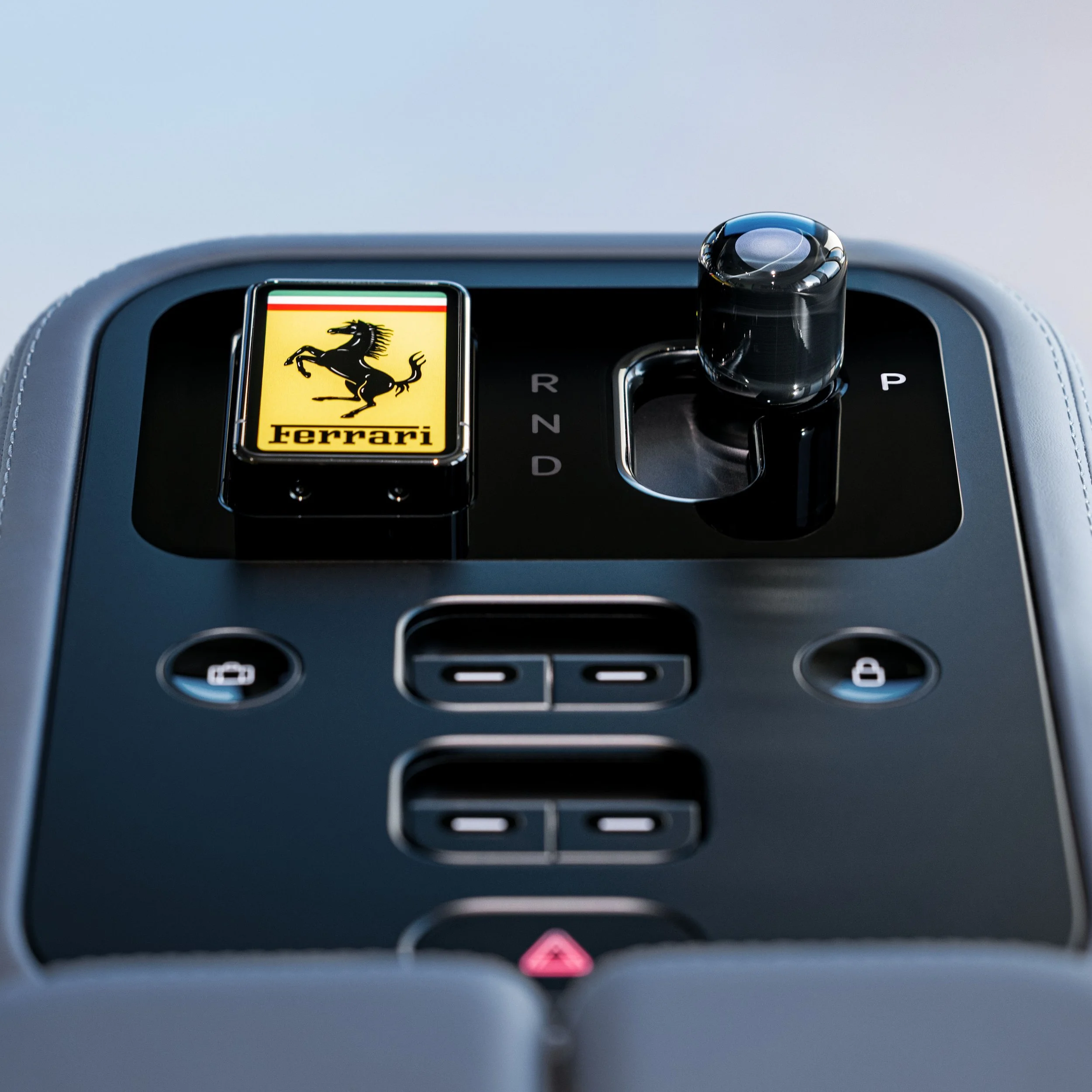
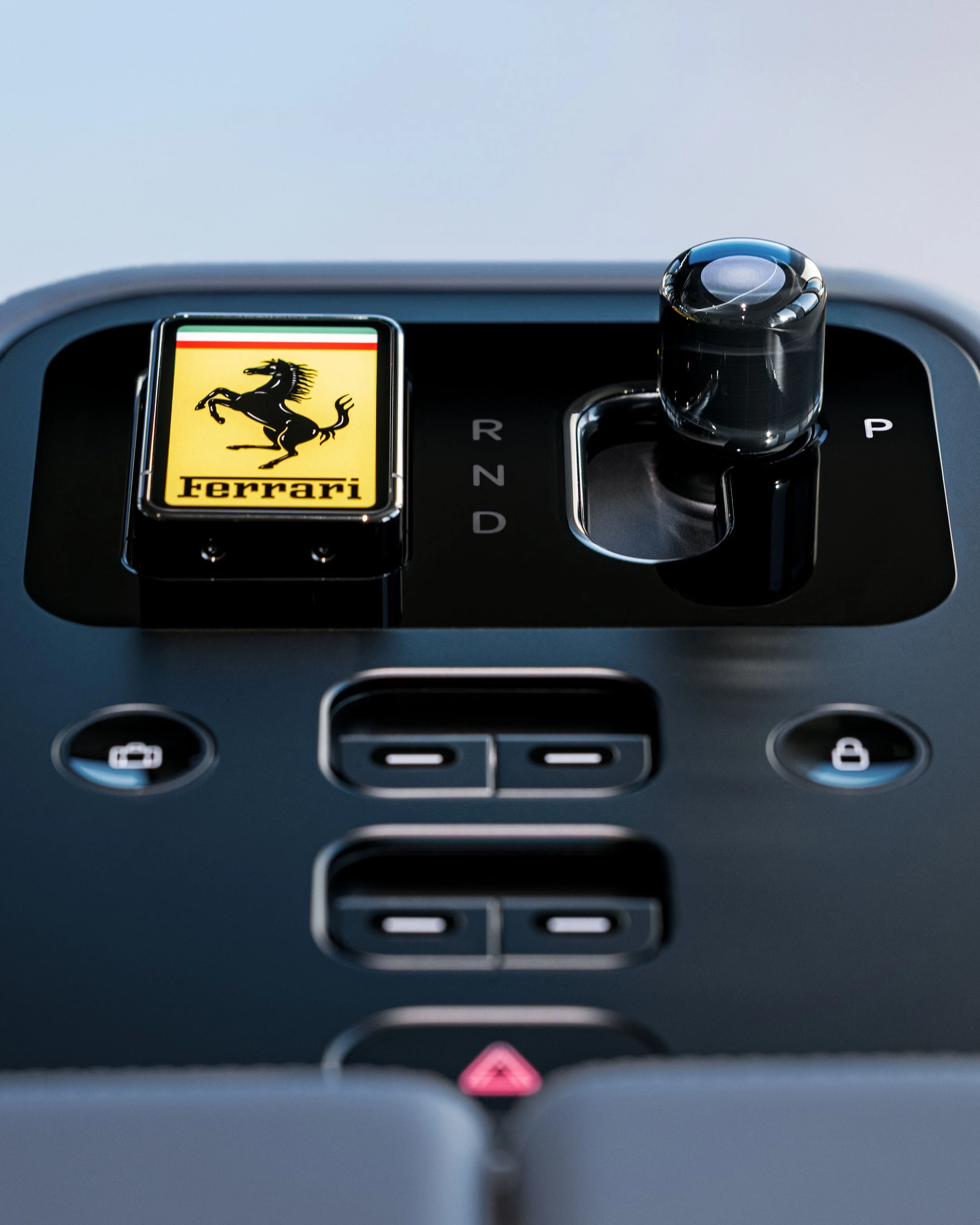
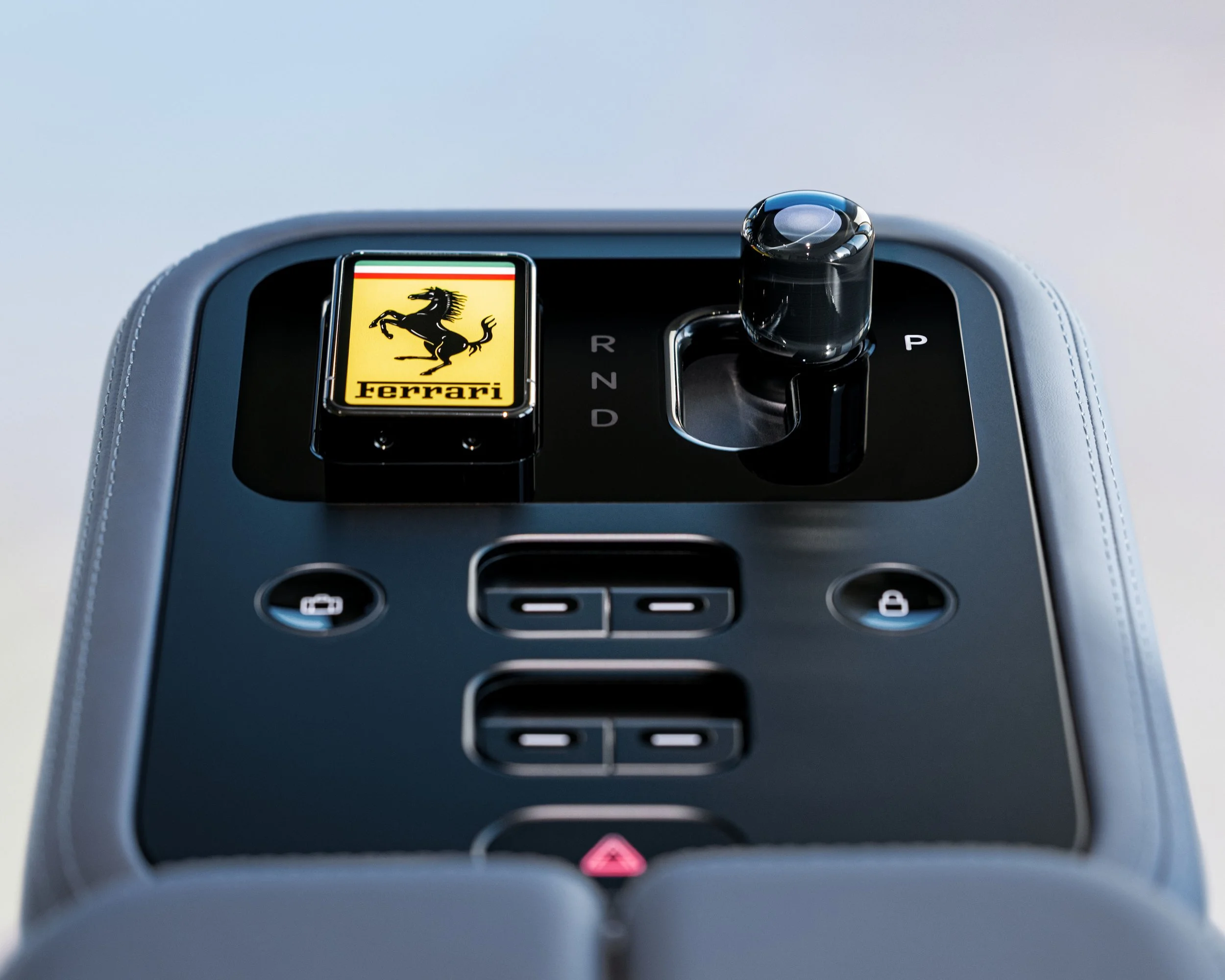
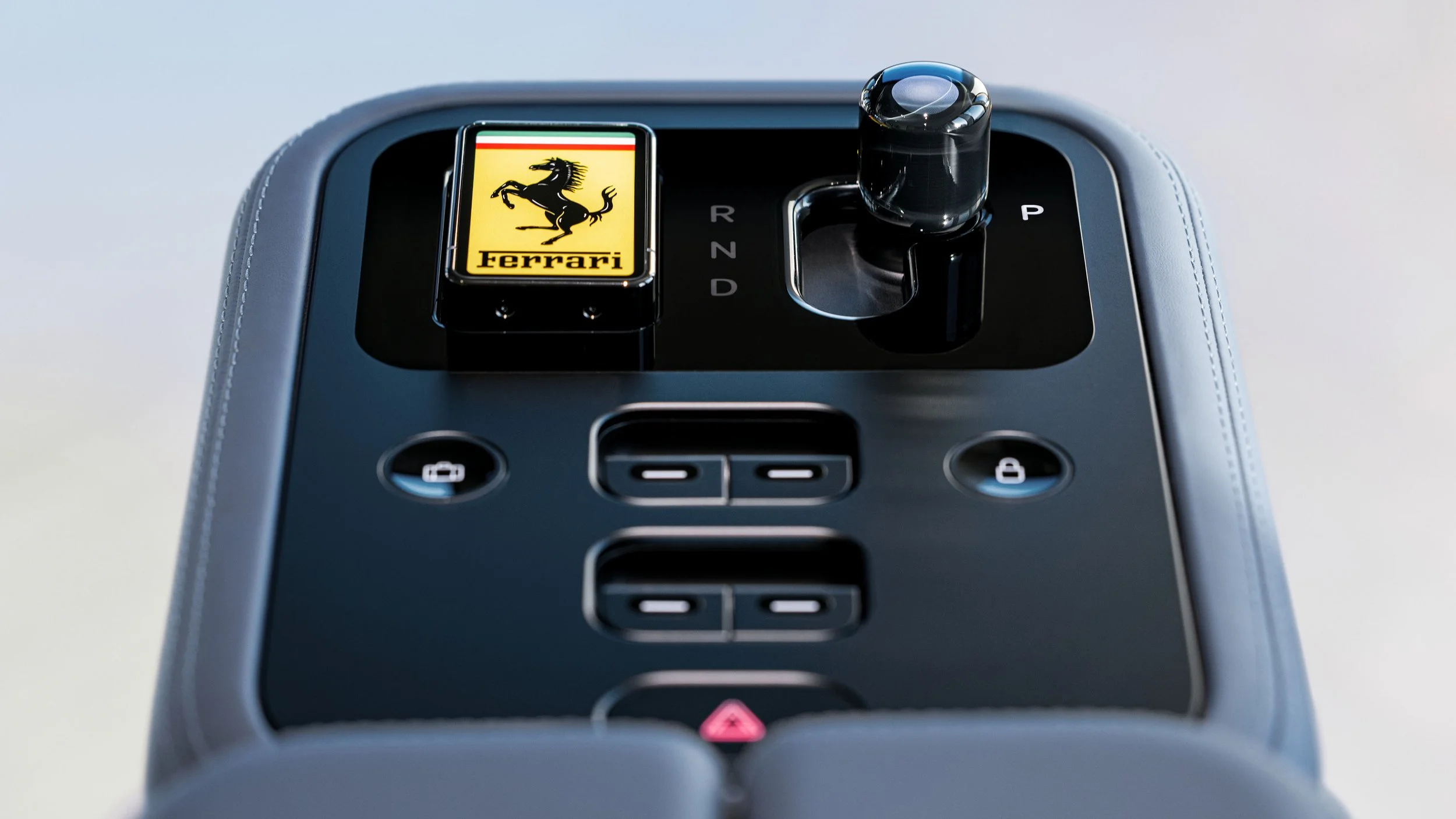
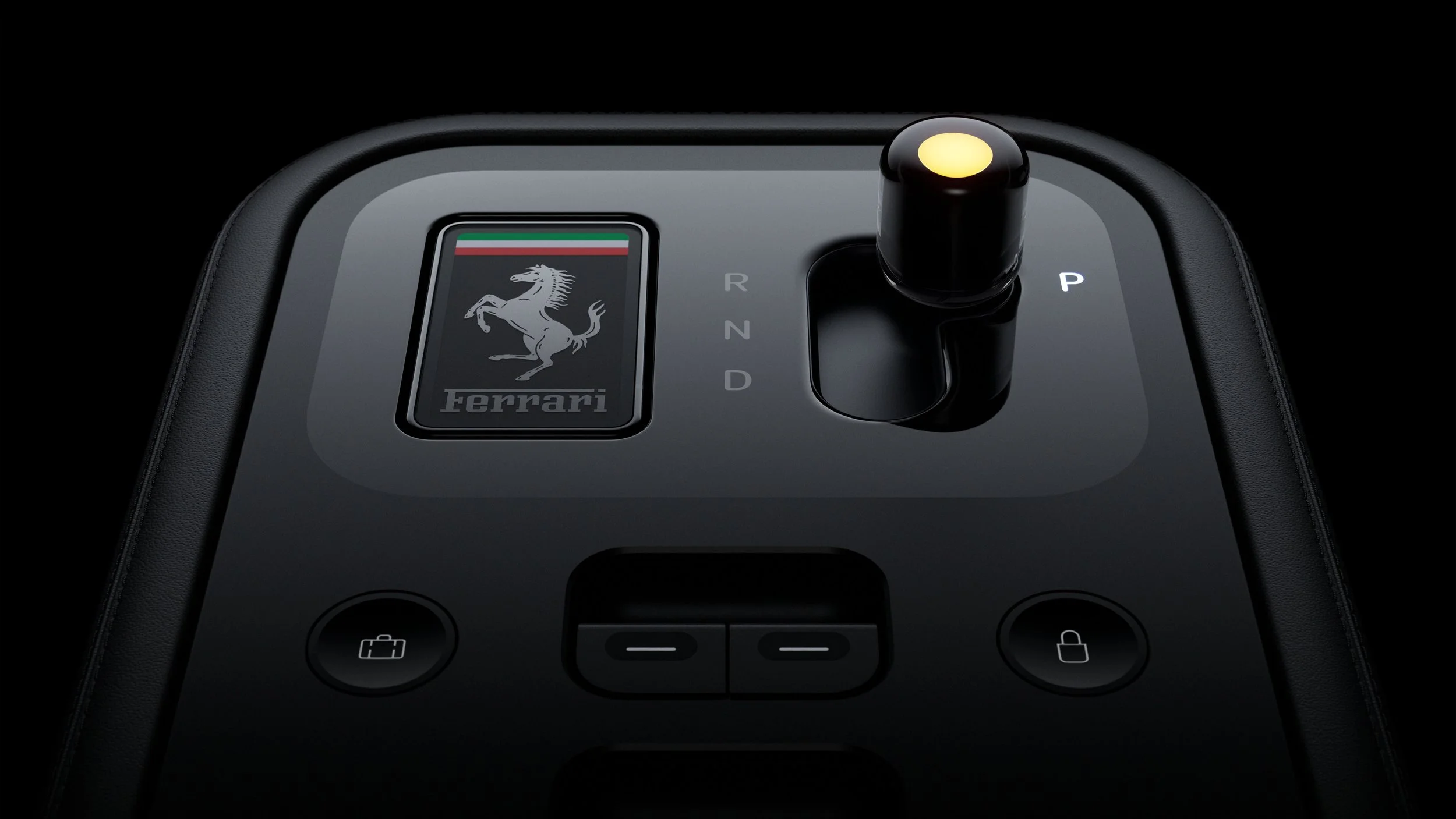
The Ferrari Luce's start-up is designed to be theatrical and memorable, echoing the marque’s tradition of delivering a thrilling driving experience. The ritual begins when the driver engages the key, a unique, tactile object. The key uses Corning® Fusion5® Glass, the first automotive glass engineered for superior durability and scratch resistance while maintaining excellent optical performance. The key feature is a specially developed ‘E Ink’ display that uses power only during colour changes, thanks to its bistable properties. This implementation of an ‘E Ink’ display marks an automotive first.
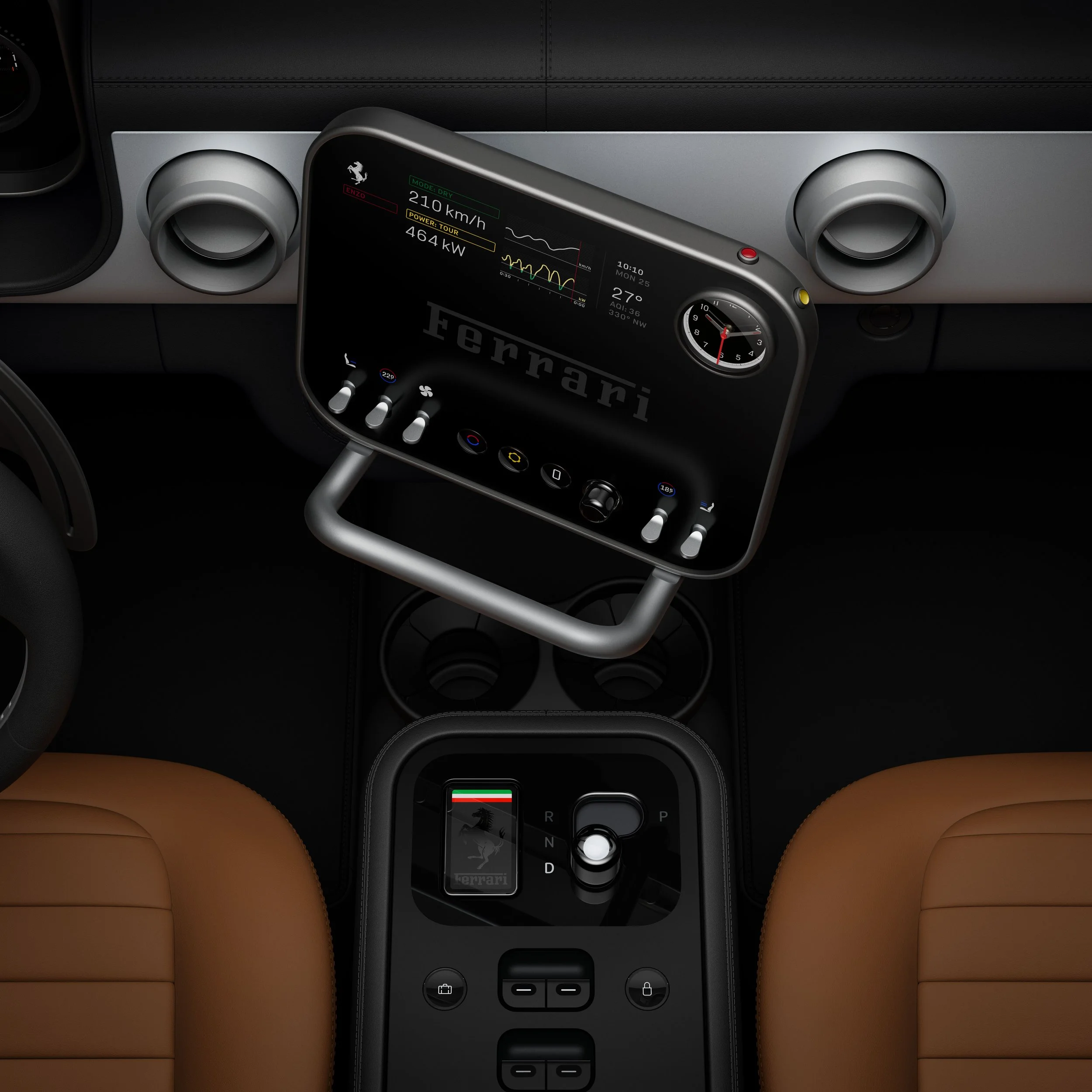
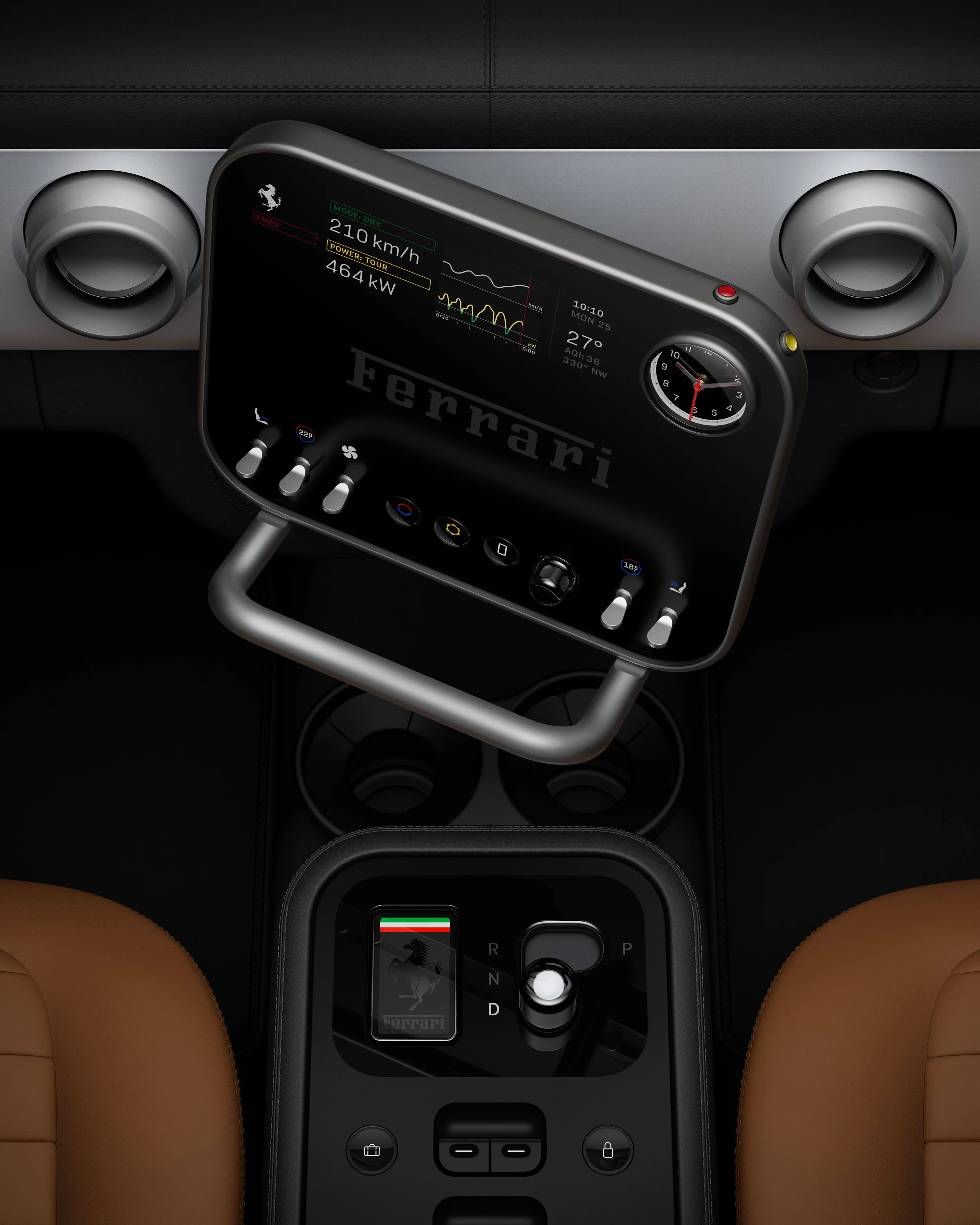
When the driver inserts the key into its dock on the central console, it triggers a carefully choreographed sequence. The key’s colour switches from yellow to black as it integrates with the glass surface of the central console. The control panel and binnacle light up simultaneously, heightening anticipation and signalling the transition from stillness to motion.
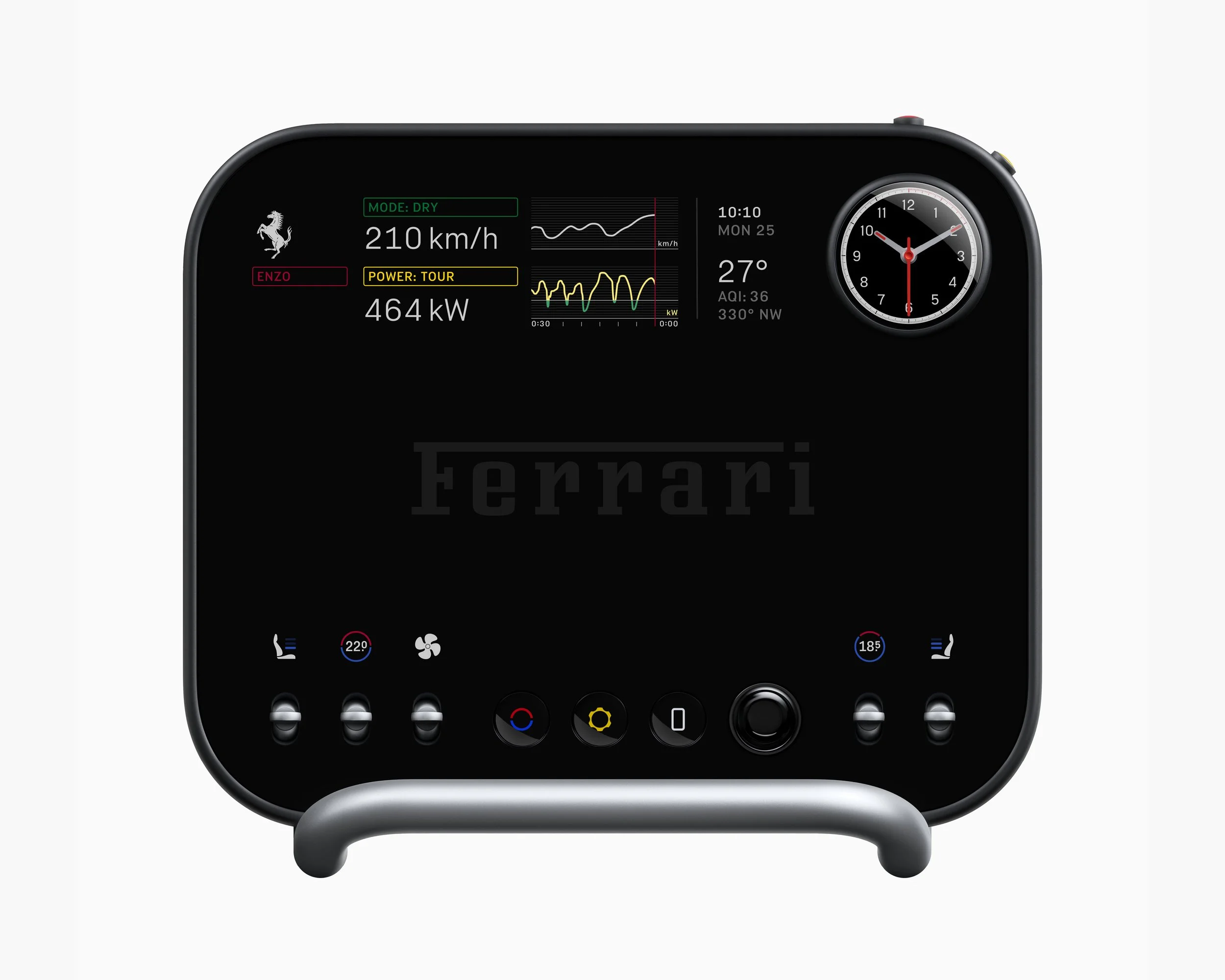
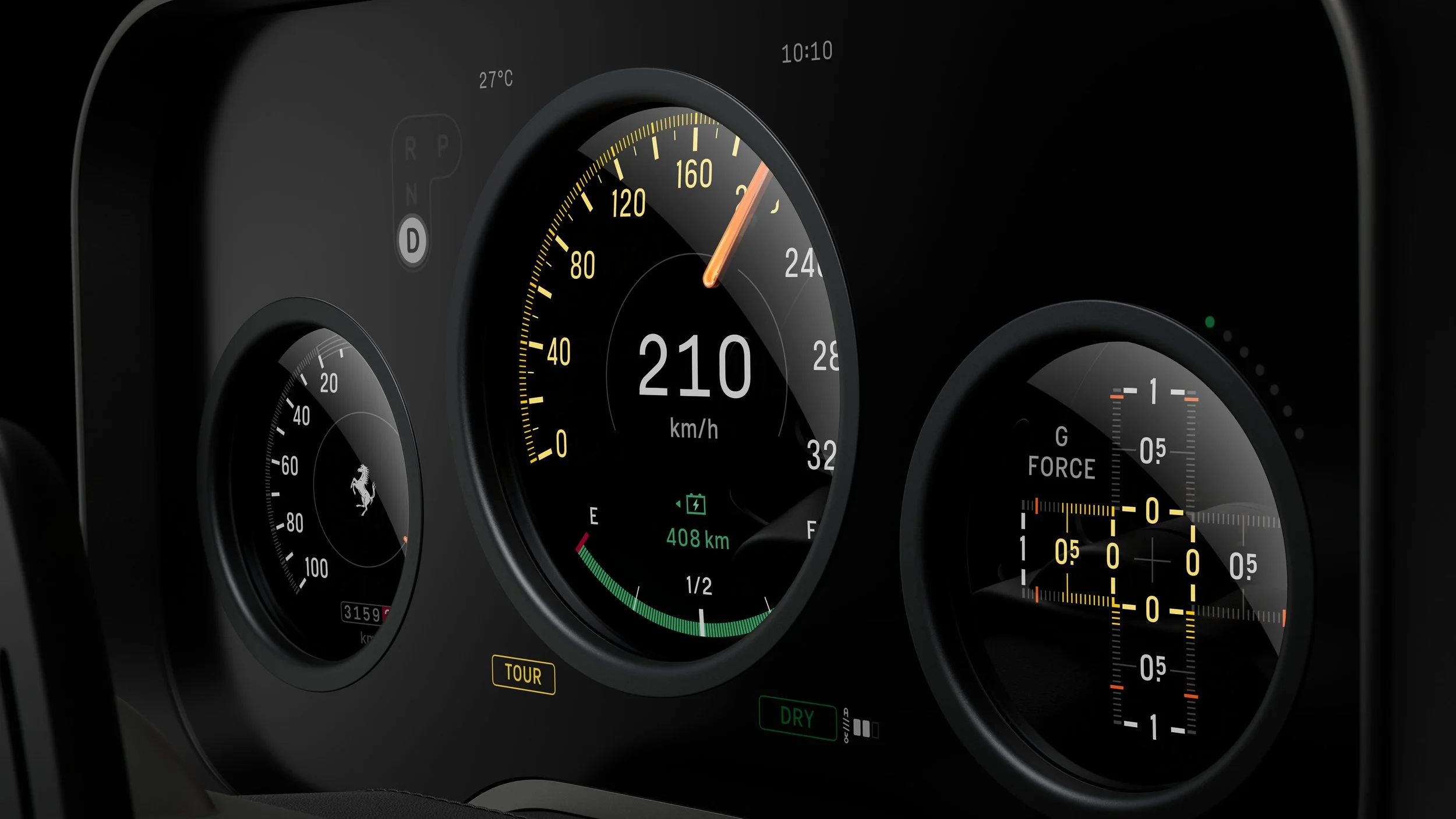
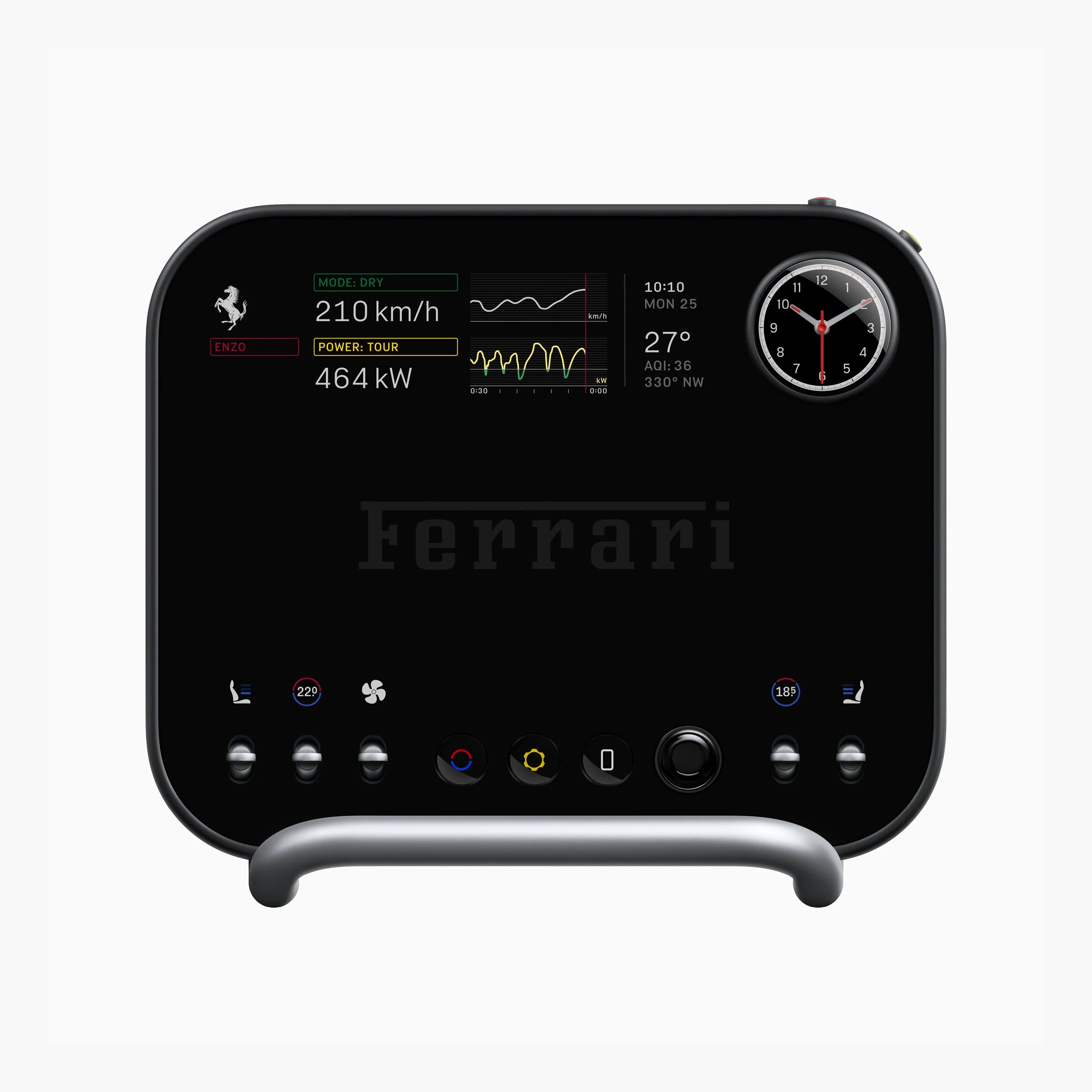
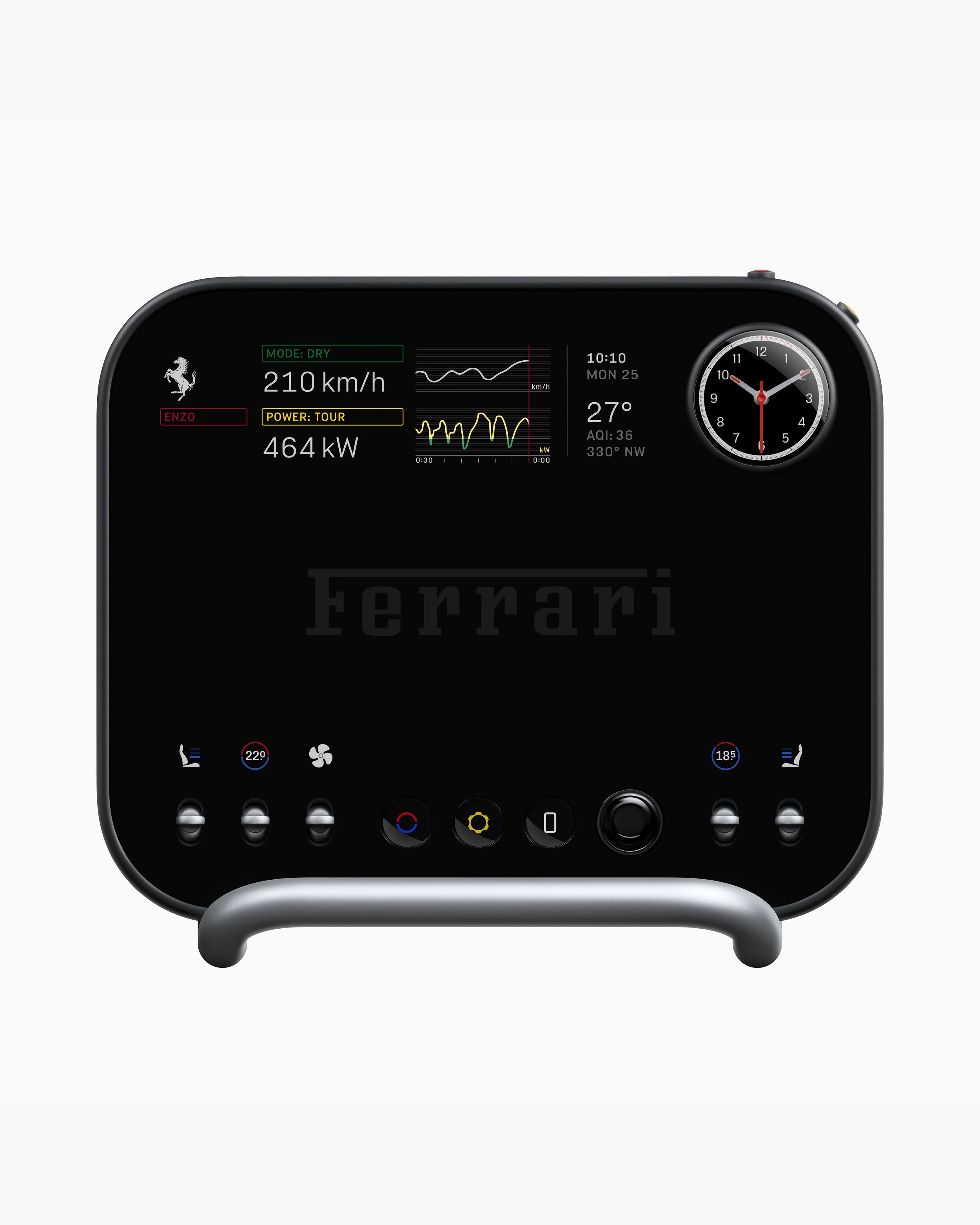
The three displays in the Ferrari Luce, the driver binnacle, control panel and rear control panel, have been designed with clarity and purpose. The team invested significant time in organising inputs (controls) and outputs (displays) to make the user experience intuitive and easy to navigate. An understated new custom typeface gives the interface and identity a coherent typographic voice, informed by historic Ferrari type and Italian engineering lettering.
The binnacle moves with the steering wheel, optimising the driver’s view of the instrumentation and supporting driver performance. The instrument cluster sits on the steering column, marking a first for the range Ferrari. It features two overlapping OLED displays that deliver crisp graphics, vibrant colours and infinite contrast for an unprecedented viewing experience. It integrates digital and analogue elements into a self-contained unit mounted on the steering column, moving in sync with the wheel’s rake and reach for seamless interaction. The team worked with Samsung Display’s engineers to create an ultra-light and ultra-thin OLED panel featuring a world first. Three large cutouts reveal information generated by a second display behind the top panel, creating visual depth. A clear glass lens protects each opening, strengthening the three-dimensional effect. Anodised aluminium rings surround the openings, balancing the design and echoing the style of the binnacle's structural frame.
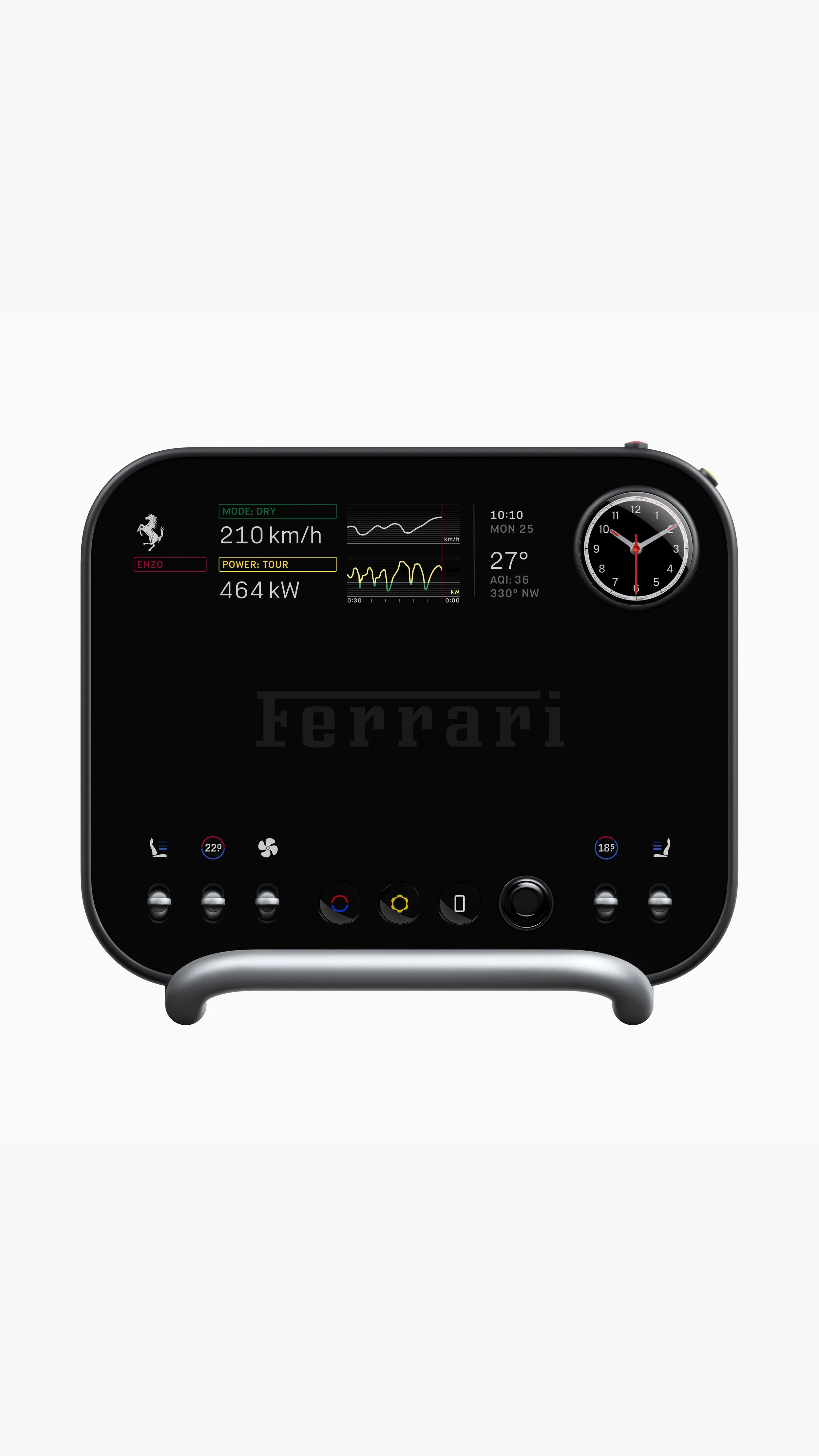
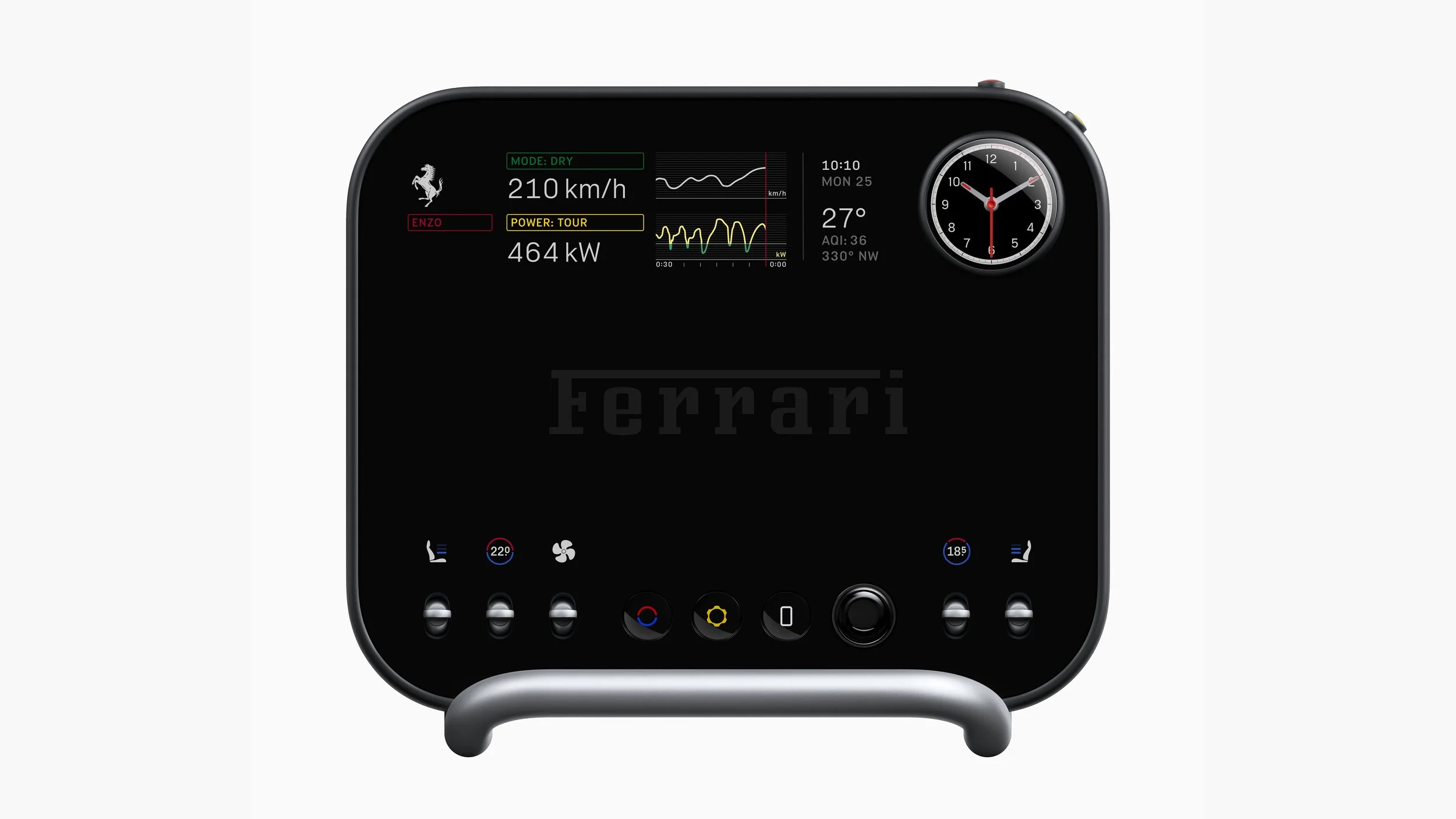
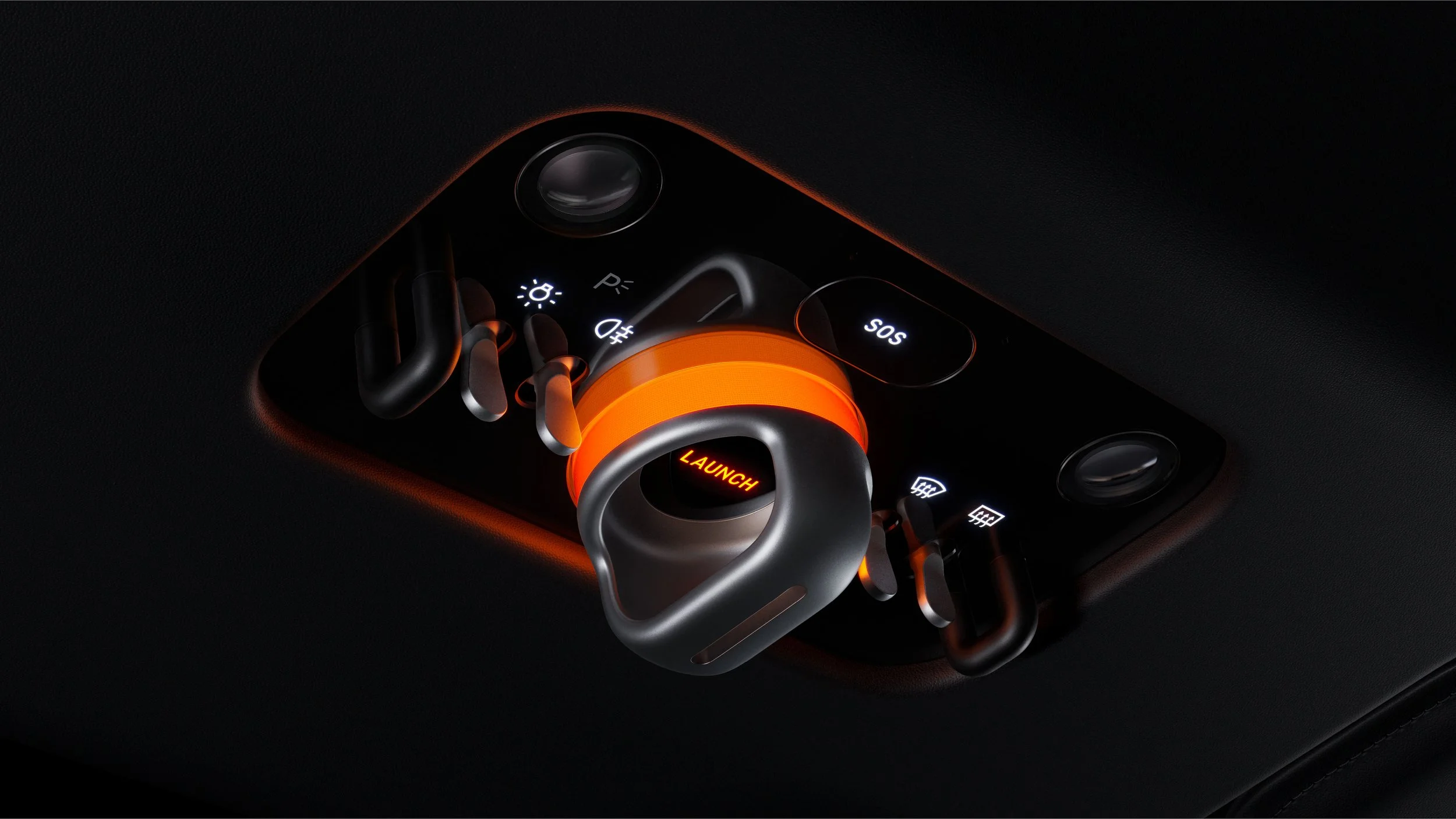
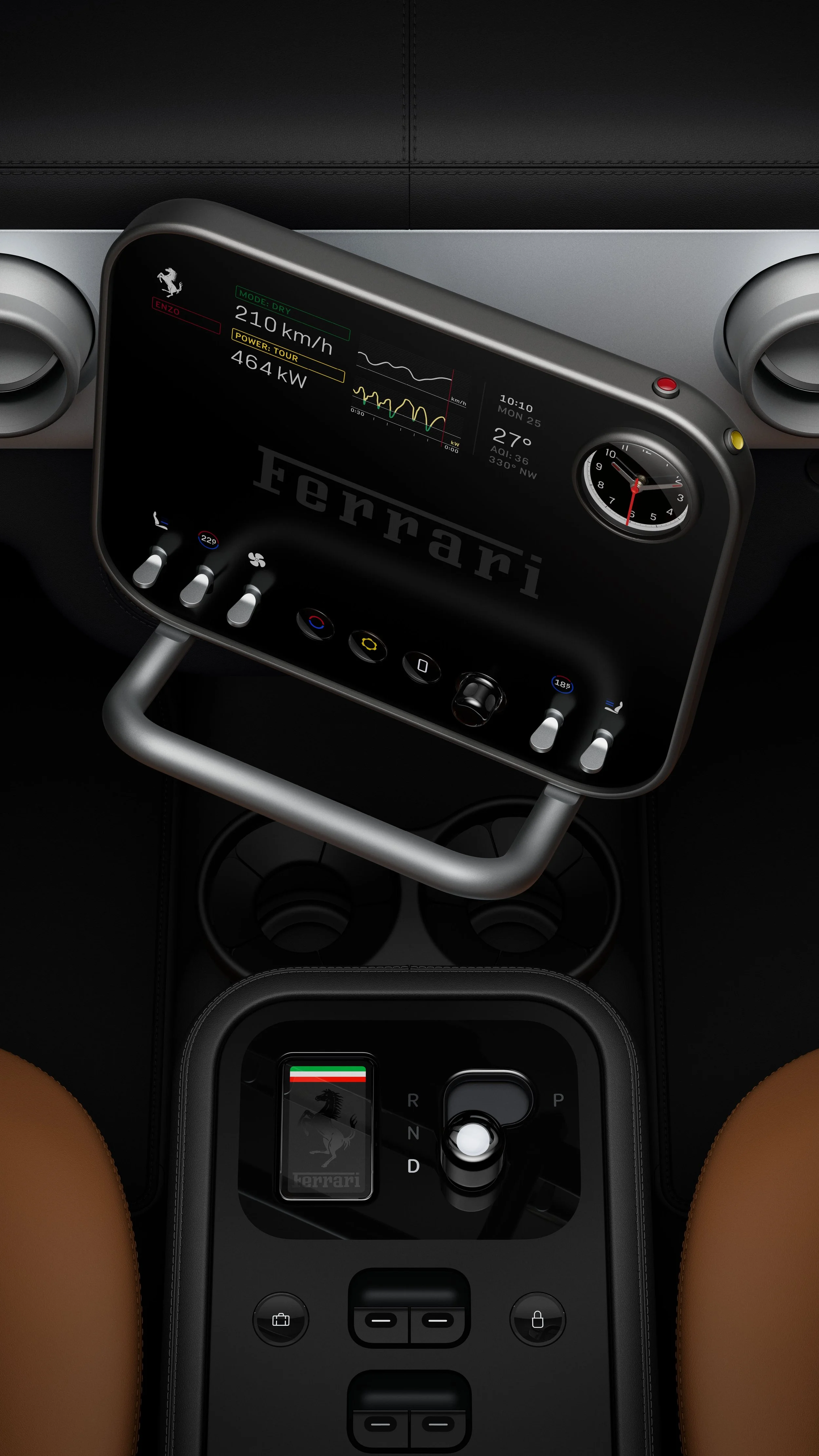
The control panel sits on a ball-and-socket joint, allowing the screen to face either the driver or the passenger. This feature shares and enhances the Ferrari experience. The team also focused on ergonomic details, including a palm rest for panel operation, to enhance the user experience. This design helps users interact with controls effortlessly and intuitively, reflecting the team’s commitment to solving complex problems in a simple, natural way.
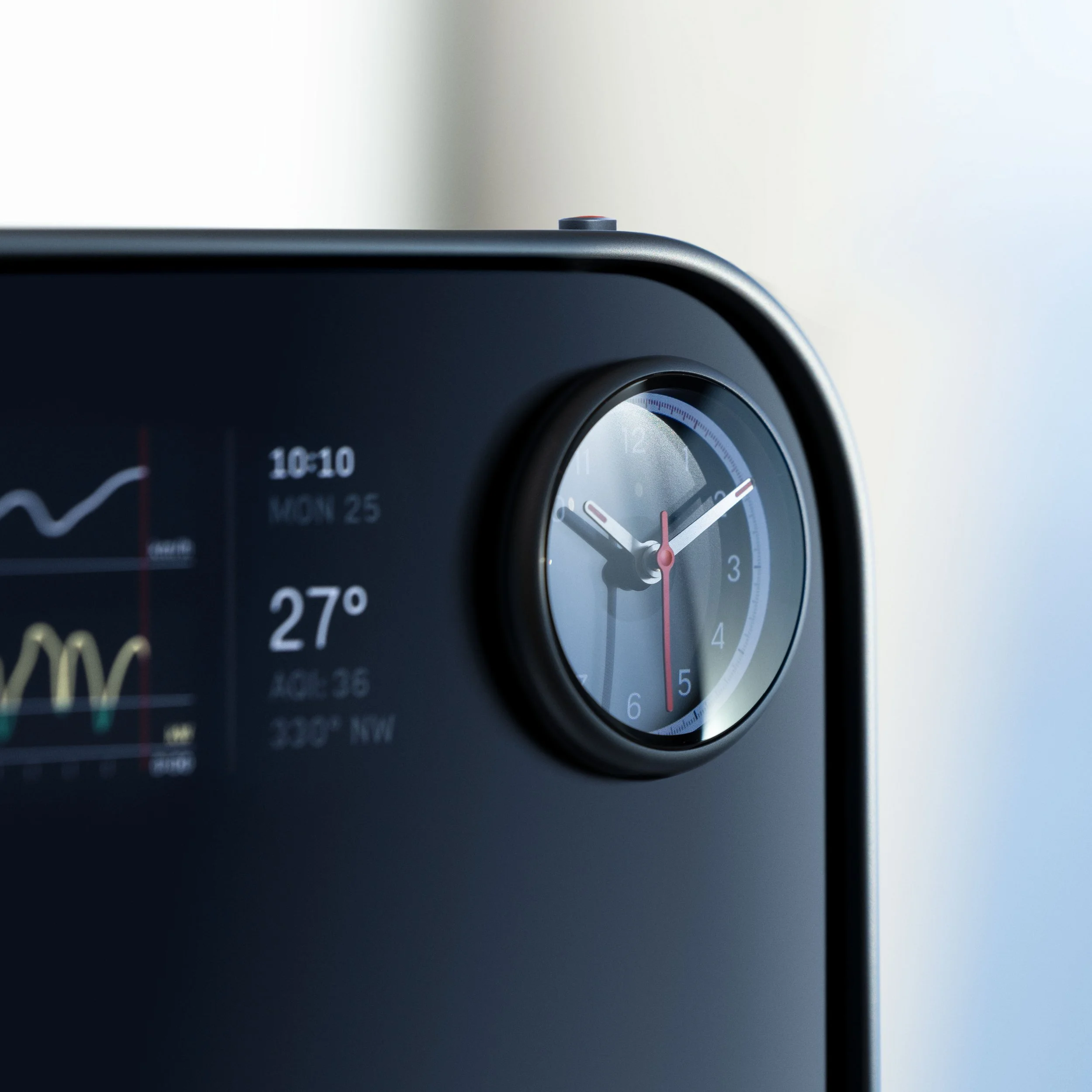
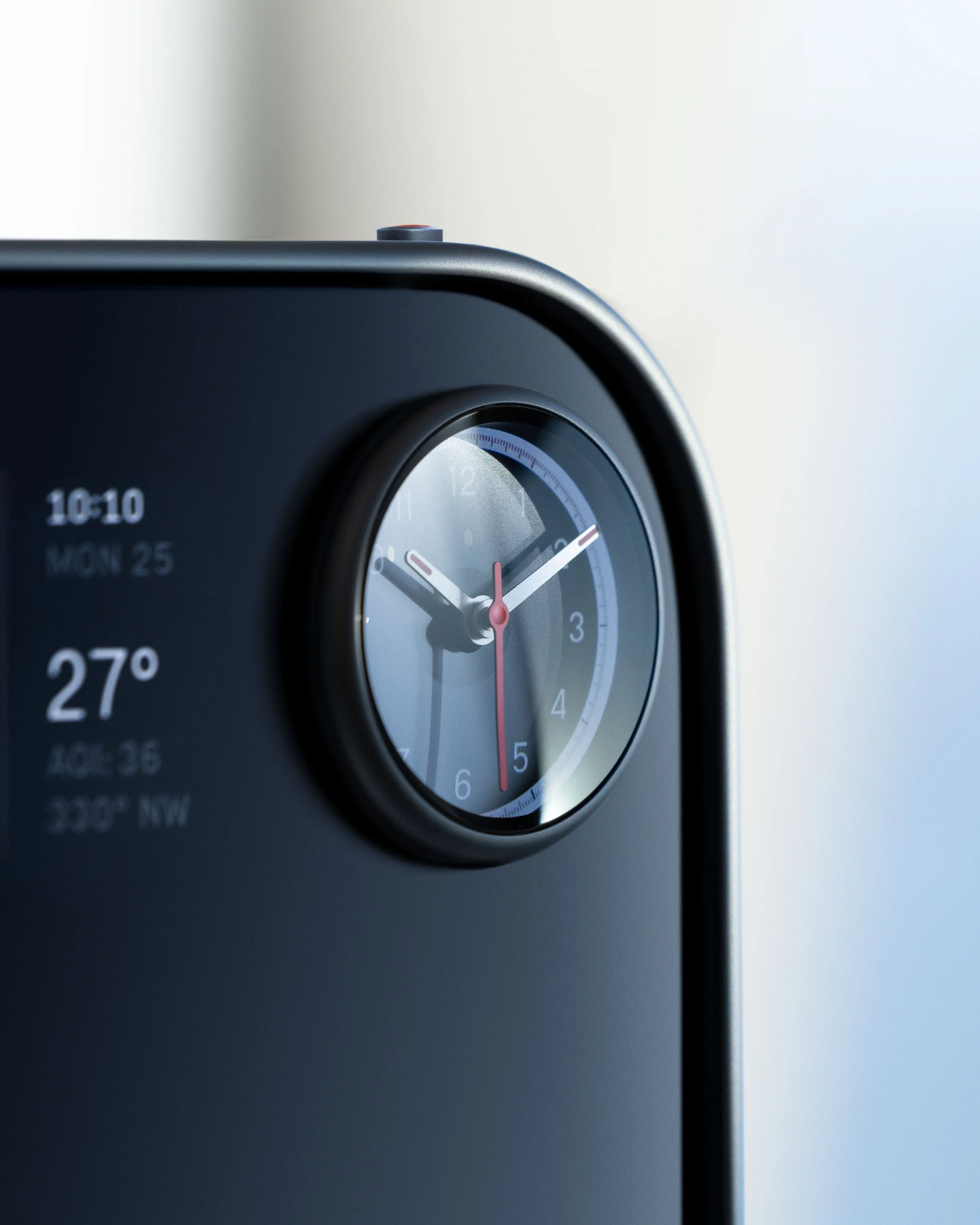
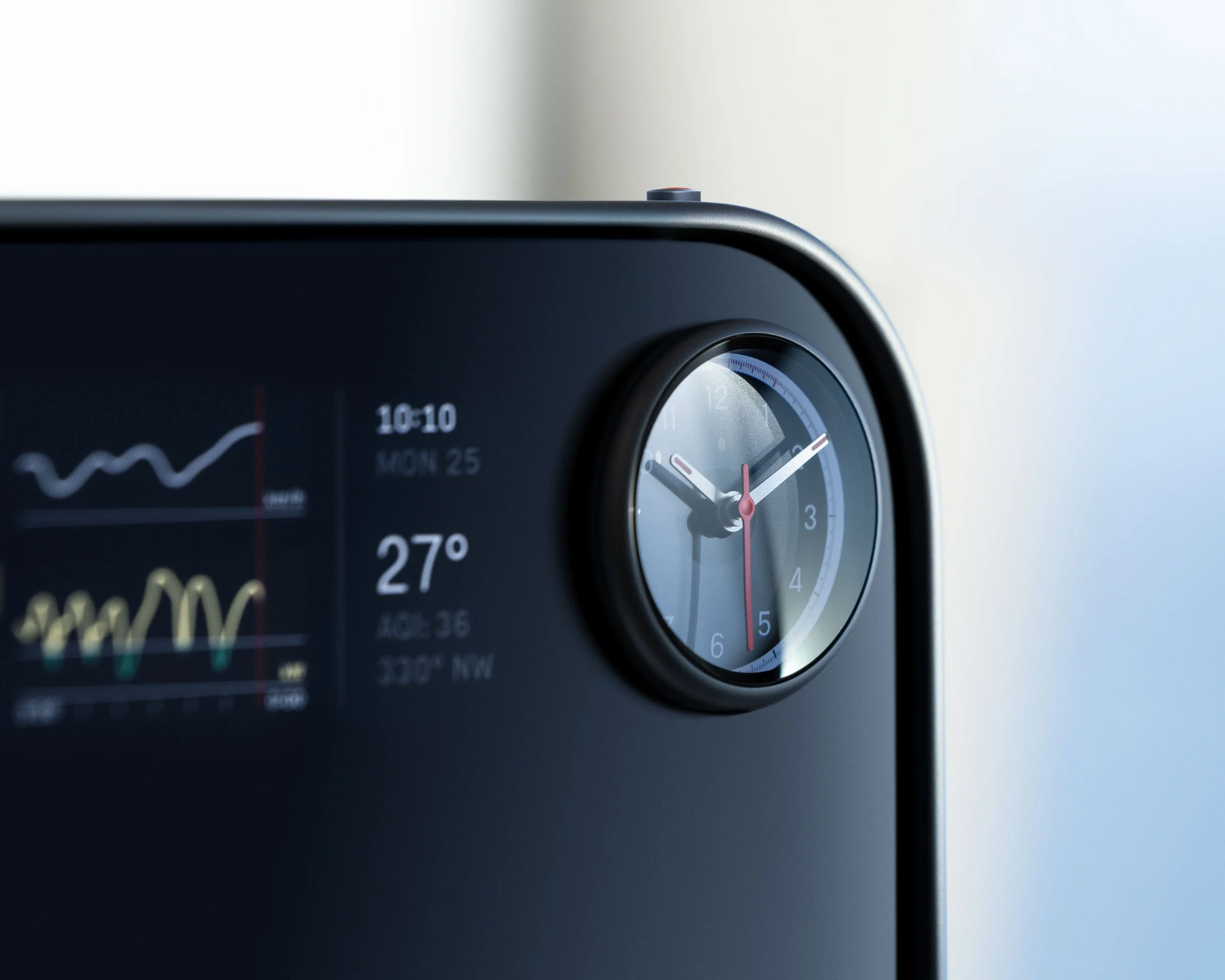
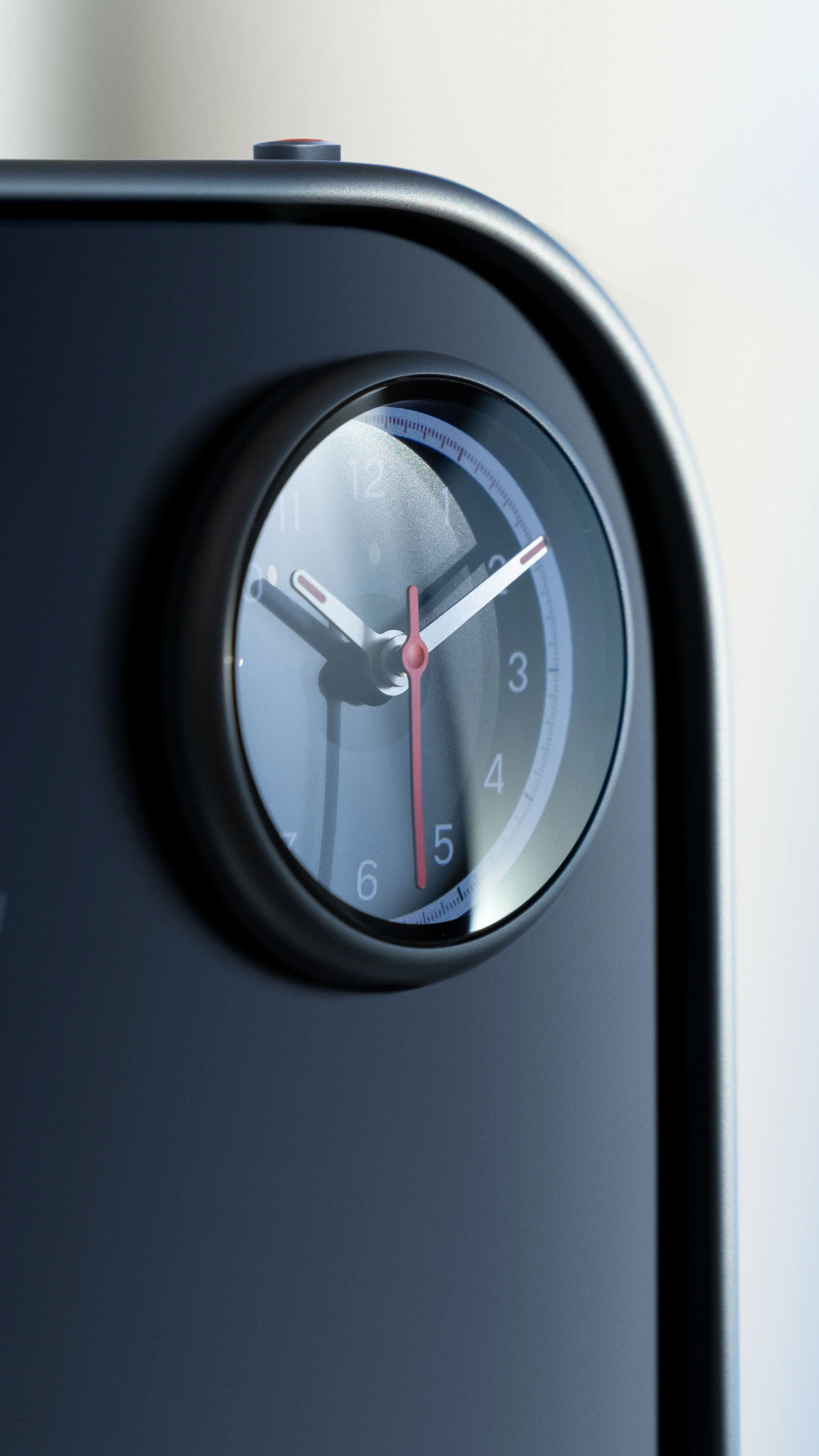
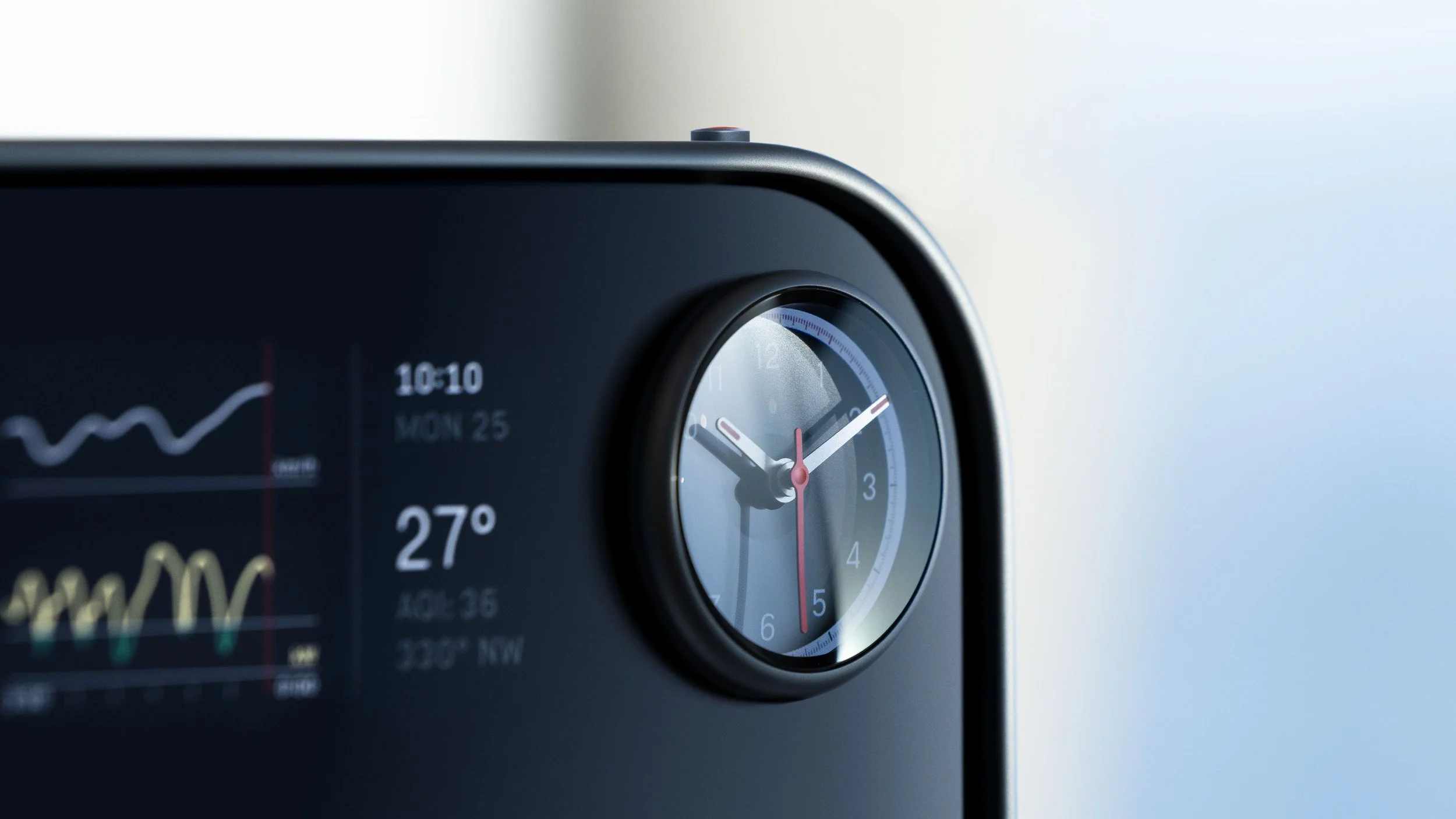
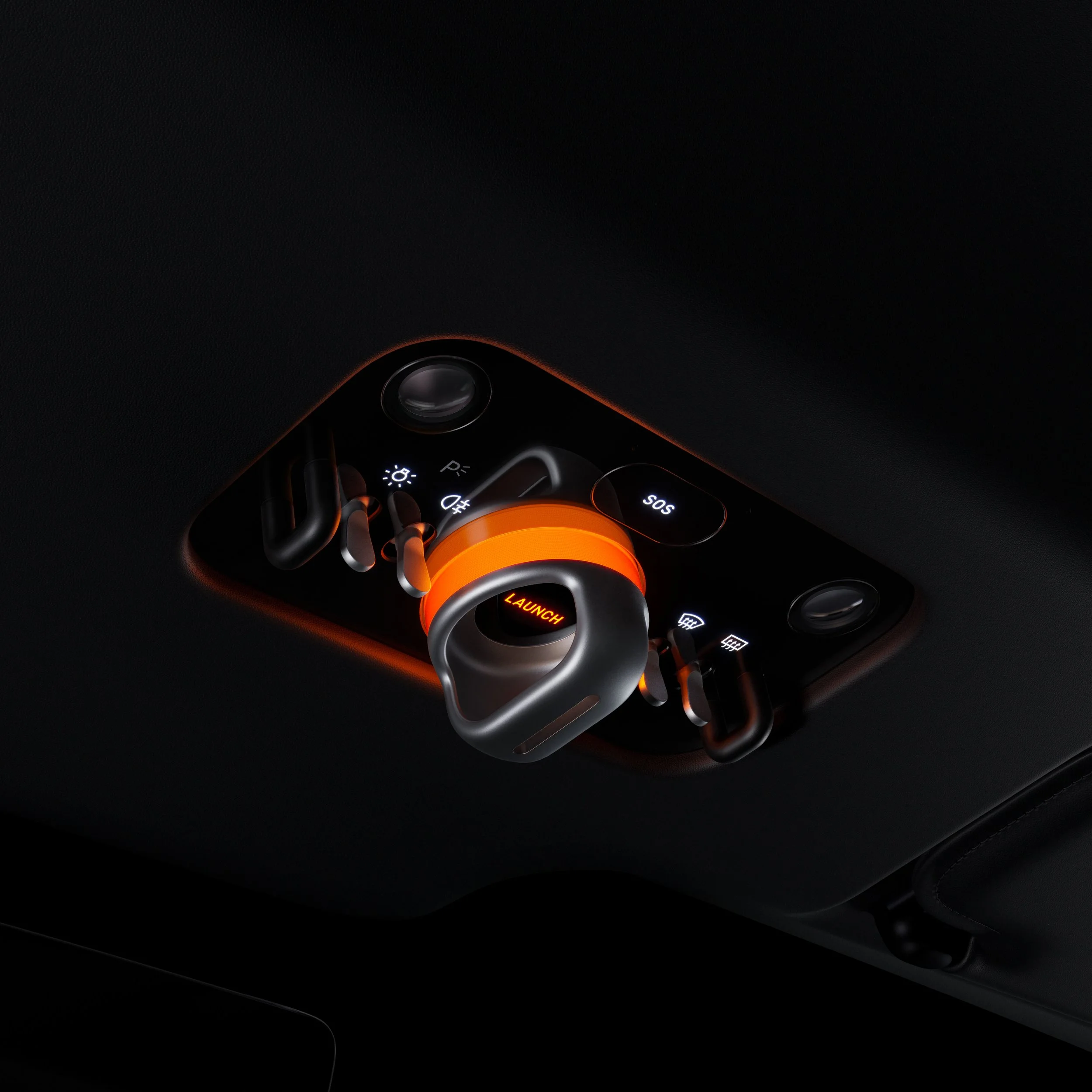
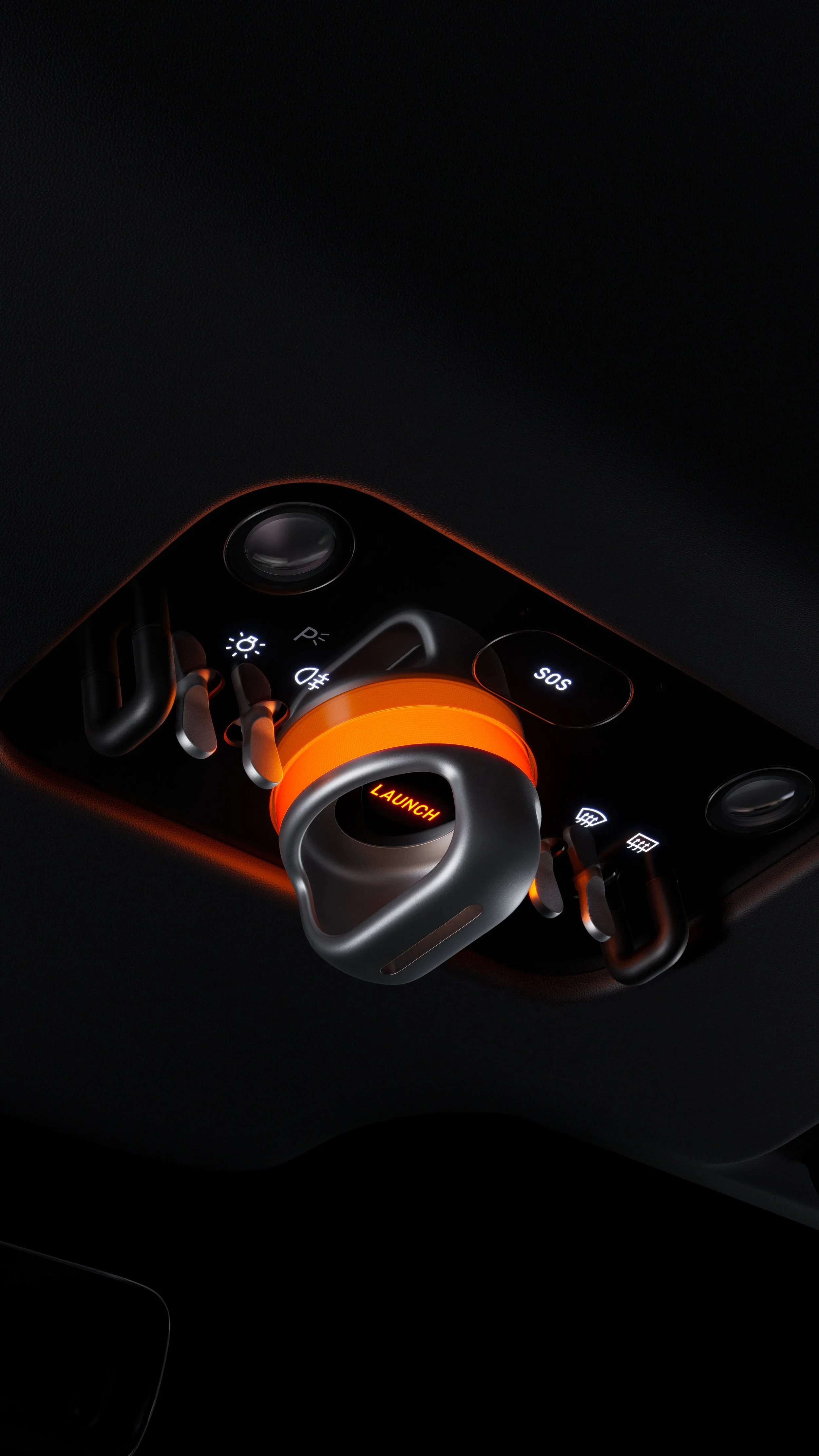
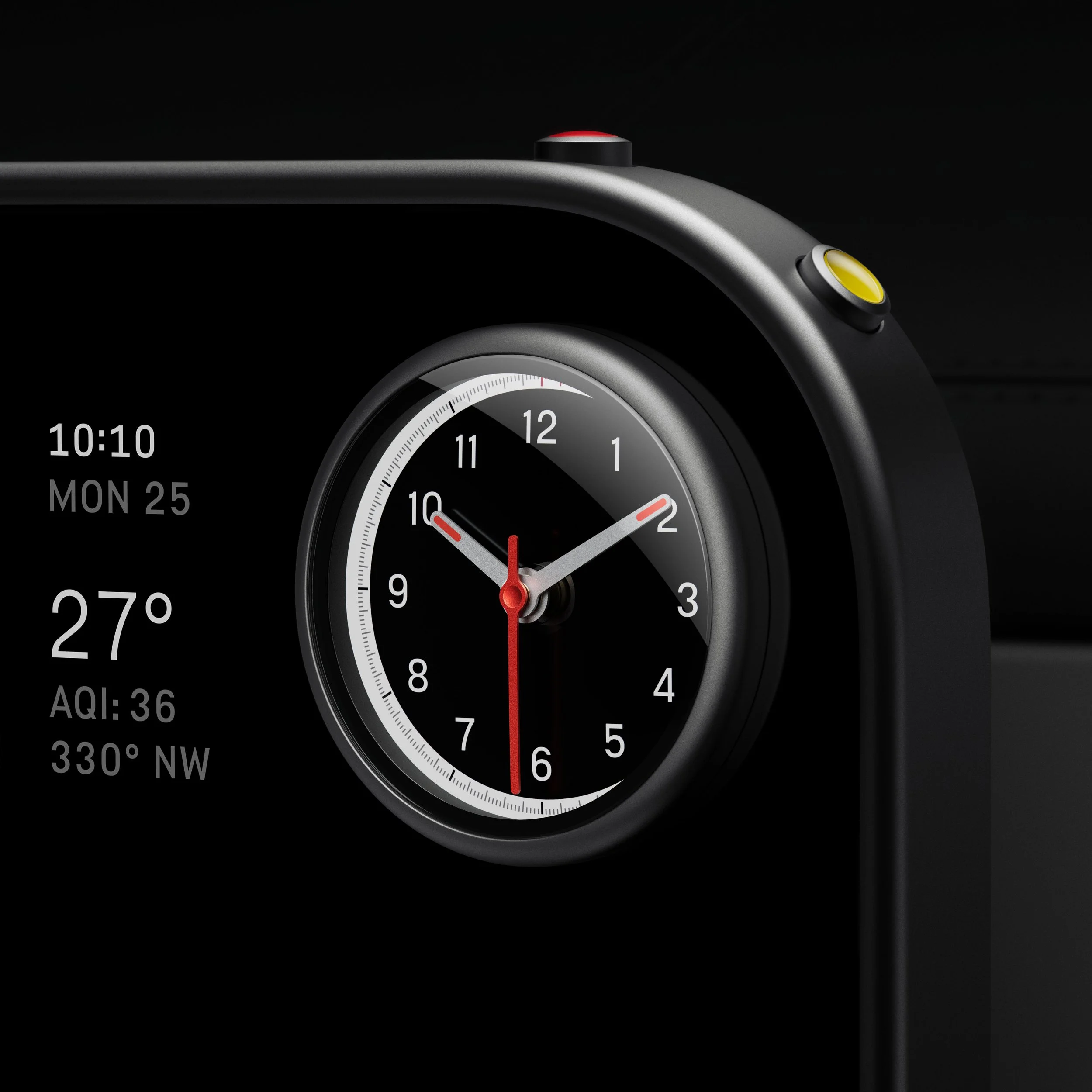
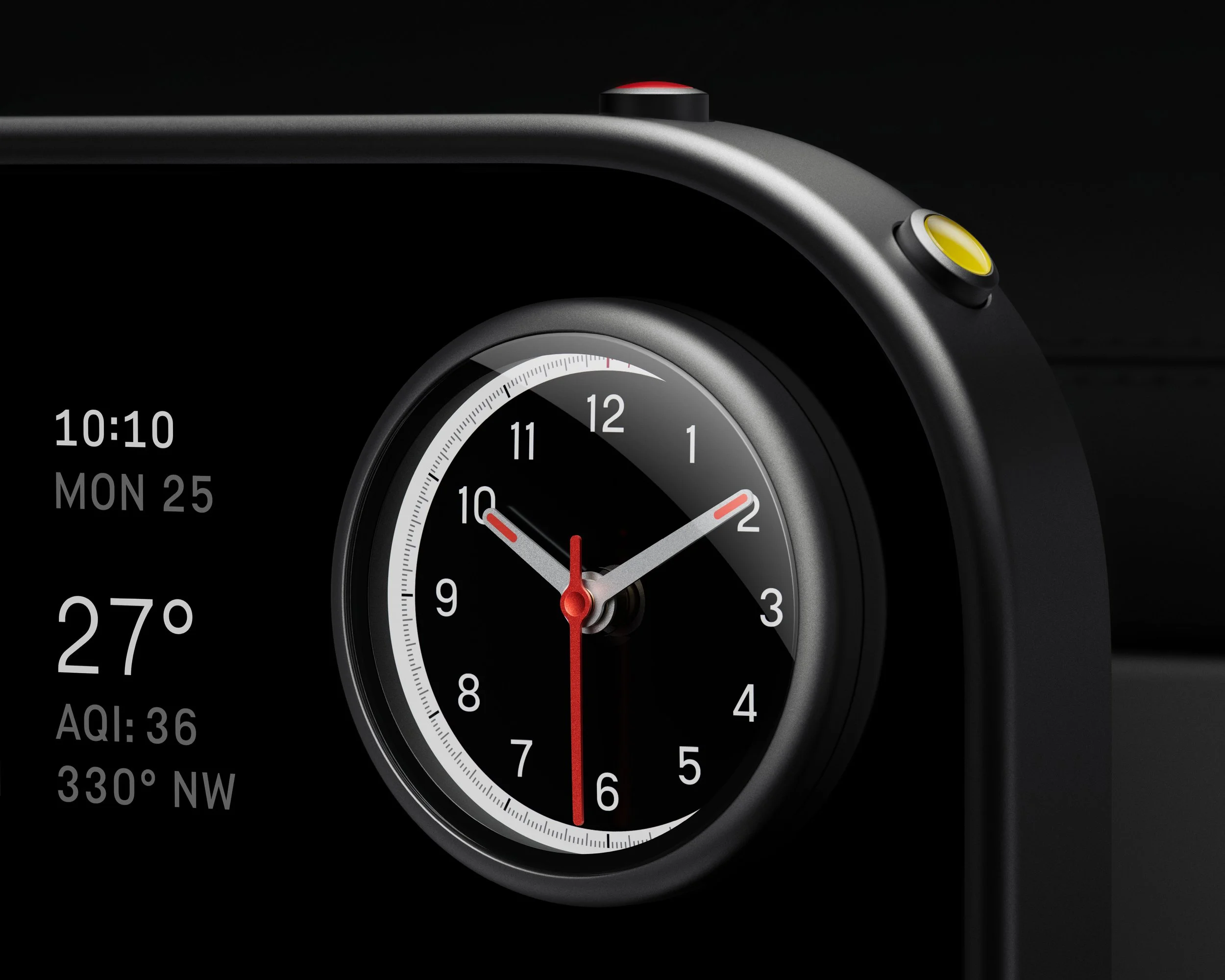
The multigraph integrated into the central display showcases micro-engineering at its finest. This symbol of precision and innovation uses a proprietary movement with three independent motors that move the hands autonomously. Three anodised aluminium hands glide over a minimalist dial protected by Corning® Fusion5® Glass. An advanced electronic control system provides the multigraph with four modes: clock, chronograph, compass, and launch control, with animated transitions reminiscent of the finest chronographs. The multigraph honours Ferrari’s tradition and redefines the onboard experience, blending watchmaking artistry and technology into a feature that expresses the brand’s passion and excellence.
The displays draw inspiration from historic automotive cues and the clear, purposeful graphics used in aviation, particularly helicopters and aircraft. They resemble analogue gauges, providing familiarity and tactile engagement while remaining fully digital beneath the surface. The cockpit feels both modern and classic, with every display conveying information in a clean, legible format.
The binnacle’s graphics draw inspiration from the clarity and elegance of historic instrument dials, particularly those of Veglia and Jaeger from the 1950s and 60s. Drawing on decades of experience in horological design, the team pursued watch-like clarity, creating a modern, clean layout that prioritises legibility. The system presents information in a way drivers can read immediately and understand intuitively.
This approach focuses on reducing cognitive load for the driver. By referencing the simplicity of analogue watch dials, where time can be read at a glance, the designers aimed to make the car’s controls and displays equally intuitive. The graphics stay minimal and clear, helping drivers absorb essential information quickly while keeping attention on the road.
The shifter is a technical work of art in Corning® Fusion5® Glass. It balances function, strength, and elegance, and uses first-of-their-kind glass manufacturing processes not yet incorporated into automotive interior design. To achieve Ferrari’s required precision, the team used lasers to create tiny holes in the glass, half the width of a human hair, so that it could deposit ink for the graphics with perfect uniformity. Fusion5 delivers superior surface durability and greater impact and scratch resistance than conventional glass, and is used on the control panel, binnacle, and central console surface.