Vision BMW ALPINA: A New Design Era Unveiled at Como
BMW unveiled the Vision BMW ALPINA at the 2026 Concorso d'Eleganza Villa d'Este, a design study that opens a new chapter for a brand built on extreme capability, sophistication and the mastery of both performance and comfort.
"Alpina has always represented a very specific idea of performance and refinement—where speed and comfort are complementary ambitions. Our role as the new custodians of this brand is to preserve this distinctiveness and shape it for a contemporary context," says Adrian van Hooydonk, head of BMW Group Design. "Vision BMW ALPINA shows how these qualities can be expressed with discipline and modernity, suggesting what our direction is for this brand as we move it into the future."
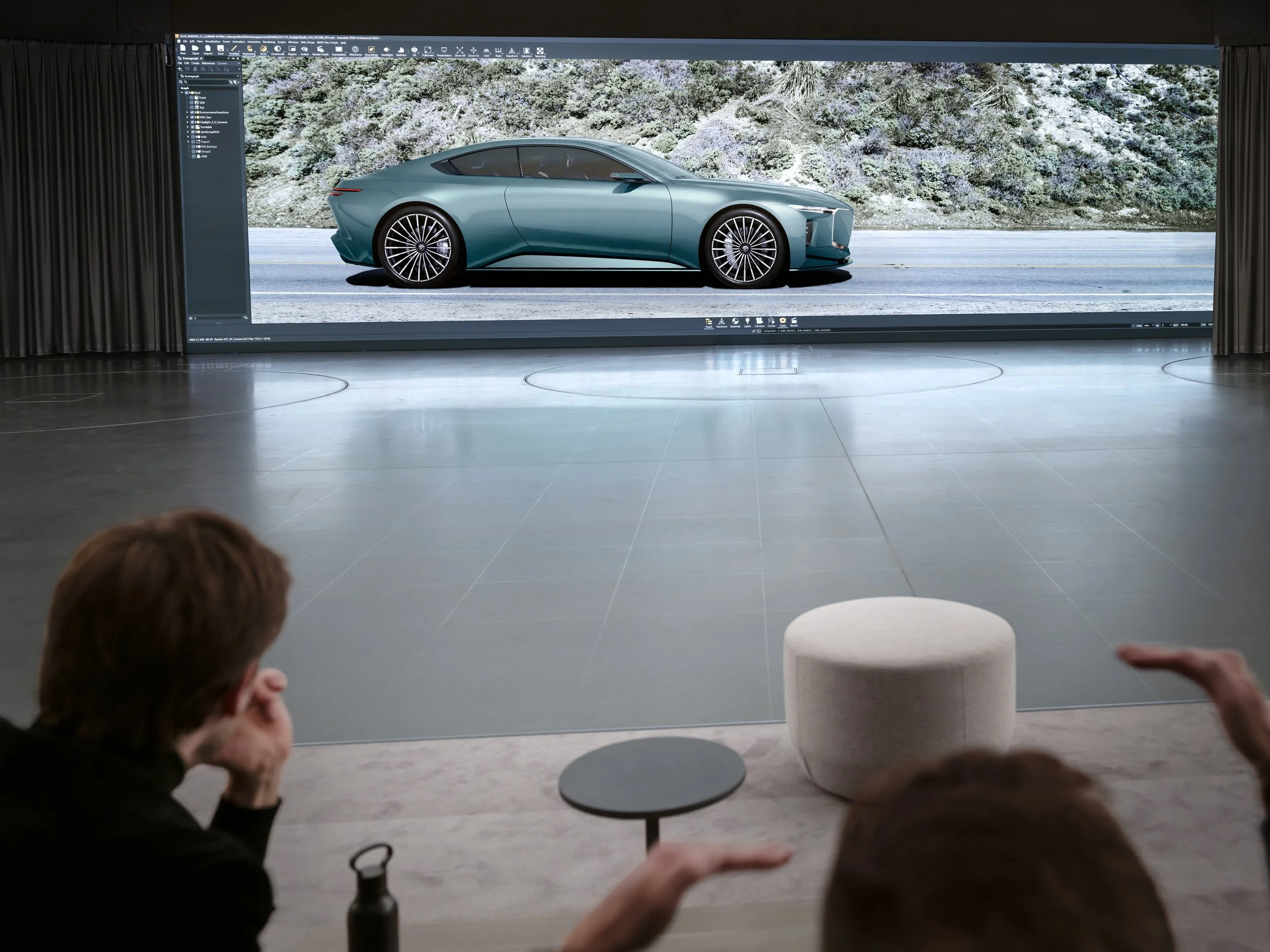
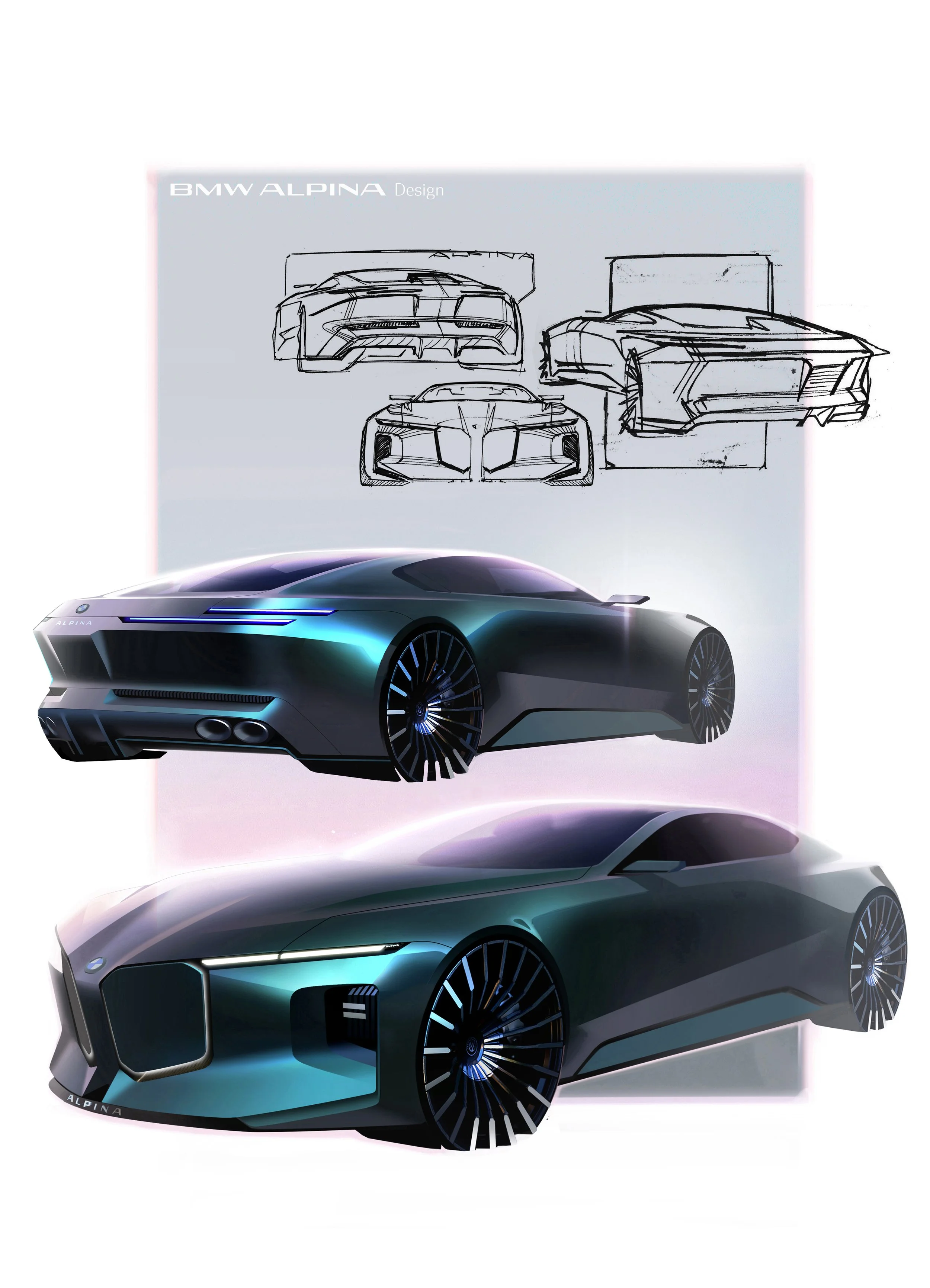
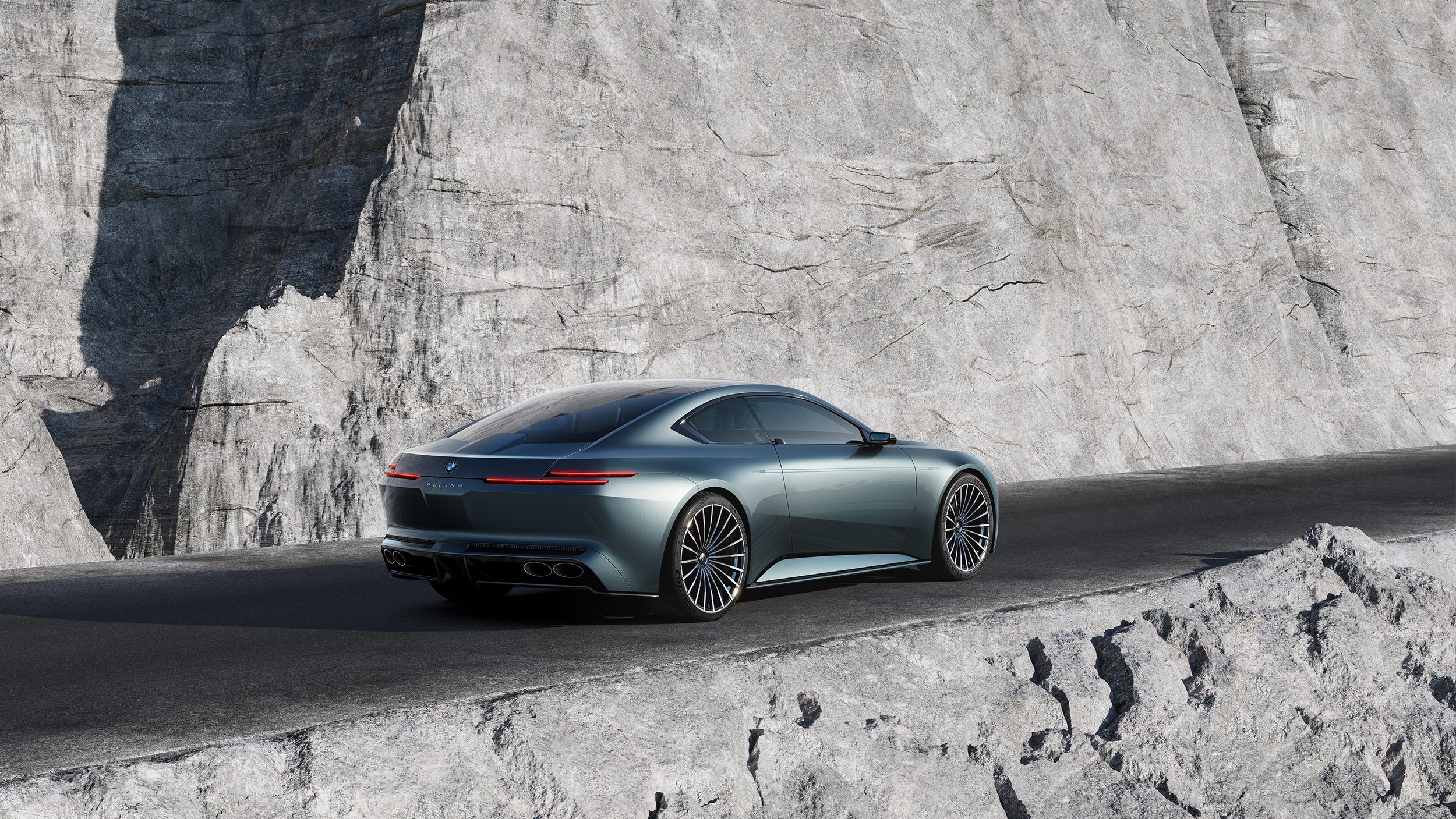
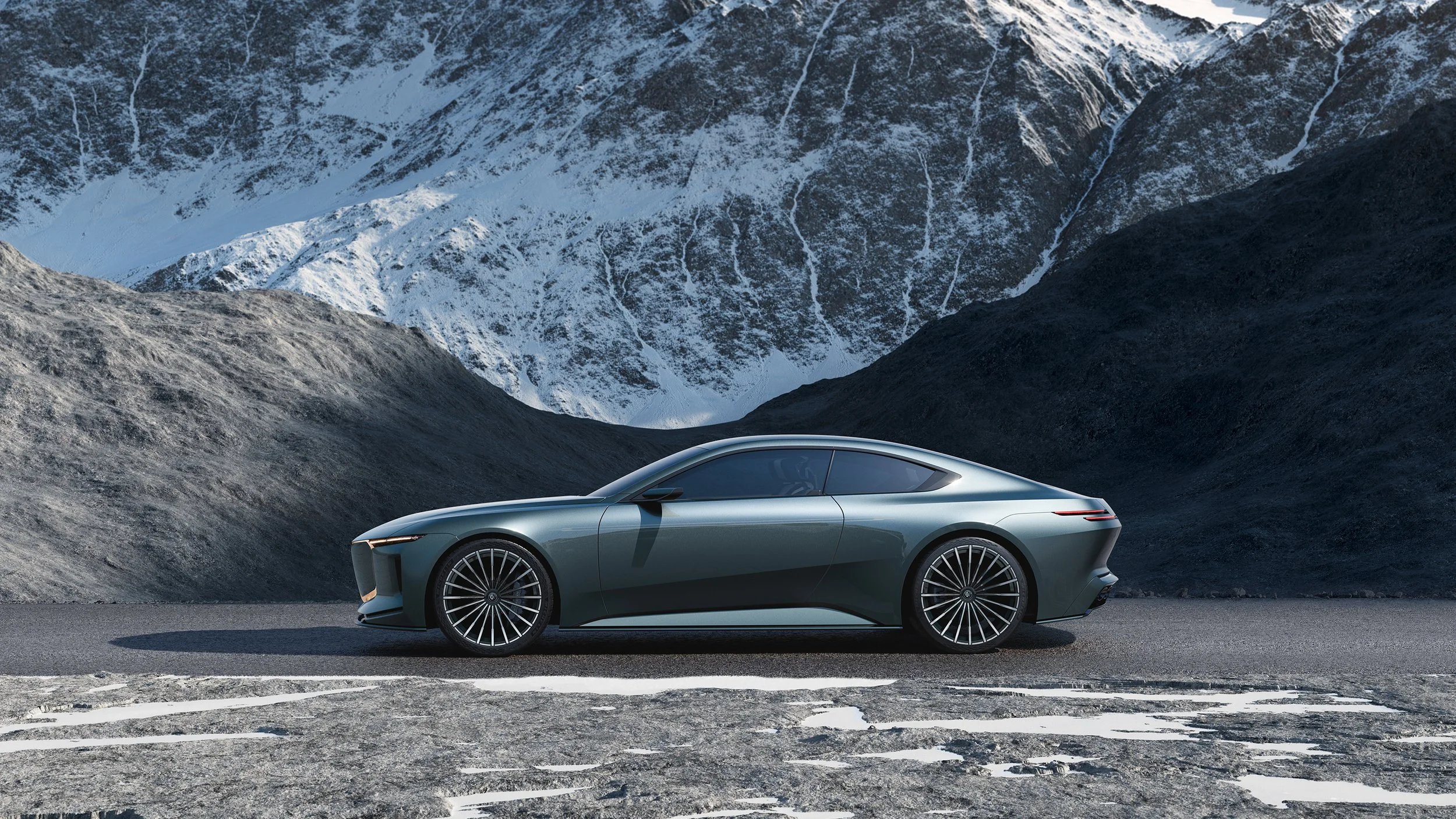
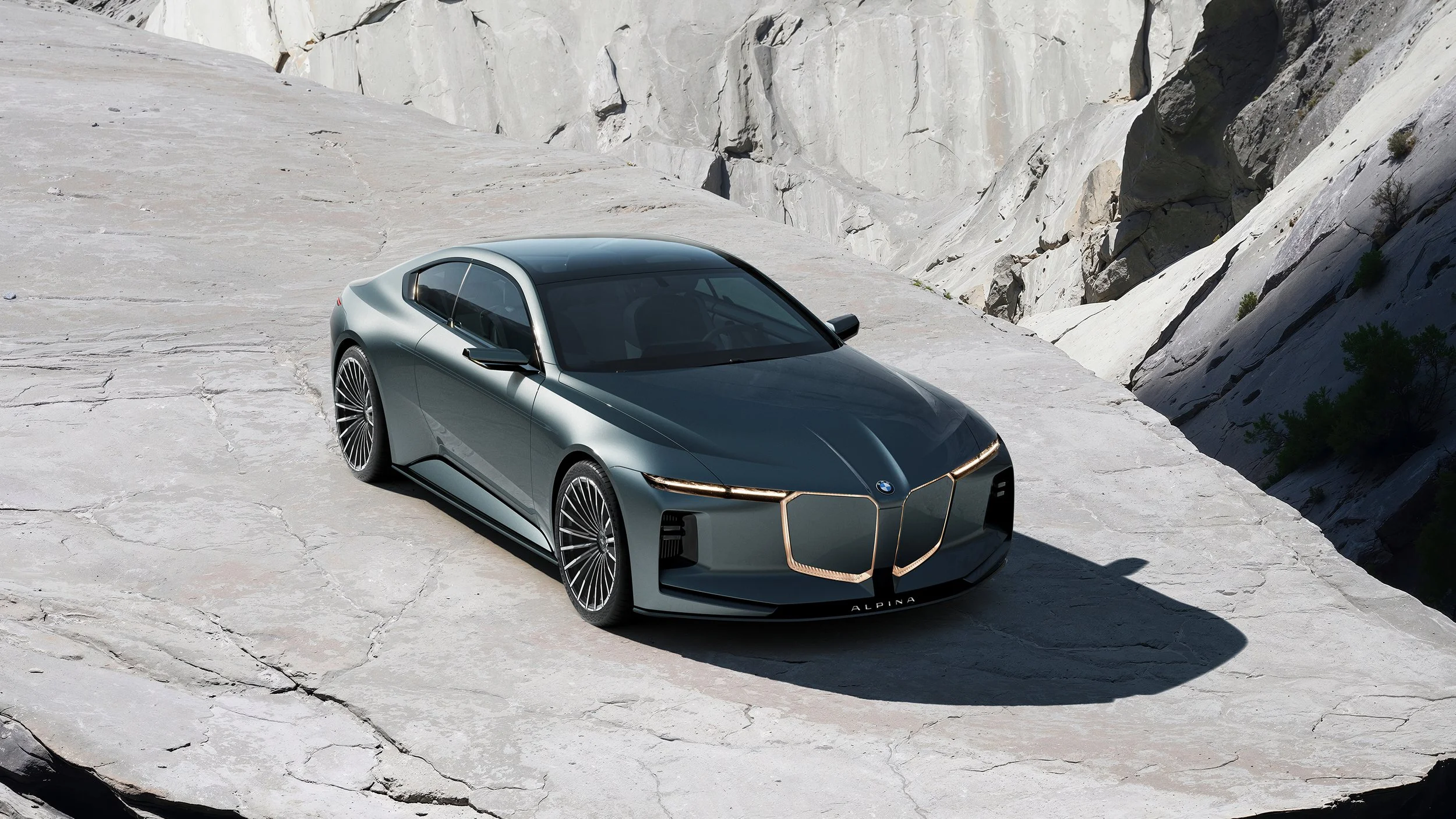
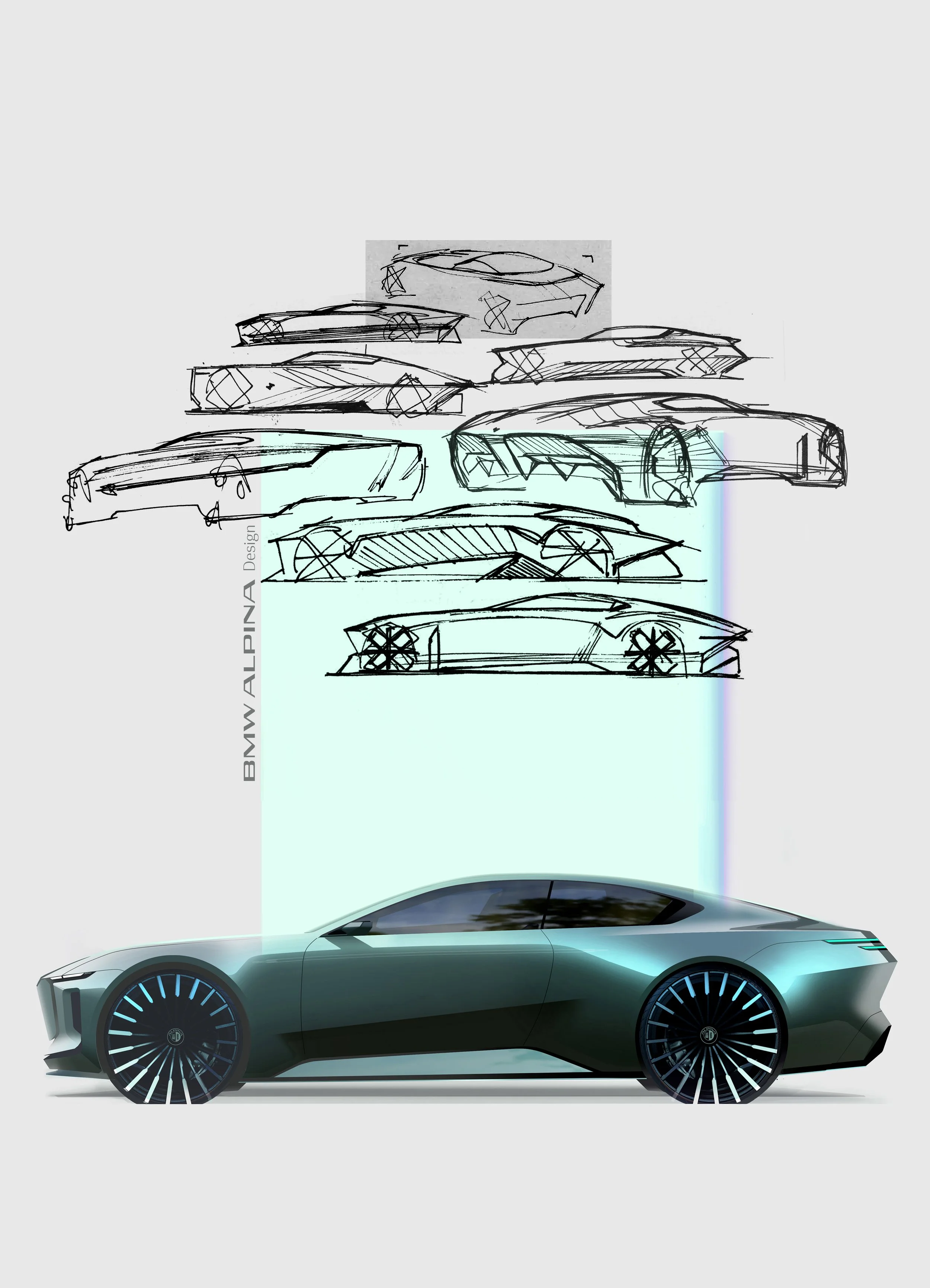
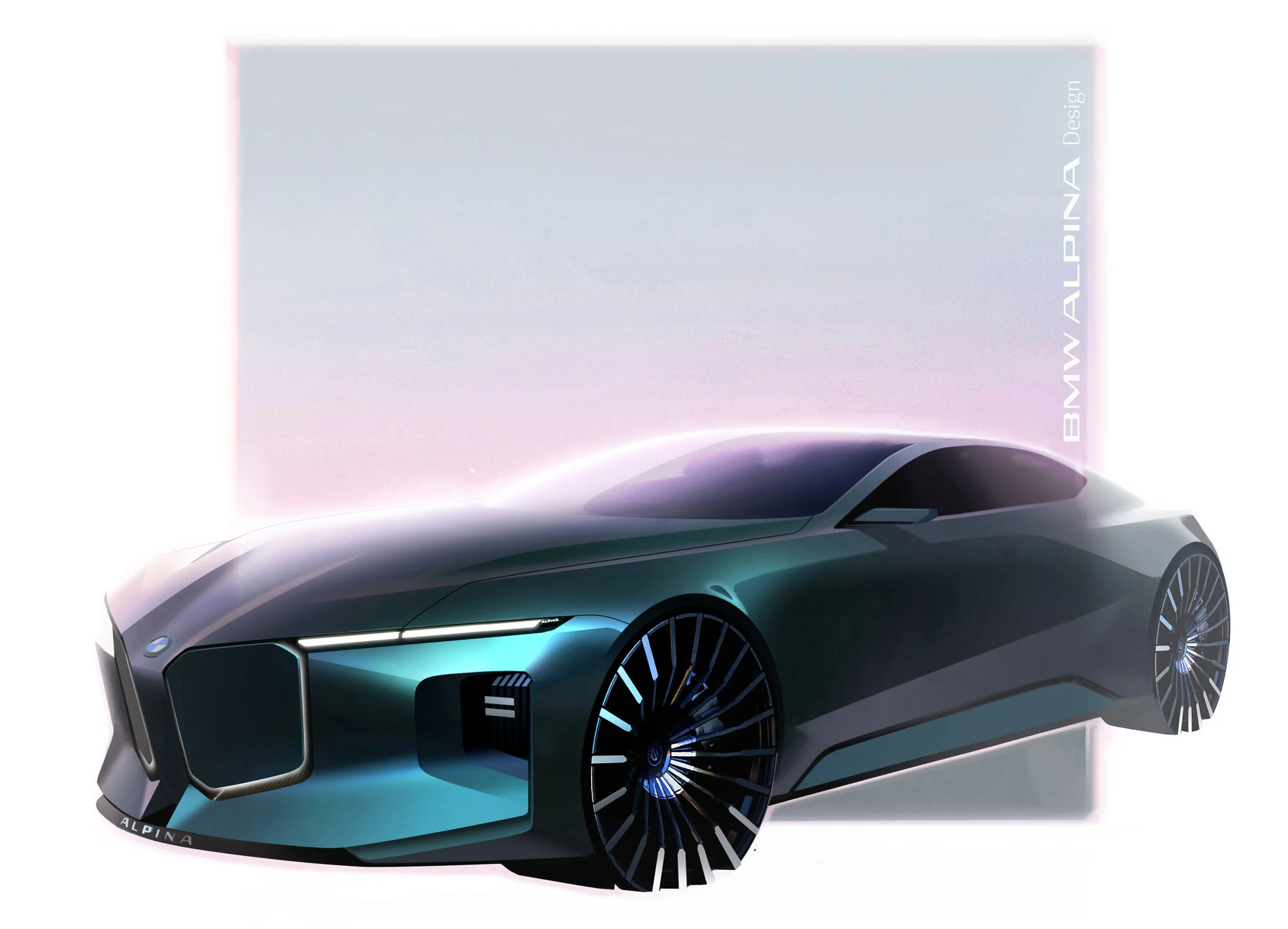
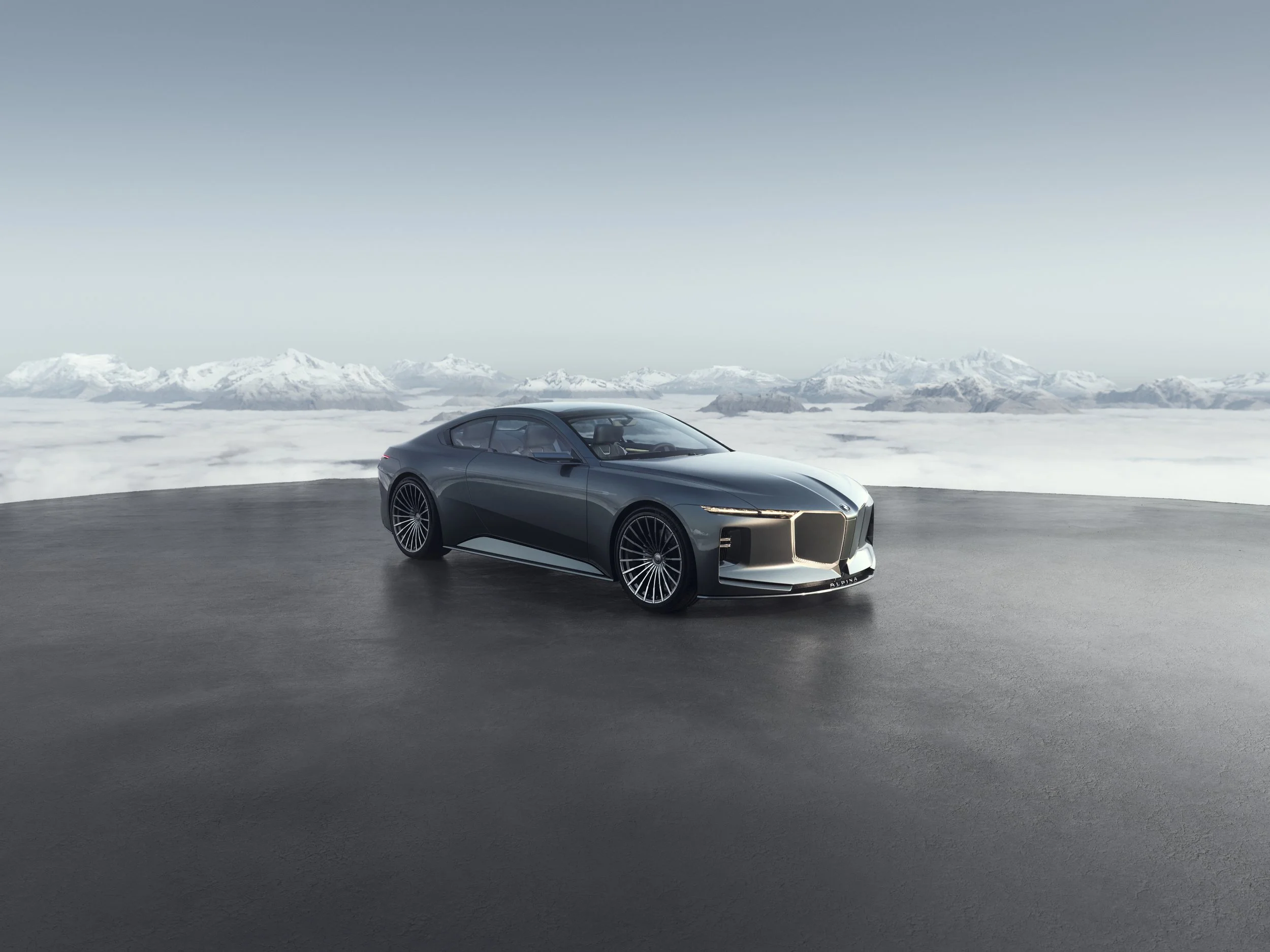
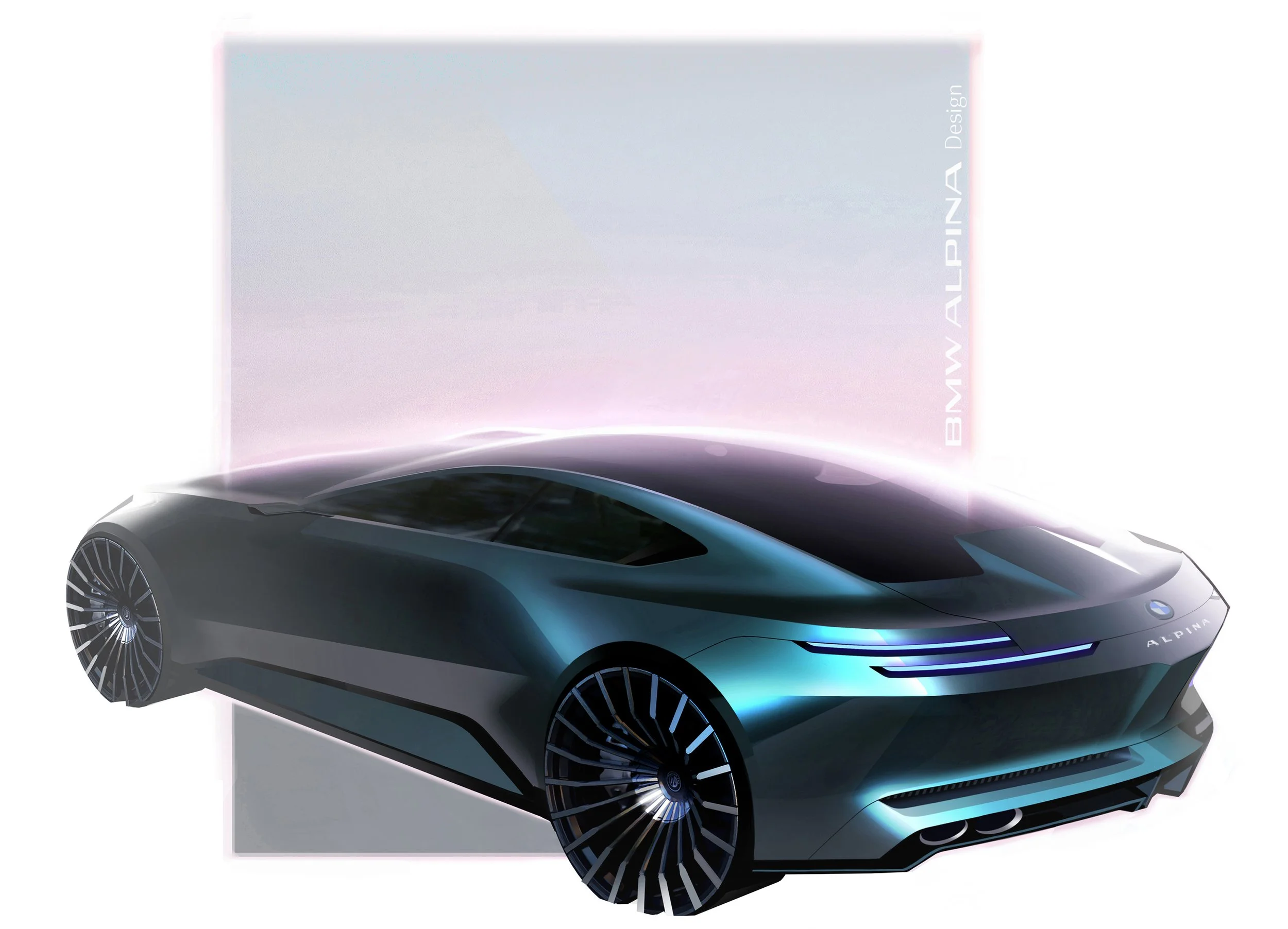
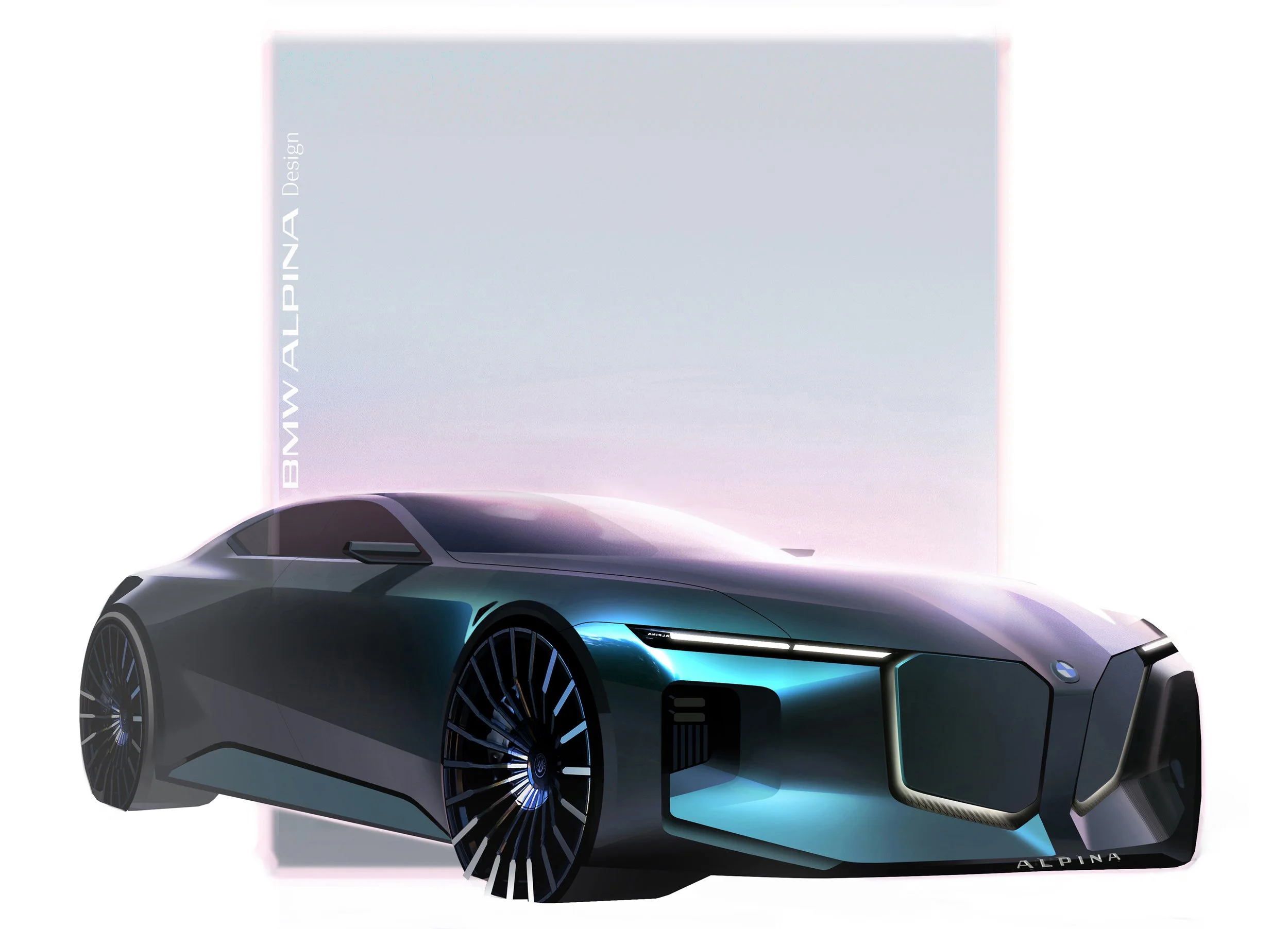
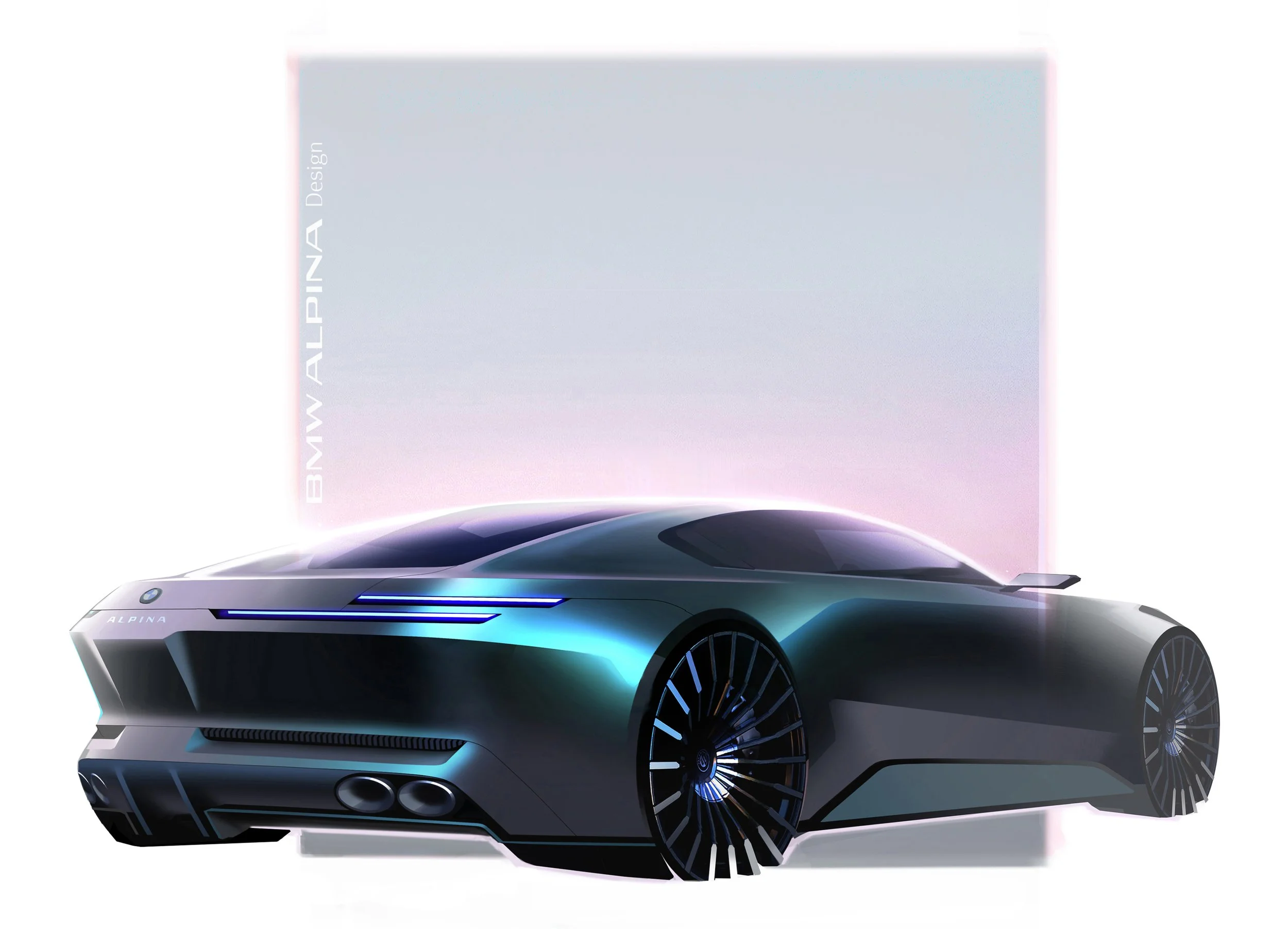
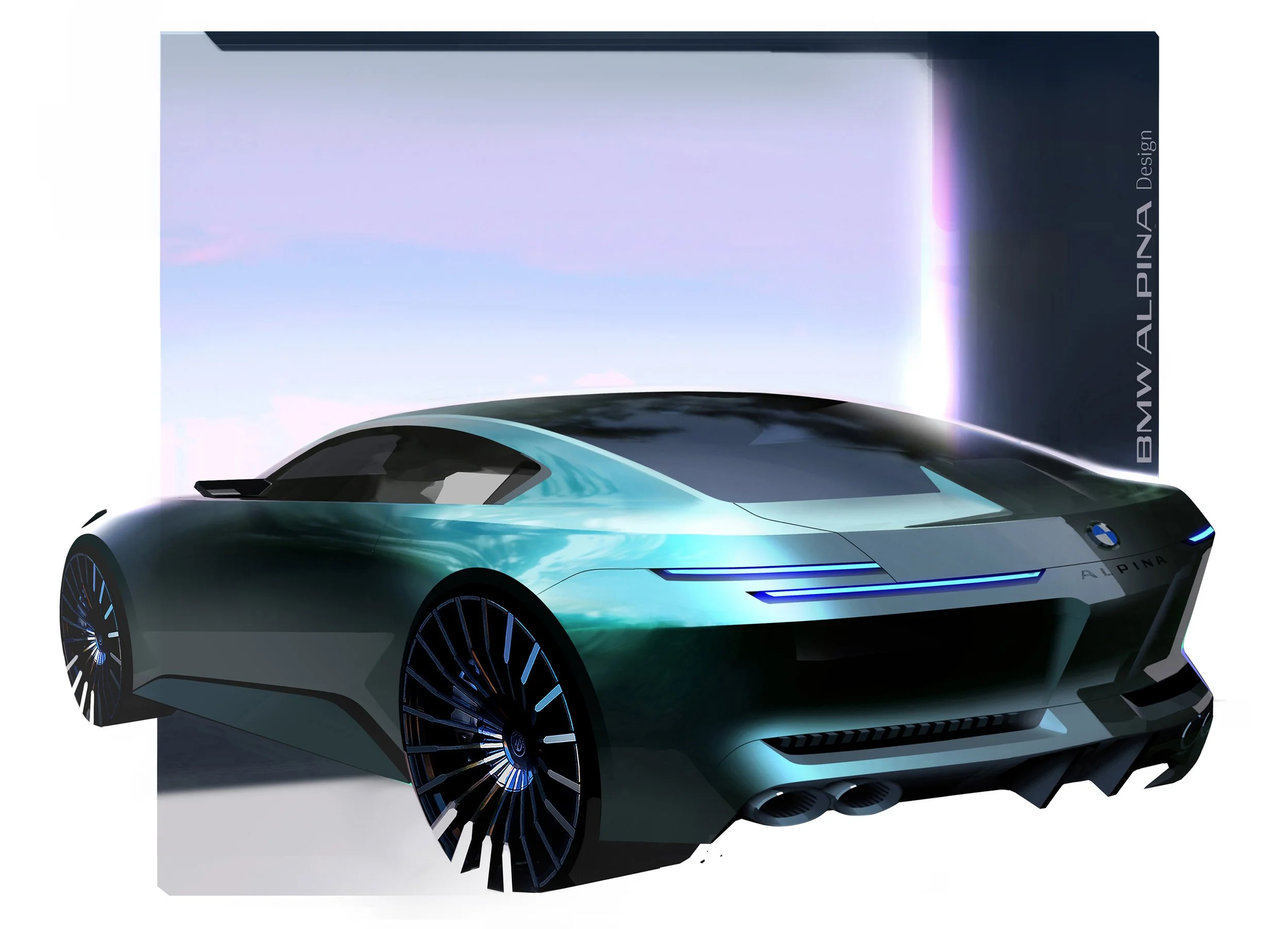
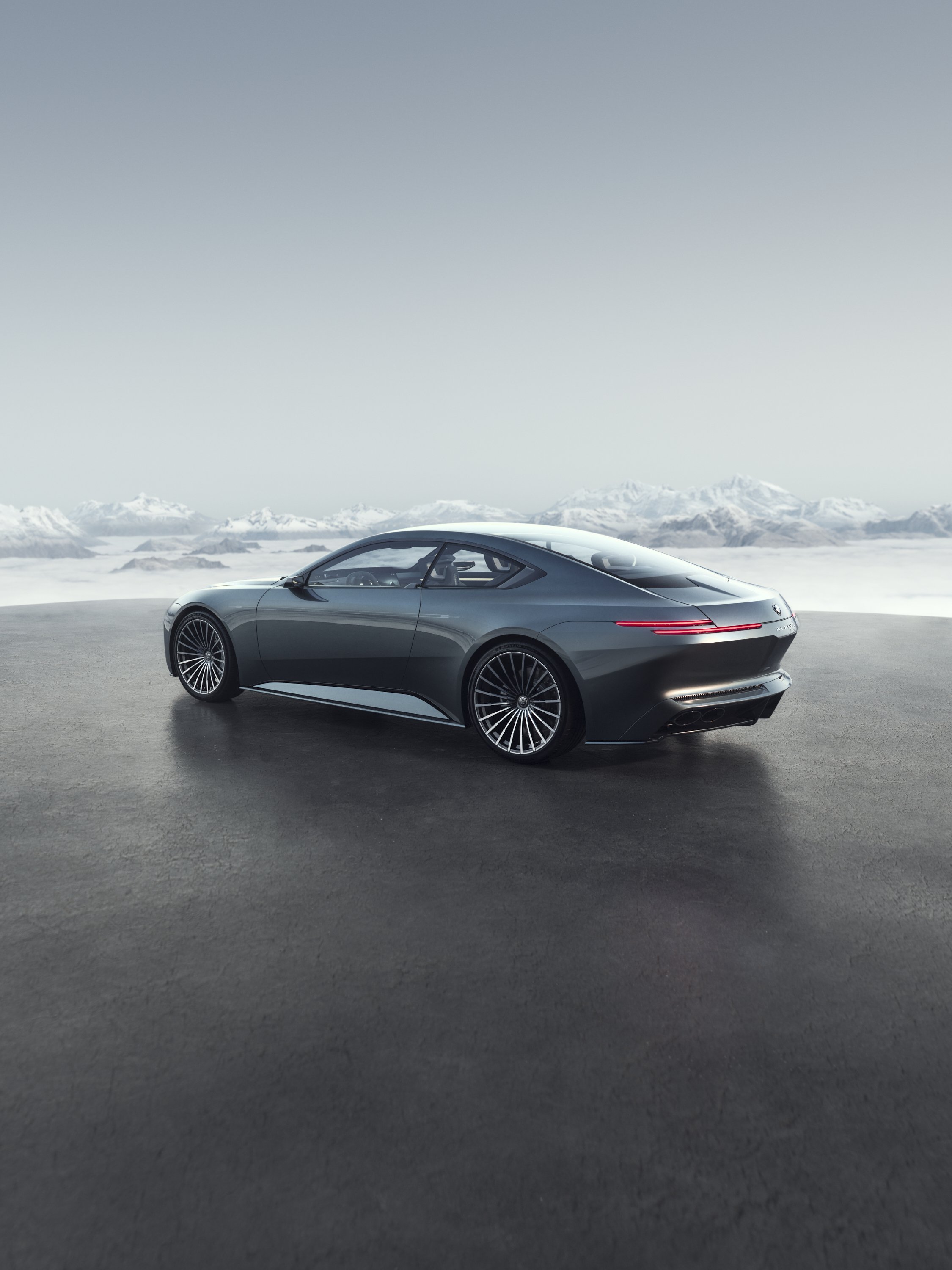
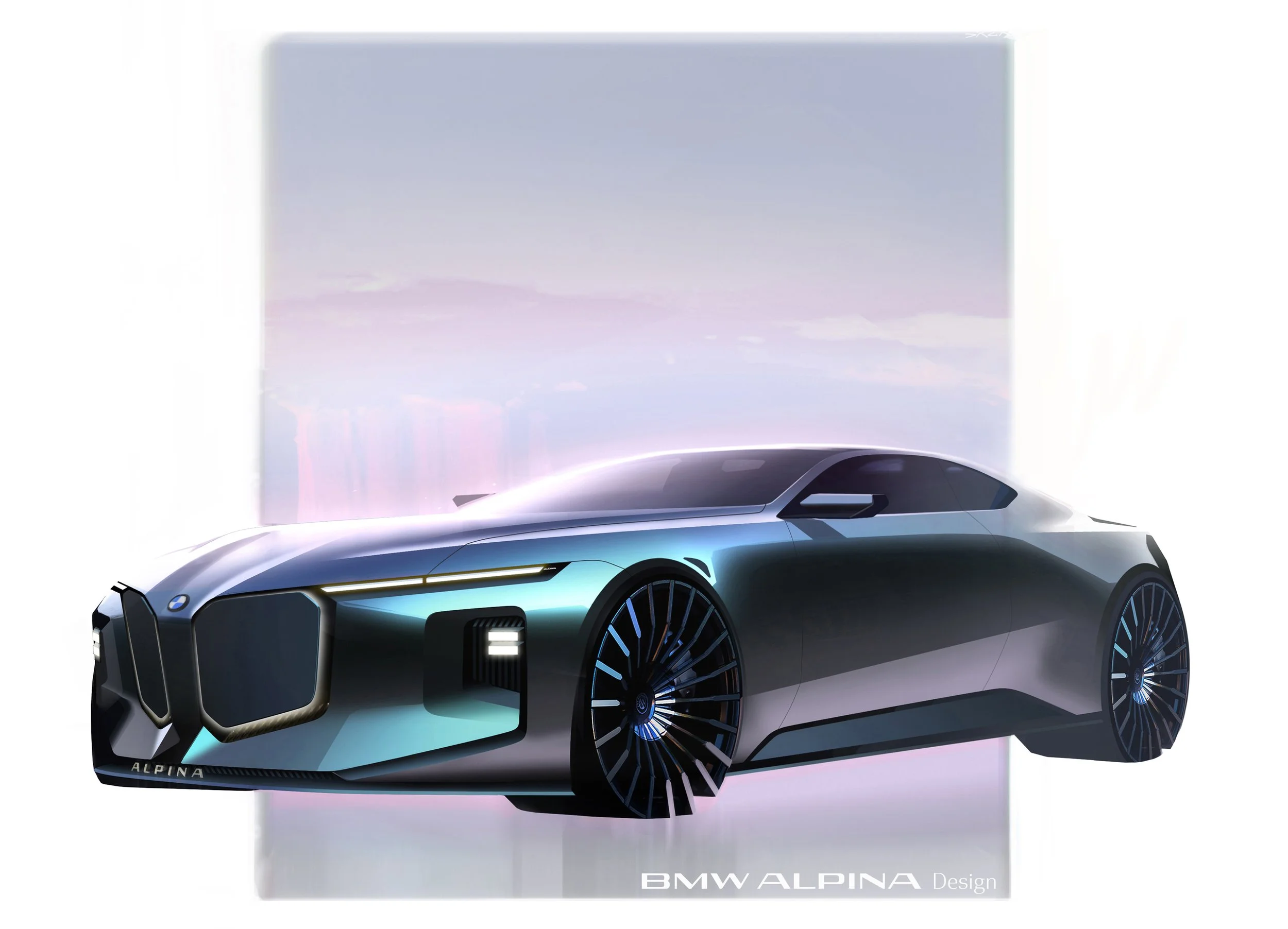
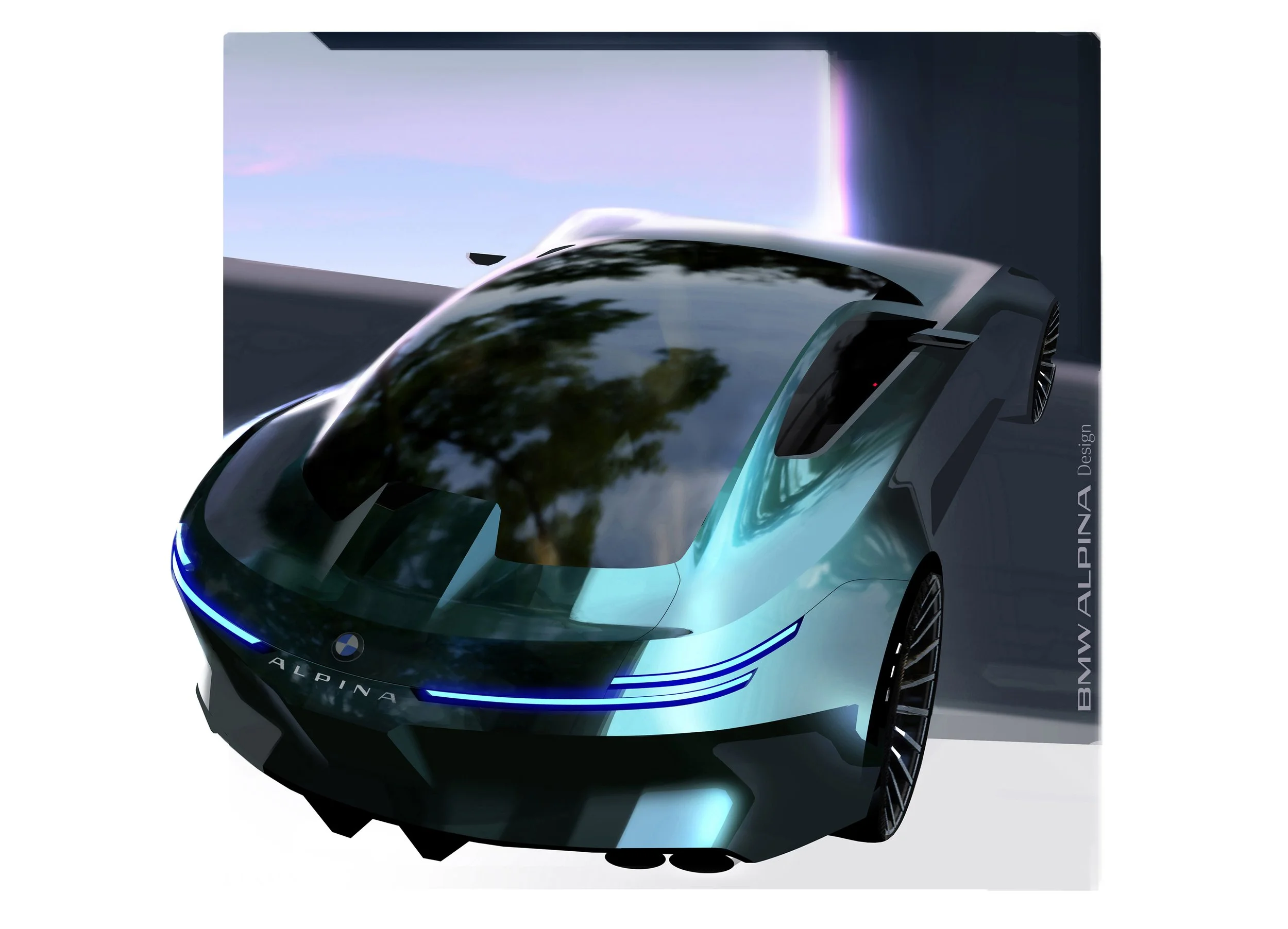
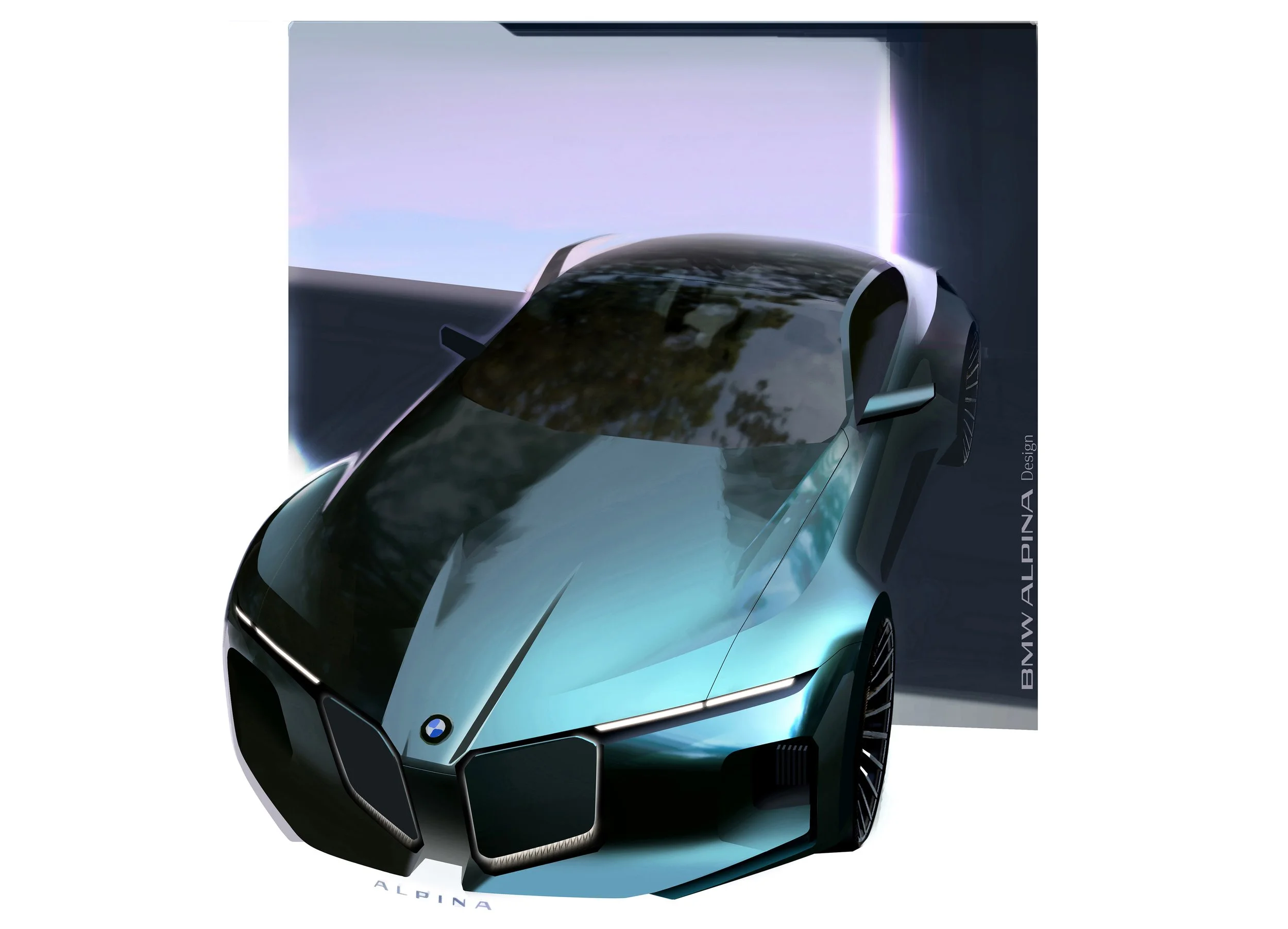
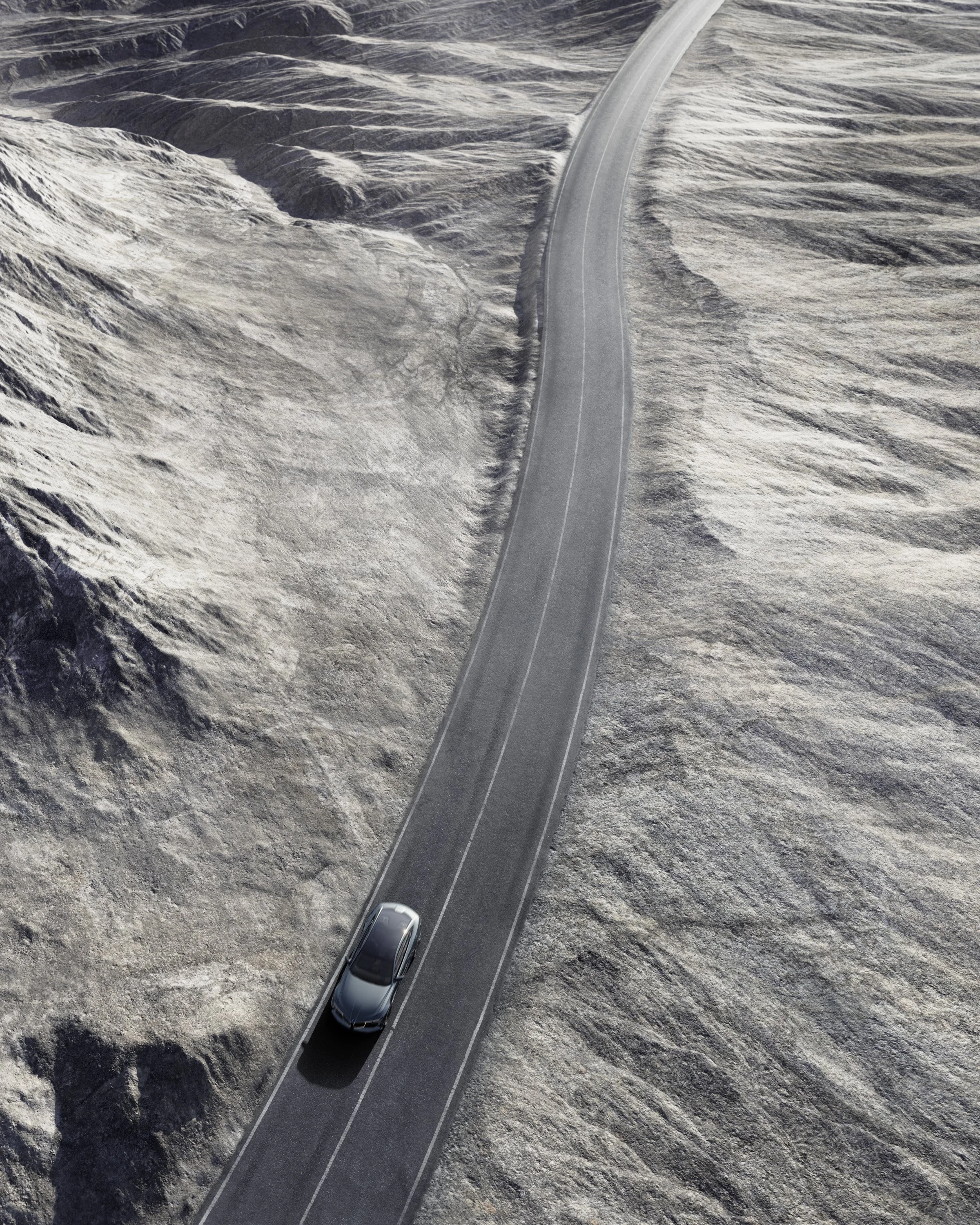
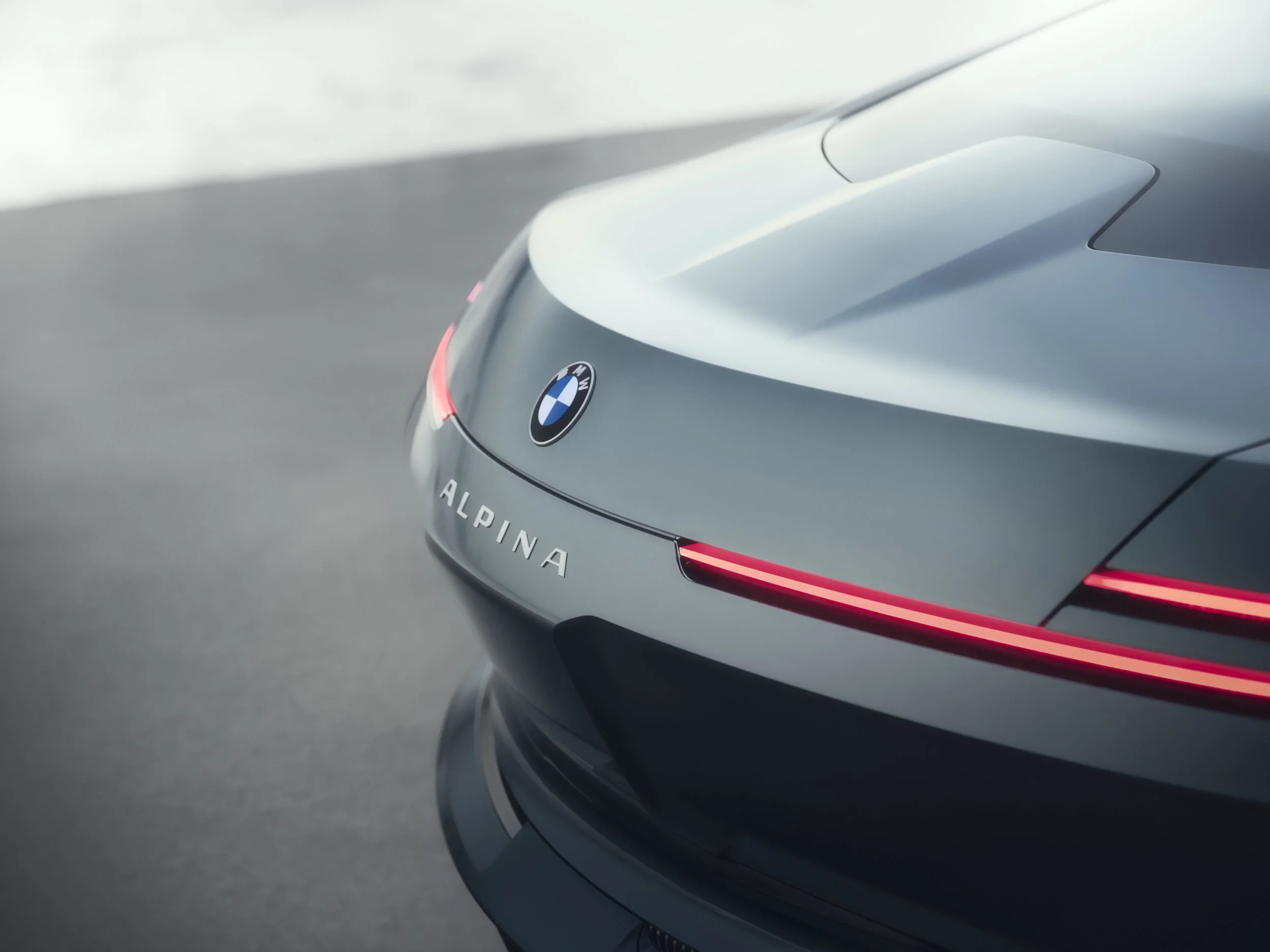
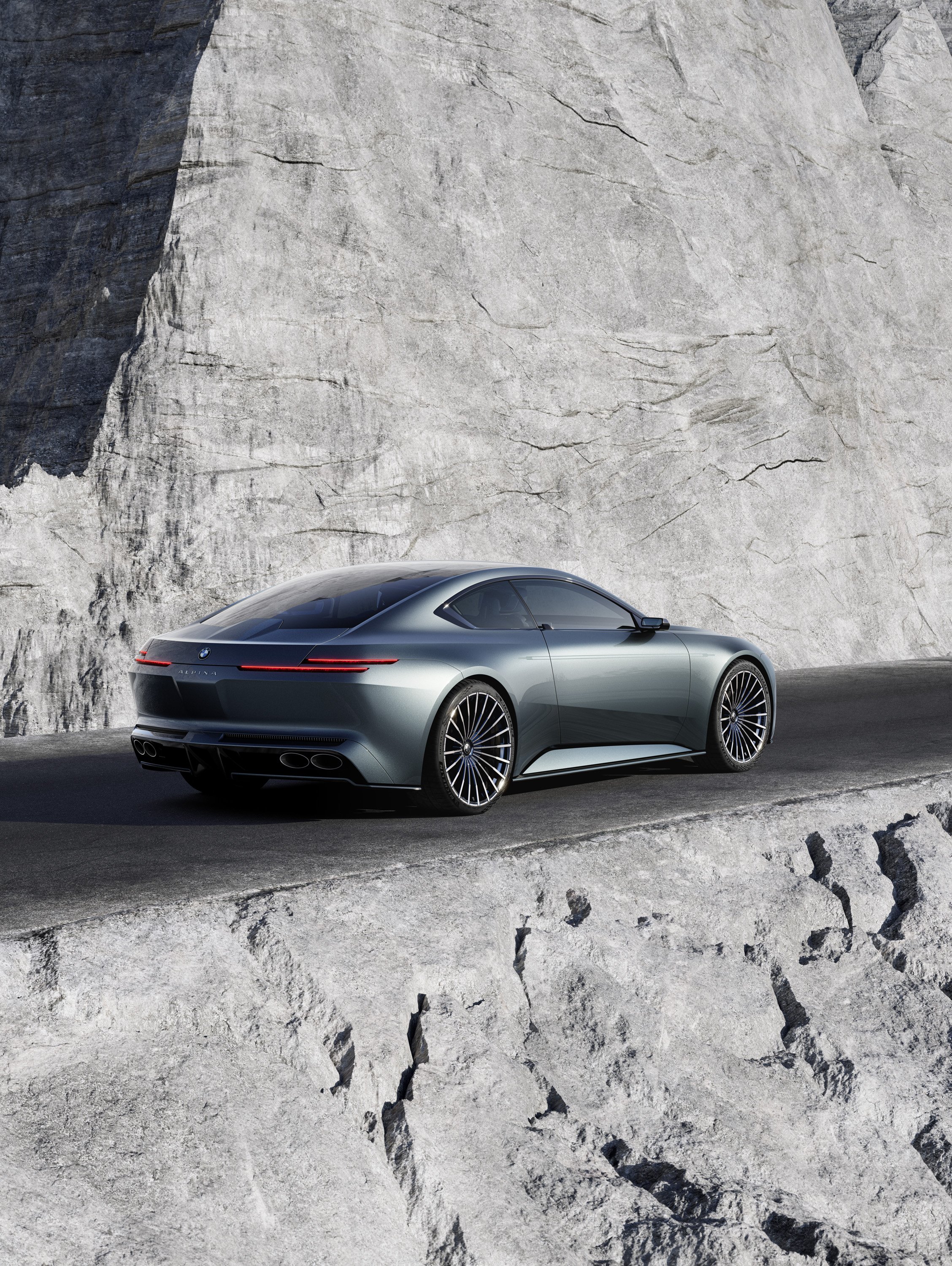
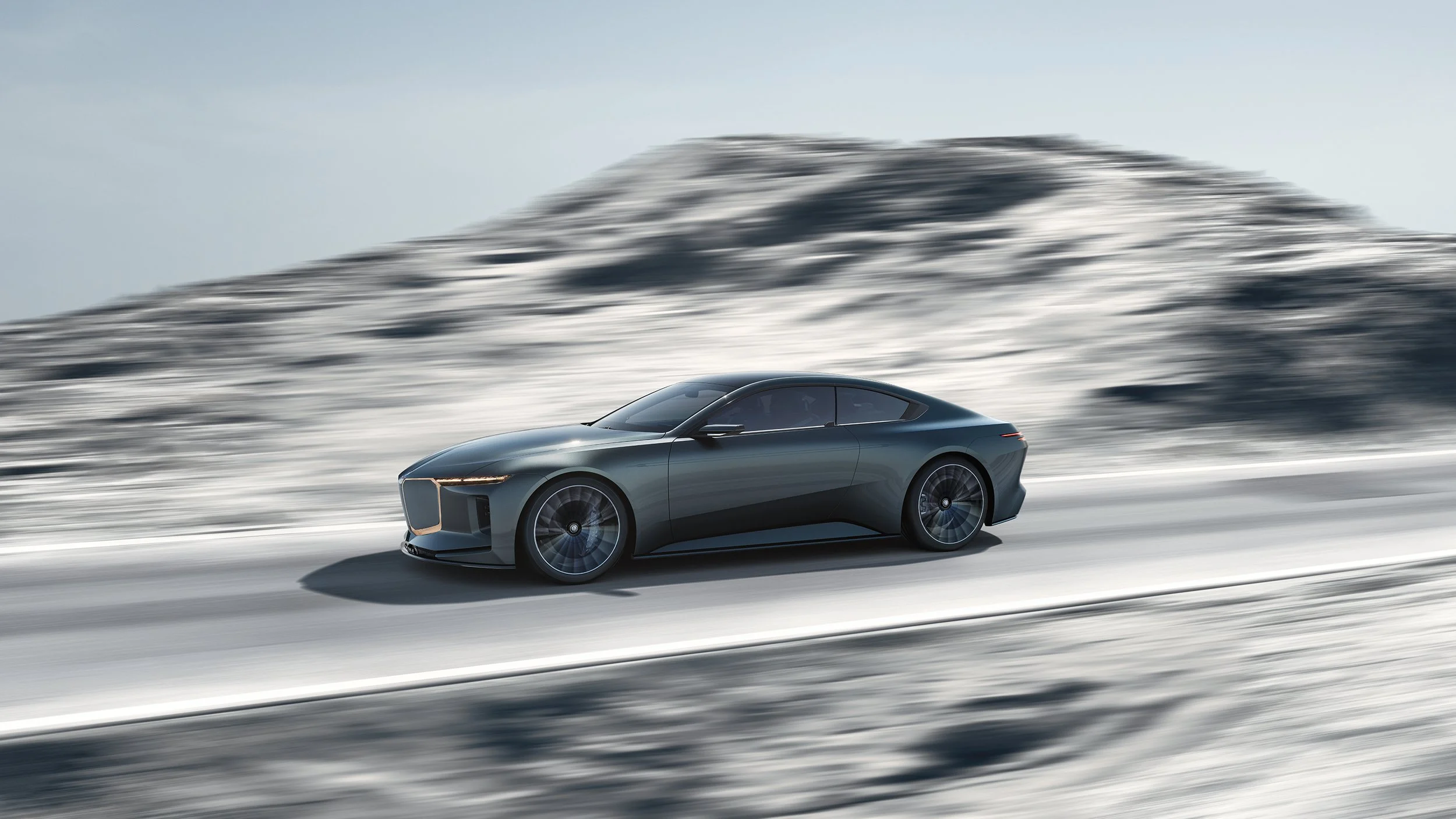
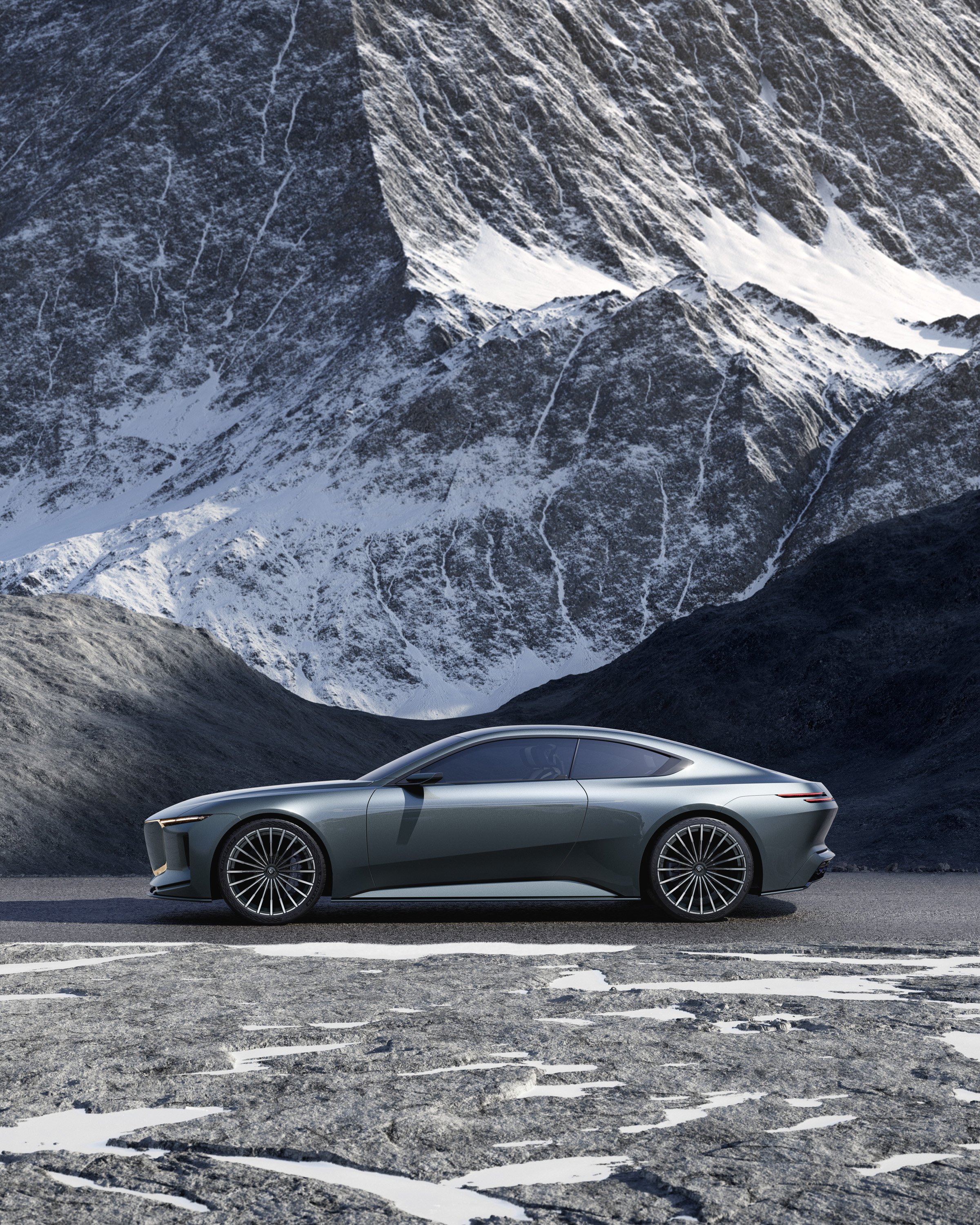
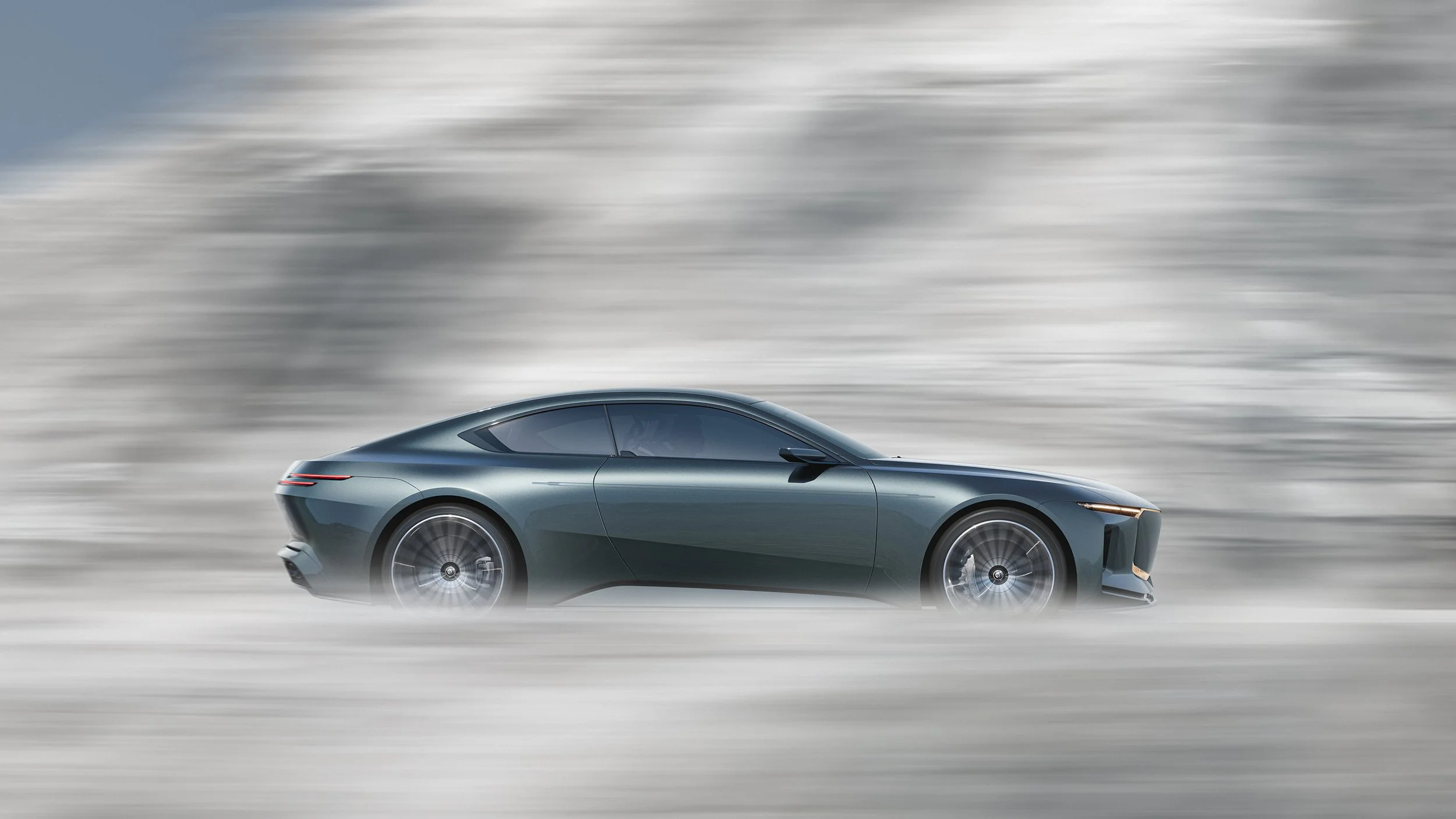
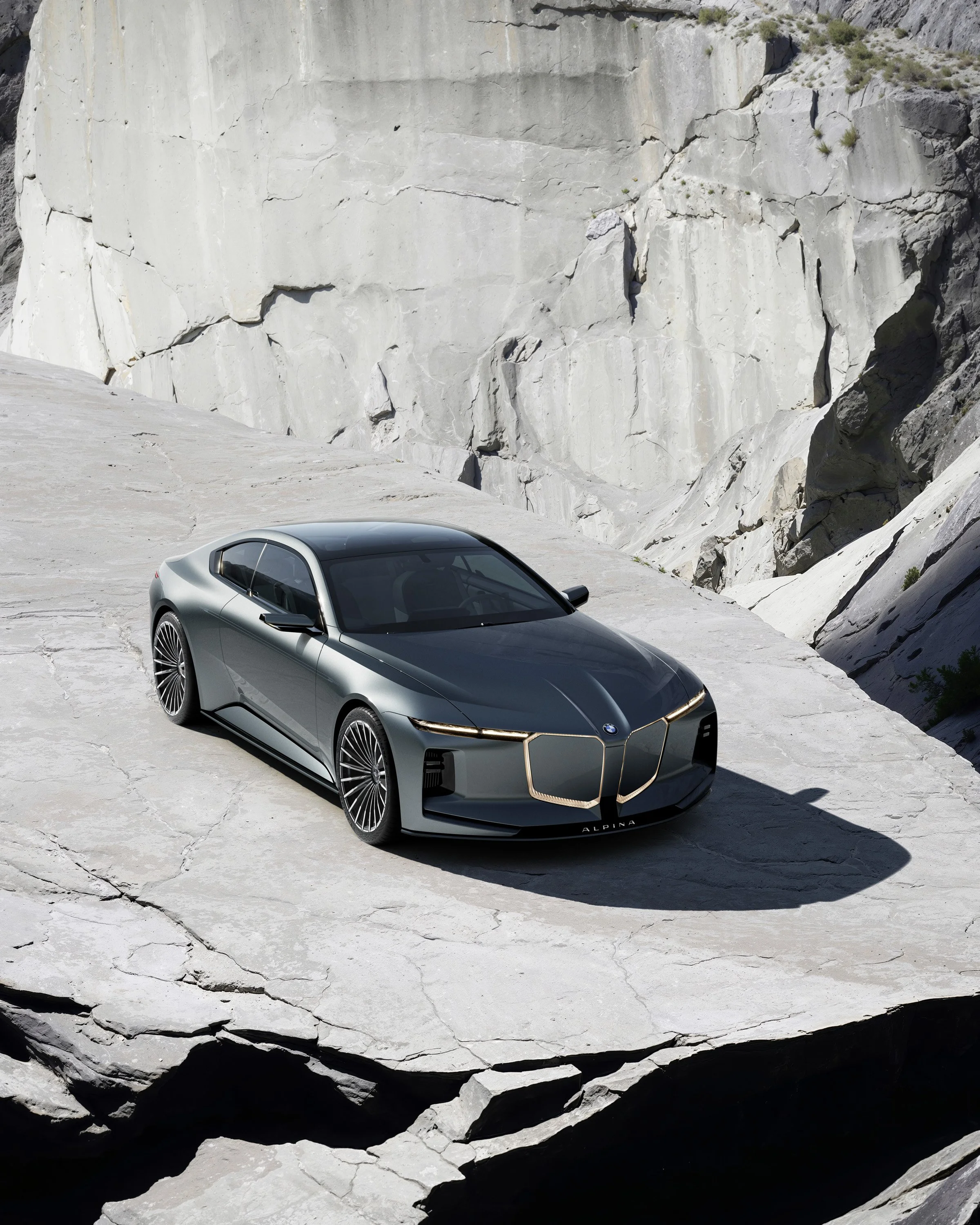
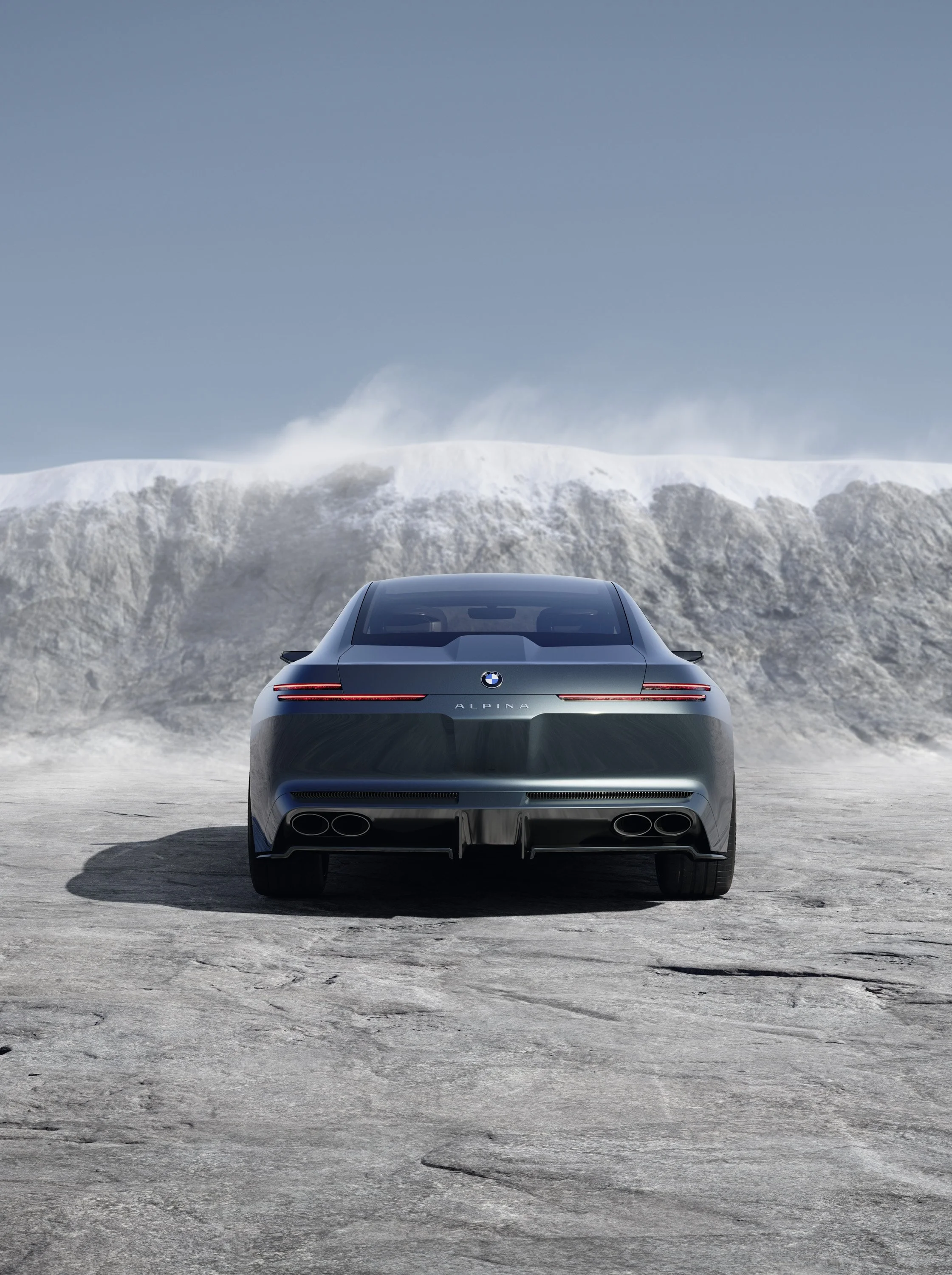
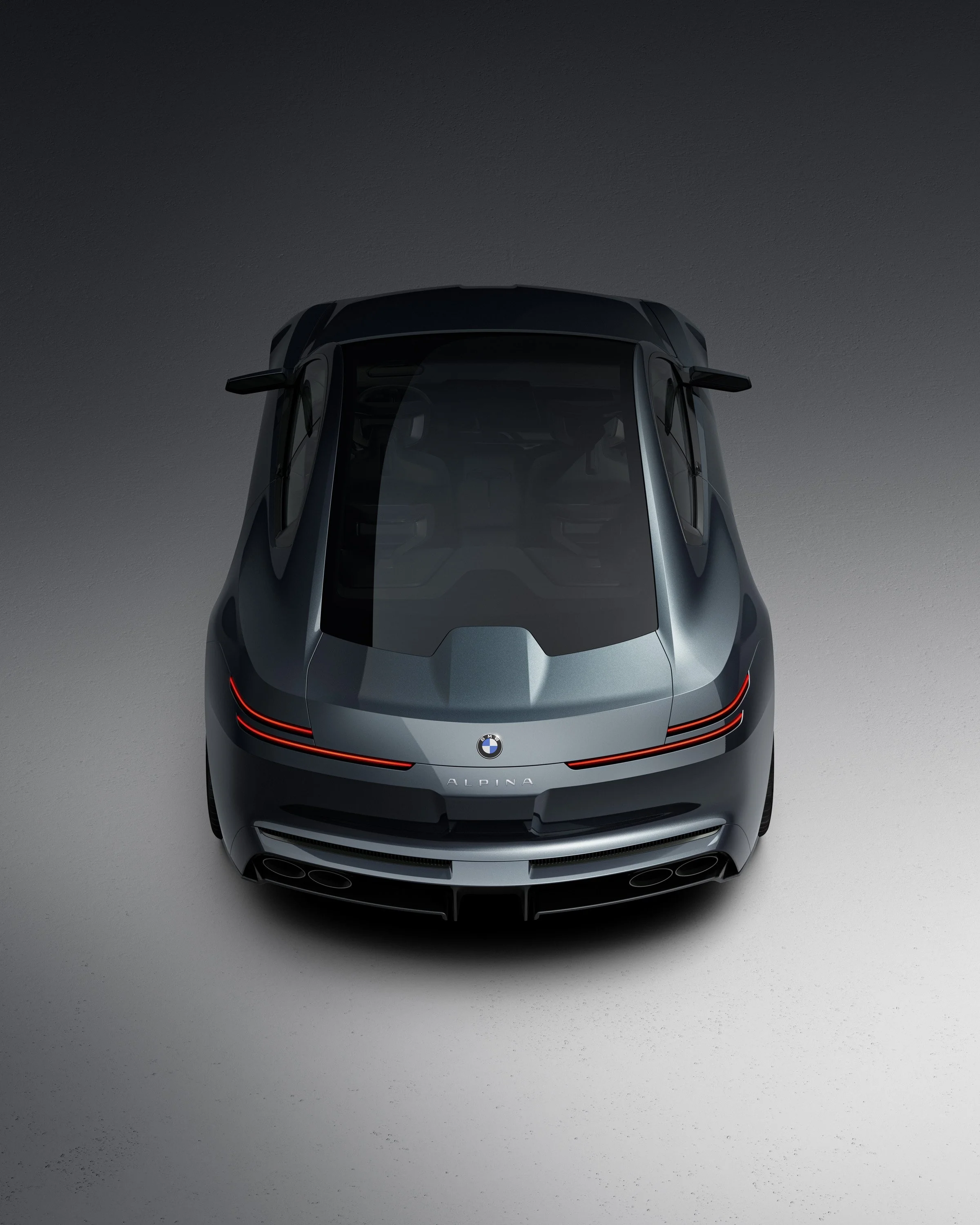
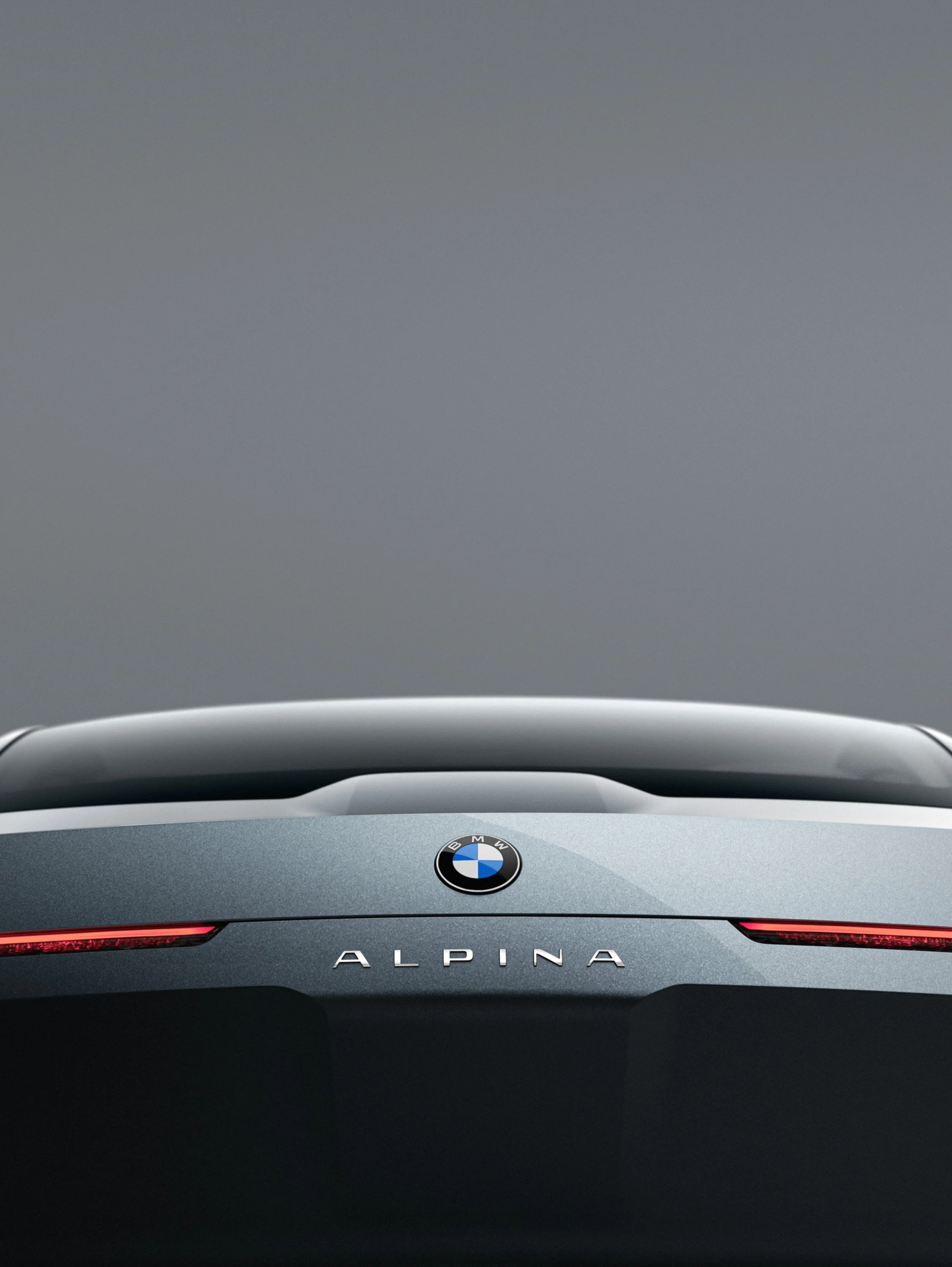
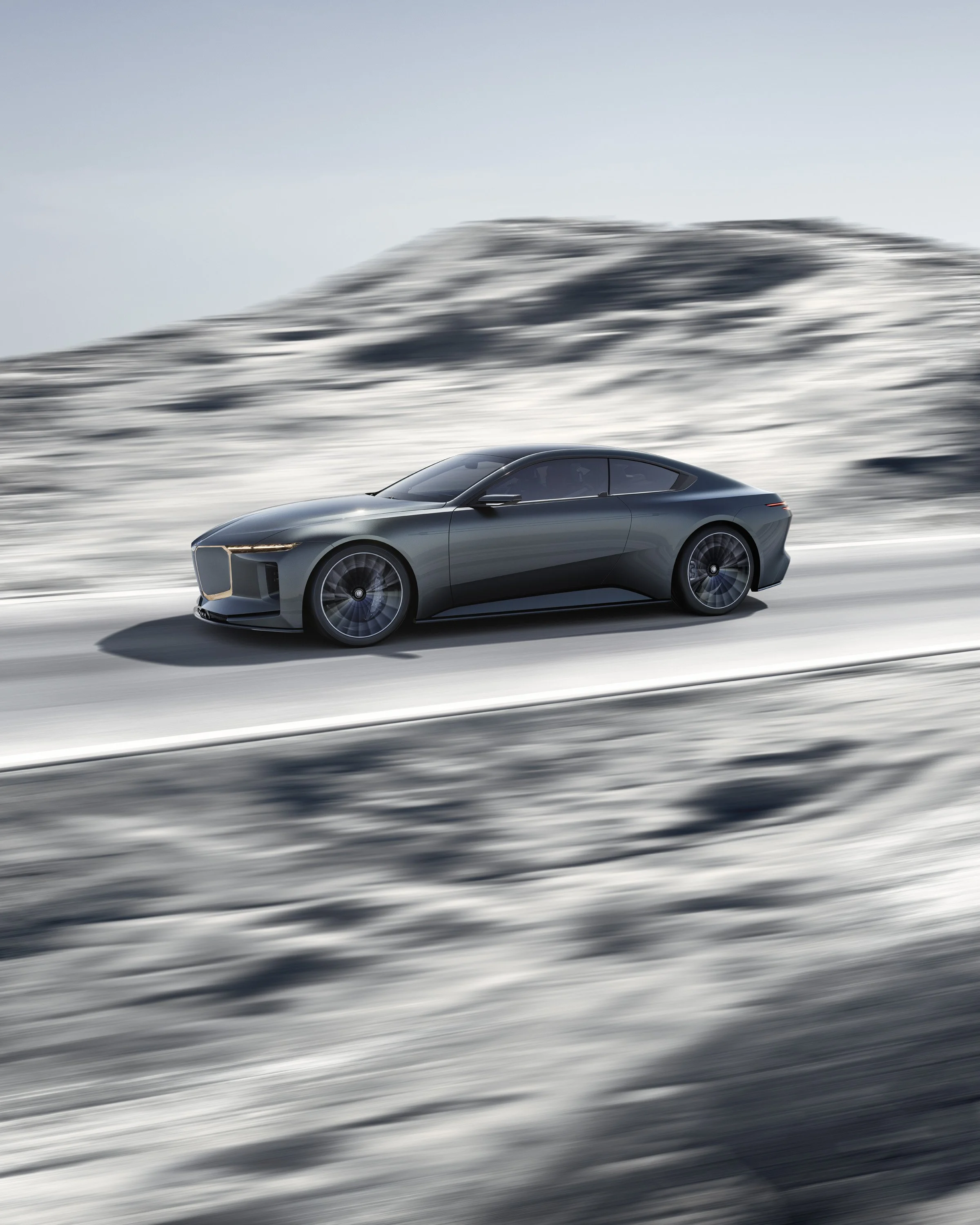
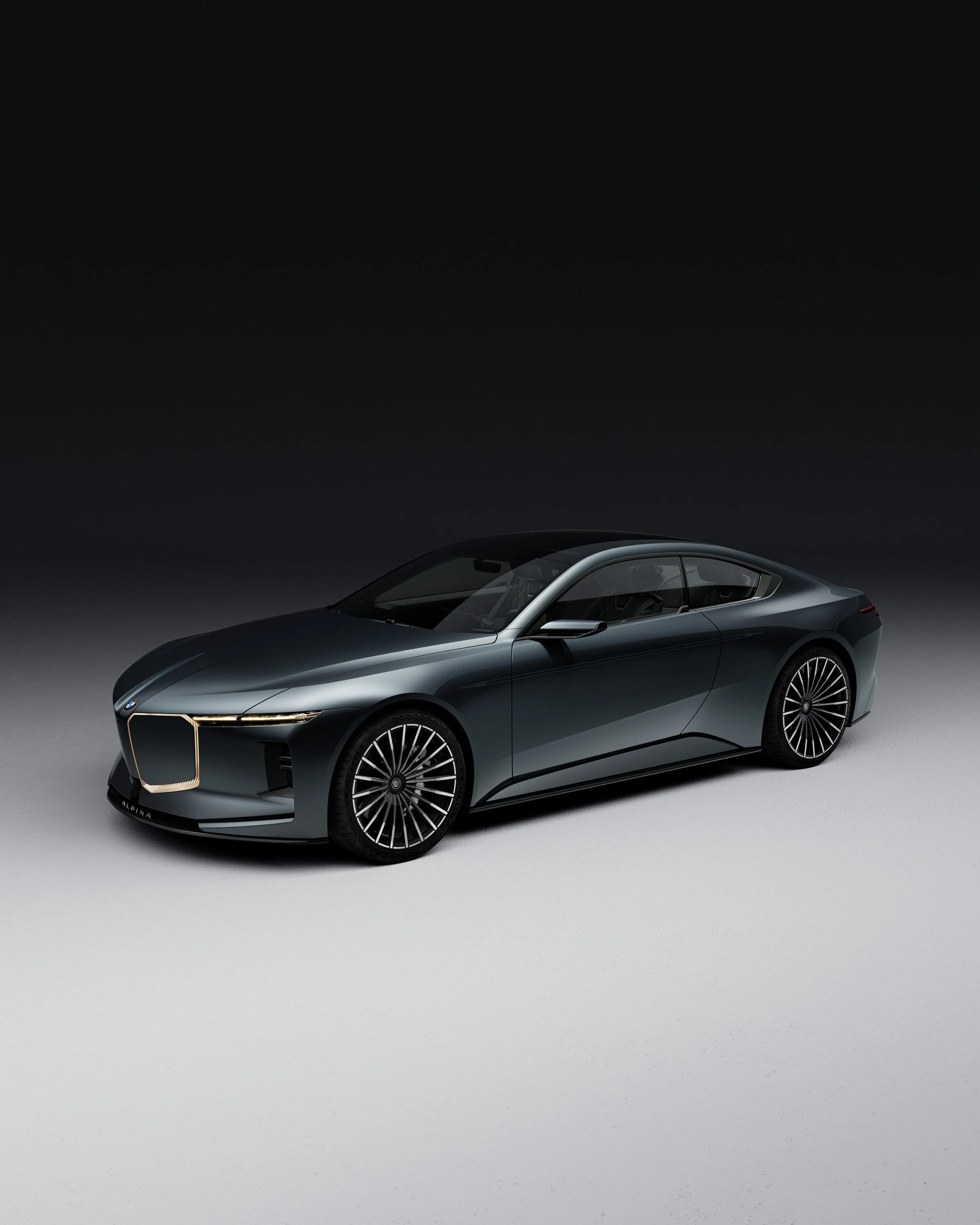
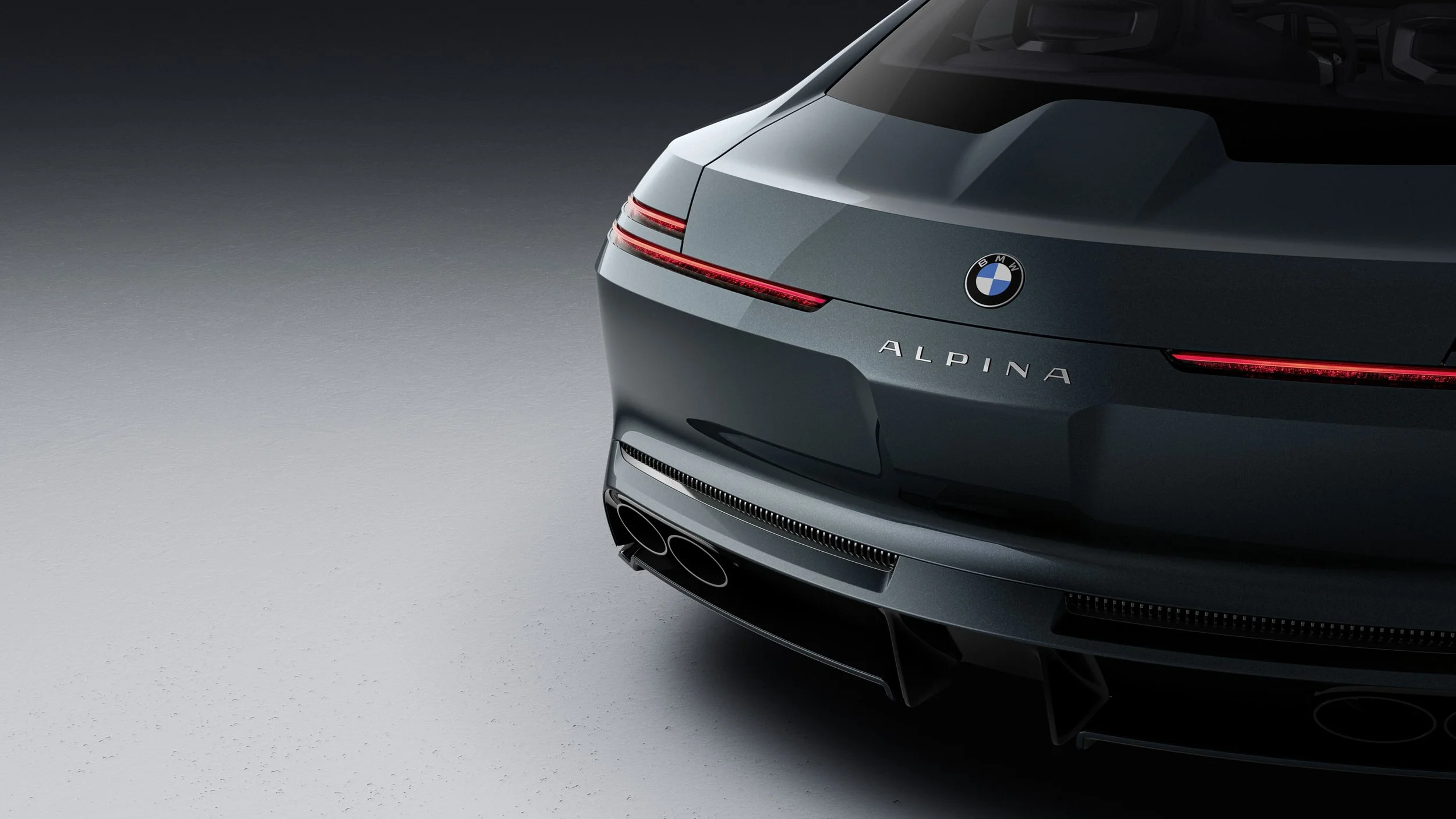
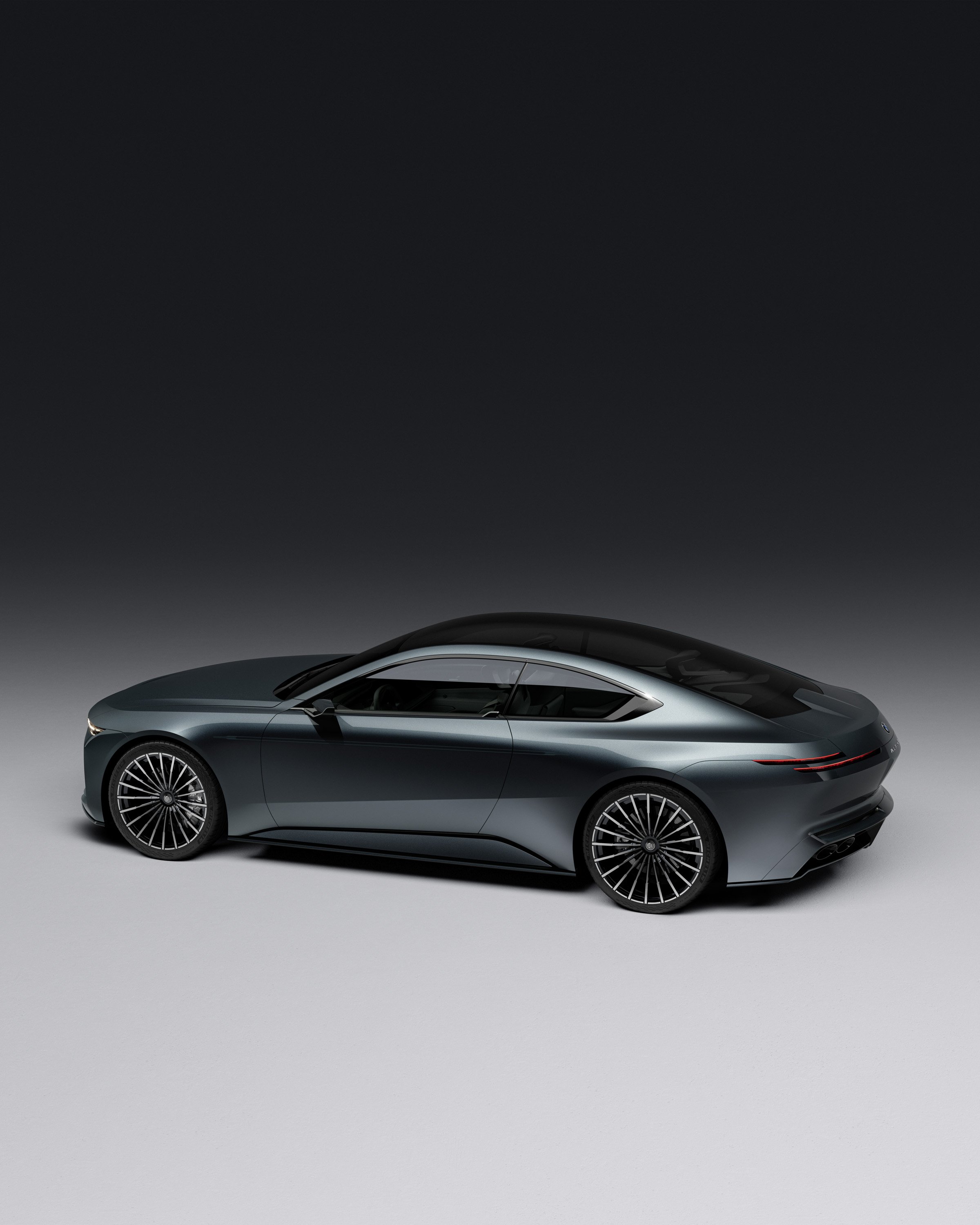
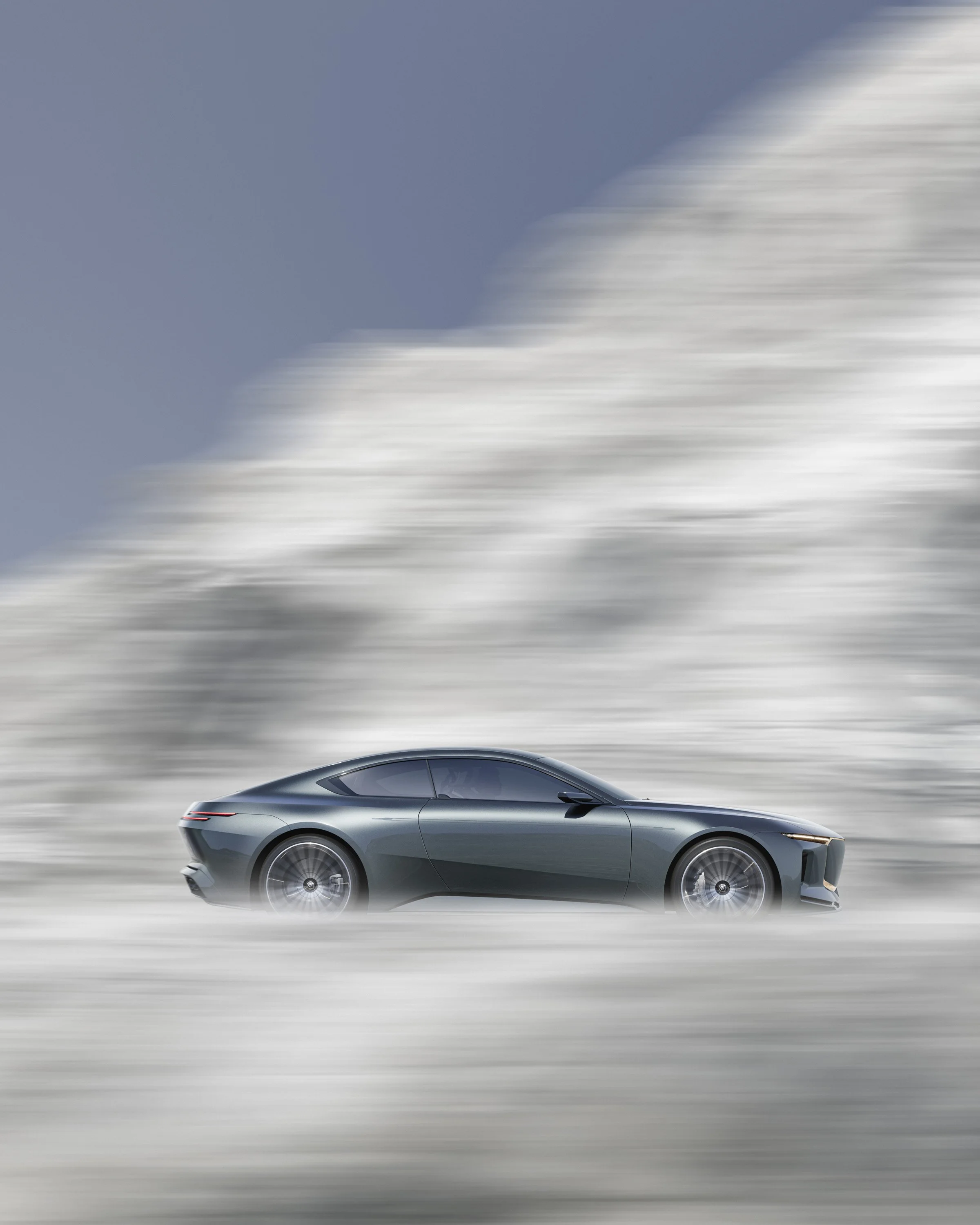
The Vision BMW ALPINA offers a respectful interpretation of the brand's heritage, shaped by contemporary creative instincts. Measuring 5,200 mm in length, the car commands a substantial presence: wide, low and confident. The coupé's long, raked roofline signals speed while promising genuine comfort for four adults. A V8 powertrain drives the experience, tuned to produce the characteristic notes of the Alpina exhaust: rich and deep at low speed, sonorous at high revs.
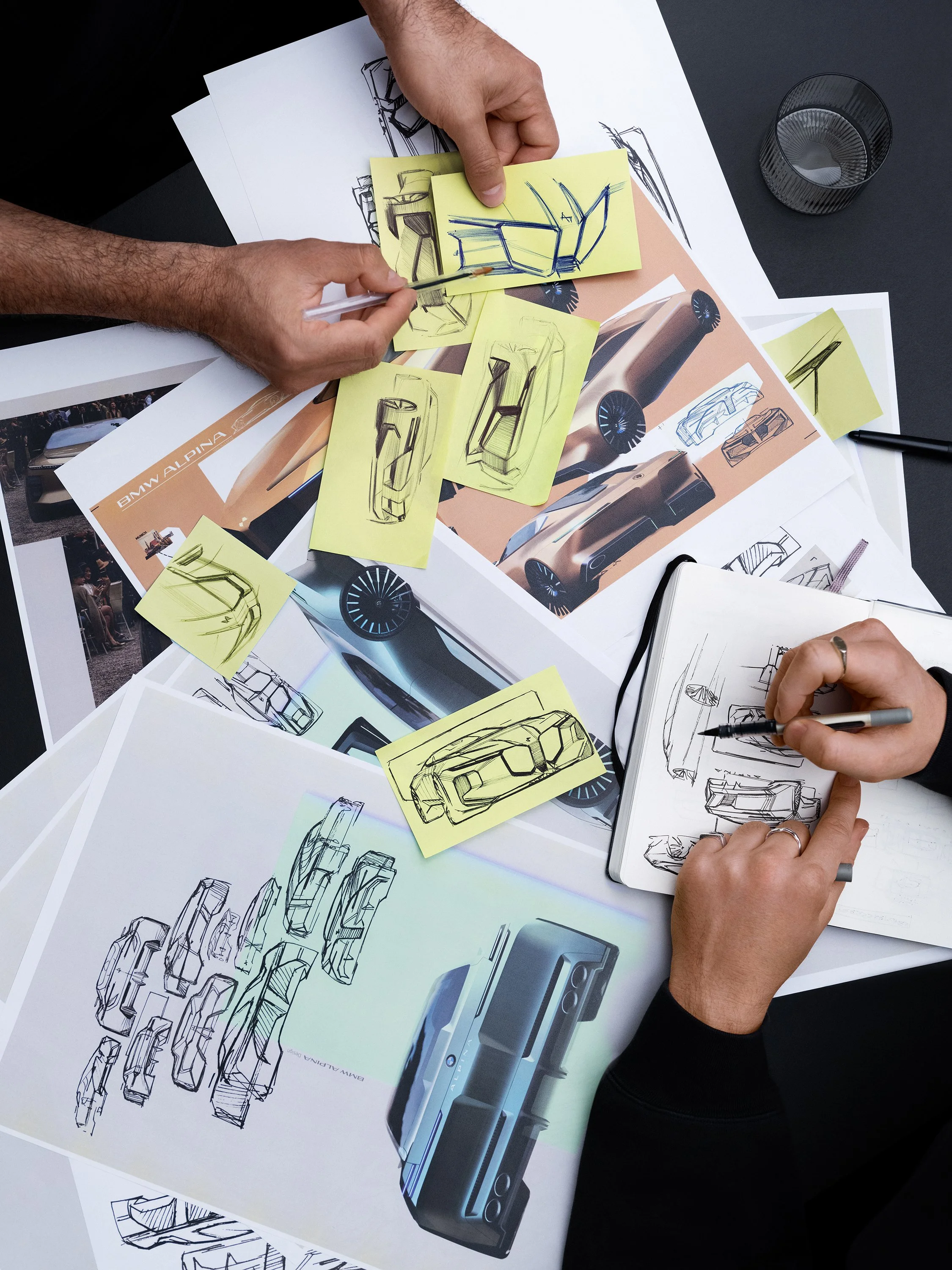
"In Vision BMW ALPINA, we distil every element of the brand to its essence and apply it in a deeply modern and sophisticated way," says Maximilian Missoni, head of BMW Design Midsize & Luxury Cars and BMW ALPINA. "Every detail reflects substance: in engineering, in materials, and in the story it tells. The statements it makes are subtle and revealed only on a closer read. This interplay between purity and richness defines our approach to BMW ALPINA design."
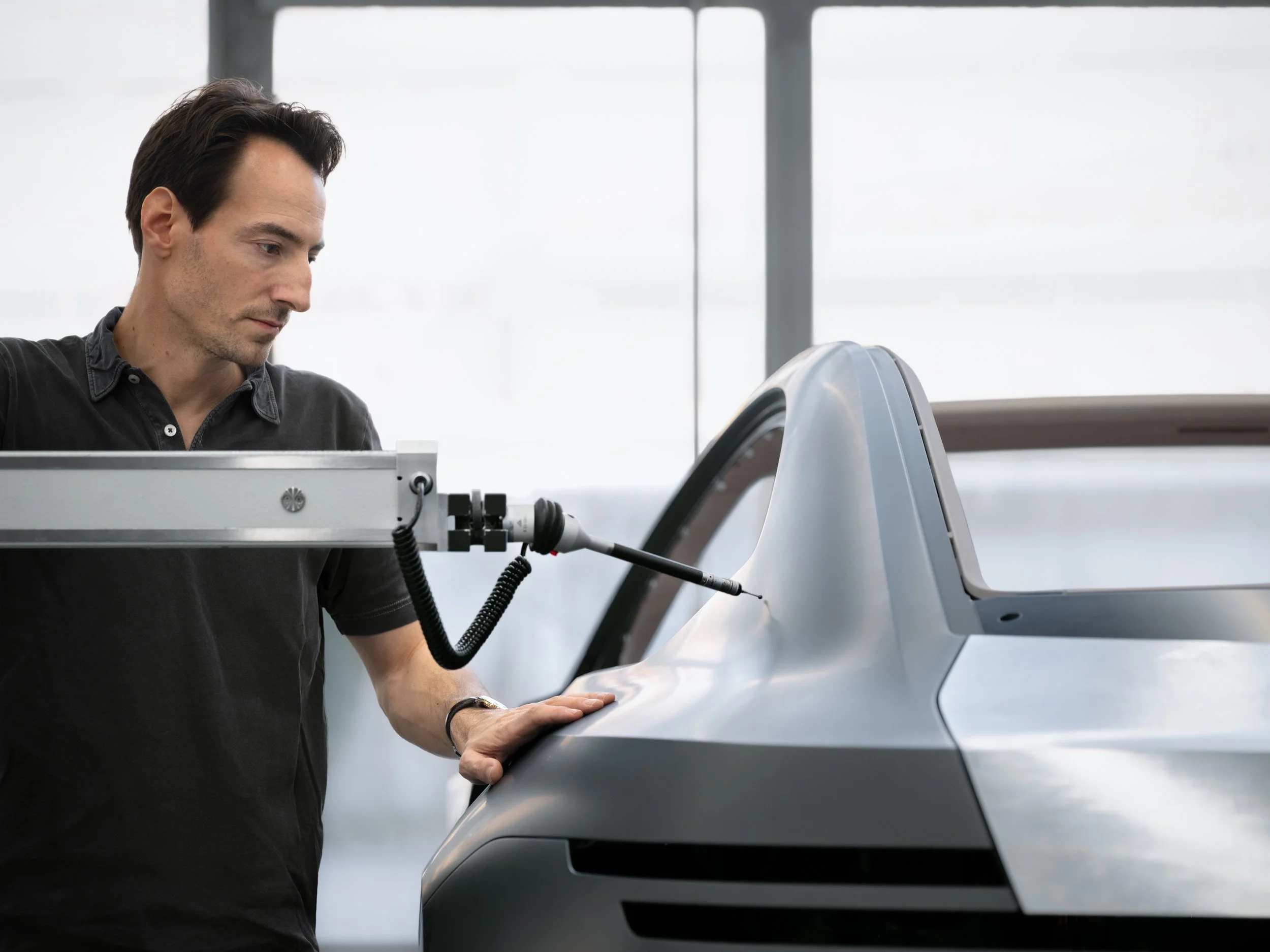
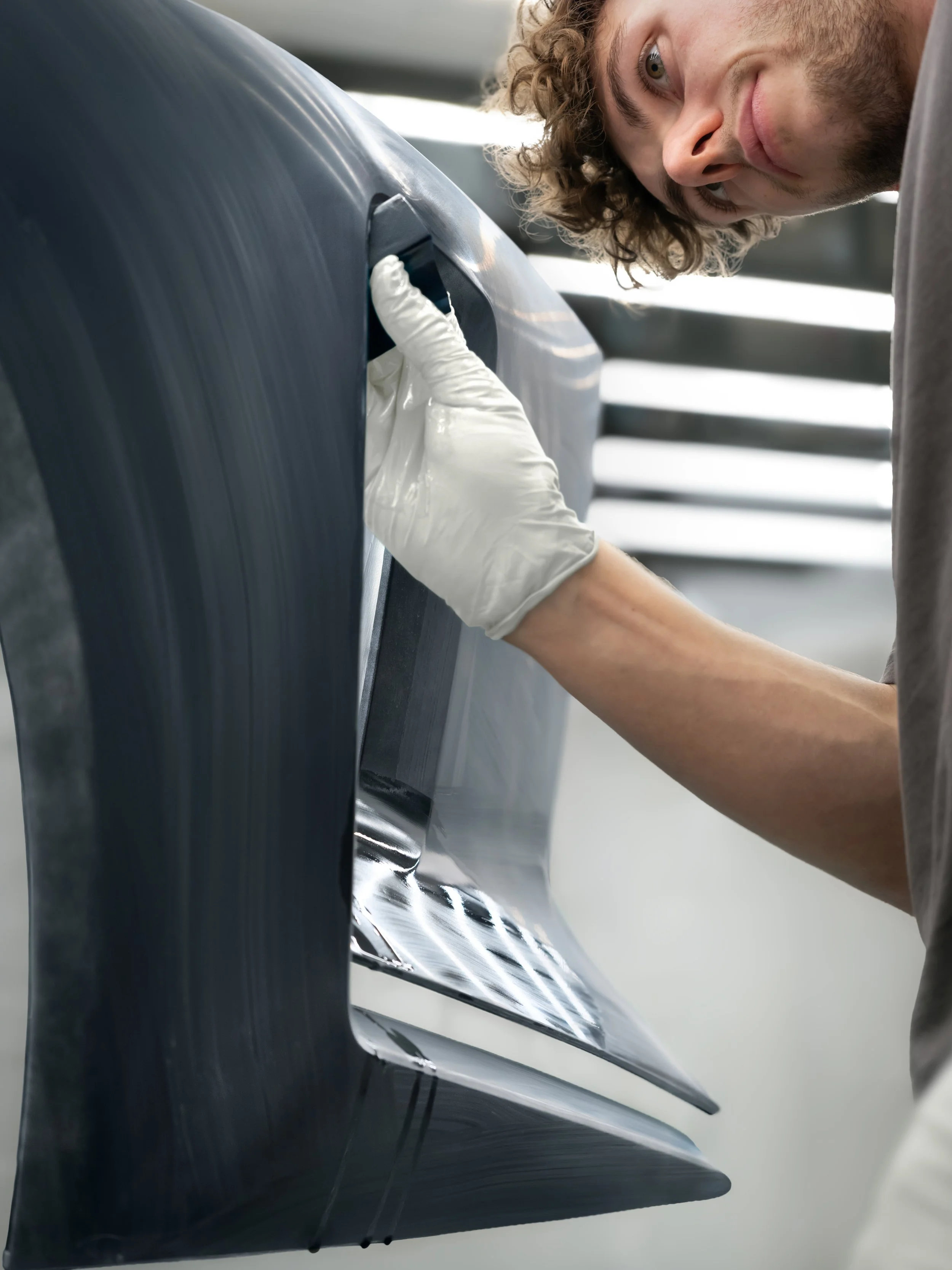
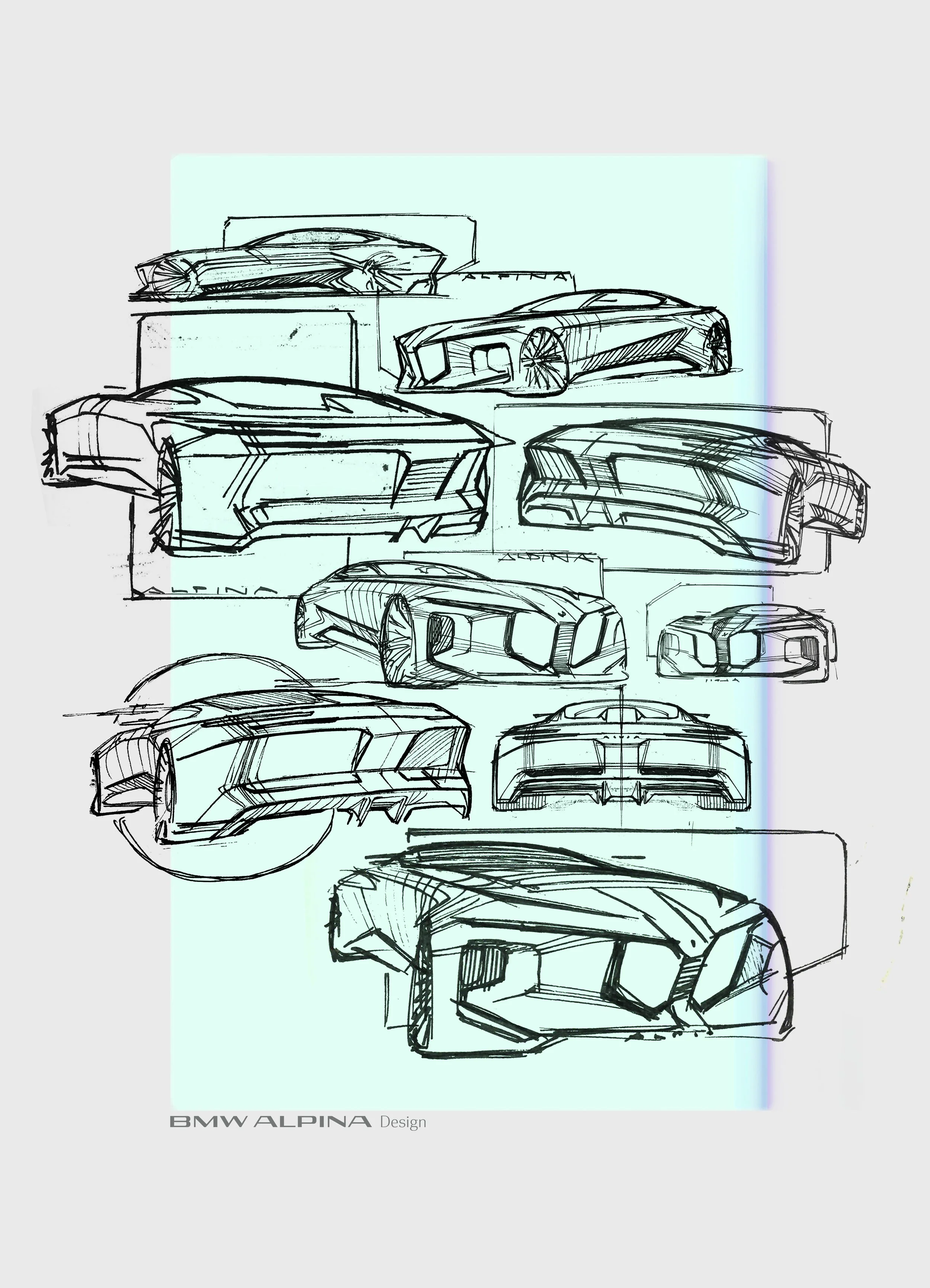
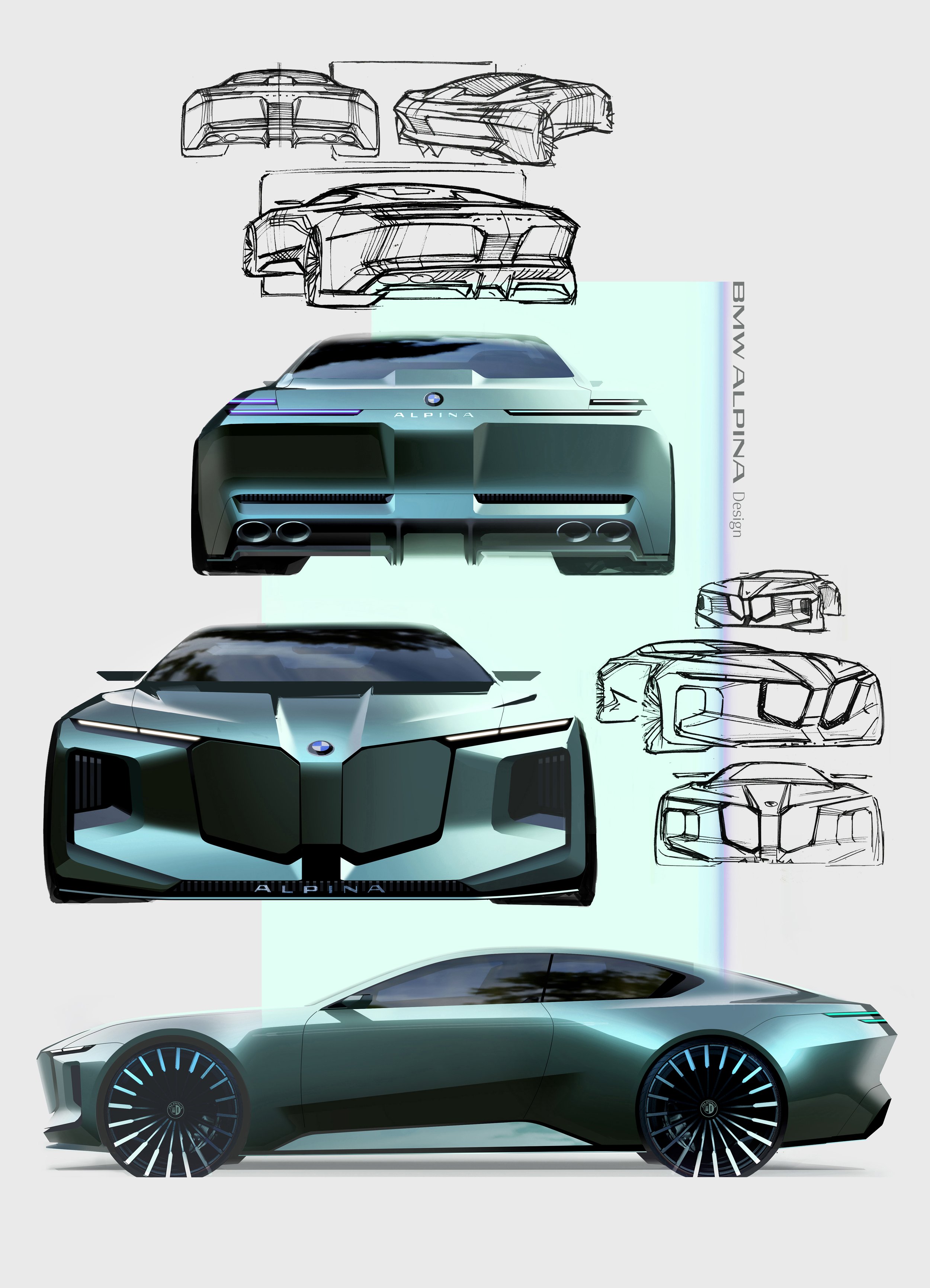
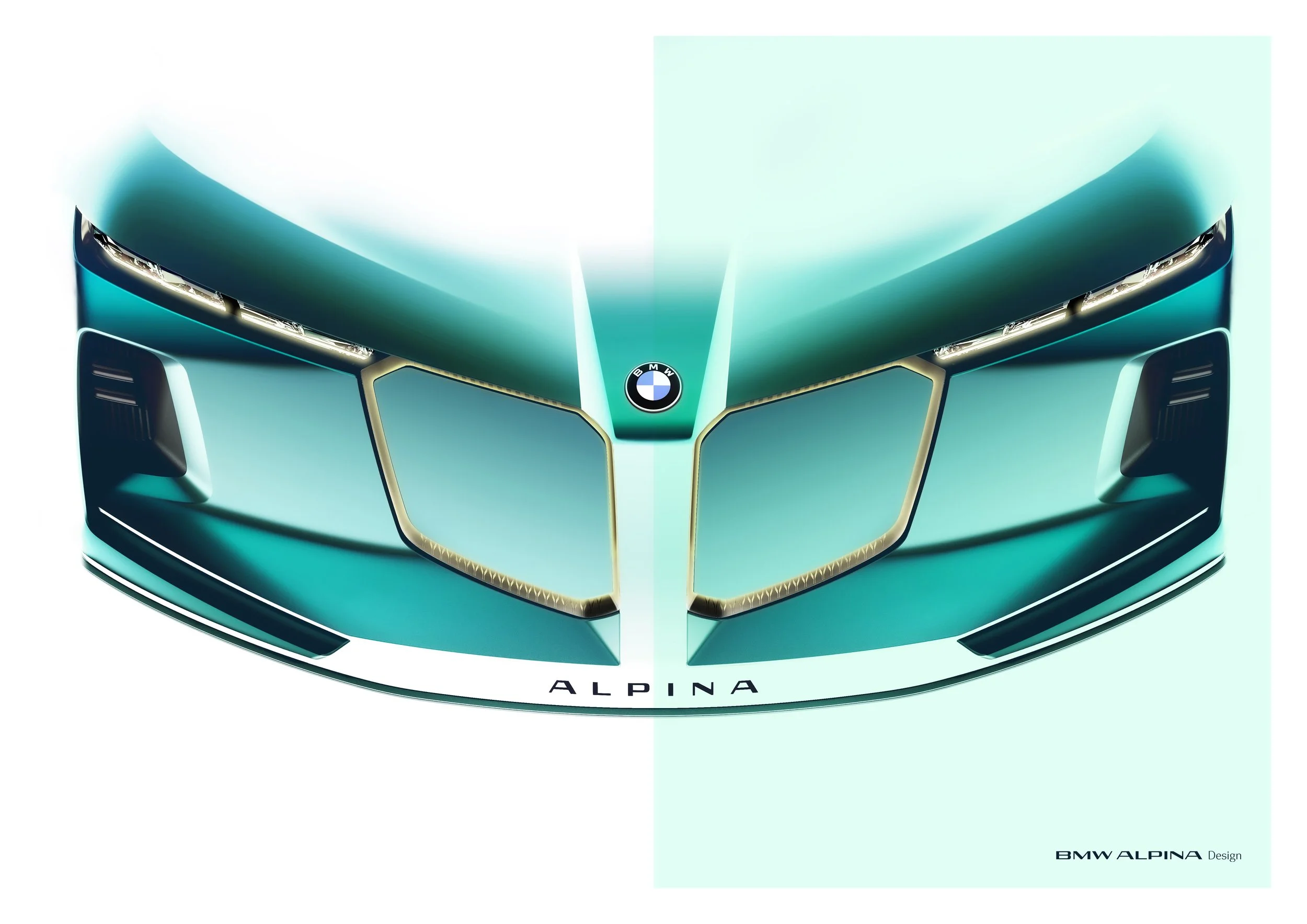
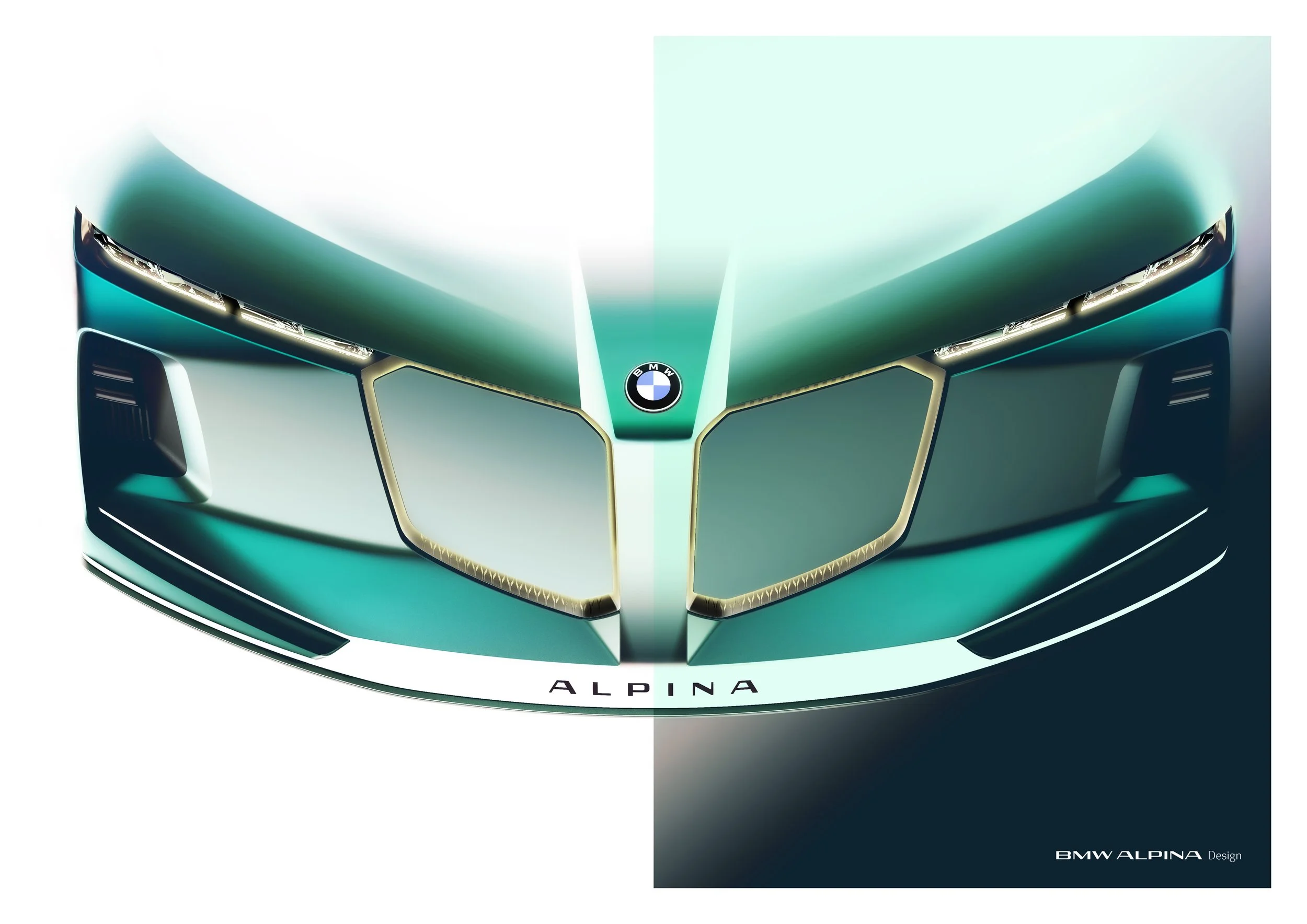
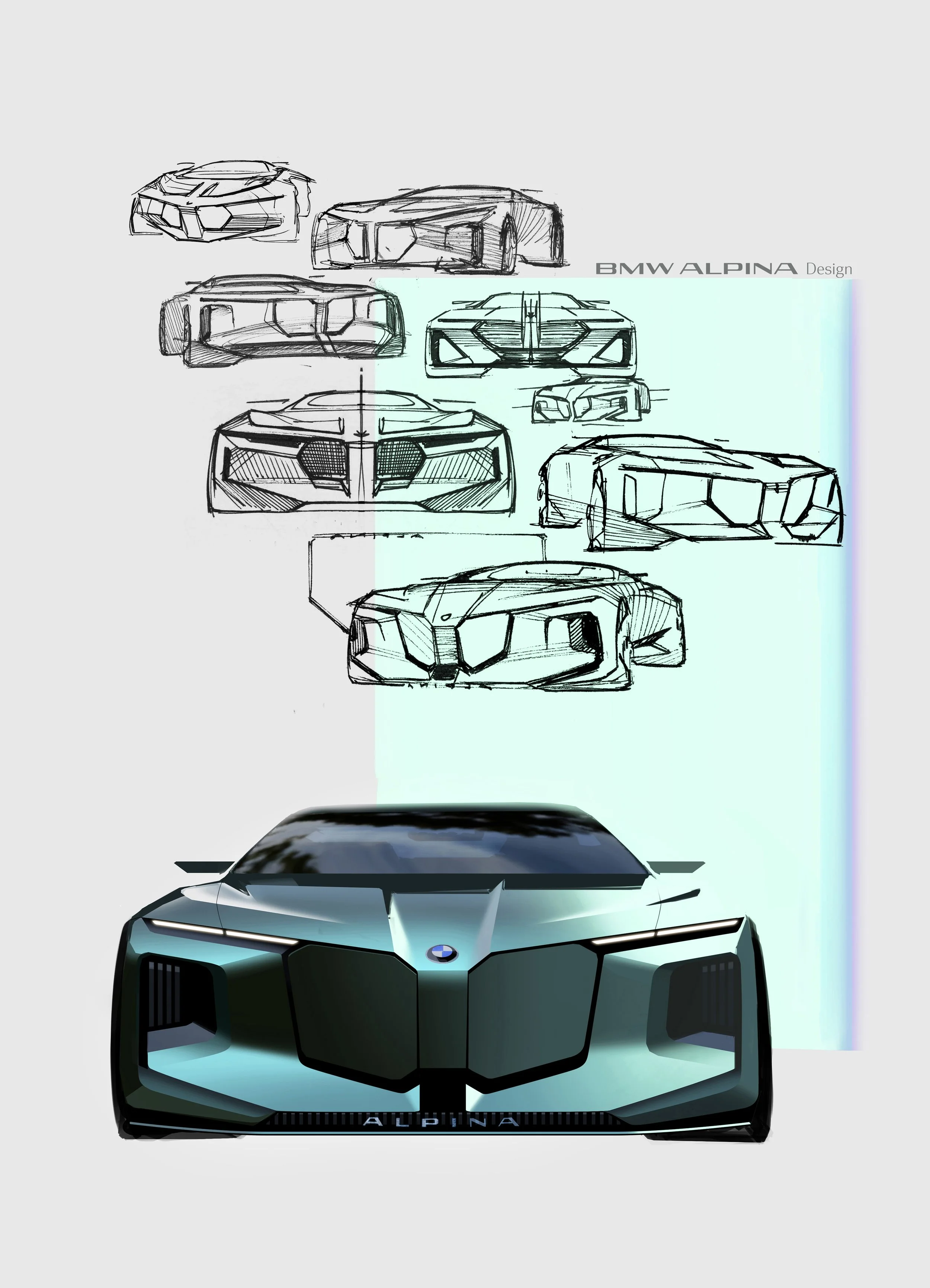
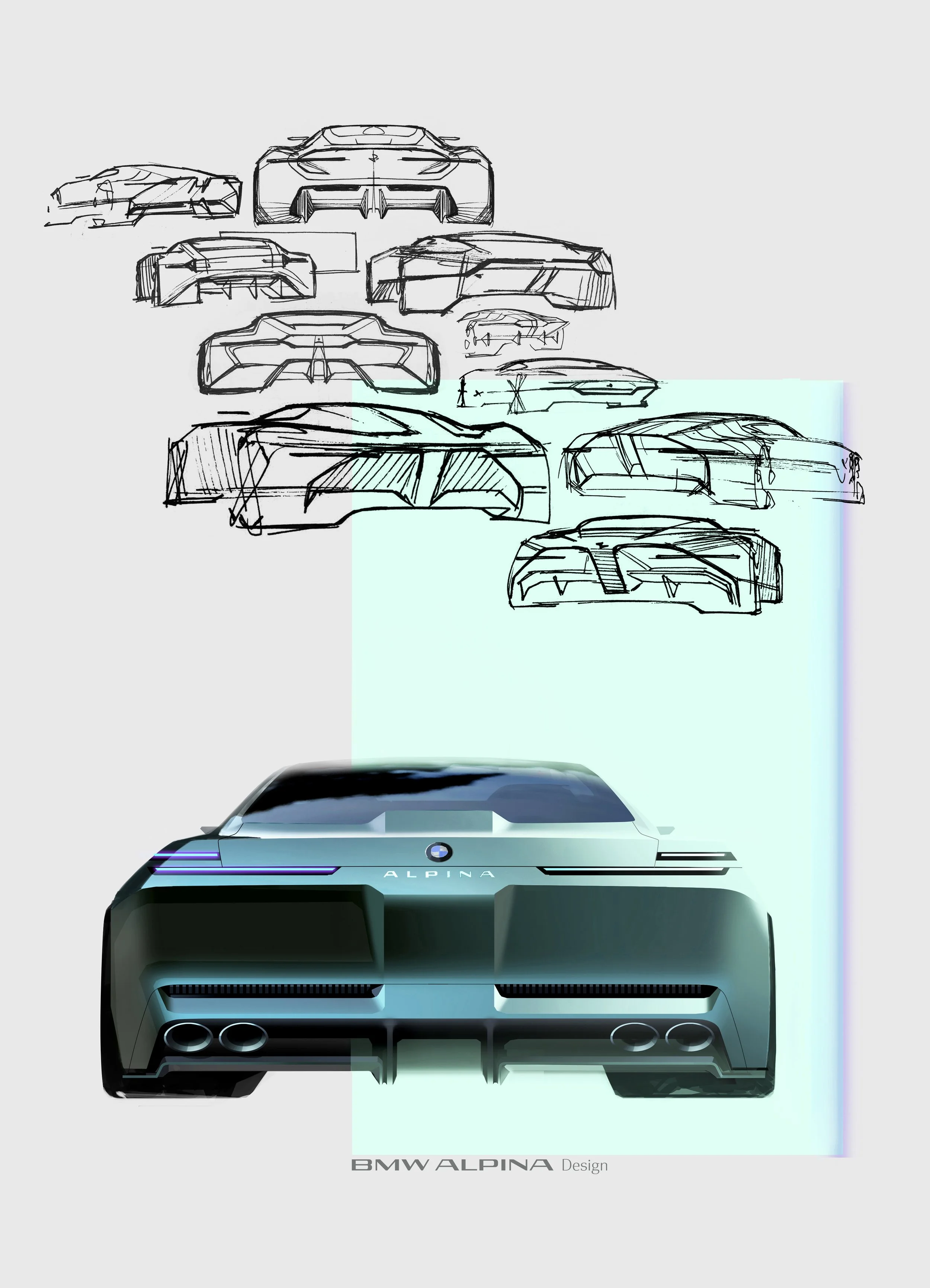
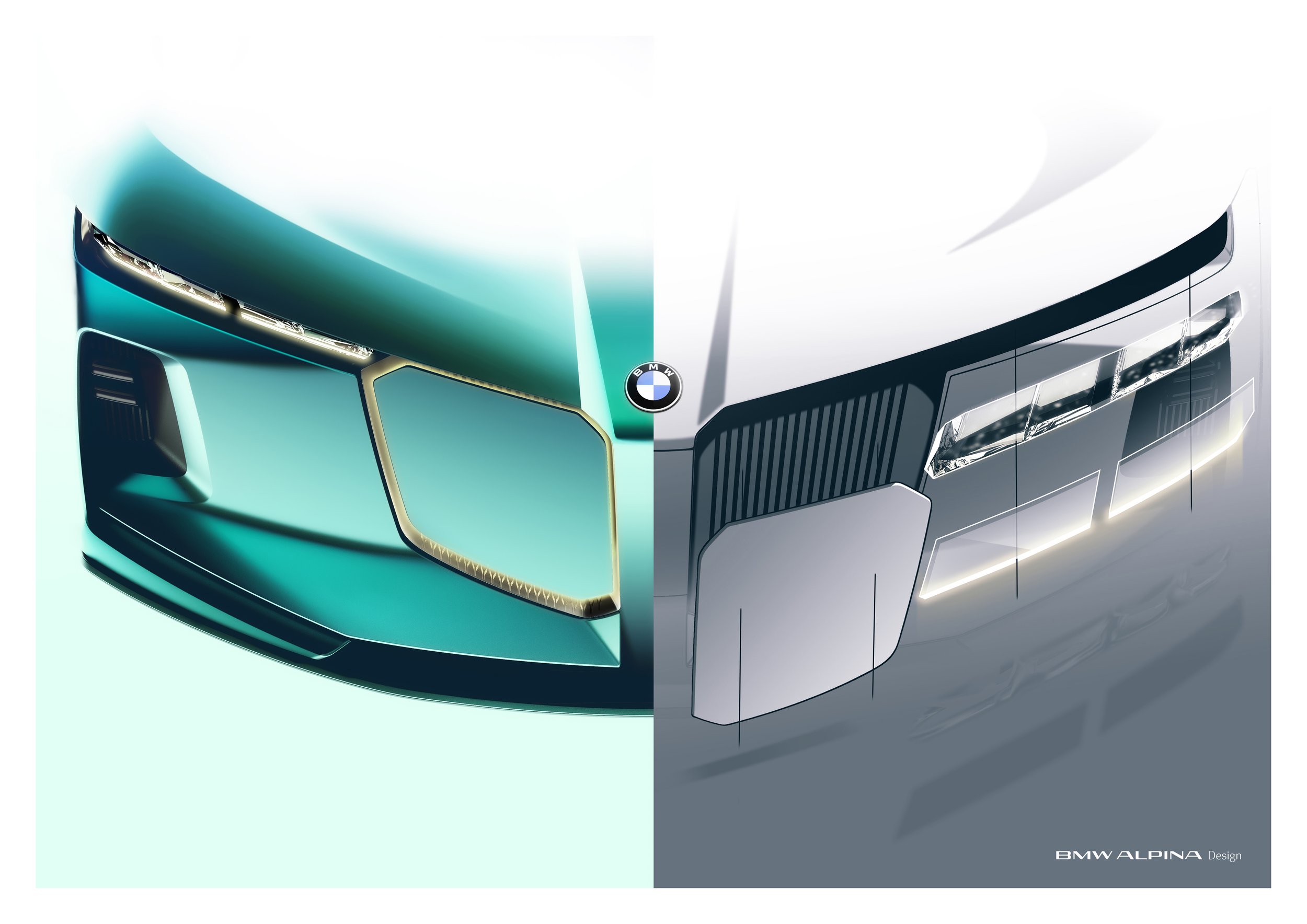
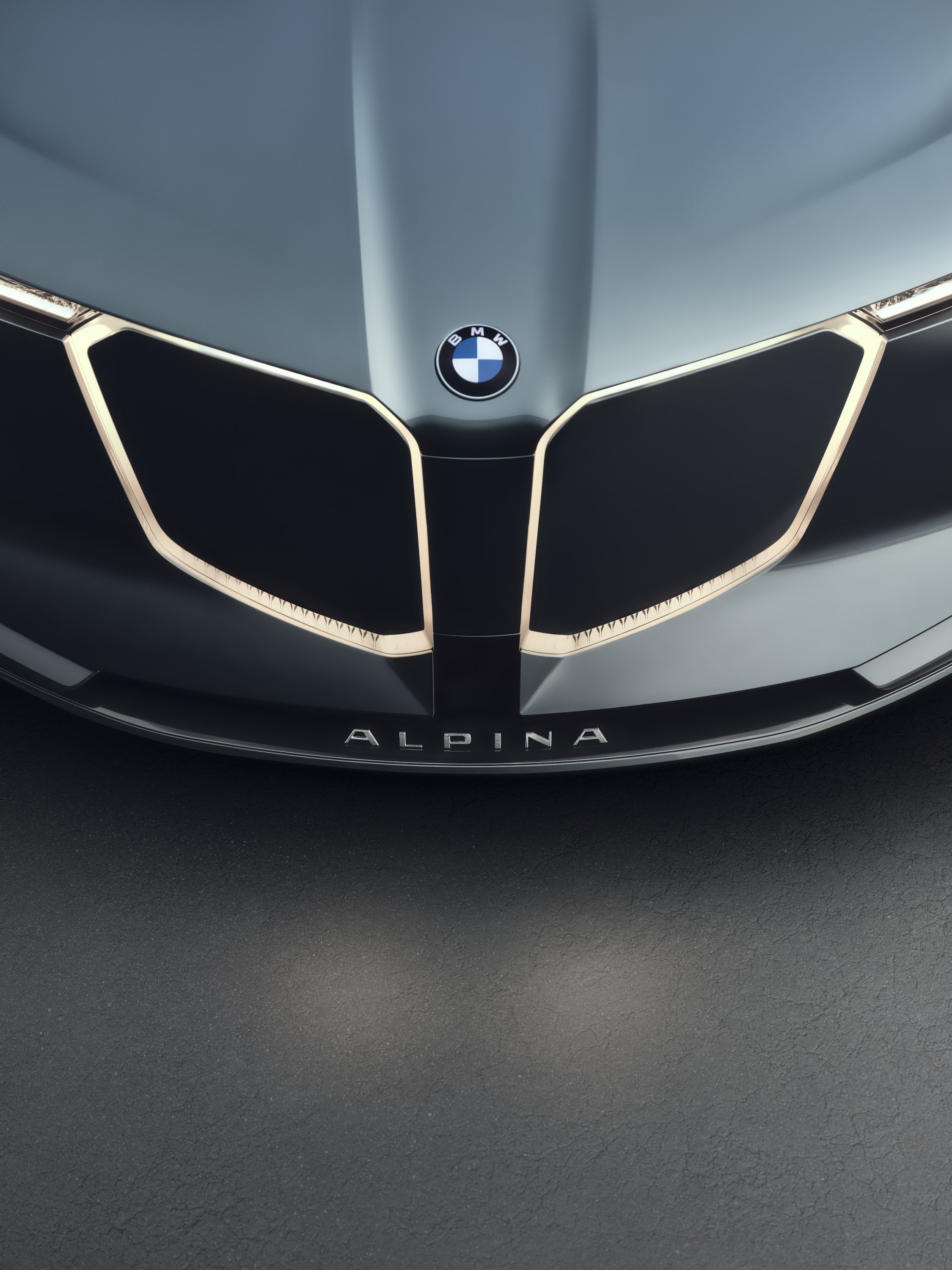
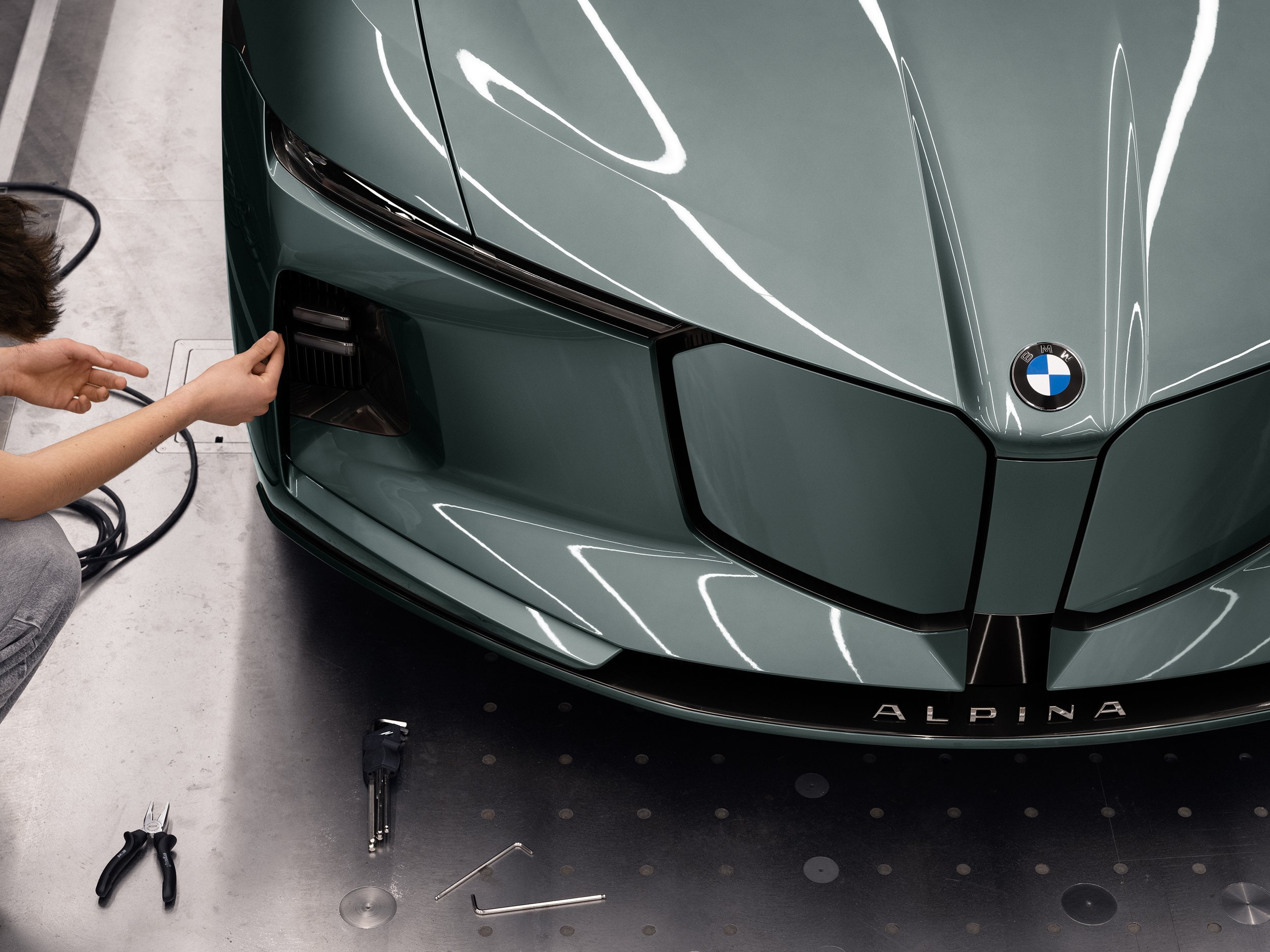
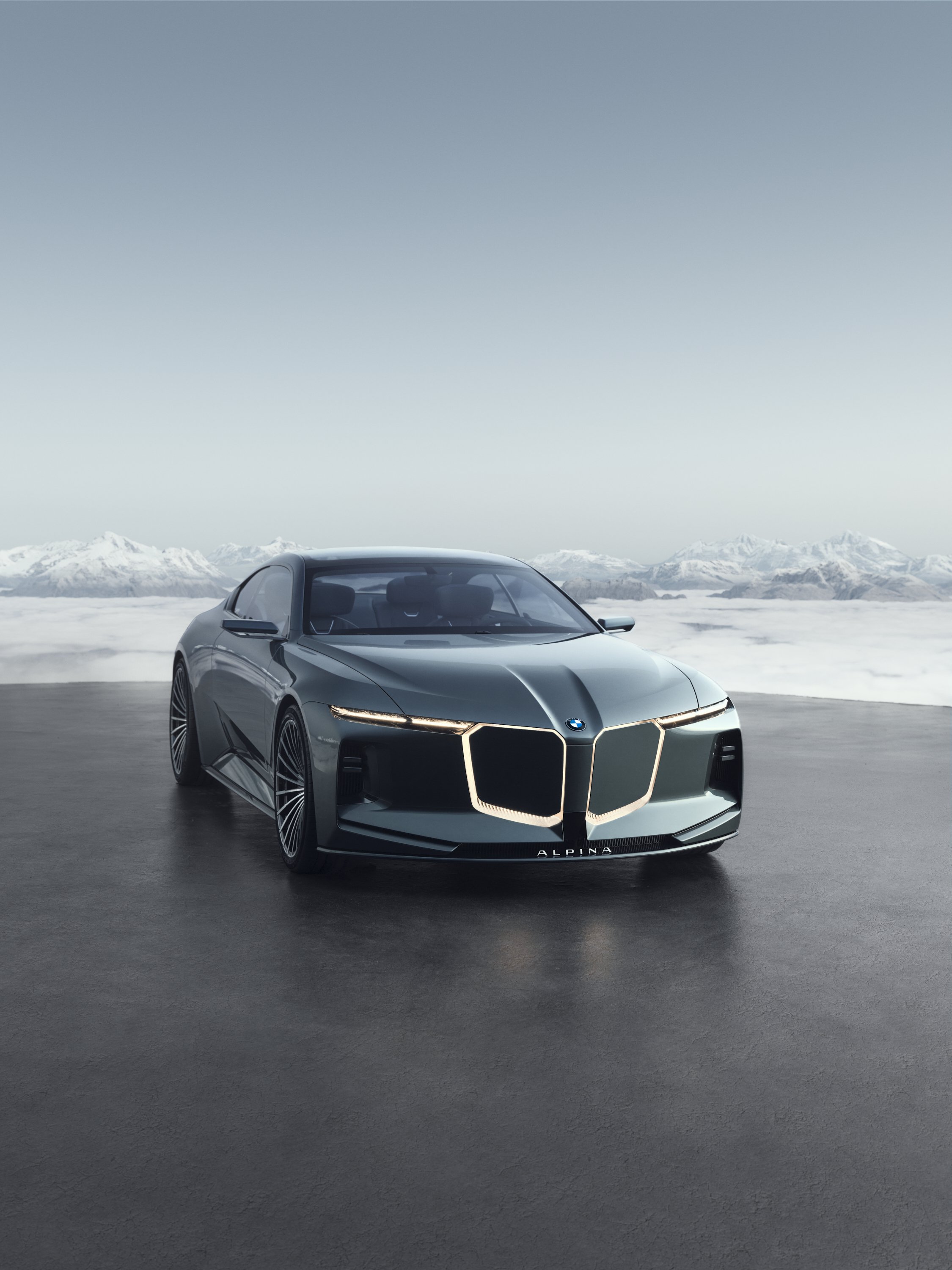
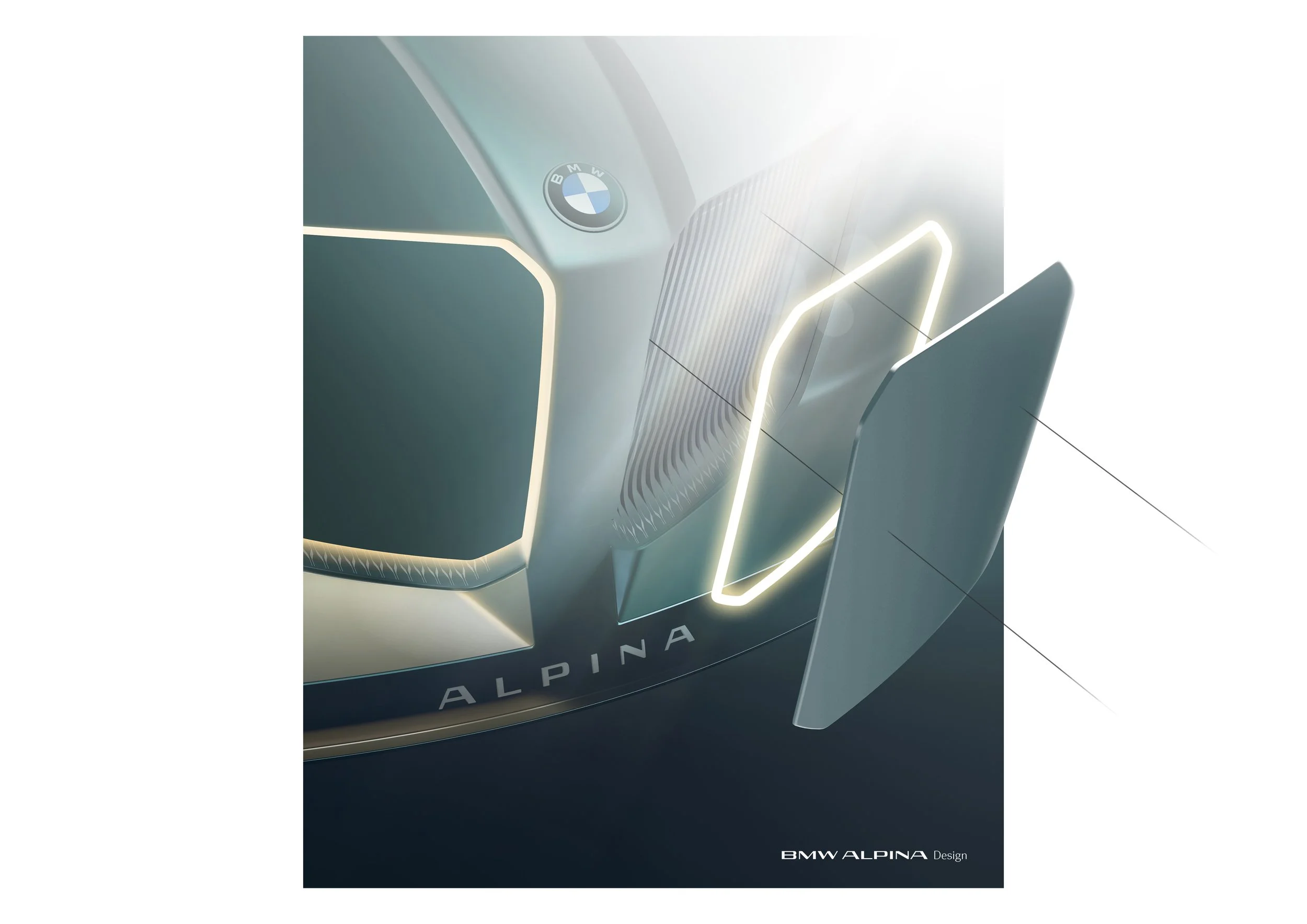
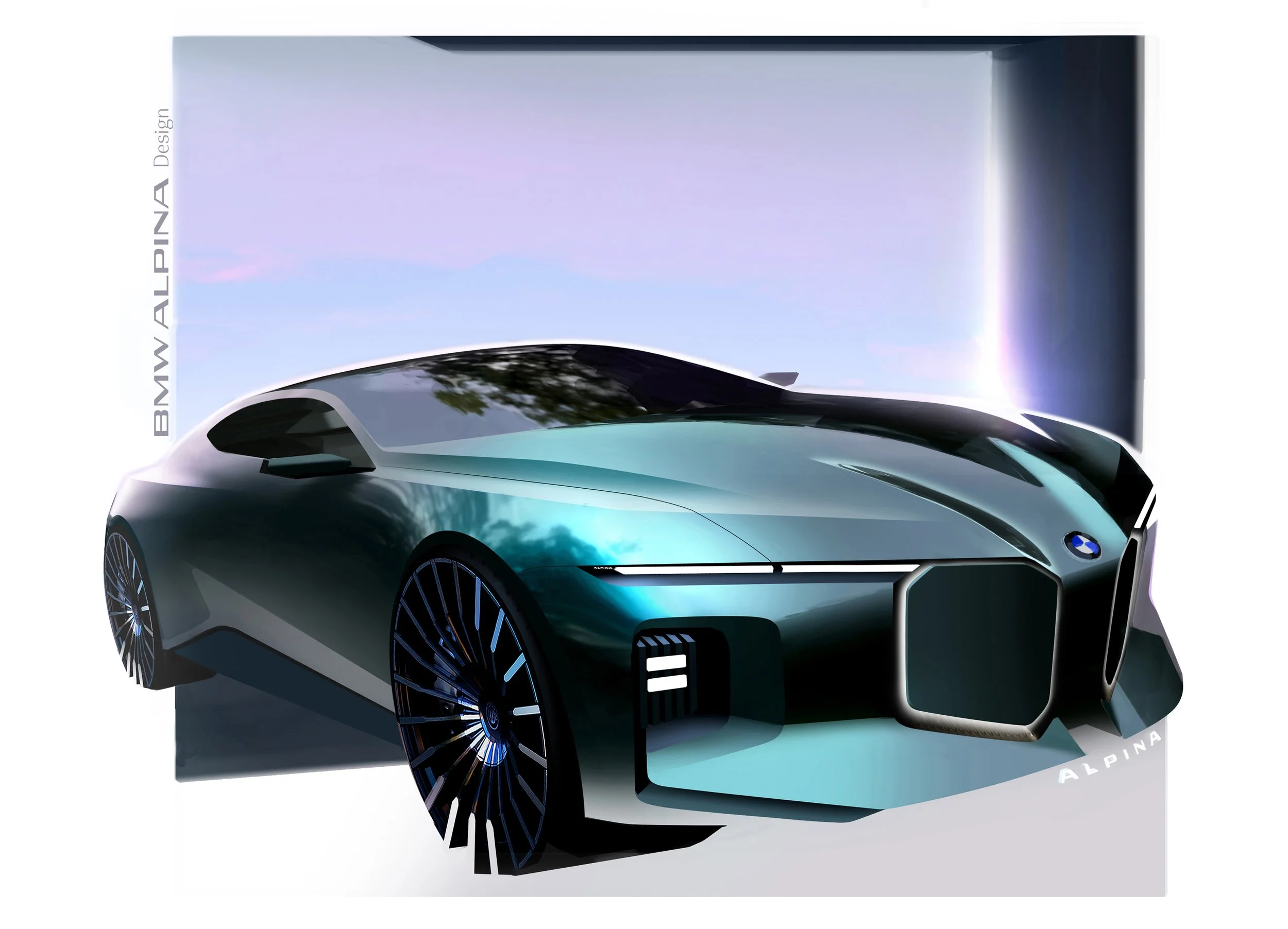
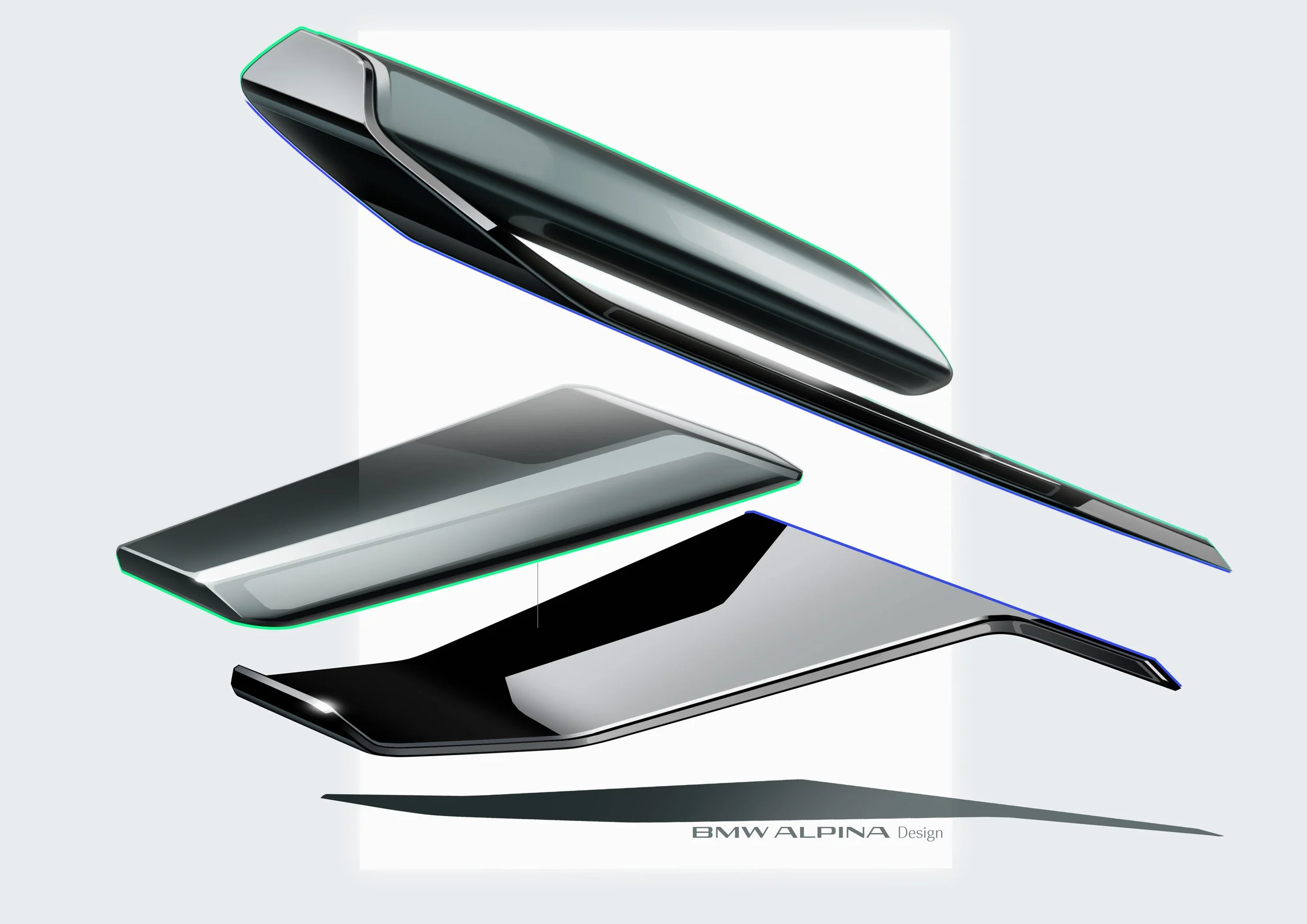
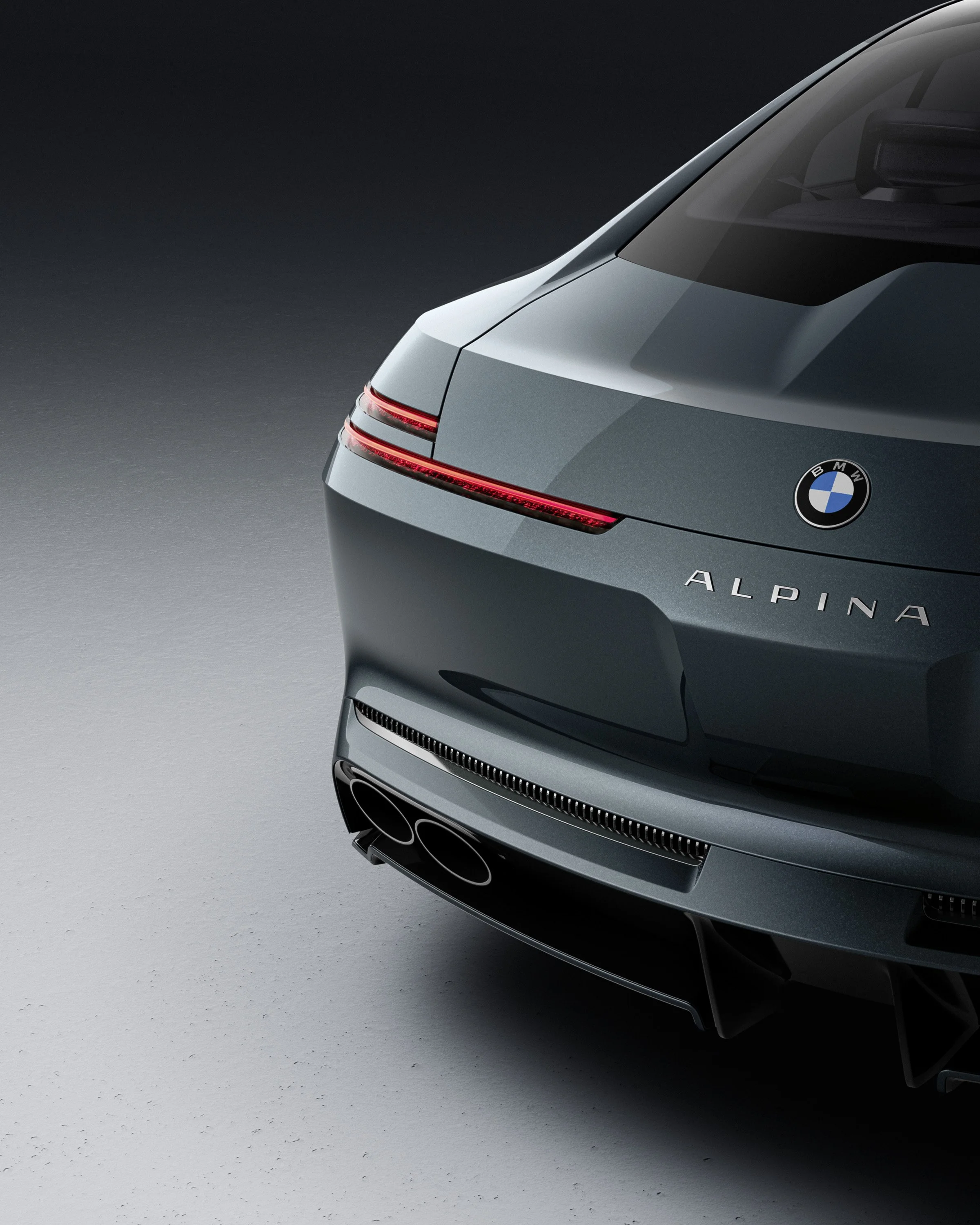
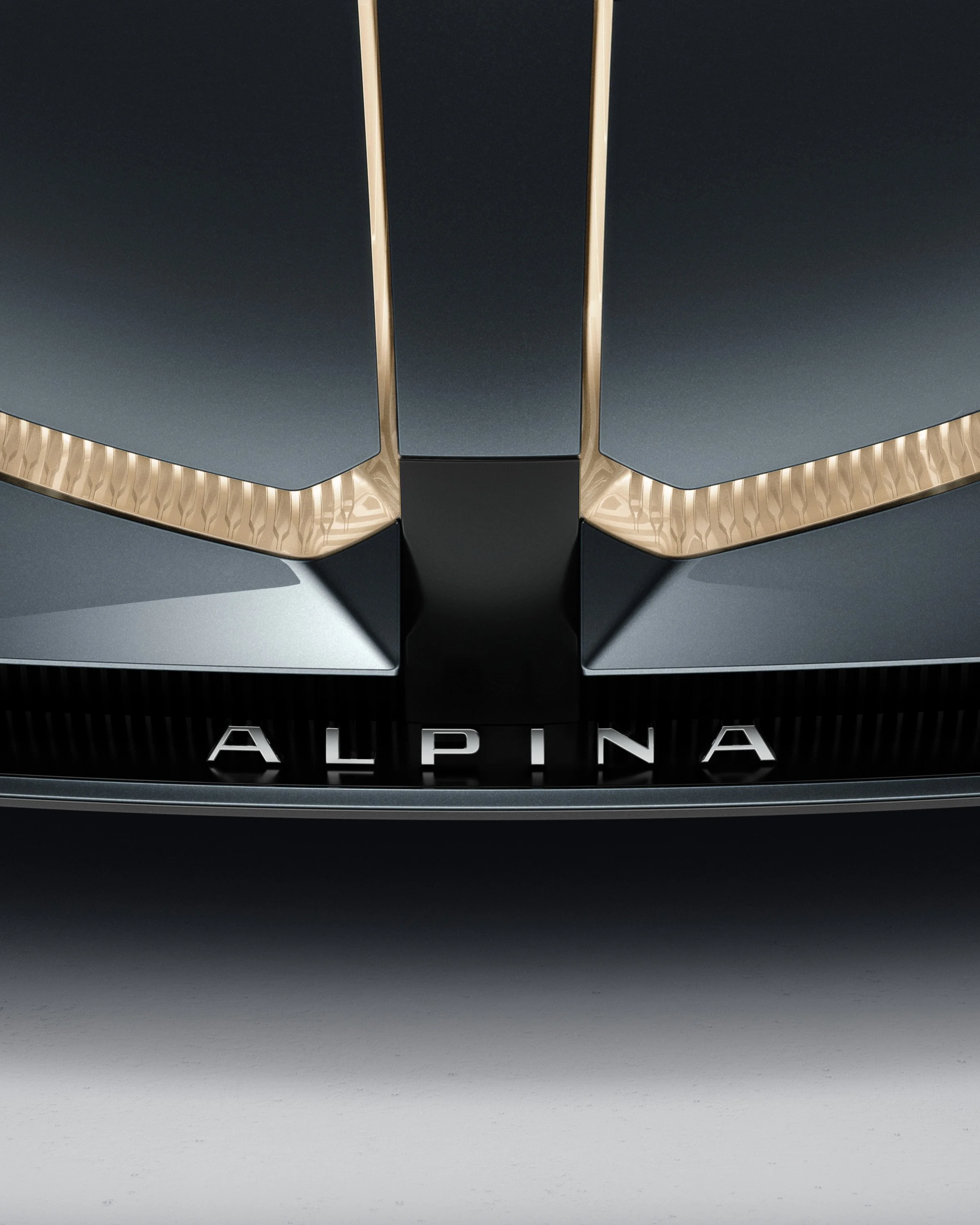
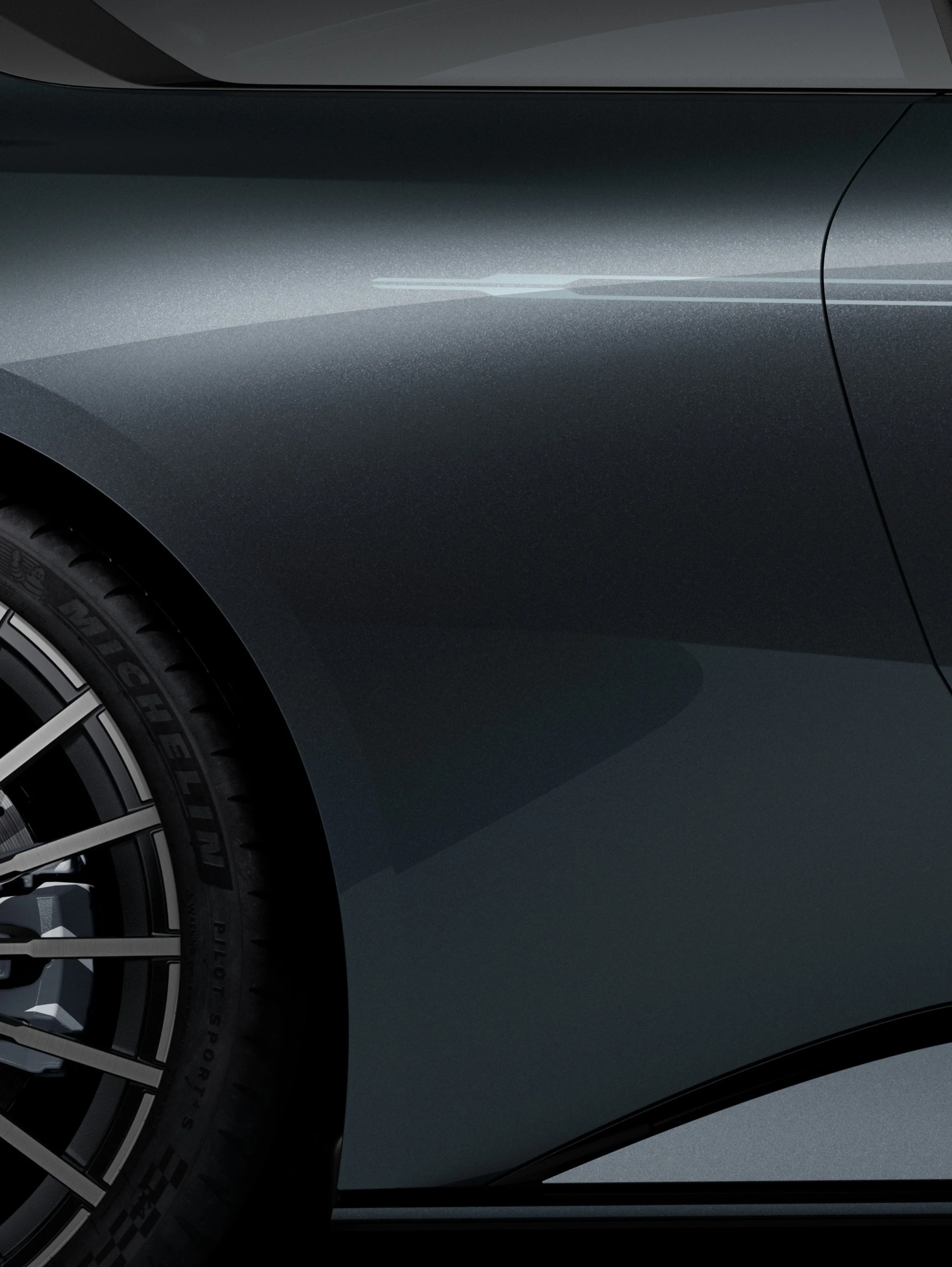
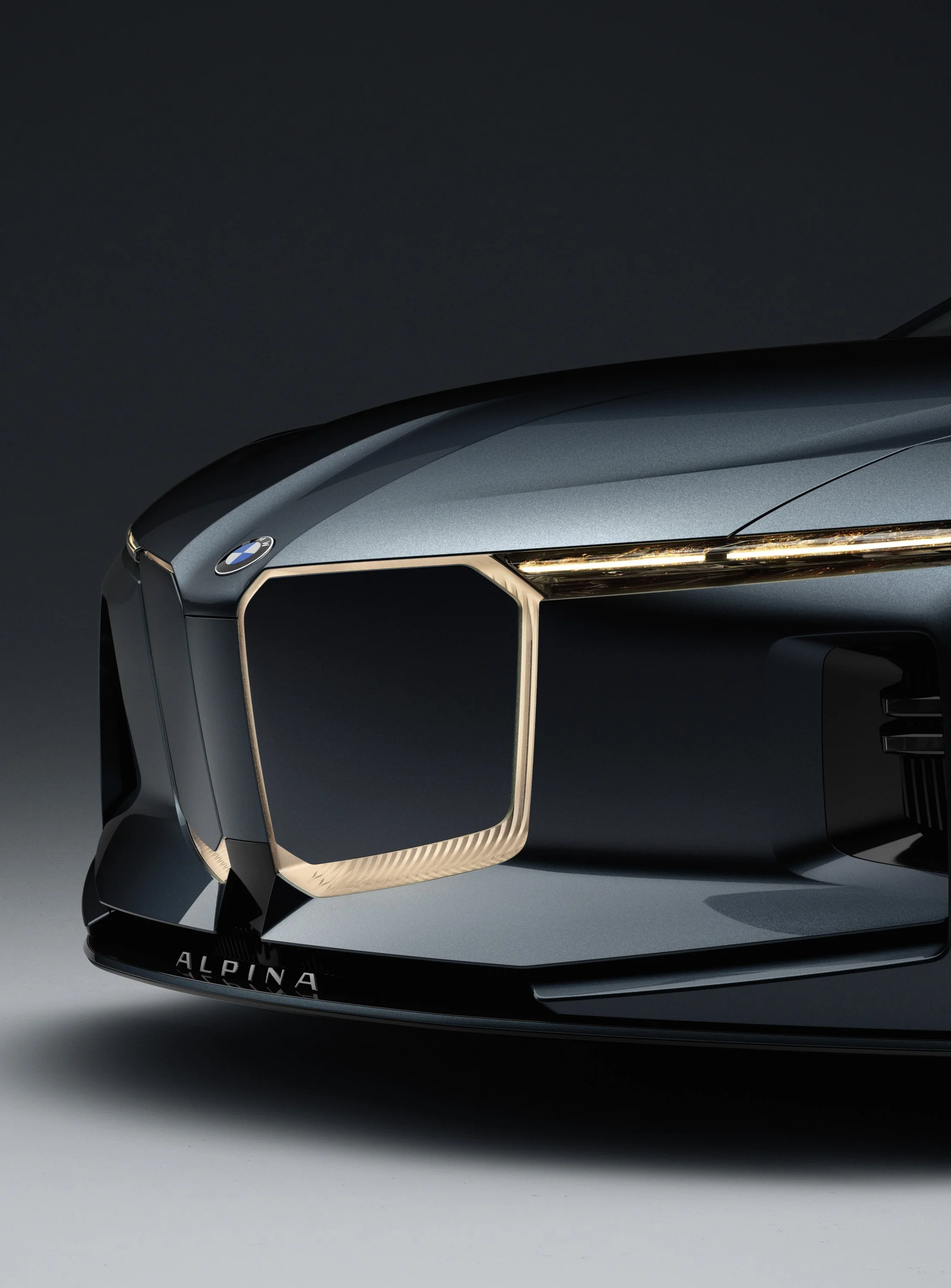
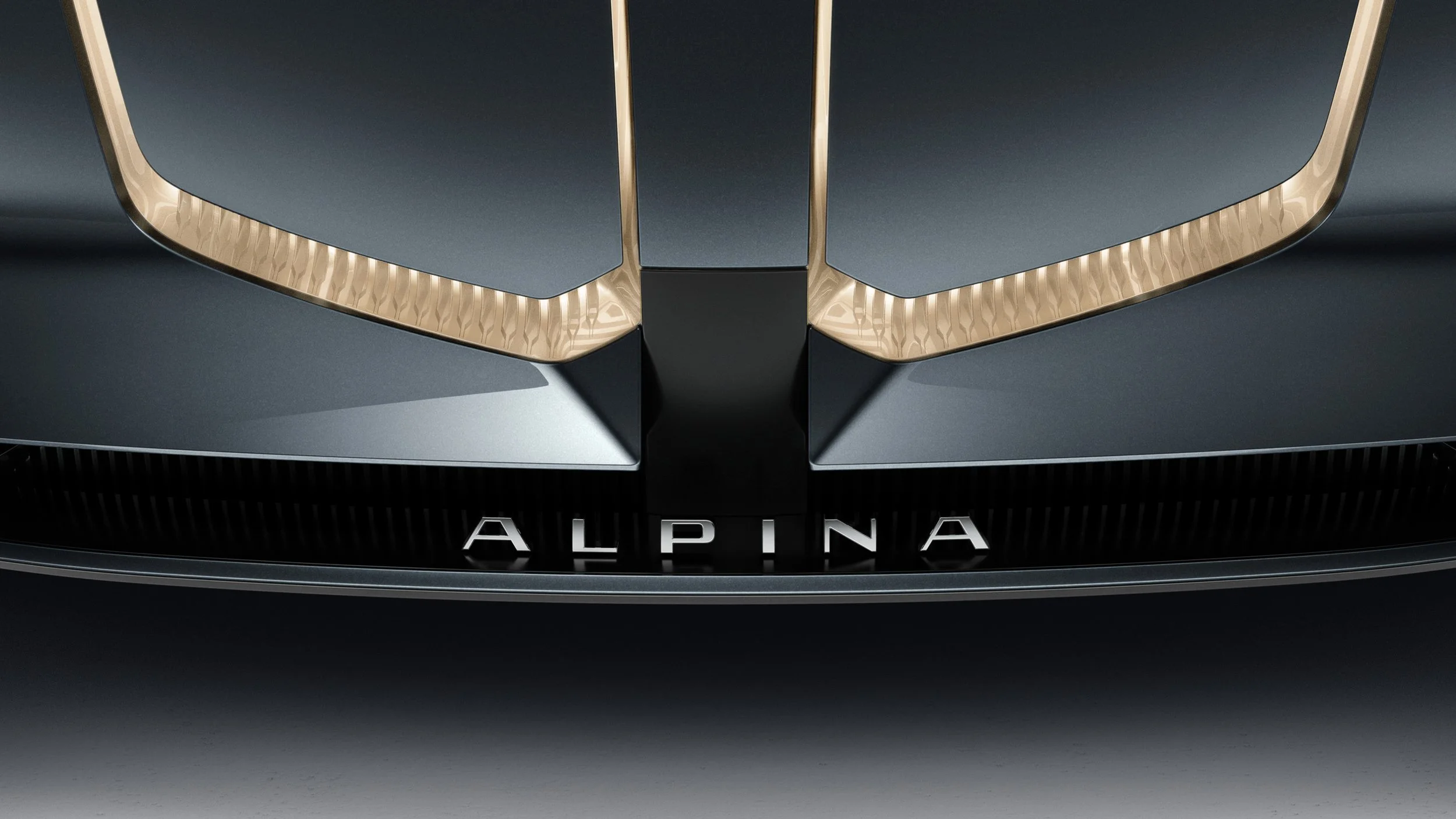
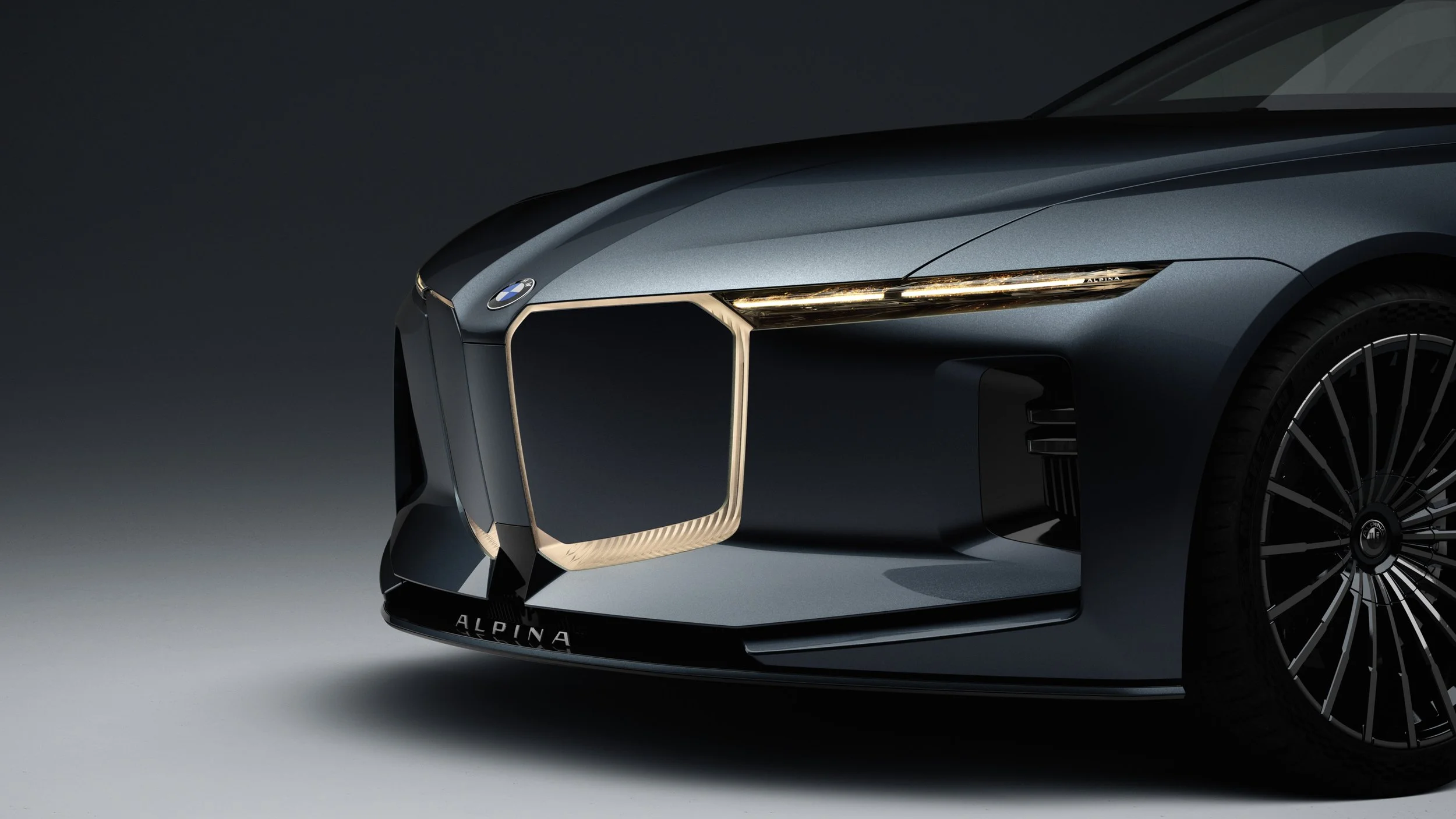
Powerful volumes and a forward-leaning stance define the front end, promising speed without overstatement. The shark nose reinterprets BMW's kidney grille as a three-dimensional sculpture that leads the car's form and frames the brand emblem with quiet confidence. From this shark nose, a single visual axis organises the exterior: the speed feature line. It rises from the lower front corners at a six-degree inclination, runs along the side of the body and wraps around the rear, striking a balance between motion and refinement.
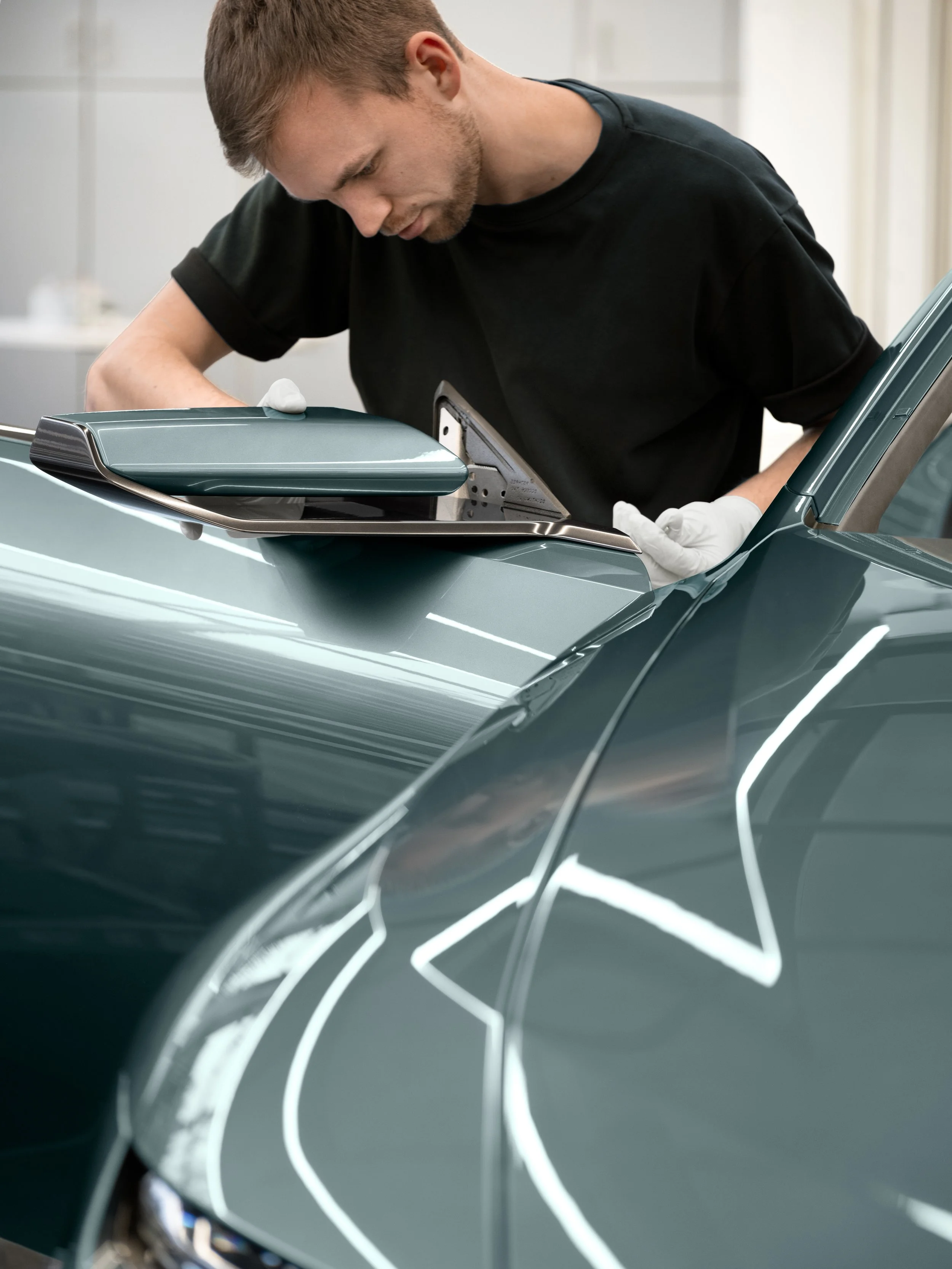
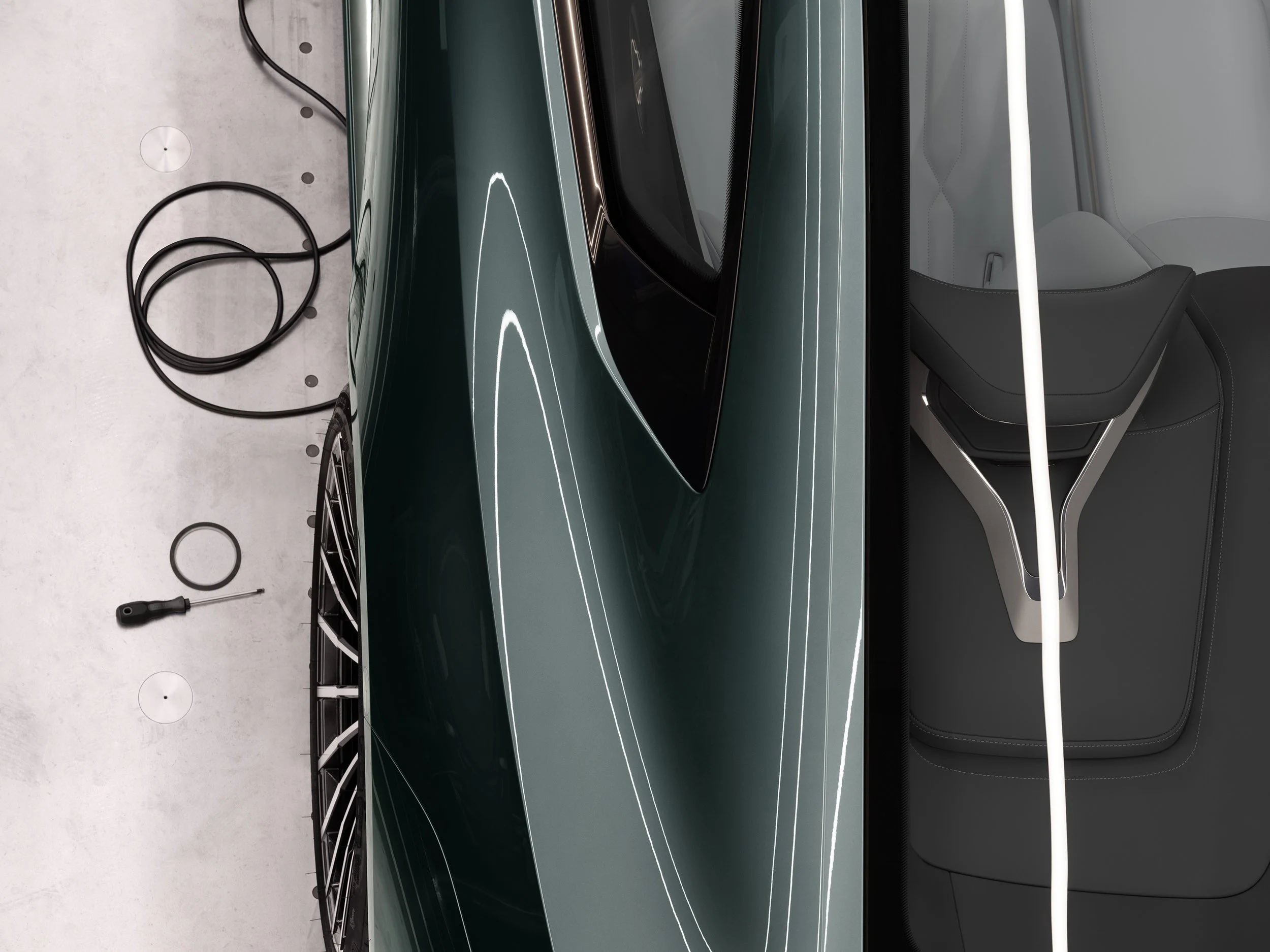
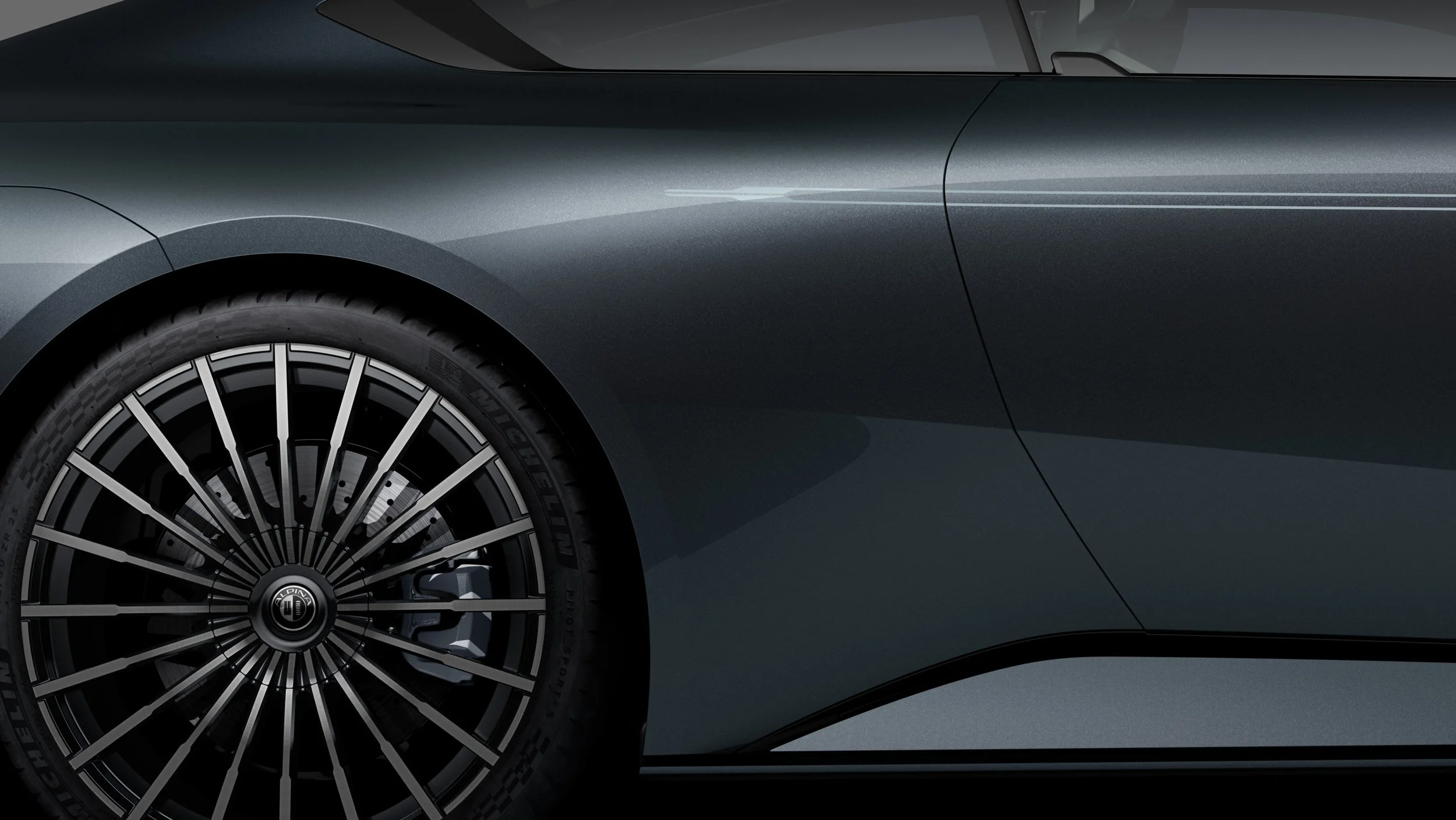
Subtle secondary details reward close attention without demanding it, a "Second Read" principle that runs throughout the Vision BMW ALPINA. Deco-lines have featured in Alpina's design language since 1974, and the team has modernised, distilled and painted them onto the body side beneath the clear coat, a quiet gesture that shows how the brand's defining details can adapt to what comes next. Designers have finished the inward-facing return surfaces with particular care in a dark metallic tone that rewards a closer look, an approach inspired by the BMW 507, which uses chrome only on the inside of its kidney grilles.
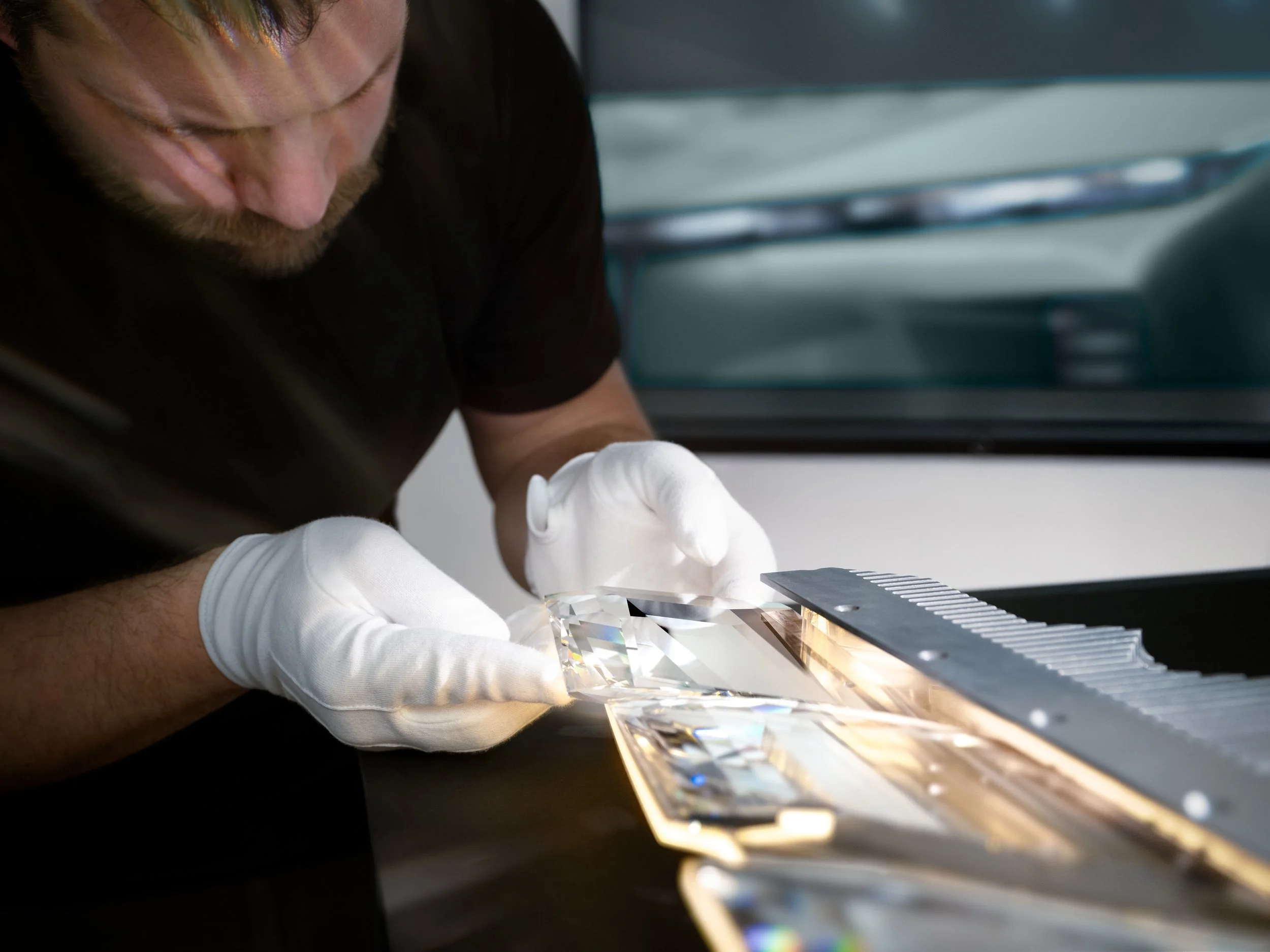
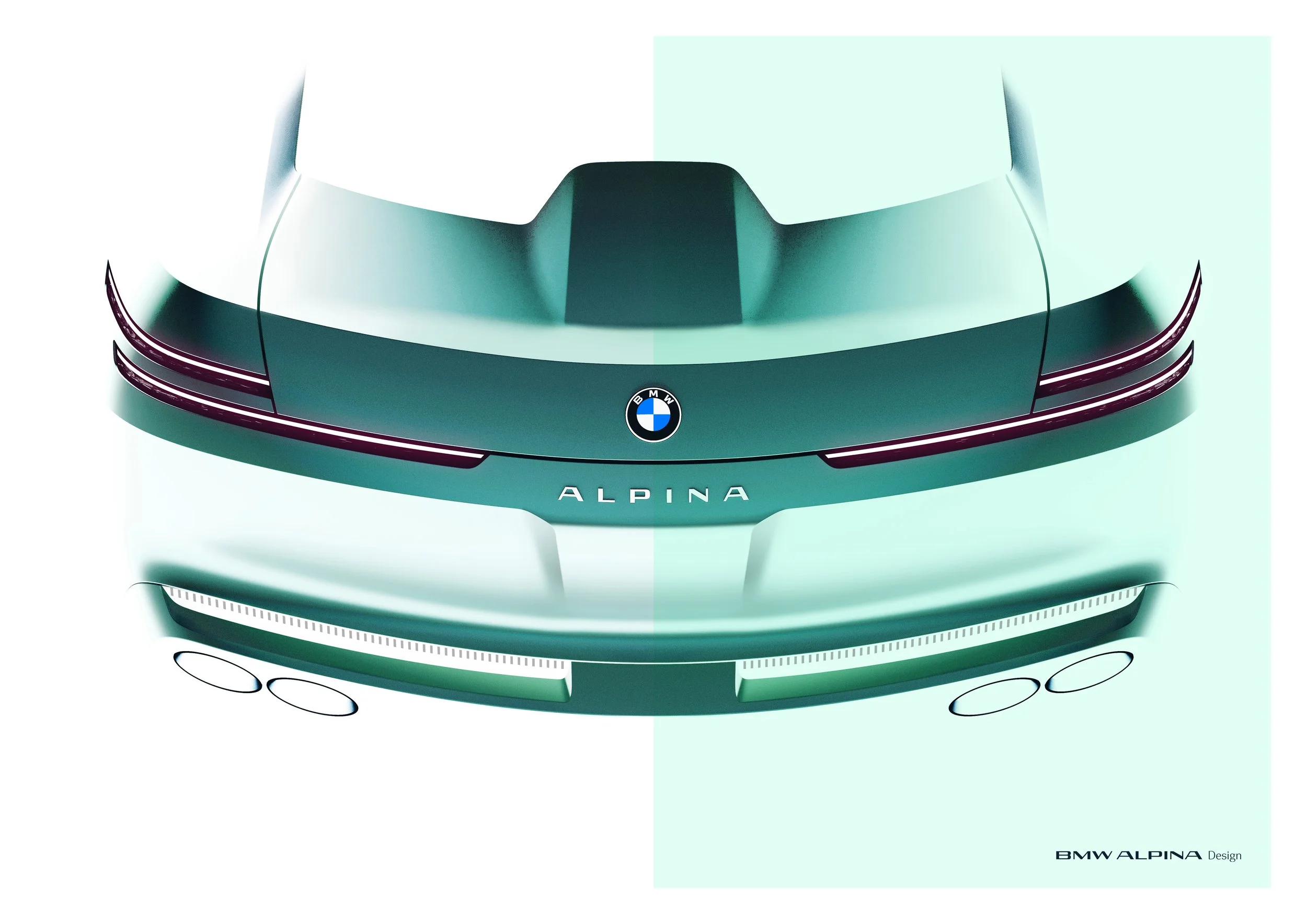
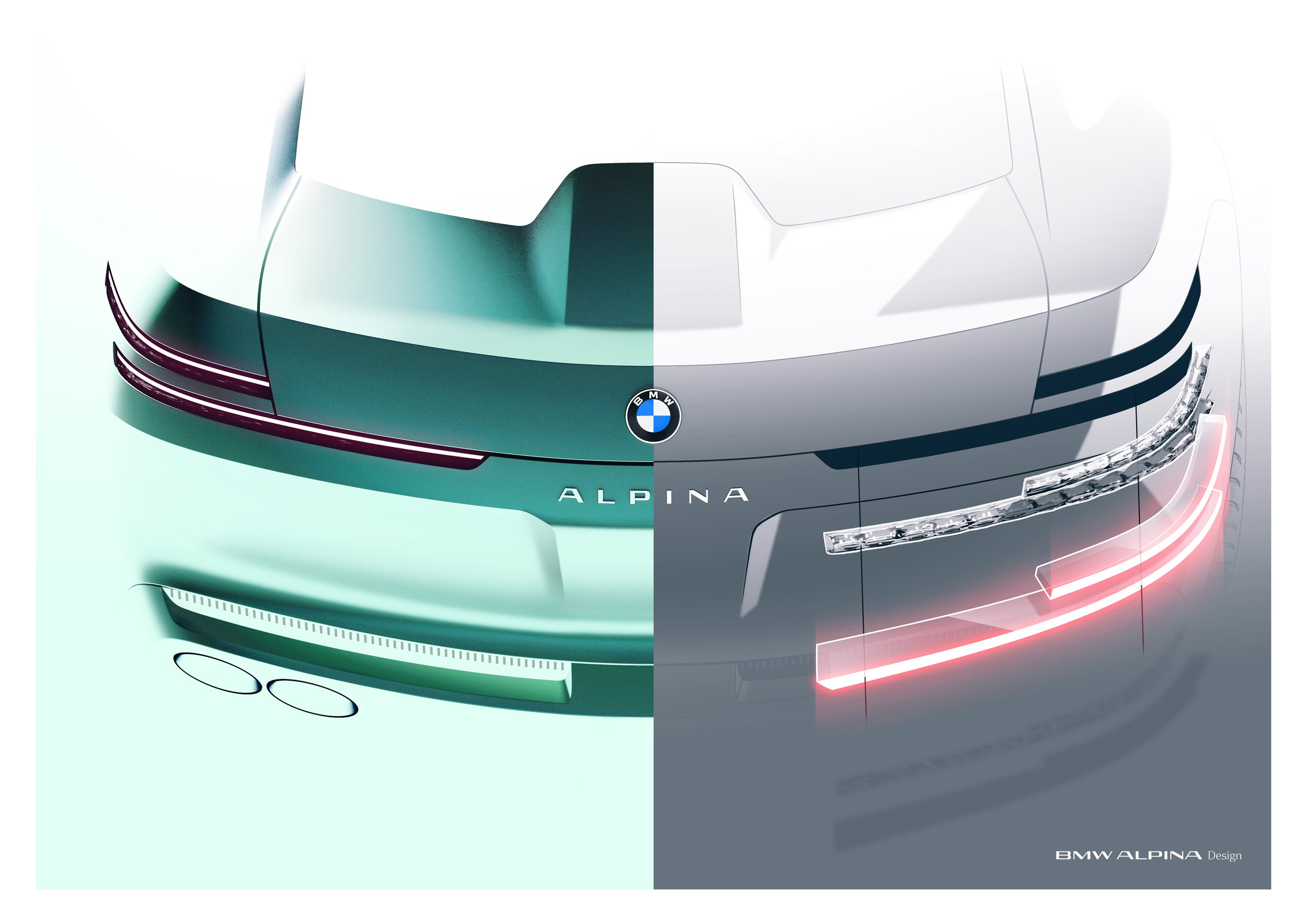
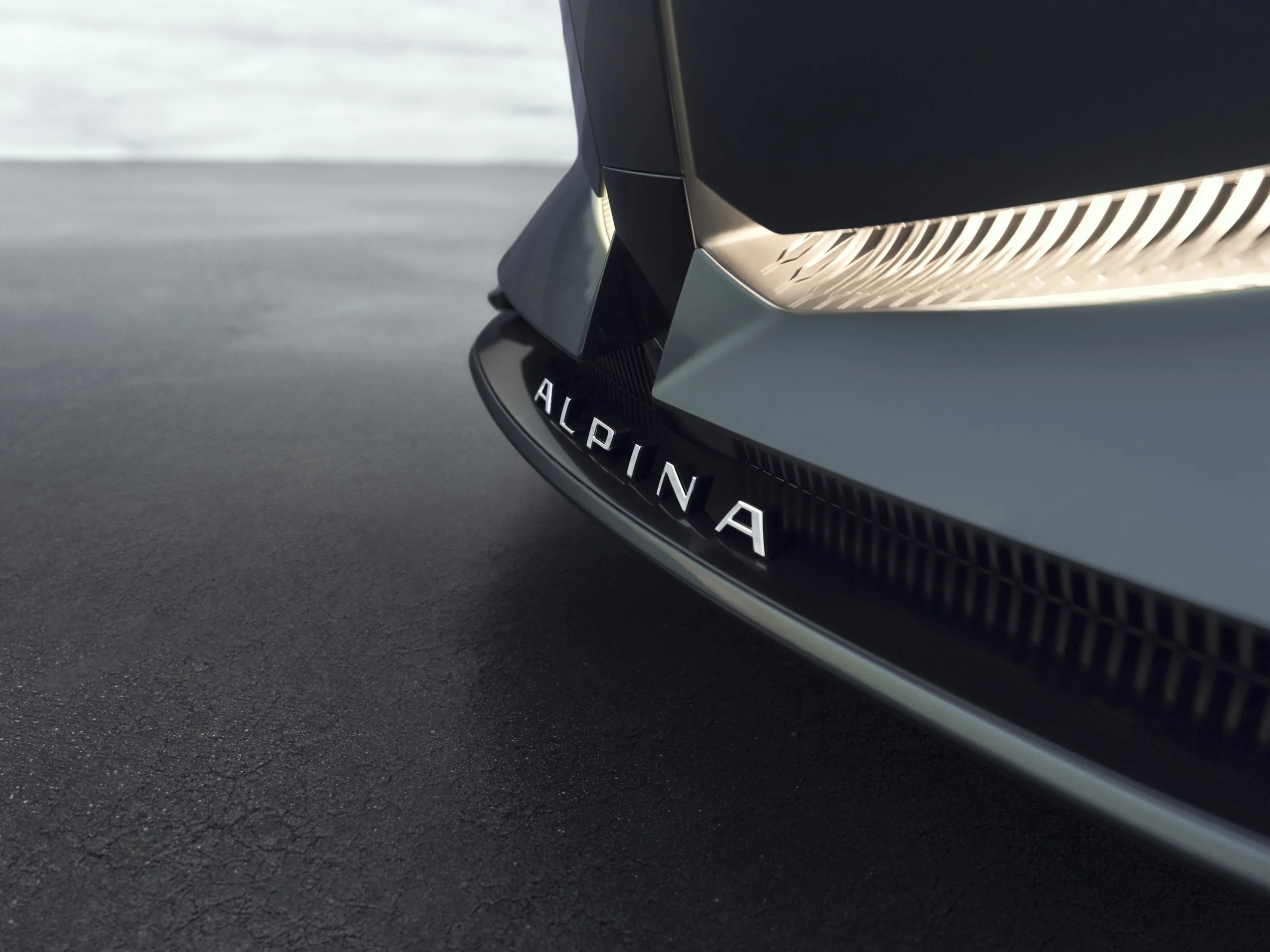
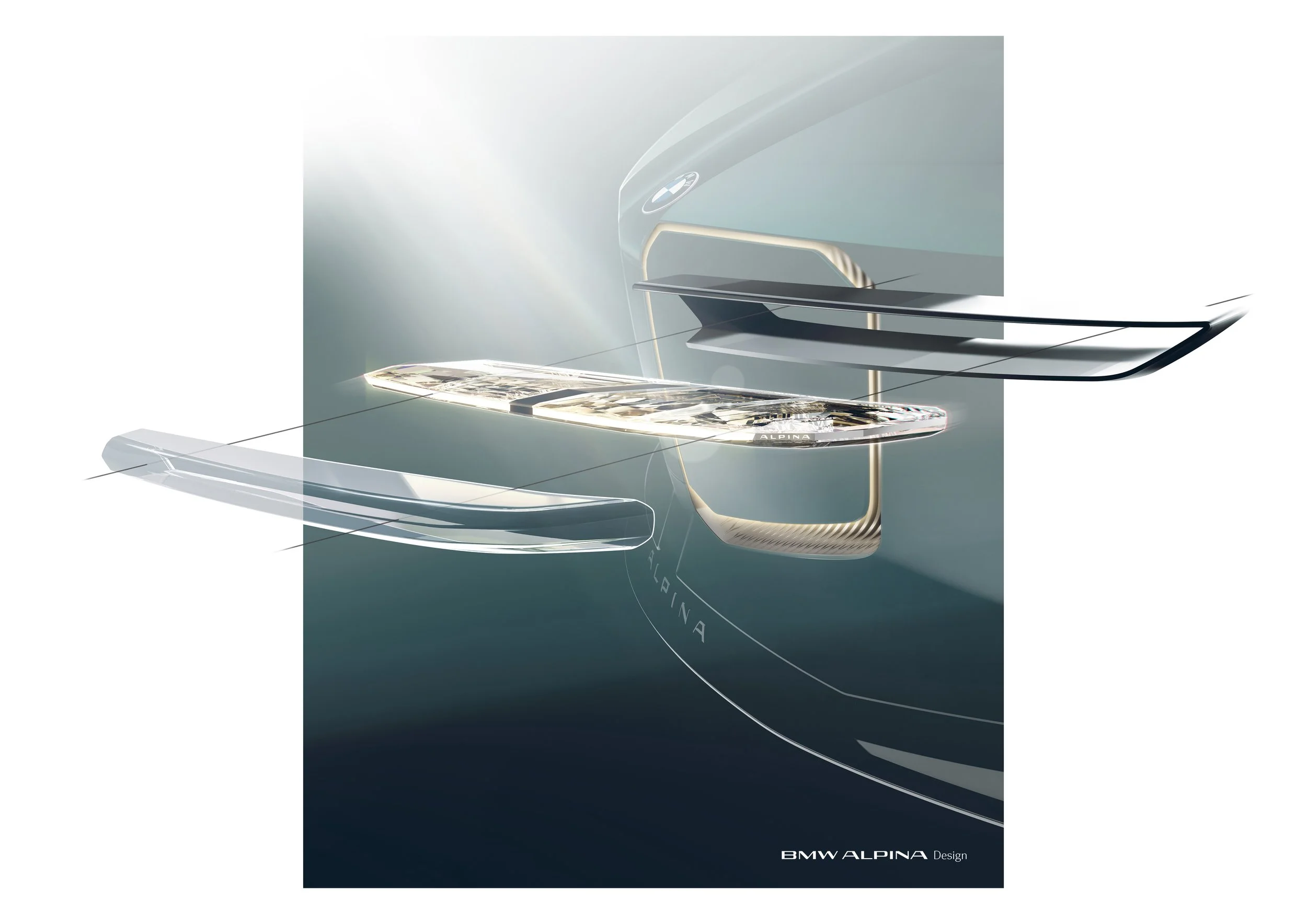
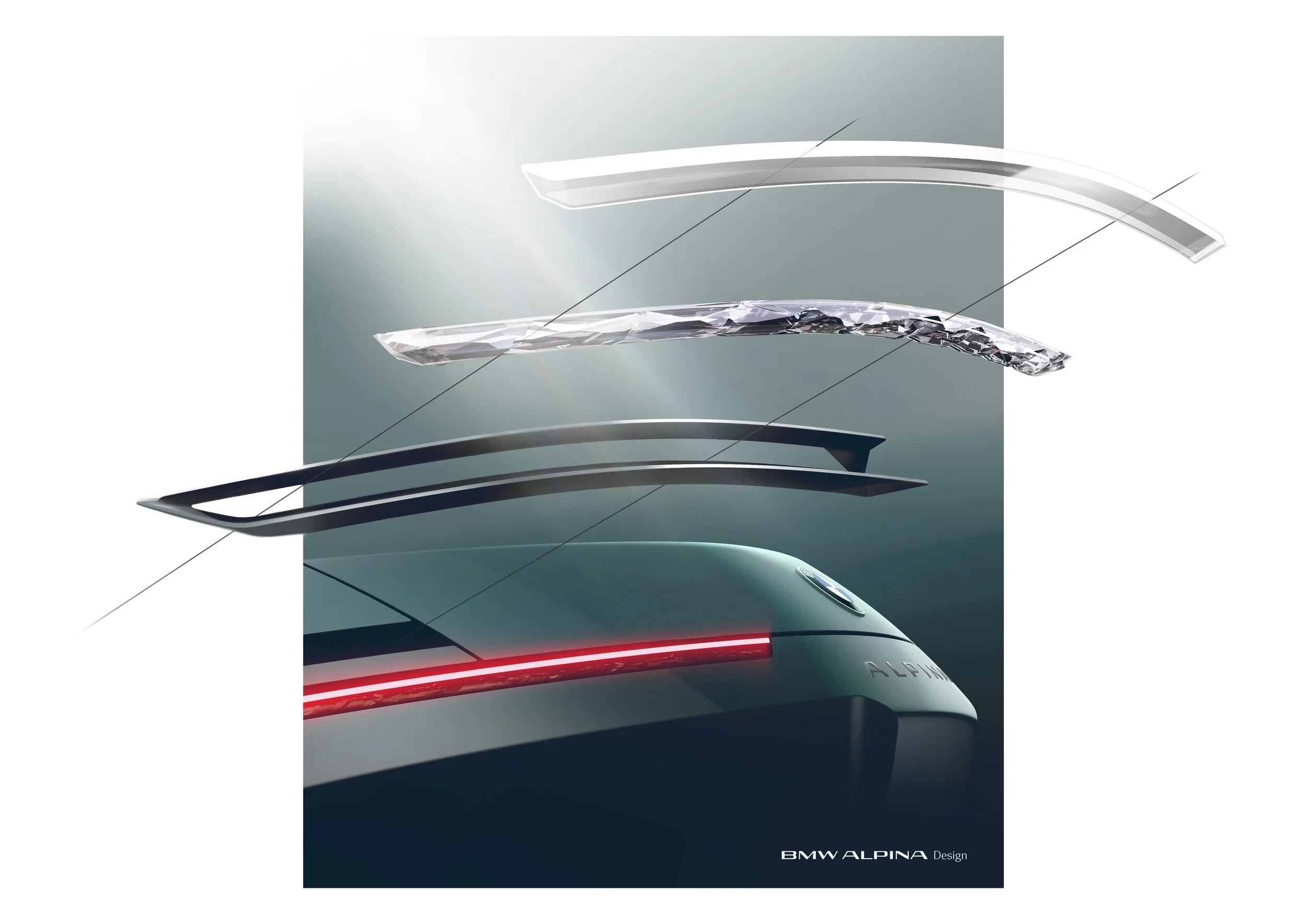
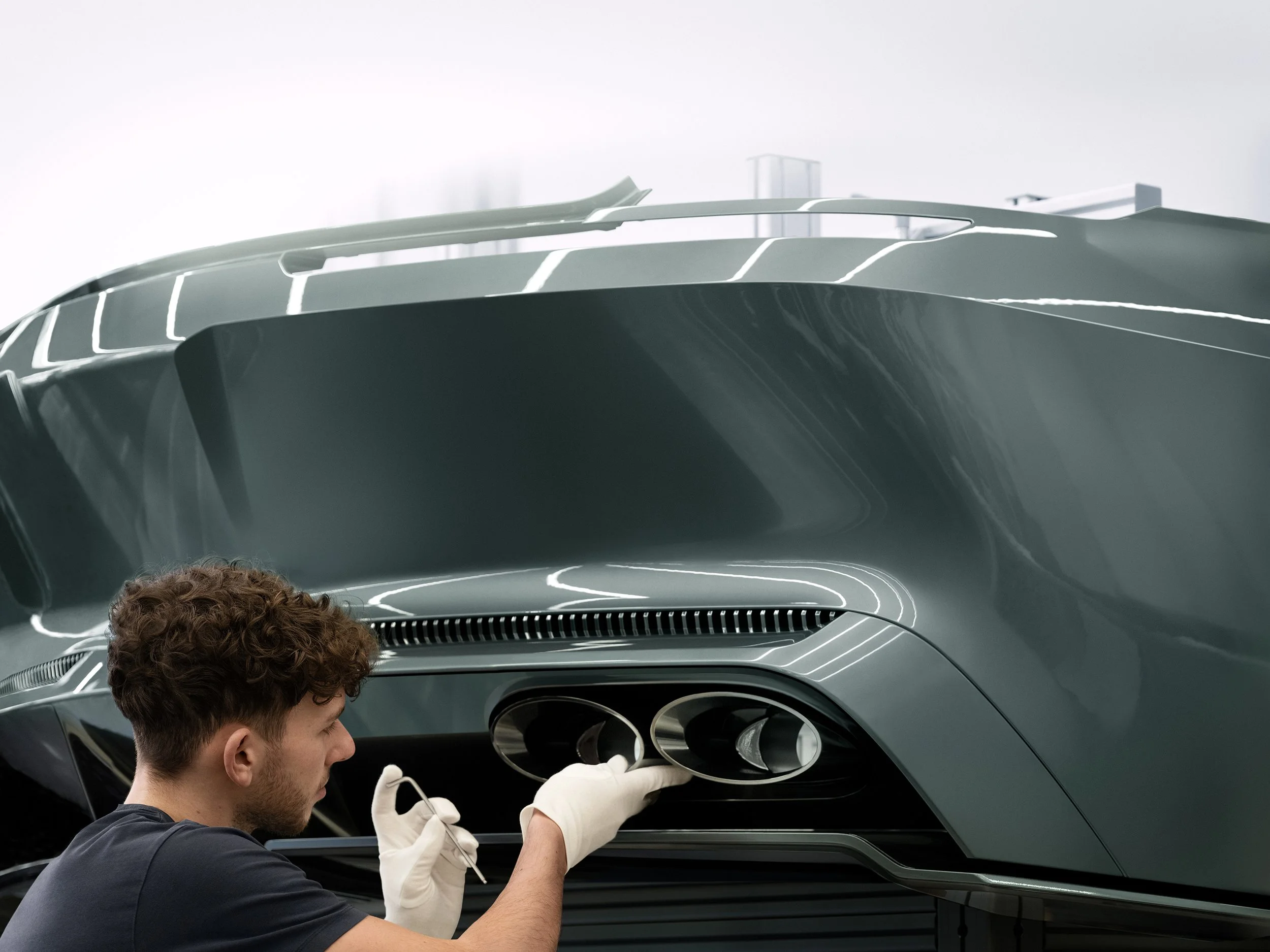
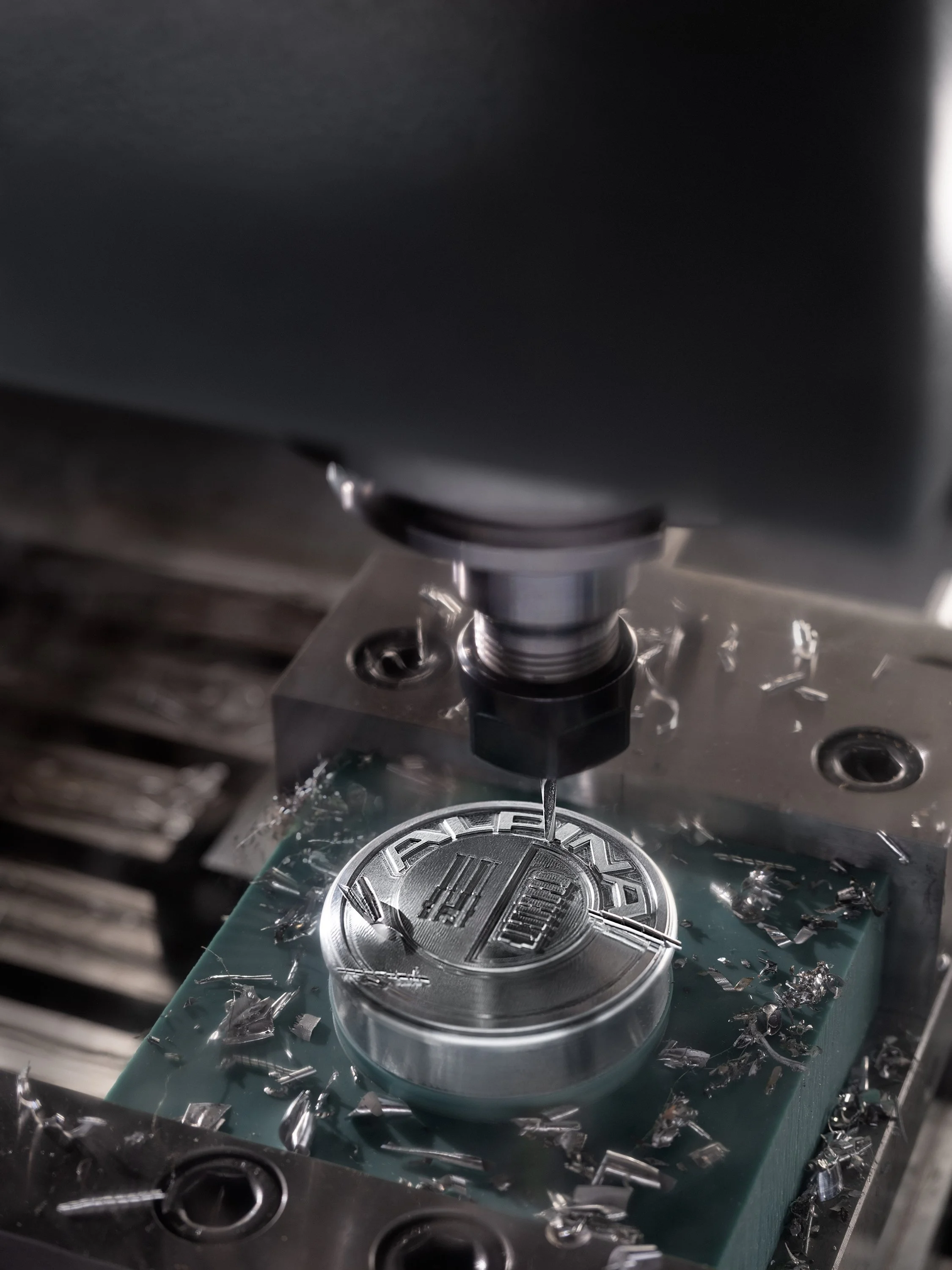
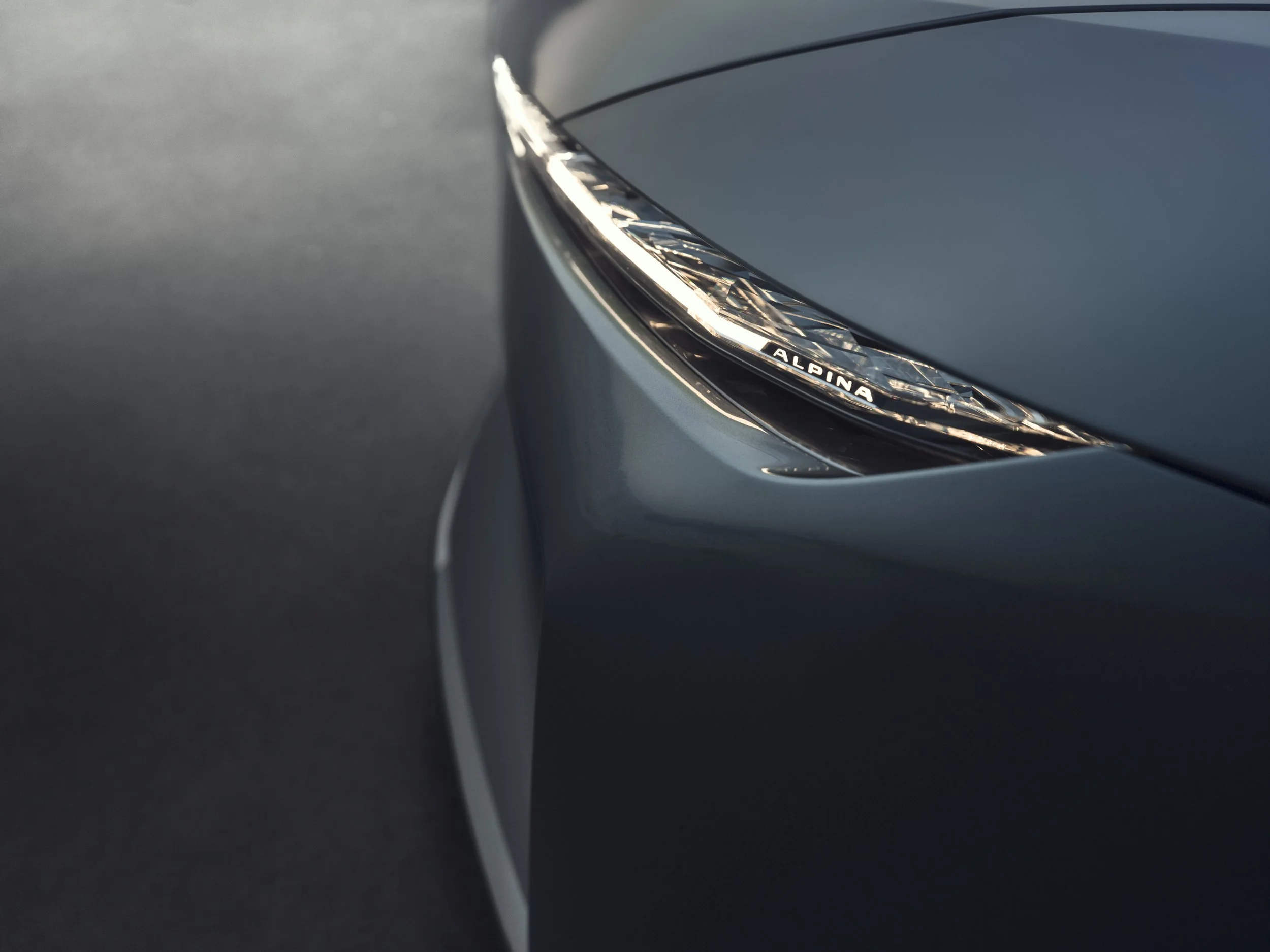
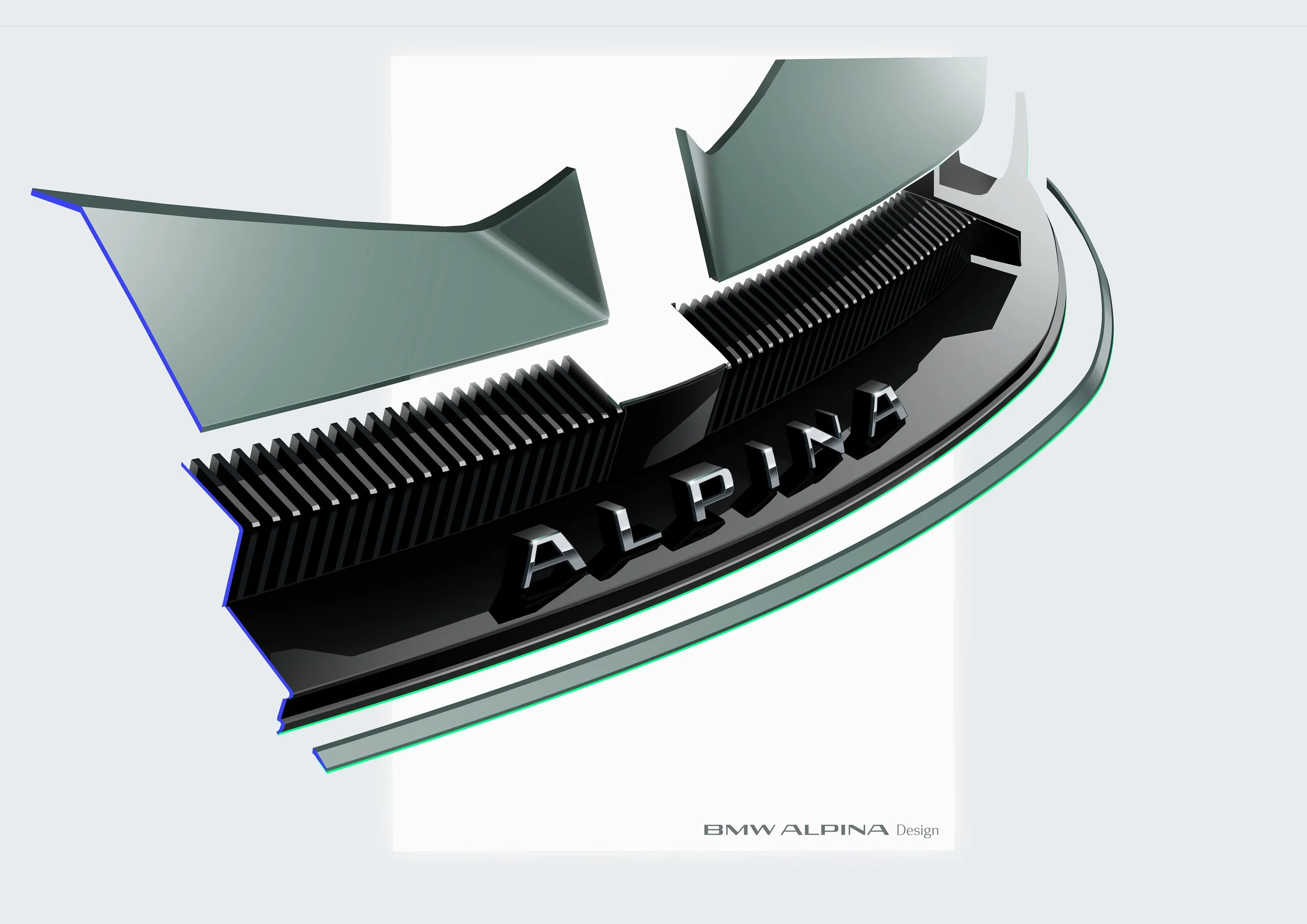
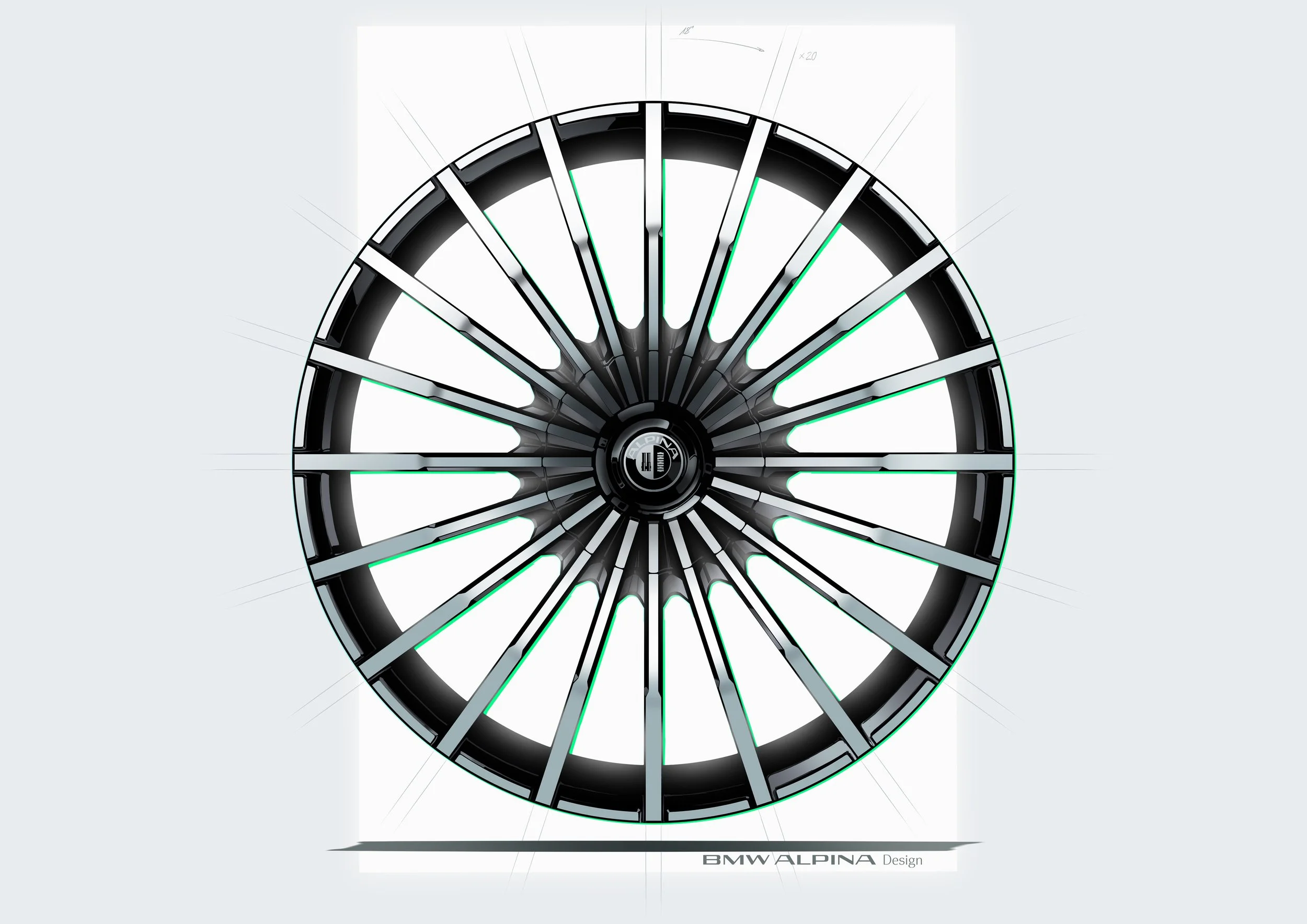
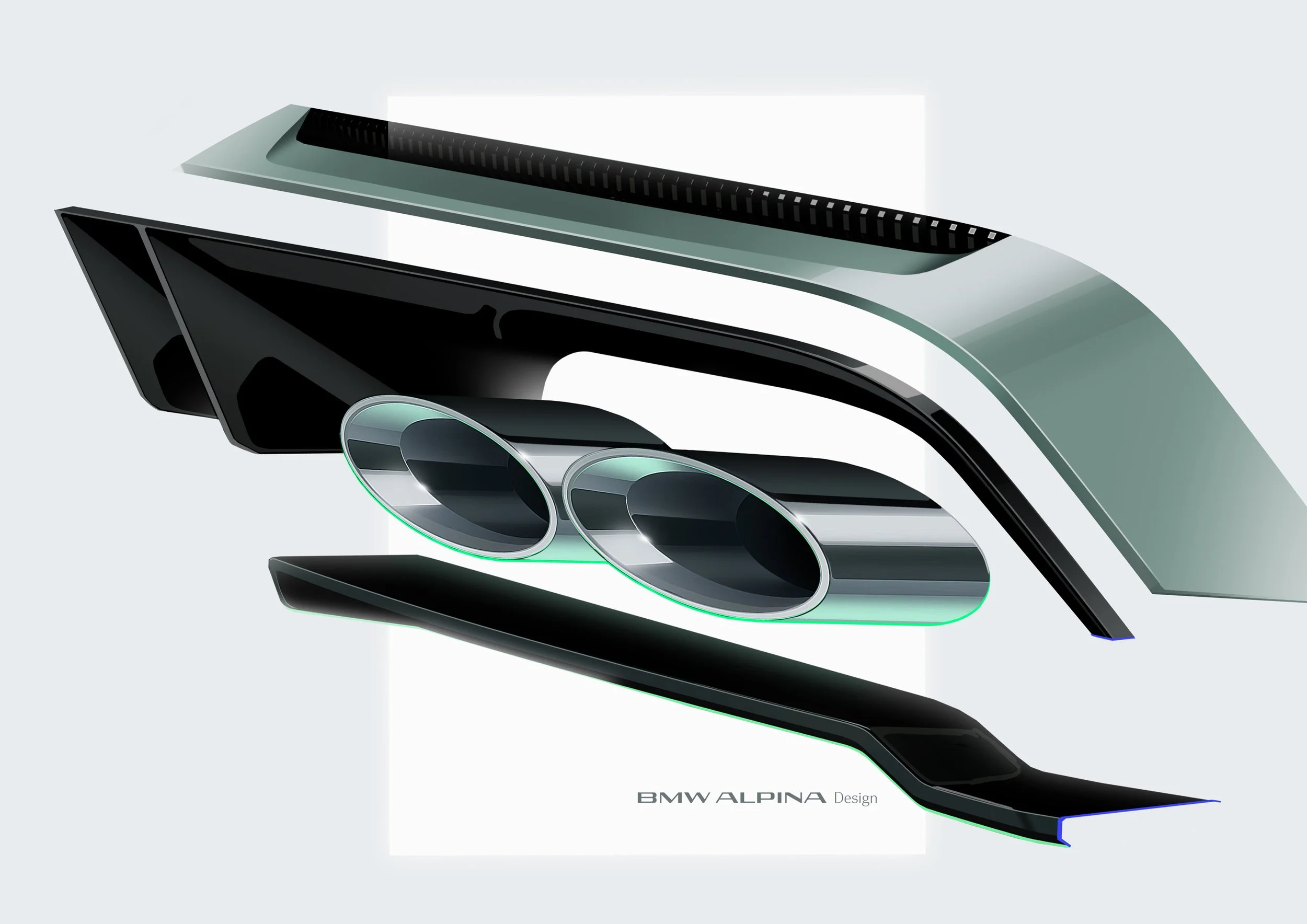
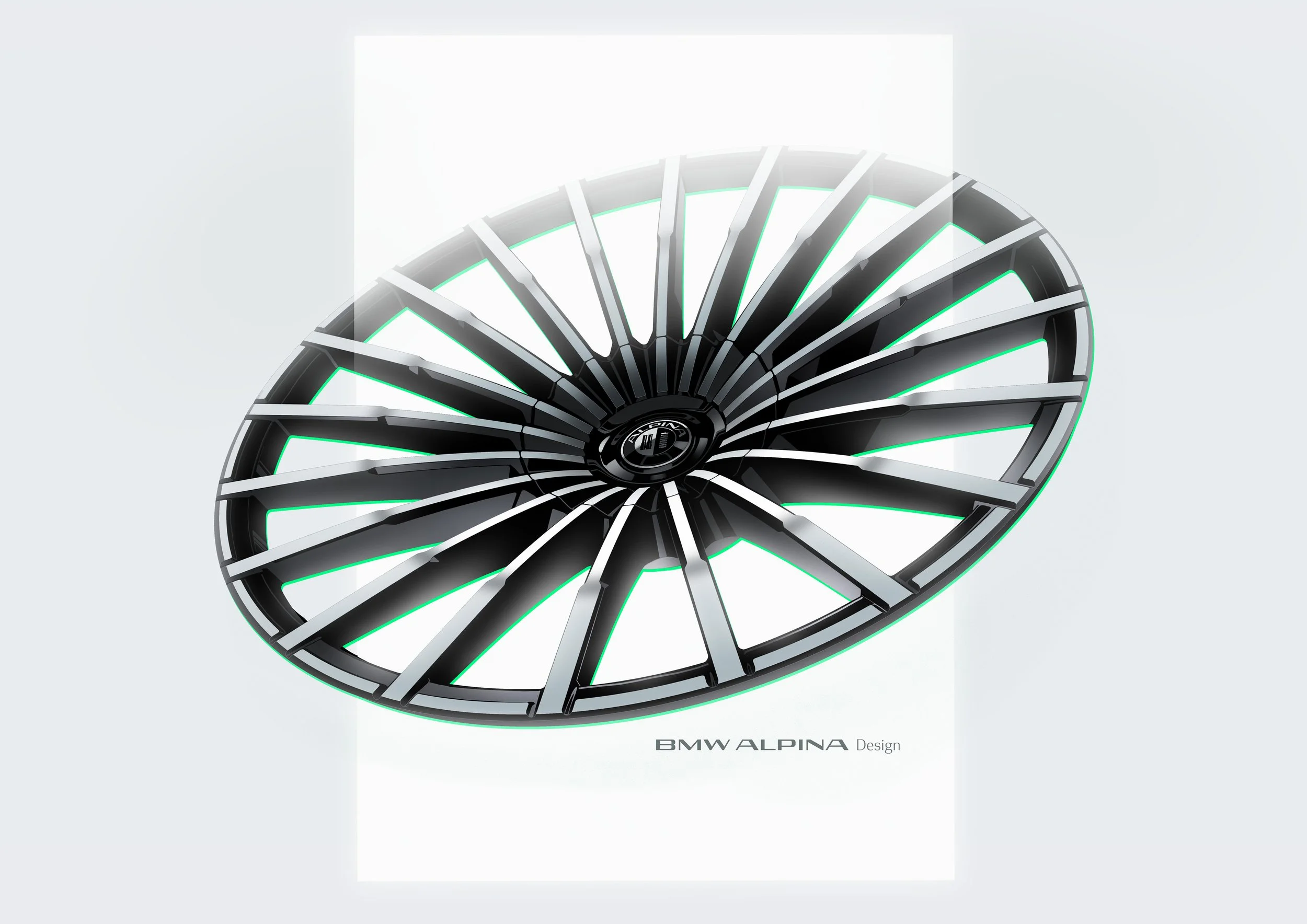
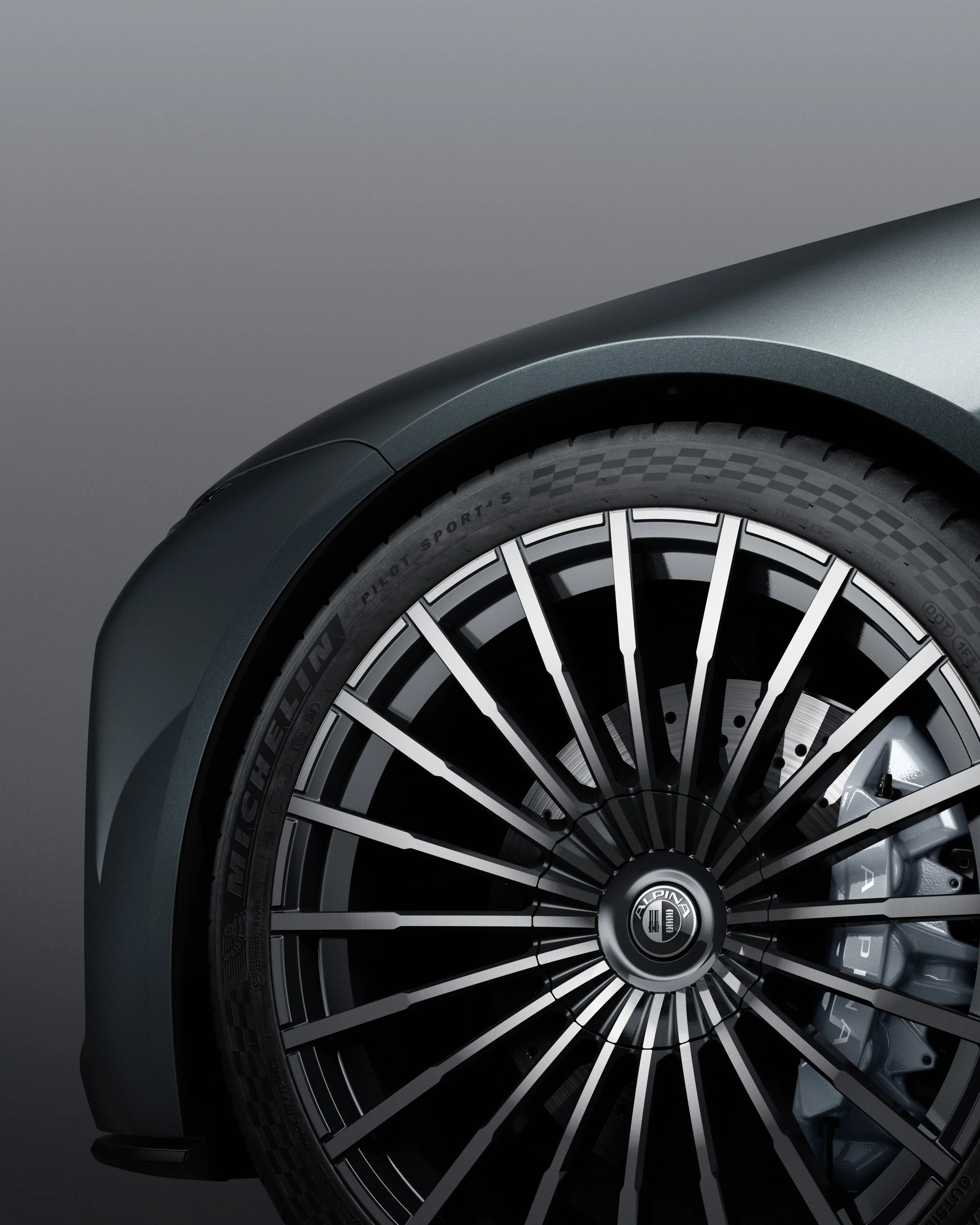
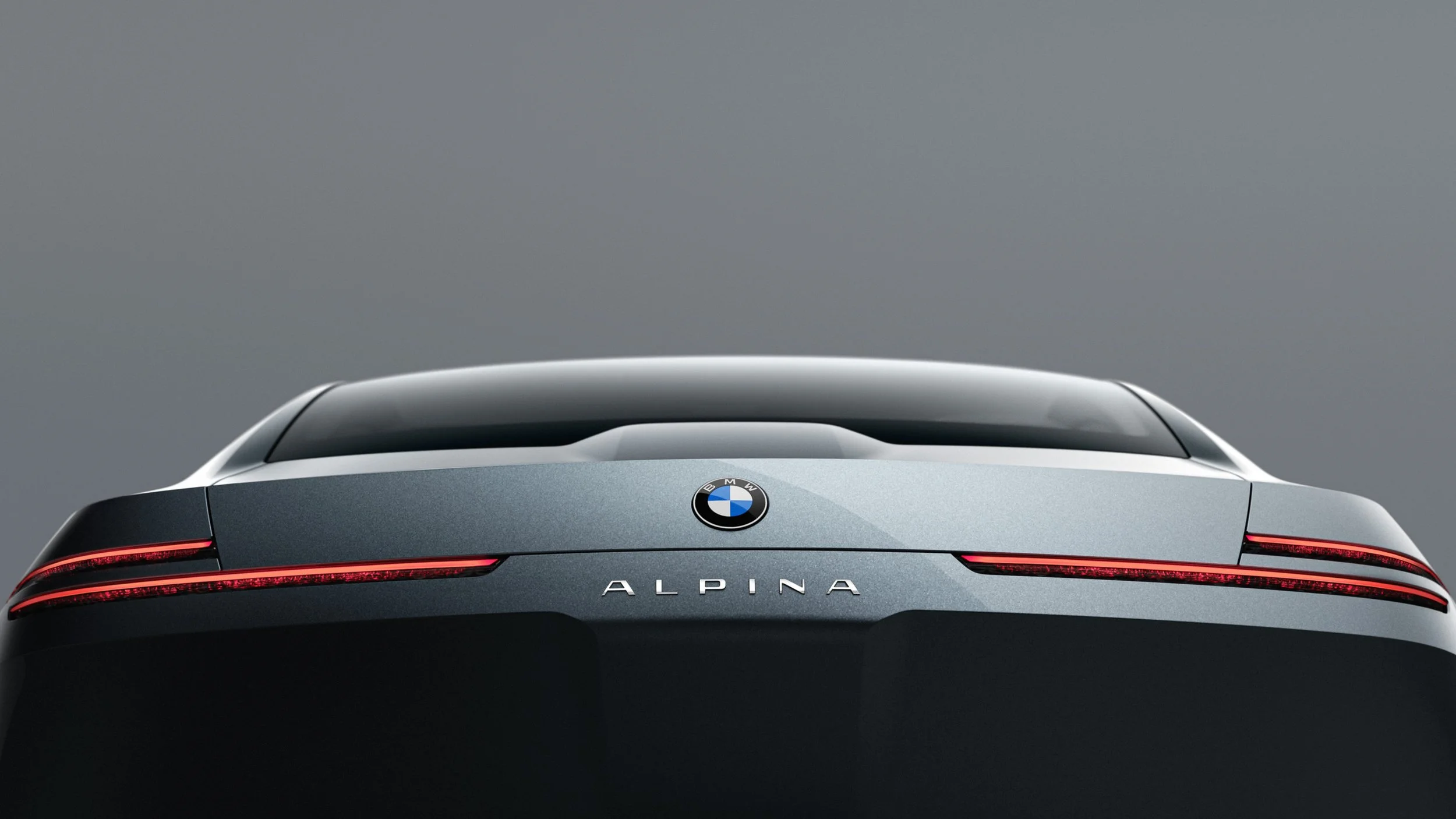
The shark nose captures the same "Second Read" sophistication: the inner surfaces feature a finely scaled signature Deco-line graphic, while a concealed, softly backlit perimeter reveals it only when active. A warm white tone characterises the daytime running lights and traces the kidney surrounds, inspired by the first light over the Bavarian Alps. At the same time, clear-cut illuminated crystals add a precise highlight within the slender lamps. The elliptical four-pipe exhaust remains, as does the "ALPINA" lettering, now reinterpreted as a machined, polished metal element on the lower front apron. The 22-inch front and 23-inch rear wheels carry the 20-spoke design that has defined Alpina since 1971.
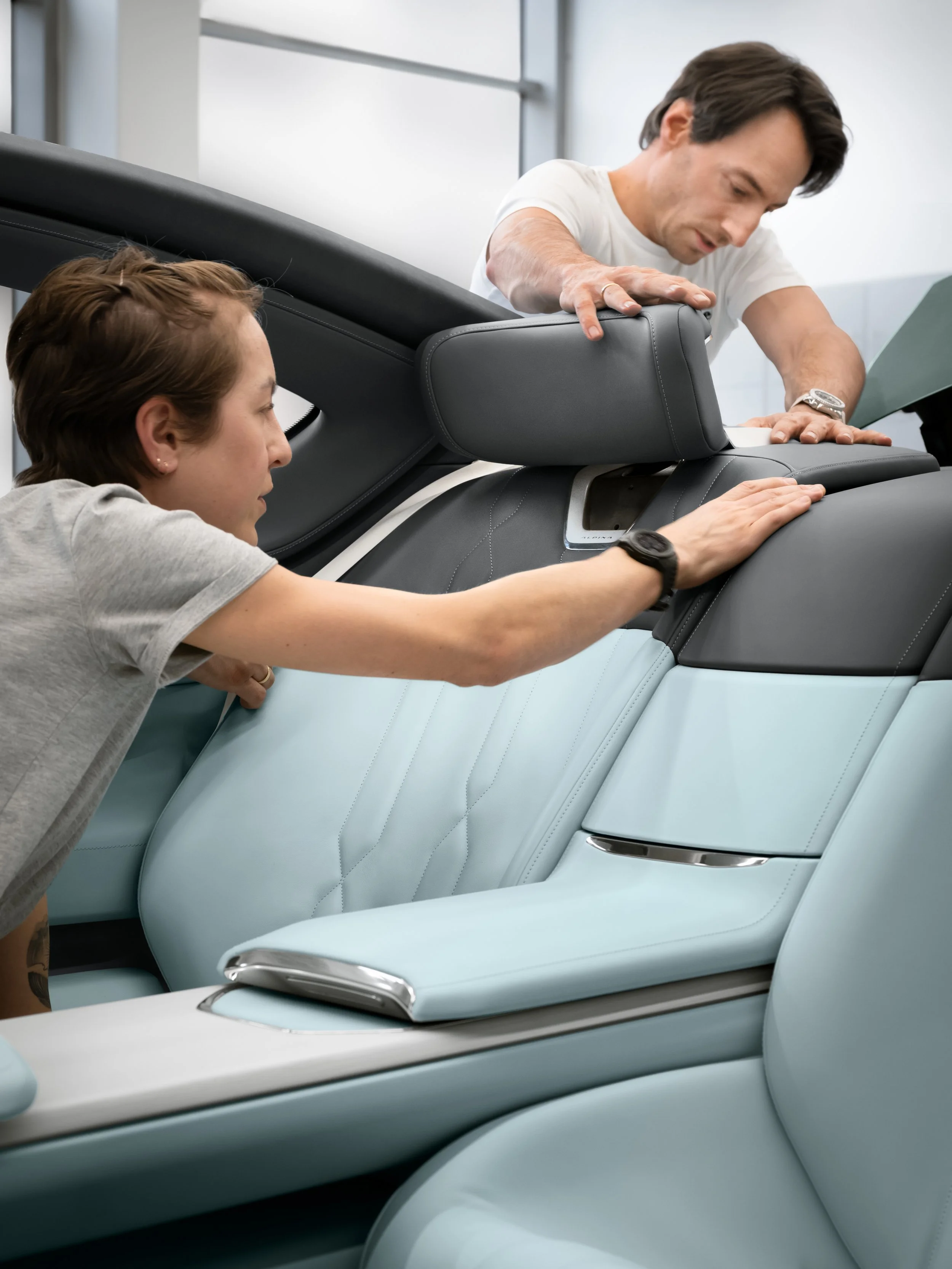
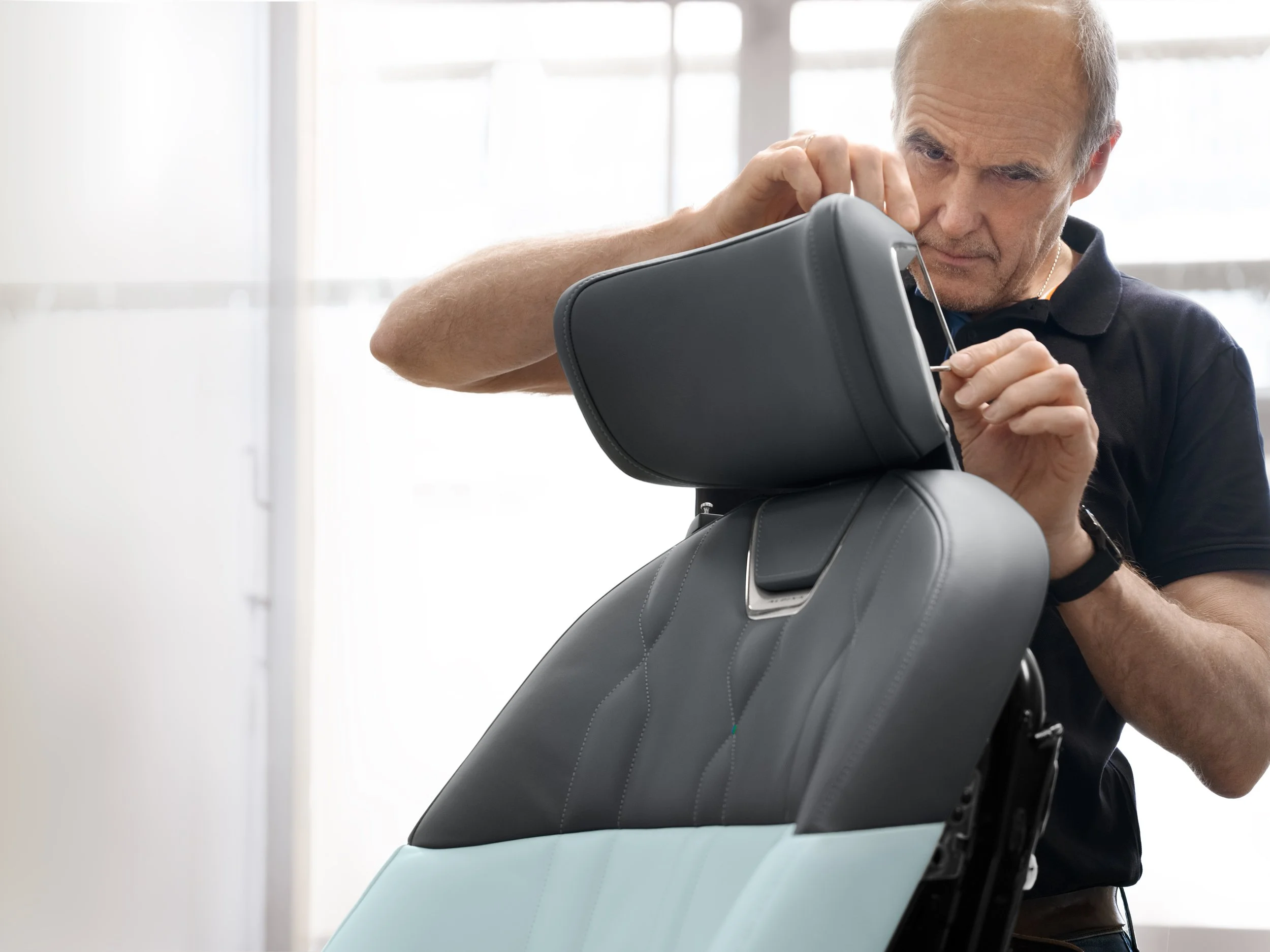
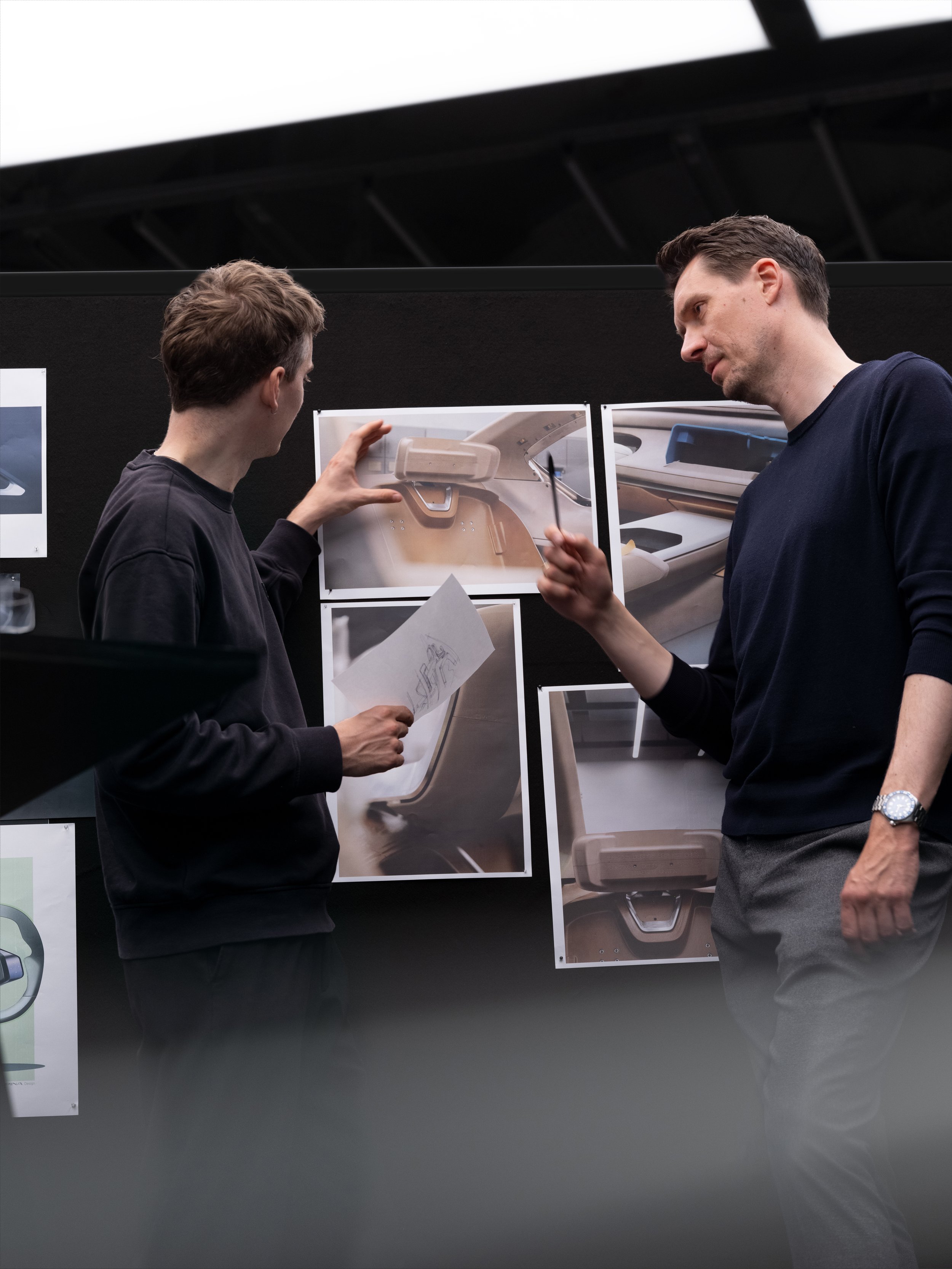
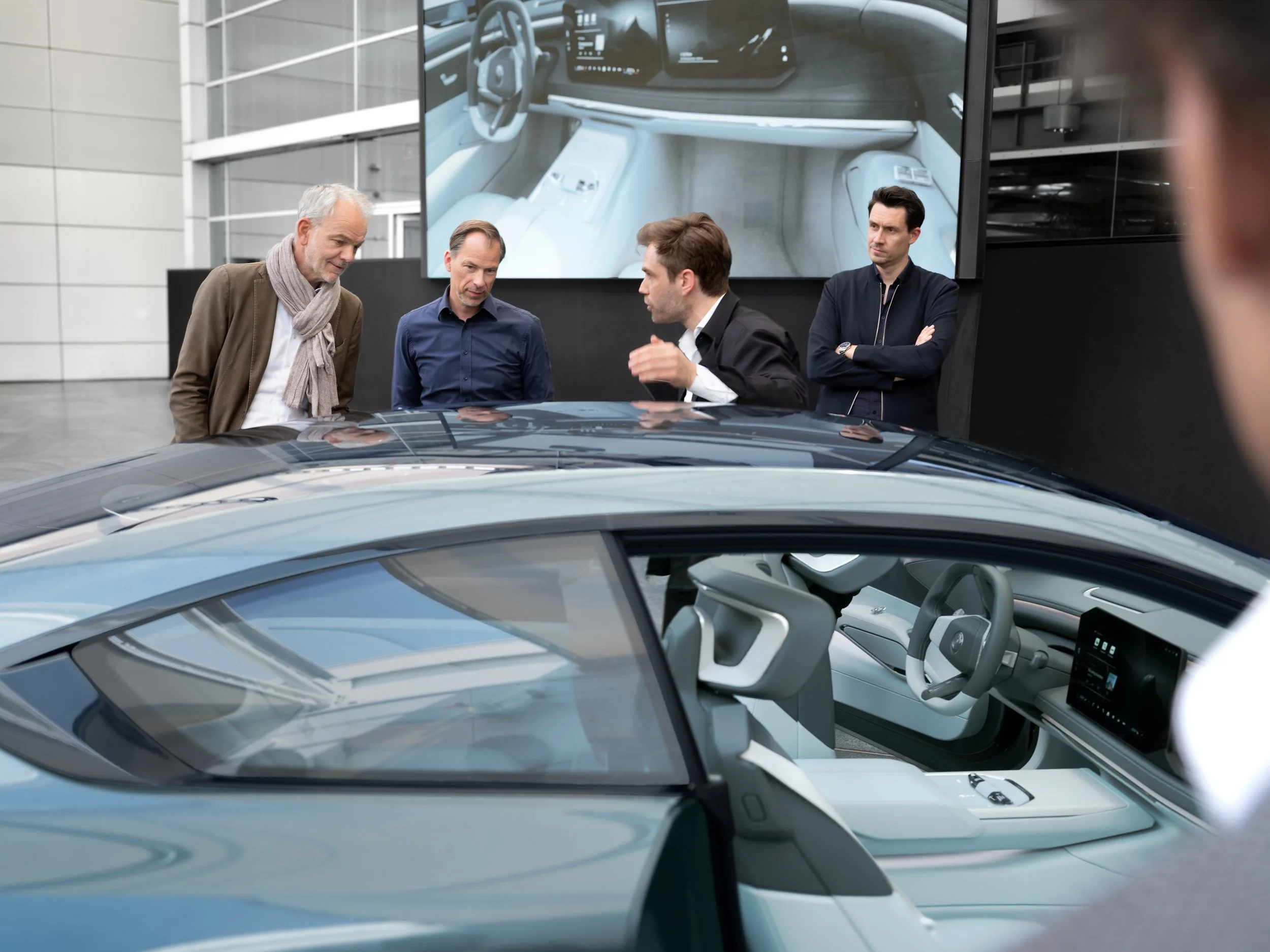
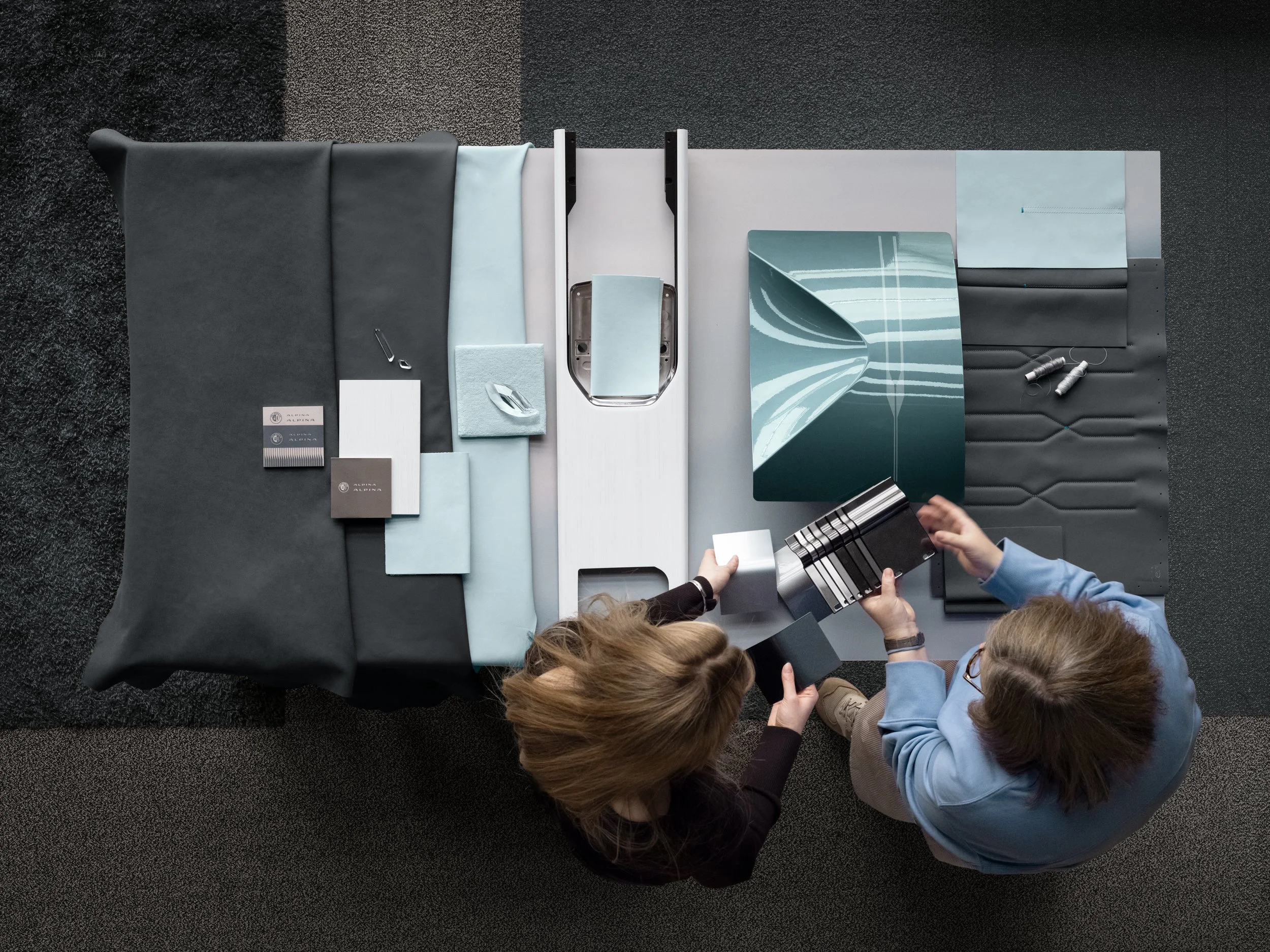
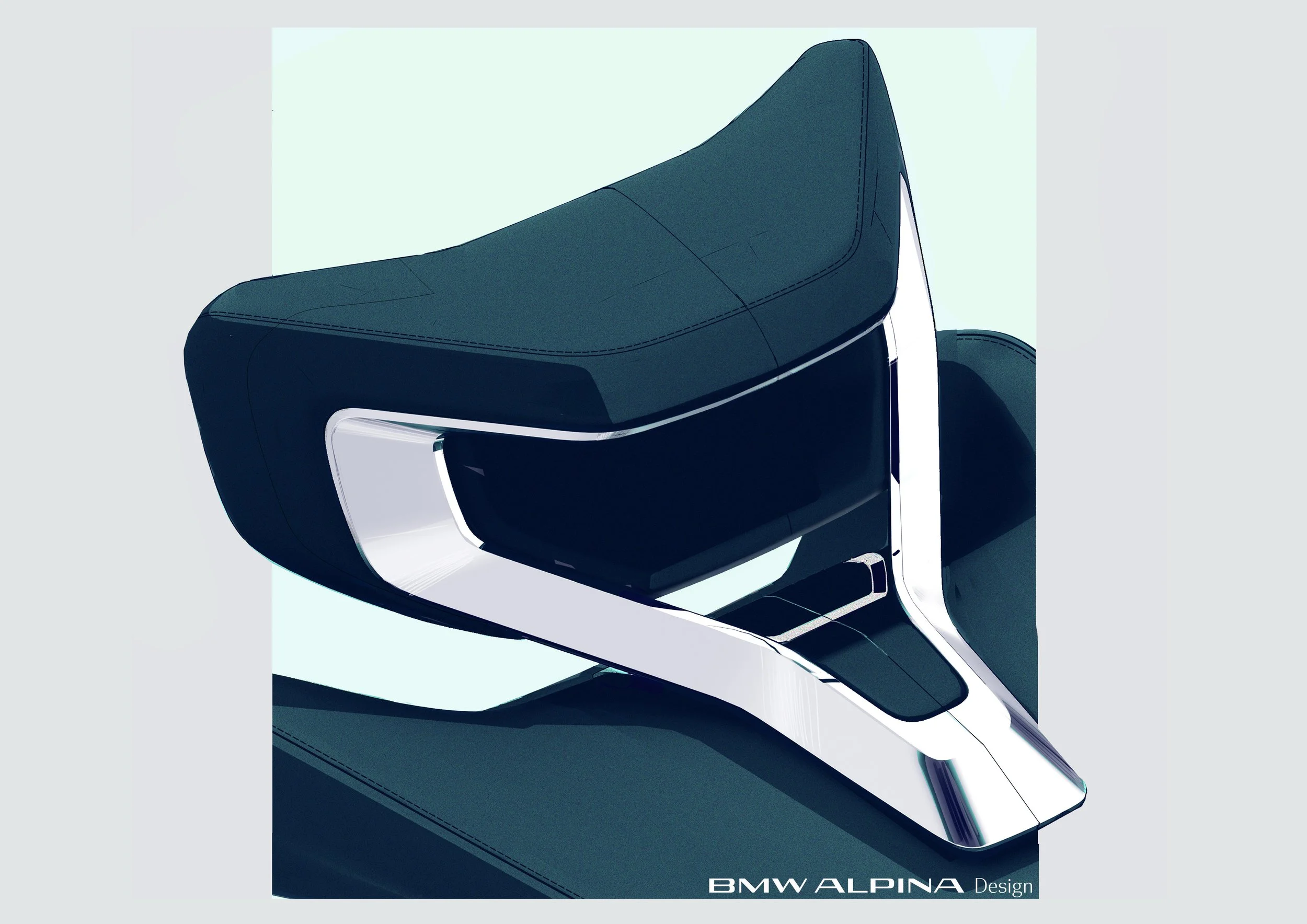
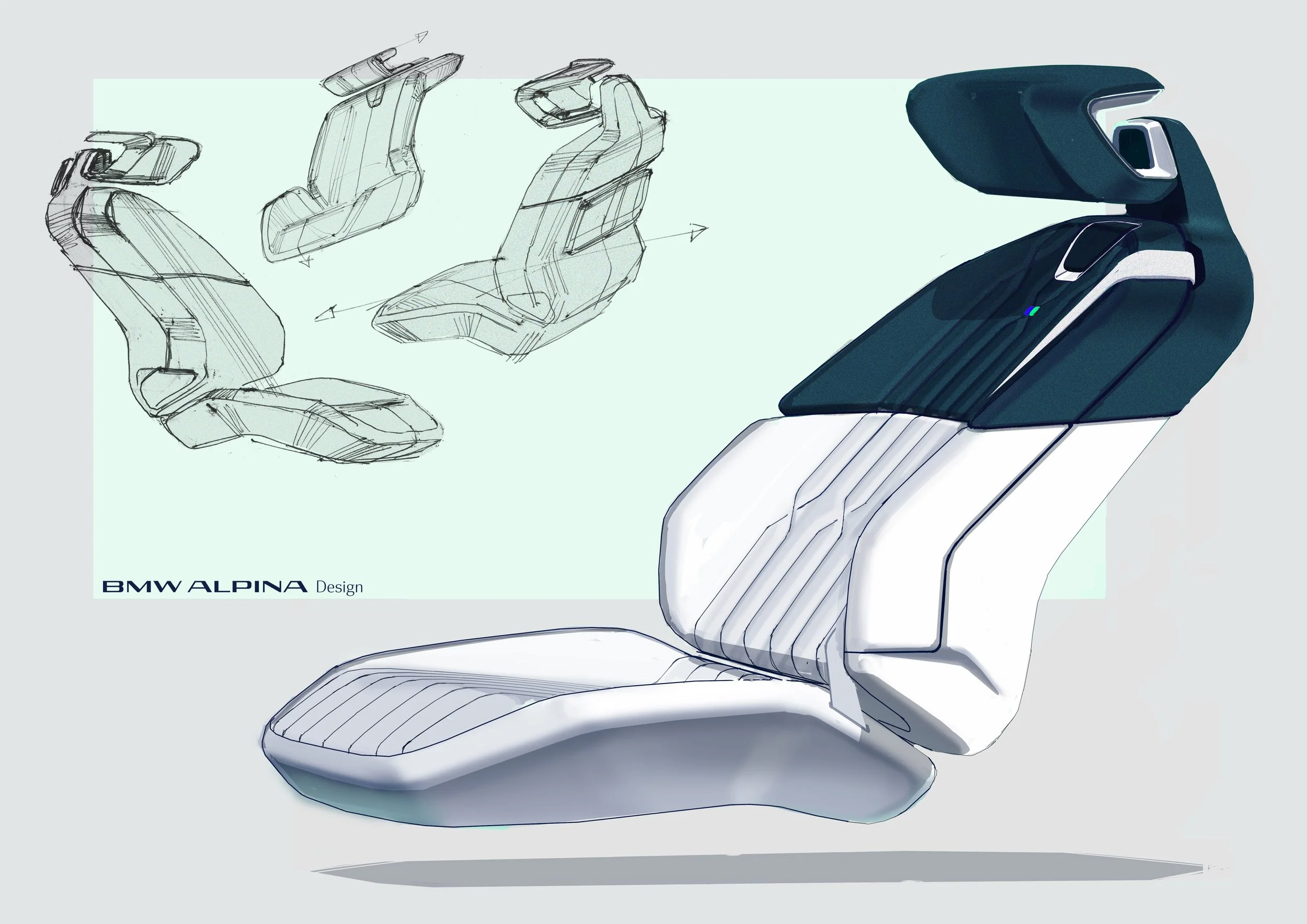
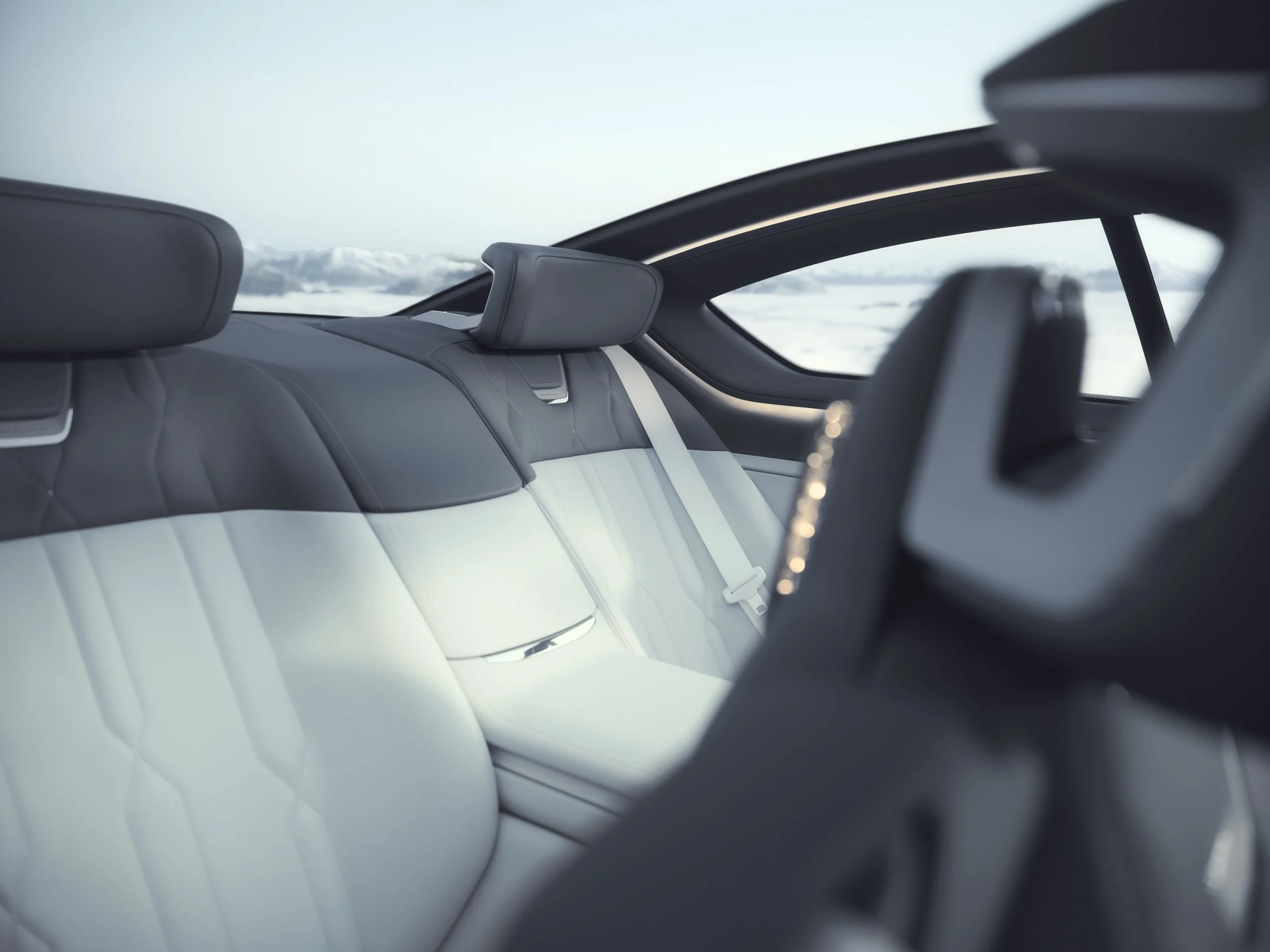
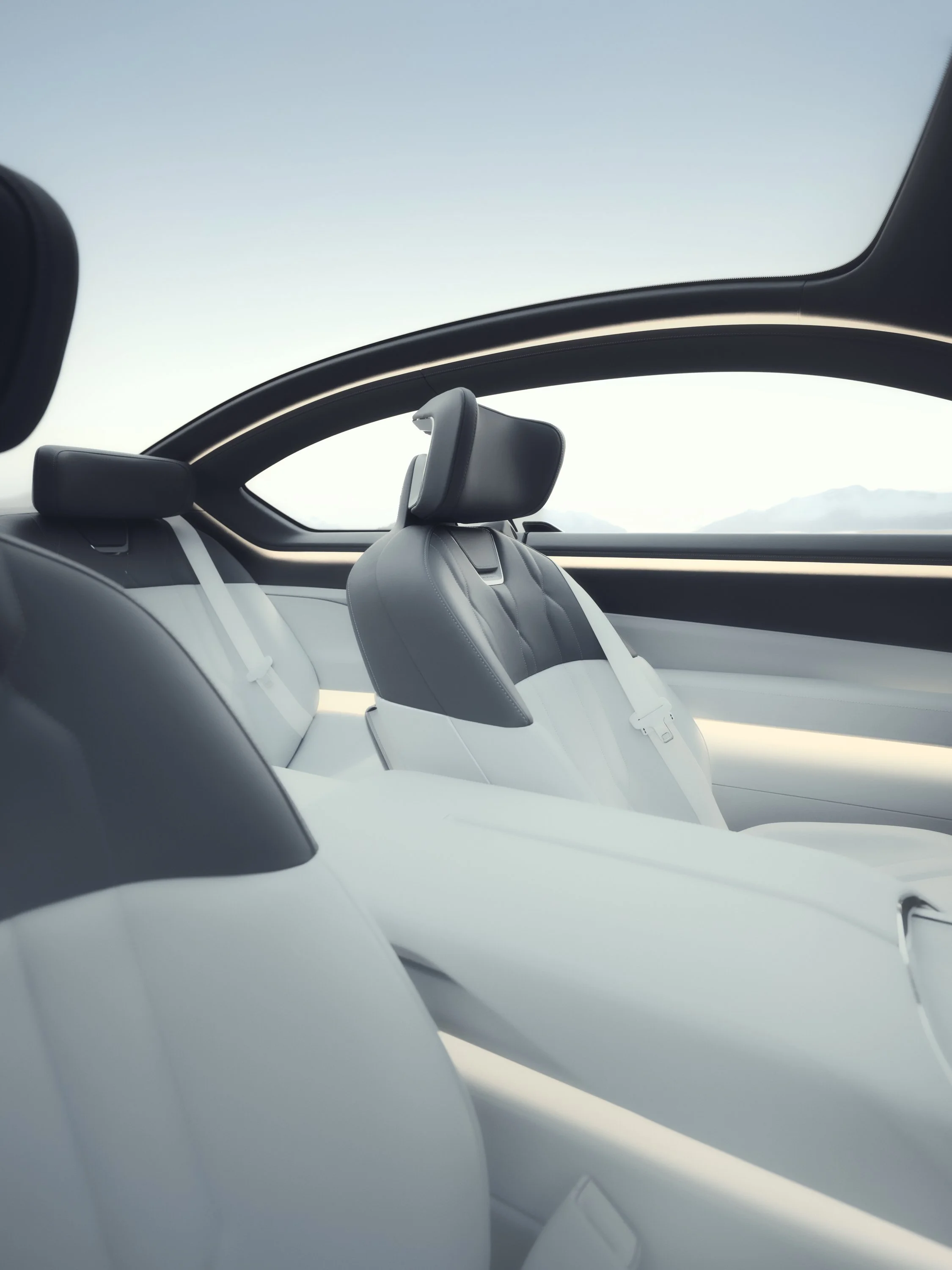
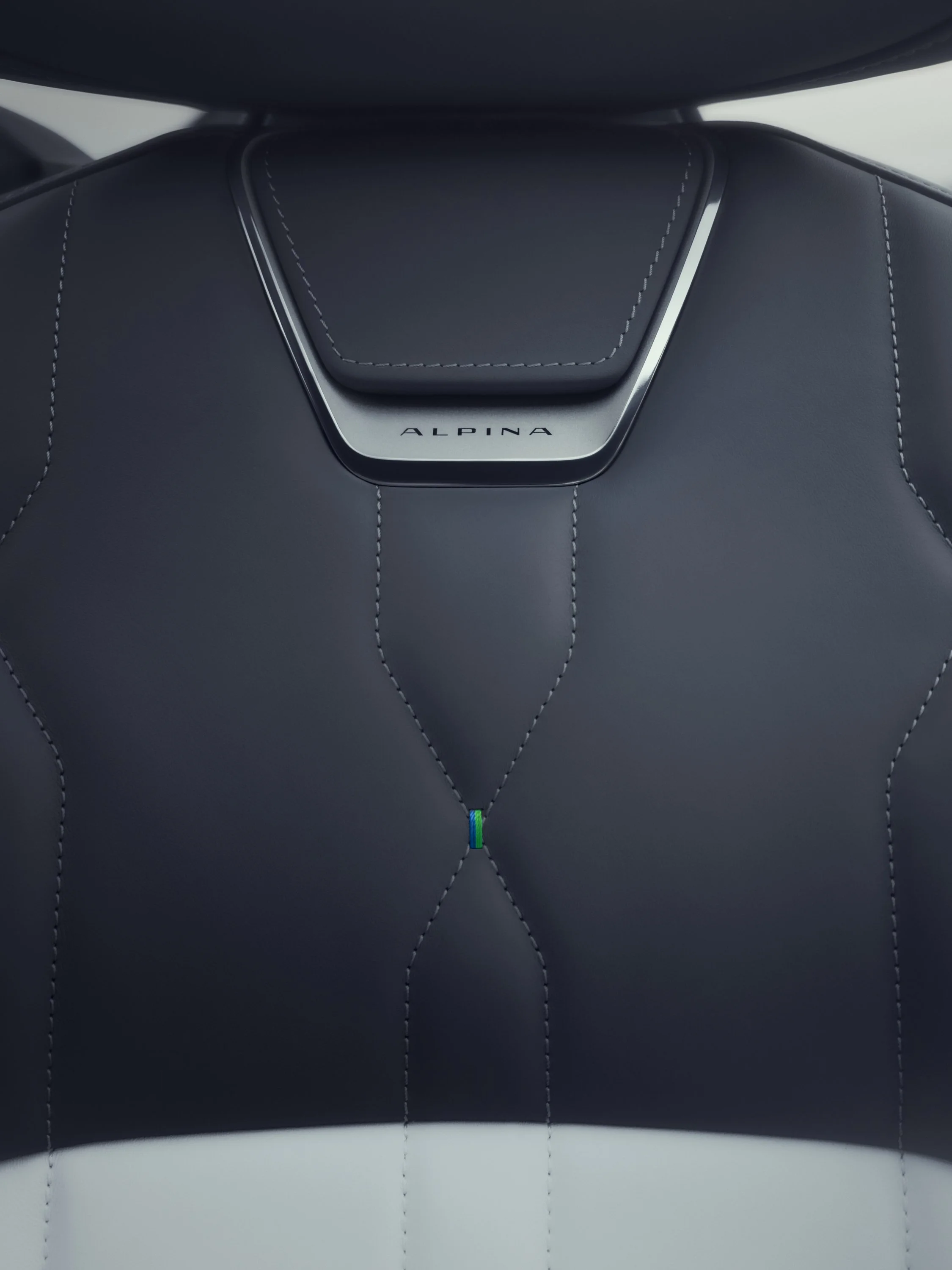
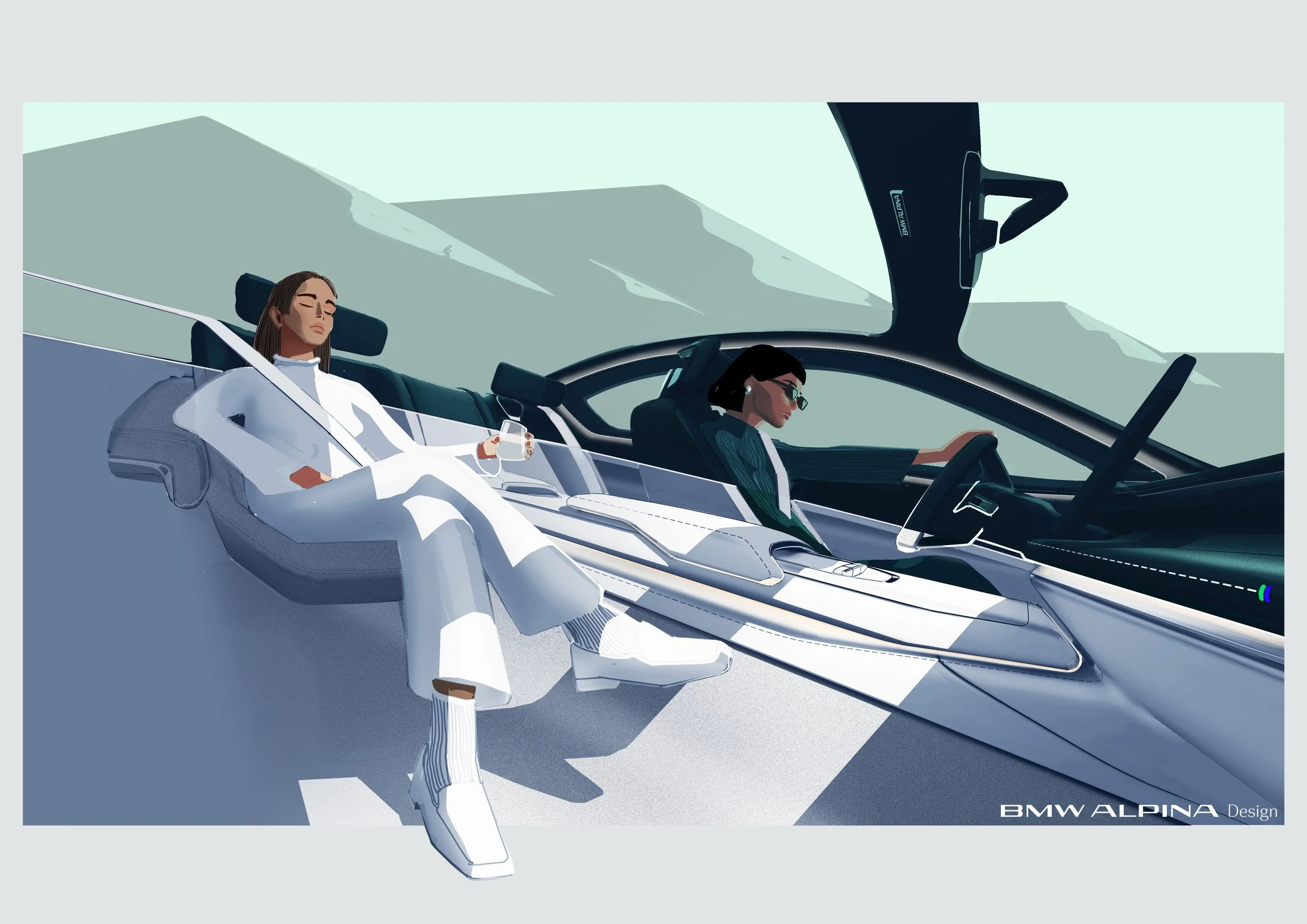
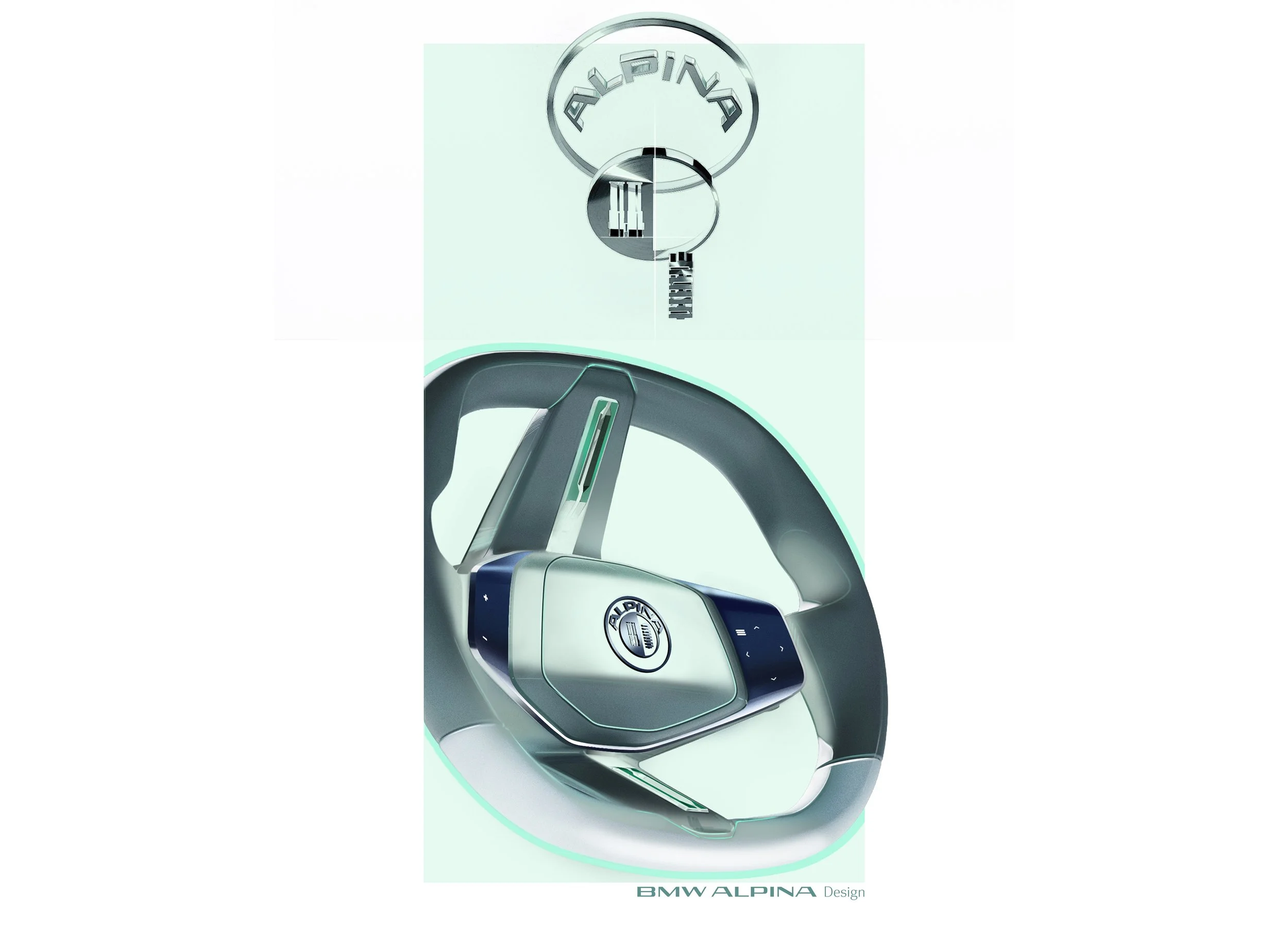
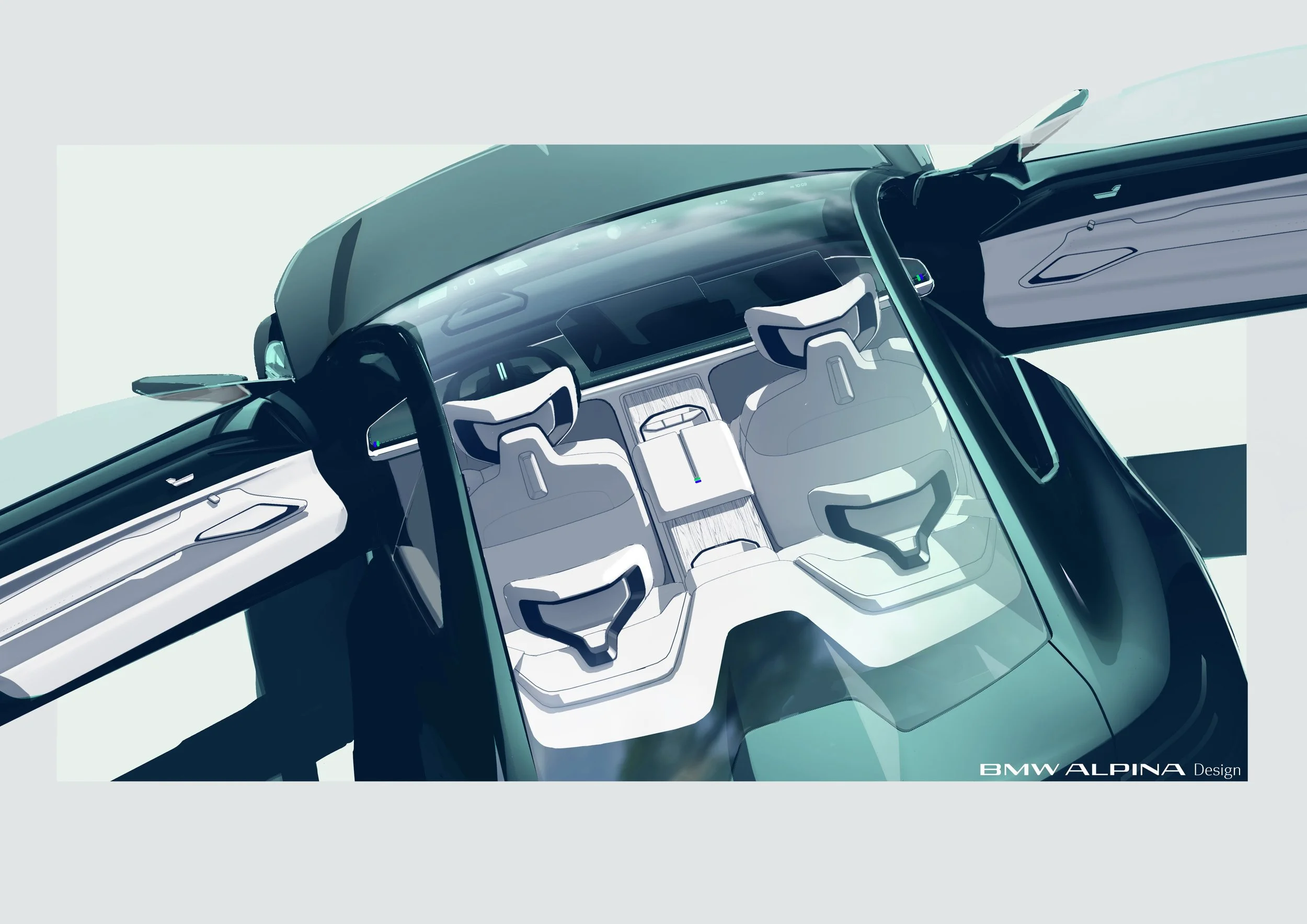
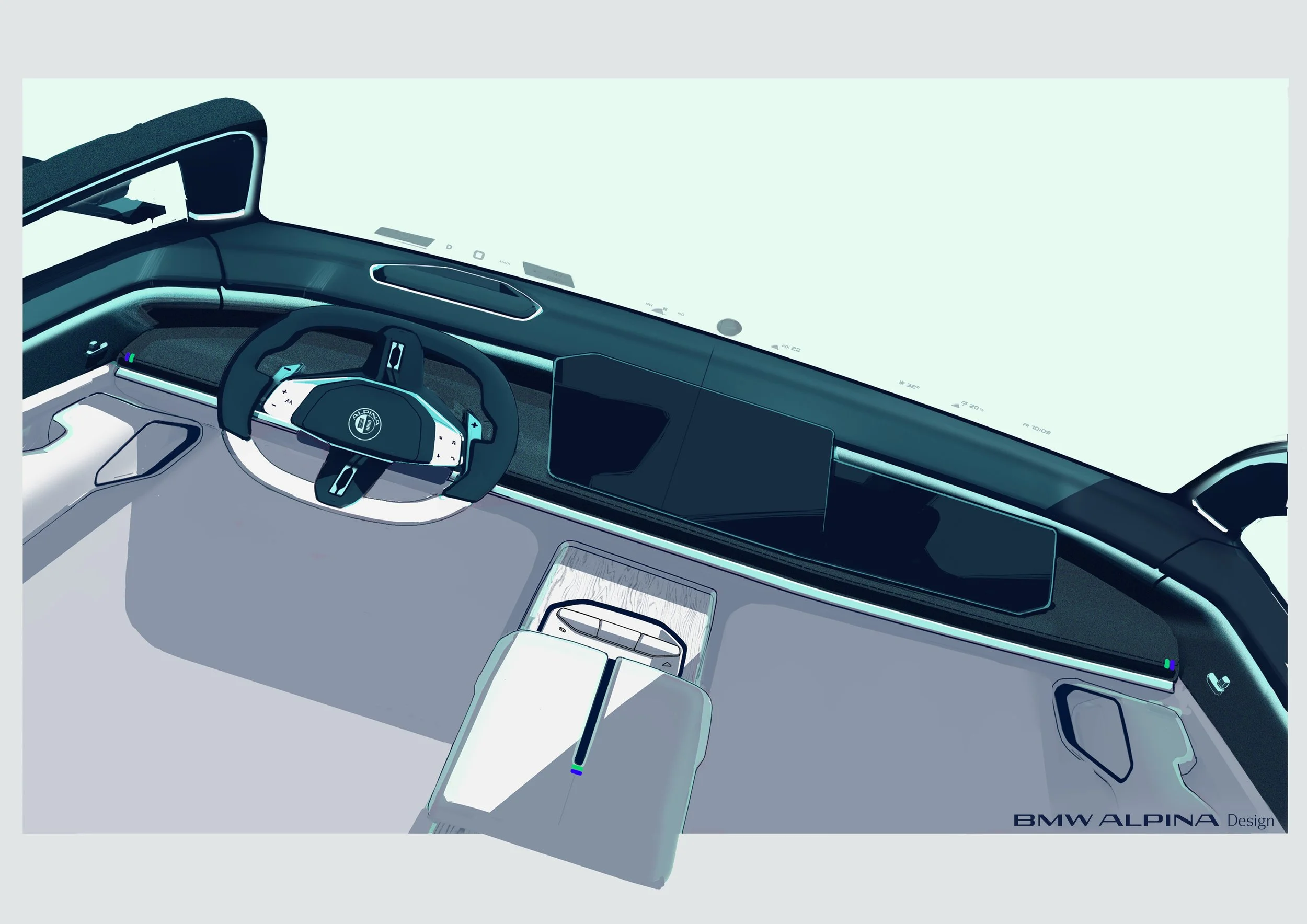
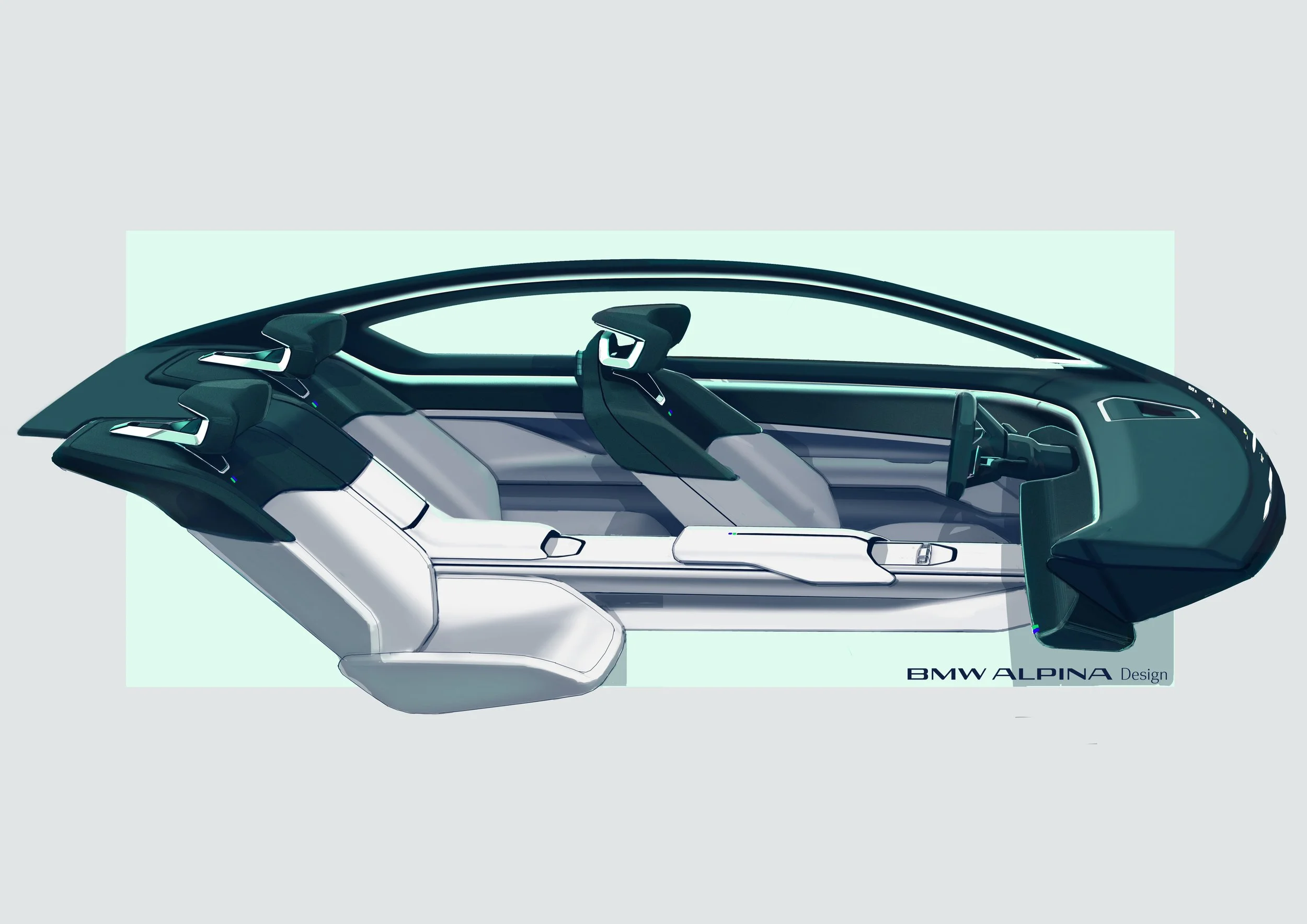
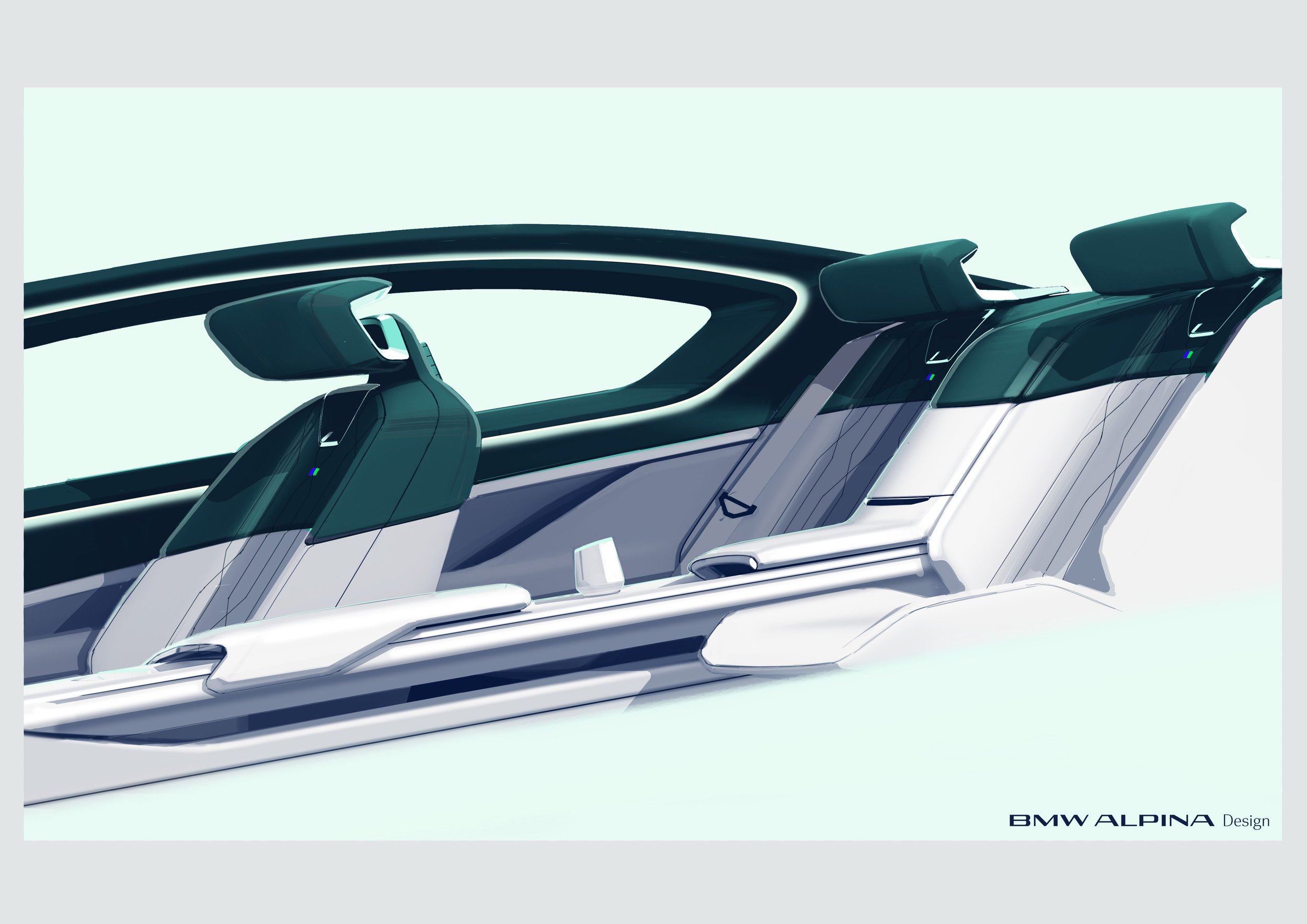
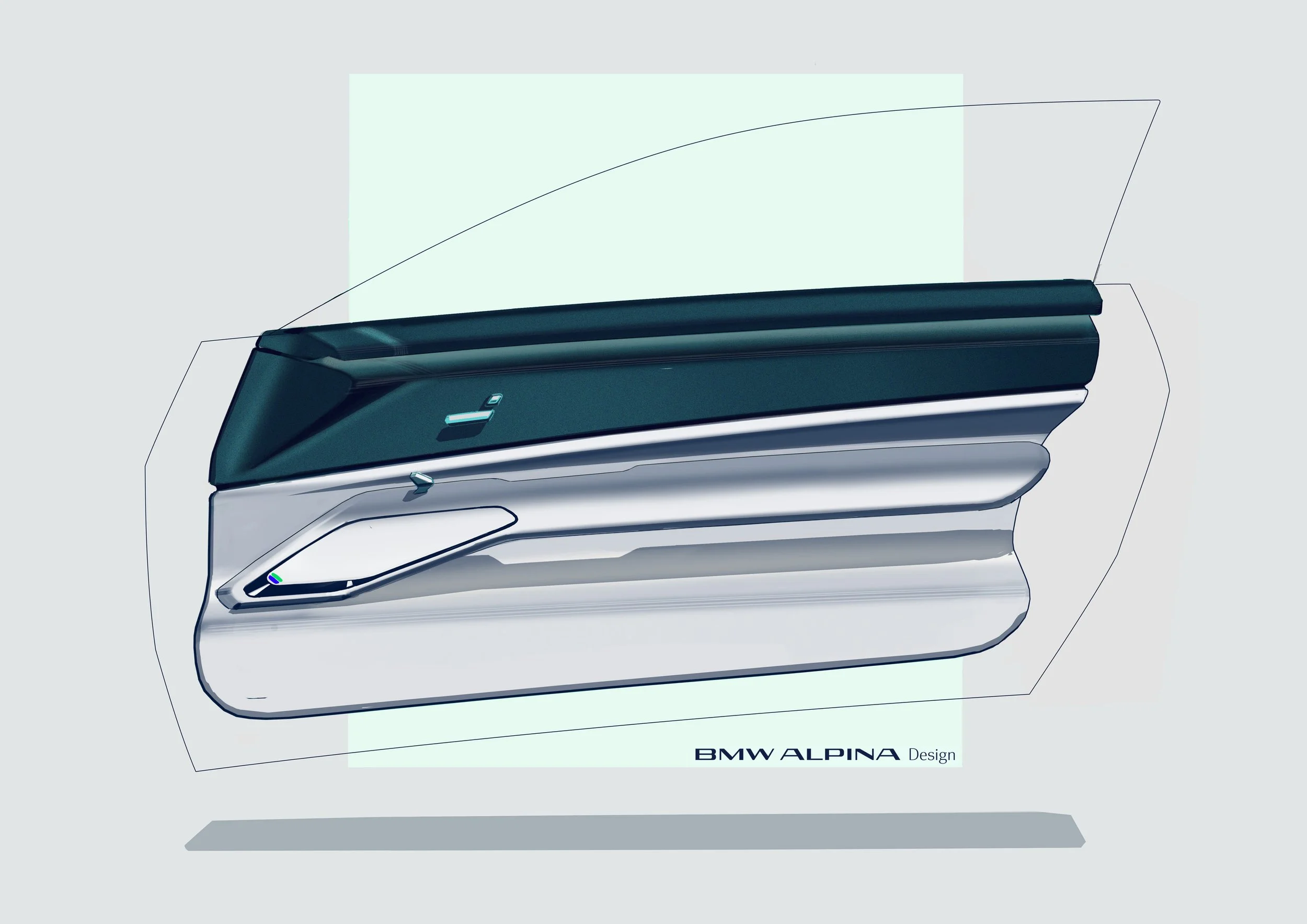
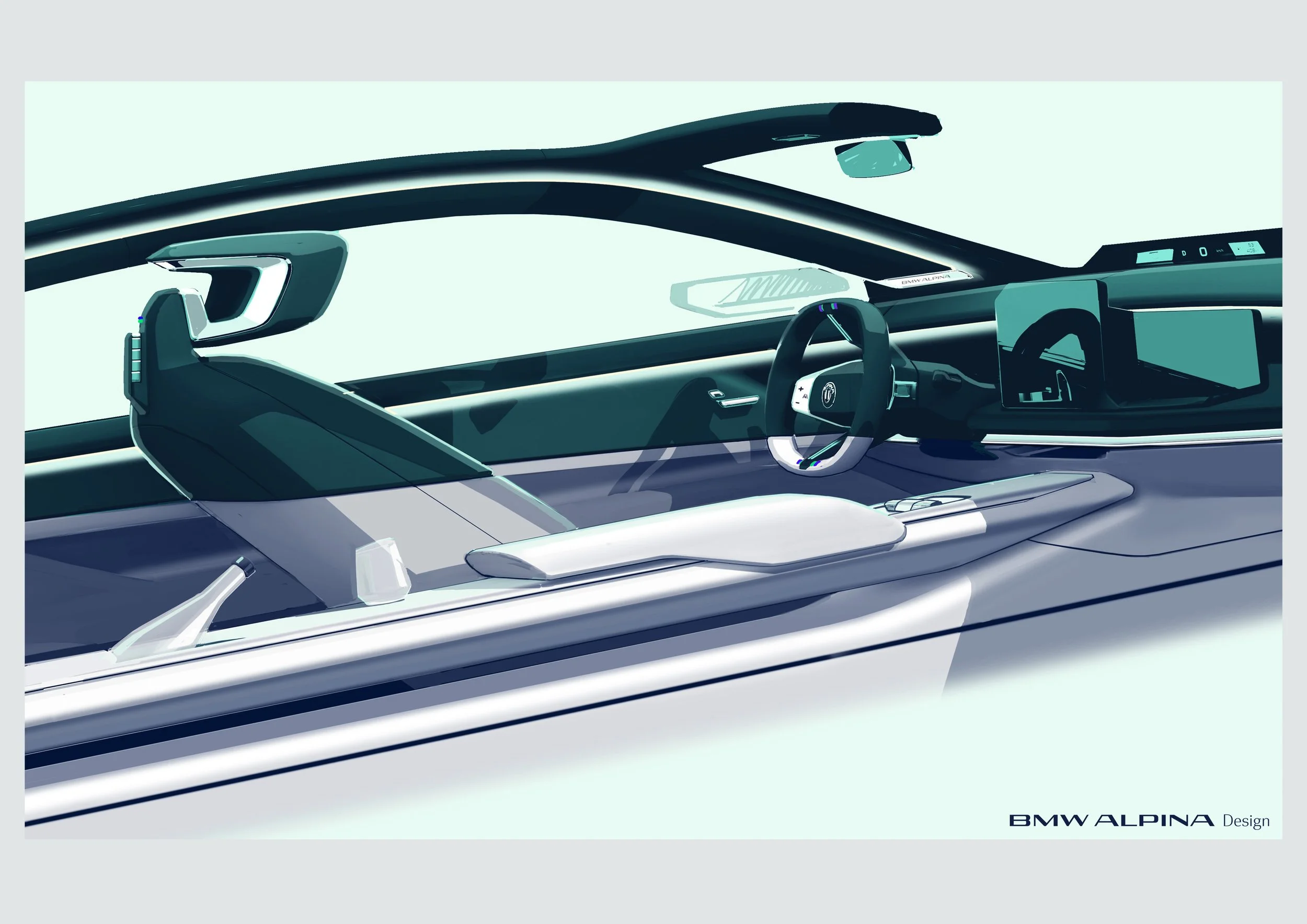
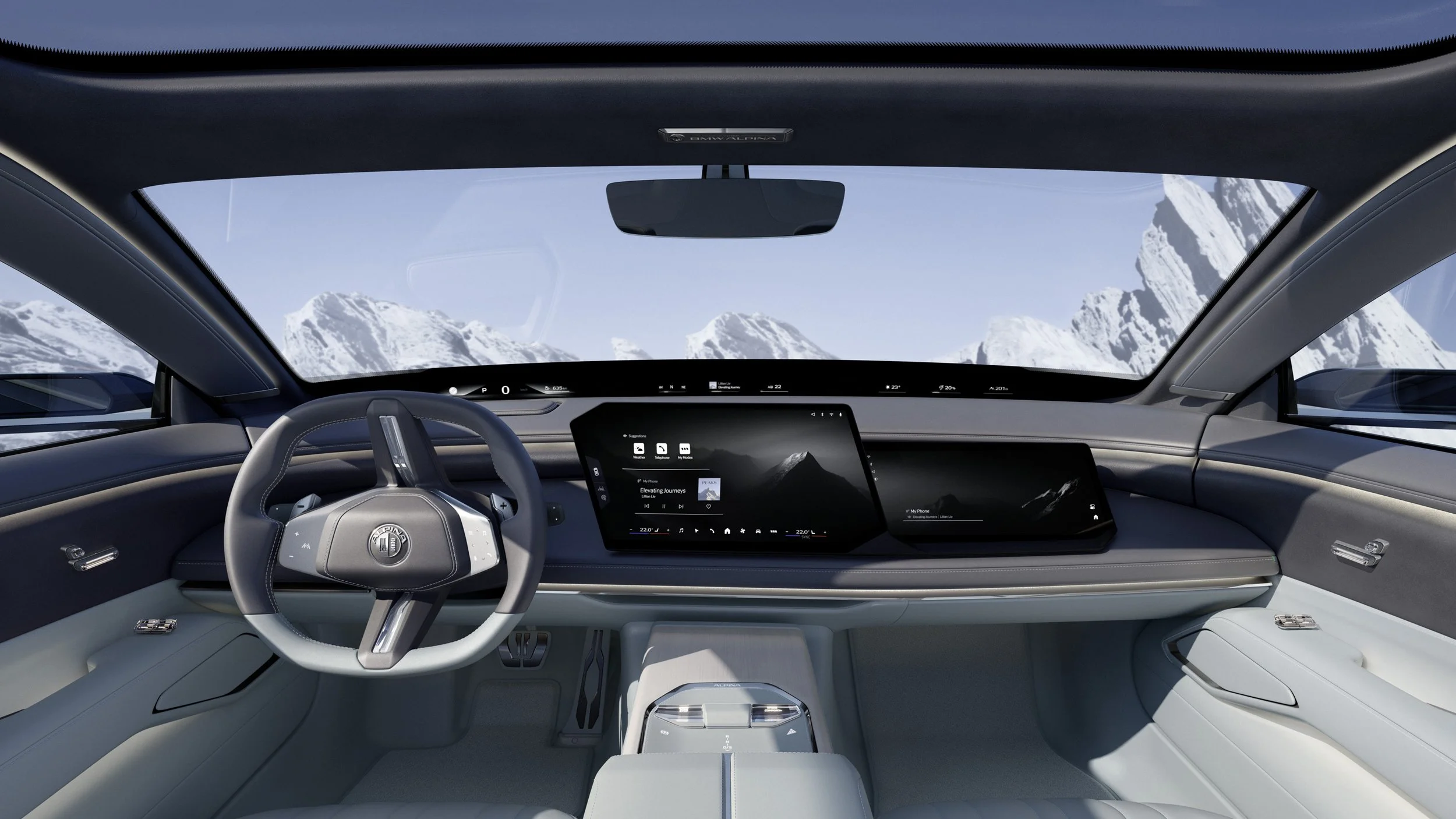
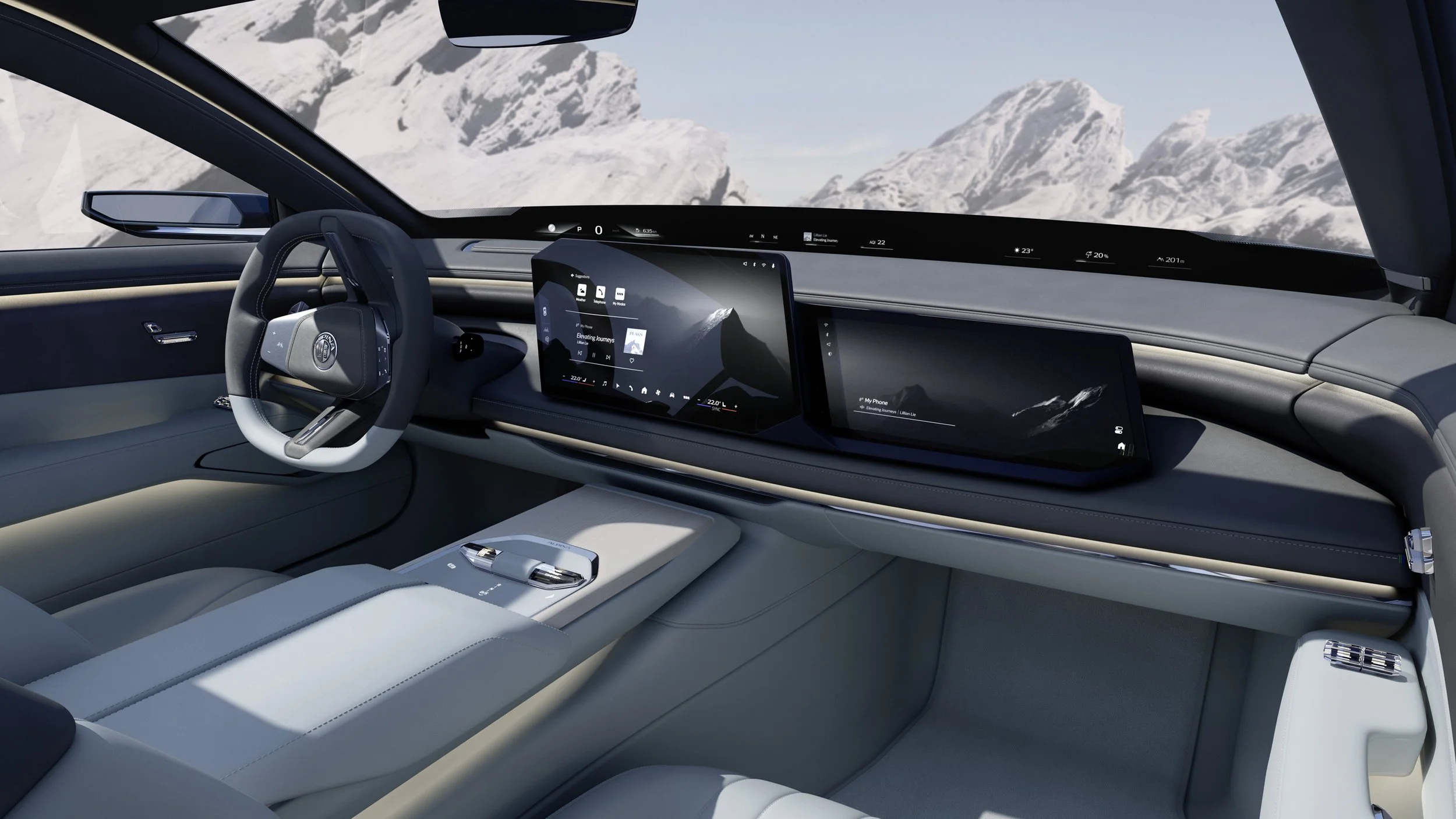
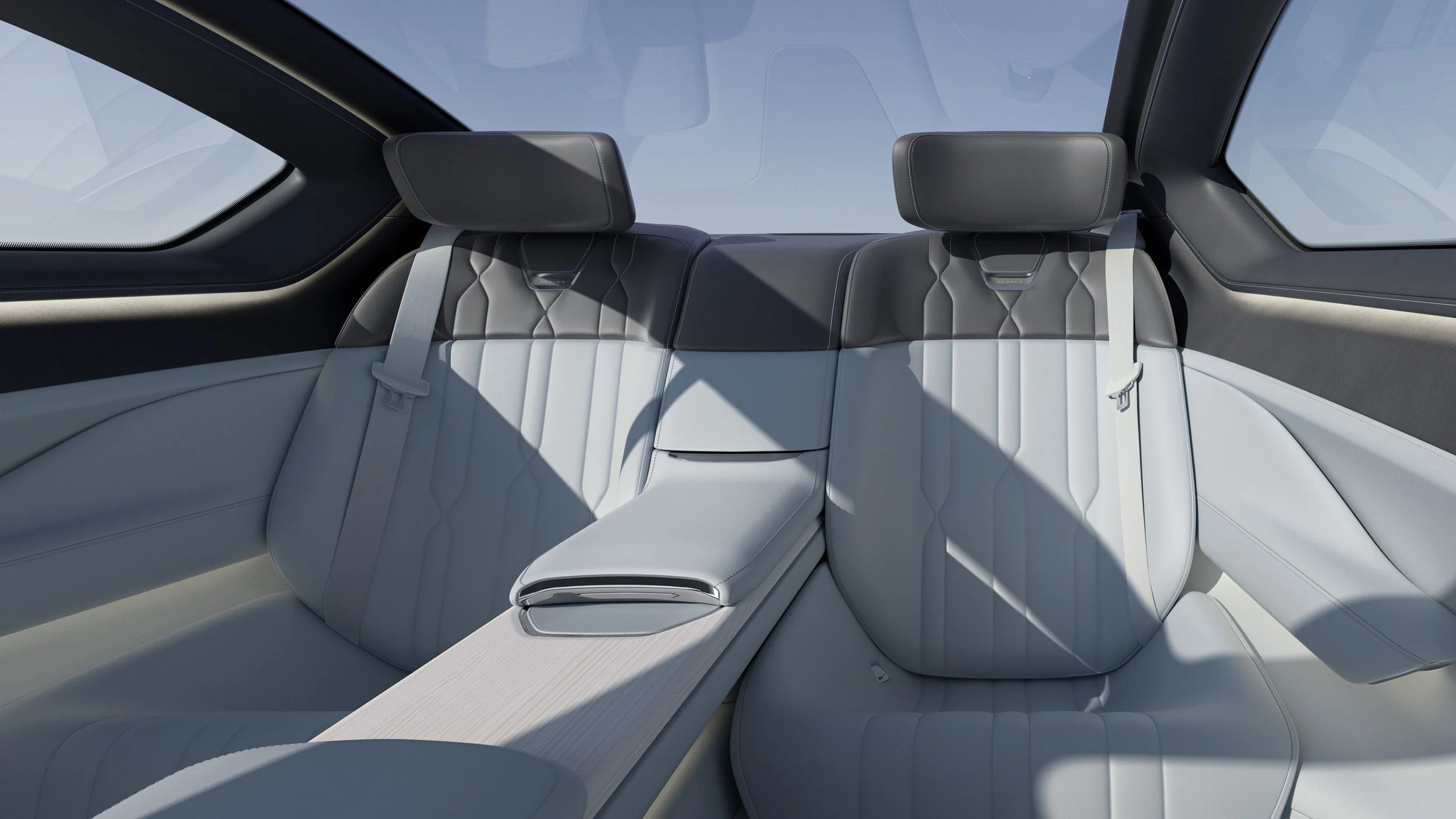
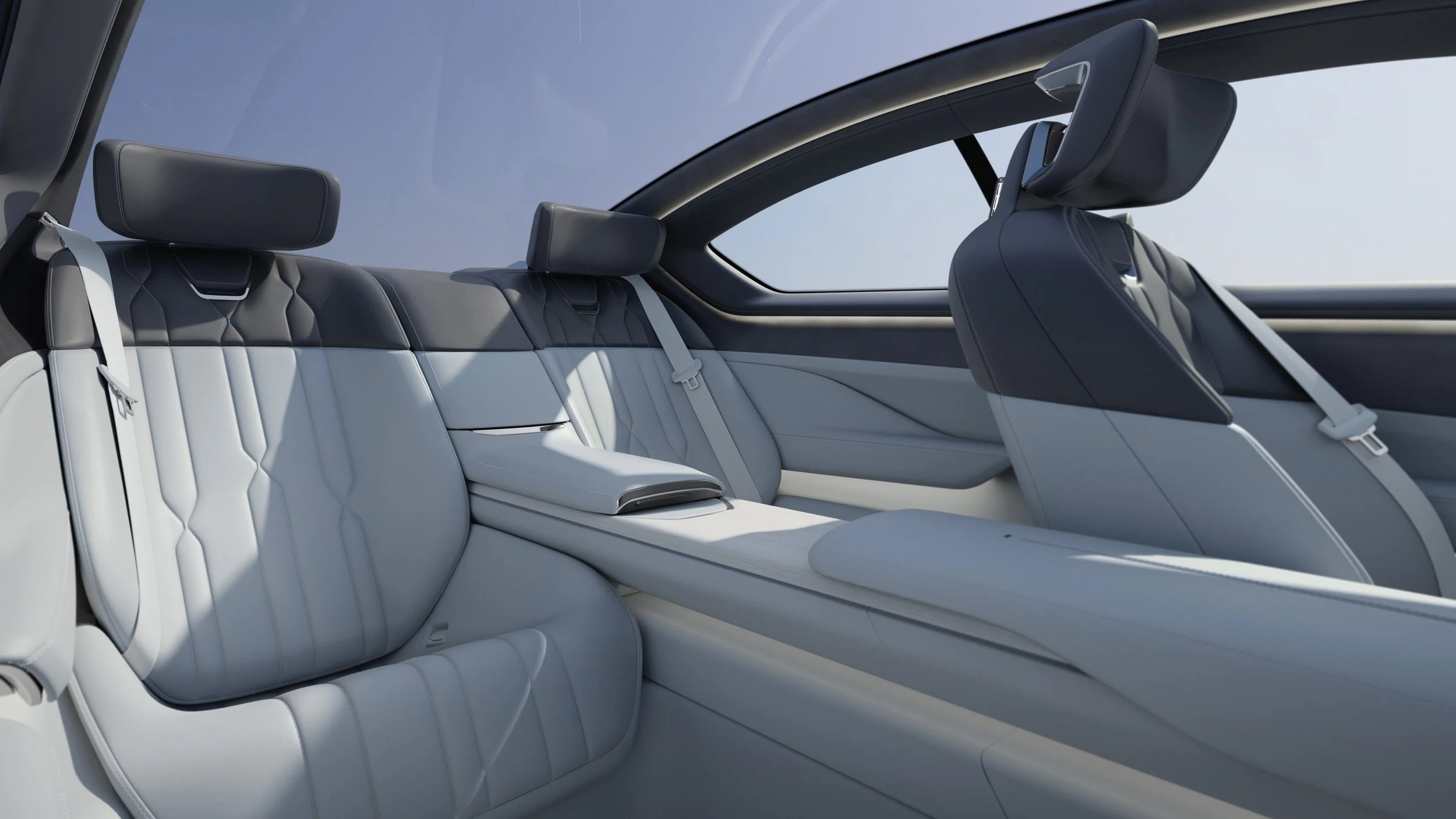
Inside, the cabin offers generous space, high-quality materials, and carefully integrated technology. Architectural volumes define the layout, with each element designed as a standalone form rather than absorbed into a homogeneous interior. The six-degree speed feature line continues through the cabin, dividing a darker upper segment from a lighter lower one. Full-grain leather, sourced from producers across the Alpine region, pairs with stitching inspired by the Deco-lines.
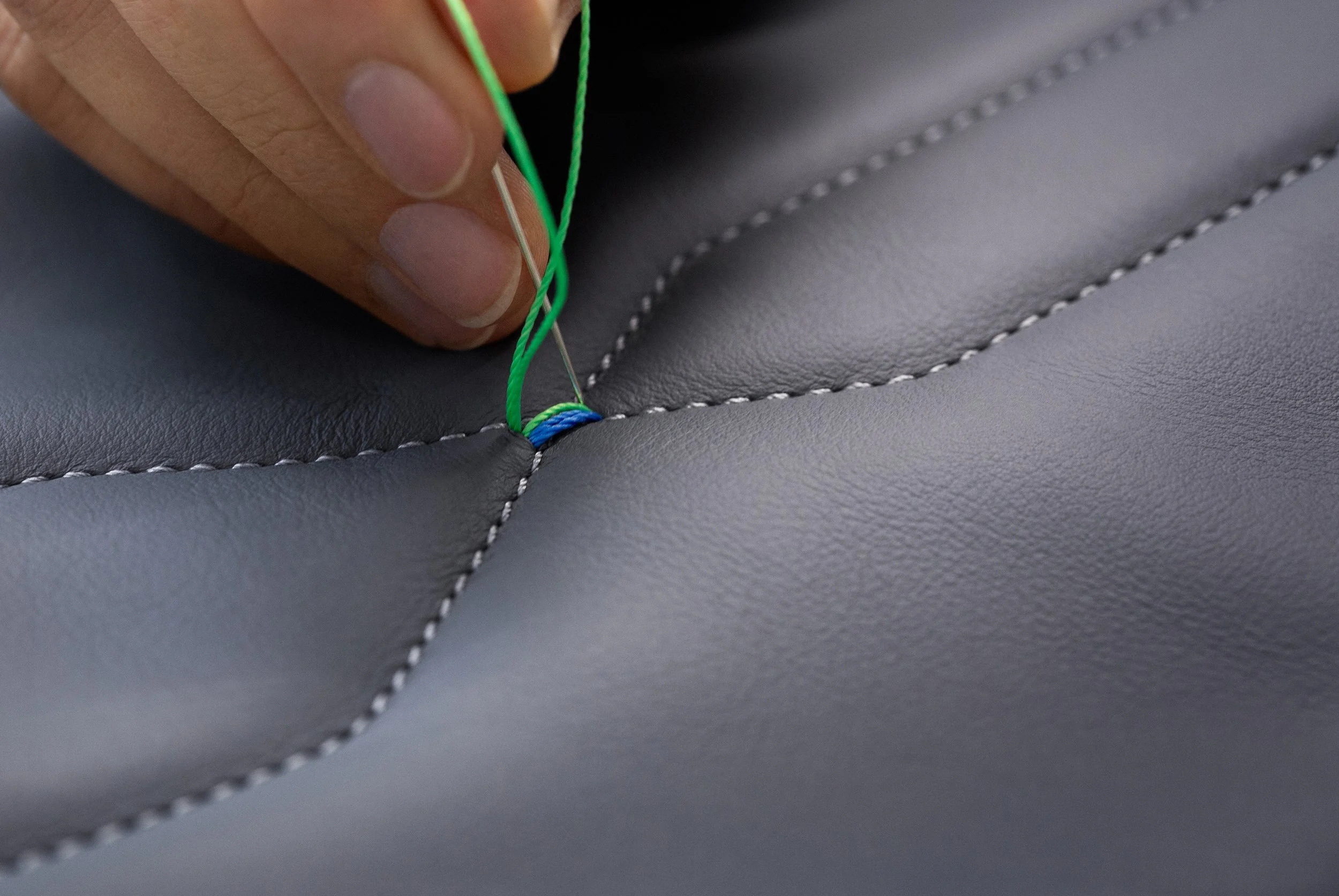
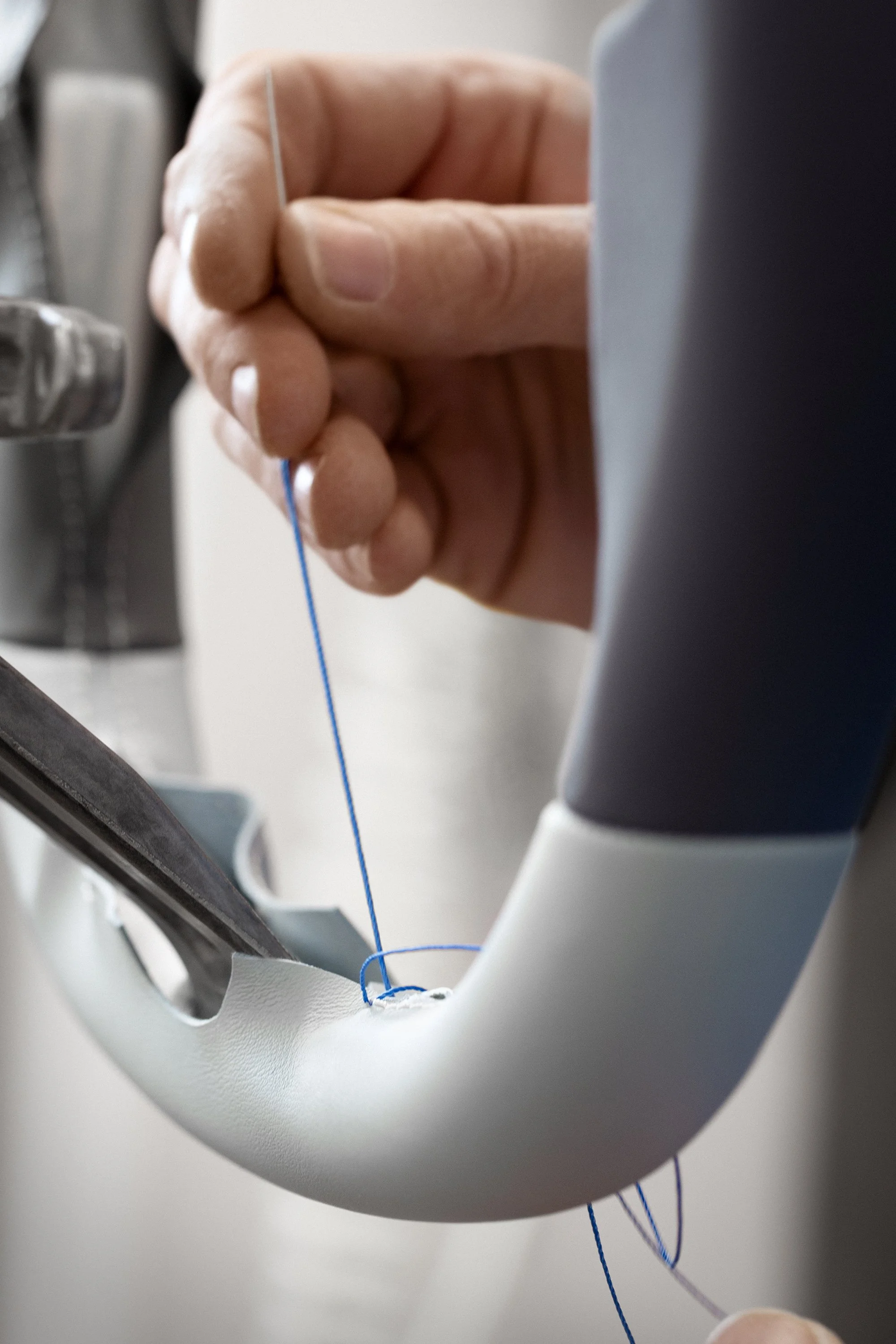
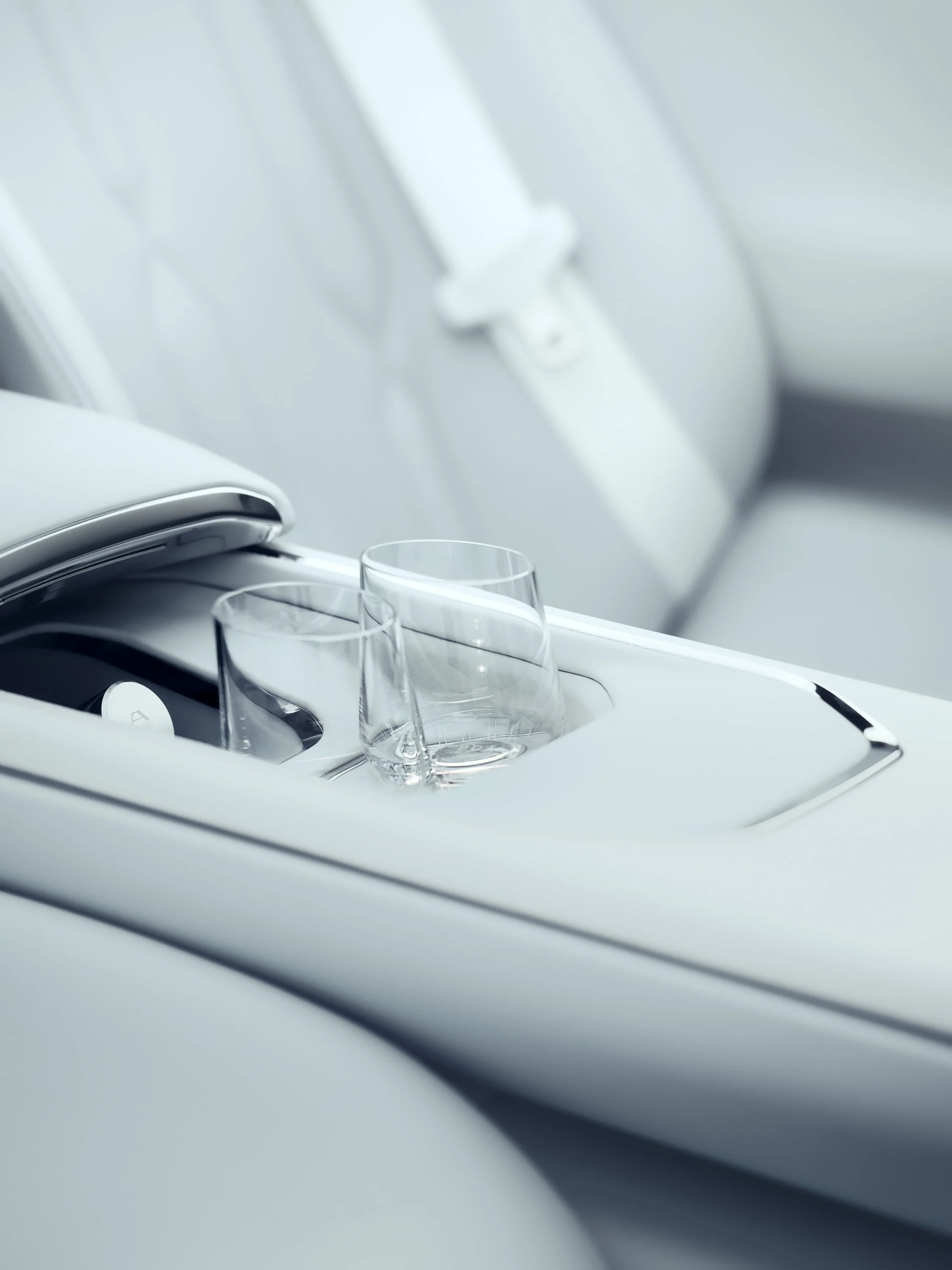
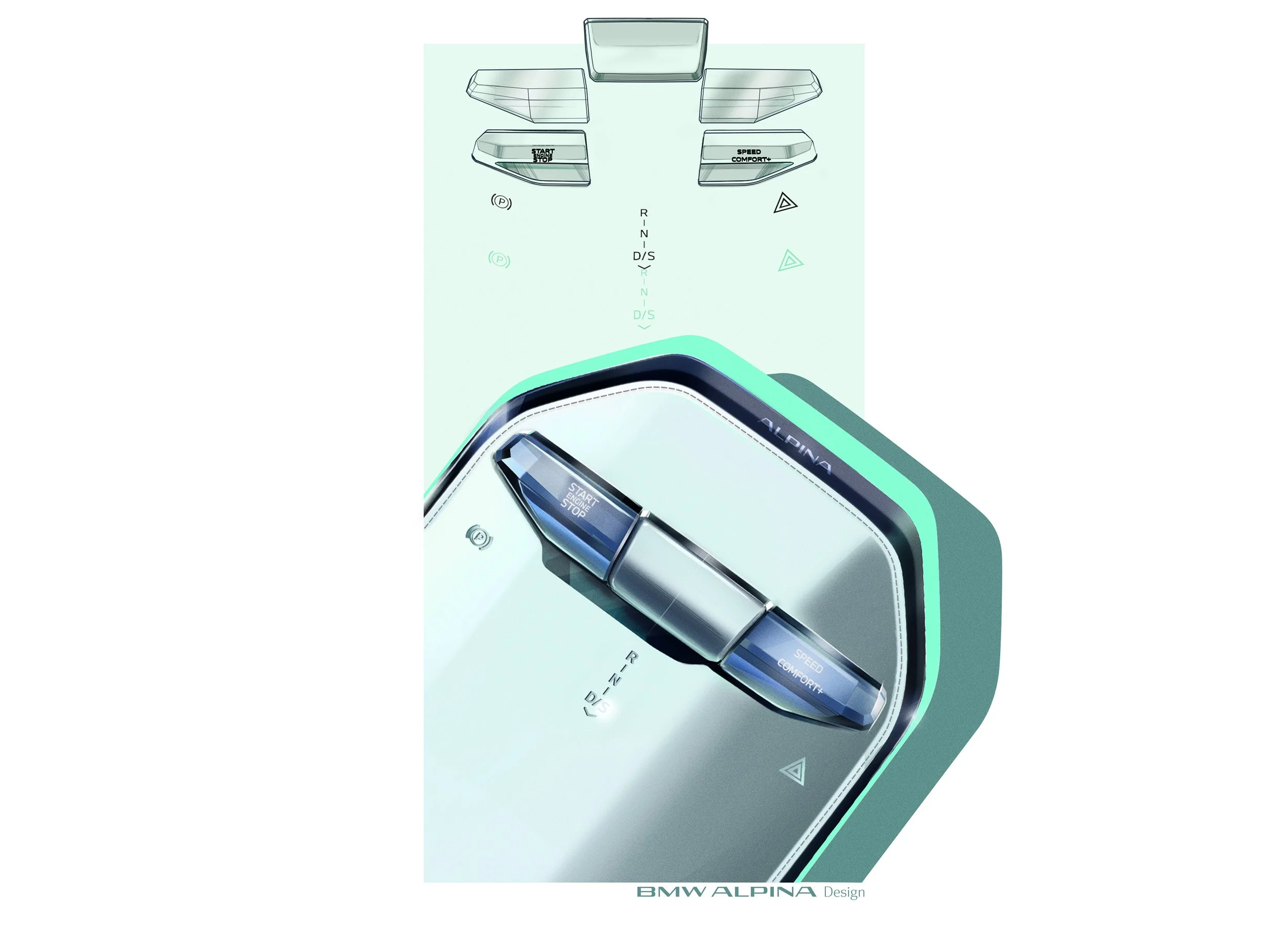
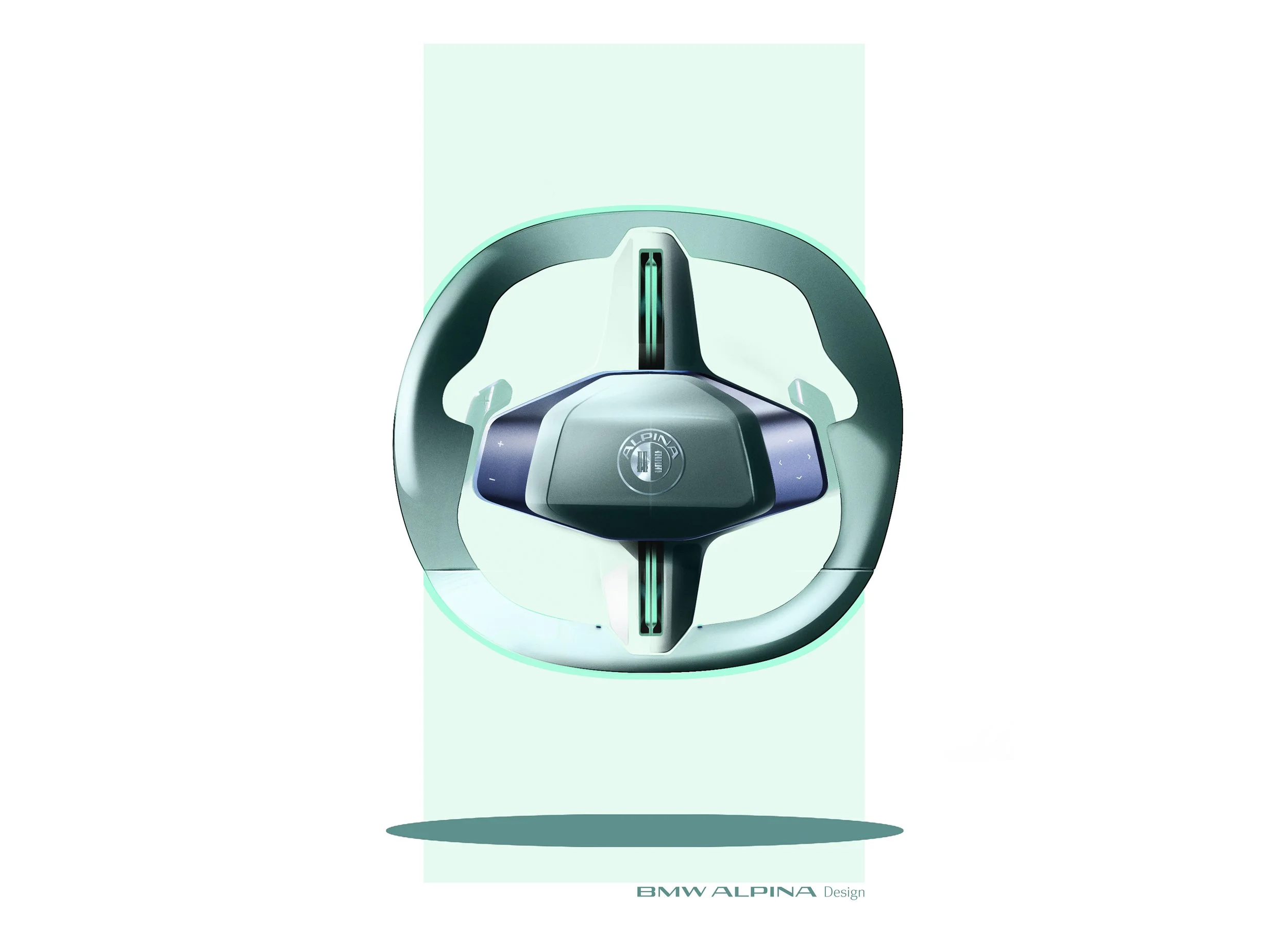
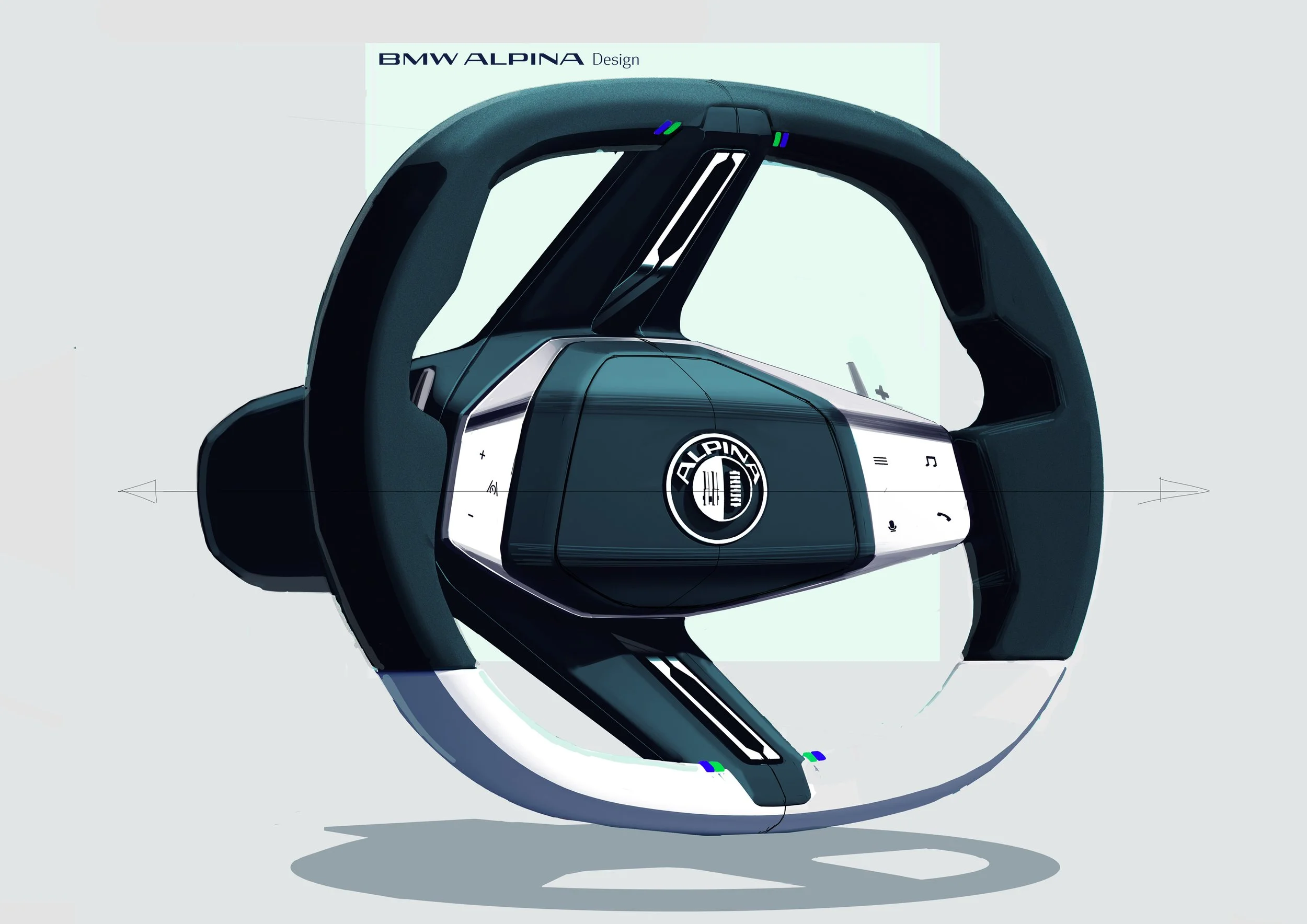
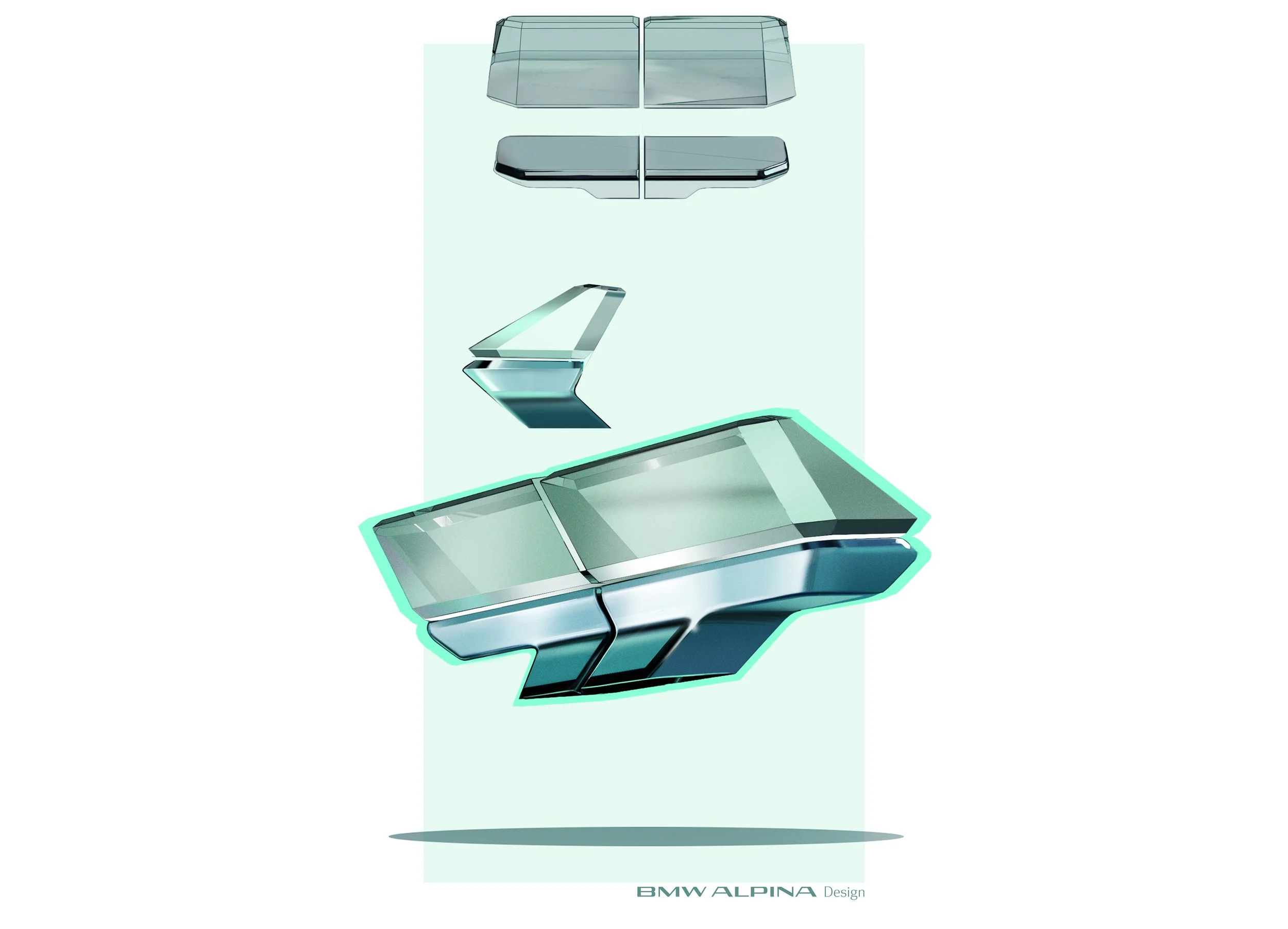
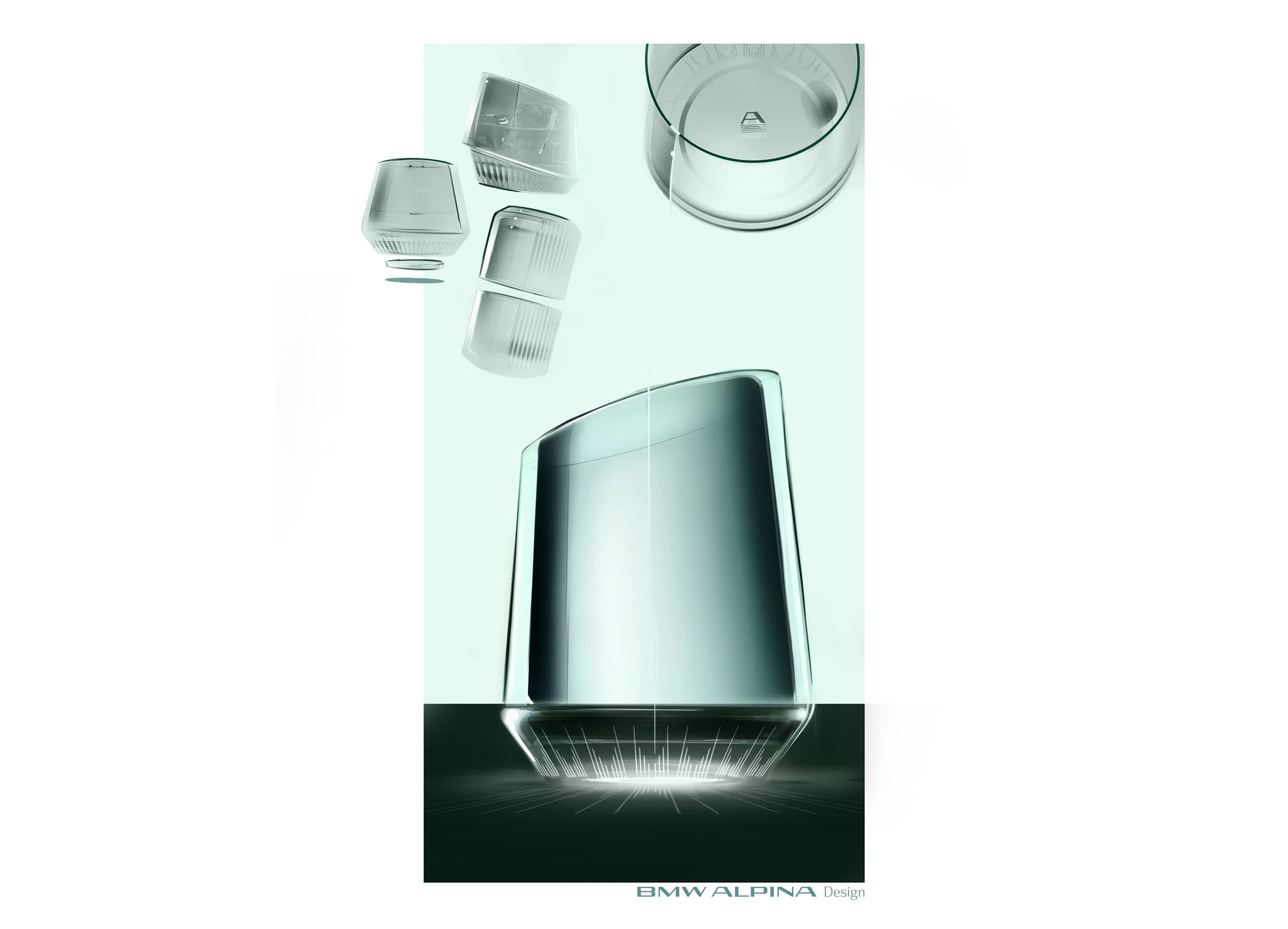
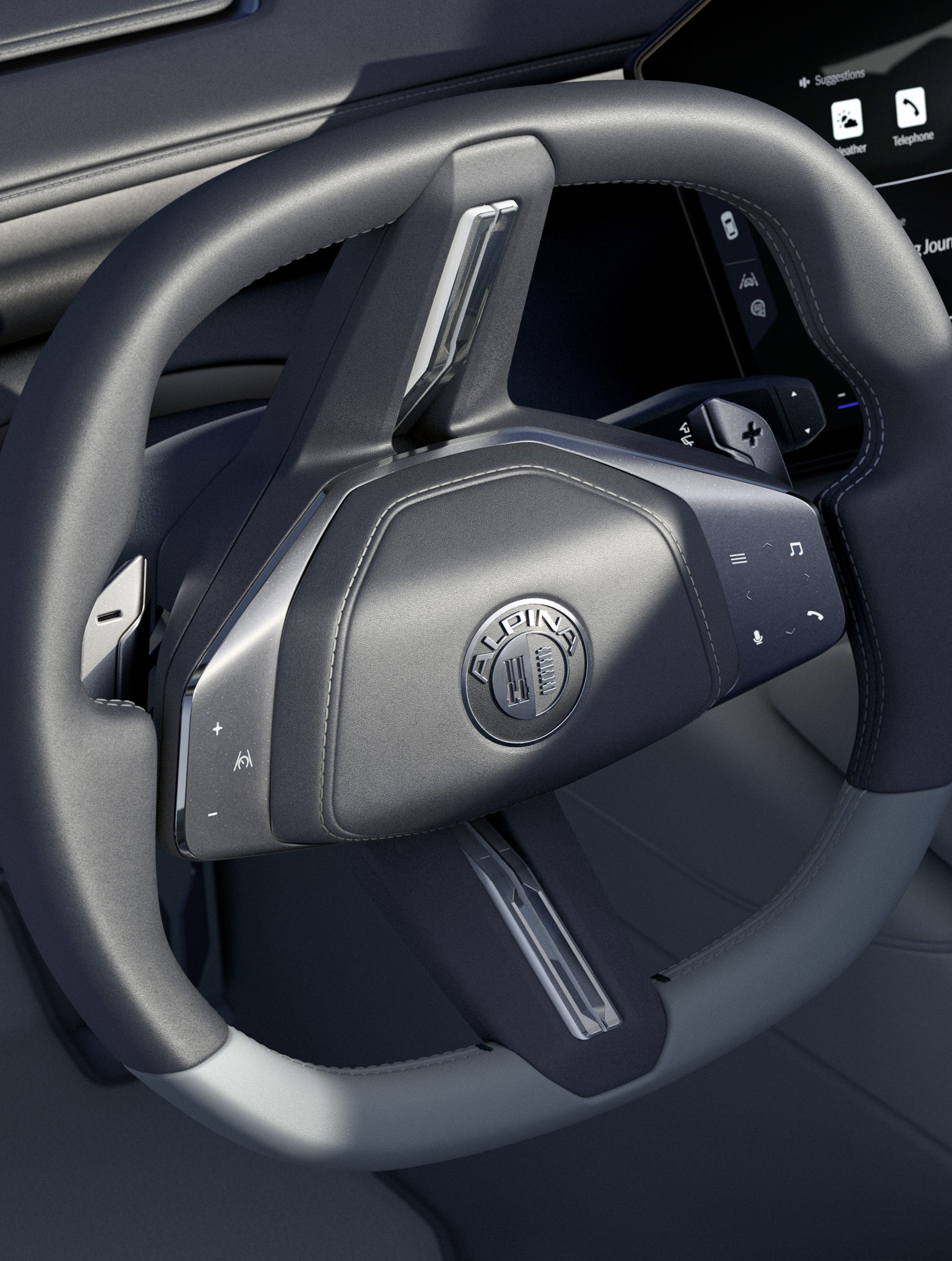
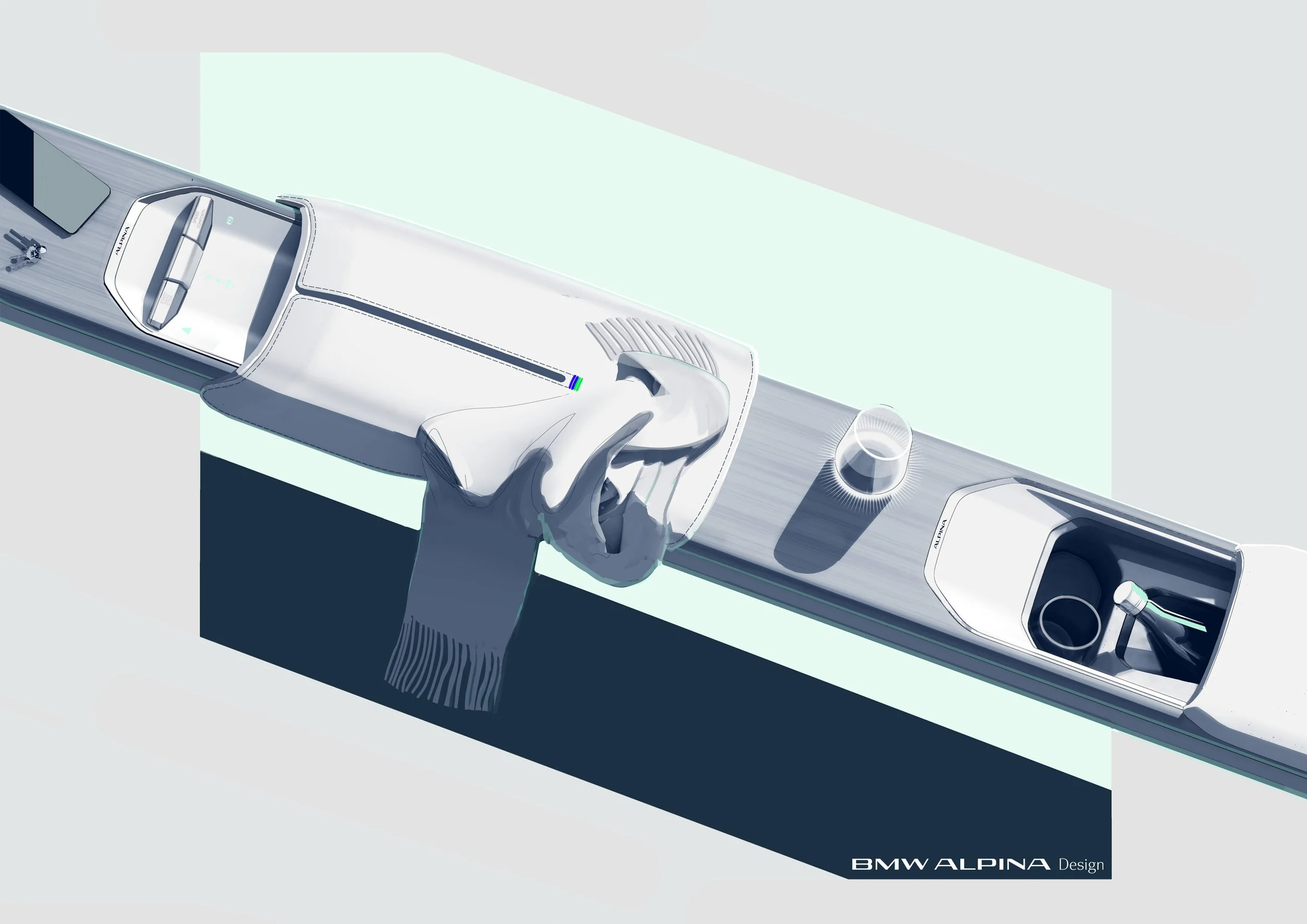
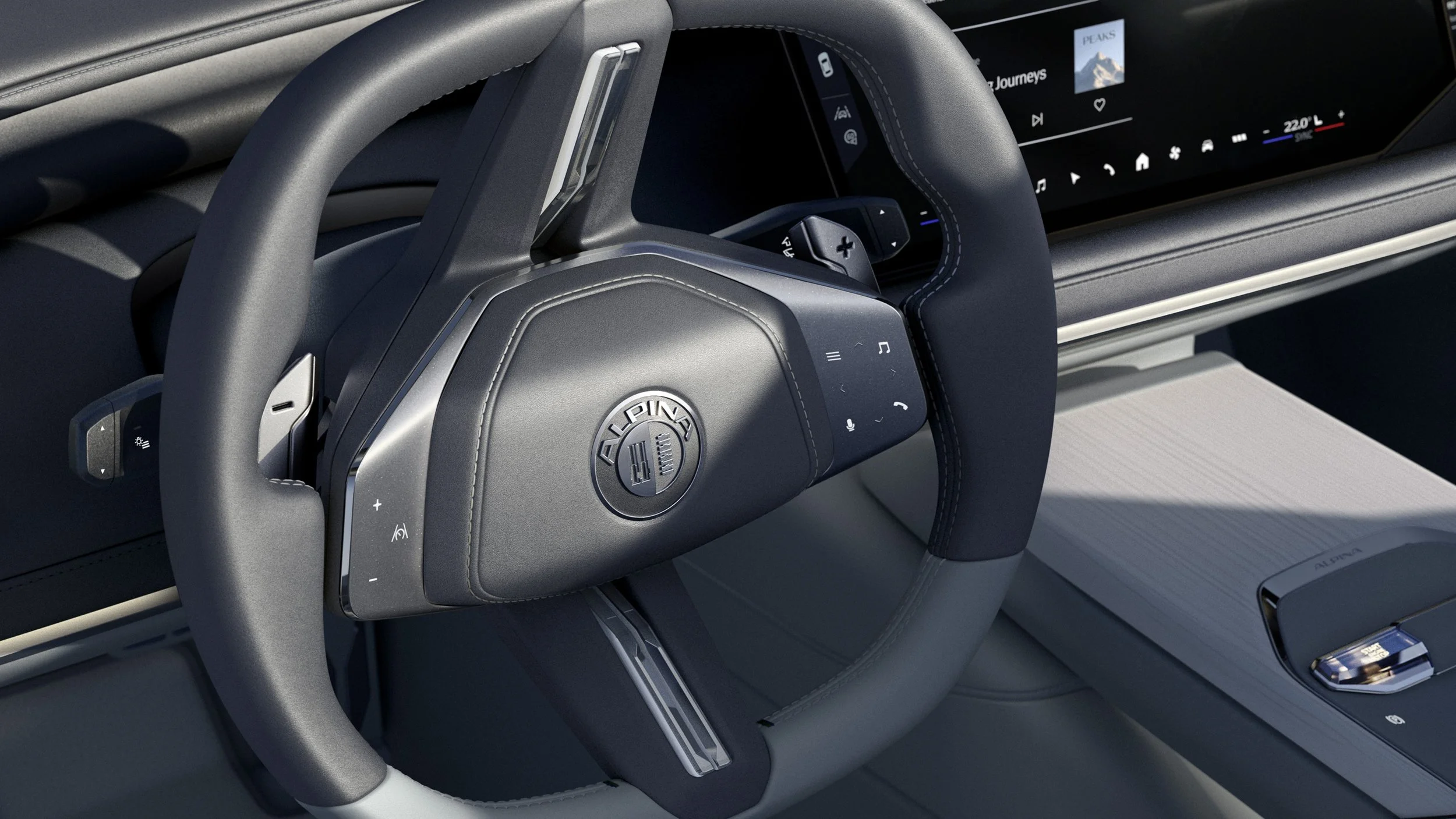
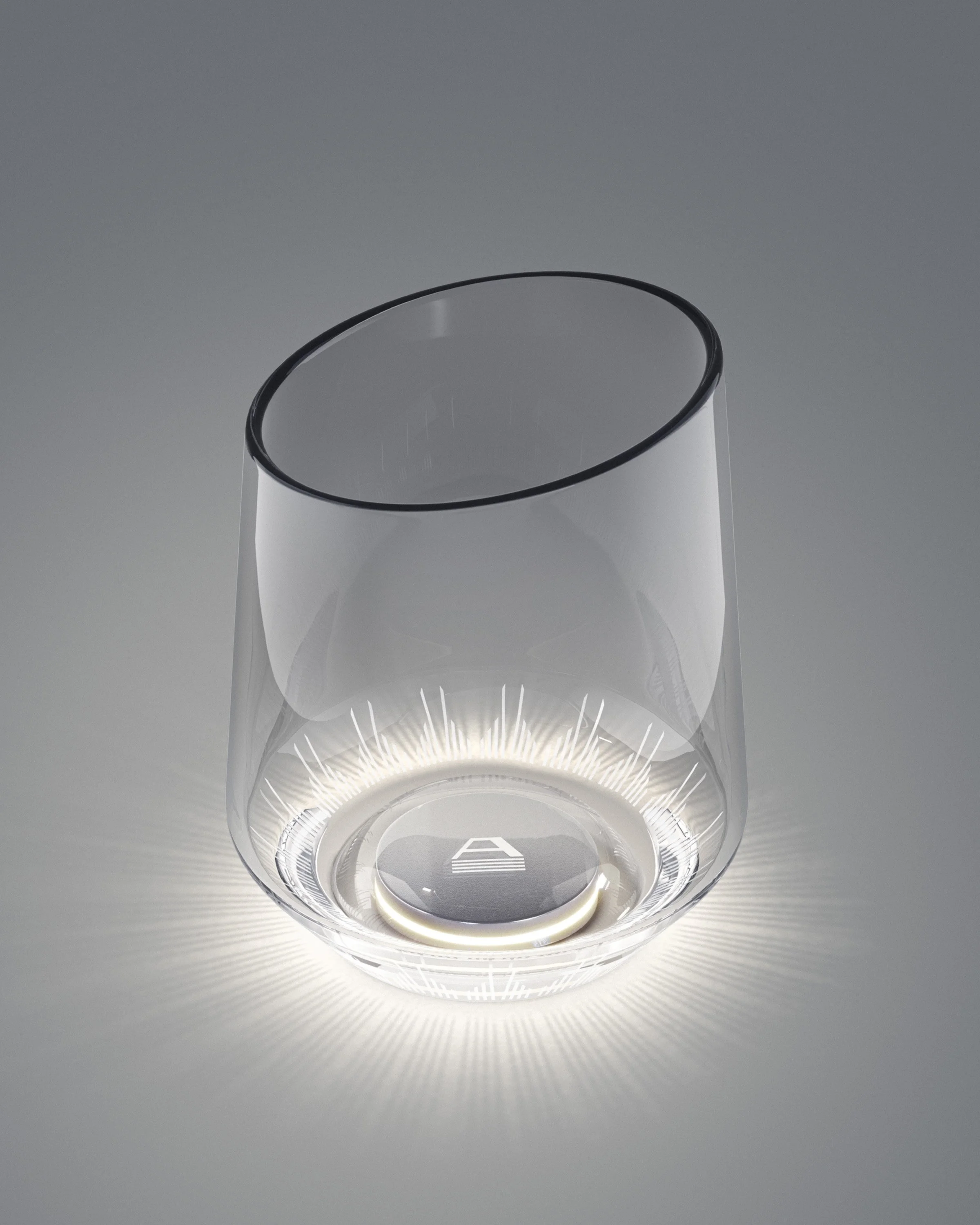
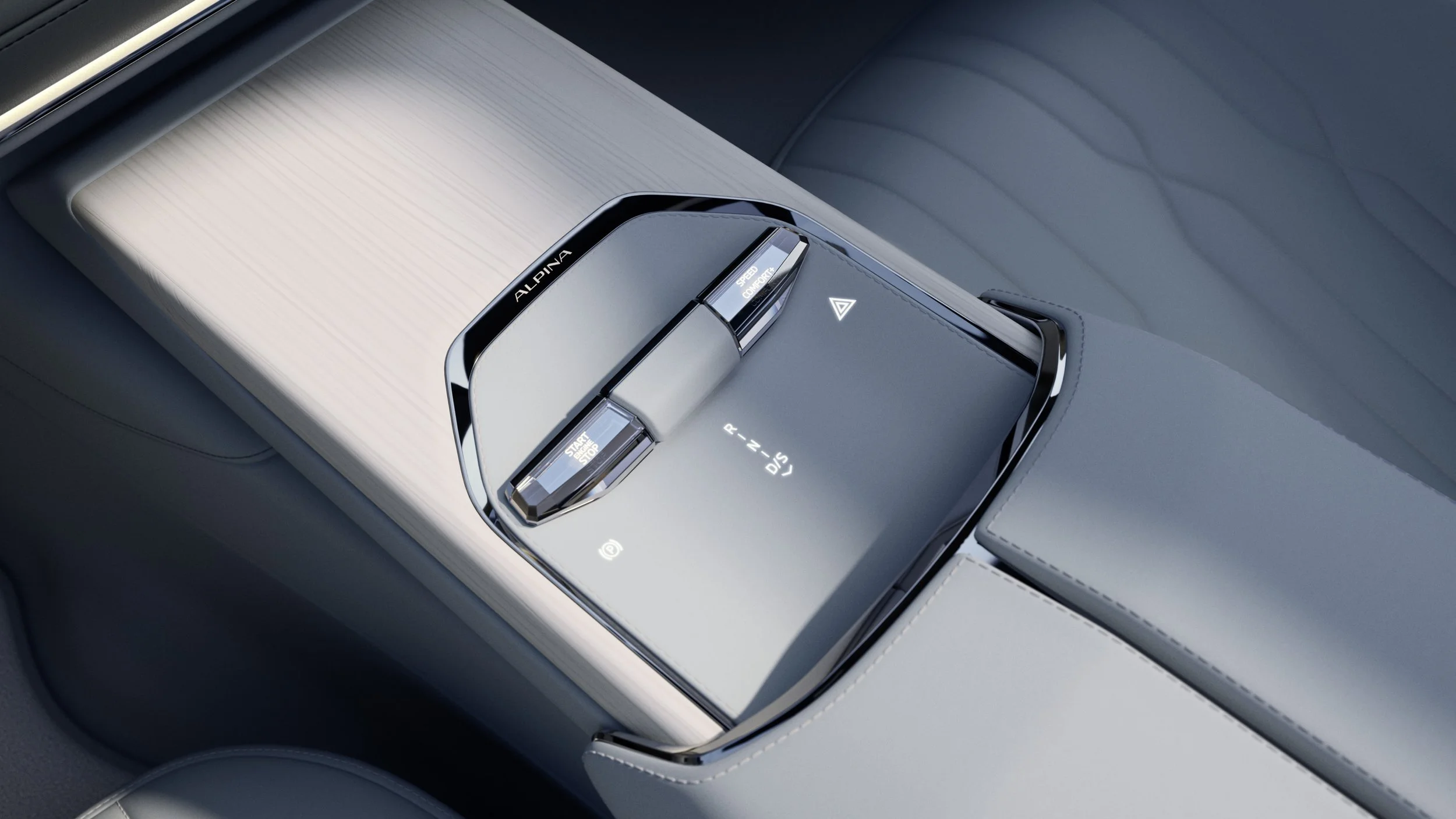
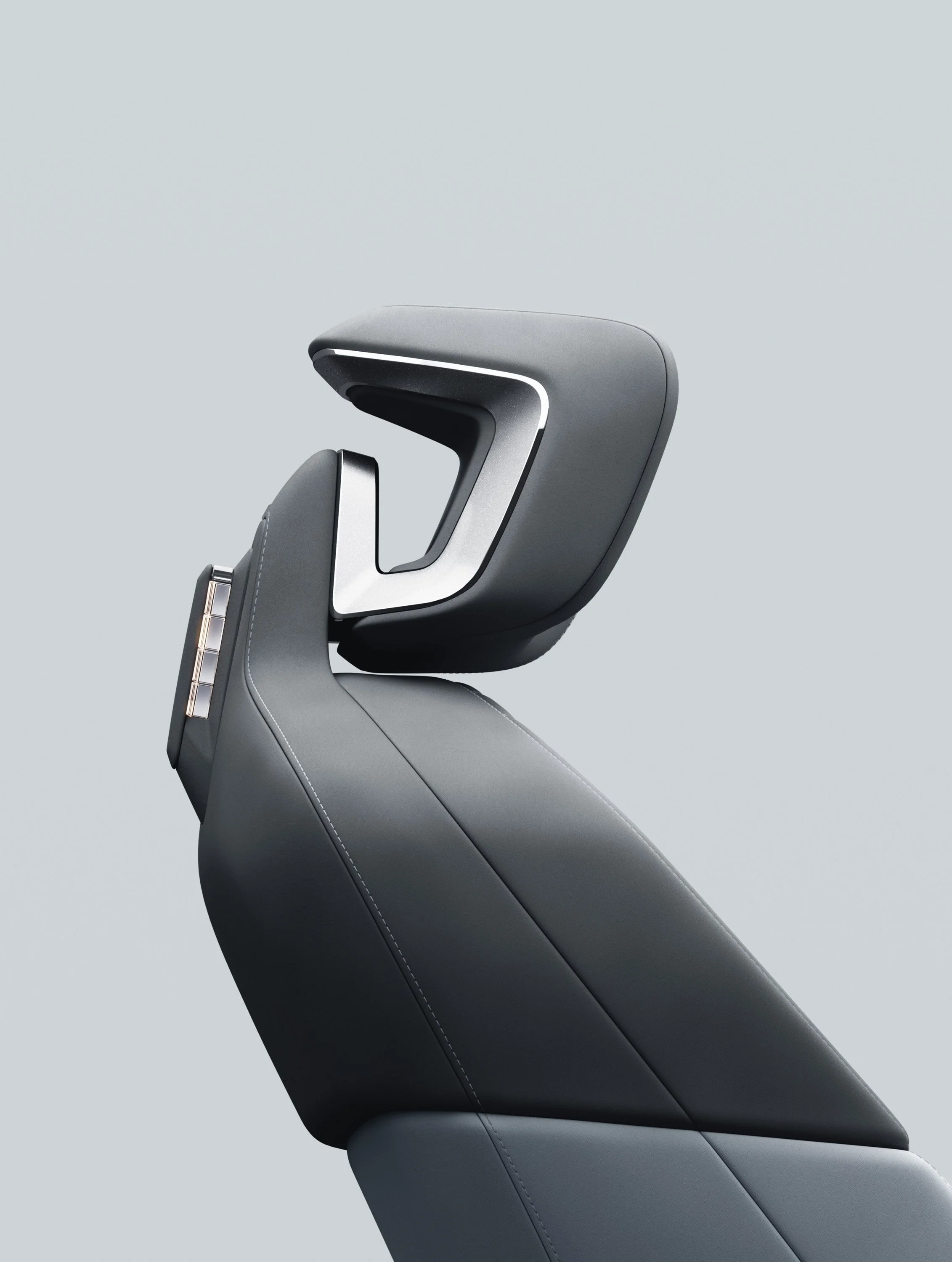
Restrained yet considered craft details bring the interior to life: a bridge stitch inspired by historic steering-wheel hand-stitching appears sparingly in heritage blue and green. At the same time, a watchmaking-inspired bevelling technique shapes the metal components, combining satin and polished finishes. Designers reserve clear-cut crystal for the controls that shape how the automobile drives, underlining the value BMW ALPINA places on the driving experience itself. Behind the rear console, a glass water bottle sits beside BMW ALPINA crystal glasses that rise on a self-deploying mechanism. Each glass carries an engraving of 20 deco-lines and a six-degree rim profile, held by concealed magnets and softly lit against the open-grain centre console.
Burkard Bovensiepen understood something much of the automotive world has forgotten: a comfortable driver is a faster driver. That belief remains central to the Vision BMW ALPINA. Alpina retains Comfort+, a setting beyond the standard BMW comfort calibration that delivers a more supple, refined character.
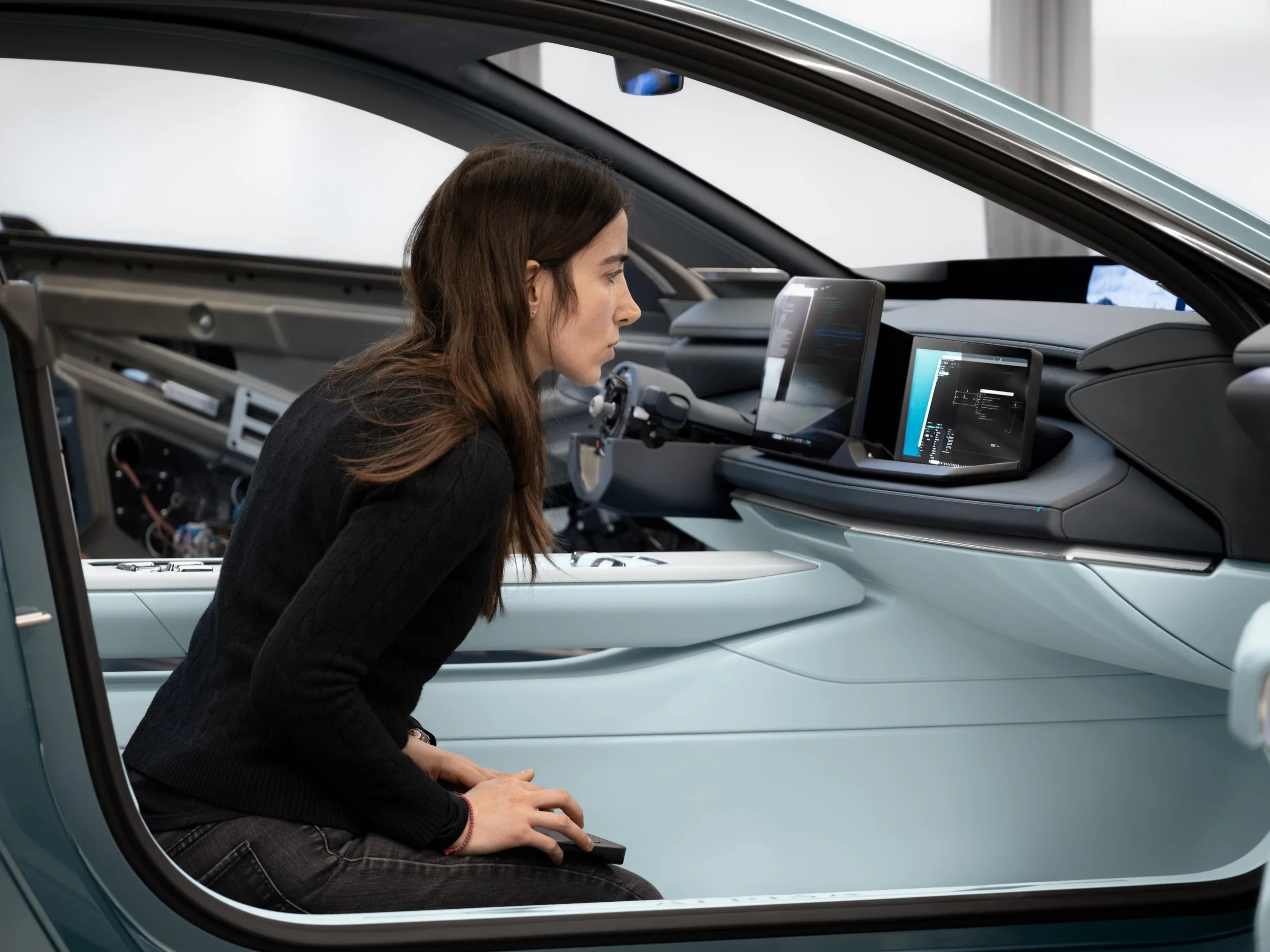
BMW Panoramic iDrive, including the new passenger screen, spans the dashboard with a digital user interface language crafted specifically for BMW ALPINA. Heritage blue and green appear with discipline, intensifying as the driver moves from Comfort+ to Speed mode within the BMW Panoramic Vision head-up display. The background imagery is equally considered: the Alpine landscape depicted is an exact rendering of the mountain range visible when looking south from Buchloe.
The Alpina story began in 1965 in Buchloe, Germany, a small Bavarian town in the shadow of the Alps. Burkard Bovensiepen, destined for a career in typewriter manufacturing, chose high-performance tuning instead, founding Alpina and then refining BMW road and racing cars. From the outset, his philosophy was clear: speed and comfort were complementary, not competing, ambitions. In endurance racing, while rivals stripped weight, Bovensiepen added extra padding to the driver's seat, understanding that a more comfortable driver is a faster driver. That insight carried over to the road cars that followed, celebrated for composure and sophistication at high speed over long distances.
The Alpina B7 coupé of the late 1970s marked a turning point, applying Alpina's philosophy to a luxury car and setting every model that followed on a path towards recognised luxury. Based on the BMW E24 6 Series, its long bonnet, wide stance, and shark-nose design made it look fast even at rest. At the same time, the cabin comfortably carried four people across a continent. The Vision BMW ALPINA continues that story.
BMW ALPINA became an exclusive brand within the BMW Group in 2026, taking on proven stewardship and a clear responsibility: to understand what Alpina means to those who cherish it and to honour that in what follows. "BMW ALPINA fills a gap in our portfolio between BMW and Rolls-Royce as we see even more potential in the high-end segment. With Alpina, we have a strong legacy and a global community, which we want to build on, while preserving the essence of what the brand stands for—speed, comfort and sophistication," says Oliver Viellechner, head of BMW ALPINA.
Next year, customers will experience the first model of the BMW ALPINA brand, inspired by the BMW 7 Series but unmistakably BMW ALPINA.