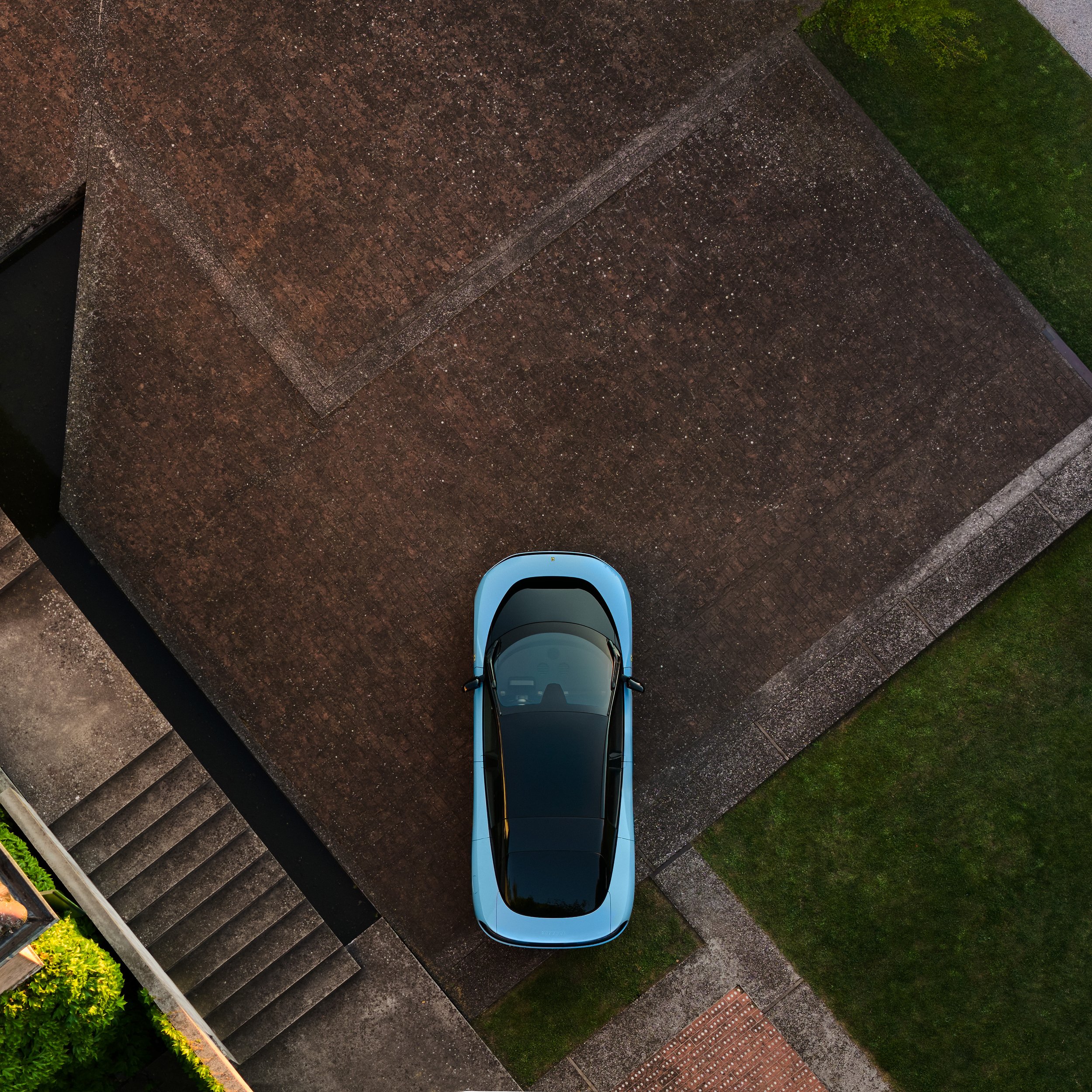
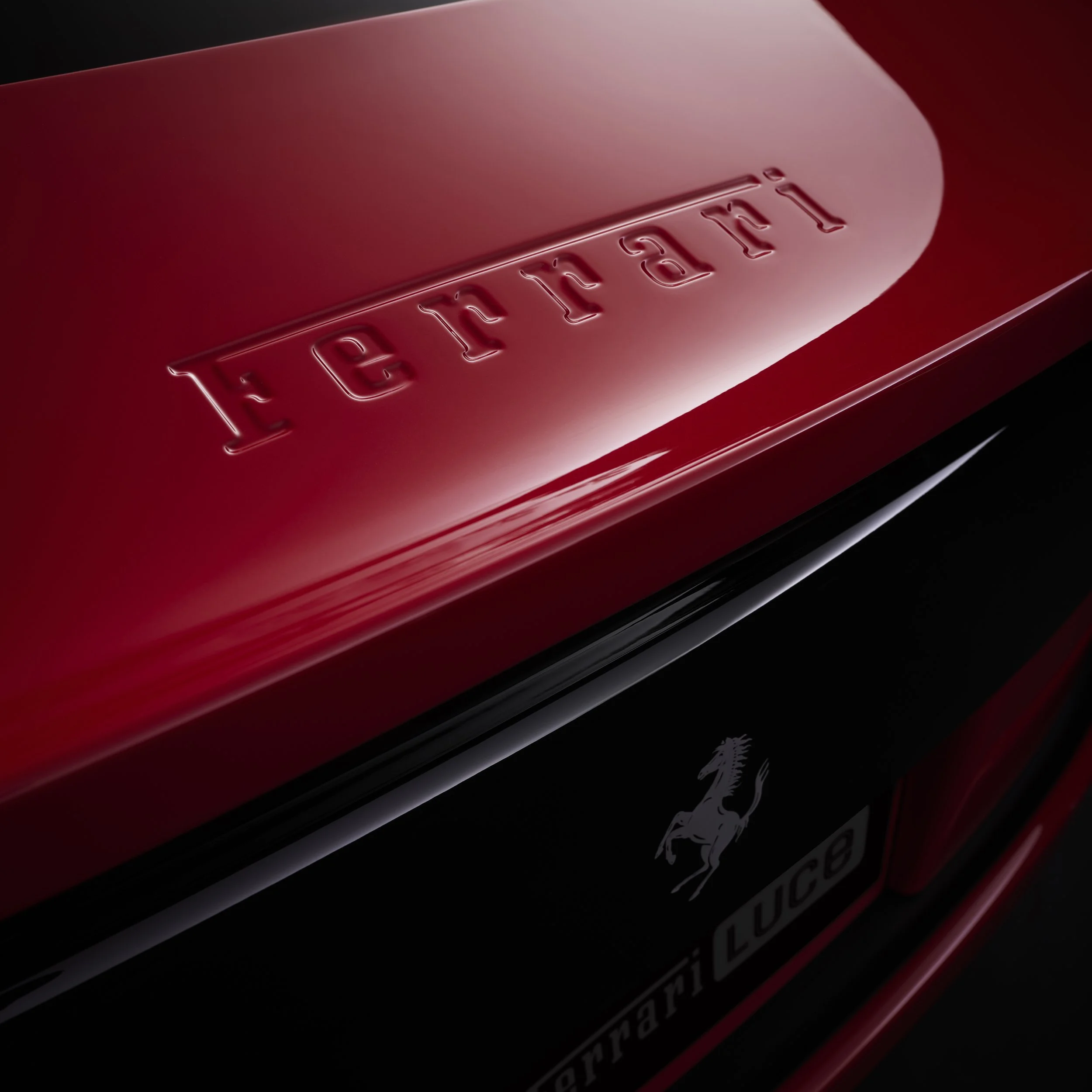
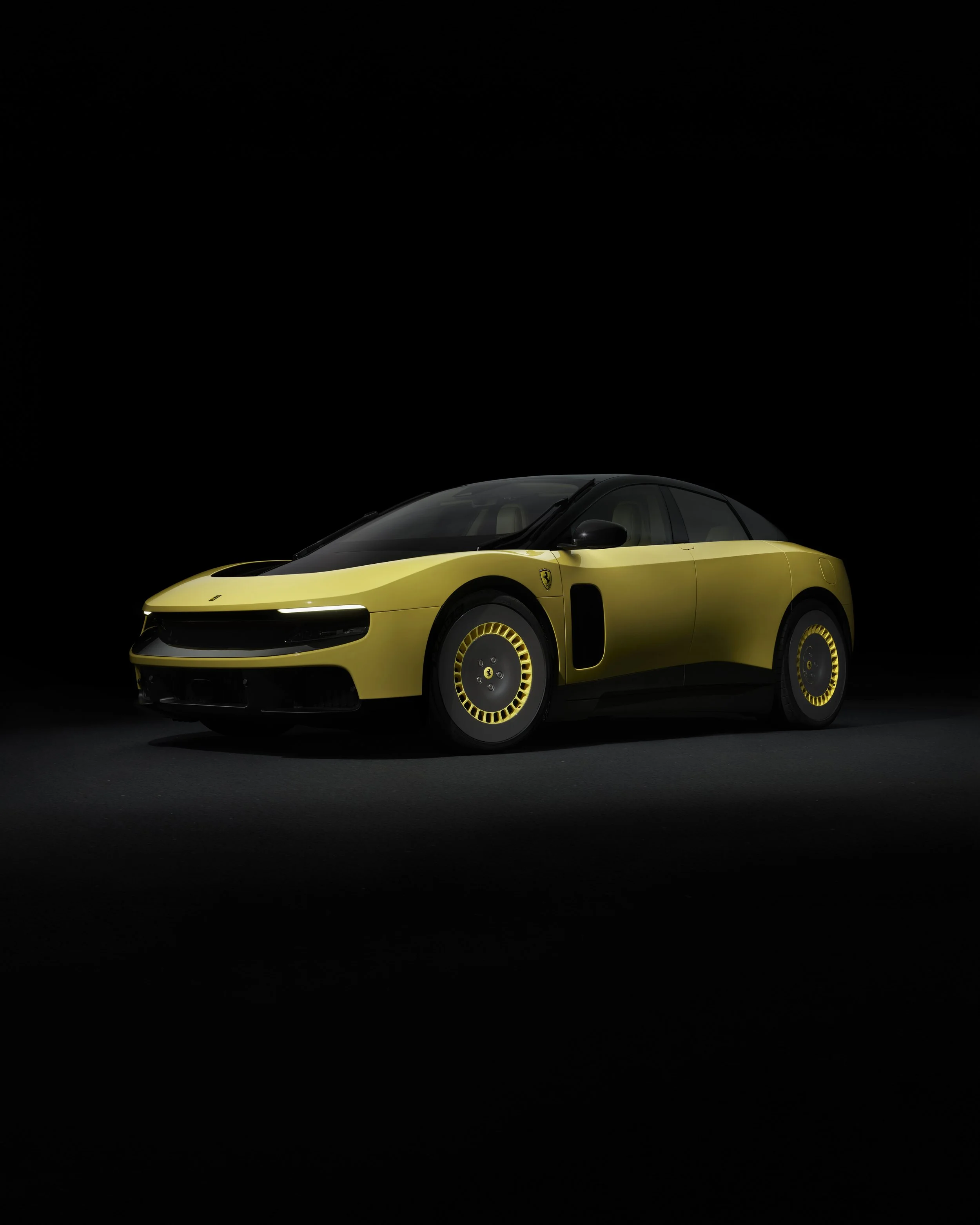
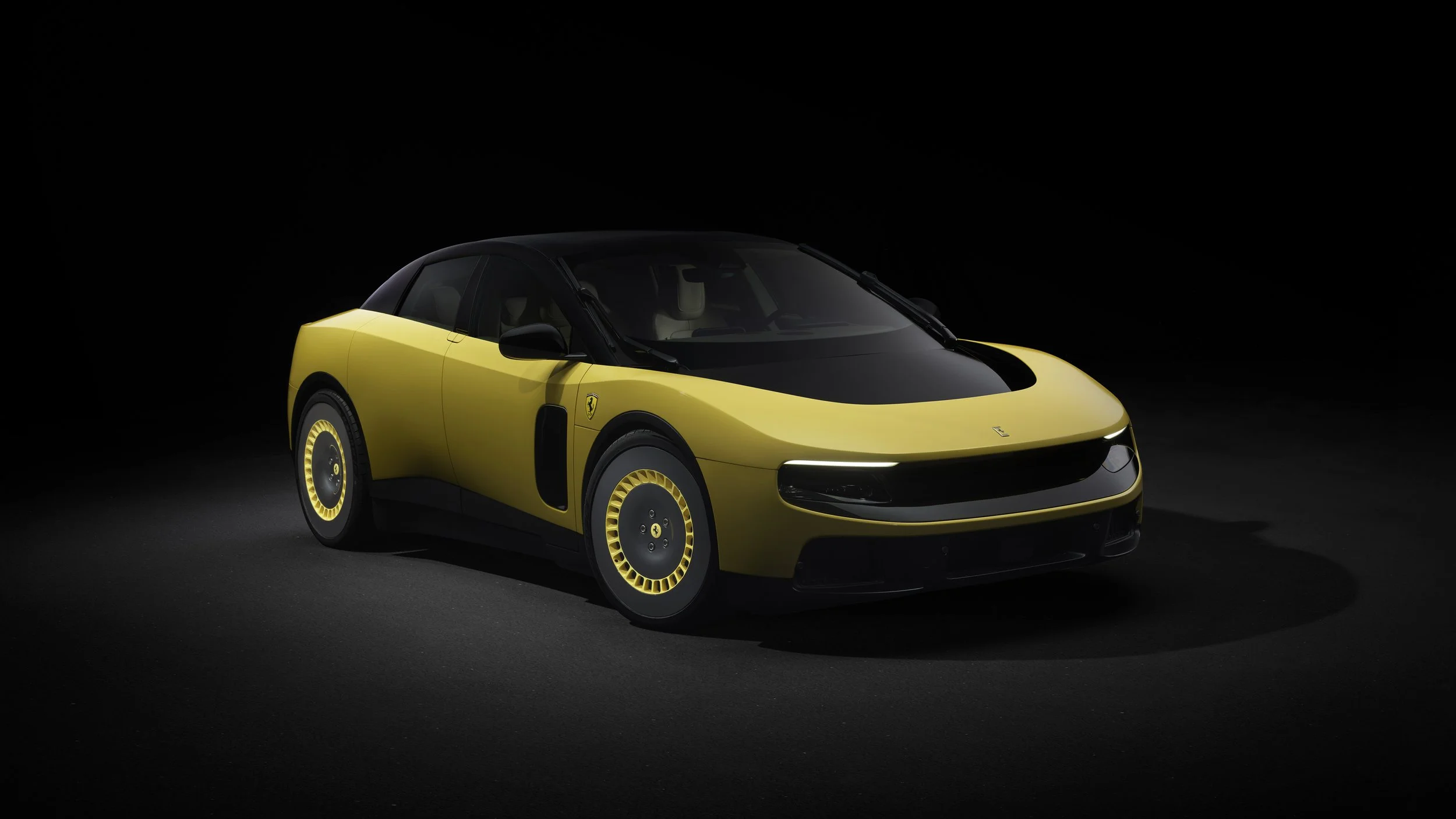
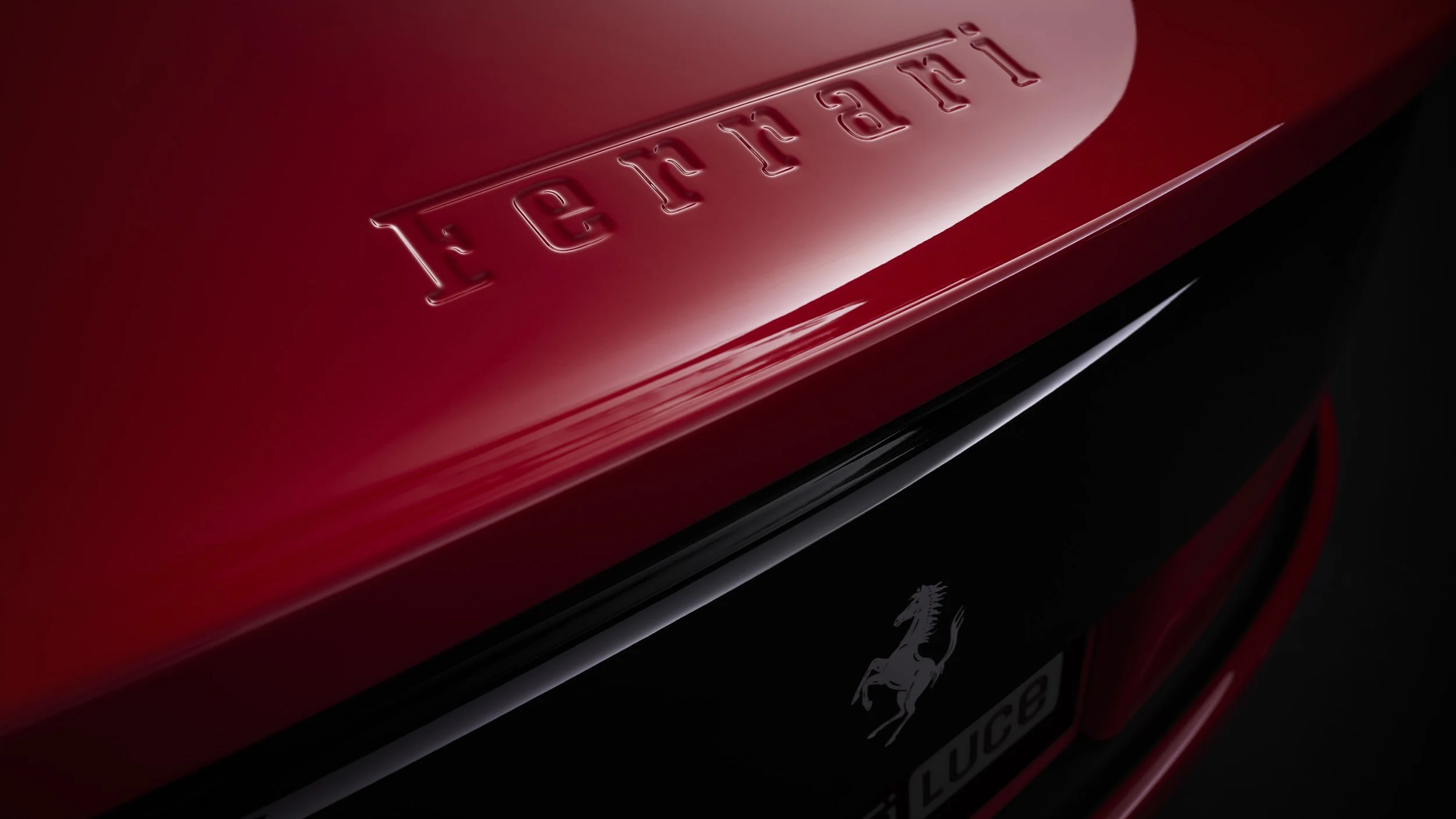
Ferrari Luce: Maranello Unveils Its First Electric Ferrari
Ferrari unveiled the Ferrari Luce today at the symbolic Vela di Calatrava – Città dello Sport in Rome, a venue the brand chose to mark the start of a new chapter in its history of engineering excellence and innovation. Ferrari claimed its first victory in Rome on this very day in 1947, when the Ferrari 125 S won the Gran Premio di Roma at the Baths of Caracalla circuit. Driver Franco Cortese set that legendary run in motion, and 79 years later, Ferrari returns to Rome to unveil a project that reinforces its drive to redefine what's possible.
The Ferrari Luce completes Maranello's multi-energy strategy, which the brand first announced at its 2022 Capital Markets Day and has since confirmed on several occasions. Ferrari follows a principle of technological neutrality, treating electrification as one tool among many to expand its design potential across architecture, performance, and driving experience, rather than a replacement for existing engines. By deepening its in-house electric expertise, Ferrari unlocks fresh performance and efficiency gains across its ecosystem, drawing on technology transfer from the 499P that won the last World Endurance Championship and from the ambitious Ferrari Hypersail research project. The Luce extends that expertise further still, opening an entirely new segment that stays true to Maranello's DNA of performance, engagement and versatility.
The name Luce evokes clarity and direction, lighting the way to the future. Ferrari designed the car as a Ferrari through and through, not simply an "electric Ferrari" but an entirely new one, built for deeper engagement and performance with its own distinct character. Following tradition, Ferrari engineered, developed, and manufactured the main components in-house, from the electric motors to the battery pack, guaranteeing quality, control, and uniqueness. The project encompasses more than 60 new patents, underlining Ferrari's technical excellence and its focus on long-term value. Ferrari will also assist with all electric components, including batteries, in line with its Ferrari Forever philosophy.
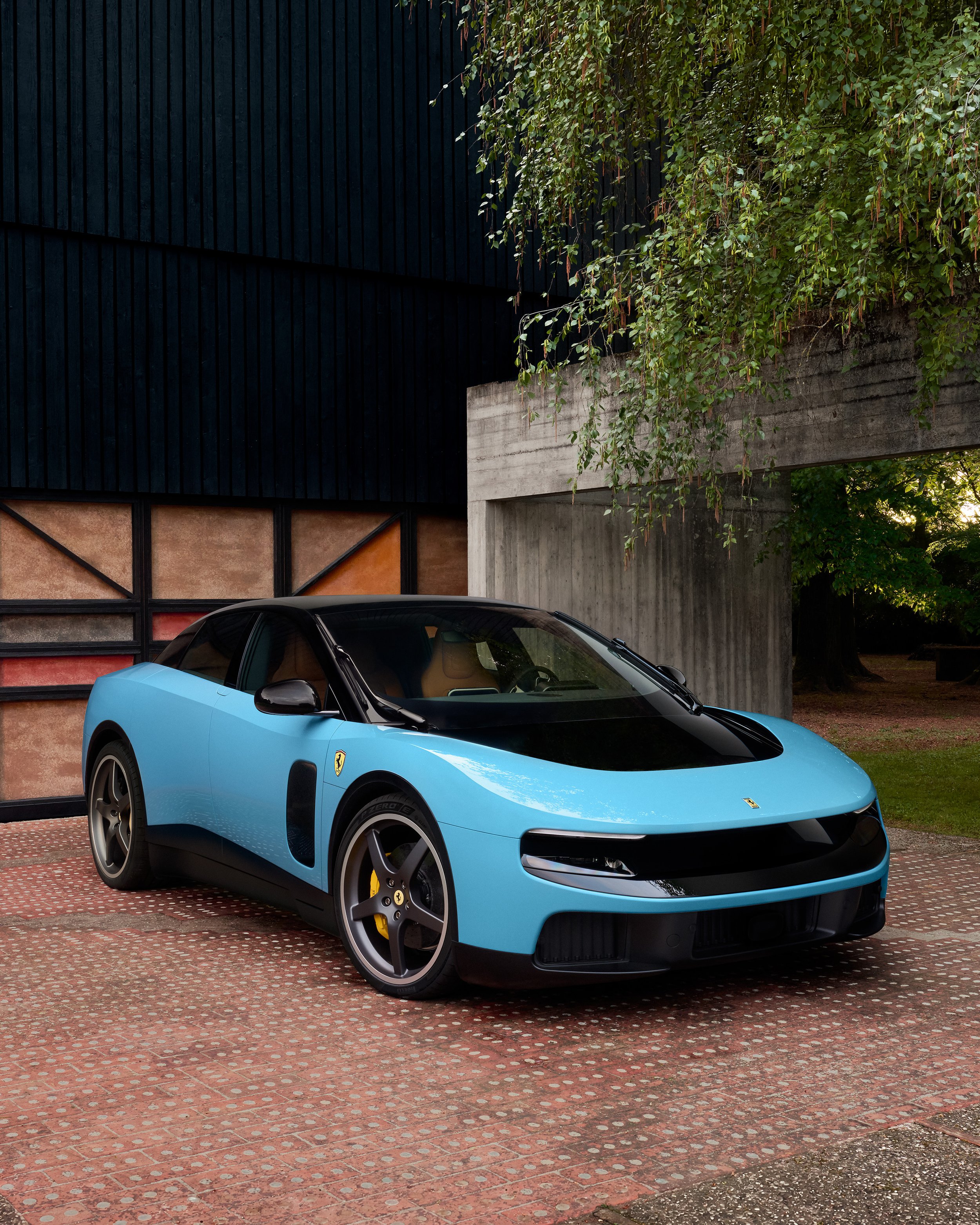
Ferrari entrusted the design to LoveFrom, the design collective led by Sir Jony Ive and Marc Newson, bringing in a team from outside the Ferrari Design Studio led by Flavio Manzoni to spark a fresh perspective and cross-fertilisation of ideas. Ferrari gave LoveFrom full creative freedom to define the project's design direction from the outset and translate that language into an authentic Ferrari experience. The electric power source, Ferrari-engineered engines and advanced drivetrain create a radically new architecture that combines extraordinary Ferrari performance with genuine spaciousness.
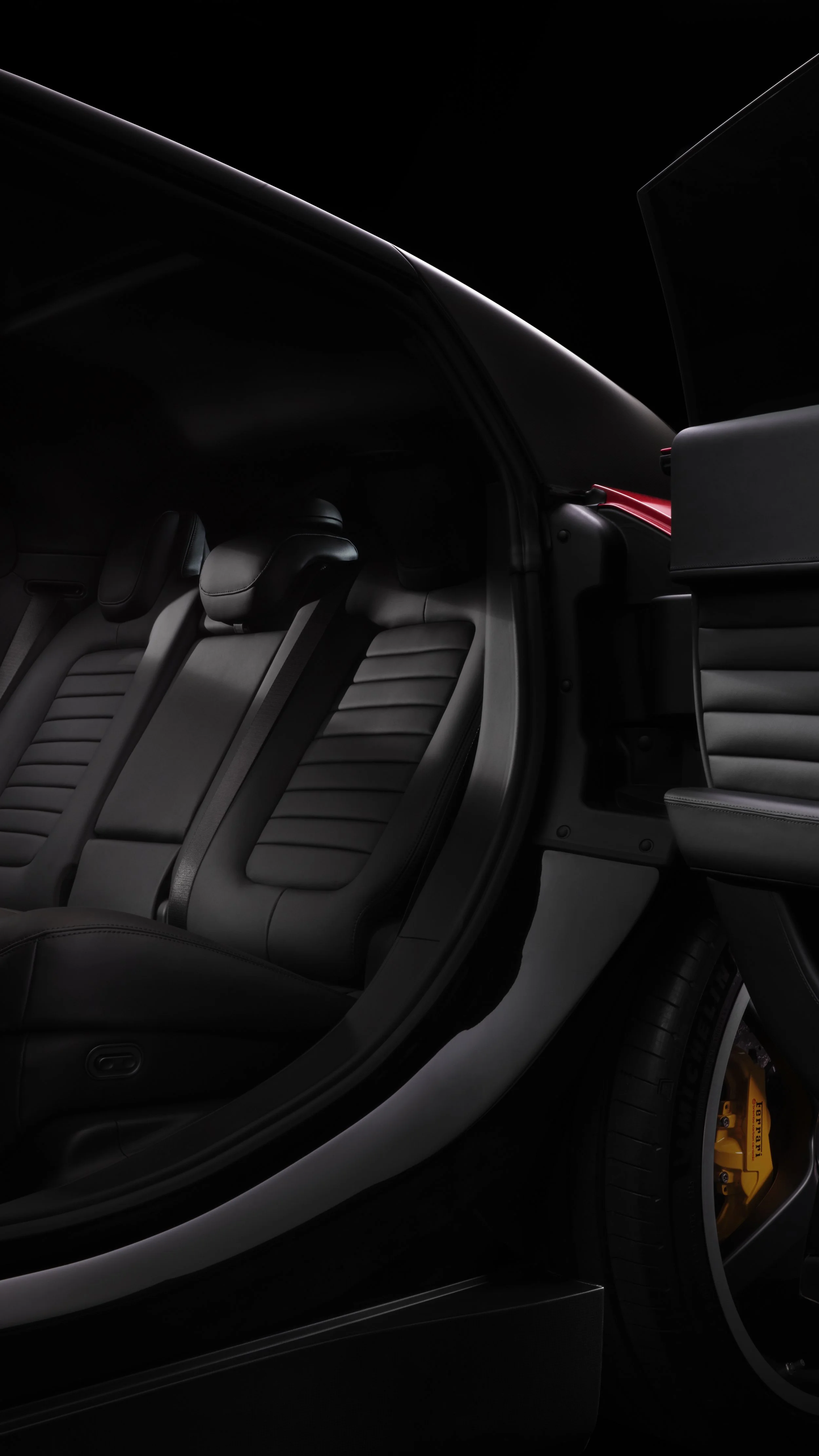
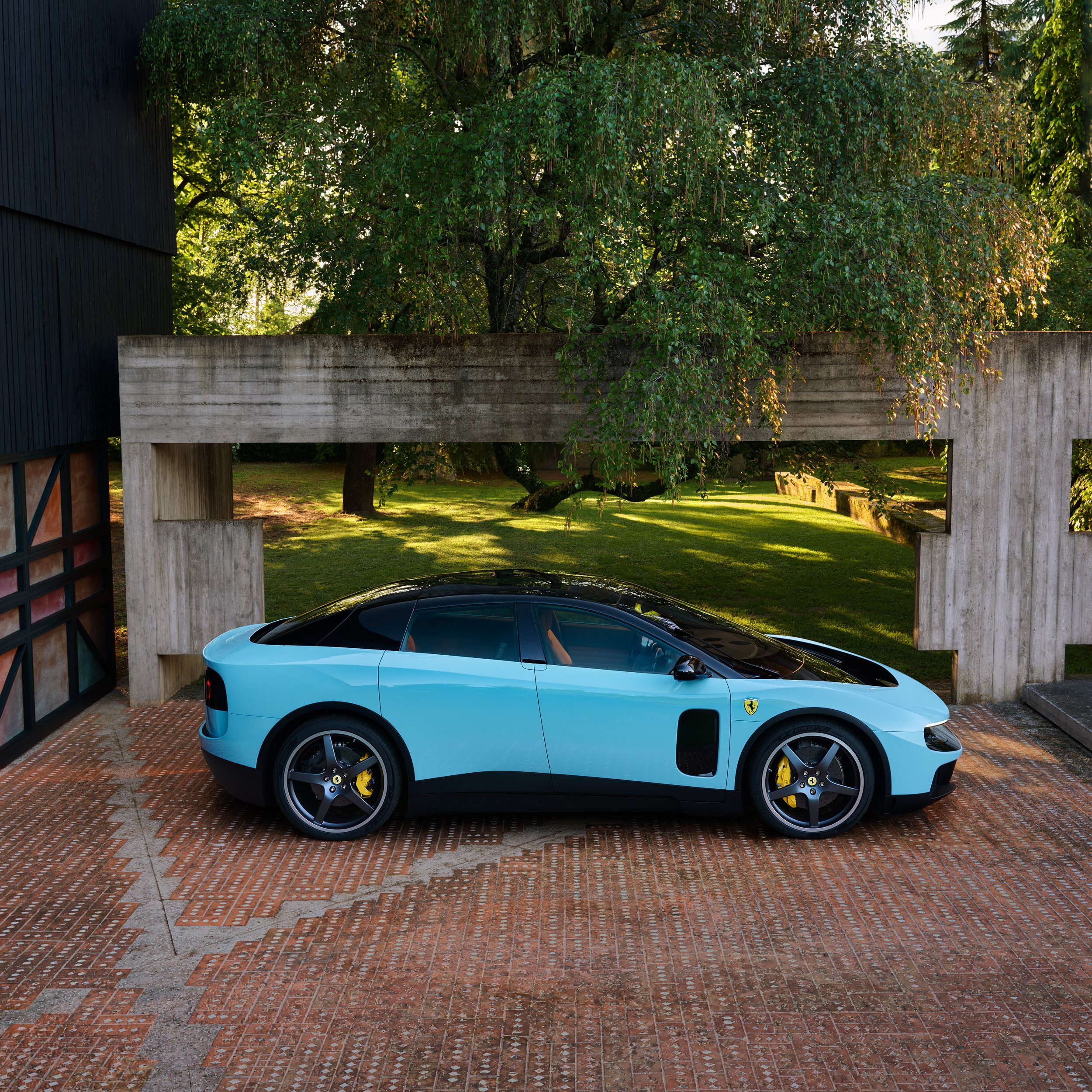
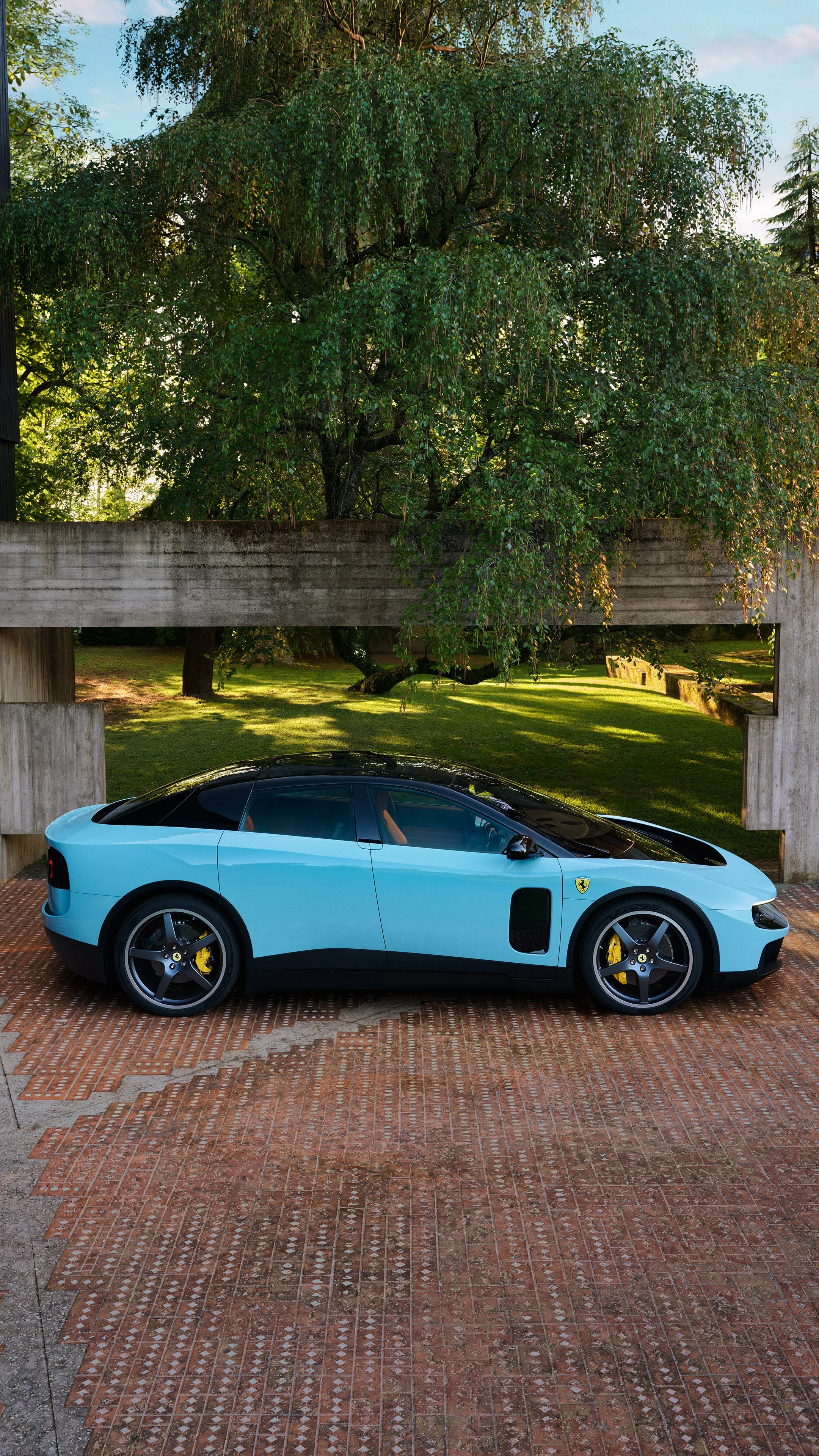
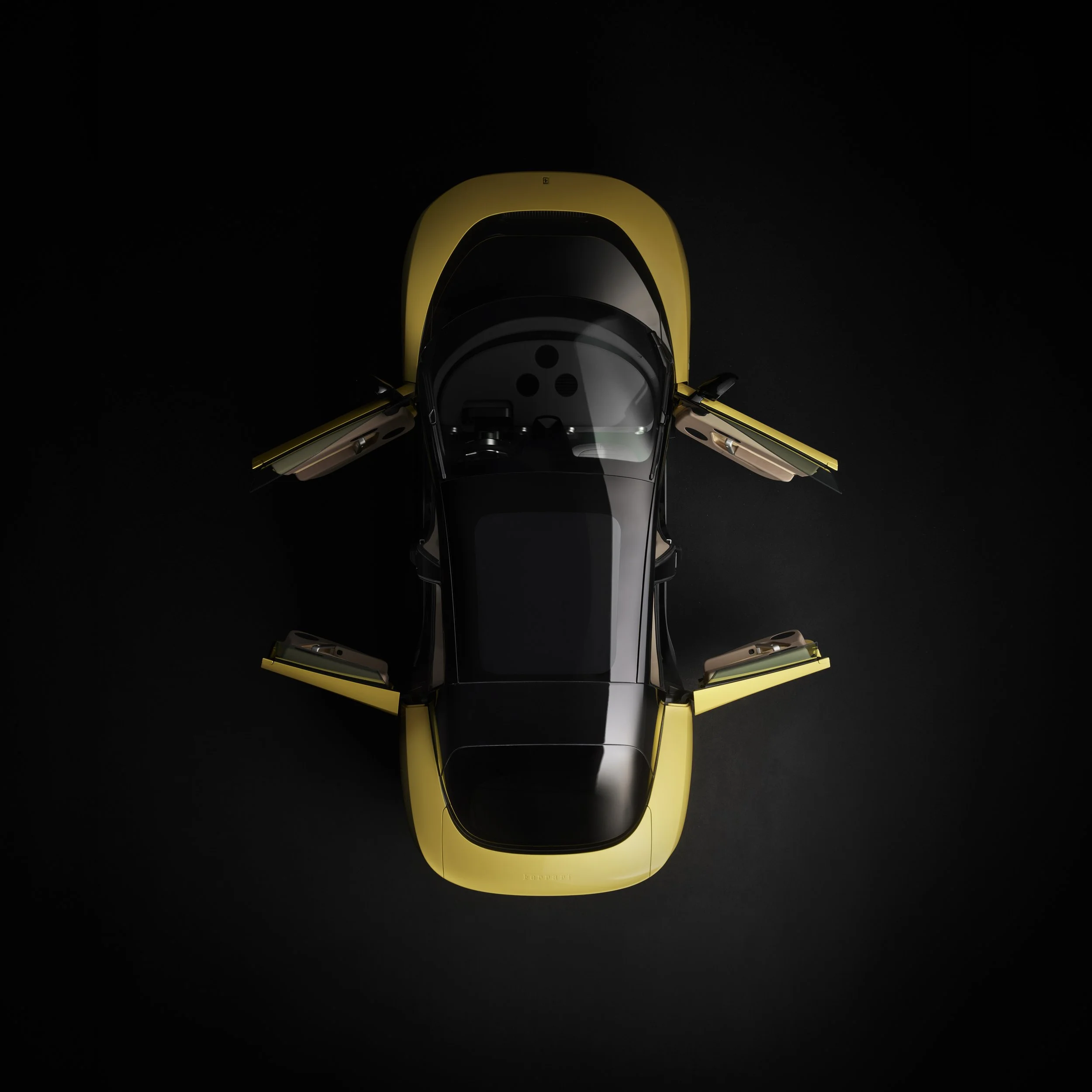
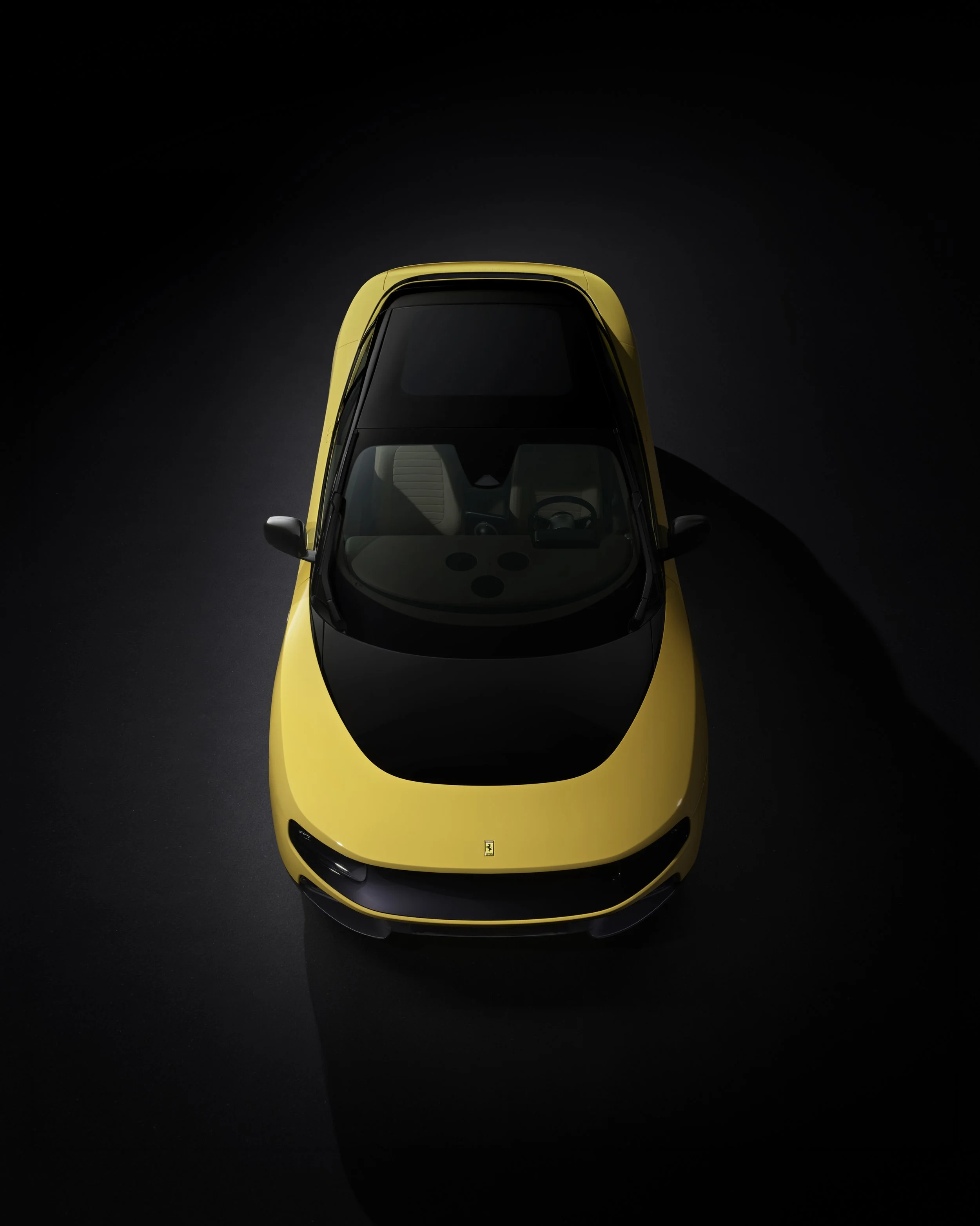
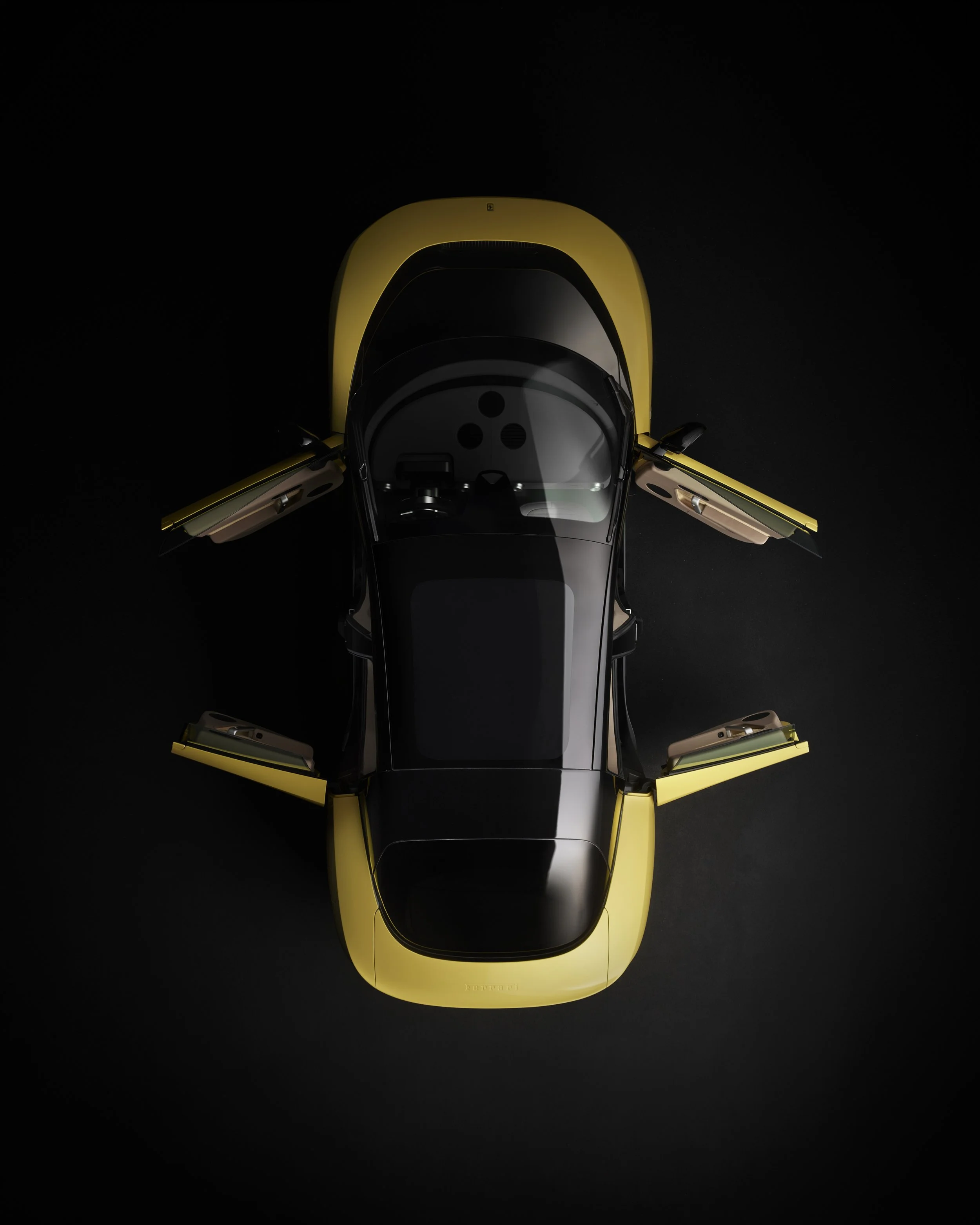
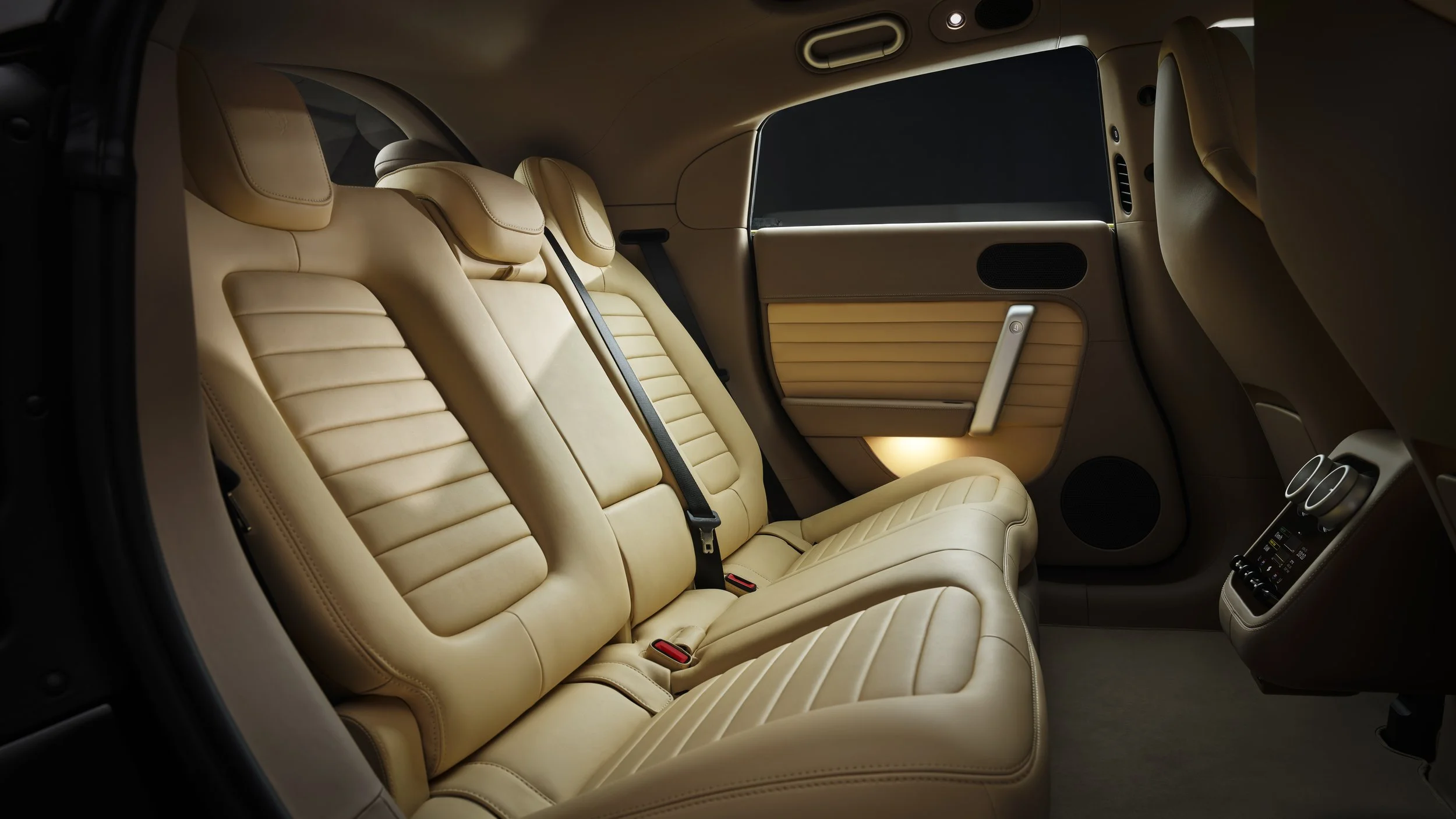
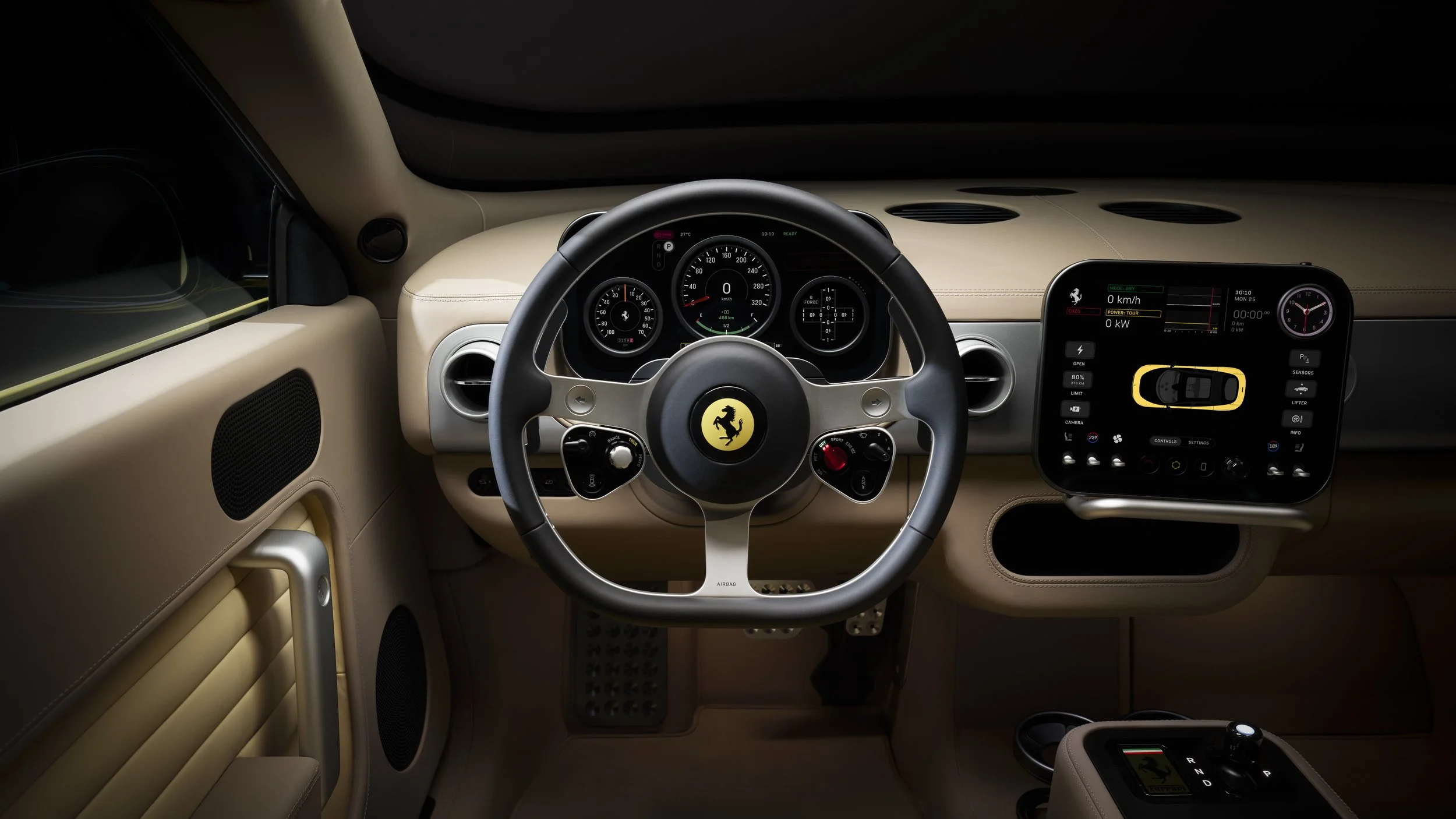
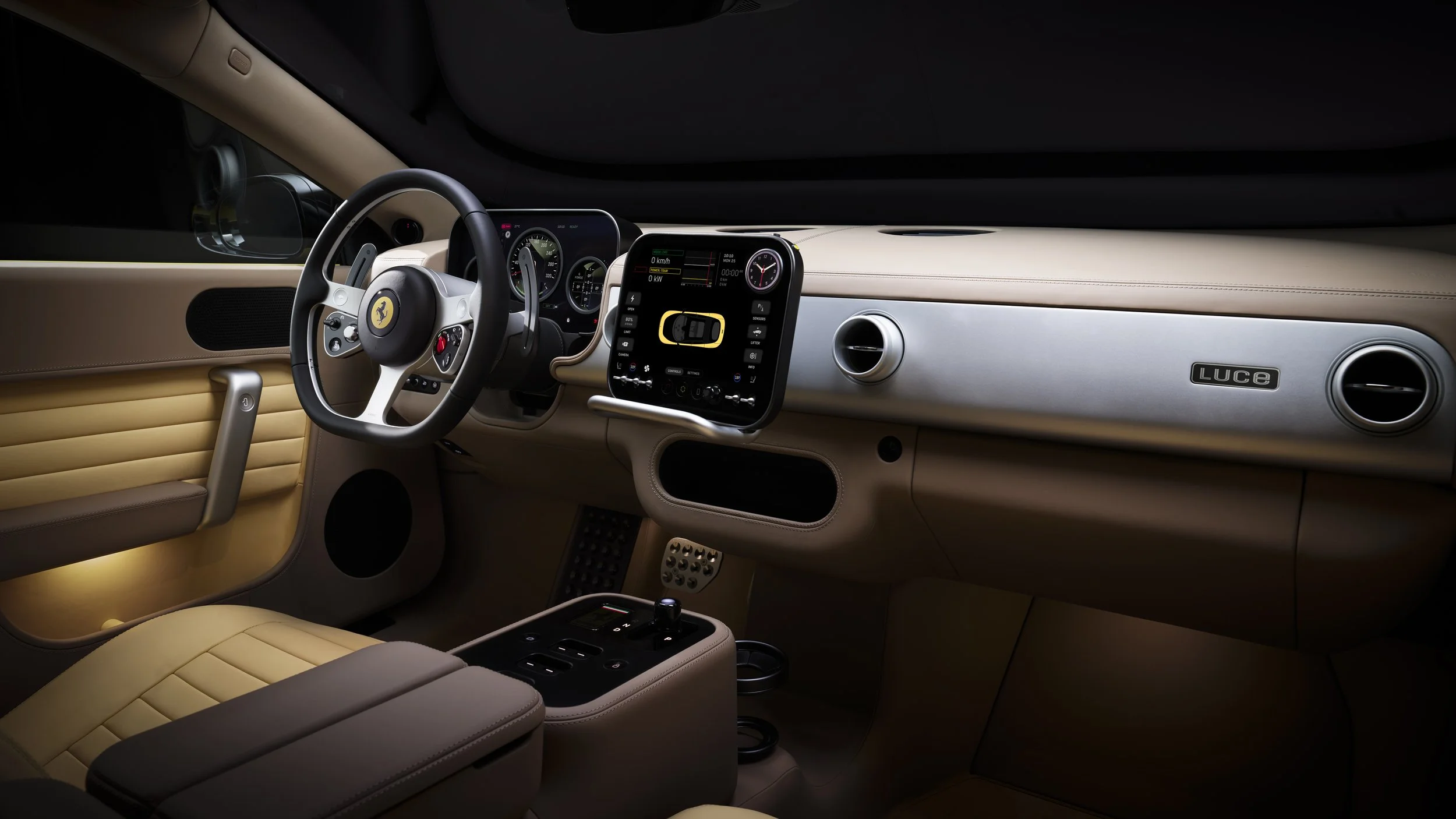
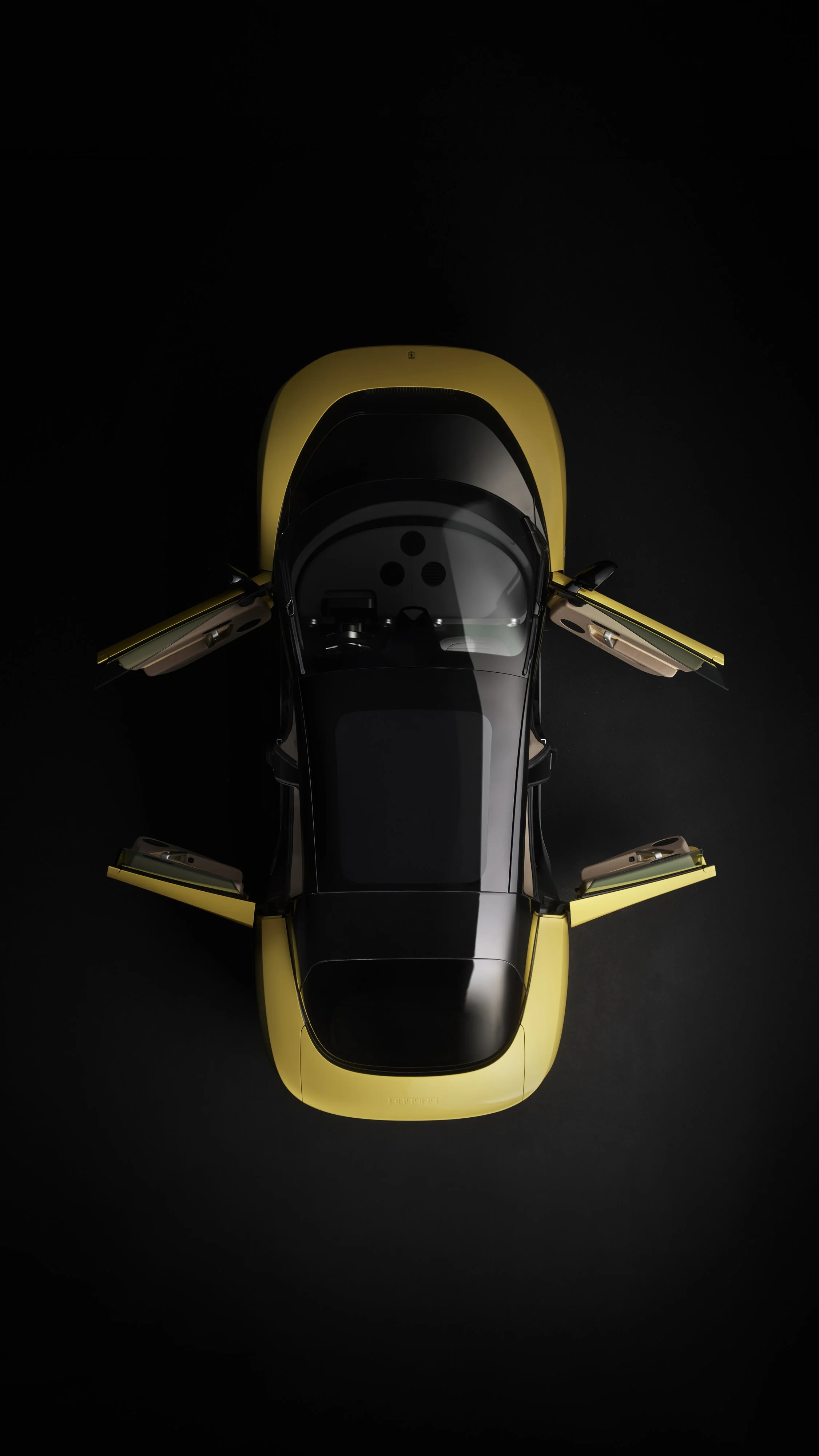
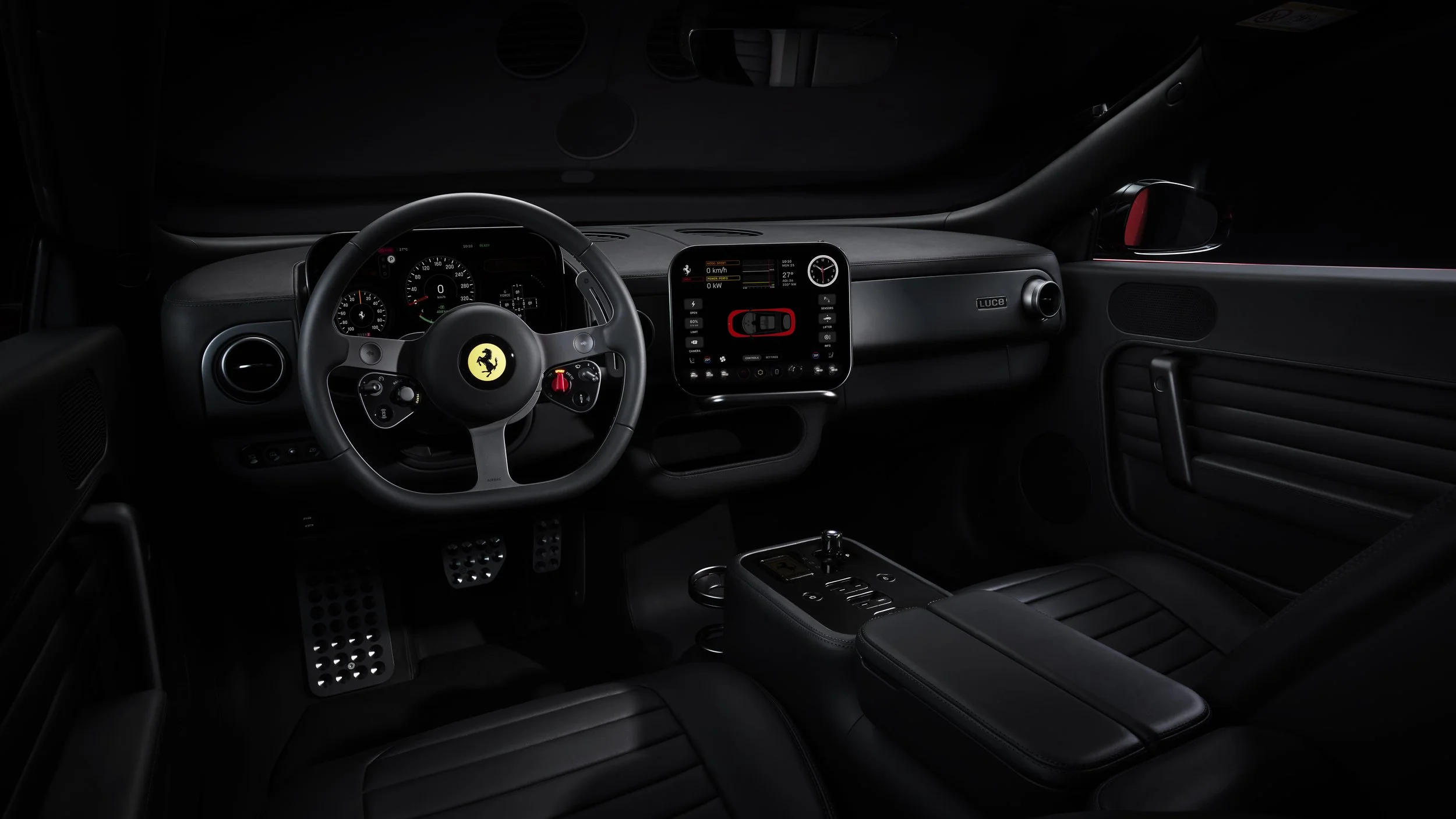
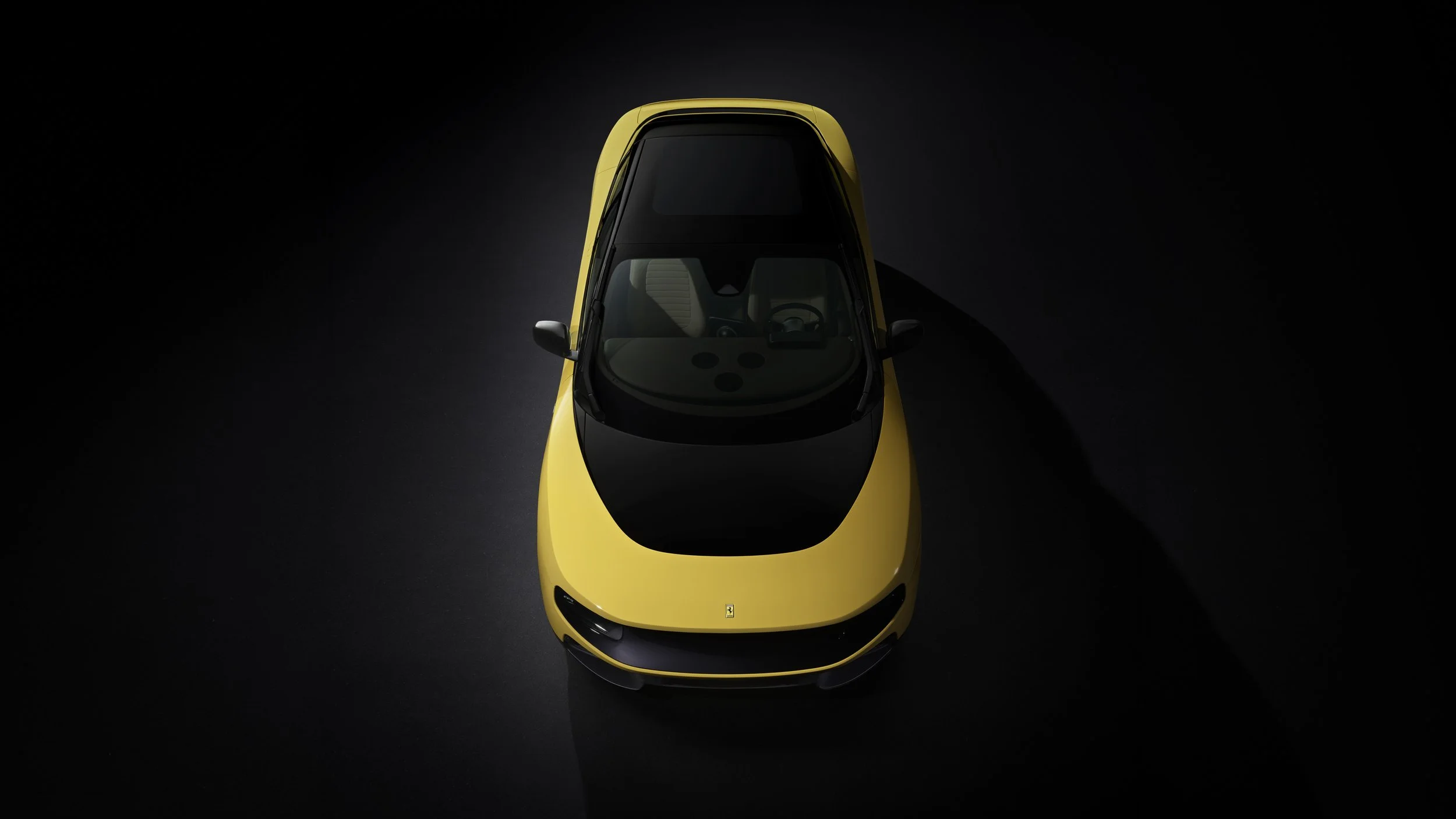
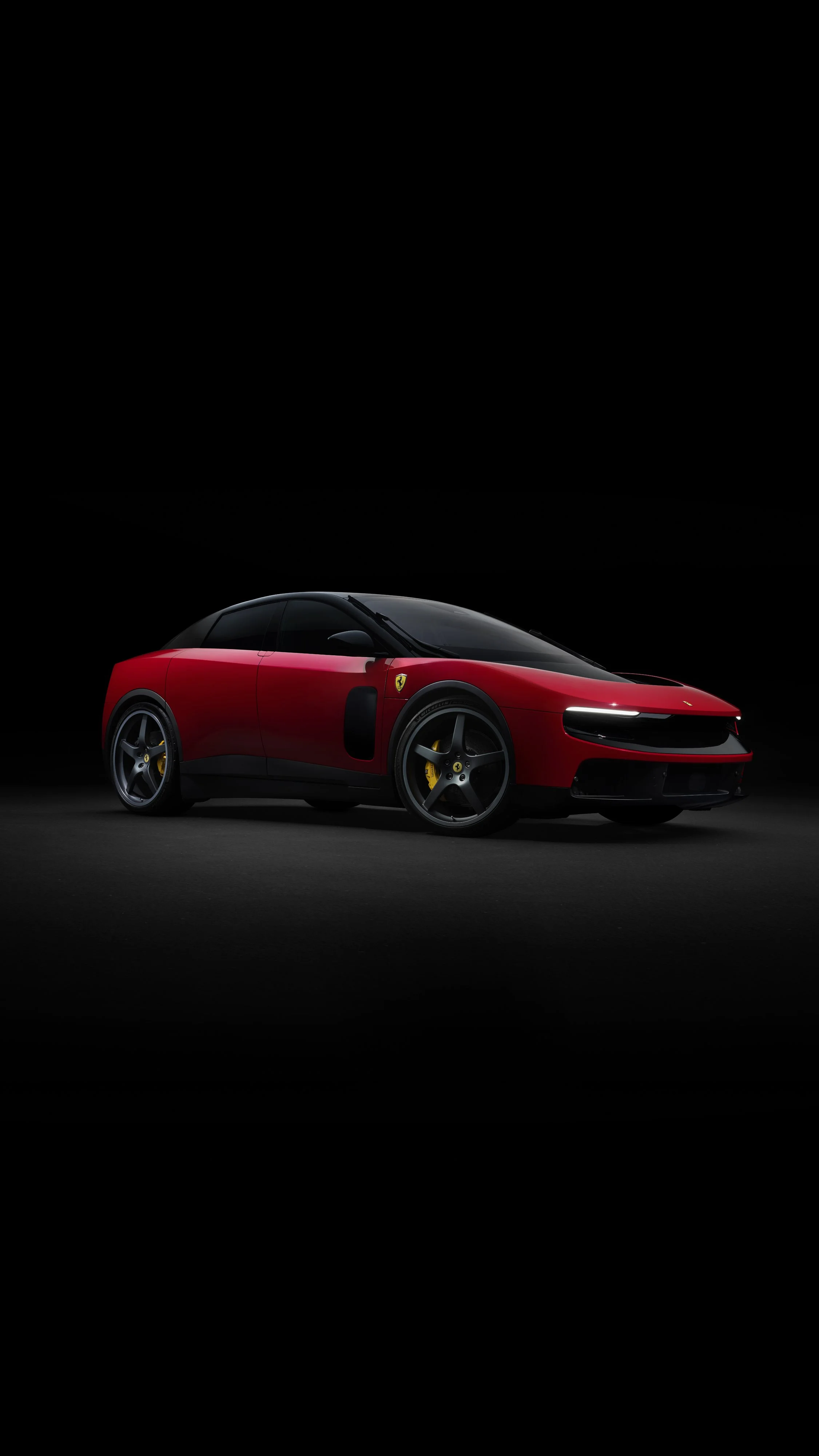
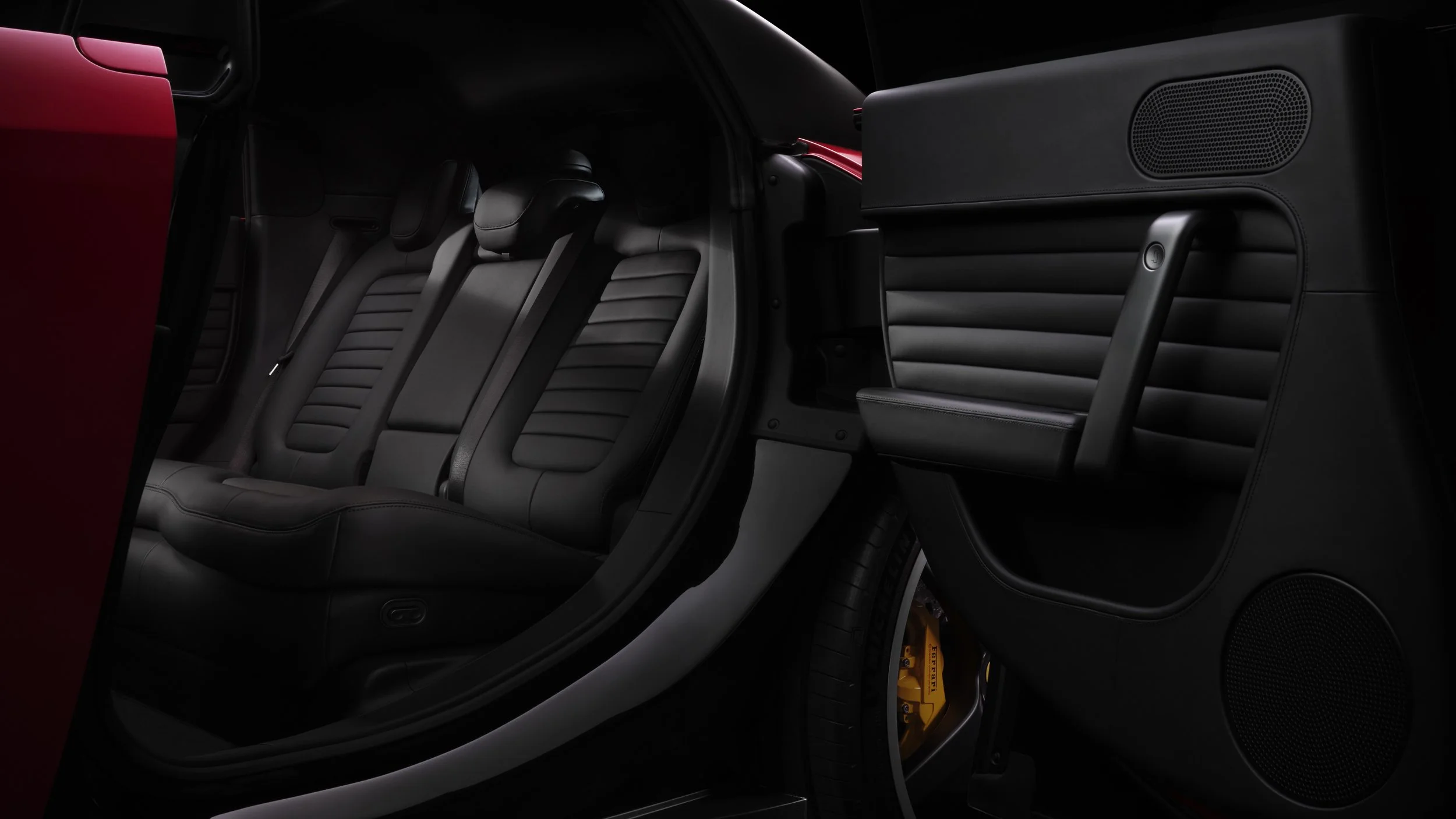
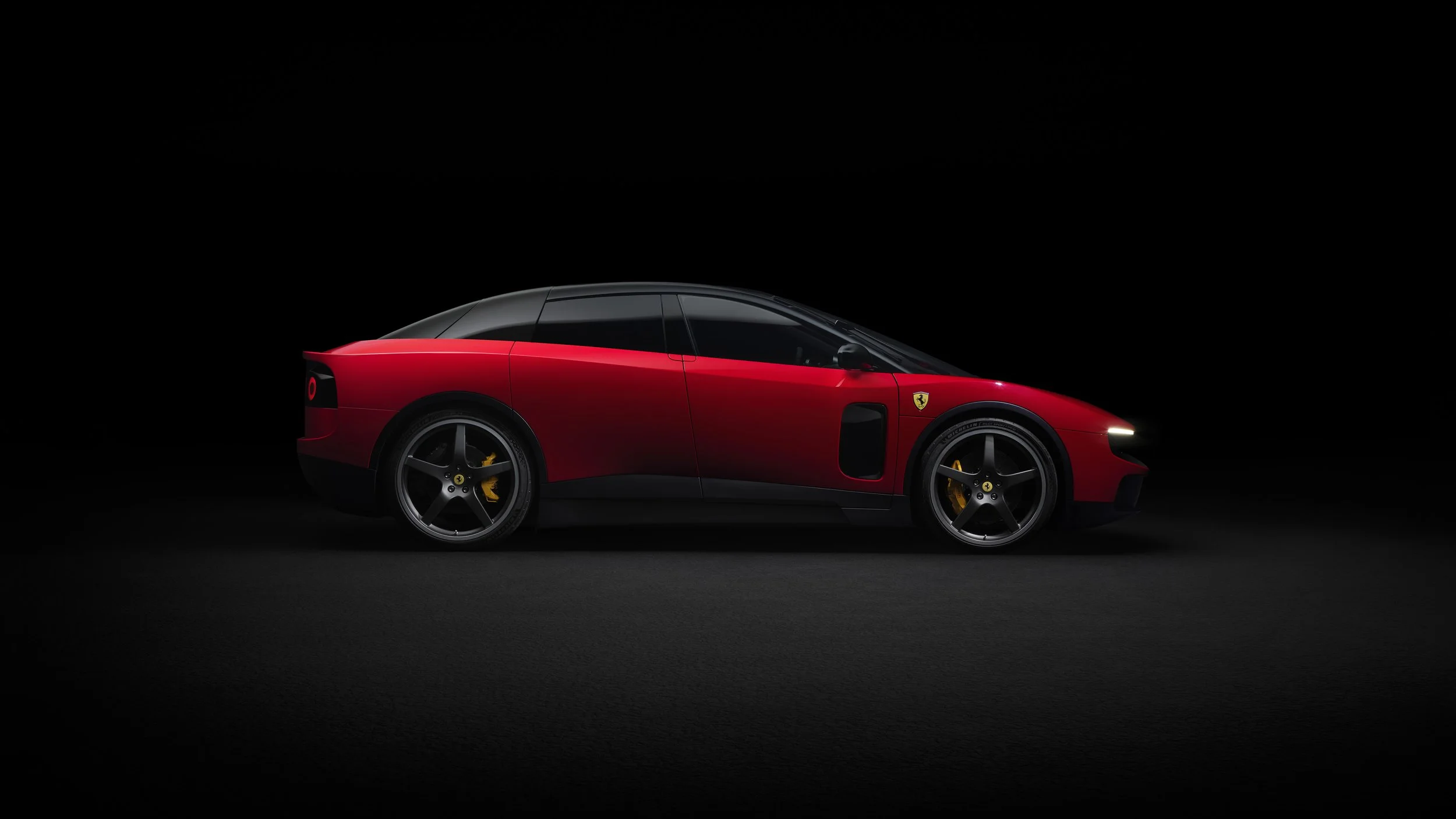
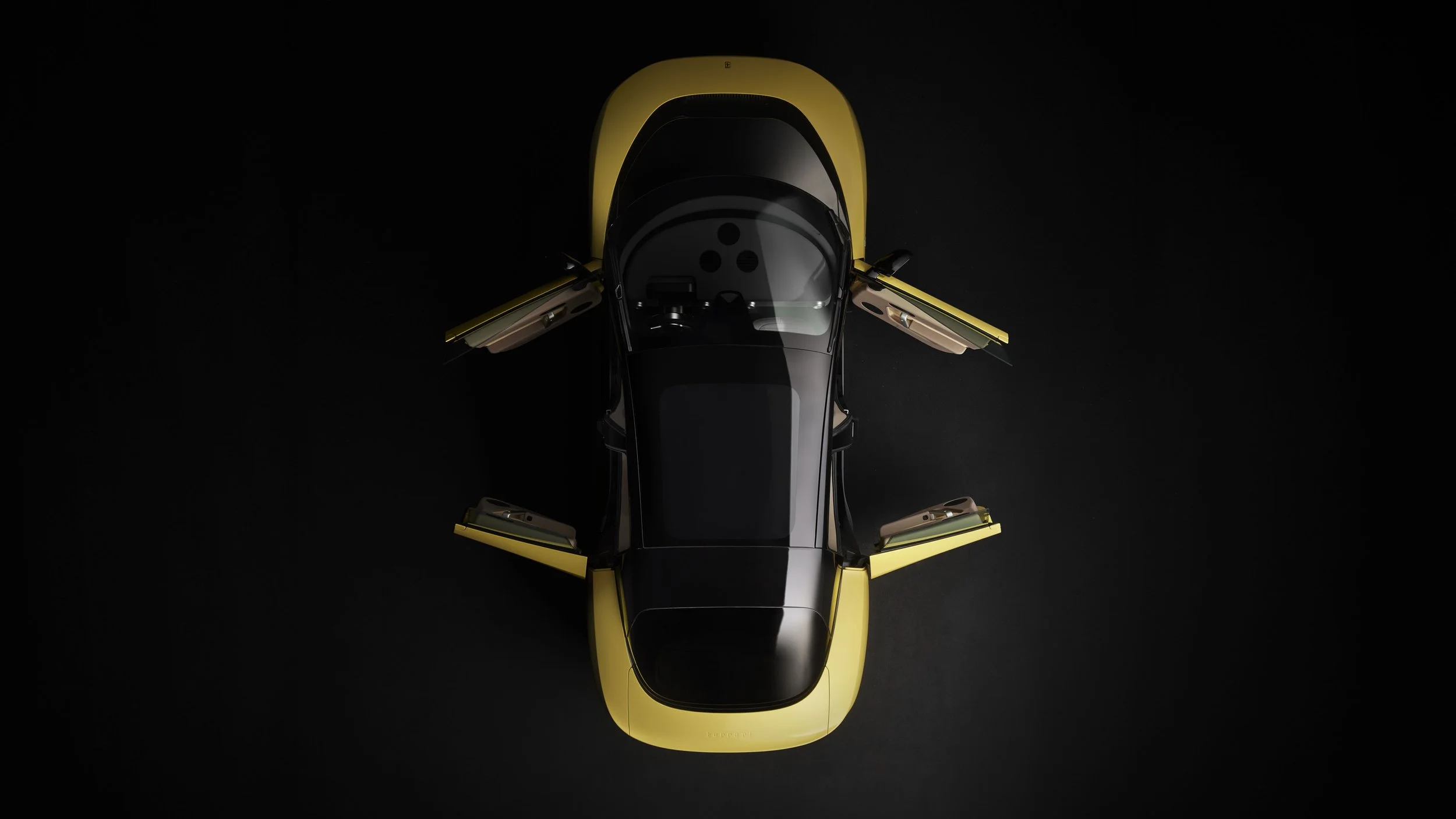
This architecture accommodates four doors and five seats for the first time in the Prancing Horse's history, since transaxle configurations with a front-mid engine and rear gearbox never allowed for a fifth seat. Inside, hundreds of individually considered elements come together to form a single, clean volume, with simplified, rationalised forms that serve the driving experience. The exterior, interior and interface all share one unified design language.
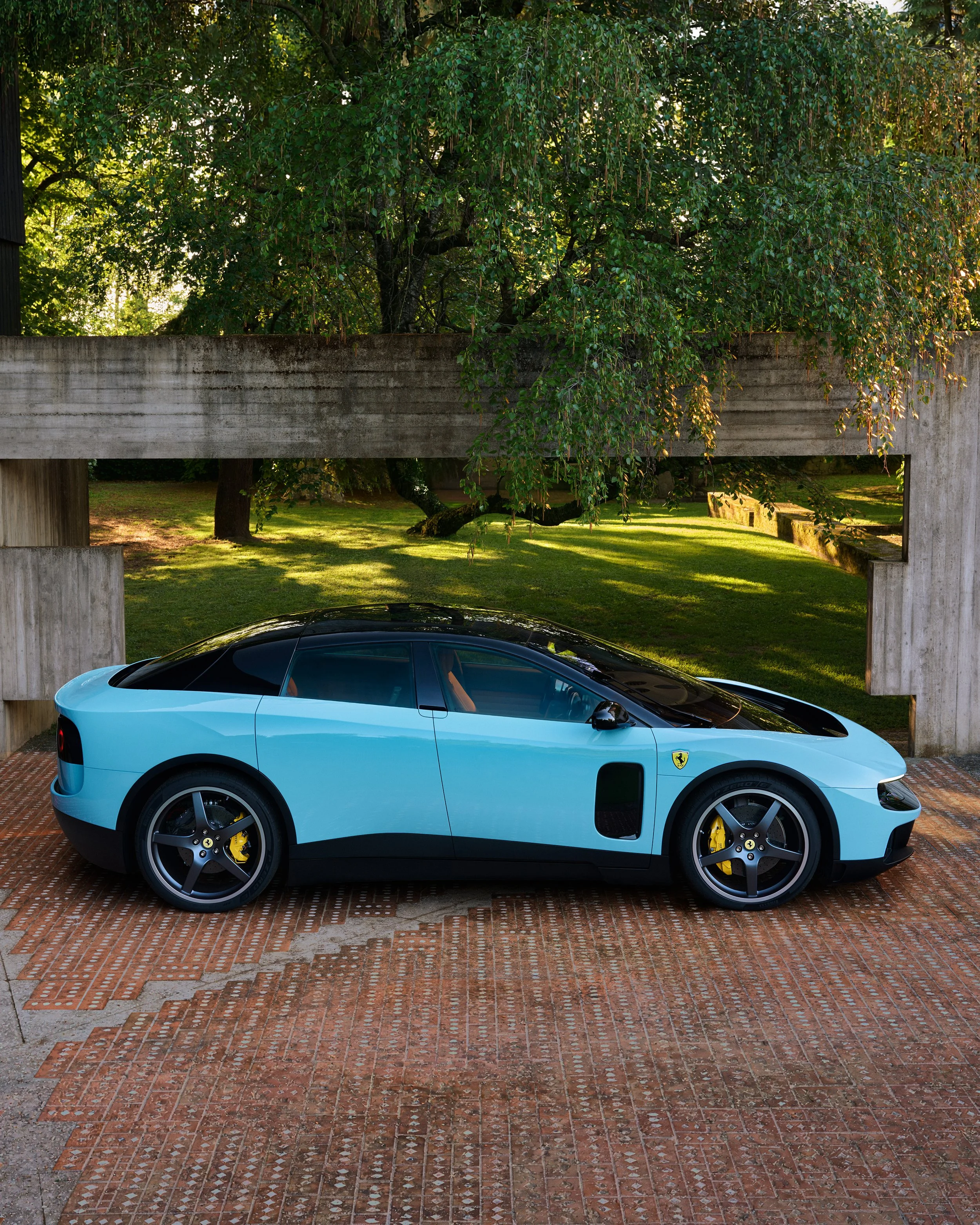
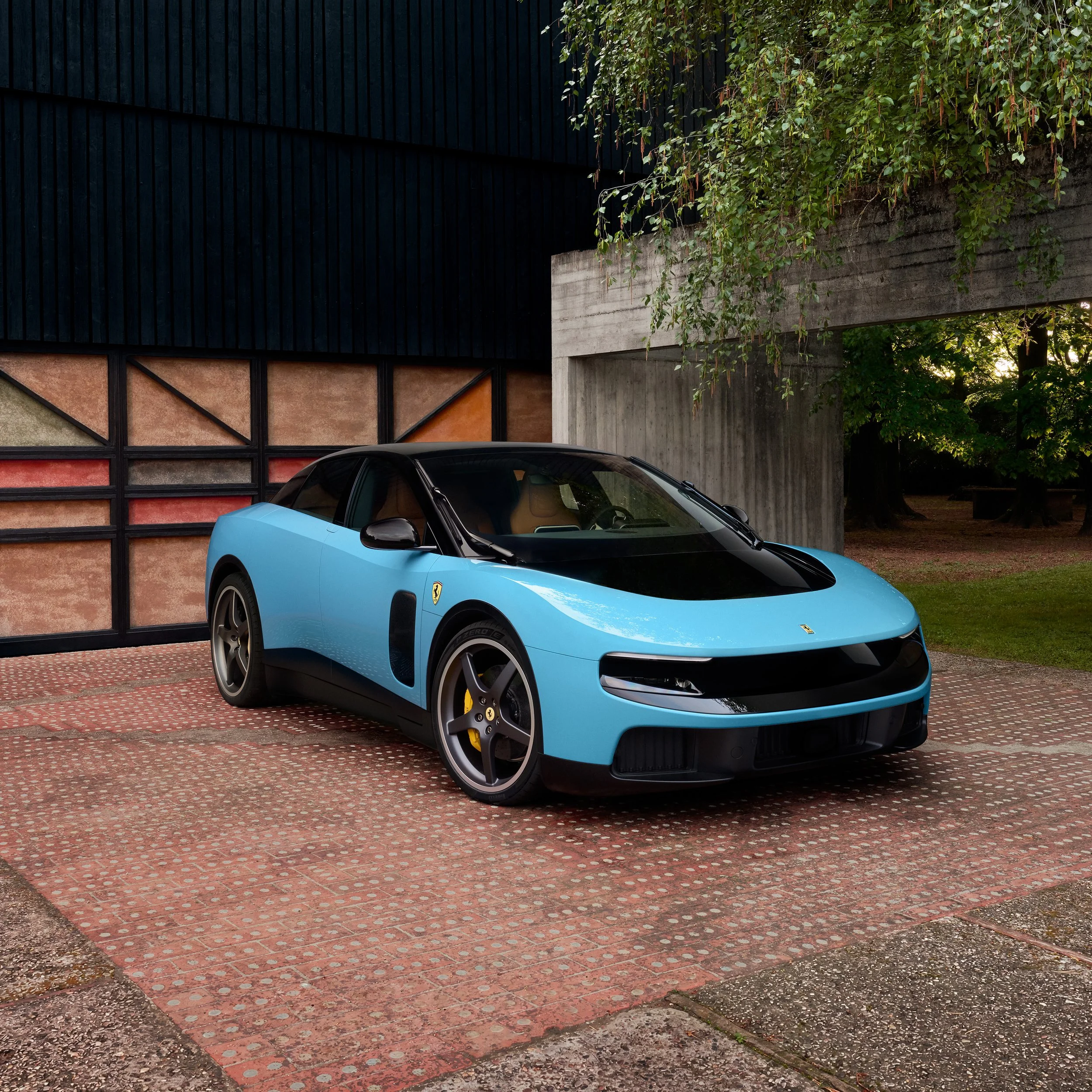
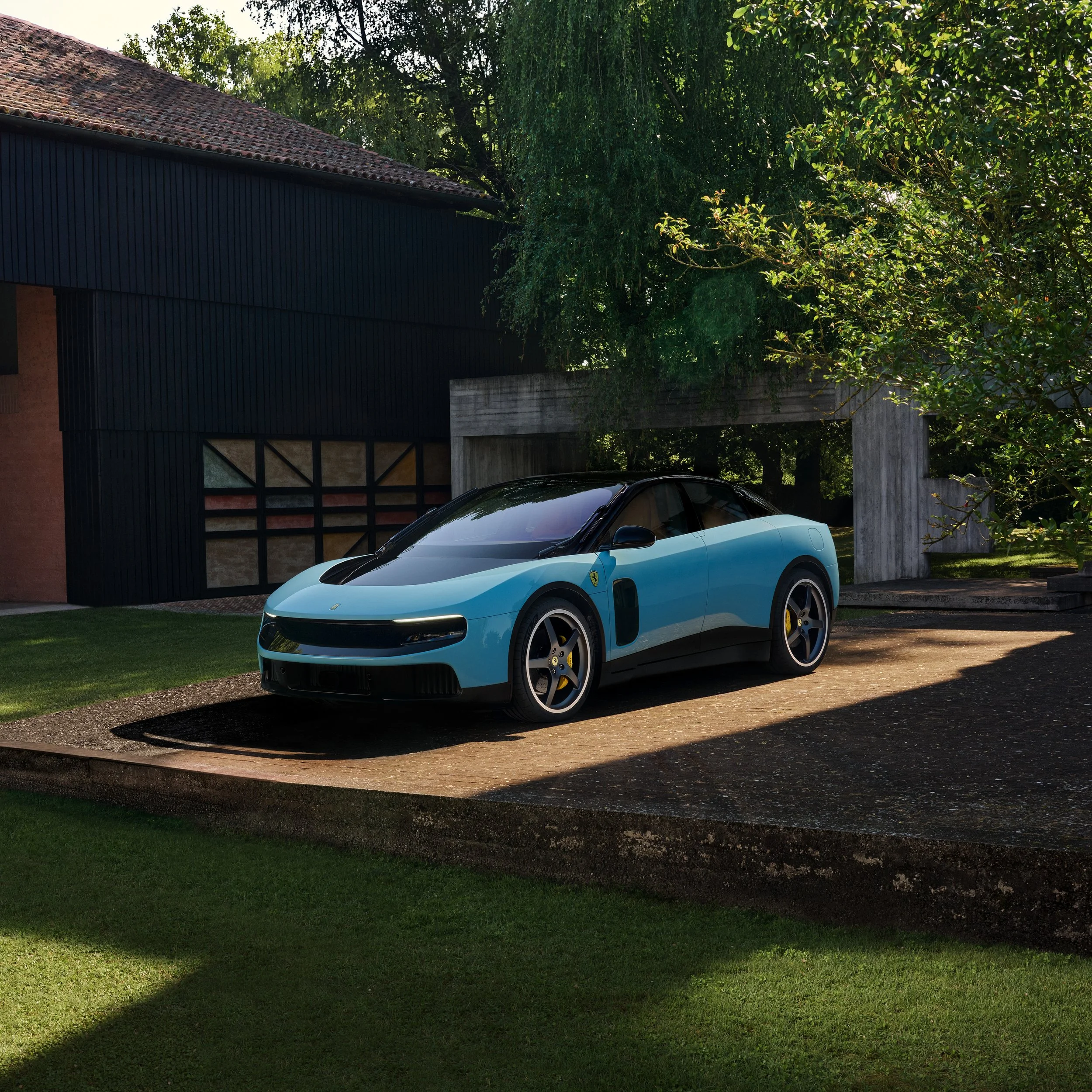
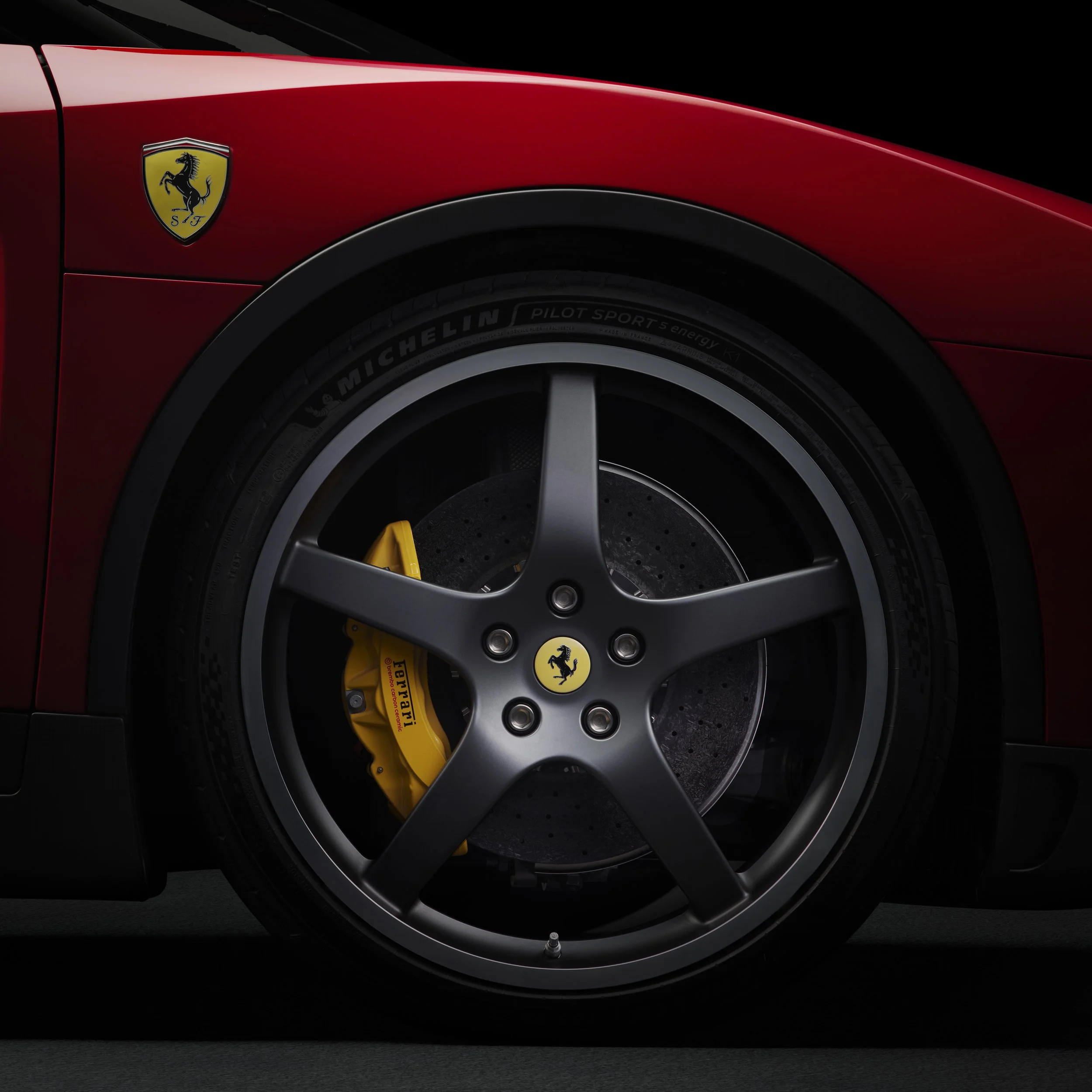
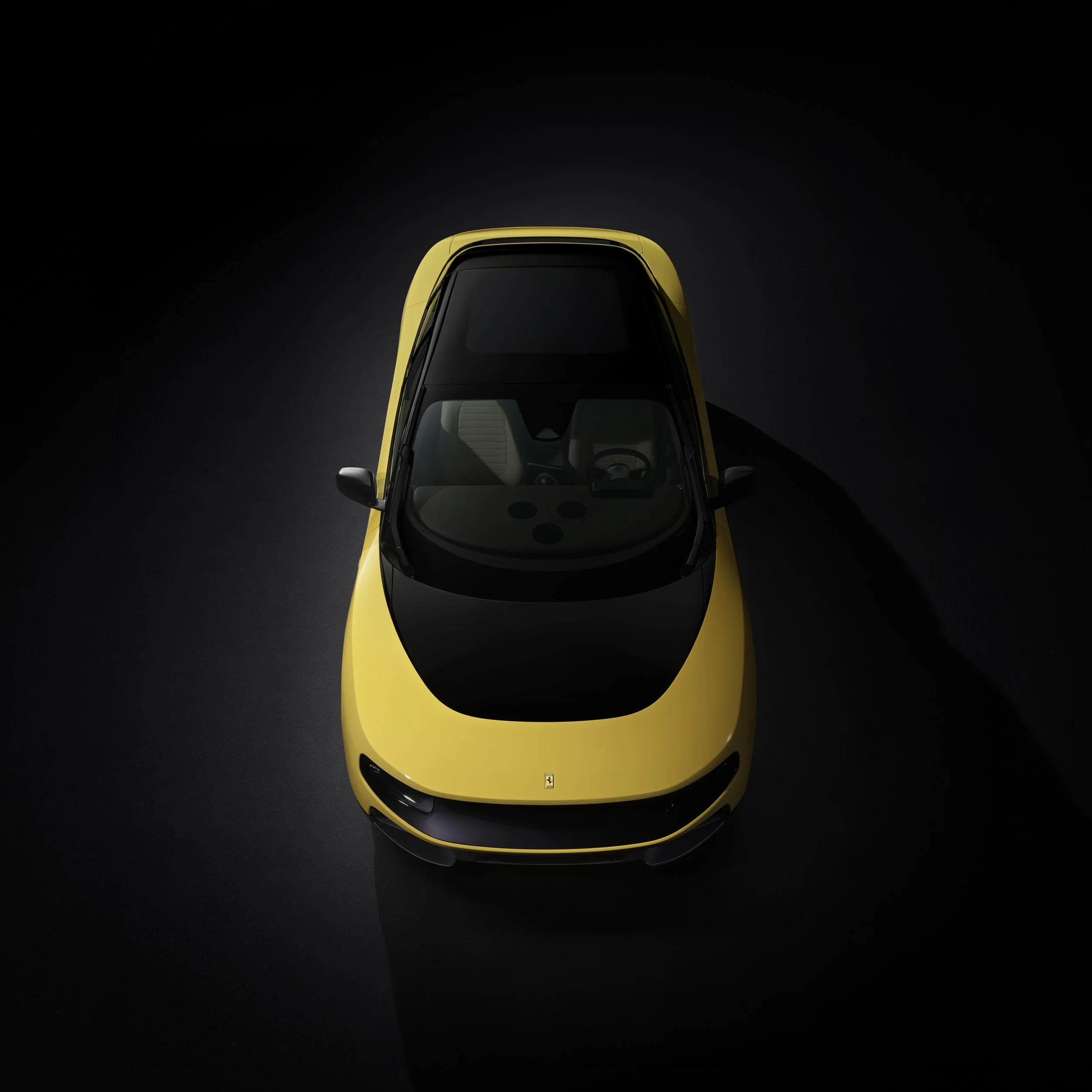
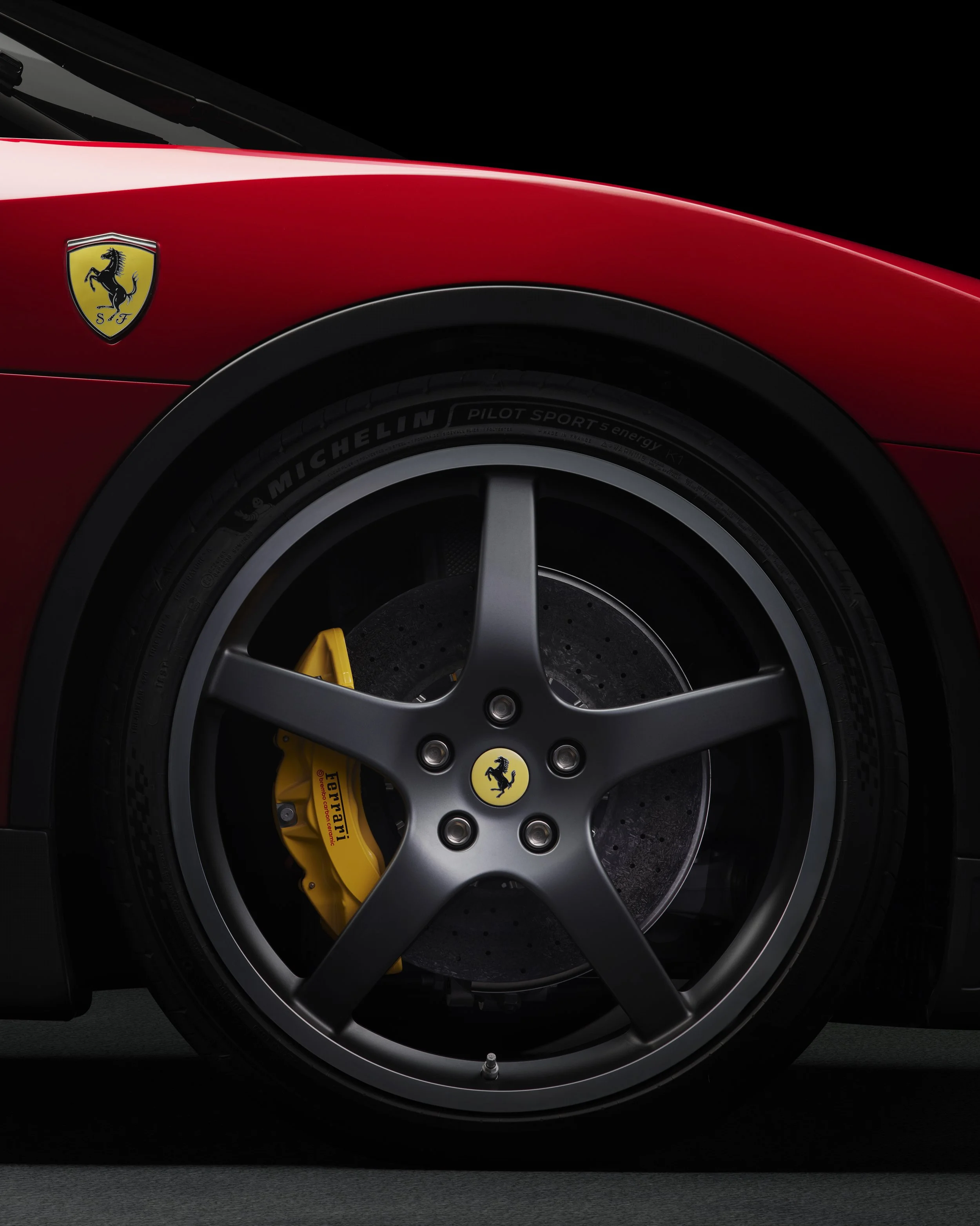
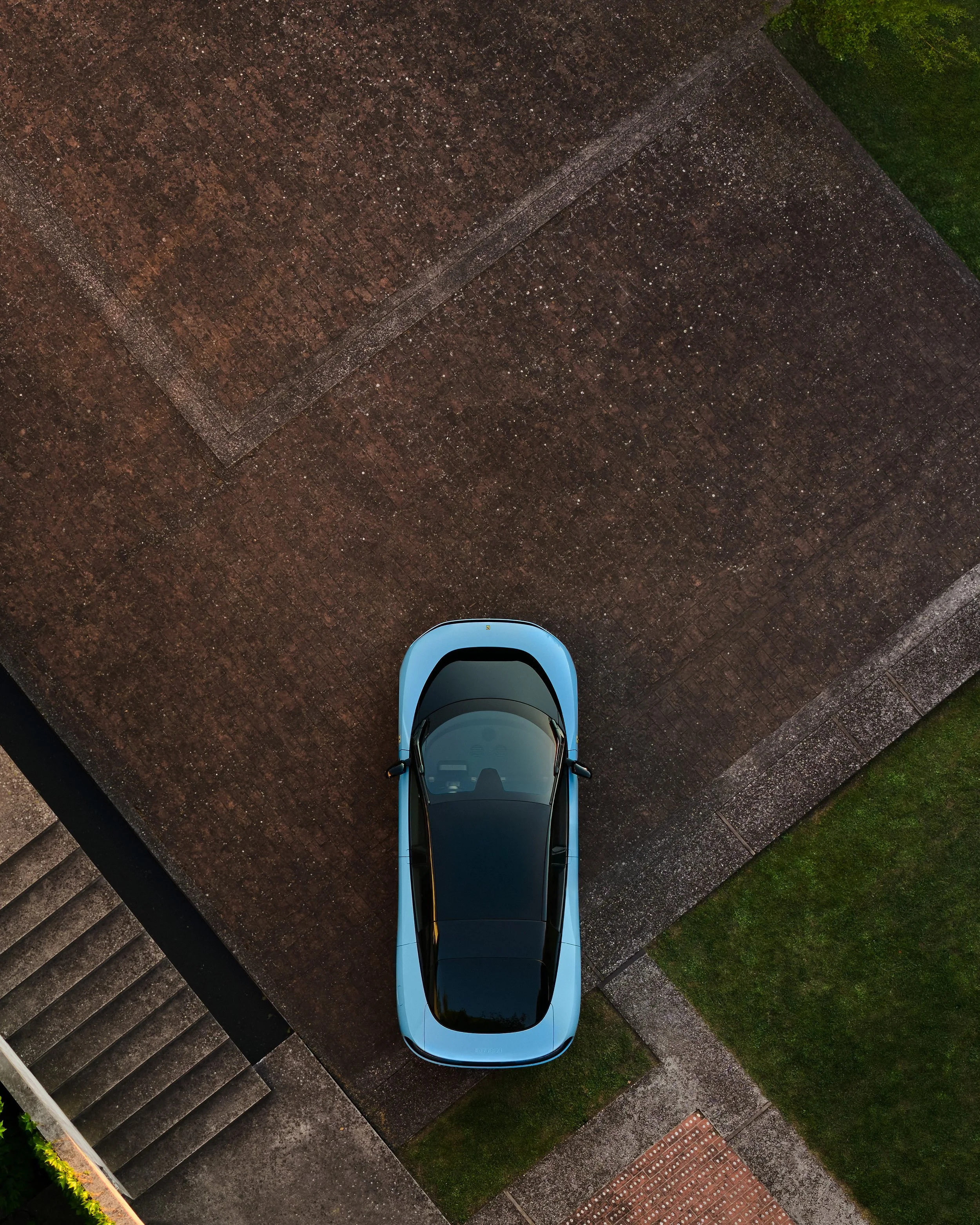
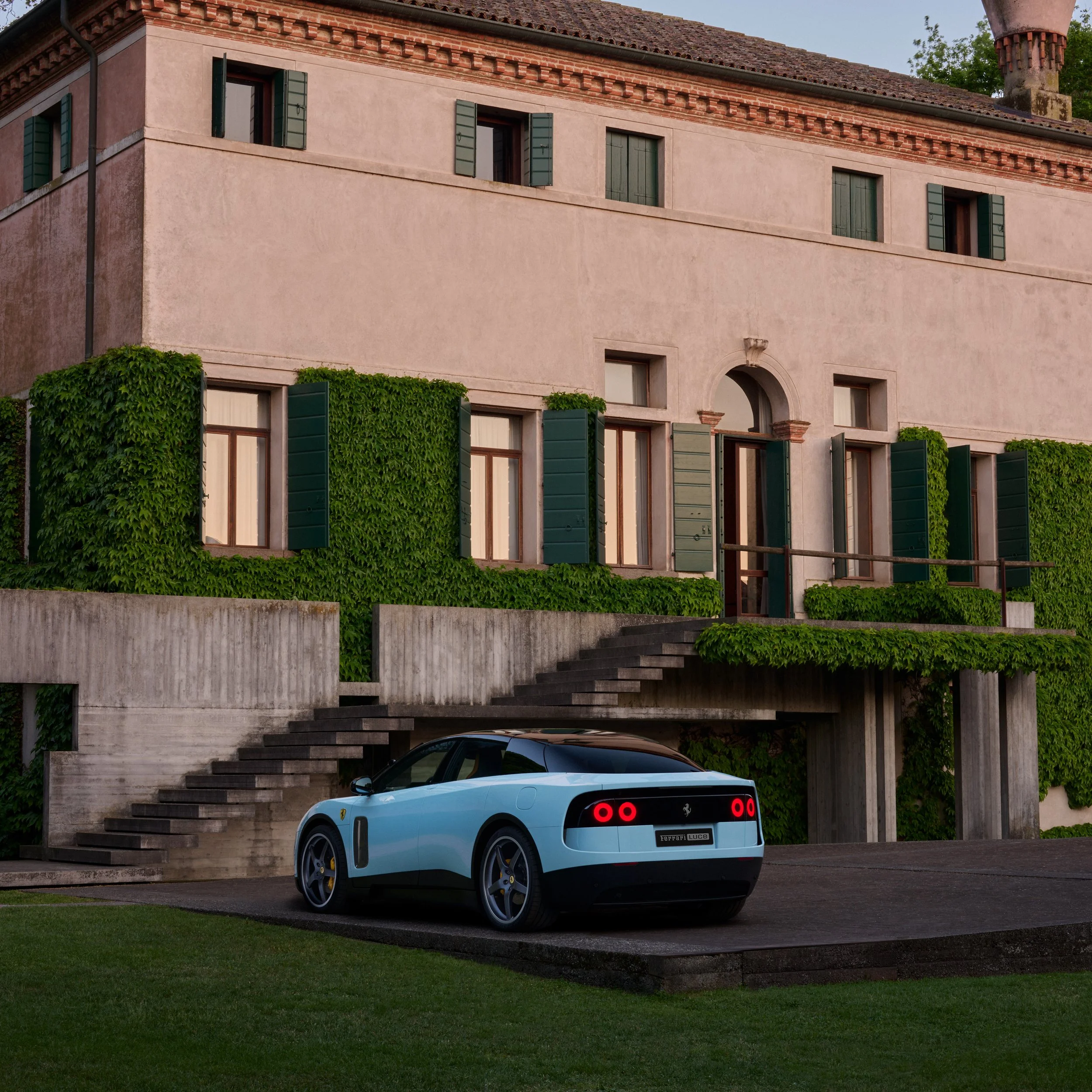
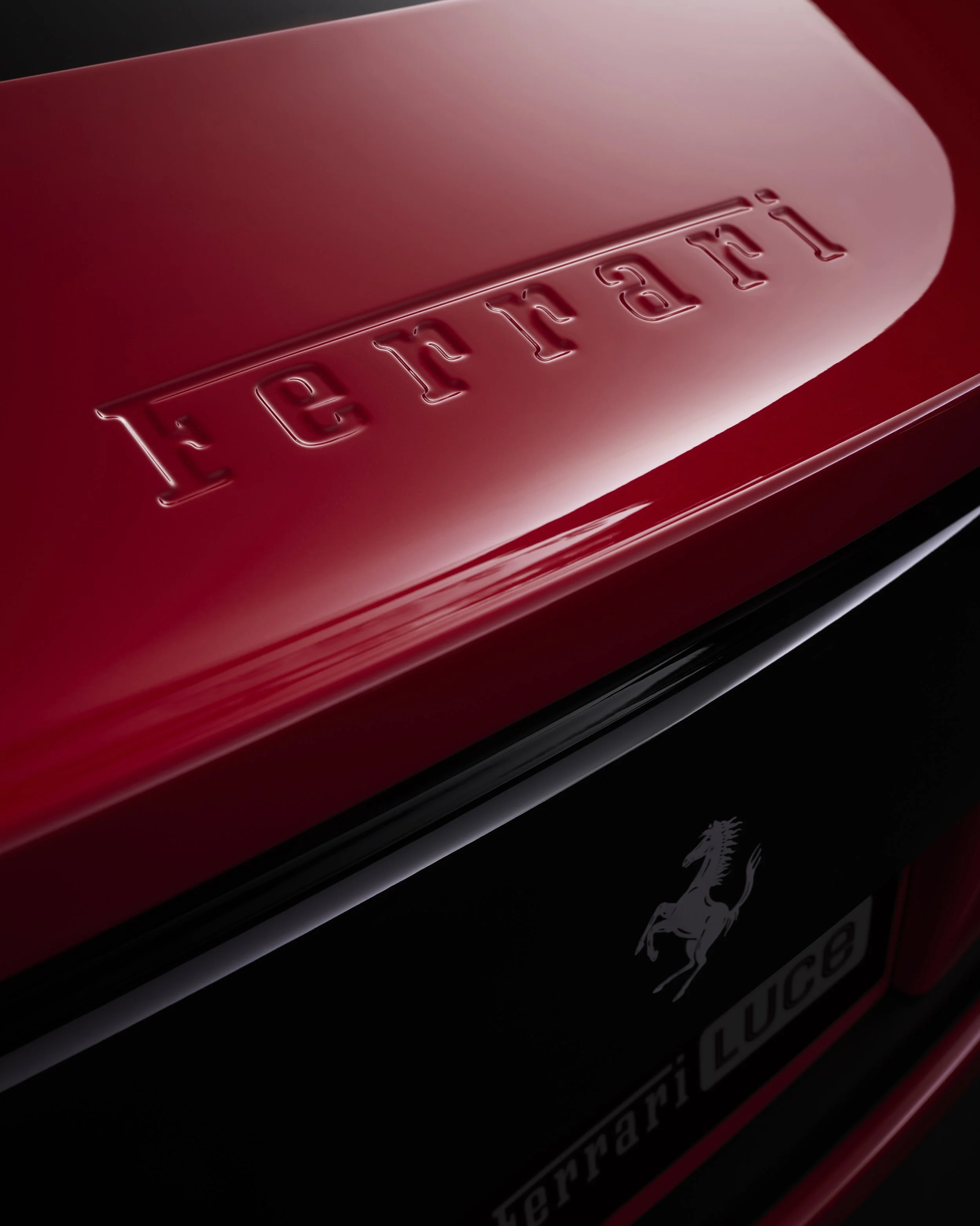
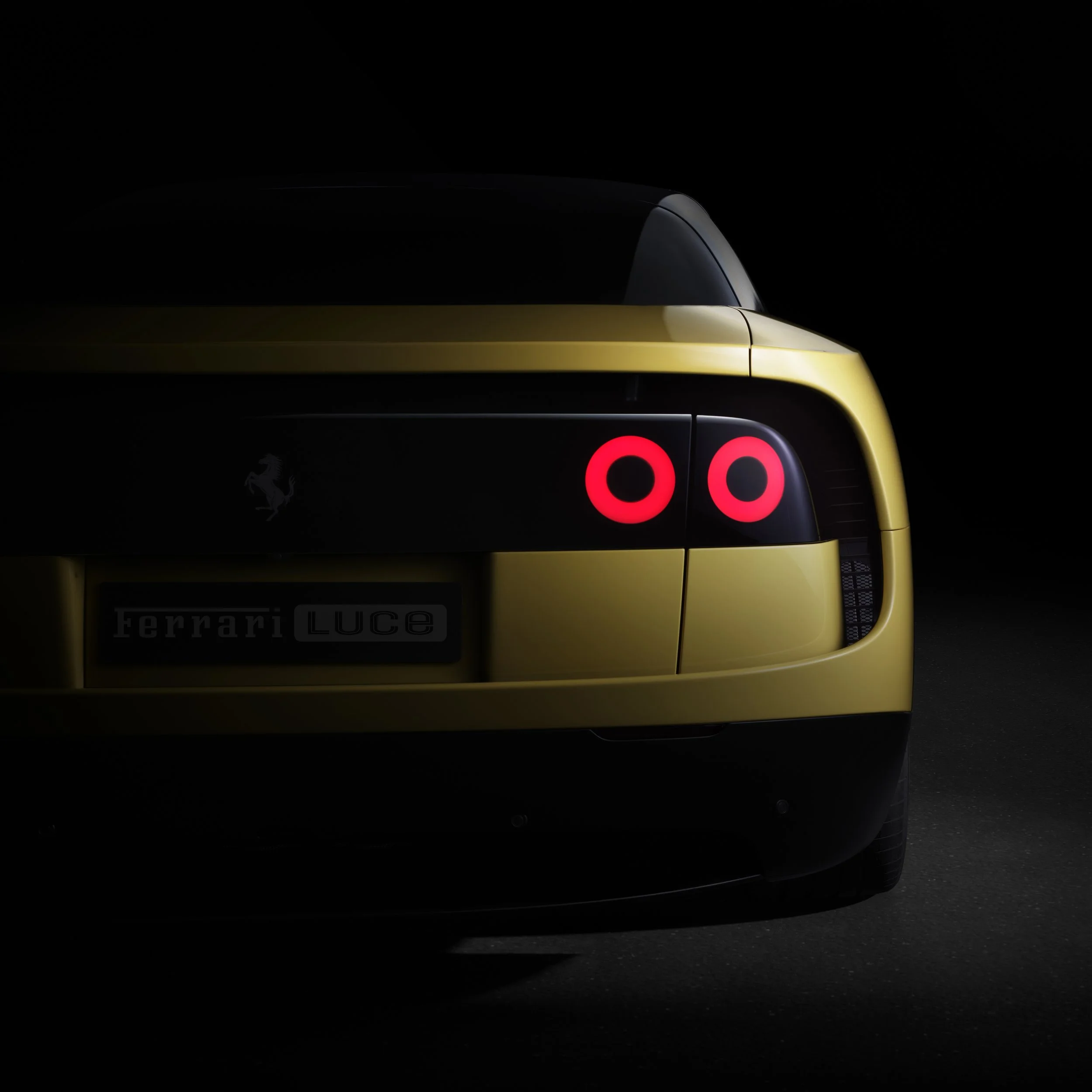
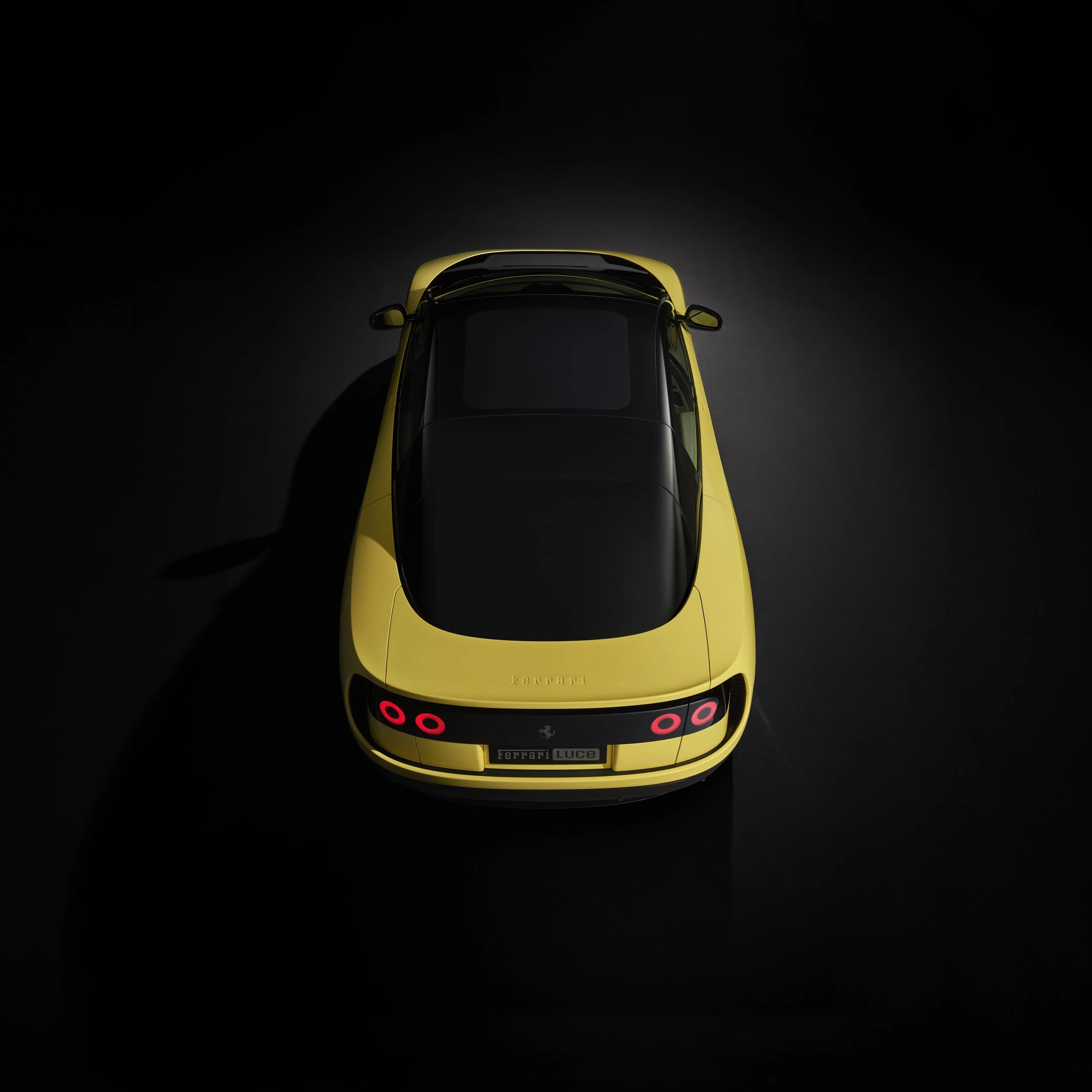
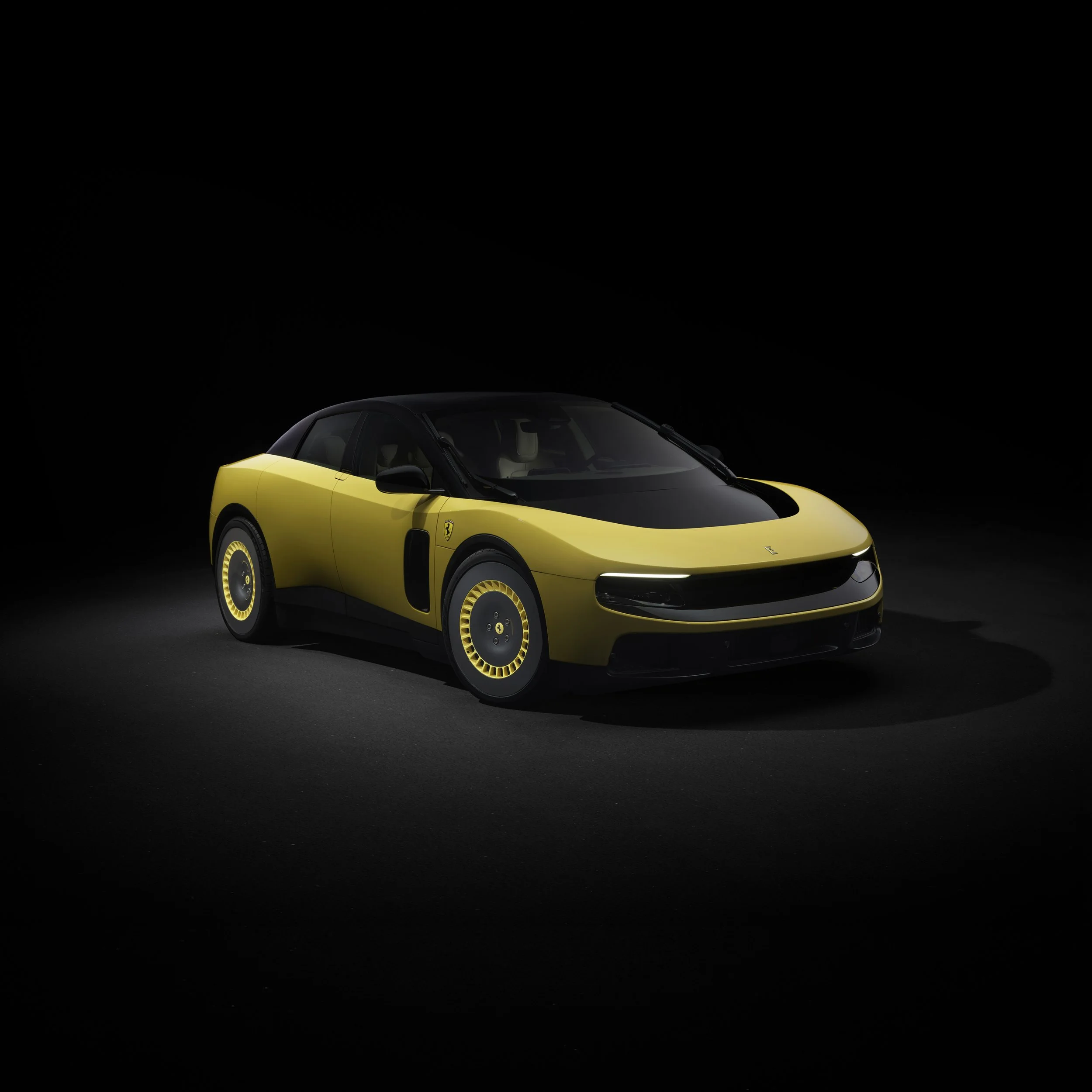
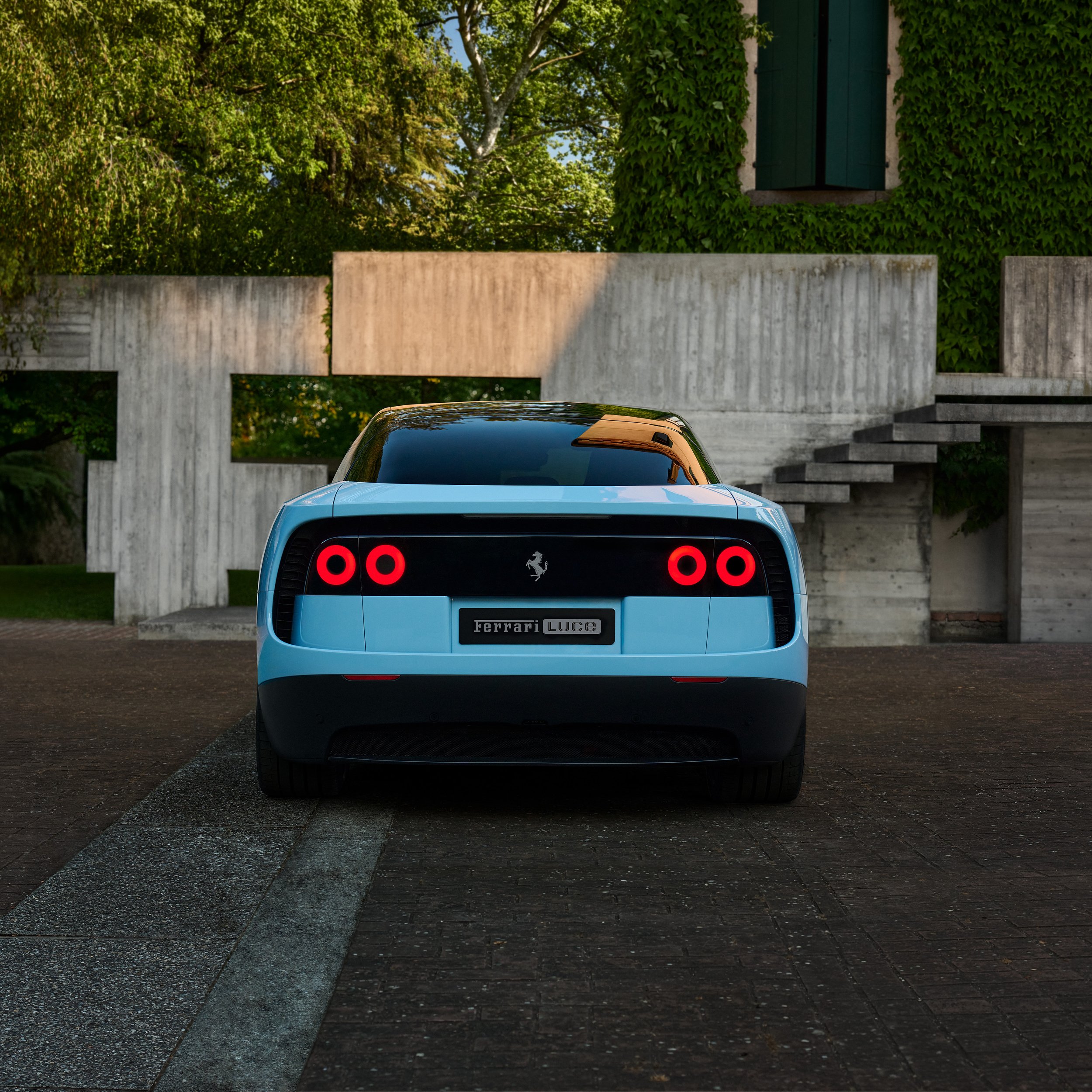
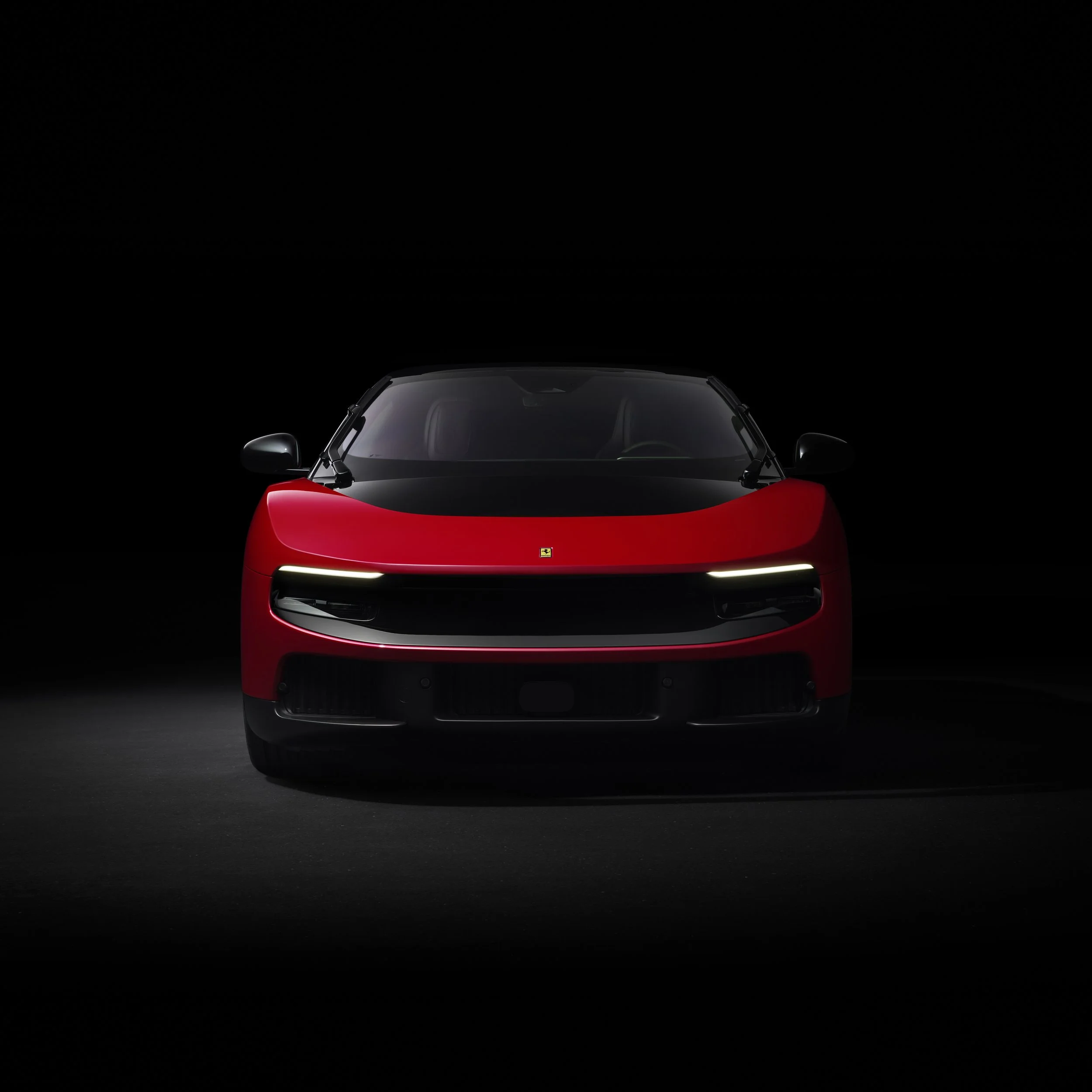
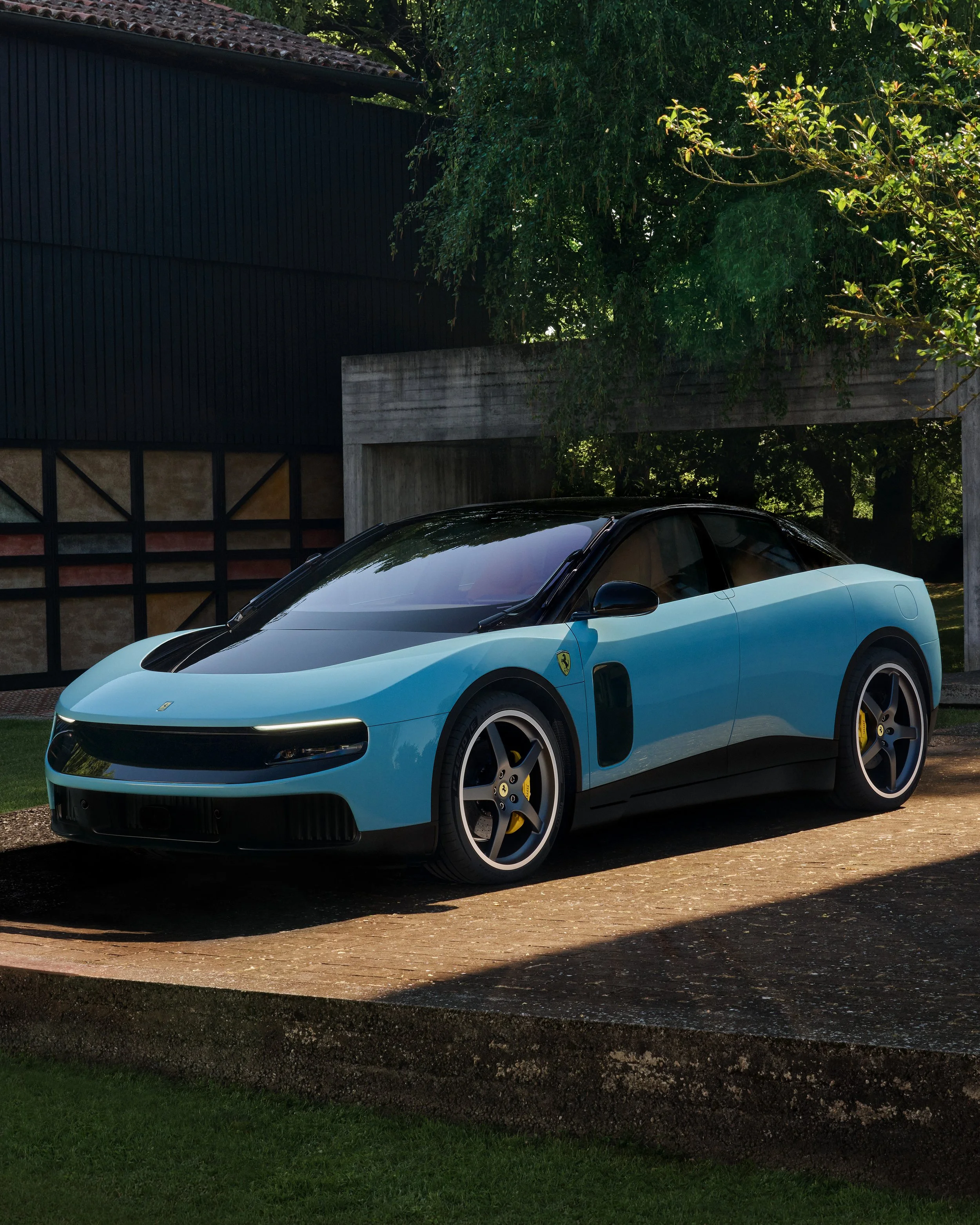
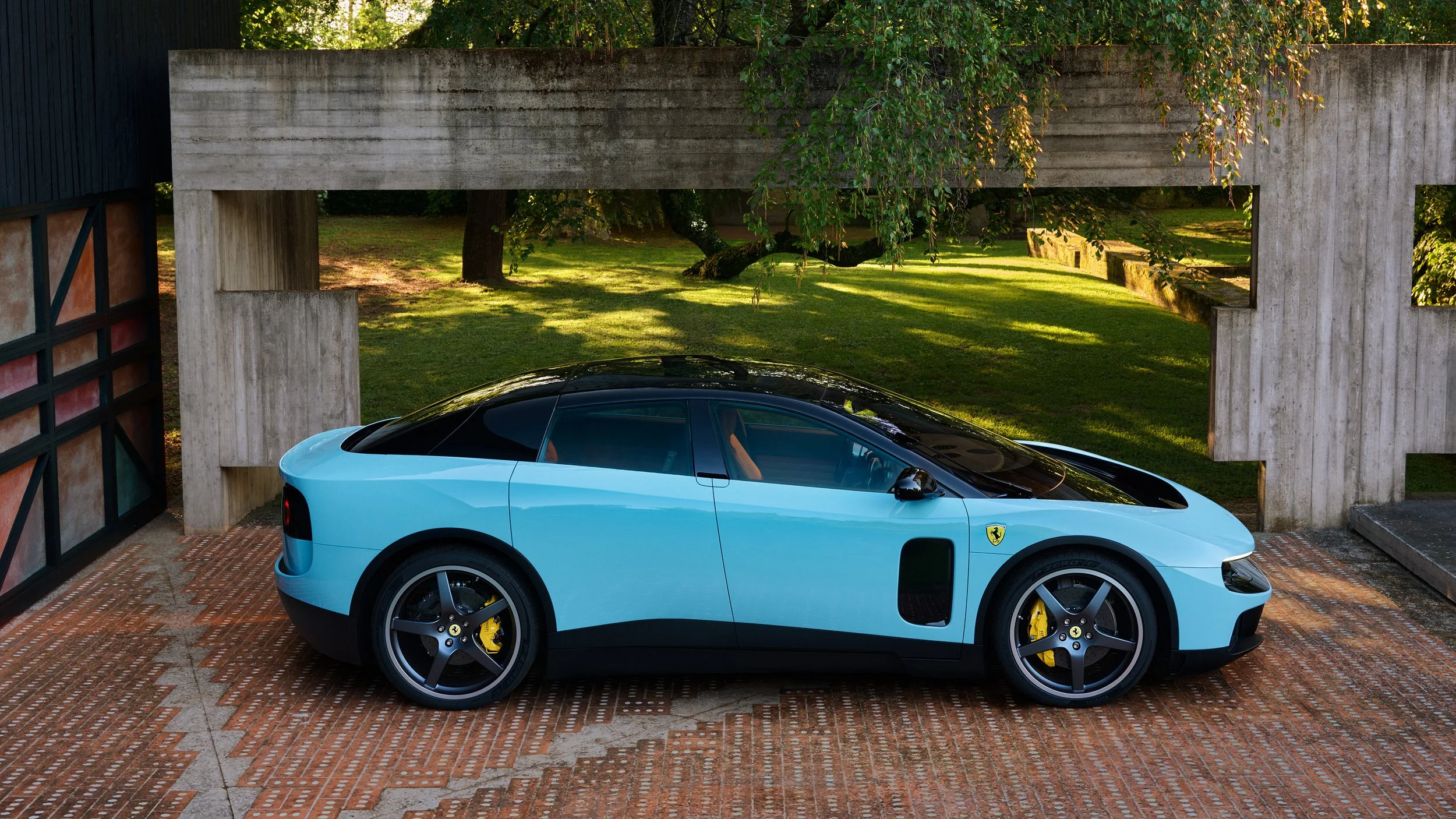
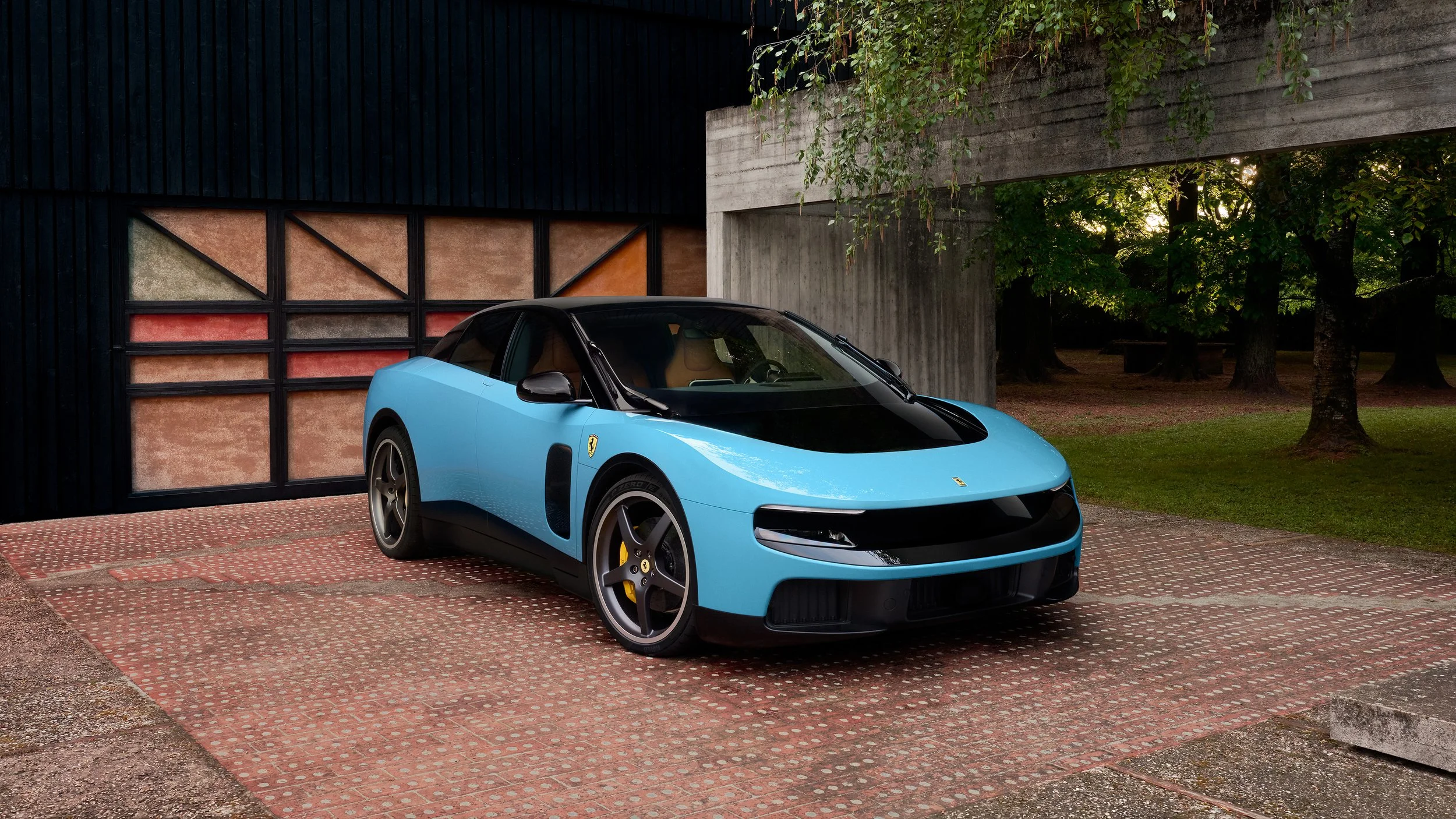
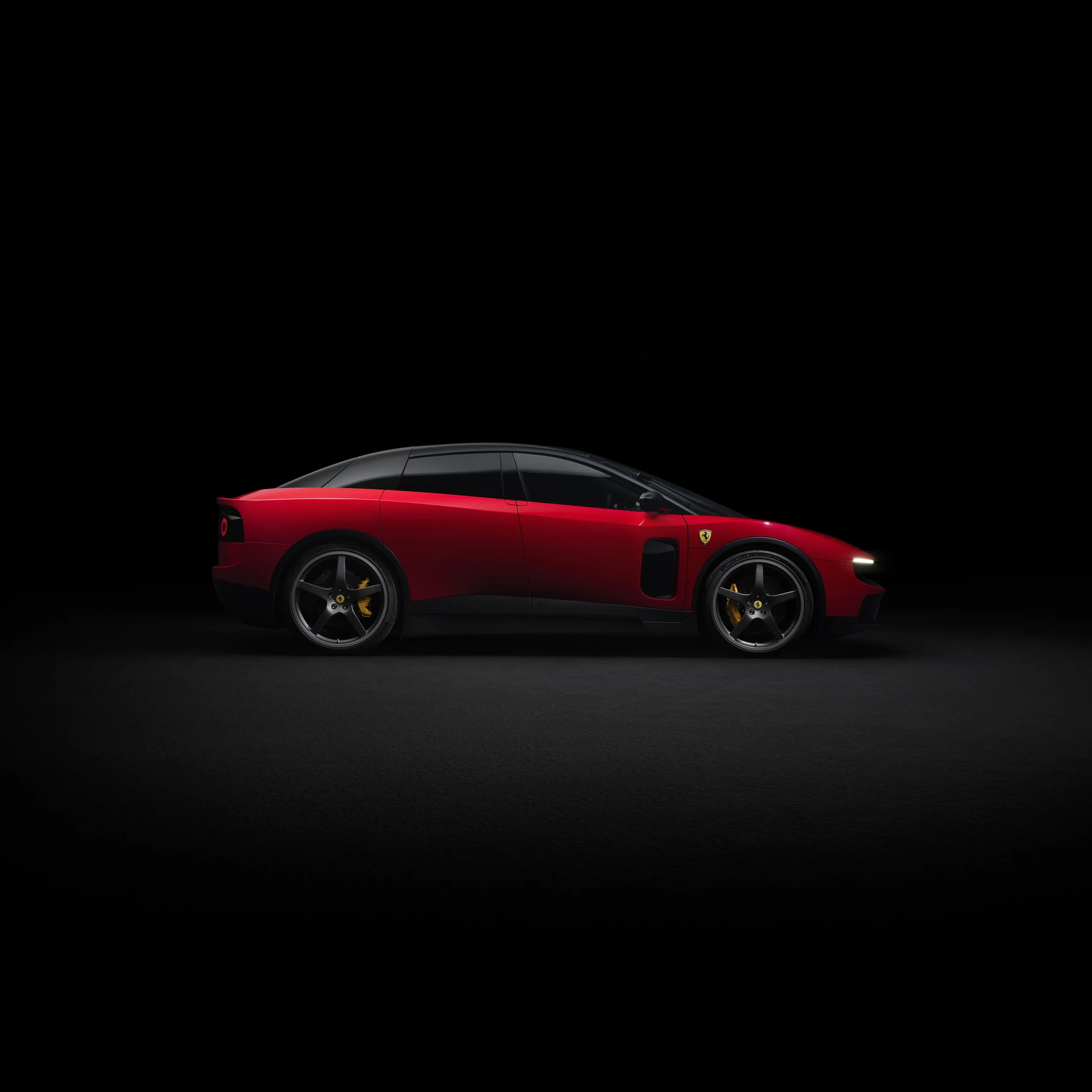
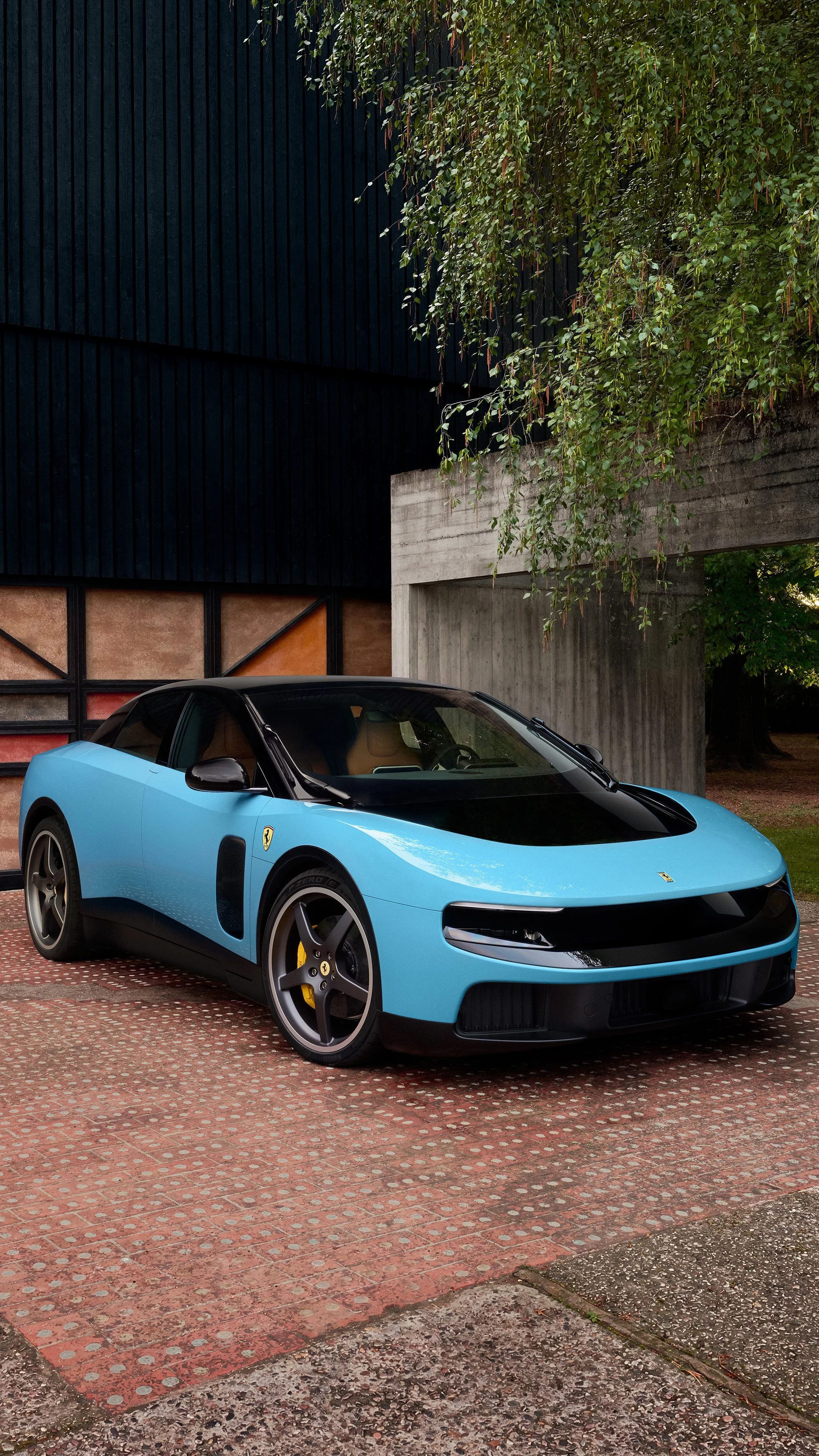
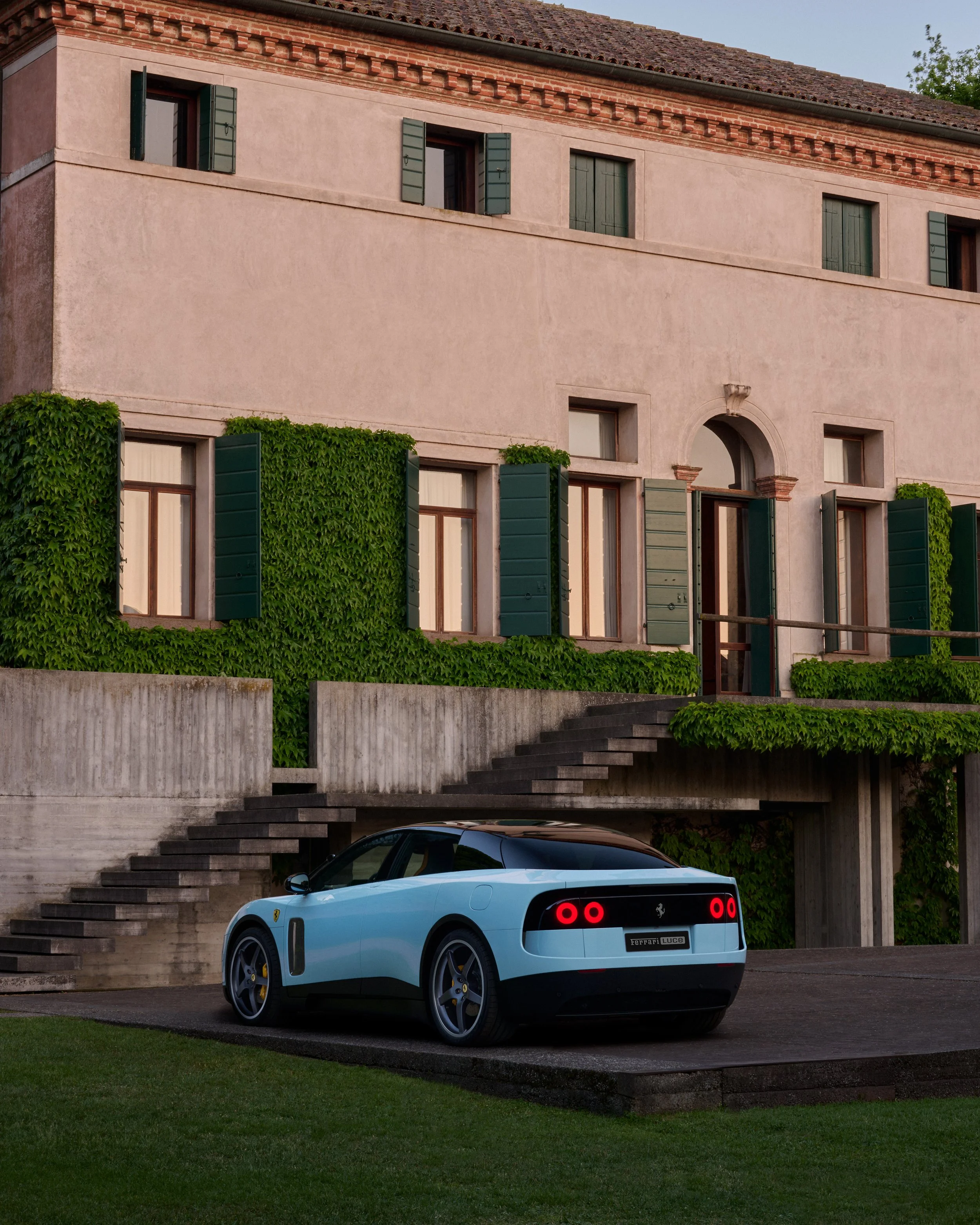
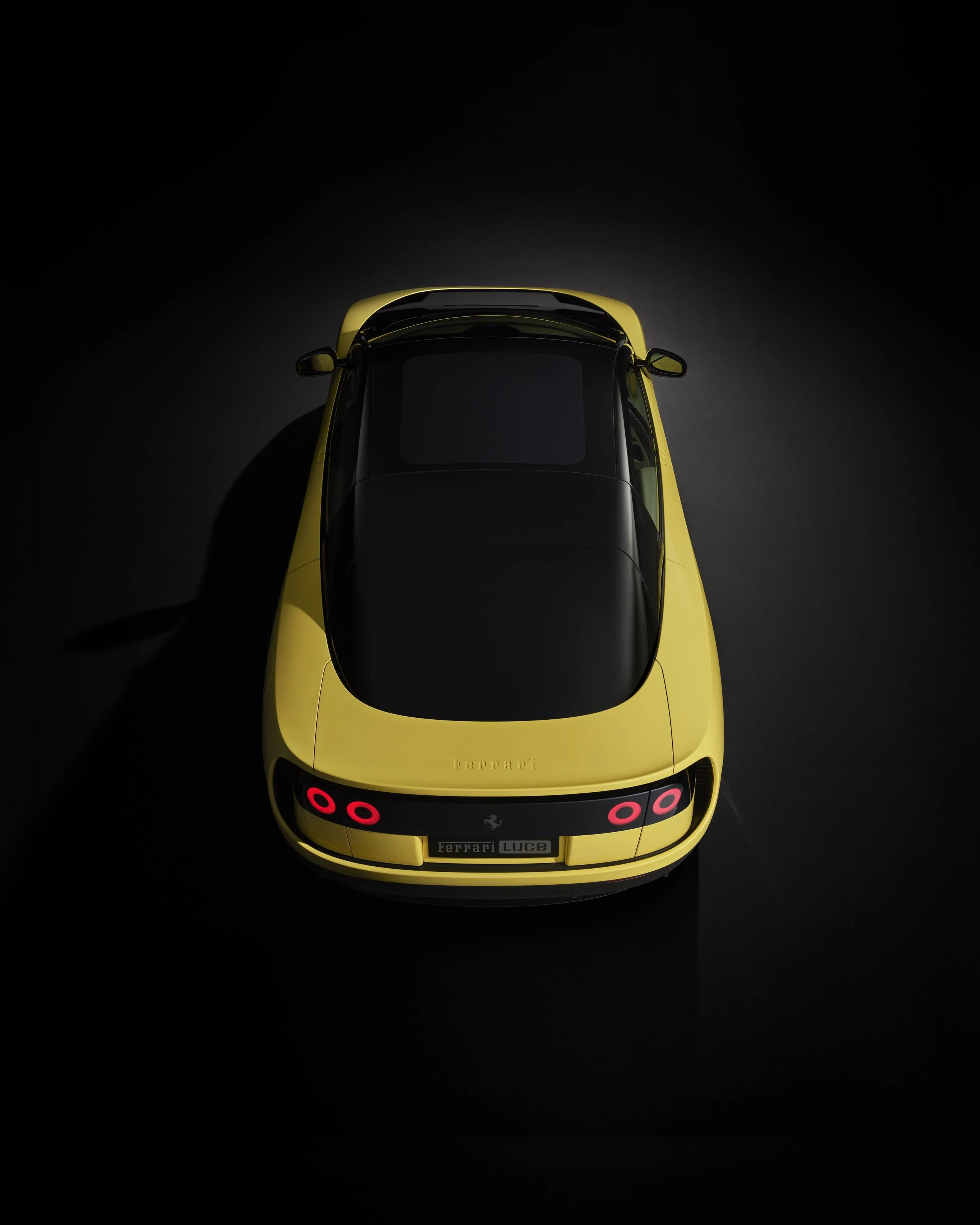
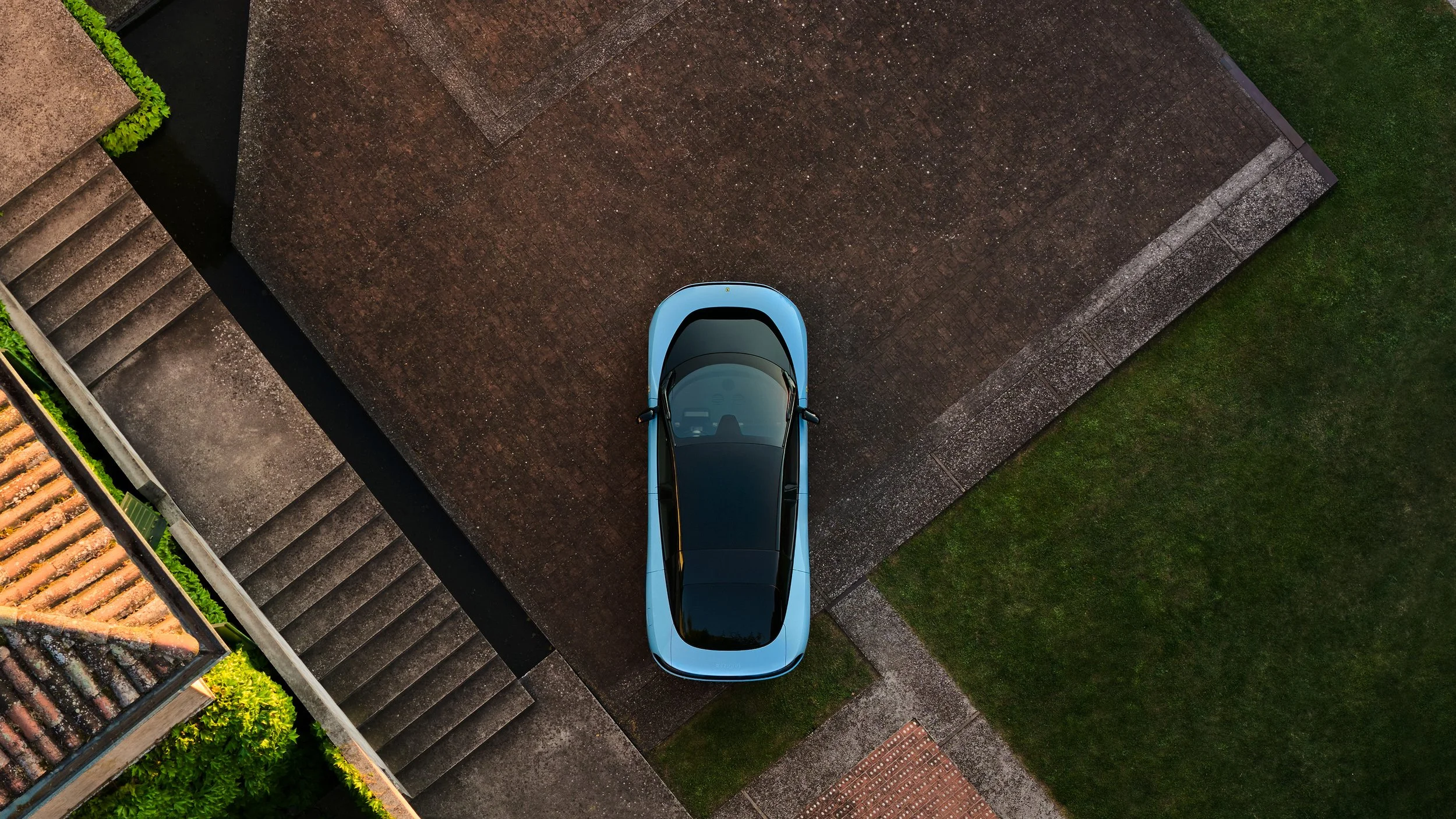
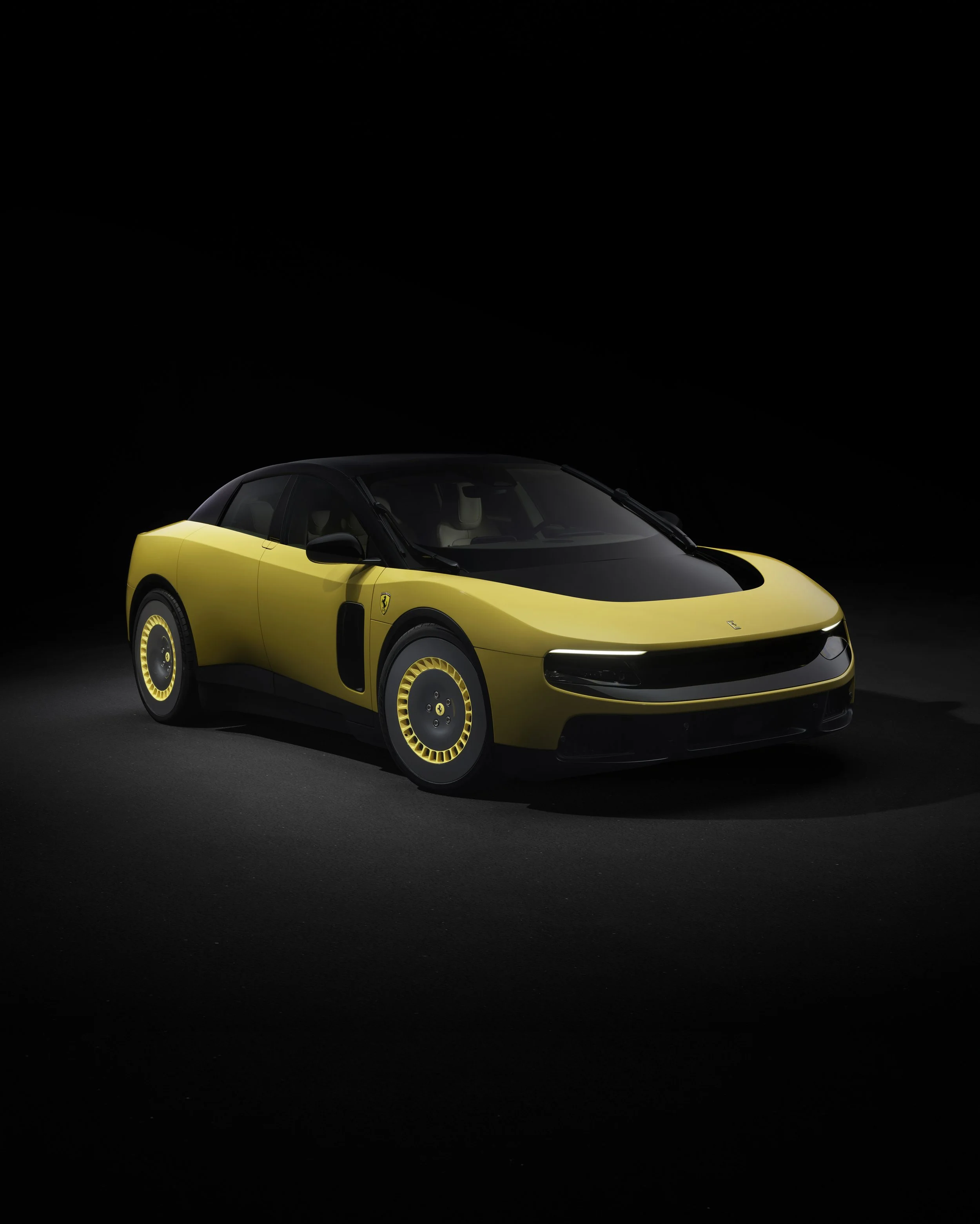
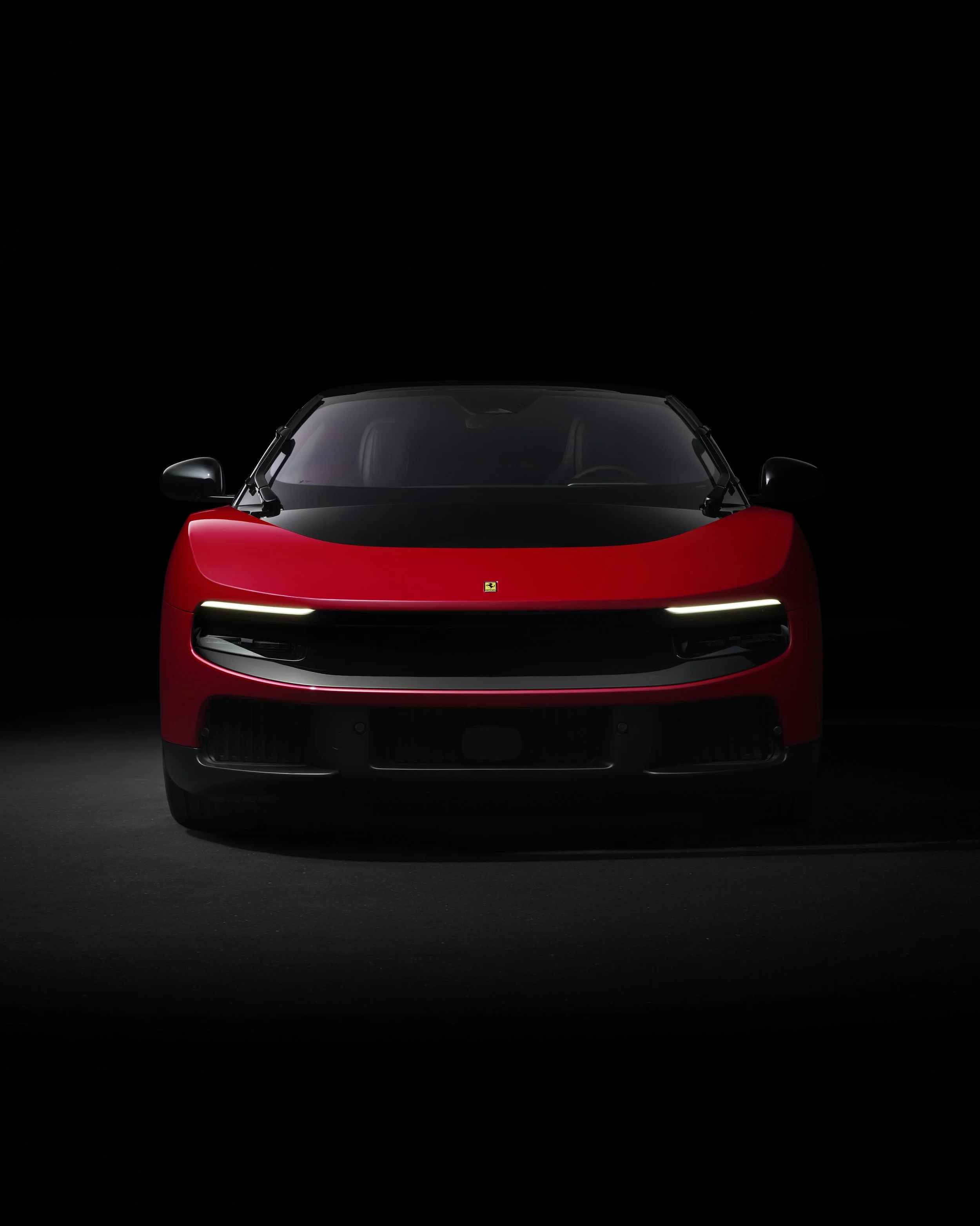
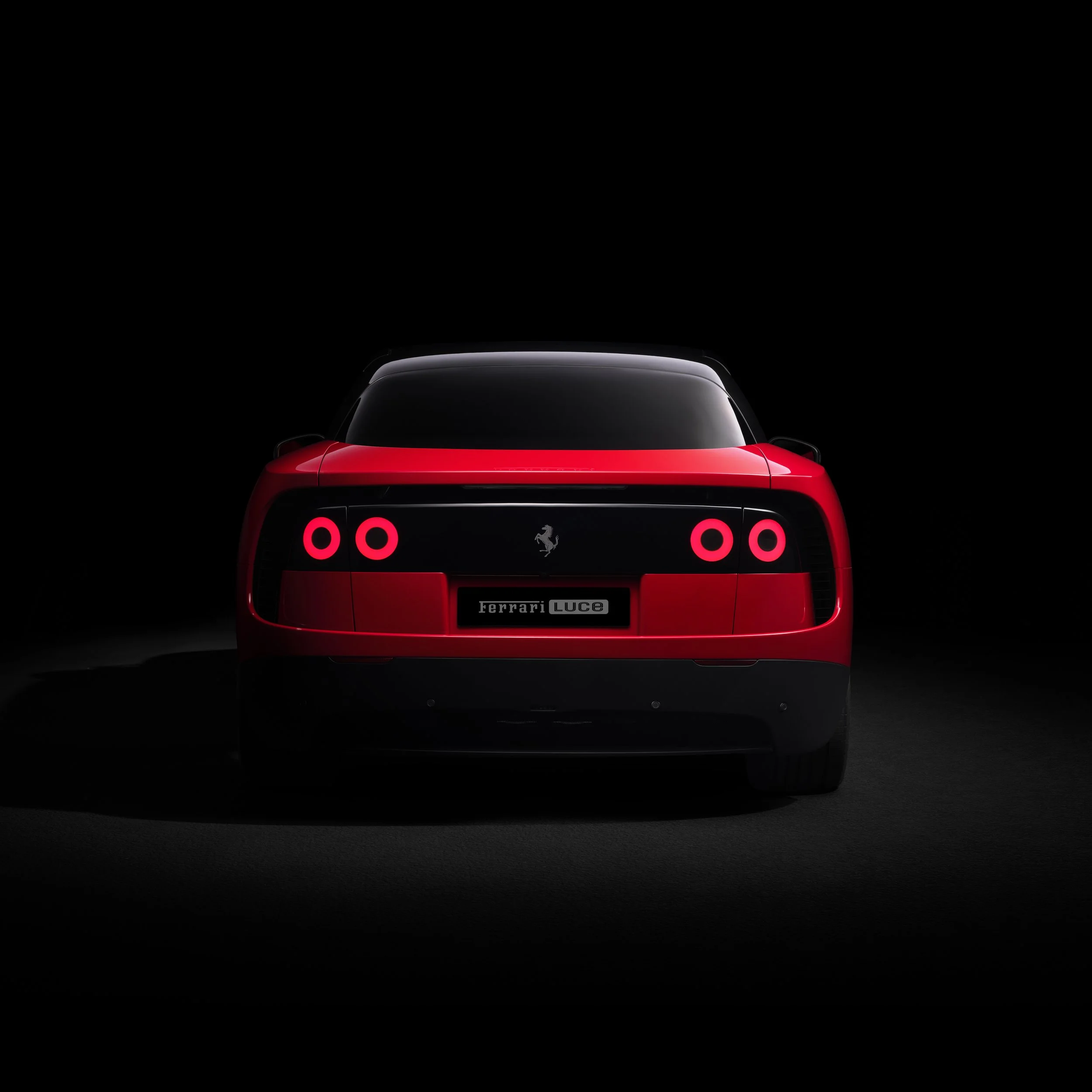
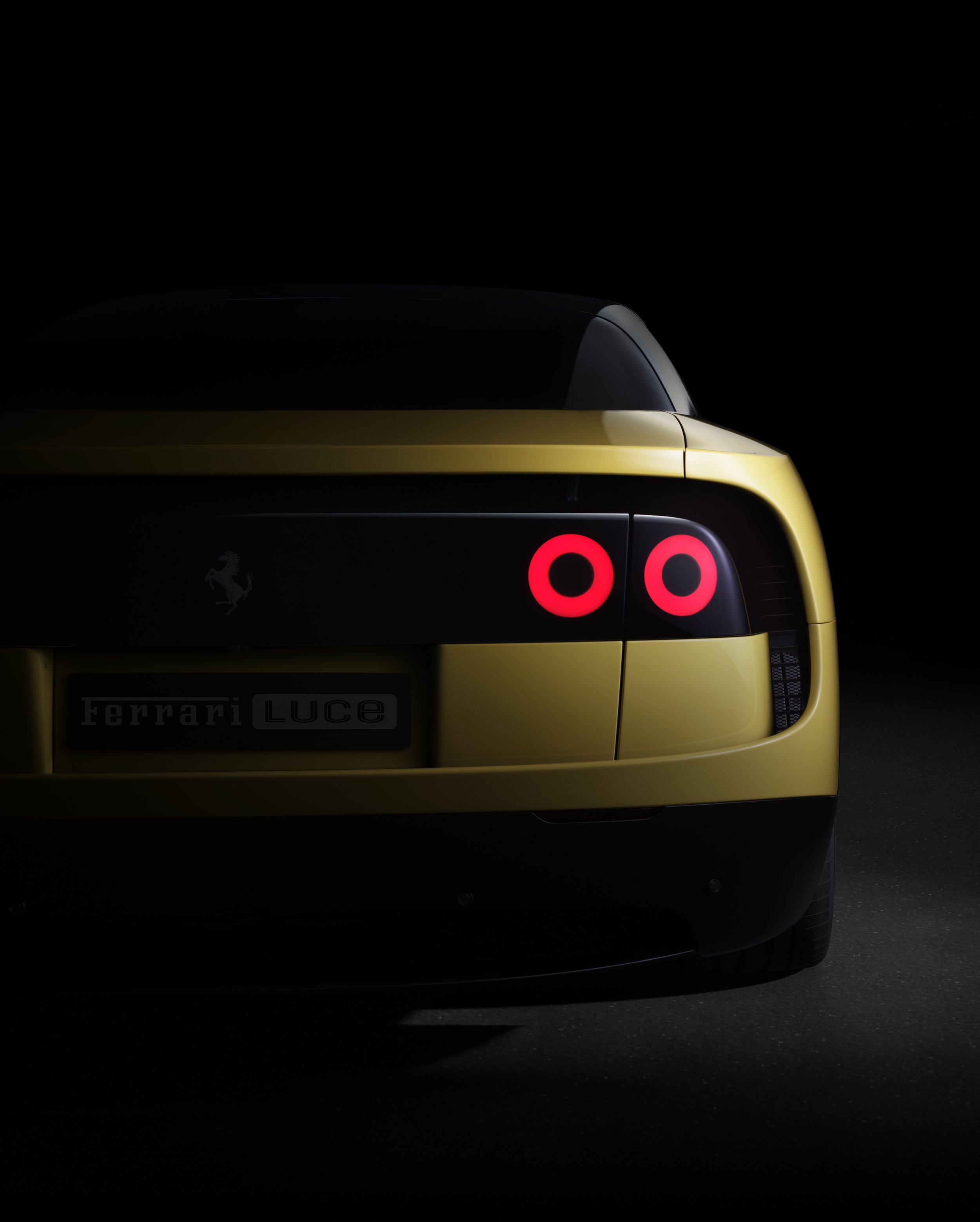
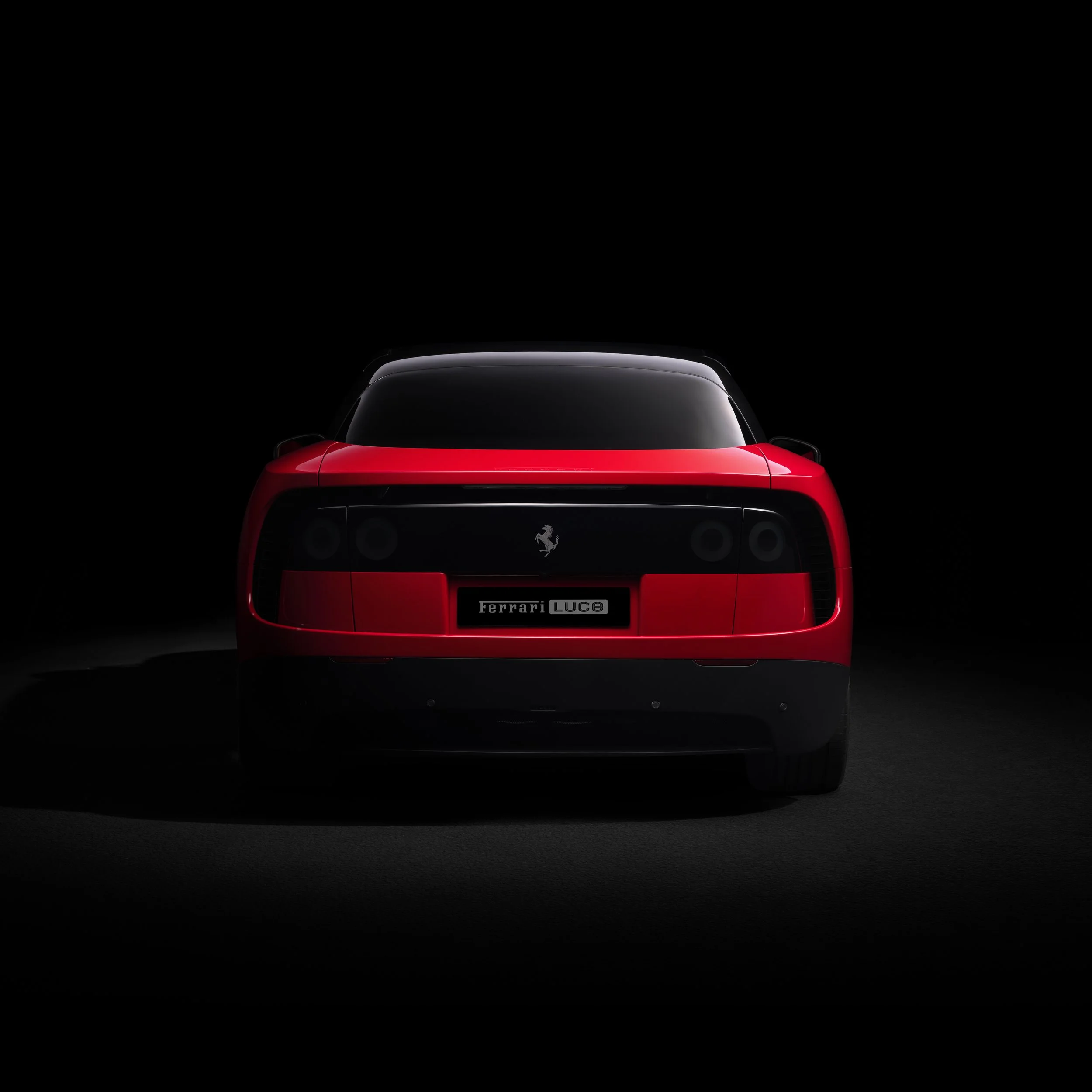
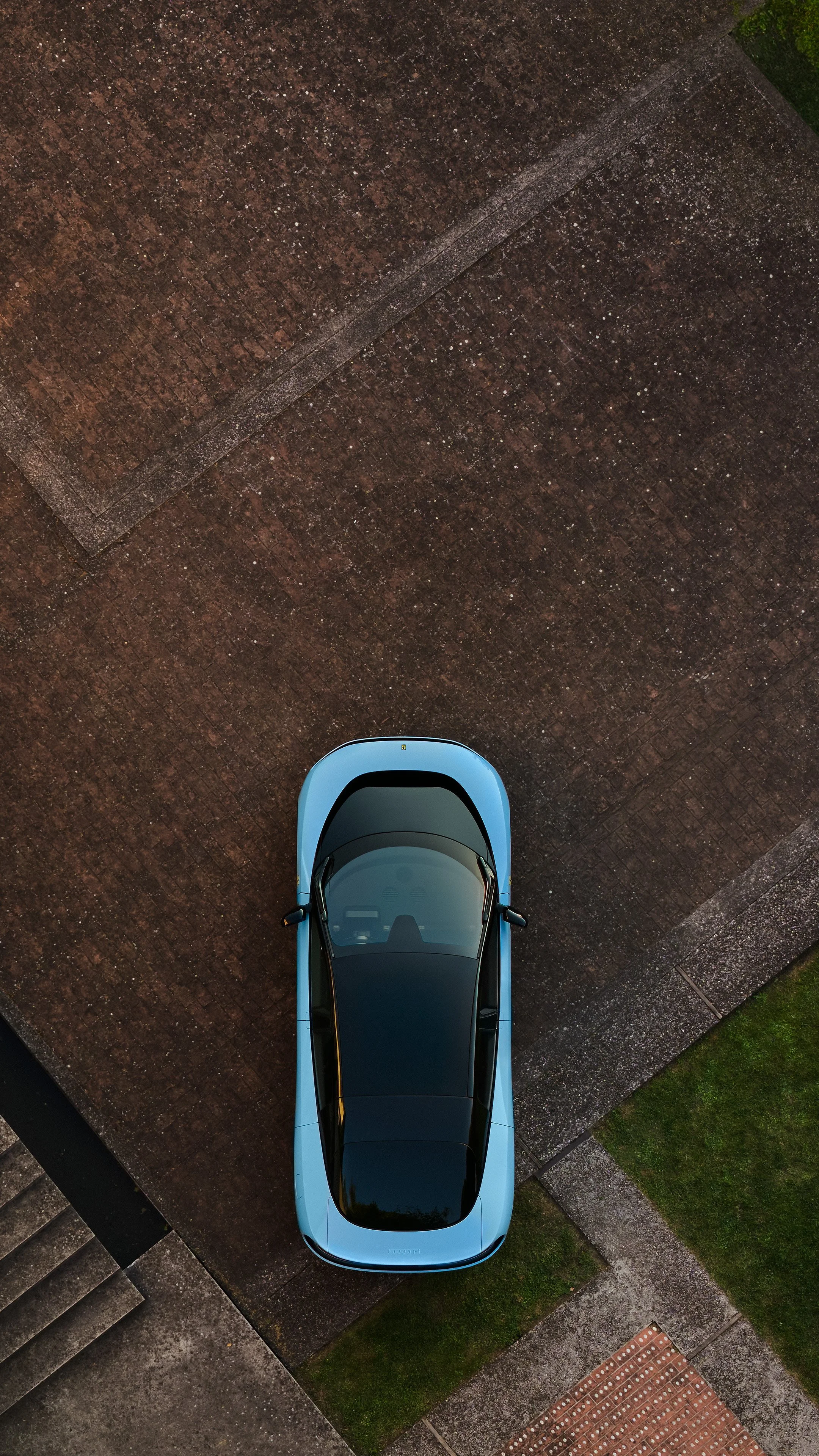
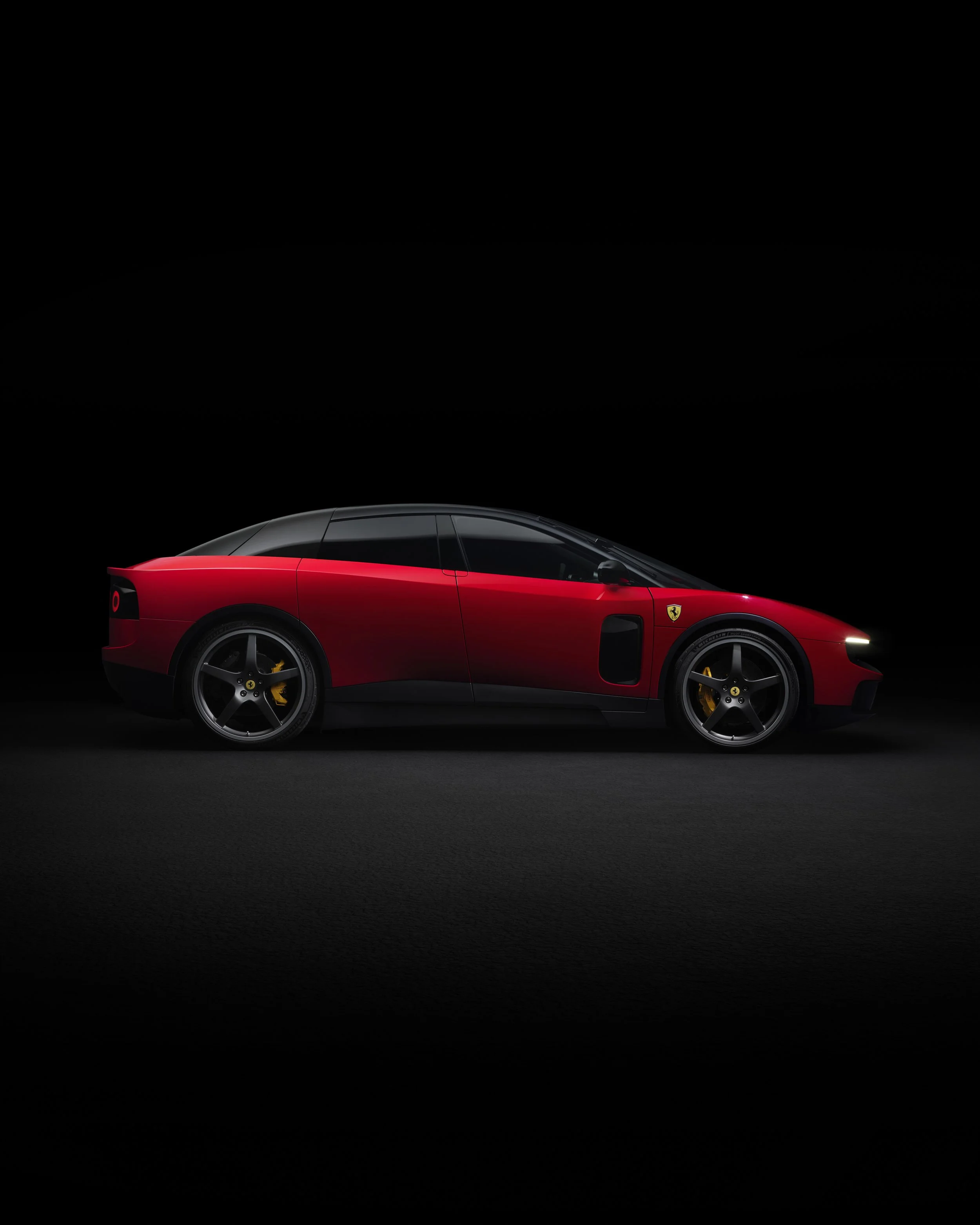
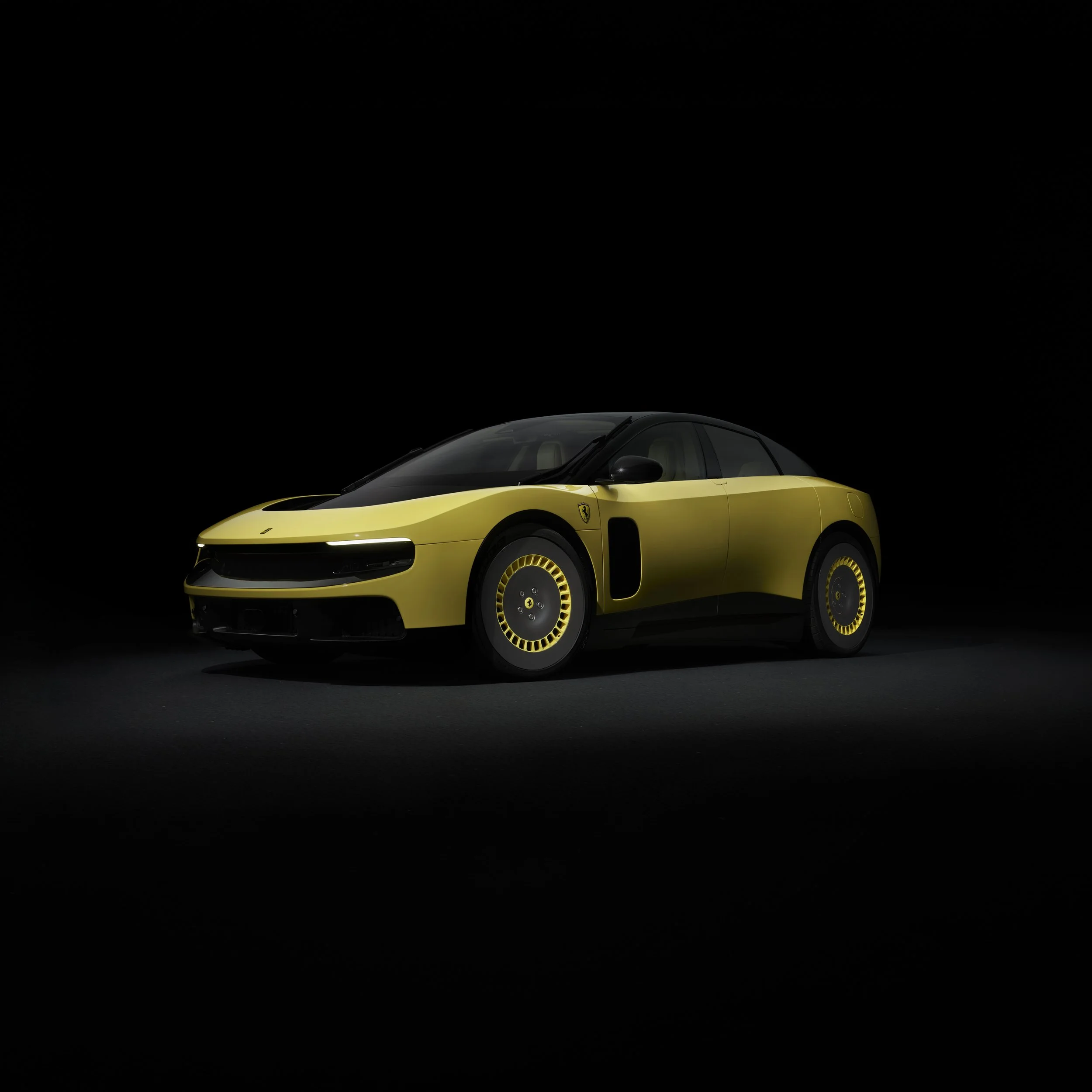
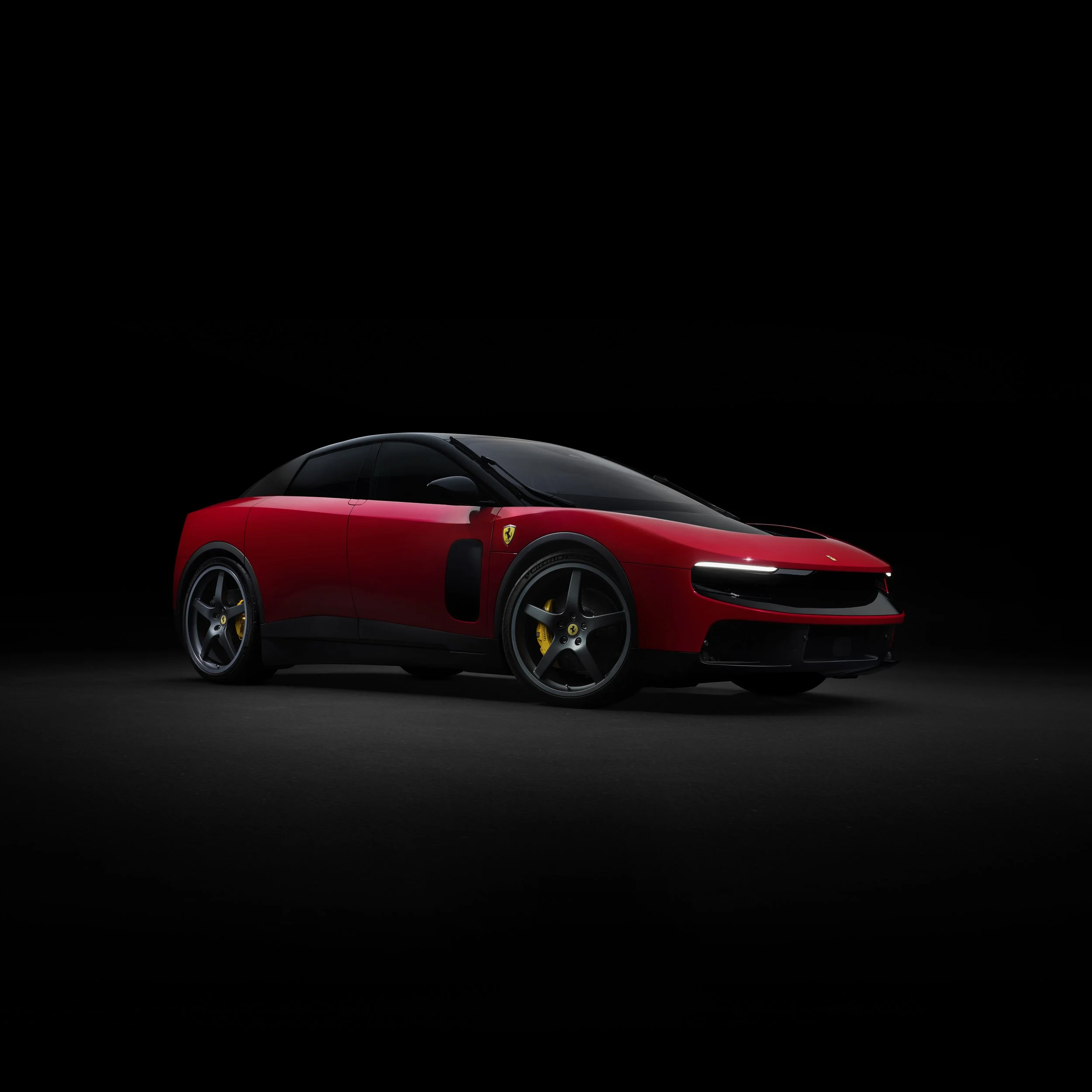
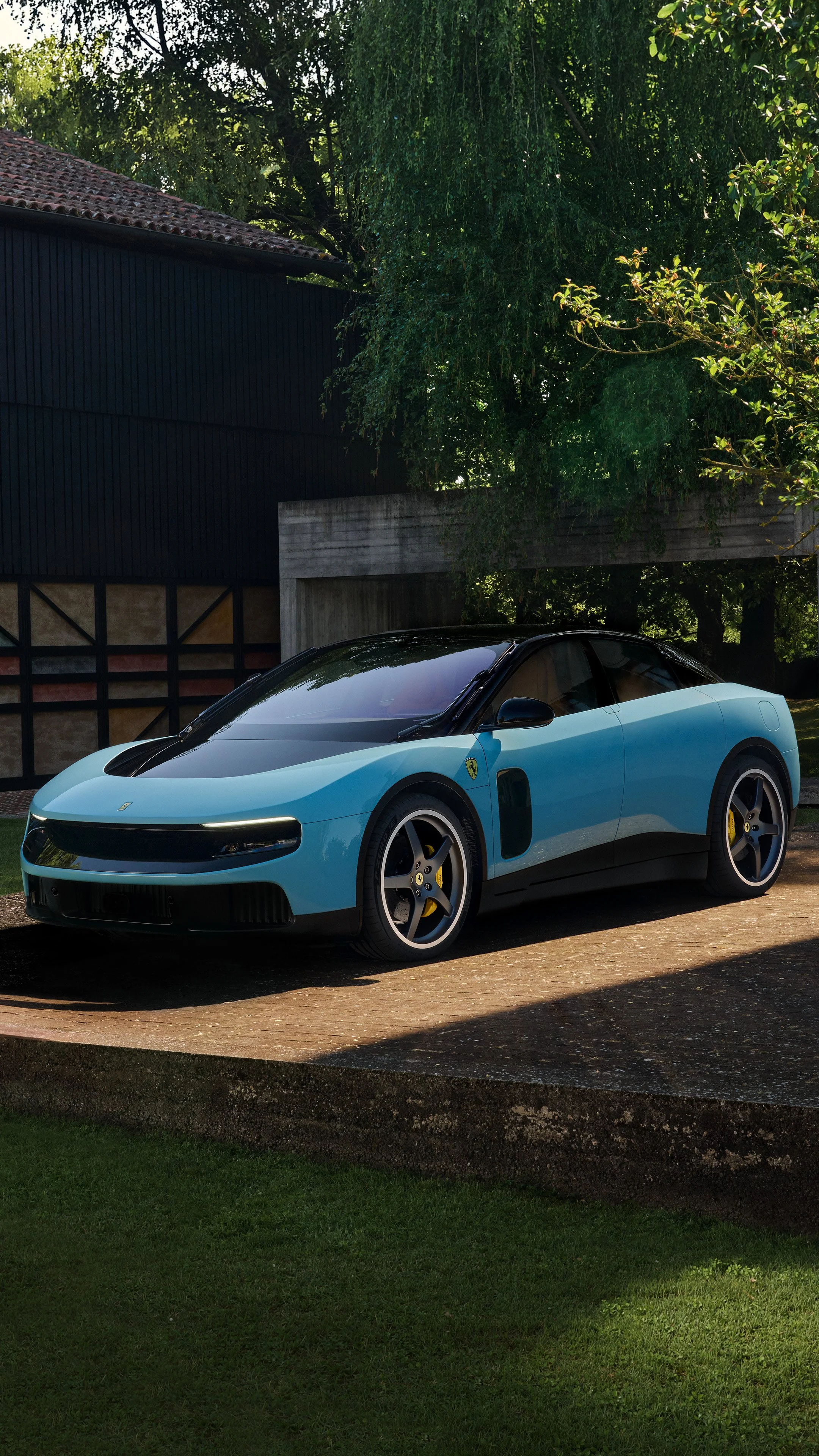
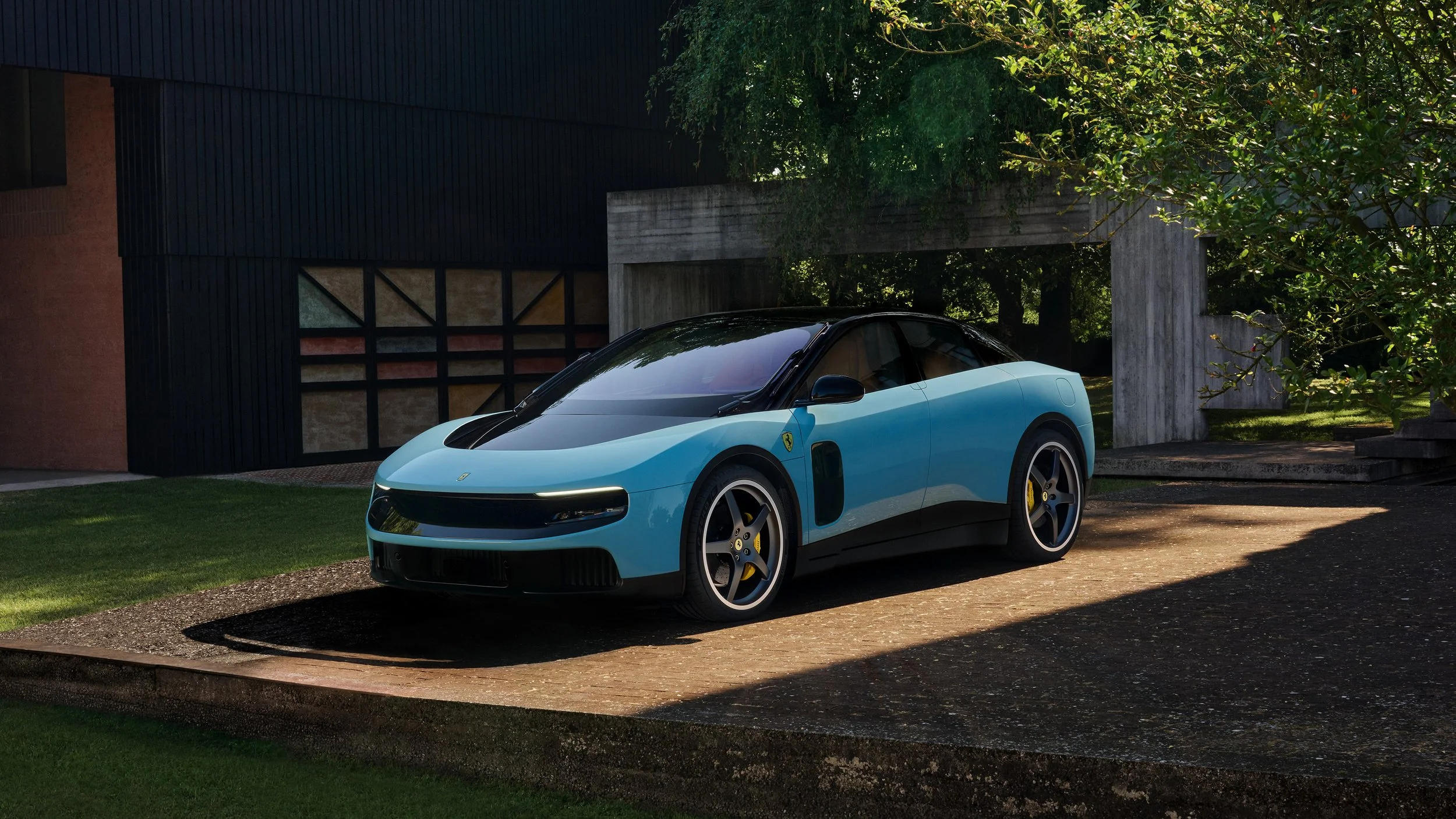
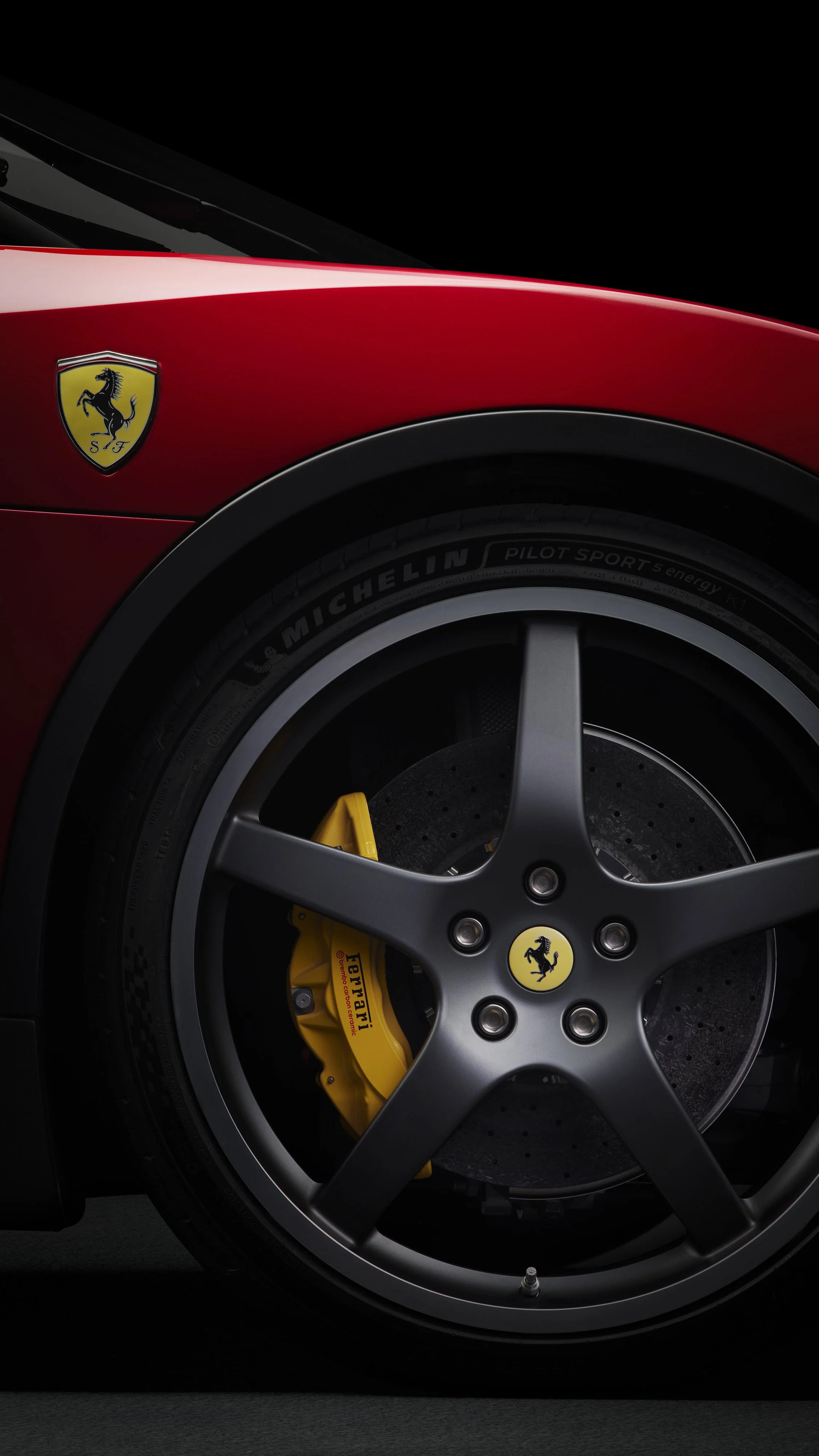
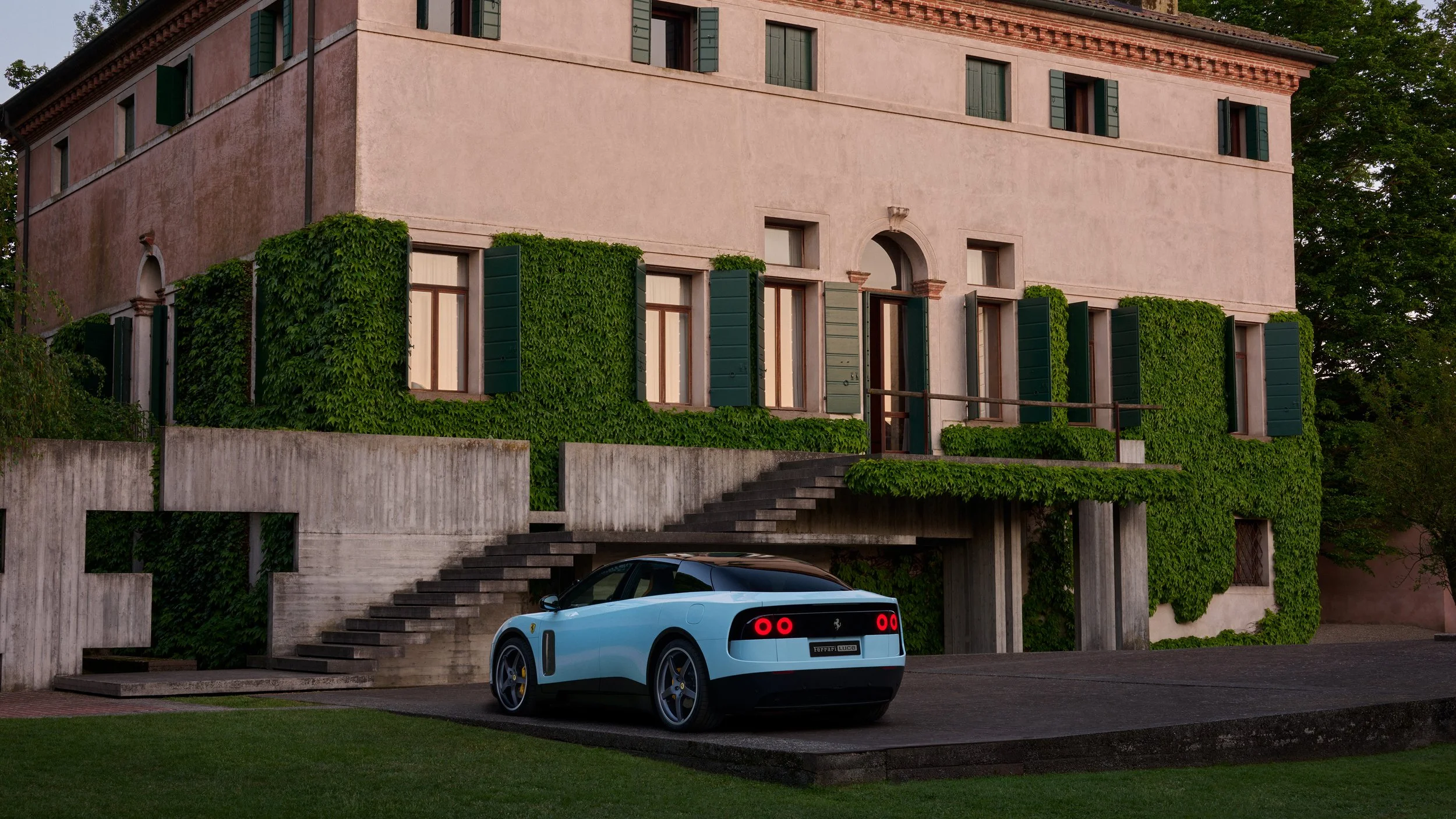
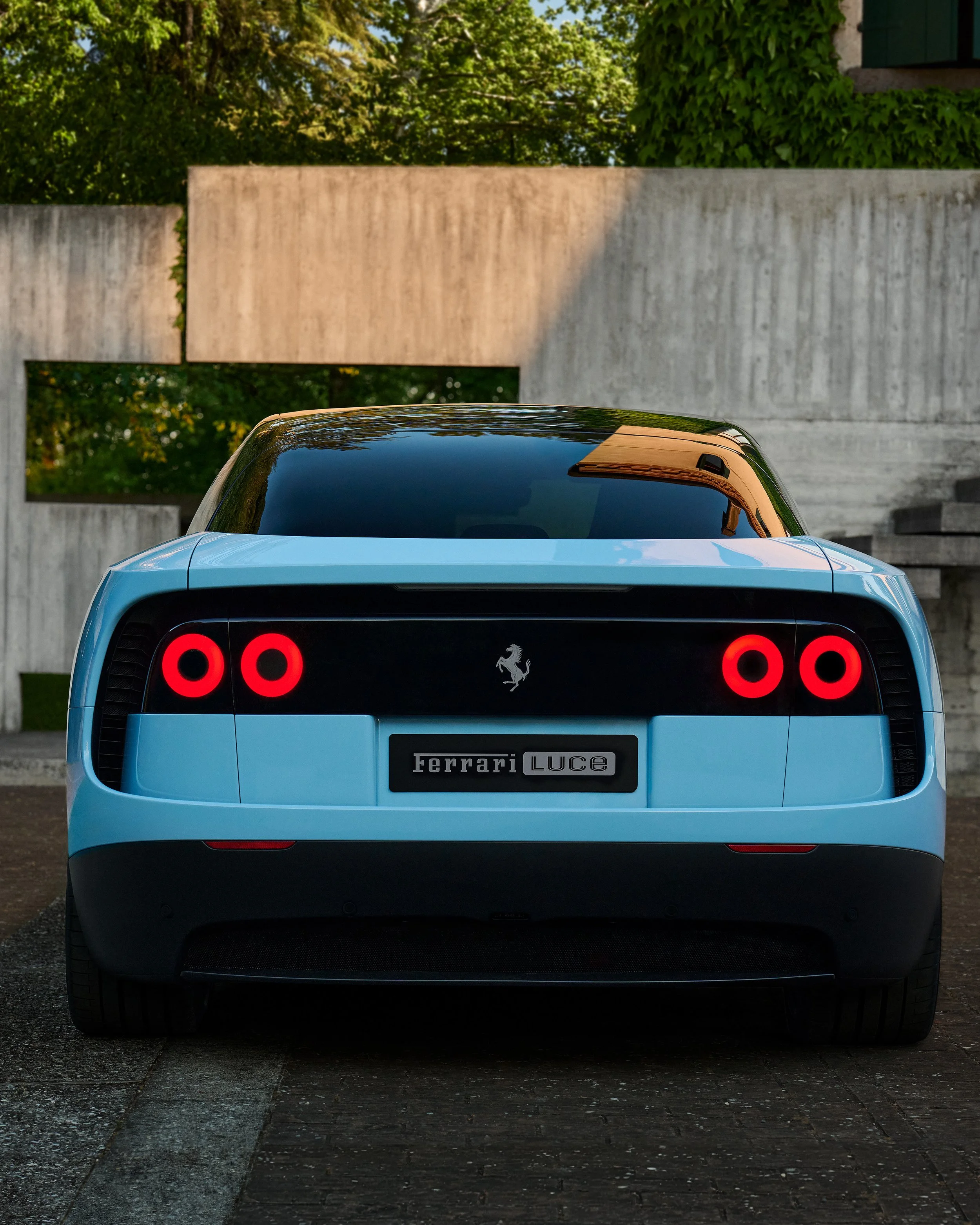
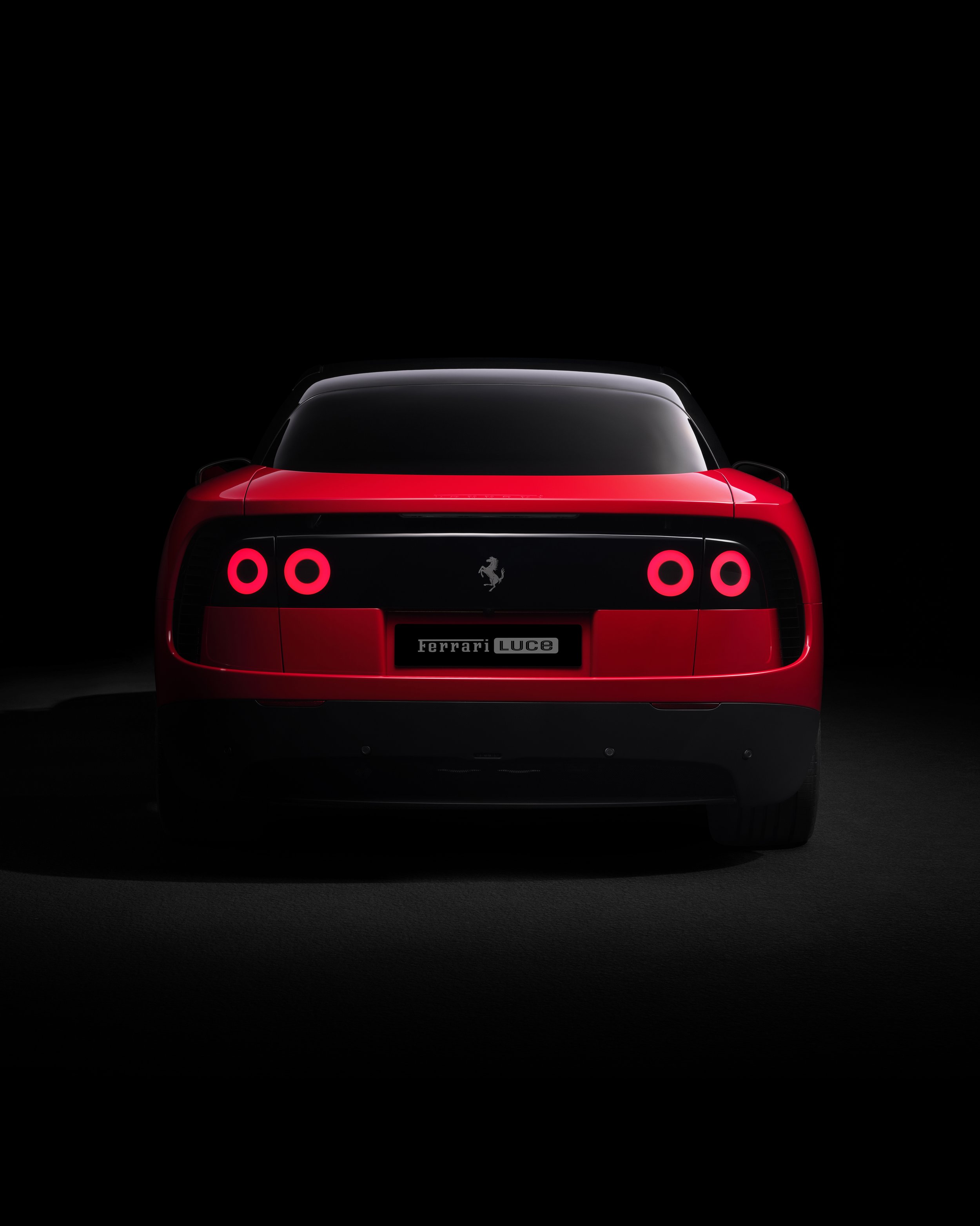
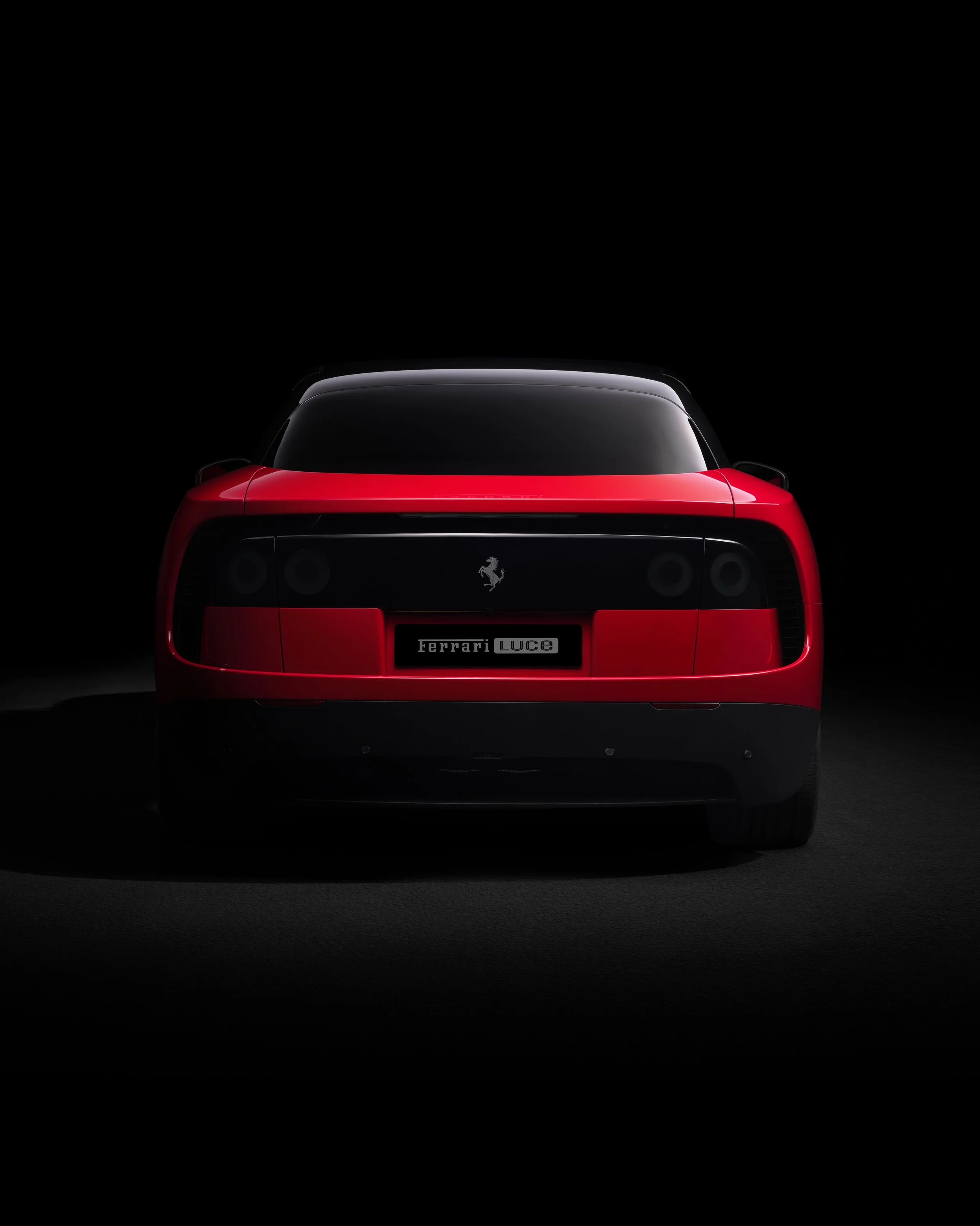
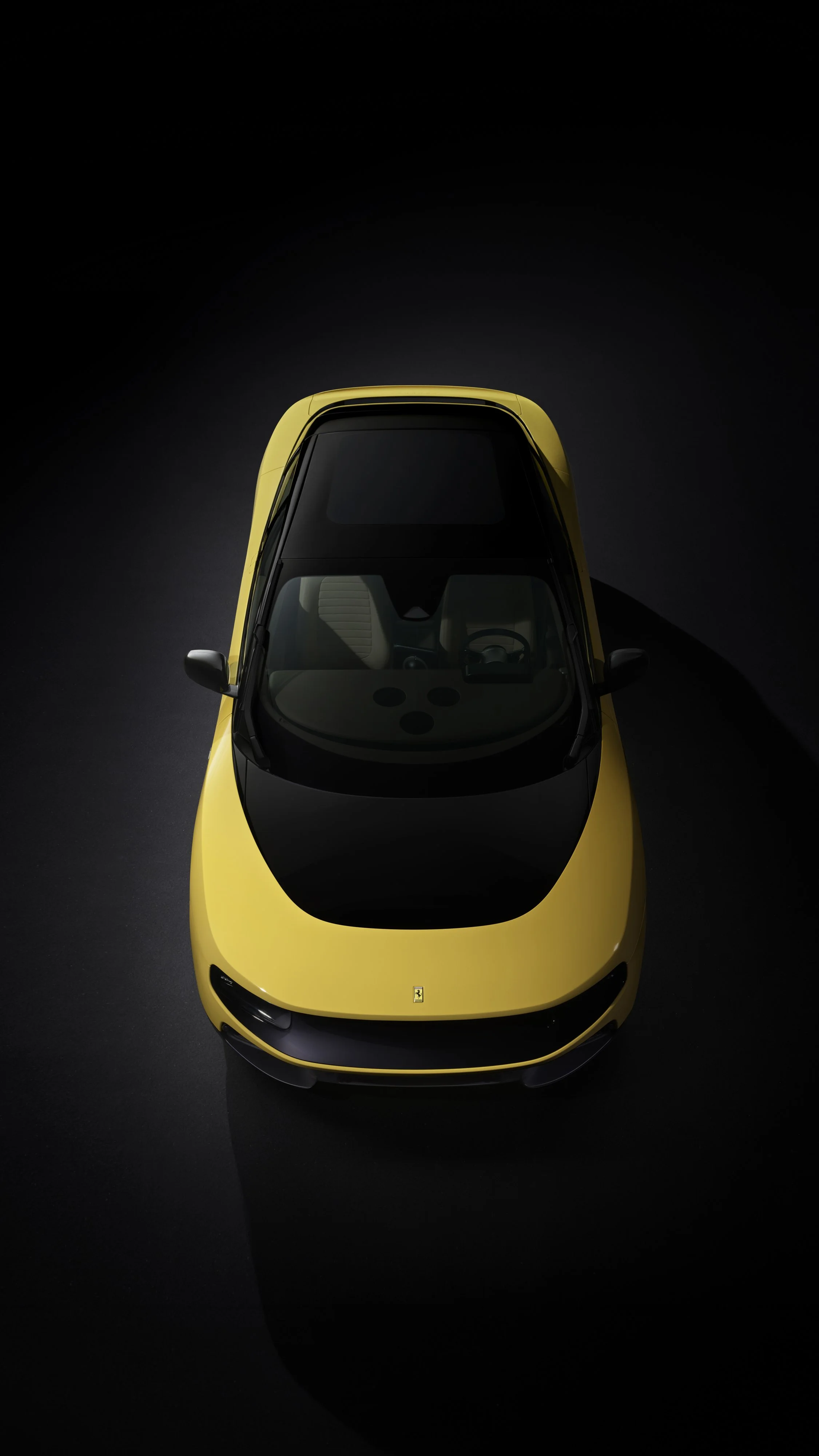
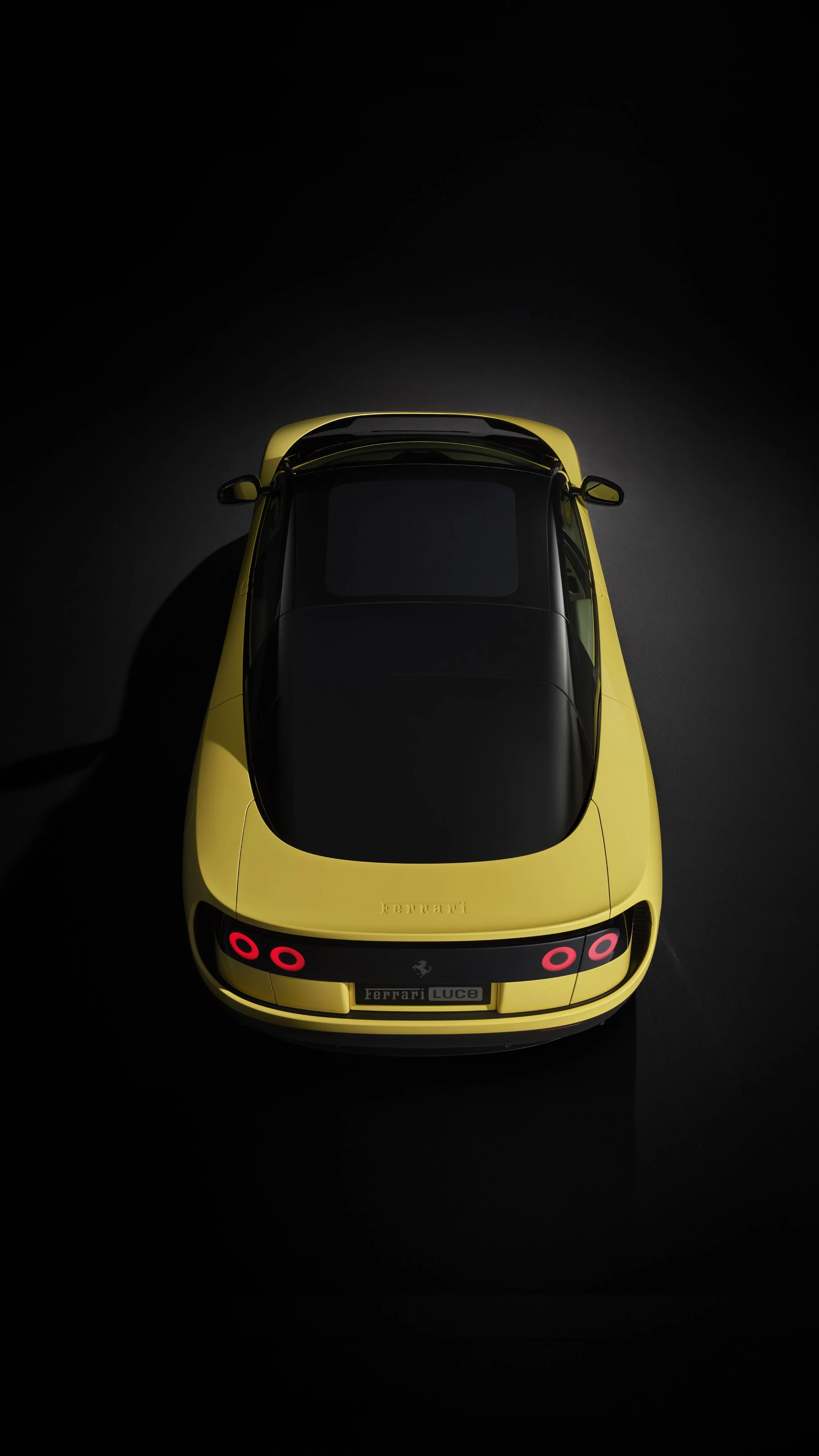
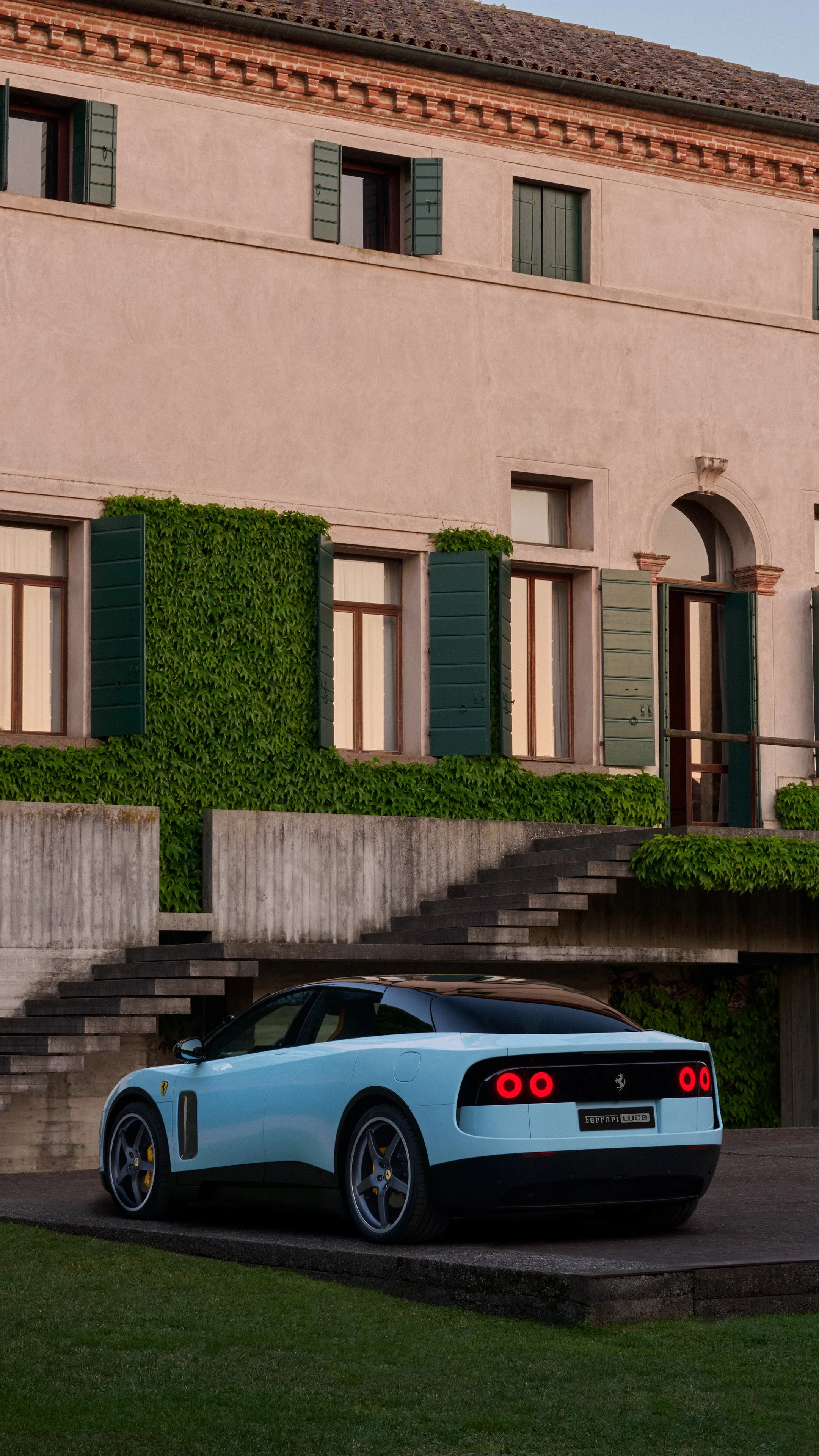
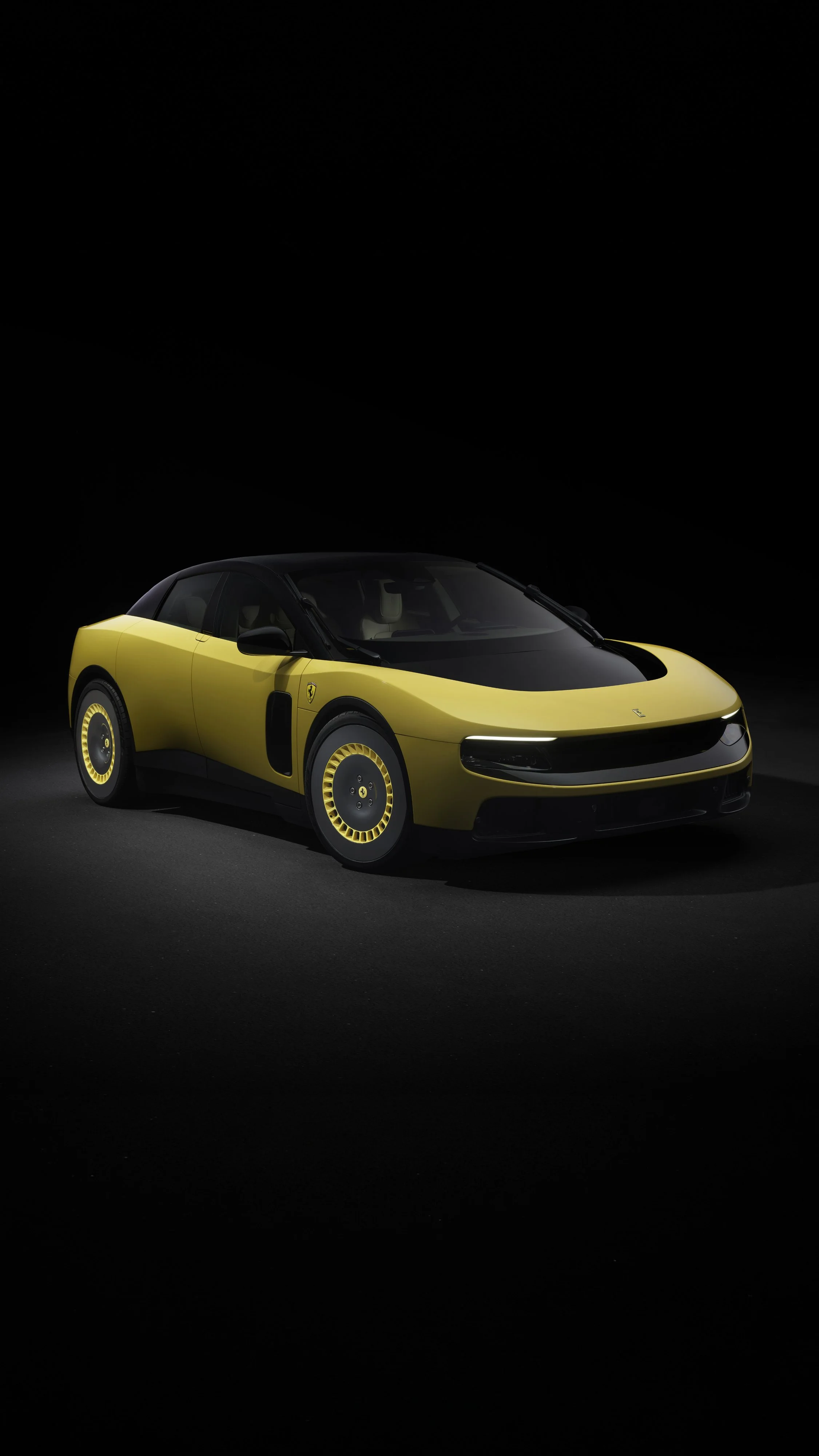
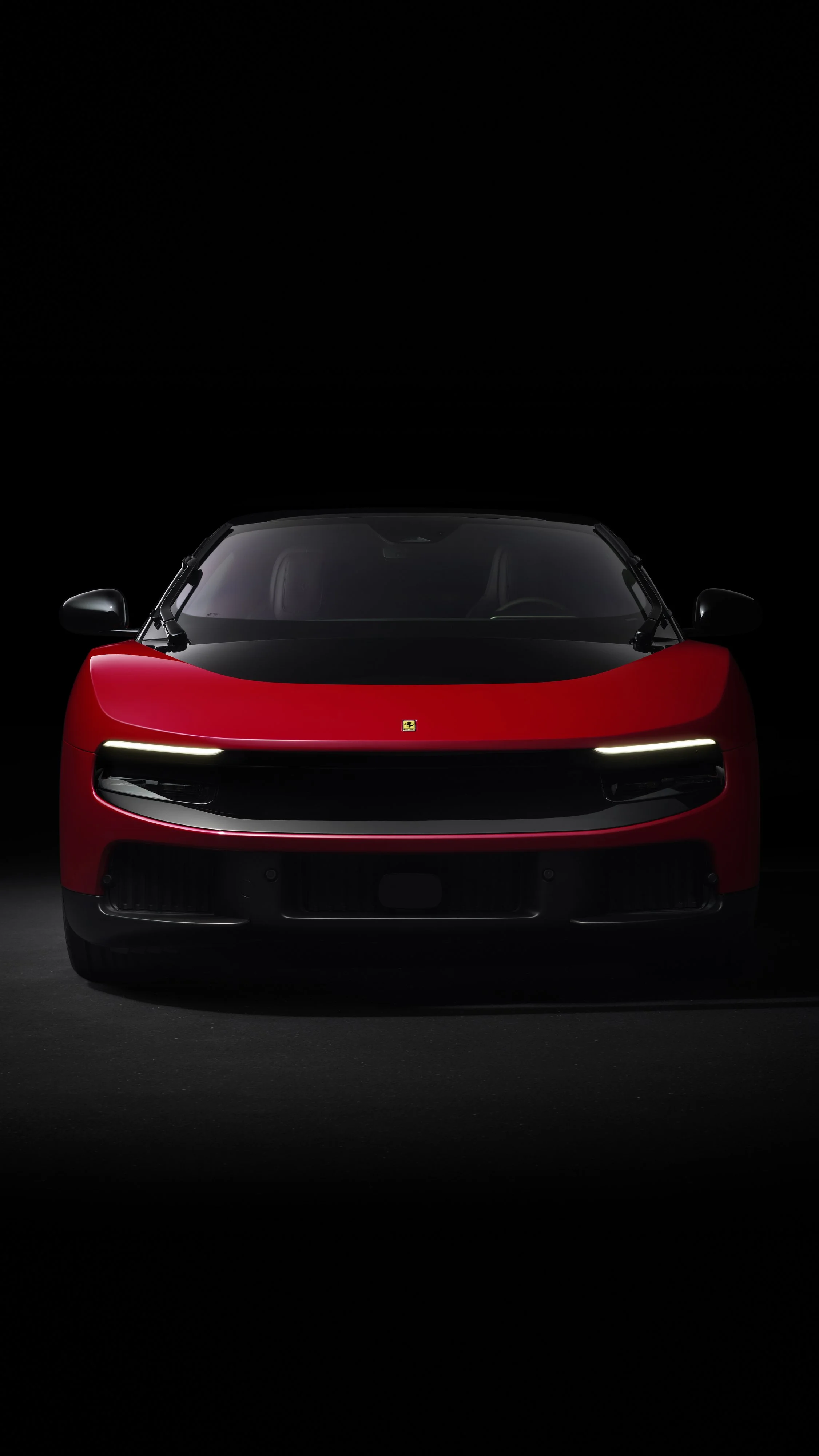
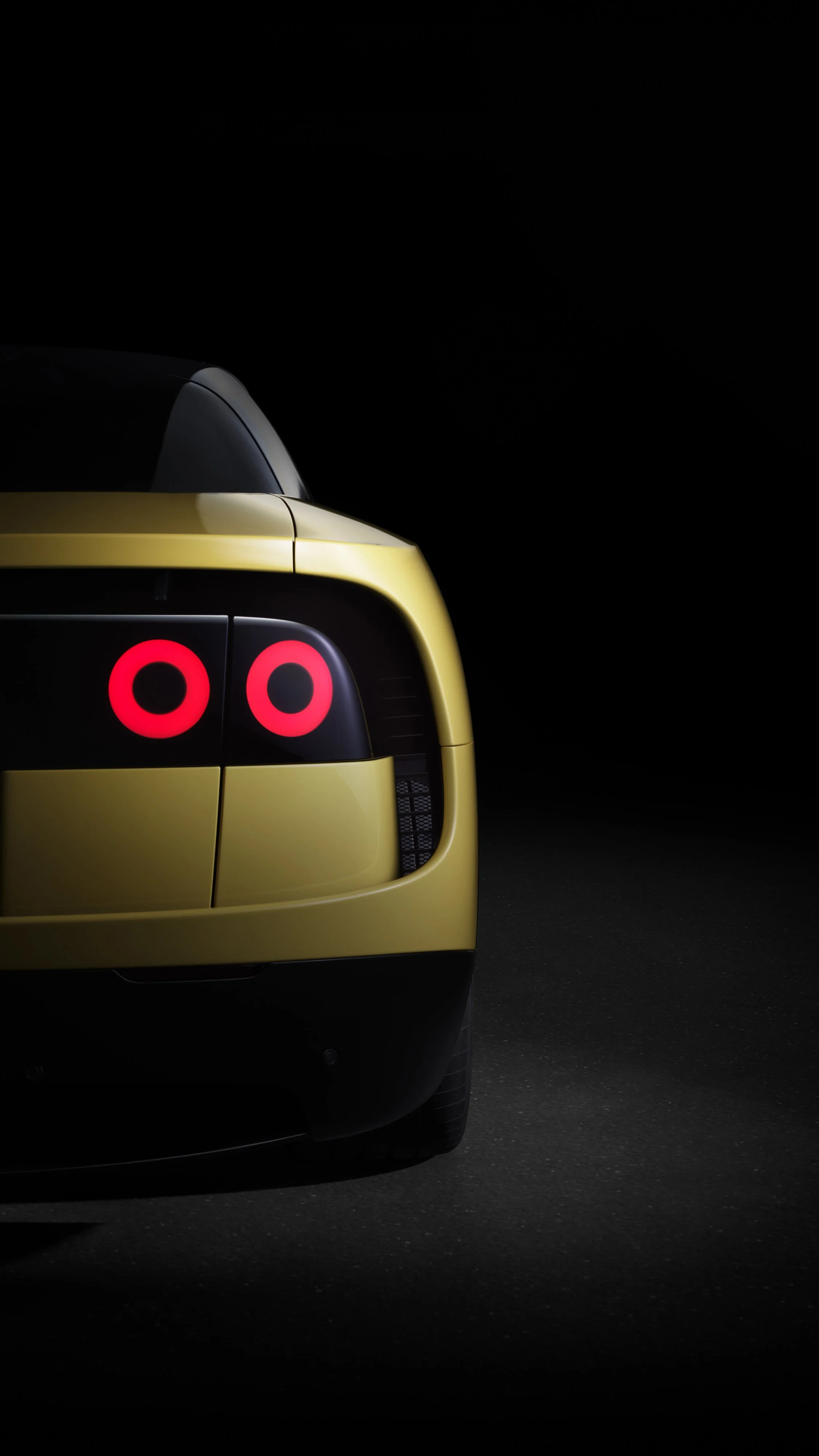
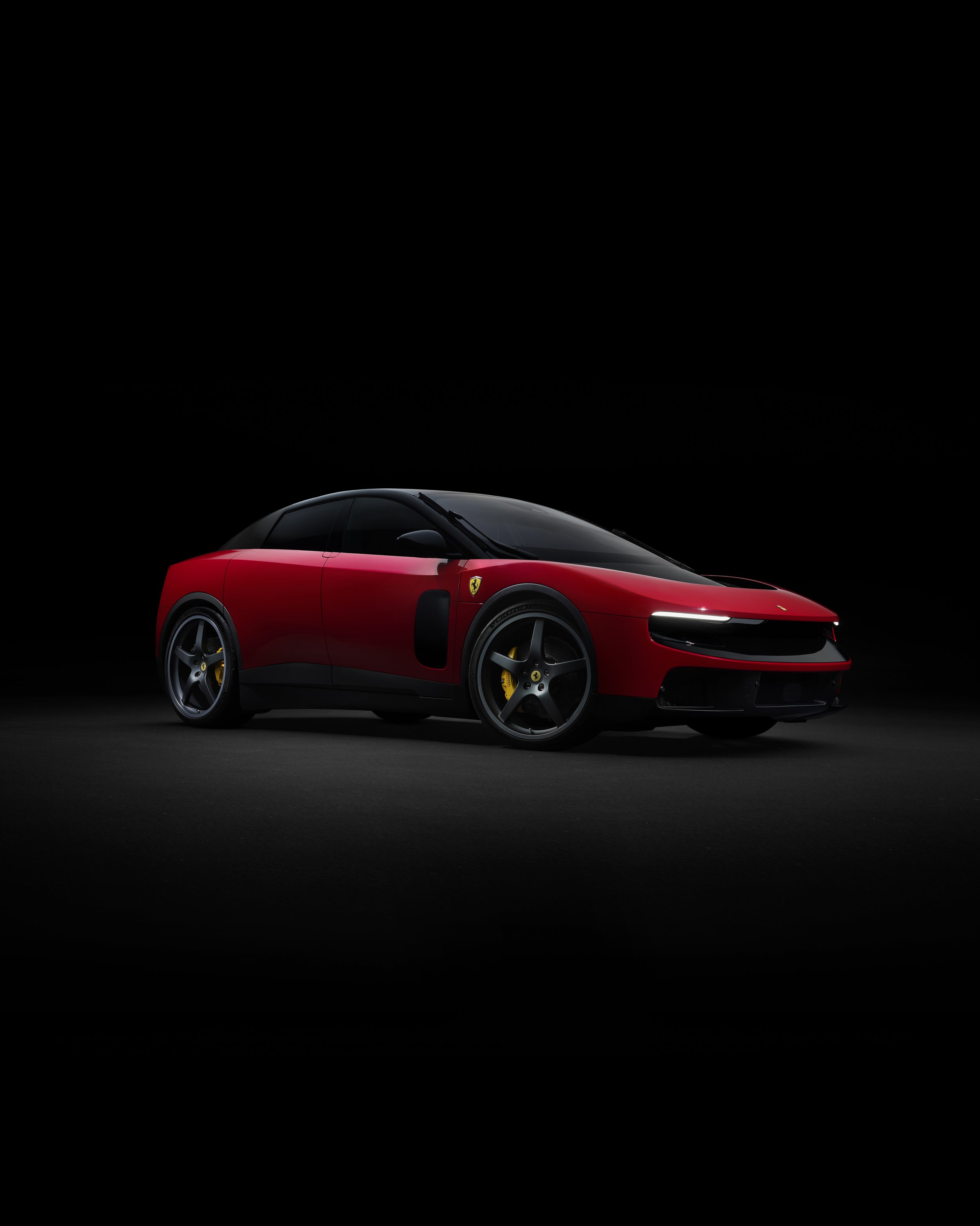
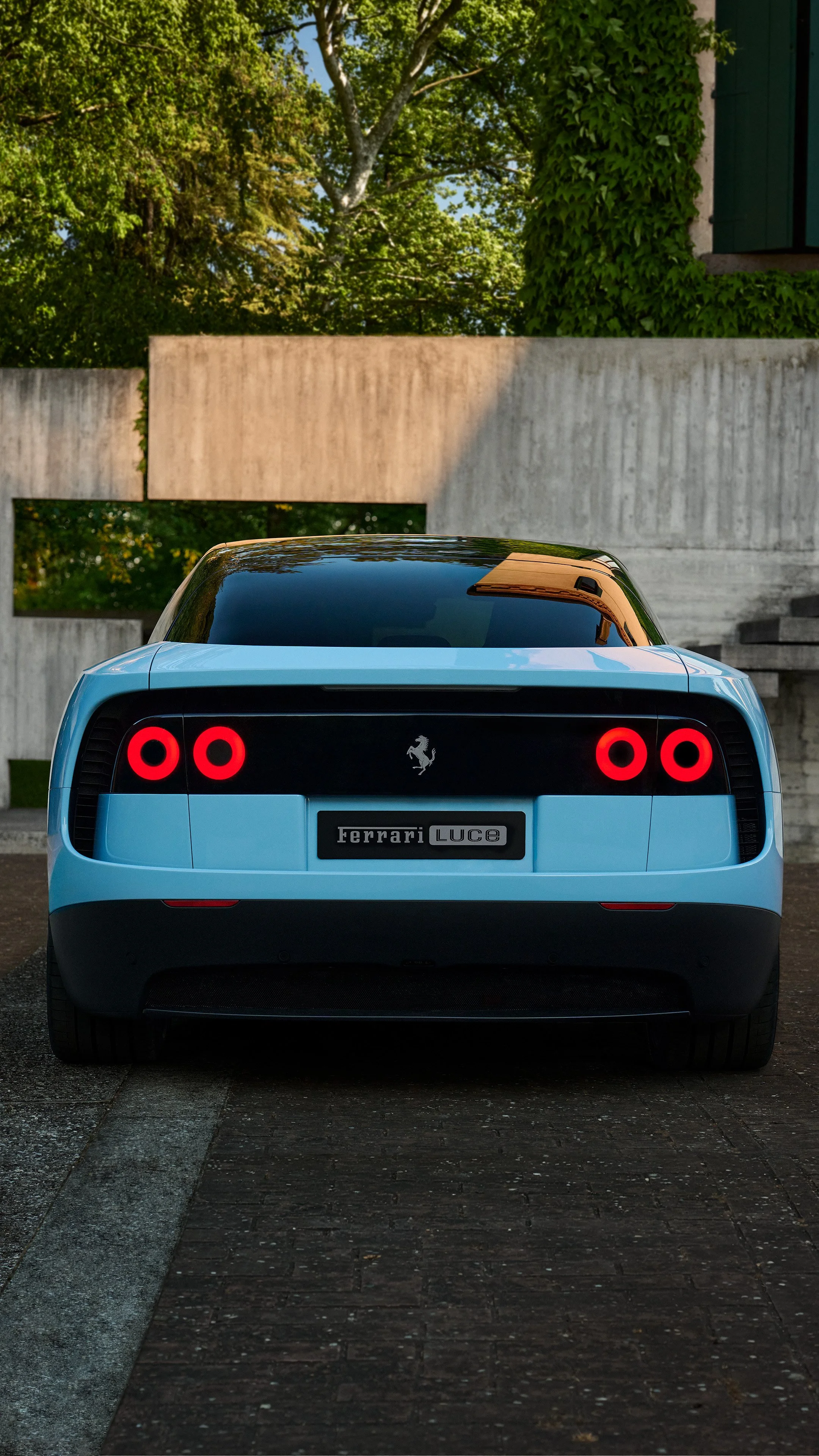
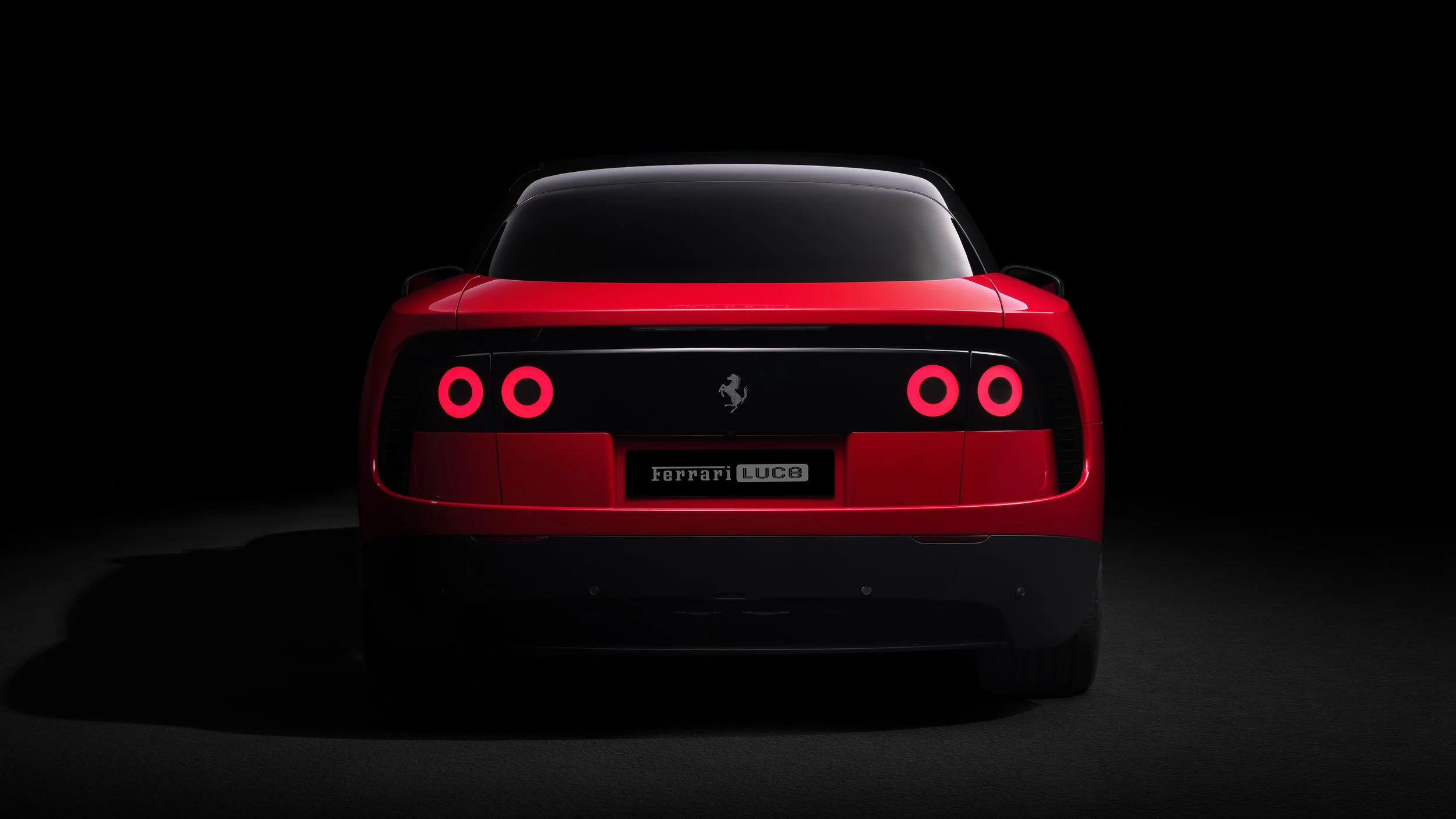
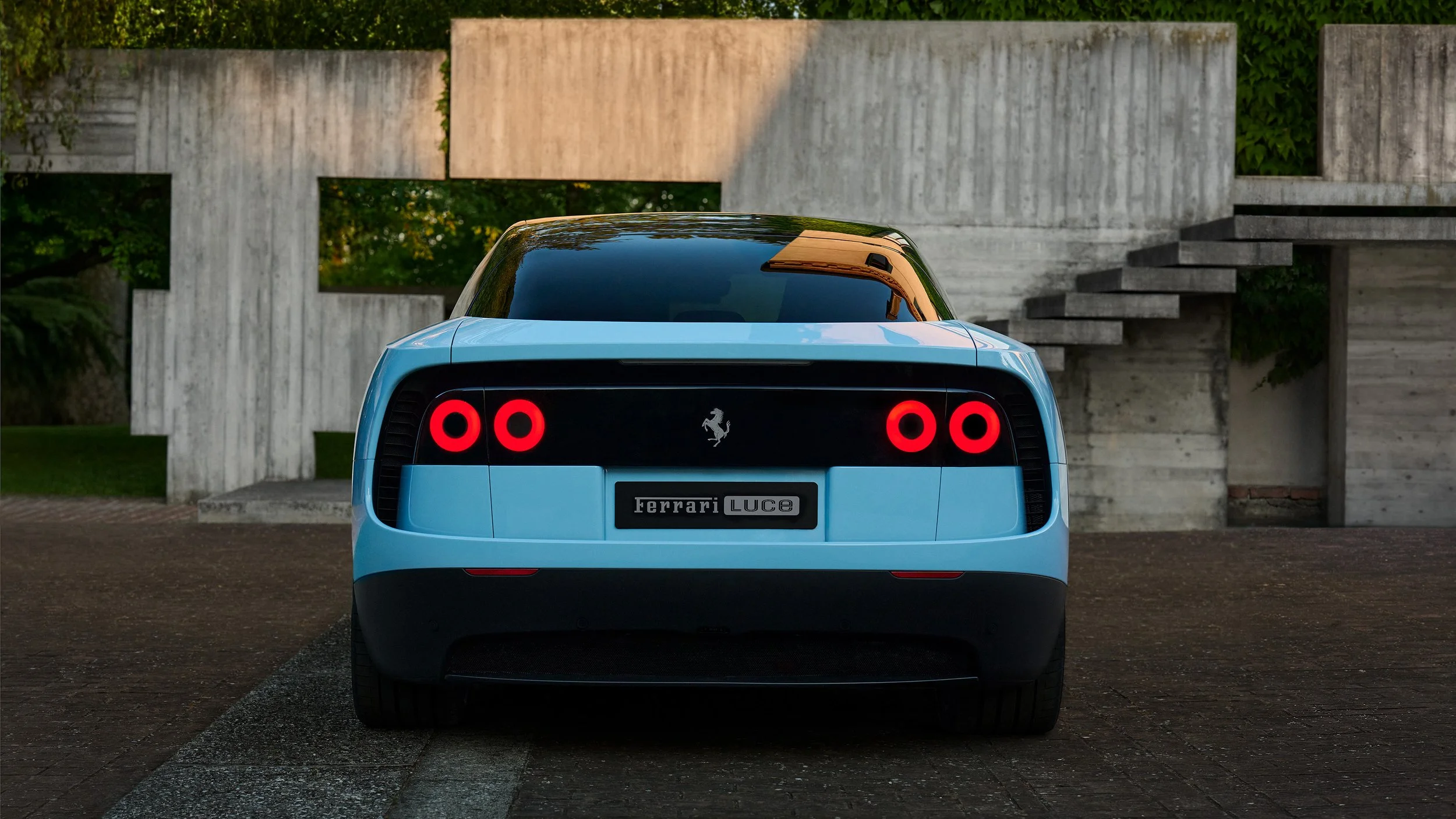
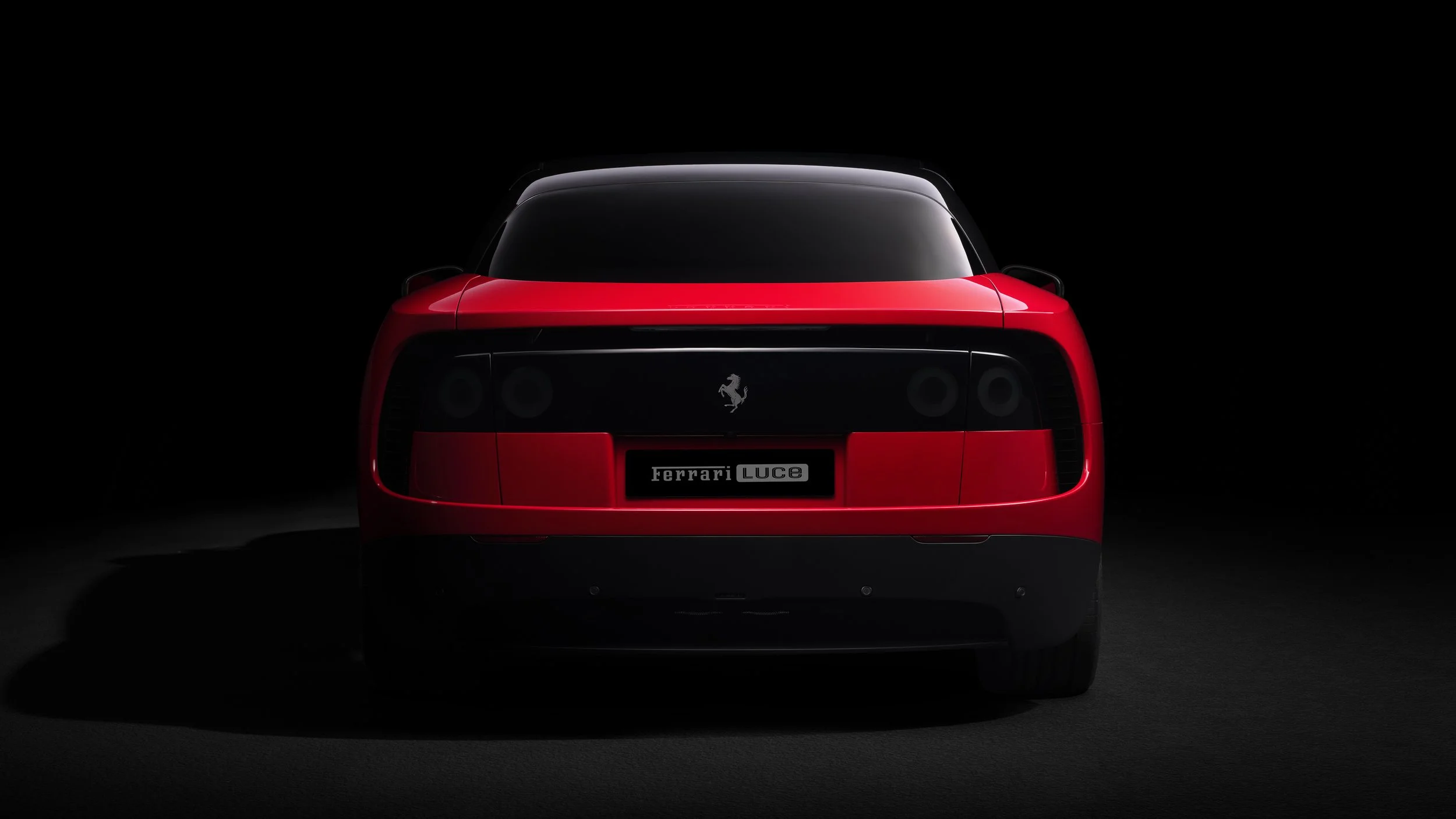
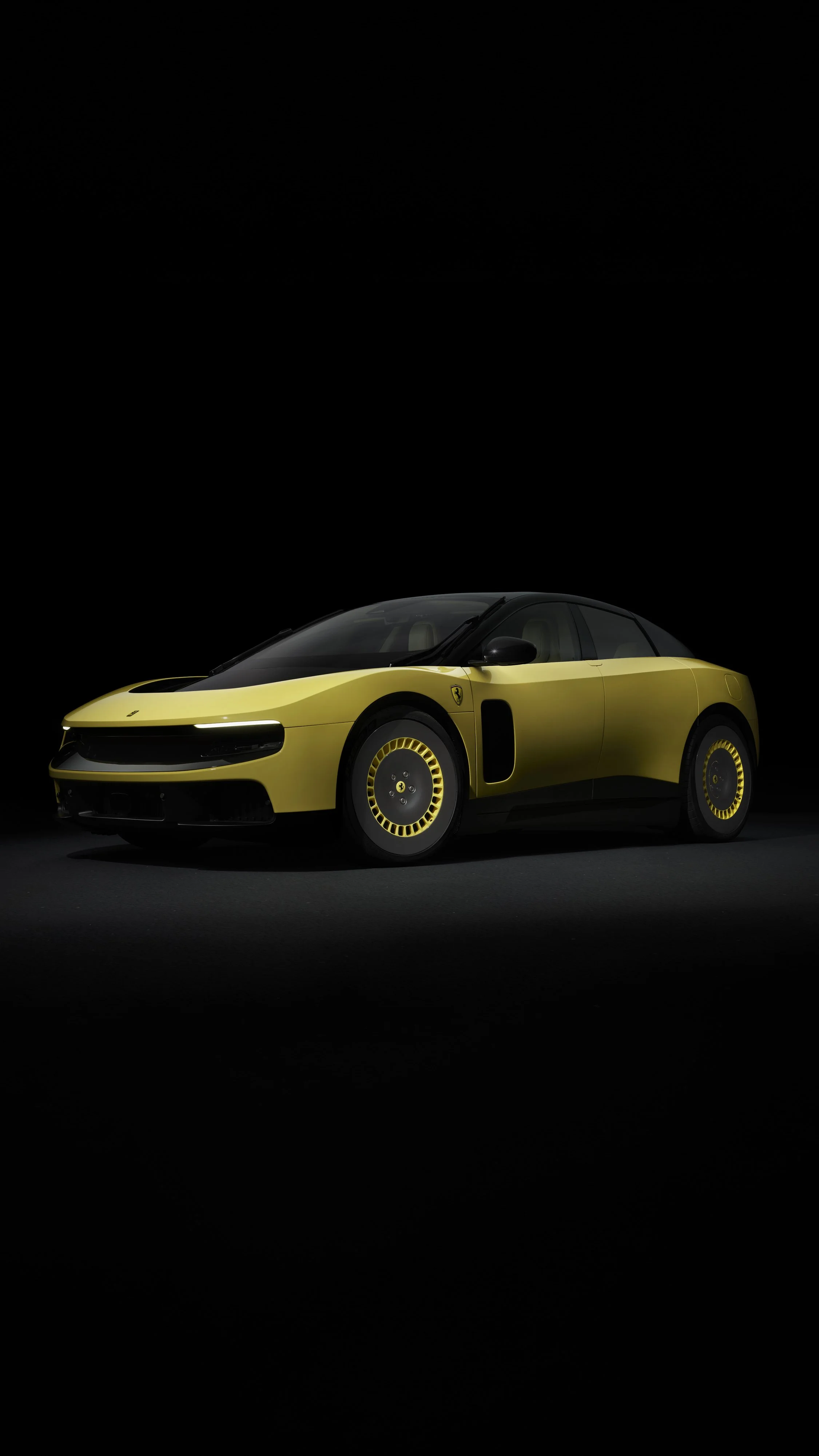
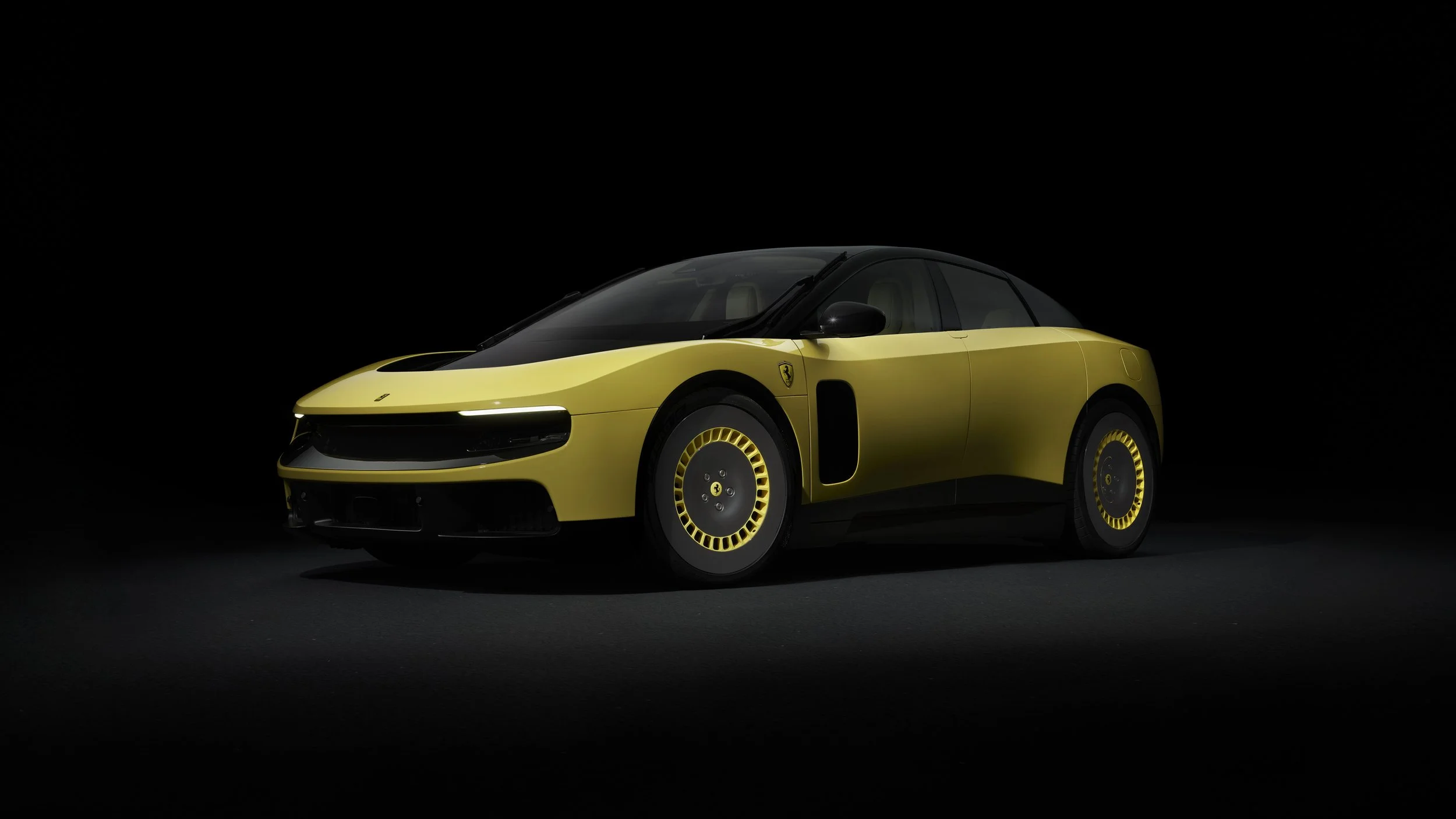
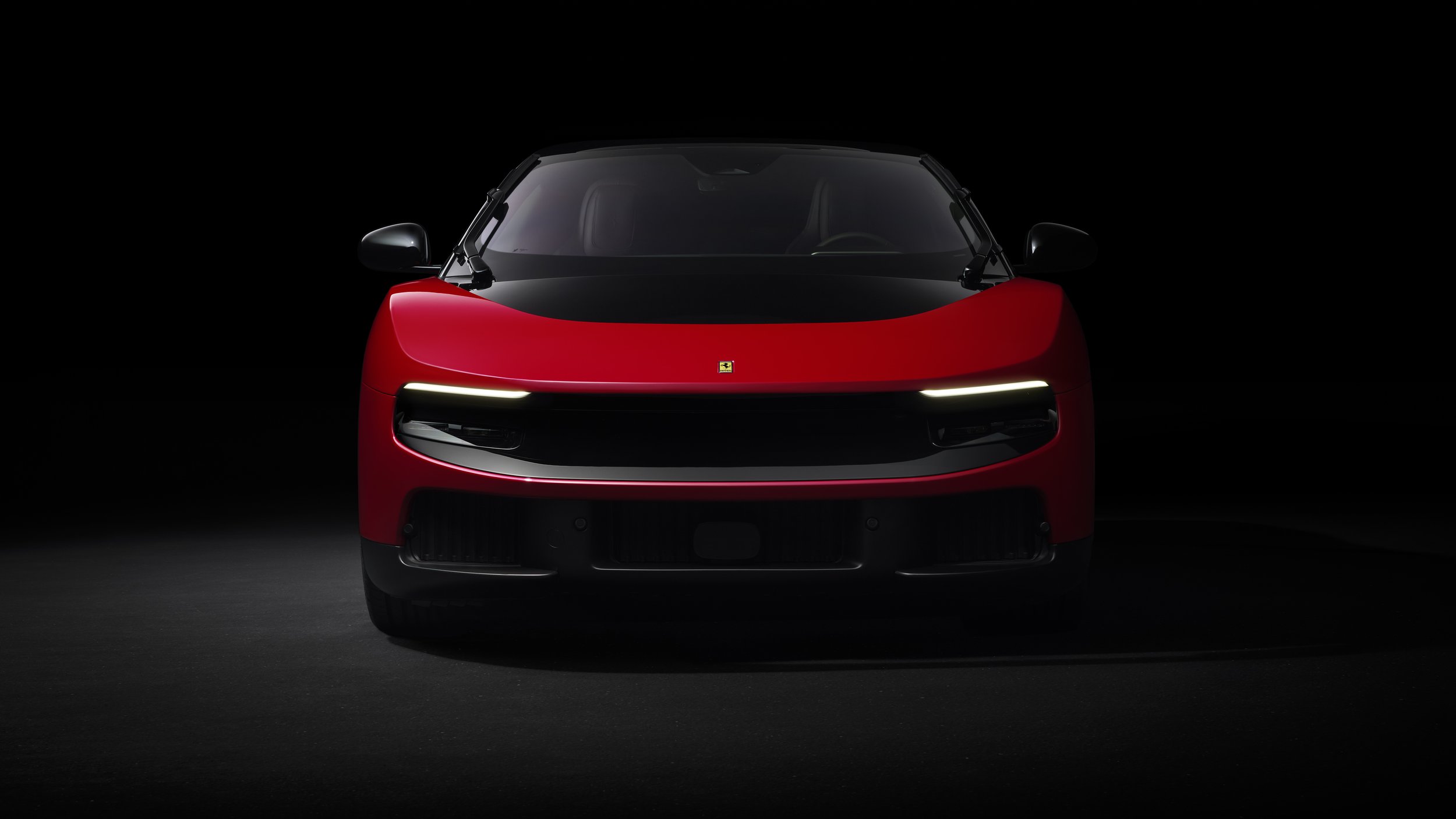
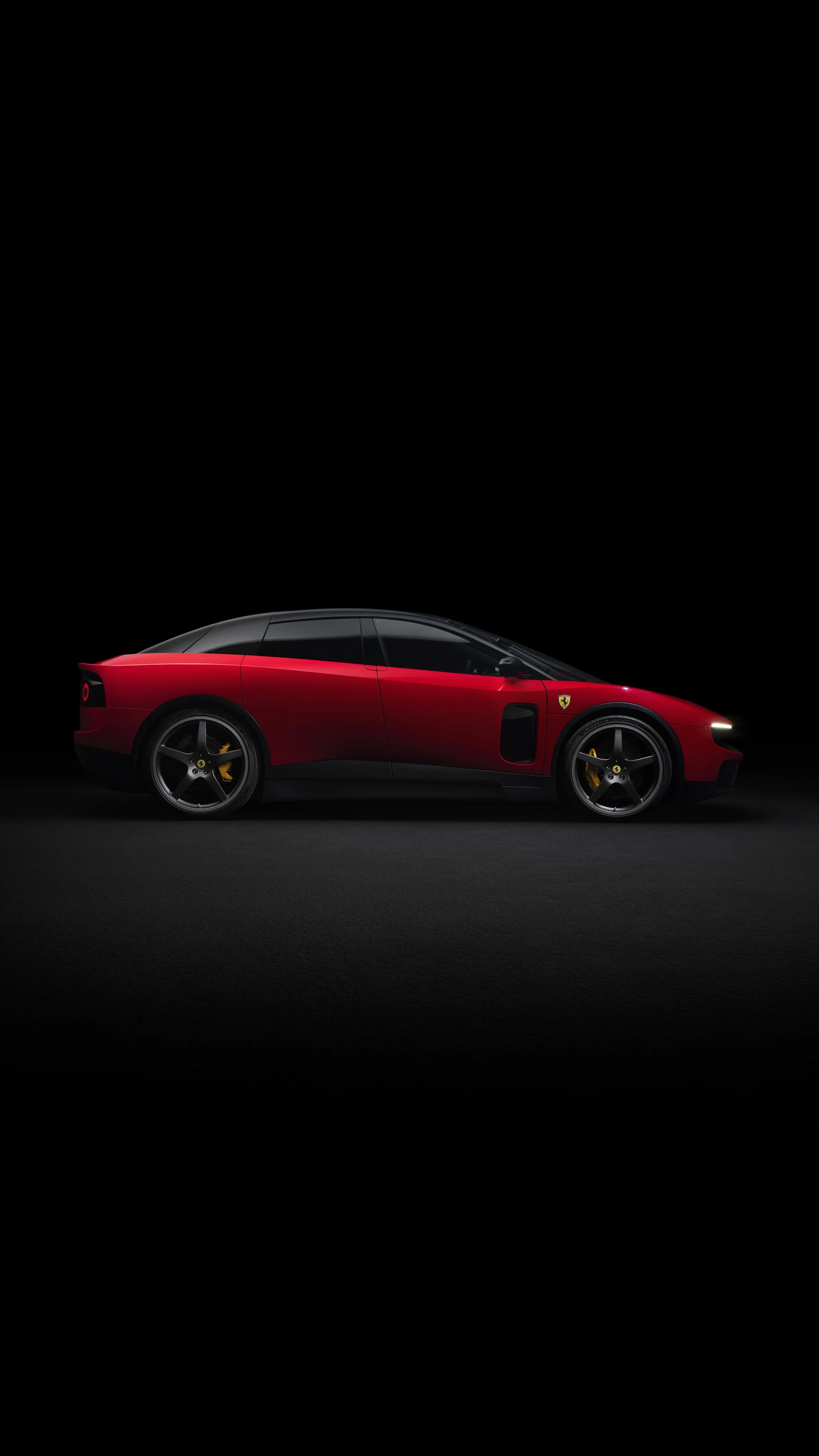
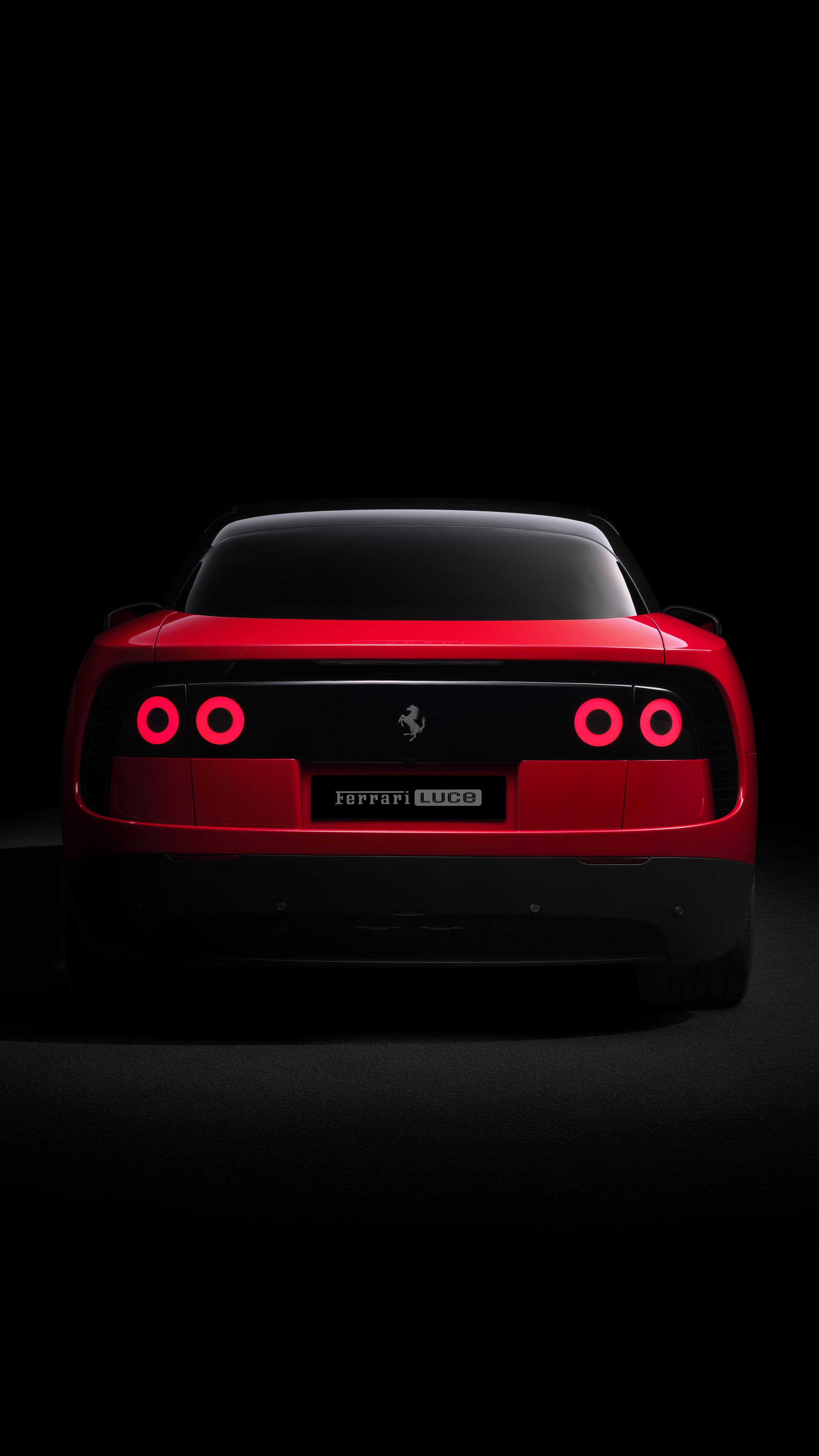
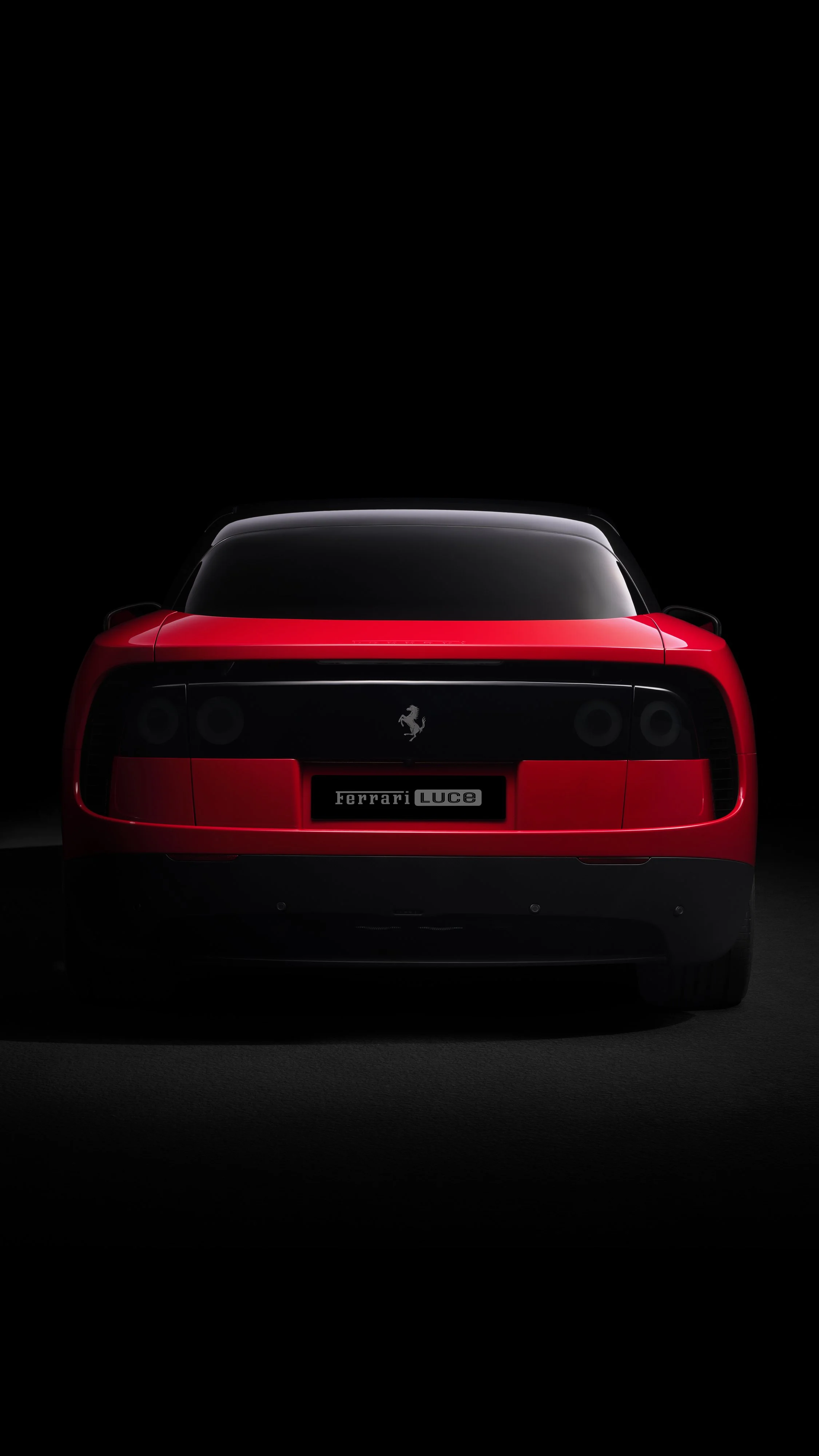
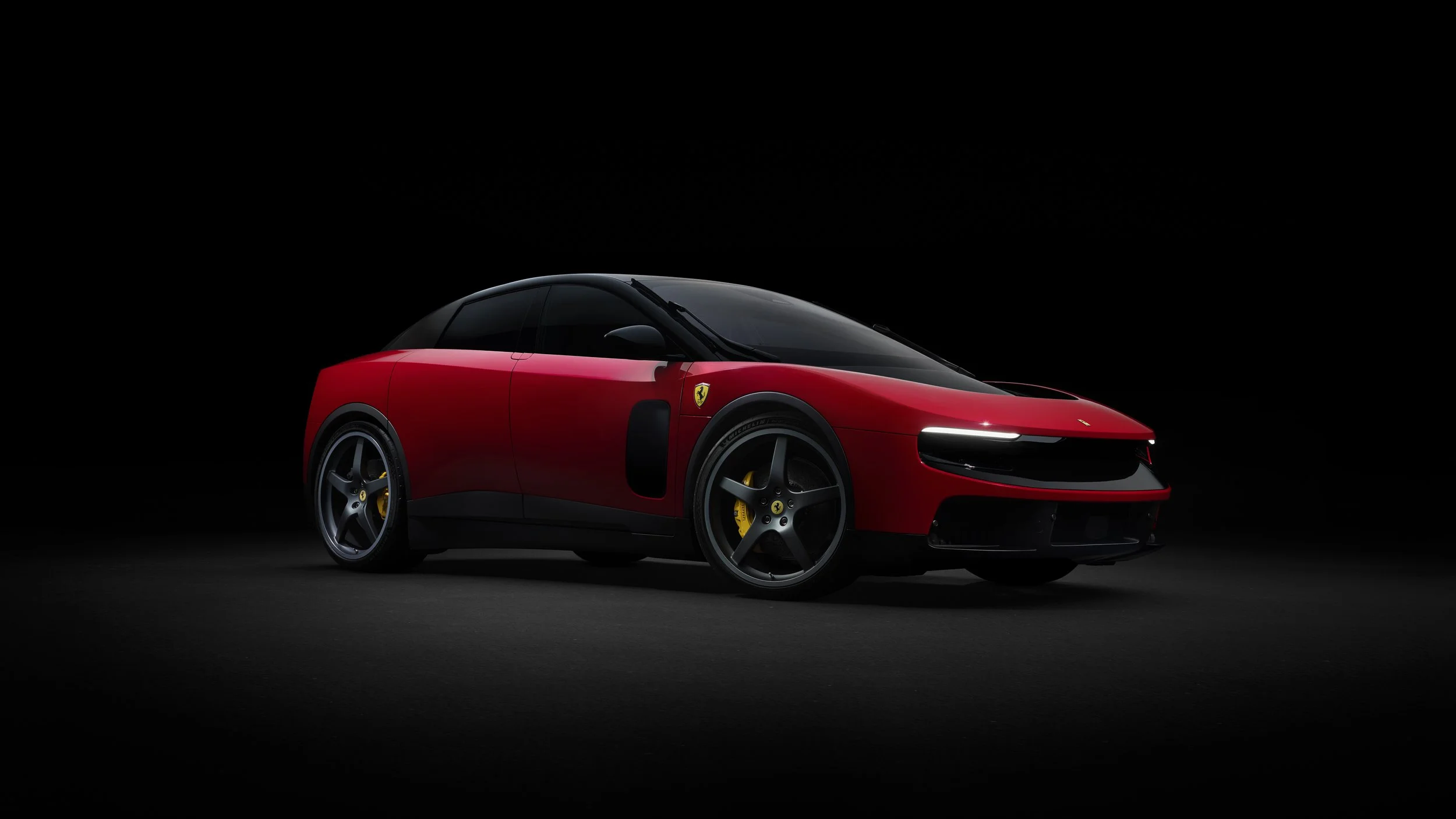
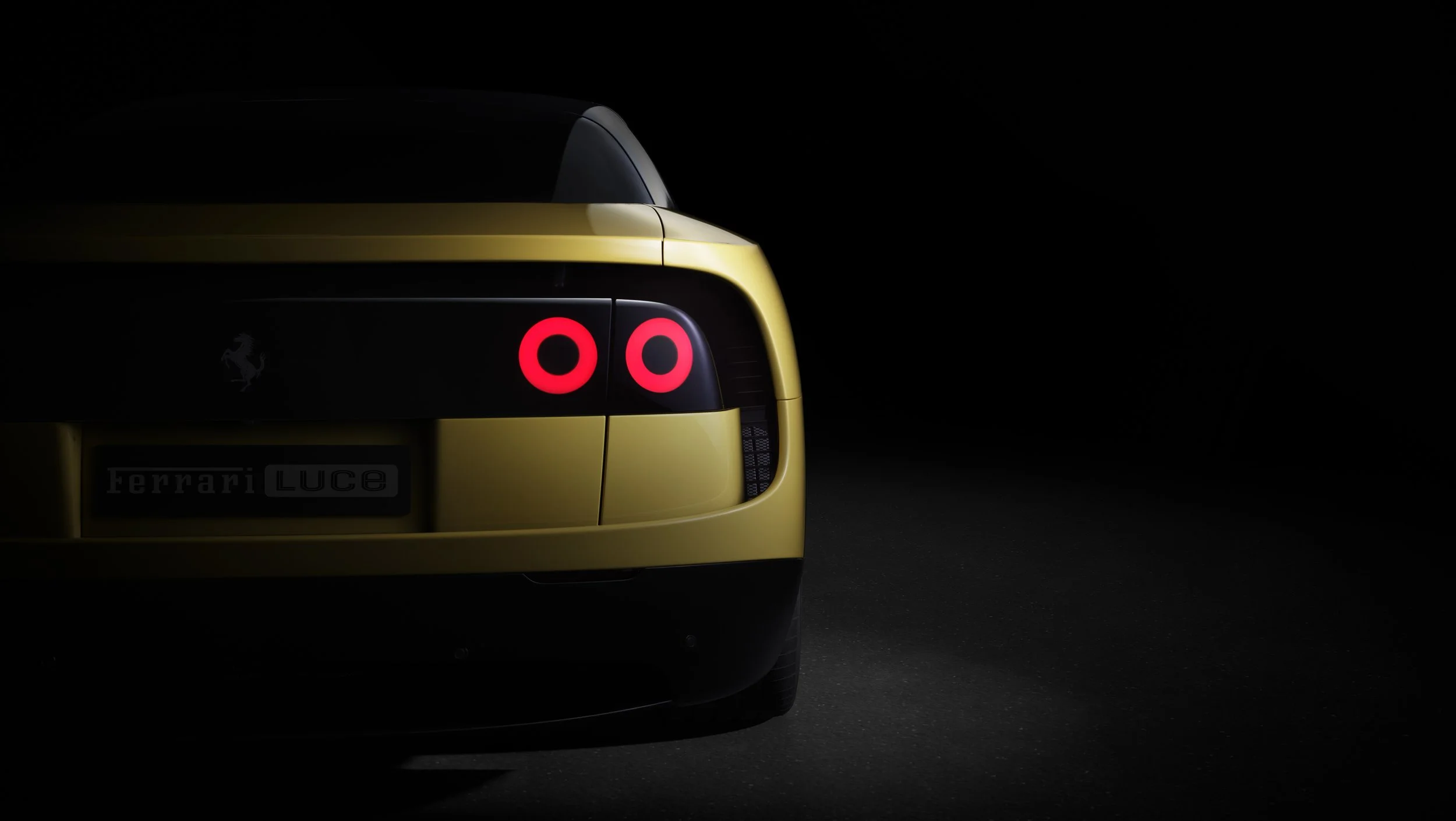
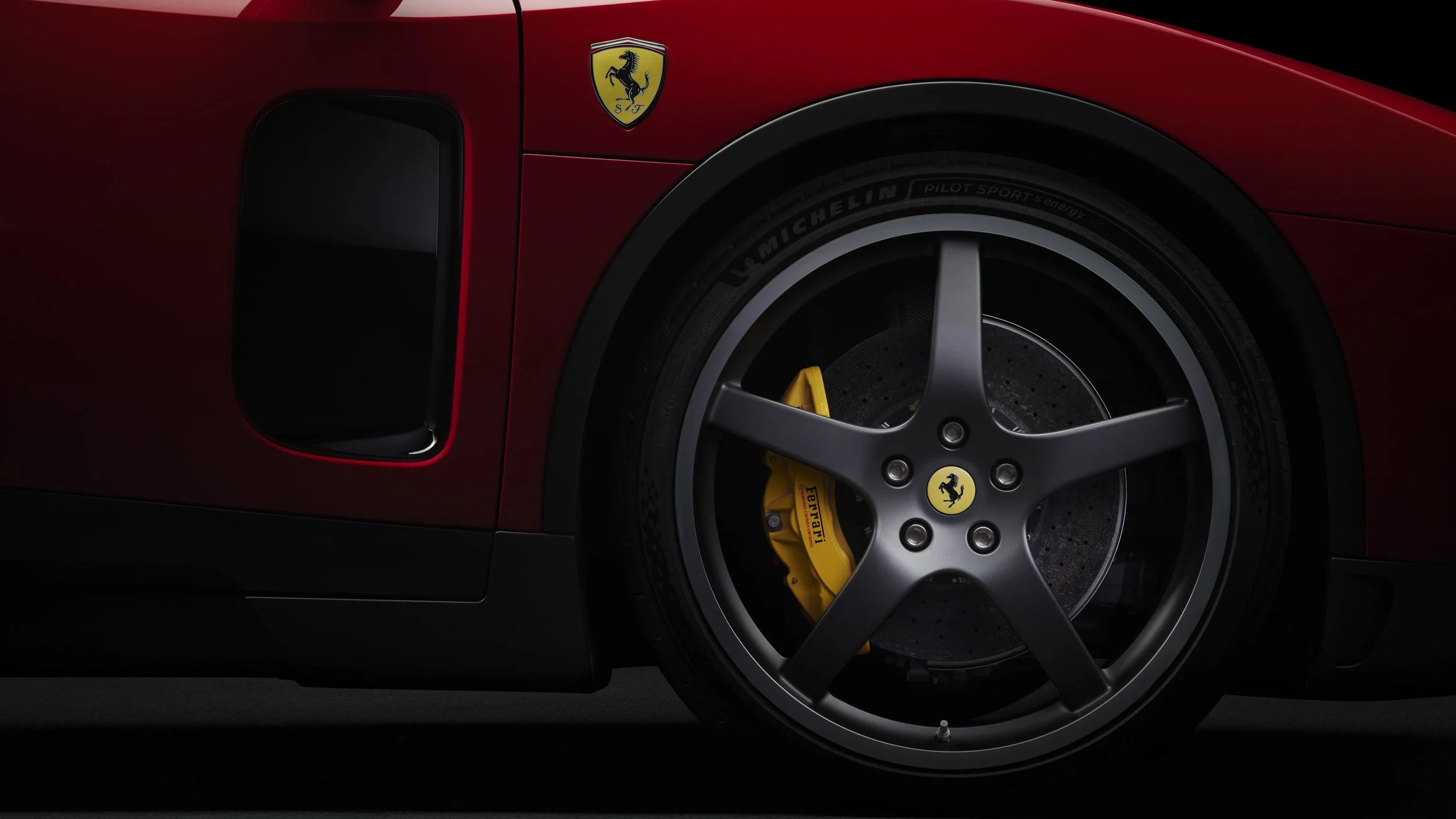
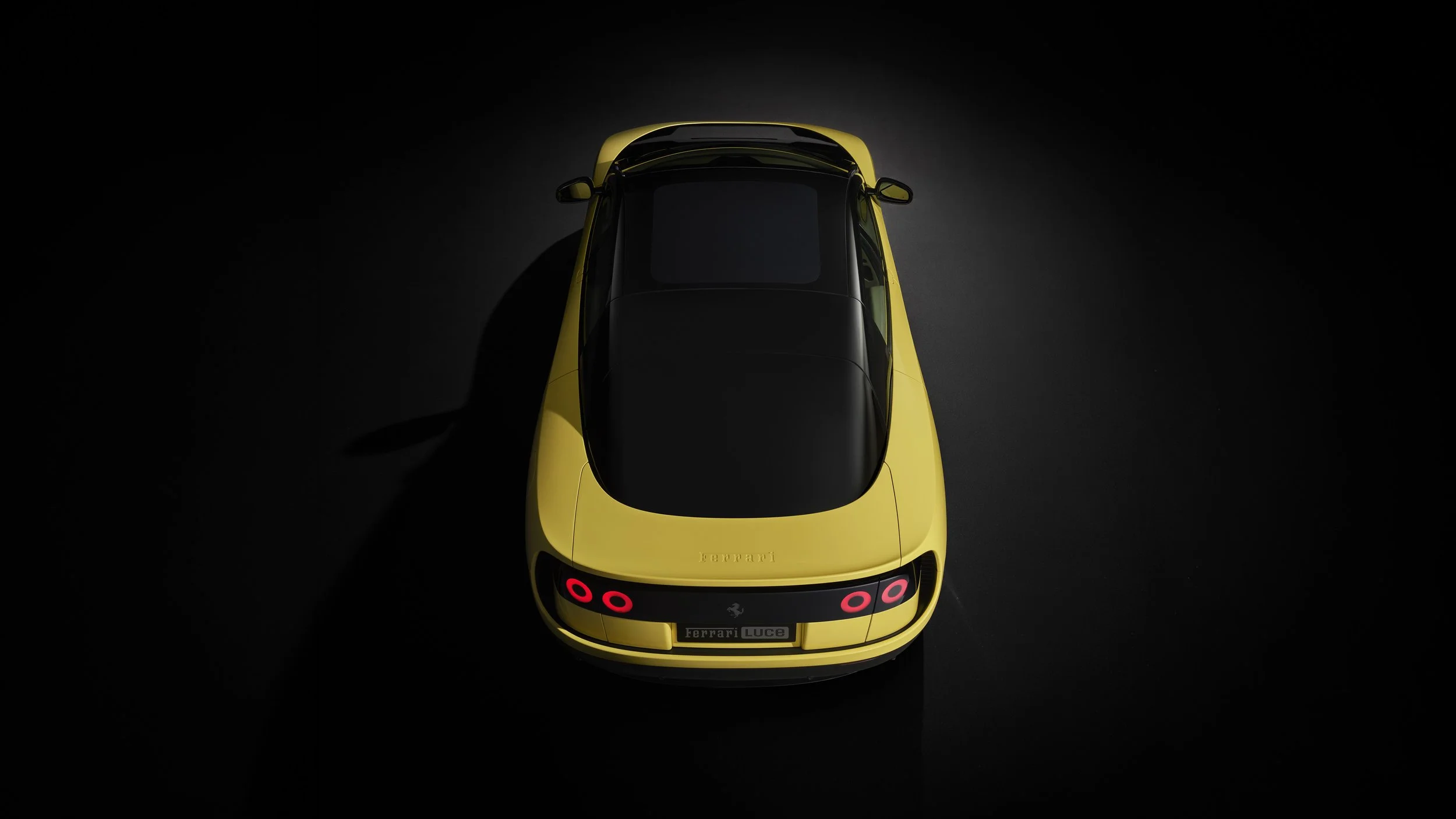
The glass house defines the car's exterior character with unprecedented purity, an uncompromised shell-like form that extends below the belt line to the car's extremes. Front and rear aerodynamic wings float above and around the glass house's silhouette, preserving this pure, simple form. Transparent front and rear light panels form part of the primary surfaces, and the lights appear to recede when switched off to protect that purity. The halo taillights pay tribute to the 360 Modena and 458 Italia. Ferrari also introduced a custom wheel design for the Luce, giving it the largest staggered wheel diameters ever fitted to a series-production Ferrari road car: 23 inches at the front and 24 inches at the rear.
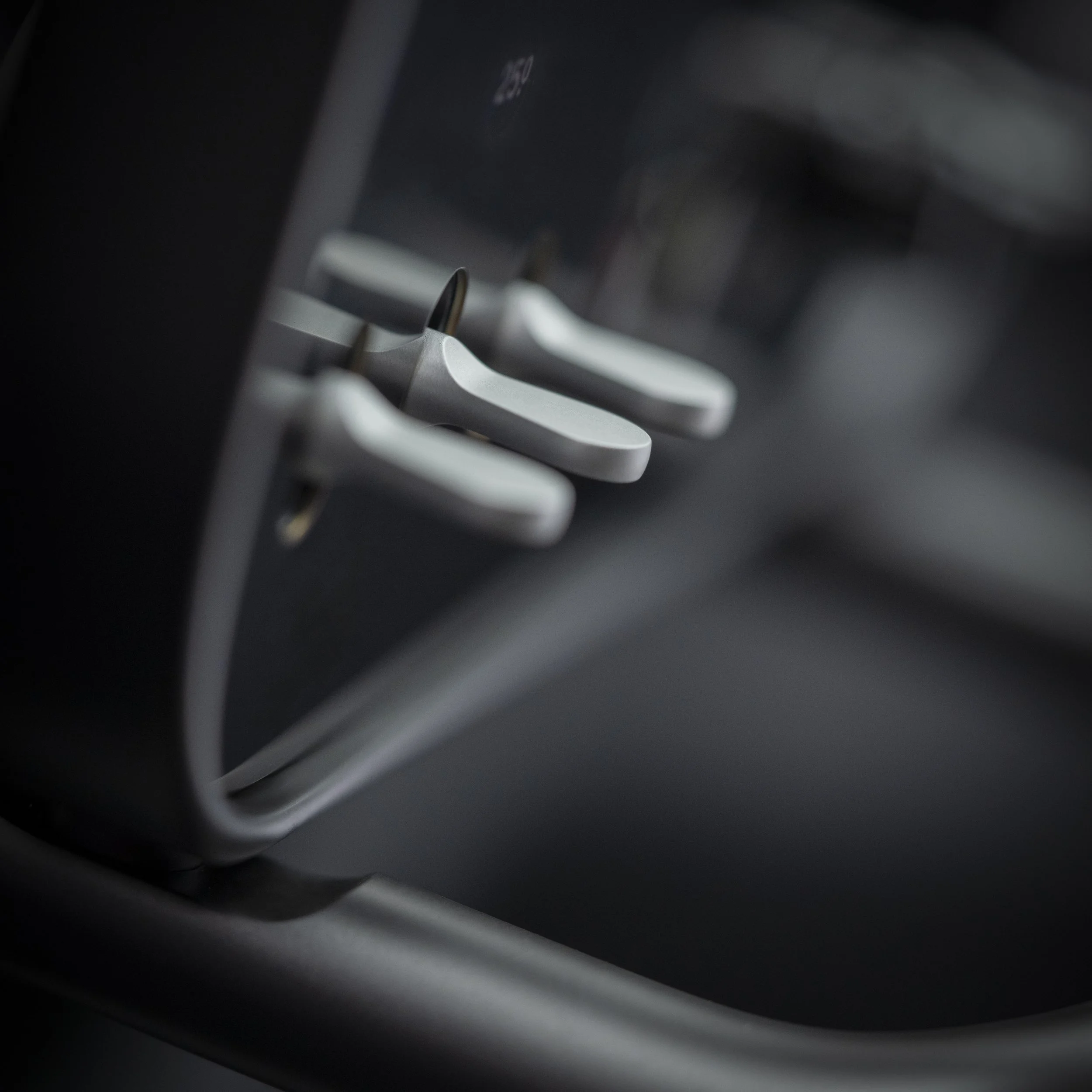
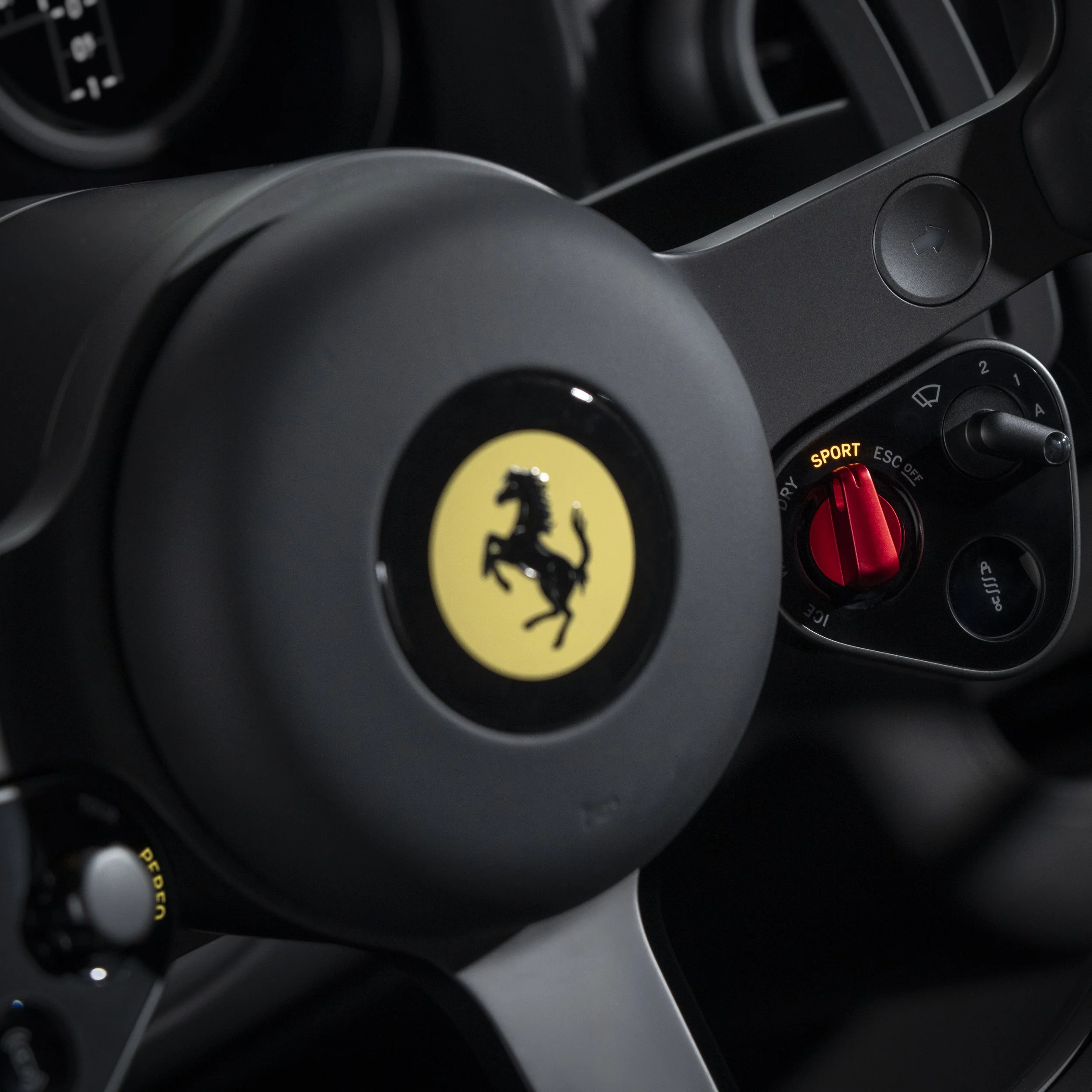
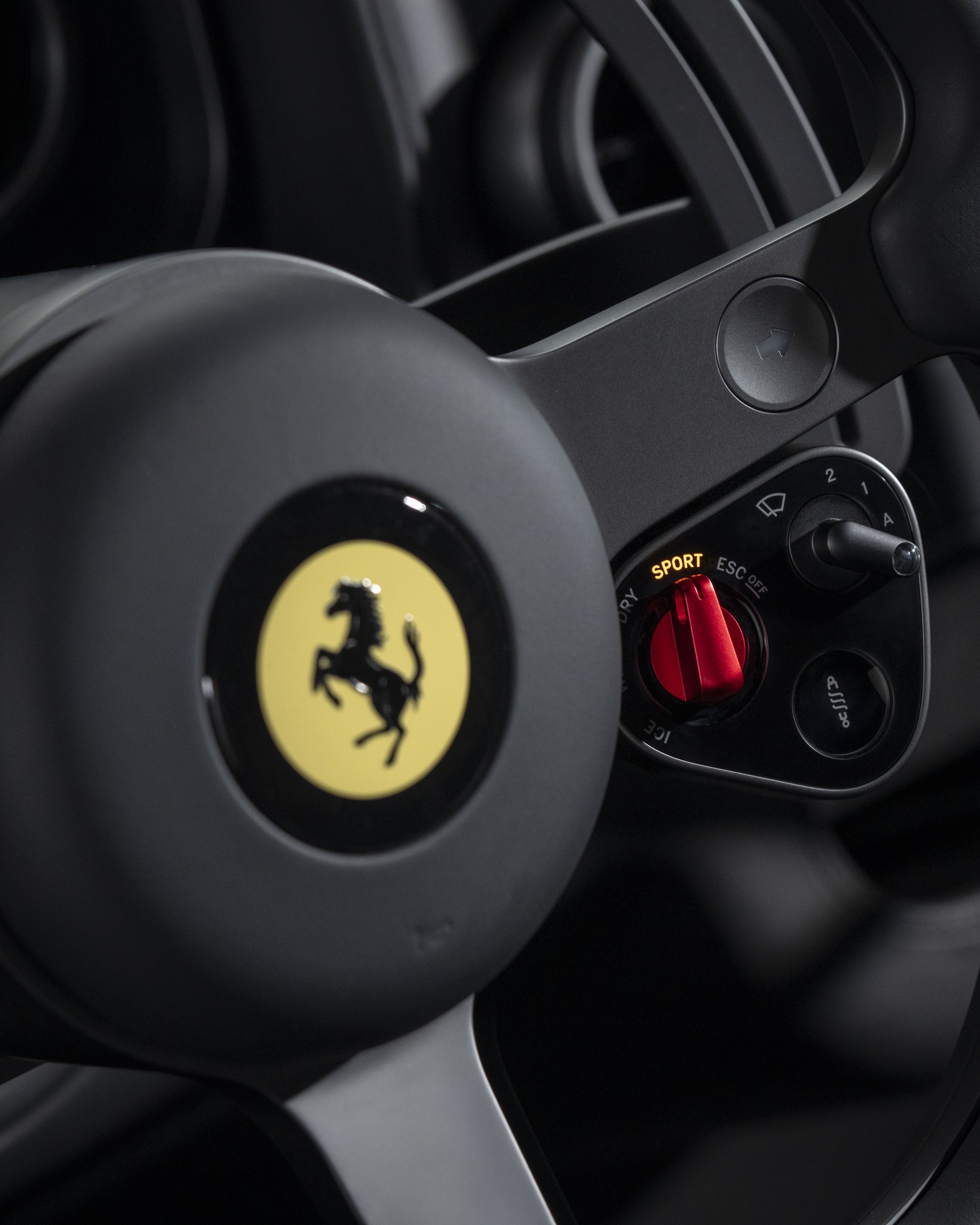
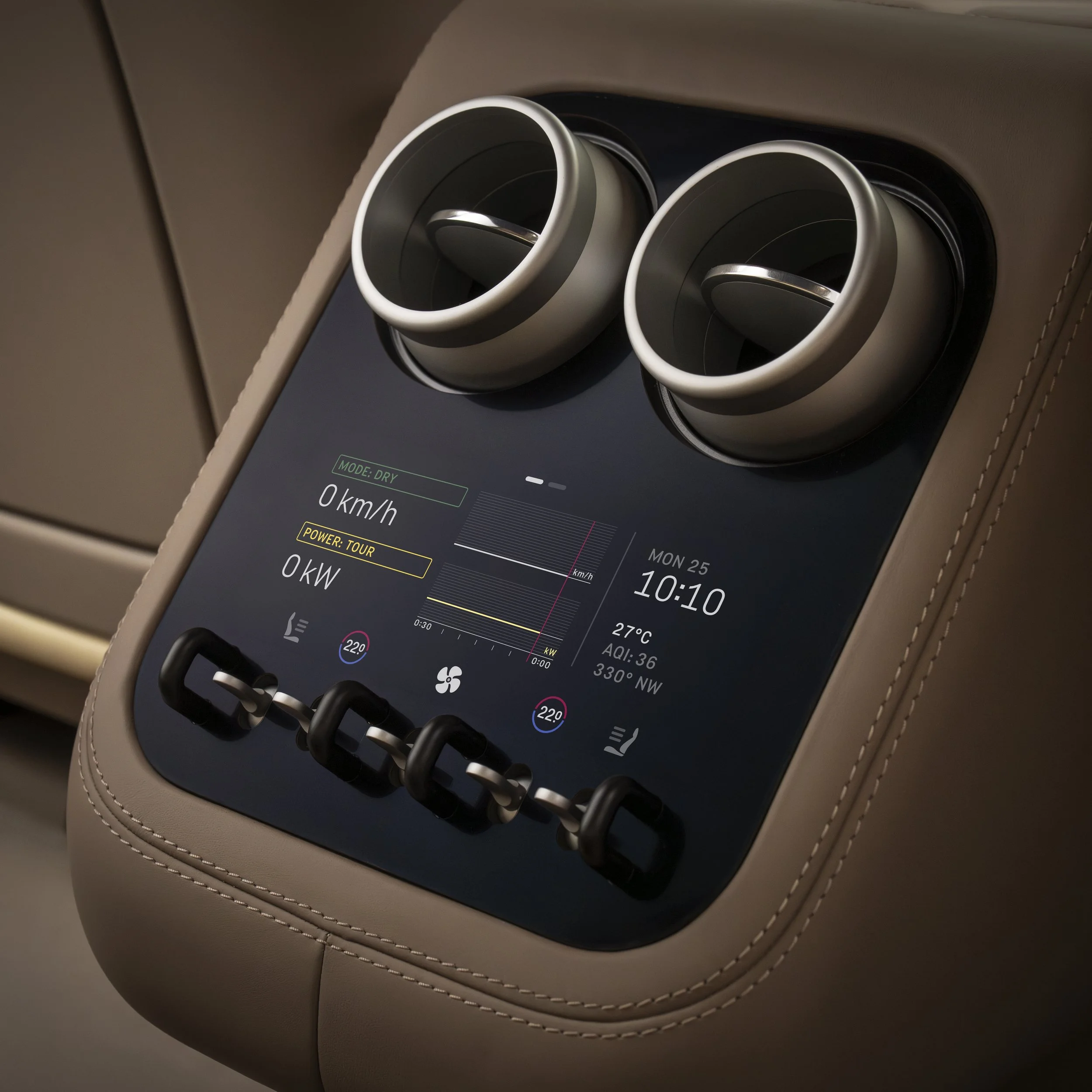
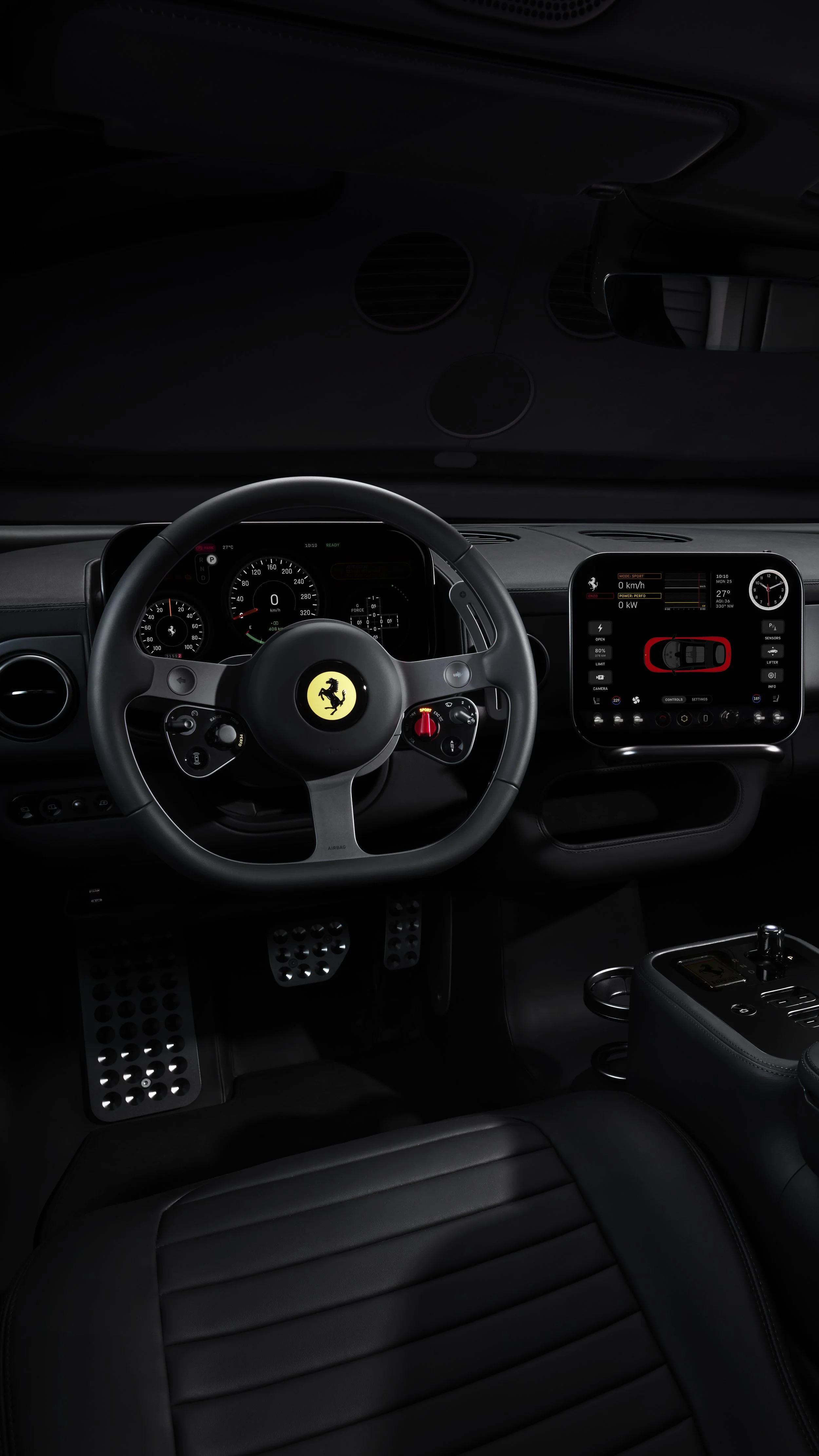
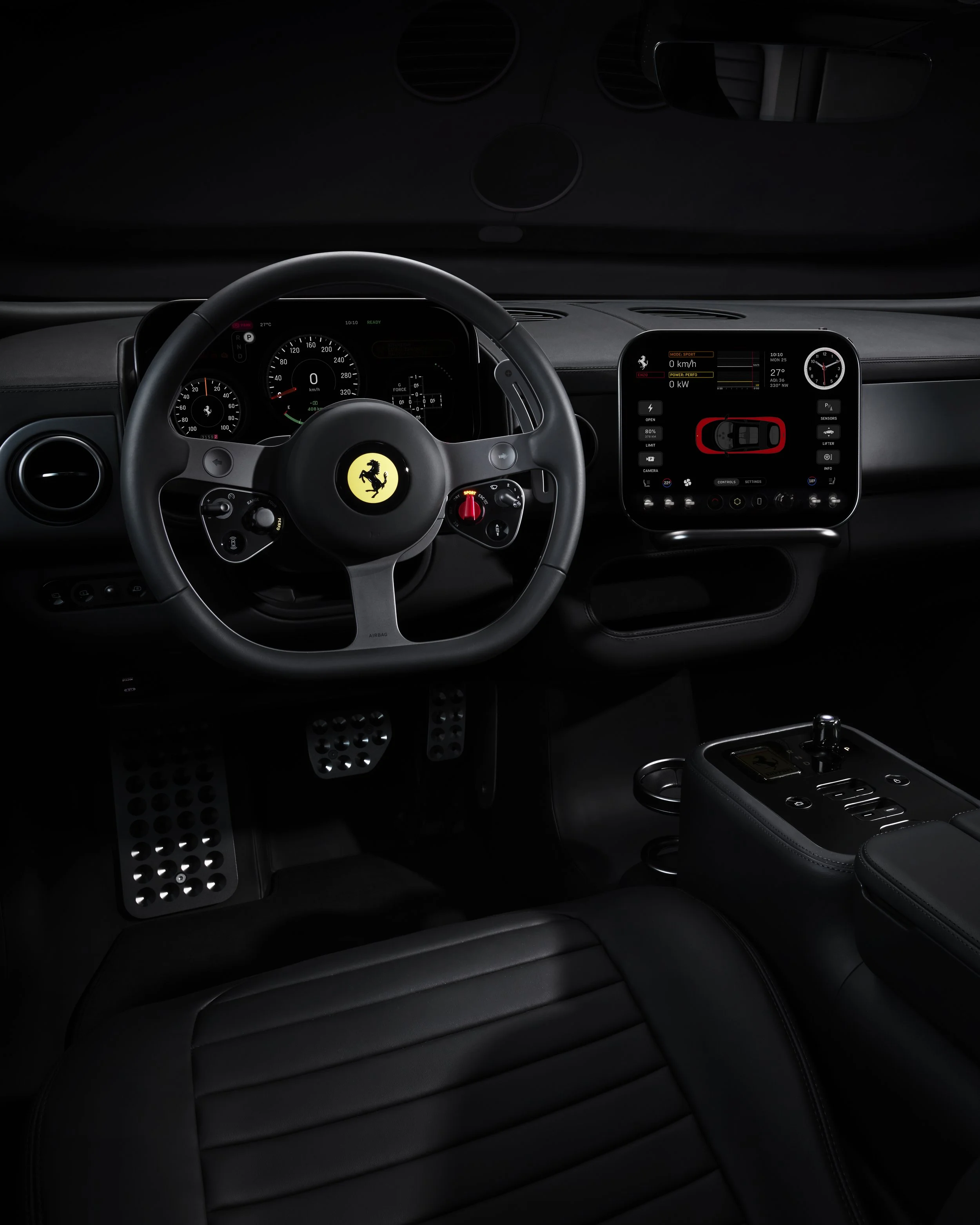
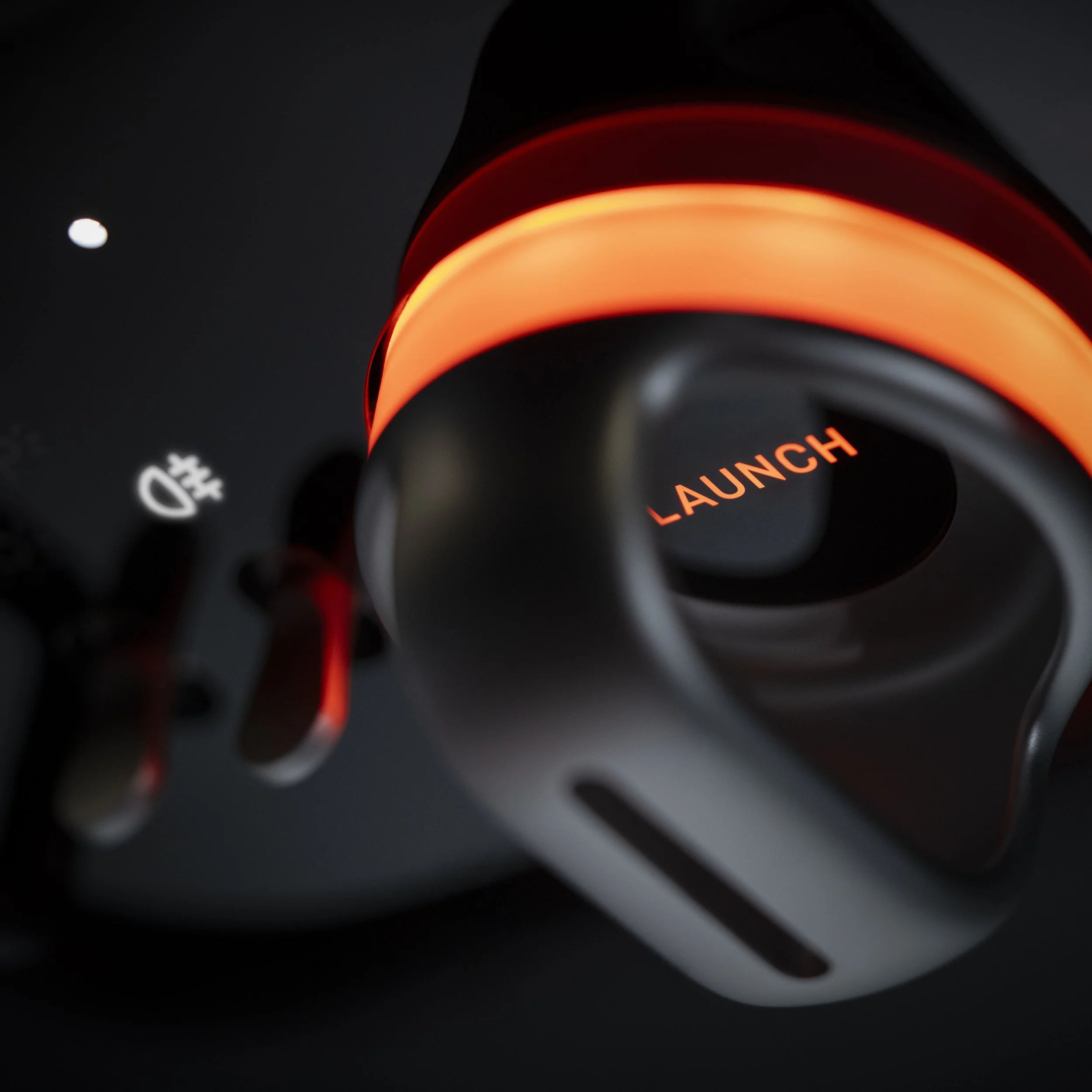
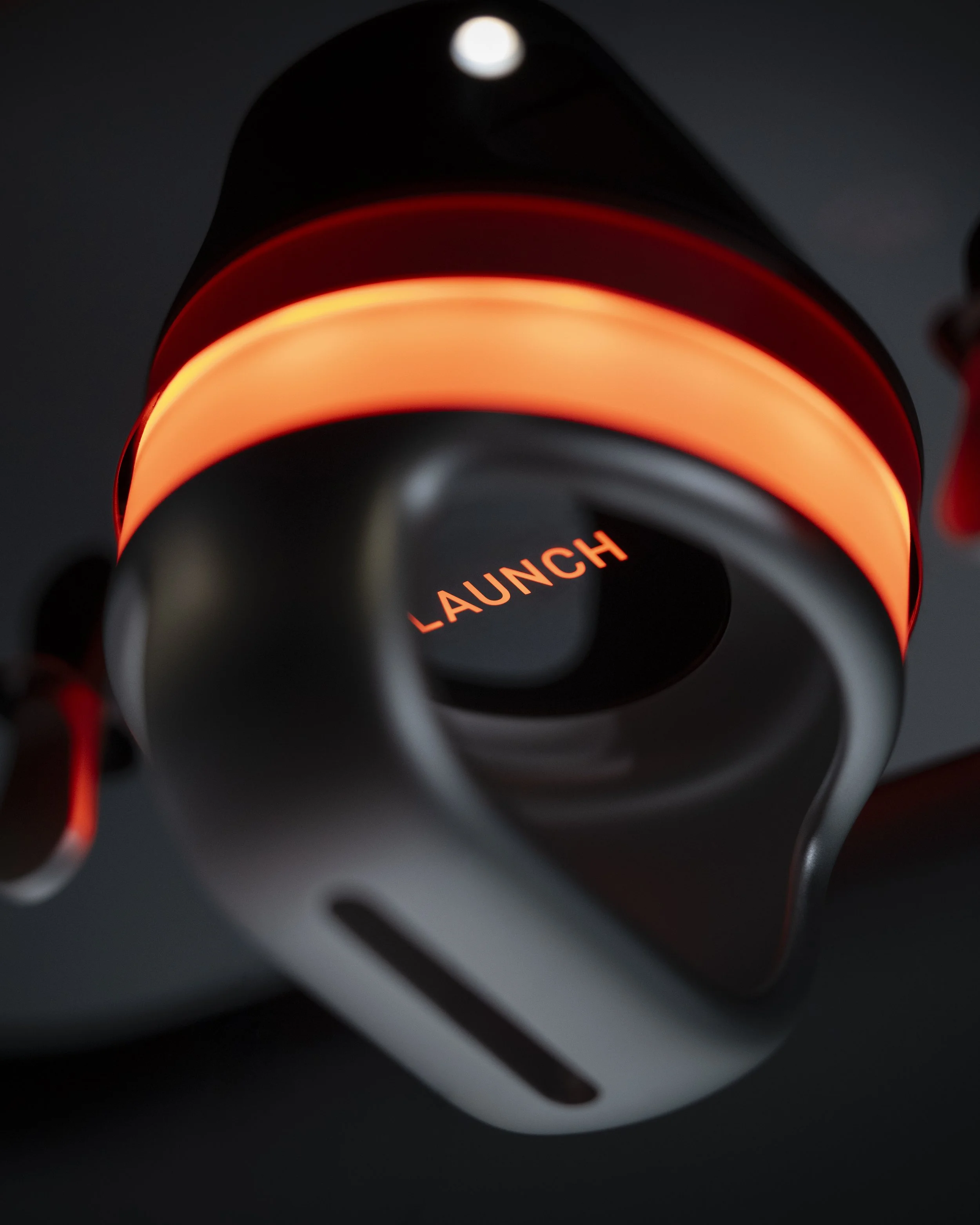
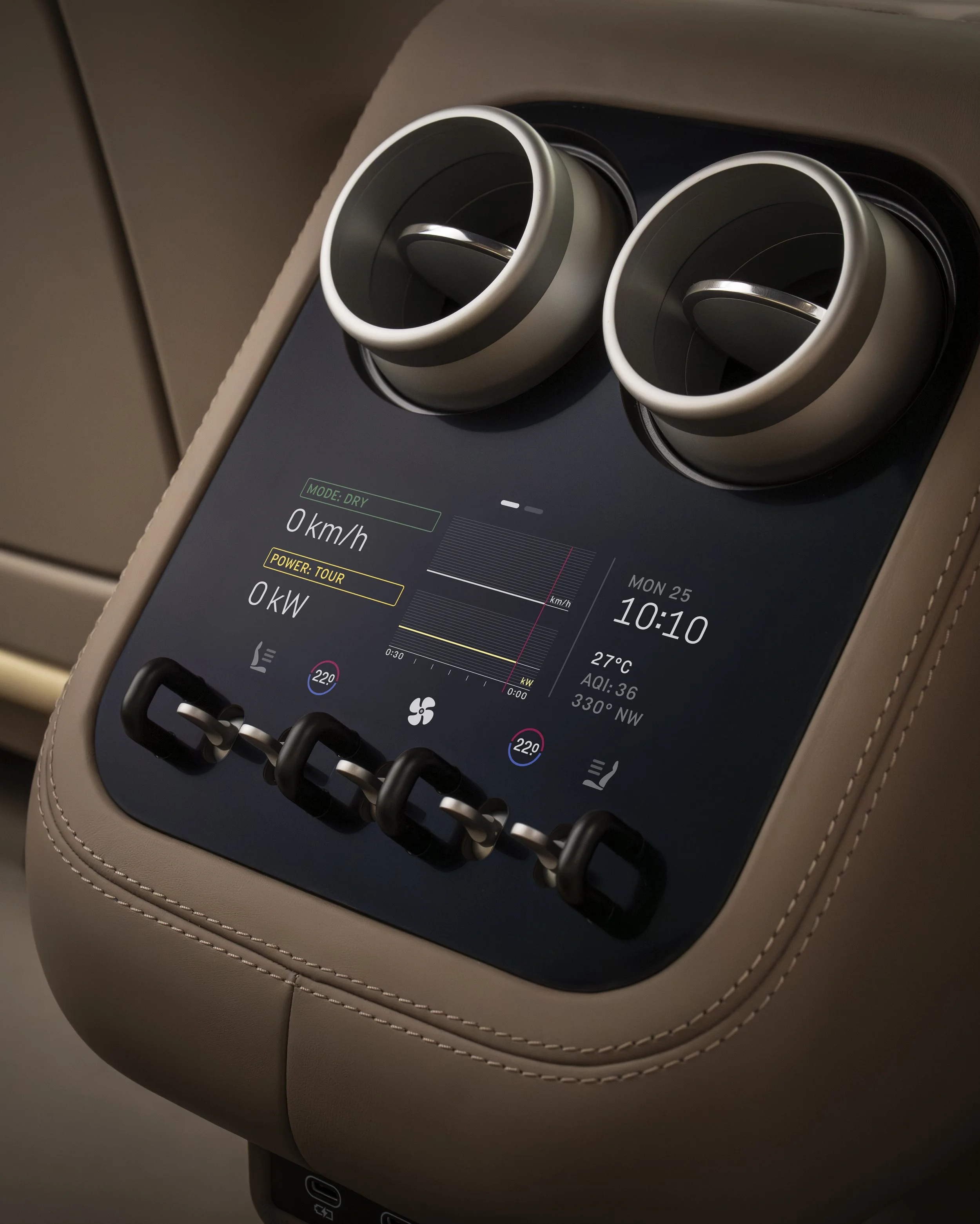
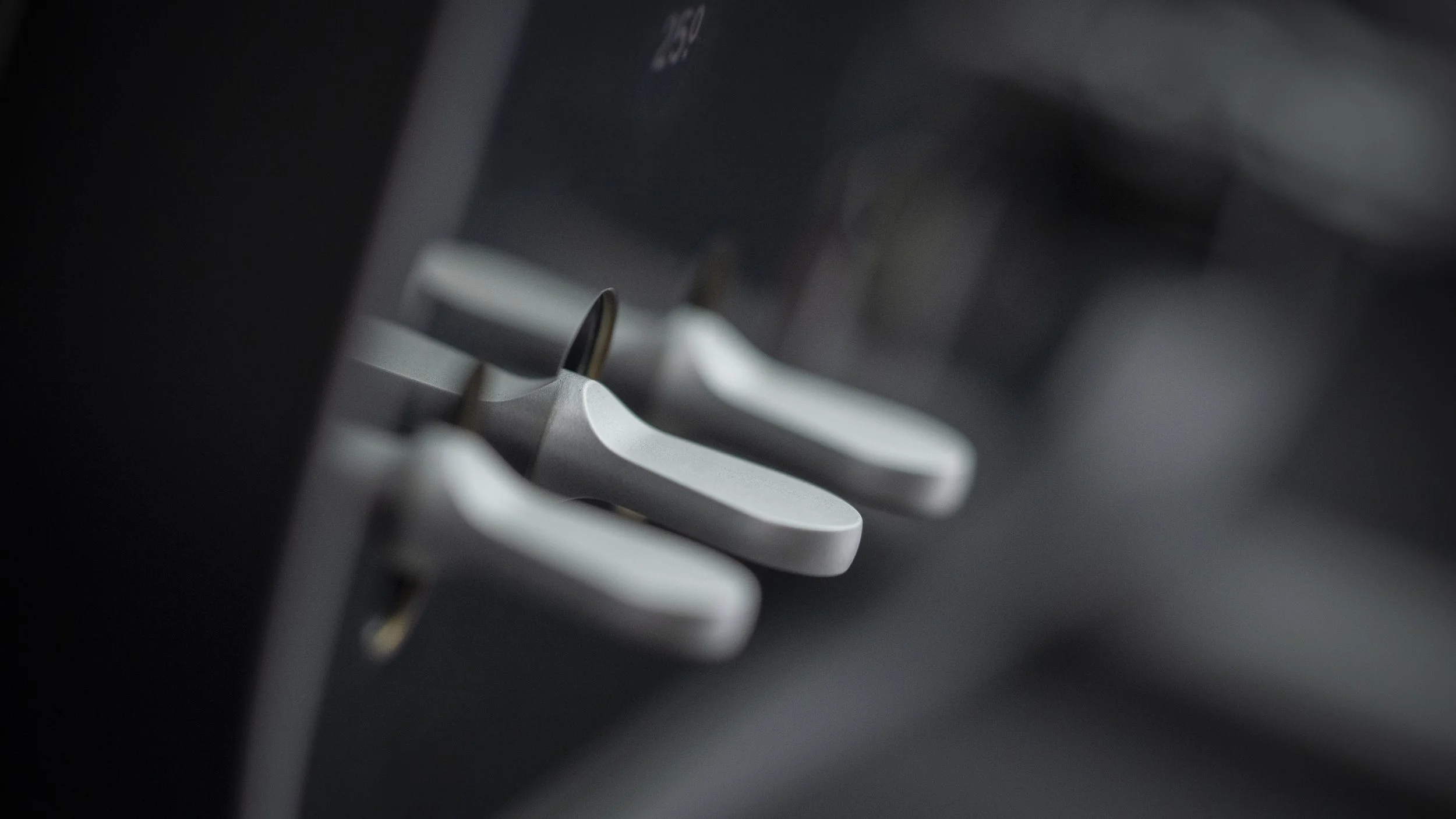
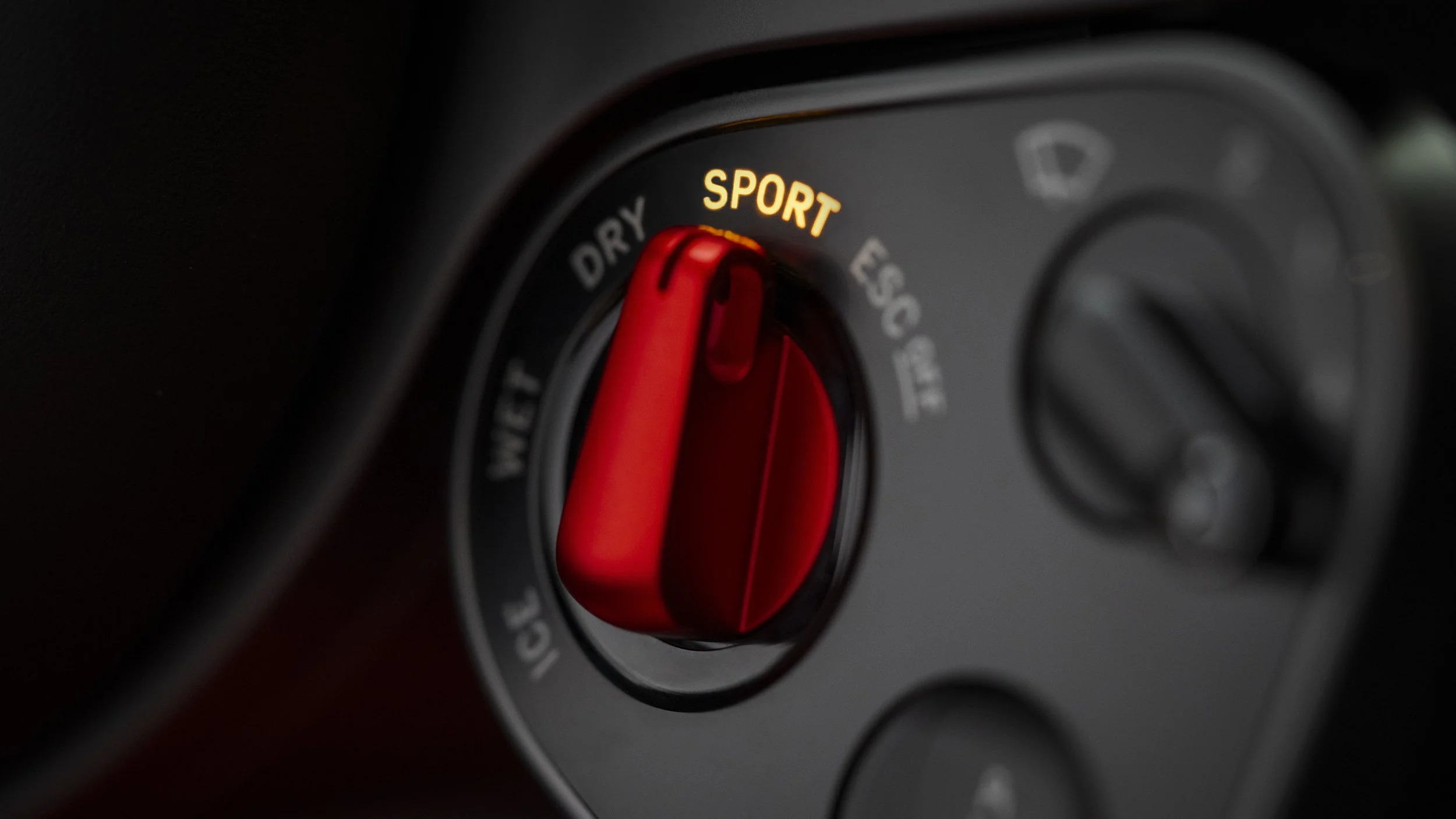
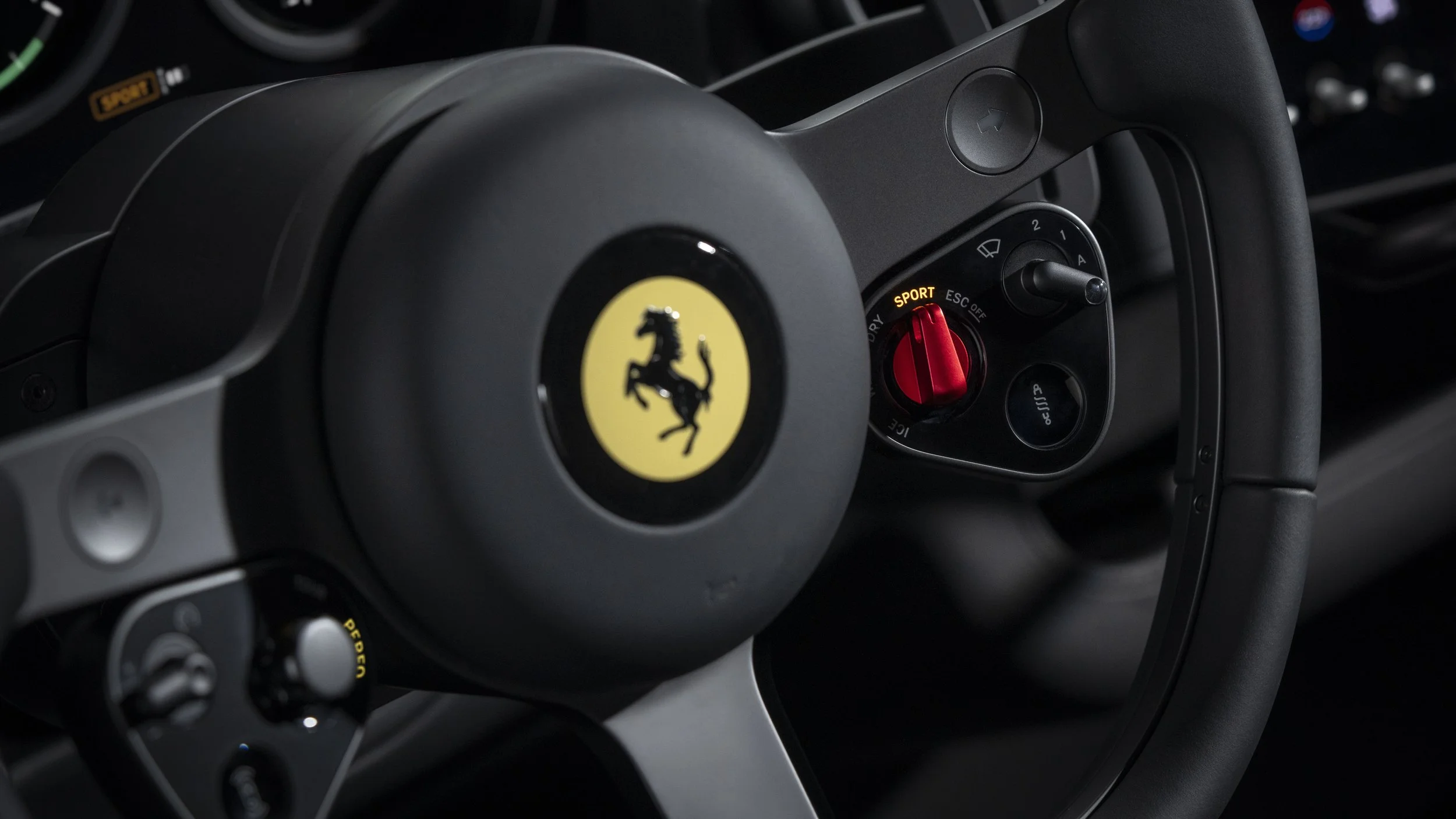
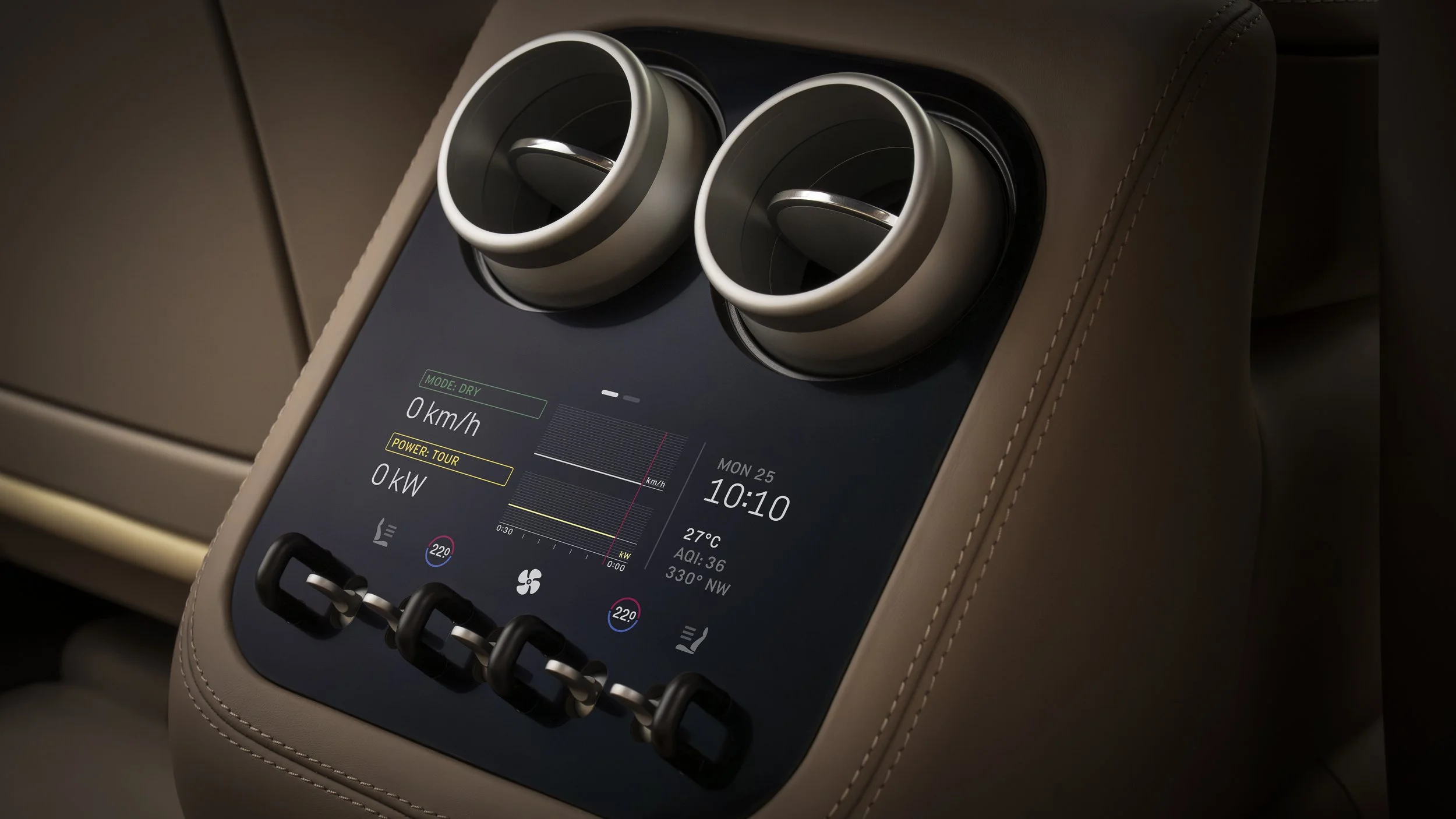
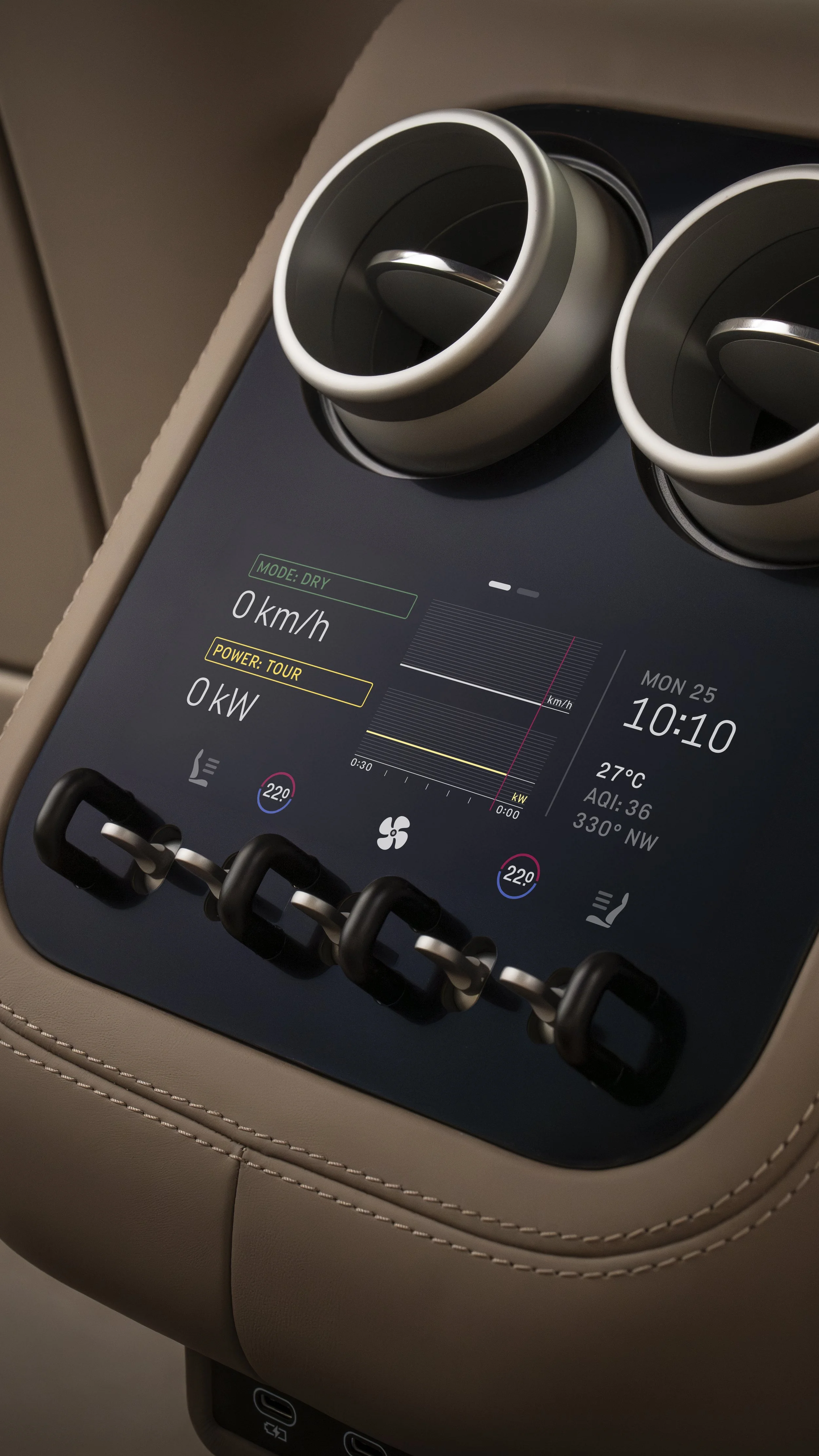
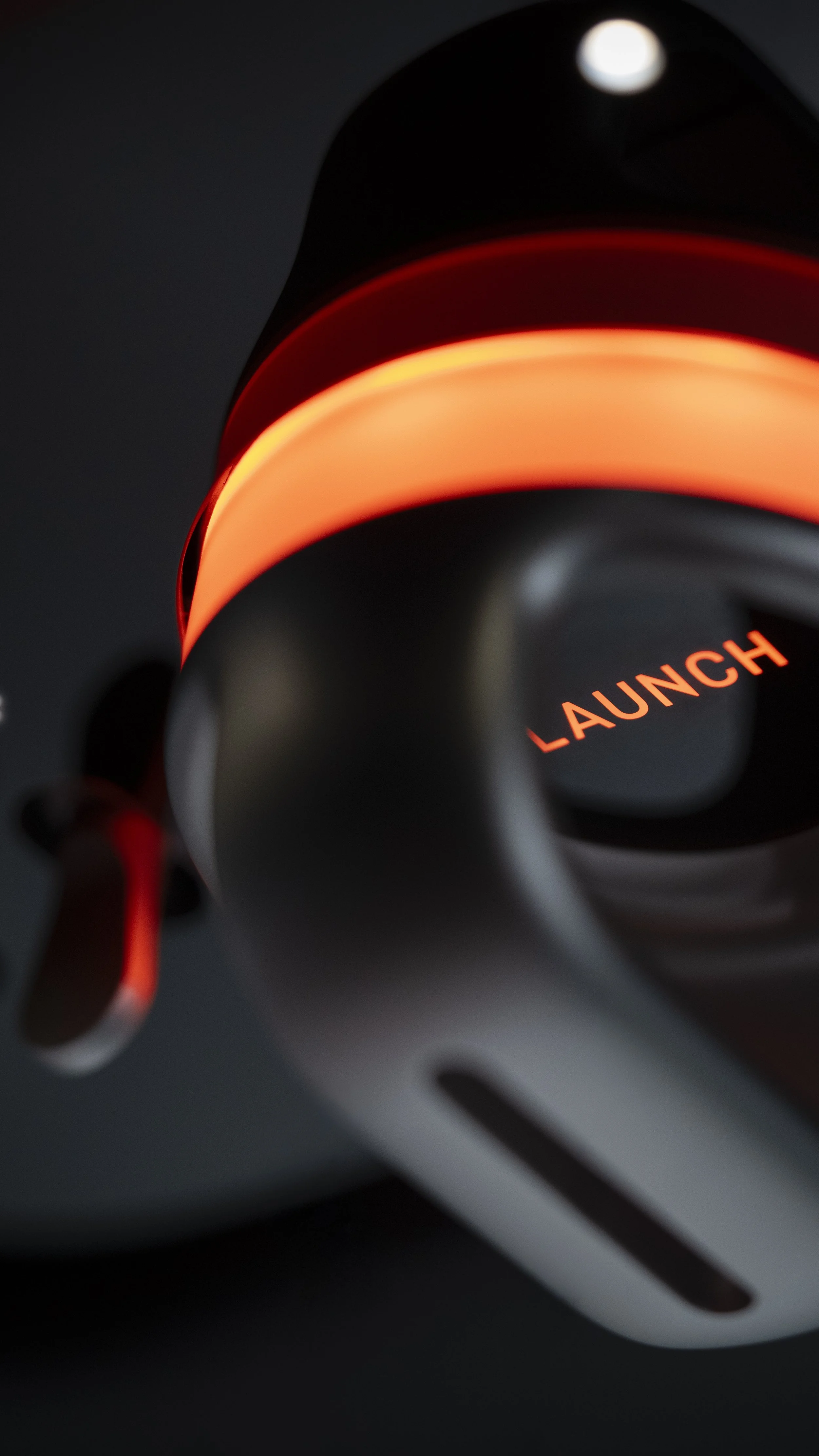
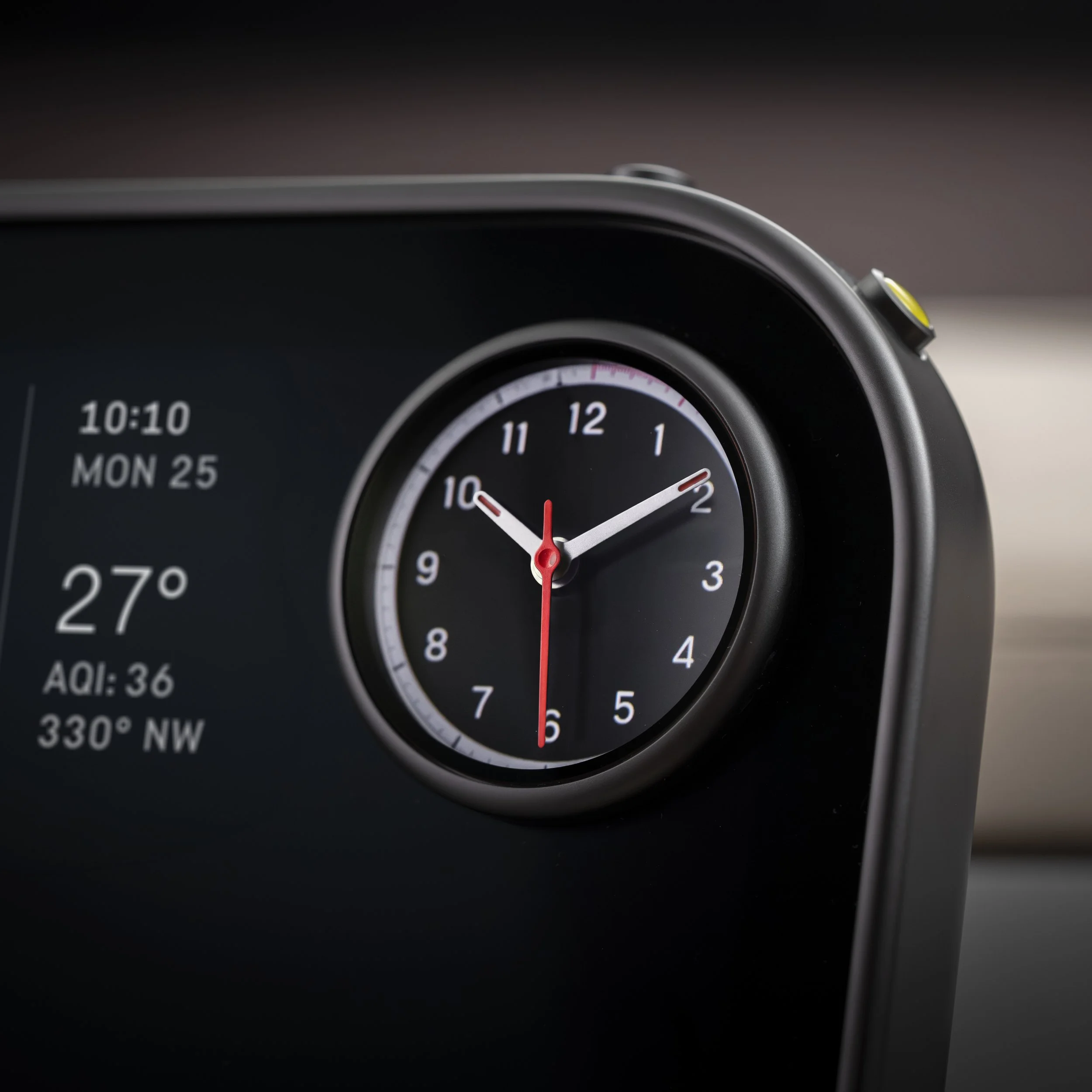
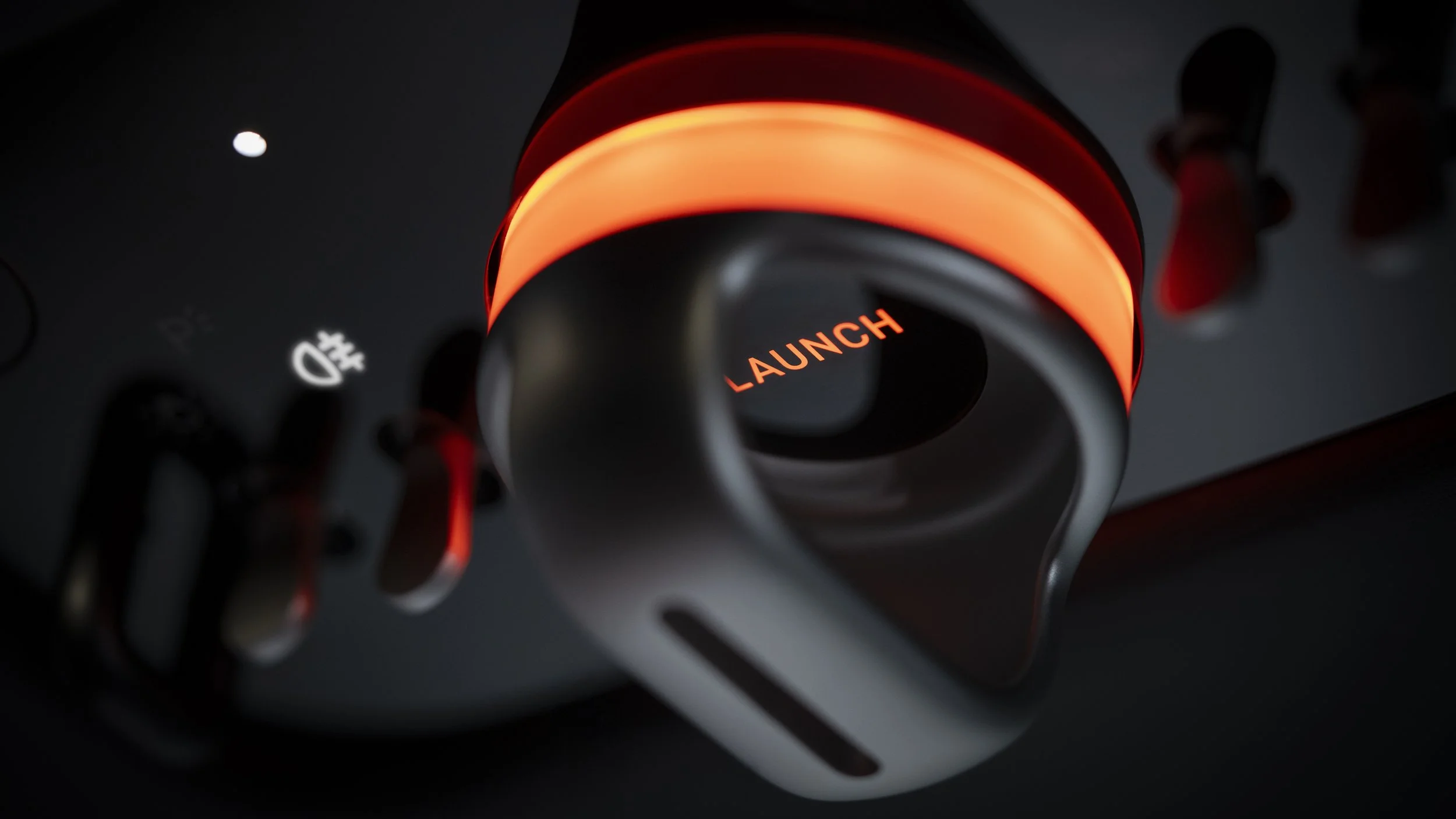
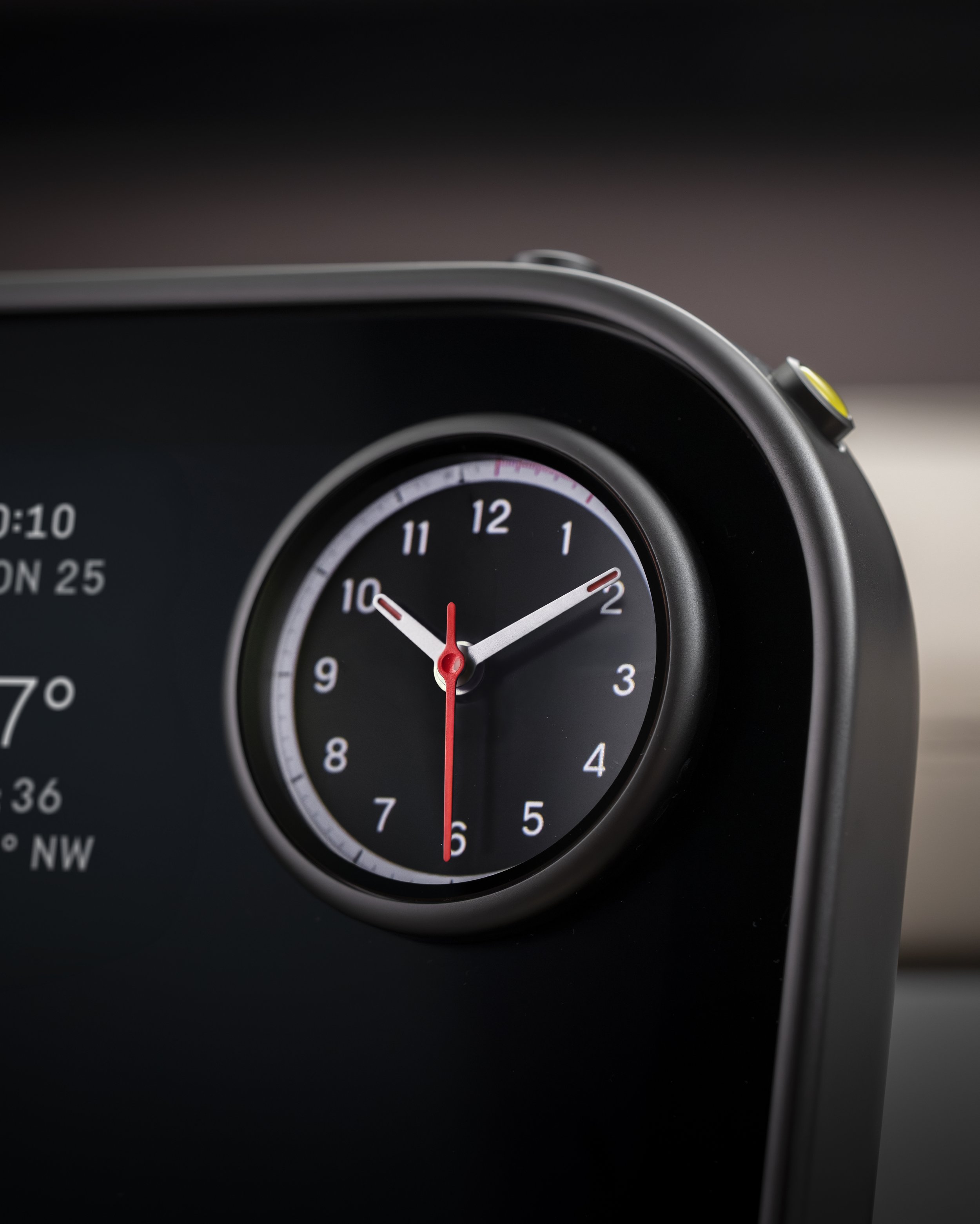
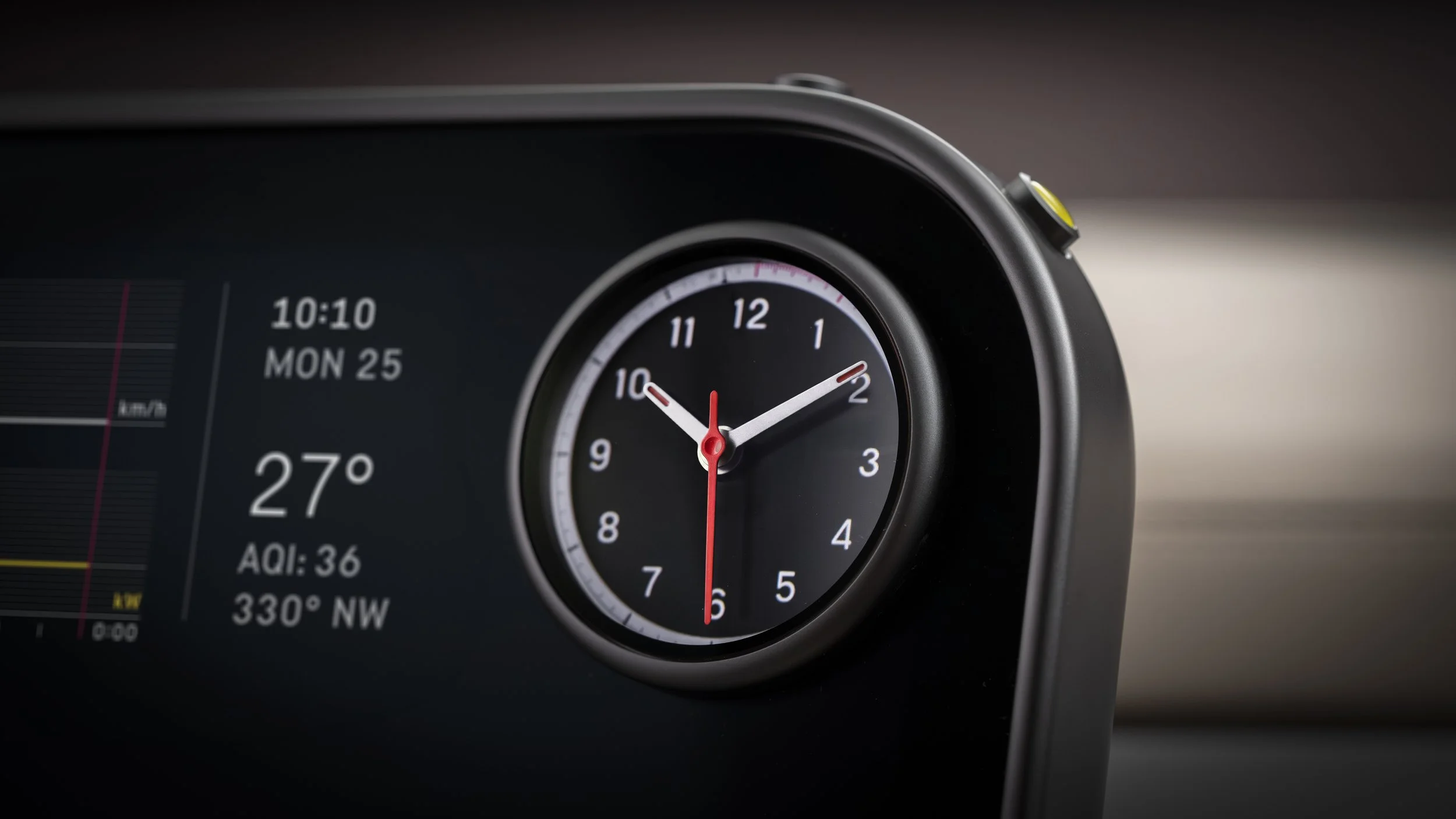
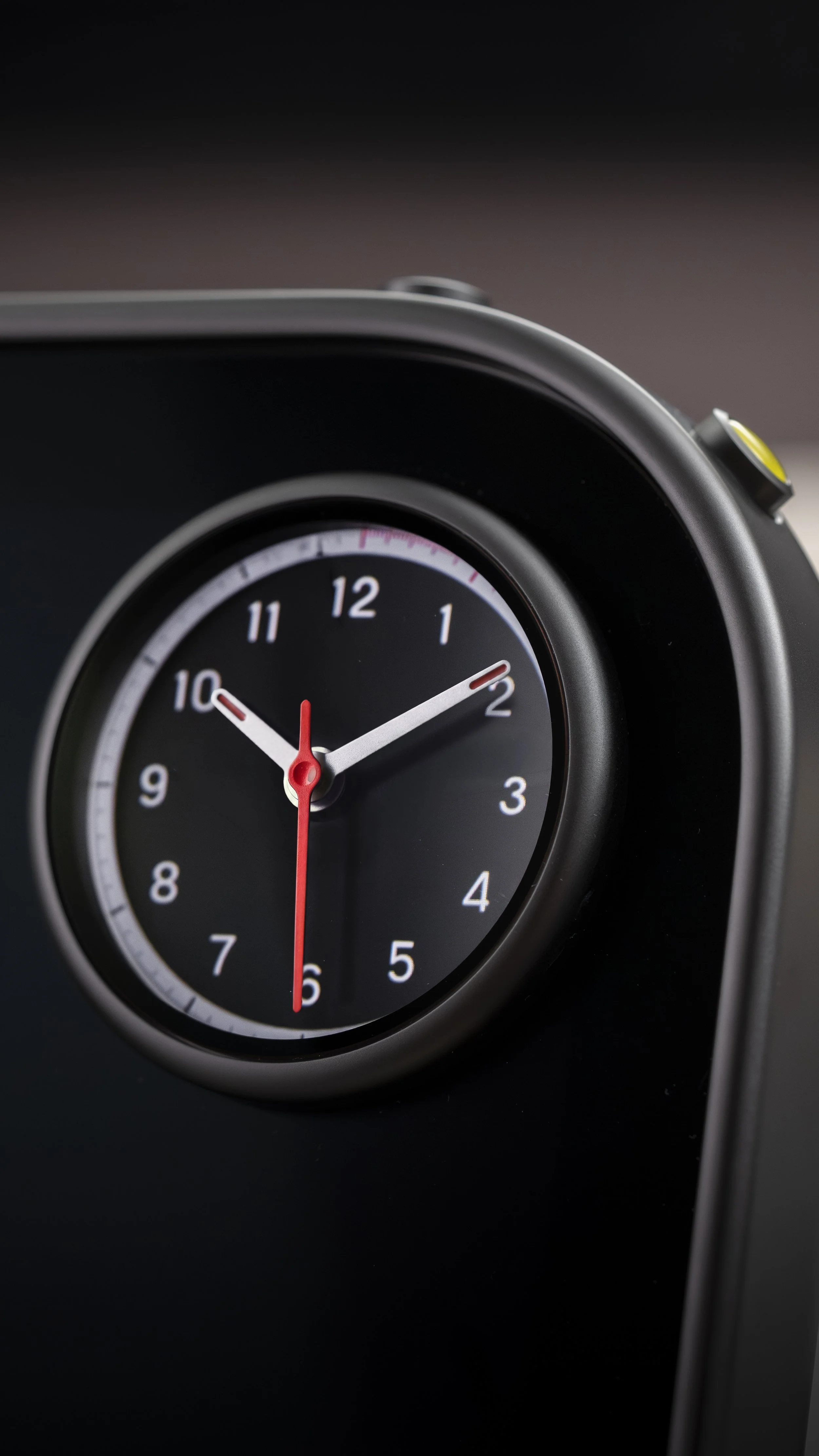
Ferrari organised the interface around clear principles of input and output, grouping controls and displays by function and placing the most essential commands directly in front of the driver. Thousands of carefully considered details combine to create a singular driving experience, pairing precision-engineered mechanical buttons, dials, toggles, and switches with multifunctional digital displays developed in collaboration with Samsung Display. Ferrari chose honest, pure materials throughout, including recycled anodised aluminium, Corning Gorilla Glass and premium leather. The audio system delivers sound through 21 speakers and 24-channel, 3000W amplification, incorporating the innovative Ferrari Audio Signature alongside presets, individual listening optimisation and dynamic compensation.
Ferrari built the Luce on a bespoke platform with a dedicated chassis and engineering innovations across every component, drawing on its motorsport experience to keep kerb weight to 2,260kg. That achievement helps deliver best-in-class performance, with 0 to 100km/h in 2.5 seconds, 0 to 200km/h in 6.8 seconds, a top speed beyond 310km/h, a maximum total power of 1050 cv, and a range exceeding 530km. Four electric engines, one per wheel, power the car alongside a high-capacity 122kWh battery, an active suspension system derived from the F80 and an independently steering rear axle.
Each wheel carries three actuators: one for traction and regeneration, one for steering angle, and one for vertical movement, allowing Ferrari to adapt torque distribution in real time to road conditions and desired performance. This precise control means every wheel responds directly to the driver's input, creating a single, fluid movement, while torque vectoring and the suspension's elastic balance sharpen the car's agility and ease of driving.
Ferrari built the Luce's sound around one key principle: it must feel authentic and functional, generated by the car's mechanics and serving the drive itself. A precision accelerometer at the centre of the axle captures the dynamic texture and vibration of the rotating components as sound waves move through them. Ferrari developed and patented this in-house system, which filters, equalises and amplifies the signal much like an electric guitar amplifier, activating only when it benefits the drive. The e-Manettino position and paddle use set the sound level, letting drivers move from quiet focus to full expressiveness. An external amplification system creates a natural sound wave while an internal system adds detail and high fidelity, so people outside the car can hear it too. Extensive noise, vibration and harshness research makes the Luce the most comfortable Ferrari yet, helped by Maranello's first elastically mounted subframe, active suspension, and careful optimisation of weight, rigidity and soundproofing.
Ferrari achieved by far the lowest drag coefficient in its road car history with the Luce, while still delivering unrivalled interior space, because aerodynamic considerations shaped the car's fundamental architecture from the outset. Smooth, continuous, uninterrupted surfaces maximise airflow and manage wake, while new active aerodynamic grilles, another Ferrari first, regulate airflow through the heat exchangers to balance cooling against drag. Active ride height lowers the front by 10mm at speed to boost efficiency without sacrificing comfort or performance. An integrated software system manages cooling to optimise range, balancing power consumption with intelligent warm-up, fast-charging management, and remotely operable battery and cabin preconditioning.
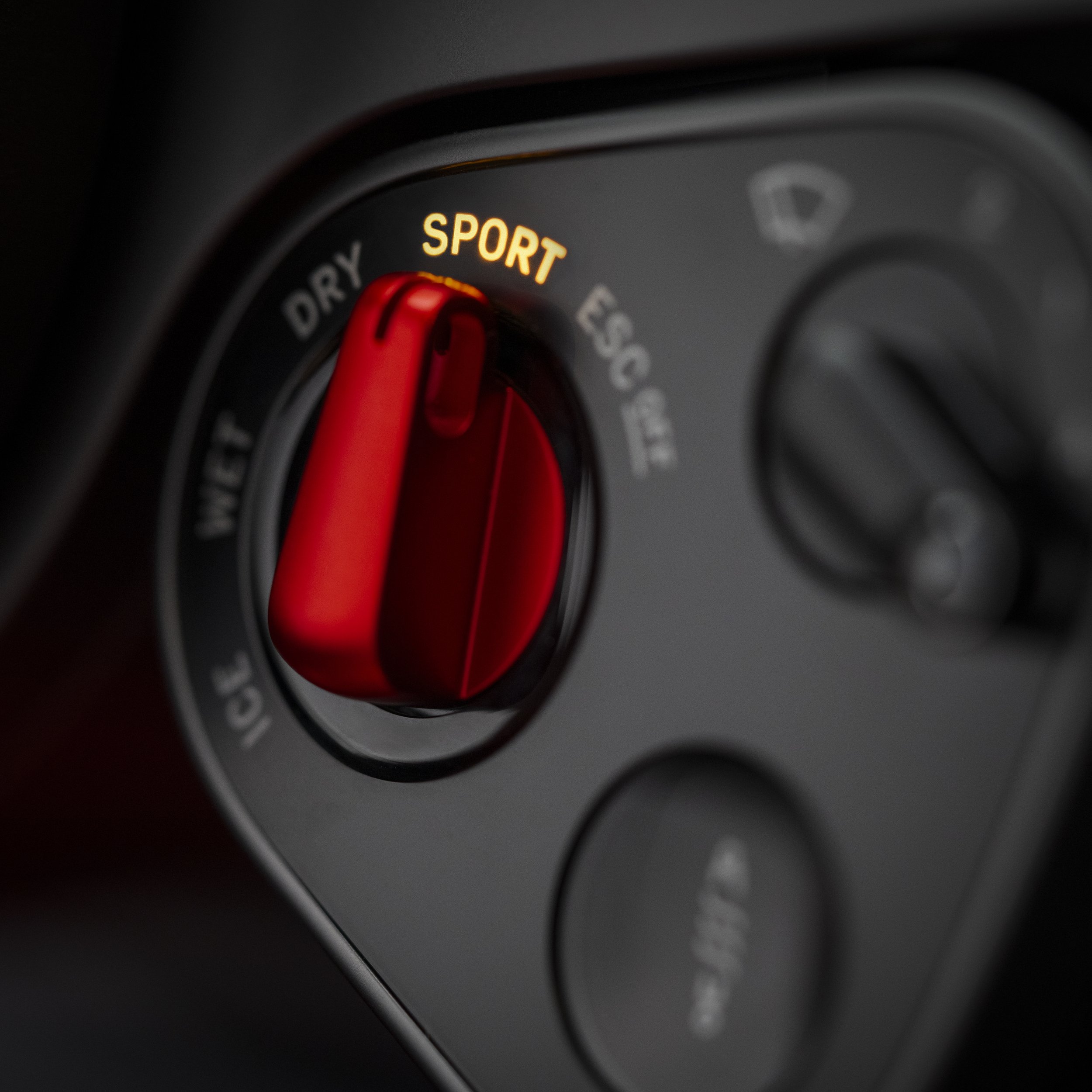
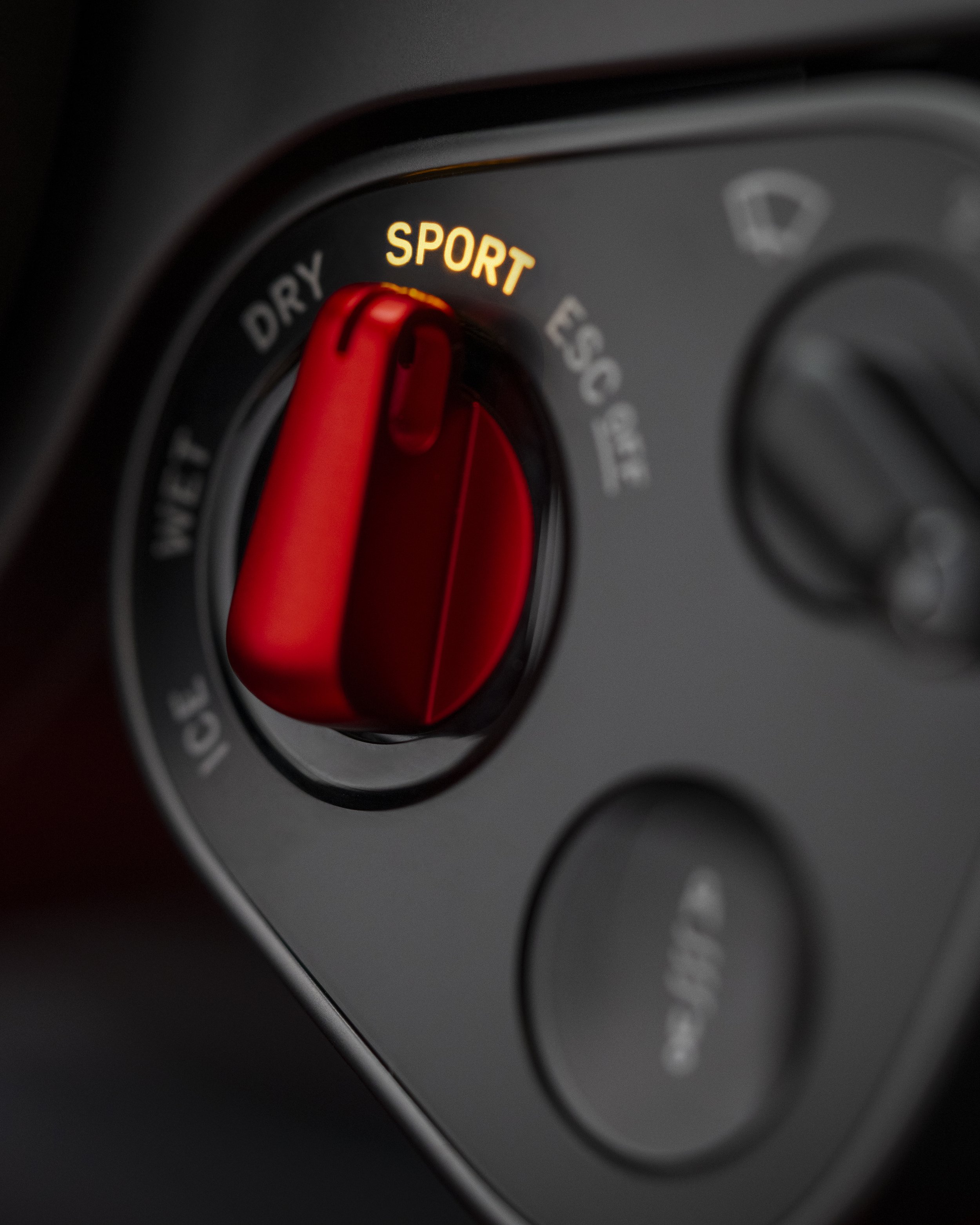
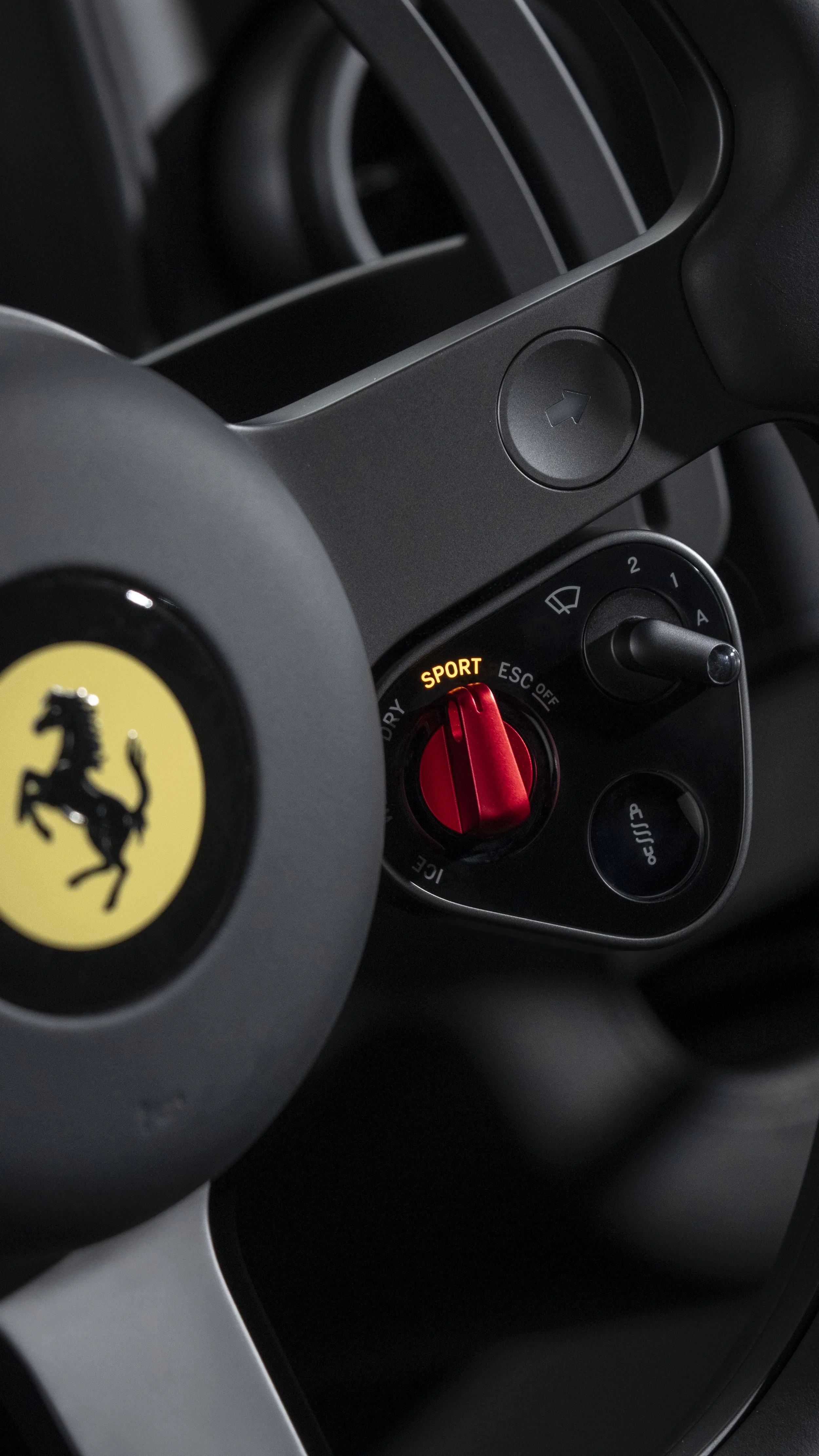
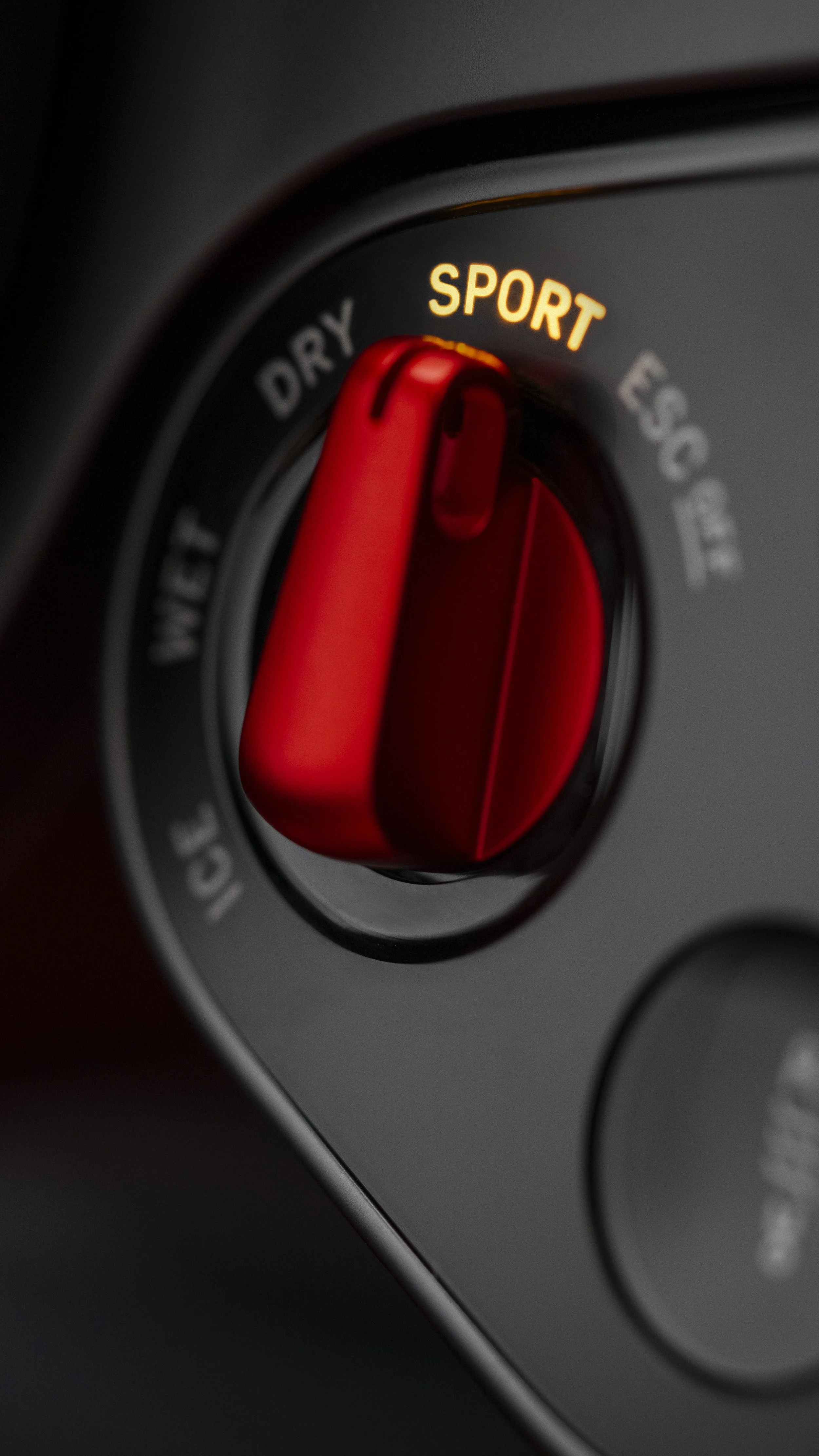
Ferrari engineered the Luce's vehicle dynamics to exploit the electric architecture's advantages in centre of gravity, inertia and control freedom, keeping the car agile and natural to drive. Drivers manage the car through the e-Manettino, which modulates power and traction, and the iconic five-position Manettino, which adapts to grip conditions. The new Vehicle Control Unit (VCU) debuts on the Luce, integrating powertrain and dynamics, updating targets 200 times per second, and coordinating efficiency strategies with the brand-new Side Slip Control X.
Ferrari fitted the Luce with electric all-wheel drive for the first time in the brand's history, unlocking the full potential of torque vectoring for a precise, responsive car, while new torque shift engagement and extended regenerative braking deliver the torque and engine-braking progression expected of a sports car. To address the instantaneous, sometimes unsettling acceleration typical of electric powertrains, Ferrari engineered a proprietary, patented system that lets drivers increase available torque via the right-hand steering wheel paddle while preserving a progressive feel, with the left paddle boosting energy recovery and deceleration.
The powertrain uses four F80-derived permanent magnet synchronous engines with radial flux, spinning up to 30,000rpm at the front and 25,500rpm at the rear on an 800V architecture that combines performance with efficiency using motorsport-derived solutions. Ferrari designed, validated and built the high-voltage battery pack in Maranello, comprising 210 cells in series that deliver 122kWh and support fast charging up to 350kW, and engineered it as a structural element of the car. Compact inverters and a DC/DC resonant converter for the active suspension achieve record efficiency above 98%.
Ferrari integrated the battery pack, chassis and body into a single system that optimises structural performance and efficiency. The chassis combines hollow castings, extrusions and aluminium, while the body uses extrusions and aluminium sheet metal. This architecture maximises interior space by eliminating the central tunnel and fitting the battery beneath the floor and rear seats, and the elastically mounted rear subframe pairs typical Ferrari handling with superior driving comfort. The battery housing actively boosts rigidity, adding more than 25% in bending stiffness and 35% in torsional stiffness compared with previous four-door models, and the BIW-battery housing combination ranks among the lightest in its class. Semi-virtual double-wishbone suspension with a high-mounted upper arm, independent rear-wheel steering, optimised CCM brakes, and targeted friction-reducing solutions complete a setup built to maximise driving excitement and comfort. Extensive use of recycled secondary-alloy aluminium, accounting for around 70% of the vehicle's weight, significantly reduces production CO2e emissions.
John Elkann, President of Ferrari, said: "With Ferrari Luce, we are once again redefining the limits of what is possible. Today, we are not simply unveiling a new car; we are inaugurating a chapter that turns our vision into reality, strengthening Ferrari's tradition of anticipating and shaping the future. Such a leap forward in product innovation could only have been achieved through process innovation; this is why we chose to embark on new collaborations, such as the one with LoveFrom for the design. And, as always, our research and engineering excellence have been placed at the service of driving emotions, without compromise. Rome, the symbolic location of our first victory, becomes the starting point for a Ferrari that lights up the future and opens new horizons."
Benedetto Vigna, CEO of Ferrari, added: "We are convinced that a company demonstrates its leadership when it dares to take on the challenge of new technologies. Ferrari Luce was born precisely from this challenge, offering our unprecedented vision of electrification. Never before have we offered our clients such freedom of choice. In line with our belief in technological neutrality, we are the first in the world to combine fully electric, hybrid, and combustion-engine architectures for sports cars. We have not limited ourselves to innovation in powertrains; with Luce, we have launched a whole new segment in our range. This model is the result of more than 60 of our new patents and lies at the heart of an ecosystem of collaborations with outstanding technology partners. We have created a car that combines unique driving emotions with extraordinary performance, driving pleasure, and comfort for the Ferraristi of today and tomorrow."
Ferrari spent more than five years and ran around 6,000 CFD simulations, 250 hours of wind-tunnel testing on scale models and roughly 80 hours with a full-scale car to perfect the Luce's aerodynamics, working closely with LoveFrom and the Ferrari Design Studio to refine every surface, from overall volumes down to details like the windscreen wiper. Aerodynamic wheels shaped like a jet-engine turbine cut drag by around 5%, and meticulous sealing around the structurally integrated battery underbody further improves airflow management.
Ferrari reimagined the Luce's thermal management from scratch to keep the architecture simple, lightweight and versatile, building it around three fluid systems: coolant carried over from the F80 and Purosangue, water managed across three temperature levels for the battery, inverters and cabin, and air routed through three active grilles that balance aerodynamic drag against pump and compressor consumption. Sophisticated control software handles valves and pumps for functions including combined winter warm-up, fast-charging management and remote preconditioning of the battery and cabin.
The Luce's electric traction control system, eTrac, draws on Ferrari's F1 Trac know-how and gives each wheel its own torque actuator, intervening with surgical precision the moment grip drops on a single wheel. The advanced regenerative braking system, eCRB, uses a battery that can absorb up to 0.5MW and four engines that can regenerate up to 0.5g, covering almost all everyday braking, boosting the electric contribution by 50% over previous Ferrari hybrids and extending range by up to 20% on mountain roads. Ferrari also fitted a complete suite of standard ADAS, including adaptive cruise control, autonomous emergency braking with cyclist recognition, lane departure warning, lane-keeping assist, blind-spot detection, rear cross-traffic alert, 3D surround view, driver attention monitoring, and traffic sign recognition.
Ferrari spent five years and 40,000km of dedicated track testing developing the Luce's sound, capturing the genuine vibration the electric axles transmit through their solid components and amplifying it into the cabin much like an electric guitar amplifier, rather than generating an artificial tone. A dedicated filtering and equalisation system, developed and patented by Ferrari, amplifies the finer components of that signal while attenuating unwanted ones, producing a living sound that evolves constantly with vehicle speed.
Ferrari's engineers optimised mass and stiffness distribution across the new electric platform to maximise ride comfort and reduce noise, vibration and harshness, without the masking effect that combustion engines usually provide. A two-stage mounting system filters structural noise from the electric axles, and dedicated strategies cancel electromagnetic noise sources without compromising torque or efficiency, giving the Luce class-leading acoustic comfort.
Ferrari built the powertrain around radial-flow permanent magnet synchronous engines derived from the F80, backed by more than 120,000 hours of R&D, over 250 bench-tested engines and 9 patents. The four-engine architecture, with rear engines producing 310kW/355Nm and front engines producing 105kW/140Nm, exists primarily to enhance torque control rather than add power, delivering independent torque vectoring between the right and left wheels for sharper cornering precision.
Ferrari developed the 122kWh battery pack with SK on, using pouch-type cells with a graphite anode and a high-nickel cathode that achieve over 740 Wh/l in energy density and 305 Wh/kg in specific energy. The pack supports peak discharge of 830kW and recharges 70kWh in 20 minutes on a 350kW fast charger, while the Ferrari Power Pack and a dedicated high-voltage DC/DC booster enable charging up to 150kW even on 400V columns.
Ferrari developed Luce's structure entirely from scratch, in synergy with the battery pack, using thin-walled hollow castings, extrusions, and aluminium sheets throughout, while eliminating steel to reduce weight without compromising safety. The Luce becomes the first model in the range to feature an elastically mounted rear subframe, built around the largest hollow, single-piece casting Ferrari has ever produced, achieving 25% greater bending rigidity and 35% greater torsional rigidity than previous applications.
Ferrari introduces an entirely new connectivity ecosystem with the Luce, launching the dedicated MyFerrari Luce app alongside a redesigned MyFerrari App, both linked by single sign-on credentials for a seamless experience. Google Maps and Apple Maps now offer EV navigation optimised for the Luce, integrating real-time battery and charging data into route planning. At the same time, owners can also monitor charge and lock status, vehicle location, alerts and journey reports remotely.
Ferrari extends its seven-year Genuine Maintenance programme to the Luce, covering all routine maintenance for the car's first seven years with scheduled inspections, genuine parts and checks carried out by Ferrari-trained technicians across its official dealership network, available even to owners of non-first-registration cars. Ferrari backs the Luce further with a dedicated eight-year warranty covering its key electric powertrain components, including the front and rear axles, battery and charging system.