Honda and Aston Martin Launch 2026 F1 Power Unit Deal
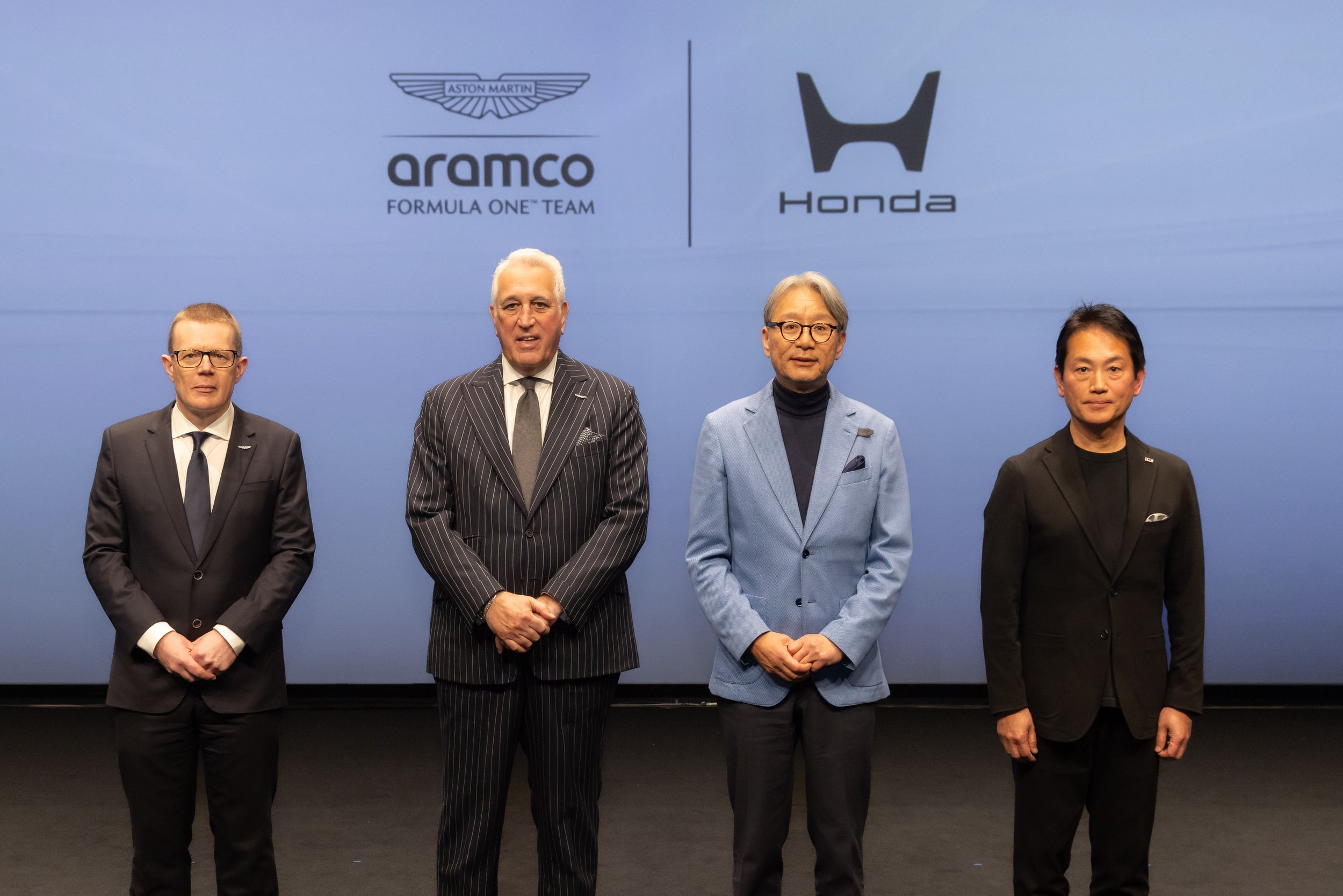
Honda has held an event in Tokyo, Japan, to mark the official launch of its power unit (PU) partnership with the Aston Martin Aramco Formula One Team. The two will work closely together as part of a works agreement starting with the 2026 FIA Formula One World Championship.
The following overview captures the speeches delivered at the event by Toshihiro Mibe, Global CEO of Honda, Stefano Domenicali, President & CEO of Formula 1, and Lawrence Stroll, Executive Chairman of Aston Martin Aramco Formula One Team.
In his speech, Toshihiro Mibe outlined the significance and starting point of Honda's F1 participation. In 1964, when Honda had only just begun selling automobiles, the company took on the challenge of participating in F1, the world’s most prestigious automobile race series. Honda overcame numerous difficulties and claimed its first-ever F1 victory at the 1965 Mexican Grand Prix, its second year in F1. Honda then flourished from the mid-1980s to the early 1990s, during a golden era with Williams and McLaren. More recently, Honda delivered dramatic moments, including winning the Drivers’ Championship title together with Red Bull Racing.
Mibe said Honda's participation in F1, the pinnacle of automobile racing, embodied the spirit of the company founder, Soichiro Honda, who inspired Honda engineers to “commit to becoming No.1 in the world,” and to “take on the most difficult challenges.” He added that this approach remained the starting point of Honda’s long-held commitment to embrace difficult challenges.
Mibe then explained Honda’s commitment to take on new challenges in the new era for F1. He said this season would bring major regulatory changes to both the chassis and the PU. He said the electrical power output from the motor and battery would increase to roughly three times its current level, and the engine would need advanced sustainable fuel. He said these changes meant F1 was evolving into a next-generation motorsport that took on the challenges of electrification and decarbonisation. He also said the F1 cost cap system required each PU manufacturer to pursue development efficiency and achieve maximum results within limited development resources.
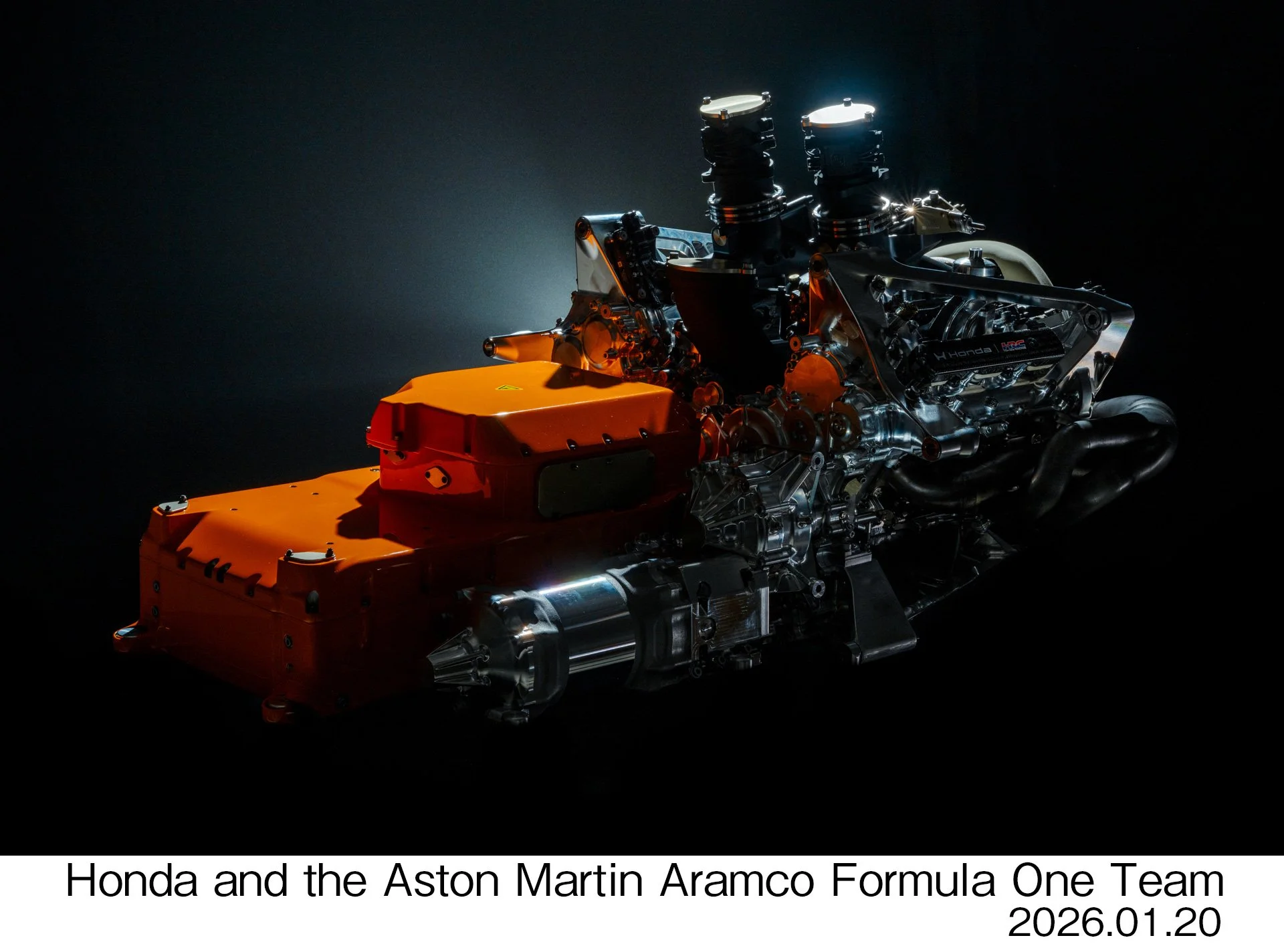
Mibe said Honda positioned F1 as a symbol of challenge and innovation. He said Honda Racing Corporation (HRC), the manufacturer’s global racing arm, developed the RA626H PU for the 2026 season. He said Honda would keep striving to become No. 1 in the world and would continue to take on challenges together with the Aston Martin Aramco Formula One Team.
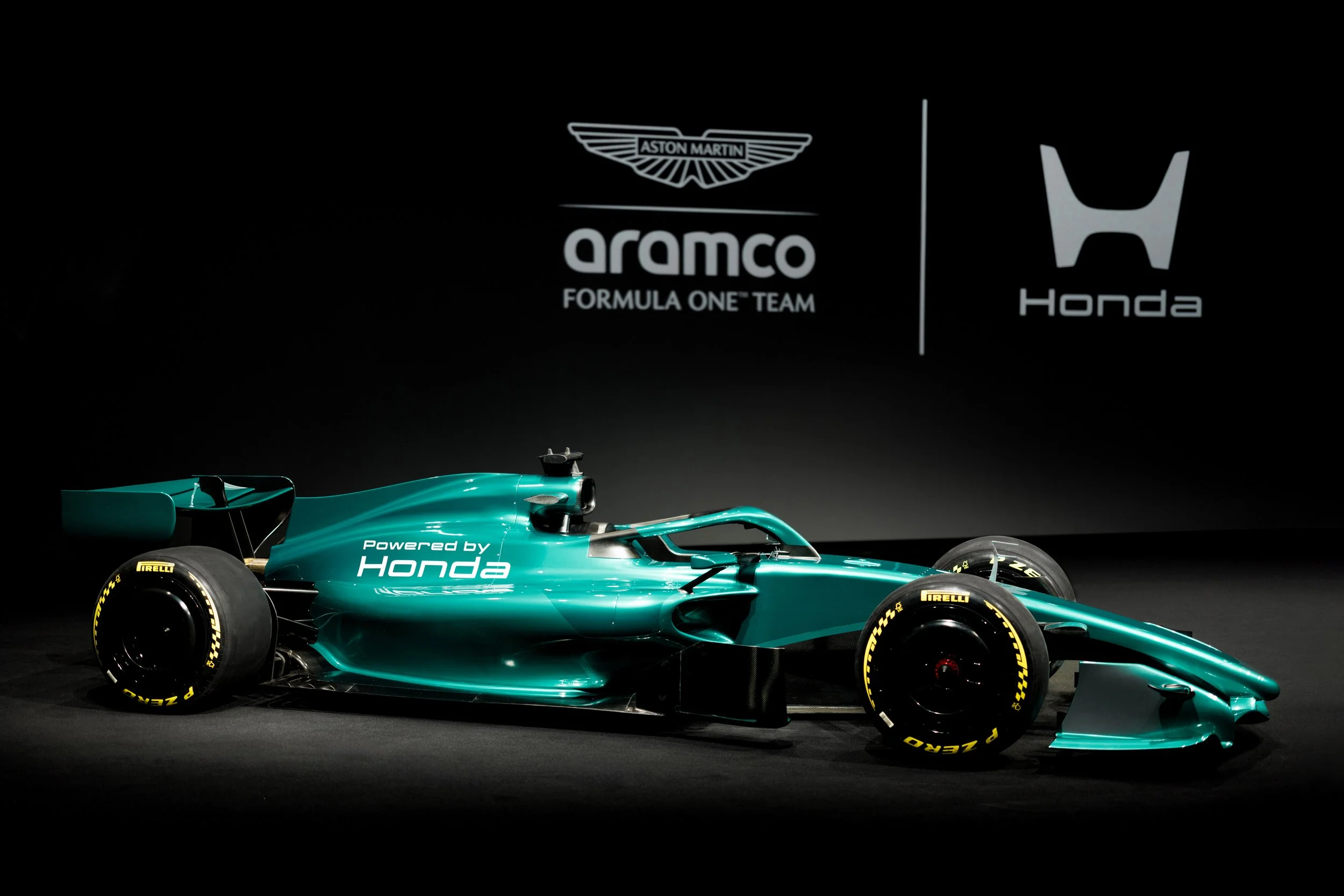
Mibe also described how Honda would adopt a new H mark and leverage HRC's expertise. He said machines powered by the RA626H would bear a new H mark with a refreshed design, which Honda adopted as the new symbol representing its automobile business. He said this symbolised the transformation of its automobile business and would be used for F1 and manufacturer machines in other motorsport series, given its intention to compete in IndyCar, Super GT, the Super Formula Championship, and the Super Taikyu Series.
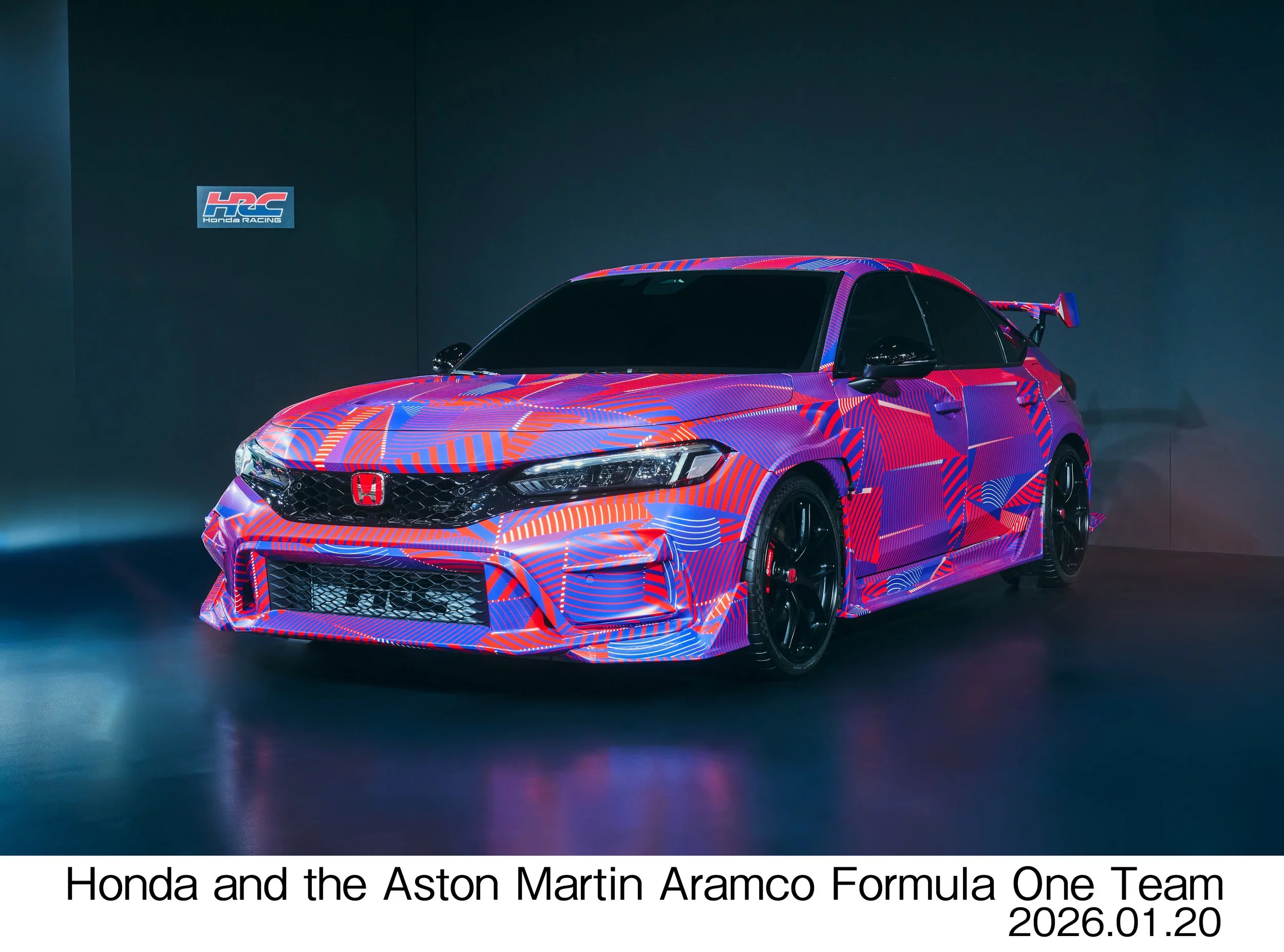
He said Honda would leverage the technologies and expertise that HRC amasses through F1 and other motorsports activities to introduce HRC-spec production models that offered further refined driving performance. He said this would help Honda’s motorsports activities contribute even more to enhancing its automobile business. He said Honda would introduce HRC-spec models to the market, including a production model based on the Civic Type R HRC Concept, and would offer customers a broader range of opportunities to experience the “joy of driving”.
Mibe said Honda viewed F1 not only as the pinnacle of automotive technology but as a place to develop its human resources. He said Honda engineers, rigorously trained in world-class competition, would return to developing production models and create products that offer even greater joy and inspiration to customers.
Mibe then outlined applications and contributions of F1 technologies to the future of mobility. He said technologies refined in F1, including those for high-efficiency combustion and thermal management, as well as those in high rotational speed, including high-output motors and large-sized turbochargers, plus sustainable fuel technologies, were being applied not only to next-generation HEV and EV models, but also to Honda products that enhanced mobility in the skies, such as eVTOL and aircraft engines.
He said expertise on unsustainable fuels had already been applied to sustainable aviation fuels (SAFs) and to those for powering VTOLs, which were currently under study. He said technologies for high-speed rotating components, such as turbos and motors, had been leveraged for aircraft engines and F1 PUs and were being further advanced through real-world applications. He said Honda would utilise F1 technologies as a starting point to facilitate technological innovation across land, sea, skies, and outer space, and to contribute to mobility products and services that support the realisation of a sustainable society.
Mibe also addressed the growing popularity of F1 and Honda’s determination. He said broadcast partners, social media content, global streaming services and movies had helped grow the fan base rapidly around the world, with 827m global fans in 2025. He said last year’s Japanese Grand Prix at the Suzuka Circuit set a record for spectators since the circuit’s major renovation in 2009, and that this showed an unprecedented surge of excitement and popularity. He said Honda wanted to share the joy of winning with long-standing supporters and new generations of F1 and brand fans.
Mibe said Honda would conduct its F1 activities from the 2026 season under a new logo representing its partnership with F1. He said Honda and the Aston Martin Aramco Formula One Team would compete to convey the true excitement and value of taking on challenges to reach the pinnacle of the world.
Stefano Domenicali described the partnership as an exciting moment for the sport. He said Honda and the Aston Martin Aramco Formula One Team would join together to fight for the biggest prize in F1. He said Formula 1 began racing in Japan in 1976 and moved to Suzuka in 1987, and that this created deep loyalty and connection to the country, where a record 13 World Drivers’ Championships had been decided. He said the sport was growing in Japan and said nearly 17 million passionate and incredible F1 fans now followed it there.
Domenicali said the Japanese Grand Prix at Suzuka last year welcomed 266,000 weekend attendees and saw a +26% year-over-year increase in TV viewership in Japan. He said Honda’s return to F1 this year would further boost the sport’s potential in the Japanese market.
He said the sport was also growing globally with 827 million fans worldwide. He said F1 aimed to engage fans in unexpected places, including culture, entertainment, music, TV and film. He said a healthy sport benefited everyone involved. He said F1 teams were thriving and in robust financial health, attracted prestigious blue-chip sponsors and demonstrated the unparalleled attractiveness of the F1 ecosystem to global brands.
Domenicali said the next generation of regulations for 2026 helped draw Honda back to the sport. He said those regulations would update both the chassis and PUs in the biggest overhaul in the sport’s history. He said the sport would use a simplified hybrid engine that ran on advanced sustainable fuel without impacting performance.
He said F1 echoed the commitment of Honda and Aston Martin Aramco Formula One Team to sustainability. He said F1 was on track to achieve Net Zero by 2030 and had already delivered a 26% reduction in carbon emissions by year-end 2024 compared to 2018. He said F1 welcomed the innovations to come and would work with partners such as Honda to push boundaries.
Lawrence Stroll said it was an honour to be in Japan to celebrate the new partnership. He said Aston Martin Aramco Formula One Team and Honda shared many values and said those values forged a strong bond towards 2026 and beyond.
Stroll said the new Aston Martin Technology Centre at Silverstone, U.K., had been completed and said it had strengthened the organisation like never before. He said the new wind tunnel was proving to be a vital asset for development. He said the team was building a new data centre to strengthen capabilities further. He said the team was pushing boundaries and working tirelessly with future success at the forefront.
Stroll said Aston Martin Aramco Formula One Team was entering into a true works partnership with Honda. He said this meant the chassis and PU were designed as a single integrated package, and that this move was crucial to the aspiration to win championships. He said the team was proud to have Aramco providing sustainable fuels and Valvoline providing lubricants for the first time. He said these technical partnerships were vital to success, and he thanked Honda, Aramco, and Valvoline for sharing the same vision and for working side by side tirelessly.
Stroll said the close collaboration between the UK-based Aston Martin Aramco Formula One Team and HRC Sakura in Japan had already grown into a very close partnership, and that the team now had everything needed to achieve success. He said the team’s drivers had tremendous trust in the Honda PU and its engineers. He said Andy Cowell’s new role as the Chief Strategy Officer within the team reflected how closely everyone was working together. He said Cowell’s expertise was helping the team move forward side by side.
Stroll invited fans of the Aston Martin Aramco Formula One Team in Japan to join the team on the journey as it took on the challenge of winning together. He said the team would strive for victory with Honda and build a new chapter in its history. He said it was exciting to be on that journey with everyone, and he thanked fans for their continued support.