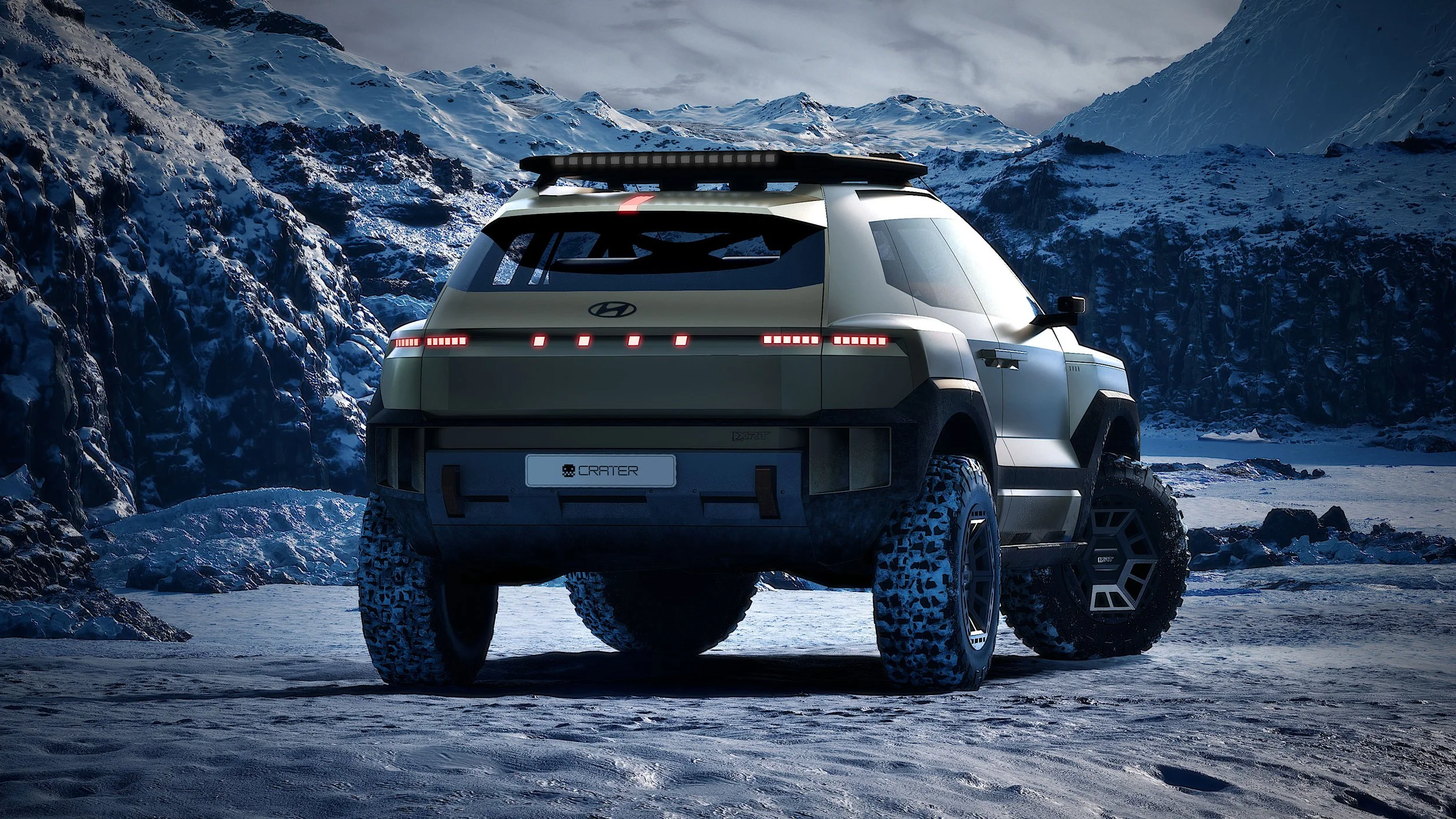
Hyundai CRATER Concept: Tough Compact Adventure SUV
Hyundai Motor America unveiled the Hyundai CRATER Concept adventure vehicle to a global audience at AutoMobility LA 2025 in Los Angeles, California. It positioned titas as a bold expression of capability and toughness. Designers created the CRATER Concept as a design exploration that captures the spirit of adventure. They drew inspiration from extreme environments and developed the Hyundai CRATER Concept at Hyundai America Technical Centre (HATCI) in Irvine, California. The team crafted the vehicle with the spirit of XRT, integrating design elements that showcase protection and connectivity, building on the direction set by Hyundai’s IONIQ 5 XRT, SANTA CRUZ XRT and PALISADE XRT PRO production models.
Visitors can experience the Hyundai CRATER Concept throughout AutoMobility LA 2025 media days and during the Los Angeles Auto Show public days until Sunday, 30 November. Hyundai showcases the CRATER Concept alongside a full lineup of award-winning Hyundai vehicles, including the all-new 2026 Palisade SUV, the IONIQ 5 electric SUV and the newly announced IONIQ 6 N high-performance sport saloon, reinforcing its commitment to adventurous design and advanced electrified mobility.
The rugged new Hyundai CRATER Concept serves as a rolling embodiment of Hyundai’s drive to build even more versatility and emotion into future XRT models while also offering a deeper vision of off-road freedom. The vehicle presents a compact Hyundai adventure SUV that feels ready for real-world trails as well as aspirational journeys. “CRATER began with a question: ‘What does freedom look like?’ This vehicle stands as our answer,” said SangYup Lee, Executive Vice President and Head of Hyundai and Genesis Global Design. “It is a vision shaped by our unending drive to explore — to inspire our customers to explore deeper and embrace the impact of adventure.”
Hyundai’s designers express the Art of Steel exterior design language through the CRATER Concept by transforming the strength and flexibility of steel into sculptural beauty. They take cues from Hyundai Motor’s advanced steel technologies and use the material’s natural formability to create flowing volumes and precise lines that evoke the distinctive aesthetic qualities of steel, powerful, gentle and timeless. They apply this Art of Steel approach across the compact SSUV's body to create a cohesive, recognisable Hyundai design signature.
The design team guided the exterior of the Hyundai CRATER Concept with a clear goal: a rugged, capable form that reflects the wild landscapes that inspire it. This aim shaped every detail, from the chiselled bodysides to the bold skid plates, and resulted in a concept that visually communicates strength, resilience and purpose. The proportions of this compact concept reflect an adventurous spirit. By building the Hyundai CRATER Concept on a compact monocoque architecture, the engineers created a vehicle that feels ready to go almost anywhere and supports a wide range of outdoor lifestyles.
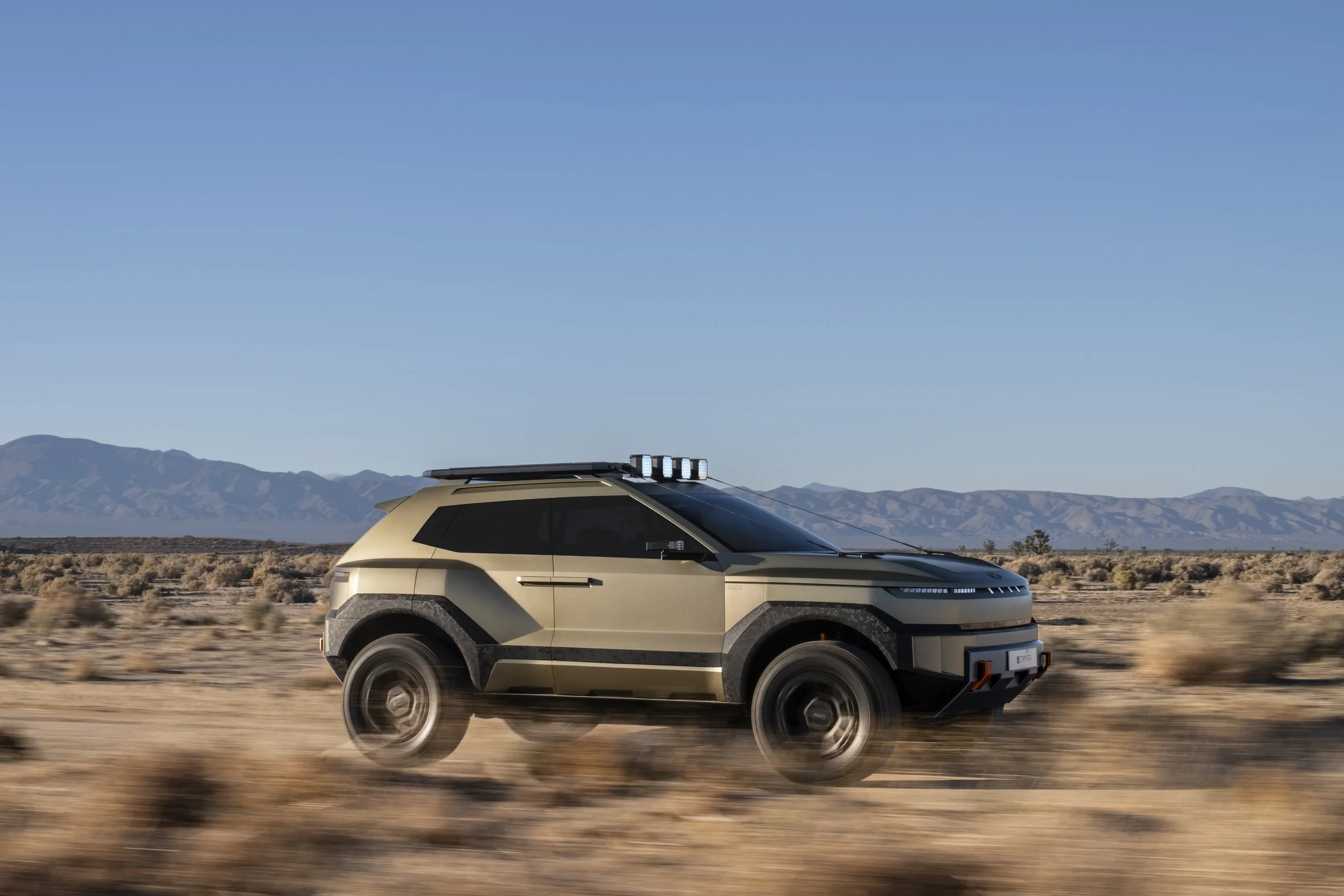
Designers gave the Hyundai CRATER Concept an assertive silhouette that signals off-road intent at a glance. They paired the bold outline with steep approach and departure angles that support serious off-road exploration and add purpose to the stance. The 18-inch hexagonal faceted wheels draw inspiration from the idea of a hexagonal asteroid striking a sheer metal landscape and leaving a fractal crater in its wake. This imaginative reference informs a wheel design that blends off-road toughness with geometric precision. Generous 33-inch off-road tyres wrap the wheels to deliver traction and ground clearance for performance in varied environments, from rocky tracks to sandy coastal trails.
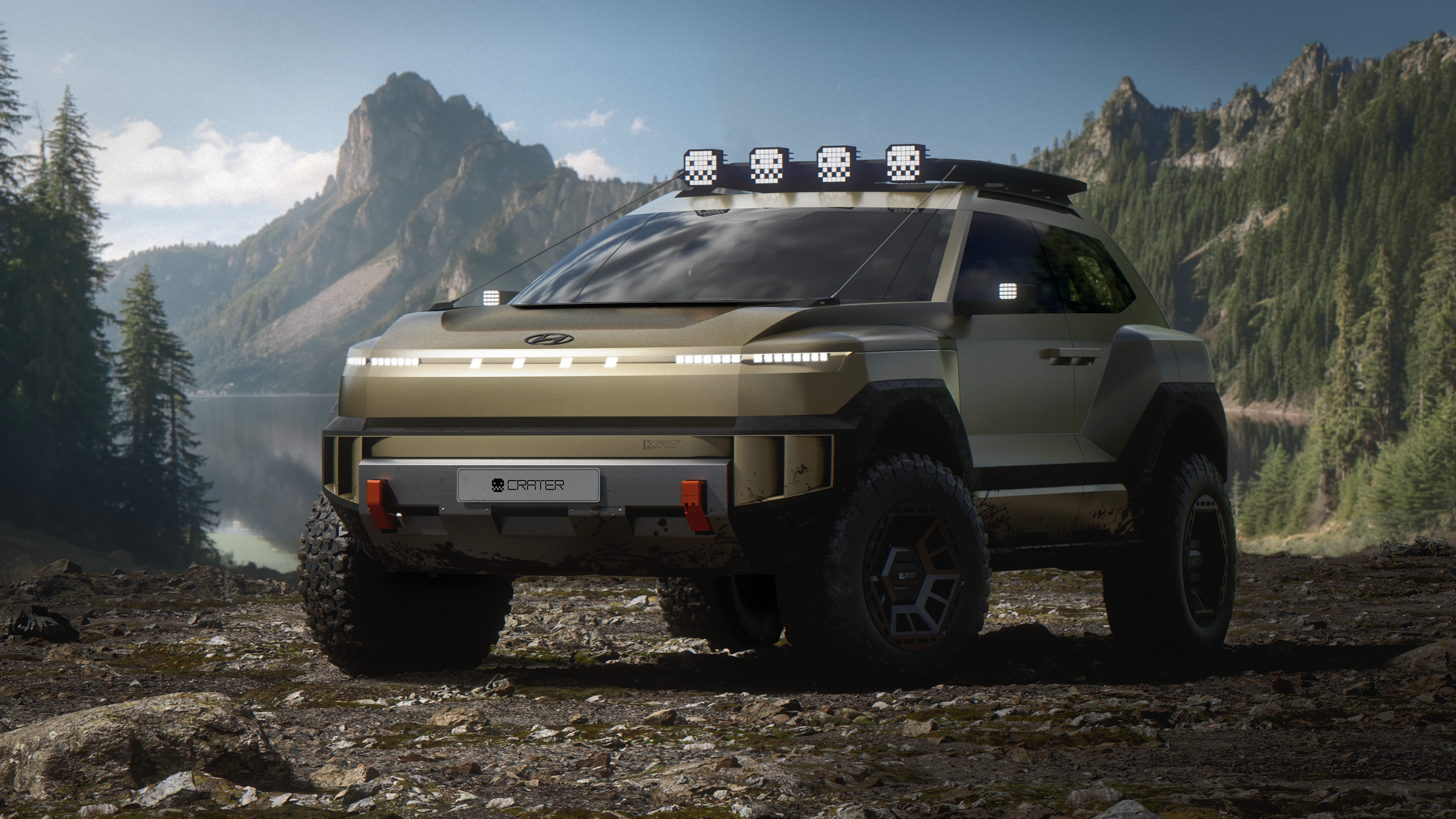
A wide, functional skid plate spans the underbody of the Hyundai CRATER Concept, protecting key components while visually anchoring the vehicle. Its sheer surface and robust form convey protection and capability, reinforcing the SUV’s adventurous positioning. Designers treated the roof platform as an ideal mounting point for auxiliary lighting, additional storage, and other off-road accessories, enabling a compact off-road SUV for longer journeys or specialist pursuits. A pair of limb risers, formed by cables that stretch from the front bonnet to the roof, promises added protection from low-hanging branches on narrow, overgrown trails and underlines the concept’s serious off-road intent.
The sheer front and rear wings emphasise the robotic and sculptural character of the Hyundai CRATER Concept through broad, prominent shoulders with clean surfaces. By pushing this fender design to the extreme, the team reinforced the vehicle’s confident, planted stance and significantly reduced Hyundai’s Art of Steel exterior language. Drastically curved rocker panels contribute to this impression. Their construction suggests both protection and utility, reinforcing the CRATER Concept’s readiness for demanding terrain and giving the compact SUV a purposeful side profile that suits adventure travel.
The Hyundai CRATER Concept introduces a distinctive lighting signature through parametric pixels and indirect lighting elements. Designers created three-dimensional forms that generate a layered effect with depth and precision, while indirect lighting softly illuminates surrounding surfaces for a refined yet technical appearance. Auxiliary off-road lights mounted on the roof carry Hyundai’s gradient parametric-pixel theme and enhance visibility as the adventure continues into the night. These off-road lights also provide a visual link to other Hyundai models that use parametric pixels as part of their identity.
Hidden exterior details give the Hyundai CRATER Concept a playful edge that suits an adventure SUV. One built-in recovery hook doubles as a bottle opener, supporting relaxed moments at camp after a long drive. The side-mirror cameras also work as removable torches. Users can detach them in emergencies, use them to capture breathtaking views or record exciting adventures away from the vehicle, turning functional hardware into creative tools.
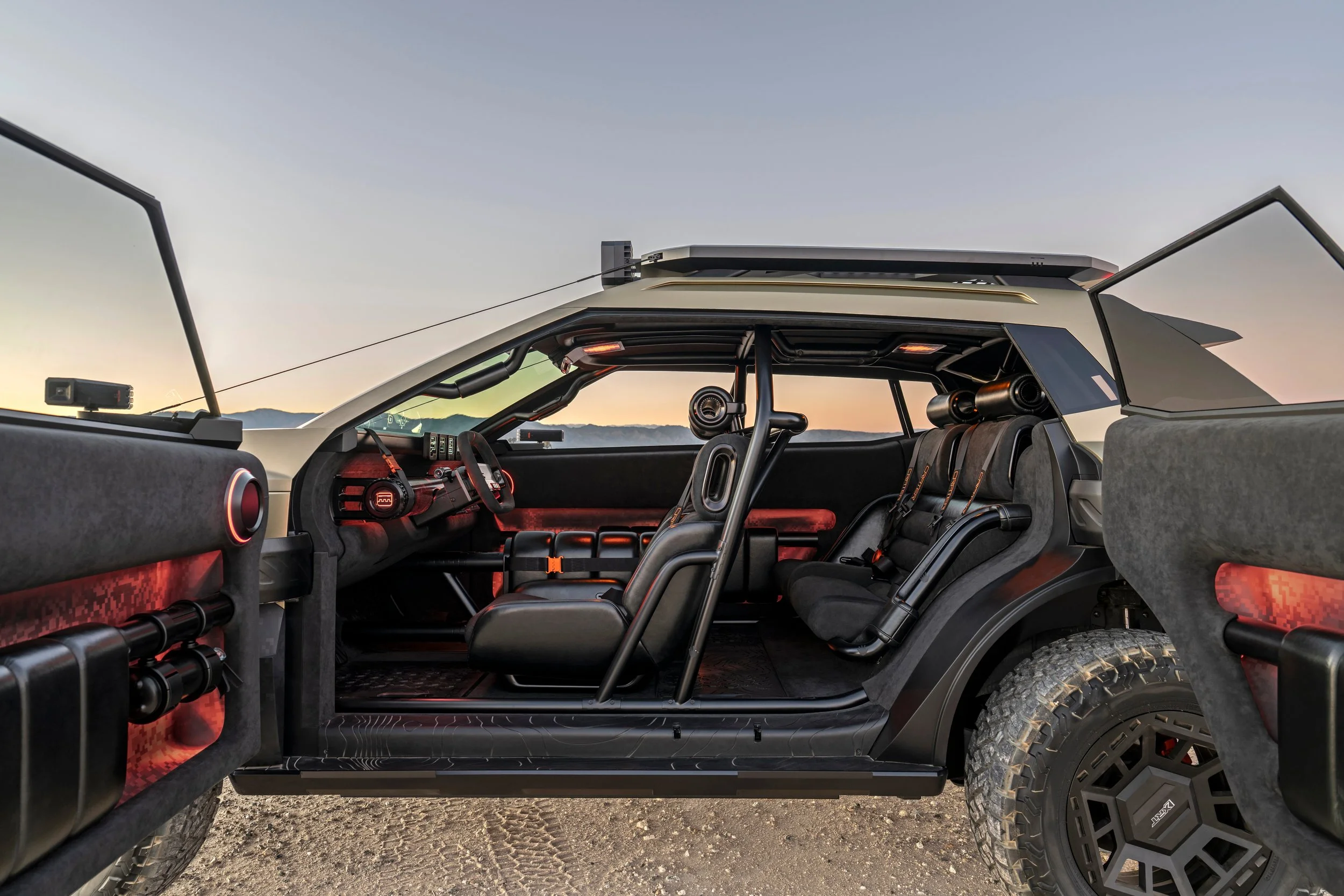
Inside, the Hyundai CRATER Concept uses an interior design language the team describes as the Curve of Upholster, targeting tech-savvy adventure seekers who prioritise rugged, function-first design and flexibility. Designers wrapped technical shapes in soft yet durable materials to create a natural integration that delivers comfort, support and practicality in any environment. The cabin feels simultaneously tough and warm. The singular interior design begins with a high-brow crash pad that visually bridges the exterior and interior, reinforcing the sense of a holistic Hyundai off-road design.
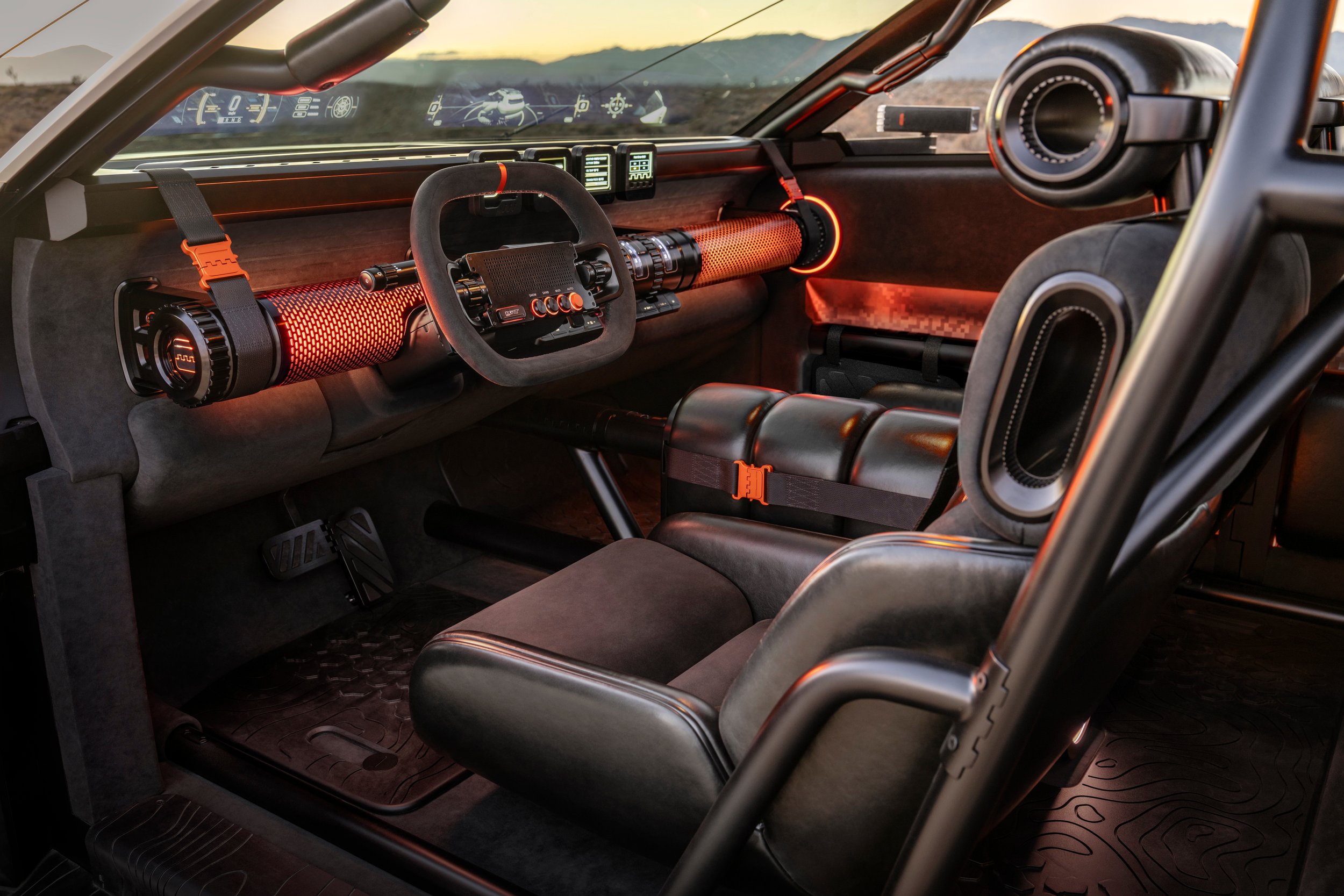
Hyundai enhances the in-car digital experience of the CRATER Concept with a BYOD (Bring Your Own Device) approach that supports a flexible, customisable interface for every journey. Drivers can tailor the digital setup to their personal devices and preferred apps, so the compact adventure SUV adapts to different situations and user preferences. A full-width head-up display stretches across the driver’s field of view and serves as a cutting-edge multifunction display. This unit also integrates an innovative rear-view camera mirror feed that helps the driver maintain awareness of obstacles and surroundings while keeping eyes closer to the road ahead.
The unconventional dashboard crash pad in the Hyundai CRATER Concept takes the form of a bent metal sheet that wraps around the cabin. Subtle perforations allow soft light to glow through, creating a refined and distinctive aura unique to this off-road concept vehicle. Strap-inspired design elements pair with ambient lighting in an accent colour, adding energy and visual depth to the sturdy and practical character of the interior. These functional and expressive details underline Hyundai’s focus on both usability and emotion in the CRATER Concept cabin.
Engineers created a structural interior expression through a functional roll cage that outlines the cabin, adds tension and strength and signals serious off-road capability. Integrated grab handles help occupants climb in and out with ease, especially when the vehicle sits on uneven ground. This exposed structural element gives a reassuring feeling of safety and reinforces the message that the Hyundai CRATER Concept exists for confident exploration and resilience on challenging terrain.
Supportive seating plays a central role in the CRATER Concept interior. Designers moved away from traditional bucket seats and introduced wraparound forms that cradle occupants during rugged journeys. Three-dimensional padding provides stability and comfort, while cylindrical cushions and supportive headrests deliver ergonomic benefits over long distances. Generous side bolsters help stabilise the body during off-road driving, and a four-point seatbelt system hints at enhanced restraint and safety for demanding off-road scenarios, underscoring the performance focus of this Hyundai adventure SUV.
The steering wheel of the Hyundai CRATER Concept adopts a squared-off shape and features a centre-mounted pixel display that reimagines how the driver interacts with the vehicle. Terrain mode buttons are within easy reach and allow quick switching between Snow, Sand, Mud, Auto, and XRT modes, supporting a more intuitive response to changing surfaces. This approach links the tactile feel of traditional controls with the modern digital language of Hyundai’s parametric pixels.
Practical interior details further highlight the off-road-ready nature of the Hyundai CRATER Concept. The passenger side features a first-aid kit within easy reach, while the driver's side carries a fire extinguisher to support safety-conscious adventure travel. A removable Bluetooth centre console main speaker allows occupants to bring their soundtrack to camp or the beach. A hidden aperture light at the dashboard edge reveals a playful light signature when activated. Easy-to-reach, cylinder-type centre controls mechanically connect to visual indicator lights, reinforcing a sense of direct mechanical engagement. Throughout the vehicle, a symbolic character, CRATER MAN, serves as a playful motif, offering storytelling through hidden surprises and interactive design elements, adding personality to the Hyundai concept SUV.
To tackle rugged terrain, the Hyundai CRATER Concept incorporates off-road design cues and key functions that support serious exploration. A tactile, gear-type multifunction off-road controller gives the driver complete and intuitive control of essential systems, including front and rear locking differentials and traction and braking management. This controller is central to the vehicle’s expressive off-road narrative. A terrain mode selector offers Snow, Sand, and Mud presets that optimise performance across varied conditions. Additional off-road features include downhill brake control for stable descents, trailer brake control for towing confidence, a compass to maintain orientation and an altimeter to track elevation changes during mountainous drives.
The Hyundai CRATER Concept presents its adventurous character through a Dune Gold matte exterior colour that draws rich inspiration from California’s coastal terrain, where sun-faded sagebrush and golden grasses meet rugged cliffs and windswept canyons. The modern, youthful edge of this green-gold finish hints at the adventurous spirit of surf culture, desert drives and the outdoor lifestyle that defines the Southern California experience. Pops of anodised orange on key touchpoints add contrast and inject a playful personality, emphasising the lifestyle positioning of this compact off-road SUV.
Inside, the Black Ember interior material palette of the Hyundai CRATER Concept reflects the demands of off-roading through California’s diverse landscapes and beyond. Designers chose every texture and surface to invite use rather than mere admiration. The cabin feels ready for boots, sand, grit and gear and responds like a trusted piece of equipment. Like a well-worn jacket, the interior intends to adapt and develop a purposeful patina over time, moulding itself to each journey while standing strong against the elements. This approach positions the Hyundai CRATER Concept as a genuine companion for frequent adventure, not just a showpiece.
Vibrant orange accents punctuate the interior and connect the cabin to the outdoor world by evoking off-grid elements such as desert sunsets and campfires. These highlights inject energy and fun into the space and tie back to the anodised orange exterior touchpoints. Material highlights complete the story. A black leather base sets a neutral tone that encourages a deeper connection with nature when the landscape provides the colour. Black Alcantara contributes a tactile, grounded feel that communicates control and comfort in motion and subtly recalls California’s gritty sandstone. Brushed-metall accents add a layer of industrial toughness to the Hyundai CRATERConcept's interior, complementing its rugged yet refined aesthetic. Designers etched topographic patterns into select surfaces, referencing the very soul of off-road journeying and creating a visual narrative of exploration and discovery that runs through the entire Hyundai CRATER Concept adventure SUV.