New Audi RS 5 Plug-In Hybrid With quattro Torque Control
The new Audi RS 5 marks Audi Sport’s first high-performance plug-in hybrid (PHEV). It brings true RS DNA and finely tuned hybrid technology. The RS 5 delivers sharp agility and impressive precision, and it spans a wide range of driving characters. It delivers daily comfort with ease, then becomes a potent performer when you ask for it. Audi Sport pairs a 2.9-litre twin-turbo V6 producing 375 kW (510 PS) with a 130 kW electric motor for the first time. Audi Sport matches that powertrain with bespoke RS sport suspension with twin-valve dampers, a completely new quattro drivetrain with Dynamic Torque Control, and a world-first electromechanical torque vectoring system at the rear. A new centre differential uses preload to keep it partially locked and manages longitudinal torque distribution. A new rear differential handles transverse torque distribution and shifts torque between the rear wheels in milliseconds. The RS 5 delivers exceptionally agile, composed and effortless driving as a result.
“The A5 model series’ new pinnace is our first high-performance plug-in hybrid. Our newly developed quattro drivetrain with Dynamic Torque Control is the world’s first electromechanical torque vectoring system in a production car. The sophisticated technical interplay between combustion engine and electric power brings performance and efficiency together in a new way at Audi. Customers can experience both peak sportiness and everyday, says Audi CEO Gernot Döllner.
Rolf Michl, Managing Director of Audi Sport, adds: “The RS 5 and its innovative drive concept mark the beginning of a new era for our RS models. They bring a new level of dynamics to the driving characteristics our customers love and further improve day-to-day use value thanks to all-electric driving and innovative technologies. A new interpretation of the true RS experience.”
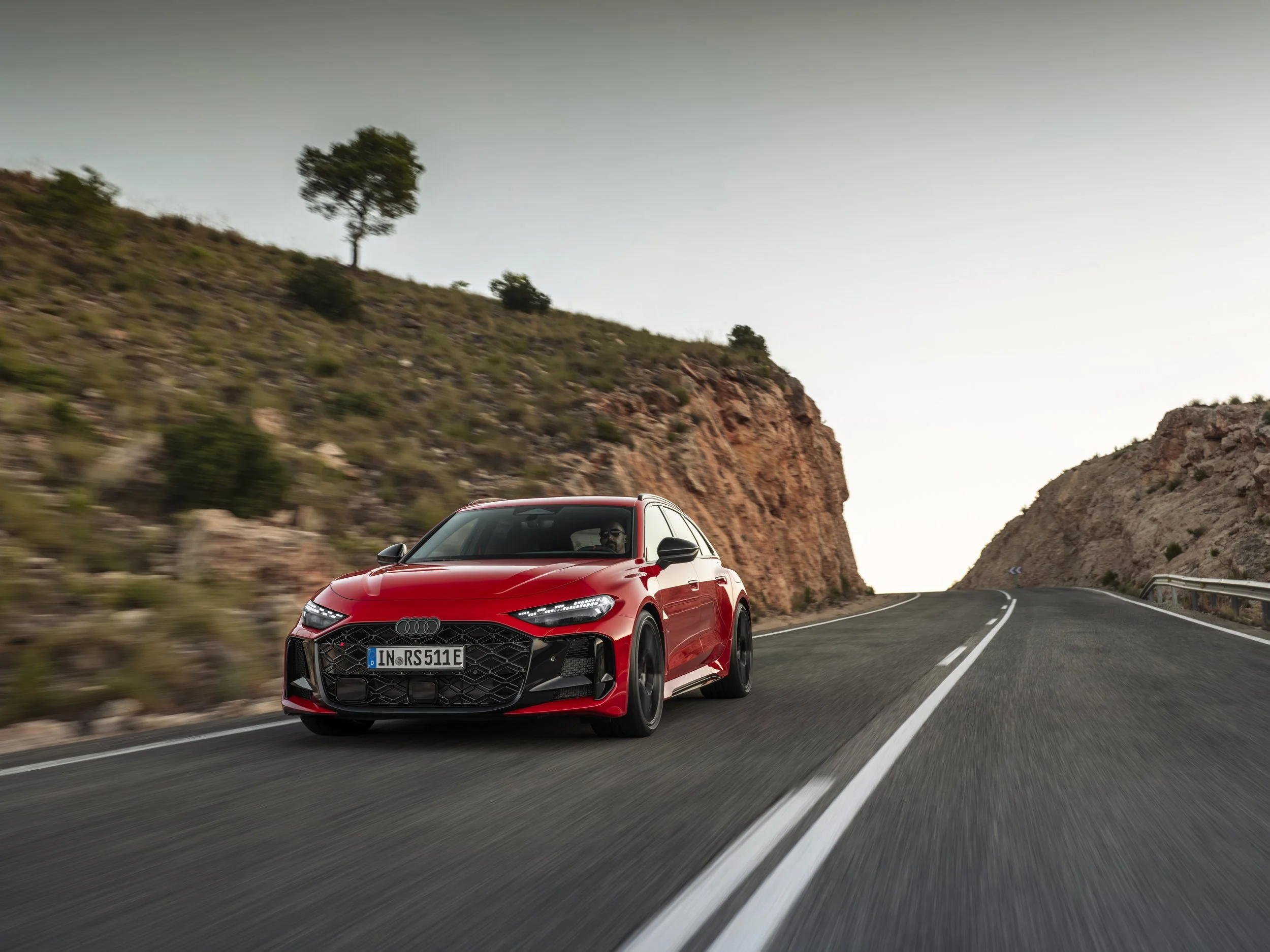
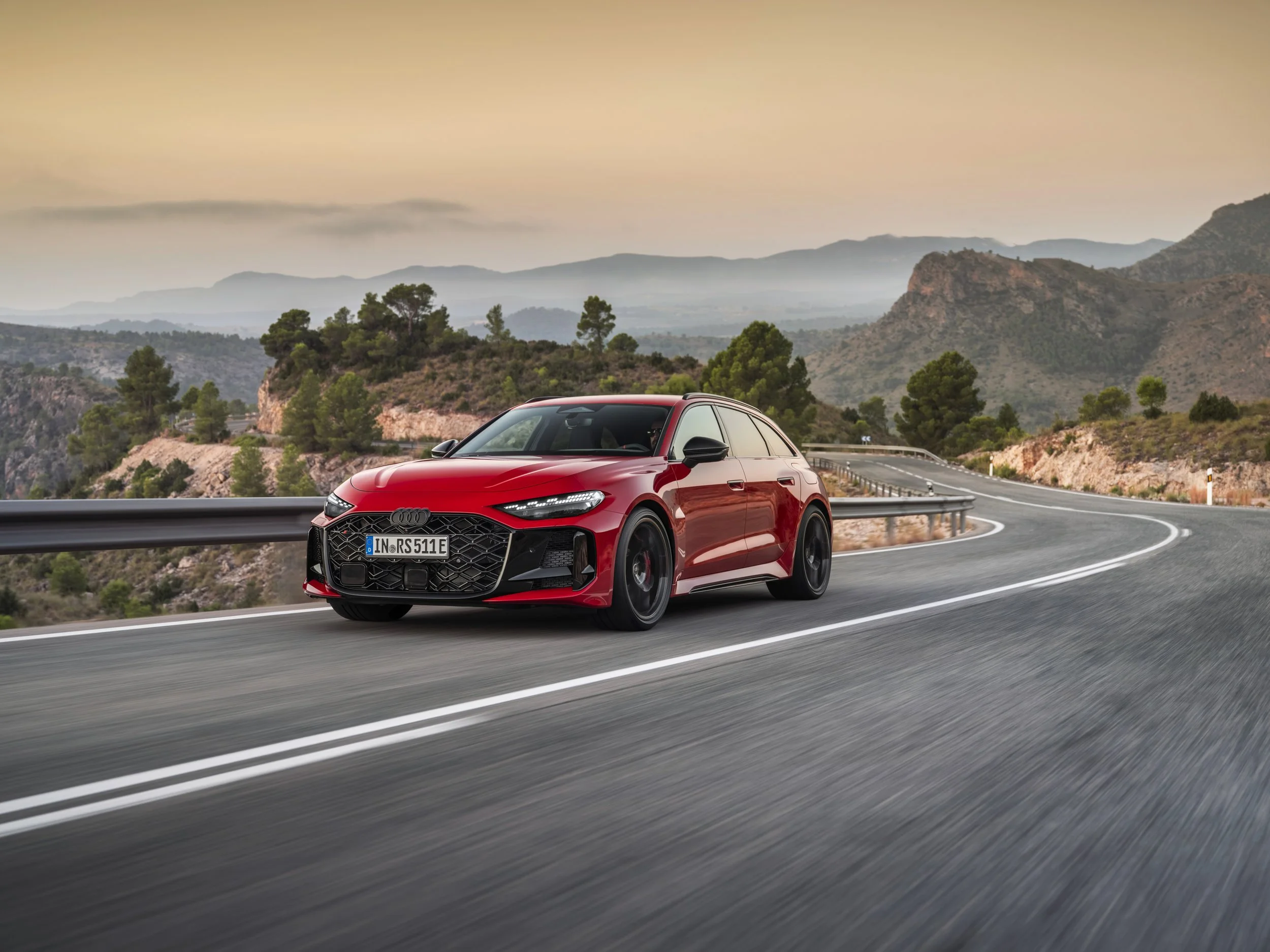
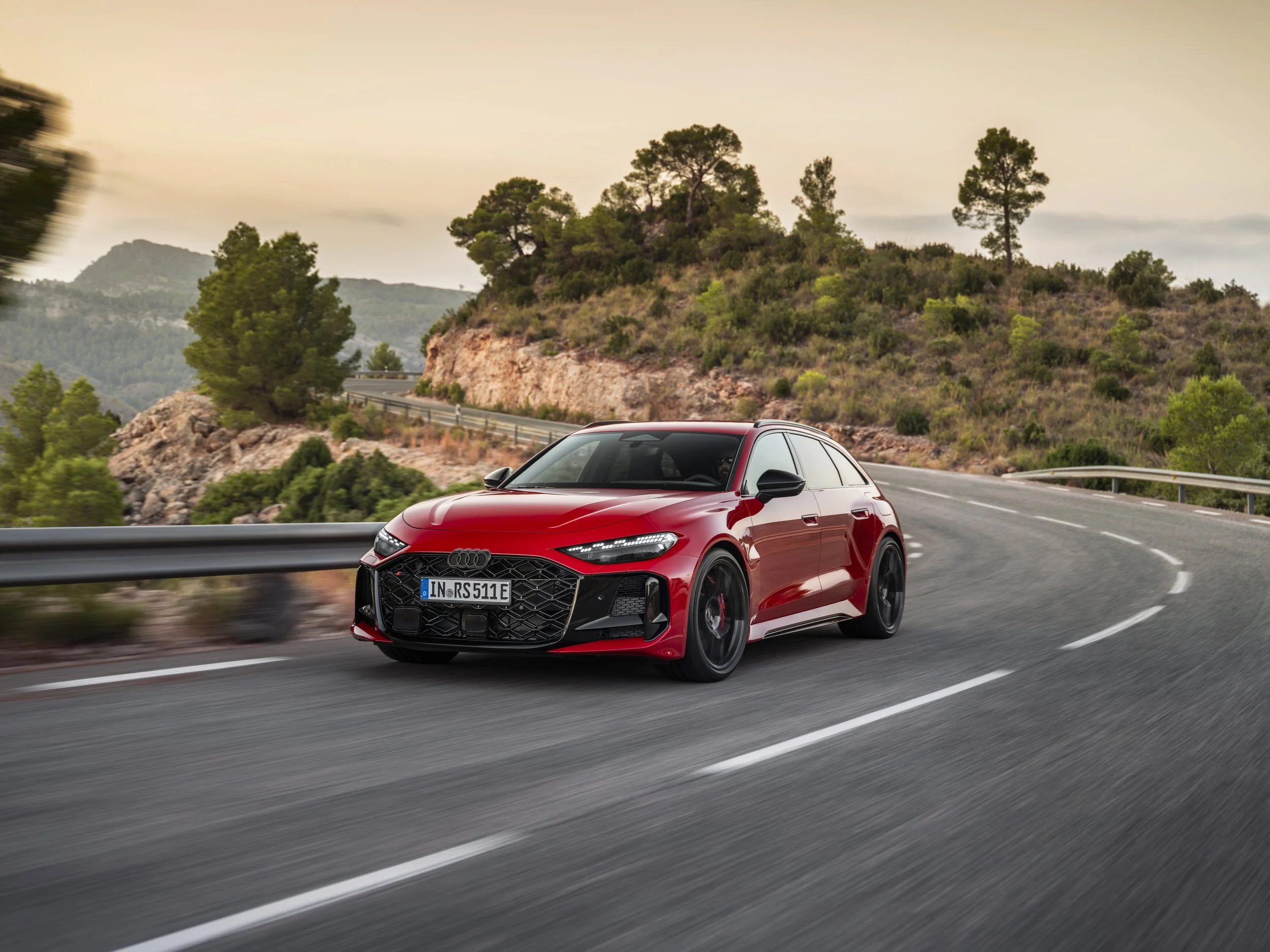
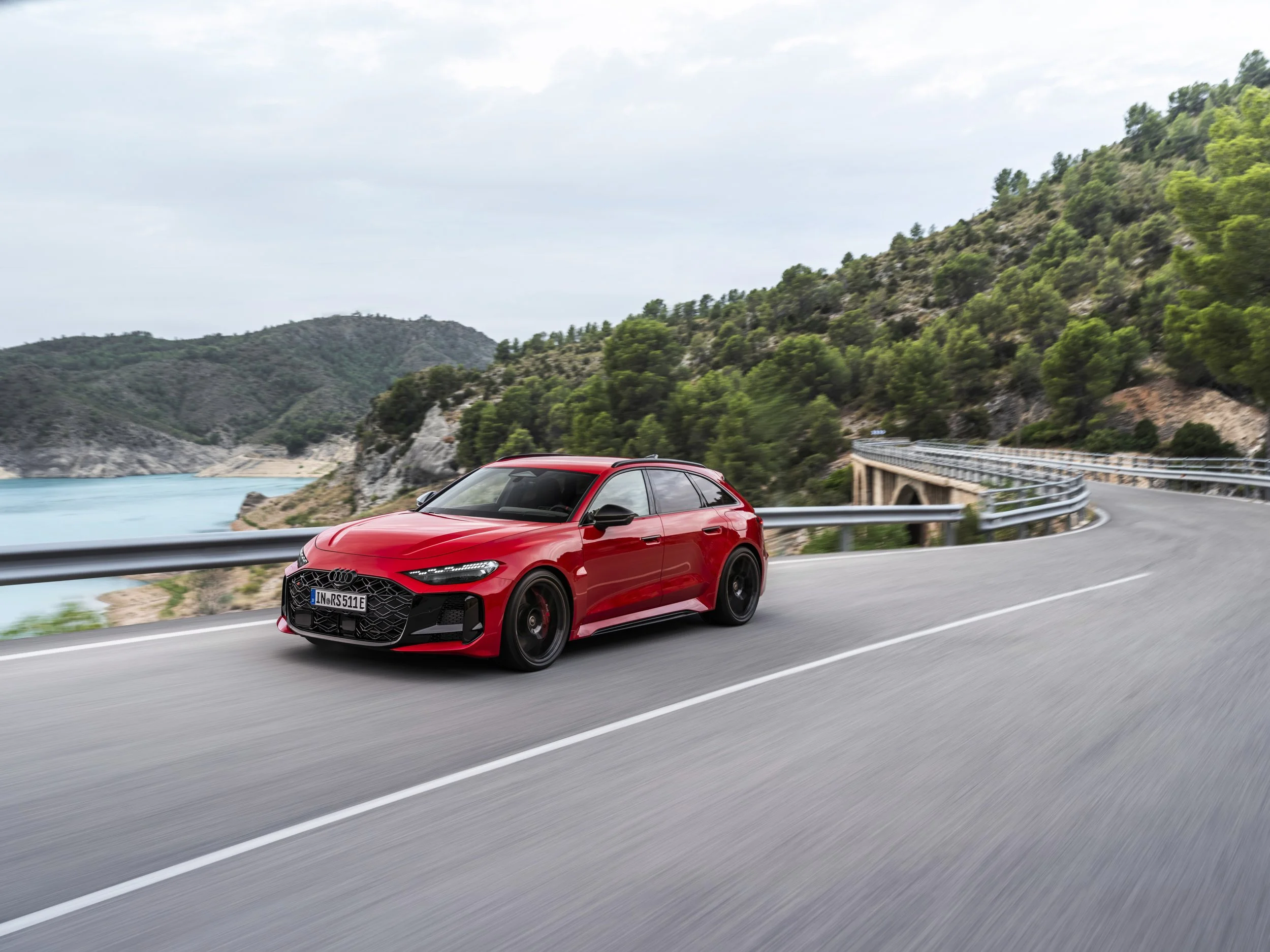
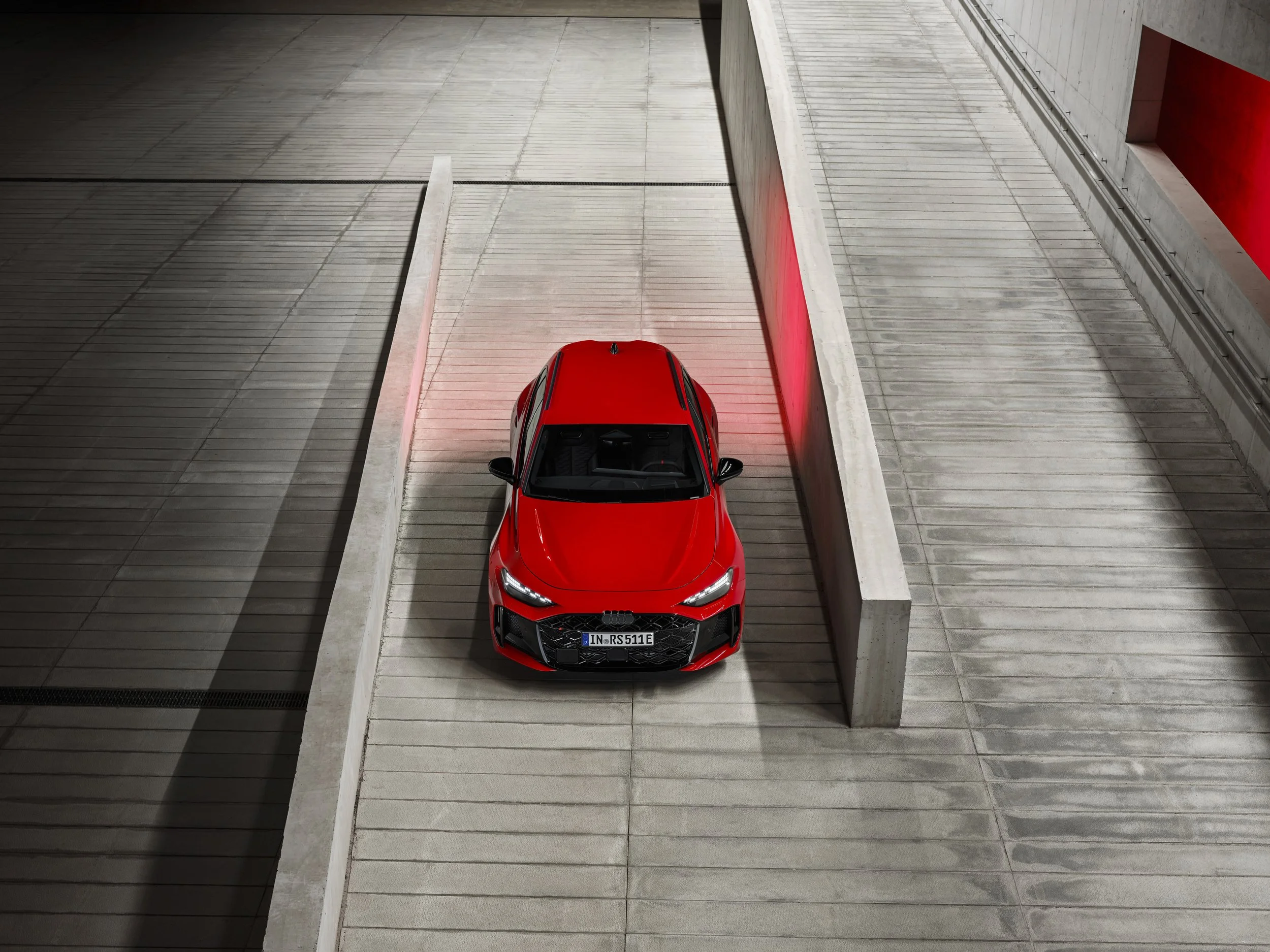
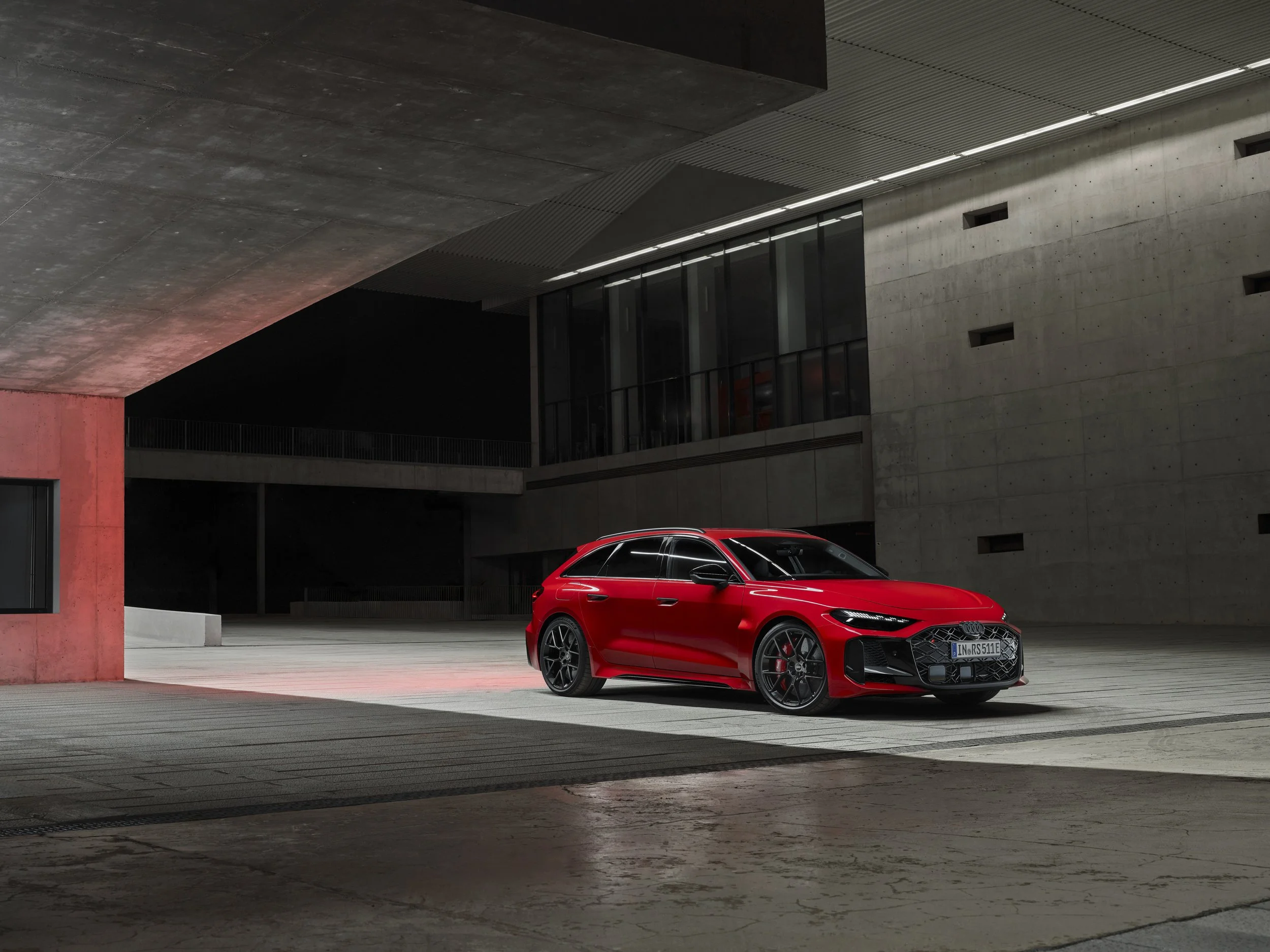
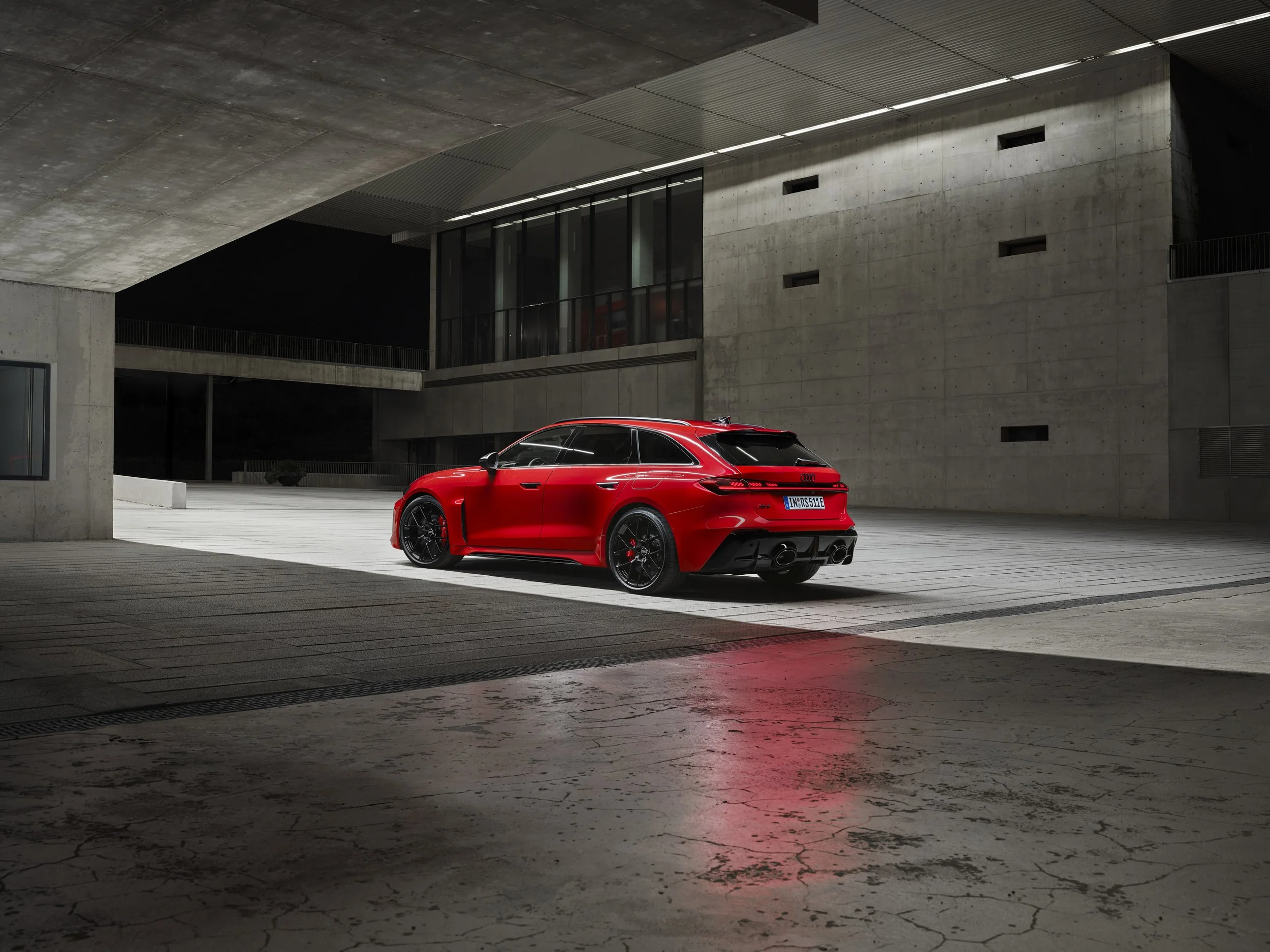
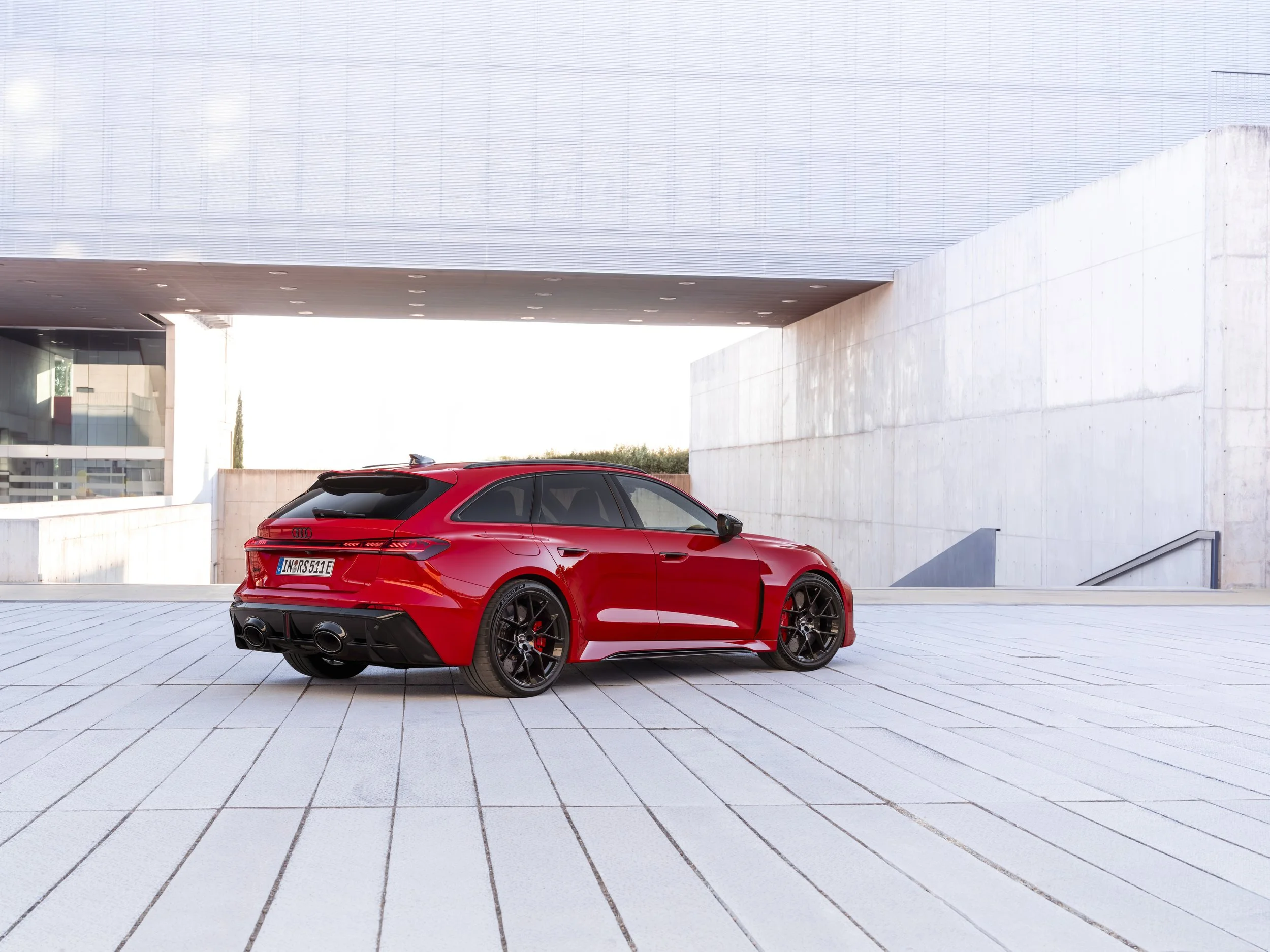
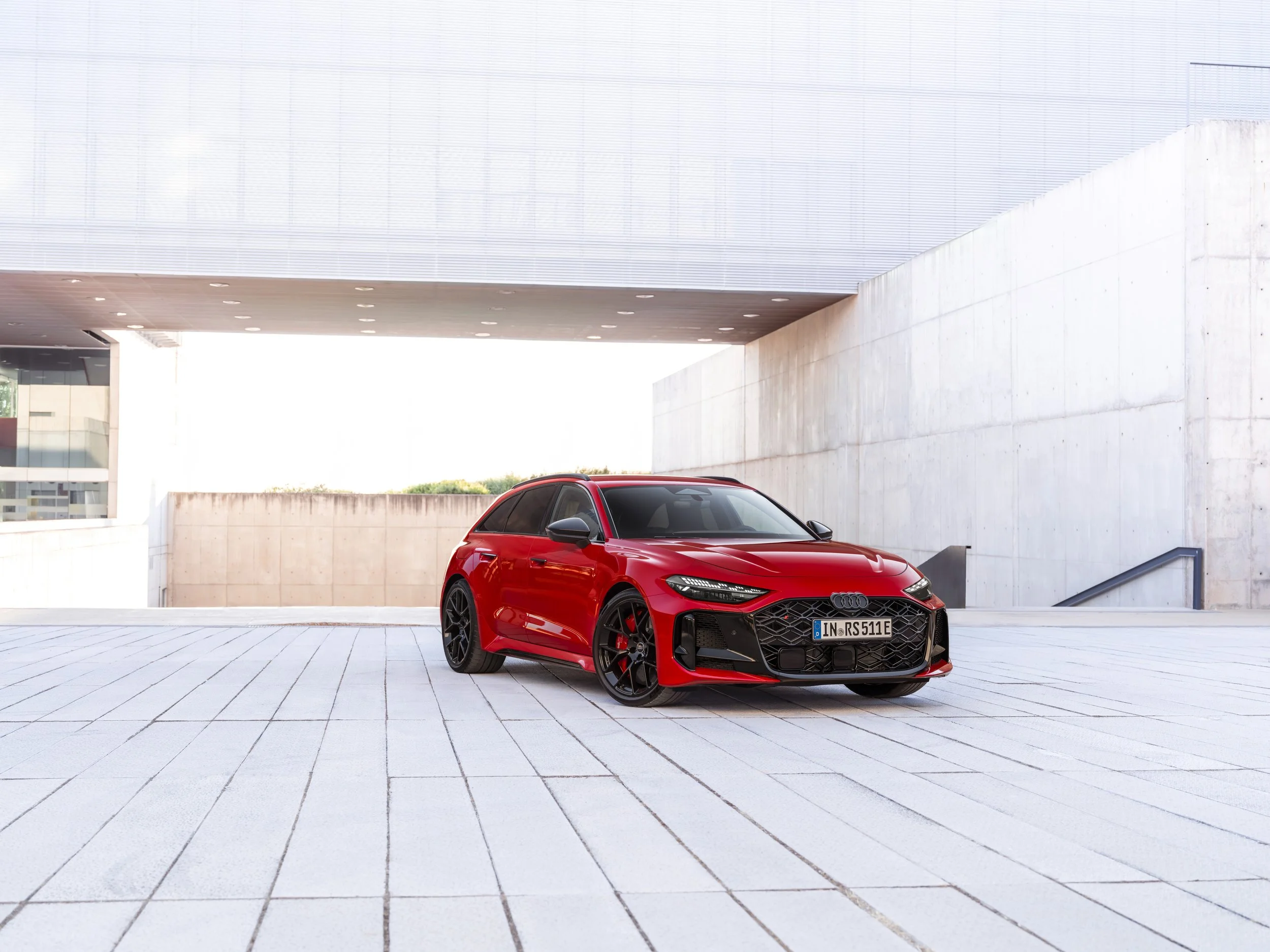
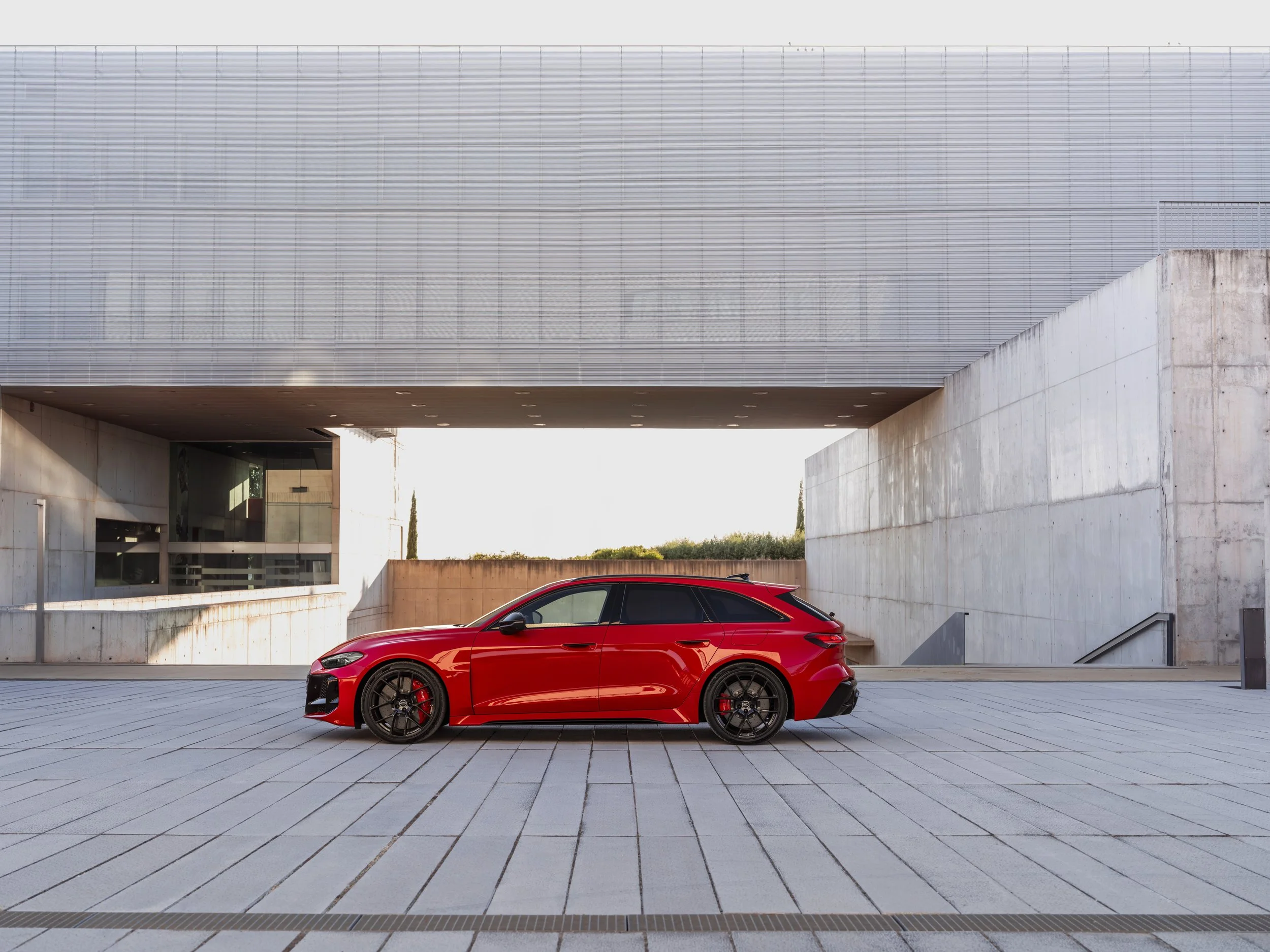
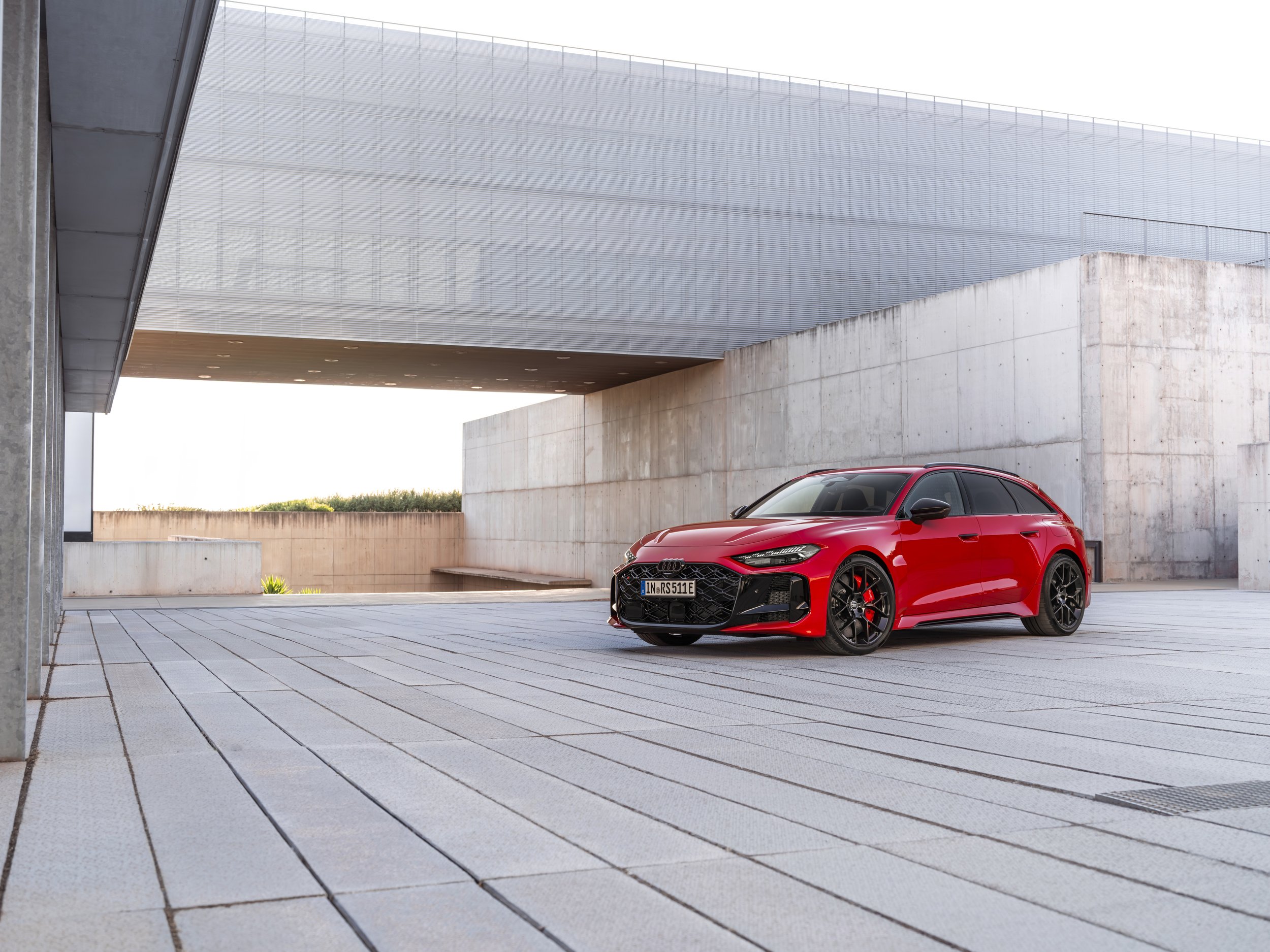
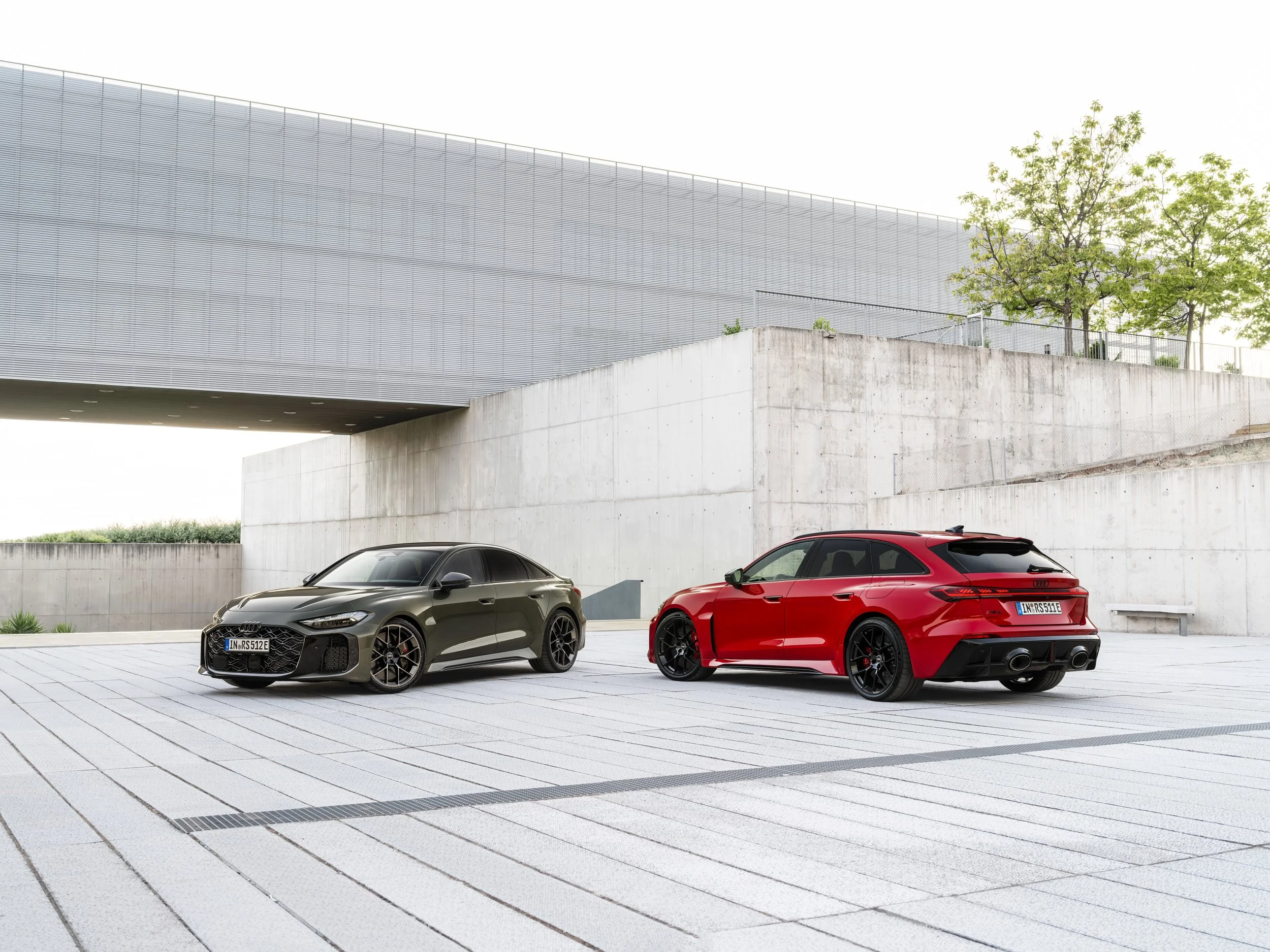
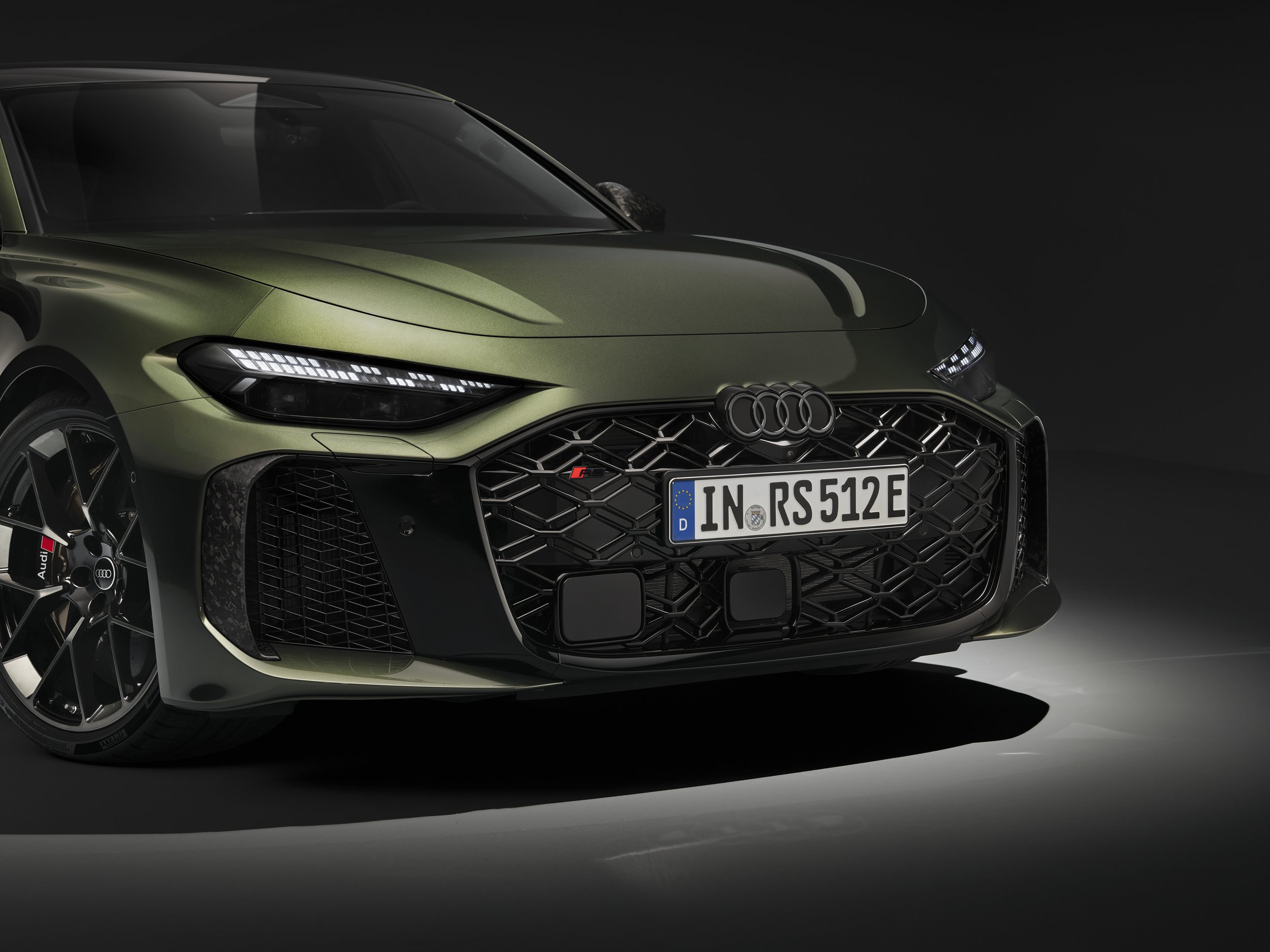
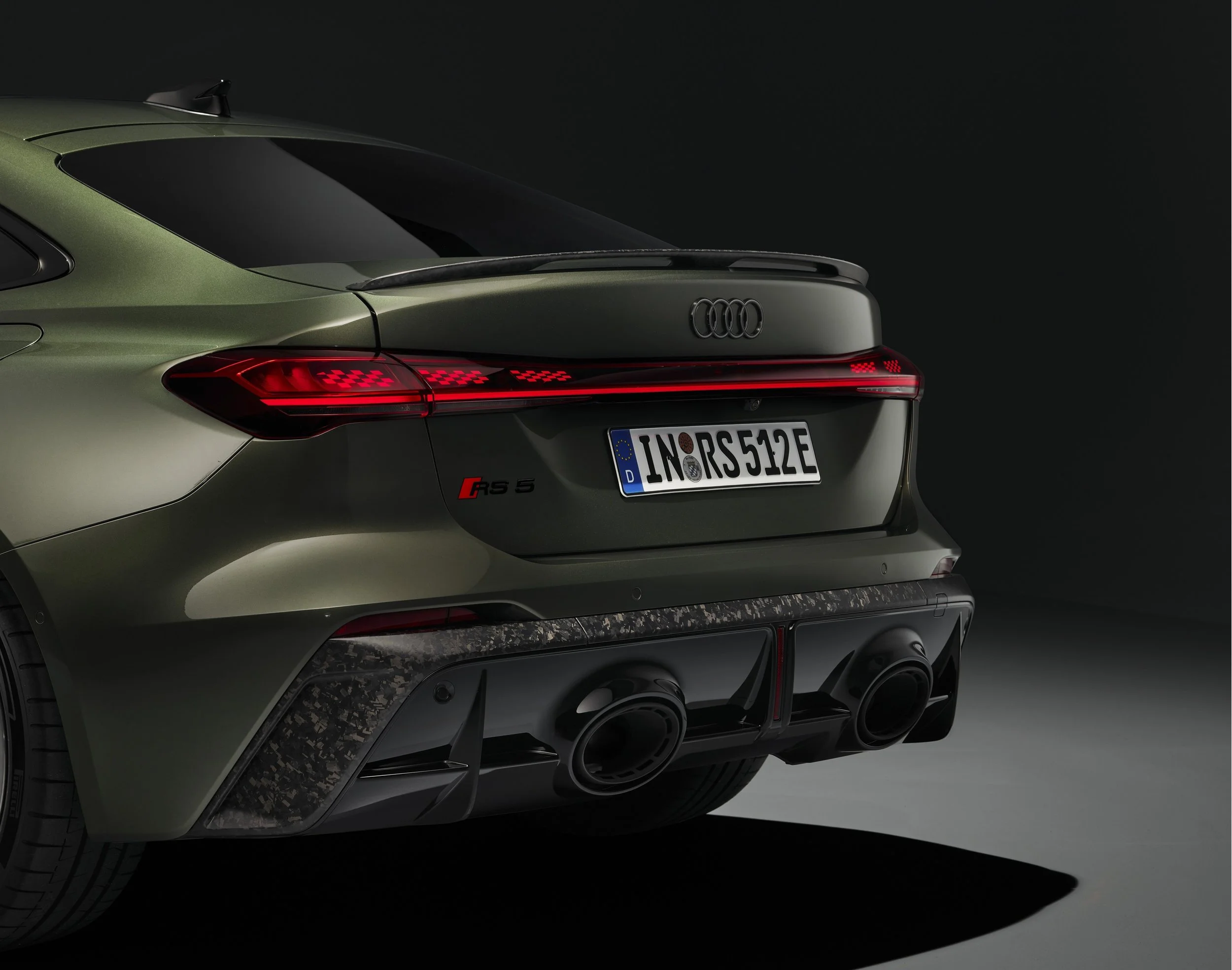
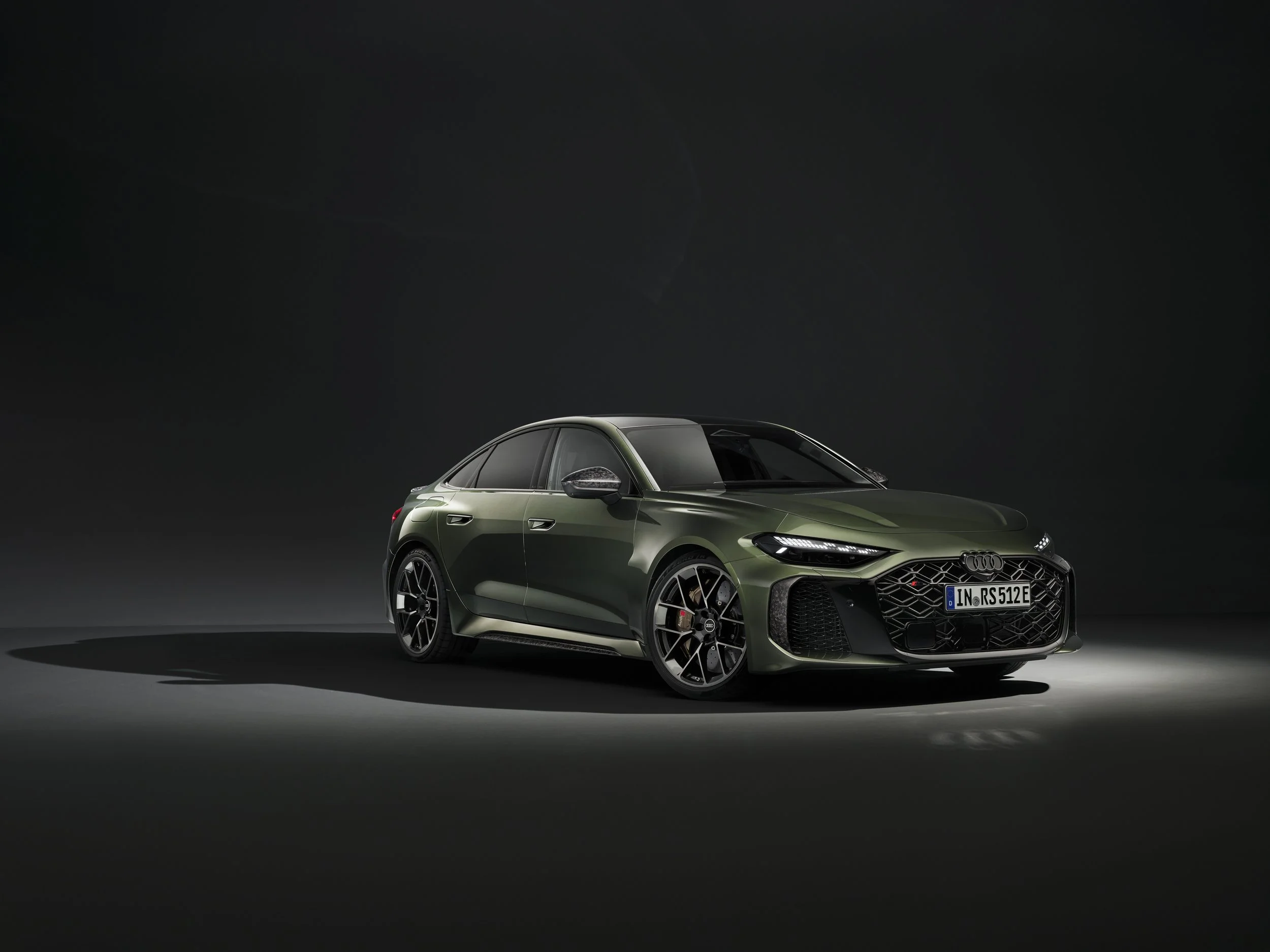
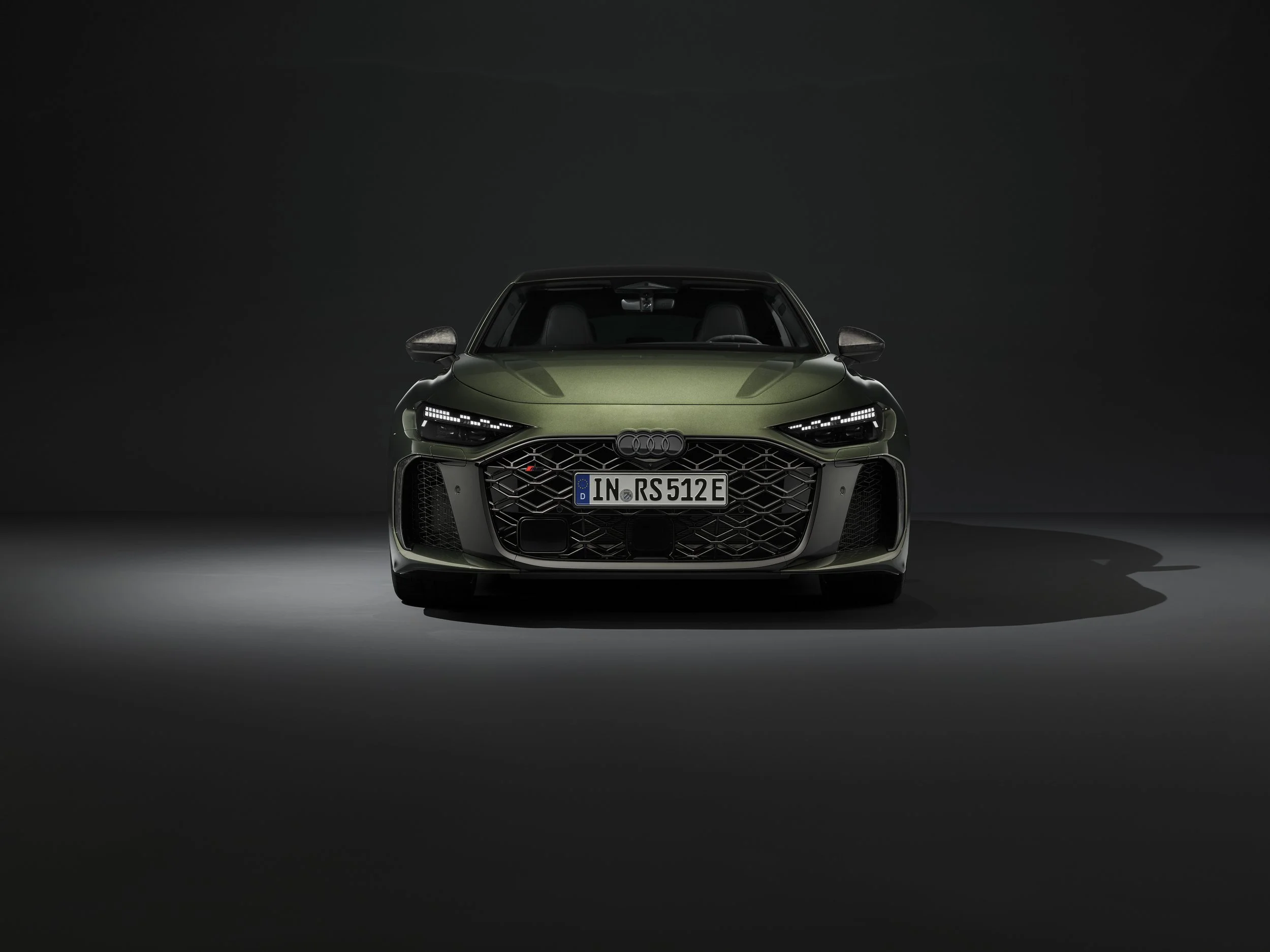
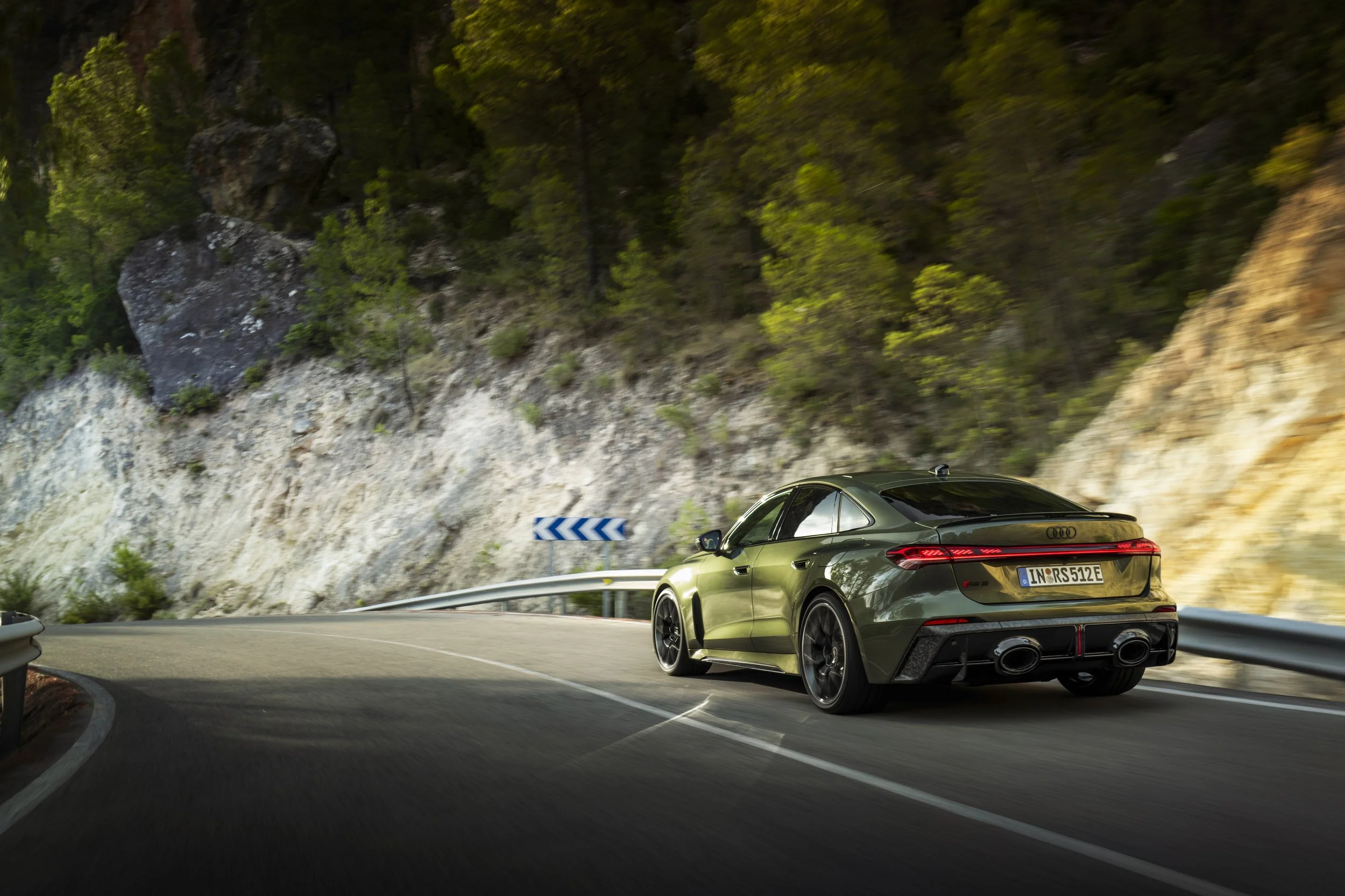
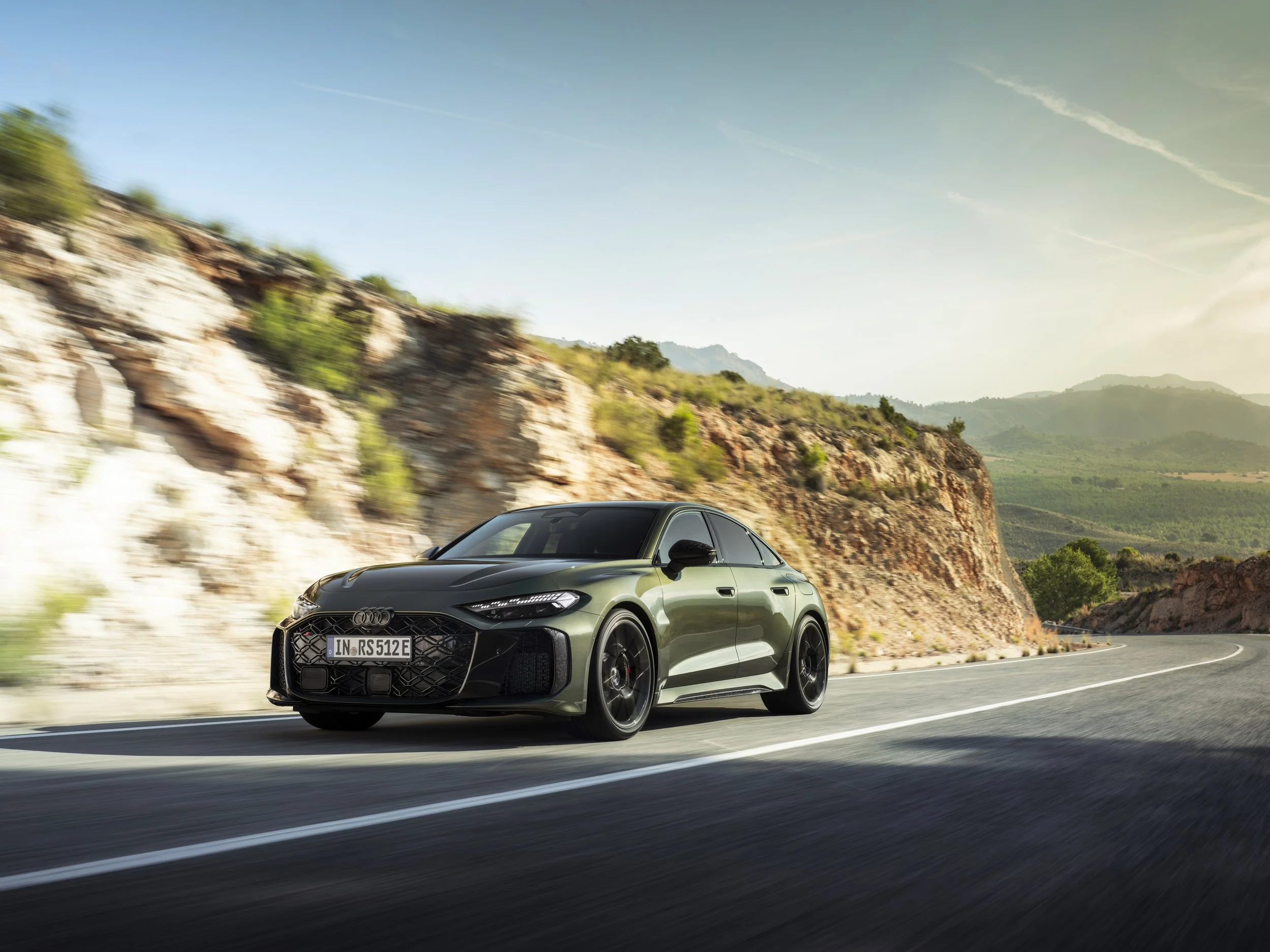
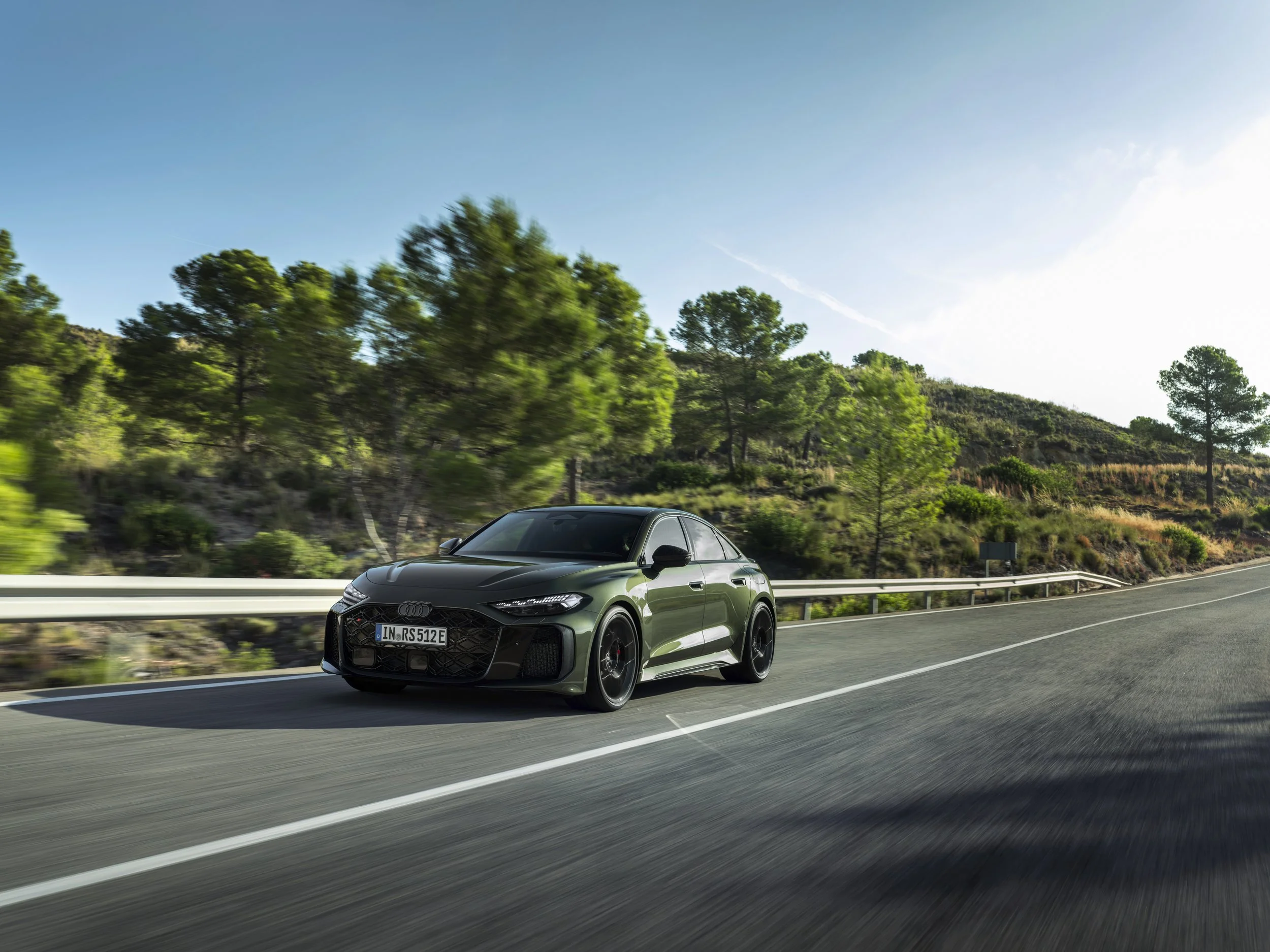
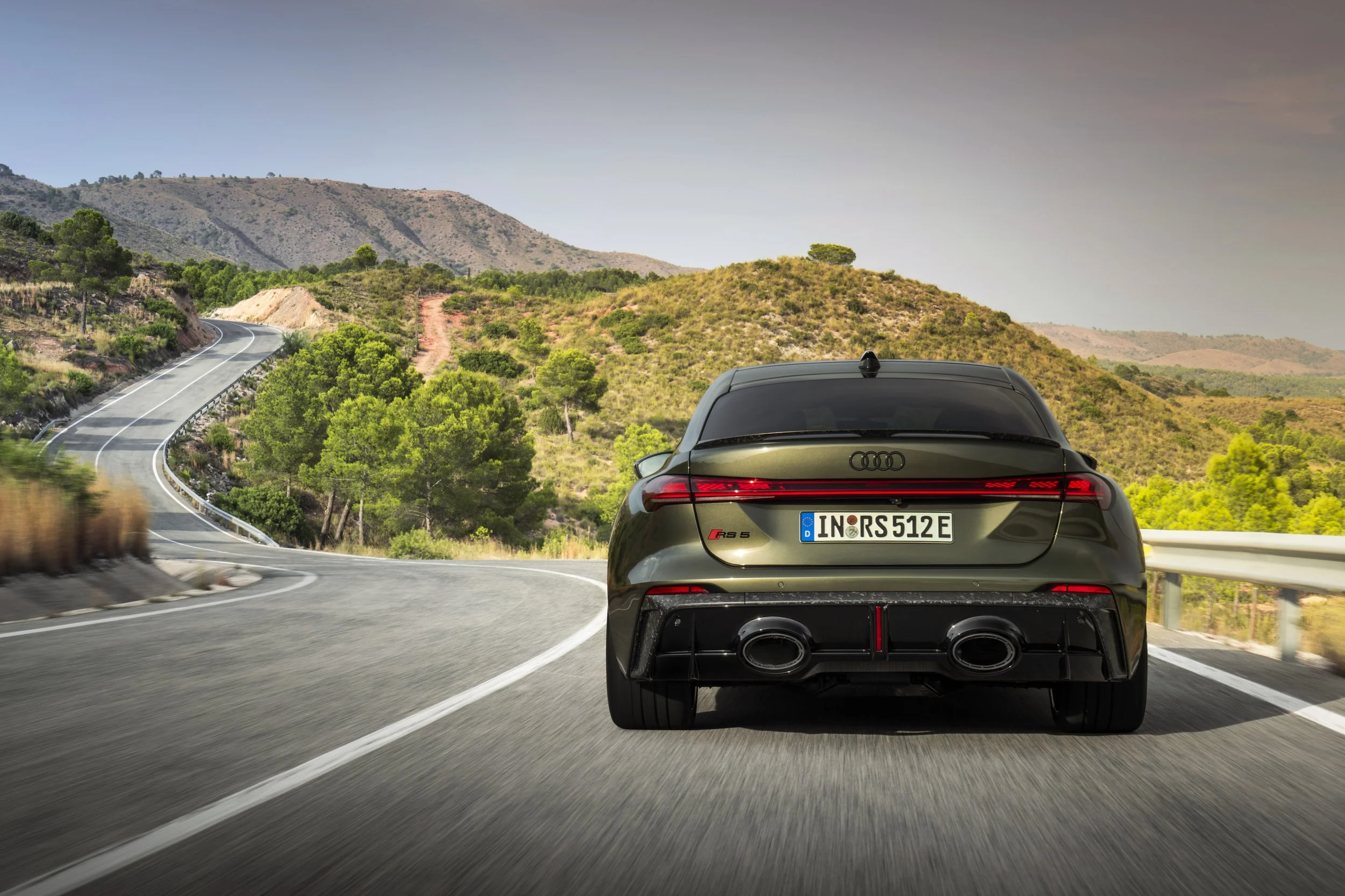
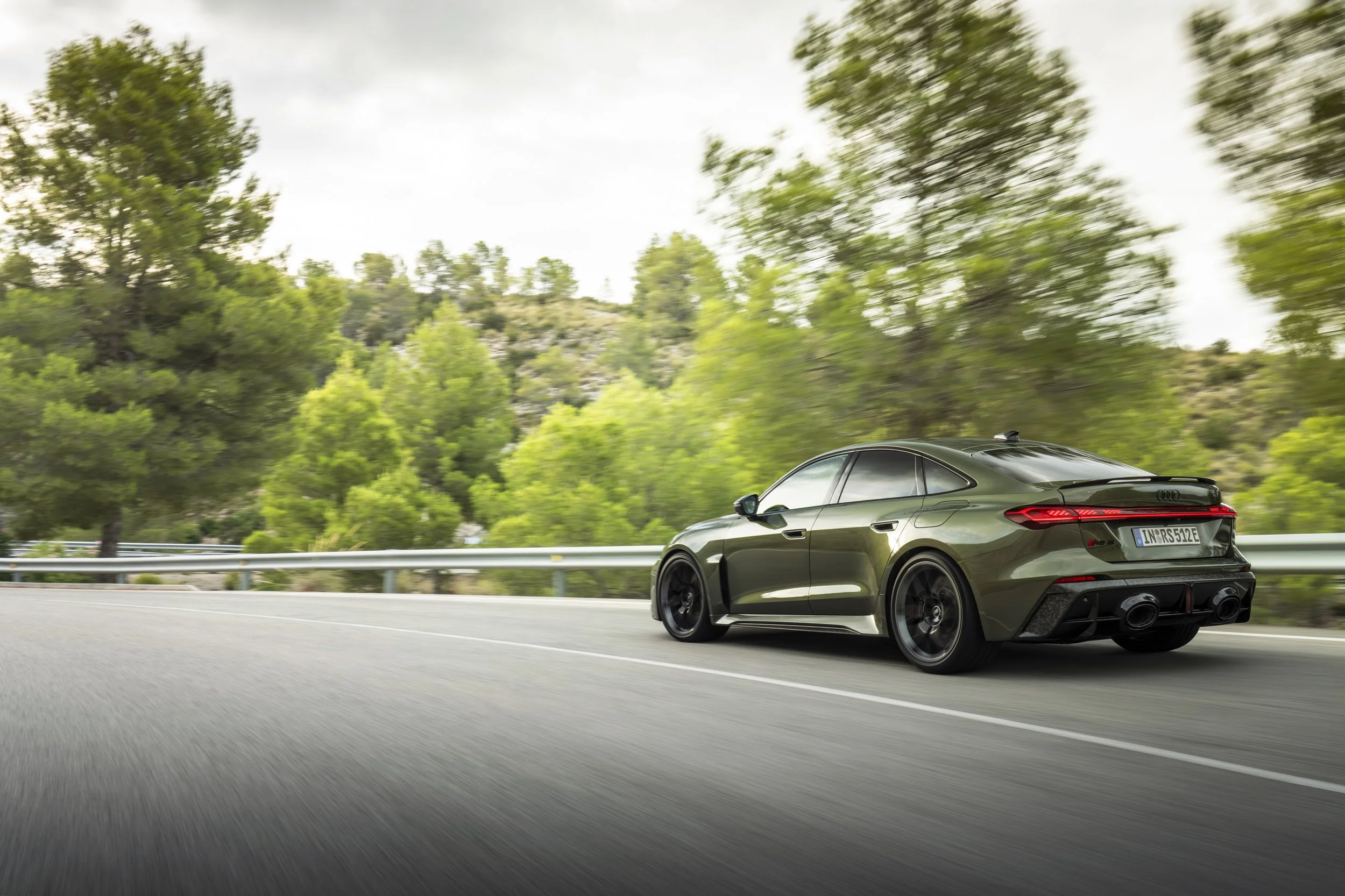
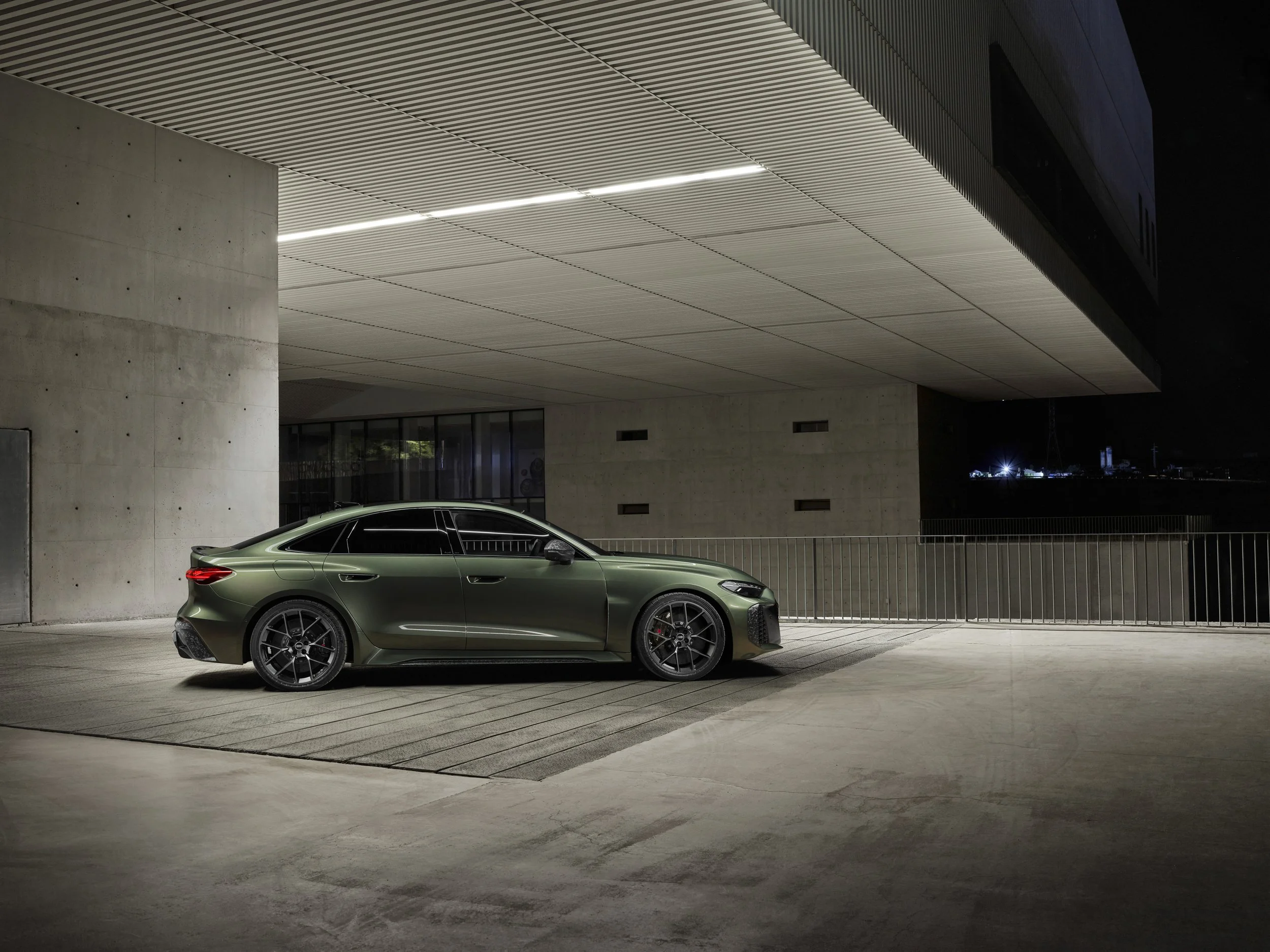
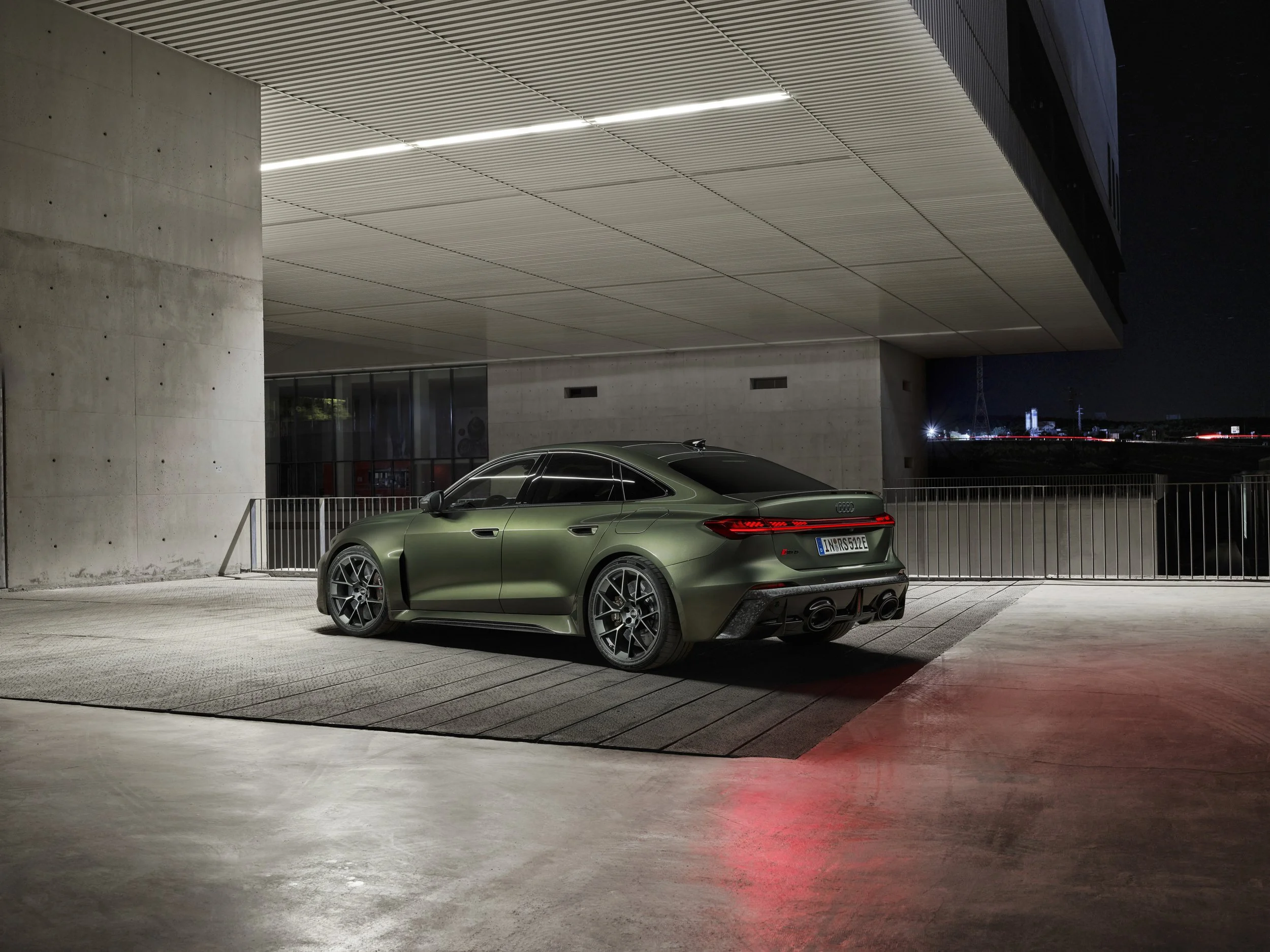
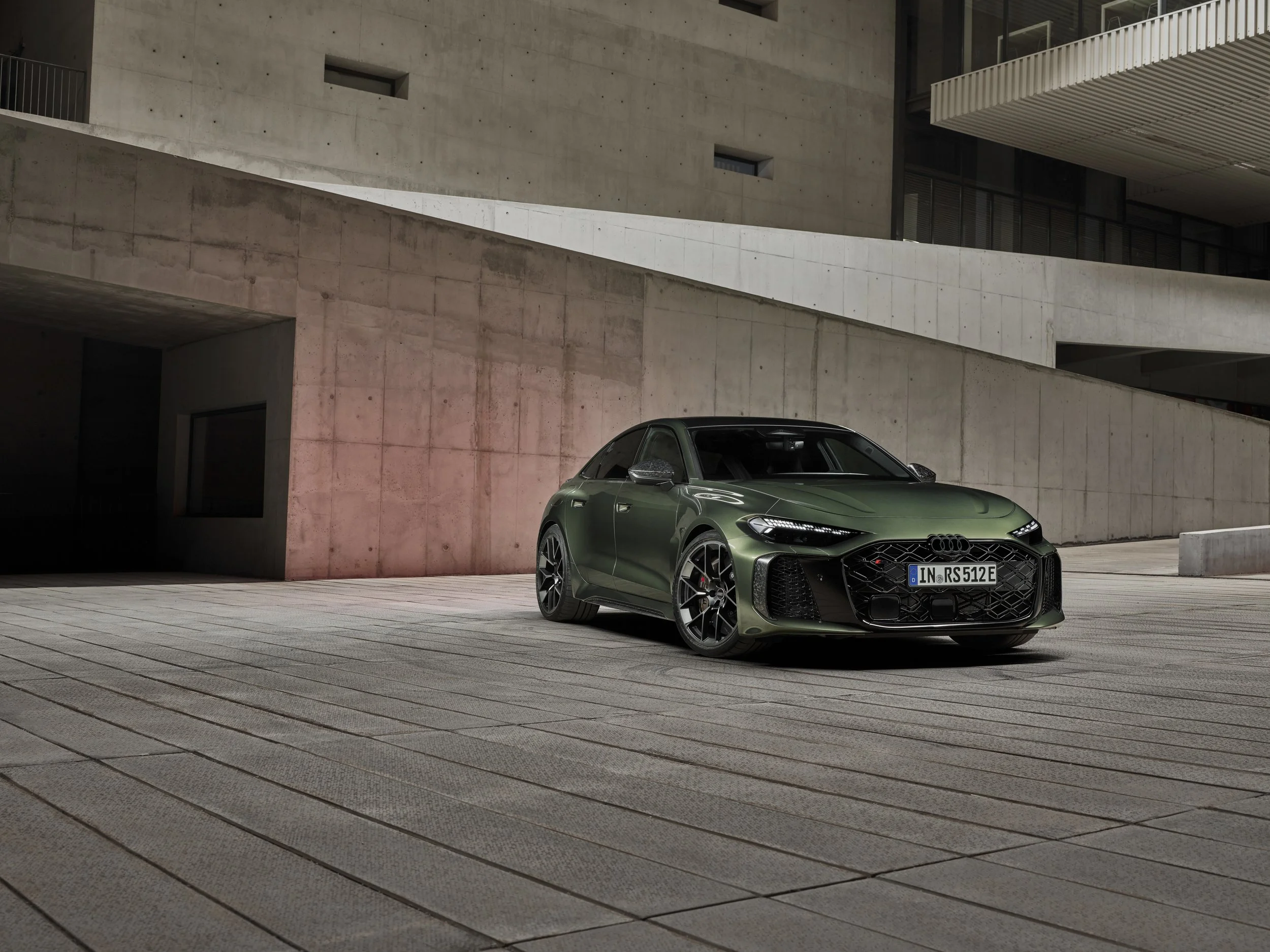
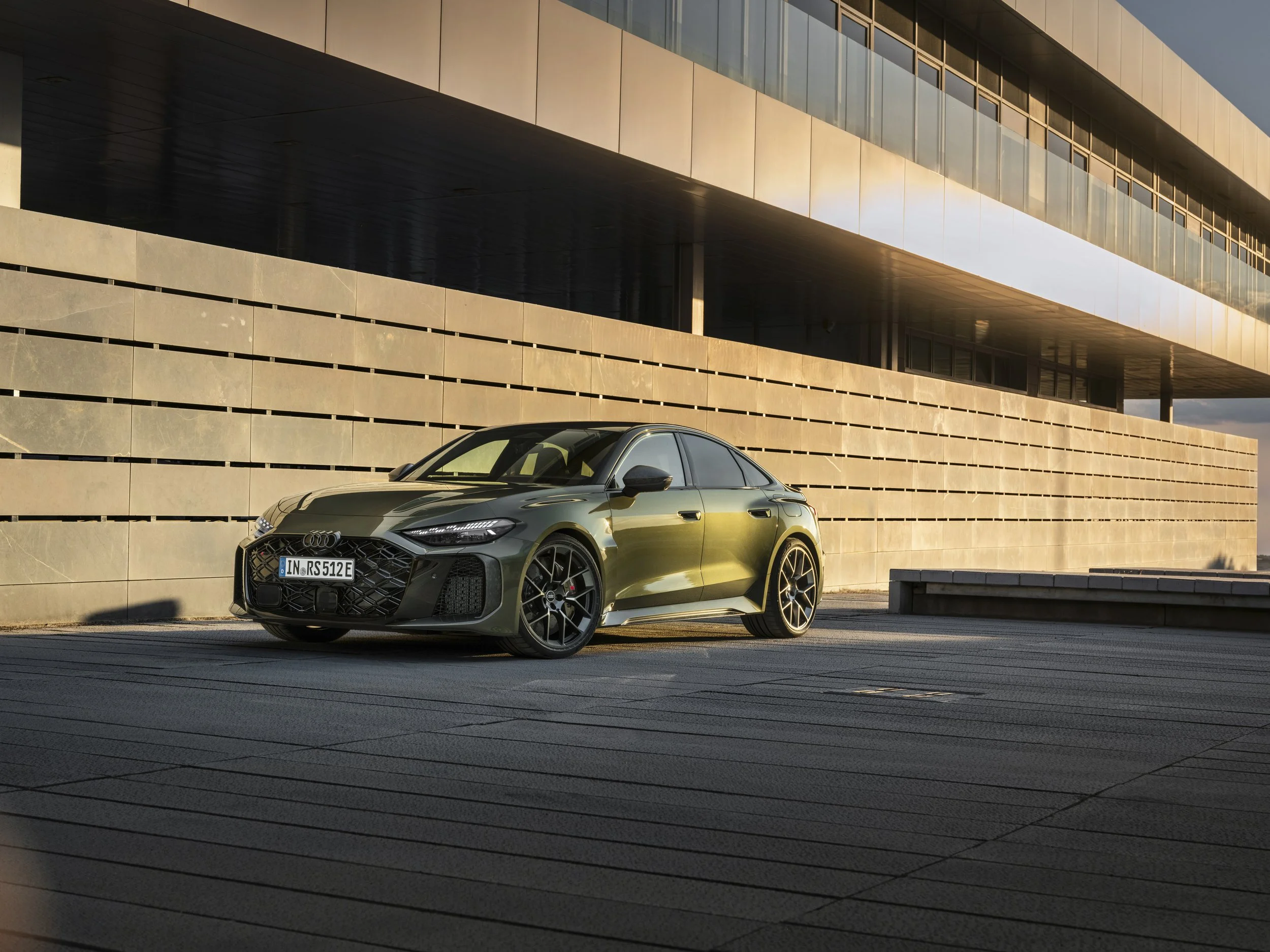
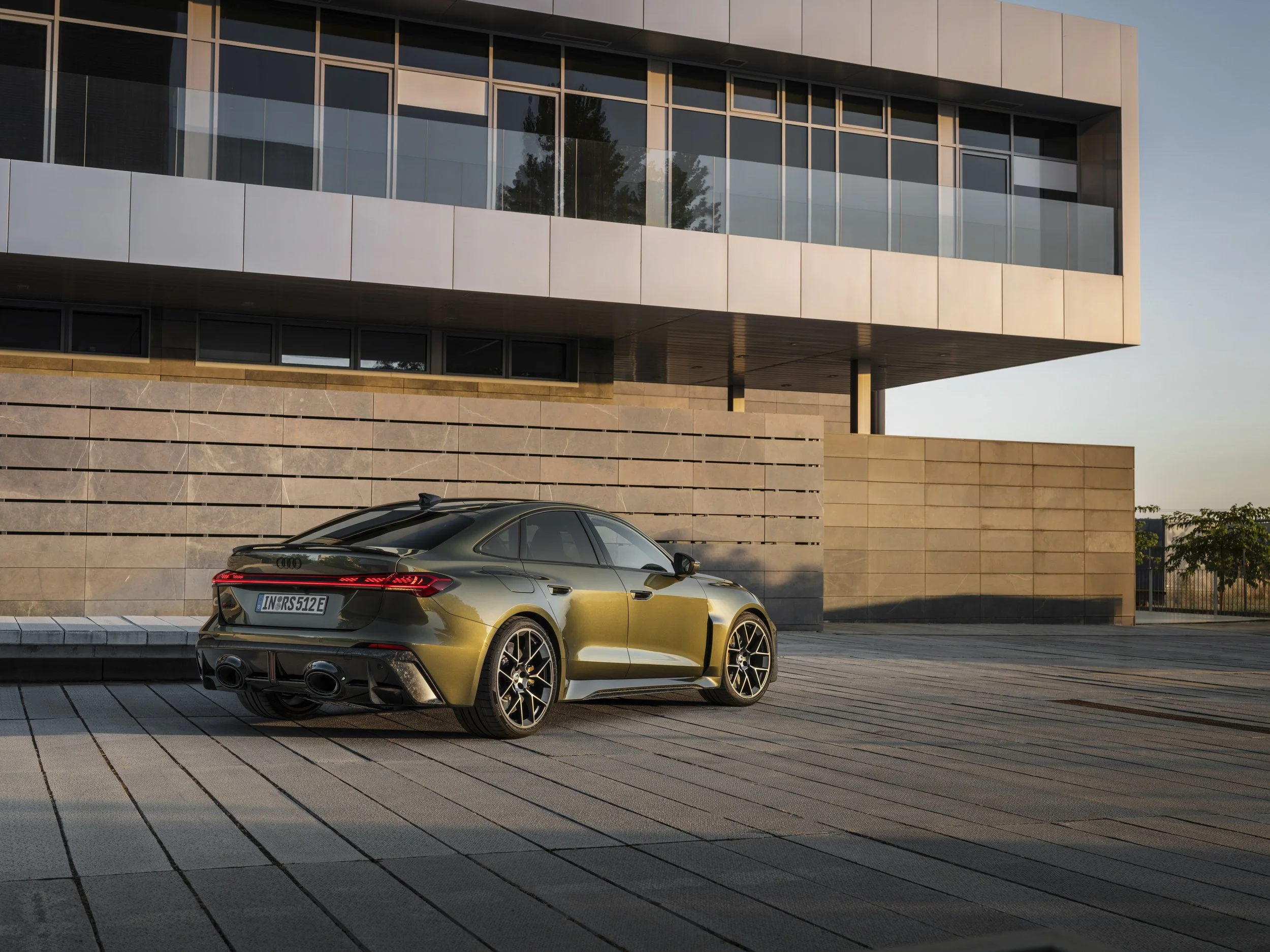
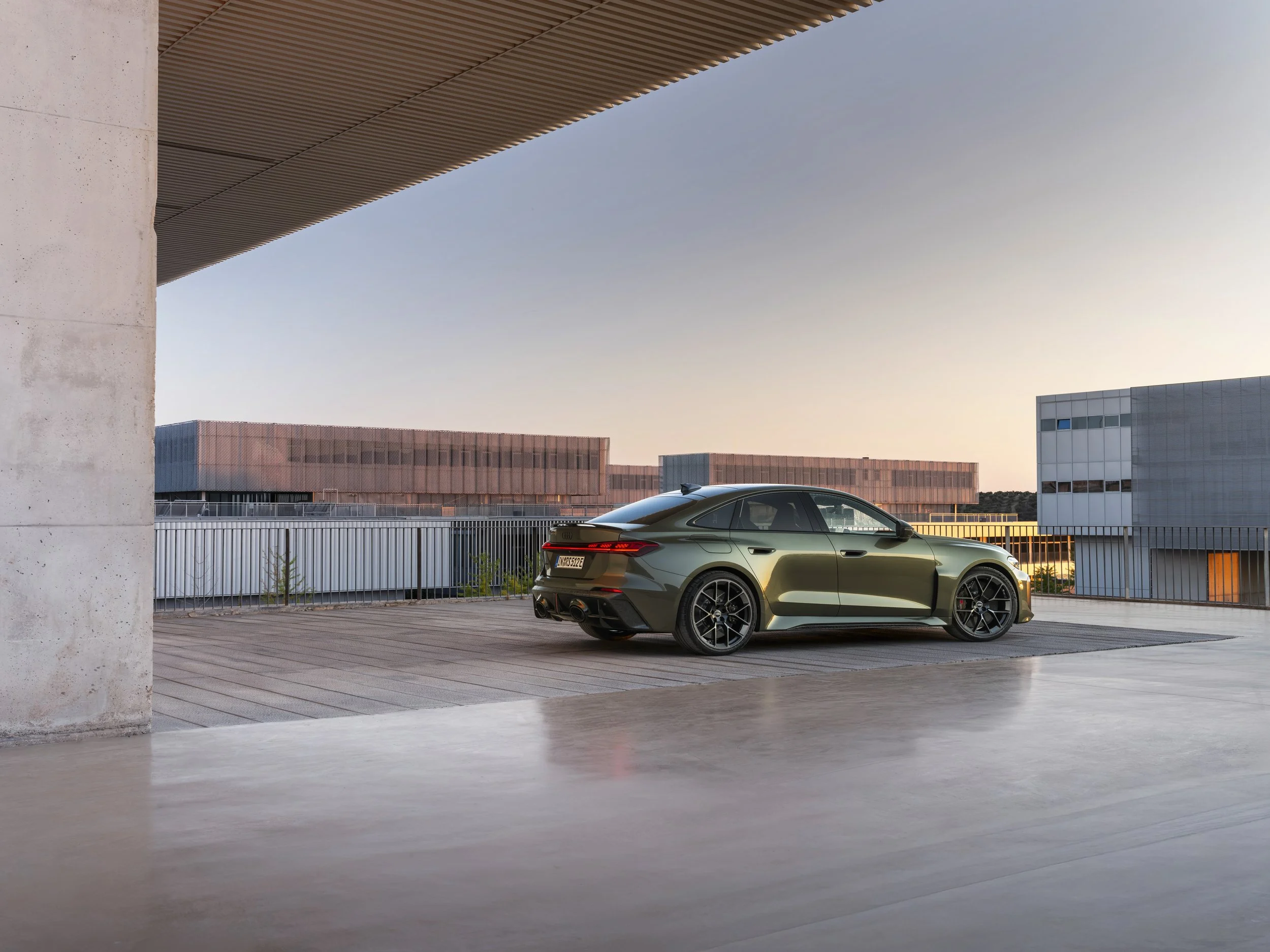
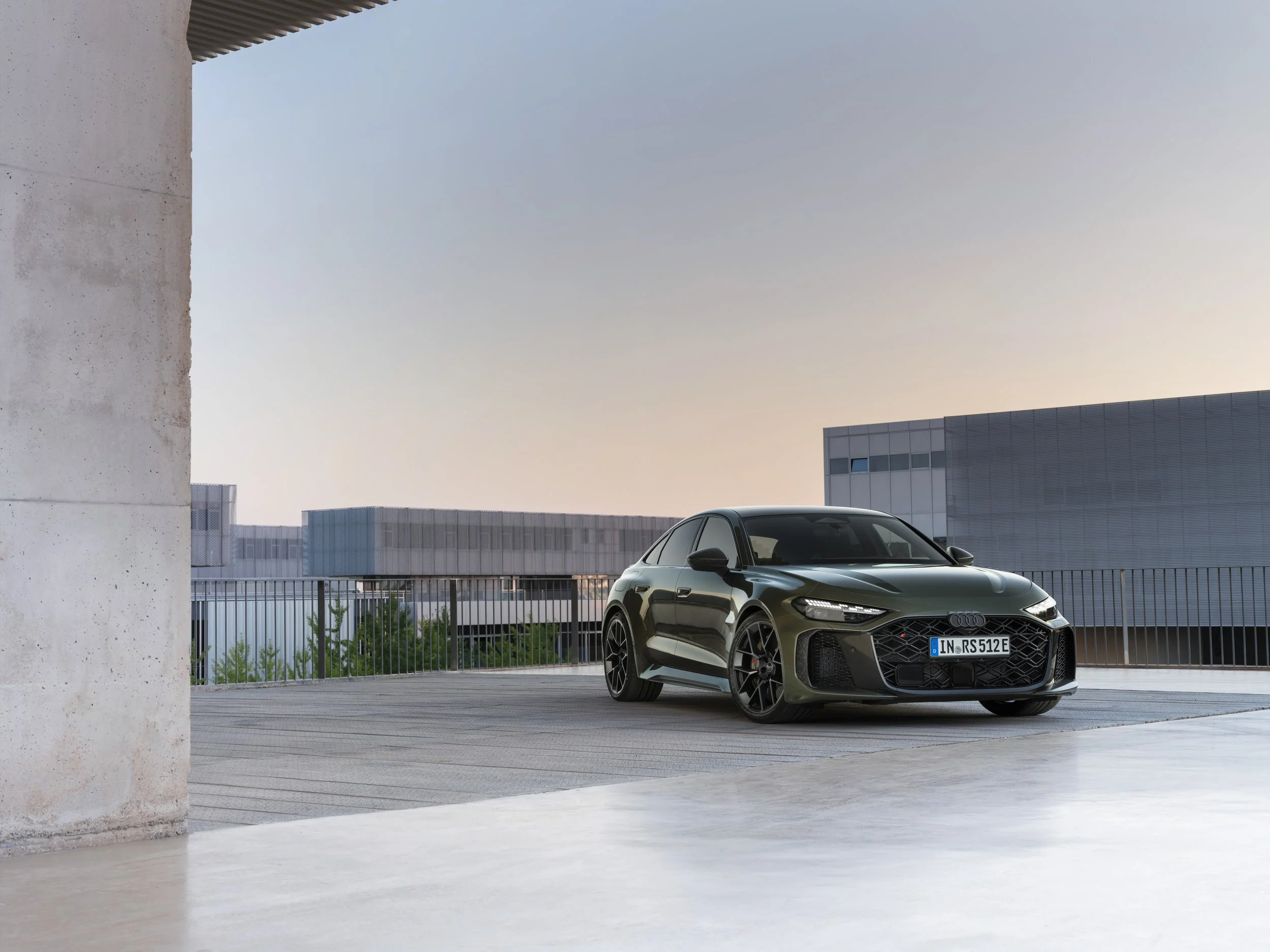
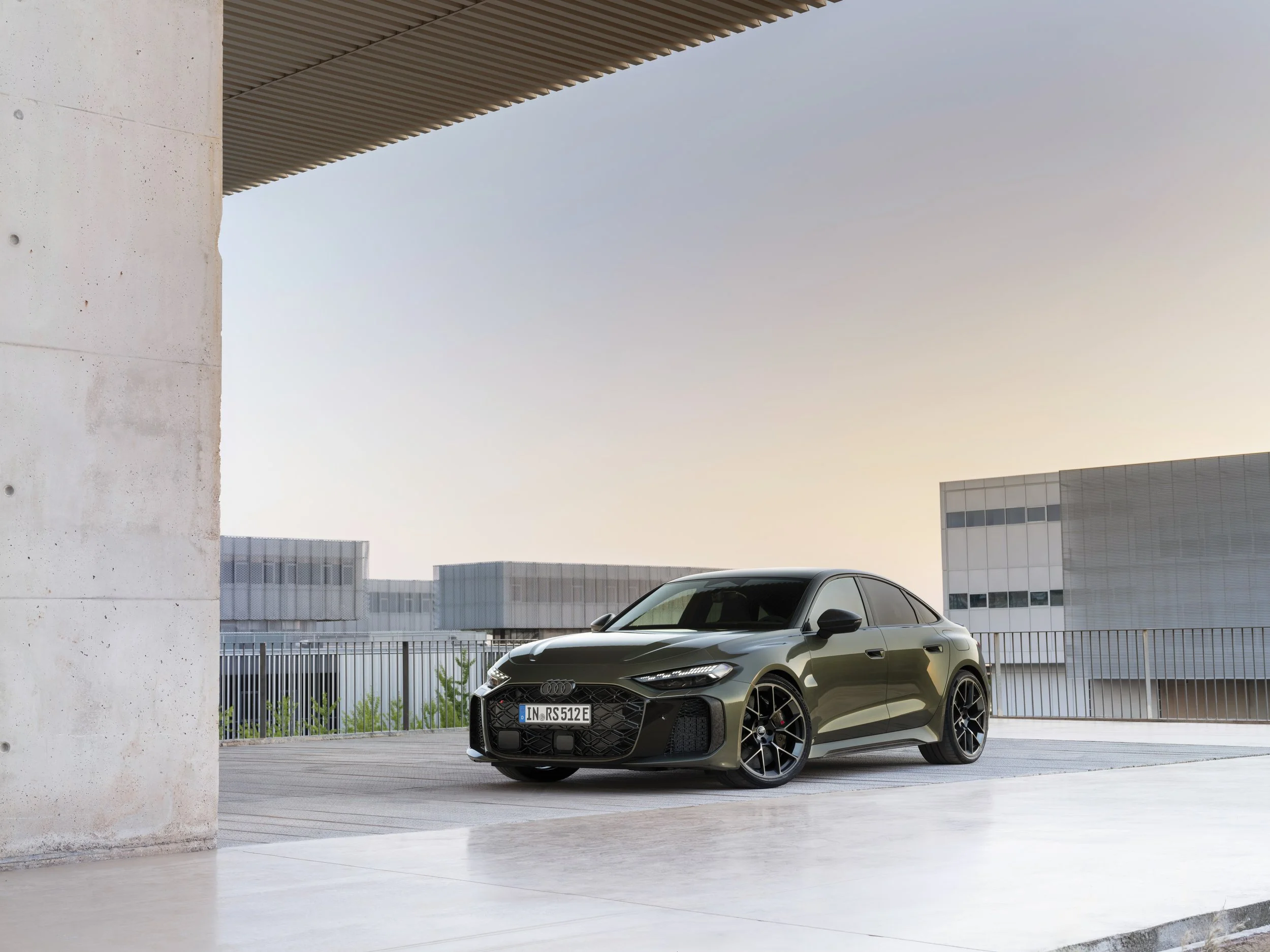
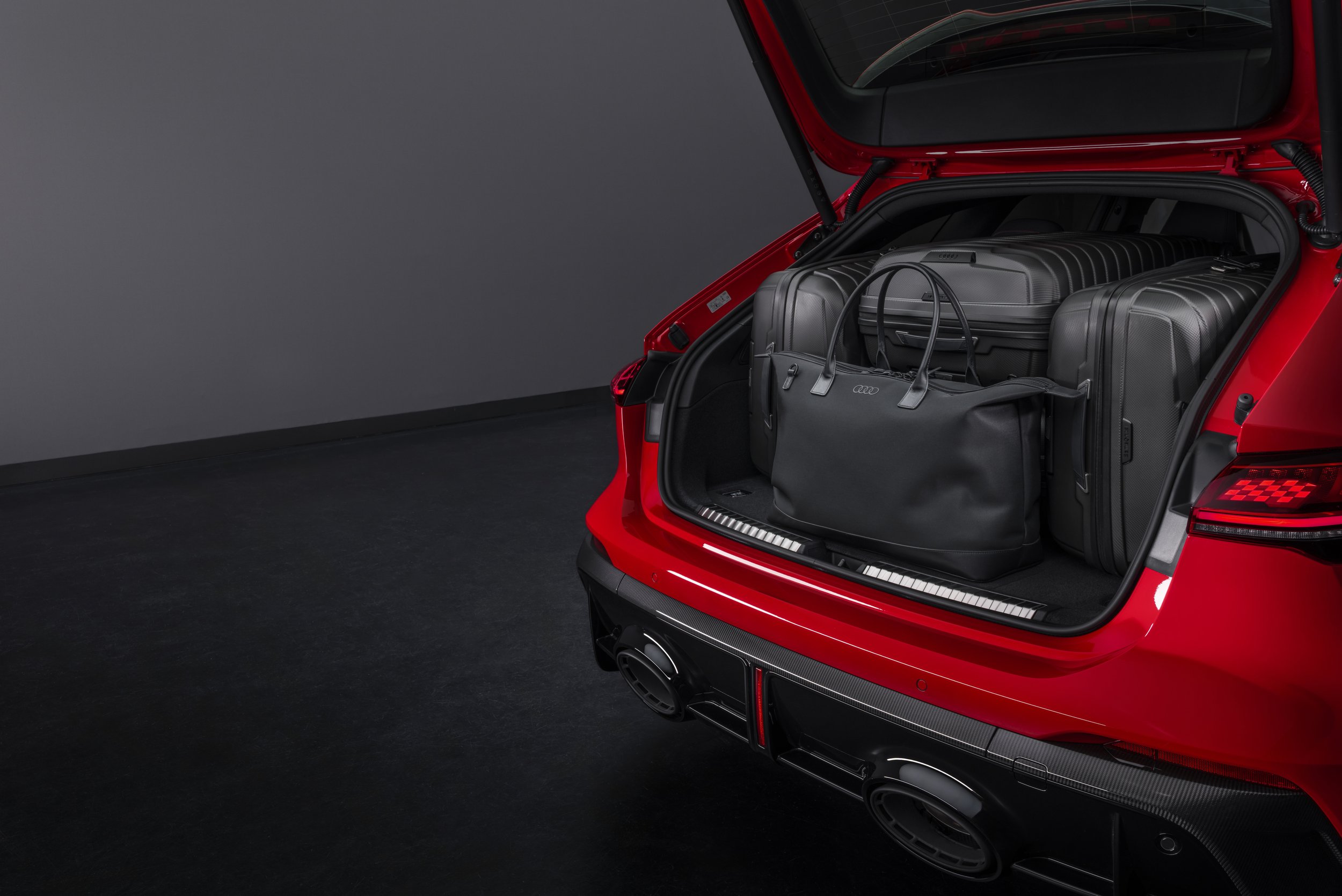
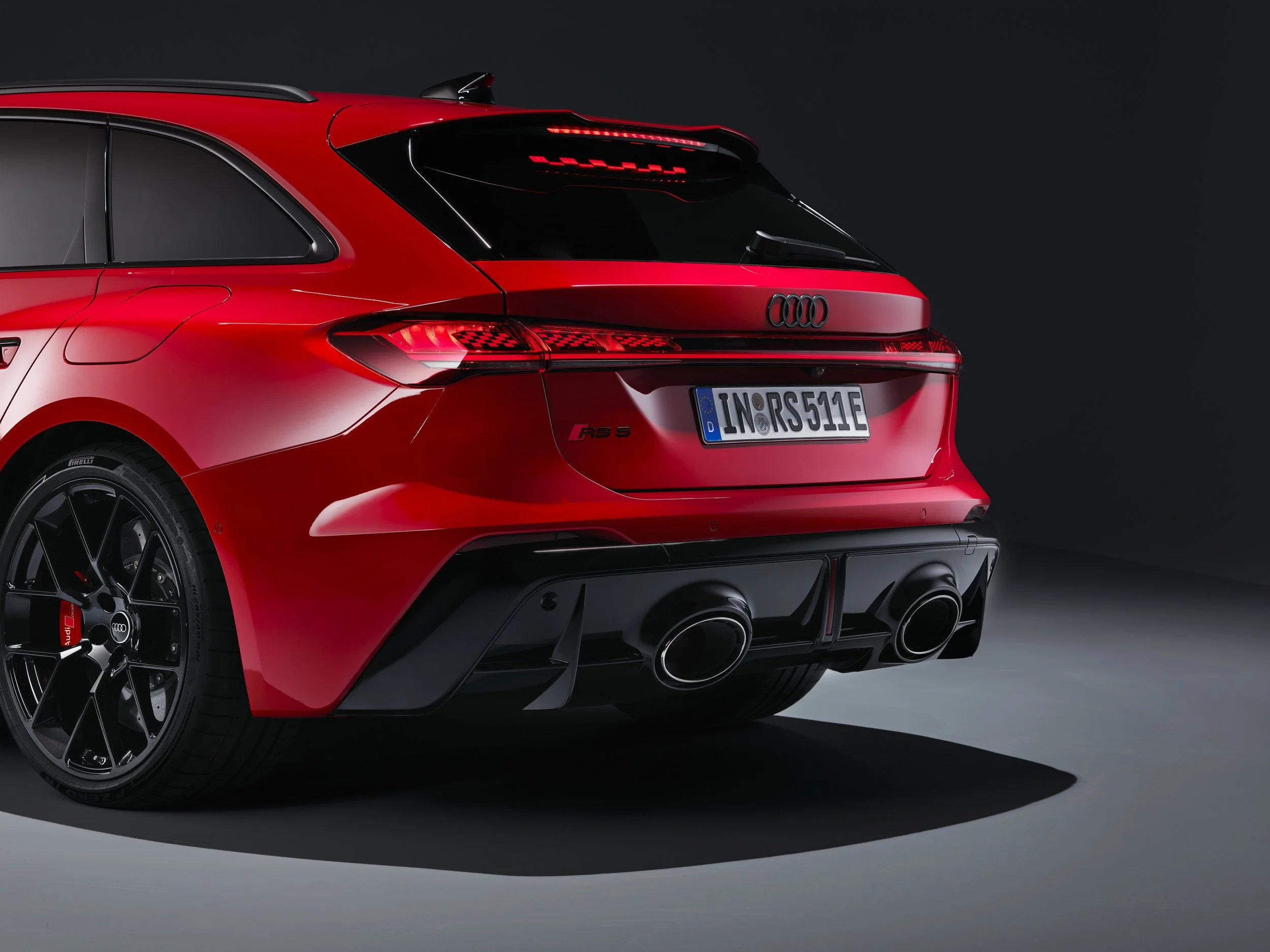
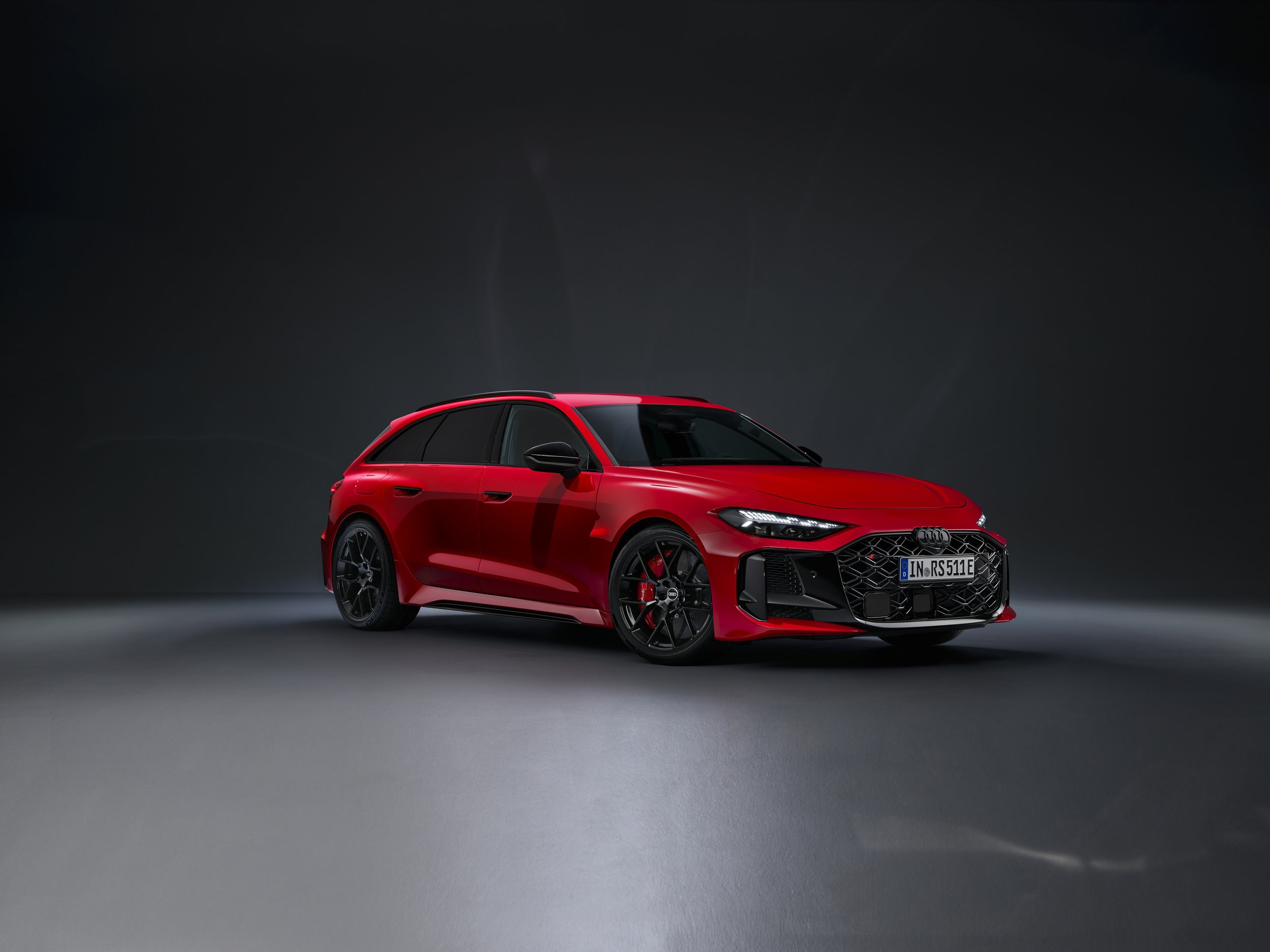
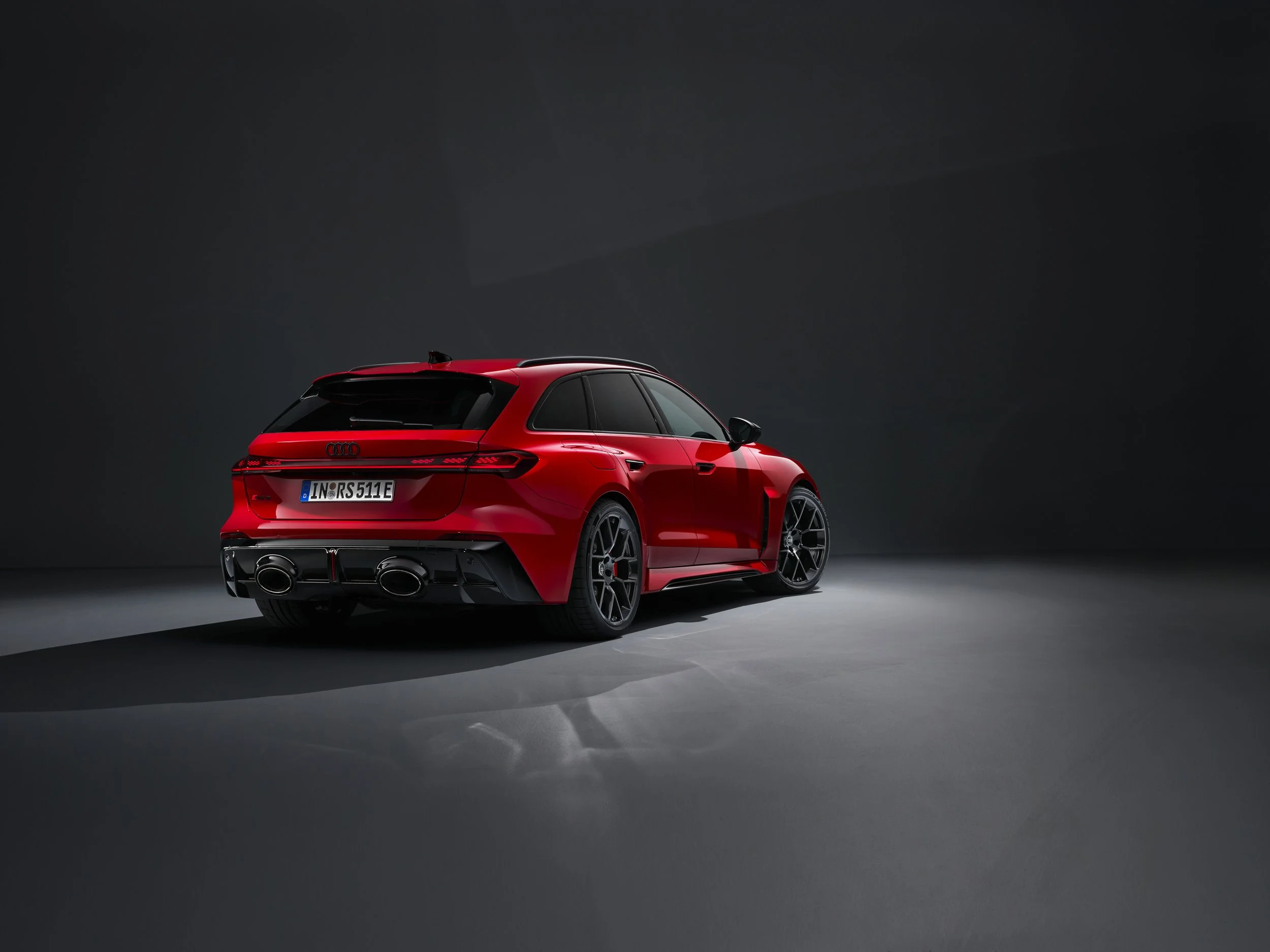
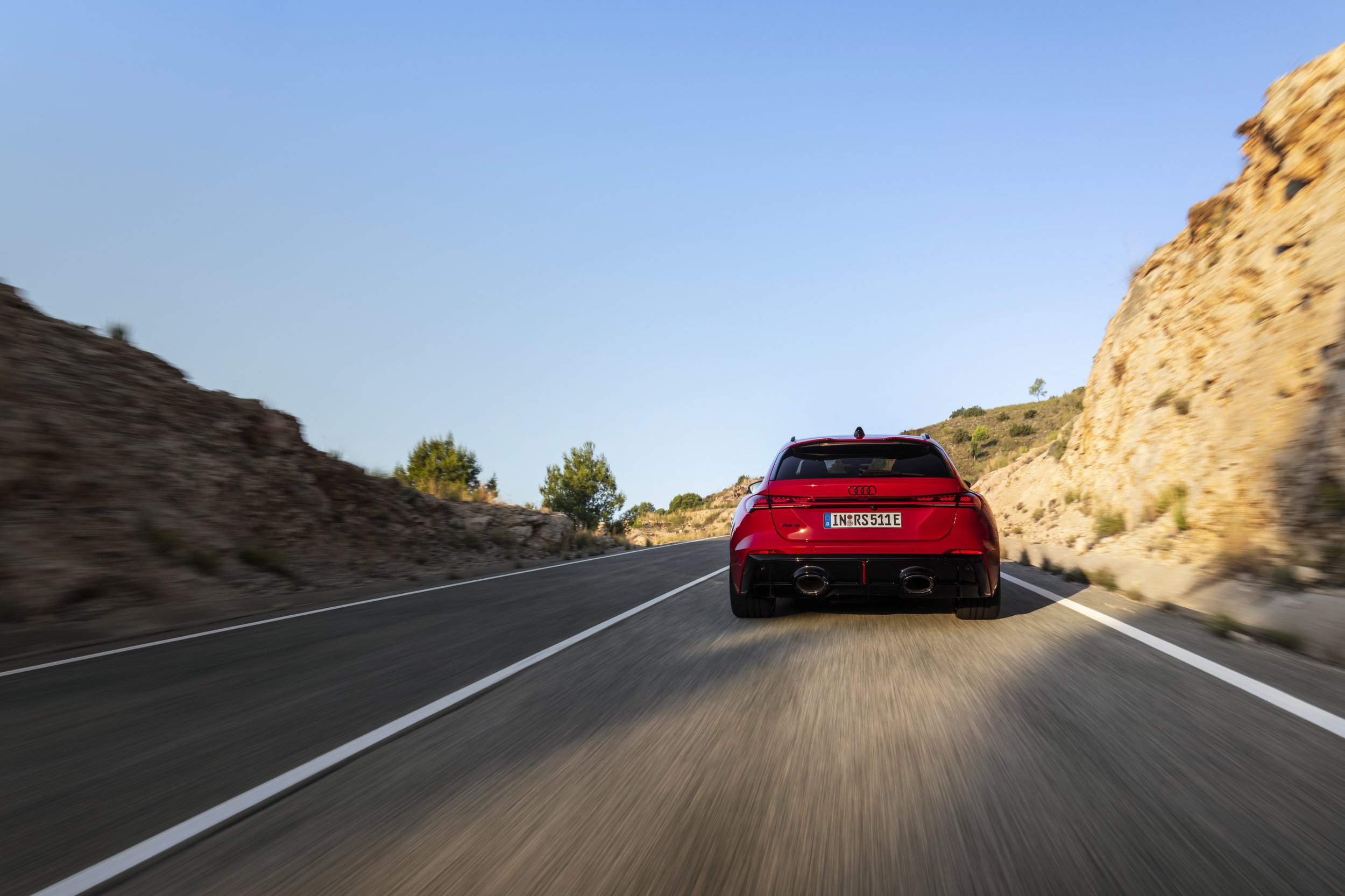
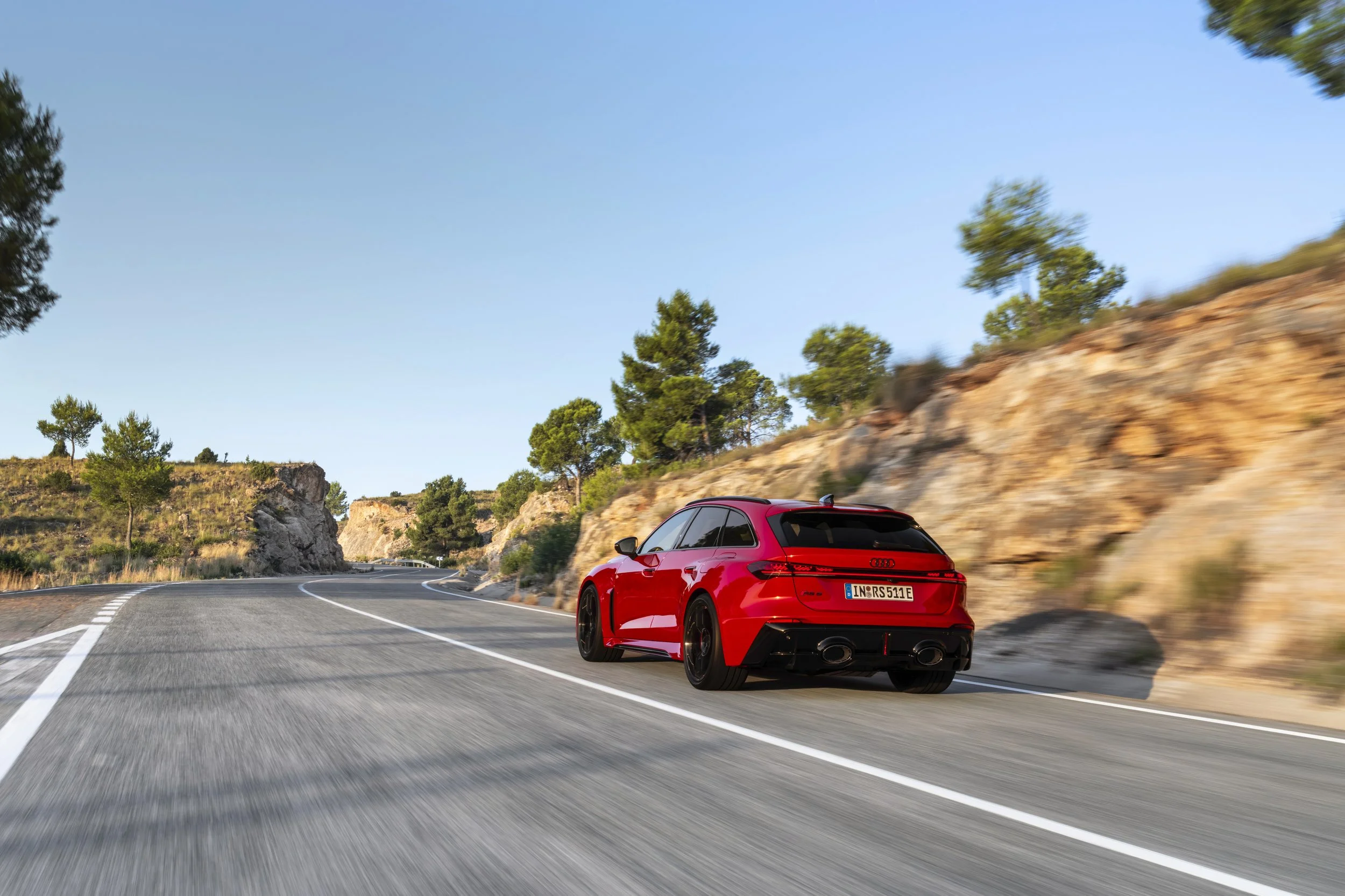
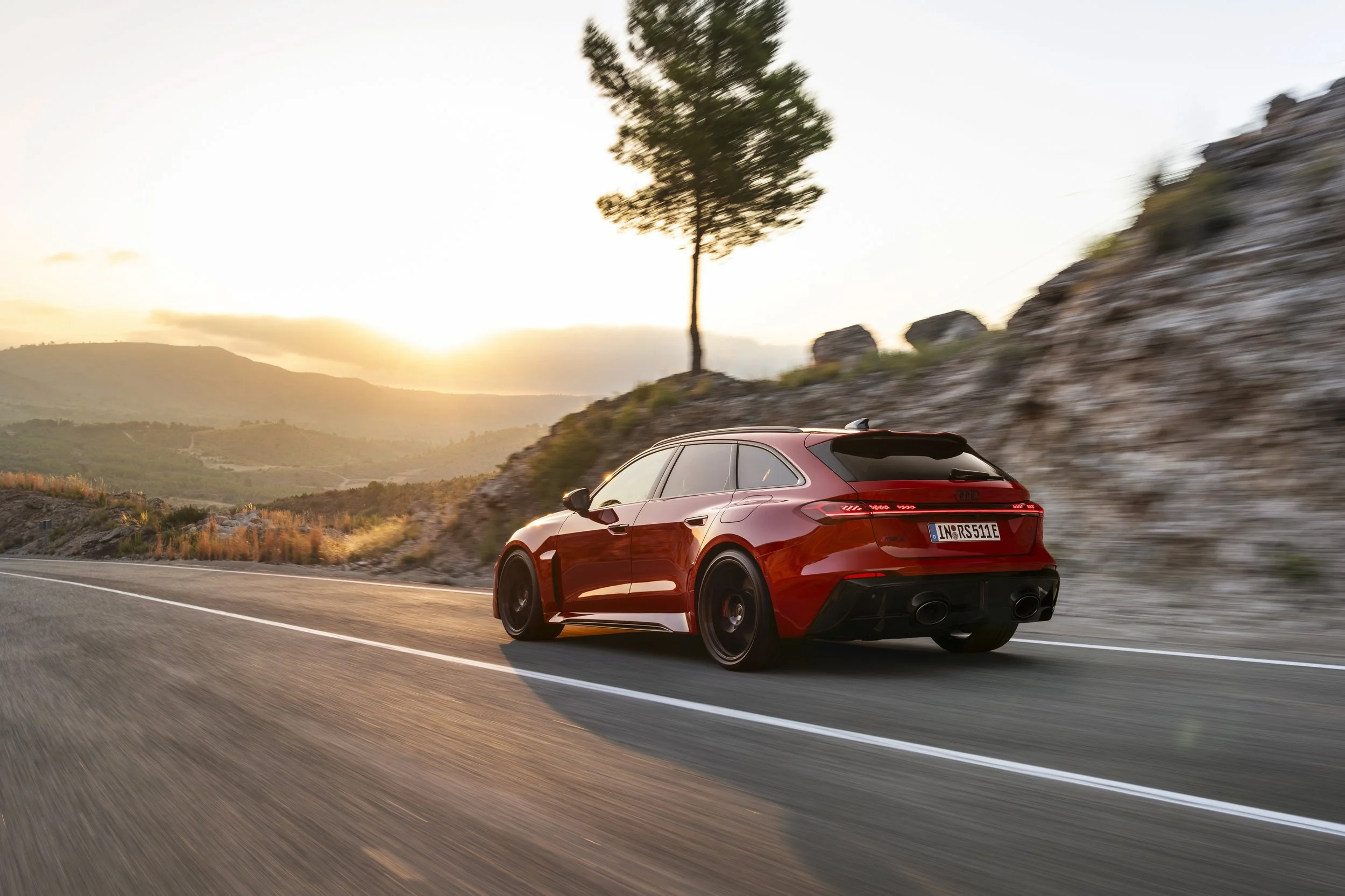
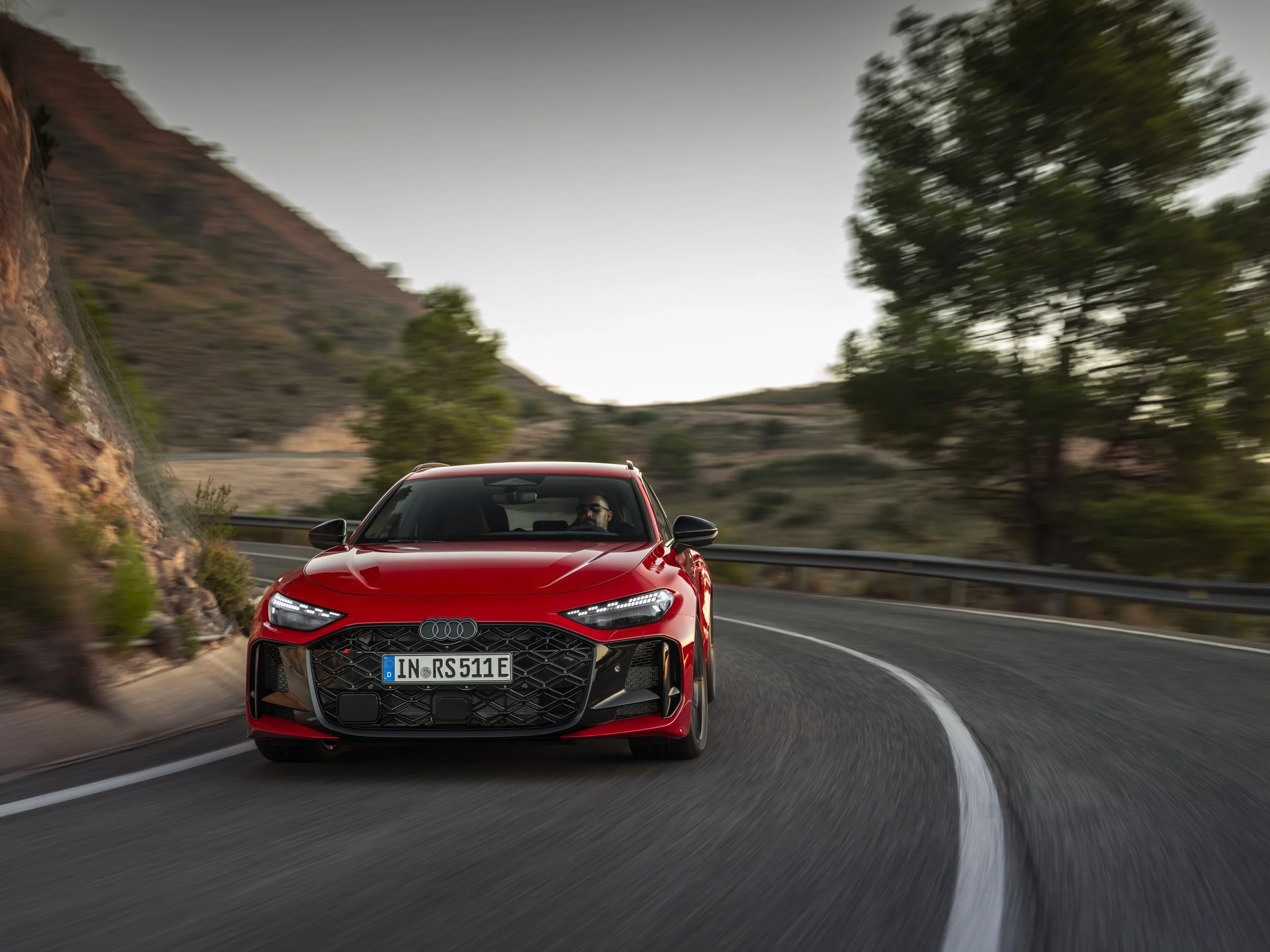
The Audi RS 5 brings motorsport performance to the road and shows it in its design. It measures around 90 mm wider than the base A5 at the front and rear, and it wears flared wings that give it a muscular stance. The three-dimensional Singleframe with a honeycomb grille sits alongside Air Curtains that manage airflow at the front. At the rear, an aerodynamic diffuser and the RS sport exhaust system’s matte oval tailpipes deliver a sporty finish.
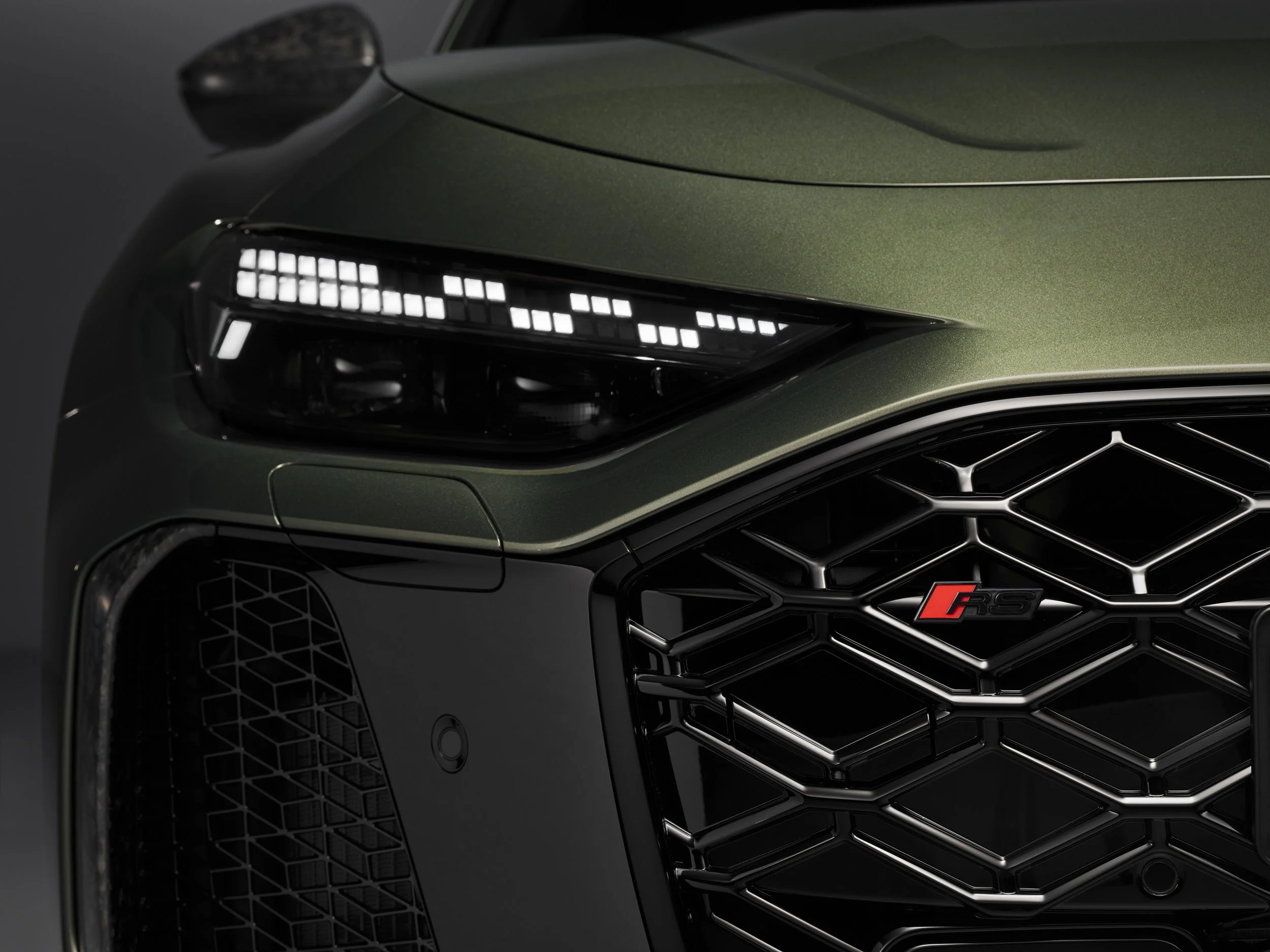
The darkened Matrix LED headlights strengthen the RS 5’s purposeful look in daylight and at night. Their digital daytime running light signature features a chequered-flag design that reinforces the performance theme at a glance.
This high-performance PHEV becomes the first production RS model to use a modular electrified powertrain. It centres on an upgraded 2.9-litre twin-turbo V6, a 130 kW electric motor, a hybridised eight-speed gearbox, and an all-new rear transaxle with electromechanical torque vectoring. Audi delivers a world first in a production model with that rear system. An actuator, overdrive gears and a differential work together to transfer torque between the rear wheels in an almost fully variable way that suits the driving situation. A control unit recalculates the ideal rear torque split at 200 Hz (5 ms), and the torque vectoring system applies it immediately and precisely. Electromechanical torque vectoring acts like an invisible maestro, coordinating performance and helping drivers feel more confident and safe.
The RS 5’s handling comes from the precise coordination of its suspension hardware. Audi fits RS-specific front and rear axles, RS sport suspension with twin-valve dampers, RS-tuned steering, large 20-inch and 21-inch wheels with bespoke tyres, and powerful steel or ceramic brakes. Twin-valve technology lets the dampers balance comfort and high control by independently managing compression and rebound. It reduces pitch and roll and reacts quickly to changes in the road surface.
The optional Audi Sport package for the new RS 5 Avant and RS 5 Saloon focuses on maximum sportiness. It adds bespoke, more dynamic front and rear bumpers, plus two-tone diamond-cut phantom black 21-inch wheels with matte accents. It also adds an RS sport exhaust system and raises top speed to 177 mph. Inside, it introduces contrast stitching in Serpentine green. It offers extensive personalisation options, including Bedford Green Metallic paint. RS ceramic brakes with bronze-coloured callipers and carbon camouflage elements complete the look.
Audi fits the new Audi driving experience function as standard. It shows detailed route analysis on the 14.5-inch MMI touch display. Drivers can analyse and store sector times on track, and the system can show statistics such as drift angle when drivers use drive select mode RS torque rear. Audi builds the RS 5 family in Neckarsulm, Germany. European order books open in the first quarter of 2026, and Audi expects deliveries to start in summer 2026.
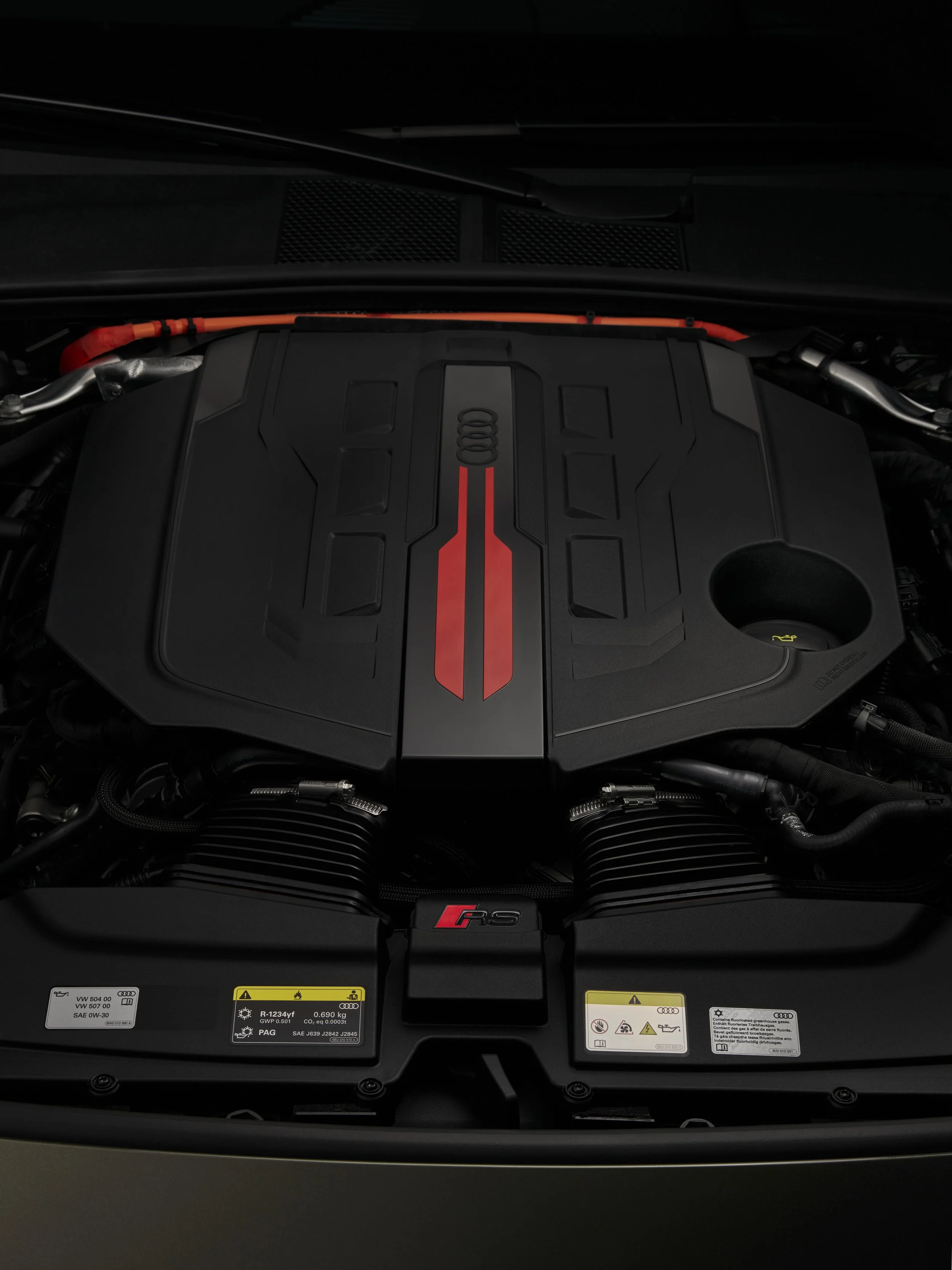
The new RS 5 signals Audi Sport’s move into the plug-in hybrid market. A modular high-performance hybrid powertrain drives the car. An improved 2.9-litre twin-turbo V6 works with a 130 kW electric motor integrated into the hybridised eight-speed gearbox, and an all-new rear transaxle completes the layout. That rear transaxle enables electromechanical torque vectoring, delivering exceptionally fast and precise torque distribution and helping maximise driving dynamics in this Audi RS 5 PHEV.
The upgraded 2.9-litre V6 TFSI engine produces 375 kW (510 PS). It delivers noticeably more power than the previous generation. Audi Sport adds 44 kW through continuous performance-focused development. Audi uses a modified Miller cycle to improve efficiency at partial load. The engine closes the intake valves earlier in the Miller cycle, which increases efficiency.
Two variable-geometry turbochargers provide boost, and Audi optimises the pipework for high pressure and low losses. The engine reacts more eagerly to throttle inputs as a result. The stronger power and torque delivery match the 130 kW electric motor. Audi also upgrades fuel delivery by increasing injection pressure, improving efficiency and enabling higher performance with lower emissions.
Audi engineers design a short, low-restriction intake system to maximise responsiveness. Audi uses water-to-air intercoolers in the RS 5 for the first time, and they reduce intake temperatures, especially under sustained load. Drivers can call on maximum power through the right pedal.
These components create a V6 that delivers more power and higher efficiency. It uses up to 20 per cent less fuel under high loads than its predecessor, and it responds quickly and effortlessly.
For the new RS 5, Audi pairs the improved 2.9-litre twin-turbo V6 producing 375 kW (510 PS) and 600 Nm of torque with a powerful electric motor. The motor adds 130 kW (177 PS) and 460 Nm of torque. The total system output reaches up to 470 kW (639 PS) and 825 Nm of torque.
The Audi RS 5 sets class benchmarks by combining performance with fuel efficiency. It delivers sportiness and high efficiency without compromise. The electric motor also sharpens throttle response and improves acceleration off the line. It also starts the engine, so Audi no longer needs a 12-volt starter motor.
A 25.9 kWh (22 kWh net) battery powers the electric motor and the 400-volt electrical system. The battery supports acceleration from 0-62 mph in 3.6 seconds and enables electric-only driving. The electrical system also supports electromechanical torque vectoring and its torque distribution, which defines quattro with Dynamic Torque Control.
Audi designs the RS 5 electric motor with an external-rotor layout, so the stator sits inside the rotating rotor. This design increases the interaction area, improving torque, cooling, and overall efficiency.
The electrified drivetrain offers a wide spread of character in daily use and on track. It supports quiet electric progress in town and delivers strong, brawny power when drivers explore the limits. It also keeps the RS 5 feeling like an RS model when drivers travel on electric power.
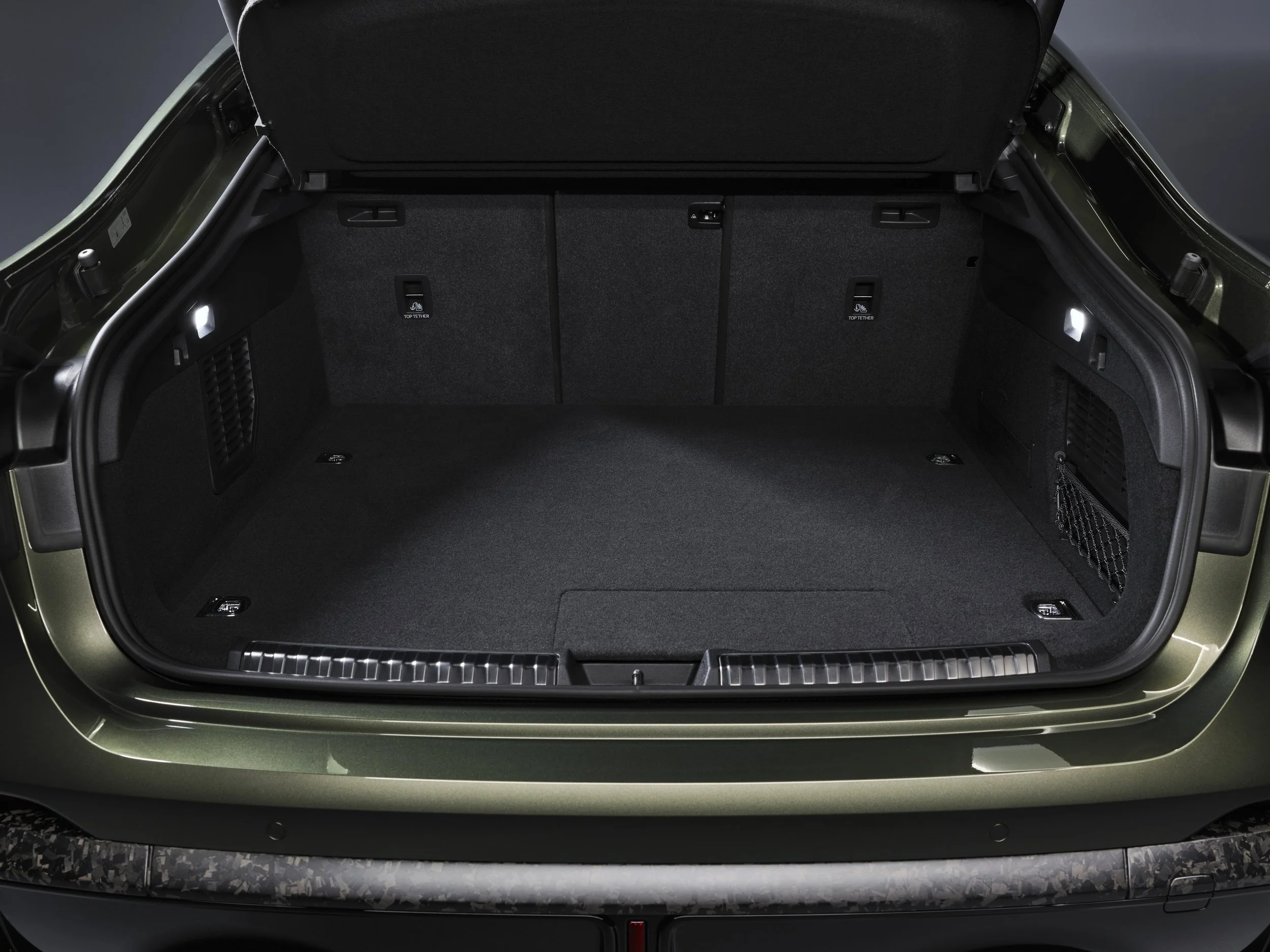
Audi integrates the battery cells beneath the boot floor. Improved cell chemistry delivers higher output at low states of charge and in extreme temperatures than the previous generation. The battery powers the traction motor and supplies up to 8 kW to the permanent-magnet synchronous motor in the torque vectoring unit.
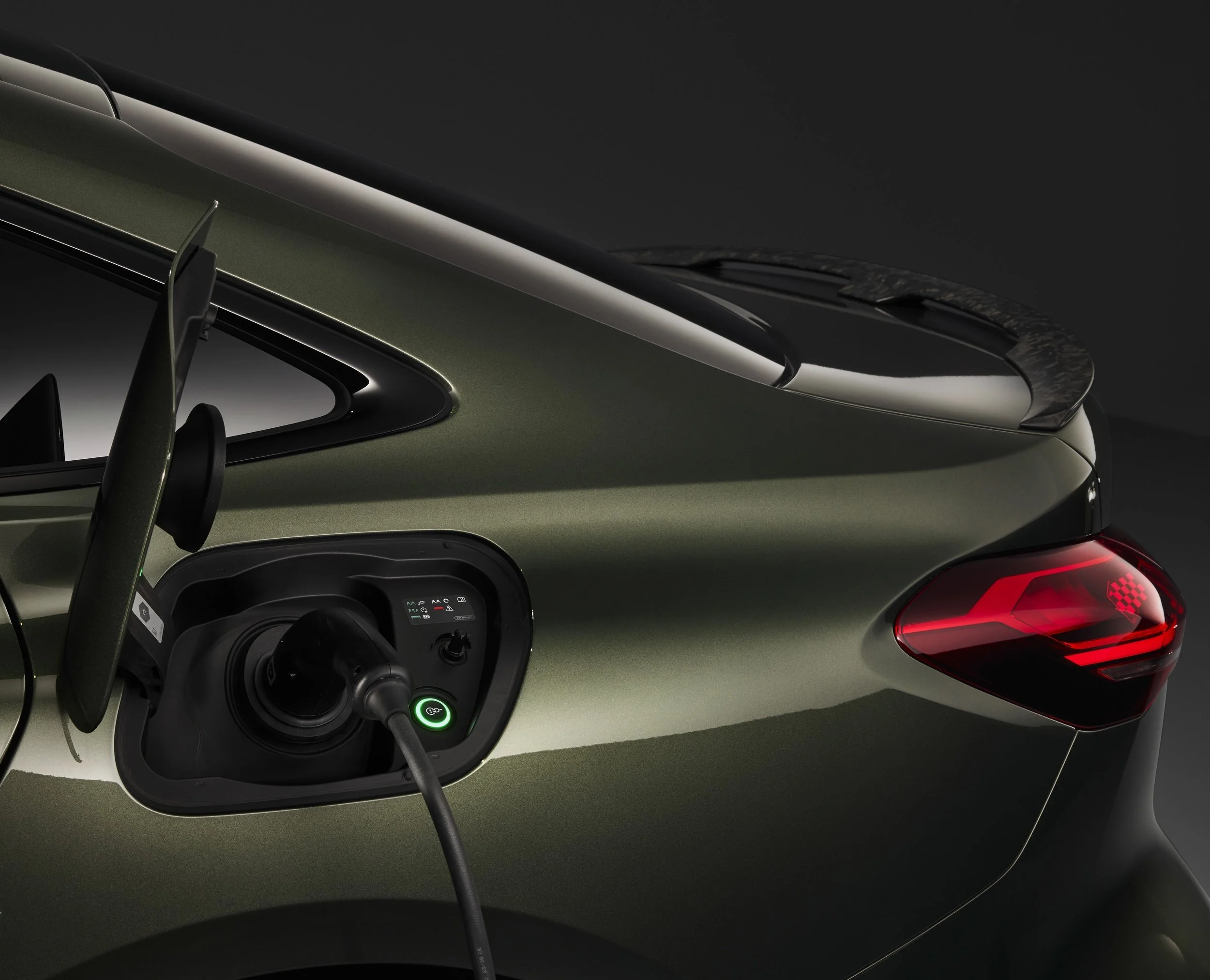
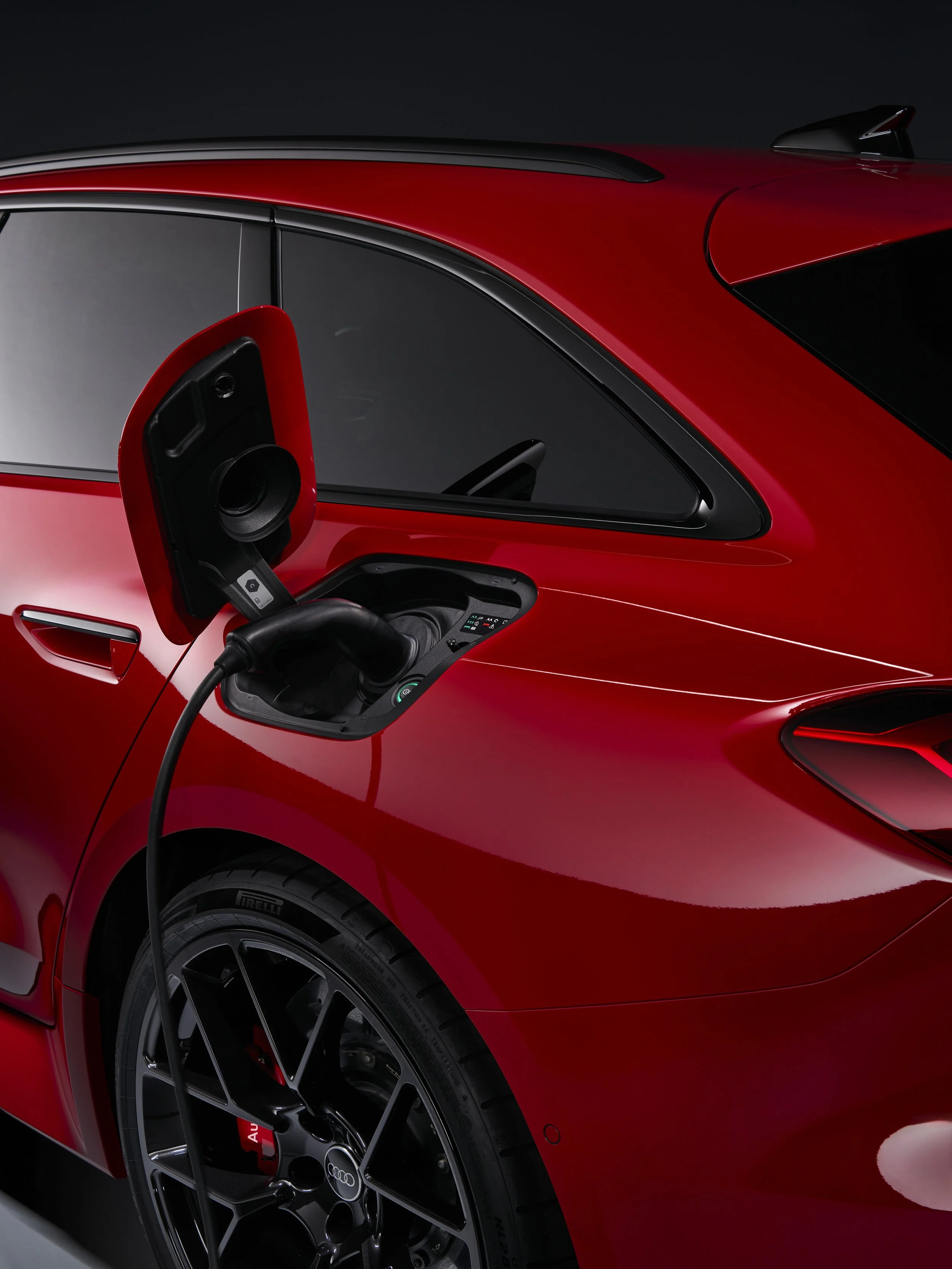
The RS 5 charges on a three-phase AC system at up to 11 k and reaches 100 per cent in 2.5 hours. Audi includes a charging cable (mode 3, type 2 connector) as standard. A high state of charge helps deliver RS-specific modes such as RSSportt and RSTorque Rearr. When drivers activate those modes, the car prioritises performance. The vehicle holds the battery near 90 per cent in RSSport and RSTorque Rear, so full electric support is available for torque vectoring and rapid responses. Drivers get maximum electric power for sporty manoeuvres and dynamic acceleration.
Intelligent thermal management keeps the battery in its ideal temperature window. The system cools the battery when needed and dynamically responds to driving conditions and power demand. When drivers select RS Sport, the system actively cools the battery to an optimal 20 degrees Celsius. Pumps, fans and heat exchangers maintain full electric performance. Drivers deliver consistent power and strong spontaneity under repeated high loads.
The eight-speed Tiptronic transmission delivers power from the V6 and the traction motor to the wheels. It uses a torque converter and a planetary gearset, and its eight closely spaced ratios keep shifts in small steps. Audi adds an external cooler for increased reliability under high load. The drivetrain stays in its peak operating range as a result. Dynamic, electronically controlled shift logic adapts shift points to the selected driving mode and prioritises sportiness or efficiency.
Audi reduces resistance from heavy rotating transmission components, so the shift mechanism uses less energy to accelerate or decelerate them. This approach reduces shift lag and produces faster, more precise shifts with a more direct feel.
A limited-slip centre differential pairs with the eight-speed tiptronic. It splits torque between the axles based on conditions and varies the distribution between 70/30 and 15/85 per cent. This layout supports precise dynamics, strong traction, and high agility while maintaining high stability, which underpins quattro’s long-running success.
Audi Sport uses a new generation centre differential in the RS 5 to manage torque distribution between the front and rear axles. The centre differential uses preload, which keeps it at least partially locked, improving the performance of the quattro drivetrain. It improves traction, sharpens turn-in, and supports more dynamic manoeuvres.
Preload keeps the axles coupled when the differential sees no applied torque. On the road, this matters when the driver lifts off the throttle to turn into a corner. In those moments, preload supports turn-in and reduces internal understeer. The RS 5 reacts more precisely to steering inputs off throttle and during weight transfer, making it more agile, dynamic and controllable.
The RS 5 builds torque faster and benefits even more from the new centre differential during quick transitions between on-throttle and off-throttle phases Preload and axle coupling transfer power to the wheels faster, which improves spontaneity during acceleration.
Audi redesigns the RS 5 drive concept as a complete package. It combines the preload centre differential with innovative rear electromechanical torque vectoring. This combination delivers more precise, faster, and more predictive torque distribution, reshaping the quattro drivetrain for electrified high-performance models.
Audi brings a production-car world first to the RS 5 with Dynamic Torque Control in the rear transaxle. Electromechanical torque vectoring again acts as an invisible maestro th, helping to deliver driving enjoyment and safety. A central driving-dynamics controller working with the high-performance torque-vectoring system enables this function. A water-cooled permanent-magnet electric motor producing 8 kW and 40 Nm serves as a high-voltage actuator, and overdrive gears, along with a conventional differential with a low lock percentage, complete the system. Together, theyrapidly and precisely distribute torque between the rear wheels. The system takes 15 milliseconds to create torque differences of up to 2,000 newton metres, and it reacts to changing conditions almost instantly.
The overdrive gears use actuator torque and transfer the difference to the wheels through the driveshafts. Unlike purely mechanical systems, electromechanical torque vectoring can transfer torque in either direction. It works accurately and reliably on throttle, off throttle and under braking, regardless of force direction. Drivers can unlock the system’s full potential during forceful acceleration and sudden braking.
Electromechanical torque vectoring in the rear transaxle balances agility, stability and traction. In a straight line, the system splits the torque evenly between the rear wheels and then shifts it to the wheel with more traction when needed. This approach supports maximum acceleration. On corner entry, the torque differential stabilises the car and supports directional stability. At the corner exit, the system shifts more torque to the outer wheel, helping rotate the vehicle and accelerate. Audi tunes torque vectoring differently across corner phases and drive select modes, so drivers experience a broad range of RS 5 handling traits.
The driving dynamics controller (HCP1) enables this. It analyses driver inputs such as steering angle, throttle position and brake pressure. It also processes data about the vehicle’s state, including longitudinal and lateral G forces, yaw rate, slip angle, speed and estimated surface friction. It handles the calculations centrally. At 200 Hz, it calculates target and differential torque for the situation every 5 milliseconds, and electromechanical torque vectoring applies them with high precision.
This fast, accurate torque distribution supports drivers in sporty driving and in difficult conditions. It helps the RS 5 turn in more readily and generate strong traction on corner exit during fast cornering. It also supports safety and directional stability during sudden motorway lane changes. The RS 5 reacts directly to steering inputs and delivers high control and agility across a range of conditions and surfaces.
quattro with Dynamic Torque Control combines the benefits of a conventional limited-slip differential with those of mechanical torque vectoring systems, while avoiding their drawbacks. The system delivers a highly dynamic and controllable feel, and it supports driving enjoyment, stability and safety in daily use and at the limit.
The RS 5 chassis defines its driving experience through precise suspension interaction. Audiequips the RS with a five-link suspension at the front and rear to handle longitudinal and lateral forces. Audi redevelops the front axle with new joints, links and rubber bushings, and these changes improve tuning, sharpen reactions and increase comfort. They also improve road holding and vibration damping.
quattro all-wheel drive with Dynamic Torque Control requires major changes at the rear, so Audi develops the RS 5 rear axle from scratch. It improves elastokinematic behaviour compared with its predecessor. Elastic deformation helps the wheels follow the road under high load during acceleration, braking and cornering. The tyres keep stable contact with the surface, and the RS 5 gains precision, safety and composure with more grip and control in sporty driving.
The new RS sport suspension with twin-valve dampers plays a major role in balanced handling. Twin-valve control manages compression and rebound independently, providing a comfortable ride and a focused sporting response. It reduces pitch and roll and reacts quickly to road changes. The RS 5 stays settled in dynamic driving and keeps high everyday. Audi Drive Select modes let drivers tune the suspension from supple to highly sporty.
Audi Sport tests the dampers on the road and on track, and it also uses a hydro pulse system to tune them under extreme conditions. The facility keeps wheel-load variations low under forces beyond typical road use. It simulates harsh shocks, such as potholes, rapid weight transfer, and high-speed running over uneven surfaces, with precision and repeatability. This work helps Audi deliver a setup that provides control in daily driving and strong feedback under extreme conditions. Audi tunes the RS sport mode for maximum traction and speed through this testing. The RS 5 delivers precise handling and stability, and it feels alert despite its kerb weight of 2,355 kilograms (Saloon) or 2,370 kilograms (Avant).
Audi tunes the RS 5 steering for RS response. It reacts instantly and accurately to driver inputs. A 13:1 steering ratio delivers a more direct feel than the base model, and it provides detailed feedback with quick response to small inputs. Integration with electronic stability control (ESC) enhances stability and control, while reduced steering weight makes operation easier. The system reduces steering weight further during fast cornering to support confident inputs.
The integrated brake regulation system (iBRS) uses brake-by-wire and supports blending. During deceleration, it prioritises regenerative braking and engages the friction brakes when the car needs more braking force. A new, RS-tuned ABS software version 2.0 delivers finely controlled adjustments and matches the capability of the steel or ceramic brakes. The RS 5 delivers strong, safe braking across conditions.
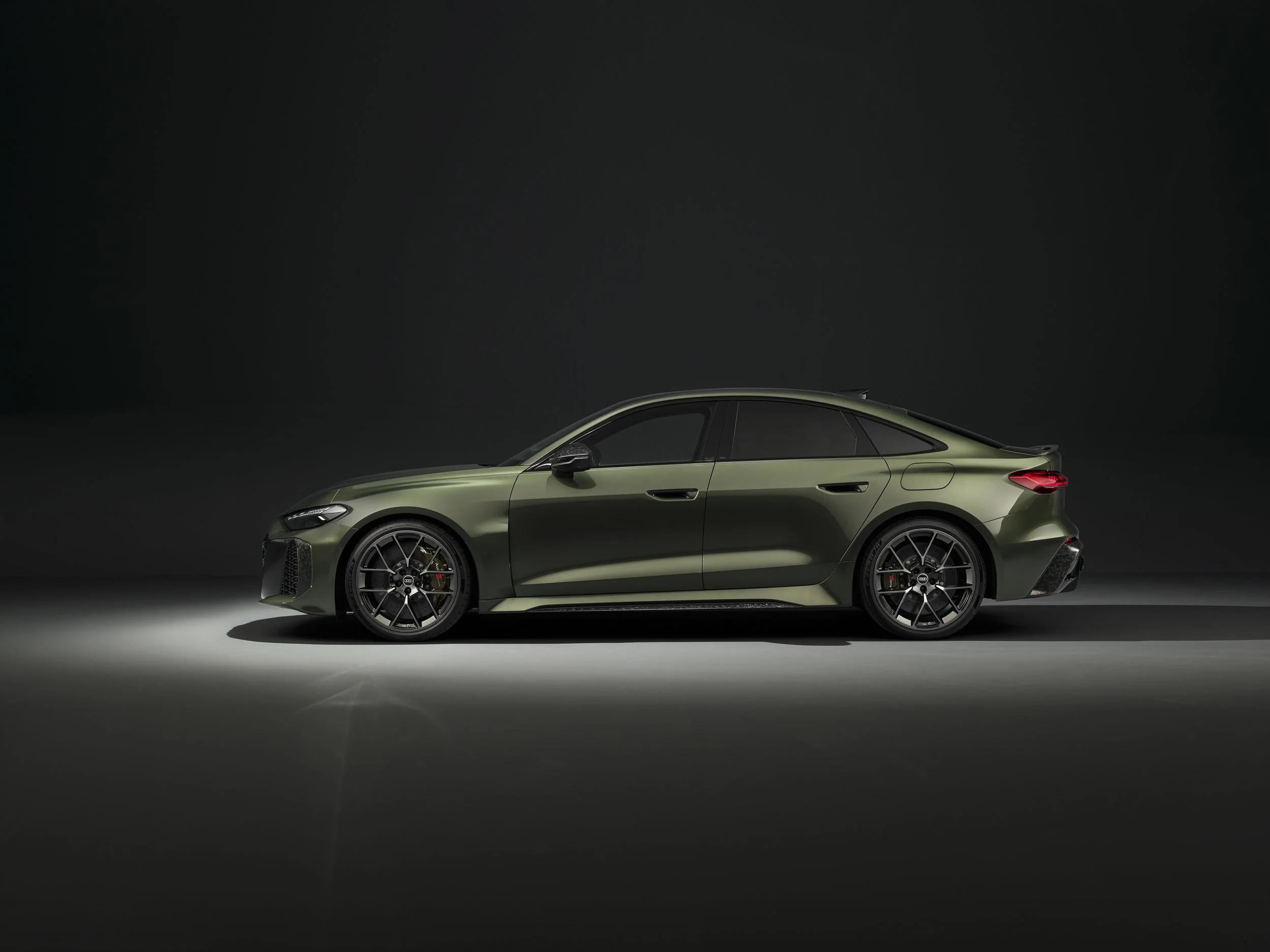
Audi equips the RS with forged 21-inch wheels featuring a six-twin-spoke design at all four corners. The rear wheels are wider than the fronts at 10.5 J versus 10 J, which slightly increases the contact patch. The tyres support higher lateral forces, more cornering grip, and more stable handling. They also improve turn-in because the tyre deforms less.
Audi equips the RS 5 with 20-inch RS steel brakes as standard. The discs measure 420 mm at the front and 400 mm at the rear, and buyers can choose black or red callipers. Audi offers 21-inch RS ceramic brakes as an option. The ceramic discs measure 440 mm at the front, and 410 mm at the rear, and buyers can choose from black, bronze, ze or recallipers. The ceramic setup weighs around 30 kilograms less than steel, resists heat effectively, and lasts longer, which matters for sustained heavy use. Audi also fits ceramic discs at the rear for the first time in the segment. With this setup, an RS 5 travelling at 62 mph stops in 30.6 metres. Audi develops 20-inch and 21-inch tyres specifically for the RS 5 to maintain grip and performance.
The RS 5 driving experience comes from the coordinated blend of hybrid power, tuned suspension and electric-mechanical vectoring that shifts left-to-right in milliseconds. The RS 5 stays manageable at all times. Drivers can choose from modes ranging from relaxed electric driving to uncompromising performance. Intelligent energy recovery supports efficiency, and drivers get power on demand, which creates a strong blend of technology, precision and driving enjoyment.
Drivers can access full power at the push of a button through the boost function. The performance hybrid delivers maximum acceleration for 10 seconds, making it ideal for quick overtakes. When drivers activate boost, the gearbox selects the appropriate gear for immediate, direct acceleration. A countdown in the driver information display shows the remaining boost time. The system then returns to the previously selected mode. Drivers can trigger a boost in any drive-select mode. When drivers press the boost button during electric driving, the 2.9-litre V6 TFSI engine comes online instantly to deliver full performance potential. The exhaust valves open simultaneously to add a more emotional sound.
The Audi drive select modes deliver exceptional range. They include comfort, balanced, dynamic, and RS-specific modes that offer real versatility. Comfort and balanced mode allow all-electric driving for quiet travel in town and on longer runs, and the RS 5 delivers a harmonious feel with neutral corner-exit behaviour. Drivers can transform the RS 5 into a rear-biased, more playful car at the touch of a button. They can control dynamics precisely, from neutral balance to intentional oversteer.
In dynamic mode, the RS 5 responds more immediately to steering and throttle inputs. It stays neutral off-centre and delivers noticeable rear bias at the corner exit for stronger acceleration. Reduced yaw damping near the limit makes behaviour livelier and suits a sporty, direct driving style with higher feedback.
The RS torque rear mode debuts in the RS 5, prioritising a rear-biased torque and controlled drifts on closed courses. This mode sends a high proportion of torque to the outside rear wheel, making the RS 5 feel agile and playful while keeping it rolling. The Audi driving experience function lets drivers record and assess torque rear driving, including lap times, distance covered and drift angle for later review.
The RS sport mode focuses on maximum propulsion. It uses a neutral handling setup that targets strong lateral acceleration, so the RS 5 stays agile in corners and remains precisely controllable with strong traction on corner exit at speed and during dynamic manoeuvres.
In the RS individual mode, customers can tailor the RS 5 to personal preferences. They can configure steering, suspension, throttle response from engine and electric motor, sound, ESC, and electromechanical torque vectoring for a bespoke driving experience.
The RS 5 delivers quick, precise and forceful gear changes in dynamic, RS sport and RS torque rear. The RS sport exhaust system delivers a rich, full-bodied sound with every throttle input.
Energy recovery plays a central role in plug-in hybrid efficiency, especially when the driver lifts off the throttle—theRS 5 controls recuperation based on the selected gear and a predefined deceleration rate. Drivers can also activate automatic recuperation through the MMI, which lets the vehicle vary regeneration automatically.
Drivers can adjust regeneration during coasting in three stages using the steering wheel paddles when the RS 5 runs on electric power, just like Audi’s fully electric models. The RS 5 offers two operating modes, “EV” and “Hybrid.” In EV mode, the car runs solely on electric power. In Hybrid mode, drivers can also select a preferred battery state of charge using a digital slider, giving them control over how much charge they serve. Predictive strategies plan energy use for the route ahead, and the system aims to cover city driving and traffic jams on electric power for efficiency and lower local emissions.
When the selected state of charge (SoC) is below the current SoC, the system discharges the battery to the target SoC. When both values match, the combustion engine powers the car while preserving battery charge. When the target SoC sits above the current SoC, the combustion engine charges the high-voltage battery. The system charges the battery to 80 per cent while driving. The RS 5 also manages charge to support sporty driving. In dynamic mode, it keeps the battery above 20 per cent to preserve for a boost. In RSSportt and RSTorque Rearr, the battery is kept above 90 per cent, so drivers retain maximum electric power for sporty manoeuvres and rapid acceleration.
The Audi RS 5 design reflects performance. The optional darkened Matrix LED headlights feature an RS-specific digital daytime running light signature in a chequered-flag design. RS-specific coming-home and leaving-home lighting scenarios reinforce the RS 5’s presence even when it stands still.
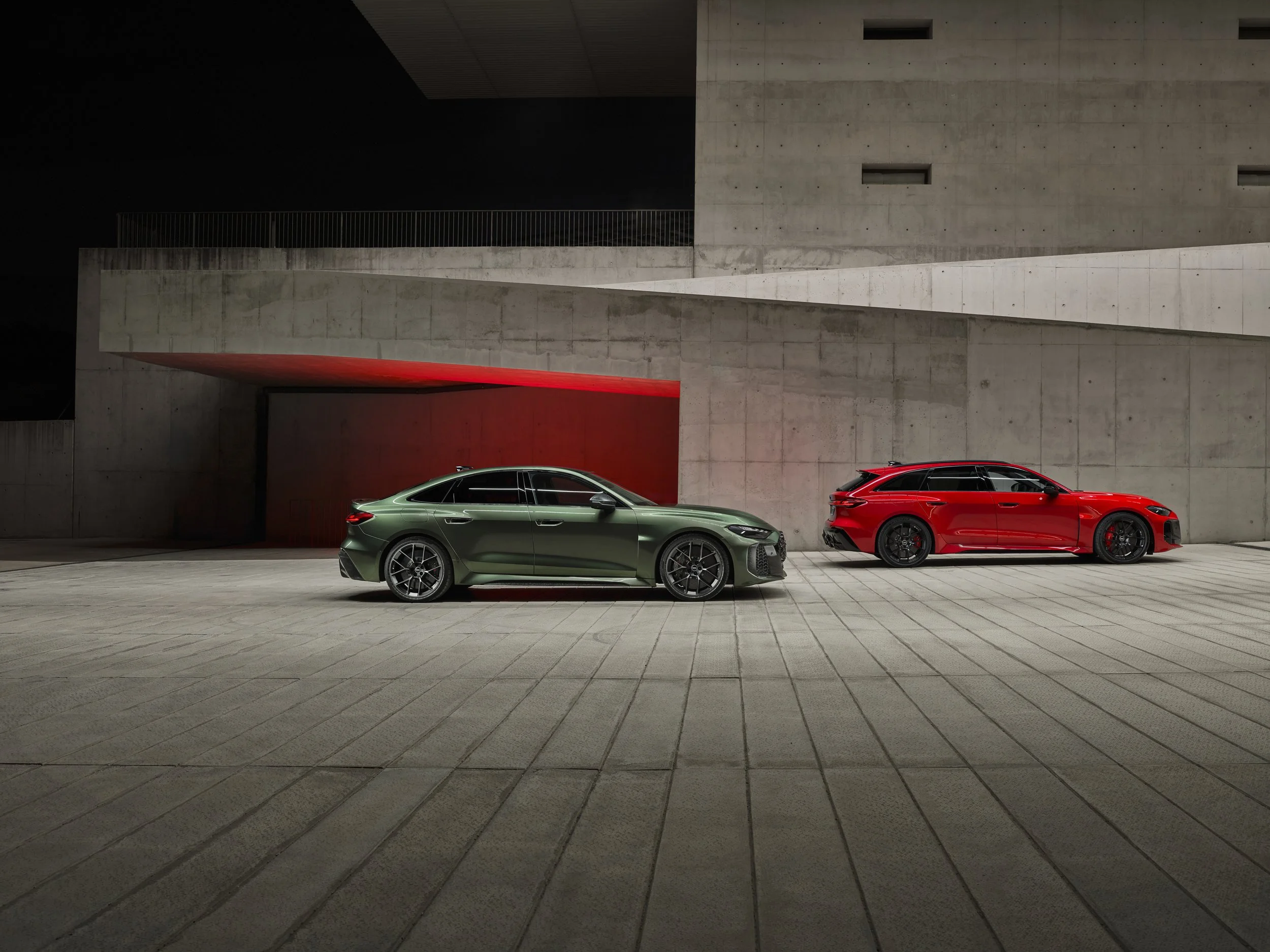
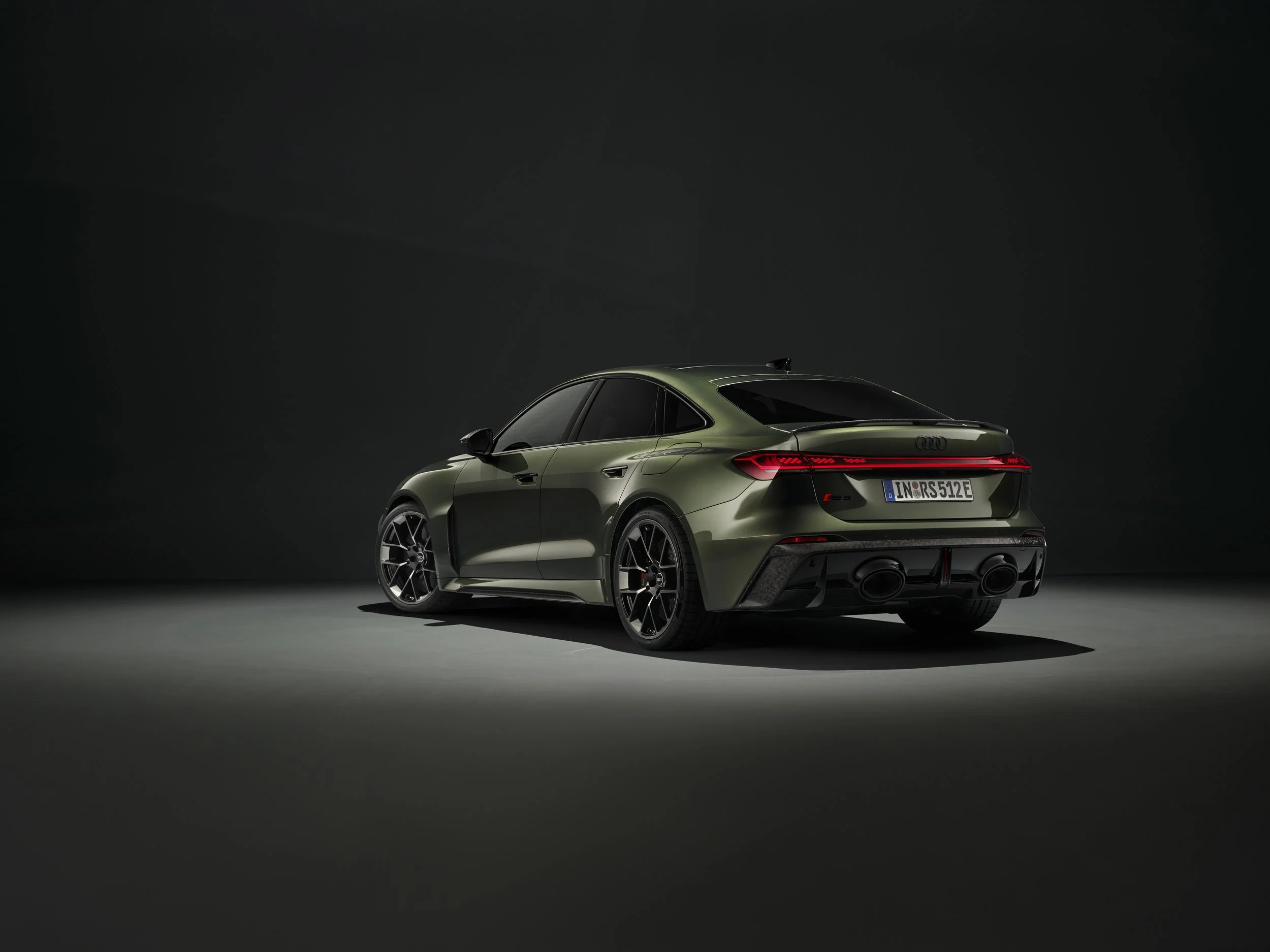
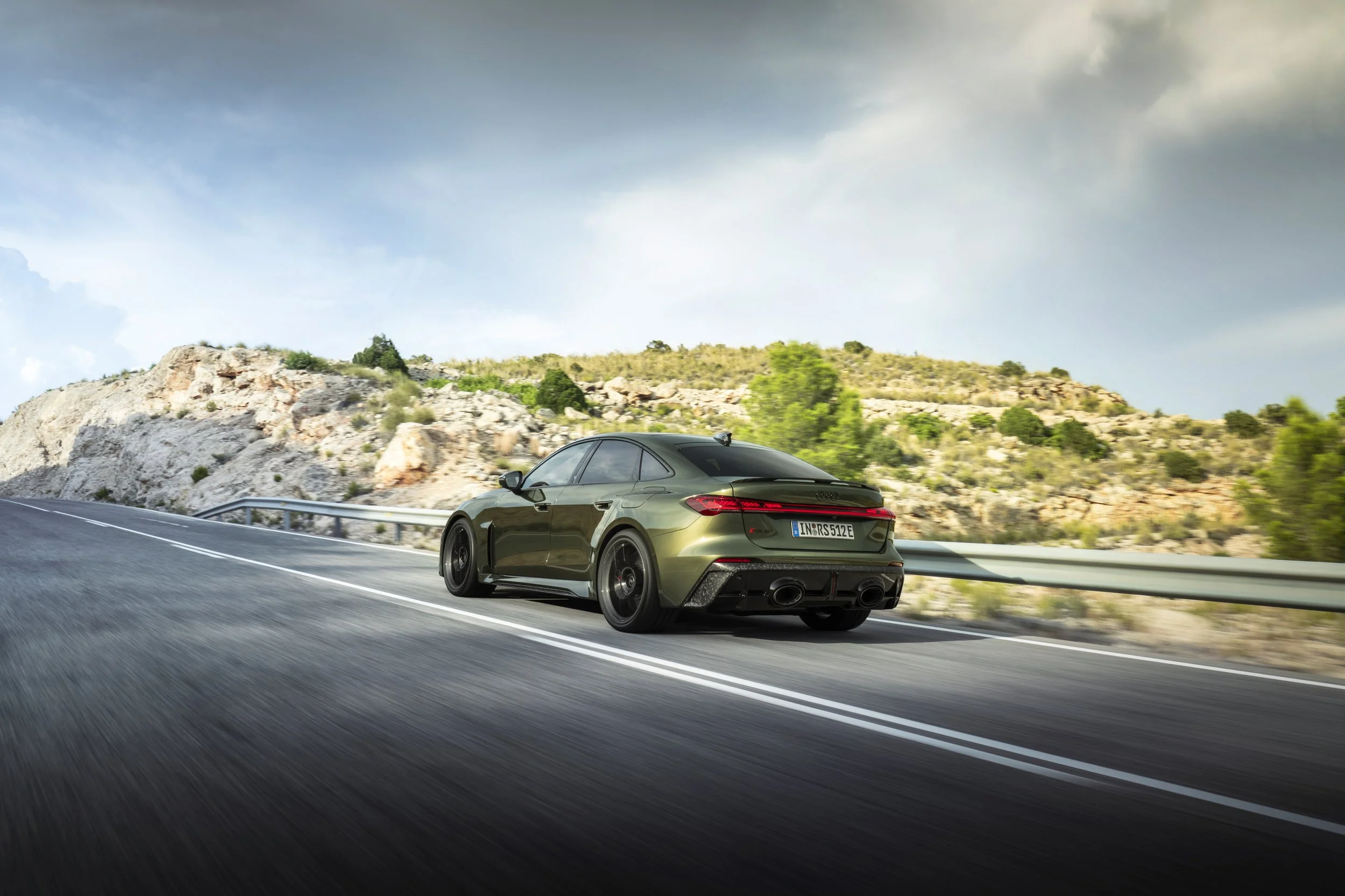
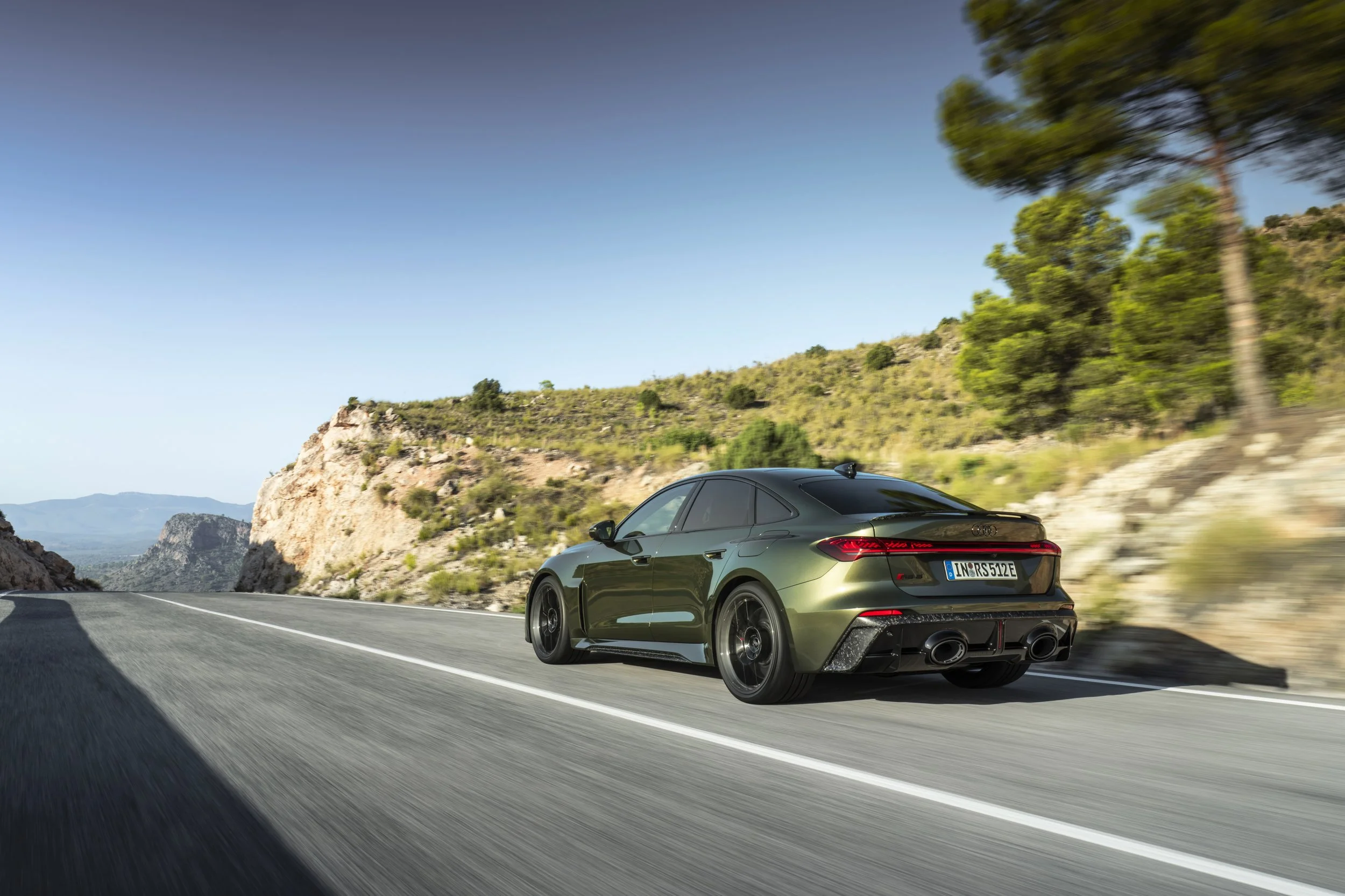
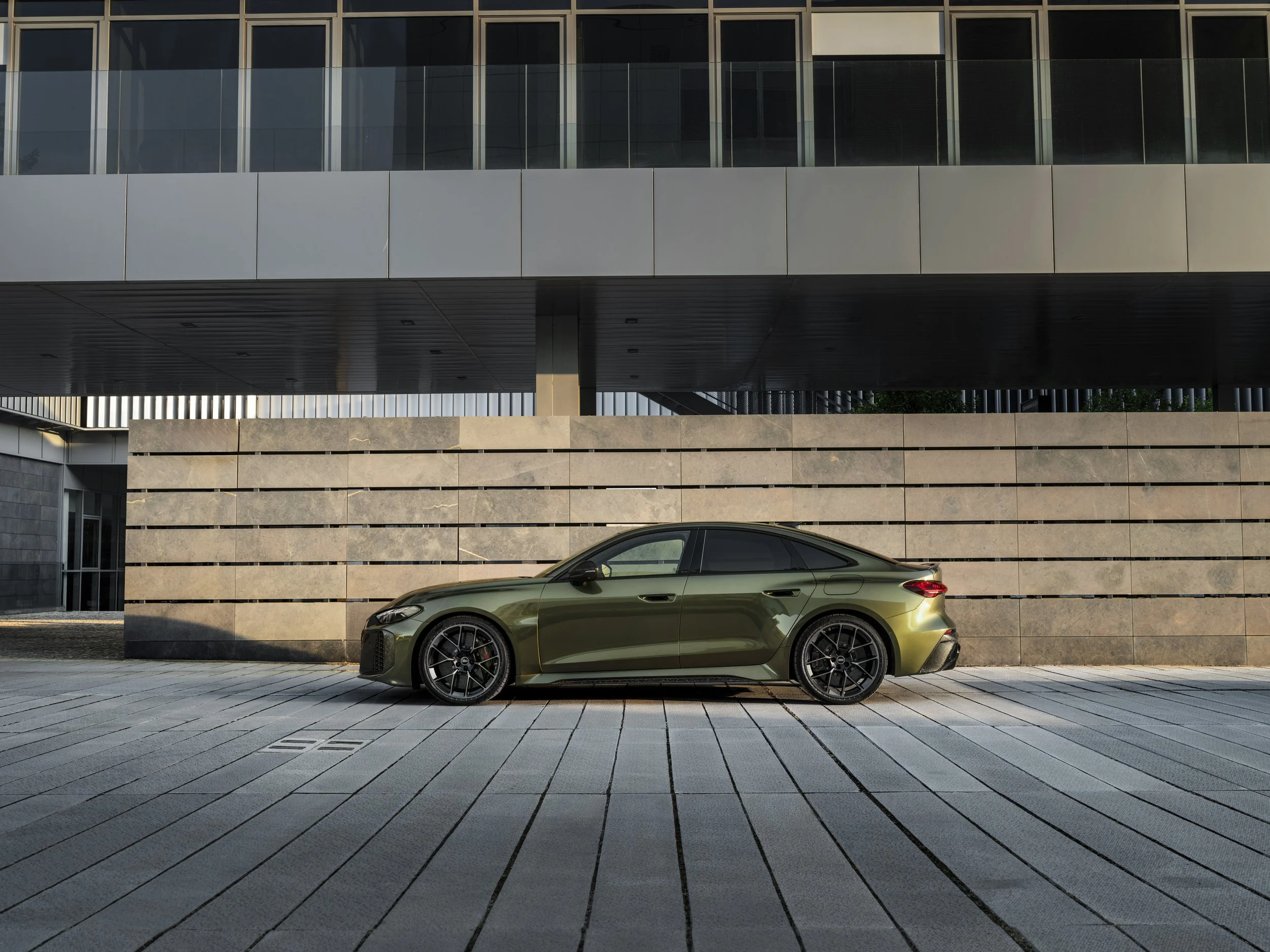
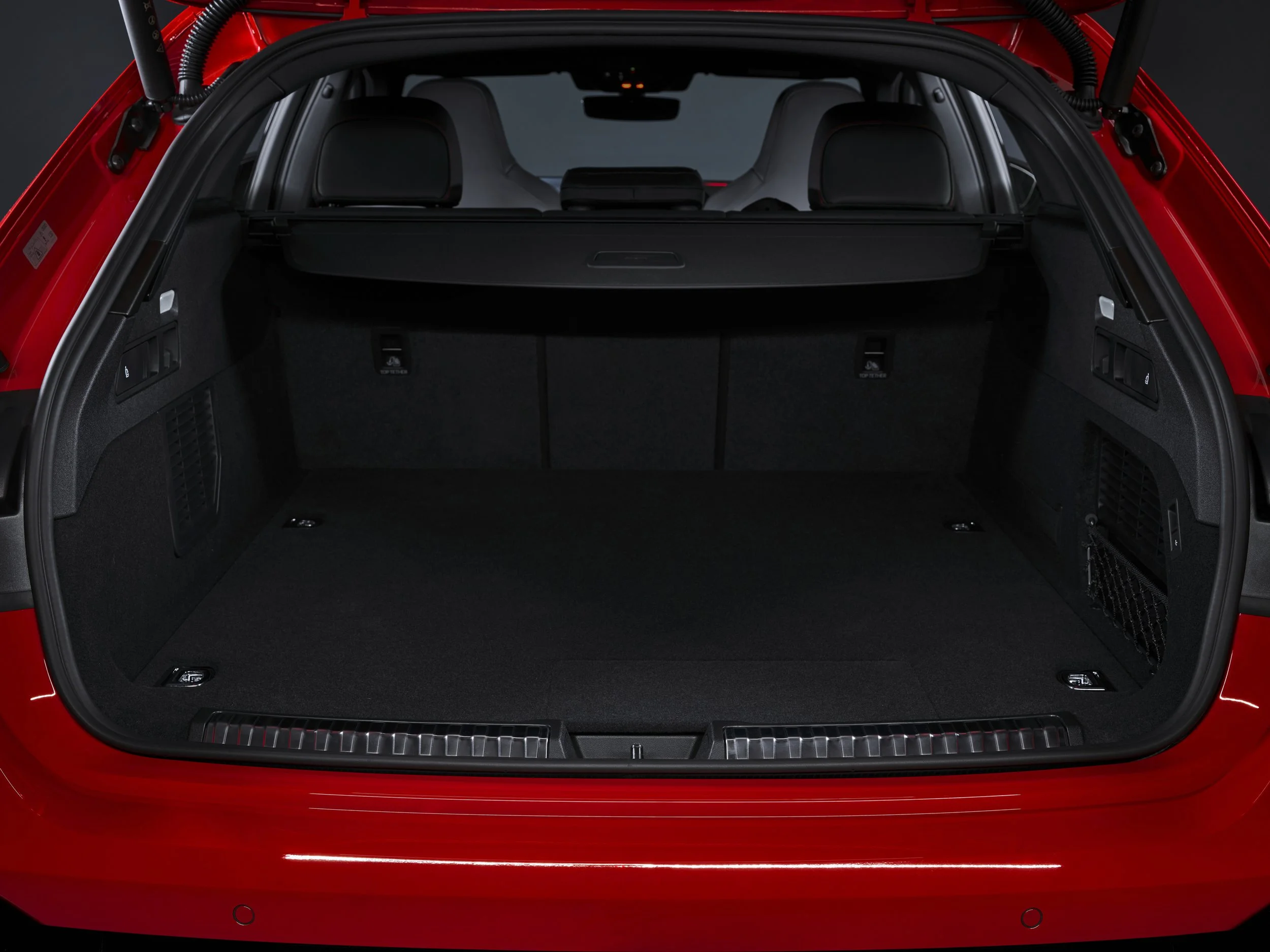
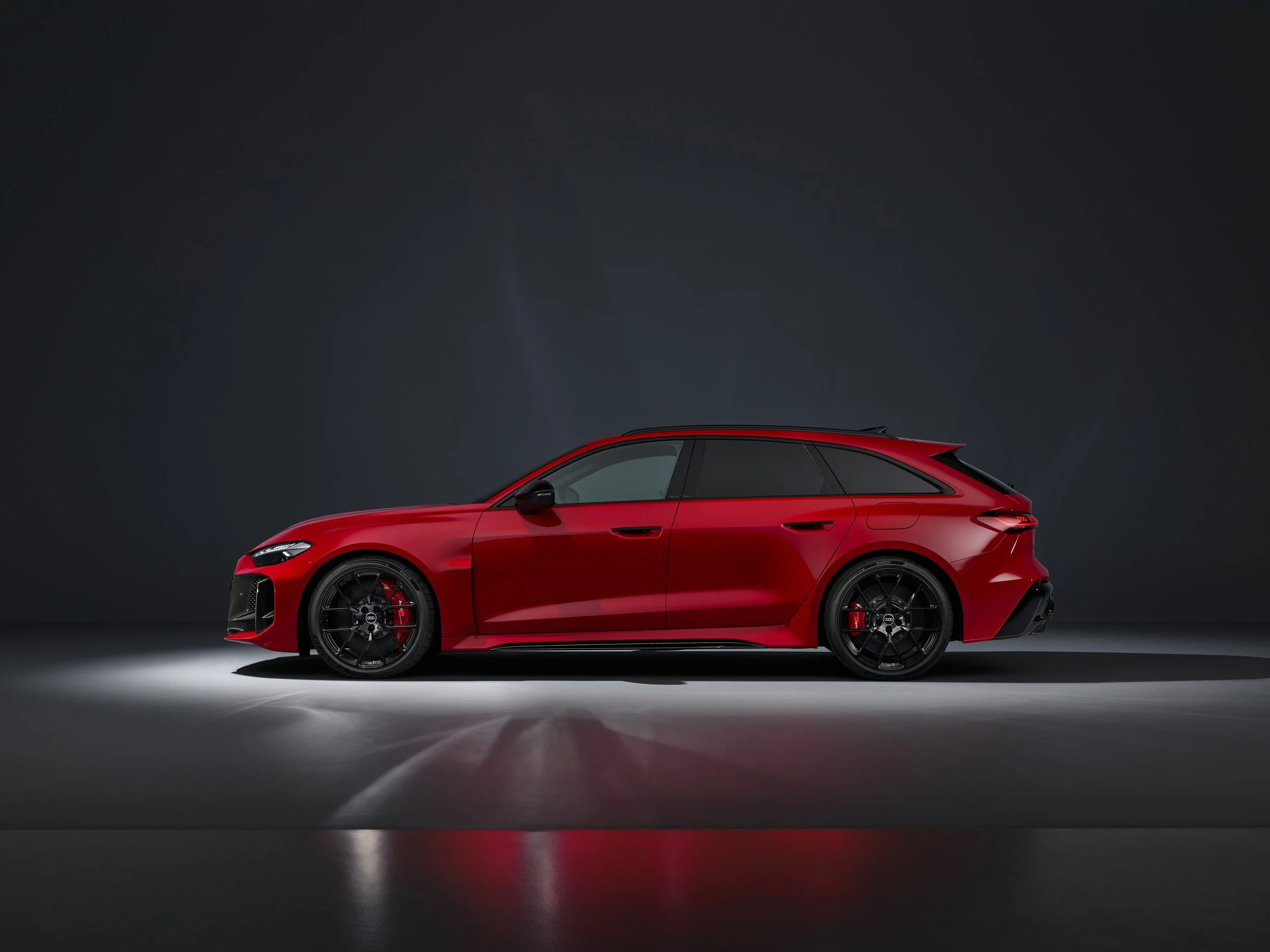
The RS 5 combines a long wheelbase, large wheels and a low body, and it looks ready to pounce. The Saloon pairs a coupé-like silhouette with functional packaging. The compact cabin flows into a shallow rear window and what appears to be a boot lid with a striking ducktail. In reality, the window forms part of the boot lid in this design, providing easy access for loading and unloading while keeping the dials visible.
The new RS 5 carries a muscular RS build that nods to its lineage. Compared with the base A5, it grows by four centimetres on each side at the front and rear. The Singleframe with a three-dimensional honeycomb grille dominates the front. A dark mask connects it to the Air Curtains that manage airflow around the front wheel, highlighting the functional design. Air vents in front of and behind the wings underlinethe presence. Strong, sculpted wheel apertures push out from the shoulder line and reference the Audi Ur-quattro, clearly signalling the RS DNA.
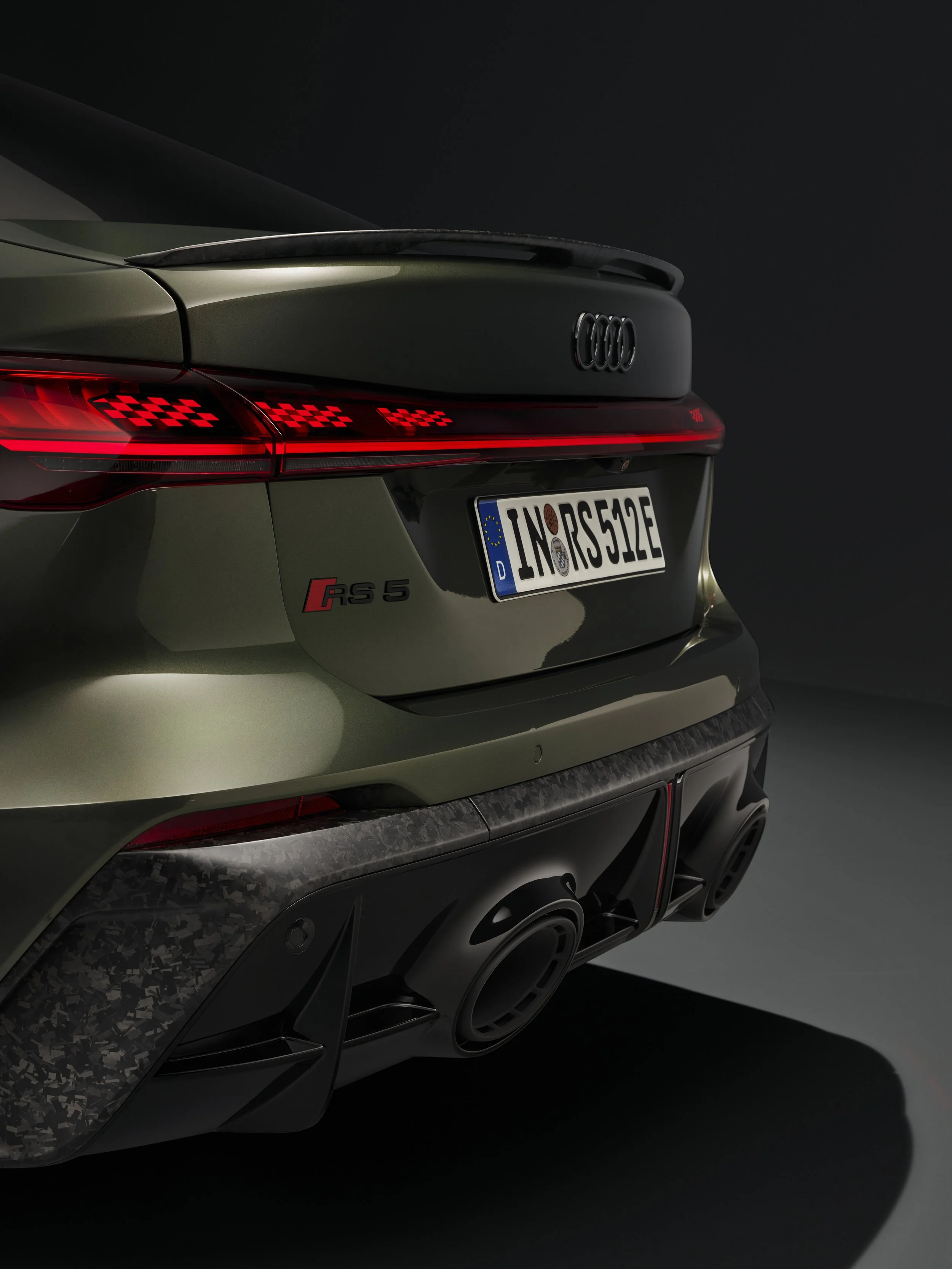
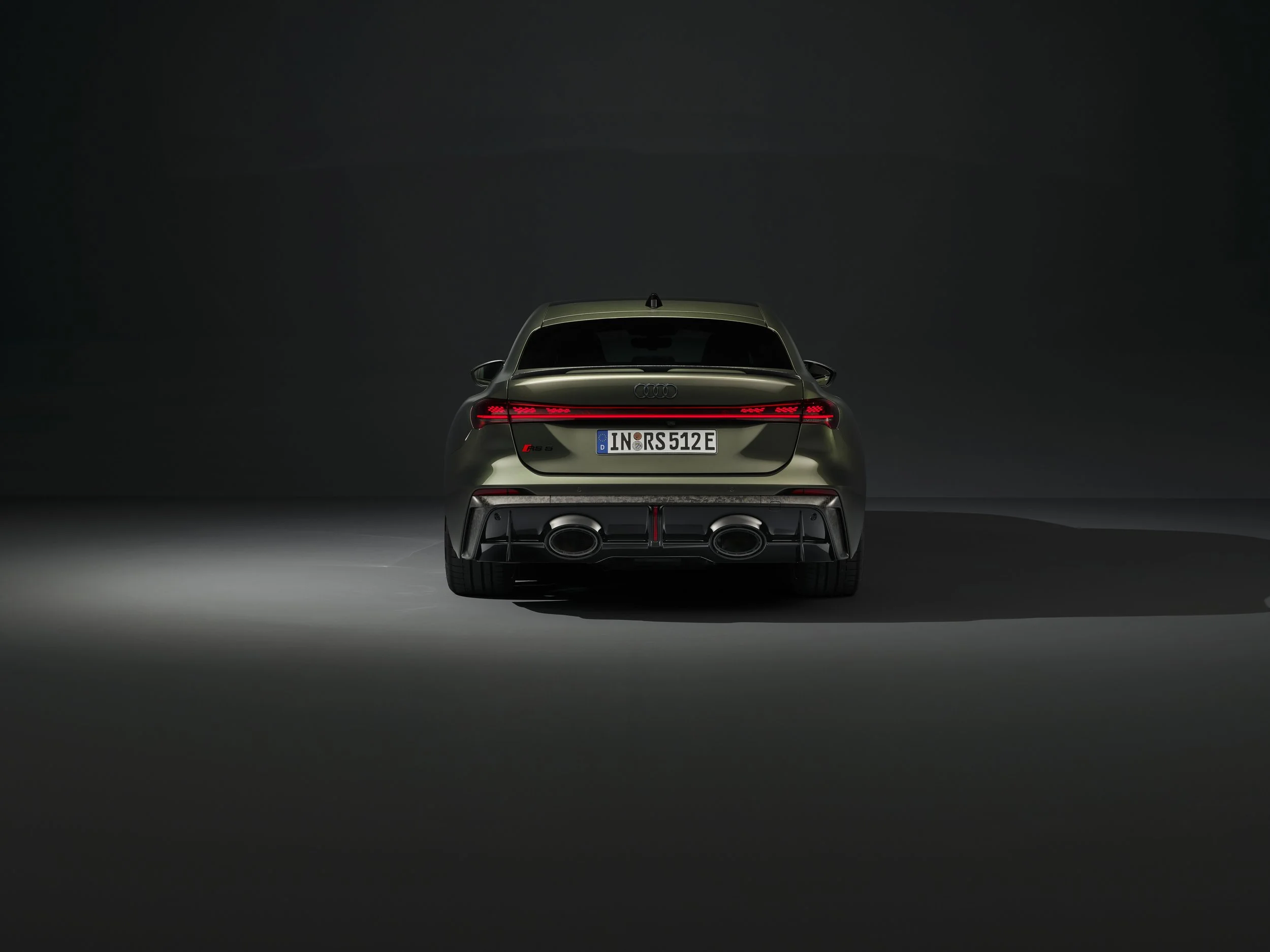
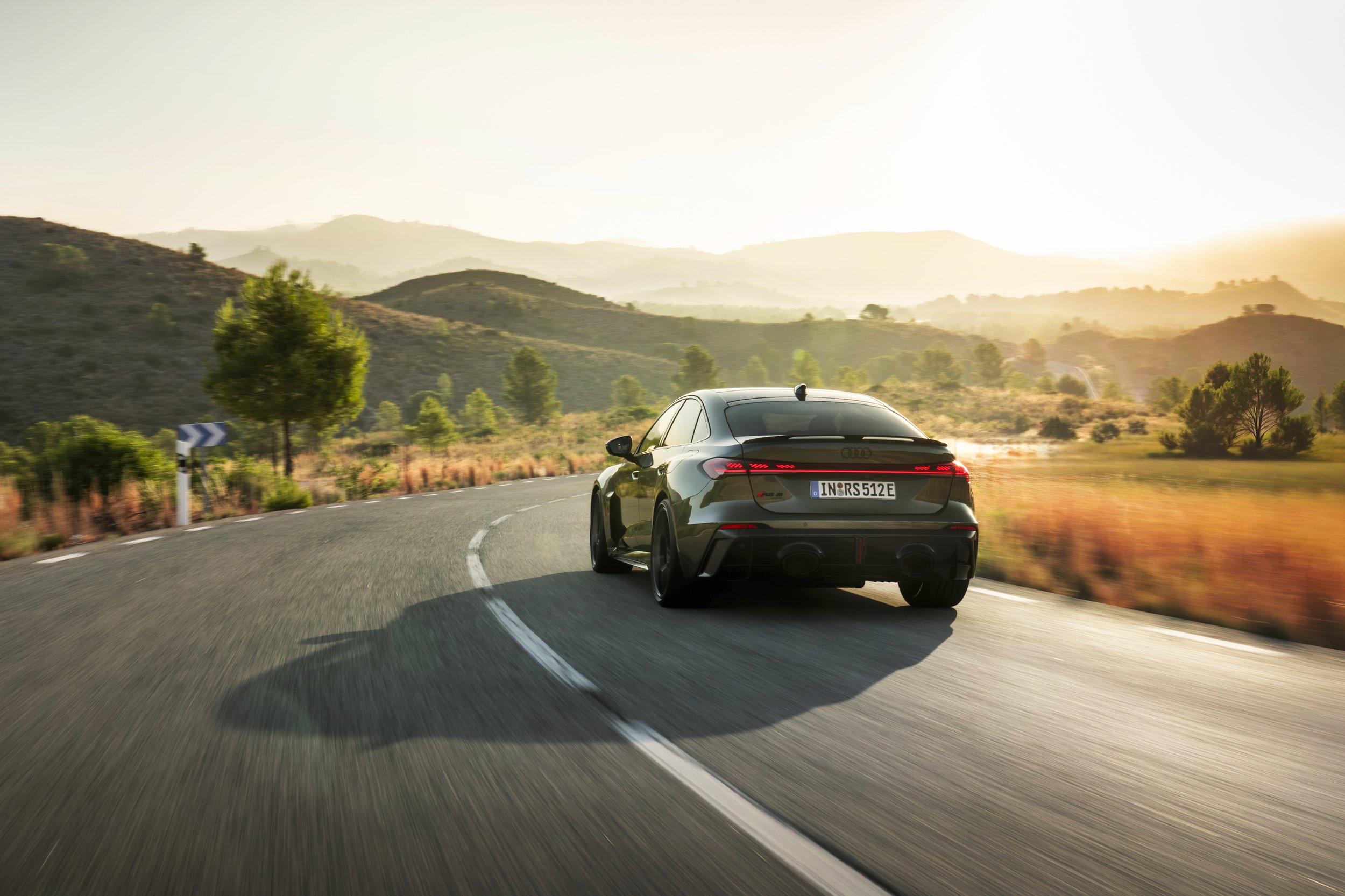
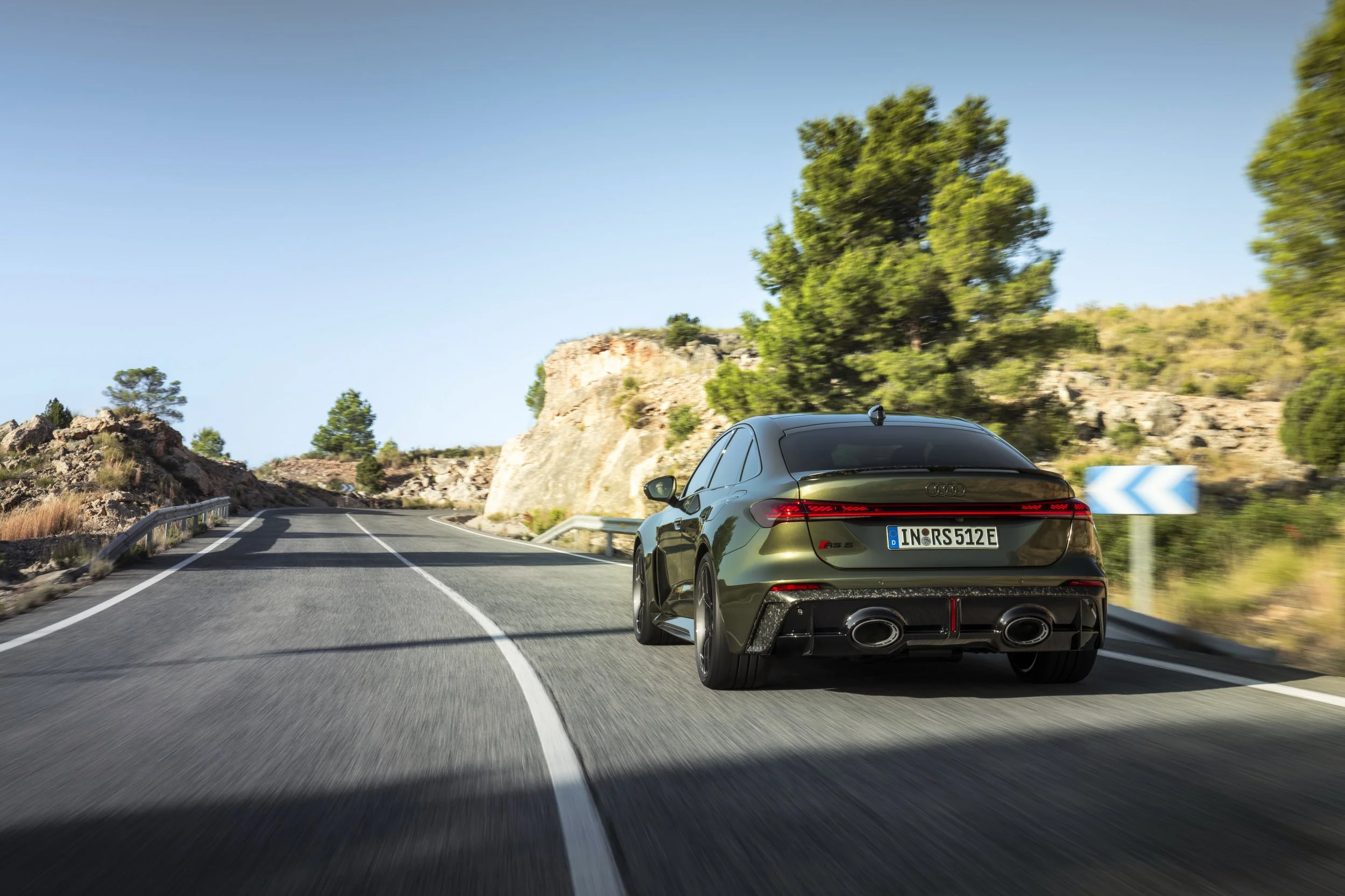
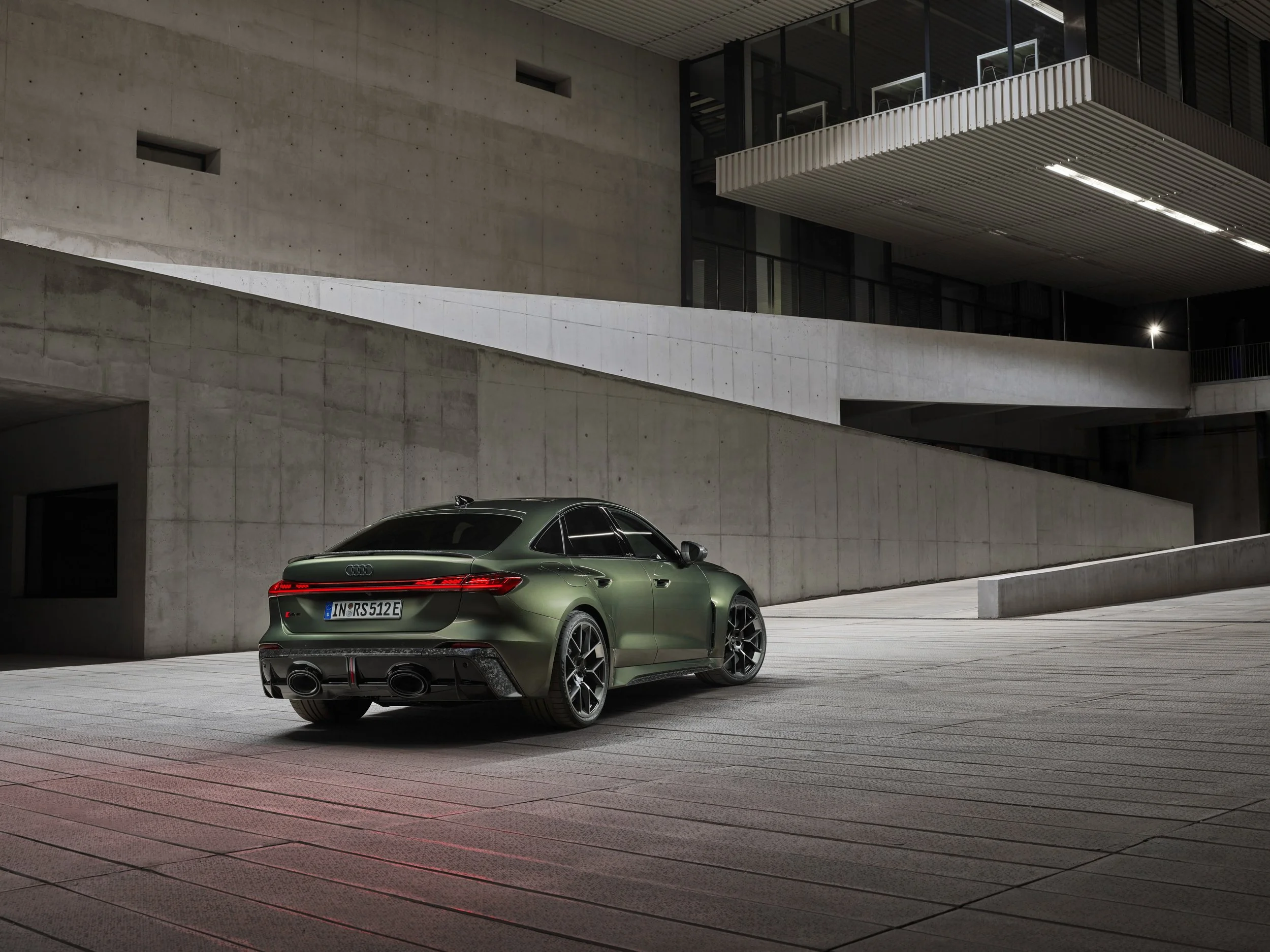
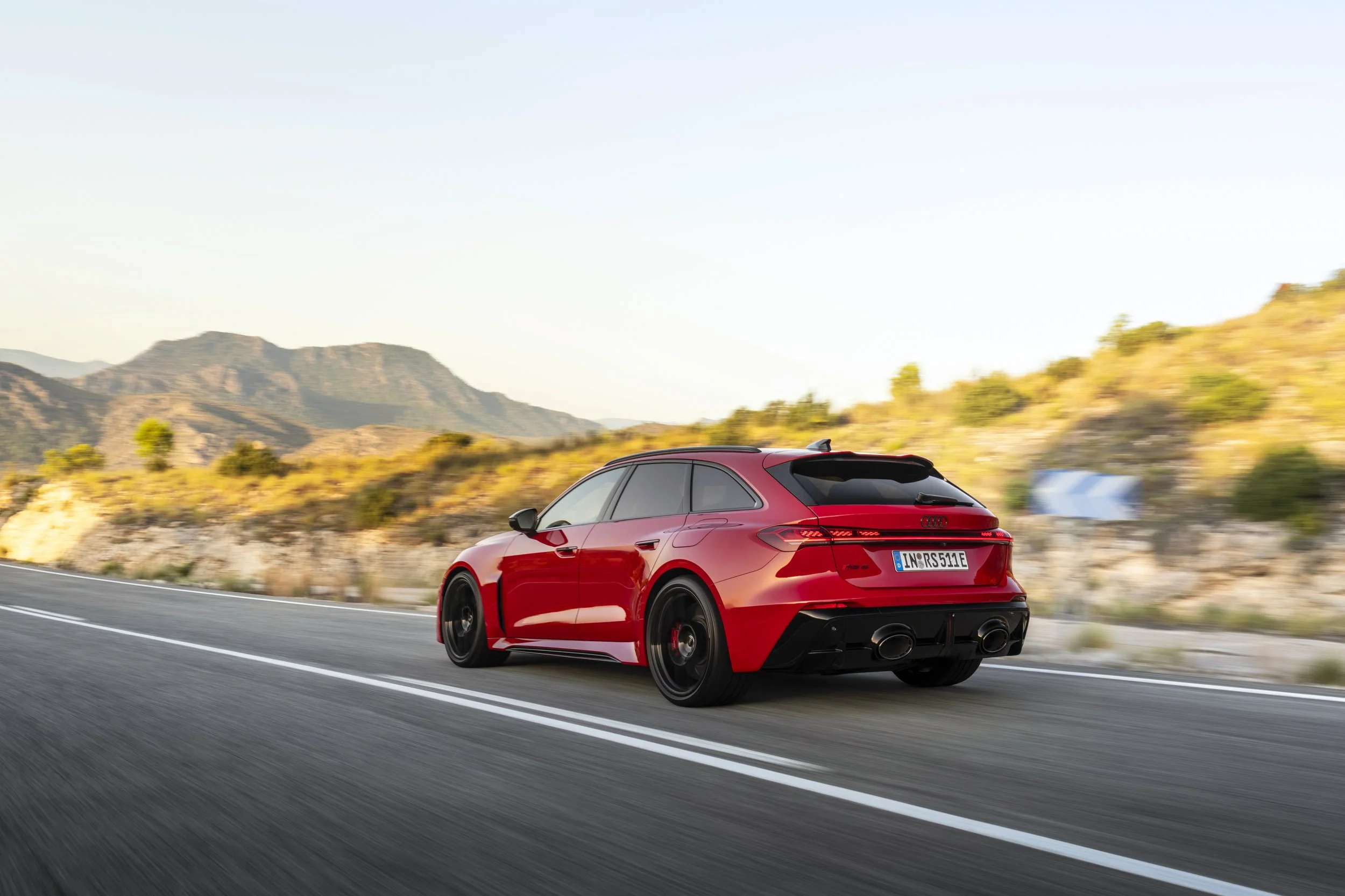
The rear features a strongly modelled diffuser with vertical fins that support aerodynamics. The RS exhaust tips sit centrally and use matte oval tailpipes. Audi develops the exhaust system from scratch, and it varies valve position to match each driving mode with the right soundtrack. A red reflector sits vertically in the centre of the diffuser as a motorsport reference.
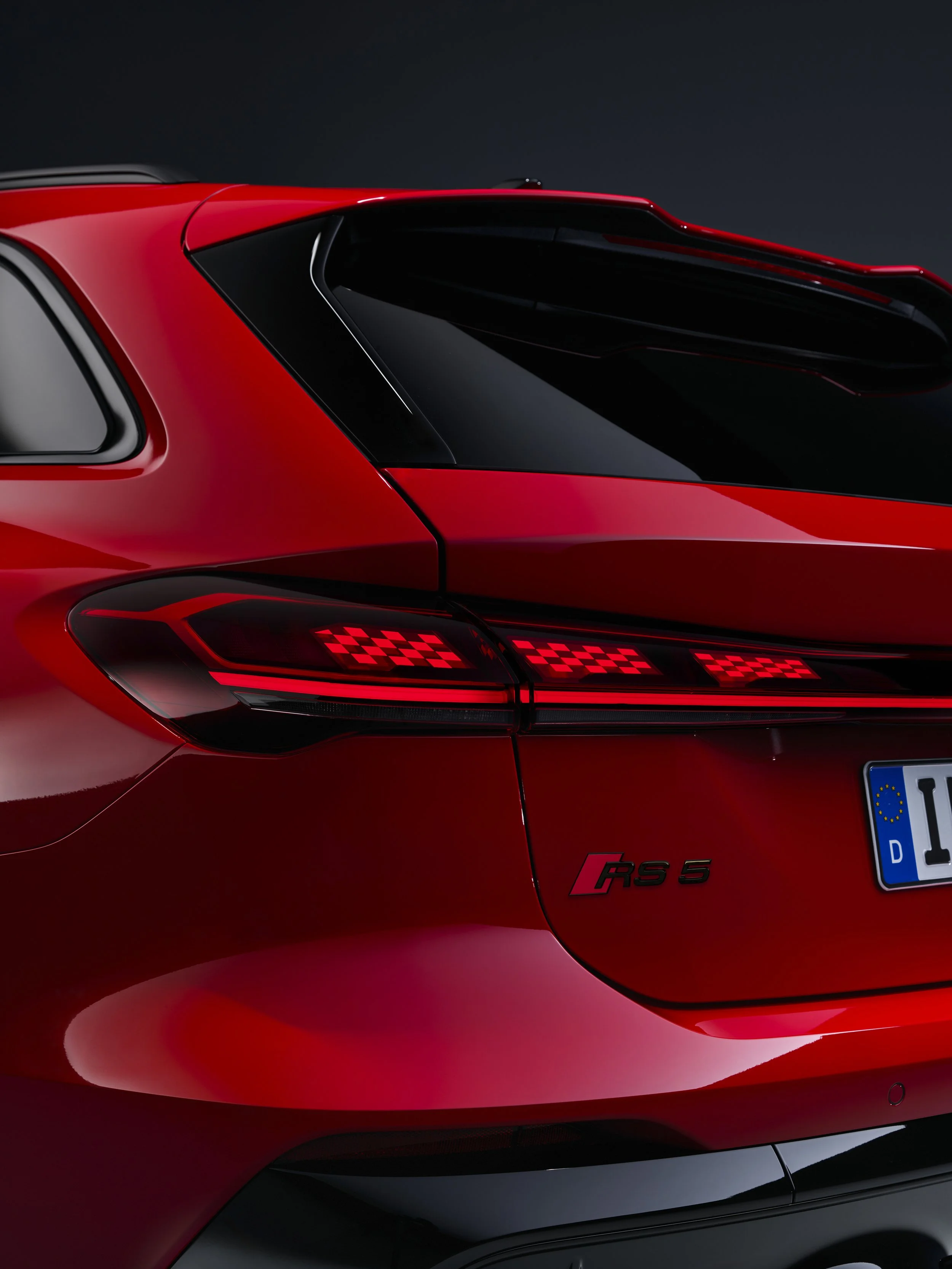
The lighting technology strengthens the RS 5’s unmistakable character. Second-generation digital OLED rear lights support design, function and safety. The exclusive light signature uses a chequered-flag look.
The RS 5 includes extensive safety functions. Like other A5 model series cars, the digital OLED rear light 2.0 features a communication light that enhances visibility. It can warn other drivers about accidents and breakdown areas, and it can display an additional graphic with warning symbols in critical driving or traffic situations.
Audi Sport paints the RS 5 in one of nine colours as standard, including Ascari bluBlueythos blaBlack,d Progressive redRedll metallic). Audi exclusive offers effect colours for customers who want a unique car, including Merlin pearl effect, Goodwood green and Panther black crystal effect. The grey matte paint on the RS looks especially striking, and Audi offers it exclusively for this model.
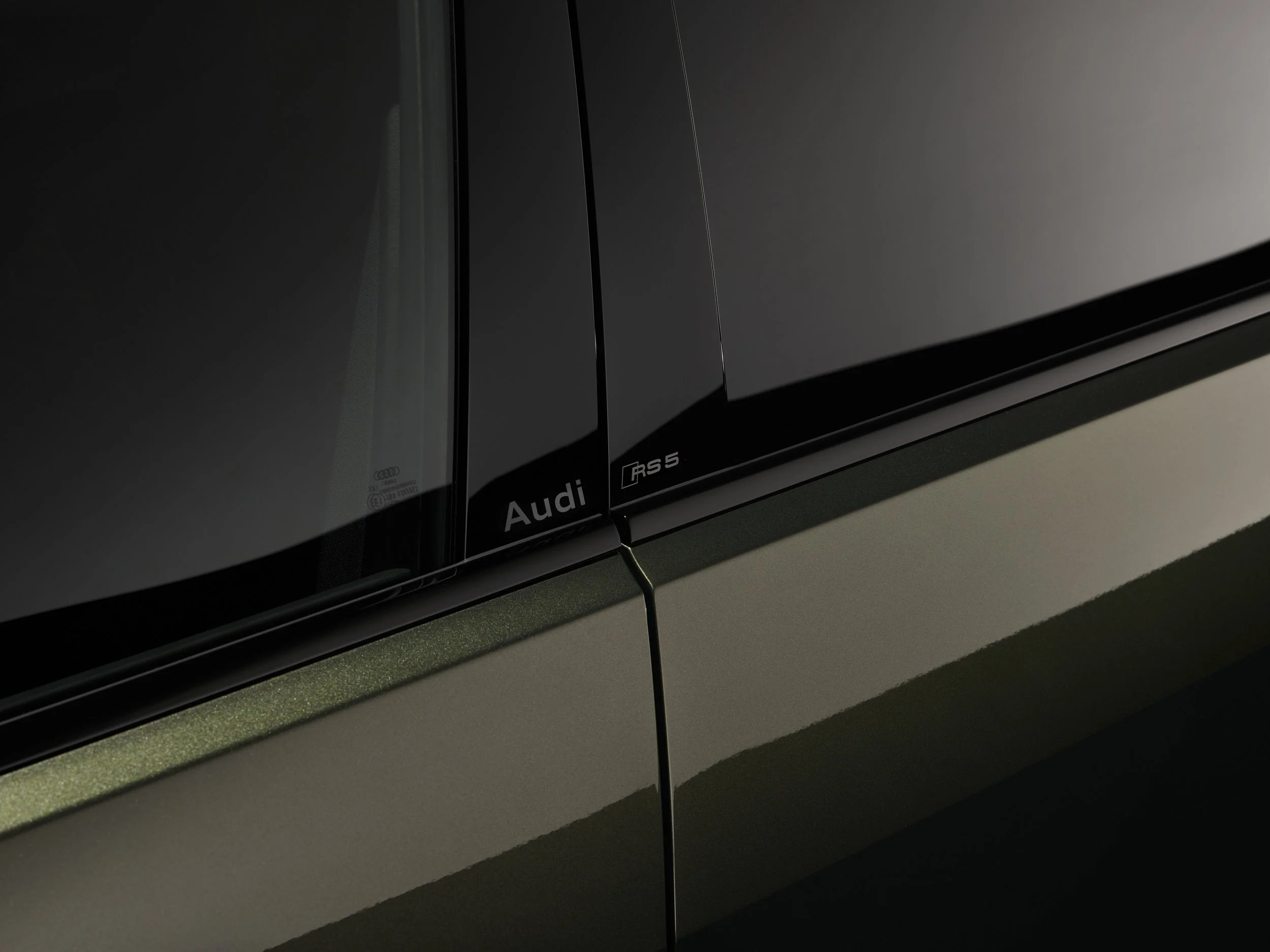
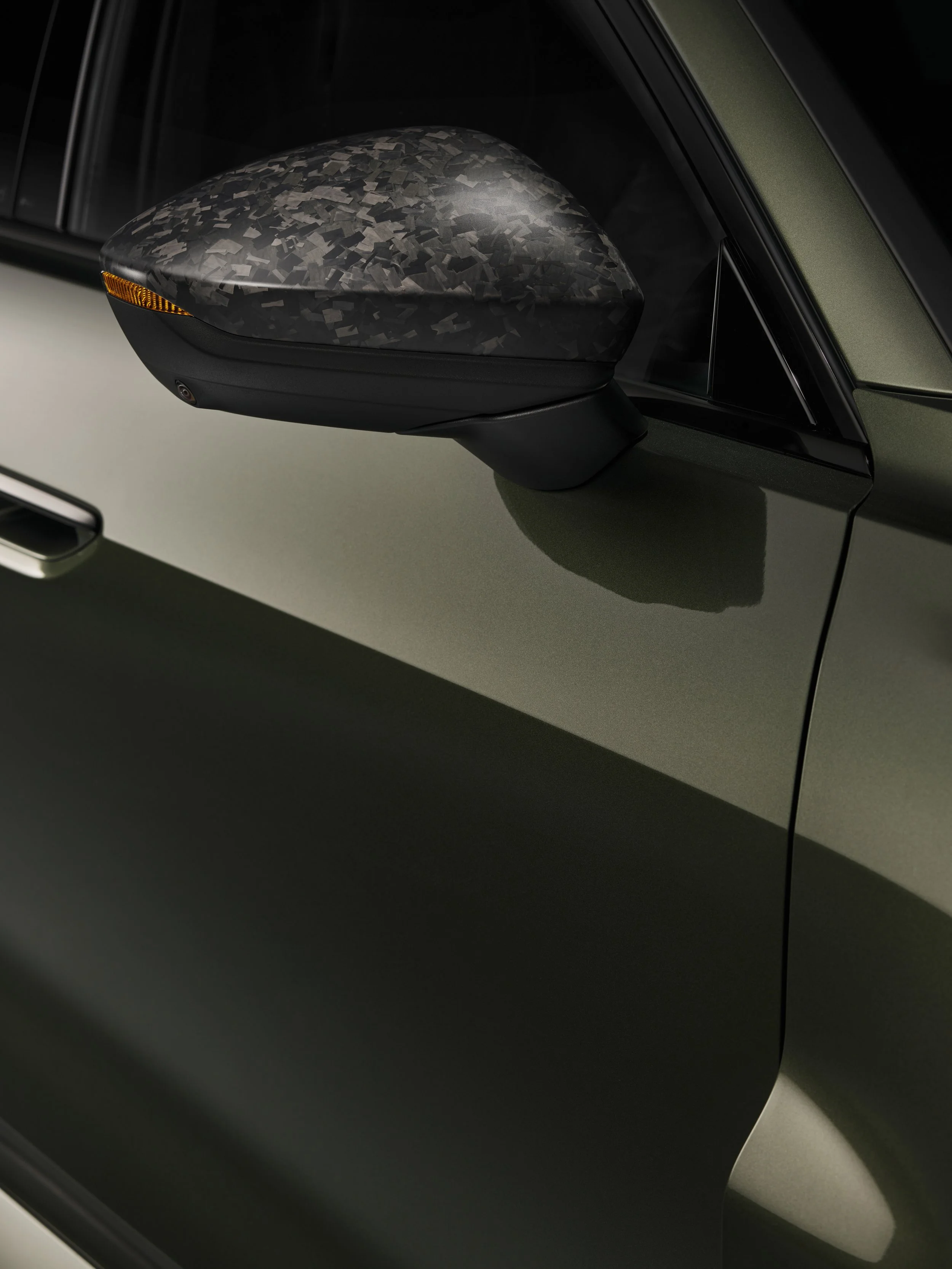
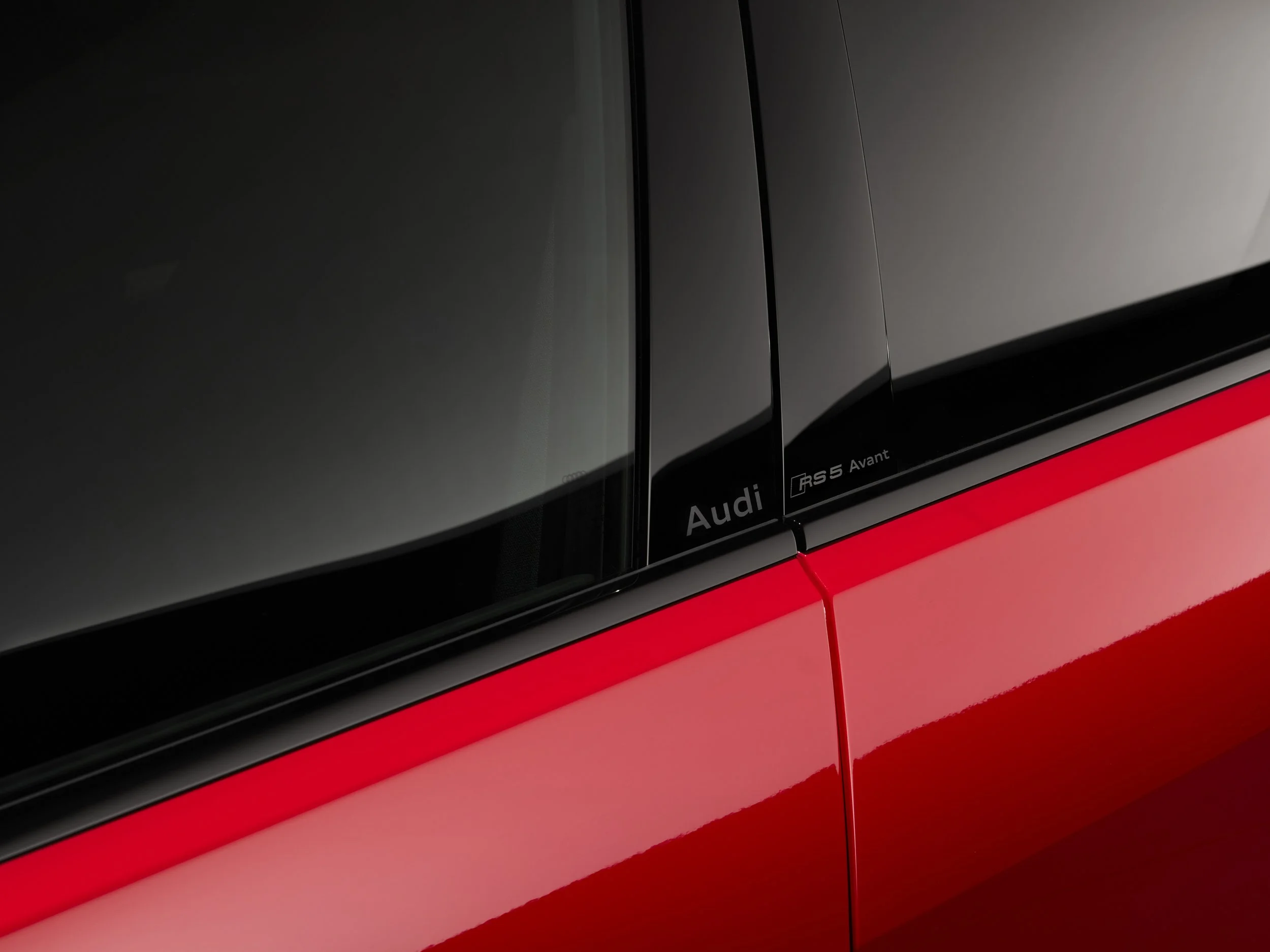
Audi Sport matches paint with tailored exterior design packages that varyin colours and materials. The front bumper blades, side skirt inserts and rear diffuser come in gloss black as standard, and the Saloon’s split lip spoiler matches. The carbon design package switches these elements to glossy carbon for a sharper look. Audi also offers carbon mirror housings. A black package comes as standard on the RS 5, so trim such as window surrounds, door handle inserts and RS badges appear in gloss black, while the Audi rings appear in anthracite.
The wheels make a strong contribution to the RS 5’s appearance. The RS 5 leaves Neckarsulm with matte grey 20-inch alloy wheels featuring a 5-Y-spoke design and 285/35 tyres as standard. Audi offers forged 21-inch twin-spoke wheels as a new RS-exclusive option, with buyers able to choose metallic black, Neodymium grey matte, or matte platinum grey.
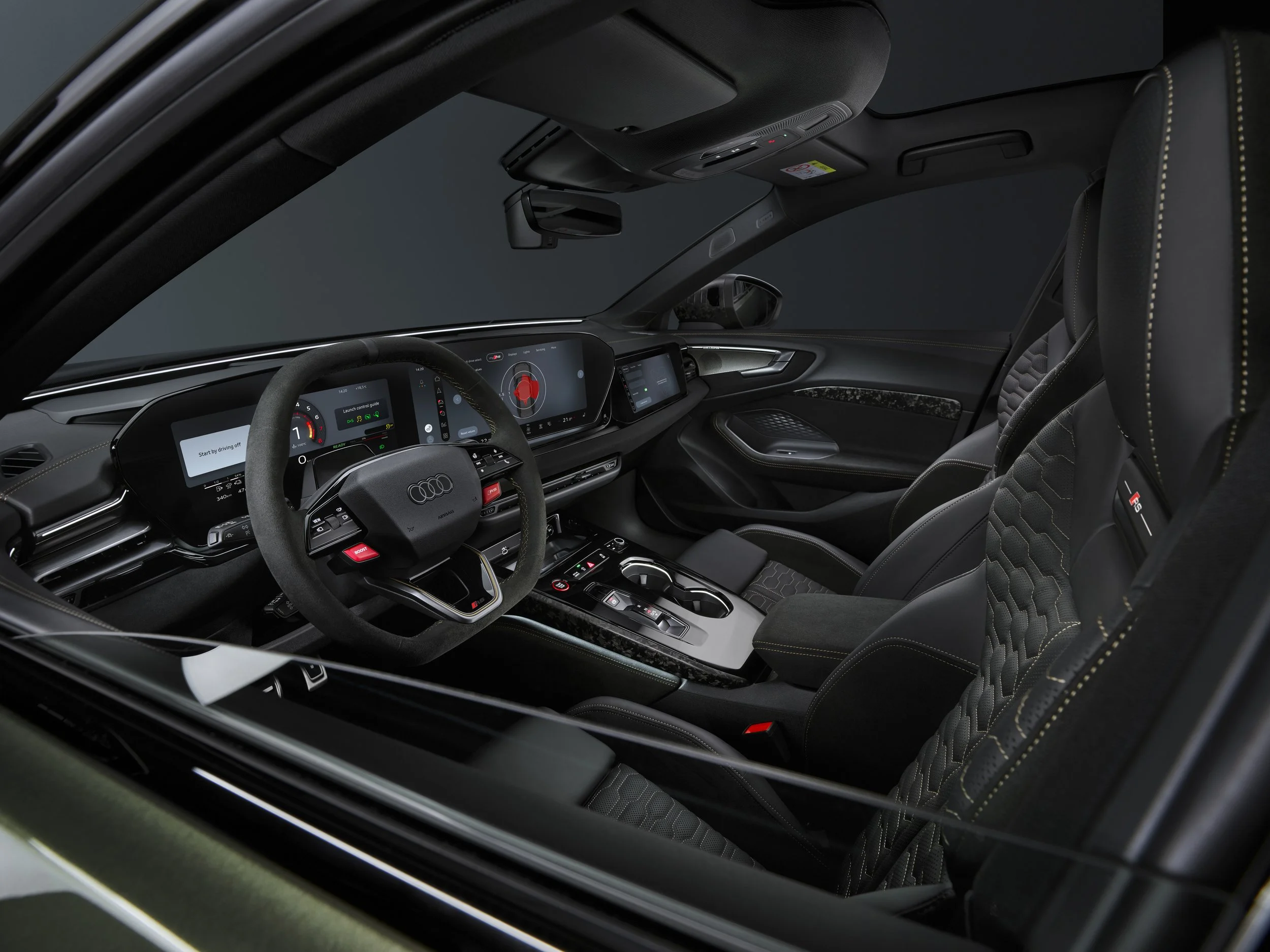
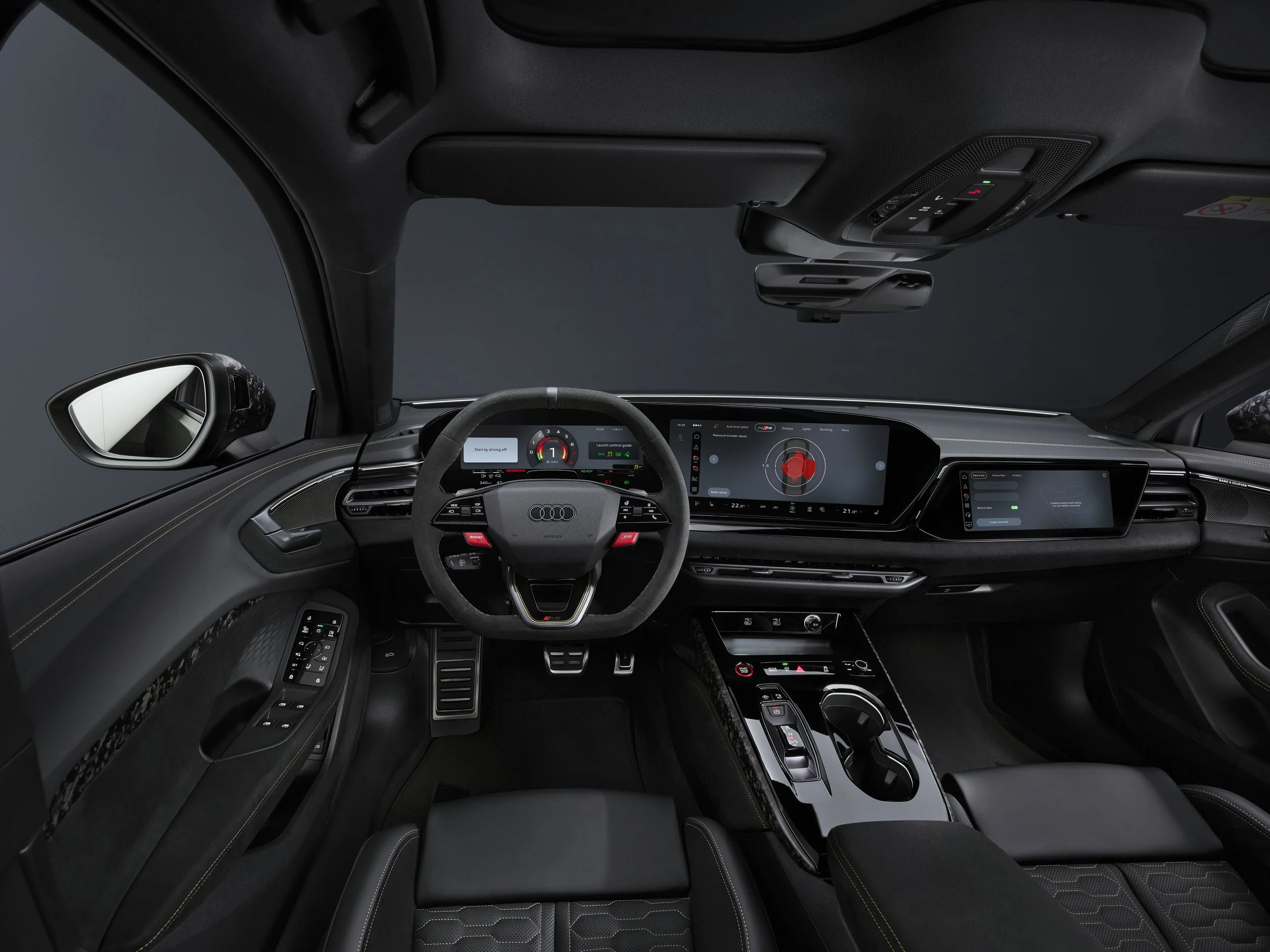
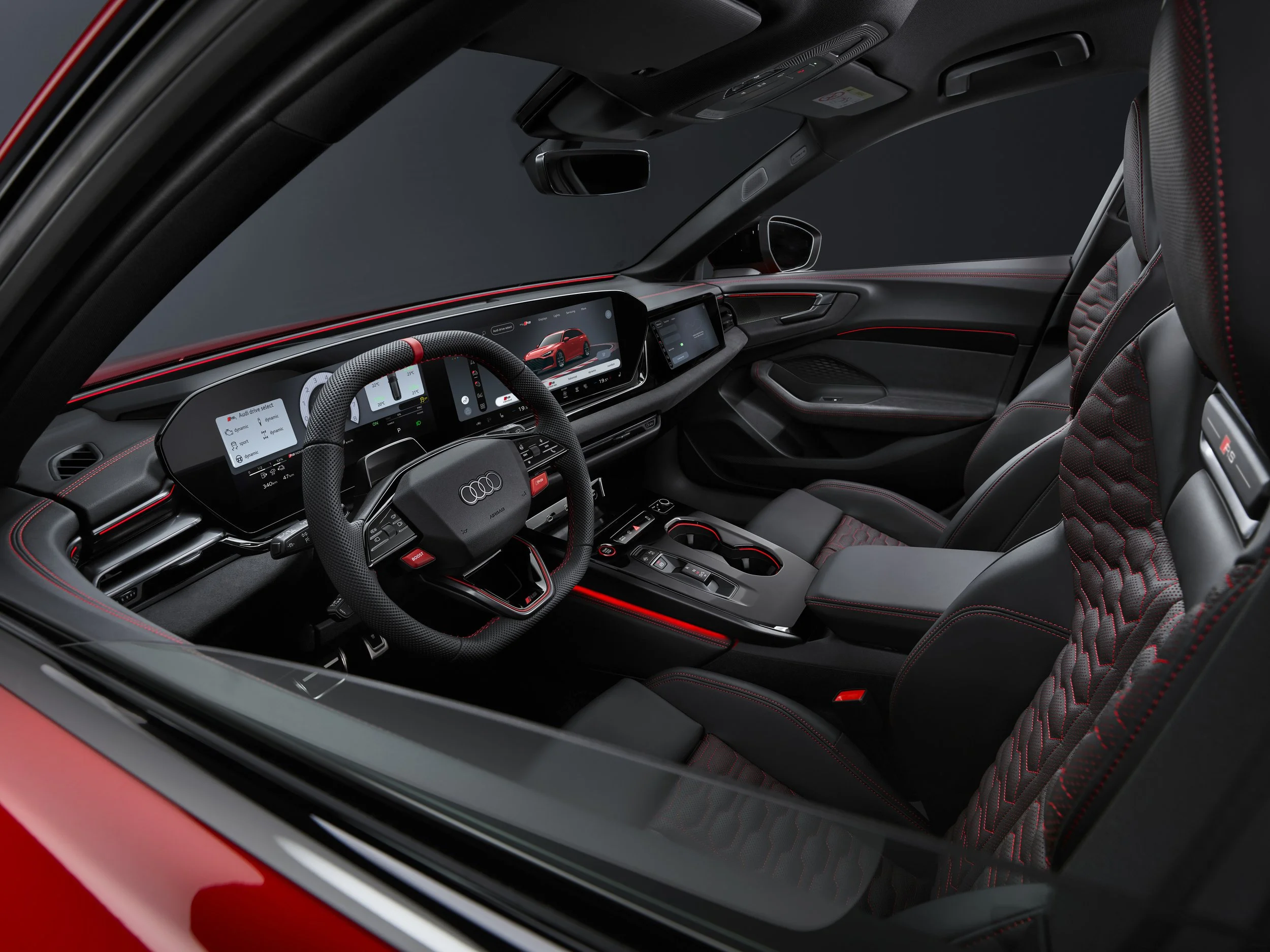
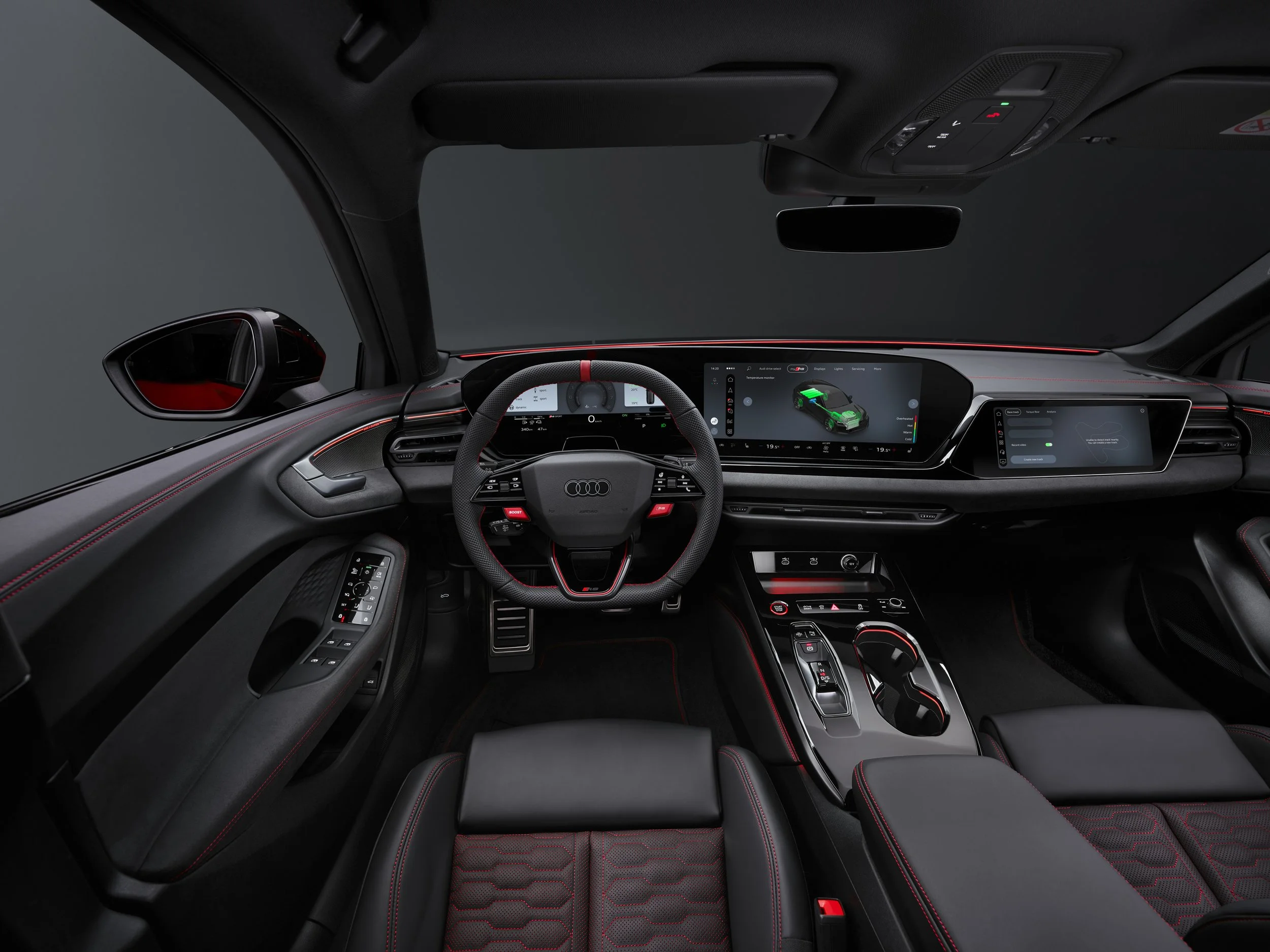
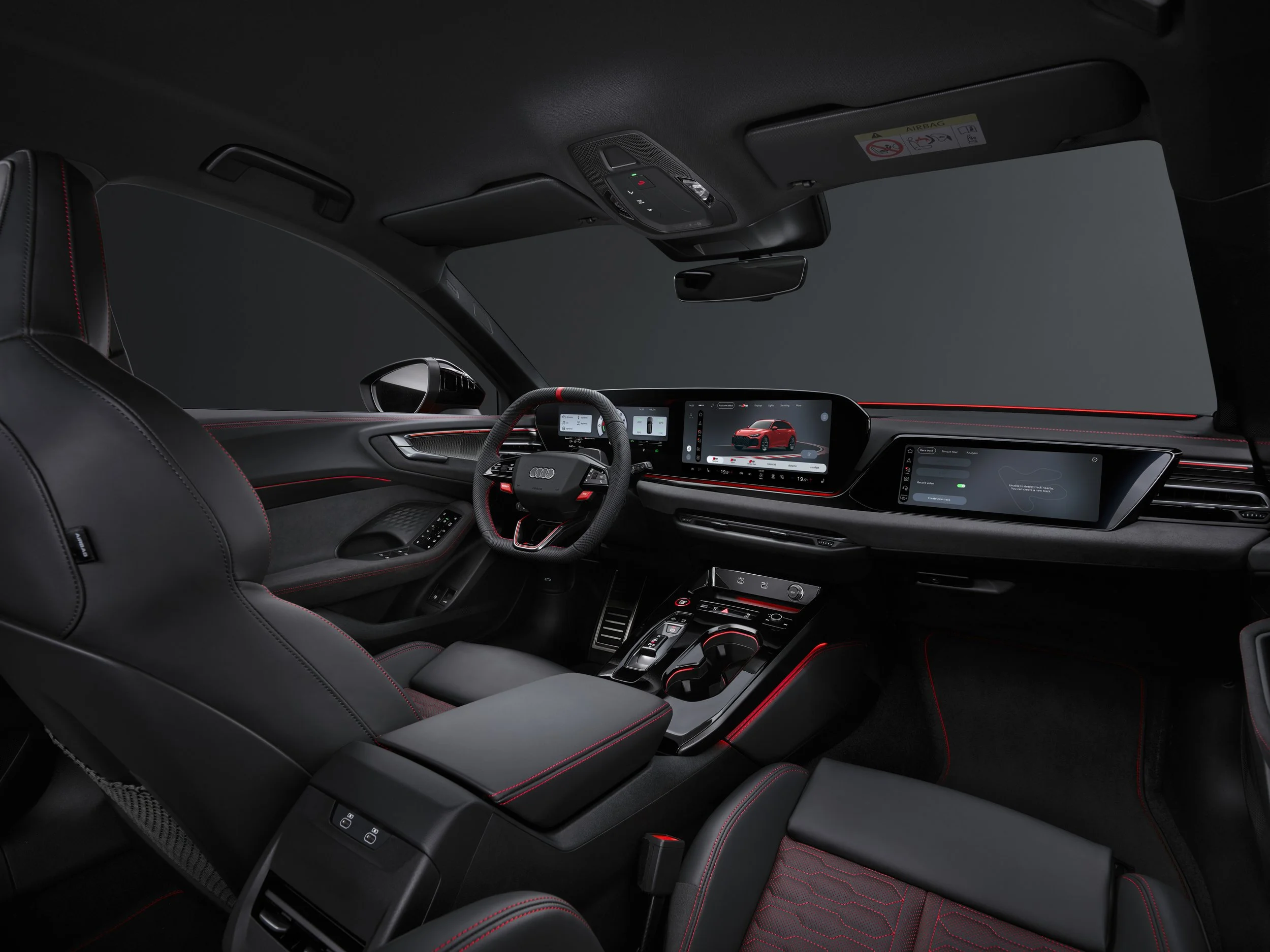
The RS 5 cockpit acts as a modern, driver-focused command centre. The slim, free-standing Audi MMI Panorama display sits at the centre and clearly displays key information. It combines the 11.9-inch Audi virtual cockpit and the 14.5-inch MMI touch display, features a curved design, and runs on OLED technology. Audi equips a 10.9-inch passenger display as standard, allowing passengers to assist with vehicle and navigation functions or use their own media and interactive features.
The Audi virtual cockpit offers RS-specific sporty dials that show revs, speed and a shift light. Drivers can also access performance data, including tyre forces, temperatures, and pressures; lap times; and detailed drivetrain data, rpm, and acceleration.
A configurable head-up display projects key data onto the windscreen. It can show revs, speed, and gear, and present the layout as a dial if the driver prefers. It highlights the shift indicator and shows the ideal upshift point. It can also display acceleration and a launch control guide.
The 14.5-inch MMI touch display includes comfort and infotainment functions from the A5 model series and adds plug-in hybrid-specific features. It shows real-time energy flow under acceleration and regenerative braking. It can also show temperatures for tyres, the transmission, the rear transaxle and the battery.
The factory-fitted Audi driving experience function supports deep analysis of driver actions, including on well-known racetracks. The RS 5 records accelerator and brake use, oversteer and understeer, and lateral, longitudinal and total acceleration. It accurately records lap and sector times, and saves and compares runs.
The RS 5 automatically creates new track profiles from a recorded lap, which helps even on unfamiliar or private circuits. Users can also define sectors and compare them later, including split times and segment analysis based on lateral acceleration and other parameters. Drivers can also record video of their drive with an optional dashcam integrated into the rear-view mirror.
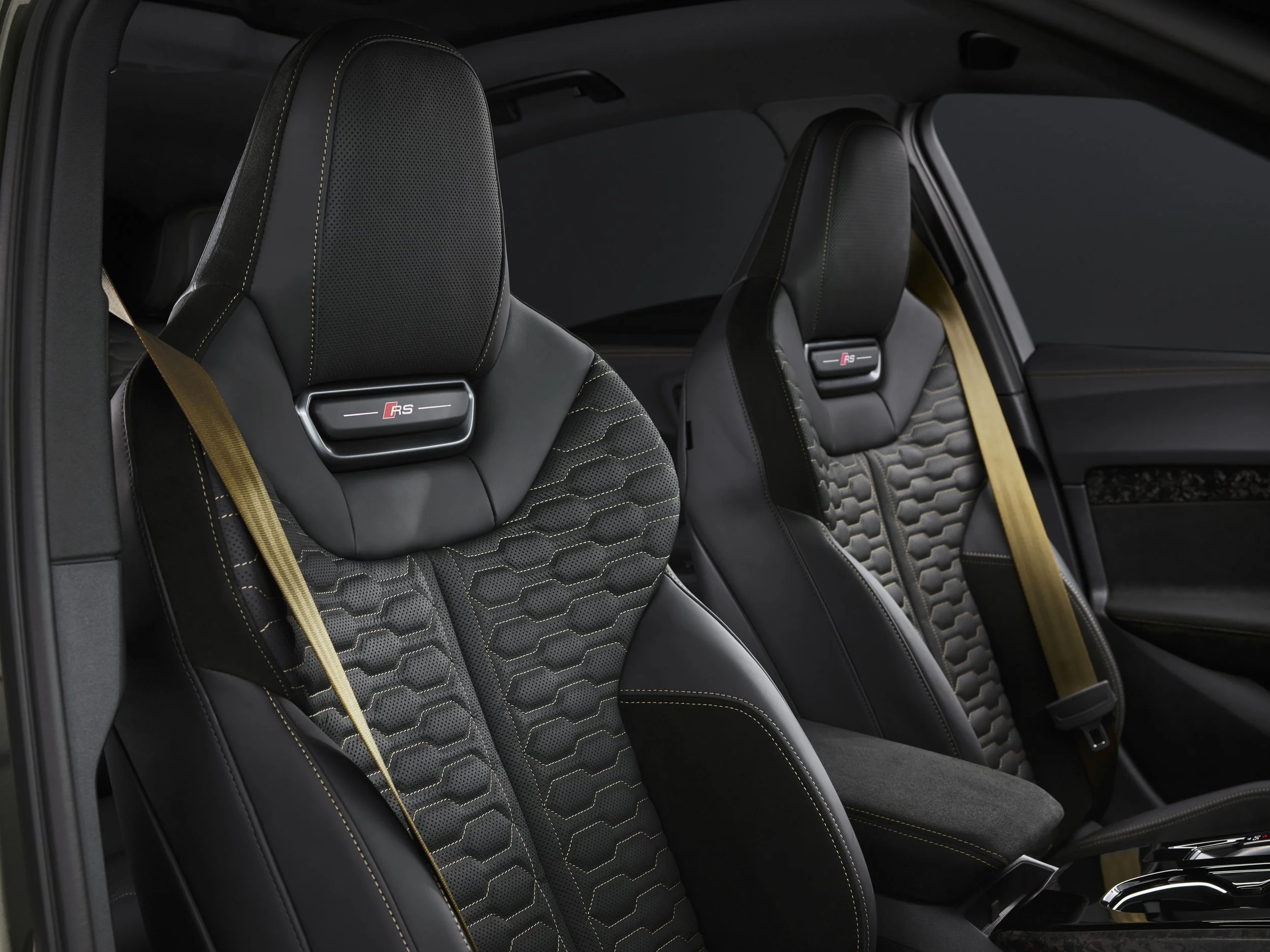
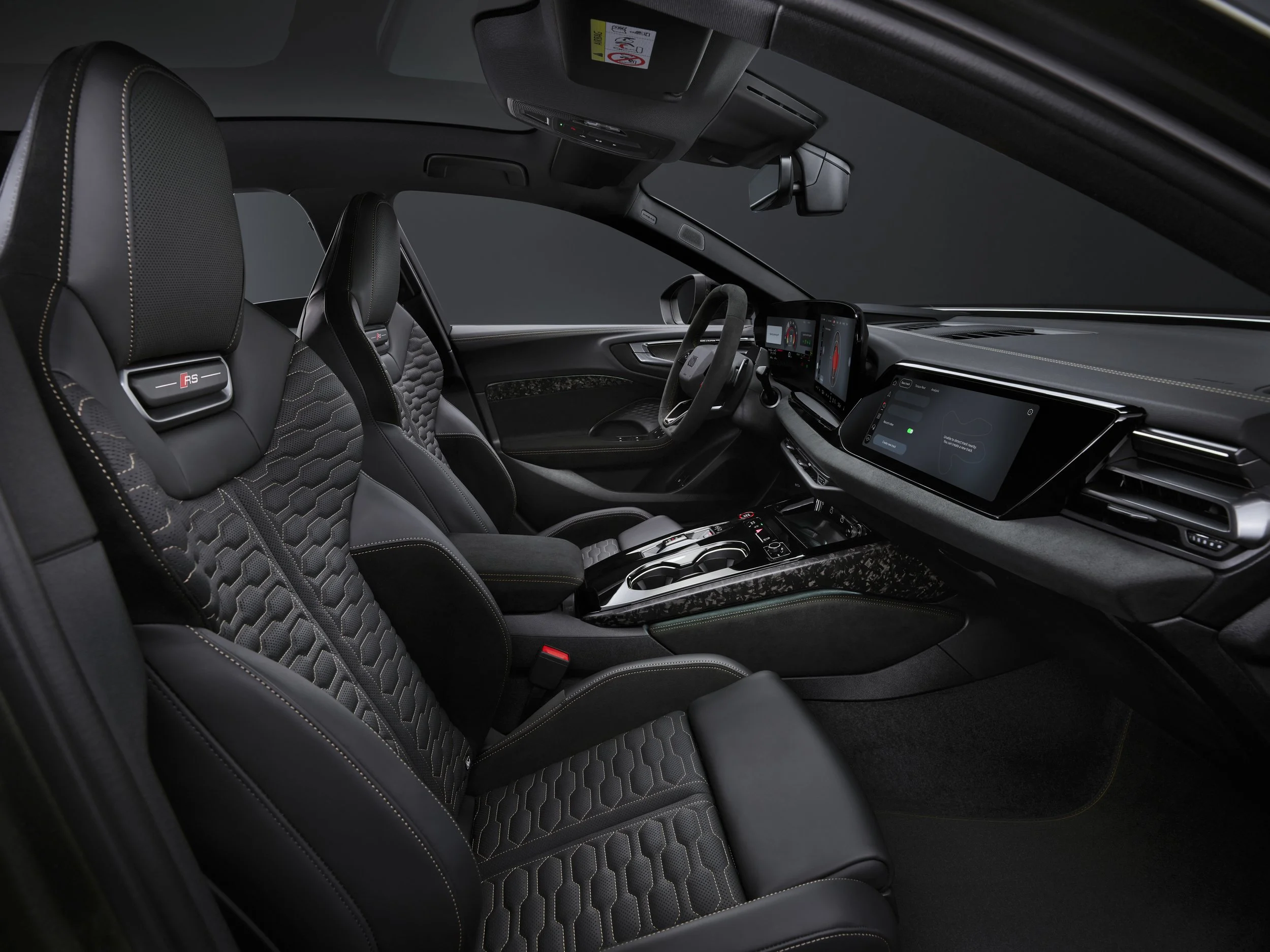
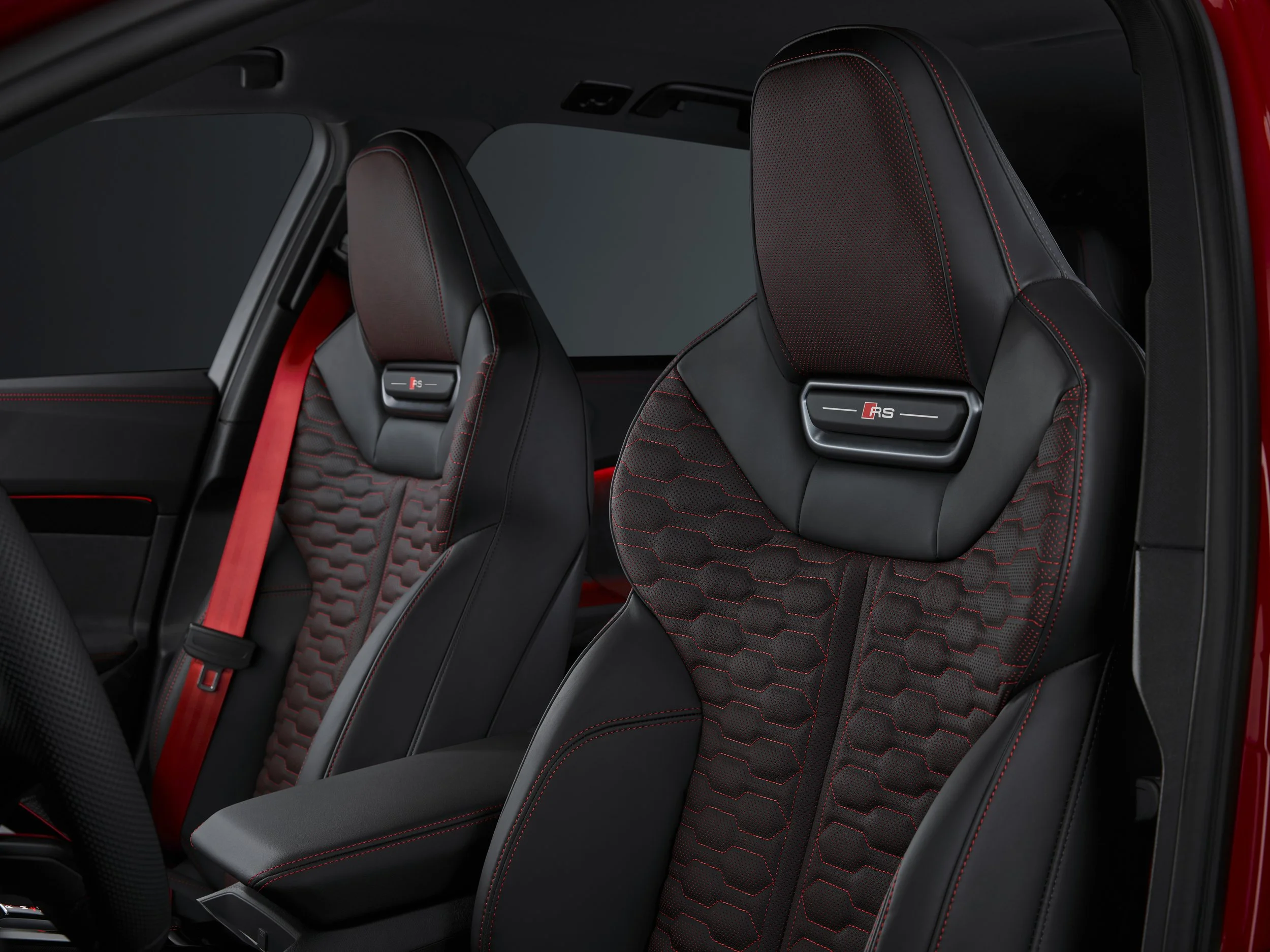
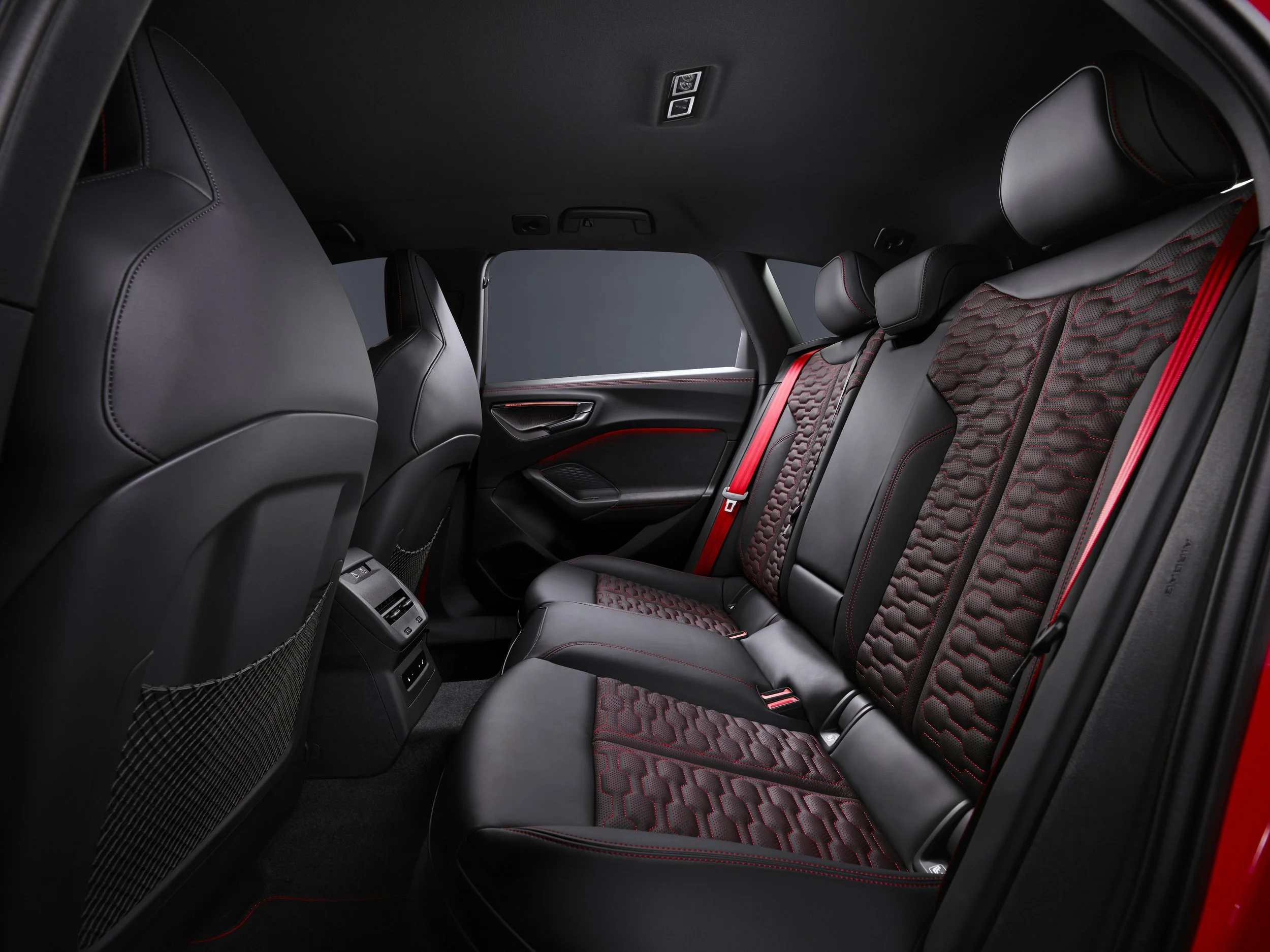
The all-new RS 5 interior delivers the focused sportiness associated with Audi Sport RS models. Sport seats plus with honeycomb quilting provide strong lateral support and high comfort on longer drives. Electric adjustment and standard massage functions support driver and passenger comfort on every journey.
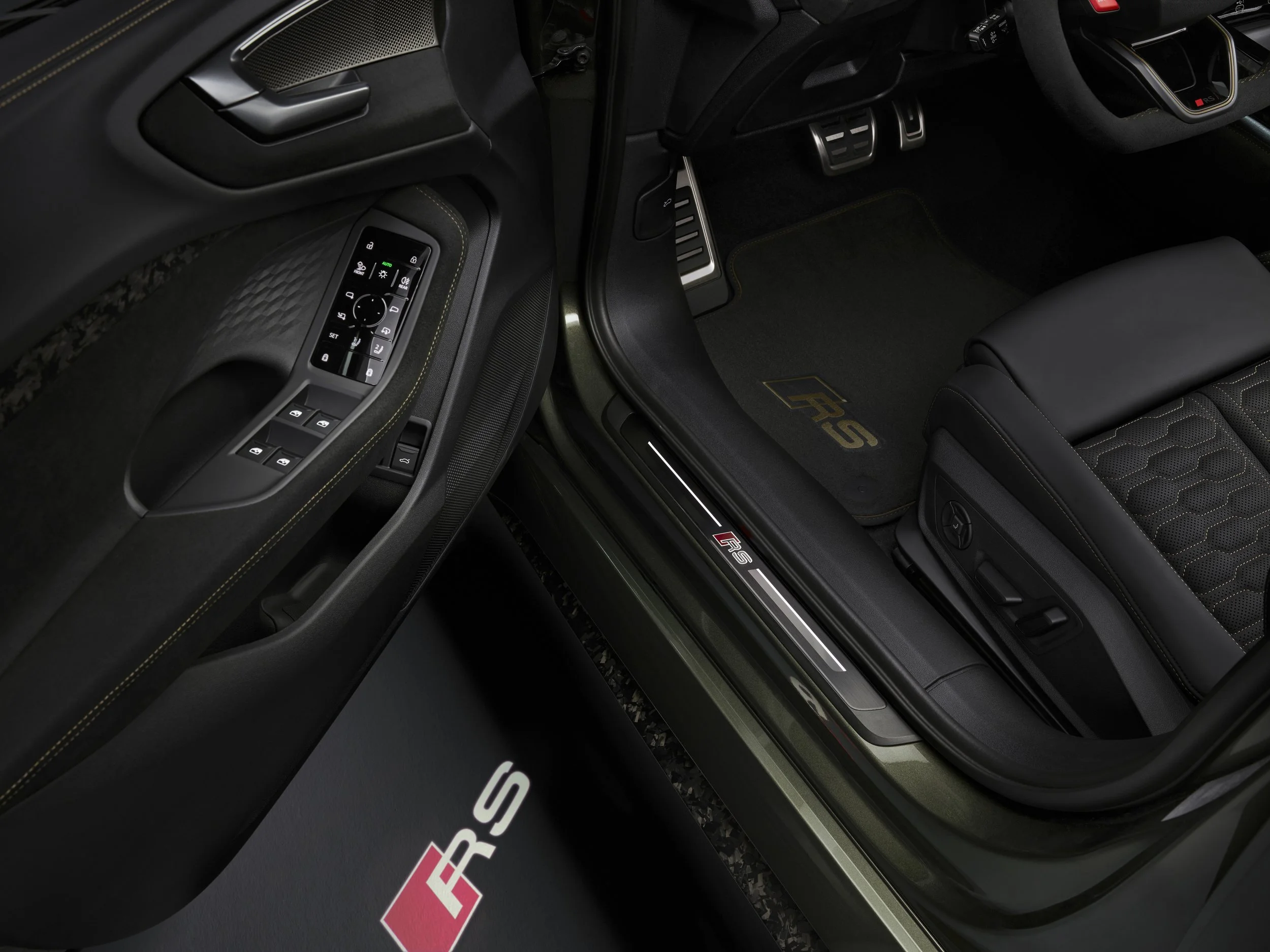
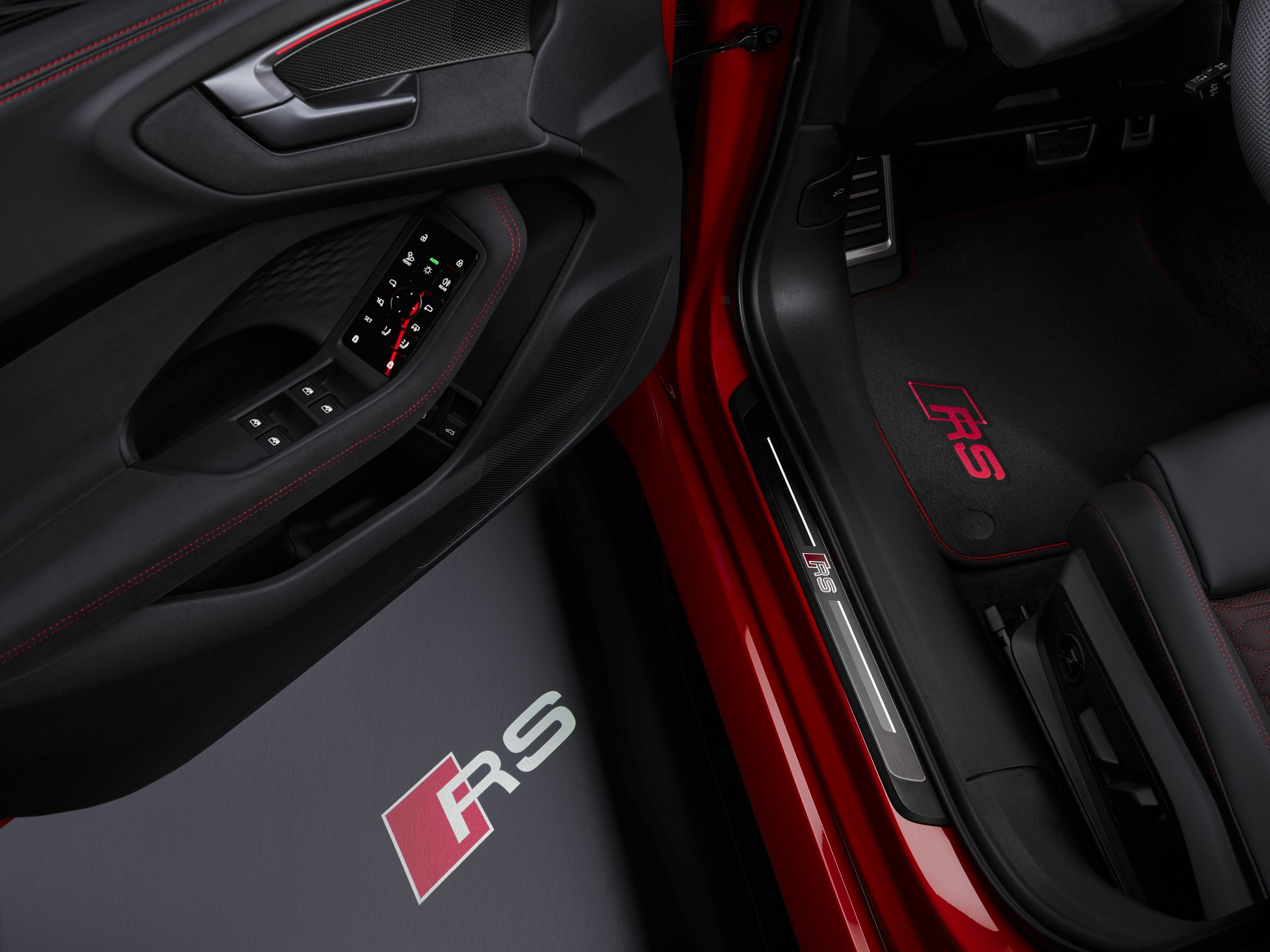
Customers can choose from five interior designs with distinct materials and colour schemes. Each design includes strong RS differentiation, including full-length colour-coordinated seat belts and RS logos on all floor mats matched to interior colour. Audi finishes the headlining in black across all configurations.
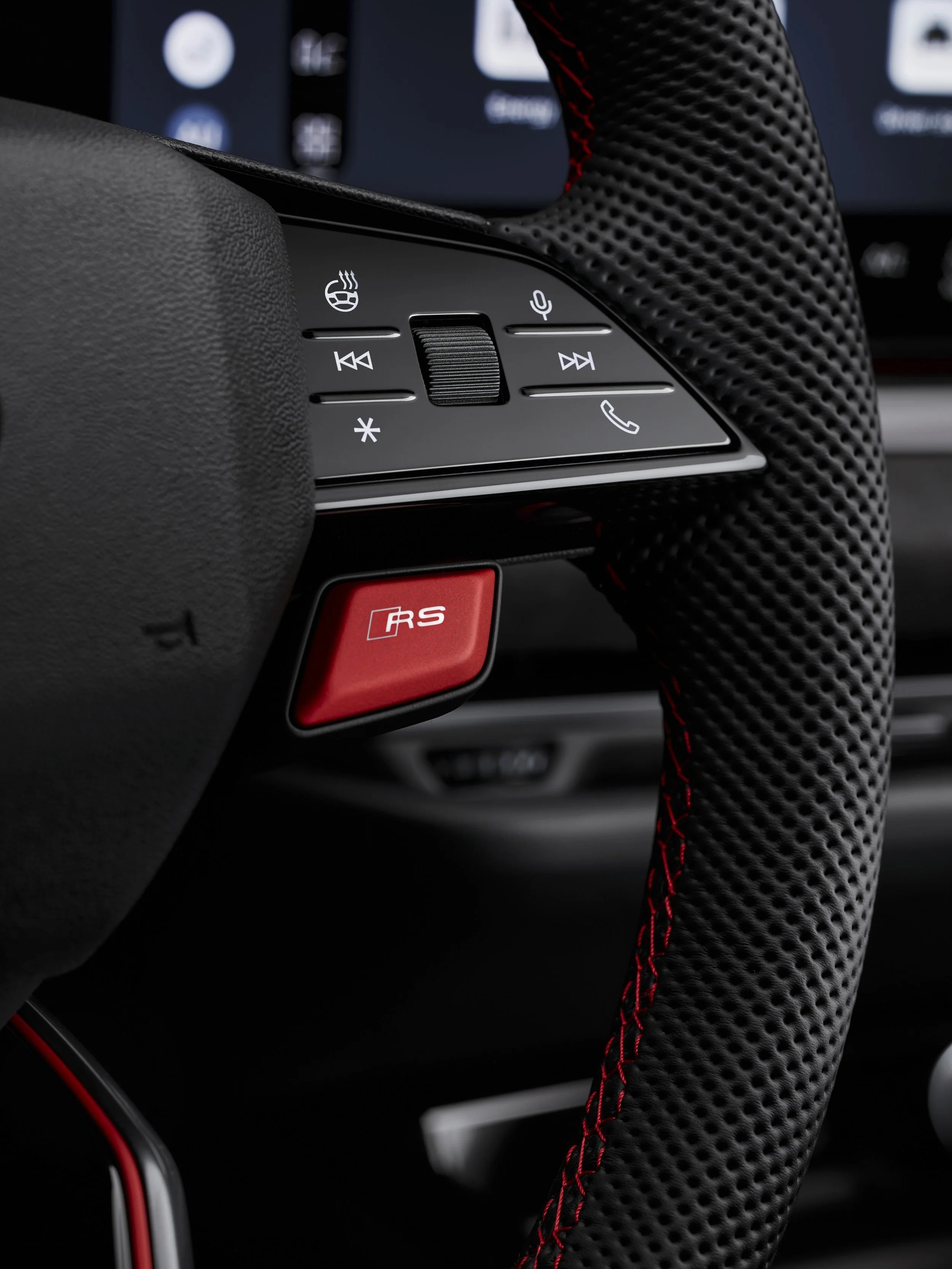
Audi trims the instrument panel, armrests and door panels in black Dinamica microfibre with a soft finish. The flat-bottom RS steering wheel matches the interior and uses perforated Nappa leather, plus a colour-coordinated 12 o’clock marker in smooth leather. The clasp on the lower spoke comes in red. Integrated RS satellite controls let drivers select RS drive modes and activate boost directly.
For the red interior, Audi offers a variant with dynamic colour accents. In this version, Audi finishes all interior elements except the seats in Dinamica deep black, including the steering wheel, knee pads, armrests, soft wraps the instrument panel, and door armrests.
Audi finishes highlight surfaces in dark metallic vanadium as standard. These surfaces include shift paddles, the Audi emblem and steering wheel clasp, door handles, door sill inlays, air vents, and the illuminated seat frame trim with RS logo, which remains exclusive to RS.
Audi offers several decorative inlays to complete the cabin, including open-pore carbon micro twill, aluminium rhombus in black lacquer, and carbon camouflage.
Audi Sport offers an optional Audi Sport package for customers who want more personalisation and a stronger performance look and feel. The package increases equipment across design, sound intensity, performance and customisation. It gives the front air intakes a more athletic look and sharpens the rear diffuser design. Audi Sport recommends Bedford green metallic for the exterior, and it reserves that colour for the package. The package includes an exclusive 21-inch wheel in black with an oval-cut finish (bicolour) and a satin matte coating. It also pairs with the optional ceramic brakes in the exclusive bronze colour variant. The package includes the RS sport exhaust system with matte-black pipes, delivering a distinctiveRS sound. The new RS 5 with the Audi Sport package reaches a top speed of 177 mph.
The package interior focuses on an athletic look. It accents the leather seats with Dinamica in deep black on the seat and backrest side bolsters, and it applies Dinamica deep black across the remaining interior surfaces, including the steering wheel. The seat stitching with honeycomb quilting, seat belts, floor mat stitching with RS logo, and the steering wheel with a specific 6 o’clock insert use this exclusive accent for the Audi Sport package.