Salzburg Design Porsche Carrera GT Factory Re-Commission
Salzburg, Austria, is famous for its baroque old town, the Salzburg Festival, Mozartkugeln, and an unmistakable Porsche racing livery. In 1970, Hans Herrmann and Richard Attwood delivered Porsche’s first overall victory at the 24 Hours of Le Mans in the vivid red-and-white Porsche 917 short-tail, starting number 23. Motorsport fans know this Sports Car World Championship prototype as the “Salzburg Design”. The Porsche Alpenstraße dealership in the south of the city prepared two Porsche 917s for the endurance classic on the Sarthe, including the winning car.
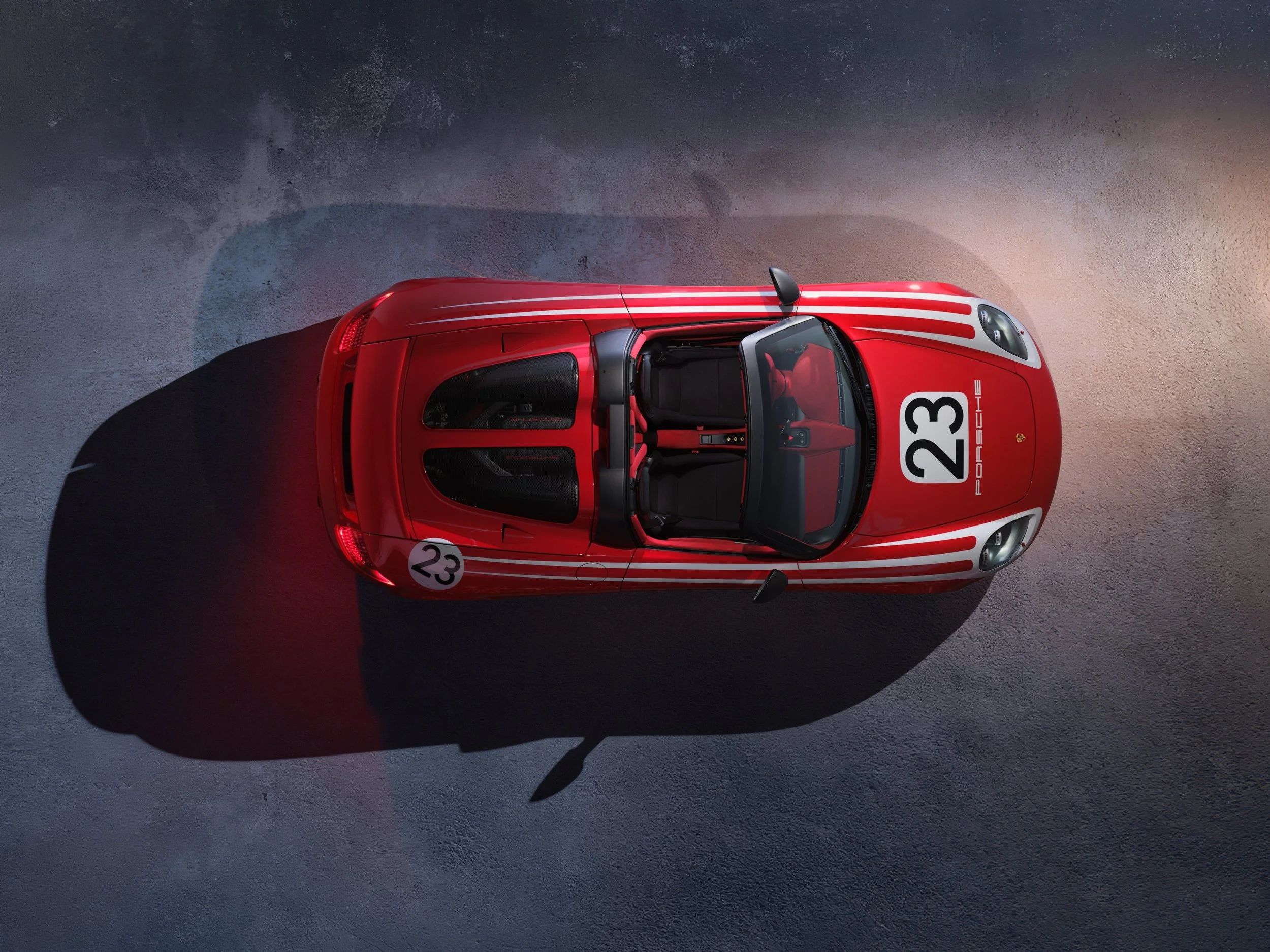
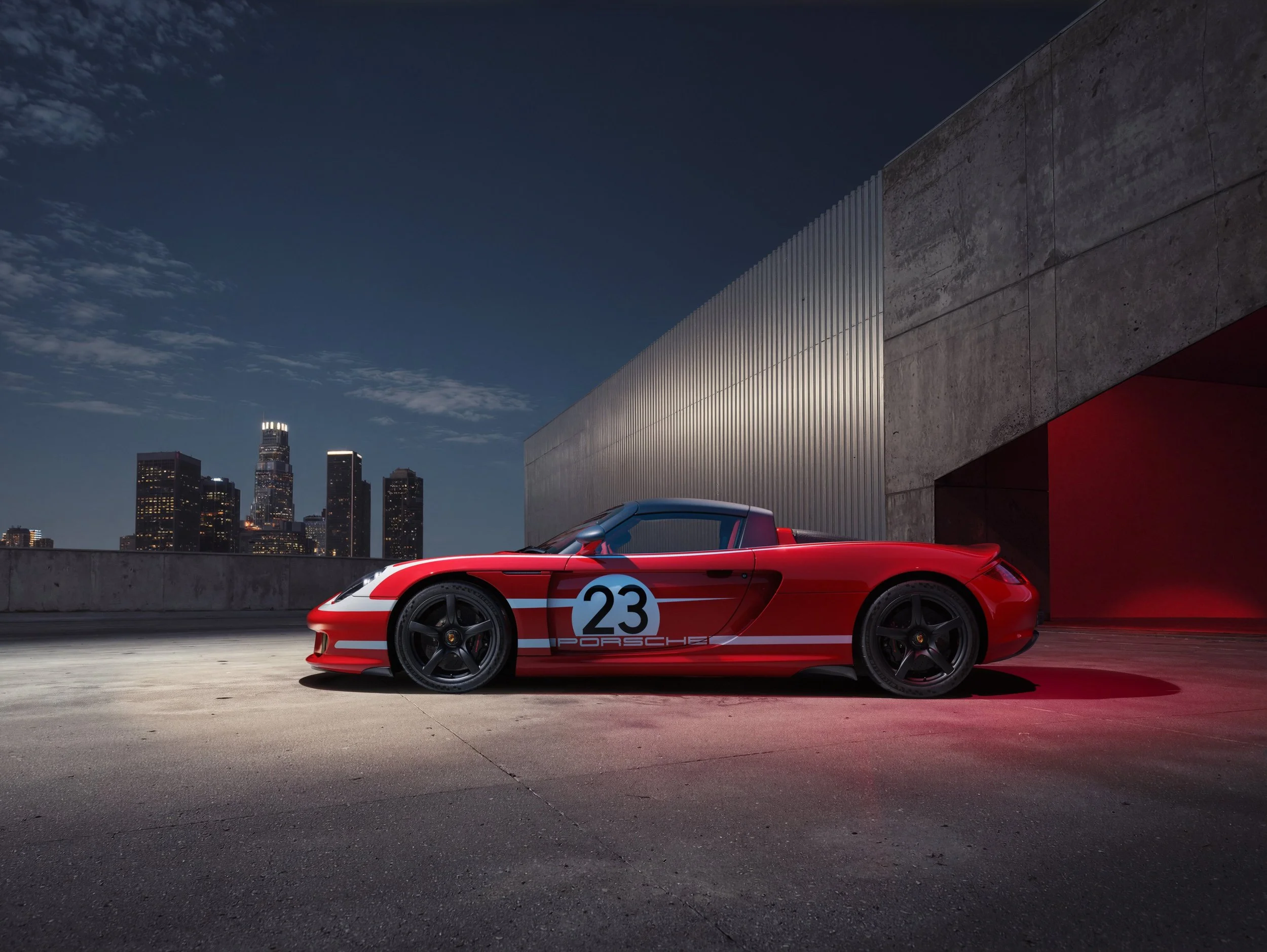
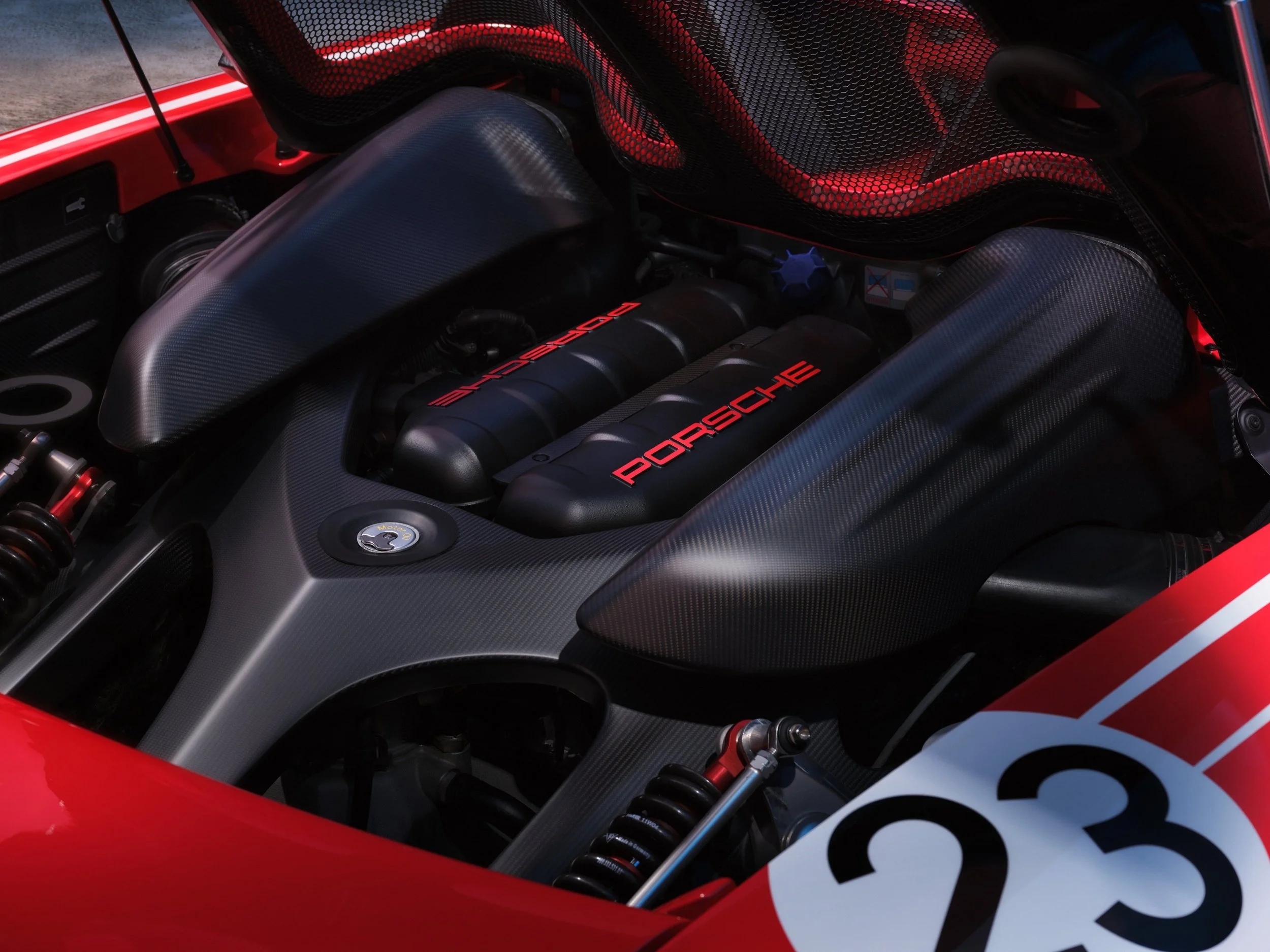
Porsche has now revived that legendary Le Mans look through a one-off Factory Re-Commission project. Porsche enthusiast Victor Gómez commissioned the Sonderwunsch programme to reimagine his 2005 Porsche Carrera GT in Salzburg Design colours. The team completely dismantled the car, rebuilt key technical components, including the V10 engine, and refinished the carbon parts. They then transformed the Carrera GT from its original silver finish into the famous red-and-white scheme at the customer’s request.
The project demanded painstaking design work because the Carrera GT shares neither the geometry nor the proportions of the 917, and its panel gaps follow a very different rhythm. Porsche designers began with sketches, then produced renderings to refine the line flow. To verify how the stripes would move across the bodywork, designer Grant Larson and his colleagues masked the Carrera GT with tape before they created paint templates. The painters applied the Indian Red and white finish by hand, added the iconic starting number 23, and sealed the result beneath a transparent protective film. Gómez plans to drive the Carrera GT on the roads of his Puerto Rican homeland, so the protection matters. The managing director of a large automotive trading company visited Porsche in Germany several times to closely monitor the work. Gómez: "The Sonderwunsch experts worked with great passion and attention to detail. Now I own a Carrera GT in new condition, with zero kilometres on the odometer, and outside and inside, according to my personal ideas."
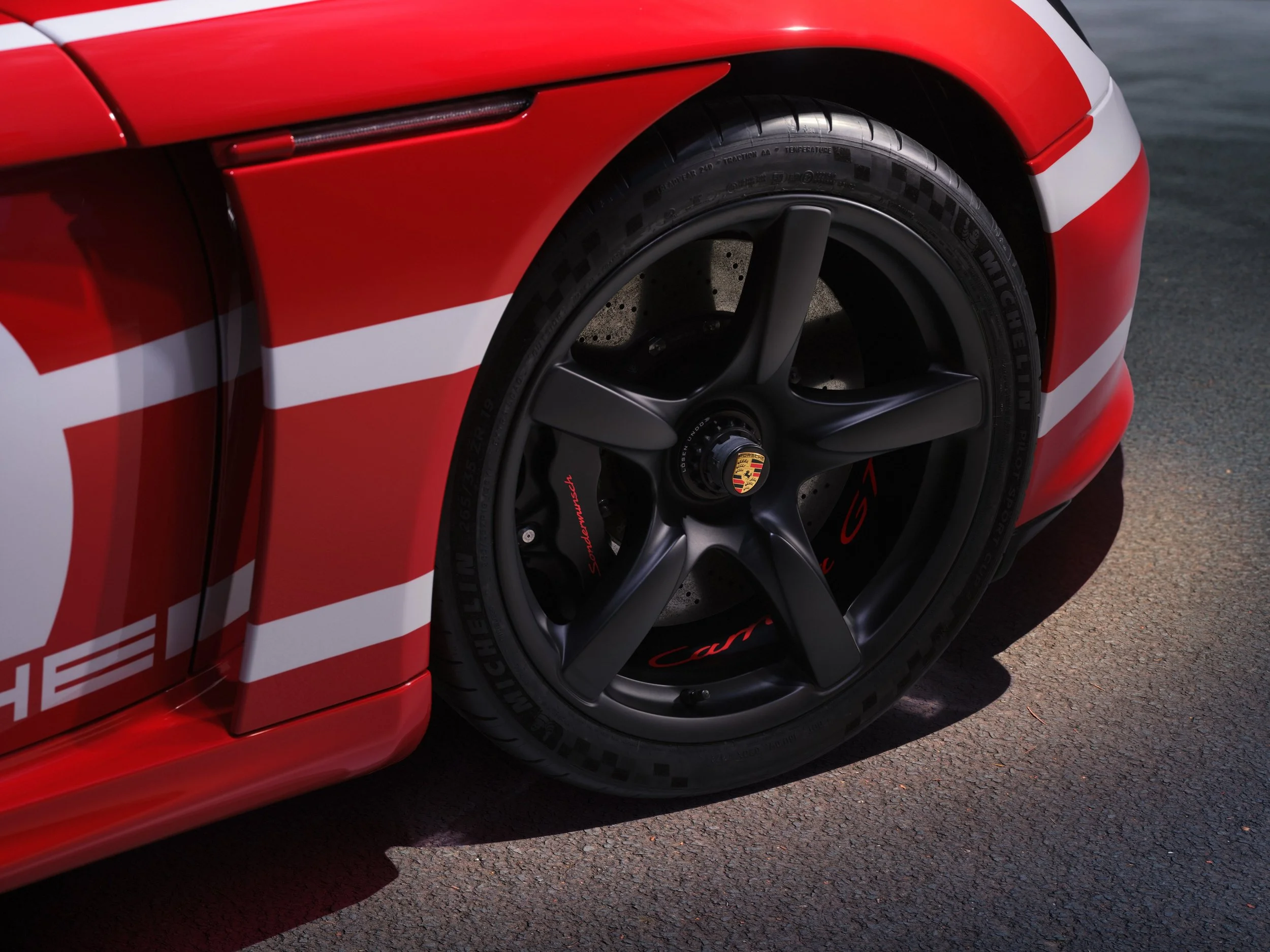
The exterior details sharpen the contrast between Salzburg Design and its matt-black carbon elements. Porsche applied the finish to the roof halves, the A and B pillars, the exterior mirror caps, the front air duct and the rear diffuser. The team anodised the engine cover grilles in matt black, while black-painted alloy wheels in the original five-spoke design carry a coloured Porsche crest.
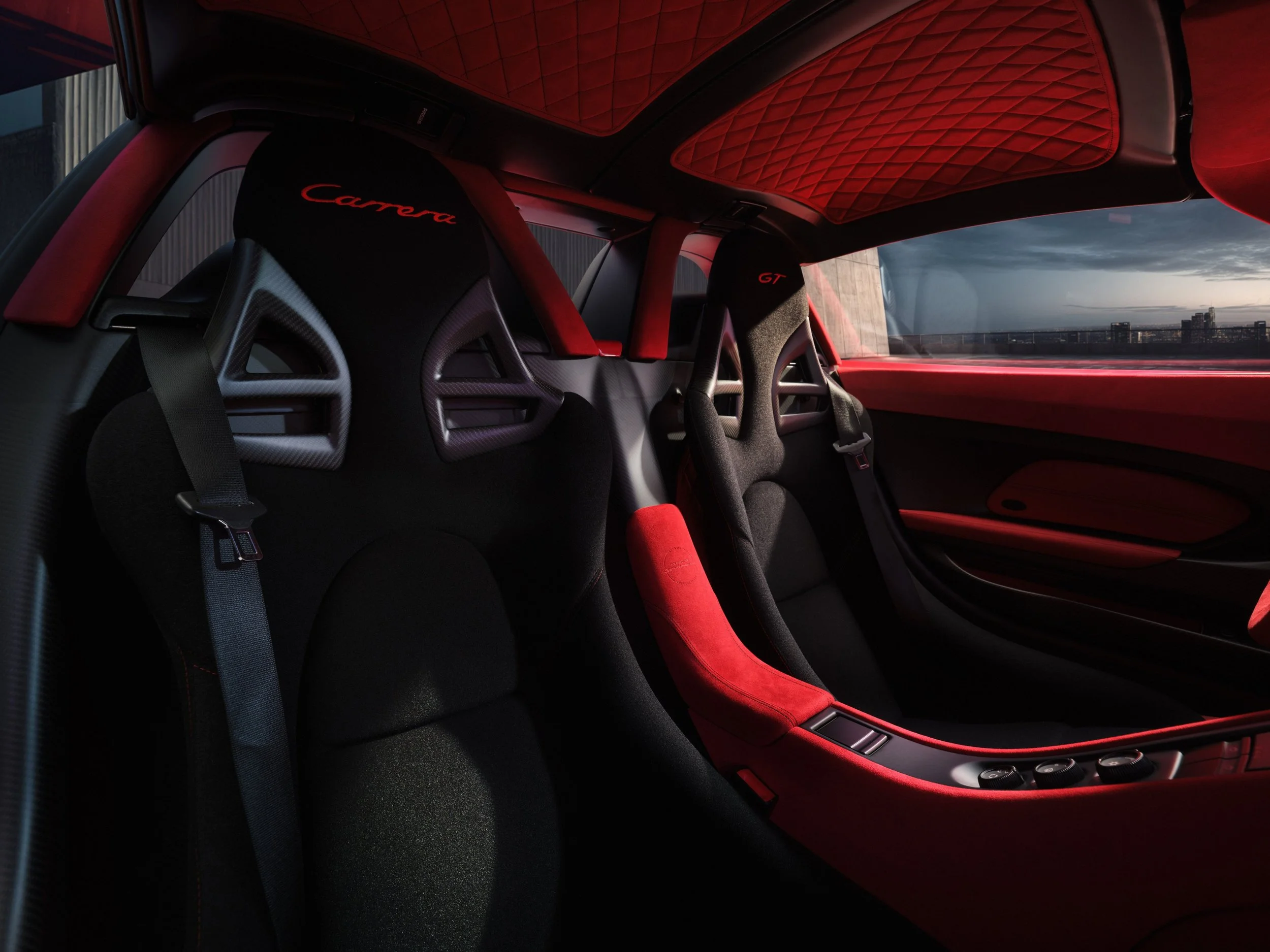
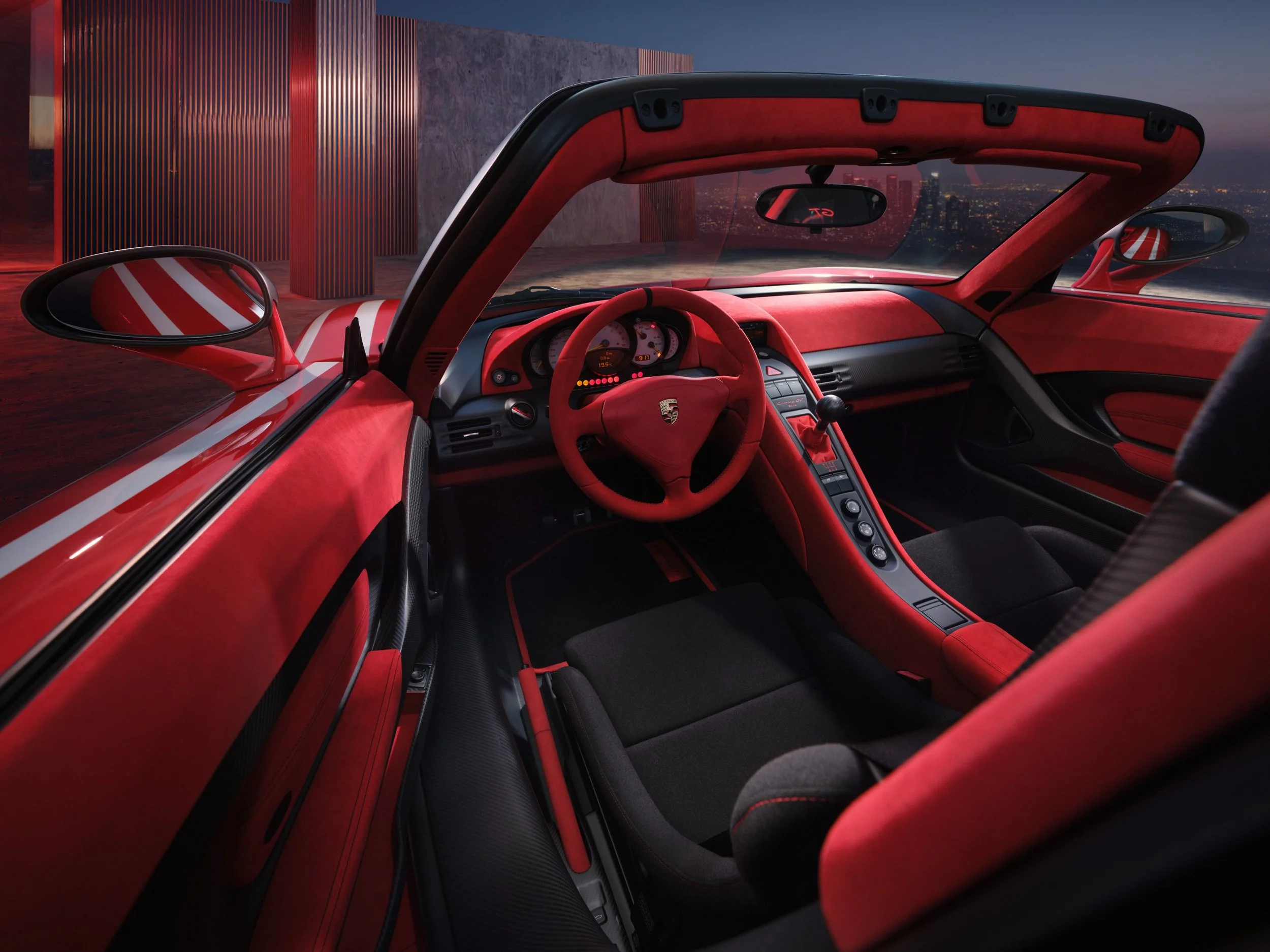
Inside, Gómez specified a bold blend of red Alcantara and matt carbon to echo the car’s motorsport roots. Porsche’s upholstery specialists trimmed large areas in Alcantara Indian Red, including sections of the dashboard and door panels, the steering wheel rim and the centre console. They even fitted the front luggage compartment trim and the luggage set in the same suede-like material to reinforce the theme. The cabin also features matt carbon as a deliberate counterpoint, including the seat shells, the dashboard air-vent surrounds and the instrument cover. For the seat centre panels, side bolsters and headrests, the team chose black FIA textile from the 918 Spyder, a flame-resistant motorsport fabric. That nod fits the story, as the 917 design model also carried two seats, which endurance racing regulations required at the time.
Porsche offers Factory Re-Commission as an exclusive part of the Sonderwunsch programme, providing factory-level technical overhaul for cars they already own, including classic models. Porsche specialists carry out the work at the factory and return the vehicle to a documented “zero kilometre condition”. Alongside the mechanical restoration, Porsche redesigns the exterior and interior colour concept, and it can retrofit bespoke colours and materials to match an owner’s vision.
Porsche develops each commission in close collaboration with its designers and engineers. The experts assess a customer’s ideas for feasibility, refine the details together, and secure technical approval before they commit to the final specification. This approach keeps every change aligned with Porsche quality standards, while the company archives updated vehicle data so Porsche can trace every modification transparently.
The Porsche Carrera GT arrived in 2003 as one of the world’s fastest production cars, reaching 330 km/h. Porsche built it around a carbon-fibre chassis and a mid-mounted engine rooted in pure racing technology. Porsche originally developed the naturally aspirated V10 for the 24 Hours of Le Mans, then adapted it for road use with a 5.7-litre capacity in the Carrera GT. Its 450 kW (612 hp) output pairs with a kerb weight of just 1,380 kilograms, which helps explain why the Carrera GT remains a modern icon for performance car enthusiasts and Porsche collectors alike.