Bugatti W16 Mistral 'Blanc Éternel': Porcelain Meets Design
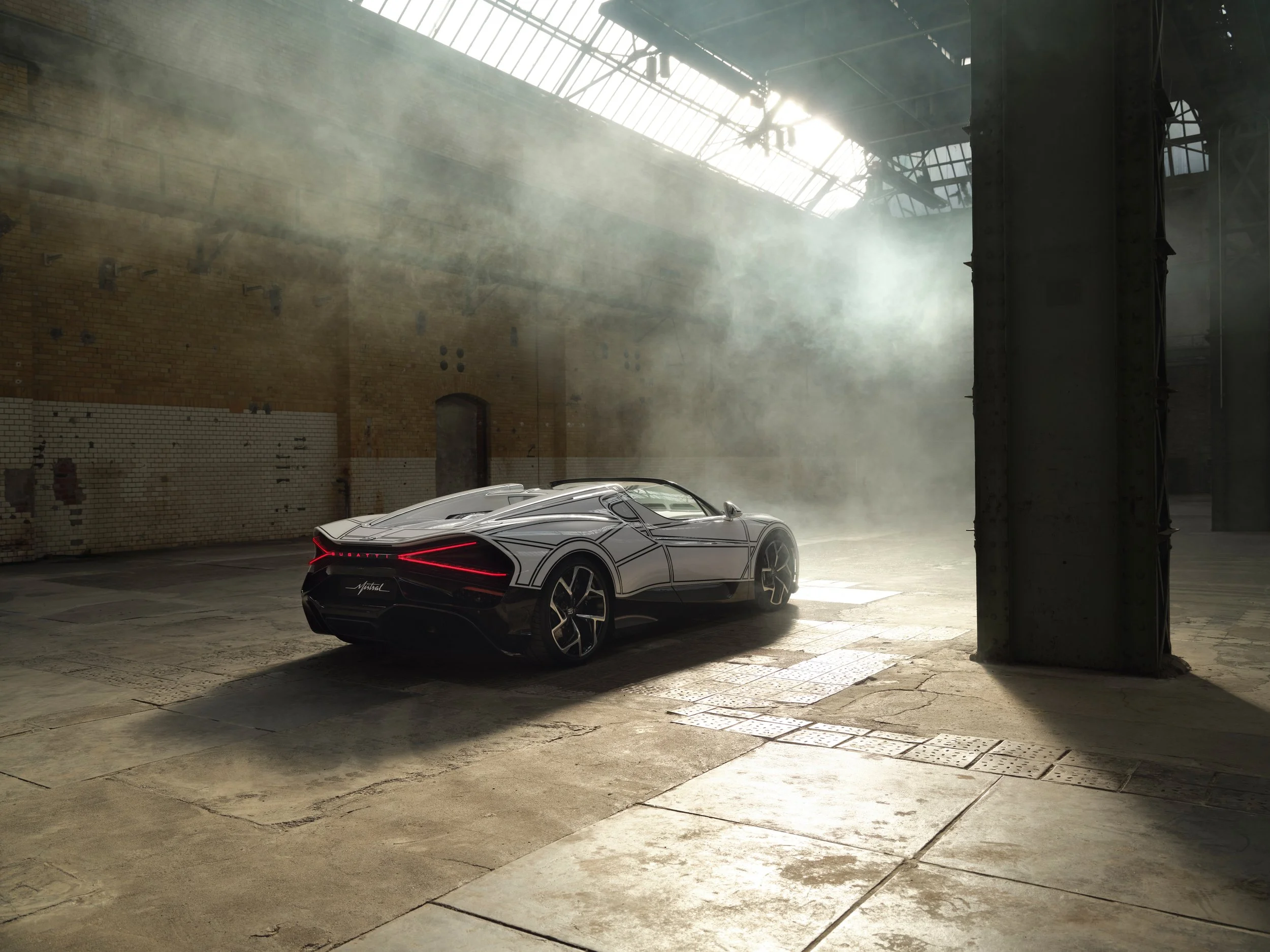
Bugatti Sur Mesure turns the sculptural form of the Bugatti W16 Mistral roadster into an exquisite canvas, shaped around the finest expressions of artistry and craftsmanship. The Bugatti W16 Mistral 'Blanc Éternel' unites the precision of digital design with painstaking handcraft and the centuries-old porcelain expertise of Königliche Porzellan-Manufaktur Berlin, creating a one-of-one design that embodies this philosophy through its unique, exceptionally delicate detailing.
The story of 'Blanc Éternel' reaches back fifteen years to a poignant milestone in Bugatti's modern history. Working with Königliche Porzellan-Manufaktur Berlin (KPM), Bugatti created 'L'Or Blanc', a porcelain-inspired interpretation of the Veyron Grand Sport and one of the marque's earliest expressions of its highly individualised approach to automotive design.
'L'Or Blanc' stood out for its unwavering commitment to uncompromising quality and the handcraft of exceptional materials. Frank Heyl, now Bugatti's Design Director, personally worked on this first creation, applying the fluid lines of its distinctive design directly onto the car by hand.
The aesthetic took its starting point from an exquisite vase that the celebrated Italian designer Enzo Mari created for KPM. Finished in white porcelain and decorated with flowing blue lines, the vase displayed the apparent simplicity and confidence of its brushwork. Its continuous royal blue strokes inspired Bugatti's designers to explore how a similarly pure graphic language could translate onto the complex, sculptural volumes of a hypersports car.
The answer came from the lines of light that automotive designers and quality specialists use to examine a vehicle's surfaces. Reflected across the body, these lines reveal every curve and otherwise imperceptible imperfection. On 'L'Or Blanc', Bugatti's craftspeople transformed them into an expressive composition, fastidiously applying each line to trace and celebrate the car's form.
Fifteen years later, Bugatti and KPM return to this shared story as the W16 era closes. Rather than recreating the celebrated reflection-line aesthetic, though, the design teams chose to advance the idea, honouring its origins while showing how the process of designing a Bugatti has evolved.
Bugatti developed the W16 Mistral through an entirely digital design process, since clay models are no longer necessary to form and refine a vehicle. Within the digital environment, designers built the Mistral's sculptural form from a network of precisely controlled surfaces called NURBS (Non-Uniform Rational B-Splines).
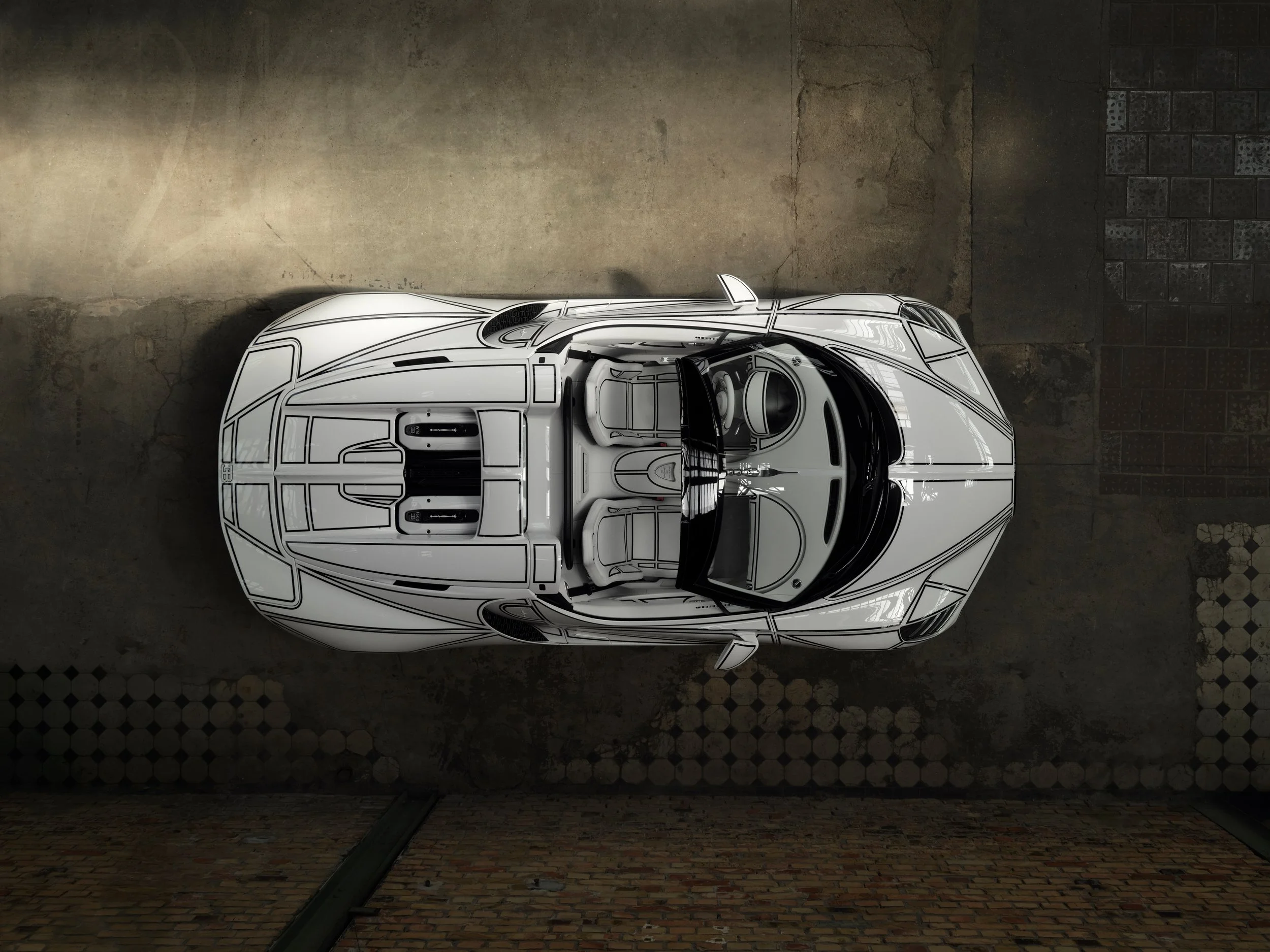
Together, these individual digital elements create the seamless volumes that combine to form the finished roadster. For 'Blanc Éternel', this normally invisible patch layout becomes the foundation of the exterior artwork.
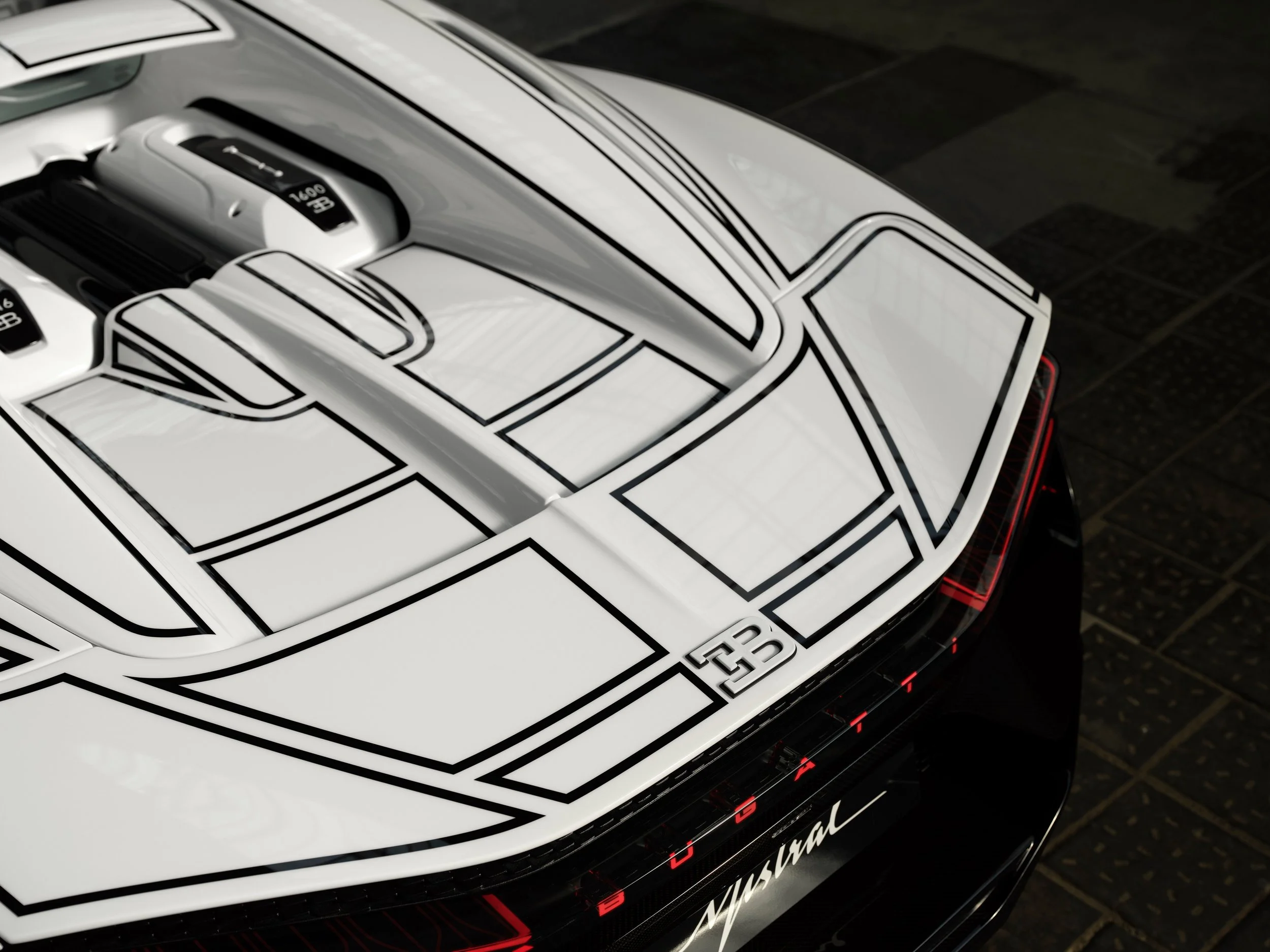
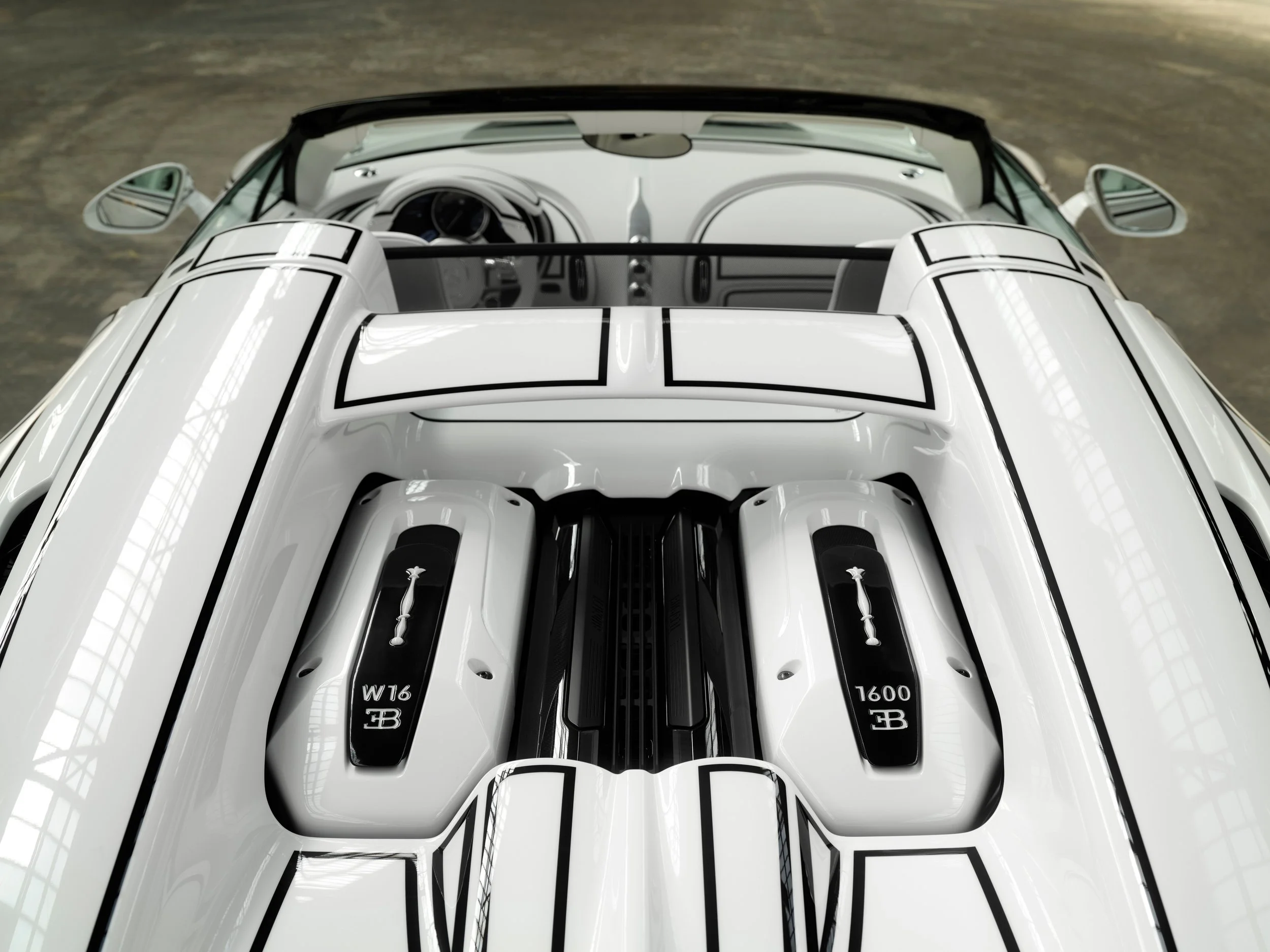
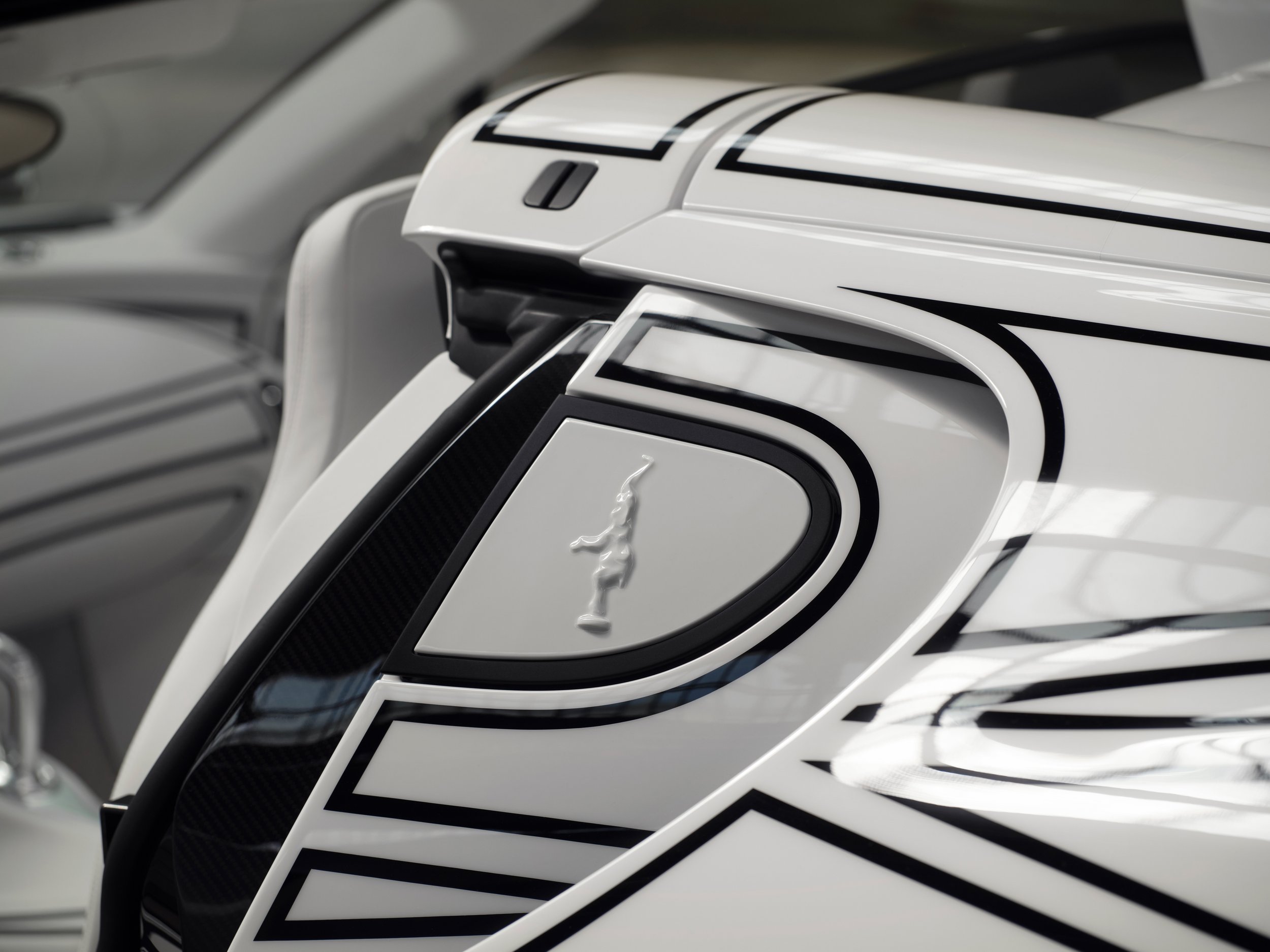
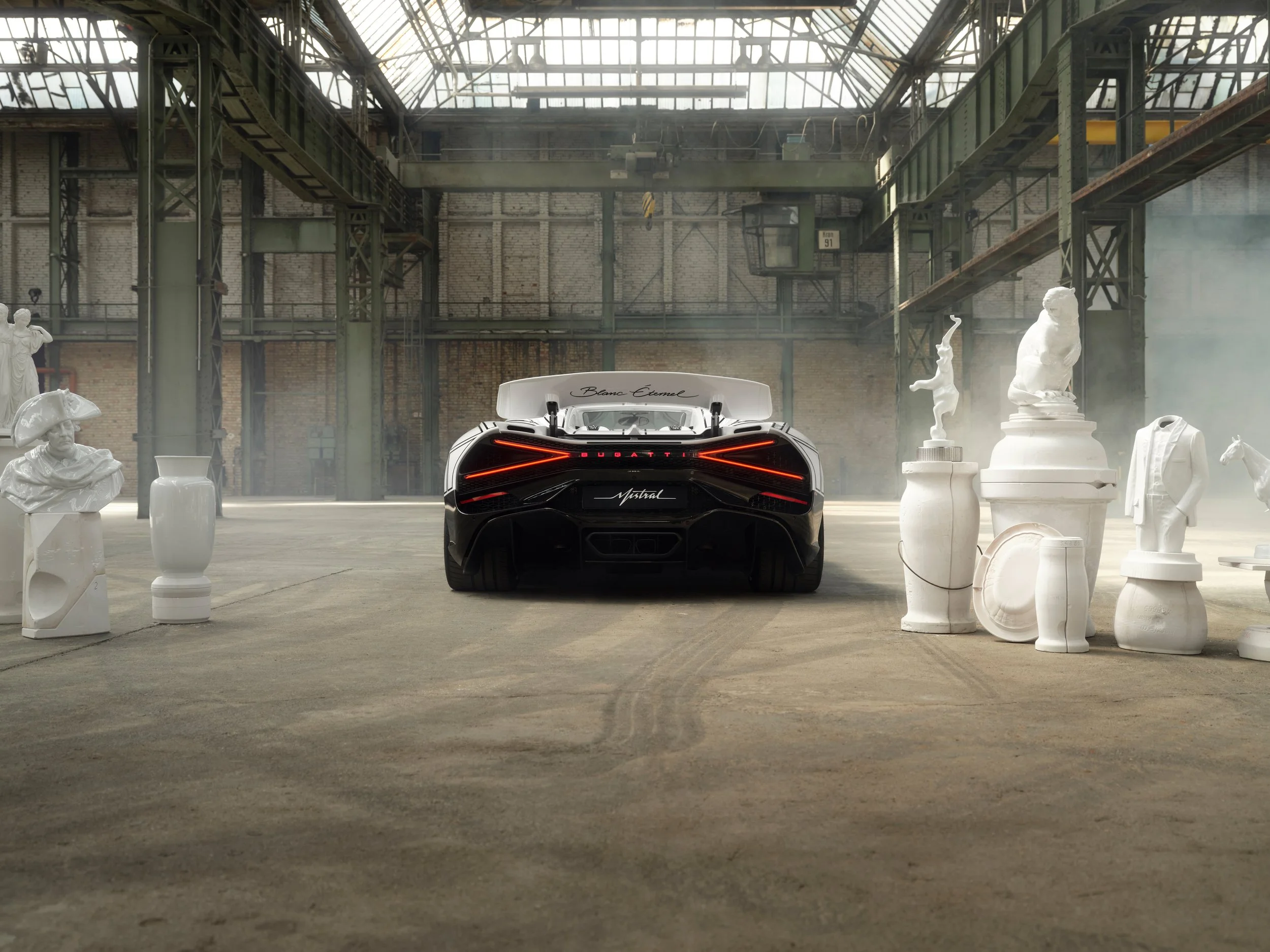
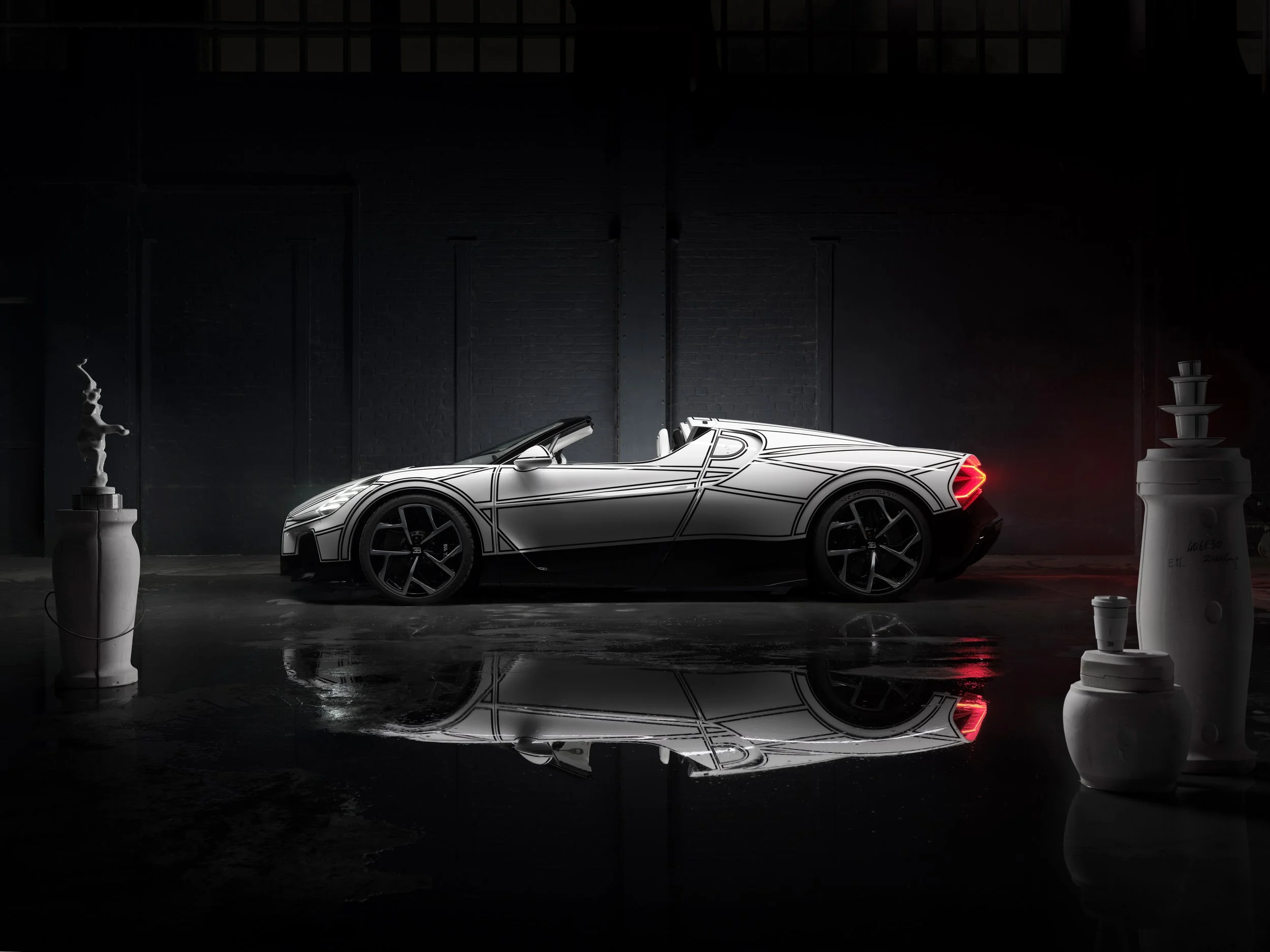
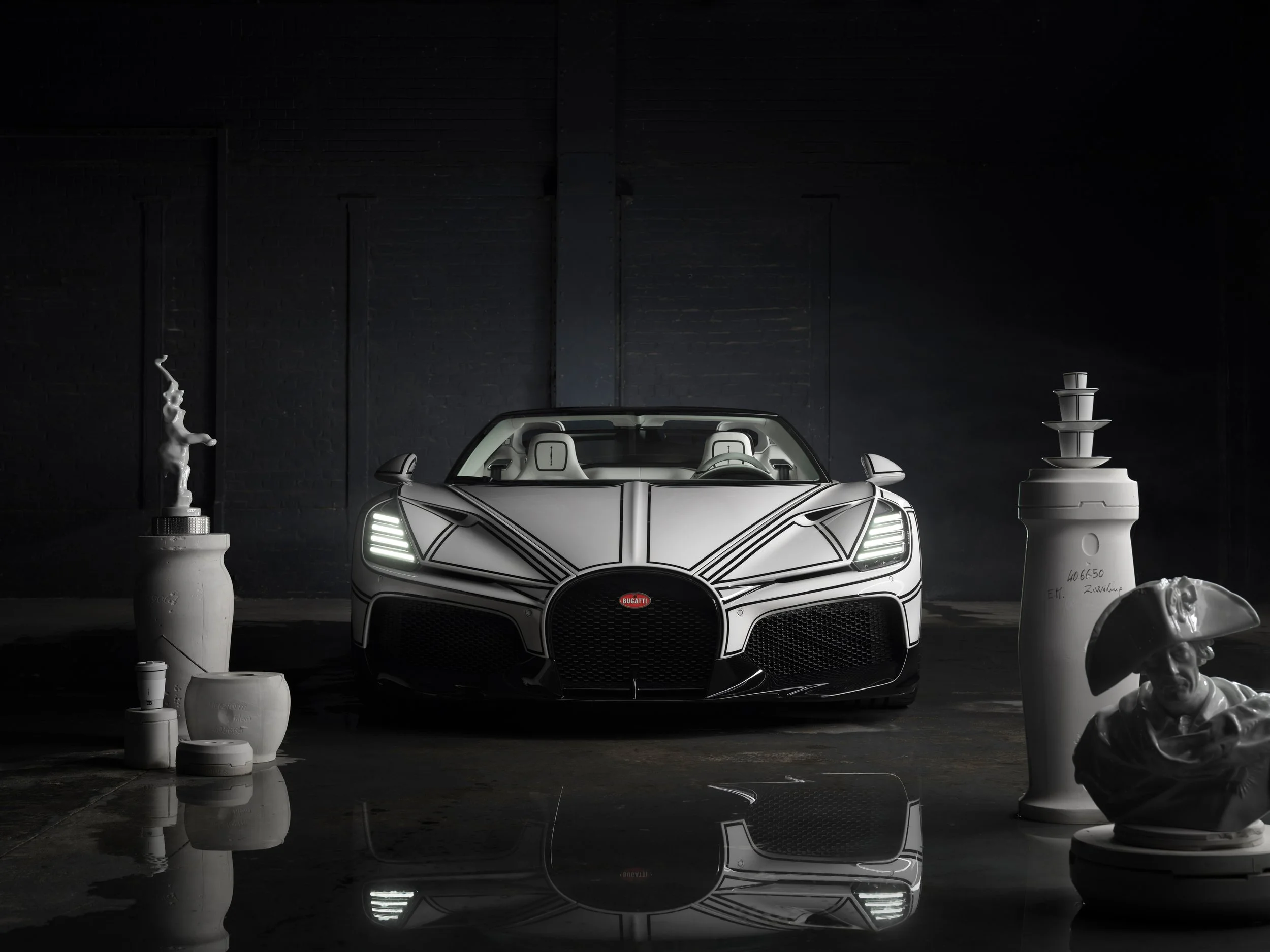
Fine black lines map the underlying digital surface layout of the W16 Mistral, flowing across the bodywork and revealing the geometric logic behind its seemingly effortless form. In this striking dance of design and duality, the sharp contrast of black against white reflects the clear visual language of digital modelling, while the name 'Blanc Éternel' evokes both the perpetual beauty of pure white porcelain and the enduring place of the W16 within Bugatti's history.
The result serves as a fitting bookend to an incomparable era of engineering. The Veyron established the W16 as an automotive icon, and the W16 Mistral represents its final road-going expression. 'Blanc Éternel' unites the beginning and culmination of that journey through a shared celebration of design, craftsmanship and porcelain.
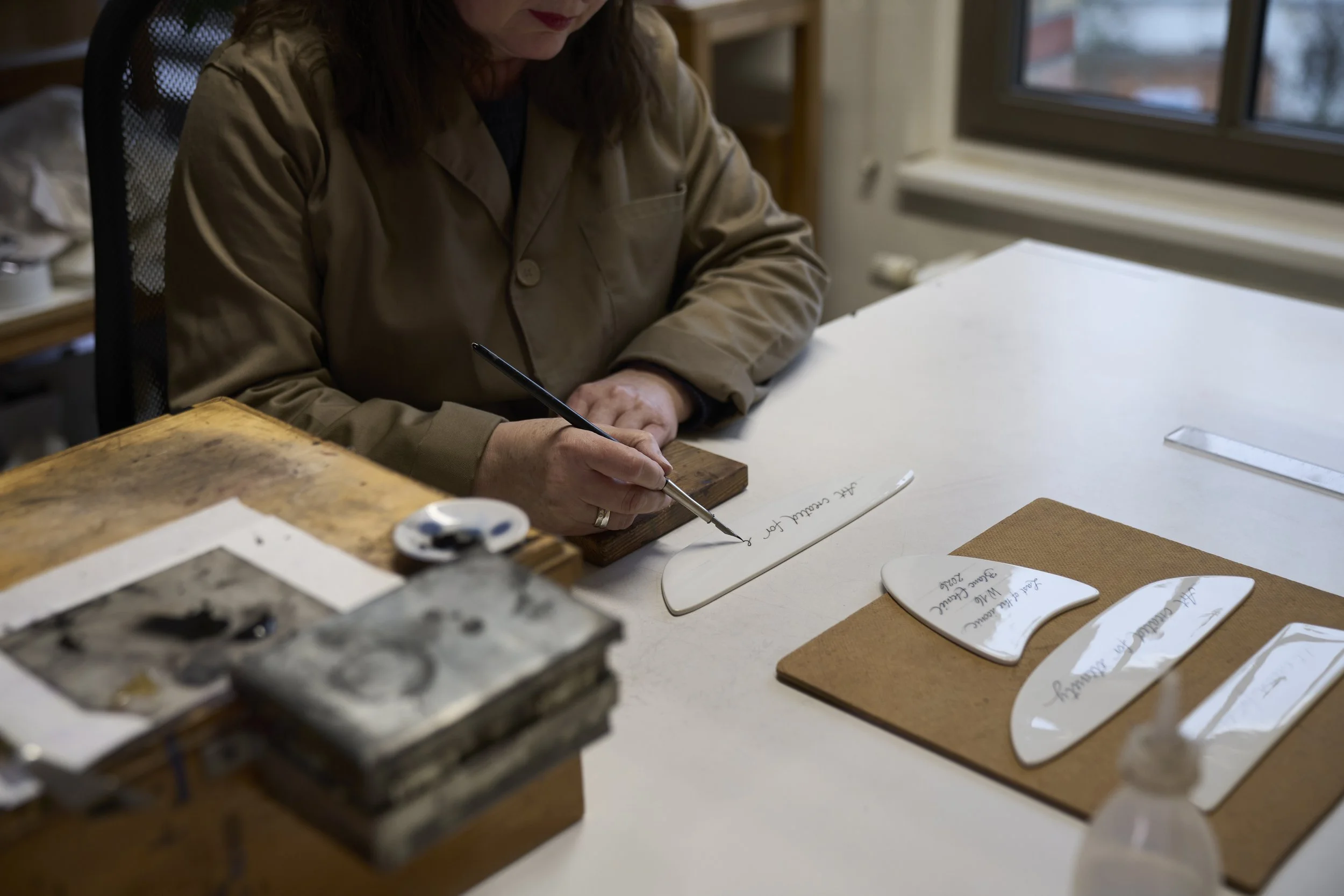
Despite the digital origins of its graphic composition, the execution of 'Blanc Éternel' is unmistakably human. Although no clay model existed on which to position and refine the graphic, craftspeople still had to tape the finished vehicle meticulously in preparation for painting. They applied the lines directly to the body of the W16 Mistral itself, transforming the digitally outlined concept into a lovingly handcrafted reality.
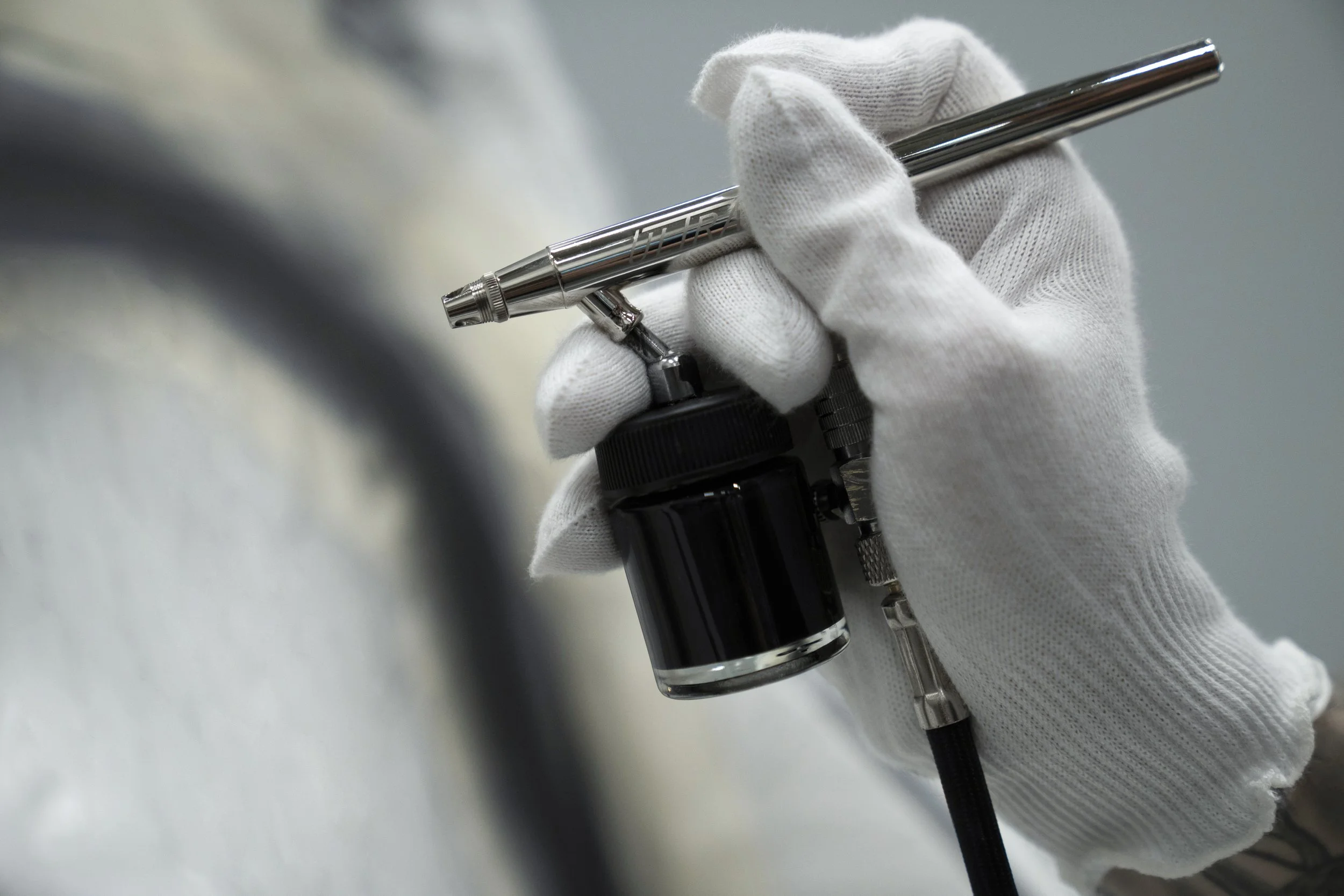
Craftspeople first finish the body in pure white, then carefully sand and prepare its surfaces. They then position every black line by hand using precisely applied tape, counter-mask the surrounding areas, remove the original lengths of tape to expose the intended design, and spray the resulting channels in black.
The result is an intricately painted composition that demands measured patience and an instinctive understanding of how each line must travel across the car's three-dimensional form. The digital origins of the design may have transformed the way Bugatti conceived the vehicle, but its physical realisation still relied on the dexterity and judgement of Bugatti's craftspeople.
This interplay of black and white directs the eye across the W16 Mistral's signature features, from its reimagined horseshoe grille and sculpted front profile to the rising C-line, dramatic air intakes, and unmistakable X-shaped taillight architecture. Each surface appears both artistically expressive and technically exposed, as though the digital conception of the car has permanently imprinted itself upon its physical form.
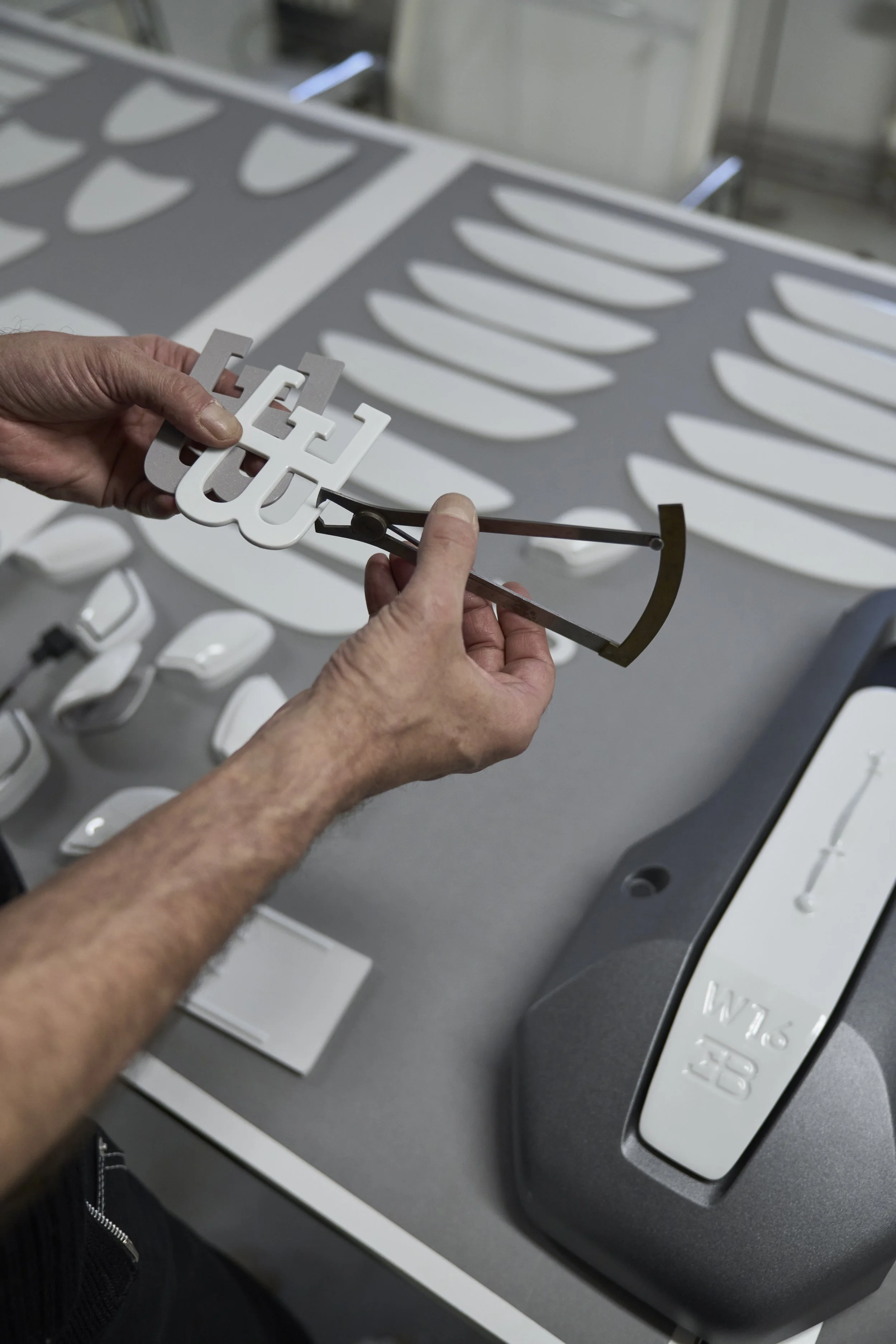
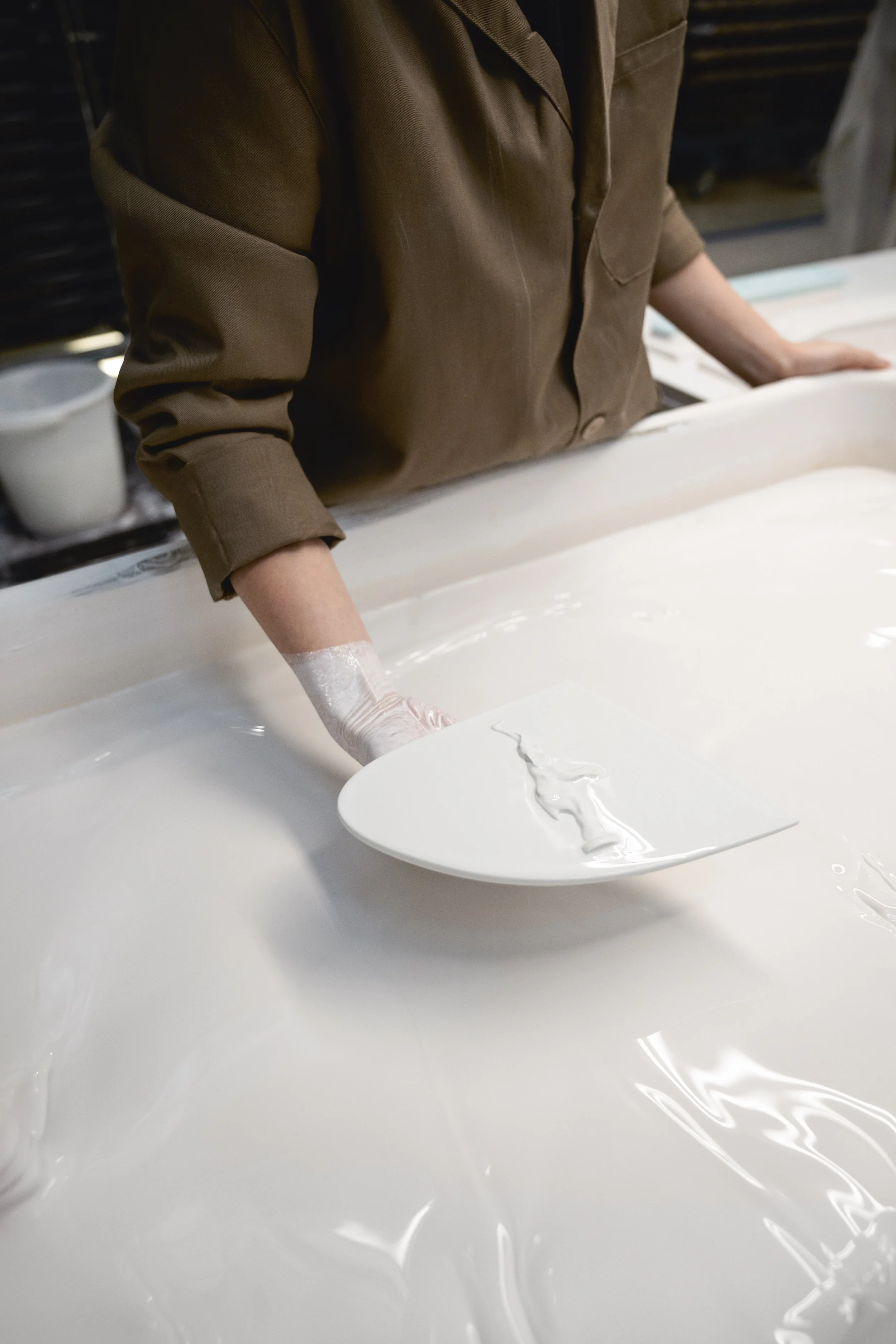
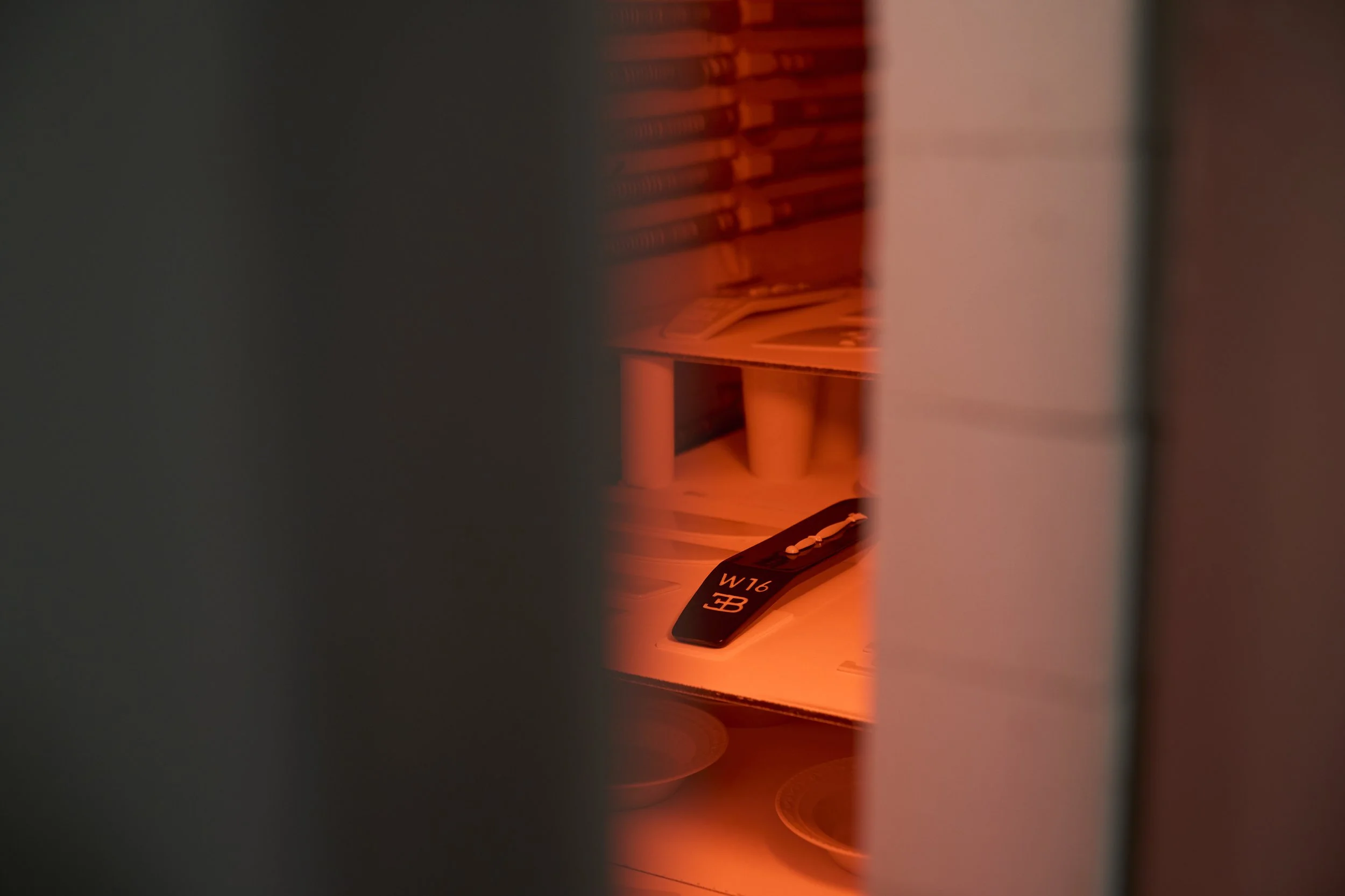
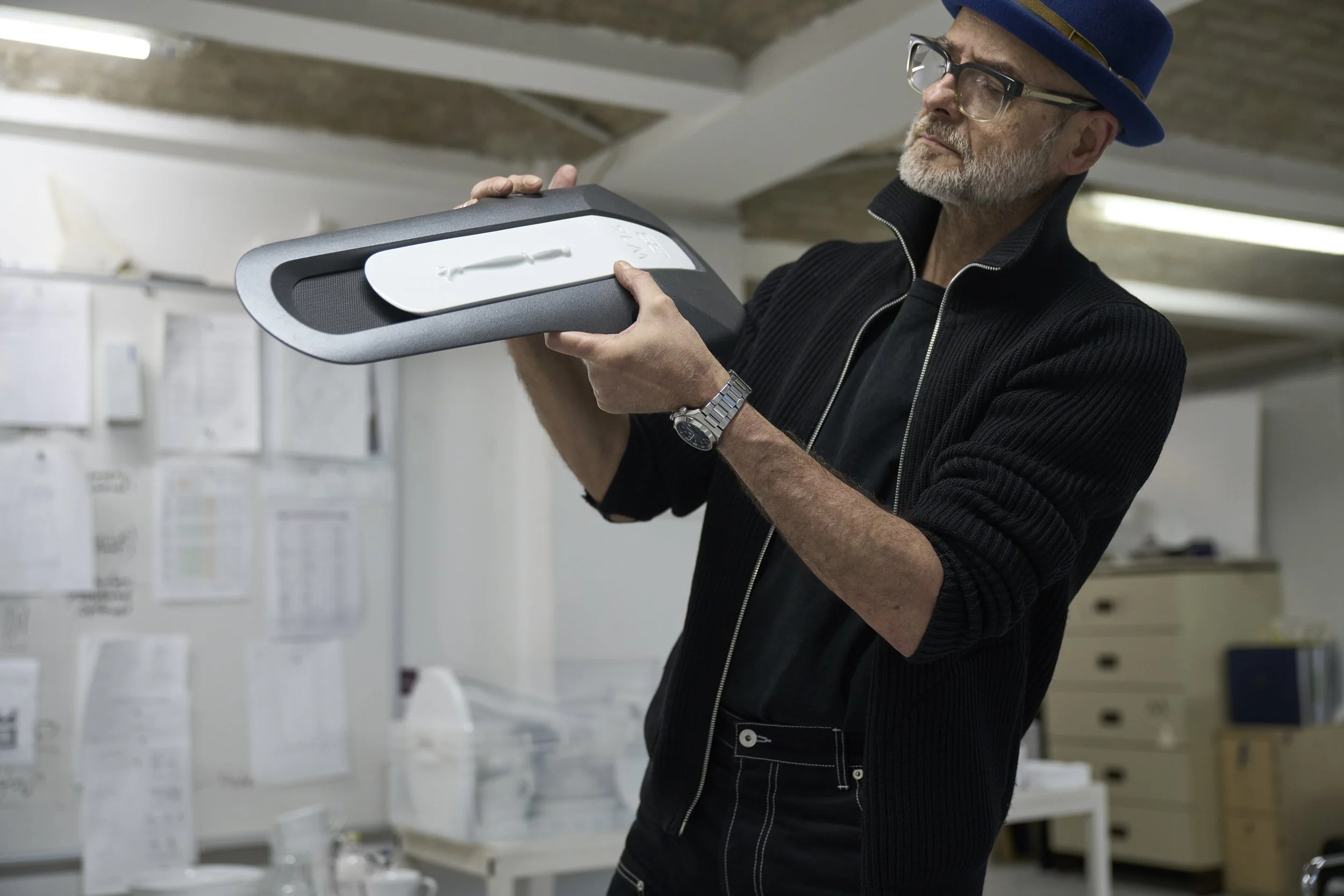
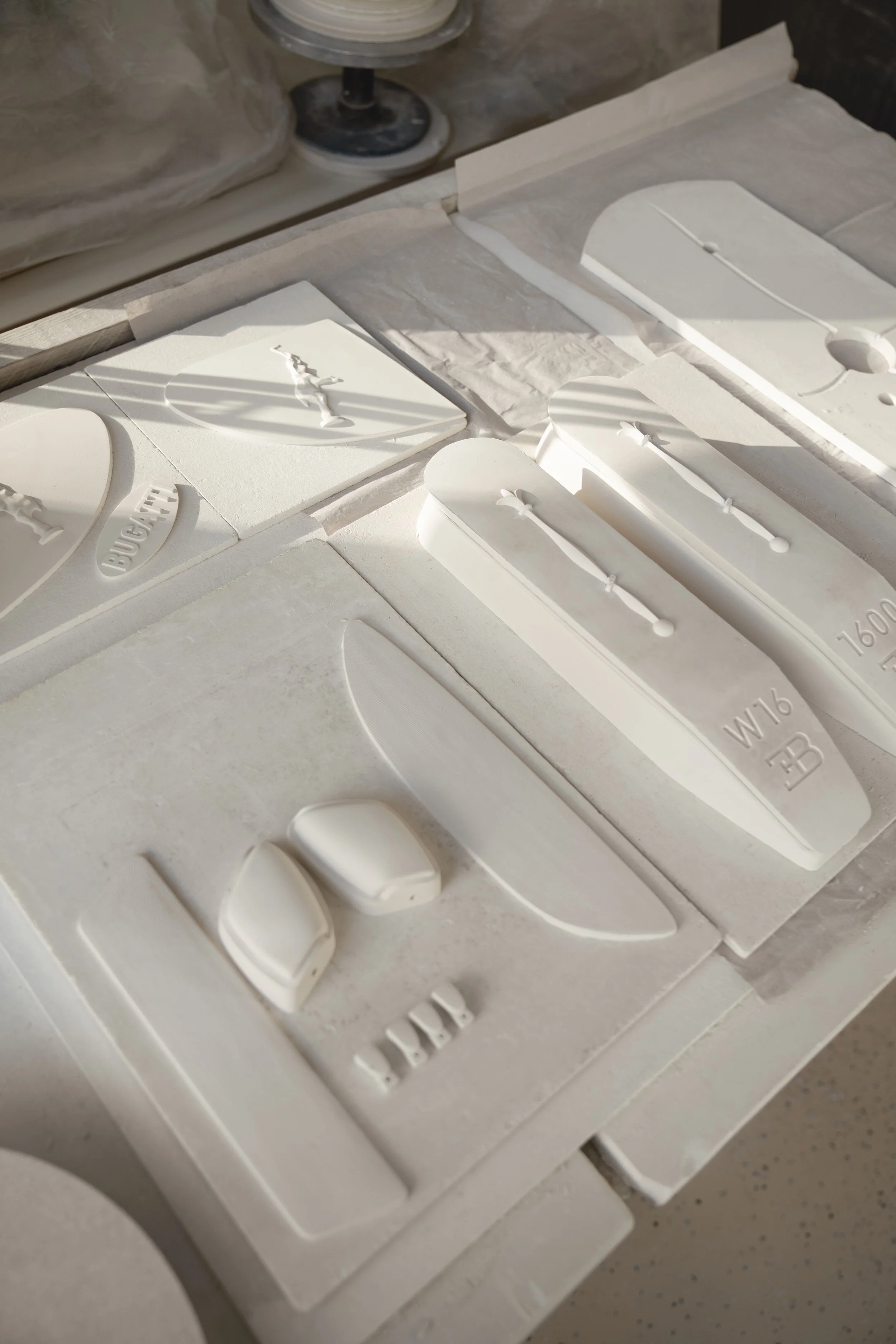
Porcelain details created by KPM punctuate the graphic composition with pristine white, covering exterior details such as the EB emblem, the fuel and oil caps, and two inlays on the engine cover featuring KPM Berlin's logo, the royal sceptre.
Creating such intricate pieces demands extensive specialist knowledge. Porcelain contracts slightly as it fires in the kiln, so its cured dimensions differ by 17% from those of the original unfired component. Designers must therefore anticipate this shrinkage precisely during the modelling and development process, so that every completed piece fits seamlessly into its designated position on the vehicle.
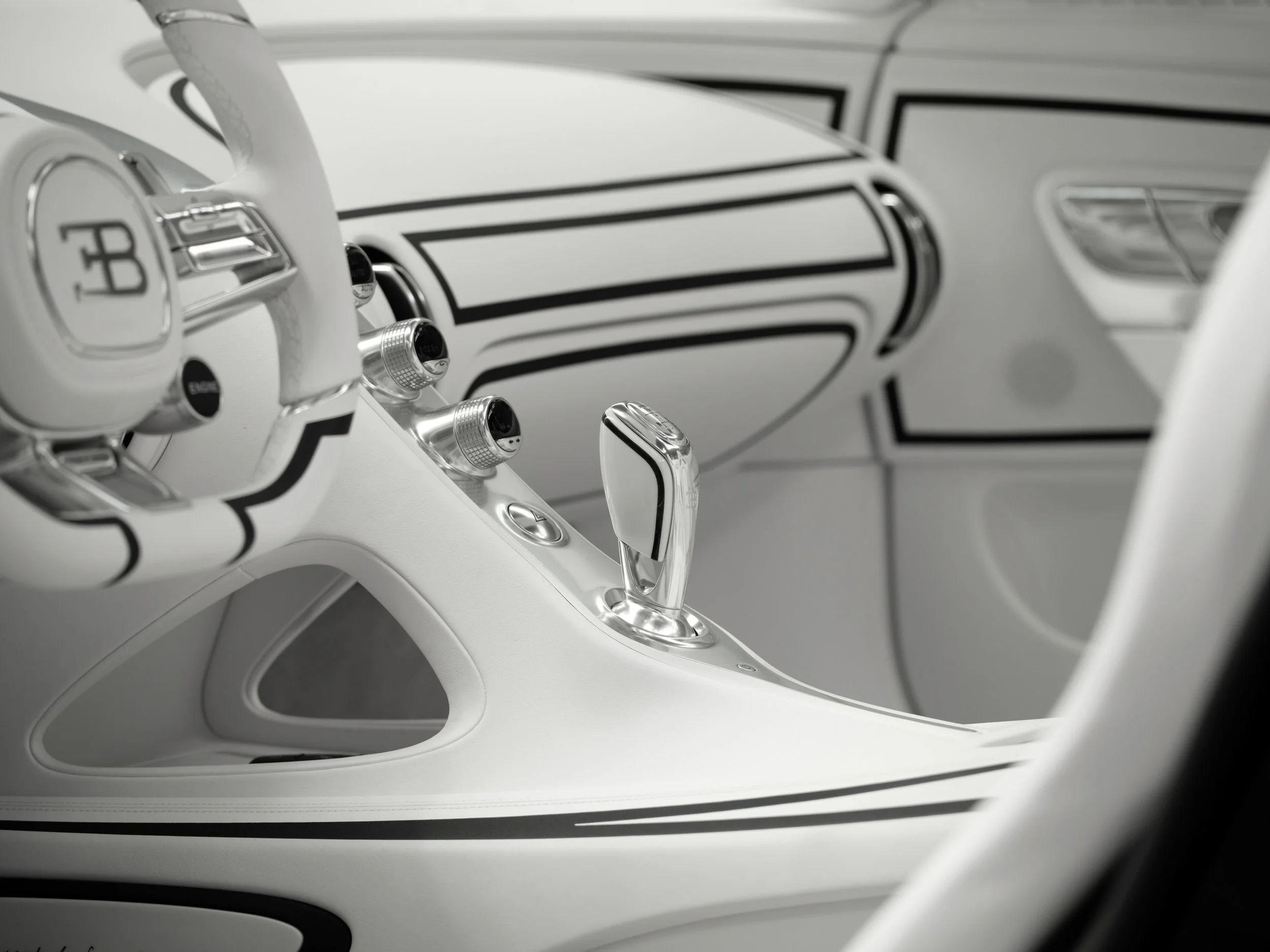
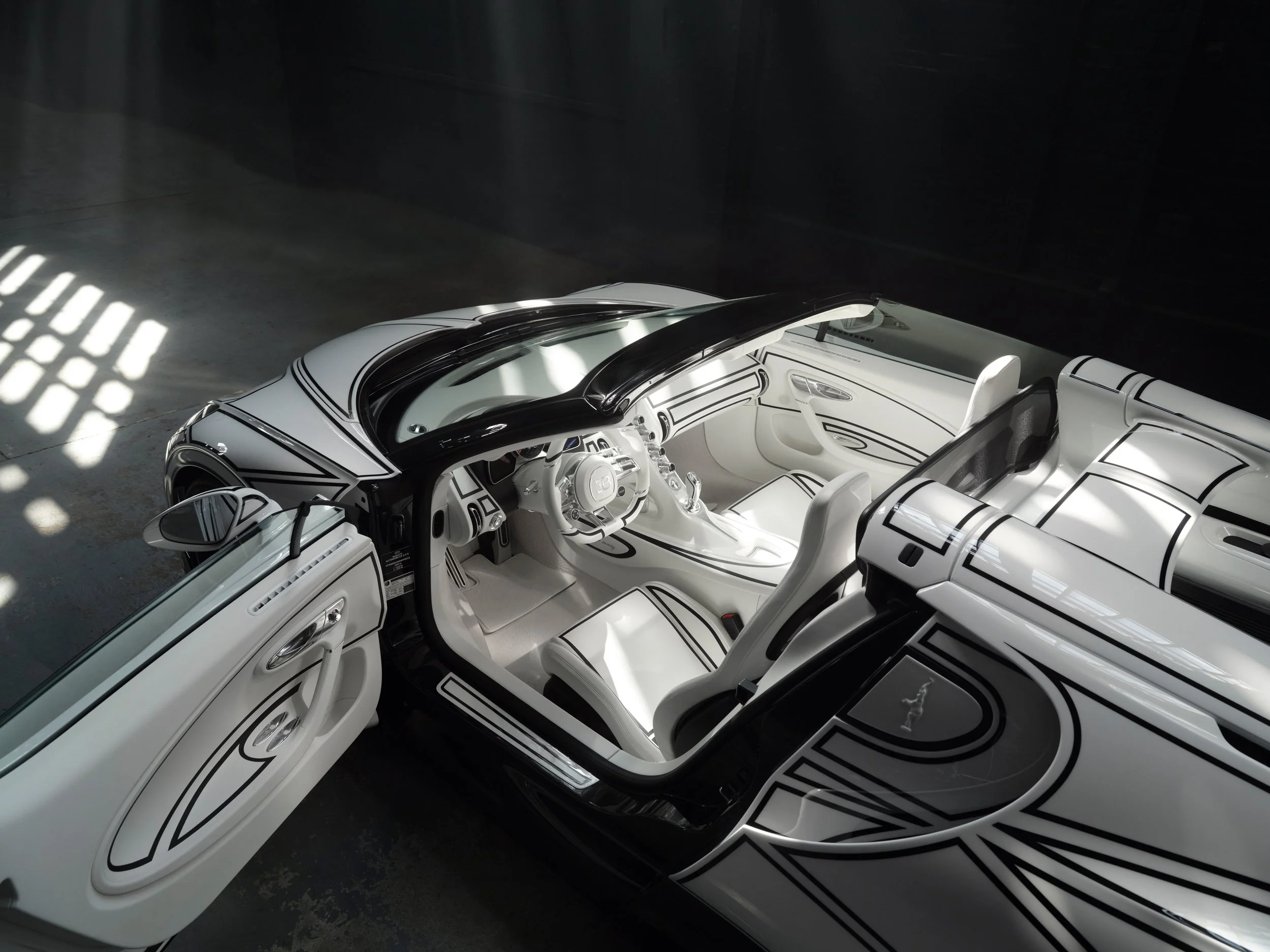
Inside the cockpit, craftspeople translate the exterior's digital linework directly onto white leather. Achieving the required definition and durability demanded an entirely new Bugatti process.
Craftspeople carefully prepare the individual leather sections before laying them out and hand-masking the precise line pattern. They then apply black paint directly to the white leather, creating the same sharp graphic contrast that characterises the exterior.
Porcelain again sits at the centre of the experience, a material that occupants physically interact with each time they enter the cockpit. Bugatti crafts the speaker cover plate, two kneepad inlays, gear shifter shells, centre console armrest inlay and window lifter buttons from precious porcelain, complementing the same material integrated throughout the exterior.
The driver therefore encounters genuine porcelain when selecting a gear, operating a window or resting an arm within the cockpit. Rather than confining the material to purely decorative inserts, Bugatti and KPM have made it a functional, tangible part of the W16 Mistral experience, a deliberate expression of the marque's belief in real materials and purposeful artistry.
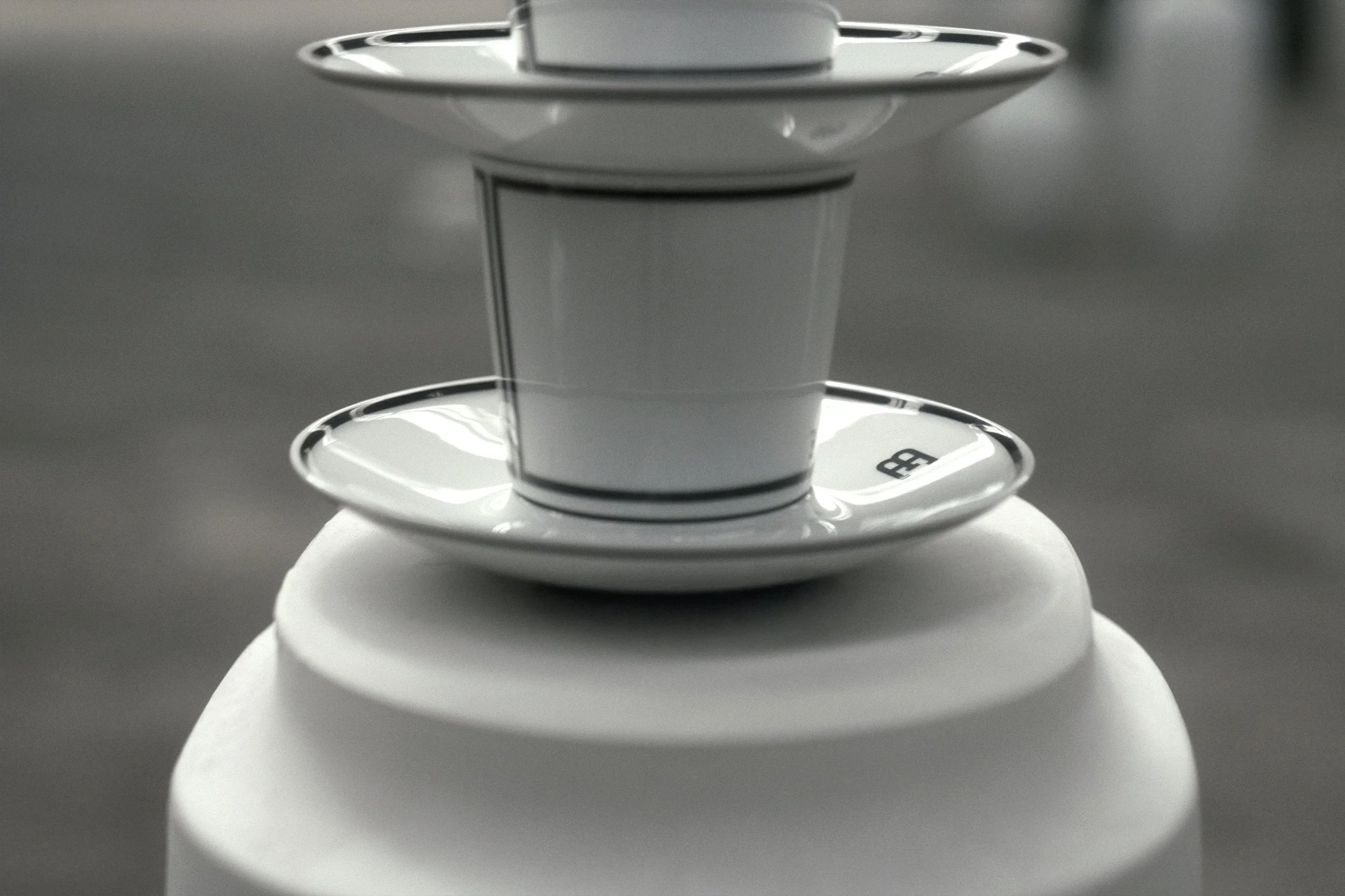
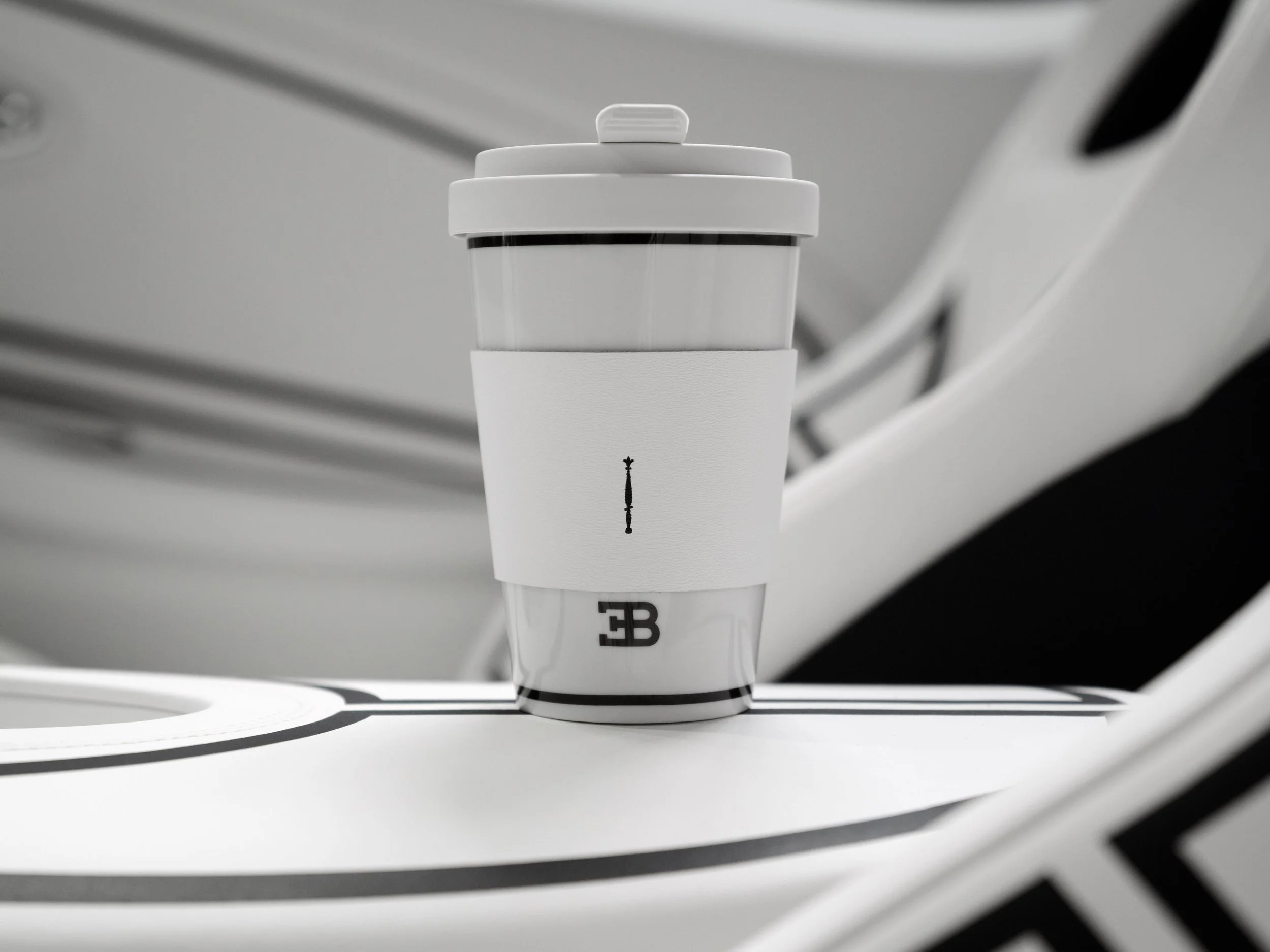
To mark the renewed partnership, KPM and Bugatti have also created a limited edition 'Blanc Éternel' porcelain collection inspired by the unique W16 Mistral. The collection comprises the To Drive Cup and KPM's iconic Aviator Cup in two sizes, limited to 1,000 handmade pieces, each expressing the shared pursuit of precision, purity and enduring design that defines both maisons.