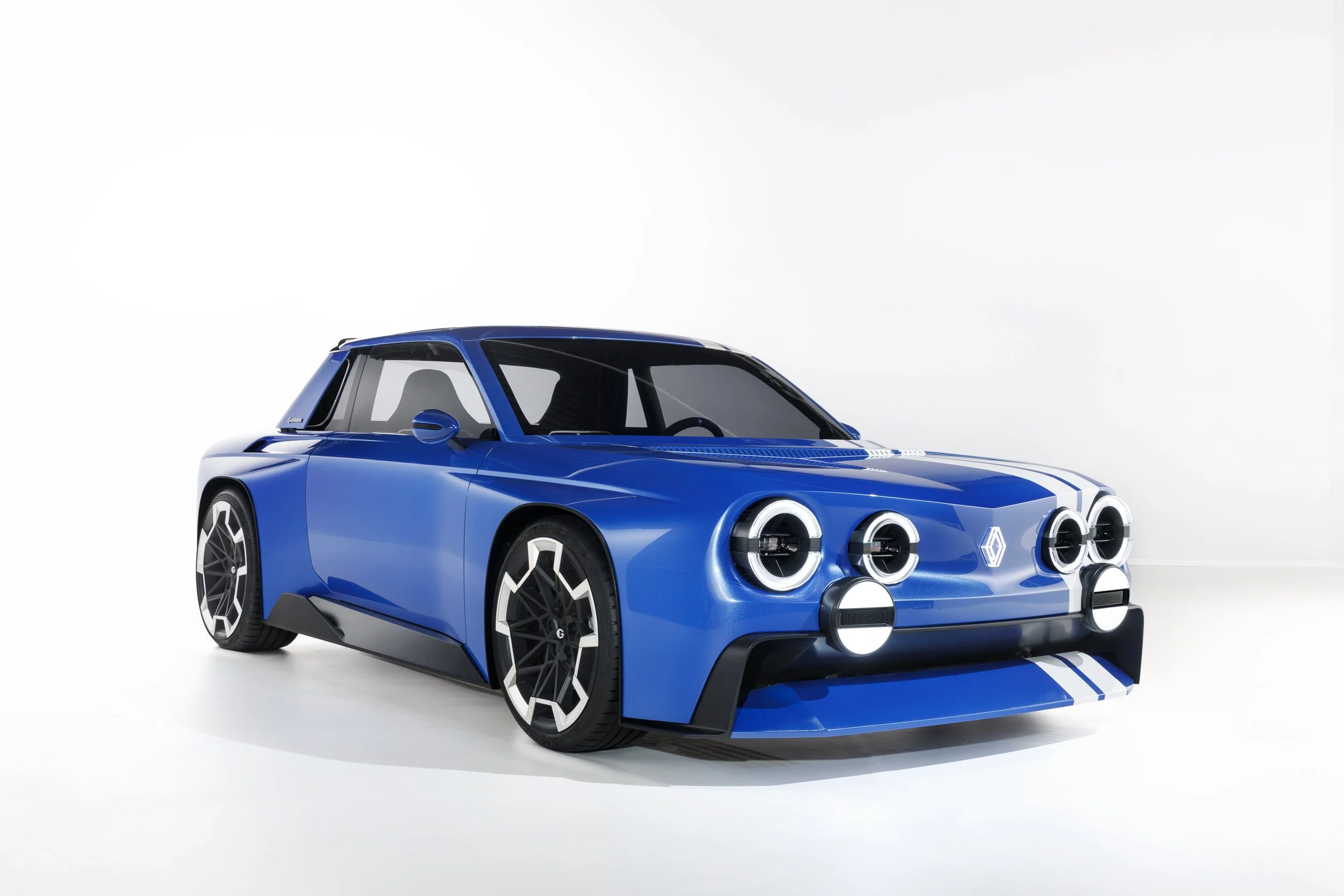
Renault 8 Gordini Concept: A 270 HP Electric Tribute to an Icon
Alexandre Malval, VP Design at Renault, sums up the ambition behind the Renault 8 Gordini Concept: 'With the Renault 8 Gordini Concept, we wanted to spark emotion by drawing on both our heritage and modern times, bringing together the icons of yesterday and the future. This exercise in style sets out to reinvent Renault 8 Gordini for the modern day. This coupé aims to inspire emotion and capture the imagination of all car enthusiasts. And when I talk about emotion, I'm not talking about nostalgia, but real passion for cars.'
The Renault 8 Gordini Concept pays tribute to an icon of French motorsport, but it does more. It shows how Renault keeps its heritage alive. In recent years, the brand has rebooted several of its most iconic models, giving each a distinctive design that links past and future.
This concept car follows the same path. It will become part of the brand's history and heritage, taking its place alongside historic models, archive material and artworks in the future Renault Collections museum in Flins. The museum will open to the public in around 15 months.
Renault launched the original Renault 8 Gordini in 1964. It had a 95 hp rear-mounted engine and rear-wheel drive. It delivered genuine racing performance but demanded advanced driving skills, making it an efficient yet challenging car to drive. Affectionately known as 'la Gorde', it served as a superb training car for a generation of drivers, including Jean Ragnotti.
By giving the Gordini name to a sporty version of a production model, Renault made serious performance affordable a decade before the GTI phenomenon took off. The car's double white stripe soon became iconic.
Renault now takes a similar approach, revisiting this much-loved model through an exploratory project that will delight motoring enthusiasts everywhere.
Designer Ora Ito worked with the brand's design teams on the R17 show car. By contrast, Renault designed the Renault 8 Gordini Concept entirely in-house.
The project began with an internal competition at Renault Design that sparked a huge wave of enthusiasm. Brand designers spontaneously submitted more than 300 sketches. They explored every avenue, from classic retro and futuristic styling to concepts that fused heritage with a modern edge, as well as GT-inspired looks. From these 300+ proposals, the team selected two projects and developed them as 2:5 scale mock-ups. This allowed the designers to compare the two and create a new blueprint that combined the best of each.
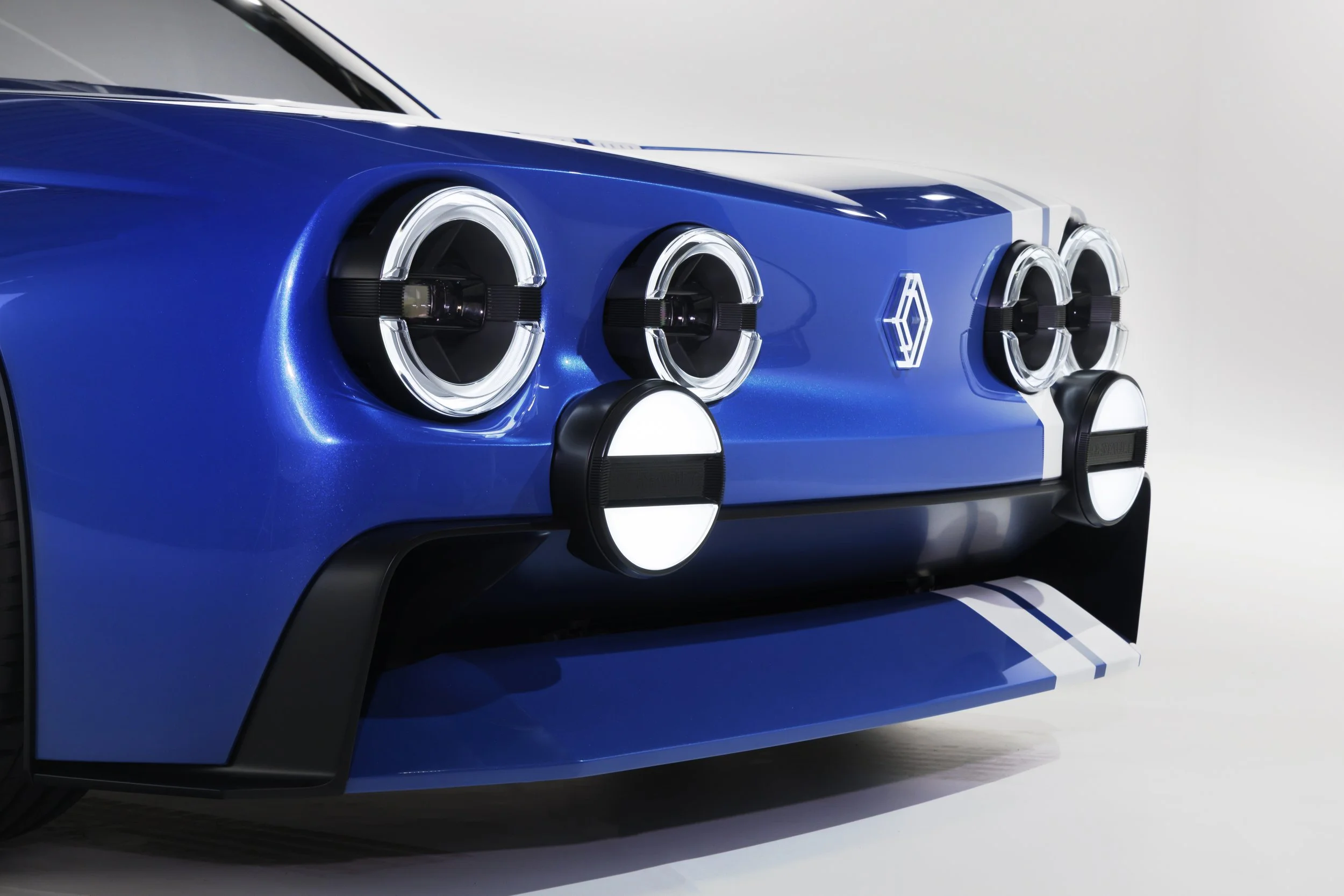
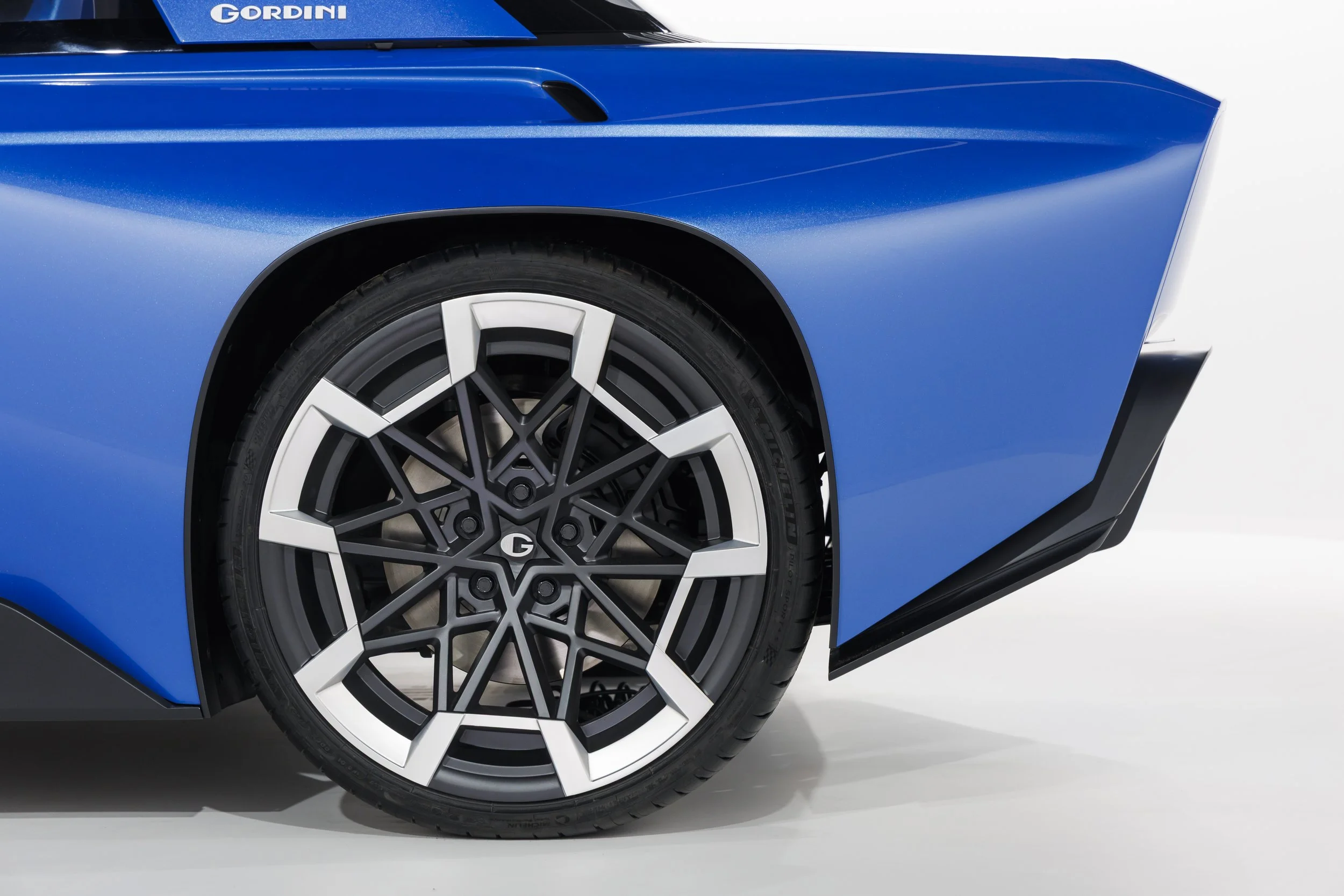
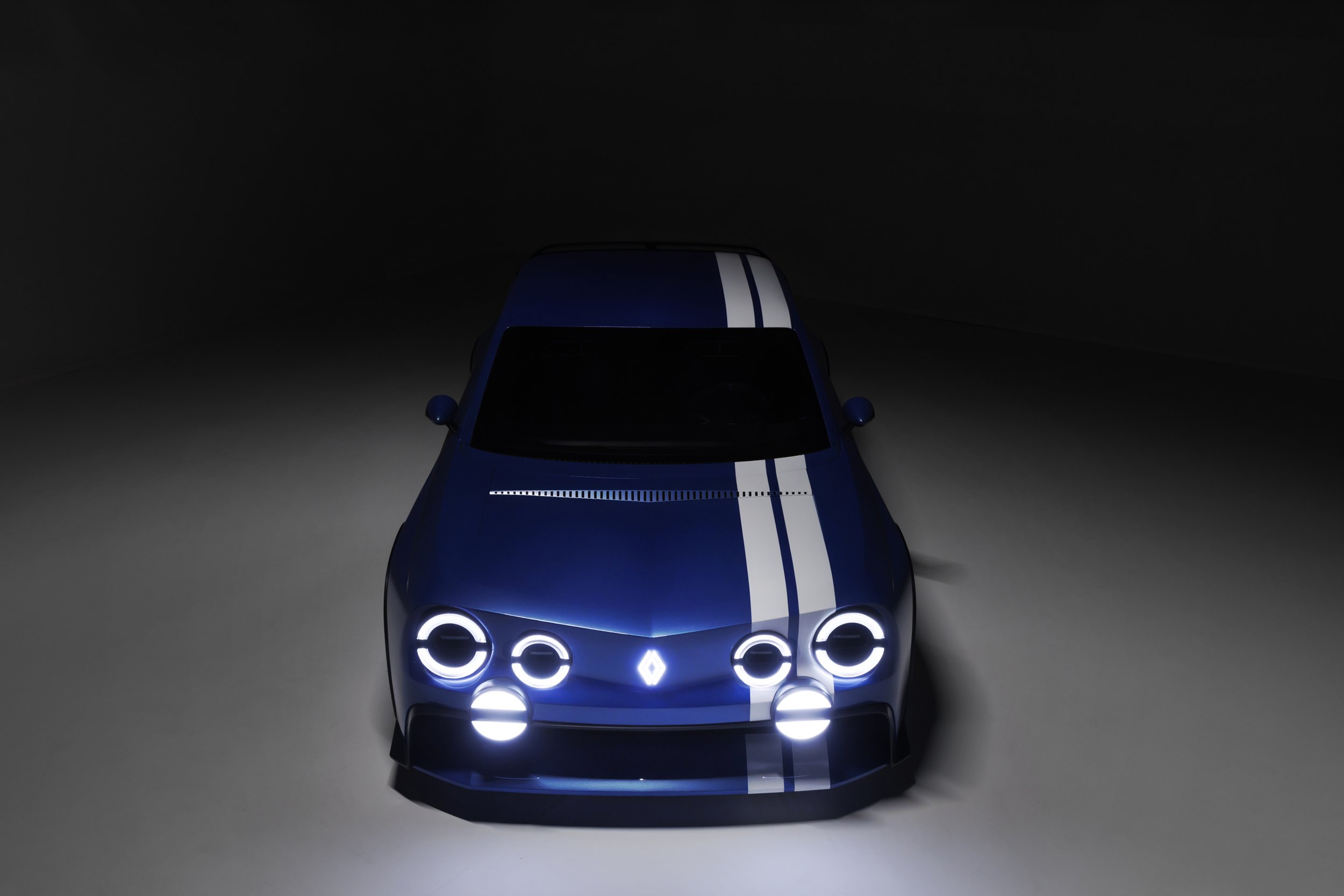
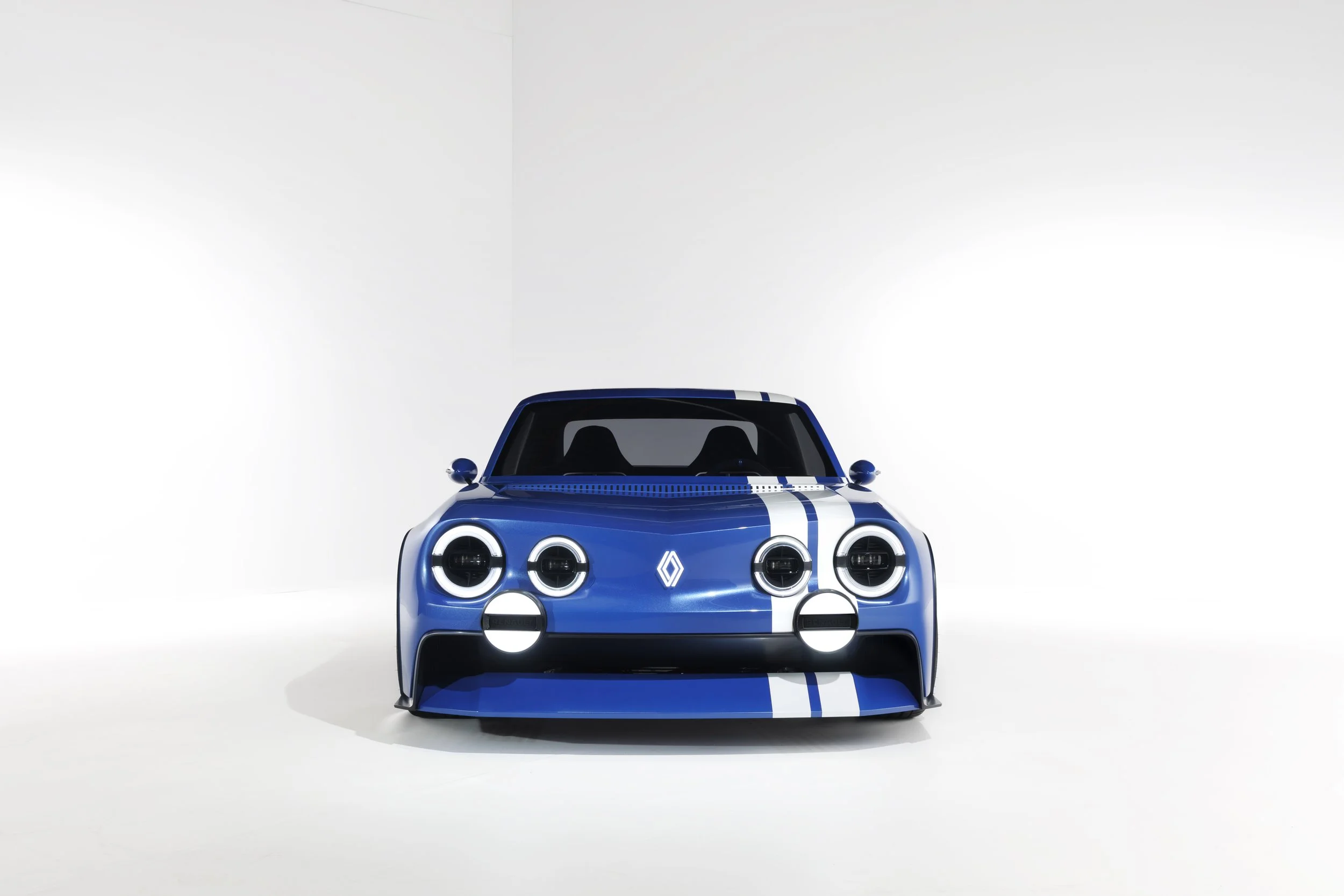
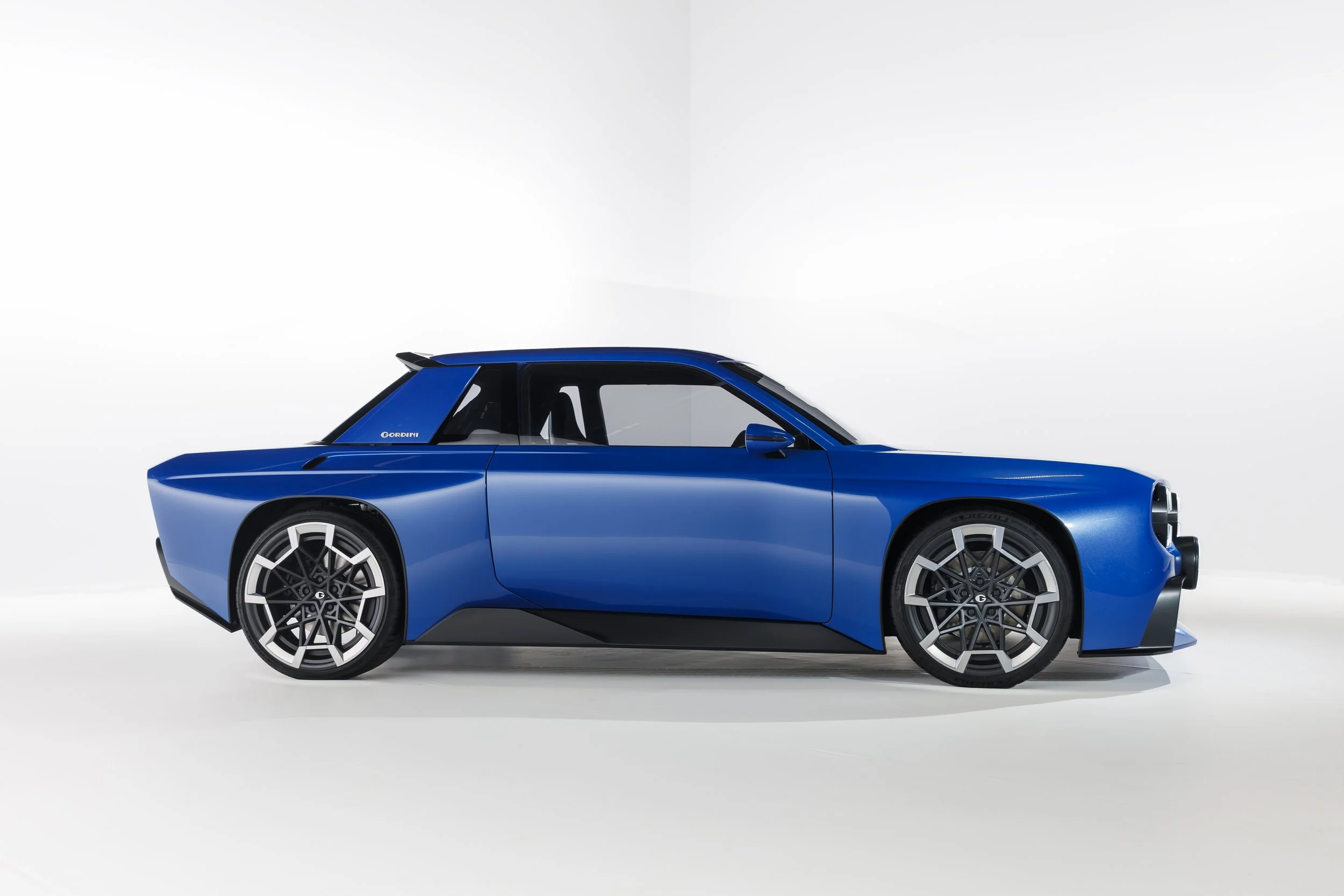
The Renault 8 Gordini Concept measures 4.12m long, 1.88m wide and 1.27m tall, giving it particularly compact and dynamic proportions. It rides on 19-inch wheels at the front and 20-inch wheels at the rear, so it sits squarely on the road, much like today's rally cars. This two-door coupé looks far more dynamic than the original four-door model, thanks to an aggressive prow, a V-shaped design that accentuates it, and six headlights.
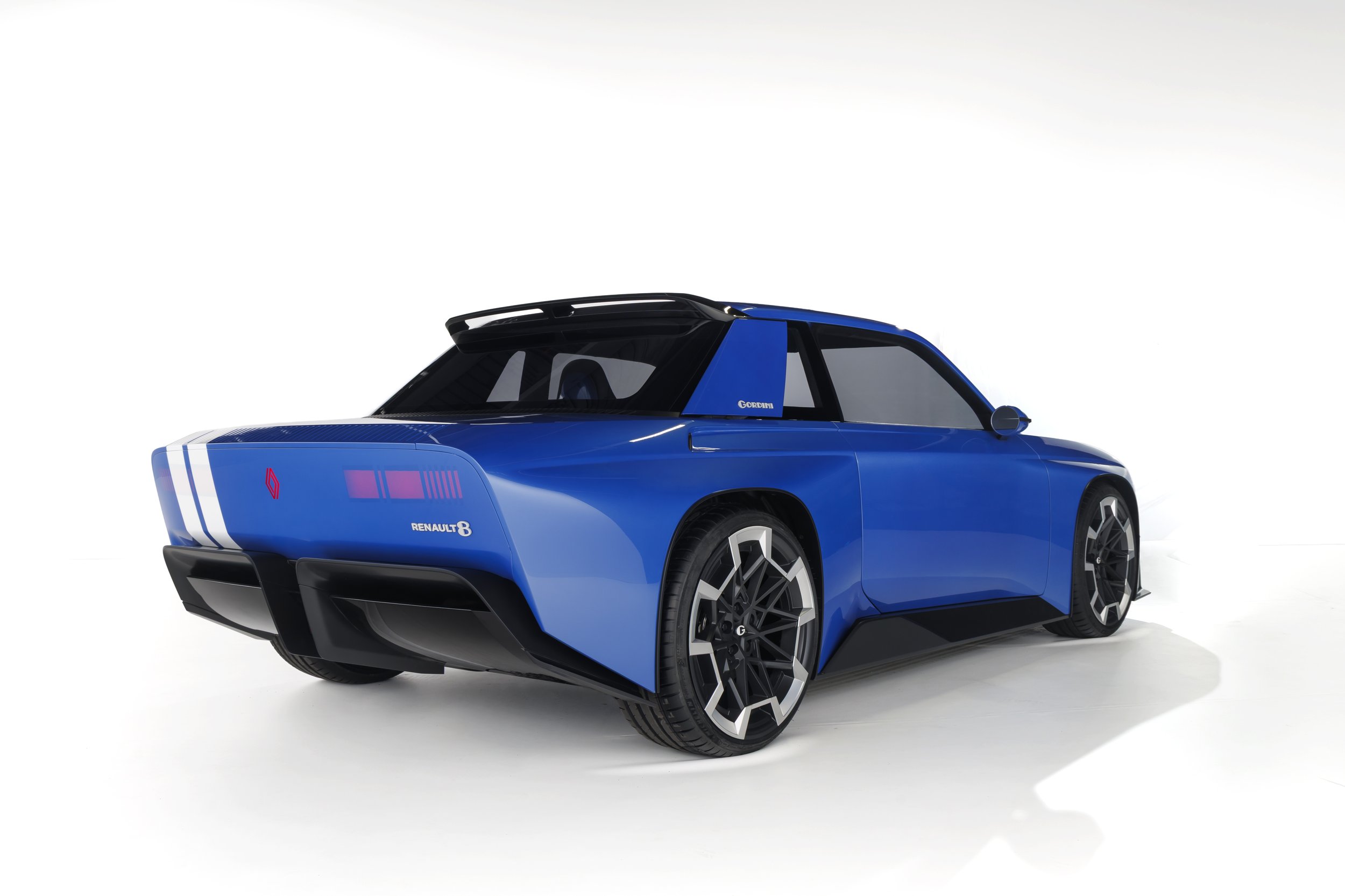
The wide, muscular, strongly sculpted rear end hints at the original's rear-mounted engine and rear-wheel-drive layout. Today, however, a 270 hp electric motor powers the car. A slight rear rake, which the original lacked, further underlines the concept's performance.
Malval explains the thinking behind the new stance: 'We updated the distinctive styling of the original Renault 8, which was virtually symmetrical from front to rear, to give it a more dynamic look. With flowing cabin lines, a wide track, prominent wings, and 19-inch front wheels and 20-inch rear wheels, it appears to hug the road. The decision to make the rear wheels larger creates a visual sense of momentum: a nod to the rear layout that was the hallmark of the hugely enjoyable ride delivered by the original.'
The Renault 8 Gordini Concept draws on the 'café racer' trend, which is currently popular in the world of custom motorbikes. Café racer builders modernise vintage motorbikes by stripping out non-essential features and celebrating the raw beauty of the materials and mechanical parts. Renault already took this approach with the Renault 5 Turbo 3E.
Here, the designers removed anything unnecessary, even among the retro trim pieces that pay homage to the original Renault 8 Gordini. For example, the old chrome side moulding now forms part of the bodywork itself. As a feature line, it creates a sense of tension that seems to come from within the body.
The designers also removed many split lines to enhance the car's clean, sculpted shape. The front end, for instance, has no bonnet shut line, and the bonnet lifts off in one piece, as on some racing cars.
Although the concept car shares few proportions with its forerunner, it carries over many design features and hallmarks in modernised form.
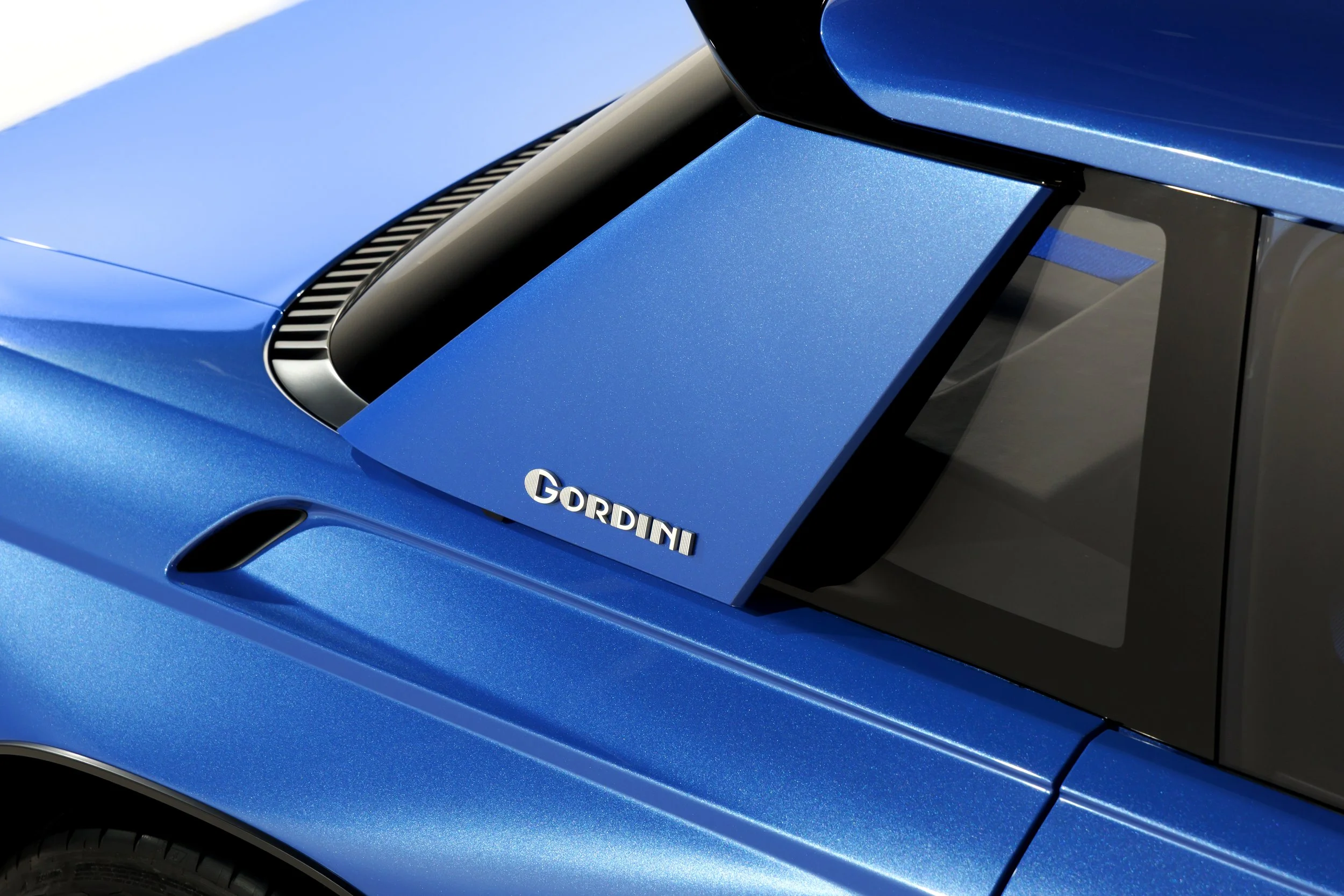
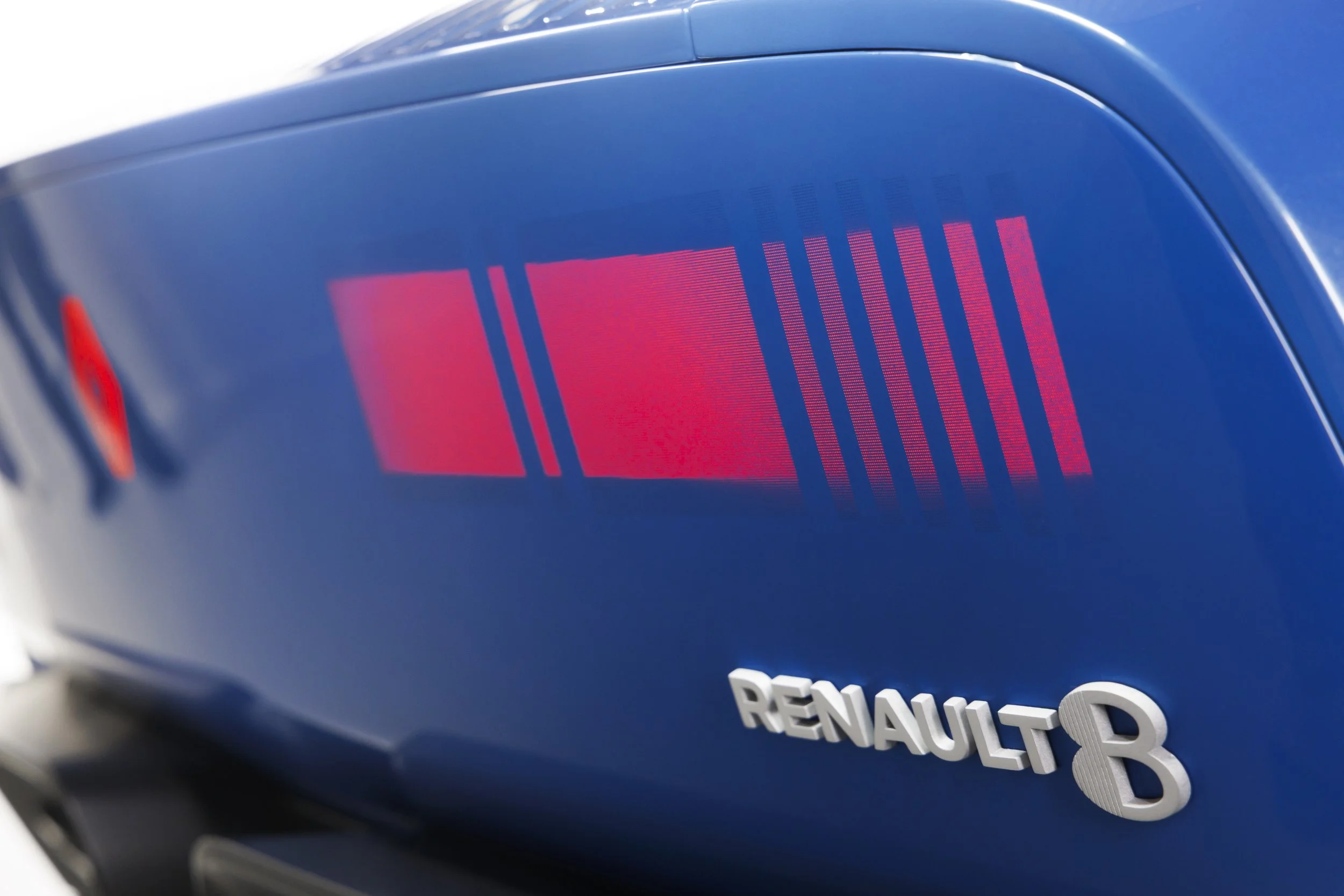
The designers took inspiration from the 1964 Renault 8 Gordini and finely reworked the Gordini lettering, which now features the striations of the original badge. A new '8' emblem made up of eight segments accompanies this distinctive signature. Together, these features reflect a focus on detail and sophistication, while recalling the machined parts of the original era.
Inside the car, a crest honouring the iconic 'Gorde' offers enthusiasts a nod to the diamond logo that adorned the front of its forerunner.
The recessed embossing along the waistline, a signature feature of the original, returns in this modern version. It now has a practical role, directing airflow towards a new air vent.
The rectangular wheel arches also return, giving the profile a more muscular look.
The grille-free front end still slices through the air with its bevelled prow. The additional headlights from the rally version now sit within the bodywork, forming a single lighting signature of six round headlamps in the same layout.
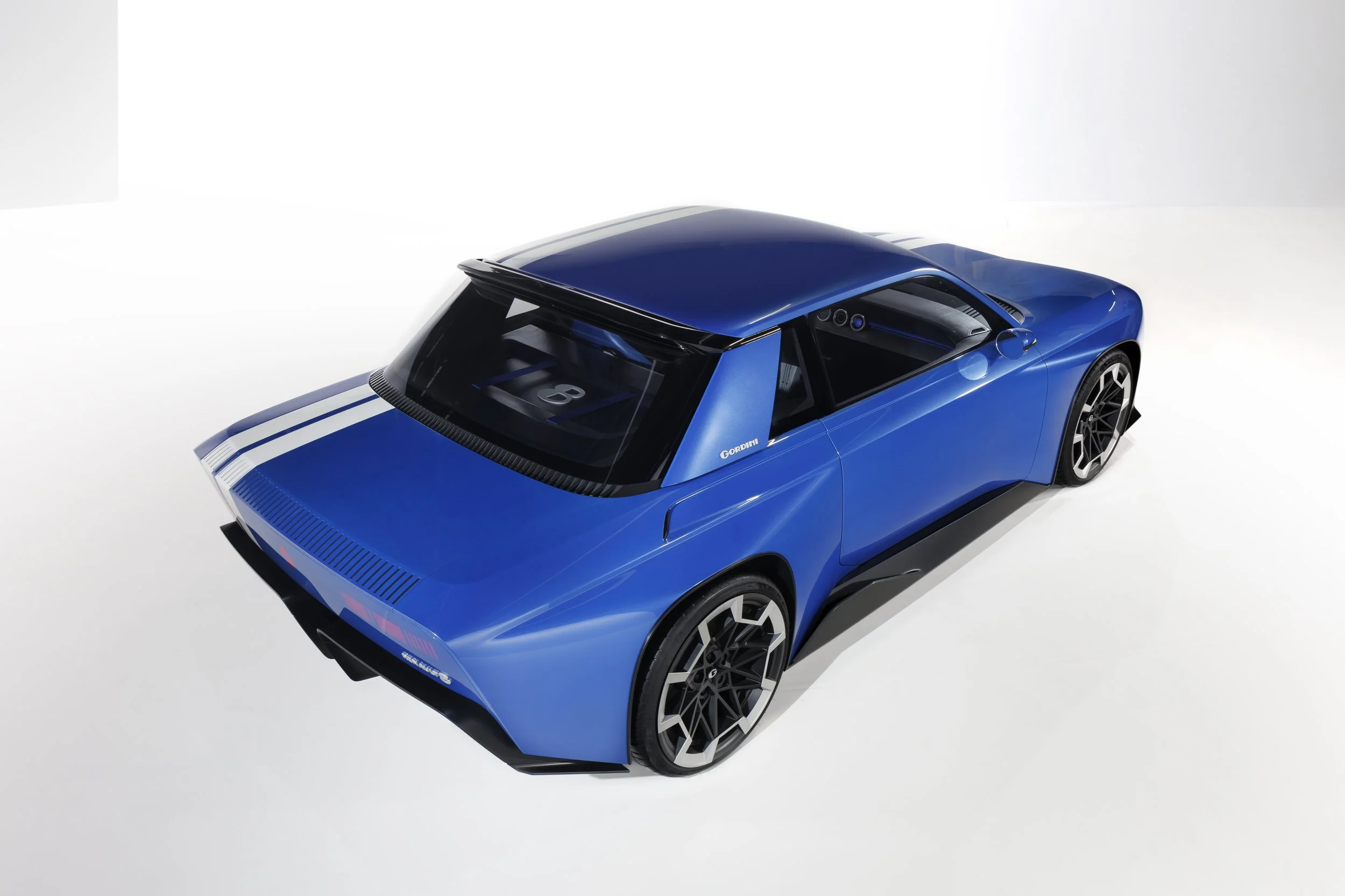
Other nods to the original include the shell-shaped wing mirrors and a grille that spans the full width of the bonnet at the base of the windscreen. The rear ventilation grille also remains, both for its looks and for its practical function.
Malval highlights the lighting design: 'Renault 8 Gordini Concept revisits the original headlights, amongst other features, as part of a highly graphic approach. At the front, the six round 3D headlights are set in the bodywork, while at the rear, the lights are perfectly flush. So much so that they are barely visible when switched off, this design enhances the car's iconic signature.'
Exterior designer Kévin Goncalves adds: 'The squared-off wheel arches inherited from the original Renault 8 Gordini emphasise the muscular lines of the rear wing.'
Thomas Altet, colour and materials designer, describes the paintwork: 'The colour of the concept car was inspired by Bleu de France, the signature colour of the original Renault 8 Gordini. This modern reboot is built in three layers, combining mother-of-pearl with a blue-tinted binder for greater depth and richness. Under the light, the historic shade of blue can be glimpsed along the edges, revealing in full the sculpted lines of the bodywork.'
On the original car, the signature Gordini double white stripe was a decorative feature on the bodywork. On the Renault 8 Gordini Concept, it becomes structural. Several features now line up with the stripe, including the grille at the base of the windscreen and the illuminated graphic pattern inside the rear lights.
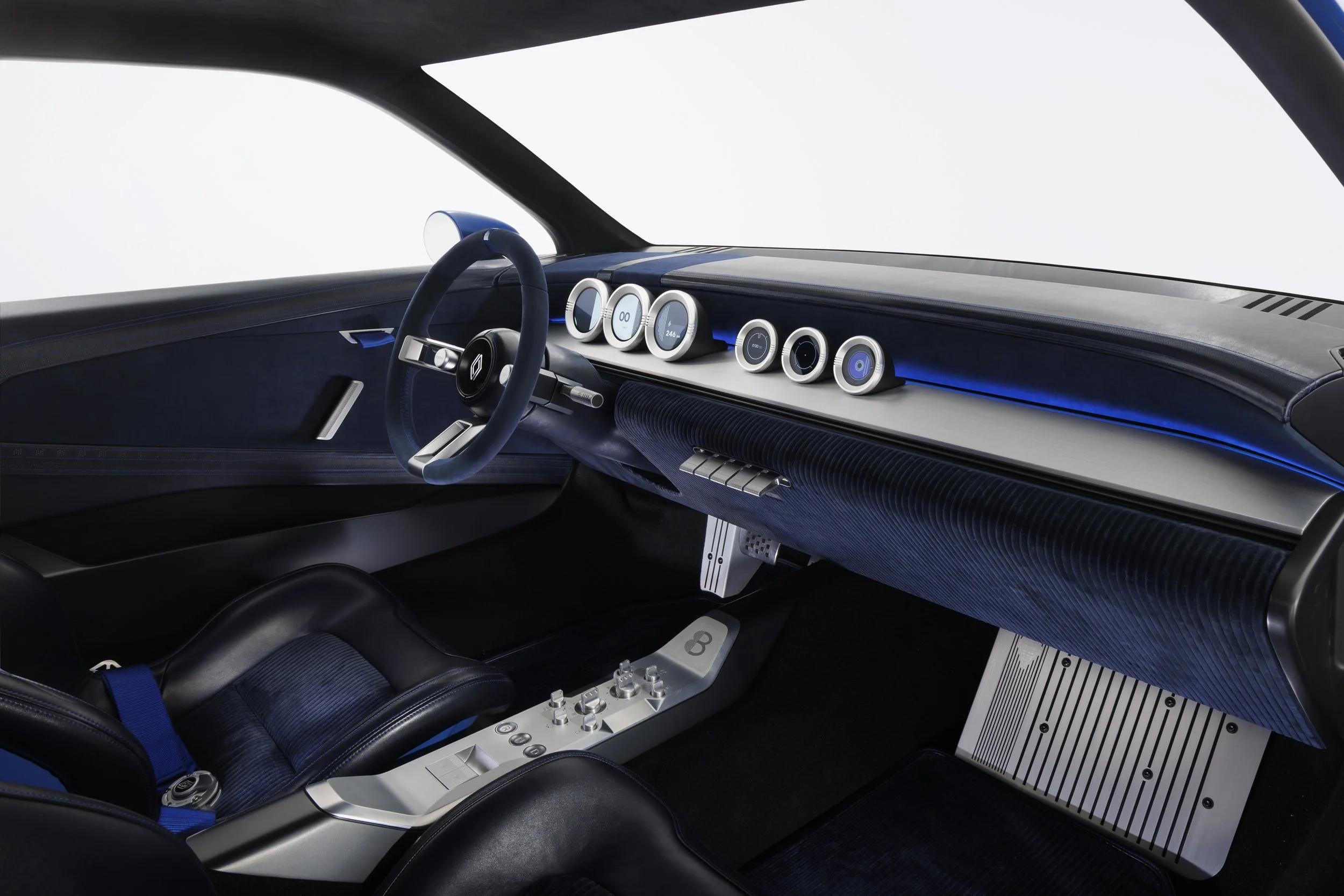
The double stripe even continues into the cabin, running across the top of the dashboard and changing colour from white to blue.
As Goncalves puts it: 'These are not simply decorative strips applied to a surface, but structural components that coordinate the design.'
The interior reinterprets the original with a much bolder look. The dashboard visor still runs the full width of the cabin, while the dashboard itself becomes a horizontal strip of brushed aluminium. This strip holds the round dials, whose thick bezels echo the 3D design of the headlights.
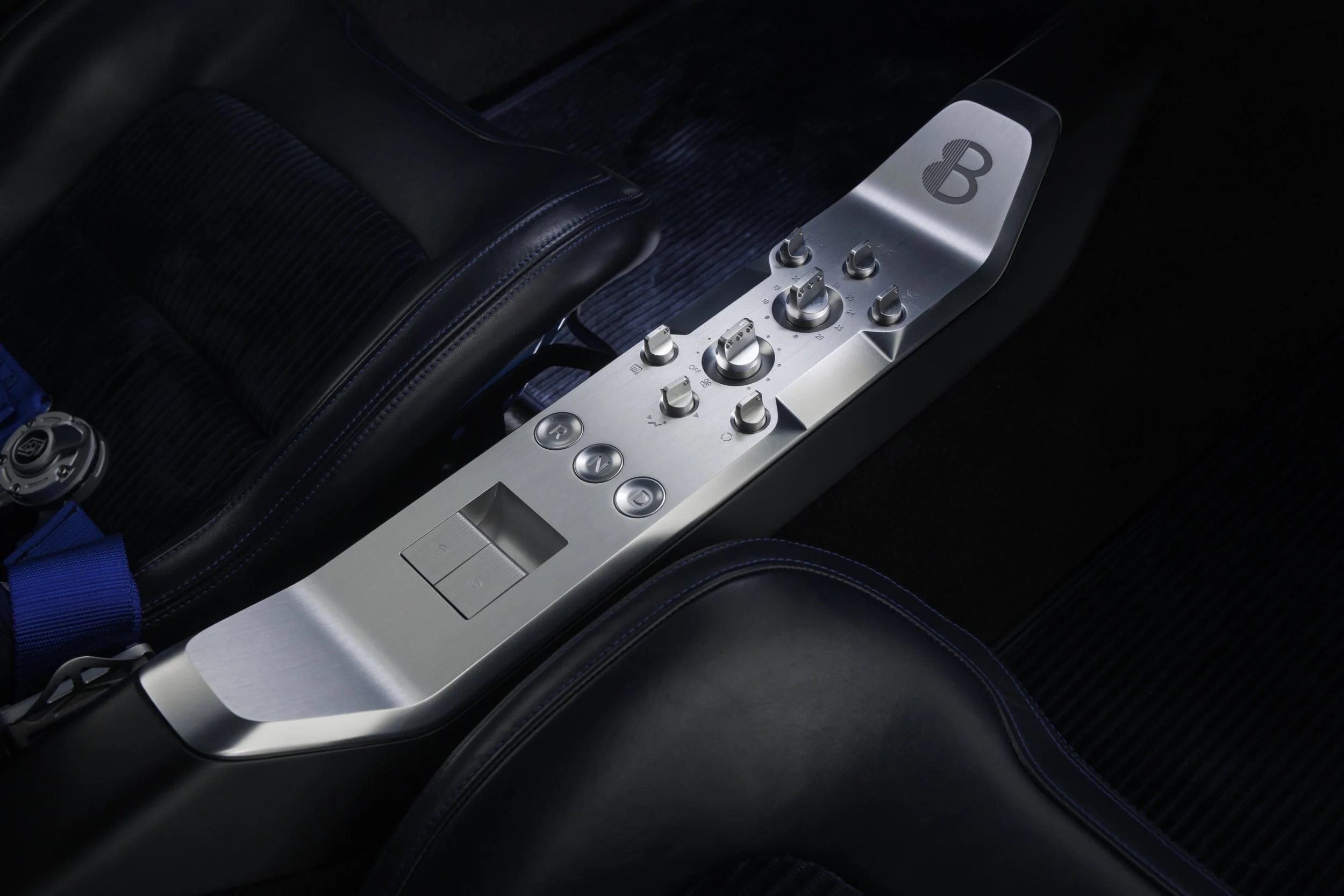
True to the café racer spirit, brushed aluminium replaces plastic on the controls and across large surfaces, contrasting with the sections trimmed in Alcantara®.
This minimalist design leaves almost nothing to distract the driver, keeping the focus firmly on driving. The only eye-catching detail is the red dot on the stopwatch button in the centre of the dashboard.
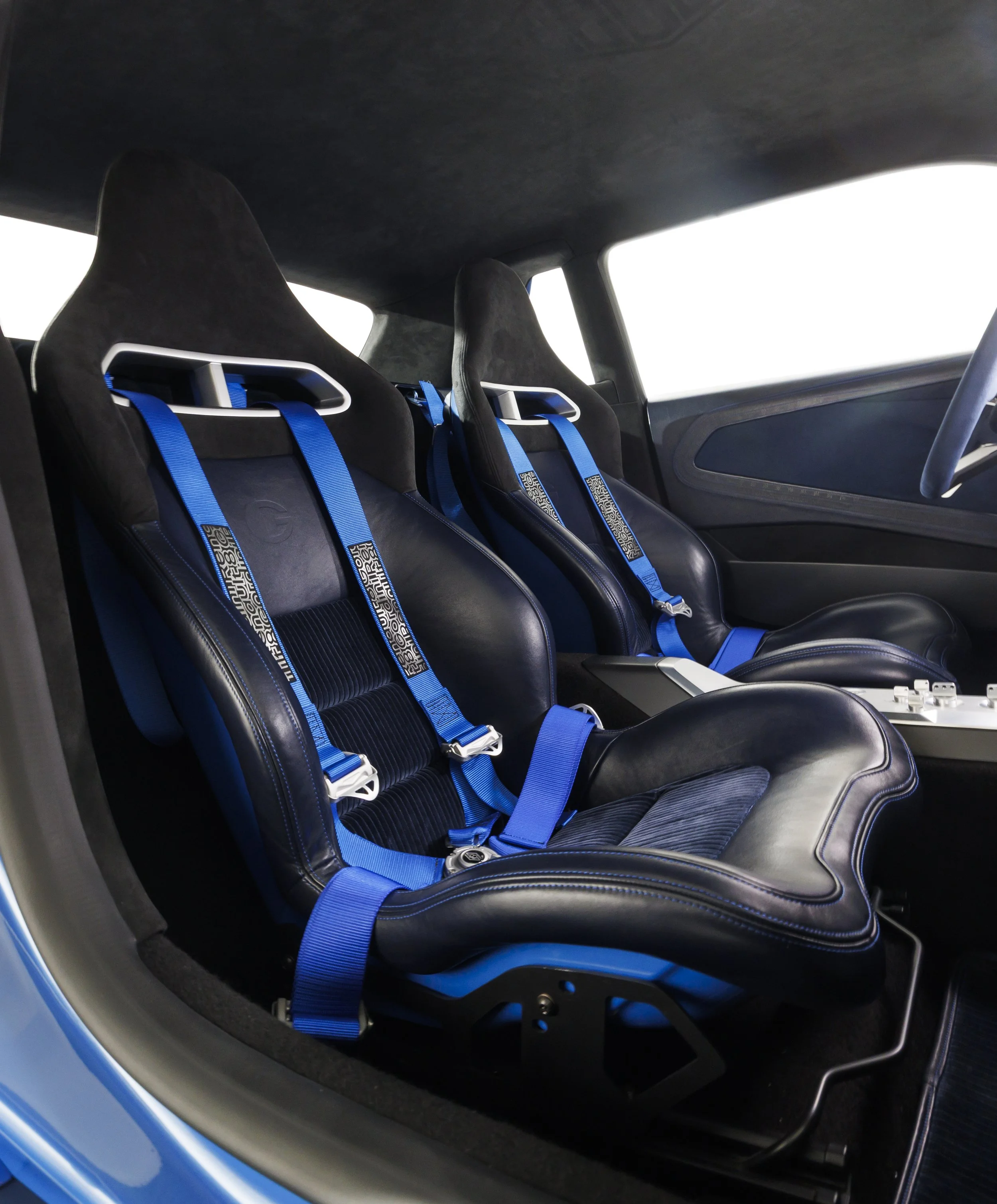
Top-stitching across the Alcantara®-trimmed door panels recalls the kerbs of a racetrack, while the essential bucket seats offer a graphic nod to those of the original car. Blue corduroy covers the centre of the seat and backrest, contrasting with the black of the rest of the bucket seat and recalling the original's flat, headrest-free seats.
The carbon used for the bodywork does not appear in the cabin. The round dials, which seem to float above the brushed aluminium dashboard, are digital displays that give the interior a high-tech feel, as does the indirect ambient lighting beneath the dashboard.
Stéphane Maiore, Renault interior design director, explains the approach: 'We drew inspiration from the original Renault 8 dashboard, taking its iconic design cues and reinterpreting them for today. The traditional metal panel with its circular dials has been repositioned horizontally to support and showcase a series of perfectly aligned round screens. The result is a design that feels more modern and elegant while maintaining a clear link to the past. The entire interior and instrument cluster sit beneath a fluid, wraparound beltline, creating a sense of purity and providing the driver with a perfectly unobstructed field of vision.'
Interior designer Robin Biondi adds: 'We limited the number of parts inside the cabin, meticulously crafting each one with understated lines. They are part structure and trim. Nothing is superfluous.'
Amédée Gordini was a true mechanical wizard. He first worked with Renault in 1957 on the Dauphine Gordini, raising engine output from 32 hp to 37 hp. That marked the start of a success story. The iconic Renault 8 Gordini followed, and it earned the double white stripe its place in the racing hall of fame. Gordini's talent for turning even the humblest engine into a true thoroughbred earned him the nickname 'the wizard'. He needed no drawing board. Instead, he stood beside the milling machine operator and told him exactly how to cut each part directly from the block. Only then did he hand the finished part to the draughtsman, who drew up the plan—pure wizardry for any self-respecting engineer.