Track-Only Ferrari 296 GT Modificata Unveiled
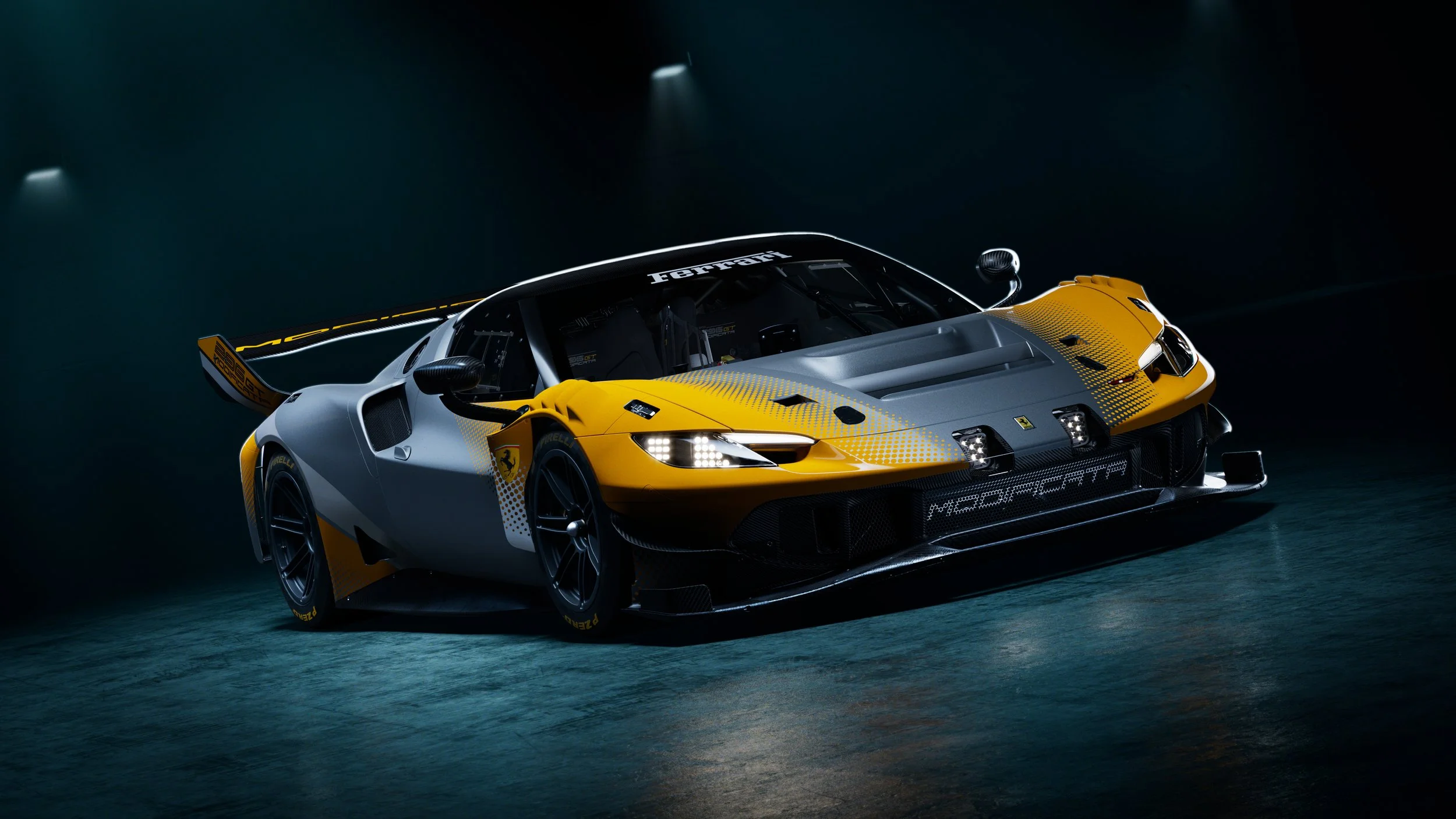
The new Ferrari 296 GT Modificata takes track-only GT performance to the limit. Ferrari developed this model exclusively for the non-competitive track events of its Club Competizioni GT programme, which the marque reserves for its customers.
Ferrari presented the 296 GT Modificata at the Ferrari Racing Days event in Budapest, Hungary. The two-seater will reach customers in extremely limited numbers. It draws on the track experience of the 296 GT3 Evo, which debuted at the start of the 2026 season, and combines it with technology and know-how that Ferrari has developed in racing and for its Sports models. The car picks up where the 2020 488 GT Modificata left off. It delivers pure driving fun on the track, thanks to a V6 engine that produces 730 cv (537 kW) at 7,500 rpm, an astonishing specific output of 244 cv/l, and sophisticated aerodynamics with a true racing pedigree.
The name reveals the project's key characteristics. "296" refers to the 2.9-litre displacement and the six-cylinder architecture, as the car uses the latest iteration of Ferrari's six-cylinder engine family, which has powered both production and race models with great success. "Modificata" captures the essence of the special versions that Ferrari develops from an existing model, adding bespoke modifications that take performance to extreme new heights. No technical or motorsport regulations constrain these cars.
Thanks to its new solutions, the 296 GT Modificata could lap the Fiorano circuit 3 seconds faster than the 296 GT3 Evo.
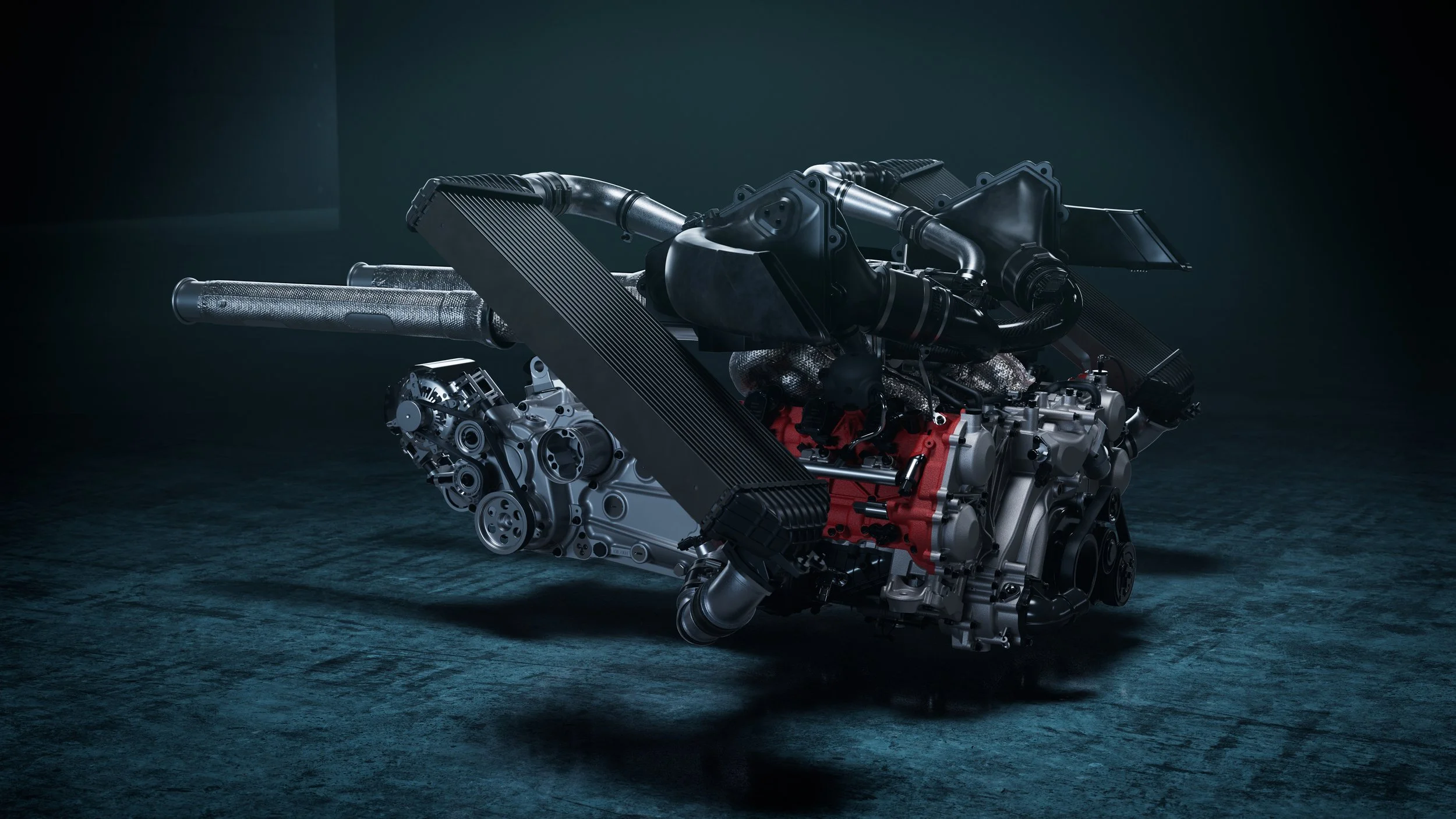
A rear-mid-mounted 2,992 cc 120° V6 engine forms the soul of the 296 GT Modificata. It keeps the architecture and design of the 296 GT3 Evo powerplant it derives from, but Ferrari has introduced several modifications to maximise performance. The engineers focused in particular on the cranktrain, camshafts, induction line, intercoolers and turbochargers. The turbos share their exterior housing geometry with the units on the 296 GT3 Evo, but Ferrari designed the internal components specifically for this application. The engineers also drew on experience from the 499P Modificata, the Sport Prototype Ferrari created for non-competitive customer track use. Ferrari has also optimised the fuel system to meet the engine's higher flow-rate demands, adding a low-pressure pump.
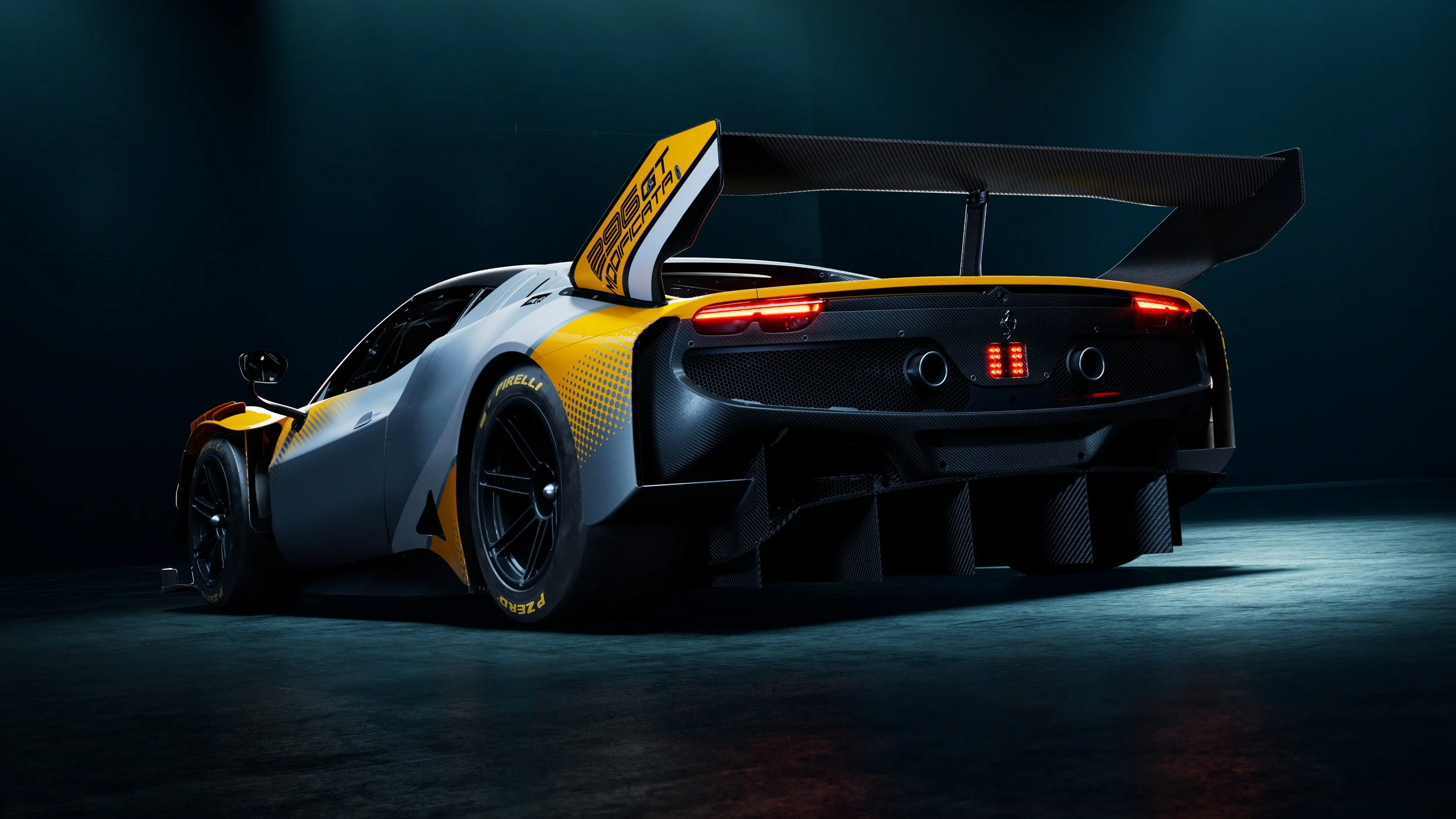
The tailpipes feature a completely new design. On the transmission side, Ferrari's engineers have introduced new drive ratios for the six-speed sequential gearbox with carbon clutch. These ratios fully exploit the engine's new operating range and maximise performance and fun for non-competitive track use.
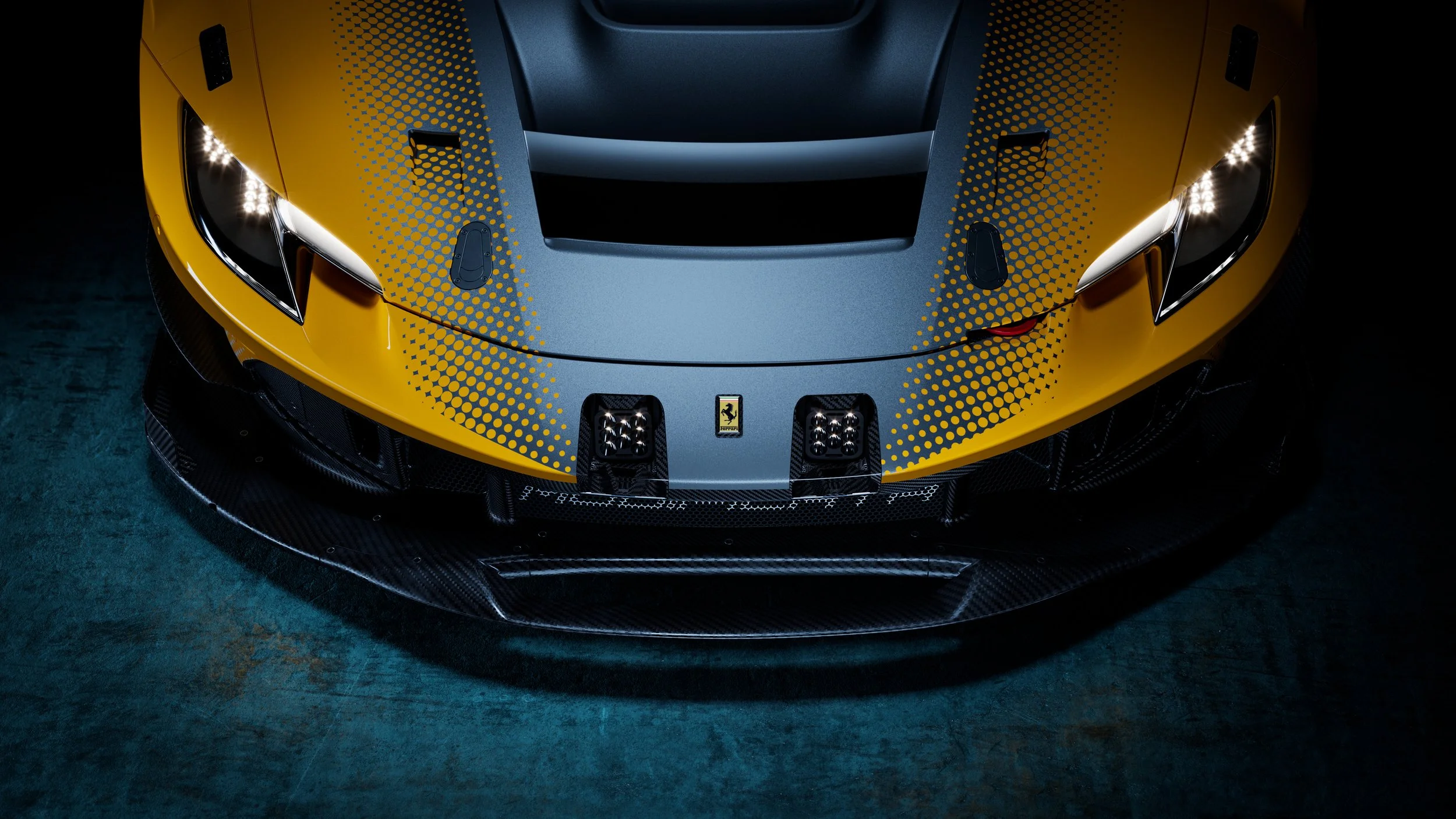
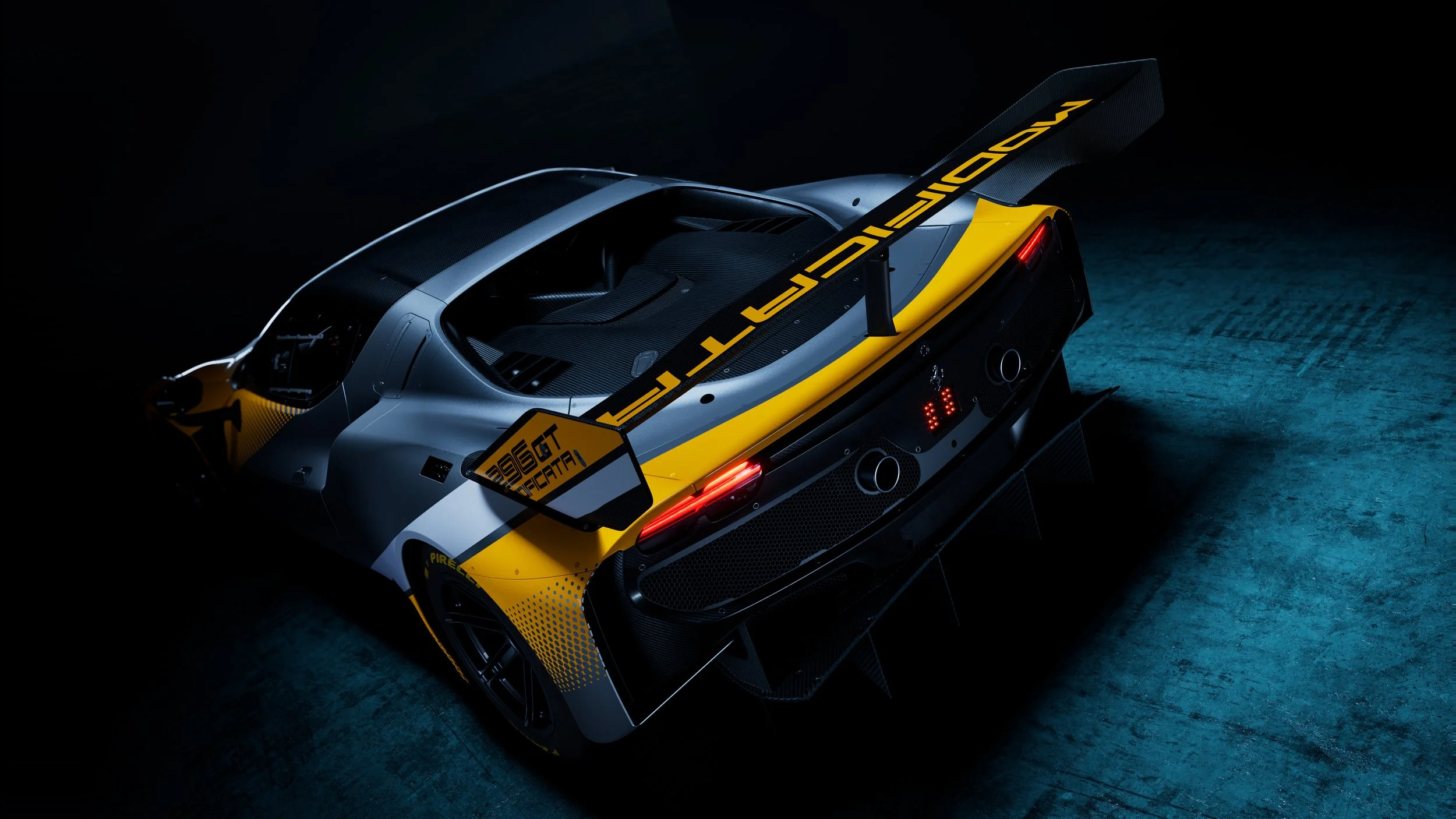
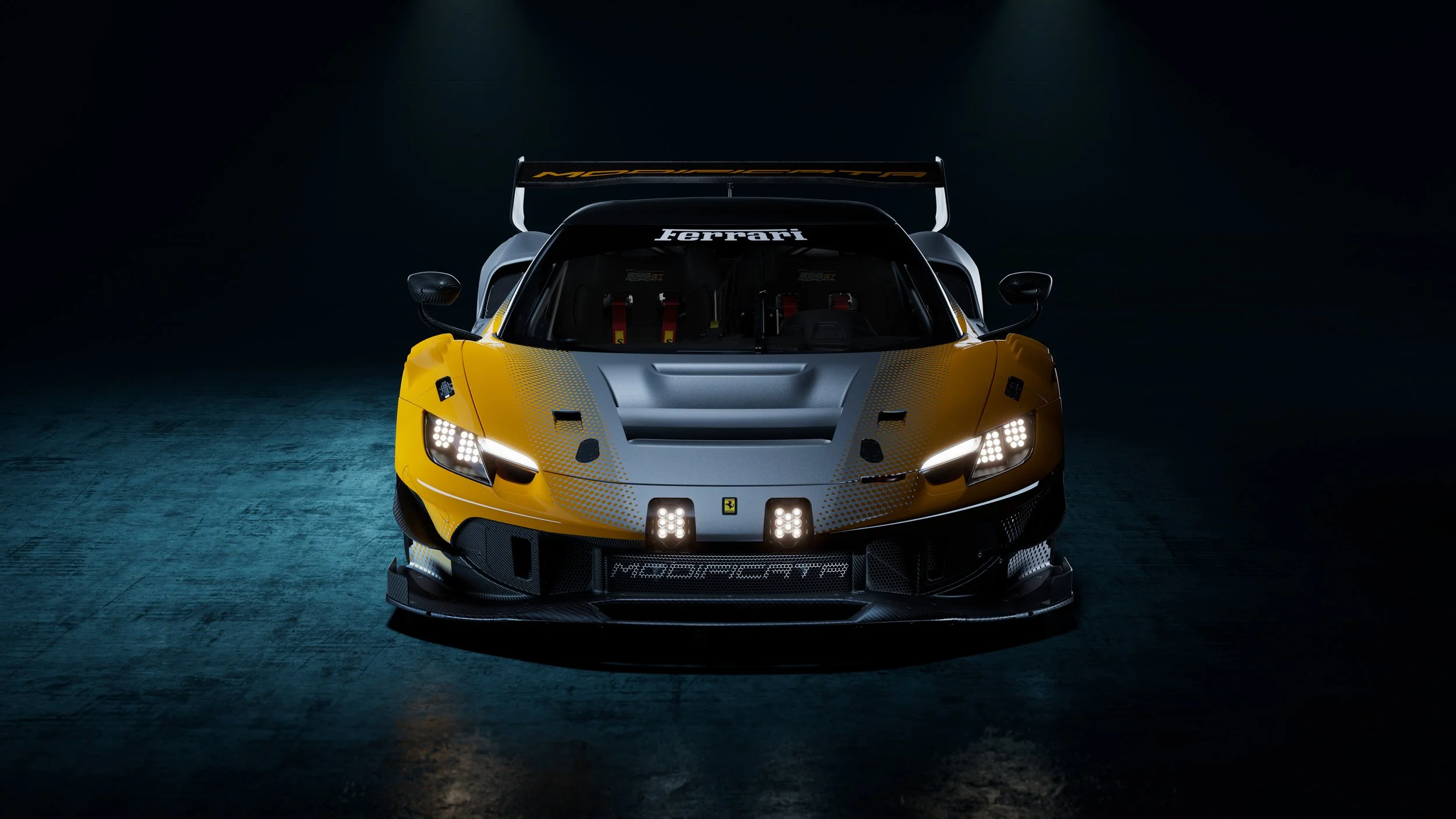
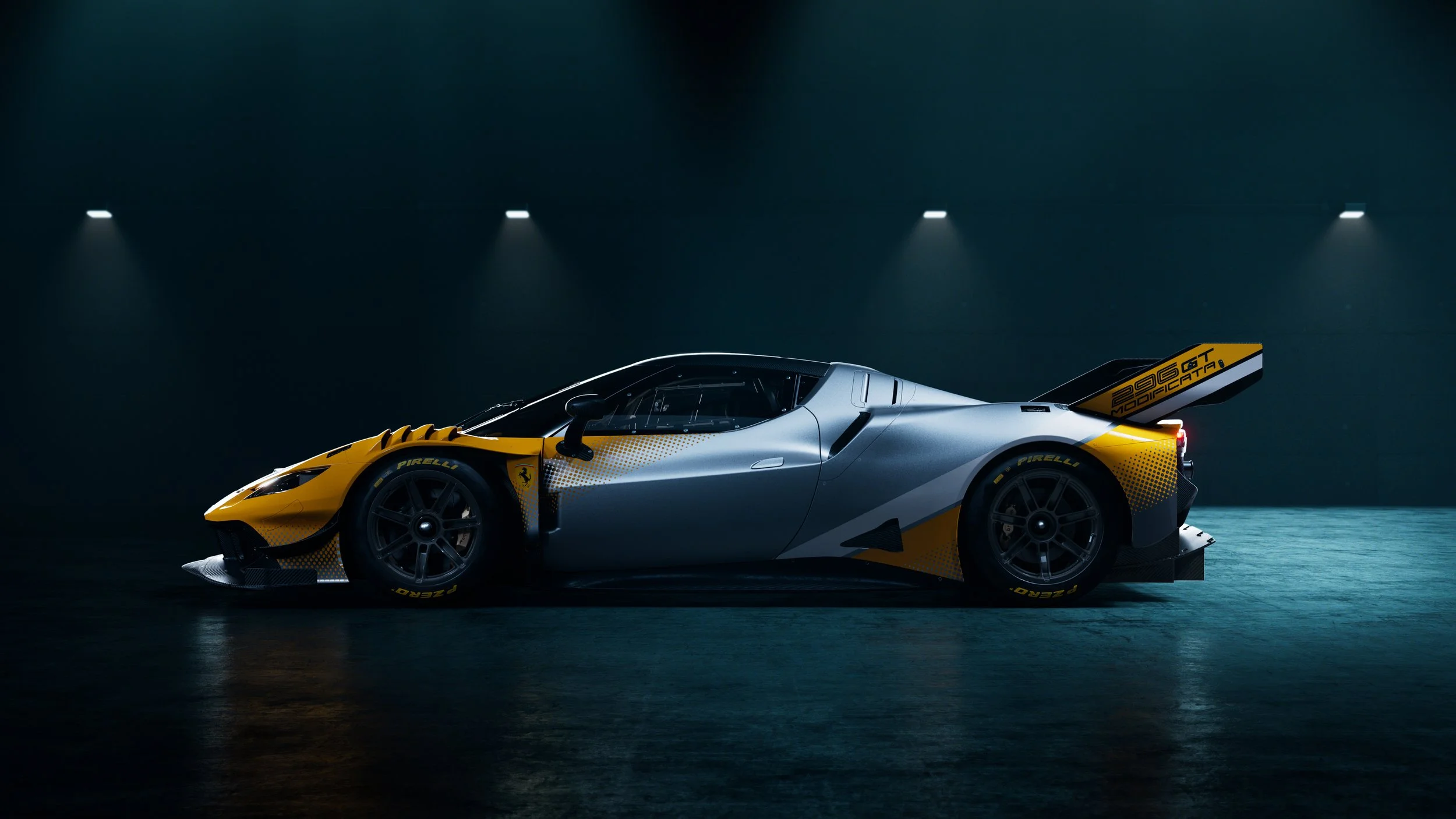
Ferrari developed bespoke aerodynamic solutions for two zones in particular. At the front, the car gains a redesigned wing and a specific bonnet design. At the rear, it features an all-new wing architecture.
The extra engine power demanded greater heat dissipation. Ferrari achieved this with a new front bonnet that has a larger main aperture and a specific vane. This vane deflects hot air leaving the central front radiator so that it does not interfere with the lateral intercoolers. Ferrari also redesigned the vent near the base of the windscreen to optimise thermal management of the components under the bonnet.
The new front wing, which the engineers call the "Slotted Splitter", improves airflow management along the underbody and boosts the car's overall downforce.
At the rear, the 296 GT Modificata introduces a completely revised wing that improves aerodynamic performance and keeps the car correctly balanced. Key features include a new centre pylon, a 5 mm Gurney flap, and endplates inspired by the 499P. These endplates serve a structural function and also help manage the vortices that the wing generates as overall performance rises.
The 296 GT Modificata's engine develops 730 cv (537 kW) at 7,500 rpm. That gives it a full 130 cv more than the 296 GT3 Evo, which must comply with Balance of Performance regulations. The engine also sets a new benchmark for specific power output at 244 cv/l (179 kW/l).
Such extraordinary performance calls for advanced technical solutions to keep the driver safe. The braking system is a good example, as it builds on the system Ferrari uses on the 296 GT3 Evo and 296 GT3 Biposto.
The 296 GT Modificata introduces new steel front discs with upgraded ventilation, which boosts their cooling capacity. An additional air intake in the lower part of the front bumper also plays a key role. It feeds more air to the brakes and helps the system dissipate more thermal energy. At the same time, Ferrari's engineers optimised the brake cooling ducts to maximise airflow efficiency.
These changes improve the braking system's thermal management. They deliver more consistent performance and greater reliability, and they let the driver exploit the car's potential even more effectively.
Like its GT3 counterpart, the 296 GT Modificata features ABS. Ferrari has calibrated the system to make the car's performance as accessible as possible for drivers of all skill levels, even during long sessions on circuits that punish the brakes.
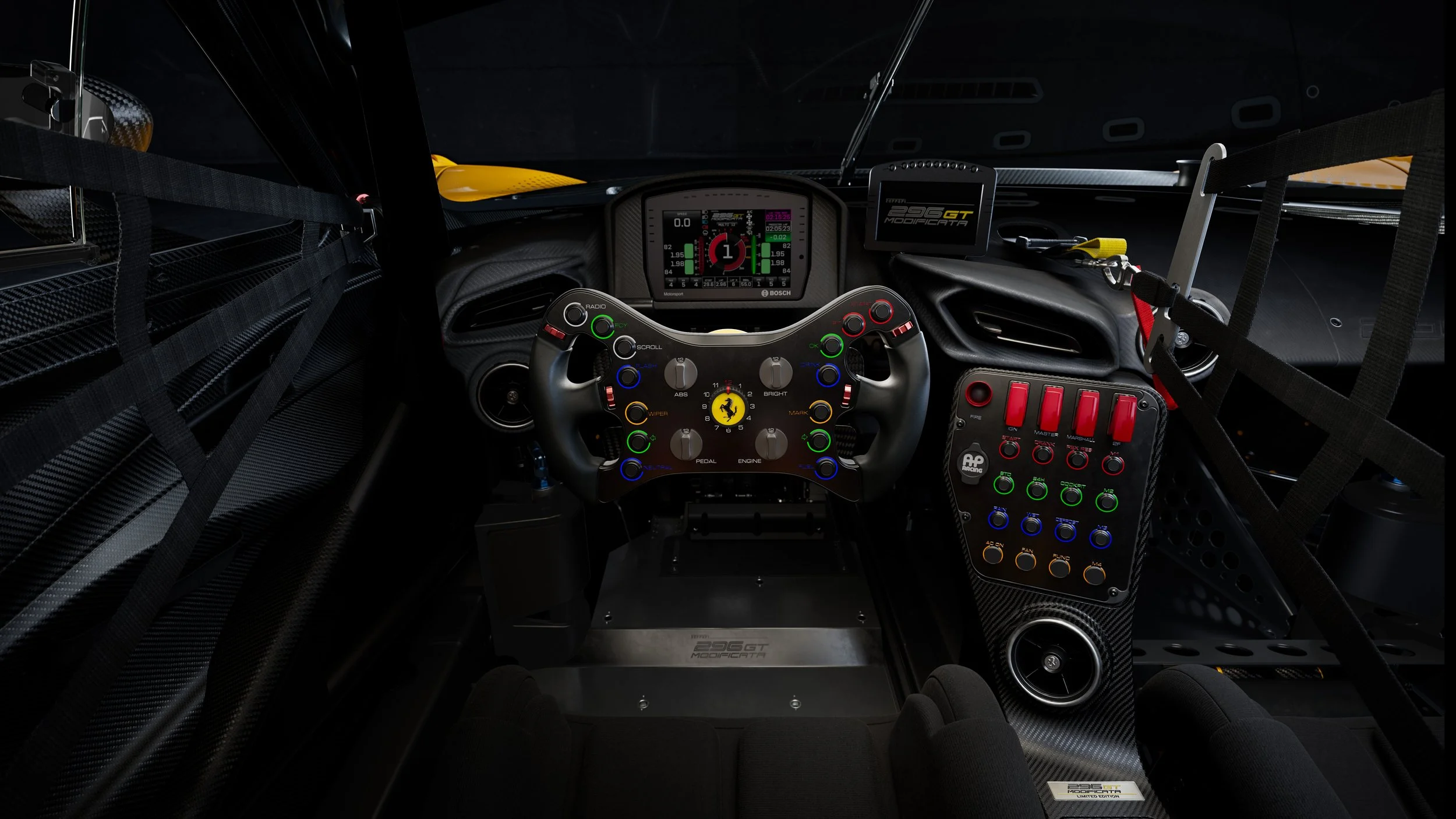
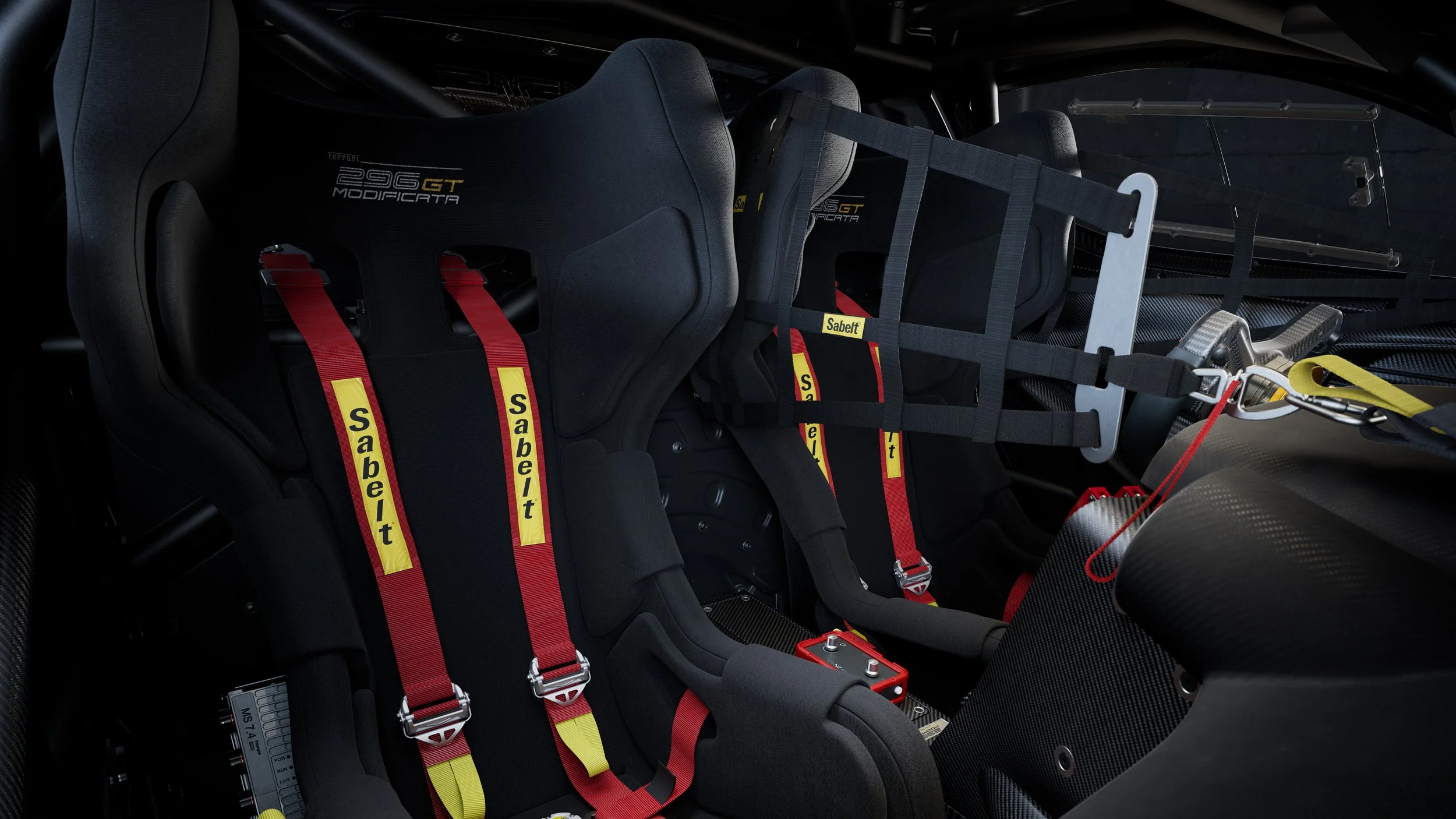
Ferrari conceived this car with two core objectives: to let drivers hone their skills and share the experience with a passenger. Changes to the roll bar made room for a second seat in the cabin so that the driver can share the dynamic on-board experience. The two-seat layout also lets owners join track days with an instructor, who can offer tips and guidance in real time during timed sessions. For extra comfort, the passenger gets a dedicated footrest, and an integrated intercom lets driver and passenger talk constantly.
Ferrari designed the new model so that owners can head straight onto the track and join the Club Competizioni GT programme that the Maranello marque organises. The 296 GT Modificata comes with many features as standard that the 296 GT3 Evo offers only as options.
These include the Data Acquisition System Step 1&2, which adds sensors such as pitot tubes to measure air speed, damper potentiometers and brake temperature sensors. The VideoBox Premium records the driver during sessions to help them refine their performance with their coach. The package also includes Rear Camera Premium, the IRTPMS Step 2 tyre pressure and temperature monitoring system, a carbon clutch, professional seat harnesses and the 'extra fan' feature, which improves cabin cooling.
Although the 296 GT Modificata comes generously equipped, owners can personalise it further with optional features that they can order as original equipment. These include a rear radar that warns the driver when faster cars approach from behind. Clients can also choose the livery colour scheme from the full range of colours that the Ferrari Design Studio offers.
"Modificata" means much more than a single word. It belongs to Ferrari's tradition and embodies a philosophy that centres on extreme performance and cutting-edge technology.
Over the years, the Maranello marque has created extreme versions of some of its existing race and production models. When these cars run only on track, no technical or motorsport regulations constrain them, allowing them to unleash their full performance potential. The Prancing Horse has also produced several road-going "Modificata" models throughout its history.
The 296 GT Modificata follows in the footsteps of the 488 GT Modificata, a track-only car that Ferrari presented in 2020. That model embodied the ultimate expression of the technical solutions and experience that Ferrari gained with the 488 GT3 and 488 GTE competition cars. In 2023, Ferrari unveiled the 499P Modificata, which launched the Sport Prototipi Clienti programme for gentleman drivers. It derives from the 499P that competed in the FIA WEC. That car won three editions of the 24 Hours of Le Mans (2023 to 2025) and brought the Overall Constructors' and Drivers' titles (2025) back to Maranello after 53 years.
The very first "Modificata", the 512 M, appeared in 1970. It evolved directly from the 512 S and featured a lighter, more powerful V12 that produced 610 cv (449 kW), new heads with four valves per cylinder, and sleeker, more aerodynamic bodywork. After its debut at the Zeltweg circuit, the 512 M competed in the 1971 Manufacturers' World Championship.
Ferrari later extended the "Modificata" name to certain production models, such as the F512 M of 1994, the 456M GT of 1998, the 575M Maranello of 2002 and, most recently, the Portofino M of 2020. Owners could also drive these very high-performance models on public roads.
Owners can use the 296 GT Modificata only for track days and Ferrari Club Competizioni GT events. Ferrari created this programme to offer its customers an exclusive, members-only experience on some of the world's most prestigious circuits. The purchase includes two years, or 12 rounds, of the programme, giving owners a unique experience across circuits with different layouts and technical characteristics.
The 2027 Club Competizioni GT calendar features seven events: Jerez de la Frontera (Spain), Misano Adriatico (Italy), Fuji (Japan), Indianapolis (USA), Paul Ricard (France), Spa-Francorchamps (Belgium) and a closing event at the Finali Mondiali Ferrari. Ferrari will announce the venue and dates of the finale shortly.